Archive for the ‘Video Technology’ Category

Weekly News Roundup (23 January 2011)

Sunday, January 23rd, 2011

You may have noticed something different at the bottom of this blog (if you’re viewing this post on my blog, as opposed to through the newsletter that is) – that’s right, WNR (via Digital Digest) has joined the 21st century social media thingamajig. This means that if you like this post, you can use one of the dozens of social media tools to let others know, and help me increase my readership numbers into double (or even triple!) digits. In addition, I’ve also set up what the kids call a ‘book of faces’ page right here (where every single news, deals and blog post will be pinned up on the wall, or something like that), and even managed to employ the services of that blue twittering bird here. So please, friend, follow, tweet, twang, hurl, zomg me on Facebook and Twitter, since I’m a bit lonely and pathetic on there at the moment and will soon have to resort to making up fake accounts just so I have some “friends”. And many of the news stories that I link to in the WNR will now be to the Digital Digest news section (as opposed to the forum thread like before, although a link to the relevant forum threads will still be located at the end of the news articles), and there, you will also see FB like buttons, Twitter tweet buttons, and even a FB powered comments section where you can point out the numerous speling mistakes I’ve made in the news post.

And there might be something in it for those of you that goes through the laborious process of clicking on a button to indicate your “friendship” or “cult follower status” with me, and the earlier you do it (and the greater number of you who do it) will increase the likelihood of something like this happening. Did someone say prizes? Amazon gift certificates? Details (if any) to be released soon. Just to be clear, yes, I am trying to buy some friends, so fingers crossed it works and I get enough likes and followers to make launching a competition possible!

Lots of news this week, so let’s get started.

CopyrightLet’s start the copyright news. The big wigs at the music arms of Sony and Universal did some brain storming the other day and came up with a new brilliant way to combat piracy: allow people to actually buy the music!

Apparently, not allowing people to legally buy something actually encourages people to seek illegal ways to obtain the same content, which must have come as a big shock to the Sony and Universal execs when their million dollar research revealed these findings, or something. Currently, when new music is released, it’s given airtime on the radio during an exclusive period before it was possible to buy the music legally, but research found that people searching for the new songs peaked weeks before the start of the sales period, and so, naturally, people just managed to get the song from “other” sources. So now, music will be made available for sale at the same time as when the radio airplay period starts, in a bid to curb online piracy. And it will only take a dozen more research reports before Sony, Universal and others realize that the same thing works for TV shows and movies, and that rental, release windows and delaying new TV show episodes by as long as 6 month in overseas markets, all contribute to the online piracy phenomenon.

Still staying in the music industry, the RIAA this week issued more threats to companies and organizations that it perceives as potential partners in the CRusade Against Piracy (CRAP™). The RIAA knows that the only way it can get others to do their dirty work in the futile war against online piracy (FWOP™) is to threaten them. This time, it’s ICANN, the people responsible for making the domain name standards, and the RIAA warns them that piracy syndicates might hijack planned music based TLDs like .music. Like as if music piracy websites would need to bother with .music, not if .riaasucks is available. It’s very likely though that the warning comes because the RIAA wants control of .music, but doesn’t have the cash to bid for it, and so they’re dreaming up an imaginary threat to force ICANN’s hands, a tactic that has worked well with governments around the world.

Malware

Malware is a more serious problem than online piracy, yet it receives almost no attention at all

A threat that is not so imaginary is malware. Hands up those that *haven’t* been affected by malware, or know someone that has. Malware costs the economy something like $50+ billion a year, that’s even more than the imaginary numbers that the RIAA likes to invent, and yet it seems there’s hardly any action against the spread of malware, apart from the odd arrest of hacker or two, and only when the malware story makes national news (and this happens only because it  infected all the computers at said news network). And yet, the US government alone is throwing millions of dollars and resources of the FBI, Homeland Security at fighting the online piracy problem, which may or may not even be a problem. I mention all this because of the story this week that malware writers are now using that old RIAA favourite, DRM, to protect their toolkits to sell or rent to those seeking to make a profit infecting unsuspecting servers and computers. But we already know for a fact the resources at the FBI have already been diverted away from investigating online and identity fraud, towards online piracy investigations, but I guess that’s because there is no such things as the “online fraud victims” lobby, or at least it doesn’t have as much cash to splash around compared to the entertainment lobby (probably because all of their cash has already been stolen via malware and identify fraud).

High Definition

Onto HD/3D news, I posted a story about LG’s plans to make people buy more 3D TVs that use passive glasses, but mainly, it was just an excuse to post a link to this video.

But 3D TVs using passive glasses do have some advantages, after all, cinema 3D presentations are mostly based on the same technology. Sure, you won’t get a 1080p picture, but if it means less headaches and cheaper glasses, then it’s probably a good thing. Having had my 3D TV for about 6 month now, I’m still firmly convinced that 3D is still very much a gimmick, although one that’s very likely to be in every TV pretty soon (but only the active glasses kind, since it’s very inexpensive to add active glasses 3D support to HDTVs).

Scent Sciences - ScentScape

Smell-O-Vision may be coming to games and movies for a low price, but not all smells are pleasant!

Something that also smells very gimmicky, possibly literally at some stage, is smell-o-vision. But what caught my eye about Scent Science’s new ScentScape machine is the low price attached to it. I don’t think it makes a huge difference to me if I can smell burning petrol or not as I blow up yet another car with my RPG in GTA IV,  but for $70, the price of the ScentScape machine, it might just be worth a try. I wonder though what the most popular smells would be. Gunpowder would be one, blood another. But I do have reservations about playing a game like Fallout: New Vegas. I can’t imagine the post apocalyptic world and its inhabitants (and mutants) smelling very nice at all! Nor would watching Generation Kill (brilliant mini-series by the way) be pleasant if “a MOPP suit that smells like four days of piss and ball sweat” was made a reality, smell wise.

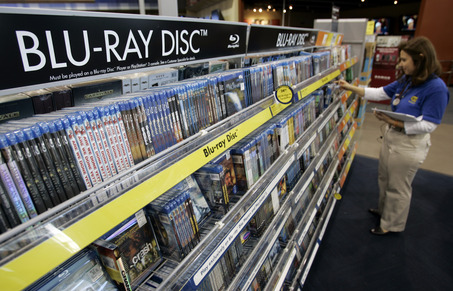
And Star Wars on Blu-ray now has a solid release date. September 27th, 2011. It will be the best seller on Blu-ray to date when released, I suspect.

Gaming

And finally in gaming, some new developments in the PS3 hack saga. Sony’s court case against fail0verflow and geohot has been delayed due to jurisdiction issues relating to the fact that geohot, aka Geroge Hotz, does not live in California where the lawsuit was filed. Sony reasoned with the judge that, due to various clauses in the PSN user agreement and whatnot, it could still sue someone who doesn’t live in California, in California, but the judge has reservations about allowing Sony to bypass jurisdiction so easily this way. The EFF has also come out attacking Sony’s lawsuit, saying it sends a ‘dangerous message’, suing security researchers for exposing security flaws, when really, Sony should had worked with people like Hotz to plug any security holes before the console was released. Both fail0verflow and geohot stressed that they did this for academic purposes and for enabling homebrew, and all have made sure that piracy would not be promoted or allowed directly by their hacks (although indirectly, the hack can be further modified to enable piracy). So instead of suing those that actually use this hack to allow piracy, Sony are suing the guys that actually exposed the hack. It’s like arresting the guy who pointed out to you that your car is unlocked, as opposed to the guy who actually stole your car.

Waninkoko PS3 3.55 CFW

Waninkoko has a custom PS3 3.55 firmware that played backed up games, but it's bricking some PS3s (screencap credit: PSGroove.com)

More custom firmware has been released, this time by infamous Wii hacker Waninkoko, and this ones does allow pirated games to work. But the firmware apparently bricks older PS3s, those with 256MB NAND chips, a list of affected models here. The warning forum user Budreaux posted in the forum thread should be listened to … playing around with hacked firmware is a quick way to brick your PS3, void you warranty, and get you banned on PSN probably, not to mention possibly breaking the law depending on where you are. So do it strictly at your own risk!

And games that relied on the PS3’s now hacked security framework are beginning to feel the effect, with Modern Warfare 2 servers hacked to erase gamer scores and all sorts of other things that make the experience unbearable to gamers. Not all games are affected because developers wisely decided that solely relying on Sony’s framework wasn’t a good idea.

And the worst is yet to come, since Sony’s official response will almost certainly be harsh. Remember that this is the same company that thought a rootkit was a good idea. And so it comes as no surprise that Sony may be planning to bring serial keys to PS3 games in a bid to curb piracy. Not only do you have to type in the 16 character serial code into your PS3, which is painful enough already, these keys may only be reused 5 times, which makes selling and buying second hand games that much more annoying. And it will also mean that you won’t be able to play offline games without going online for authentication. But at this stage, this is just a unsubstantiated rumour, so who knows.

Another unsubstantiated rumous is that the Nintendo 3DS, still weeks away from an official release, has already been hacked despite Nintendo’s assurance of better anti-piracy measures. This does not surprise me one bit, if it’s true.

And even though geohot is busy defending himself against Sony’s legal onslaught, he still has time to hack, this time, Windows Phone 7. But Microsoft, probably giddy from the disasters befalling the PS3 at the moment, isn’t so mad at geohot, and has even promised to work together to “let dev creativity flourish”. This after Microsoft actively not caring about people hacking the Kinect … has the corporate monster changed?

Speaking of Kinect, the PR machine rolled on, and just like how the Wii gained public exposure due to the thousands of broken TV screens and vases, “Wii tennis elbow” and other medical phenomenons, the Kinect is gaining similar public exposure via YouTube ‘Kinect Fail’ videos and reports of even more serious injuries, and even a potential arrest. These fluff pieces may all sound like bad publicity, but there is no such thing as bad publicity, because everyone thinks that these things only happens to stupid people, not themselves, so there is no way one would get ‘Kinect Sports volleyball shoulders’ that is so painful that it makes sleeping difficult. Ow.

And that’s all for this week.

… checks FB and Twitter for the 15th time today … still no likes or followers  :(

Weekly News Roundup (16 January 2011)

Sunday, January 16th, 2011

Welcome to another edition of the WNR. There’s quite a bit to cover this week, but I must of course do the customary promotion for the latest NPD analysis, which I posted yesterday for the US December video game sales results. The Wii did particularly well, despite being 38% down compared to last year (which was a kind of freak result, considering the sales pattern both before and after that particular month), so there’s still life left in the old dog yet. And even though the Xbox 360 had its best ever month for sales, it still couldn’t quite get over the Wii, although it did comfortable outperform the PS3, which might just have to settle for third place in this generation’s console wars. Anyway, back to the news roundup …

CopyrightStarting with copyright news, the PS3 hack saga took a very non surprising turn this week as Sony finally got its lawyers involved, and filed lawsuits both the group that released the hack, fail0verflow, and geohot, the hacker that later released a custom firmware, based on the hack, that allows homebrew to be run on the PS3.

The legal documents linked make interesting reading, and Sony has approached the lawsuit from a lot of different angles, even suing for “trespass”. People who are more informed in regards to the law will have, surprisingly, a more informed opinion as to the merit of the case, as well as Sony’s chances of winning it. But at the heart of the issue is whether the DMCA was really violated, and the motivations of the hackers in question. Sony attempted to paint geohot as a someone trying to exploit this for financial gain (just because geohot once made some casual remarks about the need for Sony to hired someone like him if they wanted to keep their future consoles safe from hacking – Sony interpreted this as a form of financial blackmailing, or something). Both hacking groups were keen to point out that their hacks were not aimed at opening up the console for piracy, but there is no denying that the hack will do exactly this, although mostly without further assistance from either geohot or fail0verflow. But I think it’s a stretch for Sony to link any financial motives to the hacking – these were clearly hacks encouraged by the removal of Other OS, more than anything else, and it’s unlikely any of those sued is going to profit from the hacks, unless you count fame as a financial reward. Still, I think this has the makings of a epic court battle, with both sides committed to fighting for what they believe is right, and it could have seriously implications on copyright, the DMCA, DRM and hacking in general. Watch this space.

Bandit.fm Top 20

Buying individual tracks is now more popular than albums, which means less profit for record labels

The UK music industry has just released figures showing that music sales, by unit, reached an all times high or 281.7 million songs. You would think they’d happy with this result, but they’re not, and they’re blaming piracy. While unit sales was up dramatically, 27% compared to just a year before, actual revenue was down, mostly due to dropping CD sales. But if there ever was a figure showing that the music industry’s declining profits were nothing to do with piracy, then it was these sets of figures, despite what the BPI’s (the UK’s version of the RIAA) conclusions. The increase in individual unit sales shows people buying more than ever, but only in terms of single tracks. This is largely thanks to the digital revolution in music,  iTunes stores and whatnot. Even without considering the ageing CD format (first demonstrated nearly 35 years ago!) and how out of place a physical medium is for music these days, the fact that most CDs are albums is also why CD sales are declining. With digital music purchases, you can buy only the music you want, as opposed to a whole album with only a couple of good songs, and you can even create your own albums, which makes those compilation CDs seems quite lame by comparison. And add to the fact that Apple, via iTunes, now get a huge chunk of the profit because the music industry was too slow to adapt to this digital revolution and set up their own online stores, this is what accounts for falling profits, not piracy. And you know what? I think record labels should just accept the fact that things aren’t as good as before, and move on. They’ve long exploited artists, who get very little of the money from song sales by the way, and their dying business model should not be protected. Piracy has been an easy scapegoat for the music industry, that’s all.

And it’s an easy to accept scapegoat too. Because people are downloading pirated songs, a lot of them, but of course, nobody has actually attempted to find out the real cost of piracy. Not the ridiculous figures of “$200 billion” a year, by multiplying the number of downloads by the full retail cost of each download, but actually examining just what percentage of people would have otherwise paid for the content had the content not been available for piracy? Nobody in the industry is conducting such a study because they know the results will not be in their favour, because they know that people are buying music and movies more than ever (remember that before DVDs, hardly anybody purchased movies), and they will then have to find another convenience scapegoat to blame for their woes. It seems the entertainment industry has shifted their cross-hairs over to online storage websites such as RapidShare and MegaUpload, the new scapegoats in their war against online piracy, as it’s much easier to sue companies like RapidShare/MegaUpload, than the thousands of BitTorrent indexes run by individuals without even a postal address. And again, incredible claims are being made, which basically is suggesting that sites RapidShare do nothing other than host and share illegal content, when I think (from my usage of these services anyway) most of the usages are perfectly legitimate (ie. sharing large, legal, files that otherwise would be difficult via email).

One convenient scapegoat was the so called “analog hole”, in which movie studios warned of the dire consequences of not closing the loophole which allowed people to record digital content, like Blu-ray’s, via analog output which have very little in terms of content protection (since it’s a lot harder to deploy content protection without using some kind of digital system). This is how they scared the FCC into adding selectable output control to analog outputs, and this is why we have the stupid rule in which it’s impossible for upscaled DVDs to be played over component legally. And this is also why, for the Blu-ray specifications, something called ICT was added. ICT stands for Image Constraint Token, which is simply something that the studios invented so they can block HD analog output. Due to public pressure, they put off the introduction of ICT until a later date, except that later date has just passed (January 1st, 2011), and ICT is now in effect. What this means is that for all Blu-ray players made after January 1st, they will no longer be allowed to output HD via component output – the resolution is now limited to only 540p, which is basically SD resolution. For those with older Blu-ray players, they too will be affected when new Blu-ray movies carrying ICT will also only be played at limited resolutions. So it’s HDMI, or no HD. And in 2013, it will be illegal for Blu-ray players to have analog outputs at all. This is fine for the vast majority, who is happily using the HDMI connection on their Blu-ray players. But there are still those with older TVs, or even those with home cinemas that employ expensive, but older, projectors that can display a perfectly great picture, but just doesn’t have the required HDMI input (projectors were much slower to adopt HDMI than TVs). The Blu-ray people will say that this is all to help the transition to digital, since analog can’t be supported forever. And that’s a valid argument. But is it really necessary to ban analog outputs to achieve this, when as I already mentioned, the vast majority have switched over to digital already without the need for any coercion. And if the argument is that analog makes piracy more a problem – I don’t know a single instance of piracy over component output, simply because it’s very very easy to pirated a Blu-ray movie via digital means, which also has the added bonus of 0% quality degradation. For me, this is the industry’s paranoia about piracy at its worst – imagining a problem that doesn’t exist, and implementing a “solution” that hurts legitimate consumers more than it actually helps to prevent the problem.

UltraViolet DRM

UltraViolet aims to provide consumers cross-format ownership of content, but at a price

For me, the industry is at its best when it is coming up with solutions to real, not imaginary, problems. DVDs were invented so people could buy movies without worrying that the quality would degrade after too many viewings, as it was the case with VHS tapes. Blu-ray was invented so people could have something to watch on their new HDTVs, and that they would get a cinematic experience at home as close as possible (in terms of visual/aural quality) to the original cinema presentation. Digital downloads and streaming, despite the industry’s reluctance, also helped to solve real problems. And the industry’s latest effort, which has somehow managed to earn the support of pretty much all the big names both in the movie industry and the computing industry, is something called UltraViolet. On the surface, it looks (and is) another layer of DRM, the last thing we need. But this DRM’s aim is different than what has come before. Instead of trying to prevent piracy, UV attempts to solve a problem that has bothered people since the introduction of DVDs – the fact that people are buying the movie that’s locked to a particular format, as opposed to simply buying the movie. Well, locked legally anyway, thanks to DRM, and if people wanted to transfer their DVD movie to another non DVD device, then they could only do it illegally. The introduction of Digital Copy helped to alleviate some of the concerns, but it’s a very flawed implementation. UV attempts to solve this problem by making you buy the movie, not the format, and once that movie is added to your ‘digital locker’, you can then have access to multiple formats of the same movie, and even access to new formats as they’re being introduced to the market). And you can even share your ‘digital locker’ with up to 6 people, and across up to 12 different devices. You can read up on just how UV might work here.

But while the idea behind it is good, the problem is that we, as consumers, are still handing a lot of power over to the studios. Instead of having a physical DVD in my hands, and (albeit illegally) convert that to work on my iPhone, UV means it’s the studios that now have the ultimate control. The current implementation might allow you to share with 6 friends and 12 devices, but what’s to say that it will always be this generous. Or that you won’t have to pay extra whenever a new format is released (say for your iPhone 6)? Or, if the studios get desperate enough one day, that they force everyone to re-pay or they will cancel access to your digital locker – that may be unlikely, since they’ll get sued seconds after sending out the emails demanding this “ransom”, but the user agreement that you entered with them might just allow this to happen. But these worries aside, the goal behind UV seems to be a good one, and I think if it’s implemented correctly, it will greatly help reduce casual piracy, and the need to purchase multiple formats of the same movie, although it’s hard to see what the studios get out of letting people buy less stuff. I mean these are the same studios that make you purchase 5 different “special, limited, platinum, ultimate, definitive” editions of the *same* movie on the *same* format, every couple of month!

Everyone’s favourite anti-piracy law firms, US Copyright Group, and the bunch that’s suing people for downloading Batman XXX and other pornos, are joining forces. It’s becoming harder for these law firms because of a little thing called jurisdiction, and so they have to form alliances with firms in other geographical areas and help sue for each other, to lower costs and ensure profit steams.

And everyone’s favourite anti-piracy agency, Aiplex, is in the news again, this time over their hilariously worded threat that was emailed to TorLock, a BitTorrent indexer that is actually paying users that spot fake torrents in their index. Creating fake torrents is one of the tools in their anti-piracy toolkit, although one that doesn’t really work. But Aiplex’s apparent anger is hard to understand, and also their claim that it’s not cool to pay people and remove torrent files for content that you don’t own. So this means I can’t pay people $1 every time they *don’t* watch a Michael Bay film, even though I’m sure I could save billions of brain cells by doing so, and it also means that TorLock can’t remove torrent files (that they don’t own) when requested to do so by firms like Aiplex, right? [insert confused smiley]

High Definition

In HD/3D news, the CES has been pretty much a non event for the Blu-ray format. This could be interpreted as bad news because it’s no longer the cool new thing that it once was, or it could just be because it’s mainstream status means, it no longer needs to be the cool new thing.

But there was one interesting new tech for Blu-ray, and one that makes the outlandish claim to improve upon the clarity of Blu-ray movies just by using a new, fancy type of HDMI cable (and Monster were not even involved!).

DarbeeVision comparison

This before and after image shows DarbeeVision's HD enhancement at work

DarbeeVision claims to just do that, by using a special technique that creates a “drop shadow” for each frame of the Blu-ray image, which creates a kind of effect that our brains interpret as more detail. The HDMI cable part comes from the ability to embed the image processor directly into the cable, and so by connecting your Blu-ray player to your TV using the $150 cable, you can enjoy DarbeeVision’s added sharpness (the current system, which uses a set top box that sits between your player and TV, costs $1,500). I’ve even posted some before and after images here, for those that want to see if it really works or not. Interesting concept, but I’m not sure cinephiles will appreciate fake, digitally added, details (but the Average Joe would probably love it).

And as mentioned in this section a couple of months back, Apple has finally removed VLC for iOS from iTunes. The incompatibility between open source licensing, and Apple’s draconian licensing scheme (even for free software), claims another victim.

While not specifically HD news (more H.264 news), Google’s decision to no longer support H.264 for HTML5 in their Chrome browser is one that will have huge implications for online HD video streaming. This definitely shifts the momentum towards Google’s own WebM format or to a lesser extent, Ogg Theora, but WebM may suffer a similar fate to H.264, as disputes over patent claims could endanger the rollout of HTML5. Most video compression technologies are based on very similar principles that will almost certainly have been patented by someone at some stage, and experts feel WebM is not the open, patent/royalty worry free format that Google is promoting it as. While Microsoft has responded harshly to this decision, this move is really aimed right at Apple, which is going forward with HTML5 support for all their iDevices, but with H.264 support, since they’re huge fans of the format that they own lots of patents for (Microsoft owns a lot of patents on it too). Imagine if Google made the next version of YouTube HTML5/WebM only – then none of the iDevices will be able to browse the new version of YouTube, with Google’s Android phones being the main beneficiary of this scenario!

Gaming

And finally in gaming, Kinect will be coming to the PC officially – just not any time soon. Microsoft’s CEO Steve Ballmer hinted at Windows support for Kinect, but did not want to release and specific timelines.

Some say that Kinect won’t work with PCs, because of the distance issue – people sit much closer to computers than TVs, and Kinect requires a lot of space. But that’s mainly because the current range of Kinect games all require leg tracking, while Microsoft has already hinted that there will be Kinect games where you can play just by sitting down, so these games might just work on Windows. And waving your hands to flick through pages and pages of a boring financial report using Kinect might just make the experience bearable!

And that’s enough words for this week (fastly approaching 3000!). Have a good one.

Weekly News Roundup (12 December 2010)

Sunday, December 12th, 2010

Another pretty quiet week, but with the NPD US November video games sales figures being leaked out in a timely fashion, I was able to get the analysis up. The big surprises were how well the Xbox 360 did (up 68% from the same time last year!), and how poorly the Wii *didn’t* do (up 1% from last year, much better than the usual 30+% decline in previous months). The PS3 continues the trend in recent months of year-on-year declines, which is mostly due to the post Slim/price cut bump from last year, but it’s still somewhat of a concern that the PS3 didn’t even manage to sell half as many units in November as the Wii. And with Kinect being a bigger hit than Move, and with Blu-ray players being dirt cheap these days, Sony may have to re-evaluate pricing to spur sales. Speaking of Kinect, I managed to buy one this week. I haven’t had much time to play with it yet (especially on the PC), but I can see the potential and the appeal (for casual gamers in particular), although the space requirement thing is kind of annoying. Let’s get started with the news roundup.

CopyrightIn copyright news, more bad news for the US Copyright Group, as they had to drop 97% of the unnamed defendants in their “Far Cry” lawsuit.

The judge in the case ruled that due to jurisdiction reasons, most of the defendants had to be removed from the case, and so now, only 140 remain. The USCG has previously said that this wouldn’t hurt their business, as they had always planned to do it this way, but with having to respect jurisdiction and having to file multiple lawsuits all over the place, the USCG’s business case may have been damaged. These mass lawsuits rely on defendants paying up quickly, and so all these extra court procedures may very well be expenses that eventually make these lawsuits unprofitable.

The Drudge Report

The Drudge Report is the latest victim of Righthaven's mass lawsuits

The other famous mass copyright lawsuit law firm at the moment is Righthaven, doing the exact same thing but for posted newspaper articles. Even though they’ve had even less success than USCG, and have had to backtrack a few times when they sued the wrong high profile target, they’re not giving up and have instead picked an even larger target this time – The Drudge Report. Righthaven is suing Matt Drudge and both drudgereport.com and DrudgeReportArchives.com for using images owned by The Denver Post, the latest newspaper to join the Righthaven stables. Righthaven is demanding Matt Drudge hand over these two domain names to them so the serious copyright abuse (of using one single image owned by The Denver Post) can be stopped post haste. According to my own estimates, the drudge.com domain name is worth about $7.8m alone (just the domain name, not the content), so I guess that’s how much Righthaven thinks a single image is worth. Of course, picking on such a high profile target has its own problems, and although it will get Righthaven in the news, it could also backfire if the Drudge Report mount a legal defence instead of just paying the settlement fee, which appears to be the case.

But still, $7.8m for a single image may seem like a lot even when you compare that to the insane damage amounts being handed out for MP3 downloads. The most famous MP3 download case of all, you know the one, has had some development this week too, with Jammie Thomas-Rassett’s lawyers asking the damages, of $62,500 per song, to be reduced to $0 per song. Yep, I can really see the RIAA agreeing to this latest demand. But Thomas-Rassett’s lawyers do have a point in saying that the RIAA has not proved the financial damage being done by their client’s actions, but with the current copyright laws and statutory damages, the RIAA does not need to prove actual damages,which I think is really unfair. I can see the value of statutory and punitive damages in commercial copyright cases, in which sometimes it is difficult to proof actual damages, but when you’re suing students, single mothers and other net users, I just don’t think it is appropriate. And judges don’t think it’s appropriate either, which is why the Thomas-Rassett case is still unresolved in terms of damages. The thing is, if the RIAA is trying to use this case to scare off other downloaders, it’s not exactly working is it? And I think the laws needs to be updated so that a fairer punishment can be handed out. $50 per song, for a song that costs $0.99 to download (but one must also consider uploads in cases such as these), should be more than enough. It certainly shouldn’t be $62,500, and such large amounts should remain for commercial cases only, such as when a TV network broadcasts a song without permission.

Eircom

Eircom has made a deal with the devil, to offer free music streaming for spying on customer downloads

The RIAA’s answer to this is three-strikes, or something like it. Strategically, it makes sense to keep pursuing Thomas-Rassett, keep on getting awarded huge damages, and they too can use it as example of how the current copyright laws do not work. But the change they want will be to their own benefit, so that it would make it easier to sue and suspend downloaders, and lawmakers may just make this dream a reality via Three-Strikes. But before the music industry seeks government cooperation, they’ll do a bit of ISP threatening to get them to adopt Three-Strikes “willingly”, and it appears this strategy is working, at least in Ireland. Eircom has agreed to the Irish music industry’s demand for Three-Strikes, and will begin to ban users from their network after spying on their downloading activities and detecting anything the music industry finds offensive. And to stop the mass exodus of users to other ISPs that don’t spy on their paying customers, Eircom and the music industry has come up with some sweetners, such as unlimited music streaming and cheaper music downloads. Of course, if they really believe that music streaming and discounted music downloads can help people move on from piracy, they should have just offered this, without three-strikes, in the first place.

I’ve talked a lot of nonsense in the copyright section of the WNR in the last couple of years (yes, it really has been that long!). But I think if I had to sum up my opinion on web anti-piracy, it would this: be pragmatic! It’s clear that the technological solutions, namely DRM, has failed. Whether it’s Blu-ray releases like Avatar that come with “enhanced” anti-piracy solutions, or the latest Ubisoft game – the only disruption these new DRM measures usually cause is to legitimate buyers, with pirates still easily able to pirate the content (and without the pesky annoyances brought on by DRM, and so pirates are actually getting a better product thanks to the use of DRM by publishers). One news I found interesting this week was that pirates have found a way to pirate 3D movie screenings at the cinemas, using a special lens on video cameras. If pirates are going to this length to pirate a movie, I just don’t think there are any technical solution to piracy, nothing that can’t be bypassed, hacked or simply ignored.

The legal solutions, like the mass lawsuits or Three-Strikes either have no intention in stopping piracy (only to monetize it), or will only push people towards piracy solutions that cannot be tracked, and that means they don’t work either. So why not be pragmatic, and seek a real solution, instead of band-aids or measures that will only give the industry a false sense of security, and at the same time, cause massive collateral damage in terms of consumer and civil rights.

But the industry is obsessed with doing things the wrong way, and with all the powers granted to them by governments, they are getting more and more belligerent. The MPAA’s latest demand is for Universities to crack down on students downloading movies, or face the possibility of losing federal funding, following the RIAA’s footsteps in making similar threats. But they could only make this threat if they can back up their threat, and unfortunately, they can, via the Higher Education Opportunity Act of 2008. So the RIAA/MPAA have gone to a lot of trouble, a lot of money spent on lobbying, to get the act passed, and this act forces Universities to divert funding away from education, and towards deploying anti-piracy tech, and what has it all achieved? This is what I mean about being pragmatic, because I don’t think this “solution” solves any problems. College students downloading movies may be stopped (or maybe they’ll just use their own personal Internet accounts to do so), but how much money has that made for the RIAA/MPAA? Will these students, many of whom have trouble paying their tuition fees, all suddenly stop downloading pirated content and start paying for everything? And all of this “result” after millions and millions of dollars, was it worth it? And is it really worth it to endanger the education of tomorrow’s workforce so that the RIAA/MPAA can chalk up another “theoretical” victory, which gains them little, if any, actual benefit? It is really worth it?

And to round off the copyright news, LimeWire is shutting down again, but this time, it’s the legal part of LimeWire. It was originally set up to appease the music industry and to transition LimeWire to a legal service, but it looks like it failed to achieve either of its objectives. The service will shut on at the end of the year.

High Definition

In HD/3D news, not much going on really. I suppose I should cover the fact that Blu-ray has just had its best Black Friday sales yet.

Blu-ray Sales Percentage - Year-on-Year Comparison (As of 29 Nov 2010)

Blu-ray sales growth has slowed this year, but this Black Friday (last entry in graph) was a good one for the HD format

$83 million dollars worth of Blu-ray movies were purchased during the Black Friday sales week. This in itself is not a record, and “only” represented a 20% increase on last year’s Black Friday results, but what was more impressive was the market share, which traditionally favours DVDs during this period (due to aggressive discounting). This year, Blu-ray’s market share was 16.82%, an improvement on last year’s 12.33%. It seems that the aggressive Blu-ray pricing has had an effect.

The next few weeks will generally favour Blu-ray as well, so while Blu-ray growth has slowed a bit, it is at least growing, which cannot be said of DVDs. The economy, Blu-ray, and downloads are all taking market share away from DVDs, so its decline isn’t too surprising either.

And on a personal note, the Blu-ray’s I picked up during Amazon’s Black Friday sales arrived this week. This is why I prefer to shop from Amazon: not only did they upgrade shipping from standard to express at no charge (the item arrived from the US to Australia in only 4 days, and one of those days was a customs delay), they didn’t even make a fuss about it – I only found on when they sent me the “dispatched” email with the shipping details and tracking option, which is normally not available with standard shipping. This contrasts to an experience I had with an Australian online store this week. I purchased Kinect Sports from Big W as part of their online sales at the end of November. My credit card charged immediately. But having not heard anything about the order, and with their online order tracking system down, I emailed customer service. I only received a response a day later, and was told that in fact, my order had not gone through due to an IT problem, and that instead of resolving this and sending out my item, they had simply cancelled it. My credit card has yet to be refunded! And the worst part is that I could have picked this title up for even cheaper just a few days after my original order, but I chose to stick with Big W since I thought, wrongly, that my order had already been processed and dispatched. Was I angry? Well, put it this way, it’s unlikely that I would shop at Big W ever again, online or in store. Not if I have a choice.

Not much to say in gaming, nothing that I haven’t already covered in the NPD analysis anyway, so I’ll skip it for this edition. Although I will add that the NPD analysis focuses on US sales only, and the global picture, especially in Japan, is actually very different, with the PS3 outperforming the Xbox 360 and the Wii quite consistently. Global sales wise, the PS3 has nearly caught up, or has already caught up, to Xbox 360 sales, whereas in the US, the Xbox 360 still has a 1.6:1 advantage over the PS3. But if Kinect is the next big thing, or really just the next Wii, then even global sales may start to reflect the Xbox 360 dominance, because finally, we have a console that can do almost any kind of games – from the hard core, to the casual. The only thing it doesn’t do is Blu-ray, but with standalones so cheap these days, the PS3’s advantage in this area is diminishing, especially since multi-platform games aren’t really taking advantage of the space offered by Blu-ray, and the PS3 version is often worse than the Xbox 360 version, due to the more difficult time devs have with PS3 development.

And this “PS3 is harder to develop for” isn’t just a myth, or can be attributed to lazy programmers. I’ve heard this personally, and constantly, from people working in the industry, and it seems the main issue is the whole hardware architecture of the PS3, which will always makes it more difficult to develop for than the Xbox 360 – even doing the same things on the PS3 takes a lot longer than on the Xbox 360, and so while developers may be able to do more with the PS3, time constraints means that they end up doing less (or just the minimum required to get the game running at the desired FPS). It seems Microsoft, being primarily a software company, did a lot of work to ensure the Xbox 360 was easier to programme for, while Sony, being primarily a hardware company, made a superior piece of kit. So it’s no surprise, really.

Okay, no more writing. Head hurt. Want Fallout gaming. NOW! See you next week.

Weekly News Roundup (14 November 2010)

Sunday, November 14th, 2010

I’ve been playing a lot of Fallout New Vegas recently, which isn’t very surprising for those who remember how fond I was of Fallout 3. And as a result, the quality of this issue of WNR may not be up to the usual high standards (haha), as I’m a bit distracted thinking about the best way to earn the caps needed to get the implants that I want (long story). FNV seems a much bigger game than Fallout 3, but this isn’t always a good thing, since it feels a bit less cohesive, as a game, to me. And it also means a lot more bugs, and I’m not talking about the radioactive kind.

And with so many distractions, I’ve only managed to find a few pieces of news before I got bored and started yet another 4 hour FNV session. So let’s get through this week’s news quickly so I can get back to figuring out the best way to get to the peak of Black Mountain.

Copyright

In copyright news this week, it always surprised me that it didn’t happen sooner, but the FBI has finally gotten involved with the global anti-copyright protest launched by 4chan/Anonymous, otherwise known as Operation Payback (is a bitch).

Fallout 3

The FBI is investigating the devastation caused by 4chan's Low Orbit Ion Cannon

The FBI has started investigating the denial of service attacks aimed at anyone associated with the pro-copyright lobby, from the RIAA/MPAA to copyright law firms. Despite making headline news several weeks ago, the FBI has only just gotten involved (or rather, they’ve only made their involvement known this week). But who do you arrest though? The whole point of the Low Orbit Ion Cannon is that anyone can join in the attack, anonymously. Will they go after 4chan? Or some of the individuals that joined in on the action using their own private, and more deadly, DDoS resources? Anyway, as I said earlier, this doesn’t surprise me at all. In fact, the first thing I thought of after reading about Operation Payback was what the FBI response was going to be, because as we all know, the FBI has practically become the private security force of the entertainment/pro-copyright lobby, having many times prioritized copyright operations over other more serious crimes.

The FBI aren’t the only law enforcement organisation to be overworked with copyright cases these days. The police departments of University towns may be completely overwhelmed if Universities start to follow the example set by Georgia’s Valdosta State University, by reporting any and all P2P usage to the police as suspected piracy activity (or at least threatening to do so). Note that I said “any and all” P2P usage, including legal usage, which the University appears unable to distinguish from the illegitimate kind. So Comp Science students downloading that latest Linux ISO (every “legal P2P” discussion has to feature the much talked about “Linux ISO”, doesn’t it?), might be disciplined by the University and have the incident reported to the police. This comes after the US government decided to link education funding to the ability of colleges and Universities to stop piracy (and to be fair to the current government, this was some left over legislation from the previous one). Putting education at risk to help out a multi-billion dollar industry in stopping acts that typically don’t cause them any harm anyway, is exactly the type of screwed-up pro-copyright legislation you would expect these days. And with funding at risk, how far will these colleges and Universities have to go in order to fulfil their federal obligations? Random computer searches? iPod inventory inspections? Full body cavity search for illegal MP3s?

The MPAA is fulfilling its duties to the US government this week by handing over a letter containing a list of “bad places”, websites that could offer illegal content, and regions in which these websites operate out of. For those interested, the list of “bad countries” include Canada, Germany, the Netherlands, South Korea and of course, the most evil-doing country in the world, Sweden, home of The Pirate Bay. The websites listed also included cyber-locker website, RapidShare. Not to be outdone, the RIAA came up with their own, even more broad, list of bad places, which included China’s most popular search engine, Baidu. The Baidu listing is interesting, because it fulfils the requirement to single out China as a bad bad country, which is always a popular political move, and also it gives notice to the likes of Google that they need to continue to cooperate or face being added to the naughty list too. VKontakte, Russia’s answer to Facebook, with Myspace/YouTube rolled into one service, was also placed on the RIAA’s list, perhaps as a warning to Facebok and YouTube as well. Both the MPAA and RIAA made it clear that their list was by no means an exhaustive list of all the Internet’s bad spots (a list like that would be like twenty thousand pages), but I have a suggestion for them that could save them a lot of time and reduce the list to just one entry. All they need to do is to simply write down “The Internet” as their list of “bad places”, and be done with it – we all know they want to. And then the US government can do their bureaucratic duties, and get “The Internet” banned, and receive their just reward of +15 Karma, 500 Caps and 800 XP and receive the “Idolized” reputation with the MPAA/RIAA. Must. Resist. Urge. To. Play. Fallout. New. Vegas…

One website that didn’t make the list this year was LimeWire, having been recently closed down. But despite the ban on the software, enterprising pirates have continued on and released a pirated version of LimeWire Pro, called LimeWire Pirate Edition, so that LimeWire can live on forever in infamy. The LimeWire people are not too pleased at this development, which could cause them more legal trouble, especially if it is found that they are connected to this “leak” IN some way, something they are strongly denying. But all this just proves that for all the effort gone into making the legal case, all the hours of billing by lawyers on both sides, and the years of investigative work done on the case, the result is that piracy continues unhindered once more. While I’m still not convinced who actually came up with the phrase “innovate or die”, but whomever did was a hundred percent correct, and instead of trying to stop piracy by fighting it head on, perhaps innovation is the key. Litigation certainly doesn’t seem to be working.

Fallout New Vegas Steam Achievements

Steam Achievements, such as for games like Fallout New Vegas, adds to the gameplay experience

And I know this probably goes into the gaming section, but the point I wanted to make falls right here in the copyright section. A lot of retailers have begun to complain about how publishers are “encouraged” by Steam to add Steam related features to their games, even if the games themselves are being sold through other channels, including services that are competitors to Steam. You can sort of see their point, since every game like this they sell, they are actually promoting their competitor and accelerating their own demise, which is why some retailers have indicated their desire to boycott games that feature Steam. You can see why Steam is doing it as well, to grow their business, to get people hooked on their free add-on service so that they will buy games directly from Steam the next time.

So what does this have to do with copyright? Well, the way Steam has revolutionized digital delivery for PC/Mac games, despite using a healthy dose of DRM, perhaps shows the way, the only way, in which DRM can be used. With lower pricing (especially during sales), and add-on features like achievements and multi-player modes, and not having to insert the original DVD, people seem accept that the price for all this is a little bit of fairly non intrusive DRM. Now, if this kind of innovation can be extended to the movie and music, perhaps creating exclusive online content (much better than your typical BD-live crap), creating a healthy online community for music/movie lovers to share the passion, and at the same time, lower prices for digital download or streaming version of movies (and perhaps even free streaming of music, with options to purchase), all of this could help combat piracy by providing innovative features that people can’t get with the pirated versions.

High Definition

Moving on to HD news. Microsoft has taken advantage of Apple’s reluctance to support Blu-ray and produced a promotional video to highlight this point.

Fallout New Vegas: Novac

Yet another gratuitous Fallout New Vegas reference ...

The video basically shows how Windows 7 supports Blu-ray and Macs do not (I shall skip a more detailed description of the video, since you can watch it for yourself, and also I didn’t think it was particularly witty or clever to be honest). As for the claim, yes, it is correct that you can watch Blu-ray movies in Windows 7 whereas you cannot easily do so on a Mac, but Windows 7 doesn’t offer native Blu-ray playback support at all, not out of the box anyway. But hardly anyone watches Blu-ray on their computer, mainly because it doesn’t look that much better on a small screen (especially the laptop screen demonstrated in the video) than your typical DVD, and the less said about the laptop speaker produced sound, the better. If they want a better selling point, why not produce a video showing Fallout New Vegas working in Windows and highlight the fact that the game isn’t even available on a Mac? And that the game needs a fairly powerful GPU, and options are very much limited on a Mac even if you use Bootcamp? Just make sure you don’t mention the way the game crashes every 20 minutes, although that’s not really Microsoft’s fault (Bethesda Softworks, for all their brilliance, really need to invest a bit more into beta testing).

You see what I did there, how I’m basically turning every issue into one about Fallout? Is it a deliberate attempt at humour, or am I subconsciously still thinking about playing FNV?

No need to ponder the reasons, since this fairly short WNR is at an end, and that means Fallout time! So until next week, have a great one, hope you get lucky at the Ultra-Luxe, may your locker/mailbox/metal box scavenging bring you a vast amount of valuable goods and/or caps, and watch out for the Deathclaws (which are a real PITA in FNV).

I need help.

Weekly News Roundup (10 October 2010)

Sunday, October 10th, 2010

Welcome to the 10/10/10 edition of the WNR. I’m always weary when writing dates, since different regions use different ordering and it’s easy to confuse the day, month and year completely (which is why I always use the full name for the Month, and the year in four digits – as per the title of this post), so it’s good that, for one day of this year, I can throw caution to the wind and write the date anyway I want without any consequences. And to think, we only have two more years left of this, before we have to wait another another 89 years (think about it).

From my intro, you may have concluded that this was yet another quiet news week, hence the need to write gibberish. But there’s actually a few things to go through, not much, but a few. So the gibberish was merely coincidental, and regular readers would surely have gotten used to the gibberish by now. So let’s get started.

Copyright

Starting with copyright news, we’ll start with what was very late news last week, in that the controversial ACTA has reached a basic agreement, and there has been more analysis since then about the new draft (final draft?) of this agreement.

TorrentFreak reckons that the new ACTA draft now tries shoves much less crap down our throats than what is was earlier, so I guess that’s good news. Ah, I remember like it was yesterday when I first heard of the ACTA, about how custom officials were going to search through my iPod looking for pirated songs, that ISPs were going to be forced to monitor all of our Internet usage just in case we do something the RIAA/MPAA don’t want us to do, and that the island of Manhattan was going to be closed and fenced off like a giant prison, with all the caught copyright infringers sent there to fend for themselves (this last part may not be true). It seems that the current version of the ACTA is very much a watered down version compared to previous drafts, and I guess that’s one positive of global politics, is that things rarely get done when so many countries are involved. Hurray for petty political bickering.

Hadopi Logo

French Three-Strikes is up and running, with the first users receiving notification this week

But even without a global treaty forcing countries to take copyright control seriously by building giant island prisons, some countries are taking action anyway. France is a pioneer in this field. The country that gave us the French Revolution, has now been sold to the highest corporate bidder, in this case, the joint bid from the music and movie industries, and France’s Three-Strikes revolution has started. In case you’ve been living in a cave, or have had your Internet disconnected because you pirated one episode too many of Desperate Housewives (in which case, you would already know all about Three-Strikes, so skip the next half a sentence or so), the Three-Strikes systems give copyright infringers three chances to clean up their act before their Internet is disconnected. The first of the strikes has been sent out by HADOPI, and so the experiment begins. Will piracy stop? Or will people simply start using sources of pirated content that HADOPI can’t monitor? And if the piracy rate drops, will the music and movie (and software) industry make more money? Only time will tell, but I suspect the only real effect will be the increasing amounts of anger experienced by the Internet public.

Which explains why Operation Payback, 4chan/Anonymous’s global Internet attacks on those perceived to be on the wrong side of the great copyright crusade. I haven’t even kept track of all the organisations that Operation Payback has targeted, I think their most recent target was in Spain, but as they “group” has proclaimed, the attacks will continue until they’re less angry, and things like Three-Strikes won’t really help in this respect.

Getting caught in the cross-hairs in all of this is fair use. There are many reasons why copyright should be respected, and there are also many situations where protecting the public interest is more important than protecting “potential” profits for copyright holders. The Library of Congress’ National Recording Preservation Board has made a passionate plea for changes to the copyright law so cultural preservation, particularly for audio recordings, isn’t being hampered by copyright holders too protective over their content. Due to the various laws and amendments made to the copyright act, giving copyright holders ever increasing power and time to hold on to their content, many recordings made early last century are in danger of failing to be preserved because copyright holders aren’t releasing content that clearly has no commercial value any more. Some recorded vaudeville performance, for example, are destined to be lost forever as greedy copyright holders refuse to release recordings to the public domain, despite there being no market for such content since the 1930’s. It’s easy to forget that copyright laws were invented to protect the public interest, as much as the rightsholders, which is why copyright do expires, so content can fall into public domain and be preserved forever. DRM, another invention of copyright holders, may be even more harmful than any laws that exist. It’s very much unlikely any DRM protected content can be decoded in some distant future. We don’t even have to imagine that far to see how dangerous DRM can be, people who purchased content from one of the many failed online music stores that used DRM will know exactly how hard it is to recover their purchases, even after just a couple of years. Luckily, most DRM measures are fairly ineffective, and so easily breakable, but that won’t always be the case.

Killers Movie Poster

Hollywood may be making less money on bad movies than ever before, due to the Internet and online piracy

So with the copyright crusade taking many victims, what exactly are the rightsholders trying to achieve? This week, we had MPAA execs come out and explain their reasoning for fighting piracy. Apparently, even the MPAA is aware that piracy cannot be eliminated, saying that “Piracy has always been and will always be with us”. You see, the MPAA’s aim is only to reduce it so much so that they “can make enough revenue in a legitimate market to recoup expenses and continue to make new movies”. You see, behind the record profits, movie studios appear to be struggling to bring out movies, because it’s hard to even recoup expenses at times. The proof is right here if we look hard enough, I mean there hasn’t been a Saw movie since 2009, and who is to say six Saw films is really enough? Of course, movies like Inception are the “Exceptions”, it’s a real struggle for a lot of movies to make back the money that went into making them. You see the reason is that, simply, most of the movies that Hollywood produces are, how do I put it, crap! In the past, when people couldn’t just download crappy movies, they actually had to pay for a ticket before walking out in disgust twenty minutes in, and this meant a lot more movies were able to “recoup expenses” and so allow studios to  ”continue to make new movies”. And before people knew how to rip DVDs (that whole six month before people discovered you could break DVD’s ineffectual CSS copy protection by simply breathing in its general direction), they may get tempted by the cover and buy the crappy movies, whereas now they can simply download it and delete it twenty minutes through in disgust, and hence provide no income at all to struggling studios, who are now forced to having to actually make good movies that people will want to pay to see, like The Dark Knight, Avatar and Inception. But Chris Nolan is only one guy, and who know when James Cameron will make another movie. So it’s no surprise really that Uwe Boll’s Far Cry was one for the first movies to get into the sue-for-settlement game, is it?

There must have been something in the water last week, because yet another victim of the piracy trade also came out to suggest that, maybe, piracy isn’t the only reason for lost profits. Nintendo’s CEO refused to blame piracy for lost Wii, DS sales, believing that good games will still sell regardless of piracy. Interesting. So people pay for good stuff, and pirate the not so good stuff? Who would have thunk it! The reality is that people who can’t afford to buy will probably pirate, in which case no profit has been lost a result. There’s only probably a very small minority that will always pirate, even if they can afford to pay. And so I think most of the revenue losses come from the fact that people are not buying things that are not worth the money being paid, and with so much good stuff out there competing for our hard earned dollar (even if it is worth less and less every day, if you’re earning the US kind), buyers are a lot more picky. And piracy, rightly or wrongly, allows many to “sample” goods without having to feel cheated by paying for the full sticker price, and in most cases, the goods are as they suspected, not worth the money being asked for it. But producers will argue that without people buying the poor quality junk, then these purchases can’t subsidize the cost of producing good quality stuff, and that’s true. So some kind of balance has to be reached where perhaps producers can make the junk cheap enough to tempt us to go against our better judgement, while keeping the good stuff cheap enough so that not too many people fall into the “can’t afford it, so must pirate it” category.

And an update on everyone’s favourite newspaper copyright lawyers, Republican Senate candidate Sharron Angle is ready to settle her Righthaven lawsuit which alleged that she posted some newspaper’s articles without permission somewhere. It’s a shame, I was hoping for a real legal battle, but I guess in the middle of an election campaign, that was never likely to happen.

High Definition

In 3D/HD news, Iron Man 2 was released a short while ago and the figures suggest that it will be one of the best selling titles on Blu-ray ever, which is exactly what the format needed after a sluggish few weeks recently – the stats will be posted on Tuesday at the usual place.

Toshiba 20GLI 20" Glasses Free 3D TV

Toshiba's 20" Glasses-Free 3D TV is expensive at $3000

For 3D lovers, there was some exciting news this week as Toshiba released its first glasses-free 3D TVs. If you’ve read my earlier blog post/FAQ about 3D, you shouldn’t be too surprised about glasses-free 3D TVs, but as I mentioned before, there are a lot of drawbacks to this technology currently. For example, the Toshiba 3D TVs only allow 3D effects from nine fixed viewing positions – if none of these positions matches your sitting positions, then you can forget about the 3D effect. Now, new versions of the same technology is enabling greater number of viewing angles, I think I read somewhere one even offers 64 viewing positions, but for me, it’s not so much finding a sweet spot, as staying there for the whole duration of the movie (and making sure you don’t move your head too much). Of course for some, that may still be a better compromise than wearing dorky glasses.

Another problem, which the Toshiba releases make clear, is the cost of the technology. 3D effects rely on each eye seeing something different to trick our brains into thinking we’re looking at something in 3D. Glasses work by quickly shuttering the LCD so that we’re only seeing out of one eye at any one time (it’s synced to the TV so that each eye is seeing that they’re supposed to be seeing – all of this is done very quickly so we don’t notice that we’re really only seeing out of one eye), but the image we see out of each eye will be the full resolution of the TV. However, with these glasses-free TVs, it relies on barriers that block out different pixels on the TV depending on the angle of your vision (with each eye seeing something different, because of the different viewing angles). This blocking of pixels means that each eye is not seeing the full resolution of the TV, and so in order to created an HD image, more pixels are needed than what is normally required. For the larger Toshiba 20″ 3D TV, four times the number of pixels of a 1080p TV was needed to create only a 720p picture (essentially, the panel is a 2160p one, if my maths is correct), and this is why this small TV costs nearly $3000. Not only is the panel expensive to produce, the processor needed to manage this many pixels also needs to be powerful (Toshiba uses their Cell technology, the same processors that power the PS3).

But you see the problem now though. If it ever becomes cheap enough to produce 2160p TVs to make  these 720p  glasses-free 3D TVs affordable, then people will start to want 2160p 3D (or at the very least, 1080p 3D), which would already be possible then with 3D glasses. This, plus the viewing angle problem, means that there’s still a lot of development needed for this technology. Although the smaller 12″ model would definitely make a very cool digital photo frame.

Gaming

And half way lodged between movies and gaming, PS3’s Netflix will go disc free this month, with the PS3 Netflix app soon to be available meaning users of Netflix no longer has to insert the what must now be very worn Blu-ray disc into their PS3s to access Netflix’s streaming service (as CrunchGear noted, it’s extremely ironic that an online streaming service still required a disc to work).

And for those with money to burn in this economy, you can now pay Best Buy to upgrade your PS3’s firmware. For $30, Best Buy’s Geek Squad will press left on the PS3 controller until the “Settings” icon is highlighted, go down to “System Updates” option and press “X” for you. I know the US dollar worth less than the paper its printed on these days, but $30 is still $30. Yes, a firmware update is a bit more complicated than just pressing a bunch of buttons  (but not much though), since you do need the PS3 to be connected online first, but I suppose people that want PS3s will probably know how to do that already. In any case, those buying PS3s as gifts for others may not know what the deal is, and so may pay for this just to have peace of mind, and I think that’s probably the demographic Best Guy is going for. It is funny though reading through the list of “benefits” you get for your $30 – I mean, you’d be crazy to not want the “system runs smoother” functionality. Joking aside though, if PS3 firmware updates are breaking the Blu-ray drive as some have claimed (or launched a class action lawsuit for), then maybe paying $30 isn’t such a bad idea if Best Buy covers the cost of whatever happens due to a bad update (ie. the $150 Sony charges to fix the PS3 if something did go wrong).

Alright then, that’s it for this week.  I have it on good authority that, yes, there will be new events occurring  next week in which an article will be written and published to inform the general public, and thus creating something called “news”. And I shall do my best not to skip over the really important ones due to sheer incompetence and/or laziness. Have a good one.