Archive for the ‘Copyright’ Category

Weekly News Roundup (12 February 2012)

Sunday, February 12th, 2012
Skyrim Screenshot

I might be spending way too much time playing Skyrim ...

Week 2 of my Skyrim adventure sees me fighting a dragon, two wolves, two bandits, a conjurer and a bear, all at the same, inopportune, time. It also saw an incredibly laborious trek at walking speed (thanks to having to carry too much dragon bones and scales), from the site of my latest dragon slaying, to my horse, which was “parked” quite a distance away at the nearest watchtower. Yes, I could have dropped a few items and fast travelled back home, but I’m a level 46 hoarder in the game, so I must loot everything (and I mean everything, as my prized collection of forks and plates will attest to).

Wait, what? WNR? Oh yes, that. Um, yeah I guess I better get started, not that we have much to go through since, well, as you can see I had a lot of other things to do during the week.

Copyright

Following up on last week’s story about Ubisoft’s DRM foolishness – apparently, the server migration didn’t go as smoothly as Ubisoft had hoped.

Gamers soon reported that games that were supposed to be unaffected by the server outage, like Driver: San Francisco and Anno 2070, were somehow being affected as well.

It seems to be me that game publishers are happy to burden paying gamers with ridiculous levels of DRM, forcing them to jump through hoops just to play the games they’ve already paid for, but aren’t willing to step up the plate to make any sort of guarantees in regards to the uptime of authentication servers. I think publishers may find that paying for authentication servers with 99.99% uptime, an industry norm, and having to keep them running for the life cycle of the game (say 8 years), might actually cost a lot more than not having DRM, considering the actual DRM may require a licensing fee as well if it isn’t developed in-house. And since the DRM doesn’t stop piracy anyway, I do wonder how these companies even justify the expenditure to their shareholders.

And the problem with online based DRM is that you’re really at the mercy of those who control the DRM servers. When the publisher decides that it’s no longer in their financial interest to keep the DRM servers running, then your games will simply stop working. And if you try to remove the DRM yourself, you could fall foul of the DMCA.

Now, I love Steam, and I free admit I have purchased way too many games from them in the various sales. But the greatness of the Steam platform sometimes makes me forget that, in the end, it really is just another form of online DRM. Sure, they do have an offline mode, and Steam makes the authentication part mostly invisible, and then makes up for it by giving gamers more value-added features. But it also means a catastrophic loss if you’re unable to access your Steam account, if it was stolen by a hacker for example, or having it banned by Steam. And this is exactly what happened to Russian gamer gimperial, who had his Steam account banned for no apparent reason, and only managed to get it re-instated after the story of his plight made headlines. The thing is, had gimperial purchased his games the old fashioned way, on DVDs from retail stores (and those games didn’t use Steam), it’s unlikely that just a single ban of an online account would result in all of his games being unplayable.

There are several things Steam could do to alleviate the potential suffering of gamers. They should start by investing some of their vast amounts of revenue into having a telephone support line, as it’s much better to deal with a real person in real-time to resolve problems such as an unwarranted account banning, then via email. They should also outline clearly which specific offences can lead to an account banning, and when accounts are banned, the user should be notified of the reasons (so at the very least, they know not to make the same mistake the next time). And then top it up by having a transparent appeals process. And it’s not just Steam, but all online services should really have something like this (I’m looking at you Google), because losing any of your online accounts these days can be a traumatic event that creates extreme difficulties for your professional, and personal, lives.

ACTA Protest

Europeans are protesting the controversial ACTA treaty, which will force countries to adopt harsh measures to combat online piracy

While the hoopla over SOPA/PIPA is dying down, our friends in Europe (and elsewhere) have not been resting on their laurels, and protests continue as I type, in Poland, the Czech Republic, France, England, Croatia, and many other places, against the controversial ACTA copyright treaty. Thousands of people are protesting what they’re calling an unprecedented level of surveillance the treaty will encourage member countries to adopt, something many haven’t seen since the days of the communist bloc. But instead of being watched by Big Brother for the benefit of the ruling party, it’s now surveillance to help (largely) American corporations, which is a little bit better I suppose, but also a little bit worse (for example, it’s impossible to overthrow a foreign corporation). And just like with SOPA/PIPA, victory is possible, now that Germany has already distanced itself from signing the treaty. The message seems to be clear – “It’s not acceptable to sacrifice the rights of freedom for copyrights,” words spoken by Thomas Pfeiffer of the German Greens party.

The fact that Hollywood, one of the key backers behind ACTA, seems to be targeting Europe shouldn’t come as a surprise to anyone. Hollywood will claim the focus is due to the fact that piracy rates in Europe are much higher than say in the United States (after all, it is home to The Pirate Bay). But a new study seems to suggest that it may very well be Hollywood’s own fault for the higher than normal piracy rates in Europe, and it’s all down to something called a “release window” (or really just a fancy way of saying “delayed releases”). The reasons for the delays varies. Sometimes it’s due to short term greed, the delay in negotiating better distribution deals (if the movie or TV show becomes a big hit in the US, then studios are in a much better position to negotiate if they wait), and having multiple release windows (eg. one for Blu-ray/DVD, one for subscription TV, one for free-to-air TV) allows studios to have tiered licensing rates. Sometimes it’s also due to localization issues, subtitles and dubs and the like. But it’s mostly, entirely avoidable. The new study found that the longer the release window, the higher the financial loses that the industry has largely blamed on pre-release piracy.

More importantly, pre-release piracy seems to have little effect in the US, suggesting that people are not choosing pre-release pirated versions (usually poor quality) over the cinematic experience, which makes sense if you think about it. And it also suggests there’s less urgency in the US to be able to watch a movie before it is officially released, whereas the urgency seems to be much more, um, urgent in international markets, especially if the movie has already been released in the US.

And I think the Internet is largely to blame for this urgency. The good old watercooler discussion has now moved online, and it’s now global, so the need to be able to join in online conversation about the latest movie, or the latest episode of a hit TV show, or even the latest game (Skyrim!), means people need the content, and they needed it yesterday. If they can’t get it legally, in the time-frame they want or at the price they can afford, then they’ll seek alternatives. And it just happens that piracy is the most available alternative there is. I believe there’s a huge, untapped market that can be exploited if content creators removed the artificial barriers for international releases, and by providing localization as quickly as possible. Or basically what Valve’s Gabe Newell said a couple of months ago, with proof of the success of this strategy in the fact that the notorious piracy market that is Russia is now Steam’s second largest market in Europe. Content creators should strive to make content available cheaply and quickly, before they go trampling on people’s basic rights to enact laws that will do very little to combat piracy in the long term.

There also exists the potential to monetize piracy, and while the industry might want to hold the moral high ground, at some point, they have to accept that piracy, no matter what you do, will always exist. And you might as well make money off it. As usual, Apple are pioneering the way forward, at least with the music industry, via iTunes Match. The service aims to “convert” pirated downloads into legitimate copies, all for the small price of $25 per year. And with license holders getting a share of the cash, they’re largely happy to get something that they wouldn’t have got before.

And I also think there exists a third potential revenue source – getting people to pay for thing they didn’t think they wanted, by presenting something that appears to be really good value. Steam makes this work via sales and relying on stupid people like me to buy crap games, yes even games like Duke Nukem Forever, just because it’s cheap. But not all cheap games are crap, and some have even become my favourites, leading me to buy sequels (albeit also at discounted prices). Steam, and the publishers that take part in sales, know that cheap games have promotional value, especially if a sequel is just around the corner, and so cheap games becomes a sort of discovery incentive. Piracy also enables discovery, with the incentive being that it’s all free.

Amazon Prime Instant Videos

An Amazon Prime membership, for $79 a year, gives you unlimited access to a library of 15,000 titles

What’s my point? Well, after getting a Kindle Fire and getting hooked on the free content that the free one month trial of Amazon Prime offered (with 15,000 movies, documentaries and TV shows on offer, unlimited free steaming for Prime subscribers), I recently signed up to a year’s membership for $79. Most of the content on there I wouldn’t consider buying, nor would I consider piracy (although some probably would) – but having had access to it for a month, I determined that $79 per year is good value for what I’m getting. That’s $79 content holders would never have gotten if they hadn’t made the content available for “free” on Prime. And on a related note, the fact that people paid for premium Megaupload accounts so they could download more pirated content suggests that even pirates are willing to pay, as long as you present them with something that’s is seen as having good value.

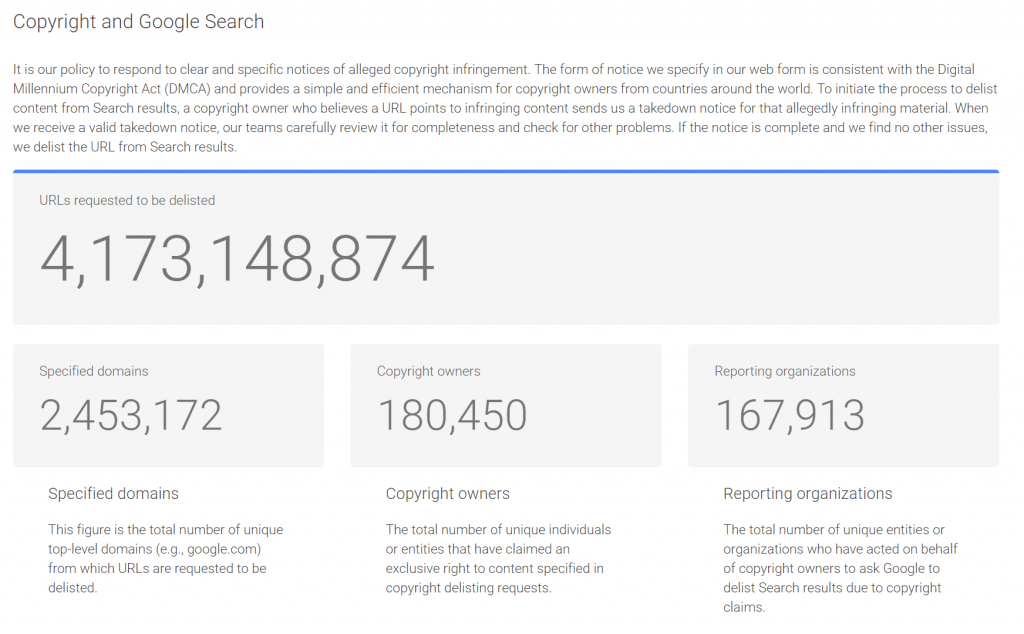
Speaking of Megaupload, with the file hosting industry still scrambling to ensure their own safety, it’s interesting to note that RapidShare, a leader in the field, has been calm throughout. After all, why wouldn’t they be, as they were removed from the RIAA/MPAA’s “notorious markets” list last year having been on it the previous year. So what exactly is RapidShare doing right, that Megaupload and other websites have not done? Education and enforcement, seems to be key. Education means educating those in positions of power about what RapidShare’s business model is all about (ie. not about piracy), and RS’s lobbying activities in Washington won’t have gone unnoticed. It also means actually ensuring their business model is not dependant on piracy, so no rewards program for major uploaders or referrers.

And possibly more important is the need to show content holders the site’s copyright policies aren’t just for show. RapidShare has a well staffed abuse department, that not only aims to deal with takedown requests in a timely manner, but also seeks out and removes infringing content pro-actively. Does RapidShare still host pirated content? Of course they do. But they have a business model based on legitimate usage, and they have a working anti-piracy policy, and that’s all that’s required really from a legal point of view – nowhere in any law, except for the failed SOPA/PIPA, does it say that a website has to ensure that it’s 100% clean of pirated content, an impossible tasks these days due to the user generated nature of website content.

Gaming

Gaming wise, the NPD figures for January are out, and they don’t make good reading. In fact, it’s so bad that analysts are even questioning the validity of the data. I haven’t had time (I know, I know) to fully digest (I know, I know) all the figures yet, but I’ll do that and write up the analysis as usual early next week.

Despite not wanting to write a lot, and not having much to write about, I’ve somehow gone over the 2000 word mark, so I think that’s as good a time as any to stop writing. See you next week.

Weekly News Roundup (29 January 2012)

Sunday, January 29th, 2012

Welcome to another edition of the WNR. I hope you’ve had a good week, that the FBI hasn’t stormed your home, seized your prized car collection and that you haven’t had bail denied by a judge. Me? I’ve somehow talked myself into getting a (admittedly cheap) copy of Skyrim (on the PC, of course), despite knowing that I really don’t have the time to play a game that has managed to destroy millions of hours of productivity since it was released. But curious as to what the hype was all about, I  talked myself into playing “just a few minutes”. 20 hours of Skyrim later …

Quite a bit to get through, and with the steel ingots and leather strips not making themselves into armor and requiring my urgent attention, let’s get started!

Copyright

The fallout from the Mega story last week continues, as file hosting websites scramble this week to “clean up” their services, or simply to shut up shop.

This is probably what federal prosecutors, and the content holders urging them to take action, had been hoping for. With thousands of illegal download links now put out of commission, some permanently, it does seem like a major victory in the war against web piracy. Although whether this actually leads to any revenue increases, the whole point behind stopping piracy, time will tell.

For the music industry, this is the second major breakthrough against web piracy in just over a year, along with October 2010’s closure of LimeWire. But it appears that despite what the NPD calculated to be a 46% decline in the number of downloaders shortly after the LimeWire closure, and with less songs downloaded per individual when comparing to the same period a year ago, music revenue for 2011 hasn’t actually increased much at all. In fact, it remains 3% down compared to 2010, when LimeWire (up until October at least) was fully operational. The rate of decline has slowed, but you would think that with such a dramatic decline in piracy rates (nearly half of the people downloading pirated music were using LimeWire to do it just before it was closed down), and the RIAA’s warning of billions upon billions of damage caused by piracy, that it would have at least helped the industry get back into growth. So it will be interesting to see, now that piracy through file hosting services has decreased, what effect it actually has on revenue.

Record label vs artists profits

Apparently, only $23 out of every $1000 made on music sales actually goes to the musician, on average (source)

This is of course assuming the main aim behind the targeting of Megaupload was in fact to do with piracy, as it was noted this week that Megaupload was already making plans to take on the music industry head on, in plans that could cause the major labels more damage than piracy ever could. The plan involves a new website called Megabox, which allowed unsigned artists to completely bypass music publishers, and market directly to music fans, with 90% of the revenue going back towards the artist. Even free (ie. pirated) downloads would generate money for the artists, as Megaupload promised to share the very income, earned from downloads, that got them into trouble last week. And if Megabox works, then it would have been a big blow to the majors, and would have seriously questioned their relevance in the age of the Internet, when “naturally” generated hype is more valuable than any kind of promotion that labels could come up with. And with technology enabling artists to sell directly, without having to invest a lot in infrastructure (or they can leave it to tech companies to handle that side of things), artists no longer have to see a majority share of their revenue going to record labels. If there’s one thing the labels fear more than web piracy, it’s this, and while it might require one to be wearing a “tin-foil-hat” to think that this was the only reason behind the Mega take-down, it’s probably a nice little bonus the record industry got out of the whole thing. But while the likes of the RIAA can stop Megabox, they can’t stop innovation and progress, not forever, and a major shift in the way content is packaged, sold and distributed is on its way, if it isn’t here already.

While the Mega stories were very much dominating the headlines, the temporary demise of SOPA was still on people’s minds. One of those minds was EMI’s VP of Urban Promotions, Craig Davis. In a Q&A session with the Reddit horde, Davis expressed largely personal views that seemed to differ quite a bit from the general line of thinking coming out of the music industry these days, in that legislation is the only way forward to deal with the web piracy problem. Perhaps highlighting the internal divisions within the music industry on how to handle the web piracy problem (something we don’t usually get to see, with the RIAA’s loudspeakers drowning out all other opinions), Davis personally opposes SOPA, and says that piracy is more of a service issue, than a pricing one, mirroring what Valve’s Gabe Newell said a few months ago. In fact, Davis specifically mentions Newell as having the right idea when it comes to fighting web piracy. By focusing too much on the pricing issues behind piracy, major content holders often come to the conclusion that there is no real way to “compete” with pirated downloads, as they could not offer their content for free (although I would argue that piracy itself carries a cost, in terms of legal risk, technical and safety issues, and a moral cost, and so for legal content to compete, it does not have to be free, it only needs to be seen as good value). But by concentrating on service, innovation, basically by making legal options more attractive in more ways than just on price, then “legit” could compete with “free”. And perhaps Newell’s Steam could offer guidance to the music, and movie industries as to how to best leverage the positive aspects of the Internet, and how to compete with piracy – Steam’s legendary sales, it’s active community of gamers, and value added features, all help it not only compete effectively with pirated downloads, but also traditional retailers.

But innovation always carries a risk, a risk that, historically, the music and movie industries havn’t been willing to accept. Whenever something new hits the block, whether it’s home audio taping, or VCRs, these industries have resisted change and has tried to sue their way out of the problem. Eventually though, they did accept that change was inevitable, embraced innovation, and has come out better for it. But what’s different this time though is the incredible power lobbyists now hold over elected officials and the systemic corruption in D.C., and this now offers entrenched major content holders another “solution” – to legislate their way out of trouble. Most in D.C. have  gotten so used to using money to buy policies, that they no longer sees anything wrong with it. Which is probably why former US Senator, and current MPAA head, Chris Dodd was so transparent in his attack against political opponents of SOPA, literally threatening to stop writing checks for them come election time. That he simply didn’t see any problem with the head of a lobby group threatening to stop paying politicians if a favourable law wasn’t passed, shows just how “comfortable” the Washington crowd has gotten with the way things are done over there (or it may just be because Dodd is stupid). But while Dodd may not have felt that there was anything wrong with his statement, others did, and using the same tactic that has already worked against SOPA, people are signing a new petition on the White House’s “We the People” petition website to ask for a full investigation of Dodd for bribery. With 25,000 signatures required within 30 days for the White House to officially issue a statement on the petition, 30,000 signatures were promptly recorded in just a week (that’s the Internet for ya). The fact that the White House will now have to issue on statement of Dodd’s alleged improprieties, regardless of what the statement actually says, should be hugely embarrassing for the MPAA Chairman. Or it could be much much more serious.

Anno 2070 Screenshot

Anno 2070 looks great, but just pray that you don't need to change your GPU, or the game's DRM could lock you out

With so many big issues being discussed, trust Ubisoft to still somehow steal the headlines via yet another incident with one of their controversial DRM choices. When review site Guru3D went about using Ubi’s Anno 2070 in a hardware benchmark test, they found that the 3 PC activation limit also applied when the GPU was changed, and so having barely started their test, they had used up all of their activations. Having calculated that they would need 7 copies, or 21 activations, to finish their testing, Guru3D contacted Ubisoft about this potential “bug” with their DRM, but Guru3D were promptly told that not only was this normal and intentional, Ubisoft wouldn’t be providing the 7 copies needed to finish their testing. So Guru3D did what any self respecting website would have done – they published the entire detail of their ordeal for the Net public to judge, and the expected public backlash eventually forced Ubisoft to back down and allow for GPU changes. Ubisoft came out with the usual statement saying that very few people were affected by this particular problem with their DRM, which is probably true considering the game only came out in November, and I don’t think many would have changed their GPUs twice during this period. But the problem with DRM is that it’s forever, so were Ubisoft really expecting PC gamers, of all people, to not frequently change their GPU or other parts of their hardware? Or maybe they just didn’t think their games were that good for people to be still playing it for more than a couple of month. For now though, while GPU changes are exempt from requiring new activations, other hardware are still being included, and so don’t be surprised if this problem pops up again at a later date.

Gaming

And on that note, we move to gaming. For some reason, all the Xbox 720 rumours decided to out themselves this week.

Of course, there cannot be an Xbox rumour without mentioning Blu-ray, and the next Xbox (which I hope will be more imaginatively named than “Xbox 720″) will apparently have a Blu-ray drive. Whether it plays Blu-ray movies or not, remains to be seen though, since the Wii U will have a “Blu-ray like” drive, that won’t play movies.

Xbox 720 Mockup

Just one of the many Xbox 720 mock-ups floating around the net

On the GPU front, a Radeon 6000 series chip might be used. This actually feels too “new” of a chip for a console that’s supposed to be released next year, since the Wii U is only using a Radeon 4000 series. The reason why console manufacturers use older chips, other than the maturity of the product line, is due to the time it takes to engineer an existing off the shelve solution for a game console, the cost involved in using the state-of-the-art GPU, and the fact that optimizations mean console GPUs don’t need to be as powerful as their PC counterparts.

The most controversial rumour involves Kotaku’s reveal that the next Xbox could ban the playing of second hand games. Publishers have long complained that second hand games are cannibalising sales, as gamers can “share” the same copy and game stores profit from each transaction – only one payment from these transactions is made to publishers, right at the start. Publishers have come up with various ways to solve this problem, for example, a voucher system (but that don’t really works for limiting the multiplayer component of games). So if Microsoft really wanted to please publishers, and get them to release more exclusives for the platform, then having a system that ensures second hand games won’t work will do the job. Although I think this will backfire and hurt sales, and the platform, in the long run.

Nothing much more happening this week, at least no in the real non-Skyrim world, so we come to the end of another WNR. See you next week.

Weekly News Roundup (22 January 2012)

Sunday, January 22nd, 2012

Welcome to this Chinese New Year(’s eve) edition of the Weekly News Roundup – the CNY(e) ed. of WNR, if you will. The alphabet soup continues, with more news on SOPA, PIPA, and a big one about MU, so with little time left in the year of the Rabbit, let’s get started.

Copyright

In another week in which the copyright related headlines dominated the news, we start with reaction to last week’s White House statement on SOPA. The reaction from none other than media mogul Rupert Murdoch.

The controversial media owner wasn’t afraid to be controversial when it came to talking about the SOPA/PIPA controversy, accusing Obama of being beholden to his “Silicon Valley paymasters”, and calling Google a “piracy leader”. But for many, the fact that Murdoch is supporting SOPA/PIPA, is probably enough to push them to the other side of the debate.

Wikipedia Blackout

Wikipedia, and thousands of other websites, blacked out their content for most of January 18 - a protest that got the attention of DC politicians

Which is probably why so many joined in on the January 18th day of action, which saw websites, including this one, black out their content to protest the votes on the controversial bills scheduled for 24 January. Even the newly obtained Righthaven.com, obtained via court appoint receiver auction last week, joined in the fun with a hilariously redacted letter to the MPAA (still not quite sure what the squid is all about). While thousands of websites joined in, the website that had the most influence on proceedings was probably Wikipedia. The website took the unprecedented step of blacking out all of their English language pages for 24 hours. When it was all over, and with everyone realising just how important Wikipedia has become in their lives, many also found out just exactly what SOPA was and what it could do. Some have criticized Wikipedia for participating in online activism, when the online encyclopaedia is supposed to be position neutral. This may be true, but when the very environment under which Wikipedia exists, and its own existence comes under threat, then there may be a need for a bit of activism. With people flooding elected official’s websites, emails, phone lines, calling on them to not support SOPA/PIPA, the power of the Internet was on full show.

And the protest seems to have had an almost instant effect, with key supporters of both SOPA and PIPA pulling out, and it became apparent pretty aoon that both bills were, in effect, dead in the water. With the 24 January deadline coming ever closer, the two sponsors of the bills, Rep Lamar Smith (R-Texas) and the senior senator for Vermont, Patrick Leahy, decided to postpone both bills, indefinitely. It was a political necessity, as they would say, for now at least. Chances are, the same bills with only minor changes, and very likely with different names, will be reintroduced at some later point when the heat dies down, but for now, this was still a major political victory for the Internet. The tech sector, who have largely stayed out of the political arena, may have also realised the power of lobbying – whether this is a good thing or a bad thing, that remains to be seen. It’s an unfortunate reality in today’s political environment that political lobbying is so effective, but for too long, politicians have only been hearing one side of the story, and perhaps this will help even things up a bit.

Of course, the MPAA was fairly incensed at both the blackout, and the fact that their bill, and I’m using “their” correctly and intentionally, was sunk. Chris Dodd, who has had a difficult learning period as the new Chairman of the MPAA, came out attacking the blackout as a “dangerous gimmick … designed to punish elected and administration officials who are working diligently to protect American jobs from foreign criminals”, obvious inferring that politicians against SOPA/PIPA are negligent in their duties in stopping criminals, and playing to the xenophobic crowd, added the quantifier “foreign” just in case. Dodd also attacked the decision to pull the bills, again using all the right keywords, describing the entire Internet as a “safe haven for foreign thieves”. And showing his experience as a Washington player, Dodd warned his former colleagues not to “ask me to write a check for you when you think your job is at risk”, demonstrating in one sentence the undue influence of money in US politics, and the entertainment lobby’s masterful manipulation of democracy through it.

MegaUpload Seized

MegaUpload's domain has been seized on order of Federal prosecutors, who say the website engaged in racketeering and money laundering

But before the champagne bottles had emptied, an even bigger story broke, as it was revealed that Megaupload, one of the web’s largest properties, had been shut down. In a simultaneous, multi-national, law enforcement action, involving FBI agents in the US, and law enforcement in the Netherlands, Canada and New Zealand, servers were seized, offices raided, an the founder of Megaupload and some of his employees were also arrested. In the court documents filed so far, incriminating emails (that were obtained, somehow) showed that the people running Megaupload were well aware of the nature of their service, in that it was being used by pirates, and sought to continue to profit from the activities. But then, only an idiot, or maybe a DC politician, won’t have known what Megaupload was all about just by searching for a few MU links on Google.

I’ve not had a look at all the emails, only some of the more serious ones being posted here and there, but to me, this whole MU case strikes me as a civil matter, not a criminal one. For example, what makes MU different enough to the ongoing MPAA vs Hotfile trial – if anything, Hotfile appears to be even more “guilty”, as they were paying pirates directly based on the popularity of their uploads. And as for incriminating emails, we’ve seen it all before in the Viacom vs YouTube case – despite the existence of these so called  ”smoking gun” evidence, as Viacom liked to call them, Google/YouTube eventually won the case on DMCA Safe Harbor grounds. So for those that are saying the government’s case against MU is rock solid, I think it might be a bit too early to judge, as the legal documents revealed at this stage only shows one side of the story, the government’s side. When MU provides their version of events, things might no longer be as black and white, and their lawyers might just cloud the issue enough to make the most serious criminal charges (like the racketeering and money laundering charges) go away.

And their version of events might just include testimony from the many that used MU’s service legitimately, and most are pretty angry at the excessive amount of force and haste the government seems to have used in taking down MU. You cannot deny that MU had substantial non-infringing uses, and that could provide MU protection under the Betamax verdict, but it all depends if the infringing aspects are enough to negate MU’s legitimate uses, and how complicit the owners and operators of MU were.

I also think part of the strategy here is to scare the rest of the online storage industry into taking copyright enforcement more seriously, even if the government doesn’t ultimately win the case against MU. With SOPA/PIPA on hold for now, online storage services will need to take a good look at the DMCA, and make sure their compliance is genuine. That should be enough to keep the FBI away, for now, while most likely, tons of pirated content would still exist on these sites.

So a lot happening, and perhaps too much to digest in such a short period, but I’m sure both SOPA/PIPA, and MU, will be occupying the headlines for a while yet.

And on that note, we come to the end of this rather short WNR. Nothing left to say except, Xin Nian Kuai Le, Gong Xi Fa Cai (Happy New Year , Congratulations and be prosperous).

Weekly News Roundup (8 January 2012)

Sunday, January 8th, 2012

Welcome to yet another edition of the WNR. It was either still a relatively quiet week, or that I just haven’t gotten back into “work mode” yet. I actually made two new year resolutions this year, one was to work hard, the other was to play hard. A week later, I’ve definitely managed to follow through on at least one of those resolutions.

In any case, we should be able to get through this one rather quickly.

Copyright

And as all of the news were copyright related, this should make things go even quicker – we’ll start with the SOPA related ones. Having forced a policy change at GoDaddy, albeit one that’s still not 100% convincing, Reddit users have now decided to target politicians that support SOPA as their anti-SOPA next move.

Operation Pull Ryan

Operation Pull Ryan aims to unseat Republican Paul Ryan for his alleged support of SOPA

There are quite a few politicians to choose from though, considering most of them seem to support SOPA or the senate version, PIPA. But with a few key SOPA backers not facing re-election, Reddit has decided to make an example out of rising Republican star Paul Ryan, even though he may not actually fully support SOPA. Despite Ryan’s spokesperson coming out and clarifying the Congressman’s stance on SOPA, or rather, some expertly crafted political language that implies fence-sitting without actually coming out and saying so, Reddit plans to get Ryan’s opponent, Democrat Rob Zerban, elected at the next election. A fantastic result if they can do it, but the successful completion of Operation Pull Ryan will not be easy. Bigger than the issue of SOPA for the Reddit people taking part is Paul Ryan’s controversial budget plan, as well as his support for the equally controversial National Defense Authorization Act.

But the truth is that Ryan’s fence-sitting wouldn’t have been needed just a few month ago, when SOPA was widely supported by politicians on both sides of the aisle. And that’s progress, I suppose. The popular uprising on SOPA shows that people can affect political change, and while SOPA may still get passed, those in the US still retain the right to punish those who openly supports SOPA at the next election. But as expected, it’s perhaps the industry and monied interests that are having the most effect on the weakening political support for SOPA. We already know that most tech companies are against it, but this week, it was revealed that the major gaming companies, who have long complained about web piracy, are also withdrawing support for the controversial bill. Microsoft have already distanced themselves from SOPA (and may have even been secretly working behind the scenes to get others to come out again SOPA), but now, Nintendo, Electronic Arts, and even Sony Electronics, have apparently withdrawn themselves from the official list of supporters for SOPA as well (Sony music is still very much a supporter). Now, the cynical side of me says they’re only doing it to avoid the negative attention SOPA is receiving, perhaps very much the same reasons behind GoDaddy’s change of heart, but maybe that’s the best we can expect from companies like them. Not supporting SOPA is not as good as being all out against SOPA, but at least it’s better than supporting SOPA. And if there’s one positive to come out of this whole mess, it’s probably the realization by many of the real power of the Internet, how it can empowered anyone to make a stand on issues that affect them. And that’s even more reason to fight SOPA and help protect the valuable tool that is the Internet.

MPAA Logo

MPAA using questionable calculations methods to derive losses due to piracy, and may be triple counting non existent losses

At the heart of the argument *for* SOPA is the economic damage caused by web piracy, but it’s been common knowledge that the entertainment industry frequently stretches the truths when it comes to publishing “losses” figures. So when the MPAA made the statement that they estimate there to be $20.5 billion in losses due to piracy every year, it came as no surprise to people that what most likely happened was that the MPAA simple multiplied the number of illegal downloads by the full retail cost of each piece of content. But what most didn’t know was that the MPAA’s figure manipulation went even further, by double and sometimes even triple counting the already exaggerated figures. If you have a $10 DVD, in which $2 goes to the manufacturer, $2 goes to the transportation company, and another $2 goes to the retailer, then the MPAA (or rather, the group the MPAA tasks with making the calculations, the Institute for Policy Innovation) calculates the loss by a clever bit of maths: $10 + $2 + $2 + $2 = $16. This is an  absurd way to calculate losses (that people downloading a $10 DVD costs the economy $16), as this kind of methodology is usually reserved for calculating changes in output and employment.

The MPAA also fails to take into account that SOPA doesn’t affect non US visitors visiting non US websites, and most importantly, it fails to realise (or deliberately ignores) the fact that just because people save money by illegally downloading movies, it doesn’t mean they don’t spend the same money on other parts of the economy. In fact, with the economy so bad and so many families struggling, perhaps the most simple explanation for piracy is that people just don’t have the money to buy movies, preferring to spend all their money on things like food and rent instead (which means they still contribute 100% of the earnings back to the general economy) . In the past, they simply stopped watching movies, now, they don’t have to make that sacrifice as long as they can still afford a cheap-ish Internet plan. But even if the bad economy isn’t to blame, then there are so many different (and some would argue, better) entertainment choices out there, such as video games, that people may simply be shifting their resources towards other parts of the economy. Regardless, the net effect of web piracy might be zero for the overall economy if people have not been hoarding money or throwing it away, although the loss for the affected entertainment companies is still very real.

But that’s what’s actually most wrong about SOPA. It will cost tax payers 10 million dollars a year to maintain the bureaucracy for handling SOPA, and to provide pro bono legal services for billion dollars companies, courtesy of the Department of Justice. And even after all that,  it may not help the overall economy at all, even if it worked to stop piracy (which it won’t). And that’s also if we don’t count the cost of damaging the Internet, innovation and other industries. It ends up being corporate welfare for the music and movie industry, and in the end, it will benefit nobody, not even the very same industries that will be better served in the long term by embracing innovation.

The Hobbit: An Unexpected Journey Poster

The Hobbit: An Unexpected Journey, just one of major releases for 2012, which will probably help Hollywood have another record year

And the industry should also take a long hard look at itself and see if there are any reasons within for their current problems. With box office receipts down in 2011 compared to the record breaking 2010, it would be easy to blame piracy. But piracy is very likely not the cause of the relatively small 3.5% decline, at least not according to film expert Roger Ebert. Ebert’s opinion is that the decline in revenue is largely due to the lack of a blockbuster the likes of The Dark Knight or Avatar, the high cost of going to the movies (3D and refreshments), and the greater choice people have these days when it comes to watching movies (whether it’s at home with Blu-ray on their big screen TV, or via Internet services such as Netflix). The MPAA always seem to believe they “deserve” ongoing revenue increases, but it’s only sensible to accept that this will most likely not be the case, given how much choice people have these days. Although with that said, I think 2012 will be another record breaking year for Hollywood (assuming the world doesn’t end) – what with The Hobbit, the Alien prequel Prometheus, a new Bond film and The Dark Knight Rises. And the music industry should stop conning people about its losses, which are almost 100% to do with the shifting buying habits of music lovers, from CD albums to digital tracks (the industry used to derive almost 90% of its revenue from album sales), and also the improving indie scene (thanks in some degree to the Internet).

That’s all the news I have this week unfortunately, I apologise if you were expecting more. I think there will be much more next week, not just because CES 2012 starts either, but due to everyone waking up from their holiday hibernations. See you next week.

Weekly News Roundup (New Years Day Edition)

Sunday, January 1st, 2012

Happy New Year! Hello from the 2012 side of the world, Australia being one of the first countries to go over to the other side, but you’ll all join me soon enough, whether you like it or not. Having experienced about 18 hours of 2012, I have to say that it has been pretty boring so far. No cataclysmic events yet, but I’ll keep you posted.

I guess it would be customary, at the end of the year, to review the just ended orbit around the sun and summarise the major events. But that would require actually remembering what happened, all year, when I can barely even remember writing last week’s WNR. It should also be a time to look forward to the brand new, still in shrink wraps, year, and make some bold predictions about 2012. But that would require insight and imagination, both of which are in short supply in this 36C (97F) heat.

With the award season upon us soon, I guess I can format this WNR “a look back” in similar fashion, but without spectacular musical numbers, or comedic writing. So basically an award show without any of the interesting bits. Or any actual awards. Sounds like a great idea!

There has been many deserving winners of the prestigious Loser of the Year award, from Sony’s PSN SNAFU, to recent events involving GoDaddy being pwned by Reddit, but there can only be one winner, and of course, it’s Righthaven. The group that helped to redefine the term Copyright Troll has had a horrible year, not only losing court cases, but eventually their shirt (and domain name), as the company is now on the verge of bankruptcy. Will they still be around to compete for next year’s award. Doubtful.

SOPA: winner of our Villain of the Year award

SOPA: winner of our Villain of the Year award

Competition for the always popular Villain of the Year award has been fierce this year, as individuals and companies fight to be total d*cks (hint: not “docks” or “ducks”), in the field of copyright, gaming and beyond. But this year’s award winner is neither an individual, nor a company (and it’s not a duck either). It is, of course, SOPA. The always controversial Stop Online Piracy Act stormed to a clear lead in the voting for the award, at the very last minute I might add. SOPA has managed to unite all against it, be it the conservative Heritage Foundation, Republican as well as Democrats, and even the sworn blood enemies, Reddit and 4chan, and that’s quite an achievement.

The Best Blu-ray of the Year award goes to Harry Potter and the Deathly Hallows, mainly because it was split into two parts and both parts still managed to not only get released in the same year, but both also topped the sales charts. Star Wars just misses out due to a point deduction for George Lucas being a total d*ck (hint: not a duck, named Howard or otherwise).

Skyrim

Skyrim wins our Game of the Year award, for wasting time that could have been used to cure diseases and save the planet

The Best Game of the Year should probably go to the best seller, which would be Modern Warfare 3, but that wouldn’t be fair to the game that everyone is talking about. The amazing world of Skyrim has drawn in thousands of gamers, most of whom have spent hours upon hours arrowing people, and assorted creatures, in the knee, and as a result, the game would have been responsible for breaking up thousands upon thousands of relationships if only gamers actually had real life relationships.

And finally, the Hero of the Year award goes to, in a lame effort to appease my readers, You! For helping to fight SOPA and to punish companies for not agreeing that SOPA is the worst thing to happen to the Internet since Rickrolling, for not buying into the Ultraviolet hype that, I have to admit, I was sucked into when I first heard the phrase “your movie library in the cloud”, for putting up with Sony’s PSN outage and that $600 invoice for adult toys that hackers charged to your credit card account when your details were stolen from PSN, for fighting the likes of Rigthhaven and the US Copyright Group and actually winning, and most courageously of all, for keeping on reading the WNR, rant after rant. You’re a deserving winner!

And as you can probably guess by now, it wasn’t exactly a very newsworthy week. The only real notable piece of news was the GoDaddy anti-SOPA boycott, which Digital Digest was proud to join in, having moved 22 domains out from GoDaddy. It would be easy to feel sorry for GoDaddy right now, as there’s almost nothing they can do or say to repair the damage caused by their ill advised support for SOPA in the first place – even their statement of “we oppose SOPA” was attacked by people claiming the company was opposing SOPA for the wrong reasons (not because SOPA is bad, but because GoDaddy was losing money because of supporting SOPA). Namecheap, hosting the Move Your Domain Day event by offering discounted, below cost domain transfers out of GoDaddy, also managed to raise $64,180 for the Electronic Frontier Foundation, $2 for every domain transfer – not bad work for a day, considering how much of a pain moving a domain (especially an active, website hosting one) is.

And that was it for the week really, so I probably shouldn’t babble on any further, especially on a day most of you will be nursing hangovers of varying degrees. So there’s nothing left to do except wish you a great new year, a prosperous one, a safe one, and one that’s heaps better than the awful, awful, 2011. See you next week.