Archive for the ‘Video Technology’ Category

Weekly News Roundup (18 January 2015)

Sunday, January 18th, 2015

Things are finally starting to come back to normal in terms of news, I guess people are just starting to get back into work (earlier only physically, but now mentally as well). I’m the same too, so it’s very likely that it wasn’t the lack of news, but my lack of interest in reading and writing the news, that was the cause for the shortened WNR from previous weeks.

Okay, enough waffle, let’s get on with this week’s roundup.

Copyright

Hotline Miami 2

Banned in Australia, so the game’s makers says it’s okay to pirate

When is piracy okay? When the content creators says it’s okay, apparently. The banning of the ultra-violent Hotline Miami 2 game (banned not for the violence, but for sexual content) in Australia has so angered one of the game’s designers, that he has urged Australians to pirate his game and play it that way (and don’t even bother sending donations or anything like that, just enjoy the game, says Hotline Miami designer Jonatan Söderström).

While at first this seems like quite a controversial move by someone who is directly harmed by piracy, if you actually think about it, it’s not that controversial at all. With the game banned in Australia, it will be very difficult for gamers here to buy the game legally (they can still use VPNs to access overseas online stores, like Steam). With no expected income to come from Australia, why not let fans and gamers pirate the game? It can only help to promote the franchise, and really, comes at very little financial cost for the publishers.

Just goes to show that the effects of piracy isn’t always black and white, and there are many instances where piracy is not harmful, or it can be even helpful in some situations.

The Pirate Bay

Not long to go before we find out if The Pirate Bay will be making a comeback

While Hotline Miami 2 has not been released yet, by the time it is, and if Australians still can’t buy the game, they might be able to download it from The Pirate Bay. “But wait a second DVDGuy,” I hear you asking, “isn’t TPB dead?”

It might be right now, but it looks like the world’s most popular piracy site will be making a comeback. The clue comes from an encrypted message left on the site, which was finally cracked last week, revealing a link to a YouTube video. The video was a super cut of Arnold Schwarzenegger’s signature “I’ll Be Back” line, thus providing a vital clue as to whether The Pirate Bay will be back or not. The key to cracking the code (is in the actual decryption key, wearetpb) was found in the HTML source code for the page (it’s still here, if you want to take a look), and Reddit user “dafky2000” who was first to crack the code.

The countdown timer on the site, which counts down to zero around the 1st of February, might indicate the time and day when TPB will make its much anticipated comeback. Not too long to find out if this is the case …


High Definition

Netflix

Everyone loves Netflix, apparently

Netflix leads all competitors not only in market share, but also in user satisfaction, according to a new survey. Netflix users watch far more than other users, watching an average of 7.7 hours per week, compared to 4.1 hours for Hulu Plus users and 3.5 hours for Amazon Prime Instant. The same users also enjoyed their watching experience far more on Netflix, with the streaming platform receiving a 4.1 out of 5 score. Amazon Prime Instant Video and HBO Go scored 3.4 each, cable/satellite providers 3.2 and Hulu Plus was fairly far behind with only 2.9.

Netflix was so liked, that 62% said they would still continue subscribing after a price increase, with 21% saying they were willing to pay up to $3 more. What’s most interesting was that the same question when asked in July 2013 only yielded a 9% result, suggesting that Netflix has seriously improved their content offering (very likely via original programming) in this time to make it a much more attractive and, in the minds of viewers at least, a much more valuable service.

Gaming

The Wii U has just had its best month ever in terms of sales, but that’s only because it has been struggling badly in all the months after its original launch (and now, it’s doing less badly). It’s still far behind the PS4 and Xbox One in terms of sales, and almost can’t even be considered a current-gen console, given its hardware limitations and low sales numbers.

Which is probably why Nintendo may already be well into developing the successor to the Wii U, and it may be here next year. According to the analysis done by Digital Foundry, based on information they’ve gleaned from talking to various people, the console is much more likely to continue Nintendo’s philosophy of doing things differently than Microsoft and Sony. The new console is much more likely to continue the Wii U’s attempt to fuse mobile and home gaming, with the Japanese company linking up with the makers of the iPhone/iPad’s PowerVR chip for new console’s hardware.

Whether it can be the Microsoft/Sony killer that the Wii was, or the “too little, too late” feeling that you get with the Wii U, we’ll have to wait and see.

——

There’s no more wait however for the end of this WNR, which is coming right now, right here. See you next week.

Weekly News Roundup (11 January 2015)

Sunday, January 11th, 2015

Another pretty quiet week as we slowly ramp up to normality in the coming weeks. Actually, quiet is probably the wrong word to use when the CES is on, but while there is sufficient quantity in news stories, much like the CES, the focus was mostly on a single subject: 4K.

Panasonic Ultra HD Blu-ray Player Prototype

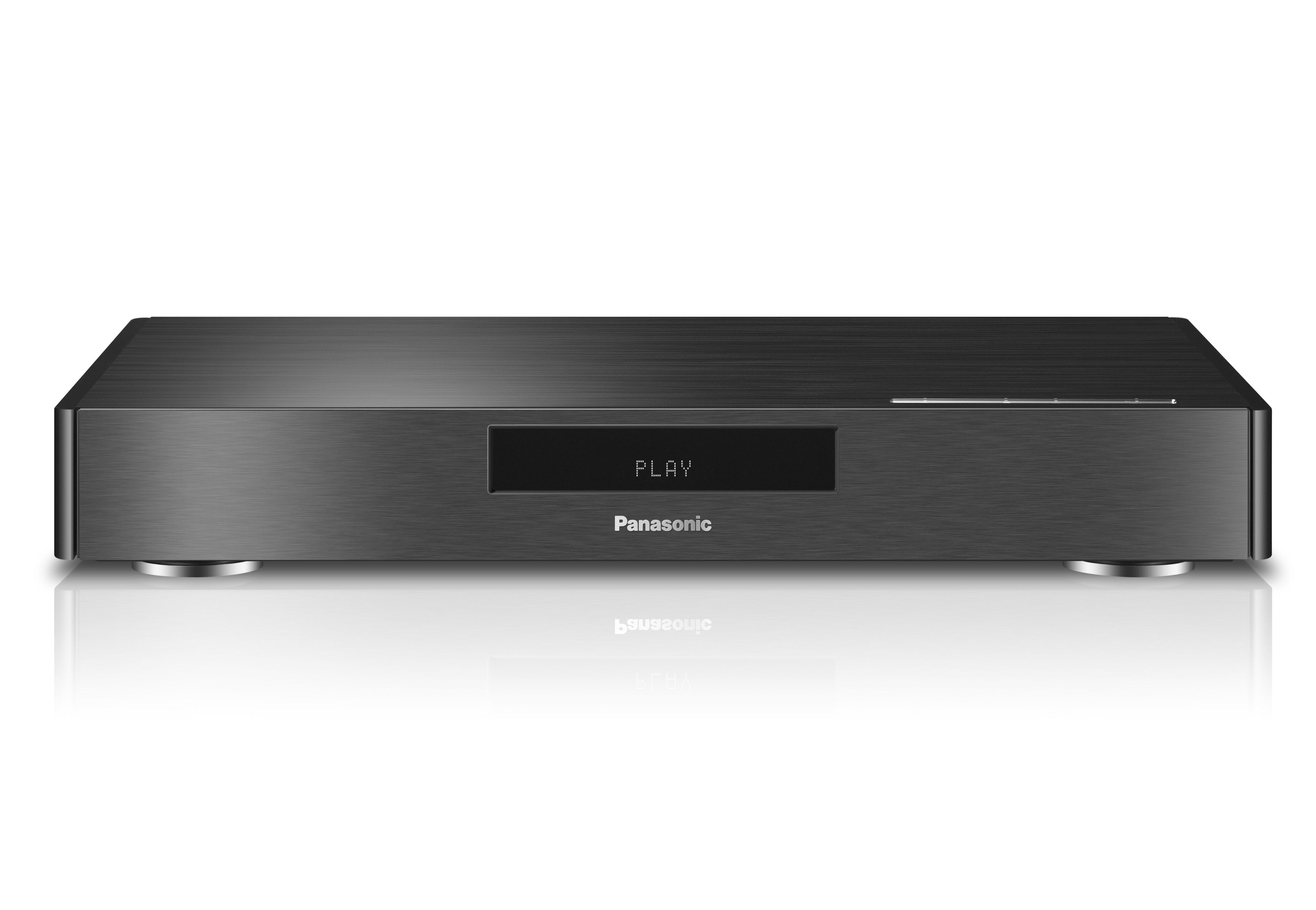
This Ultra HD Blu-ray player looks like just any other Blu-ray player, but can play 4K Blu-ray discs

Which brings us to the week’s only notable story, of Panasonic’s demonstration of a 4K Blu-ray player prototype. It’s still a very early prototype, with the commercial version months away (probably closer to the end of 2015, than right now), so even this story is very much a non-story. What is slightly more interesting is the official name of the new 4K Blu-ray discs: Ultra HD Blu-ray. To be completely honest, I had kind of expected it to be called “Blu-ray 4K”, to follow the naming convention established by “Blu-ray 3D”, but using “Ultra HD” allows some room for expansion in case CE manufacturers can’t get the traction they want from 4K and move on to 8K or whatever.

So this was very much a CES dominated by 4K (just like last year’s), and proponents of physical discs will hope that UHDBD can take off and give discs a second-life. Because, based on the revenue stats from 2014, Blu-ray will need it. Revenue fell 8.7% compared to 2013, the first time revenue has fallen since the format’s inception. Of course, a lot of this is due to the lower average price of Blu-ray titles (so more discs sold, but at a lower average price, still equals a loss of revenue), and also largely dependent on the caliber of releases. It was notable that, despite being less than a year away from its commercial release, only Panasonic managed to bring a prototype Ultra HD Blu-ray player to CES this year … most of the 4K focus has been on digital and streaming options instead.

But I think discs still have a place, and especially for 4K, since the 15 Mbps required to stream a single 4K Netflix stream (which can only be considered to be “good” quality, not “theatrical” quality) may be too much for most non-fiber connected homes. Ultra HD Blu-ray discs, on the other hand, will be able to give 4K streams 3 or 4 times as much bandwidth so they can truly shine on even the biggest screens, which is what 4K is all about really. It’s like that old joke about sending TBs of data, and that sometimes carrier pigeons are the best choice in terms of throughput. So for 4K movies that may take up to 100GB of space, discs are still the best choice for now.

Speaking of Netflix, the company’s chief content officer Ted Sarandos wants to bring ‘The Interview’ to Netflix, after the film became Sony’s biggest digital release ever, grossing over $31 million after being purchased or rented 4.3 million times. It’s unknown whether Sony will bite, and how releasing straight to Netflix will impact on the studio’s relationship with pay TV operators, but it’s clear that ‘The Interview’ is new territory for all involved and could signal a new way to distribute movies in the future.

——

That’s it for another really short WNR. Normal service to resume next week?

Blu-ray: The State of Play – December 2014

Friday, December 19th, 2014

Welcome to another edition of our annual Blu-ray sales analysis, even if this one is extremely late. My justification is that I wanted to make this more of a year-on-year comparison (so the whole of 2013 vs whole of 2014), as opposed to doing one in May (May being the first month that I’ve been keeping regular stats for Blu-ray sales). So this “State of Play” report is slightly different to ones in the past, and concentrates more on 2014’s results versus that of 2013.

Note that the last couple of weeks for 2014 is still missing, and so an update to this post will be made when these results come in, sometime during the middle of January.

The data used in this analysis derives from our weekly updates, based on figures released by Home Media Magazine. Some of the historical figures you’ll see have also been adjusted, due to slight tweaking of the metrics used by HMM to create these sets of data, although the changes have been very subtle and does not change the bigger picture in any way.

As per usual, this first set of graphs show Blu-ray market share (Blu-ray and combo market share as a percentage of all disc sales) through the six year period that I have tracked them, with the release milestones pointed out.

Blu-ray Sales Percentage - 4 May 2008 to 6 December 2014

Blu-ray Sales Percentage – 4 May 2008 to 6 December 2014 – Click to see larger version

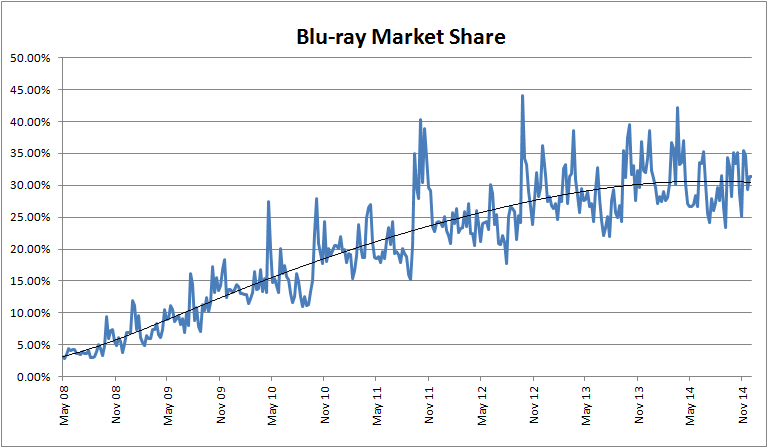
As the graph is getting perhaps a bit too wide, here’s a condensed version that allows you to see Blu-ray’s market share rise more clearly.

Blu-ray Market Share - 4 May 2008 to 6 December 2014

Blu-ray Market Share – 4 May 2008 to 6 December 2014

It’s interesting to look at the most recent additions to the “milestones”, or new releases that had a profound impact on Blu-ray weekly revenue or market share. There were many, but that’s mostly due to the extended period we’re covering in this report, but when you consider that the peak weekly Blu-ray market share has not been broken in all this time, and that the record remains with the week The Avengers was released back in September of 2012 (44.10%, re-adjusted), you can sort of start to come to a conclusion that Blu-ray’s growth has stagnated. The closest week to breaking the record came in the week that Frozen was released (42.16%), undoubtedly the biggest Blu-ray release in the year and a half covered by this analysis. The up and down nature of the weekly results show that market share, like revenue, is very much release dependent. A good “A-lister” this week or a Blu-ray exclusive can get market share and revenue rising fast, but a slow week, and it goes down again. But the rising trend is clear, especially in the second graph above.

We noted in the last State of Play report for the above graph that the “trendline just breaks above the 30% mark at the end of April 2013, and that’s probably a fair reflection of where Blu-ray market share is, or will be soon enough.” Looking at the trendline above, it is still just barely above 30%, although this will edge up a bit when the end of the year’s bumper week’s sales data are added. Amazingly, the average weekly Blu-ray market share figure was exactly 30.00% for the 85 weeks covered by this report, up from the 27.47% (re-adjusted) average weekly market share recorded from the last report period (April 2012 to April 2013). The 4-6% annual increase, seen previously, appears to be slowing down.

In the last report, I stated that:

It’s worth noting that Blu-ray’s rising market share has as much to do with DVD’s decline as it has to do with actual rise in Blu-ray sales, probably more so. The rise in spending in digital streaming and downloading is one of the major factors in the decline of DVD sales, in addition to the rising popularity of Blu-ray.

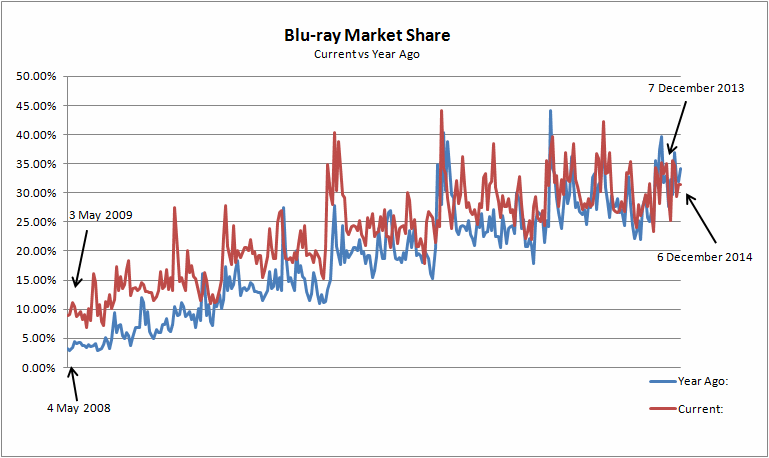
This is still very much true, although as you will slowly realise when you read the rest of this report, the rise of digital may now be having an effect on Blu-ray sales too. Here’s a graph plotting the current weekly market share (red) compared to the same week a year ago (blue):

Blu-ray Sales Market Share: 2008/12 versus 2009/14 Comparison

Blu-ray Sales Market Share: 2008/12 versus 2009/14 Comparison

The gap between the red line and the blue line above shows how much market share has jumped in that week compared to the same week a year ago. You’ll notice that towards the end of the graph, the two lines are getting closer and closer. In fact, the blue line is often above the red line for many of the weeks (ie. Blu-ray weekly market share has actually shrunk compared to a year ago). In other words, the growth in Blu-ray’s market share has slowed and even reversed in some cases. Obviously, this has to do with the caliber of weekly releases, but another take could be that whatever was causing DVD revenue to decline has stopped or slowed, or that the same factor is now causing Blu-ray revenue to decline or to remain steady. I believe digital is the factor here.

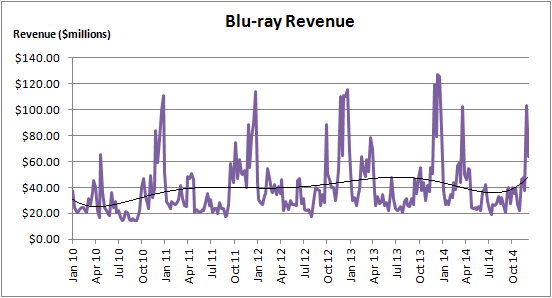
Let’s take a closer look at Blu-ray revenue for the same period.

Blu-ray Revenue Growth - January 2010 to December 2014

Blu-ray Revenue Growth – January 2010 to December 2014

The graph above clearly shows that Blu-ray revenue peaks during the holiday sales period (of which we are still missing 2014’s, as obviously, it hasn’t finished yet. But there is a worrying dip between April and October of 2014, a dip that’s slightly lower than the same time from 2013.

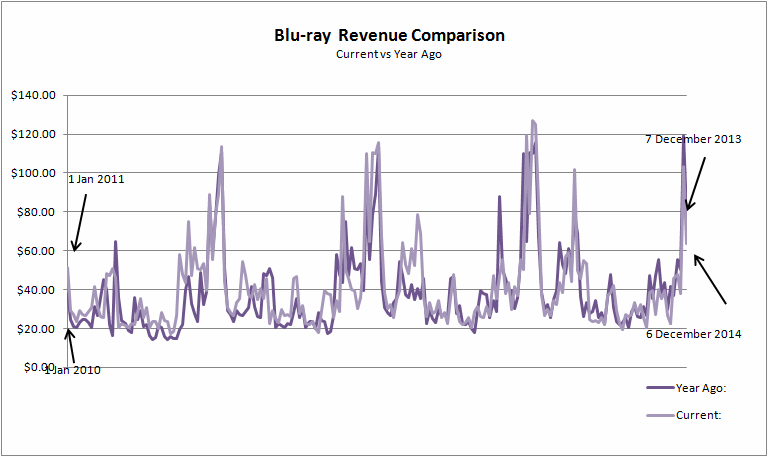
Blu-ray Sales Revenue: 2010/13 versus 2011/14 Comparison

Blu-ray Sales Revenue: 2010/13 versus 2011/14 Comparison

The same trend is visible in the graph above. Just like with the market share graph further above, this comparison graph compares each week’s Blu-ray revenue with that from a year ago. The normal situation should see the lighter purple line always above the darker line (as this indicates Blu-ray revenue growth), but look at the 2014 period on the graph, and you will see quite a few times where the darker line is above the lighter line (indicating Blu-ray revenue has fallen). The overall trend is that Blu-ray revenue growth has stagnated, or even fallen from week-to-week, during 2014.

Now let’s take a closer look at the comparison between calendar 2013 and 2014 (so far).

Blu-ray Sales Revenue: 2013 vs 2014 Comparison

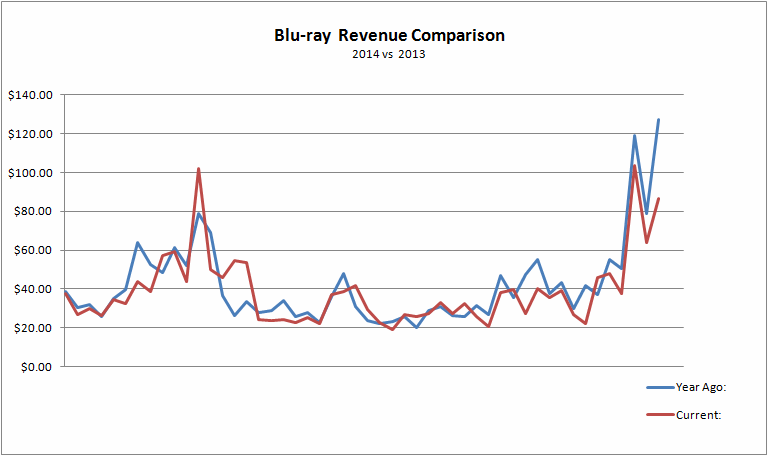
Blu-ray Sales Revenue: 2013 vs 2014 Comparison

The relatively poor results in 2014 can be seen much clearer in the above graph, with many weeks in 2014 being lower in revenue than the same weeks in 2013. Obviously each week’s releases ultimately determine market share and revenue, but it’s hard to ignore a trend that has been fairly consistent over an entire year. (Update: the graph above and below have both been updated to include data from the rest of 2014)

Blu-ray Sales Market Share: 2013 vs 2014 Comparison

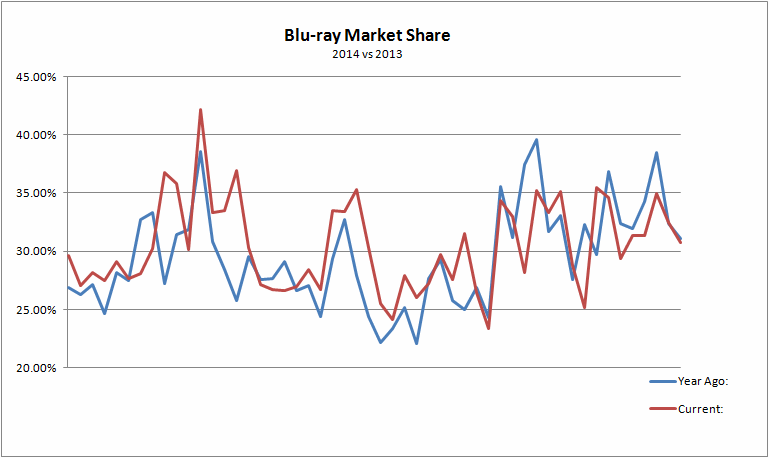
Blu-ray Sales Market Share: 2013 vs 2014 Comparison

The same trend is there, but less pronounced for market share, although the problem appears to be worse for the last couple of months (this could be due to a strong release slate during this time in 2013 and/or a weaker release slate for the same period in 2014).

Looking at the raw numbers, this is where things become a lot more clearer. Out of the 52 weeks for 2014, 35 of them had the weekly revenue lower than the same week in 2013. Only 17 weeks recorded a revenue result that was higher than the same week in 2013. The situation is completely reversed when you look at 2012 vs 2013 results, where 35 week had higher revenue compared to 17 weeks with lower. Looking at total sales though, 2014’s Blu-ray sales total has declined compared to 2013, $2.122 billion versus $2.306 billion. This is the first year-on-year decline since Blu-ray’s launch in 2006 (the above information has been updated to include the rest of the weeks for 2014)

Conclusion:

To sum up:

  • Blu-ray market share is growing, but at a much slower rate than the past few years
  • Frozen was the top seller in the last year and a half, but failed to beat the weekly market share record set by The Avengers in 2012
  • Blu-ray revenue has declined from 2013 to 2014.

Although we still have a couple of (big) weeks to go, unless these prove to be exceptional and record breaking, it does look like 2014, at best, would be a year where Blu-ray growth stalled. Blu-ray revenue may even be in decline, but its market share is still growing slightly thanks to DVD’s faster decline.

Update: Now that data for the rest of 2014 is available, Blu-ray revenue did indeed record a year on year decline, the first since the format’s inception. Now, the falling average price of Blu-ray titles will be a contributing factor to the overall revenue decline (so a situation where more discs are sold, but each are cheaper, may exist), but for a format that has marked steady growth year after year, this year’s decline is still very much a notable event.

As for the other reasons for 2014’s lackluster Blu-ray results, most data support the growth of digital as being the catalyst for disc’s fall. Or it could be the releases themselves that are to blame, although a 2014 line-up that includes ‘Frozen’, ‘The Hunger Games: Catching Fire’, ‘Thor: The Dark World’, ‘Maleficent’, ‘The Lego Movie’ and ‘The Hobbit: The Desolation of Smaug’, doesn’t sound like such a poor year. There is no doubt about it – 2014 is the year that Blu-ray went backwards.

Weekly News Roundup (30 November 2014)

Sunday, November 30th, 2014

Happy Thanksgiving to those in North America, and Black Friday to those that took part. Remember when I used to do a lot of coverage of Black Friday Blu-ray sales here? Back when Blu-ray deals were still rare on the ground, and that paying $12 for a movie was considered a great bargain. Black Friday isn’t as special any more though, and we should have the sales stats in a few weeks to see if others feel the same way as well.

Here’s the news from the week.

Copyright

Google may be taking a hard line stance against DMCA requests that are not specific enough. In a recent example, Google decided not to take action against home and category pages on potential “piracy” sites, despite these pages often providing list of links to copyrighted titles.

Traditionally, Google prefers each DMCA takedown request to contain one specific copyrighted title, and a URL that corresponds to that title. For category and homepages, these not only feature more than one title, they also often don’t offer direct downloads, and only link to another page that has the download. Google is more than willing to remove a page with a direct download link, but it seems they’re not too sure about category or homepages.

You can sort of see why the likes of the MPAA and RIAA feel frustrated in their dealings with Google, because for them, it would be a lot easier if they could simply get homepages and category pages deleted, as these pages are far more important to the site and are harder for the site admins to change URLs for. But you can also see why Google has drawn a line here, since technically, these pages aren’t “directly” offering any pirated content on them.

BayFiles

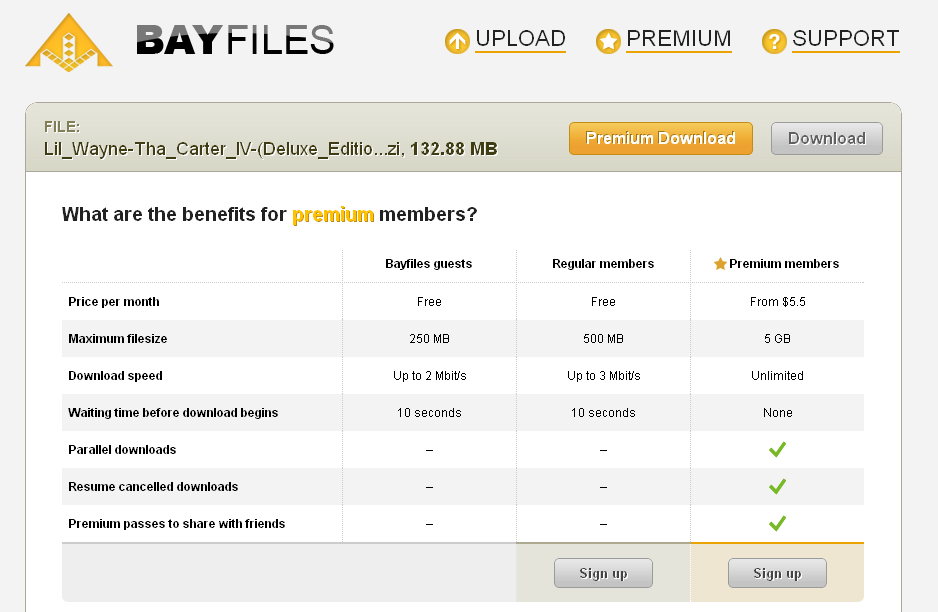
Bayfiles has disappeared, no reasons have been given …

But just because Google doesn’t think that a page is worthy of a DMCA removal, it doesn’t mean that Google won’t punish the page in its own way. This could be through piracy demotions, activated when a site receives too many DMCA removal requests and all pages on the site are demoted. Or it could be something else entirely, and unrelated to piracy at all. This is what appears to have happened to Bayfiles back in June, when most pages on the site were removed from Google’s index. What is more mysterious is that that Bayfiles appears to have disappeared entirely, shortly after its co-founder and former Pirate Bay operator, Fredrik Neij, was arrested in Thailand (unrelated to Bayfiles, but related to the sentenced handed to Neij in the Pirate Bay trial.

No reason has been given for the closure of the site, and for now, the site simply redirects to the main Pirate Bay website (which still links to Bayfiles). Some files on the site (for example: http://bayfiles.net/img/logo.png) still appear to work, but almost everything else has been redirected. Something strange is happening here, and we may hear more about it in the future.

——

LG Android Wear

Digital watch face piracy is a thing now, apparently

Here’s a new form of piracy that’s only been possible recently – pirated digital watch faces. With the hype over smart-watches, there’s now a demand for digital watch faces from the most famous watch brands from around the world, including Rolex, Tag Heuer, Omega, Armani and Swatch. Users can download these faces to their watch, often for free, and they would instantly have a digital replica.

These luxury watch brands that have had their designs digitized, however, aren’t so happy. And according to TorrentFreak, several have started taking legal action against sites that offer watch face downloads.For now, the sites hosting watch face downloads, many of which are original and very creative works, are complying and have implemented ways to prevent future uploads of “stolen” designs.

While everyone involved seems to be taking appropriate action, I do wonder if this is also another example of a lost opportunity. If these luxury watch companies offered a way to purchase official watch faces (especially at a more than reasonable price), then perhaps there wouldn’t be a need for pirated downloads.

It’s all about anticipating demand, if you can anticipate where pirates will be doing next, then perhaps you can also anticipate the next business opportunity too.

——

An update on a story from a couple of weeks ago, regarding the MPAA’s WhereToWatch.com website – enterprising hackers have made a browser script that adds torrent links to WhereToWatch movie and TV listings, turning the useful legal content search engine into also a torrent search engine.

The team that released the script, PopcornCab, says they’re actually big fans of the MPAA’s new site (even if they’re not big fans of the MPAA, normally), but that adding a torrent options will help users (even if the MPAA won’t be fans of their work either).

High Definition

Apple TV Movies

How we watch TV in 2030 might be far closer to Netflix than NBC

Is broadcast TV doomed? That’s what Netflix’s boss thinks, and he thinks that 2030 is when broadcast TV (that is traditional “linear” network and cable TV) will finally come off the air. His prediction isn’t entirely groundless – a recent study found that broadcast TV viewership dropped by more than 50% in the ten years between 2002 and 2012.

While I’m certainly a big fan of “on-demand” TV, there is still something quite reassuring about “linear” TV. Someones makes the decision for you regarding what to watch, and that’s a comfort sometimes. After a hard day’s work, the last thing I want to do is to spending an eternity flicking through Netflix, unable to decide on what to watch (until it’s too late to watch anything and I have to go to bed). And finding something interesting to watch while channel surfing is its own kind of reward.

And there will always be live sports, which so far only really works on a linear fashion, although I think more interactive viewing options (multi-angle, commentary, player cams …) might be welcomed.

So I hope that while on demand and Internet TV will take over as the dominant form of television by 2030, part of me still hopes that linear TV, and other “quaint” things like physical media, will still be around by then.

Meanwhile, have a look at this article to find out just how much Netflix’s subscribers are loving their original programming, and this one which looks at the tricky situation with second screen usage during TV viewing, looking at what works and what doesn’t work when it comes to user interaction, lost eyeballs and advertising.

Gaming

October’s NPD results did not provide any real surprises. The PS4 was still the top selling console, and the other gaming companies are still choosing not to be specific when it comes to releasing sales data.

What is interesting though is that if you look at the top selling games data, you’ll usually find that for the top selling franchises, the PS4 version will usually outsell the Xbox One version. For October, this was true for ‘NBA 2K15’, ‘The Evil Within’, ‘FIFA 15’, ‘Madden NFL 15’ and ‘Middle-earth: Shadow of Mordor’. The Xbox One was only ahead of the PS4 for ‘Destiny’ (and ‘Skylanders: Trap Team’).

This is a dangerous development for Microsoft, who had gotten used to the Xbox 360 beating the PS3 for multi-platformers. It’s dangerous because it means more and more developers will simply follow the money and make the PS4 their lead development platform for games – this could mean slightly better versions of the games on the PS4 than on the Xbox One, and it’s these “little” things that wins console wars.

——

That’s the end of this week’s WNR. Hope you enjoyed this issue, see you next week.

Weekly News Roundup (23 November 2014)

Sunday, November 23rd, 2014

A bit sleep deprived today, so please let me apologize in advance for the “quality” and brevity of this week’s WNR.

Copyright

BitTorrent Logo

BitTorrent users are also big spenders

With BitTorrent Inc having just made a major move in monetizing the techology for content creators via its BitTorrent Bundle network, where artists can distribute their content via BitTorrent technology and still get paid, the company responsible for inventing the file transfer protocol (and not responsible for how people use it) has released the results of a survey that shows BitTorrent users are also big spenders.

In keeping with the theme of this WNR, I’ll leave you to read the details of the survey in the actual news report (link above), but suffice to say, it reinforces what we already know about big downloaders – that they are big content consumers, sometimes illegally downloaded content, but also a lot of the legal variety.

People who really love music, movies or games, will find ways to consume them even when they’ve run out of financial resources to pay for it legally. People who don’t download pirated stuff, on the other hand, probably also don’t buy a lot of stuff in the first place. And yet, the creative industries love the second group, and want to kick the first group off the Internet. Piracy is not a black and white issue, and it’s not in anyone’s best interest to simply label pirates as criminals.

And just as pointless and a potentially dangerous course of action would be the censorship option. An option that has been tried elsewhere with little success (considering how easy it is for anyone serious about pirating to circumvent the block), but still an option that Australia’s government may put into action soon. The only pirates that censorship stops are those that that technically inept, and I would assume that these users are the definition of the casual, infrequent downloader.

High Definition

So while censorship may stop a few downloaders in Australia, it will not stop the frequent downloaders, which may very well be the same type of users that are also accessing legal services like Netflix. A recent Sandvine report found that, in the case of one fixed network in Australia, 2.5% of users were already accessing Netflix, despite the service not being officially available yet. This situation will change soon though, with Netflix officially landing downunder (and in New Zealand) in March 2015.

The introduction of Netflix (officially) in Australia could very well be the catalyst for a major reduction in piracy here though, but if the government can get their censorship regime in place before then, you just know they will spin any reductions on their useless actions, rather than proper consumer-led solutions like Netflix.

New Netflix UI

Netflix: All your bandwidth are belong to us

Going back to the Sandvine report on bandwidth usage, Netflix’s share of peak download traffic in North America grew, slightly, compared to the last report six months ago. It now accounts for nearly 35% of peak downloads, up from 34%. Amazon Instant Video, the second most popular SVOD provider, only accounted for 2.6% of traffic – and even this was up dramatically from 18 months ago. HBO Go continues to lag behind all the other services, with it being only 1% of traffic – HBO’s standalone streaming product can’t come sooner for HBO if it wants to catch up.

Sandvine also found that filesharing’s share of the bandwidth pie continues to fall in most regions around the world, with the losses become gains for services like Netflix. Nothing to do with website blocking, three strikes, or people being sued.

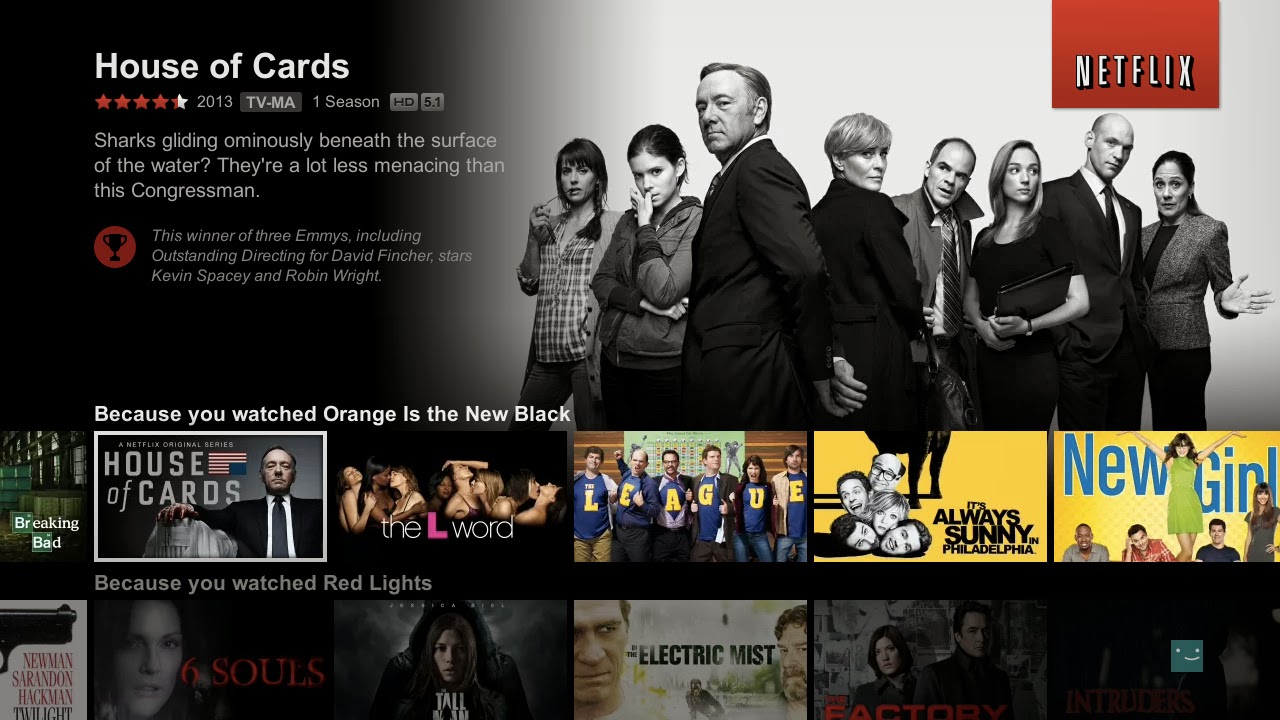
Netflix’s growing dominance is becoming a big worry for TV networks. So much so that Nielsen, the ratings people, will start tracking Netflix and other streaming usage so they can provide networks with a clearer view of how Netflix may be hurting their viewing figures. Considering that a lot of Netflix’s content comes from networks, this could mean higher licensing fees being charged to Netflix, which could also lead to less content (or more delays to releases). The fight between the old and the new continues.

Gaming

Walmart "cheap" PS4

Walmart selling $90 PS4s?

I don’t want to do too much on the NPD while being sleep deprived, so I’ll leave most of it for next week, but I just wanted to mention that, according to the NPD, Wii U sales have risen 47% since last year. While this may sound impressive, considering how poorly the Wii U was doing this time last year, it may not be so impressive after all. But with a release of a few more first-party must-have titles, like Mario Kart, and with prices dropping enough to make it a good choice for the budget conscious, it’s only natural that the Wii U’s popularity will grow. Will it be enough to keep Nintendo out of trouble financially, hard to say really.

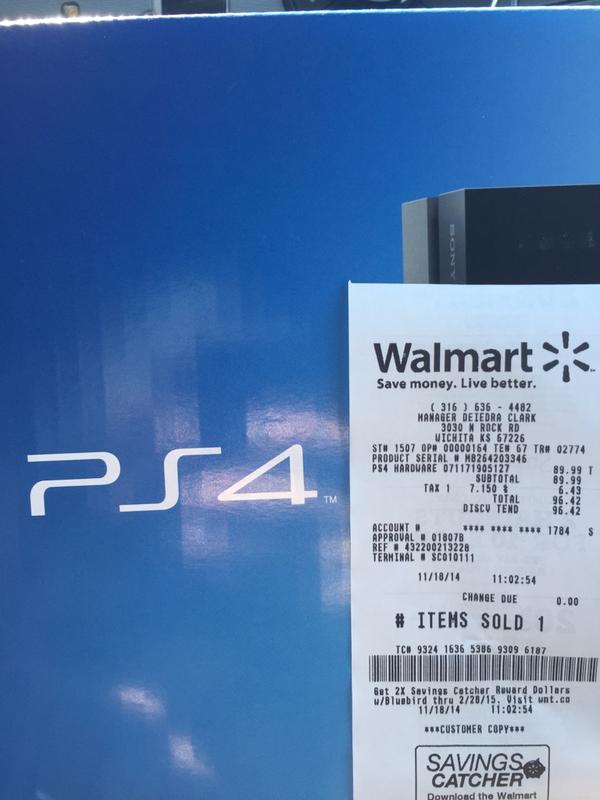
The real problem for the Wii U is that the PS4 and the Xbox One are also getting better in the value stakes, with aggressive competition forcing down prices. Of course, there are also other factors that are allowing people to pay less for these two top consoles: fraud! Apparently, people are setting up fake Amazon Marketplace listings for impossibly cheap PS4s (like $89.99 cheap), and getting Walmart to price match based on their online price matching policy.

Walmart unfortunately did not clue up fast enough, and a few people did manage to grab a few cheap PS4s before Walmart bought down the ban hammer on Amazon Marketplace price matching. For what you’re getting, $400 is not that much, so I’d definitely recommend paying the normal sales price before contemplating this or other similar methods (which could land you in big trouble).

——

Actually, the WNR wasn’t as short as I thought it would be, ramblings of a sleep deprived mad man as it may very well be. See you next week!