
Archive for the ‘News Roundup’ Category

Weekly News Roundup (14 October 2012)

Sunday, October 14th, 2012

Welcome to the two hundred and sixty third weekly news roundup – may the news be ever in your favour. Yes, I’ve recently watched and read The Hunger Games (and the other two books in the trilogy too), stories that are right up the alley for a self confessed post-apocalyp-fanatic like myself. My favourite character in the book is Buttercup. Why does Buttercup have to be a black (and white) cat in the movie, not gonna lie, kind of ruined the movie.

It’s one of those weeks where everything appears perfectly calm, and then everything sneaks up upon you in the last minute. A couple of stories have been intentionally left to next week in case there’s a drought of stories. Let’s get started.

Copyright

Sometimes you read a story and you can’t help but feel sick to your stomach at the whole copyright lobbying machine that has been created by the unholy marriage between the copyright lobby and the US government. Attorney General Eric Holder this week revealed that the DoJ has been spending tax payer money helping the music and movie industries spread their propaganda overseas, or to state it in a more neutral manner, to help “educated” thousands of foreign judges, prosecutors, investigators and even policymakers.
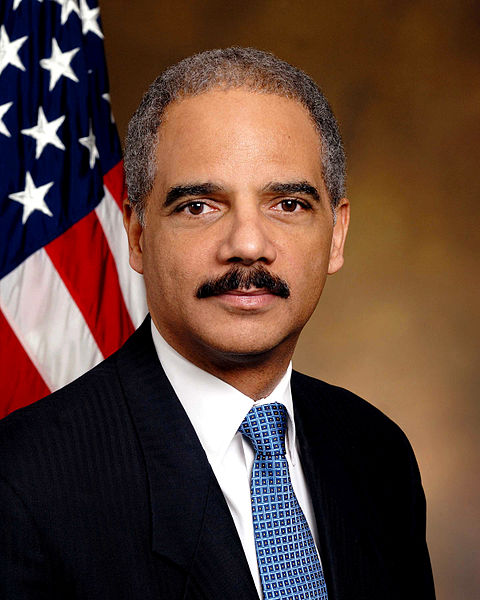
Eric Holder

Attorney General Eric Holder is proud of the fact that the DoJ has been “educating” foreign judges, prosecutors and policymakers on copyright issues

In other words, the DoJ, at tax payer expense, has been peddling the often exaggerated “facts” that have no doubt been provided directly by the likes of the MPAA and RIAA, all in the name of helping to keep America’s economy strong (by helping these industries holding on to outdated business models, and denying the potential of the Internet).

What made me sick though was suddenly remembering what SOPA/PIPA would have allowed the DoJ to do – to go into these foreign jurisdictions and sue IP “thieves” (again using tax payer funds) on behalf of the likes of Sony and Fox (who obviously can’t afford to hire their own lawyers). They would be putting their case in front of foreign judges that they have already spent vast sums “educating”, judges that will rule based on laws made by policymakers that the DoJ have also been “educating”. Well it’s a shame for them though that SOPA/PIPA didn’t pass, isn’t it?

And it’s not as if the US even needs to educate other countries in how to be totally over-the-top when it comes to copyright enforcement – these other countries have their own lobbyists too, you know. Like the UK’s Federation Against Software Theft (FAST), and their attempt to stop 4G piracy before it even starts.

Despite the high cost of 4G bandwidth, FAST says that this could become a real problem sometime in the future, and therefore, it is asking the regulators to take a serious look at this and other technologies. No doubt the “other” may eventually include public Wi-Fi hotspots, regulations on which may very well kill off these ever more useful services.

So despite almost no evidence that any technological measures have worked so far, let’s all just concentrate on implementing more technological measures for technology that has barely been launched yet. And instead of thinking about what you can do with new technology, let’s first work out what you definitely shouldn’t be allowed to do first!

Spotify Logo

Spotify helping to reduce piracy? The stats seems to point that way …

It’s this kind of backwards thinking that, I think, has hampered any real effort to combat online piracy. And a new study confirms that, in most cases, fighting piracy should be done by giving the people what they want, not stopping them doing what they’re already doing. Against staying in the UK, Musicmetric’s Digital Music Index report found that music BitTorrent piracy rates were more likely to decrease  in regions that has access to Spotify, than in regions that did not have the freemium based streaming service.

Out of the top 10 countries that saw the fastest decreasing music BitTorrent rates, 5 of them had Spotify. Out of the top 10 countries that saw rising music BitTorrent usage, only one of them had access to the service. Interestingly, the odd one out on this occasion was France, the country with one of the toughest anti-BitTorrent regimes in place!

But you don’t need a degree in, well, anything to know that competing with piracy does a better job of defeating it than simply trying to prevent it. Spotify does that in spades, and that’s why it’s so popular.

Megabox Screengrab

A screengrab of the upcoming Megabox website, highlighting “exclusive artists” including ‘The Black Keys’, ‘Rusko’, ‘Two Fingers’ and ‘will.i.am’

What may also become popular is Kim Dotcom’s next venture, Megabox. This week, Dotcom revealed that coding for the new music downloading website is 90% complete. The news that the “new Mega” might launch this year, before even the extradition proceedings have been completed for Dotcom, should rightly annoy the U.S. prosecutors handling the case. Megabox, for those that don’t know, aims to cut out the middleman, the record industry championed by the RIAA (who was probably instrumental in getting Megaupload taken down), and to connect music fans directly with artists. Artists will get 90% of all revenue earned via advertising associated with the site, as well as from direct music purchases. As for fears Megabox will face the same fate as Megaupload, Kim Dotcom assures us that this will be “impossible”.

What also isn’t possible, at least right now, is for Doctom and Megaupload to extricate themselves from the criminal case pending in the U.S. A judge this week ruled against Megaupload’s motion to dismiss, siding with prosecutors who believe that it is indeed possible to launch proceedings against a company that doesn’t actually have an U.S. office. There are still some procedural concerns though that the judge has left open for future examination of the dismissal question, including the actual handing over of the charging documents that prosecutors have failed to do so far. With extradition proceedings pending until early next year, any permanent ruling over the motion to dismiss will have to happen afterwards.

Gaming

It’s that time of the month again. For 21 months in a row now, the Xbox 360 has been crowned the best selling home based console, beating the PS3 and the Wii (probably in this order) in the NPD monthly sales report. With both Sony and Nintendo tight lipped again about their sales figures, there will be no NPD analysis this month again. The September reporting period may also have included (or just missed out on) a couple of days of sales for the PS3 Super Slim, but no statement was forthcoming from Sony at the current time.

For the Xbox 360, it managed to sell 270,000 units, down some 38.4% compared to the same month a year ago. Even with the decline in sales, it managed to account for 49% of home based console sales, meaning that even when you combine the Wii and PS3 numbers, they’re only a tiny bit more than just the 360 number by themselves.

Not long to go until the Wii U, so Microsoft better make the most out of their current “victories”.

That’s that for the week. See you again in seven days.

Weekly News Roundup (7 October 2012)

Sunday, October 7th, 2012

Welcome to another edition of the Weekly News Roundup. A very short roundup this week because news has been very meh-ish this past week. Could be just me not paying attention though, so don’t blame me if SOPA II was passed and it’s not mentioned in the passages below. Well okay, blame me if you like 🙂

Copyright

Following some big profile mistakes, and embarrassing bird song related gaffes, Google has decided to implement a few changes for YouTube’s sometimes controversial Content ID program. For those that don’t know, Content ID is an algorithm that scans uploaded YouTube videos for infringing content. And as with any automated system, false positives are always going to happen.

YouTube Content ID

Content ID has been improved by YouTube, adding in a new appeals process, as well as smarter detection of “unintended claims”

Previously, a video flagged as infringing by Content ID will be blocked automatically, with the uploader free to dispute the claim. But if the dispute is rejected, the video stays blocked. With so many claims and so many disputes, content holders sometimes get overwhelmed to the point where the intern they’ve “hired” to do the job of processing these disputes will simply dismiss them all. This left uploaders who are certain the claim was false without further recourse (as was the case in the bird song case).

Now, uploaders will get the option to further appeal the dismissal of their dispute claim, and firmly smash the ball back into the rights holder’s court. Rights holders will now have to either release the original claim, or file a formal DMCA notice to keep the block in place. A surprisingly sensible copyright related change from Google given recent announcements, but one that some of the lazier rights holders might complain about.

The other changes involve more back-end stuff that most users may not notice. A new category of “matched” videos will be added, for those that appears to contain infringing content, but are also likely to be, in Googlespeak, “unintentional claims”. These “unintentional claims” will be put in a queue for the rights holder to manually review. Google’s original blog post regarding these changes simply mentioned “manual review”, and some had thought that Google would manually review these less than certain matches, which would suggest a rather big change in strategy for Google. But Google later clarified that was not the case, and common sense suggests that something like this would never be the case (because manual review equals human input equals liability).

In any case, I hope these changes will hopefully restore some semblance of balance back to YouTube’s over-sensitive anti-piracy system. More needs to be done regarding fair use content though, maybe an option uploaders can set to indicate the possible presence of fair use.

But Google’s well noted “one hand does not know what the other hand is doing” approach that has so far allowed the company to escape censure for being a monopoly, also gives us the next story. So while YouTube is at least trying to bring balance back to anti-piracy, Google’s money maker, AdSense, has been accused of being overly paranoid in its anti-piracy approach.

Copyleft Logo

Despite making his book available via a Copyleft license, Google deemed The Pirate Bay and Demonoid links to the book on the author’s own website as copyright infringing

Unlike many other advertising programs for website owners, AdSense has a relatively loose set of entry requirements (many other ad websites require manual review of sites before they’re allowed in). Webmasters are required to ensure their websites do not violate Google’s policies, including not hosting ads on websites that may carry or link to infringing content. Fair enough. But when all you’ve done is to link to a torrent to a copy of your own, freely available book that just happened to be posted on The Pirate Bay and Demonoid, then perhaps getting your account banned may just seem a tiny bit over the top. But that’s exactly what happened.

What happened to Iraq veteran and Python (the programming language, not the reptile) enthusiast Cody Jackson isn’t an isolated incident though. But unlike Jackson’s story, which forced Google to rethink its ban after his story received much publicity, others are unlikely to have the same great eventual outcome. The worst part of Jackson’s story is that he actually did try and appeal his account suspension, but despite a review of the ban, Google failed to reinstate his account. “Going to the press” appears to be the only recourse for many when going up against the faceless behemoth that is Google, these days.

As for the “crime” in question, it’s yet another case of guilty by association. That somehow everything on The Pirate Bay or Demonoid must be pirated, that even the technology itself is tainted somehow (leading Google to block tame keywords like “torrent” from their auto-complete and instant search features). It’s the kind of lazy solution to big problems we’re used to seeing in the Internet era though.

With Panama going all copyright crazy last week, this week, it’s Japan’s turn. To be fair, Japan had announced their plans some time ago, but it only went into effect this month.

Japanese Prison

Downloading a single piece of pirated music could land you here, in a pristine looking Japanese prison

Unlike most copyright laws, which mainly target those that make available pirated content, Japan’s new laws target those on the receiving end too. Downloaders will now face fines of up to USD $25,000, in addition to a prison sentence of up to 2 years. For those that do upload, possible including BitTorrent downloaders, the fine is quintupled, as is the maximum prison sentence.

The only silver lining is that YouTube watchers may continue on as they were without having to do some forward planning and learn how to make toothbrush shivs (although I suspect Japanese prions are just as orderly as the rest of their society, for this little accessory not to be needed). Viewing infringing videos on YouTube or other streaming sites won’t be subject to these new harsh laws, as these are not counted as “downloads” (although whether the download cache used by your browser count as downloads or not is unclear, as it using a YouTube downloader tool – I suspect the former is fine, the latter probably not).

It won’t come as a surprise to our regular readers that the main driver behind these new changes was Japan’s equivalent of their RIAA, the RIAJ. And it probably won’t surprise you at all to know that the RIAJ’s current chairman is also the current chief executive of Sony Music Entertainment Japan. This folks is what happens when you let companies like Sony decide what copyright law should be like.

Which nearly was the case when SOPA/PIPA were still viable options, and may very well have been the case this week when SOPA II was passed into law. We’ll never know!

Nearly bed time, daylight savings robbed me of an hour of sleep today (boo!), so gotta adjust quickly. See you next week.

Weekly News Roundup (30 September 2012)

Sunday, September 30th, 2012

Welcome to another edition of the WNR. It’s one of those weeks where I really can’t think of anything to say in the intro, so I won’t waste any more or your time by just getting on with it.

Copyright

With major ISPs in the US all signing up to the “six-strikes” plan, one ISP wants to take it a step further. ISP Mediacom will suspend the account of anyone who has received two infringement notices, and after filling in paper work to get their account re-instated, will perma-ban the user after the next strike. This makes Mediacom’s copyright policy one of the harshest yet.

If you explain to them that your Internet connection was hijacked, then bad luck, Mediacom will say, because it’s your account and so you must be guilty. There is a way to file a counter-notification, but Mediacom appears to be discouraging even this most basic dispute process by warning users of the potential dire consequences of submitting a counter-notification, that once Mediacom hands the counter-notice to copyright holders, further actions  “may include legal action such as lawsuits between the copyright holder and the customer”.

It’s hard to tell who Mediacom is actually serving – their customers, or the rights holders. I know who pays their bills though, and those that don’t want to condone this kind of behaviour should change ISPs immediately. Unfortunately, some may not have a choice on the matter.

Flag of Panama

Panama’s new copyright laws are some of the harshest in the world

While changing ISPs may still be a choice for some, changing countries may be a little bit more difficult. This is unfortunate for Panamanians, as Panama’s new copyright laws will be some of the worst yet. The laws were just pending at the time the linked article was written, but it has just been voted through the country’s Congress, apparently.

It’s not just that you could be fined up to $100,000 ($200,000 if it’s your second offence within a year) for downloading a $0.99 50 Cent song, or that you’re only given 15 days to mount any sort of legal defence, but it’s the way the money is collected that’s most at issue here.

First up, the fine is in addition to any other criminal or civil penalties, so in the worst possible scenario, you could be fined $200,000 by the government, sent to prison, and then still be liable to be sued by rights holders for who knows how much. And more disturbingly, the fine is collected by a government bureaucracy (the General Copyright Directorate) that keeps all the cash and pays employees bonuses based on their performance (presumably based on the number of fines they issue out). Yeah, I’m sure corruption and abuse will never be an issue here [insert sarcasm smiley].

If you want to find out why Panama has suddenly decided to go insane with copyright laws, you won’t have to look very far. A quick search on the RIAA’s website reveals this little piece of info, and the MPAA’s lawsuit against Hotfile also plays a role here because Hotfile was founded in Panama. Panama appears to be pandering to US interests as part of a geo-political power play, and possibly paying the price of receiving a favourable trade agreement.

And you just know that if not for the public reaction (which has largely remained silent in Panama), the MPAA and RIAA would love to have something similar in the US too.

One country that does seem to get the intricacies of the copyright law, and the general spirit of the law in general, is Portugal, where the country’s prosecutors this week refused to sue 2,000 individuals accused of piracy by ACAPOR, the country’s local anti-piracy agency. The prosecutor’s office ruled that personal file-sharing, even with an upload component and even with seeding after the download component is completed,  is in fact not against the law.

ACAPOR Protest

ACAPOR’s stunt last year appears to be have backfired

The decision is especially embarrassing for ACAPOR, after their publicity stunt last year where they printed out IP addresses of alleged pirates and sent them in boxes to the Attorney General’s office. More costly though may be the prosecution office’s statement regarding the use of IP address evidence, which they have ruled to be insufficient in identifying the individual actually responsible (but as they are doing it for personal use, it’s not illegal anyway).

As expected, ACAPOR was not happy at the decision, calling the prosecutors lazy for not wanting to work hard to prosecute the 2,000 people ACAPOR says are illegally downloading.

My opinion is that the nature of copyright infringement has indeed changed with the Internet, which has definitely led to an increase in acts of infringement. It’s a problem that needs to be tackled for sure, but just not at the expense of justice and due process. Piracy is much more common today thanks to the Internet, but this only proves that the current laws, mostly written to deal with isolated cases of commercial piracy, cannot be applied directly to students, and single mothers, and everyday folk whose only intention was to save a few bucks (as opposed to commercial pirates, whose intention is to make large profits from their activities). There needs to be two separate set of laws, one to deal with commercial piracy, and one to deal with copyright infringement for personal use (since I don’t completely agree that piracy for personal use should always be legal and is always non damaging). And the statutory damages should reflect the differences between the two.

As for IP address evidence, it is circumstantial evidence at best, and cannot be relied upon solely to prove guilt. And even if you could somehow tie the individual who committed the actions to the IP address, a connection to a swarm does not equal a download or upload. At the very least, the IP should be monitored over time, and if possible, the amount of data transfer recorded to paint a better picture of what has actually transpired. If there are to be a penalties, then the penalty for someone who has seeded a file for 2 weeks should not be the same as that of someone who connected to the swarm for a couple of minutes before deciding not to download the file after all.

Gaming

Now I’m a huge fan of Blizzard and their products, having wasted endless hours on the original RTS Warcraft games, Starcraft and its sequel, and eagerly bought Diablo III even though I was aware of the harsh DRM requirements. But after reading an interview with Blizzard’s CEO regarding D3’s DRM launch fiasco, I must say that I now have much less respect for the company as a result.

Diablo III

Diablo III’s launch was a DRM disaster, but a financial success – will the game continue to find commercial success now that participation rates are dropping rapidly?

In the best tradition of non-apology apologies Blizzard’s CEO Mike Morhaime put the blame on the launch issues squarely at where it belongs – on the accounting department! Or at least that seems to be the only plausible explanation for Morhaime’s statement about Blizzard severely underestimated the popularity of the game, as the bean counters who had been keeping track of the record pre-orders for the game must have forgot to carry a number or two in their calculations.

For such a heavily anticipated game, with so many pre-orders, and with a planned release (Blizzard had set the release date very early, something they normally don’t do), there’s really no reason why the demand could not have been anticipated.

Morhaime then goes on to praise the server team for doing a “heck of a job, Brownie” in only taking a “couple of weeks” to increase capacity. A month is still a couple of weeks, right? As that’s how long some players were left without a working game that they may have pre-ordered months ago.

So an “apology” turns basically into unadulterated back-patting, but when your harsh DRM has made you so much money, it’s hard not to get a bit arrogant, I suppose. Diablo III’s massively falling participation rate though may very well put a pre-mature end to the  celebrations.

Speaking of back-patting, time to perform a mastabatory round on myself (eww) for finishing this WNR in double quick time. Size isn’t everything! See you next week.

Weekly News Roundup (23 September 2012)

Sunday, September 23rd, 2012

I know I ranted a bit about iPhone 5 last week, but I probably should have divulged the fact that I did have one on pre-order (for my mum). Having got it on launch day and helping mum to set it up, my only thought about it so far is that, well, it’s very much an iPhone. I guess that’s a compliment of sorts, but there’s nothing really terribly exciting about it really (other than mountains that appears to be “alive” on the new Map app – check out Tahiti, for example). There are also some concerns about build quality and durability, two things that Apple usually gets spot on – there was already a chip on the black iPhone out of the box (apparently common with the white version too), and there have also been reports of the black paint being scuffed off (check out #scuffgate on Twitter). A bit of a poor show from Apple really, as design problems can happen any time you add something new, but build quality issues shouldn’t exist really.

Hey, I guess that turned into another rant of sort. To be fair, Apple is an easy target, and it’s not as if other companies don’t have the same or worse problems with their new devices. But expectations have been raised by Apple themselves, and so they can’t expect consumers to shrug and not care when a problem does arise.

Onto the news roundup then …

Copyright

With US ISPs gearing up to be at the frontlines of the war against net piracy, a new report questions the fairness and transparency of the “six-strikes” system that will be used.

The MPAA/RIAA (and Obama administration) sponsored deal with ISPs will see users notified of up to 6 times for their alleged copyright offences, after which time a temporary disconnection may be issued. But University of Idaho Law Professor Annemarie Bridy says in a new report that the system is flawed because it the lacks the presumption of innocence, has an reverse burden of proof, lacks verification of the evidence being used, and is inadequate in terms of transparency in the design and implementation of the system.

In other words, alleged offenders are assumed to be guilty using evidence that hasn’t been independently verified or legally tested, evidence they have little recourse to argue against made worse by the fact that the burden of proof is on the accused, all the while happening in a system that was designed in secret and will be operated in secret.

At least there will be an appeals process, Professor Bridy says as she looks for the slim slim sliver of silver lining in the big grey anti-piracy cloud. The fact that permanent internet disconnection is so far not an option, unlike the similar French Hadopi system, is also a positive.

The MPAA/RIAA will probably argue that the scale of the problem requires expediency, something  that can only be achieved by ignoring due process. And the need for expediency is as debatable as the potential damage resulting from web piracy – does piracy really cost the industry a lot of money? The French experience so far has not resulted in any noticeable improvement in things like revenue, even though piracy rates have dropped significantly, so you have to question the effectiveness of these schemes when judged by real outcomes such as revenue.

A set of unfair laws is bad enough, but when they’re not even effective, then that makes them worse. But when lobbyists like the MPAA or RIAA are tasked with writing these laws, then this kind of thing will always happen. And with the MPAA/RIAA basing their entire strategy on an irrational fear of the Internet, it’s no wonder that what they come up with will also be irrational.

And what makes the argument in Washington seem even more one sided is the fact that there aren’t that many lobby groups that are making counter-arguments to those being made by the MPAA/RIAA. Groups like the EFF, Public Knowledge and even the ACLU do have a say, but without special access to politicians that experienced lobbyists have, they’re often not even invited to the conversation, let alone allowed to have any meaningful contribution. Case in point, the “six-strikes” deal mentioned above.

Internet Association Logo

The Internet Association will lobby for the interests of Internet companies, some of which will align with consumer interests

But that may be about to change. Some of the world’s largest Internet companies including Amazon, Facebook and Google have now teamed up to form their own lobbying group dubbed the Internet Association. The group, whose membership also includes the likes of LinkedIn and Yahoo, will be tasked with the role of protecting the interests of these companies, including the issue of Internet censorship and freedom.

It’s still sad that lobbying is still so effective in US politics, and that it seems that monied interests always seem to win out. But at this stage, it’s more a case of “if you can’t beat them, join them”, and while principles are one things, getting the crap beaten out of your industry is the more pressing concern.

And there’s also the concern that the Internet Association’s backers are all corporations with interests that may not always align perfectly with that of the average consumer. But for now, they mostly do, and there are different enough companies as part of the group to hopefully ensure it won’t be just a mouthpiece for the big boys (like the MPAA and RIAA are).

High Definition

But there are signs that maybe Hollywood has realised that they won’t have to destroy the Internet in order to protect its own business interests. Predictably, t’s the $$$ that’s showing them the way.

The tremendous growth in subscription streaming, and the increasing competition that’s occurring in the sector, is set to give Hollywood a mini-boom in revenue. With more players on the market than simply Netflix, the content holders are finally in a good position to negotiate ever better deals, taking advantage of the desperation of the new players to be able to compete with a behemoth like Netflix.

Either Netflix ends up paying more for exclusivity deals – the company is already paying more than $2 billion a year to license their existing content – or studios are able to negotiate non-exclusive deals with a wide range of distributors including Amazon, and an upcoming streaming venture between Verizon and Redbox. Epix, the company co-owned by Paramount, MGM and Lions Gate, recently managed to get $80 million more per year from their deals with these new companies than compared to their previous exclusive deal with Netflix, for example.

The industry is apparently keen to avoid the mistakes of the music industry by not locking themselves into one major players. For the RIAA companies, it is the dominance of Apple devices and iTunes that is putting them at a severe disadvantage when it comes to negotiating licensing deals. The only solution is to make extremely favourable deals with the likes of Amazon and Google in the hope of breaking up the Apple iTunes monopoly, but this may or may not work, and revenue takes a knock as a result. Book publishers are similarly hampered by the virtual monopoly Amazon’s Kindle enjoys.

But with the movie industry the last to fully embrace the Internet, they may yet learn from the mistakes of other industries. For now, it seems that some good has come out of the Internet after all, and that all it took was some innovation. And a new business model, and not more DRM and draconian laws to protect the old one.

The Hunger Games

The streaming availability of The Hunger Games in the US will be delayed by 90 days compared to Canada, something the Netflix says could encourage piracy

But it’s also hard to break old habits, as the issue of release windows has been raised again, this time for the streaming market. Netflix’s chief content officer Ted Sarandos warns that Hollywood’s insistence on having geographical based release windows for streaming content may end up encouraging piracy. Referencing Epix’s The Hunger Games, where Canadian subscription subscribers can watch it 90 days before their US counterparts, Sarandos says that this is an entirely counter-productive way to do business in the online age. Studios are still desperately protecting their sell-through income, and they think that the best strategy to achieve this is to prolong the sell-through period as long as possible. But, ironically, they fail to take into account piracy. Whether they like it or not, piracy competes with both sell-throughs and subscription streaming, and so by limiting people’s legal choices, all you end up is pushing them towards the illegal ones.

But when a single sell-through copy can make $15 for the studio, which is almost double the entire monthly price of a Netflix subscription (which will then be split among many different content holders), you can see why studios are a bit hesitant. But then again, piracy makes $0 for them, so negating the need for piracy will mean additional income. Less money per person, from more people, may be the name of the game, and this can only happen if  Hollywood stops looking for the big profits, and start looking at the small.

Gaming

With most of the recent attention being on Nintendo’s Wii U, Sony obviously felt a little bit left out and, to everyone’s surprise, they’ve introduced a brand new PS3 console. It’s a bit hard to to convey irony on the interwebs, so that bit about “surprise”, as with almost all new product launches these days, was not quite true.

It looked like the earlier leaked pictures were indeed accurate, albeit in poor quality. And the rumour about a low storage capacity version of the PS3 to compete with the Xbox 360 4GB was also true, except the 16GB slower style flash memory version actually turns out to be a 12GB SSD version, and that this budget version will only be available in Europe (and a few other countries, including Australia).

Other than that, the slimmer, lighter PS3 also now uses a top loader for the disc drive, and comes in 250GB and 500GB versions, replacing the 160GB and 320GB found on the not-as-slim-but-still-quite-slim PS3s at the same price points.

"Super Slim" PS3

The new “super slim” PS3 will be available soon, but without a price cut, analysts are wondering “why bother”.

A bit surprising that North America doesn’t get the budget version, as that’s the marketplace that really could benefit from having a cheaper PS3 to compete with the Xbox 360. But maybe Sony are just testing the waters to see if there’s demand for such a console in the first place.

The lack of a price drop has analysts questioning the point of having a new PS3 console out, and they have a good point. But if both Sony and Microsoft want to prolong the life of their respective consoles, then there’s only so much price cutting one can do before they start losing money on the hardware again (having taken so long to finally start making money on them). And if longevity is not important because a new console will be out next year (seems unlikely now, at least for Sony, given the timing of this new PS3 refresh), then a price cut won’t help much in between now and then.

Okey-dokey, that’s that for the week. Have a good one.

Weekly News Roundup (16 September 2012)

Sunday, September 16th, 2012

Welcome to another issue of the WNR. For yet another month, I waited naively in the vain hope that more figures would start leaking out for August’s NPD analysis, but alas, that wasn’t to be the case. So as usual, the gaming section is where August’s NPD will live (on life support, coming in and out of the coma).

iPhone 5

iPhone 5: Faster, lighter, thinner, and bigger where it counts (the screen). But is it still exciting and innovative?

Otherwise, it was a fairly quiet week. I suppose I should talk about the iPhone 5 release or whatever. Was that perhaps the most anti-climatic launch event in Apple’s recent history? Through the various leaks, almost everything about the new iPhone had been fairly well known long before the Wednesday launch event – Apple seems to have given up on the almost impossible job of trying to keep things secret. And even if we somehow didn’t know about the larger (well, taller anyway) screen, LTE and the other new stuff, none of it would have been a huge surprise anyway. There’s nothing wrong with incrementally improving an already well established product, but having failed to keep up with its competitors in terms of screen size, and features such as NFC, the least Apple could have done was to inspire us with some of the ways to use newly added features. This has been their strength in the recent past, so to hear them talk more about “faster CPUs”, “better graphics”, brings back painful memories of the PC upgrade cycle and how pointless it all was talking about MHz and RAM sizes.

With all that said, the iPhone 5 is set to become the fastest selling gadget of all time, so maybe I have no idea what I’m talking about (more than probable). Vote in our poll to tell us your thoughts about the new iPhone.

Copyright

Google’s self-censorship continues this week, with The Pirate Bay joining the list of blacklisted search terms that will no longer be part of Google’s Autocomplete and Instant search products. The name of the website, and its domain name, joins notorious terms such as “torrent” and “RapidShare” as part of Google’s blacklist.

I have no idea what this latest move, part of Google’s appeasement policy, will actually do to combat piracy at all. I guess people who want to search for The Pirate Bay, but don’t know how to spell the words “Pirate”, “Bay” and “The”, may just give up and buy movies and music instead, or something. Interestingly, searching for “teh pyrat bey” still brings up TPB website as the first result, as Google’s auto-correct features appears to still show love for the website.

Meanwhile, TPB co-founder Gottfrid Svartholm has arrived safe and relatively well back in Sweden to face new hacking charges, and to serve the prison sentence imposed on his for his crime of being initially part of The Pirate Bay (as well as pay the million bucks he will be unable to pay), and further jail time for not appearing for a court hearing earlier in the year.

Speaking of millions of bucks in damages, the legal merry-go-around continues for Jamie Thomas-Rasset, as the appeals court ruled this week that the damages decision from the second of her three previous trials was the one that was perfectly valid, and that the judge had no right in those trials to reduce the damages amount to something reasonable like $54,000. Instead, Thomas-Rasset will be asked to pay $222,000 for the act of sharing 24 songs. I guess that’s better than the $1.92 million from the third trial.

There’s no doubt that a large percentage of the $222,000 is punitive in its nature, as even considering the thousand songs that Thomas-Rasset is supposed to have shared (only 24 of those were included as part of the trial), there’s no way that $222,000 worth of damages could have occurred via direct damages. If we take the calculation used to come up with the $222,000 in damages, and couple it with the 11,000 copyrighted songs that the RIAA identified were being shared on LimeWire before its demise, each having being shared a thousand time (the RIAA actually claimed each were shared “thousands” of times), the resulting total damages would be worth excess of $101,750,000,000 (that’s $101 billion). Even if you take the $222,000 and divide by the 1,000 songs that Thomas-Rasset is alleged to have shared, multiply that by the LimeWire figures, then that’s still more than $2.4 billion. And this was just one music sharing method.

The real question is, given Thomas-Rasset’s intent (ie. to download songs for free), is it really fair to class her actions along with wilful pirates that make and sell counterfeit CDs, or start websites fraudulently charging people to download songs that are pirated in the first place? Her intent was to save a few thousands dollars, at best, by downloading instead of buying, so should the punitive nature of the damages be hundreds of times greater?

As controversial as the French “three-strikes” Hadopi regime has been, with the very same thing coming to the US (but twice as many strikes! Beat that Frenchies. USA! USA!), the trials and tribulations of both Thomas-Rasset and her compatriot Joel Tenenbaum would have been far more agreeable if they had fallen foul of these graduated response laws, rather than having to go through the civil court system.

Ironically, three-or-more strikes actually works out better for those that do admit to pirating stuff. At least compared to the threat of a civil lawsuit. But for one craftsman in rural France, his Kafkaesque ordeal might point to the more unfair aspects of graduated response.

Alain Prevost has the unfortunate distinction of being the first person to be fined under France’s Hadopi laws. This is despite Prevost proving he wasn’t responsible for any downloads by bringing the real perpetrator, his soon to be ex-wife, to court to testify to this fact. Prevost was still fined 150 euros for failing to secure his Internet connection.

Having received two warning emails and letters regarding illegal downloads, Prevost actually implemented his own punishment by disconnecting his Internet account, and instructed his wife’s lawyer to write to Hadopi to explain everything. But the Hadopi agency did not like the fact that Prevost stopped responding to his emails (hard to do when you don’t have an Internet connection), and wrote to Prevost to order him to travel all the way to Paris to explain himself. Prevost declined the invitation, feeling such a trivial matter should not warrant the expense of travel. This apparently made Hadopi even more angry, and it was at this point the police were involved. Prevost was summoned to the police station to explain himself, and it is here that Prevost made his biggest, and possibly only mistake, in this whole ordeal – he told the truth!

Prevost told the police that his wife was most likely the responsible party for the downloads (something that his wife would agree to testify to), and that in a show of good faith, he would hire the services of a local computer expert, at his own expense,  to clean his computer of any infringing files. If Prevost thought that explaining away his responsibility and taking pre-emptive actions to remove any infringing content would lead to the end of the matter, he would be sadly mistaken.

Prevost was then summoned to appear in court over his audacity to ignore Hadopi. Prevost brought along his wife to testify to the fact that he had not done anything wrong, but having told the truth to the police earlier on, this was used against him by the court who opined that Prevost must have had prior knowledge of his wife’s illegal activities, and therefore was still responsible. Prevost was eventually fined 150 euros, a lower amount than the prosecutors had asked for due to the fact that Prevost has no criminal record.

All of this because his wife might have downloaded two Rihanna songs, and all to only result in a small fine that probably doesn’t even cover a tenth of the expense that Hadopi used to catch this criminal mastermind. And what benefit to rights holders? Who knows.

High Definition

After the demise of HD DVD, everyone (including yours truly) thought that the next battle would be between Blu-ray and DVDs, and to an extent, that has been true. But the super quick way in which services like Netflix, VUDU, Amazon and iTunes have become ubiquitous among today’s connected multimedia devices suggests that the real battle is not between the new and old disc formats, but between having a disc format and, well, having no discs at all.

Fox Digital HD

Fox Digital HD will allow HD digital copies to be purchased weeks before the DVD/Blu-ray ones

So when Fox, one of the biggest and earliest supporters of Blu-ray revealed plans to release purchasable digital downloads of their movies ahead of their Blu-ray and DVD releases, a few eyebrows were definitely raise. While early release digital downloads are not new in the strictest sense, they’ve mostly been one-offs – a release here, a release there. But the Fox initiative plans to bring the strategy forward for most of their A-listers, including the upcoming releases Prometheus and Abraham Lincoln: Vampire Hunter, and they’re doing it across as many devices as possible (supported platforms currently include Amazon, CinemaNow, iTunes, PlayStation, VUDU and Xbox Live).

And most importantly, all of these releases as part of Fox’s “Digital HD” initiative will be available on glorious HD (well, glorious by today’s download standards), thus directly competing with Blu-ray (although HT die-hards like myself might disagree, at least when talking about the quality of HD).

The immediate risk for Fox is that the digital downloads will cannibalize their disc sales, and also increase the risk of piracy. So Fox are either super confident about the DRM systems being used by its third party partners, or they’ve realised that pirates will pirate anyway, and that the pirated version would most likely already have been available long before the DRM-laden digital download version makes its official appearance.

Gaming

August’s NPD figures, well what was made available anyway, showed nothing particularly alarming or surprising. The Xbox 360 continued to be the most popular console, with 193,000 units sold, down 37% compared to the same month last year.

The 193,000 was 48% of the entire home based console market, leaving 209,000 units between the PS3 and Wii. Given the most recent known results, this probably breaks down to something like 130,000 and 79,000 for the PS3 and Wii respectively, possibly even higher for the PS3 given that the proximity to the Wii U’s introduction.

Speaking of the Wii U, Apple weren’t the only ones to have launched a product this week, with Nintendo officially launching the $299 Wii U (with a more expensive “premium” version for $349, with more storage and accessories). Surprisingly, the rumours from last week about the release date was in fact correct: November 18, for North America.

Wii U TVii

Wii U TVii: Digital download and streaming for the Wii U, but the optical drive is a no-go zone for movies

What I found most interesting was the TVii announcement, which is set to turn the Wii U into a digital media hub in the same way that the PS3 and Xbox 360 already are. Supporting the latest digital streaming services such as Amazon, Netflix, Hulu, and also offering support for TiVo DVRs, the Wii U is an odd device in that it does use Blu-ray sized optical discs, but it appears the only way to play movies would be via digital streaming or downloads. The next evolution of the game console may very well see the disc drive removed, with games being distributed digitally too.

But we’d all need bigger bandwidth allowances, if not unlimited quotas, before that can become a reality. Personally speaking, I’ve used up half of my allowance last month viewing Amazon Prime streaming titles, to the point where I had to ration my usage towards the end of the cycle. An additional $30 to move up to the next bandwidth tier doesn’t seem economical to me, at the moment.

That’s it for this issue. See you in seven.