Archive for the ‘PS3, PS4’ Category

Game Consoles – May 2011 NPD Sales Figure Analysis

Wednesday, June 15th, 2011

Thank the stars that through relatively good sales results, leaks and blind luck, that we have fairly accurate NPD sales stats for all three home consoles for the month of May 2011, and so our monthly NPD analysis continues for another month. With the PSN outage lasting for pretty much all of May (if you include the PSN Store outage), this month’s PS3 sales stats are particularly interesting to see if the outage has affected sales. E3’s major announcements have all been made, and so, it’s been a busy few weeks for gaming. For those that are new to this, this analysis looks at US video games sales figures compiled by NPD, unreleased by NPD due to pressure from the gaming companies, but then leaked by various sources, including gaming companies, if/when it suits them.

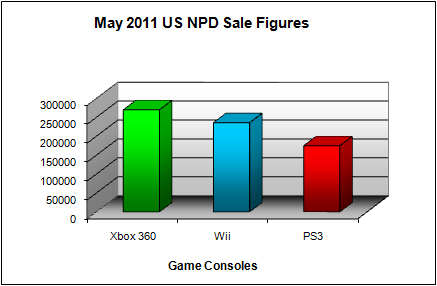
The figures for US sales in May 2011 are below, ranked in order of number of sales (May 2010 figures also shown, including percentage change):

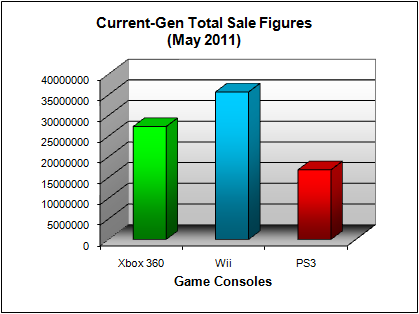
  • Xbox 360: 270,000 (Total: 27.3 million; May 2010: 194,600 – up 39%)
  • Wii: 236,000  (Total: 35.7 million; May 2010: 334,900 – down 30%)
  • PS3: 175,000 (Total: 16.9 million; May 2010: 154,500 – up 13%)
NPD May 2011 Game Console US Sales Figures

NPD May 2011 Game Console US Sales Figures

NPD Game Console Total US Sales Figures (as of May 2011)

NPD Game Console Total US Sales Figures (as of May 2011)

My prediction from last month was:

I don’t really want to make a prediction next month, because if I’m right, and that the PS3 number falls due to the PSN outage, then Sony won’t release the figures, and we don’t have an NPD. Regardless, I think the Xbox 360 would still be the top selling console, so it’s just a matter of how much the PSN outage hurts the PS3, and how much the Wii price cut helps the Wii. The biggest game new releases for May are L.A. Noire, Brink and LEGO Pirates of the Caribbean.

I should have stuck to my guns and not made any predictions, because it turns out that PS3 sales held and even rose compared to last month, and also compared to a year ago, and so Sony had no qualms about releasing the figures. It was Nintendo, strangely, that was the holdout until good old reliable Michael Pachter came to the rescue again and released the Wii numbers in an investor report. The Wii price cut did help the Wii to record a sales rise compared to April, thanks to the price drop. Ironically, it was the Xbox 360 that was the only home based console to record a drop in sales compared to April, but it was also the console that recorded by far the highest year-on-year growth – go figure! As for games, I did make the right prediction here, and even made it in the right order in terms of the top 3 sellers for May.

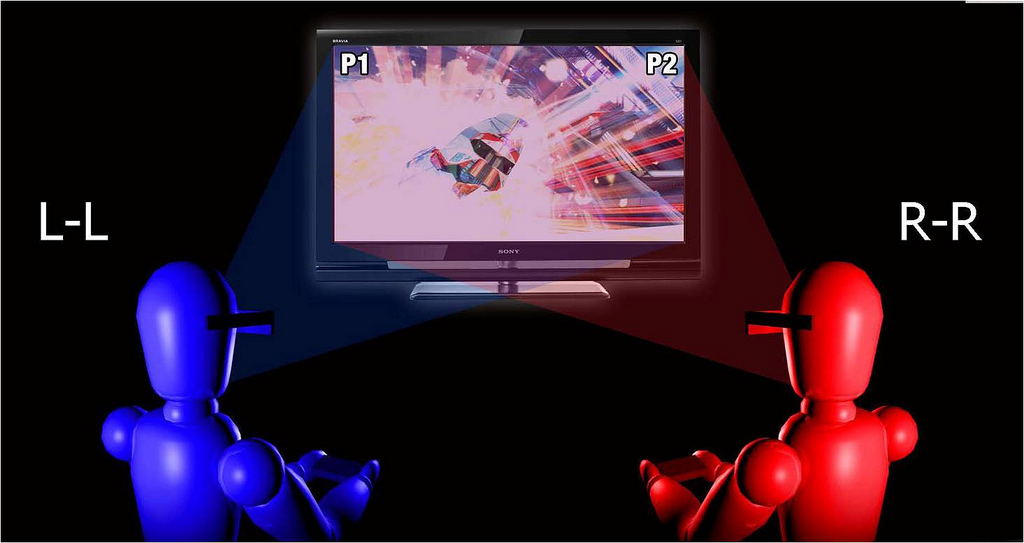
Let’s start with the PS3 numbers, which was the most anticipated set. The PS3, while still coming last in terms of sales, did record a year-on-year growth of 13%, as well as a minor increase in sales compared to April. This seems to suggest the PSN outage did not affect sales all that much. Sony also stated that this was the 4th month in a row that PS3 sales saw double digit growth, which is impressive considering the shenanigans of the last two month with the PSN. Apart from touting exclusives, Sony spent much of the time showing off their new portable, PlayStation Vita, as well as a PS3 3D TV that allows two player game play without a split screen, turning the 3D technology and glasses for 2D use.

Xbox 360 sales did fall compared to April, but compared to May 2010, hardware sales rose 39%, the highest out of all the consoles. The reason for the monthly fall may be due to April’s better than average result (which was 60% higher than April 2010, double the usual average). Certainly, looking at these numbers, the Xbox 360 looks the most healthy. For E3, Kinect was the focus, as it has been the catalyst behind the recent good results. Microsoft is promising all future first party titles will feature some Kinect features, which will be interesting. They also launched Kinect Labs, which is the Kinect app store. Kinect is keeping the Xbox 360 on top, and so it makes sense for Microsoft to concentrate on this area, especially since with the announcement of Wii U, we know that it is the sole console doing the “no controllers” thing.

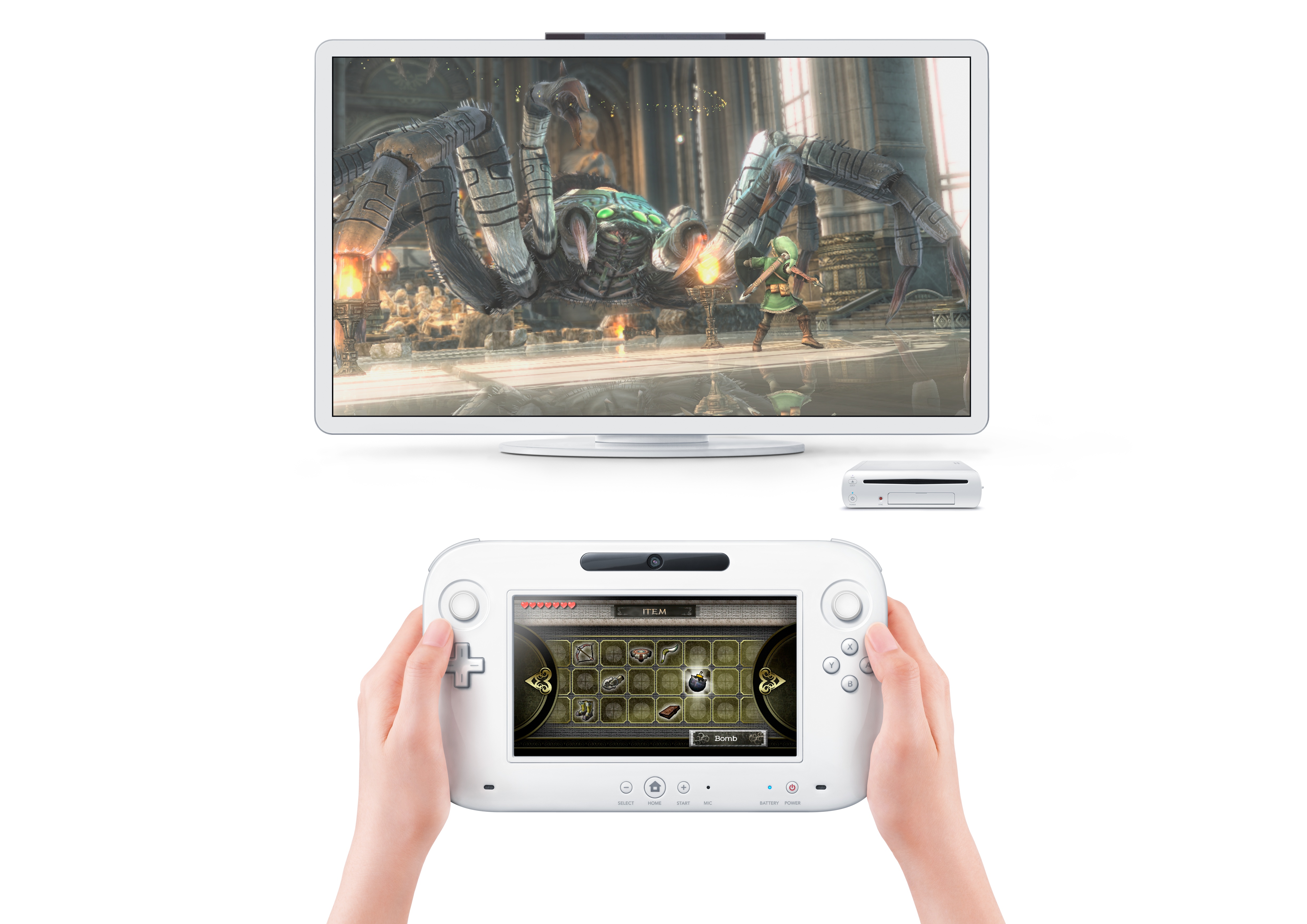
That leaves the Wii, which could become the most sickly of all the consoles, despite outselling the PS3. The reason I say this is that given the trend of decline, around 30% compared to a year ago, by this time next year, it will be the worst selling home console. The trend has been pretty consistent, and it doesn’t look like it’s slowing at all. Which probably explains why Nintendo was the only company to unveiled a new home based console at E3, the Wii U. With no firm release date other than “sometime in 2012”, the Wii will have to suffer for a bit longer, but by the time that the PS3 does finally overtake the console the Wii U surely won’t be far away from release, which is probably what Nintendo is counting on. Certainly, it makes sense that Nintendo would be the first company out of the three to launch a new console, despite not being the first company to release their current generation consoles (Microsoft’s Xbox 360 was launched a year earlier). The Wii hardware is the oldest out of the three consoles, and it needed a refresh most urgently. The Wii U will feature hardware that’s 50% more powerful than the PS3, which sounds really impressive until you realise that the PS3 hardware is about 6 years old already (developed in 2005, launched in 2006), so 50% may not even be enough, because the next Microsoft or Sony console could again leave the Wii trailing behind in the graphics stakes. But graphics are not that important any more, considering the 6 year old PS3 still looks fantastic even on a 1080p screen. As for the Wii U’s innovative control system, with the controller that also doubles as a second screen, it certainly is different. It could be the difference that makes it a hit, or it could be just too complicated for the casual gaming market that’s used to the Wii’s simplicity. With that said, what Nintendo is promising could already be possible on the PS3 and Xbox 360 if you listen closely to recent announcement. Back in February, Microsoft announced that future Windows Phones (and tablets, I’m guessing), would come with Kinect interactivity, and with Sony launching Vita, it could also link to the PS3 in the same way the Wii U controller links to on screen action. Sure, it wouldn’t be a nice and polished package as the Wii U, but if either company can demo something similar on existing hardware before the Wii U launches, then that will steal a lot of Nintendo’s thunder. For me though, the Wii U is as much about innovation, as it is about getting back in favor with the hardcore gaming crowd.

Onto games. As predicted, the month’s top 3 sellers were L.A. Noire, Brink and Lego Pirates of the Caribbean, in this order. Nothing else on the list was of any surprise, so it’s probably not worth the trouble to discuss game sales any further, other than to add that combined, games sales are down 19% compared to last year, and that only the Xbox 360 recorded an increase in software unit sales (but that increase was only 1%, so it’s hardly a great result). Fewer games were released in May though, and genre specific releases that were not as good as what was present last year. The steady decline in physical disc sales may be attributed to digital sales (especially on the PC, which is included in the NPD figures), and probably also due to increased competition from smartphone/tablet gaming – something that Nintendo is hoping to address via Wii U (Sony via Android gaming phones, and Microsoft via Windows Phone Xbox 360 connectivity). Here’s the full software sales chart for May:

  1. L.A Noire (Take 2, Xbox 360, PS3)
  2. Brink (Bethesda, Xbox 360, PS3, PC)
  3. Lego Pirates of the Caribbean (Disney, Wii, Xbox 360, NDS, PS3, 3DS, PSP, PC)
  4. Portal 2 (Electronic Arts, Xbox 360, PS3, PC)
  5. Mortal Kombat 2011 (Warner Bros. Interactive, PS3, Xbox 360)
  6. Call of Duty: Black Ops (Activision Blizzard, Xbox 360, PS3, Wii, NDS,PC)
  7. Zumba Fitness: Join the Party (Majesco, Wii, Xbox 360, PS3)
  8. NBA 2K11 (Take 2, Xbox 360, PS3, Wii, PS2, PSP, PC)
  9. Just Dance 2 (Ubisoft, Wii)
  10. Lego Star Wars III: The Clone Wars (LucasArts, Wii, NDS, Xbox 360, PS3, 3DS, PSP, PC)

Prediction time? No big changes, so the same hardware ordering as this month. The new top selling games will be Infamous 2 and Duke Nukem Forever (on a side note, ‘Forever’ really is such an apt name for the game considering the development time), but the overall top sellers will be some of the same titles as in May.

See you next month.

Weekly News Roundup (12 June 2011)

Sunday, June 12th, 2011

Quality over quantity, is something I firmly believe in. Which brings up to this week’s WNR, which is pretty light in terms of quantity of news items, but high in terms of quality of the mindless ranting that I can produce from these discussion worthy stories. So let’s not waste precious words on the intro, and get started with the roundup/rant, because this WNR is a fairly long one.

CopyrightStarting with copyright news, there’s one story that I really want to talk about, you know, the one that may just change the face of the music business, but for now, let’s quickly get through the other stuff.

United Nations

The UN thinks that 'three-strikes' is a human rights violation

You know it’s bad when the UN has to write a report just to call you jerks, but that’s exactly the kind of face slap France and the UK faced this week, when an UN report found that three-strikes anti-piracy legislation is a human rights violation. UN Special Rapporteur Frank La Rue found that cutting off people’s Internet connections, for piracy or any other reason, is tantamount to violating their rights of expression, because governments should not have the right to limit a specific kind of communication. The UN believes that nobody should be banned from using a communication medium, especially by the government, and certainly not for something as trivial such allegations (and they’re only allegations) of copyright infringement. While the Internet is very different, the principle is the same, in that the government should not be able to ban you from using the telephone, reading books and newspapers, listening to the radio or sending letters, as these would all be rights violations (note that whether you can afford to use any of these services, that’s a totally different matter – the point is that if you had the resources to do so, you should be able to do so, without the government interfering). The report made special mention of France’s three-strike laws, and the UK’s Digital Economy Act, so looks like France and the UK will join the list of human rights violators unless they change tract. It’s also a warning to any other country thinking of doing the same (I’m looking at you, Australia).

And it’s not just the UN that is attacking the bias in copyright legislation and legal actions, the legal establishment is taking action as well. The UK Solicitors Regulation Authority (SRA) has handed down its ruling against two former employees of Davenport Lyons who are considered pioneers of the mass copyright lawsuit schemes – and it’s guilty, on all six counts, of professional misconduct. David Gore and Brian Miller came up with the clever idea to extract pre-trial settlement fees by threatening suspected copyright infringers with massive penalties. But following many complaints, from any that said they were completely innocent, the SRA stepped in and a thorough investigation found the pair guilty of a lot of things. If targeting people based on flimsy evidence wasn’t enough (the SRA felt that IP address alone isn’t sufficient, in terms of proving copyright infringement – an important ruling), then targeting knowingly innocent people was a step too far. The pair could now face disbarment. The SRA’s decision is welcomed, but really, everyone knows that, at best, these types of practices are nothing but legal blackmail. Law firms should not be able to ask for pre-trial settlement fees if they have no intention to go to trial, period.

And also bad news for the US Copyright Group in their massive ‘The Expendables’ lawsuit, which now consists of 23,000 named and unnamed defendants. The judge in the case, having earlier allowed the USCG to issue subpoenas to get more information about the defendants, is reconsidering, and is beginning to see the whole thing as “inappropriate and a waste of scarce judicial resources”. And that’s the sensible conclusion that all judges should come to, when it’s plain as daylight that firms like the USCG are out to make money, with almost zero intentions of actually going court. Please refer to the last sentence of the previous paragraph.

iTunes Match

iTunes Match will either make buying music obsolete, or it will do absolutely nothing, depending on who you talk to

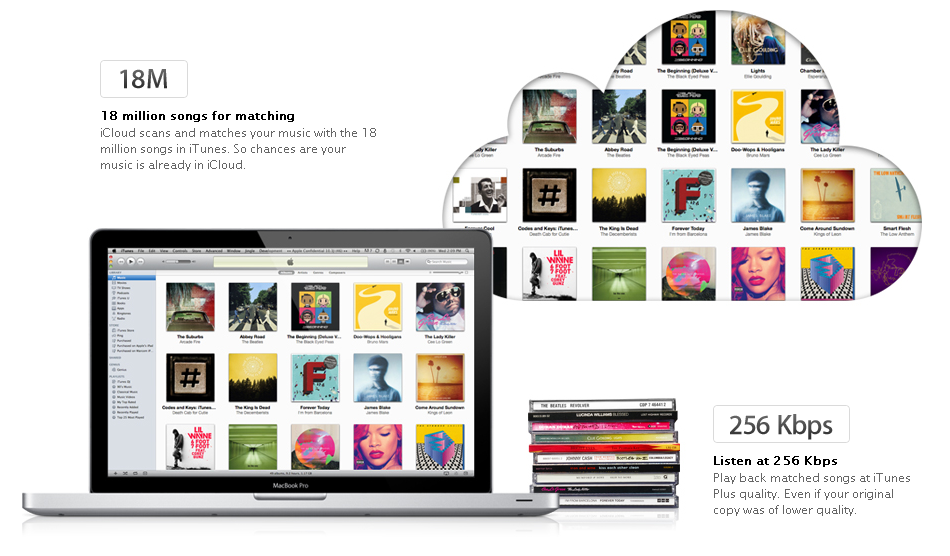
And of course, we come to the main course. Steve Jobs’ “one more thing” at the Apple Developer Conference has the whole Internet both excited and confused, with some really angry as well. The whole iCloud thing is fairly standard, but iTunes Match promises to be something else, or nothing at all, depending on who you believe. The problem is that we just don’t have enough information, but based on what we’ve heard so far, anyone could be right. So what is iTunes Match? Well, basically, it’s an addition to iTunes and iCloud that scans your hard-drive for songs, and regardless of whether these were purchased from iTunes, or elsewhere, or even pirated, iTunes Match will try to match the song to one of the 18 million songs in iTunes, and then from that point onwards, you will be able to download the 256 Kbps iTunes legal version of the same song for free on all your iDevices (and if the song doesn’t exist, you can upload your local copy to iCloud). That’s right, even if you have some crappy 128 Kbps MP3 of a song you copied from a friend who downloaded from LimeWire, you’ll now get a clean, high quality (relatively speaking) version of the song from iTunes. After you pay the $25 per year fee, of course. And best of all, all the major labels, all four of them, seems to be fully supportive of Apple’s plans (no doubt because they get 70% of the $25 annual fee).

As so the Internet nearly exploded, with some calling this a piracy amnesty, the term “music laundering” was mentioned, while others feel that it’s $25 to access music you already had, which is totally pointless. The truth is probably somewhere amongst the mix.

Before we get to the pros and cons, let’s just go through how iTunes Match will work, or at least how I think it will work based on the current information. So you start iTunes Match, and it scans the songs on your hard-drive. Now, I doubt it will be as simple as an ID3 tag match, because ID3 tags are not exactly accurate. What I think will happen is an actual audio match, like how the SoundHound app works, which I think should be the most accurate way of matching tracks. And if the song does exist on iTunes, the song is “uploaded” to your iCloud account (and it does not count as quota either), or rather, Apple simply allows you permission to download the song using your iCloud account, and you now get to download (not stream) the same song on all your iDevices, as if you had manually uploaded the 256 Kbps iTunes downloaded AAC to your iCloud account.

So now you know how it works, let’s get some of the misconceptions out of the way. Some are saying this is a Trojan Horse, that by scanning your files, Apple will send all the info to the RIAA so they can sue the crap out of you. This is not going to happen, simply because there does not yet exist a tool that can accurately tell the difference between a DRM-free legal track, a track you ripped from your legally purchased CD, and one that you downloaded from the Internet illegally. First of all, the illegally downloaded track may very well be a DRM-free track that somebody else uploaded, minus some tracking tags perhaps. Or it could be just a CD rip that someone had uploaded, and there’s no way to tell if it’s your CD rip, or someone else’s. Another popular one is that iTunes Match will delete all the matched songs from your hard-drive, thus destroying your precious pirated music collection. Ridiculous really, because what’s to stop you making a backup of the songs before you “iTunes match” it? And why would Apple bother when, immediately after deleting all your shoddy pirated MP3s, they immediately give you pristine HQ AAC copies to download, copies that are also DRM free. As for making your iTunes Match downloaded AACs stop working once you stop paying the $25, not going to happen either, because the tracks are DRM free, and because they’re downloads, not streaming, you can keep downloaded copies forever, on multiple devices, after you stop paying the $25.

So it iTunes Match really a godsend for pirated music collectors, does iTunes Match really give you the iTunes download version of songs even if your original was a pirated track? Yes it does, absolutely. And is this a piracy amnesty or music laundering? It depends.

It depends on information that’s just not available yet, and the differences are very subtle between the “Yes” answer, and the “No” answer, and it’s more of a legal and moral position, than anything else. What do I mean? Well, let’s take someone who decides that iTunes Match is a piracy amnesty, music laundering service, so they go and download 300 pirated songs every month. First of all, the act of downloading pirated songs is still illegal, and iTunes Match doesn’t even come into play here, so you may still get caught and get fined. But let’s assume you’ve found a way to download without being detected, okay, you run iTunes Match on those 300 songs, and voila, record label approved iTunes downloads on your iPod.
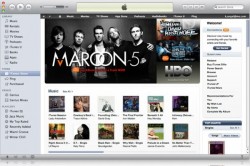
iTunes 10

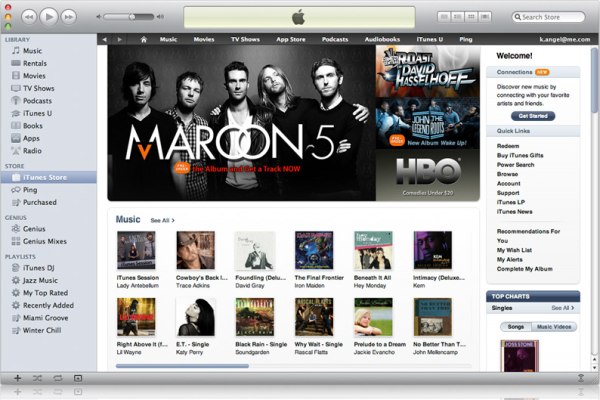
Buying a song from iTunes and downloading a copy from iTunes Match may be two very different transactions, with different legal rights

This is where it gets tricky. See, if the iTunes Match downloads come with the same license as a regular purchased iTunes song, then yes, you’ve just turned pirated songs without licenses into iTunes downloads with licenses, and laundering is complete. However, if iTunes Match merely provide a license to download the matched song, with no proof of purchase included, then no laundering has been done. You still don’t have a proof of purchase for your pirated songs, and you never will. Not that anyone really cares about proof of purchase or anything.

As for the argument that iTunes Match helps people to pirate songs, well, that doesn’t really hold true either, as people need to have pirated before they use iTunes Match. Similarly for the argument that iTunes Match allows people to enjoy more songs than what could otherwise be had for $25, iTunes Match can only allow you to download copies of songs you already have, and if you already have those songs (pirated or legal), then you could already enjoy those songs, so iTunes Match doesn’t really “add” to the enjoyment in any way.

And as for whether iTunes Match will encourage people to buy less, it depends on why people buy songs the first place. Those morally bound to buy them will still do so, same as those who buy music to support the artists (but you’d be better off going to see their concert, as they get more of your money that way). And basically, anyone already buying legal music probably won’t be swayed either way by iTunes Match.

For those that do pirate a lot, iTunes Match may make you feel a little bit better about your activities, with no real legal protection (if, as I assume, you don’t get a license/proof of purchase with your iTunes Matched downloads), and the convenience of having everything done through iTunes (if you think that is a convenience), and all for the low low price of $25 per year. That’s (70% of) $25 more than what the record labels would have gotten before, so for them, it’s a bonus. The only real problem could be that, because of existing artist licensing deals, they may miss out on any share of the $25, so if you want to support the artists, this is not the worst way to do so.

So there you have it, Apple iTunes Match explained. Clear as mud.

High Definition

In HD and 3D news, nothing much again, but NPD has a new research paper out that says Blu-ray penetration, after the first five years of the format, has reached 15%. If this sounds a little bit underwhelming, perhaps it is, because DVDs at the same point had a much higher penetration level.

But Blu-ray is not DVD, and Blu-ray has to work a lot harder for every percent, since it’s a much more subtle upgrade to DVD than DVD was for VHS. It’s like going from horse cart to a car, and then going from a 1990’s car to a brand new model. What I found interesting in the report was that half of the people wanting to buy a Blu-ray player in the next six month wanted one because it could deliver digital content, because all Blu-ray players can do it now. So in a way, Blu-ray is helping optical disc formats stay relevant in the Internet age, and at the same time, it’s helping its own demise by helping to improve the penetration of digital delivery hardware. It’s very much a bridging format, between the optical and digital, but just because there’s a bridge, it doesn’t mean everyone will cross over it, and I still firmly support disc formats because, call me old fashioned, I still like to have something to hold in my hand and also something to display on non-virtual bookshelves.

Gaming

This is a big week for gaming, thanks to E3, but as this is not really a gaming website/blog, I’m going to skip most of E3’s announcement, because I just don’t feel like making a big deal out of the next Batman game or whatever.

But that doesn’t mean there aren’t some announcements that are too big to ignore. Of course, the big one being the announcement by Nintendo of their new console, but I shall ignore this for a moment while I talk about the other game company’s announcements.

Microsoft’s E3 was all about Kinect, and they showed demos of the Star Wars Kinect game, which looks more like an on-rails game, which is kind of disappointing, but probably not unexpected. Microsoft surprised us last year with the Xbox 360 “Slim”, but this year’s “surprise” was less significant, something about Live TV that’s not going to make its way to Australia (although YouTube integration should be helpful, but it’s  hardly unique). Microsoft did unveil Kinect Labs, which is like an app market for Kinect, and it now includes a few free “gadgets”, including one that tries to make a life-like avatar, or one that turns inanimate objects into something that comes alive on the screen (it’s not as good as it sounds). With the Kinect SDK coming soon, launching Kinect Labs is a solid step. As for full Kinect games, Microsoft promises more on the way, including Mass Effect 3, which will allow you to speak the lines of Commander Sheppard as a way to choose dialogue options (of course, you could just select and click – and since the character itself always elaborates on the chosen dialogue, speaking out the choice may feel a bit strange, like saying everything twice). As for why Kinect is needed for simple voice recognition, when a headset is all that’s required, BioWare says it’s all to do with the Kinect system, where developers don’t need to do much when it comes to doing voice recognition as it’s all handled by the Kinect hardware/software combo. Microsoft even promised that all first party games will come with some Kinect interaction, which is something that I felt was the right thing to do back when Microsoft were saying they would only make games that could be played entirely with Kinect and nothing else. With EA announcing FIFA will support Kinect, I’m looking forward to taking and saving penalties by kicking and diving around the living room.

PlayStation TV

PlayStation TV can let two players play on the same screen without a split screen, using special glasses based on 3D technology

For Sony, other than apologising to everyone over and over again, E3 was about the Next Generation Portable, now called PlayStation Vita (vita means “life” in Latin and Italian, of course). Sony have already announced a lot about NGP/Vita, so there were no big surprises. What I found interesting was the PS3 branded TV. What was interesting is that it allows two players to play on the same TV *without* a split screen, and that’s totally possible using the 3D TV in a 2D way. 3D works by displaying two images at the same time (well, not really, but that’s what our eyes perceive when looking at the picture without the glasses), with the glasses separating the image into ones for the left and right eyes. The same principle can be used to display two images, one for player one, and one for player 2, and if the glasses instead of separating the image for each eye, simply separated the image for different players, then you have two player gaming without split screen. Of course, without glasses, it will look like a right mess. Theoretically, with the right glasses, almost any 3D TV can be made to do the same. Whether it’s better to wear glasses and have a full screen picture, or to not wear glasses and have a split screen, that’s an entirely different debate.

You can read more about the Microsoft and Sony announcements in this news post.

Wii U

The Wii U promises to do a lot ... maybe too much!

And then there’s Nintendo’s announcement. The Wii U will be the Wii’s formal successor. I’m not going to get into the debate about the name, because everyone though the Wii was stupid, and it is, but it didn’t really matter. What does matter is the humongous thing that Nintendo calls a controller, and it’s certainly been a point of debate. By having a 6.2″ touch-screen on a controller, and with the controller’s screen able to interact with the main screen, or even operate independently, it does add to the versatility. For example, you can play simple board games on the controller without even turning on the TV, or use the controller to display additional gaming information à la the dual DS screens, and with Nintendo promising minimal lag between the main screen and the controller screen, it can even be used as part of the game, for example using the controller’s screen as a binocular to zoom in on the action, where the main screen still stays the same (making sniper game play a bit easier).

But as Nintendo later conceded, perhaps too much was made of the controller itself, and not enough on the console. The Wii U console will be more powerful than the Xbox 360 and PS3, considering it is using hardware that’s years newer than what’s in those other consoles, and so with the gaming line-up, it seems Nintendo is firmly moving back into the ‘hardcore’ gaming sector, after straying perhaps a bit too far with the original Wii. That should help Nintendo, because the Wii U is still very “family friendly”, and even if you don’t like the new controller, all old Wii accessories will still be supported, as well as full backwards compatibility for Wii games.

And this could also be perhaps Nintendo’s biggest problem. The Wii was simple, clearly focused at one sector of gamers, but the Wii U tries to do much more, and it is this versatility and ambition that could ultimate sink it as a console. Everyone can imagine what you can do with a Wii-mote, and it was perfectly demonstrated by just one play of Wii Sports, but it’s much harder to imagine what you could do with the Wii U controller. Plus, with Nintendo intent on making the Wii U a hardcore gamer’s console too, as well as a console for the smartphone/tablet gaming generation, and maybe even taking on the portable consoles market that’s already dominated by their own DS, it may be trying to do too much with the same console. Or it could work out great, who knows.

Alright, that’s more than enough writing for this week, I just hope it’s not a long and laborious read. Well, not more than usual anyway. See you next week.

Weekly News Roundup (5 June 2011)

Sunday, June 5th, 2011
ASUS P8Z68-V PRO

If this picture of a motherboard turns you on, then my computer buying guide is for you

Are you planning to buy a new PC soon? And are you willing to spend more money on a PC than what’s considered sane today? Then read the latest edition of my If I Were To Buy A New Computer Today feature, dubbed the Sandy Bridge edition, as this is the CPU that’s all the rage these days. You may laugh and point at any guide that recommends paying more than $1800 for a new PC, in these days of tablets and netbooks and whatnot, but hey, some of us still play PC games. And do CPU intensive things such as video conversion. I have to say, the most exciting thing about Sandy Bridge for me, apart from the lower starting price points for such a new part, is the SSD caching feature introduced by the new Z68 chipset. Regular reader(s) will be aware that I’ve been bigging up SSDs since 2009, but the stupid things refuse to drop down in price enough to prove that I was right. But with SSD caching, where you use a much smaller (and hence, cheaper) SSD drive as a cache for your TB sized cheap HDDs, can give you some of the benefits of SSDs without most of the negatives (low capacity, high price, etc…). For this alone, Sandy Bridge is worth upgrading too, even with the added hardware DRM (or not).

News wise, it’s not been a huge week, hence why I felt the need to pad the week with the computer buying feature. So let’s get started.

CopyrightLet’s start with the copyright news, which surprisingly, isn’t too forthcoming this week. In fact, there is only one story in the “copyright gone insane” category this week, which, you have to say, is an improvement.

Unfortunately, this one is right up there in the insane rankings, as the US senate debate plans to jail people up to 5 years for sharing YouTube videos. This isn’t as far fetched as you might think, because this is one of those “road to hell is paved with …” things, and if you break down the issues, all of them seem to make sense. First of all, you have the disharmony between civil and criminal copyright laws, in which there are civil penalties for performances, but no criminal penalties. So let’s “harmonize” the two sections of the copyright act. Fine. How about classifying video streaming as a kind of performance? Well, it appears the courts have been doing this for a while now, so I guess it’s fine too. And what about the differences between hosting a video, linking to it and embedding it on your website? Well, ICE has seized several domain names recently for websites that only linked or embedded content, uploaded to websites such as Megavideo, and ICE got the seizure orders by going through the court (albeit in a very one sided argument), so I guess that’s not a huge problem either. So to sum up, video streaming is a performance, and hosting, linking and embedding is really the same thing, when the court is concerned these days. And an unauthorized performance should carry criminal sanctions of up to 5 years in jail, much like like every other kind of copyright abuse. Add them all up: new senate bill that could lead to 5 years in jail for embedding YouTube clips. Now, if Senators are more educated when it comes to technology, particularly the issue of Internet content distribution, and/or if they’re not being “pressured” by lobbyist, then maybe, you would have a bill that doesn’t threaten to send half of the entire US population to jail (who hasn’t embedded a video, and who hasn’t done it with a video that used copyrighted clips, even if only for a small part of the video or soundtrack). For example, you could ensure that criminal sanctions would only apply in the case of massive infringement, such as linking/embedding thousands of videos, and for profit. Instead, we have a bill that describes a digital “performance” as 10 viewings in any 180 day period. Maybe in the real world, if I had a show and 10 people turned up, that may count as a performance. In the digital world, 10 views is hardly viral stuff, especially if it took 180 days to get this many views. But what can you do? Well, you can go after the people that upload the infringing content and only those people, but that would be too hard, so let’s just arrest everybody.

yongzh's N64oid Emulator App

The removal of yongzh's emulator apps from the official Android Market by Google may not be what it looks like

There are two more copyright related stories, but they’re not as crazy, and so as a rule, are not as interesting. First up, we have Google possibly going after emulator apps on the Android Market, with apps from two developers being removed in the past month alone. Emulators have been proven time and time again to be legal in courts all over the world, so Google going after them, especially proclaiming Android as the “open” platform, seems to be a bit hypocritical. On the other hand, we don’t know why the removed apps were removed, while others are still happily being offered, so perhaps there are other reasons for the removal. Certainly, with some of the removed apps by developer Yong Zhang, there are licensing issues at play (open source related stuff), so who knows. If by this time next month, more emulators have been removed, then perhaps it signifies a trend. Right now, it just means you’ll have to get these apps from one of the billions of other Android markets.

The other Android related story has a bit more substance to it. This involves the newly released YouTube video rental service on the mobile platform, and how you can’t use it on rooted phones. It’s definitely a DRM related thing, and I’m sure the content holders providing content for the service will have asked for  these draconian restrictions. But it’s the typical backwards thinking that plagues the digital entertainment industry, where they’re so afraid of their precious streams being stolen, that they end up barring people from being able to pay for content, legally. Wouldn’t it be better to ensure more people had access to your legal service, as opposed to less? And it’s not as if ripping movies from DRM protected YouTube video streams is the most popular or easiest way to illegally obtain or share movies online, so they could have no DRM, and nobody would probably even bother, when they can just rip a DVD or Blu-ray. It’s like HDCP protection in HDMI, which was initially such a big deal and caused untold compatibility problems and silliness, because content owners were afraid people would record/rip digital content straight from the cable, if it went unprotected. Then HDCP got cracked, as expected, and do we see a huge surge in HDMI-rips? No. Do you know why I know? Because I just made up the term “HDMI-rips”. In fact, if you search for “HDMI rips” on Google or Bing, all you end up with are articles about HDMI cable rip offs, which is a discussion for another day.

Also, if I somehow manage to get the YouTube rental app running on my rooted phone, does that stream them become unauthorized, and jail time?

High Definition

In HD and 3D news, following last week’s story about the 3D cinema craze coming to an end, box office results for the US Memorial Day Weekend seems to suggest that it really is happening.

The long weekend capped off a set of very disappointing results, but only for 3D showings. In fact, the best performing movie wasn’t even available in 3D, and perhaps it was only successful because of the lack of the 3D distraction. Certainly the theory mooted last week was that for every extra dollar that 3D presentations earn, there’s more money being lost through increased 3D production costs, marketing costs, and lost sales at the popcorn stand. But it’s the usual Hollywood thing, 3D for 3D’s sake, whereas they’d better off having movies like Avatar that’s been written, directed and shot for 3D, even if it means only a couple of such movies every once in a while. But no, everything has to be in 3D, and the hype dies out because of all the lame 3D movies.

Gaming

And finally in gaming, after a nausea inducing session of Wipeout HD on my 3DTV yesterday, I can confirm the PSN is back and the “Welcome Back” goodies are now available to download as well (I still haven’t made my decision on which other free game I will download).

PSN Welcome Back Pack

PSN is back online, and the welcome back pack is available to download

Those that want to download the free games need to be patient though, because the claim and download process for me was riddled with error messages, that retrying time and time again seem so to fix. Some will and are still complaining about the free games being offered, and how old most of them are, but as someone who didn’t really used the PSN that much in the past before, I’m not complaining too much.

So just as things seems to be getting back to normal for Sony, guess what? They get hacked again. It’s not the PSN again, so no need to ring your nearest game store and ask what kind of console exchange offer they have on at the moment, but it’s certainly not what Sony wanted so close to the PSN hack. SonyPictures.com was hacked by the same group that recently hacked PBS, with account details accessed and taken, as well as other stuff. According to the hacking group, LulzSec, they had access up to one million Sony Pictures account passwords, all of which were stored as plain text in the database. Read any “noob guide to user databases” on the Interweb, and the first lesson is always about not storing passwords as plain text, so how Sony could have got it so wrong, I have no idea. I guess because no financial information was being stored, Sony thought nobody would bother to hack the database, and the rest is history. It really paints a picture of a company that doesn’t seem to have any security policy at all, or at least it’s not enforced, and really, would you trust such a company with your financial details? And this is not a rhetorical question either, because you can answer this very question in a new poll I just put up.

Also, the hackers detailed how they got into the Sony system, and it wasn’t some kind of super hack that can only be pulled off by a hacker that would make Neo from the Matrix look like a script kiddie, or a sophisticated social engineering “my voice is my password” style operation involving a blind guy that has great hearing. No, it was just your plain old SQL injection, which for the uninitiated, means injecting SQL commands via poorly written web scripts that don’t check for inputs. To be fair, it is the most common type of web programming security SNAFU, but you would have thought that after the PSN hack, Sony would have performed an extensive security audit on all their web assets, knowing now that they’re a major target for hackers (but they always were, even if they didn’t want to believe it). Sony has since confirmed the attack, and have contacted the FBI.

Alright, that’s it for the week. Thanks for reading, linking, tweeting, facebooking or whatever it is that you young folk do these days. Have a good one.

Weekly News Roundup (22 May 2011)

Sunday, May 22nd, 2011

A fairly quiet week this one, I guess there’s not really much of a point to write news when the world is ending today. I guess there’s also not much point in writing this WNR, but I can’t think of a better way to go out than in a blaze of angry, angry ranting. There’s no time to waste, as the apocalypse may be upon us any second, and I’d hate to write all this and not have time to send it out. So let’s get started.

CopyrightLet’s start with copyright news. The French have enjoyed their three-strikes system for some time now, although I’ve yet to actually hear any good news about a reduction in piracy or rise in consumer purchasing or anything like that, which is the whole point of the exercise, non?

TMG hacked server directory

This screenshot shows the contents of TMG's "hacked" server

Anyway, one of the private firms the government pays to spy on its own citizens, to gather IP addresses for warning notifications and all that, has had a security breach this week. Trident Media Guard had one of its test servers “hacked” into, with data and tools stolen. From what I gather, it’s not much a case of hacking, as a case of very very lax security, which allowed anyone to browse the contents of the server. A lot of stuff turned up, which ironically made its way to P2P networks in short order, and it includes things like IP addresses that the company uses to track users, plus tools to create fake peers (again, for data collection). Basically stuff that hackers can take a look at and find a way to block TMG from being able to conduct their activities successfully. But the bigger issue is that whether a company tasked with handling sensitive data should be held to higher standards when it comes to security, because while no personal data has been leaked so far, it could very well have if TMG maintains their other servers in the same manner.

But by far the biggest story of the week was a response to last week’s big story, which was the proposed PROTECT IP act, which will give the government power to shut down any website it deems “unacceptable”, including messing with the domain name system (DNS) at the very core of the Internet, as well as forcing search engines to adopt censorship. And as expected, a search engine company, the biggest in fact, has come out fighting against the proposed act. Google’s Chairman, Eric Schmidt, says the company will fight PROTECT IP even if it becomes law. While Schmidt was primary talking about the government messing with DNS, I’m sure Google is even more concerned about the forced search engine result filtering. But messing with DNS is extremely dangerous, because the DNS system is probably the most important Internet protocol, as it maps domain names to the IP address of the servers that hosts the website. The current system is like a huge peer-to-peer network, where an authority server shares information with the rest of the world, and data propagates to every other DNS server. But if the US starts messing with the DNS records in the US, and then Europe does the same, and every other country, then this could very well break down the very thing that is essential for visiting websites. Prominent engineers and Internet pioneer have already warned the US against this, but the RIAA/MPAA lobbying was just too great (and they could care less if the Internet breaks, and it’s probably something they’ll welcome).

And make no mistake, the push behind PROTECT IP is all RIAA and MPAA. This is why, following Google’s statements, both the RIAA and MPAA came out attacking Google, one accusing the search giant of benefiting from criminal activities, and the other saying Google is acting as if they’re above the law. Last week, I ranted about the aim of copyright, which is to protect the public’s right to have access to information, as well as to promote creativity. What the RIAA and MPAA want almost the exact opposite of what copyright is all about, and so if anyone is acting as if they’re “above the law”, it’s the movie studios and record labels. And even if they’re right about copyright and the need to censor certain websites, then why should the tax payer, search engines like Google, ISPs, pay for this? And all for something that will probably be easy to bypass anyway. The RIAA and MPAA thinks they’re entitled to their business model and large profits forever, and want everyone else to pay to ensure they keep their entitlements.

Protest brick

One of the lovely packaged bricks being sent to Nintendo HQ to protest the 3DS's DRM

Moving on now to gaming. The Free Software Foundation (FSF) is launching a protest against the DRM regime of Nintendo’s new 3DS, which actually allows Nintendo to brick anyone’s 3DS console if it detects that it has been modified in any way. So instead of waiting for Nintendo to brick their consoles, they decided that Nintendo should be the one that’s “bricked” first. The FSF has started an  innovative protest, with people donating money to the recognized non-profit organisation, and for every $10 donated, they will send a brick to Nintendo’s CEO (presumably via mail, not via a projection through a window). For those that want better bang, or bricks, for their buck, they can donate $250, the cost of a 3Ds, and have 30 bricks delivered to Nintendo HQ. The campaign was set to end once 200 bricks had been delivered, but due to popular demand, it’s still going on at the moment, and if you want Nintendo to get the message that we are buying the hardware, not just merely licensing it (and so we should be able to do whatever we want with it), go here and donate.

High Definition

Not much in HD or 3D news, but I’ll try to jam in something almost unrelated here just to take up some space. It’s not to unrelated, as Netflix does do HD, and I’m sure they’ll offer 3D sometime soon as well.

The good news is that Netflix is finally coming to Android. The slightly bad news is that it won’t be available on all phones, and Netflix are individually testing each and every phone to ensure compatibility. This is necessary because of the lack of a standardized streaming platform for Android phones, something Google really needs to look at. But I’m also pretty sure this has something, or maybe everything, to do with DRM, something the Netflix has hinted before when asked why it’s taking so long for the Android app the arrive. To try and do anything innovative on the Internet these days when it comes to entertainment, companies have to jump through hoops to meet the paranoid demands of entertainment companies, the rights holders, and in this case, Netflix has to get DRM nice and tight before the movie studios would allow Netflix to deliver content on Android phones. I guess the studios are worried that somehow people will crack the app, and capture the video stream and distribute the SD YouTube quality footage online. Yeah, I’m sure that’s likely, considering how hard it is for people to rip DVDs and Blu-ray’s. Almost as likely as people ripping movies via HDMI, now that HDCP has been cracked. Luddites. Interestingly, he original Luddite movement was borne out of fear of the Industrial revolution, with Luddites destroying machines and anything that represented progress. Sound like anyone to you? The only difference is that the RIAA and MPAA have the government on their side, which the original Luddites did not.

Gaming

And finally in gaming, yep, the PSN is back baby. Well sort of. Some of the functions are still not, um, functioning, but at least gaming is back.

Of course, it’s another week, and another set of security breaches being discovered at Sony and their affiliates. The most annoying of all was that a rather stupid flaw was found in the very system that was supposed to bring security back to the PSN – the password reset function. With Sony forcing everyone to update their firmware and then change their PSN password before they’re allowed back on, you would think that Sony would at the very least ensure this process was secure. But alas, that was too much wishful thinking. The flawed password reset system would allow anyone who had your birth date, and PSN email address (which at this point, is about everyone), to reset your password, and hence gain access to your account on the “new and secure” PSN. And so while Sony went about fixing the flaw, the password reset system was down, and so people like me, who had not reset their password yet, were left without PSN for another couple of days. A lot of people would have been able to reset their passwords on the console it self, but many, who like me, that didn’t create the account on my current console had to use the web version (my original died and was replaced by Sony, more on that below), which was down. There were also other stories about Sony owned ISPs also revealing user information, but I suppose these kind of stories will be plentiful as Sony conduct a full security audit of all their systems.

Dead Nation

Zombie killing fun in Dead Nation - one of the free games available in selected regions as part of the PSN "Welcome Back" package

Sony also detailed the goodies people will get once the PSN store, one of those non-functioning functions, comes back. People will be able to download two games from a list of five, including inFAMOUS, Wipeout HD + Fury, and Little Big Planet. Different regions will get slightly different sets of free games, and there are also PSP games that PSP gamers can download. I think I’ll get Wipeout HD + Fury for my 3D TV, and so far undecided between inFAMOUS, LittleBigPlanet, or Dead Nation (I just can’t resist Zombie games).

One slight problem, that doesn’t affect me, is that at least in the EU and here in Australia (and NZ), only those that had PSN accounts before the network went down on the 20th of April are eligible for the freebies. Which kind of sucks, because I would have thought that the people who got new PS3s after the 20th would be even more deserving of a “we’re sorry” gift, as the last thing you want after forking out a lot of money for a PS3 is for half the functions to not even work for weeks. I mean how much could it actually cost Sony to allow all PSN users, up to say today, to be eligible for the welcome back package? This is exactly why people hate Sony.

Thinking about the earlier 3DS protest thing, one lesson I hope Sony learns from this incident is that people *buy* their console, not license them, so you can’t just take away features without repercussions. And if we’re really just licensing the hardware, then the hardware should be a lot cheaper, and we should receive refunds for outages (just like anything you can license, if you can’t actually use the licensed service of feature, then you should get your money back). Without these checks and balances, what’s to stop Sony from removing a core feature, like say AVI/DivX playback or DLNA support to stop pirated files from being played on the console? I mean, if they are allowed to remove “OtherOS” for “financial reason”, then they can use the same argument to remove other features as well. Of course, it’s not in Sony’s interest to remove either of these features, but that’s now, who knows what will happen in the future.

For Xbox 360 owners, you should now be getting the “Spring” update notice, or will get it soon. There’s misleading information around that this update will brick certain Xbox 360’s, which is not true (at least not yet). What had happened was that a previous update, and not the Spring update, had caused some Xbox 360’s to fail, and Microsoft has already promised to replace all failed 360’s due to that other firmware update  (mostly older Xbox 360 60GB Pro’s) with brand new consoles. You see, that’s the right thing to do. The PS3 is actually more notorious for firmware induced bricking (or at least a drive that no longer reads any discs – something that I’ve experienced personally – luckily, my PS3 was still in warranty at that time, as otherwise I would have had to pay $AUD 250 for the repair), and the only response from Sony was to respond to the various class action lawsuits launched against the company for this alleged fault. This is also exactly why people hate Sony.

Alright, that’s it for this week. See you next week (if the world hasn’t ended by then).

Weekly News Roundup (15 May 2011)

Sunday, May 15th, 2011

I’ve had a busy week. Early on, I finished writing the review for PowerDVD 11. You’ll have to read the review to find out whether the new version of PowerDVD is worth it or not, but I really like the Android/iOS remote app, which basically turns your touch device into a touchpad for your computer. And being able to stream content from my phone to my PC through my home Wi-Fi is a lot easier than connecting via USB or Bluetooth. Pity the streaming doesn’t go the other way, from the PC to the smart device, but I’m sure Cyberlink will be sued into oblivion by the entertainment industry if they ever tried something as innovative and useful as this.

Not only that, I managed to get the April 2011 NPD US video game analysis up yesterday. That’s right, the feature is back, big time. Well, not big time, since I suspect it will go missing again next month as Sony tries to hide the PS3 sales figures. It’s actually quite funny, because if you read the April 18th edition of the WNR, I made a joke about the possible reason why Sony did not want to release PS3 sales figures for March, where it goes “This can only mean one thing, and that is that PS3 sales for March was negative – more people returned PS3s in March than people who actually purchased one #NotIntendedToBeAFactualStatement“. Not only did I write that *during* the PSN intrusion, which nobody, not even Sony, were aware of at that time, what I wrote is actually coming true, with lots of stories of people returning their PS3s. I had nothing to do with the hack, I swear! I barely even know how to use Internet banking!

And so before the FBI breaks down my door, here’s this week’s WNR, which doesn’t feature as many news stories, because there probably hasn’t been any really interesting news stories (and considering the fact that I’m not the only one writing the news these days, I’m much more certain this is the case, as opposed to everybody suddenly getting a case of the lazies).

CopyrightSo staring with copyright news, and while there are only three real news stories covered this week, the second one is a real doozy. What exactly is a doozy? I have no idea. But the second story is a real one.

LimeWire Logo

LimeWire settles again, this time with rights holders, for $105m. It's a much better result for LimeWire than the billions and trillions the RIAA had wanted

The first story is LimeWire’s settlement of one of their remaining lawsuits, or is this the last one, I don’t know, there are so many! LimeWire has settled with copyright holders, after settling with publishers back in March (for an undisclosed amount). Copyright holders hold the copyright on the song, while publishers hold the copyright on a recording of the song. Of course, with the way the studio system works, the same label is sometimes both the copyright holder and the publisher, so basically even with two possibly nine figure settlements, the actual artists that created the songs will probably get nothing, or if they do get something. You know, this is where I think copyright laws have gone completely out of control. If you ask an average Joe on the street,  “Hey Joe, who do you think copyright laws are really meant to help?”, that person will probably say “My name is not Joe”. And then he or she will say that copyright laws, with the way they’re being used, are obvious created to help rights holders make money, and prevent nasty pirates from sharing their works without permission. But you know what Joe, you’re absolutely wrong.

The aim of copyright has always been to promote freedom of expression, the spread of culture and to promote creativity. It is not solely, as the RIAA stated when commenting on the LimeWire settlement, to help “rewards creators”, and even if that were the case, the creators are not the RIAA or the four major labels it represents. Copyright is very much a balancing game. If you don’t have copyright protection, then original works will be disseminated in a much freer fashion, and so ticks the first two of the three criteria I mentioned above. But the problem is that, and I hate to agree with the RIAA here, if the original creators are not properly rewarded for their efforts monetarily, then there is less incentive to create, especially in today’s money obsessed society. I mean, yes, some artists do art not for money, and you might even say that these are the real artists. But even real artists need to eat. And as a society, we value art and creativity, and so it’s only natural that there is a financial aspect to it.

But if you take copyright the way it is currently being used, or rather, abused by the rights holders, then you have things like DRM, DMCA take-downs, mass lawsuits, and all with the aim to lock in the profits, and not usually on behalf of the artists themselves either. It’s not a very expensive process to publish your own Blu-ray movie, due to licensing, the need to purchase DRM keys, and so how does this foster creativity for the public good. And with the major studios and labels controlling the scene, unless you’re a major artists that can negotiate your own terms, others have to put up with giving the studios and labels a large chunk of the money earned on their works, and so the current system doesn’t really “reward creators” either. Fortunately, the Internet and computing technology in general has helped to level the playing field a little bit, allowing consumers to do more with their purchased content, allowing independent artists and publishers to distribute their work without having to rely on the majors’ connections. And it’s true, piracy do hurt the independents as well, but with piracy, comes publicity, and if your work is good, really good, than you can make fans of pirates, and fans will provide financial reward, either through live performances, or a iTunes purchase to show their support for the artists (even if they’re already downloaded his or her songs). If anything, piracy means creative works are being judged on their merits more than ever now, and only the really good works will benefit financially. And isn’t that a good thing, to promote good work over bad? And it’s almost these points, the level of playing field, the greater access to the market by independents, and having to actually produce good work, that is most worrying the entertainment industry, not the money *directly* lost through piracy. They don’t want to lose their monopoly, so that artists can distribute and promote their own songs without the need for the labels and studios, and end up keeping all of their money (which is why the RIAA ordered Homeland Security to close down blogs that artists were using to leak songs and promote their music). They’re afraid that one day, artists will wake up and realise that “We have the Internet now. We don’t need you any more”, and so they’re trying protect their position by law, using copyright and piracy as an excuse. What the major studios and label want is against the public interest, against what copyright stands for, and they are the real abusers of copyright laws.

US Department of Justice

If PROTECT IP is passed, the DoJ can use tax payer money to help movie studios and music labels sue websites

And they want to abuse it more, and create more laws that makes it easier to abuse copyright, which brings us to our second story. The PROTECT IP act, currently being considered in the US congress, will tip the copyright scale even more in favour of the multi-billion dollar corporations that are calling themselves “creators” these days. The details are scary, to say the least. If the bill is passed, it will authorize even more domain seizures by Homeland Security and ICE. The Department of Justice will now be authorized, to use tax payer funds, to file civil lawsuits on behalf of rights holders, to save the billion dollar corporations even more money, time, and effort, and even if the domain name or website is not hosted in the US, the Attorney General can step in and force US based search engines to remove results for the website (“site:thepiratebay.org” -> no results found), ISPs to stop providing access to the website and even financial companies to stop providing services to those websites, all on the say so of the rights holders. If the recent domain name seizures as part of Operation In Our Sites are anything to judge by, the “defendants” will have almost no way to defend themselves until their businesses have been ruined, and even after that, it will be extremely difficult. In other words, a judge is now required to make a judgement on a one sided story, presented by the full might of the US government and billion dollar corporations, and represented on the other side by nobody, and this is what due process has become. So if the RIAA spots another website that is threatening its control over artists, all they have to do is to make a phone call to the politicians that are already in their pockets via lobbying money to get exert pressure on the DoJ and the AG to act, and then that website will exist no more. That’s what due process will become, if PROTECT IP is passed (and given the lobbying cash being thrown around to both sides of politics, as expected, there’s already a lot of support for the bill).

And sometimes they don’t even have to make that phone call, because PROTECT IP will grant corporations governmental powers (hey, if they’re already people, or so the US Supreme Court says, and people run the government, why not let corporations have the powers of government as well?). Corporations can force financial service providers to cut services for websites they don’t like, much like how the government “convinced” the likes of Amazon, PayPal and Mastercard to cut service to Wikileaks. They don’t yet have the powers to force search engines to remove search results or the force ISPs to cut service to websites they don’t like, but give it time.

So if you don’t like the way PROTECT IP overreaches, now is the time to contact your congressman and senator. It probably won’t do much good, because most of them can’t understand the technical ramifications of what they’re voting for, or what they’ve already been paid to vote for, but it’s your only weapon against this monstrosity of a bill, and it is still supposedly the best weapon in a supposedly democratic society.

Google Music

Google Music will anger music labels because it helps consumers too much

Another great weapon is innovation. The Internet is so innovative and allows so much innovation, the TPTB are incredibly afraid of it. And Google now follows Amazon’s lead and taking music to the cloud, much to the chagrin of the music industry. I dislike the way Google is trying to take on everything and everybody, often forgetting their core responsibilities, but putting my opinions aside, innovation is always welcomed. The service is currently in beta, and only open via invitation in the US, but like Amazon’s service, you get GBs of space online to store all your music, and the music will then be accessible everywhere there is an Internet connection, and also on Android devices of course. The music industry don’t like it because it means they can’t make people re-buy the same music half a dozen times, one for each device, so they’ve used the excuse that the service will be used to host pirated songs by individuals. So? If people have already stolen your songs, then how they play those songs should be the least of your concern, I would think. On the other hand, if the music industry had embraced the Internet instead of being afraid of it, they could have launched their own similar service, charged people for it, and kept a lid on copyright issues through policing. And make a bundle out of it as well. At least the movie industry are looking at UltraViolet, which would do something similar with movies, but even better because you don’t even have to download anything if you don’t want to (stream it right after you buy it), which is kind of a necessity with GB sized movies really. But the RIAA will sue Amazon and Google, and probably Apple too, and anyone daring to give consumers more freedom as to what they can do with the purchased content.

Not much happening in HD news, and I’m already over my word count with only three stories covered, so I’ll skip this section for the week.

Gaming

But there’s still gaming, and of course, there’s still the PSN thing. The story out now is that the PSN is slowly coming back online, and so we’ll start to find out just what kind of compensation Sony will be providing for the more than three weeks of downtime.

It will most likely be a free PSN game or two (and I really hope they don’t make it so people have to input their credit card numbers to get the free games, because that would be kind of perverse), free identity theft protection for a year (it’s never a good thing when a company has to do something like this), and a free trial of PlayStation Plus. Sony, during the week, sent letters to game publishers which provided a bit more information on how the hack went down, including the interesting fact that they company didn’t even know they were being hacked until the servers went down from too much hacking (or data transfer, probably), and that hackers managed to hide their tracks by deleting logs, which probably didn’t have real time log monitoring and offsite log retention, which could have allowed Sony to detect the problem earlier, and to have clues as to what the hackers had done.

Of course, for some, nothing can make up for the lost in trust, from comments right here on Digital Digest, to comments I’ve read in other public and private forums, this latest incident appears to be the straw that breaks the camel’s back (except it’s more like a bale of straw, given the magnitude of this f***-up). The same comments have people saying they’re trading in their PS3s for Xbox’s, and there are news reports floating around with retailers also reporting the same thing, but you know, for every person that does the trade in, there are probably tens and hundreds that are not keeping their PS3, but every little bit hurts Sony, especially since they’re locked in a bitter battle with the Xbox 360 for global dominance, even if they’ve appeared to already have lost the battle in the US (the PS3 is now comfortably third in total sales in the US).

If Sony wants to get back into the game, if you excuse pun, then they have to admit that it isn’t just this single incident that has made people reconsider Sony, as a brand. It’s the DRM rookit, the alienation of the hacking community that was once your greatest supporter, thanks to OtherOS. If is the same community that you should have embraced instead of sued, after they discovered your flawed security system, to help you make your system more secure, and perhaps bring OtherOS back as a open source project that will require no financial commitment from Sony (if that was what they were really worried about). And it’s also the arrogance, in their advertising campaigns and slogans. “It only does everything?” Yeah, it did do everything, except a lot of the things you wanted it to do, and it was just unfortunate that it did a lot of things for hackers too. The whole Sony Knows Best attitude has to go, they have to become a much humbler company that truly puts customers first. To go back to the Sony that fought bitterly for our rights in the Universal vs Betamax case, the same Sony that revolutionized portable music via the Walkman, the same company that ended the Nintendo/Sega hegemony with the PlayStation. Do all of that, and they can stop becoming one of the most hated companies in the world. If you make Microsoft look like the good guys, and if you lose to a console that used to have a 1-in-3 fault record, then you’re doing something really really wrong.

Speaking of the devil, the Xbox 360 may be getting a dashboard update next week, which only seems to add PayPal support. But with Netflix Kinect support, Hulu Plus (with Kinect), and Avatar Kinect all coming recently, perhaps the good old “Spring Update” isn’t as an important occasion as it used to be. Either that, or Microsoft are too busy reinforcing their online security to bother with adding more features. I suspect many web companies that hold a lot of credit card info have done the same in the last few weeks, and so I guess that’s the silver lining out of the PSN fiasco (the silver lining is for other companies though, not for Sony).

Alright, already too much ranting this week. Got to save up something for next week, so until then, have a good one!