Archive for the ‘PS3, PS4’ Category

Game Consoles – June 2011 NPD Sales Figure Analysis

Thursday, July 21st, 2011

Welcome to another monthly edition of the NPD Game Console Sales Analysis, this time analyzing the home based game console hardware and software sales for the month of June 2011. We’re once again one console short of having all the hardware sales statistics, and once again, it’s Sony that’s the lone holdout. But thanks to information released by the other manufacturers, mainly Microsoft, we can still estimate fairly accurately what Sony’s PS3 hardware sales numbers look like, and so the NPD analysis feature can continue for one more month. For those that are new to this, this analysis looks at US video games sales figures compiled by NPD, unreleased by NPD due to pressure from the gaming companies, but then leaked by various sources, including gaming companies, if/when it suits them.

The figures for US sales in June 2011 are below, ranked in order of number of sales (June 2010 figures also shown, including percentage change):

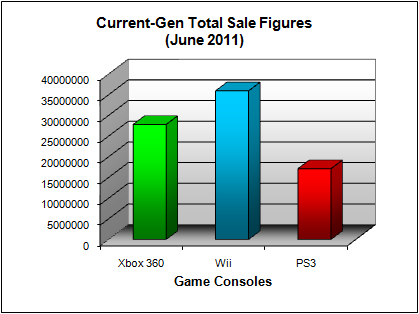
  • Xbox 360: 507,000 (Total: 27.8 million; June 2010: 451,700 – up 12%)
  • PS3: 276,000 (estimated) (Total: 17.1 million; June 2010: 304,800 – down 9%)
  • Wii: 273,000  (Total: 35.9 million; June 2010: 422,500 – down 35%)
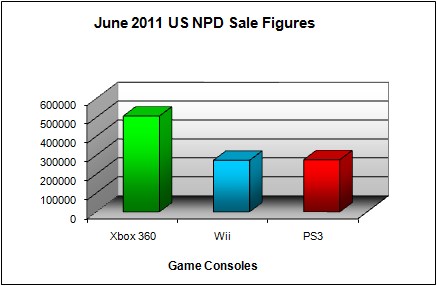
NPD June 2011 Game Console US Sales Figures
NPD June 2011 Game Console US Sales Figures

NPD Game Console Total US Sales Figures (as of June 2011)

NPD Game Console Total US Sales Figures (as of June 2011)

My prediction from last month was:

No big changes, so the same hardware ordering as this month. The new top selling games will be Infamous 2 and Duke Nukem Forever (on a side note, ‘Forever’ really is such an apt name for the game considering the development time), but the overall top sellers will be some of the same titles as in May.

If my estimation of PS3 hardware sales is correct, then I was wrong about the ordering of hardware sales, although it was a close run affair between the PS3 and the Wii. Software wise, both Duke Nukem Forever and Infamous 3 made their marks on the top 10, but more on that later.

Starting with the PS3 hardware estimation, I think it’s best I go over the estimation process, which ironically, were mostly based on statements made by Microsoft, since Sony made no mention of their hardware results this month. It all comes from the slightly vague Microsoft statement about having a “48% share of the overall current-generation console market share”. It’s vague because when Microsoft talks about “current-generation”, it’s unclear if they’re referring to all consoles, or just the home based consoles, but it should be the latter, since the former won’t make sense. And Microsoft should also be talking about June only, since for life-time wise, and even 2011-wise, the “48%” market share just doesn’t add up. And armed with the “knowledge”, and knowing both the Xbox 360 and Wii’s hardware stats, it’s then quite easy to estimate the PS3’s hardware sales number for June, which comes to around 276,000. And Microsoft’s other statement about nearly selling twice as many units as their nearest competitor seems to support this number, since any higher, and Microsoft wouldn’t have been able to make the claim without stretching the meaning of the term “nearly”.

At first glance, this seems to be a good result for Sony. PS3 hardware sales are up more than 100,000 units compared to the previous month, and it did beat the Wii, if the numbers are correct. So why didn’t Sony (loudly) pronounce these set of good results, and instead, went all quiet in their press release in regards to the hardware numbers? I can only guess is that there was no year-on-year growth for the PS3 in June, as June 2010 recorded higher sales for the console. If my estimation is correct, this breaks a 4 month trend in which the PS3 has seen year-on-year growth, and perhaps this is what Sony didn’t want to focus on (especially, given the PSN hack, media “hacks” will jump to the conclusion that the breaking of the trend is a direct result of the hacking outage). But more careful analysis shows that June 2010 was a better than usual month for the PS3, which I attributed back then to the clearing up of the PS3 stock shortage problem that hurt sales for the console throughout the first half of 2010 (June 2010 was 85% higher than June 2009). So for the PS3 to not perform as well in June 2011 as in June 2010, is really no big deal, and the decline was mild anyway, nothing like that of say, the Wii.

Which brings us to the Wii. 35% down compared to the same month last year, and nothing really positive can be said of the Wii, other than the fact that, for such a technologically inferior console, it’s done remarkably well and surely has already made Nintendo enough money. And with the Wii U already announced, the Wii’s results will become less and less important for Nintendo as they concentrate on the development of the Wii U.

And last, but certainly not the least, we have the tremendous Xbox 360 numbers. Nearly double that of last month’s results, and the only console yet again to show year-on-year growth. This is made more remarkable by the fact that, this time last year, the new “Slim” model came out, and the sales bump associated with it meant that it was always unlikely that the Xbox 360 would have any sort of year-on-year growth, but here we are. Now, some of this can be attributed to various bundling deals Microsoft had, including the deal where selected PC purchases get a free Xbox 360, and the fact that the “Slim” didn’t go on sale until midway through June 2010. So next month, we could see the first ever year-on-year sales decline for the Xbox 360 in quite  a while (versus last year’s sales bump), although it’s still a shoe-in to win the best selling console of the month award. Regardless, it’s been an impressive year for the Xbox 360, and the “Slim” has been a huge success, since it now makes the Xbox 360 the most balanced console in terms of price, performance (no more RRoD!), and audience (both hardcore and casual/family gamers are well catered for).

Onto software sales, or games. L.A. Noire retains top spot, as the new releases, Duke Nukem Forever and the PS3 exclusive Infamous 2 could not unseat the crime solving game. While Sony was remaining tight lipped about the PS3 hardware numbers, they rightly made a big deal about the performance of Infamous 2, which although third, is still the highest single-platform performer for June. It certainly did better than its predecessor, released in May 2009, and ranked only 5th, even though the chart back then was split based on platform specific releases, not like this month’s chart, which combines all platform sales for the same title as one listing. And releasing an exclusive earlier in the month, as opposed to in the last few days, does help it to climb the ranks. The other notable new entries for this month include the 3DS version of Zelda: Ocarina of Time, and Disney’s Cars 2. Here’s the full software sales chart for June:

  1. L.A Noire (Take 2, Xbox 360, PS3)
  2. Duke Nukem Forever (Take 2, Xbox 360, PS3, PC)
  3. Infamous 2 (Sony, PS3)
  4. Lego Pirates of the Caribbean (Disney, Wii, Xbox 360, NDS, PS3, 3DS, PSP, PC)
  5. Legend of Zelda: Ocarina of Time 3D (Nintendo, 3DS)
  6. Call of Duty: Black Ops (Activision Blizzard, Xbox 360, PS3, Wii, NDS,PC)
  7. NBA 2K11 (Take 2, Xbox 360, PS3, Wii, PS2, PSP, PC)
  8. Mortal Kombat 2011 (Warner Bros. Interactive, PS3, Xbox 360)
  9. Cars 2 (Disney, NDS, Wii, Xbox 360, PS3, PC)
  10. Just Dance 2 (Ubisoft, Wii)

Time to make the usual prediction. As mentioned earlier, I think the Xbox 360 will experience its first year-on-year decline in ages, but still comfortably stay at the top of the home based console hardware sales charts, leaving the Wii and PS3 to fight it out for second and third place, and I think the Wii might be better positioned to win for some reason. It’s NCAA Football season again, so it will be the top seller, but otherwise, not a huge month for games again.

See you next month.

Weekly News Roundup (17 July 2011)

Sunday, July 17th, 2011

A news-tastic week, and I guess we were due one. It’s a shame, because I was quite busy messing up my Paper (Star) Wars Android game update, in which I released not one, not two, but three versions of the app. It always happens like this though, you get ready to release an update, do all the testing you can, confident that it works, and then you release it only to find that it’s introduced even more bugs than before. But sometimes it’s hard to properly test an app that, according to Android Market, can be deployed on 430+ different Android devices. I added a crash report feature to the app, so that I can get a report every time it crashes, and so far, no new crash reports in the last 72 hours, so that’s something I guess. I also took the opportunity to add an official website for the app, which includes some getting started tips, and also Facebook and Twitter pages.

With plenty of news to go through, let’s get started.

CopyrightIn Copyright news, opposition to the controversial PROTECT IP act is gaining momentum, as this week, more than 100 law professors from around the United States have signed an open letter urging Congress to reconsider the new copyright legislation.

So we’ve had Internet pioneer, leaders in the field of technology, and now also law experts, all coming out attacking PROTECT IP. The law professors repeated the same warnings about messing with the Internet’s naming system, but more importantly, they argued that, from a freedom of speech point of view. But it won’t be the first time Congress has ignored expert advice in favour of lobbyist suggestions, and so, I’m not too hopeful that PROTECT IP will be defeated.

Fair Use

Fair use creates jobs, while tougher copyright may destroy them

And the politicians will not find it a difficult to support the RIAA and MPAA, because, as you know, it’s all about the jobs. The RIAA and MPAA have been arguing that tougher copyright protection means more jobs, and a politician in the current climate can’t afford to be seen as being anti-jobs, even if it is at the expense of being anti-free speech. But a new report by the Computer and Communications Industry Association (CCIA) shows that tougher copyright laws may actually have a negative effect on job creation, as it turns out, the US economy these days are very much driven by fair use related activities. Even I didn’t realise that fair use related industries accounted for 17% of the entire United States’ GDP, some $4.5 trillion in value added contributions. That’s much greater than the film and music business combined, and it makes sense when you see companies like Google, Facebook, Mozilla all embracing open source and taking advantage of fair use in some way.

PROTECT IP, in many ways, is just a protectionist measure in favour of the film and music business, and such measures always hurt other industries, and in this case, it’s the huge tech/Internet industry. But because one industry is more active in lobbying than the others, common sense does not always prevail in Washington. And just because the film and music business receives more protection, it doesn’t mean that they actually benefit financially as well, because tougher copyright laws does not equal more sales (and could even equal less).

If the US wants to see a real world example of tougher copyright laws, and the effect it has on revenue, they can simple look towards France, and see how their “Hadopi” three-strikes law (named after the agency, Hadopi, that is in charge of administering the program)  is working out. A new report shows the extraordinary level of monitoring that occurs, some 18 million incidents of piracy were recorded in just nine months. But out of the 18 million, only 470,000 users were sent “first-strike” emails, warning them of alleged copyright infringement being conducted via their Internet accounts. And then, in what seems to be strongest indication of the effectiveness of three-strikes, only 20,000 “second-strike” emails were sent out, suggesting that 450,000 people took the first warning the right way and “stopped” pirating. And at the end of it all, only 10 people were being considered for further action after reaching their third strike – so that’s millions spent to catch 10 people.

But despite what appears to be a 95% reduction in piracy (going from 470,000 first time offenders to only 20,000 second time offenders), there’s almost no information on the actual economic benefits of the reduction in piracy, if the reduction even exists. I can only assume that there has been no positive effect on music and movie sales in France as a result of three-strikes, because otherwise, the RIAA/MPAA would be using it as evidence that every country in the world should adopt graduated response. And just because people stopped being detected, it doesn’t mean they’ve stopped pirating – direct downloads have never been monitored by Hadopi, and it’s impossible for them to monitor BitTorrent usage if it’s done via a VPN either.

It makes perfect sense to me though, that if someone who couldn’t afford to buy a movie or a piece of music still remains in the same situation after tougher copyright laws are introduced, and as long as this is true, there can be no increase in revenue. People will stop enjoying content illegally, and if they can’t afford the legal version, they will simply stop enjoying the content entirely. And this reduces the word of mouth effect, and also prevents “upgraders”, those that download illegally and then purchase later because they really liked the content. And so, tougher copyright laws may actually lead to revenue loss. The truth of the matter is that movie home entertainment revenue is much higher than what it was before the Internet become popular, and so is gaming. And that while the music industry isn’t doing as well, increased competition from other sectors (such as movies and gaming), and the increasing popularity of purchasing music singles over albums, are all more accountable for the decline in revenue than just piracy. The music industry needs to stop blaming piracy on all of its problems, and the movie industry needs to stop pretending there is a problem (what with box office receipts at an all time high, and home entertainment revenue up significantly compared to 15 years ago).

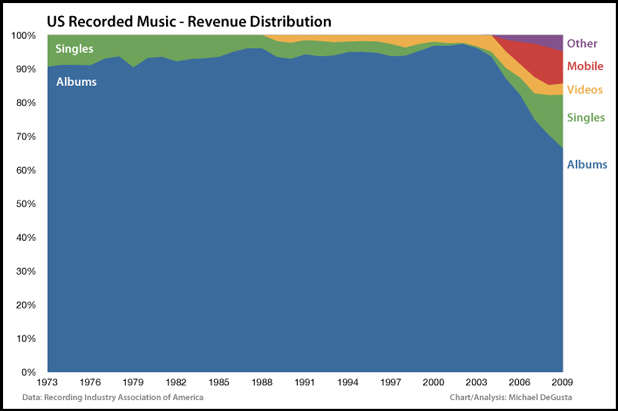
Music Industry Revenue by Content Type

This graph shows that music industry revenue has been dominated by album sales ...

Music industry revenue for albums on different formats

... and as you can see, albums were popular on CD but has been declining ...

Music industry revenue for singles on different formats

... and this graph shows digital music is all about singles, which may explain the industry's revenue loss

The truth is that the way people consume content has changed drastically, and yes, a lot of that is due to the Internet. But with change, comes opportunity, and if the film and music industry aren’t interested in exploring the new opportunities, others will, and in this case, it has been the technology companies, like Apple and Netflix, that has benefited the most. And the latest to join their ranks may be Spotify, which has just been launched in the United States, albeit in a limited invitation only phase. Spotify attempts to address one of the fundamental shifts in media consumption, the lessening need to “own” music (well, people never owned music anyway, there merely licensed a recording of it), and the increasing need to consume (which makes owning far too expensive and time consuming to manage). So instead, people stream all the music they want in an on-demand fashion, for free if they’re willing to put up with ads. It’s completely legal, so no moral guilty as compared to piracy, plus the music industry can receive financial compensation. And those that do want to “own”, or at least rent, can buy one of Spotify’s paid for plans, with more money going towards the music industry. With Spotify, there’s almost no reason at all for pirating music.

Spotify Logo

Spotify is launching in the US, and there are now even fewer reasons for people to pirate music

And in a similar vein, UltraViolet for movies also attempt to change the way content is sold to more closely follow the consumer’s needs, an ambitious project that has the backing of more than 70 companies from a range of industries, with support, albeit reluctantly at certain aspects of it, from the movie industry. This week, UltraViolet licensing beings officially, and beta testing is also under way for an official launch later this year. If it works, it will finally allow movie lovers to buy the movie (or license it), as opposed to just buying the media that the movies comes on. It’s Digital Copy, but done right, with industry wide support, and done via the Internet.

And so, there is hope, that the music and film industry can embrace change and come out the other side stronger than before. Let’s just hope they don’t erode all of our civil rights, in a vain attempt to use legislation to stop copyright infringement, before then.

And finally, before we move on to other topics, the MPAA’s lawsuit against Hotfile has some new developments this week, as the judge in case threw out the MPAA’s claim of direct copyright infringement, simply on the grounds that Hotfile themselves did not upload any of the content that is considered to be infringing on the MPAA’s copyrights. However, the judge did feel Hotfile can be found guilty of secondary copyright infringement, of inducement to infringement by paying affiliates money for uploading popular content. I don’t think it will end well for Hotfile unfortunately, as the MPAA has chosen their target wisely, by choosing a file sharing host that actively promotes popular uploads with payment, and thus, encourage users  to upload pirated content.

High Definition

In HD/3D news, a new report suggests that Blu-ray will beat DVD by 2014 to become the most popular disc format around.

But even by then, Blu-ray’s gain in revenue would not have offset DVD’s loss, and so it will be digital media that saves the day. The report, from London-based Futuresource, says that at that time, physical media will still account for more than half of the industry’s revenue, but digital media won’t be too far behind, accounting for 46% of the market.

While Blu-ray only accounts for 13% of the sell-through market last year, it’s not too hard to believe Blu-ray will get close to 50% by 2014, especially if you look at recent data as listed in our weekly Blu-ray/DVD sales analysis. Blu-ray revenue, in the US at least, appears to be already above the 20% mark on average, and for some recent releases like ‘Sucker Punch’ have managed to has a first week Blu-ray market share way above this average (61.42% to be precise).

Blu-ray 3D Logo

Over 3.5 million Blu-ray 3D discs have been sold so far, but half of them were given away

There was also the news that 3D Blu-ray, despite the predictions of doom, has already sold some 3.5 million discs. Of course, half of these discs were given away with hardware, but with Avatar still not available for general sale on Blu-ray 3D, the number is still impressive. The main reason for the good result, and the good result of Blu-ray in general, is pricing. Blu-ray combos are now the best value packaging around usually, and with Blu-ray 3D “mega” combos becoming more popular (that is, the Blu-ray 3D version plus the Blu-ray 2D version, plus the DVD and Digital Copy versions), 3D is benefiting as a result.

What has decrease in value this week though is Netflix subscriptions, with price rises of up to 60% being announced. Netflix says the reason for the increase is due to their renewed focus on DVDs, by separating DVD and streaming into two separate, and cheaper plans (but at the same time, increasing the price of the combined plan). I suspect this price rise has to do with Netflix’s need to renegotiate digital rights for movies, with them having just agreed a new deal with Universal, and the need for a new deal with Sony. The rise in popularity of Netflix is obviously making studios feel they’ve not got the best deal they can, and they will want to squeeze as much out of Netflix as possible.

And before we move onto gaming, the news this week that new PS3s won’t be able to output Blu-ray in HD over component shouldn’t come as a surprise for those that read my news article on the Blu-ray analog sunset. Blu-ray’s copy protections system, AACS, mandated the removal of HD component support for all new players manufactured after January 1st 2011, and so the new PS3 model is just following the licensing agreement. The misinformation over HD being disabled even for games and streaming, is just that, misinformation.

Gaming

And in gaming, there’s actually not much, but I wanted to address the NPD issue again. The NPD report for June has just been released, and as been the case recently, it’s light on actual details, especially for hardware sales figures. But Microsoft and Nintendo have decided to released hardware sales figures for their consoles, once again leaving Sony as the holdout.

I’m hoping a leak will reveal the Sony PS3 numbers in the next few days, but even without the leak we can deduce that the PS3 probably didn’t do very well in June, despite Infamous 2 selling extremely well. First of all, the Xbox 360 was the most popular console with 507,000 units sold, while Nintendo revealed the sale of 273,000 Wiis. Microsoft’s statement mentioned their 507,000 was nearly twice as much as other home consoles, confirming the Wii number at least and pointing to the fact that the Wii was probably the second best selling console. And with Sony’s statement only pointing to the success of Infamous 2, with no acknowledgement of year-on-year growth for the PS3 (something they’ve been vocal about recently). In fact, Microsoft’s statement actually says the Xbox 360 is the only console to have year-on-year growth in June.

So the PS3 sold less than in June 2010 (304,800 units), and so the only issue is whether the PS3 outsold the Wii or not. Microsoft’s statement mentioned that the Xbox 360 held a “48% share of the overall current-generation console market share”, although it was unclear whether this referred to June or the whole of 2011 (it’s not lifetime sales, that’s for sure). Assuming it is for June, and for home based consoles only, then a little bit of maths puts the PS3 at 276,250 units (if 507,000 was 48%, extrapolate to 100%, then minus the known 360 and Wii numbers, to get the PS3 number).

But I hate guessing, so I’ll wait a few more days to see if there are any leaks to confirm my theory, but if not, then I’ll give Sony the benefit of the doubt for not mentioned they outsold the Wii, and use the estimated 276,000 figure.

That’s all for this news filled week. I suspect the next week will be very barren indeed news wise. See you next week.

Weekly News Roundup (10 July 2011)

Sunday, July 10th, 2011

Another pretty quiet week, probably due to the 4th of July weekend, so this WNR should be fairly short. I know I’ve promised this in the past, and failed to deliver almost every single time, but I swear, this time it will be different (or you can read my apology 2000 words later).

CopyrightLet’s start with copyright news. The MPAA is at it again, this time trying to say that movie piracy will mean the end of the Internet.

Malware

Downloading pirated movies is the cause of all of today's problems, including recession, war, disease and Seth Rogen movies - the MPAA will try to claim at some point in the future

Ripping from the headlines, Law & Order style, the MPAA now says that movie piracy will threaten the entire nature of the Internet, because movie pirates are unwittingly spreading malware and getting their computers zombified. A recently discovered botnet by security firm Kaspersky is now being used by the MPAA in their scare campaign against movie downloading. While it’s true that botnets, such as the recently discovered TDL, which Kaspersky has dubbed “indestructible”, are spread through malware, and that by placing malware near where popular downloads are located, such as pirated movie downloads, there is actually no link whatsoever in between movie piracy and TDL, or any specific botnet. Certainly, Kaspersky made no mention of movie downloads or piracy at all, so just how the MPAA drew the conclusion, only they know. But these are the same people that have linked movie piracy with child pornography in the past, so I’m not surprised. The fact is that any popular download could be the target of a malware attack, with fake files being distributed, whether on BitTorrent, or just plain downloads. In fact, it’s more likely that a public, popular and legally available file be made the host for botnet spreading malware, because people are more comfortable downloading legal files, and are less alert when it comes to security issues. So by warning people about TDL, the MPAA actually wants to stop people downloading, period. Who’s destroying the Internet now?

In my opinion, if people are familiar enough with the Internet to know how to locate a reliable source for pirated movies and install and operate the tools needed to download them, then I think most would be better than average at protecting their computers from malware. Most expert pirates can spot a fake Torrent a mile away, and if more people pirated from reliable sites like The Pirate Bay, then there’s even less chance of malware sneaking in before someone spots it and comments. So, if the MPAA is so concerned about the Internet, they should help to promote The Pirate Bay and other respectable Torrent sites, so that people are downloading the right stuff. If the MPAA succeeds in shutting down the major Torrent indexers, then the chaos that ensues will probably make the malware problem even worse, and they would be to blame for the destruction of the Internet, if that’s even possible.

But the MPAA does have one good point, is that malware is a much bigger problem than piracy.

Otherwise, it was a good week for the MPAA and the RIAA, as ISPs formally announced their plan to help the music and movie  industry clamp down on piracy, by introducing, not three, not four, but five or six strikes (with action being taken on the 6th strike, after 5 previous warnings). And disconnection is now a certain action after however many strikes, with the ISP free to choose the form of execution, whether it’s speed limiting, or re-education. There’s even an appeals process, where users can pay $35 to have an “independent copyright expert” decide whether action needs to be taken, although users can only use the “my router was unsecured” excuse once. Critics worry that the so called independent copyright expert may actually be someone chosen by the RIAA/MPAA, which may be a conflict of interest. Speaking of conflicts of interests, the monitoring will be done by a third party, who will watch BitTorrent networks and other sources for IP address of pirates, except, it will be in the interest of this third party to catch as many pirates as possible, and with no oversight, this is probably the biggest conflict of interest of all. So you have a situation where the cops are paid by the number of “crooks” they catch, the judge and jury have been replaced by a sign that simply says “guilty”, the appeals court is selected by the same people that painted the guilty sign, and the executioner is actually your paid for service provider. Nice.

IPREDator

VPN services, such as The Pirate Bay's IPREDator, will bypass monitoring as part of any three/five/six strike system

Other than causing a lot of problems for Internet users, I can’t see how this plan will even help to slow down piracy. Starting off, only a very limited range of piracy methods are even covered by the monitoring, and even within these methods, it’s not too hard to escape detection altogether by investing in a VPN account and encryption. Instead of killing piracy, this will probably kill free Wi-Fi that businesses offer, since they would then be responsible for their user’s activities. Unless the MPAA/RIAA can make an exception for businesses, and I suspect only for the big businesses like McDonald’s or Starbucks, then nobody would dare to offer free Wi-Fi unless they can sign up to an ISP that doesn’t use the strikes system. It’s a multi-million dollar “solution”, that causes more millions in loss of business, all for making relatively little difference to the piracy problem.

Good news for CNET, or at least that’s what it looked like at first. A couple of months ago, the founder of FilmOn, Alki David, sued CNET because CNET owned download.com had been distributing the now outlawed LimeWire software. Last week, David and company withdrew their lawsuit voluntarily. But it all depends on the reason for the withdrawl, with the plaintiffs suggesting that the  popularity of the lawsuit was the main reason behind this latest move. Apparently, many other copyright holders expressed interest in joining the lawsuit, and due to time constraints, it was just easier to withdraw and file a new lawsuit in the future. Or this could just be the face saving excuse needed for David and Co. to get out of a lawsuit that, may not go very far anyway. I think most can see that revenge is one of the motivations behind the lawsuit (David’s FilmOn was sued by CNET’s owner, CBS, for copyright infringement), and I’m sure the CNET/CBS lawyers will make want the judge and jury, if it gets that far, to see this lawsuit as a revenge motivated stunt. I personally don’t think there’s much merit in the lawsuit, since there’s got to be some limit as to where the responsibility for LimeWire ends, because otherwise, even browser makers can get sued for allowing the downloading of LimeWire, and what about OS and PC manufacturers for allowing LimeWire to be run? And all of them made money off LimeWire in one way or another, if you want to make that argument. It never ends.

High Definition

In HD/3D news, not a lot happening again really. There was the news that Hulu’s launch of their Facebook Connect feature causing a privacy breach, as bad programming meant that some were able to access other’s accounts. But that’s hardly HD, 3D, or even video related, even though it did happen to a video website.

There’s also the rumour floating around that Google, Yahoo and Microsoft are all interested in buying Hulu, probably for a very inflated price in what many people are now calling a new Internet bubble (although I personally believe it’s more of a consolidation, as tech companies battle the threat of a new mega-player, Facebook).

I don’t really care who buys Hulu, as long as they make sure it comes to Australia.

Gaming

The rumour of the week goes to the one that says the PS4 will be launched early next year, with production to begin this year. And not only that, it will also copy Kinect and have built-in full body motion sensing.

This reminds me of the constant rumours about the Xbox 360 getting a Blu-ray drive, except this is going in the other direction. You take Sony’s “copying” of the Wii’s motion gaming system, down to the “nunchuck” device, add the fact that the Wii U will replace the PS3 as the most powerful console when released, add in a sprinkle of bulls**t, and viola, PS4 released before Wii U and will have Kinect like controls.

Xbox 720

The PS4 and Xbox 720 are as likely to appear in 2012 as they are to be named the PS4 and Xbox 720

I’m not saying the rumour is completely false, but when was the last time a completely new console (not just a re-design) was launched with absolutely no announcement in the E3’s just before, nor any promotions, nor any sneak peak at games, graphics, even a logo? There’s a reason why game companies, or just tech companies in general,  don’t “ninja” release products, because you need to hype, the promotion, the time for developers to actually come up with games, before a console can be launched. And if developers are already doing PS4 stuff, as you would expect for a 2012 launch, then they’re not *that* good as keeping secrets, and so somebody would already leaked out in-game artwork or even video, and that has just not happened.

And of course, there’s the statements actually made by Sony saying the PS3 if barely half-way through its product life cycle, and the fact that they still haven’t even officially retired the PS2 yet.

And of course, the Internet Chinese whispers game concluded with the “announcement” that the Xbox 720 was also going to be released in 2012. Yeah, right.

And true to my word, this WNR will conclude with barely 1500 words written, which must be a new record (both the shortened WNR, and me keeping my word). See you next week.

Weekly News Roundup (3 July 2011)

Sunday, July 3rd, 2011

How’s the second half of 2011 been treating you? Not too bad I hope. I’ve been busy working on my little Android app, which you might remember me mentioning a couple of months ago. I’ve learnt a bit more about Android programming since I last updated the app, you know things like how not to make it crash every time it starts up, or how not to make it drain up all your CPU and your phone’s battery in no time. Small things like that. And so I thought I better update the app. It’s coming along, and it should be ready next week or the one after. Android programming is not easy, as there are quite a few quirks you have to work around with, and also deal with the constant OS updates (what works in Android 2.2 may not work in 2.3, with Google not providing a whole lot of warning about the impact of potential changes). So the next time an app crashes on you, don’t immediately curse the programmers, because it’s not always their fault (it’s mostly their fault, but not always).

Let’s get on with the news roundup.

CopyrightIn copyright news, the MPAA has been busy this week, with two lawsuits to contend with, one in the UK (via the MPA, its International wing), and another back in the States.

In the UK, the MPA is trying to get the high court to force BT, a large British ISP, to ban access to the Usenet sharing website Newzbin. The high court has already ruled in favour of the MPA agaqinst Newzbin, except shortly afterwards, Newzbin2 sprang up overseas, and it’s still unknown whether this new incarnation of Newzbin has anything to do with the original. Regardless, the MPA doesn’t want the millions they’ve spent fighting Newzbin to go to waste, and now want to force ISPs to block access to all incarnations of Newzbin. This brings up an interesting question. If this new Newzbin, dubbed Newzbin2, is run by completely different people, outside of the jurisdiction of the UK, then does the earlier Newzbin ruling really apply? And if the high court this time is treating Newzbin2 as a new website, ruling it guilty based on past precedent, then can they also apply the same to every other website that the MPA wants banned?

Newzbin 2 Logo

The MPA wants UK ISPs to block access to Newzbin

And at what cost to ISPs? The MPA says that BT already has a filtering system, used to block child pornography, which they say can be used to block Newzbin/Newzbin2. But for other ISPs that don’t have a blocking system in place, they will have to invest in one at great cost. And whatever system will probably be easily bypassed anyway. And of course any ruling that forces ISPs to take action in effect shifts responsibility to copyright control over to ISPs, and somehow make them all responsible for their subscriber’s activities. I hate to use the same analogy again, but should a phone company be held responsible for all crimes committed by account holders? Some argue that ISPs profit from infringing activities (users buy more bandwidth to download pirated stuff), but phone companies do also benefit from illegal activities by charging account holder fees, so what’s the difference, other than the fact that the “crimes by phone” lobby, if it exists, isn’t as strong as the entertainment industry lobby. And since the MPA/MPAA’s members only include the big 6 studios (Disney, Fox, Paramount, Sony, Universal and Warner Bros.), it’s not even a situation where the lobby group representing all studio’s interests.

The other lawsuit the MPAA is involved in is against file hosting website, Hotfile. Hotfile has complained to the court that the MPAA’s request for information has become unreasonable. Court documents reveal the MPAA simply wants everything Hotfile has, including financial records, all user details (even those not participating in unauthorized sharing and downloading), and even Hotfile’s website’s source code. Hotfile’s business would effectively be ruined if any of these are handed over, but the MPAA wants it all, and Hotfile are calling this “murder by litigation”. And maybe that’s the MPAA’s real goal. The way I see it, if you’re going to offer online digital storage with sharing, then unauthorized sharing is unstoppable. It may not be a movie, TV show or a music track, but it could still be the unauthorized sharing of business documents, trade secrets, or even national security data. So the choices are to ban this type of extremely useful service online, and go back to the bad old days of sending files section by section via email, or prosecute those that actually do the uploading. Analogy time again. If a spy steals national secrets and send them back to his home country via Gmail, should Gmail be held responsible for not properly filtering all emails and attachments?

I guess the argument would be that Gmail is not primarily used to share national secrets, and one of Hotfile’s main uses may be piracy related. But then if this is true, why are ISPs being held responsible for pirated downloads, because piracy is not one of the main uses of an Internet subscription (despite what the MPAA wants you to believe).

A Lonely Place for Dying Poster

'A Lonely Place for Dying' is trying to change the way movies are funded for their theatrical release, by embracing BitTorrent networks

And while Hollywood, and by Hollywood, I mean the big six studios, are obsessed with fighting the Internet, independent producers are trying to find ways to leverage the web to promote and sell their movies. Hollywood veteran and Star Trek icon James Cromwell has produced a film, ‘A Lonely Place for Dying’, and instead of being afraid of BitTorrent networks and people downloading the movie for free, he’s embracing it as a new way to promote and secure funding for the film’s theatrical release. Instead of using Hollywood connections to secure major studio backing for the film’s theatrical run, instead, the film is being distributed for free in serialized form on the BitTorrent powered VODO network, along with other notable P2P partners, including The Pirate Bay, isoHunt, uTorrent and Frostwire (a who’s who list of “Hollywood’s” most wanted, if there ever was one). Funding will be via donations, and the hope is that enough publicity is built up to allow the film to have a loyal following *before* it makes its way to the big screen, almost the reverse of what usually happens.

This is great for independent film producers, without the budget and backing of major studios. But it could be bad for the majors. Not just that independents can now find other ways to get their movies screened, without having to play by the majors’ rules, but also because the Internet has become the ultimate critic. If a movie is bad, the Internet will be all over it, and pretty soon, it will be all over for the film’s theatrical run (and future disc sales).  And for those that still enjoy a bad movie now and then, instead of having to pay to see it, they can simply torrent it instead, and denying the major studios an important source of their income: crappy movies. Hollywood produces a lot of crap, and in the past, people would go and see the movie and then find out it’s crap, and even then, some will be adventurous enough to rent or even buy the movie on disc. Then the Internet came along, and people no longer needed to pay to enjoy crappy movies, and this is when Hollywood became extremely worried. The reason why I think this is the case is because good movies have still managed to earn a lot of money, despite Internet piracy becoming widespread – some have earned even more than before, and some of that is actually because of the Internet and the word of mouth effect (and you can tell the studios know this, because find me one movie these days that doesn’t have its own website, Twitter account and Facebook page?). In many ways, the film business has become a lot more democratic. The choice used to be between paying to watch a movie, and not watching the movie. Now, the choice is between paying to watch something, and not paying to watch the same thing – and that has made the people that want to maintain the monopoly scared, and they’ve tried everything, from DRM, to political lobbying, to maintain the status quo.

High Definition

Which brings us to HD/3D news. 3D has helped the majors in a big way because, without having the same 3D experience at home, the viewer’s choice becomes limited again to paying for something, or not watching it at all. Except Hollywood’s greed has ensured every movie, including all the bad ones, are in 3D, and even ones that aren’t shot in 3D are converted to 3D in post processing.

As much as I hate Michael Bay’s films, and I do hate most of his films, at least he sees the importance of giving viewers the proper 3D viewing experience (or as he claims with Transformers 3), and not some half-assed afterthought that so many 3D movies are these days. Of course, it would be even better if Bay also paid a little bit of attention to plot, dialogue and character developmental as well, but that’s a debate for another day.

And to make it worse, the 3D premium is getting ridiculous, to the point where it is hurting 3D presentations at the box office.

So really, if Hollywood wants viewers to make the right choice, to pay for movies, then they need to stop making bad movies. And if they’re still complaining about not making enough money on movies such as Avatar, or The Dark Knight, then that’s just greed talking, because a billion or more in pure revenue for a single movie, in my mind, is good enough already.

For some reason, the rest of this WNR is all to do with Sony. It wasn’t intentional at all, but that how the week unfolded.

The first news item has to do with Sony movies disappearing from Netflix. Hands up if you thought that this was some kind of move by Sony to do with DRM, a protest against digital distribution from the owners of Blu-ray, or some kind of anti-competitive thing. In the end, it had nothing to do with Sony at all, well not directly anyway. It’s all to do with digital distribution deals that Sony signed with Starz, who then sold the rights onto Netflix, and in the short-sightedness of it all, the deal has included a provision which limited the number of people that are allowed to access Sony movies online at any one time. With Netflix’s explosion in popularity, this limit was soon reached, and hence, the agreement had to be terminated, and Sony movies pulled until a new agreement can be made. It certainly looks like Sony sold the online rights to its movies very cheaply back in 2008, and that Netflix, via Starz, will now have to pay a lot more to get the rights back.

Gaming

The second of the Sony related stories (don’t worry, there are still two more), has only a tenuous link to Sony. Former enemy, George Hotz (geohot), has apparently landed a great job at Facebook, just months after being sued by Sony.

Some will think, hack Sony => great job at Facebook, but it’s more of a case of smart guy => get job at Facebook, I think. Regardless of what you think of geohot’s actions, he’s one smart guy. And Facebook users should be relieved that he’s now working for the right side, because if you think Sony’s 100 million user data leak was something, just imagine if Facebook had a similar data breach – bedlam, I think, is the best word to use if this were to happen. Remember when geohot quipped that Sony should hire him if they’re serious about security, and then Sony tried to use this against him in the lawsuit as evidence of financial blackmail … maybe, just maybe, Sony should have done what Facebook has done and hired the guy, and maybe, just maybe, they wouldn’t be the butt of every Internet security joke at the moment.

Sony PS3 Hacked

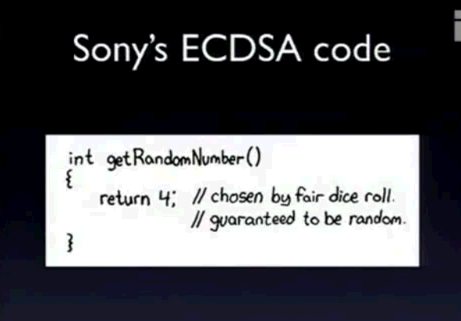
Let's not forget that the PS3 was only hacked because Sony's poor implementation of their security design

Or they can just stick their head in the sand and blame the whole incident on something else. Apparently, it was not Sony’s awful decision to remove OtherOS from the PS3, not when it has been so heavily promoted by the company as a feature that sets the PS3 apart from all the other consoles. No. Sony’s controversial CEO, Howard Stringer, says it was all because poor innocent Sony tried to do the right thing, to protect their games from piracy, that led to the PSN hack. This seems to suggest OtherOS was an attempt to prevent the PS3 from being hacked for piracy, something Sony has denied time and time again (saying OtherOS removal was for financial reasons, due to the high cost of maintaining this feature), and seems to suggest Sony is linking OtherOS and the Linux community to piracy once again. Of course, removing OtherOS not only did not prevent the hacking of the PS3, it led to it, and hacking groups all concentrated their effort on cracking the then impregnable PS3 security system. And then came the lawsuits, the Anonymous DDoS attacks, and the rest is history. A couple of weeks ago, I posted my opinion of how Sony should change as a company in order to put this whole incident behind them properly. Right now, it looks like business as usual for Sony, as they arrogantly deny that, in the end, they were more to blame for the PS3 hacking and PSN breach than anyone else. Not pirates. Not hackers, who could only have exploited the gaping holes you left for them. But the blames lies with a company that just doesn’t really give a crap about its customers, and are proud to show that they don’t care in multiple ways, from badly designed DRM, to pulling features people paid for, to not securing their data.

Which is probably why the lawsuit launched in New York against Sony won’t be the last. The lawsuit claims Sony neglected to protects it customer’s security, and not only did they fail to pay attention to “known vulnerabilities” in the outwards facing servers, they even sacked security staff just weeks before the PSN breach, the lawsuit claims. I don’t want to comment on the merits of the lawsuit, but it’s clear that Sony needs to be held responsible for their total lack of respect for security, because a breach like this doesn’t usually happen without a corporate policy that actively contributed to the disaster.

Alright, enough ranting this week. See you in 7 day’s time.

And I suppose I should mention tomorrow is the 12th anniversary of this website, Digital Digest (well, it wasn’t called this back then). Hard to believe I’ve been doing this for 12 years already, but I’ve never been bored (thanks to companies like Sony that continue to make headlines for all the wrong reasons, and reasons that I can explain here). Thanks for everyone who has visited, and put up with my ramblings (luckily, the WNR is a relatively new invention in the history of Digital Digest), this website wouldn’t be here without people like you!

Weekly News Roundup (26 June 2011)

Sunday, June 26th, 2011

We’re already at the half way point of 2011, but for some reason, I still think it’s 2010, and and the “noughties” feels like half a century ago, despite only being 2 years since. Einstein was right, time is relative. And because time is relative, this past week, I definitely had less time than last week, since I don’t remember doing much, but here we are, at the end of the week. And as I suspect time seems to going faster this week than the last, I better hurry and write this WNR before times runs out.

CopyrightLet’s not waste any time and start with copyright news. The MPAA made public their lobbying disclosure report this week, for their lobbying activities for Q1 2011. While the MPAA does have other responsibilities, such as getting movie ratings completely wrong all the time, they’re mainly a lobbying group these days.

The MPAA spent $400,000 in lobbying in the first quarter of 2011, and this isn’t very surprising at all. But was surprised me slightly was the target of these lobbying actions. When I think of targets of lobbying, I think politicians. But the MPAA has been lobbying the likes of the DOJ, FBI, DHS and ICE, and I don’t know about you, but this makes me slightly uncomfortable. The main reason for my discomfort comes down to the fact that the people who run these places are not elected officials, and so they’re not accountable to the electorate, nor can a person like me influence these official’s decisions easily, unlike an elected official (well, theoretically anyway – in practice, that’s not really true). Plus, these are law enforcement agencies, and the thought of private corporations cosying up to them feels like they’re trying to get their own private police force. This may be an overreaction, but there’s definitely a reaction here. It also feels like the MPAA is asking these agencies to take independent action, without legal and political oversight, and that doesn’t sound right. How would you feel, if for example, a friendly country’s government started lobbying the military directly – wouldn’t that be a concern? Companies that the MPAA represents aren’t always US owned, Sony being the primary example, and this can be seen as foreign corporations lobbying US law enforcement agencies to take action against US companies and individuals (the only entities that these law enforcement agencies have jurisdiction over). So is this really acceptable?

US Department of Justice Seal

Should the DOJ open itself to corporate lobbying?

But regardless, the MPAA seems to have gotten their money’s worth of lobbying, as it appears America’s top ISPs will soon agree to the entertainment industry’s demand for ‘graduated response’, or otherwise known as three-strikes. While the UN has recently attacked graduated response as a human rights abuse, but this was mainly in regards to governments introducing three-strikes, and that being seen as limiting freedom of expression. The MPAA/RIAA can sidestep this thorny issue by making deals directly with ISPs, and reducing or eliminating the government’s role in all of this. I don’t know if this is better, or even worse. It’s worse because if the system was run without the involvement of the government and involvement of the courts, which at the very least is seen as an impartial party (or at least they should be), and there would be a law behind it that can be challenged if needed. But to make the likes of the MPAA and RIAA, or private companies such as ISPs, the ultimate judges of who should and should not get the boot, with the government and legal system completely bypassed, I think this can be dangerous. So on one hand, if it’s government run, it’s a violation of human rights. If it’s run privately, then there’s no due process and accountability. Which tells me graduated response is something that, simply, should not exist, especially to solve such a trivial problem such as online piracy.

So what can people do to avoid being part of the three-strikes system? You can always change ISPs, and as long as graduated response does not become law, there will always be ISPs that do not bend to the will of the MPAA/RIAA. Of course, even if you have no choice but to use AT&T, Comcast or Verizon, and you can’t stop your pirating activities, then you can always just use one of the pirating methods that won’t or can’t be monitored. So how effective will graduated response really be? I don’t think it will for a second stop the serious pirates, and casual pirates don’t download/torrent much anyway (especially when streaming is easier).

The artist currently known as Prince is back in the headlines again, not for his music, but for his views on online piracy (it seems to be the only way he makes headlines these days). But his latest views not only attack web pirates, but the whole digital revolution itself. Prince says that he will protest by not producing any new albums while the Internet piracy problems remains unsolved, so Prince fans should definitely not hold their breath waiting for a new album. Also under attack by the musician, is the current direction of the music business, which has seen companies like Google and Apple dominate. Prince doesn’t like this, because he feels artists are getting paid less. Prince is also against digital music, because he thinks it’s not as good as analogue. So Prince doesn’t like any of this new stuff at all, the artist probably said while shaking his fist and telling the kids to get off his lawn. If he’s so passionate about analogue music, and I know a lot of people are, then perhaps he can sell vinyl records or CDs of his songs on his websites, and at the same time, cut out the Google/Apple middlemen – I’m sure there are people who are interested in this sort of thing, and if there isn’t, it just proves that perhaps it’s the artist himself that’s a bit out of touch.

And sometimes there are things that are worse than piracy for publishers, where maybe even piracy seems like a better alternative. This happened this week for indie game developer Indie Stone, makes of the popular Project Zomboid game. They’ve had to take the drastic action of suspending online gaming due to a pirated version of the game, but it’s not what you think, Indie Stone doesn’t mind the piracy at all. What they do mind is that the game includes a modified feature that adds an update button to the game, that when clicked, grabs the latest version of the game from the developer’s servers, even if the version is already up to date. So instead of legitimate customers downloading updates when there’s a new version available, you could potentially have all the pirates downloading an update even every time they start the game, and costing the developers a lot of money in the process. And so Indie Stone recommends that, really, if you had to update the pirated version of the game, do it via BitTorrent instead. Other than this, Indie Stone says they’re not too concerned about piracy at all, as it does have promotional value.

Again, not much happening in HD/Blu-ray/3D, so let’s skip it again this week (I promise to dig up some news for you next week, even if I have to make it up).

Gaming

And so in gaming, Microsoft officially released the beta, non commercial, version of the Kinect SDK for Windows.

They launched the SDK at a 24-hour event where they invited programmers, and Kinect hackers, to use the SDK to come up with some neat apps, which some of them did. The software development kit is still in beta, and for non commercial development only, so right now, it’s all about playing around with Kinect, not about making apps for sale. And while I cannot confess to be a C++ or C# guru, having had a look at some of the same code, it seems fairly easy to follow. I’m sure in the days and weeks, we’ll begin to see beginner “how to” guides for playing around the SDK, and I’ll be sure to take advantage when they arrive.

Kinect Light Saber Demo

One of the sample apps Microsoft released is a light saber demo (of course), that doesn't look complicated to code

I have to say that Microsoft has made the most out of the Kinect hacks, to the point where I almost think they anticipated all of this, as opposed to actually just reacting to it (big companies usually don’t react this quickly). I mean, did they always plan to release a Windows SDK, or did they only come up with the idea after Kinect hacks became popular? Who knows, but they’ve done the right thing, and the Kinect platform will benefit as a result.

People will make comparison to the PS3 hack, but it’s not the best comparison, since the Kinect hack doesn’t really hurt Microsoft in any way, other than perhaps for them to lose a bit of control. A better comparison perhaps is Sony’s decision to remove OtherOS, and Microsoft’s promotion of Kinect hacks – Sony should not have removed OtherOS, not just because they’re getting hacked all over the place because of it, but because projects like OtherOS allows innovative programmers to get the best out of the hardware, and that can only be a good thing for the PS3.

Speaking of hacking, Sega is the latest victim, but neither Anonymous or LulzSec seems to be behind this one. In fact, LulzSec has vowed to hunt down those responsible for attacking Sega, a company they support due to their love for the Dreamcast. Whatever people say about groups like Anonymous and LulzSec, they’re not out there hacking for profit, or just for the sake of it – they do have a message, and they do choose their targets, even if people don’t agree with their choices.

There’s also the news this week that new Xbox 360 and PS3’s are on the way, well not “new” new, but updated models. Both will use technology advances to decrease the weight, power requirement, heat output and even manufacturing cost of their respective consoles, with perhaps Microsoft making the bigger leap with a move to a system-on-a-chip architecture, which as the name suggests, puts everything on single, much easier to cool, chip. There were some initial rumours that the new PS3 SKU would have PS2 compatibility, but that was put down to a translation problem. But it does beg the question, why isn’t Sony retiring the PS2 and adding software backwards compatibility to all PS3 consoles, via a PSN purchase, for example? Is Sony really saying that despite how powerful they claim the PS3 is, they still cannot find a way to do PS2 emulation in software? If they need help, perhaps they can seek advice from one of the coders behind PCSX2, the open source PS2 emulator.

That looks like it for this week. I shall have more for you next week, so until then, have a good one.