Archive for the ‘Xbox 360, Xbox One’ Category

Game Consoles – January 2011 NPD Sales Figure Analysis

Saturday, February 19th, 2011

I know I promised the 2010 year in review post, weeks ago, but rest assured, it’s still coming. I had hoped I would get around to it before the January NPD figures came out, but it looks like I waited too long! In any case, let’s get the January 2011 NPD done before worrying about 2010. Once again, there were enough leaks to present us with enough data to get January’s NPD analysis up. For those that are new to this, this analysis looks at US video games sales figures compiled by NPD.

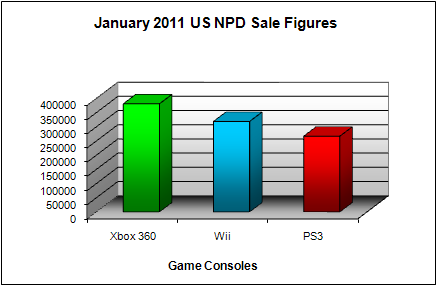
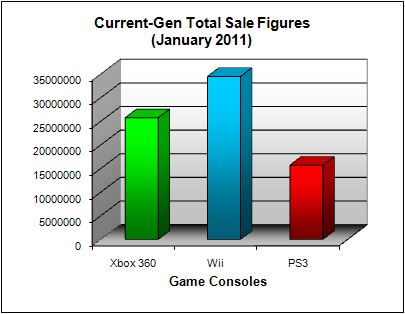
The figures for US sales in January 2011 are below, ranked in order of number of sales (January 2010 figures also shown, including percentage change):

  • Xbox 360: 381,000 (Total: 25.8 million; January 2010: 332,800 – up 14.4%)
  • Wii: 319,000  (Total: 34.5 million; January 2010: 465,800 – down 31.5%)
  • PS3: 267,000 (Total: 15.7 million; January 2010: 276,900 – down 3.6%)
NPD January 2011 Game Console US Sales Figures

NPD January 2011 Game Console US Sales Figures

NPD Game Console Total US Sales Figures (as of January 2011)

NPD Game Console Total US Sales Figures (as of January 2011)

My prediction from last month was:

I loathe to make a prediction for next month, but I think the Xbox 360 will probably gain back the number one spot, and a very familiar top 10 for software as well.

And gained it back it did. In fact, the Xbox 360 even outsold the DS this month, making it the best selling video games console of any kind. It was also the only console to receive a year-on-year sales increase. The software chart does have a few new entries though, and we’ll discuss this later on as per usual.

Obviously, Microsoft are very pleased with the sales result for the first month of 2011, and it bodes well for the console for the rest of the year. With a 14.5% year-on-year increase, it shows that the console is more than just “the one with the least number of lost sales”, and that the Xbox 360’s market share is actually growing. And this has to be largely thanks to Kinect, as there are simply no other explanations for it (the sales bump from the “Slim” should have dissipated by now, and there hasn’t been any recent price cuts either). Of course, Black Ops may be responsible for some of the sales, but Modern Warfare 2 would have been equally responsible for sales this time last year, and so it can be ruled out as a factor for the sales increase. And with strong software sales (combine revenue on the Xbox 360 makes it the top selling platform once again, in the US).

The Wii continues its 30%+ year-on-year decline, which is alarming because the sales decrease does not seem to have slowed compared to the same time last year (January 2010 was down 31% as well compared to January 2009). The rapid and steady decline should encourage Nintendo to consider bringing out the Wii 2 sooner than what they had planned before. It’s still doing relatively okay in terms of software sales, with Just Dance 2 doing enough to actually earn 2nd place in the combined-platforms top 10 (which is difficult to achieve for a single-platform release like Just Dance 2). But even this is slightly alarming, in that for dancing games, the Kinect will most likely offer the better experience in the future (the Michael Jackson Kinect Experience game should tell us whether this theory is true or not). The Wii is a Xbox 360/Kinect price cut away from being totally wiped out, in my opinion, as price is really the only reason why it continues to outsell at least the PS3.

Speaking of the PS3, the recent PS3 hacking issue could be a distraction Sony can do without, because once again, its flagship console came last place in the home console charts (not counting the PS2, which it appears, nobody is counting any more, certainly not the NPD). But on the software front, there are at least a couple of bright spots, Little Big Planet 2 and the console exclusive DC Universe Online.  But instead of bridging the gap between it and the Xbox 360, the gap is actually getting wider, although Sony is definitely doing better in worldwide sales numbers (but the Xbox 360 is showing signs of improvement there as well). It doesn’t exactly help that the PS3 is still the most expensive console around, and even though some of the extra price is justified due to the Blu-ray playback functionality, which has just recently been upgraded for Blu-ray 3D, the ever decreasing cost of standalone players means that it’s becoming harder and harder to justify the PS3’s price premium. At the very least, Sony should be looking for price parity between its console and the Xbox 360.

In software, the top 10 does have a few titles from last month, but there are also a couple of new entries, the most notable being Dead Space 2, Little Big Planet 2, Dance Central and DC Universe Online. Three of these titles were platform exclusive (for consoles anyway), with two of them belong to the PS3. Which is why Sony can’t be too unhappy with the results. The other platform exclusive was Dance Central, a Kinect title, and this is the first Kinect title I think to make it into the top 10 “all-platforms” chart, which is hard for a platform exclusive, and Dance Central is more than just a platform exclusive, since it also requires an optional add-on accessory (if 20% of Xbox 360 owners have Kinect, and the Xbox 360 accounts for 34% of the console market, then it means only 7% of gamers could actually play Dance Central, and that’s not even including PC and portable console gamers). The leaks have also resulted in some actual numbers for software sales, with Black Ops selling 750,000 copies, Dead Space 2 selling 441,000, and Zumba Fitness selling “over 300,000” units. Anyway, here’s the full software sales chart for January:

  1. Call of Duty: Black Ops (Activision Blizzard, Xbox 360, PS3, Wii, PC, DS)
  2. Just Dance 2 (Ubisoft, Wii)
  3. Dead Space 2 (EA, Xbox 360, PS3, PC)
  4. Little Big Planet 2 (Sony, PS3)
  5. Zumba Fitness: Join the Party (Majesco, Wii, Xbox 360, PS3)
  6. NBA 2K11 (Take-Two Interactive, Xbox 360, PS3, Wii, PS2, PSP,PC)
  7. Assassin’s Creed: Brotherhood (Ubisoft, Xbox 360, PS3)
  8. Dance Central (MTV, Xbox 360)
  9. Michael Jackson: The Experience (Ubisoft, Wii, DS, PSP)
  10. DC Universe Online: The Next Legend Is You (Sony, PS3, PC)

So, prediction time. My brain tells me the hardware ordering will be the same, but my heart tells me there could be some surprises. A resurgence for the Wii? Xbox 360 suffering a sales slump after the holidays? PS3 sales up thanks to Killzone 3? Speaking of Killzone 3, it is one of *the* titles for February, while Bulletstorm seems to be selling well right now, along with Marvel vs Capcom 3. And the recent hits will be in the top 10 too.

As for the 2010 review, I will aim to get it up during the week, but again, it’s a busy week for me so I can’t guarantee anything. Actually, I’ve already got all the graphs done and the conclusion is already pretty clear, so it may just be a very short analysis since there’s not a lot of data to play with, especially during the last few months of 2010.

See you soon.

Weekly News Roundup (13 February 2011)

Sunday, February 13th, 2011

Sorry for the slightly late edition of the WNR, couldn’t be helped unfortunately. Luckily, there weren’t too many news stories this week, especially if you really count the whole PS3 jailbreak saga as just one story, so hopefully we can get through this rather quickly.

And don’t forget our Facebook/Twitter competition where anyone who likes/follows will enter into the draw to win some $20 Amazon gift cards. The more likes/follows, the more prizes (up to 15 GCs – I have to save the rest of the website earnings  for food), and from the current count, I should be handing out something like 7 or 8 of these GCs. So get clicking, and good luck!

CopyrightLet’s start with the copyright news. Last week. I talked about how increasing access to content reduces piracy, and if you take the same principle and use it for the other side, then decreasing access should lead to more piracy.

Sky Atlantic

Making TV shows exclusive to a subscription channel could increase piracy

Which is exactly what experts are warning now that the UK has a new subscription channel that has made a lot of shows, previ0usly available on free-to-air TV, a channel exclusive. It means that for popular shows like Boardwalk Empire, the only way to actually watch these shows is to sign up to Sky Atlantic, or wait until the show hits DVDs/Blu-rays. Legally, that is. Illegally, well, you won’t really have to wait more than 2 hours after the original US airing date to find torrents posted everywhere for that particular episode. In fact, I bet that the torrent release schedule probably beats the airing schedule of Sky Atlantic, probably even by days or even weeks. So release windows, exclusive broadcasts, and no legal free option will only really drive people to pursue less than legal options. Those more adventurous (and technical minded) will go for torrents, while there are still plenty of file sharing and streaming sites that offer the rest the ability to watch the shows without the associated legal risk (since most of the legal focus is on BitTorrent downloads these days). Now, somebody will benefit financially from exclusivity and release delays, but it all seems very short term to me, and the reason why TV piracy is on the up. It’s more understandable for US cable based shows, that were never really on free-to-air anyway, but for shows that air in the US on the big networks, there’s no reason why these shows shouldn’t be shown simultaneously around the world (taking into account time zone differences). Do that, and I think piracy rates will be lowered by quite a bit. Yes, pirated shows don’t have ads, which is a big draw card, but with PVR/DVRs and a little bit of fast forwarding, it’s probably worth the pain to avoid the risk of receiving a letter from an opportunist law firm.

Hotfile

Hotfile is being sued by major Hollywood studios for promoting web piracy

Speaking of file sharing sites like Hotfile, Hotfile has just been sued by the MPAA and five movie studios it represents. Now, I don’t think anyone can deny that there are lots of pirated files on Hotfile, but it is an upload service, and it’s the users that populate their servers. Like how people upload pirated Viacom clips to YouTube, and look how that turned out for Viacom, in the court room. The MPAA claims that Hotfile rewards users for uploading pirated movies and TV shows, because Hotfile has an affiliate program where you can earn movie depending on how popular your downloads are and how many of your downloaders sign up for the premium service. Now, I think it’s also fair to admit that many pirates are probably making money this way, but then again, in my line of work, I see a lot of software publishers that also use Hotfile and other file hosting services to save money on file hosting, as well as make a couple of bucks back. So Hotfile’s affiliate program really is just about growing their business and rewarding their customers, whomever they may be, and can you really blame a business for trying to do this? As for the ratio of legal to illegal downloads? I have no idea. But what can a company like Hotfile do to fight piracy, other than not exist (which is the MPAA’s preferred option – in fact, I think they’d rather the Internet not exist either, the same opinion also held by quite a few dictators around the world right now). They can try and filter based on file names, but all users will do is to name their downloads sdkj3489sd.zip or something similar, and piracy will continue. They can actively scan downloads, but pirates can then simply password protect and/or encrypt files (if they’re not doing it already), and piracy will continue. Hotfile can put in a system where copyright holders can submit removal requests, but they already have such a system which the MPAA studios appears to be not very fond of (mainly because it means they will actually have to do a bit of work themselves). So what’s a digital file locker hosting website to do? What can they do? They can get sued, apparently. And the likes of RapidShare and MegaUpload are surely not immune from similar lawsuits, although it’s understandable why the MPAA chose a lower profile website like Hotfile to sue, since it’s like RapidShare, which already has a lot of experience in the courts, will put up a much stronger fight.

6,500 people have been added to the “The Expendables” mass lawsuit. Nothing really surprising there, because as long as you have producers who don’t care about public opinion and a negative backlash, law firms like the US Copyright Group will continue to have clients.

The PS3 jailbreak stuff will be posted under the Gaming section as per usual.

High Definition

In HD/3D news, again, not a lot happening. I did catch a few 3D Blu-ray titles on sales at Amazon and elsewhere online recently, and so even without Fox/Panasonic’s mean-hearted/short-sighted-ness in making Avatar 3D an exclusive (now selling for a little bit less on eBay, around $150).

The one I was tempted to buy was Piranha 3D. I loved the original Piranha movies, and this latest edition of the latest remake has both the 2D version, as well as the anaglyph version (red/blue glasses version), in addition to the 3D Blu-ray version, so it’s a good introductory package for 3D (because you can always go back to the 2D version in case 3D is not for you, or if you don’t have a 3D Blu-ray system right now, you can still enjoy the old fuzzy, washed out colours, style 3D with the cheap paper glasses).

While neither HD or 3D related, I did post a news item about publishers moving away from Apple’s iTunes towards Android and other more open marketplaces. While software restrictions are the real issue right now, it also I guess applies to movies, and some of these movies might be HD (I’m really stretching here, aren’t I). Basically, you have Apple who wants to control everything and then some, and it may be their right since they did produce the excellent iDevices in question, and most of their income is derived from having so much control. And there’s also the issue of quality control too. But being able to play any movie you want simply by using a USB cable to copying it, like you would do with any USB storage device, means that Android phones appeal to those who simply cannot stand iTunes or the idea of being locked to the software. And for publishers, it means they can publish without having to hand over 30% for every transaction, or to have to abide by Apple’s stupid licensing restrictions, which requires even free software have use Apple’s DRM (hence the whole VLC player for iOS debacle).

Gaming

And finally in gaming, most of the news as you may have guessed relates to Sony’s legal action against the security researchers who uncovered the major security hole within Sony’s own security infrastructure, and famous/infamous PS3 hacker George Hotz, who did the awful thing is re-enabling homebrew on the PS3 (but not piracy).

The week started with Sony attempting to get the likes of YouTube and Twitter to hand over user information in relation to anyone remotely related to the PS3 hack, even those who simply watched the hacking video on YouTube. Their intention was to expand the case to include anyone who releases or distributes custom firmware and other security hacks. Basically, a fishing expedition. But one that was ultimately denied by the judge for the case.

I might have some sympathy for Sony if they only went after those that release firmware that included the ability to play copied games. But to go after fail0verflow, basically just a security research team, and also geohot, who has time and time again denounced piracy and went out of his way to ensure his custom firmware cannot play pirated games, it seems Sony have chosen the wrong targets really. And then to try and go after Linux hackers like Graf_Chokolo, whose sole aim was only to bring Linux back to the PS3, a feature that Sony once fully supported, it just seems unnecessary.

Major Nelson: Twitter Battleship

Major Nelson pokes fun at Sony's Kevin Butler "Battleship" SNAFU

And then Linux community responded by fooling fake PS3 VP and twitter personality Kevin Butler into re-tweeting a hacked PS3 security code. Embarrassing, and even Xbox 360’s Major Nelson poked fun at the incident, but what’s more worrying for Sony is that all of these are taking attention away from the console and the great games that they will have out this year, and that’s something they can’t really afford at the moment, not when the race with the Xbox 360 is so close and with the threat from Kinect hanging around.

And speaking of Kinect, the PlayStation Move’s creator (Dr. Richard Marks) seems a bit jealous of the attention Kinect has gotten with the PC community, and wants something similar for the Move, except to make it even more accessible. I suppose this means that instead of having access to just the raw data, some of the software and processing algorithms may be opened up too, if Dr. Marks is able to overrule Sony’s “we don’t like anyone poking their heads under the hood” stance. Of course, what most interested the programmers was the potential of Kinect, and how different it was to any consumer tech on the market (something like this would otherwise be thousands and thousands of dollars, for the professionals market). The Move, while somewhat innovative, is really just a more accurate Wii, and programmers have already had their fun with hacking the Wii-mote when it first came out. If anything, the PlayStation Eye is a more interesting device, but one that still can’t compare to the Kinect in terms of innovation.

And so, we come to the end of another edition of the Weekly News Roundup. Enjoy your week!

Weekly News Roundup (23 January 2011)

Sunday, January 23rd, 2011

You may have noticed something different at the bottom of this blog (if you’re viewing this post on my blog, as opposed to through the newsletter that is) – that’s right, WNR (via Digital Digest) has joined the 21st century social media thingamajig. This means that if you like this post, you can use one of the dozens of social media tools to let others know, and help me increase my readership numbers into double (or even triple!) digits. In addition, I’ve also set up what the kids call a ‘book of faces’ page right here (where every single news, deals and blog post will be pinned up on the wall, or something like that), and even managed to employ the services of that blue twittering bird here. So please, friend, follow, tweet, twang, hurl, zomg me on Facebook and Twitter, since I’m a bit lonely and pathetic on there at the moment and will soon have to resort to making up fake accounts just so I have some “friends”. And many of the news stories that I link to in the WNR will now be to the Digital Digest news section (as opposed to the forum thread like before, although a link to the relevant forum threads will still be located at the end of the news articles), and there, you will also see FB like buttons, Twitter tweet buttons, and even a FB powered comments section where you can point out the numerous speling mistakes I’ve made in the news post.

And there might be something in it for those of you that goes through the laborious process of clicking on a button to indicate your “friendship” or “cult follower status” with me, and the earlier you do it (and the greater number of you who do it) will increase the likelihood of something like this happening. Did someone say prizes? Amazon gift certificates? Details (if any) to be released soon. Just to be clear, yes, I am trying to buy some friends, so fingers crossed it works and I get enough likes and followers to make launching a competition possible!

Lots of news this week, so let’s get started.

CopyrightLet’s start the copyright news. The big wigs at the music arms of Sony and Universal did some brain storming the other day and came up with a new brilliant way to combat piracy: allow people to actually buy the music!

Apparently, not allowing people to legally buy something actually encourages people to seek illegal ways to obtain the same content, which must have come as a big shock to the Sony and Universal execs when their million dollar research revealed these findings, or something. Currently, when new music is released, it’s given airtime on the radio during an exclusive period before it was possible to buy the music legally, but research found that people searching for the new songs peaked weeks before the start of the sales period, and so, naturally, people just managed to get the song from “other” sources. So now, music will be made available for sale at the same time as when the radio airplay period starts, in a bid to curb online piracy. And it will only take a dozen more research reports before Sony, Universal and others realize that the same thing works for TV shows and movies, and that rental, release windows and delaying new TV show episodes by as long as 6 month in overseas markets, all contribute to the online piracy phenomenon.

Still staying in the music industry, the RIAA this week issued more threats to companies and organizations that it perceives as potential partners in the CRusade Against Piracy (CRAP™). The RIAA knows that the only way it can get others to do their dirty work in the futile war against online piracy (FWOP™) is to threaten them. This time, it’s ICANN, the people responsible for making the domain name standards, and the RIAA warns them that piracy syndicates might hijack planned music based TLDs like .music. Like as if music piracy websites would need to bother with .music, not if .riaasucks is available. It’s very likely though that the warning comes because the RIAA wants control of .music, but doesn’t have the cash to bid for it, and so they’re dreaming up an imaginary threat to force ICANN’s hands, a tactic that has worked well with governments around the world.

Malware

Malware is a more serious problem than online piracy, yet it receives almost no attention at all

A threat that is not so imaginary is malware. Hands up those that *haven’t* been affected by malware, or know someone that has. Malware costs the economy something like $50+ billion a year, that’s even more than the imaginary numbers that the RIAA likes to invent, and yet it seems there’s hardly any action against the spread of malware, apart from the odd arrest of hacker or two, and only when the malware story makes national news (and this happens only because it  infected all the computers at said news network). And yet, the US government alone is throwing millions of dollars and resources of the FBI, Homeland Security at fighting the online piracy problem, which may or may not even be a problem. I mention all this because of the story this week that malware writers are now using that old RIAA favourite, DRM, to protect their toolkits to sell or rent to those seeking to make a profit infecting unsuspecting servers and computers. But we already know for a fact the resources at the FBI have already been diverted away from investigating online and identity fraud, towards online piracy investigations, but I guess that’s because there is no such things as the “online fraud victims” lobby, or at least it doesn’t have as much cash to splash around compared to the entertainment lobby (probably because all of their cash has already been stolen via malware and identify fraud).

High Definition

Onto HD/3D news, I posted a story about LG’s plans to make people buy more 3D TVs that use passive glasses, but mainly, it was just an excuse to post a link to this video.

But 3D TVs using passive glasses do have some advantages, after all, cinema 3D presentations are mostly based on the same technology. Sure, you won’t get a 1080p picture, but if it means less headaches and cheaper glasses, then it’s probably a good thing. Having had my 3D TV for about 6 month now, I’m still firmly convinced that 3D is still very much a gimmick, although one that’s very likely to be in every TV pretty soon (but only the active glasses kind, since it’s very inexpensive to add active glasses 3D support to HDTVs).

Scent Sciences - ScentScape

Smell-O-Vision may be coming to games and movies for a low price, but not all smells are pleasant!

Something that also smells very gimmicky, possibly literally at some stage, is smell-o-vision. But what caught my eye about Scent Science’s new ScentScape machine is the low price attached to it. I don’t think it makes a huge difference to me if I can smell burning petrol or not as I blow up yet another car with my RPG in GTA IV,  but for $70, the price of the ScentScape machine, it might just be worth a try. I wonder though what the most popular smells would be. Gunpowder would be one, blood another. But I do have reservations about playing a game like Fallout: New Vegas. I can’t imagine the post apocalyptic world and its inhabitants (and mutants) smelling very nice at all! Nor would watching Generation Kill (brilliant mini-series by the way) be pleasant if “a MOPP suit that smells like four days of piss and ball sweat” was made a reality, smell wise.

And Star Wars on Blu-ray now has a solid release date. September 27th, 2011. It will be the best seller on Blu-ray to date when released, I suspect.

Gaming

And finally in gaming, some new developments in the PS3 hack saga. Sony’s court case against fail0verflow and geohot has been delayed due to jurisdiction issues relating to the fact that geohot, aka Geroge Hotz, does not live in California where the lawsuit was filed. Sony reasoned with the judge that, due to various clauses in the PSN user agreement and whatnot, it could still sue someone who doesn’t live in California, in California, but the judge has reservations about allowing Sony to bypass jurisdiction so easily this way. The EFF has also come out attacking Sony’s lawsuit, saying it sends a ‘dangerous message’, suing security researchers for exposing security flaws, when really, Sony should had worked with people like Hotz to plug any security holes before the console was released. Both fail0verflow and geohot stressed that they did this for academic purposes and for enabling homebrew, and all have made sure that piracy would not be promoted or allowed directly by their hacks (although indirectly, the hack can be further modified to enable piracy). So instead of suing those that actually use this hack to allow piracy, Sony are suing the guys that actually exposed the hack. It’s like arresting the guy who pointed out to you that your car is unlocked, as opposed to the guy who actually stole your car.

Waninkoko PS3 3.55 CFW

Waninkoko has a custom PS3 3.55 firmware that played backed up games, but it's bricking some PS3s (screencap credit: PSGroove.com)

More custom firmware has been released, this time by infamous Wii hacker Waninkoko, and this ones does allow pirated games to work. But the firmware apparently bricks older PS3s, those with 256MB NAND chips, a list of affected models here. The warning forum user Budreaux posted in the forum thread should be listened to … playing around with hacked firmware is a quick way to brick your PS3, void you warranty, and get you banned on PSN probably, not to mention possibly breaking the law depending on where you are. So do it strictly at your own risk!

And games that relied on the PS3’s now hacked security framework are beginning to feel the effect, with Modern Warfare 2 servers hacked to erase gamer scores and all sorts of other things that make the experience unbearable to gamers. Not all games are affected because developers wisely decided that solely relying on Sony’s framework wasn’t a good idea.

And the worst is yet to come, since Sony’s official response will almost certainly be harsh. Remember that this is the same company that thought a rootkit was a good idea. And so it comes as no surprise that Sony may be planning to bring serial keys to PS3 games in a bid to curb piracy. Not only do you have to type in the 16 character serial code into your PS3, which is painful enough already, these keys may only be reused 5 times, which makes selling and buying second hand games that much more annoying. And it will also mean that you won’t be able to play offline games without going online for authentication. But at this stage, this is just a unsubstantiated rumour, so who knows.

Another unsubstantiated rumous is that the Nintendo 3DS, still weeks away from an official release, has already been hacked despite Nintendo’s assurance of better anti-piracy measures. This does not surprise me one bit, if it’s true.

And even though geohot is busy defending himself against Sony’s legal onslaught, he still has time to hack, this time, Windows Phone 7. But Microsoft, probably giddy from the disasters befalling the PS3 at the moment, isn’t so mad at geohot, and has even promised to work together to “let dev creativity flourish”. This after Microsoft actively not caring about people hacking the Kinect … has the corporate monster changed?

Speaking of Kinect, the PR machine rolled on, and just like how the Wii gained public exposure due to the thousands of broken TV screens and vases, “Wii tennis elbow” and other medical phenomenons, the Kinect is gaining similar public exposure via YouTube ‘Kinect Fail’ videos and reports of even more serious injuries, and even a potential arrest. These fluff pieces may all sound like bad publicity, but there is no such thing as bad publicity, because everyone thinks that these things only happens to stupid people, not themselves, so there is no way one would get ‘Kinect Sports volleyball shoulders’ that is so painful that it makes sleeping difficult. Ow.

And that’s all for this week.

… checks FB and Twitter for the 15th time today … still no likes or followers  🙁

Weekly News Roundup (16 January 2011)

Sunday, January 16th, 2011

Welcome to another edition of the WNR. There’s quite a bit to cover this week, but I must of course do the customary promotion for the latest NPD analysis, which I posted yesterday for the US December video game sales results. The Wii did particularly well, despite being 38% down compared to last year (which was a kind of freak result, considering the sales pattern both before and after that particular month), so there’s still life left in the old dog yet. And even though the Xbox 360 had its best ever month for sales, it still couldn’t quite get over the Wii, although it did comfortable outperform the PS3, which might just have to settle for third place in this generation’s console wars. Anyway, back to the news roundup …

CopyrightStarting with copyright news, the PS3 hack saga took a very non surprising turn this week as Sony finally got its lawyers involved, and filed lawsuits both the group that released the hack, fail0verflow, and geohot, the hacker that later released a custom firmware, based on the hack, that allows homebrew to be run on the PS3.

The legal documents linked make interesting reading, and Sony has approached the lawsuit from a lot of different angles, even suing for “trespass”. People who are more informed in regards to the law will have, surprisingly, a more informed opinion as to the merit of the case, as well as Sony’s chances of winning it. But at the heart of the issue is whether the DMCA was really violated, and the motivations of the hackers in question. Sony attempted to paint geohot as a someone trying to exploit this for financial gain (just because geohot once made some casual remarks about the need for Sony to hired someone like him if they wanted to keep their future consoles safe from hacking – Sony interpreted this as a form of financial blackmailing, or something). Both hacking groups were keen to point out that their hacks were not aimed at opening up the console for piracy, but there is no denying that the hack will do exactly this, although mostly without further assistance from either geohot or fail0verflow. But I think it’s a stretch for Sony to link any financial motives to the hacking – these were clearly hacks encouraged by the removal of Other OS, more than anything else, and it’s unlikely any of those sued is going to profit from the hacks, unless you count fame as a financial reward. Still, I think this has the makings of a epic court battle, with both sides committed to fighting for what they believe is right, and it could have seriously implications on copyright, the DMCA, DRM and hacking in general. Watch this space.

Bandit.fm Top 20

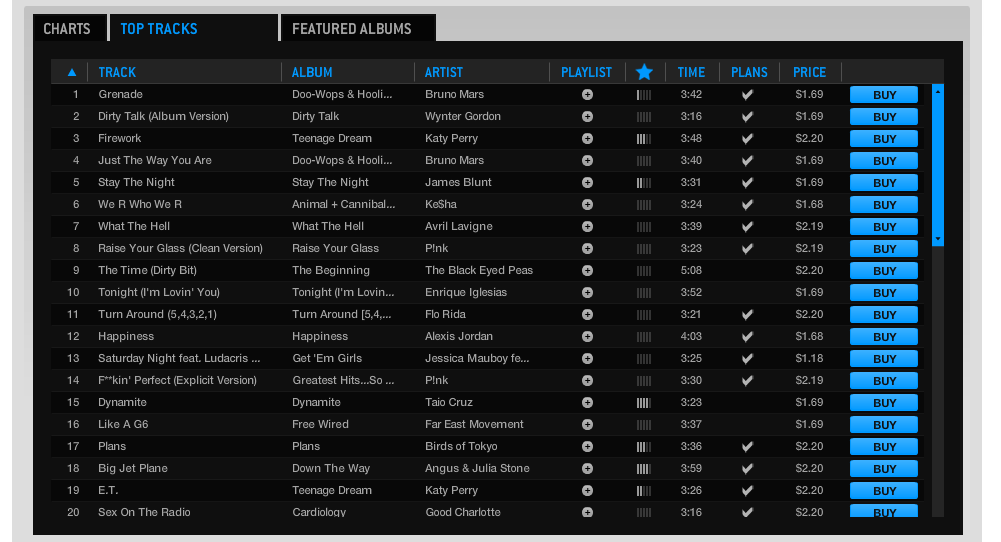
Buying individual tracks is now more popular than albums, which means less profit for record labels

The UK music industry has just released figures showing that music sales, by unit, reached an all times high or 281.7 million songs. You would think they’d happy with this result, but they’re not, and they’re blaming piracy. While unit sales was up dramatically, 27% compared to just a year before, actual revenue was down, mostly due to dropping CD sales. But if there ever was a figure showing that the music industry’s declining profits were nothing to do with piracy, then it was these sets of figures, despite what the BPI’s (the UK’s version of the RIAA) conclusions. The increase in individual unit sales shows people buying more than ever, but only in terms of single tracks. This is largely thanks to the digital revolution in music,  iTunes stores and whatnot. Even without considering the ageing CD format (first demonstrated nearly 35 years ago!) and how out of place a physical medium is for music these days, the fact that most CDs are albums is also why CD sales are declining. With digital music purchases, you can buy only the music you want, as opposed to a whole album with only a couple of good songs, and you can even create your own albums, which makes those compilation CDs seems quite lame by comparison. And add to the fact that Apple, via iTunes, now get a huge chunk of the profit because the music industry was too slow to adapt to this digital revolution and set up their own online stores, this is what accounts for falling profits, not piracy. And you know what? I think record labels should just accept the fact that things aren’t as good as before, and move on. They’ve long exploited artists, who get very little of the money from song sales by the way, and their dying business model should not be protected. Piracy has been an easy scapegoat for the music industry, that’s all.

And it’s an easy to accept scapegoat too. Because people are downloading pirated songs, a lot of them, but of course, nobody has actually attempted to find out the real cost of piracy. Not the ridiculous figures of “$200 billion” a year, by multiplying the number of downloads by the full retail cost of each download, but actually examining just what percentage of people would have otherwise paid for the content had the content not been available for piracy? Nobody in the industry is conducting such a study because they know the results will not be in their favour, because they know that people are buying music and movies more than ever (remember that before DVDs, hardly anybody purchased movies), and they will then have to find another convenience scapegoat to blame for their woes. It seems the entertainment industry has shifted their cross-hairs over to online storage websites such as RapidShare and MegaUpload, the new scapegoats in their war against online piracy, as it’s much easier to sue companies like RapidShare/MegaUpload, than the thousands of BitTorrent indexes run by individuals without even a postal address. And again, incredible claims are being made, which basically is suggesting that sites RapidShare do nothing other than host and share illegal content, when I think (from my usage of these services anyway) most of the usages are perfectly legitimate (ie. sharing large, legal, files that otherwise would be difficult via email).

One convenient scapegoat was the so called “analog hole”, in which movie studios warned of the dire consequences of not closing the loophole which allowed people to record digital content, like Blu-ray’s, via analog output which have very little in terms of content protection (since it’s a lot harder to deploy content protection without using some kind of digital system). This is how they scared the FCC into adding selectable output control to analog outputs, and this is why we have the stupid rule in which it’s impossible for upscaled DVDs to be played over component legally. And this is also why, for the Blu-ray specifications, something called ICT was added. ICT stands for Image Constraint Token, which is simply something that the studios invented so they can block HD analog output. Due to public pressure, they put off the introduction of ICT until a later date, except that later date has just passed (January 1st, 2011), and ICT is now in effect. What this means is that for all Blu-ray players made after January 1st, they will no longer be allowed to output HD via component output – the resolution is now limited to only 540p, which is basically SD resolution. For those with older Blu-ray players, they too will be affected when new Blu-ray movies carrying ICT will also only be played at limited resolutions. So it’s HDMI, or no HD. And in 2013, it will be illegal for Blu-ray players to have analog outputs at all. This is fine for the vast majority, who is happily using the HDMI connection on their Blu-ray players. But there are still those with older TVs, or even those with home cinemas that employ expensive, but older, projectors that can display a perfectly great picture, but just doesn’t have the required HDMI input (projectors were much slower to adopt HDMI than TVs). The Blu-ray people will say that this is all to help the transition to digital, since analog can’t be supported forever. And that’s a valid argument. But is it really necessary to ban analog outputs to achieve this, when as I already mentioned, the vast majority have switched over to digital already without the need for any coercion. And if the argument is that analog makes piracy more a problem – I don’t know a single instance of piracy over component output, simply because it’s very very easy to pirated a Blu-ray movie via digital means, which also has the added bonus of 0% quality degradation. For me, this is the industry’s paranoia about piracy at its worst – imagining a problem that doesn’t exist, and implementing a “solution” that hurts legitimate consumers more than it actually helps to prevent the problem.

UltraViolet DRM

UltraViolet aims to provide consumers cross-format ownership of content, but at a price

For me, the industry is at its best when it is coming up with solutions to real, not imaginary, problems. DVDs were invented so people could buy movies without worrying that the quality would degrade after too many viewings, as it was the case with VHS tapes. Blu-ray was invented so people could have something to watch on their new HDTVs, and that they would get a cinematic experience at home as close as possible (in terms of visual/aural quality) to the original cinema presentation. Digital downloads and streaming, despite the industry’s reluctance, also helped to solve real problems. And the industry’s latest effort, which has somehow managed to earn the support of pretty much all the big names both in the movie industry and the computing industry, is something called UltraViolet. On the surface, it looks (and is) another layer of DRM, the last thing we need. But this DRM’s aim is different than what has come before. Instead of trying to prevent piracy, UV attempts to solve a problem that has bothered people since the introduction of DVDs – the fact that people are buying the movie that’s locked to a particular format, as opposed to simply buying the movie. Well, locked legally anyway, thanks to DRM, and if people wanted to transfer their DVD movie to another non DVD device, then they could only do it illegally. The introduction of Digital Copy helped to alleviate some of the concerns, but it’s a very flawed implementation. UV attempts to solve this problem by making you buy the movie, not the format, and once that movie is added to your ‘digital locker’, you can then have access to multiple formats of the same movie, and even access to new formats as they’re being introduced to the market). And you can even share your ‘digital locker’ with up to 6 people, and across up to 12 different devices. You can read up on just how UV might work here.

But while the idea behind it is good, the problem is that we, as consumers, are still handing a lot of power over to the studios. Instead of having a physical DVD in my hands, and (albeit illegally) convert that to work on my iPhone, UV means it’s the studios that now have the ultimate control. The current implementation might allow you to share with 6 friends and 12 devices, but what’s to say that it will always be this generous. Or that you won’t have to pay extra whenever a new format is released (say for your iPhone 6)? Or, if the studios get desperate enough one day, that they force everyone to re-pay or they will cancel access to your digital locker – that may be unlikely, since they’ll get sued seconds after sending out the emails demanding this “ransom”, but the user agreement that you entered with them might just allow this to happen. But these worries aside, the goal behind UV seems to be a good one, and I think if it’s implemented correctly, it will greatly help reduce casual piracy, and the need to purchase multiple formats of the same movie, although it’s hard to see what the studios get out of letting people buy less stuff. I mean these are the same studios that make you purchase 5 different “special, limited, platinum, ultimate, definitive” editions of the *same* movie on the *same* format, every couple of month!

Everyone’s favourite anti-piracy law firms, US Copyright Group, and the bunch that’s suing people for downloading Batman XXX and other pornos, are joining forces. It’s becoming harder for these law firms because of a little thing called jurisdiction, and so they have to form alliances with firms in other geographical areas and help sue for each other, to lower costs and ensure profit steams.

And everyone’s favourite anti-piracy agency, Aiplex, is in the news again, this time over their hilariously worded threat that was emailed to TorLock, a BitTorrent indexer that is actually paying users that spot fake torrents in their index. Creating fake torrents is one of the tools in their anti-piracy toolkit, although one that doesn’t really work. But Aiplex’s apparent anger is hard to understand, and also their claim that it’s not cool to pay people and remove torrent files for content that you don’t own. So this means I can’t pay people $1 every time they *don’t* watch a Michael Bay film, even though I’m sure I could save billions of brain cells by doing so, and it also means that TorLock can’t remove torrent files (that they don’t own) when requested to do so by firms like Aiplex, right? [insert confused smiley]

High Definition

In HD/3D news, the CES has been pretty much a non event for the Blu-ray format. This could be interpreted as bad news because it’s no longer the cool new thing that it once was, or it could just be because it’s mainstream status means, it no longer needs to be the cool new thing.

But there was one interesting new tech for Blu-ray, and one that makes the outlandish claim to improve upon the clarity of Blu-ray movies just by using a new, fancy type of HDMI cable (and Monster were not even involved!).

DarbeeVision comparison

This before and after image shows DarbeeVision's HD enhancement at work

DarbeeVision claims to just do that, by using a special technique that creates a “drop shadow” for each frame of the Blu-ray image, which creates a kind of effect that our brains interpret as more detail. The HDMI cable part comes from the ability to embed the image processor directly into the cable, and so by connecting your Blu-ray player to your TV using the $150 cable, you can enjoy DarbeeVision’s added sharpness (the current system, which uses a set top box that sits between your player and TV, costs $1,500). I’ve even posted some before and after images here, for those that want to see if it really works or not. Interesting concept, but I’m not sure cinephiles will appreciate fake, digitally added, details (but the Average Joe would probably love it).

And as mentioned in this section a couple of months back, Apple has finally removed VLC for iOS from iTunes. The incompatibility between open source licensing, and Apple’s draconian licensing scheme (even for free software), claims another victim.

While not specifically HD news (more H.264 news), Google’s decision to no longer support H.264 for HTML5 in their Chrome browser is one that will have huge implications for online HD video streaming. This definitely shifts the momentum towards Google’s own WebM format or to a lesser extent, Ogg Theora, but WebM may suffer a similar fate to H.264, as disputes over patent claims could endanger the rollout of HTML5. Most video compression technologies are based on very similar principles that will almost certainly have been patented by someone at some stage, and experts feel WebM is not the open, patent/royalty worry free format that Google is promoting it as. While Microsoft has responded harshly to this decision, this move is really aimed right at Apple, which is going forward with HTML5 support for all their iDevices, but with H.264 support, since they’re huge fans of the format that they own lots of patents for (Microsoft owns a lot of patents on it too). Imagine if Google made the next version of YouTube HTML5/WebM only – then none of the iDevices will be able to browse the new version of YouTube, with Google’s Android phones being the main beneficiary of this scenario!

Gaming

And finally in gaming, Kinect will be coming to the PC officially – just not any time soon. Microsoft’s CEO Steve Ballmer hinted at Windows support for Kinect, but did not want to release and specific timelines.

Some say that Kinect won’t work with PCs, because of the distance issue – people sit much closer to computers than TVs, and Kinect requires a lot of space. But that’s mainly because the current range of Kinect games all require leg tracking, while Microsoft has already hinted that there will be Kinect games where you can play just by sitting down, so these games might just work on Windows. And waving your hands to flick through pages and pages of a boring financial report using Kinect might just make the experience bearable!

And that’s enough words for this week (fastly approaching 3000!). Have a good one.

Game Consoles – December 2010 NPD Sales Figure Analysis

Saturday, January 15th, 2011

After an Oceans 11 style heist, a global computer hacking effort, blackmailing and some downright shameless begging, and I am able to bring you this month’s NDP US video games sales stats. Either that, or it was leaked in the same way it’s been leaked in the last few month. December is the busiest month of the year in terms of video game sales, and all eyes on whether the Xbox 360 (and Kinect) can triumph over the Wii, or will the PS3 stage a comeback of epic proportions. Read on to find out! All the figures are collected and calculated by NPD.

The figures for US sales in December 2010 are below, ranked in order of number of sales (December 2009 figures also shown, including percentage change):

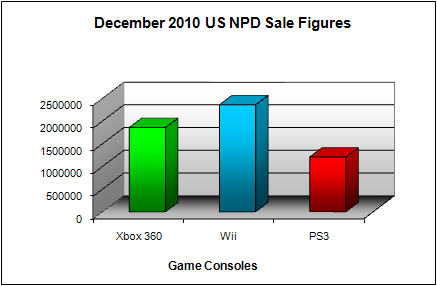
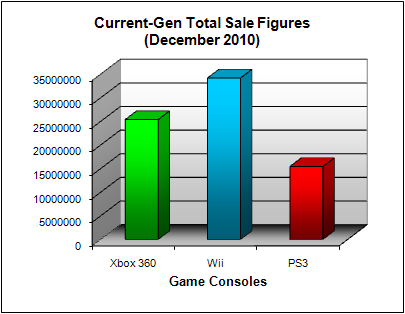
  • Wii: 2,360,000  (Total: 34.2 million; December 2009: 3,810,000 – down 38%)
  • Xbox 360: 1,860,000 (Total: 25.4 million; December 2009: 1,310,000 – up 42%)
  • PS3: 1,210,000 (Total: 15.5 million; December 2009: 1,360,000 – down 11%)
NPD December 2010 Game Console US Sales Figures

NPD December 2010 Game Console US Sales Figures

NPD Game Console Total US Sales Figures (as of December 2010)

NPD Game Console Total US Sales Figures (as of December 2010)

My prediction from last month was:

I’m going to go with the same hardware ordering as this month, although the shortage of Xbox 360 and Kinect stock could affect sales somewhat, with the more plentiful Wii taking advantage. Software wise, a lot of the same titles from the above list will be there, and it will be joined by Epic Mickey, possibly a Kinect title or two (Kinect Sport being the most likely candidate). GT5 will have risen in the rankings too thanks to it having a bit more time to sell more copies.

Well, if you believe Microsoft’s statement, then yes, the Xbox 360 stock shortage did affect US video game sales, and this allowed the Wii to come first in home console sales for the first time since May. The software predictions are more a mixed bag, or rather, I think  I only managed to get the Epic Mickey thing right (GT5 didn’t even make the top 10).

First of all, the Wii’s win this month seems to indicate that there’s still life left in the old motion controlling dog yet. While December was the best month for the Wii since, well, last December, but as you can see above, sales are actually down 38% compared to the year before. This seems in-line with the general percentage decline for Wii sales over the year, but it’s not as bad as it seems because last December was simply an amazing month for the Wii, far above expectations actually. In fact, the Wii in December 2009 was up an amazing 77% compared to December 2008 (which itself was up 59% from 2007), that’s far above normal. And so Wii sales actually grew compared to 2008, not by much, but it’s not bad for a “dead” console as critics (me included) have called it. It just goes to show that the Wii really is still the king when it comes to the holidays.

The Xbox 360’s streak as the top selling home based console ended in December. Microsoft was quick to blame stock shortages, and there definitely were stock related issues with the Kinect accessory. But is Microsoft really saying that, had stock been plentiful, it would have sold at least 500,000 more Xbox 360’s (to only just match the Wii numbers), basically that half a million people that wanted to buy Xbox 360’s couldn’t do so because all the stores had run out? That seems a bit far-fetched to me. In any case though, the Kinect accessory was a top seller, with more than 5 million sold, and 8 million shipped to retailer since its release in November, and I can see it driving console sales over the next few month. But in any case, the 1.86 million Xbox 360’s sold in December represents the best ever month for the console, and it was the only console to record a year-on-year growth (of 42%, which is quite impressive).

The PS3 again was unable to outsell the same month last year, coming in with a 11 percent decline compared to December 2009. It is kind of disappointing in that Move clearly did not help to sell more console, and that while last year’s better sales results were somewhat due to the introduction of the Slim, the price cut, and the higher price of Blu-ray standalones back then (which made the PS3 a good value choice for those also seeking a Blu-ray player – not so this year, considering you can now pick up a brand name player for peanuts), Sony should still have recorded some growth, or at least no decline, this year. Sony was quick to point out that they’ve had a great year with PS3 software sales, up 32% compared to last year, but they were in last place (of the home consoles) last year, and so they had the most to gain from increasing console numbers this year. In fact, from January to October’s estimated figures, the PS3 managed to overtake the Wii in terms of software sales revenue, up to second place, but it was still way behind the Xbox 360 in terms of revenue. In fact, even when you add in PS2 and PSP revenue, the PlayStation brand was still behind that of the Xbox 360, back in October. and while things could change between October and December, if anything, it should help the Xbox 360 (thanks to Black Ops) and the Wii (thanks to Just Dance 2, Donkey Kong, Epic Mickey, and Michael Jackson: The Experience). So in fact, the PS3 could still finish the year in last place in terms of software revenue.

And with that, we move onto software, and as expected, Black Ops retained the top spot for best selling game on all platforms combined (a Call of Duty game top of the charts at Christmas, what a non surprise!). To show that PC gaming is still alive, World of Warcraft: Cataclysm managed 3rd spot, despite selling only on one platform. And while the NPD no longer gives out individual platform sales, from the platform exclusives, we can see that Just Dance did fantastically on the Wii, and so did Donkey Kong Country Returns, Disney Epic Mickey and Michael Jackson: The Experience (while not a platform exclusive, this title wasn’t available for the Xbox 360 nor the PS3). So it’s been a fantastic month for Wii, but I just can’t help but feel that the type of titles selling could eventually point to a Kinect victory (and may also help the Move). Ubisoft’s dominance (Just Dance 2, Michael Jackson: The Experience) here, and Ubisoft’s commitment to Kinect (Ubisoft are the top sellers for third party Kinect games), does suggest a shifting momentum may occur. If Ubisoft doesn’t botch up the Kinect version of the Michael Jackson game, then it could be the game to really make Kinect take off. Anyway, here’s the full software sales chart for December:

  1. Call of Duty: Black Ops (Activision Blizzard, Xbox 360, PS3, Wii, PC, DS)
  2. Just Dance 2 (Ubisoft, Wii)
  3. World of Warcraft: Cataclysm (Activision Blizzard, PC)
  4. Assassin’s Creed: Brotherhood (Ubisoft, Xbox 360, PS3)
  5. Donkey Kong Country Returns (Nintendo, Wii)
  6. Disney Epic Mickey (Disney Interactive Studios, Wii)
  7. Madden NFL 11 (Electronic Arts, Xbox 360, PS3, Wii, PS2, PSP)
  8. Michael Jackson: The Experience (Ubisoft, Wii, DS, PSP)
  9. NBA 2K11 (Take-Two Interactive, Xbox 360, PS3, Wii, PS2, PSP,PC)
  10. Need for Speed: Hot Pursuit (Electronic Arts, PS3, 360, Wii, PC)

I loathe to make a prediction for next month, but I think the Xbox 360 will probably gain back the number one spot, and a very familiar top 10 for software as well.

And I guess with the December numbers available, I should do some kind of year-in-review post, but with the lack of full NPD stats, it’s hard to do a full analysis, so if I do a year-in-review next week, it will probably be pretty short.

Until then …