Archive for the ‘Video Technology’ Category

Weekly News Roundup (10 August 2014)

Sunday, August 10th, 2014

Last week’s scheduled post seemed to have work, and I shall have to employ this feature again for this week. It’s nice to be able to finish work on Saturday and get the Sunday off (even better if I didn’t have to work on Saturday!).

Let’s get started …

Copyright

Jailbreak iPhone

Phone unlocking becomes legal again. as common sense prevails

A victory for consumers this week, even if it may be a temporary one – phone unlocking is now legal again. Previously an exemption from current copyright laws, phone unlocking became illegal when the US Copyright Office allowed the exemption to expire in early 2013 due to industry pressure. This week, a new bill was signed into law by President Obama which adds back the exemption, and calls on the US Copyright Office to examine expanding the same exemption to other devices, such as tablets. The new law will make phone unlocking via third parties legal again, at least until when the Copyright Office re-examines the issue in early 2015.

The new law is a blow to wireless operators, who had put pressure on the Copyright Office to allow this exemption to expire. Instead, operators preferred an unlocking processes designed and operated by themselves, which often involved a slow and arduous process designed to make it more difficult for subscribers to change providers. The new changes will benefit consumers by providing them with more choices, and making the wireless marketplace more competitive in the process.

Now all we need is a new bill that makes DVD and Blu-ray ripping legal for personal use, and then we’re all set. Don’t hold your breath though.

Speaking of unwanted DRM, here’s another example of the problem with DRM, not just for consumers but for publishers that choose to implement them. Because Scholastic wants to switch to a different pricing model for its Storia range, those that had previously purchased the DRM’d Storia books will now lose access to their books. Users can extend access to their “purchases” by opening the eBook before October 15, otherwise they will have to contact Scholastic to obtain a refund. It’s nice and all for Scholastic to offer a full refund, and it’s definitely the right thing to do in this situation, but it’s by no means an obligation for them, in the legal sense. They could have simply gave an advanced notice of the end of access and washed their hands of it, and the user agreement consumers entered into probably would have allowed Scholastic to do exactly this without any ramifications. This is why DRM is dangerous and why it’s anti-consumer, even if Scholastic has done the absolute right thing this time around.

High Definition

Amazon seems to be acting quite the d**khead these days (in  my humble opinion … please don’t sue me). They’re so big and powerful these days, and have such a large say in sales of books (and DVDs and Blu-rays), so even if they have some valid points to make on the whole dispute with book publishers Hachette (here’s a rundown, if you’re not quite sure what’s going on), it’s hard to see it as not being a case of the big boys bullying the (relatively) smaller guys (the smaller guy in this case being Hachette, the corporation with “only” 7,000 employees).

Disney discs removed from pre-order as Amazon tries to force a favorable outcome (for themselves)

Disney discs removed from pre-order as Amazon tries to force a favorable outcome (for themselves)

You can’t really call Disney one of the smaller guys (nor Warner Bros.), but it seems Amazon isn’t afraid to pick on them either, not when they know that Disney needs Amazon more than Amazon needs Disney. So a dispute over a distribution deal means that almost all Disney DVDs and Blu-rays have been removed from pre-order, including ‘Muppets Most Wanted’, which actually comes out next week. They did the same with Warner Bros. back in June before, I assume, Warner relented and gave in to their demands. Disney will have to make similar compromises soon, I suspect.

Obviously Amazon has a right to determine what is and isn’t for sale, but it’s hard to not see this as case of a company abusing its market position to get what it wants.

Amazon has such a large presence that even a relatively limited blockade such as this one, or the one against Warner Bros., could have an effect on disc sales. Whether that’s reflected in the latest home entertainment sales report, it’s hard to say, but the report itself paints a rather familiar pictures. Blu-ray is up, DVD is down to bring total disc revenue down as well, but digital continues to grow (and oh, brick-and-mortar rental sales continues to plummet).

The latest figures from DEG shows that while Blu-ray is up 10% in the second quarter of 2014, combined disc sales (including both DVD and Blu-ray) was down 8.2% in the first half of 2014 compared to the same half in 2013. This is all while electronic sellthroughs (eg. iTunes) and SVOD (eg. Netflix) grew 37% and 26% respectively.

Overall, for the first half of 2014, disc sales revenue fell to $3.26 billion, while digital sales (including electronic sellthroughs, SVOD and a la carte VOD) grew to $3.6 billion. This may or may not be the first time that digital revenue exceeded that for discs, and things may turn around during the second half of the year (when disc sales traditionally do better than the first half), but the trend is clear to see.

On a related note, Netflix this week announced that they have just surpassed HBO’s subscriber revenue. Competition between Netflix and HBO has been growing, particularly with the former now in Emmy contention season after season. But as Netflix’s CEO points out, “They (HBO) still kick our ass in profits and Emmy’s, but we are making progress.”

Gaming

Is the Xbox One about to get another $50 price cut? Earlier in the week, the Spanish version of the Xbox.com seems to have indicated that the Xbox One would now be priced at €349.99, another discount of €50 on top of the recent price cut. A “#xboxgamescom” hashtag was present, indicating that Microsoft might have a surprise price cut announcement at Gamescom, happening next week. Hopes were soon dashed though, as Microsoft later confirmed that the listing was made “in error”. It’s a good thing that I was too lazy to post the original news story, and that by the time I finally got around to it, the “correction” had already been made. Hooray for laziness!

——

And on that note (laziness), we come to the end of this WNR. Hope you’ve enjoyed this one, see you next time.

Weekly News Roundup (27 July 2014)

Sunday, July 27th, 2014

I’ve been catching up on my list of “to watch” movies, both on Blu-ray, and on my Netflix “My List”. I really wish there was a separate genre for disturbing or depressing films, instead of lumping them all together in the drama genre. It doesn’t feel right that movies as different as ‘Rise of the Planet of the Apes’ and ‘Enough Said’ both belong to the drama genre (at least according to the IMDb), or that a film as disturbing as ‘Blue Jasmine’ would also belong to the comedy genre. I watched ‘Blue Jasmine’ after back-to-back sessions of ‘City of God’ and ‘Inside Llewyn Davis’, and if I hadn’t watched ‘The Muppets’ in between, it would have seriously disturbed my mood (and even so …). Be very careful when choosing to watch a drama, that’s my tip for the week.

(‘Enough Said’ was pretty sweet though, so it was a real mood redeemer thanks to great performances by the late and great James Gandolfini and Julia Louis-Dreyfus)

And yes, I did have time to do (some) work in between epic movie sessions.

Copyright

Google DMCA Stats

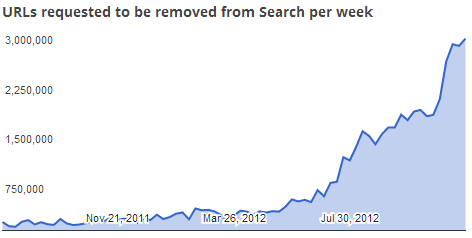
Quantity over quality, may be the strategy behind some rightsholders choosing to use Google’s DMCA process over more effective systems

This week TorrentFreak investigates why rightsholders are choosing to use ineffective Google DMCA take-downs as opposed to more efficient take-down tools, specifically the British based BPI. On one hand, rightsholders are submitting millions of take-down requests for URLs that are almost instantly recreated, but are refusing to work with tools that not only take down actual content/files, not links, but also keep them down.

One of the targeted file hosts, 4shared, is using a tool that is now owned by Spotify, that allows rightsholders to request any specific piece of content to be taken down – the tool will then automatically remove all related links to this piece of content, and even prevent future links from being created on 4shared. So it’s curious as to why the BPI and other rightsholders aren’t using this tool. 4shared thinks that the decision comes down to a public relations one. Millions of take-downs make better headlines than say working with a file host that you’ve been publicly admonishing, using a tool that makes piracy take-downs seem almost trivial. Piracy is supposed to be this billion dollar a year headache that cannot be solved without basically giving rightsholders total control over everything, so there is a need to be able to show how big the problem really is, and millions of taken down links will do that. The fact that these take downs are part of an endless game of copyright whack-a-mole, doesn’t really matter, neither is the fact that this does nothing to win the war on piracy.

It’s hard to win when you actually don’t want to win.

High Definition

My recent Netflix binge has made me pine for a private viewing mode on Netflix, hoping that the eclectic collection of films I watch won’t end up confusing the Netflix recommendation system. My wish may come true soon, as it appears Netflix is testing a private watching mode. The current workaround is to have a dedicated profile that you create and delete all the time, which also helps to ensure all the softcore porn you’ve been watching on Netflix doesn’t end up on your My List.

Samsung 3D active shutter glasses

PS4 and Xbox One both getting Blu-ray 3D playback in the next few weeks

Meanwhile, Netflix this week announced that they’ve broken through the 50 million users barrier, with nearly 14 million outside of the US. Revenue was up 25% as well, compared to last year, as the company focuses less on securing expensive licensing rights to films and TV shows, and more on original content.

Back to physical media, Microsoft this week announced that Blu-ray 3D support will finally be added to the Xbox One console, and a couple of days later, Sony followed with a similar announcement for the PS4. The PS4’s Blu-ray 3D support will arrive a little earlier than the Xbox One’s – next week versus some time in August. The one-upmanship continues for these two console heavyweights, which I guess is a good thing for the consumer.

Thus far, the lack of Blu-ray 3D support has been a bit more embarrassing for Sony than for Microsoft, considering Sony’s close links to the Blu-ray format (ie. it’s their format). So the update, coming via firmware version 1.75 next week, is most welcomed.

And if Sony can bring back DLNA support to the PS4, then I can finally start thinking about upgrading my PS3.

Gaming

It’s that time of the month again, and the NPD report for June shows a marked improvement for the Xbox One, thanks to the Kinect-removing inspired price drop, while the PS4 was still the best selling console for the month (that’s 6 months in a row).

PS4 with controller and PS Eye

The PS4 is still beating the Xbox One, despite sales doubling in June for the latter

Xbox One sales doubled in June compared to May according to Microsoft, but they’ve not been as willing to release sales data ever since they stopped having the top selling console (funny that). And so without knowing the May results, it doesn’t really tell us much. The only thing we know is that it wasn’t enough to allow the Xbox One to beat the PS4, and Sony will be really pleased with that.

Nintendo are happy too because the Wii U sold 140,000 units, which is a 233% improvement compared to the same month last year. There seem to be a new air of optimism for the Wii U, following the release of the new Mario Kart game, but it will take some time to confirm whether the recent sales bump is a sustaining one.

So everyone with some good news to report in June!

——

That’s all for this week. See you soon.

Weekly News Roundup (13 July 2014)

Sunday, July 13th, 2014

Another short one this week as the World Cup is finally taking a toll on me (and my sleep patterns). So it’s Germany vs Argentina in the final, and I’m backing Germany (but only because they have three players from the club I support, Arsenal – more than any other country). The Germans have a real team, while most of the other countries only have great individuals. Still, if there was one individual that could make a difference it would be Argentina’s Messi. My prediction? Germany wins 2-1 thanks to Müller and Özil – Higuaín to get the consolation for Argentina. Don’t put money on it, but if you do, send me 5% of all winnings.

Alright, let’s get started because I’m heading for an early sleep.

Copyright

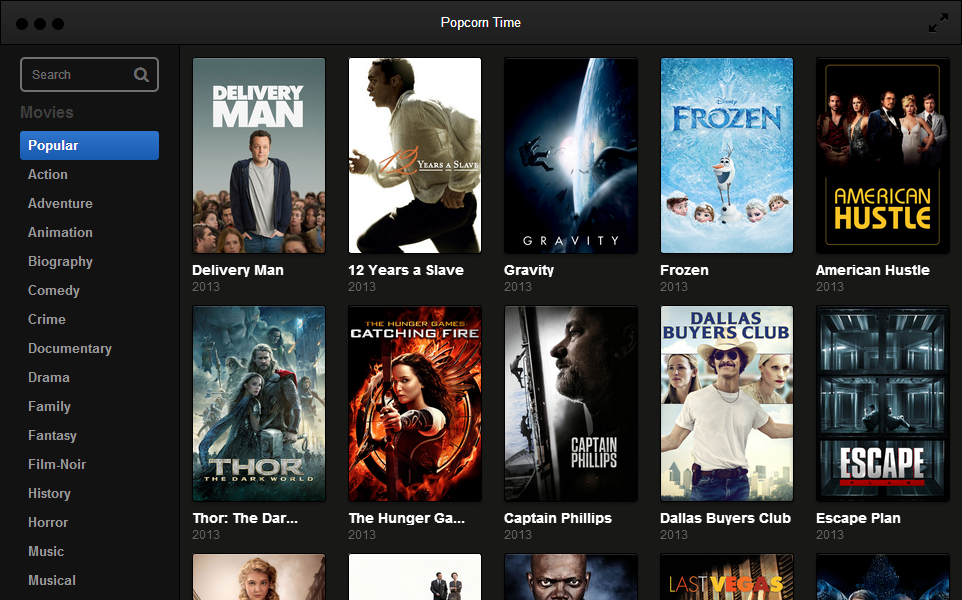
Popcorn Time

The MPAA is now going after Popcorn Time, or to be more precise, forks of the original project on GitHub

The MPAA is starting to turn its attention to a software tool that has been dubbed the “Netflix of piracy”, Popcorn Time. The MPAA has issued DMCA notices to GitHub for two forks of Popcorn Time, and GitHub has responded immediately by disabling the repositories of these projects. The DMCA notice also asks GitHub to take proactive action on any and all related forks of the project.

But it’s the open source nature of Popcorn Time will most likely save the software from the same fate enjoyed by other targeted tools in the past. After all, the original Popcorn Time has already survived being “removed” once. With the source code out in the open, it will almost be impossible to completely get rid Popcorn Time and its related developments, which is probably the main reason why the original creators chose to go down the open source route.

The MPAA may have won the first round, but it looks like this is going to be a long, and potentially un-winnable, war for them.

But fighting un-winnable wars is what anti-piracy is all about these days. And it’s a war being waged on from on-top, rather than by the people on the ground in Hollywood, who, according to director Lexi Alexander, don’t really care all that much about the piracy problem. Alexander, who directed the film ‘Green Street Hooligan’, also took to task Hollywood’s general attitude to a wide range of issues, from lack of diversity in hirings, to not giving people what they want.

Most interestingly, Alexander says that Hollywood’s woes, if they are in fact real, are mainly due to the lack of variety in the films they release and who they chooses to direct and star in them. Alexander points out several recent flops, including ‘Mars Needs Moms” and ‘Green Lantern’, and says that releasing crappy movies has cost Hollywood a lot more money than any perceived losses from piracy (both of these movies lost more than $100 million each).

But if you point out these and the dross that studios put on with such regularity, those “Fat Cats” (the only ones who regularly complain about piracy, according to Alexander) in Hollywood might lay the blame for these Box Office misses squarely at the feet of piracy.

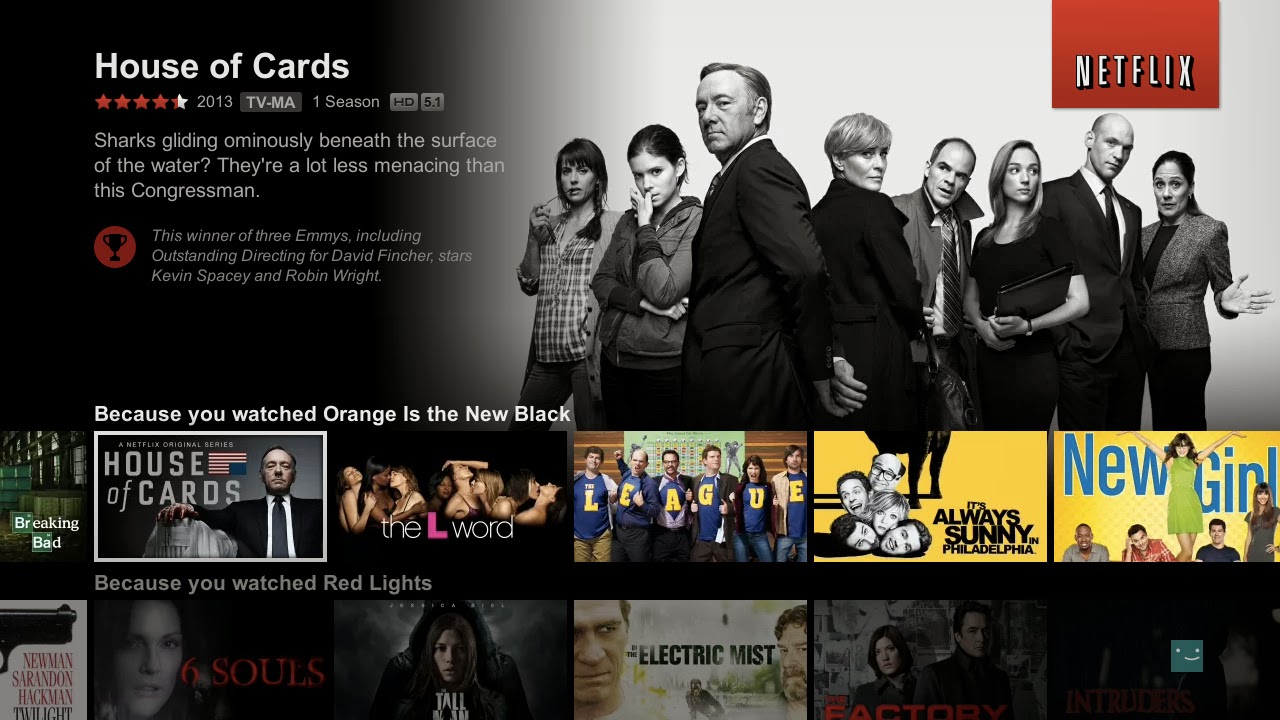
New Netflix UI

With so many apps, games, and services competing for our time, and awesome platforms like Netflix to keep us occupied, crappy movies are flopping harder and harder at the box office – and it’s got nothing to do with piracy

What the Internet, and piracy, has managed to do is to provide ubiquitous availability of movies, even those that are still in cinemas. So once upon a time you might have had to pay some money to see if the criticism reserved for a flop that has been universally panned by critics is deserved or not, or you’re just curious (or a sadist), whether this means buying a cheap ticket at the cinema, or renting it on VHS – now, you can just download it. So perhaps piracy does have something to do with it.

But another factor to take into consideration is the sheer amount of choice we get these days in terms of content and activities, not just movies, but also video games, social media and other time wasters. There is no way you can do everything, watch everything, listen or play everything, and so we have to be choosy, not just with money, but with our time as well. There’s simply no room for watching a crappy movie on a Saturday night, which might have once upon a time been unavoidable due to the lack of entertainment choices. There’s also not enough money, so even if you have the time, why would you pay $20+ for ‘R.I.P.D’ when you can do so much more with that same $20?

But yeah, let’s just blame piracy.

One thing that I can blame piracy on, or rather the disproportionate response to the piracy problem, is this news where 30,000 people were sent notices of infringement. That in itself isn’t strange, except these notices were fake with a malicious payload attached to cause havoc. The trojan, sent to German Internet users, could steal credit card details and other sensitive information from the user’s computer.

In other short news, Aereo’s plan for survival has taken an interesting turn as the tiny-antenna company now wants a cable provider license. This would then allow Aereo to negotiate licensing deals with content providers and maybe, just maybe, re-launch their services.

High Definition

The Emmy nominations are in and Netflix has doubled the number of nominations they garnered last year. Once again, Netflix originals ‘House of Cards’ and ‘Orange is the New Black’ led the way in terms of nominations. Good luck to them for hopefully putting another nail in the coffin of the cable network hegemony.

I wish for Netflix’s success not just because they provide a kick-ass product at a insanely good price, but also because if/when they come to Australia, I would love to work for them doing this recently posted job. I order waste so many hours on Netflix already, so if I can get paid for do it, it would be just bloody awesome.

Gaming

And finally in gaming news, the PS4 isn’t doing so hot in Japan for some reason. This article tries to find the reasons for it, including the Japanese’s still strong love for last-gen consoles, including the PS3, and the fact that all the connected media services that the people are using the PS4 for in the west, like Netflix, isn’t really a thing in Japan. Worth a read if you need some arguments to fuel your PS4 fanboy fights with non-believers.

——

That was the news that was, for the week just ended. See you next week!

Weekly News Roundup (6 July 2014)

Sunday, July 6th, 2014

Welcome to this week’s WNR. It’s another short one, and while the caliber of news stories is ultimately to blame, the lack of sleep I’m experiencing due to the World Cup cannot be discounted as a factor. It looks like my prediction last week has proved to be 100% correct, with the four teams I mentioned all making the semi-finals (even if it was by the skin of their collective teeth). In fact, I think I’ve managed to predict the result (but not the score) of all of the matches from the knock-out stage onwards (which is how I came up with the Brazil vs Germany, Netherlands vs Argentina semi-final line-up). I did not put money where my mouth is, unfortunately, because I don’t believe in betting and also because I’m an idiot.

Further proof that I’m an idiot comes from the fact that I nearly forgot to mention that this past Thursday was Digital Digest’s 15th anniversary, having been launched on the 4th of July in 1999. Having totally forgot about it until Wednesday night (I’m not in the US, so it’s not like I was bombarded with 4th of July stuff to remind me), I’ve only remembered it just now as I was about to hit the “Publish” button on this post. Anyway, here’s the obligatory Digital Digest in History photo album you can have a look at to see what Digital Digest looked like through the ages, including when it first launched in 1999 (check out the snazzy design!).

Alright, the news.

Copyright

Following last week’s copyright smack-down by Australian ISP executive Steve Dalby, Dalby was again on the attack this week when he took part in a Reddit AMA. Speaking in reference to the Australian pay TV monopoly owned by Foxtel, and the company’s deal with HBO to lock-up Game of Thrones from all other outlets (including iTunes), Dalby says that Foxtel is “on borrowed time”.

Dalby says reports prepared by rights holders about Australia’s piracy habits are “BS”, and says that Foxtel’s pricing (which is “447% of the price previously charged by iTunes”) is more to blame for people choosing not to pay. “Making content available in a timely, affordable away will go a long way to tapping into the Australian willingness to pay for legitimate content,” Dalby says.

HBO Logo

HBO much less worried about GoT piracy than almost everyone else

So what does HBO have to say about all of this? Surprisingly little. CNET spoke to HBO’s VP and GM Sofia Chang at the Game of Thrones exhibit in Sydney, and Chang’s comments were diplomatic, to say the least.

“Unfortunately, with this type of popularity comes this type of activity. However, I’ll say that in Australia you have one of the most liberal windows in terms of when it’s made available on the network and then when it’s made available on digital download,” Chang said.

“So, for example, with season four — the finale was on June 16, and on June 17 we made it available on Google Play and our other digital platforms.”

Make of that what you will. From what I read, it’s HBO’s way of saying that they’re happy with the current Foxtel-monopoly arrangement, and they don’t really care that it is causing record piracy for the show in Australia. Basically, HBO has a premium pricing model in which they rely on a small percentage of users to pay a high price for their content, knowing full well this leads to increased piracy. It works for them, and they know they can’t really complain too much about piracy given that this is the business model they’ve chosen. And HBO’s past comments have reflected their stand on the issue.

In other copyright news, hackers in Argentina have responded to the country’s banning of The Pirate Bay website by hacking and turning the website of a music industry group into a fully functioning Pirate Bay proxy site. The site operated for a full 10 hours before it was eventually taken down.

And over in Switzerland, draft legislation could see pirated downloads from cyberlockers made legal, but BitTorrent (which has an upload component) becoming illegal. Site blocking could also happen as part of sweeping changes in a bid to modernize the country’s copyright laws.

High Definition

The digital transition gathers pace as Sweden, thanks to its super-awesome broadband, may be the first country in the world where digital video spending overtakes that of physical media.

According to the estimates of Futuresource Consulting, 2014 is when digital spending for video content in Sweden will top €153 million ($209 million). This compares to to the €146 million ($199 million) estimate for packaged media, which has fallen dramatically in recent years. With digital music already accounting for 75% of sales, when it was only 25% a couple of years ago, it seems digital video will be heading the same way, and not just in Sweden.

Release windows will help to artificially keep discs and subscription TV alive for the time being, and there will always be those (like myself) that still like to buy movies on discs, but it’s clear what direction consumers want distributors to head in. With Netflix maybe coming to Australian soon, it will be interesting to see what kind of effect it has on our one and only subscription TV provider.

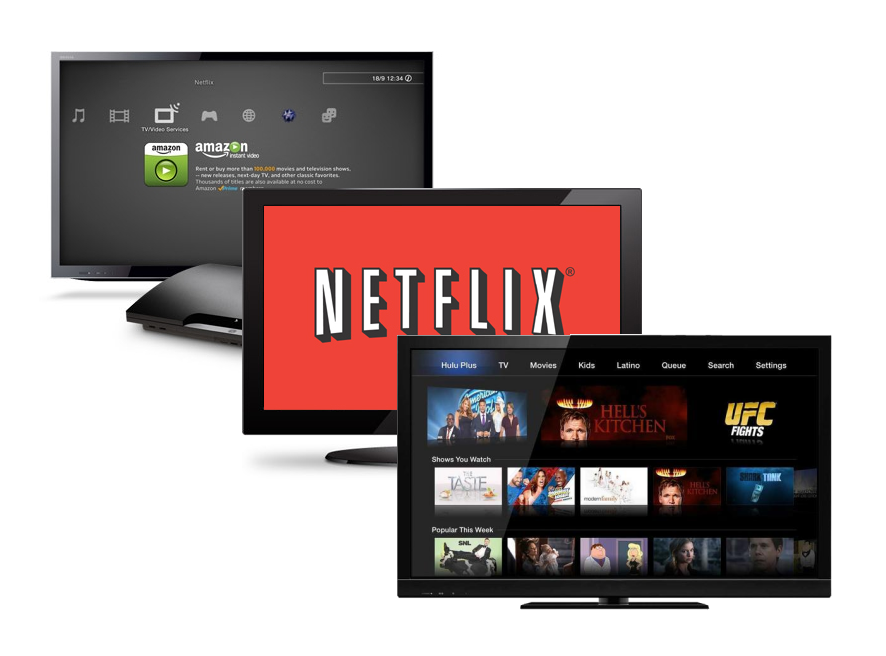
Amazon, Netflix and Hulu Plus

Amazon, Netflix and Hulu Plus – which comes out on top for content?

While Australians are un-spoilt for lack of choice, it’s a different situation over in the US where Netflix, Amazon and Hulu Plus are all desperately trying to grab and hold onto market share. While Netflix has a huge lead in terms of the number of subscribers, the race to have the best content is a tighter affair. US based investment bank Piper Jaffray & Co has analysed the content being offered by these major streaming providers, and found that, at least for the top rated movies, Netflix was still on top.

For TV shows, Hulu Plus with its TV catch-up origins still has a clear lead (57% of the top 75 series from the last TV season, compared to Netflix’s 20% and Amazon’s 9%). But for movies, Netflix’s 12% of top 50 box office movies compares favorably to Amazon’s 6% (Hulu Plus is way back, with just 1%).

While Netflix has been concentrating on original content, Amazon has been desperately trying to sign up to deals with networks like Fox and CBS to get shows like ’24’ and ‘Under the Dome’. So expect the see the gap narrow over the next few years. Of course, here in Australia, we’d be happy just to have Netflix, but rumors suggest that Amazon and Hulu Plus may not be far behind either.

——

Well, that actually went longer than I thought it would be. Hope you enjoyed reading, and see you next week.


Weekly News Roundup (8 June 2014)

Sunday, June 8th, 2014

Hello again. Hope you’ve had a good and productive week. Or just a good one, as being productive is way overrated. Speaking of productivity, I enjoyed writing last week’s “the news that wasn’t” section, where I went through the news stories that didn’t quite make it into a fully fledged write-up, and I think I’ll make that a regular feature from now on.

We start with the news that Pirate Bay co-founder Peter Sunde has been arrested in Sweden to serve out his outstanding copyright violation sentence. Sunde has been on the run for two years since the original sentence was handed down, and was finally caught in the southern Swedish county of Skane. He now has to serve his 8 month sentence.

Skipping to the world of video streaming, Netflix has now enabled HTML5 streaming on Safari in the just announced OS X Yosemite beta. This means that users of the still being tested OS X version can now stream Netflix in their Safari browsers without the need for a third-party plug-in. With playback completely integrated into the browser and the operating system, Apple says this will mean increased battery efficiency, up to two extra hours of streaming content in some cases.

Finally, we have two Xbox One related stories (in addition to the one we cover in detail below). With Xbox One dropping Kinect as a mandatory requirement, ironically, the PC now gets official Kinect 2.0 support. But before you get yourself ready for a bit of PC motion gaming, or dream about controlling Windows 8.1 Minority Report style, the $199 Kinect 2.0 kit would only be for developers seeking to make games and apps for the Xbox One. Another release that is a bit more useful for the average user is the official release of PC drivers for the Xbox One controller. Users can now connect their controller via a micro USB cable and play any PC games that already has official support for the Xbox 360 controller.

Now on to the main attraction …

Copyright

Are you breaking the law if you watch a pirated stream online? Most people don’t seem that bothered with the answer to this particular question, choosing to watch pirated shows online regardless. Some do hold the believe that streaming is less illegal than downloading, or not illegal at all. And you know what, it seem they’re right! Streaming is not copyright infringement.

A EU court ruling has confirmed that streaming isn’t the same as copying, mainly because technically, a copy isn’t made at all when you stream something online. The cached content, or temporary copy, is specifically exempt from existing EU copyright laws and so users are not breaking any laws, even if they’re watching that particularly distressing scene in an recent episode of Game of Thrones (urgh … so harsh).

What is still very much illegal is offering those streams in the first place, so don’t even think about it!

——

Netflix

Netflix and other legal services helping to reshape how young people feel about piracy?

Just last week, Spotify mentioned that music piracy rates in Sweden has dropped significantly thanks to services like Spotify. And this week, data released by the Lund University (with help from The Pirate Bay) backs up their assertions and directly credits services like Spotify for helping change the trend.

Most notably, 1 in 3 young Swedes say they’ve never even bothered to do any file sharing, and the researchers credit the changing attitudes of young people to new legal services like Spotify and Netflix. With the survey finding that fewer people are concerned about the legal ramifications of piracy than ever before, it definitely seems like viable legal alternatives, and not legal sanctions, seems to be the more effective in changing the habits of young Internet users.

Which again flies in the face of the assertions made by Australian royalty collection organisation APRA AMCOS last week that legal alternatives are ineffective in stopping piracy. Rights holder groups in Australia are currently pushing the government to introduce new harsher laws and new punishment and censorship regimes, so anything to discredit the effect of industry based solutions like Spotify (but no Netflix in Australia, yet) would be welcomed at this time.

Gaming

Xbox One Forza 5

Xbox One gets 10% GPU lift from removing Kinect

It seems Microsoft’s decision to dump Kinect 2.0 from being a mandatory part of the Xbox One has paid dividends for the company, not just on the price battle front with the PS4. By removing Kinect 2.0 from being an integral part of the Xbox One operating system, GPU power reserved for the motion gaming system can now be accessed by developers to boost gaming performance, by as much as 10%.

So much for Microsoft’s previous claims that Kinect 2.0 has its own resources and that is won’t negatively impact on system performance. Yet all this time, Kinect 2.0 was at the same time both costing Microsoft precious U.S. market share by making the Xbox One $100 more expensive than the PS4, and also robbing it of crucial system resources.

Microsoft’s Major Nelson, aka Larry Hryb, was keen to point out that the extra performance doesn’t just come from unplugging Kinect – developers have to add code to their games in order access the new found reserves, so don’t all rush to unplug that Kinect camera you probably never use and expect instant miracles.

——

That’s it for this week. Talk to you again soon.