Archive for the ‘Video Technology’ Category

Weekly News Roundup (1 November 2015)

Sunday, November 1st, 2015

In case you missed my addendum to last week’s WNR, here are the H.264 and HEVC versions of the Star Wars 7 trailer. I am kind of ashamed to admit that I’ve watched the trailer about 15 times this week. And yet I still have this horrible feeling that the movie will really disappoint. I call this the Jar Jar conundrum.

On to the news!

Copyright

YIFY/YTS

YIFY/YTS is no more. But piracy will continue on …

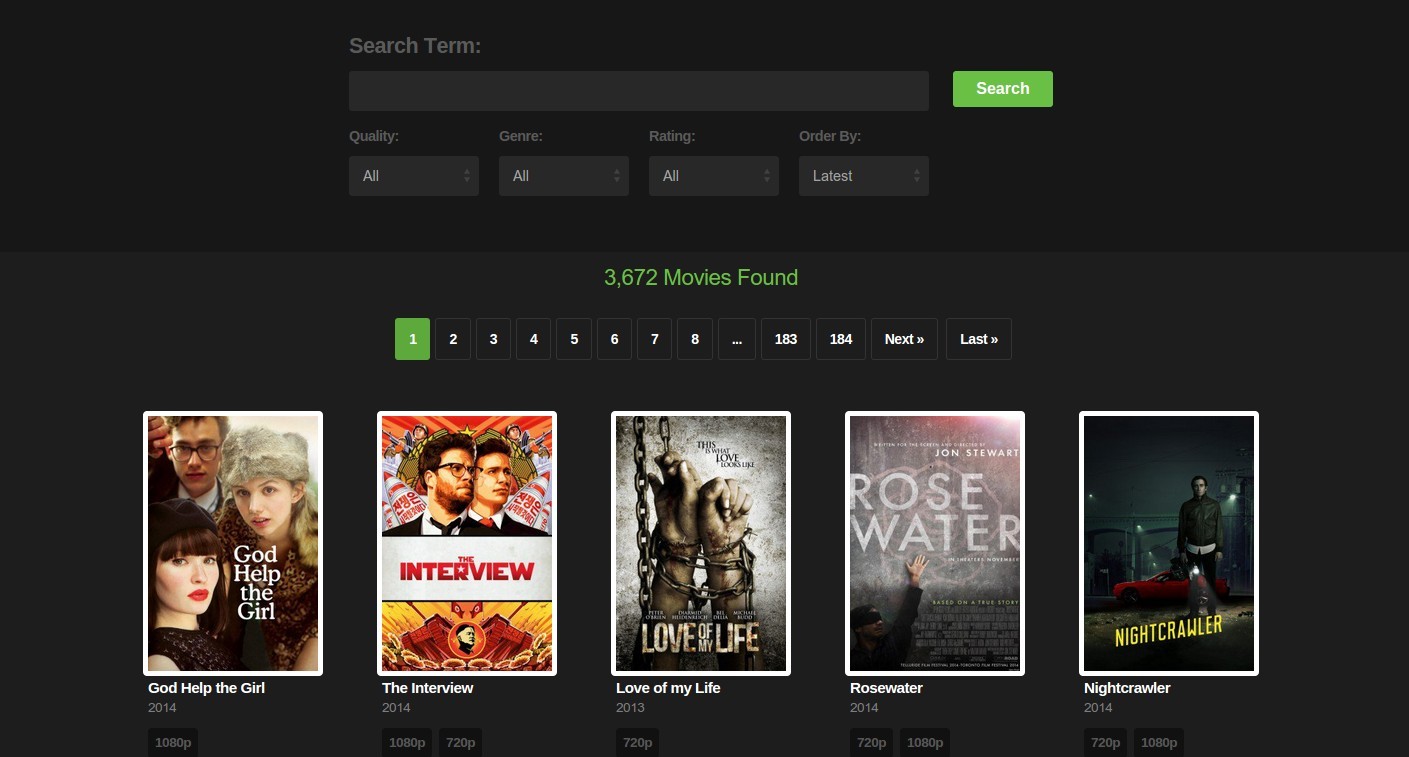
One of the world’s most prolific piracy release groups, YIFY, has decided to call it a day. The reason for the group’s end, as well as the closure of the group’s torrent website YTS, has not yet been made public though, but will be made public in the coming weeks. The end of YIFY/YTS marks the end of an era for Internet piracy, as the group’s 6000 releases will contest to just how important it has been for the piracy scene since the group first surfaced in 2010.

But despite the short term upheaval the loss of YIFY might cause, with many fake YIFY branded torrents already flooding the scene, the long term prospects for piracy remains bright, for want of a better word. Another existing group will take over the duties left by YIFY, or maybe a new group will simply emerge, just like how YIFY emerged in 2010.

While the torrent downloading of pirated works is still a big thing, the recent trend has seen a move towards streaming piracy. And filmmaker groups, the Directors Guild of America, Inc. (DGA) and the International Alliance of Theatrical Stage Employees (IATSE), say that the way the law treats download and streaming piracy is creating a legal loophole that’s allowing pirates to profit. The loophole exists because uploading a file for downloading is considered distribution, while streaming is considered a public performance. The former is felony offense, while the latter is only a misdemeanor.

Rights groups say that should the government change the law to please these groups, the consequences could mean felony charges and even prison time for YouTube uploaders, even those unaware of copyrighted content existing in their video uploads. It’s also worth noting that even without streaming piracy being a felony, authorities already have plenty of firepower in their arsenal, including domain seizures, to stop streaming piracy sites. And I doubt streaming site operators care whether they’re only committing a misdemeanor, or if it’s a full blown felony – just like torrent and download site operators don’t care.


Gaming

Metal Gear Solid V PS4

Would you buy a Super PS4?

Is there are market for a “Super PS4”, that has upgraded performance to allow for better visuals, maybe even 4K gaming, as well as a new Ultra HD Blu-ray disc drive to play the latest 4K movies? Amazingly, this “Super PS4” may become a real thing, according to Sony Computer Entertainment (SCE) Vice President Masayasu Ito. Of course, this all depends on whether people are willing to pay for this premium version of the PS4, and whether game developers need to do work to take full advantage of the enhanced PS4.

As for the Ultra HD Blu-ray support, it would give the new format a nice boost, just like how the PS3 helped Blu-ray at the beginning. With 4K currently being limited to movies, it would give 4K TV manufacturers a nice boost if the enhanced PS4 came with 4K gaming support.

——

Alright, that’s it for this week’s news stories. Time to watch the Star Wars trailer again … see you next week!


Weekly News Roundup (18 October 2015)

Sunday, October 18th, 2015

A very very short one for you this week due to a combination of lack of news, and me being too busy with a myriad of other things. So this WNR is going to be fairly short, but that may not be a bad thing. The weather here is beautiful today, and while it may not be the case where you are, it’s still a Sunday and probably a Sunday that’s better spent than reading too much of the WNR.

Copyright

Piracy Love

People’s love for piracy may be due to their hate for the alternative

Australia is relatively new to this streaming thing, with our first subscription VOD streaming service only coming live earlier this year. But even with the short time legal streaming has been available, it’s already having an effect on piracy, according to one of Australia’s most outspoken copyright lobby groups.

A small decline in the piracy rate among 18 to 24 year-olds, one of the most “problematic” groups when it comes to piracy, has been warmly welcomed by Australia’s IP Awareness Foundation, although the foundation’s executive director Lori Flekser says that defeating piracy will be very hard because piracy is just too easy.

Piracy being free, Flekser says, means it’s always going to be easier to illegally download than to pay. Paying usually means registration, login, or at the very least, inputting your payment details, and this means more work for the consumer (although I would argue that trawling the net for working torrents and download links, and setting up a download client, is also fairly troublesome). If we accept this as a fact, then it becomes even more important for the rest of the viewing process to be as simple as possible, whether this means being able to watch your content on multiple devices, or a smooth and fast download/streaming process.

Take Hollywood’s UltraViolet. Even though it’s largely being offered to consumers via free redemption, the process of actually watching an UltraViolet movie is anything but simple. Just figuring out which app you need to watch UltraViolet movies on the device of your choice, is an ordeal in itself, not to mention the fact that you’ll need to remember at least two sets of login details. Typically, Hollywood self interest got into the way and what could have been an easy to use app, became what it is today (film studios had the right to use their own distribution app, which meant the need for a two tiered system: one for redeeming and storing the user’s collection information and another for the actual download/playback of the content).

Then there are things like release windows, exclusivity deals, and greedy behaviour such as double dipping (do we really need yet another Wizard of Oz box set? And yet, still no theatrical cut of Star Wars on Blu-ray) – all of this combine to make piracy seem like the better and easier choice, even though piracy isn’t that particular easy or better (pop-ups, malware, fake downloads, and then the trouble of copying files to storage devices that connects to your media player …). It just seems easier because Hollywood is making it too hard, sometimes, to do the right thing.

——

So again, sorry about the brief nature of this week’s WNR. There will be more next week, I’m sure of it. See you then.

Weekly News Roundup (13 September 2015)

Sunday, September 13th, 2015

Not a lot of news this week, which might be related to the Labor Day holiday in the US. Or the fact that the quota for news stories might have all been used up (during the the very busy) last week.

So this won’t take long at all, I suppose …

Copyright

The Norwegian Pirate Party is ready to counter the country's new censorship regime

The Norwegian Pirate Party is ready to counter the country’s new censorship regime

Norway has started blocking The Pirate Bay, but they’ve chosen to do it on the DNS level, which makes bypassing the filter as easy as changing from your ISP’s DNS servers to a public one (like the ones from Google – this is probably recommended even if you’re not subject to draconian censorship regimes, from performance, reliability and security points of view). And to make users aware of how easy it is to ignore this latest misguided censorship effort, the Norwegian Pirate Party has launched their own public DNS server.

Okay, I admit, this isn’t the most enticing of news stories. But I was scraping the bottom of the barrel, and this story about rights-holders pursuing an utterly futile course of action that sets a dangerous precedent at the same time as having no positive consequences for anybody involved, was the best I could do this week.

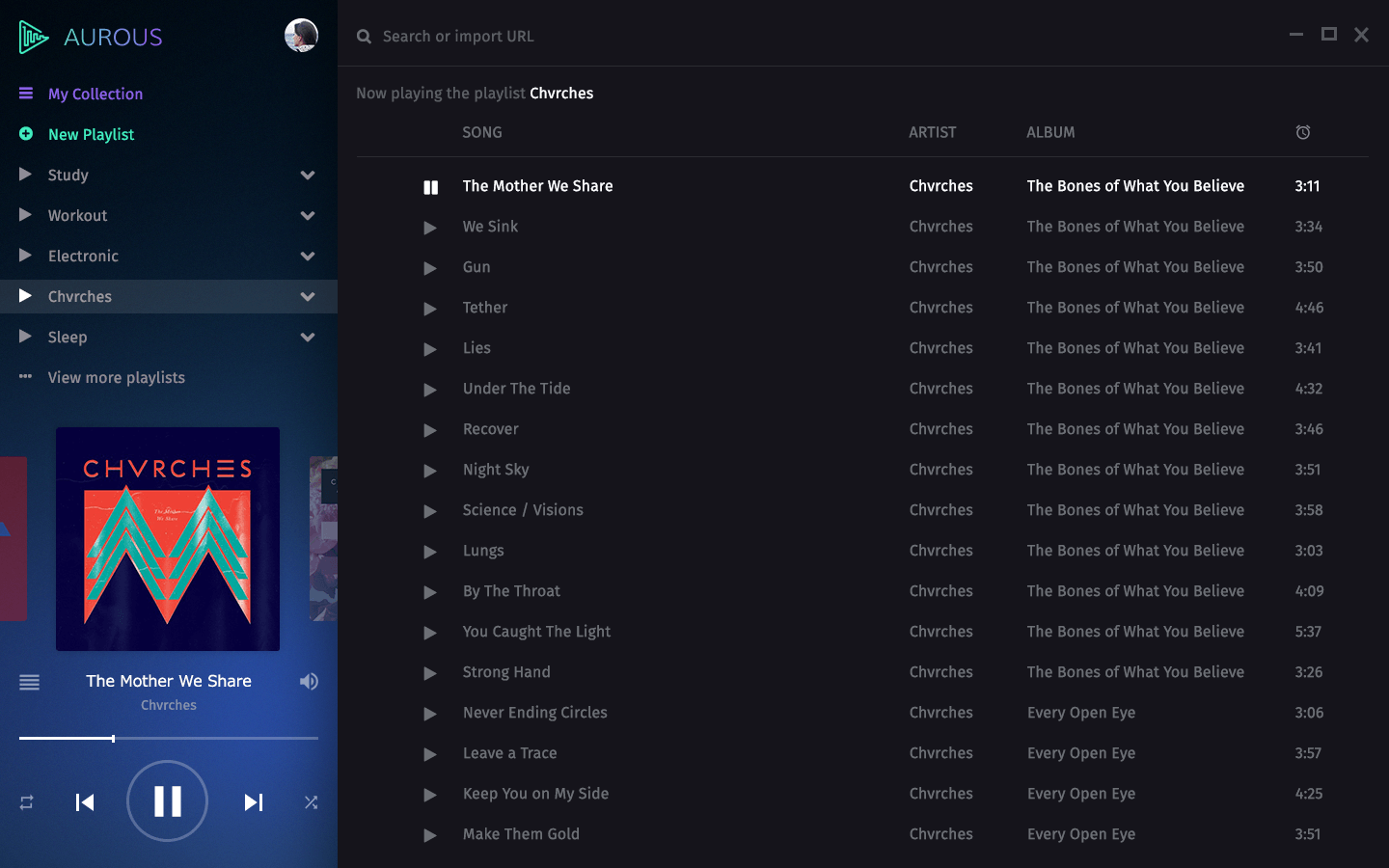
That was until yesterday, when I glanced upon this story about a new app called Aurous that’s set to make music piracy as easy as Spotify. Not that Spotify is hard to use, and of course, you can use it without paying – but it’s also not as perfect as it could be, with not all songs being available and no offline/download mode unless you pay. This is what Aurous promises to make up, that and to also be pain in the ass for the music industry.

Aurous

Aurous wants to make music piracy easier than using Spotify

The early alpha versions of Aurous, available on pretty much all the major platforms including mobile ones, is still lacking many of the features that makes Spotify really cool – like discovery and radios, so from a usability perspective, Spotify does still have a few cards up its sleeve, even for the free version.

And there’s the “good enough” factor to consider. While Spotify may not be perfect, it might be “good enough” for most people to not have to bother going down the piracy route, even with something as easy to use as Aurous. The same cannot be said for movies and TV shows – as good as Netflix is, it just doesn’t have most of things you want to watch. This is why Popcorn Time, a similar concept except for video content, is such a hit and such a disruptive force for the industry, whereas Aurous may never achieve the same effect (and notoriety).

High Definition

Speaking of offline/download mode, and following last week story about Amazon Prime adding this feature to its streaming service, Netflix has responded this week by confirming that they’re not considering adding the same feature.

New Netflix UI

No offline mode coming, says Netflix

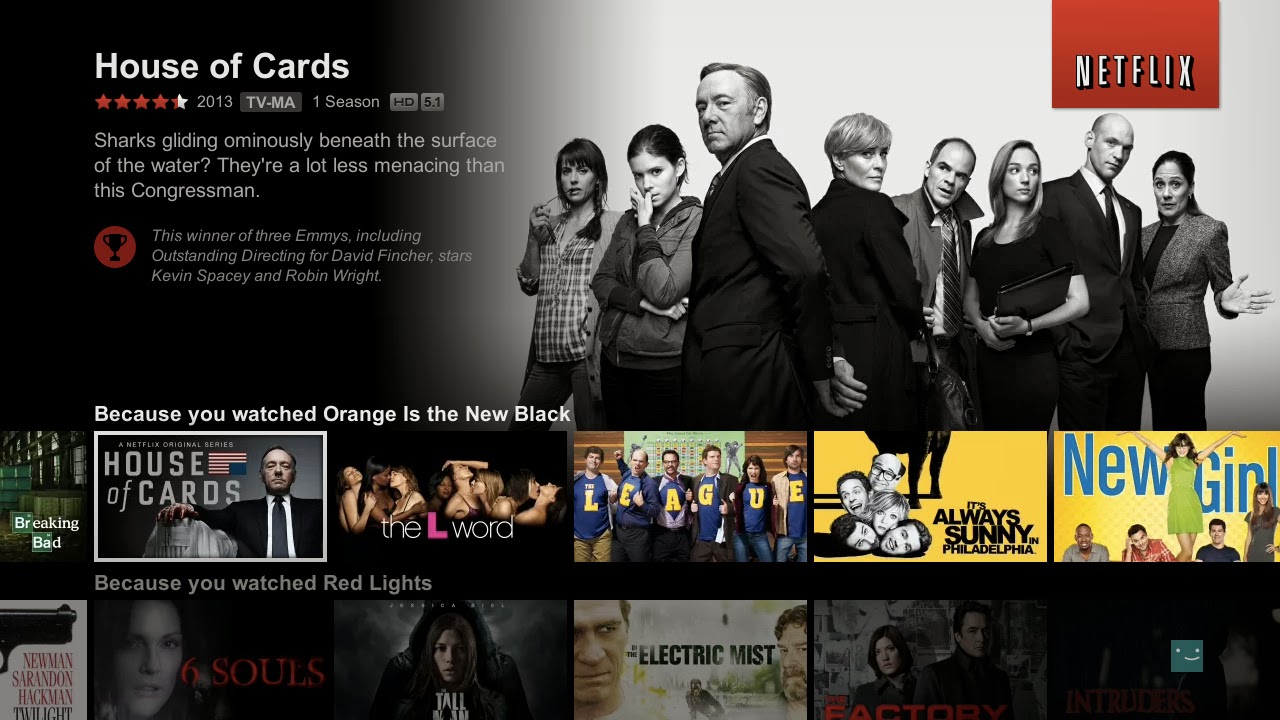
But I’m not sure I buy their reason for not adding this feature, which is that while users want the feature, most won’t use it because it’s too complex (since users will have to manage local storage, queue downloads, you lose the instant play ability, and since not all titles will support downloads, it adds to further user confusion). Users can always choose to not use the download feature if they find it too complex, so I don’t see what Netflix has to lose by adding the feature.

Actually, I do see what Netflix has to lose – money. Rights-holders will want more for the licensing rights to downloads, and licensing costs is something Netflix has been trying to reduce, either through producing their own original content and by ending content deals with the likes of Epix.

But users also have plenty of gain if they had access to an offline playback mode, even if it’s just for selected titles. Being able to queue up a few offline titles to watch could be a godsend for vacations to places with poor to non-existent Internet connections, for example. So perhaps Netflix should reconsider, and give users what they want (even if most might not actually use it, all the time).

Gaming

The August NPD results are in and the PS4 has won yet again. As usual, all the companies spun the results into something super positive for themselves (Sony didn’t have to do as much spinning, to be fair). Microsoft bigged up the Xbox One’s sales increase and its big release slate for the rest of the year, while Nintendo talked about the 3DS, Amiibo and Splatoon, but failed to mention the Wii U at all, which is probably for the best.

——

So that was the week that was. A nice and quiet week, hopefully leading up to a nice and not so quiet week next week. See you soon.

Weekly News Roundup (6 September 2015)

Sunday, September 6th, 2015

A lot of news this week, but as is the sign of the times, most of it had to do with streaming. The big news coming out of the IFA consumer electronics show in Berlin was Samsung’s unveiling of the world’s first UHD Blu-ray player. UHD is the next big hope for TV manufacturers, and maybe the last best hope for physical media.

Here’s the news roundup …

Copyright

The MPAA’s piracy paranoia has been highlighted again this week via detailed published on Amazon’s MPAA compliance page. With security guidelines that seems to have been taken from the CIA (with a few additional paranoia-fueled security precautions), the MPAA is taking no chances when it comes to having their content stolen (content, that Amazon helps to host on its AWS platform).

So baggy clothes are out, as are non transparent food containers (which you might use to hide storage devices). Random searches, body pat-downs are what employees at Amazon (those poor, poor souls) are expected to comply with, all in the name of preventing the very same movie leaks that happens all the time. I guess the MPAA must find the idea of pirates infiltrating Amazon, impersonating an employee (or maybe even actually getting a job there) so they can somehow hack into Amazon’s system, break through the encryption/security system that’s standard practice for hosting companies, all just to steal some pre-release content, all very plausible. Just as plausible as award season screeners DVDs that get sent to almost everybody getting ripped and put online? You’ll have to ask them.

Netflix Remote

Netflix 4K streaming getting ripped and uploaded online?

So instead of worrying about people putting USB drives in their sandwiches in non-transparent food containers, perhaps they should be more worried about Netflix’s 4K content somehow getting ripped and uploaded online, despite the use of a new copy protection mechanism (HDMI 2.0’s HDCP 2.2). Or maybe they should learn to stop worrying and love the bomb, the bomb in this scenario being things getting pirated. Okay, love is perhaps too strong of a word, but surely they must realise by now that if something can be used/played, it can be ripped. The sane approach would be to stop worrying about something that’s almost certainly going to happen, and learn to accept the fact and try to work around the problem. Then there’s the MPAA’s approach …

High Definition

Microsoft, Google, Netflix, Amazon, Intel, Mozilla and Cisco have joined forces. To do what? To come up with a new video codec, of course. So that’s software, hardware, networking, web services, video and content delivery and Internet software all covered, but despite this, the chance of something new coming in and taking over from HEVC, despite HEVC’s expensive and difficult to deal with licensing terms, appears slim. It’s very difficult to create a new codec and get the entire industry to accept it, especially when most, for all of its flaws, have already accepted HEVC and have adapted their strategy to deal with it. Then there’s the problem of patent claims, and it’s very hard to come up with any video codec these days without somebody trying to claim an existing patent from the myriad of technologies and concepts being used.

Good luck to them though, because the reality is that we really do need a viable royalty free alternative to HEVC.

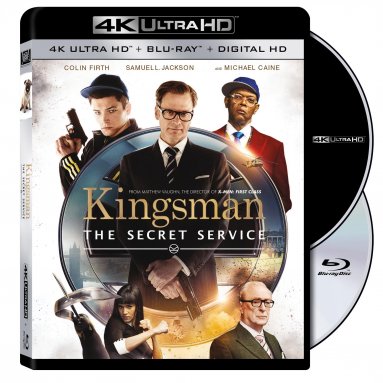
The Kingsman Ultra HD Blu-ray

This is what 4K Ultra HD Blu-ray cover art will look like when discs become available early next year

The problem of HEVC royalties will be apparent with Ultra HD Blu-ray discs that will start being available towards the end of this year, as HEVC is one of the supported codecs for the format. At the IFA consumer electronics show in Berlin, Samsung this week unveiled the “world’s first” Ultra HD Blu-ray player, although with it not being available until early next year, it may not actually be the world’s first Ultra HD Blu-ray player available on the market.

Fox also took to the same stage to announce their Ultra HD Blu-ray movie line-up. New releases starting next year will be simultaneously available on standard Blu-ray, Digital HD and UHD Blu-ray, with catalogue titles like Exodus: Gods and Kings, Fantastic Four, Kingsman: The Secret Service, Life of Pi, and X-Men: Days of Future Past all being made available on the new disc format.

It’s difficult to predict whether UHD Blu-ray will be a success or not, give the hard time Blu-ray is having at the moment and the public’s growing predilection towards all things digital. So despite the big IFA show in Germany, a lot of the news stories I’ve written this week has been about streaming (and most streaming news these days gets published on my new site, Streambly). For example, Amazon’s move to allow offline playback for selected titles in their streaming library, I think, is huge news. It’s the one thing that still bugs a lot of people about streaming services, that there’s no easy way to access the content you’ve subscribed to when you’re away from a reliable Internet connection (or if your home Internet is temporarily down). To be honest, I’m surprised rights-holders allowed this to happen, since this really blurs the lines between streaming and downloading, and I would have thought this kind of thing would eat into their, and Amazon’s, transactional VOD and digital sell-through business.

Amazon, Netflix and Hulu Plus

Hulu, and Amazon too, adding new features, content to compete with Netflix

The other big news is Hulu’s addition of a $12 no-ads plan, which finally makes it acceptable to many who finds the idea of paying money and still having to put up with ads detestable. With Hulu also signing deals left and right – including stealing Epix from Netflix, which will bring a lot of hit movies to Hulu to strengthen the one area that Hulu is extremely weak on at the moment – it looks like Hulu is set to go head to head with Netflix full on. $12 might be higher than Netflix’s $9, but you do get a whole host of new TV shows with Hulu that you would otherwise have to wait a year or more for on Netflix, so if Hulu can get their movie offerings up to scratch, they may have a chance.

Gaming

So much for that rumour. The Xbox One Mini is not real. We now know it’s not real because Xbox boss Phil Spencer tweeted “not real” when asked about the possibly of a Blu-ray-less Xbox One. Good to know.

——

That’s it for this week. Remember to keep an eye on Streambly for streaming news (although most will only be relevant to Australian visitors). See you again soon.


Weekly News Roundup (16 August 2015)

Monday, August 17th, 2015

I’m back from holidays! I would say I feel recharged, but after a week of catching up on work (got back on Monday), my batteries are edging towards the “please connect your charger” level again.

There’s lots to go through, so let’s get started!

Copyright

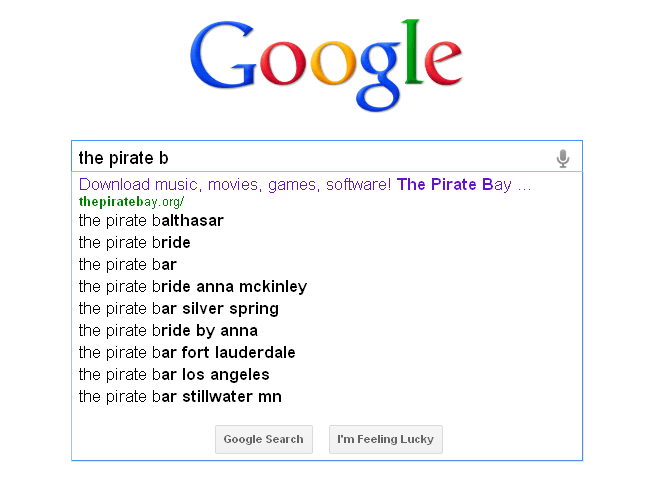
Google Auto-Suggest

The MPAA wanted to attack Google via an orchestrated PR campaign

It’s not surprising at all to say that the MPAA doesn’t like Google. But even I was surprised at the level of animosity between Hollywood and the world’s most popular search engine, based on the MPAA attack plans that Google has now managed to obtain (via their lawsuit against Mississippi Attorney General Jim Hood). The PR blitz included a Today show segment, ad editorial in the Wall Street Journal warning of a piracy induced share price crash, and even getting a major Google shareholder to come out and attack the company’s lack of action on tackling the piracy problem. All prongs in the attack would then reinforce each other to give the appearance that there’s a serious problem with Google, a problem that Google does not want to address.

Except of course, Google is addressing the piracy problem, and doing it at an amazing rate of 18 link take-downs per second. It’s apparently still not fast enough for Hollywood.

This is the kind of well orchestrated lobbying campaign that the MPAA are well known for. If only they devoted their energy and expertise to, I don’t know, actually tackling the reasons behind piracy (lack of availability, lack of user friendliness and perceived lack of value), maybe they don’t need Google to take down more than 18 links every second to stay in business (although business these days seems to be doing pretty well).

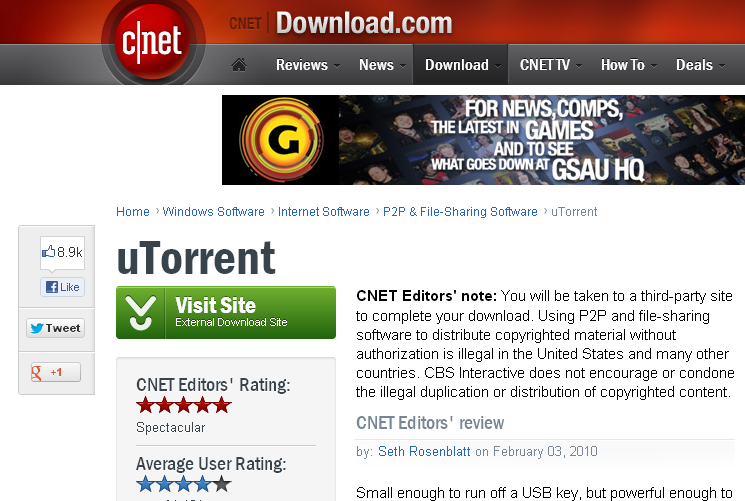
CNET Download.com uTorrent

CNET under fire again, this time not for offering torrenting tools, but for YouTube stream rippers

Not to be outdone by Hollywood, the music industry is also launching renewed attacks on another well known web entity. The RIAA accuses CBS owned CNET/Download.com of providing downloads for tools that helps users pirate music. Specifically, the RIAA says that Download.com hosts YouTube rippers and other video soundtrack rippers, which can be used to rip the music from legally uploaded music videos.

This, the RIAA says, is simply not permissible, because it would allow users to use content in a way the music industry did not intend them to use. Imagine playing a music video, but with your eyes closed – this was not how the recording industry intended you to use the music video, and therefore, it’s just not on!

But seriously, YouTube and other online videos are not protected by DRM (something the RIAA may want to do something about in the future), and so ripping the audio from them is trivial. And even if there was some way to protect the audio track from being ripped, users can always use the tried and tested method of “home taping” (it’s the method that “nearly” killed off music, once upon a time)that they’ve been using since the day of cassette tapes (ask your parents if you don’t know what they are).

Universal Anti-piracy Ad

Some hyperbole is always expected when it comes to the music industry and their anti-piracy efforts

But I have to ask, just how much money is the music industry actually losing to YouTube ripping? From the way the RIAA is acting, it does seem like they’re losing an arm and a leg (and other body parts) to the problem, as otherwise why would they bother CNET/Download.com again when they’ve already lost a court case against them over LimeWire and BitTorrent software? This anti-piracy ad campaign by Universal Music, used in Brazil in 2007, provides some insight into how the recording industry views the piracy problem (although one could argue that it’s the record companies are that liberally, but figuratively of course, taking body parts from actual musicians when it comes to money earned from recorded music).

I can’t find the news story now, but I read somewhere that a recent number one recorded hit had the lowest earnings ever. This does seem to suggest that piracy may be having an effect on revenue, but the revenue model for the music industry has changed drastically since the introduction of digital singles (for the worse for them, but better for consumers), any effect piracy might be insignificant compared to this sea change. Change sometimes isn’t good, or at least not good for everyone, and it’s not always easy or possible to adapt. Just ask Blockbusters and Columbia House!

High Definition

Just when you thought the next-gen codec wars was settled, with HEVC being crowned the winner, along comes another contender, perhaps from an unexpected source. Cisco is very well known for being big in networking, but for video codecs, it’s not one company you would naturally think of. But that may change soon, with the company announcing they’re working on a new next-gen codec to compete with HEVC/H.265 – and best of all, it will be open source and royalty free.

Now, admittedly, we’ve been here before with Google’s VP9 – and if Google with their YouTube and Android can’t get their own codec to be a viable alternative to HEVC, then things are going to be doubly difficult for Cisco. However, Cisco is working with the Internet Engineering Task Force (IETF) and their NetVC workgroup, and seem to be following a process that will lead to more community involvement than the process Google went with. So there’s a hope that something more solid, and less tied to the efforts of one particular company (Google), might emerge from all of this and become a true viable open source, royalty free alternative. Fingers crossed.

——

Actually, that wasn’t as much news as I thought. There’s more for Australians streaming fans over at Streambly though. There will be more next week, of course. See you then!