Archive for the ‘News Roundup’ Category

Weekly News Roundup (11 May 2014)

Sunday, May 11th, 2014

It’s my fault. I totally forgot to mention the International Day against DRM, which took place last Tuesday, in last week’s WNR. I don’t know about these types of protests though. Most people are aware of DRM, most people are against it, so it’s not really an issue that’s crying out for more public attention. It’s like having a protest day against murder – ultimately it doesn’t really change anything. What will change things is if we modify our buying habits to reflect our disdain of DRM, but that can only be possible if there are legitimate choices. And with the film and gaming industries having a firm control on every step of the distribution process, it’s hard to see it happen unless a company like Apple or Amazon takes the brave step to go DRM free, like what Apple did in respect to iTunes music.

Oh, and Happy Mother’s Day to my mum and all other mothers out there!

Let’s get started on the news roundup.

Copyright

Those naughty Finns. You don’t really hear a lot about Finland in the news (well, not until Putin launches his Finland invasion anyway … I kid, I kid), but it is clear now they’ve all been busy, staying under the radar, and downloading tons of music (and some movies). $67 million worth on average for each person that lives there, apparently.

Spotify Logo

Finns need to download less pirated music, and use more Spotify, perhaps

A study of 6,000 random Finns, aged from seven to 84, found that on average, each of the 6,000 downloaded more than 2,900 pirated songs, and 90 movies. The $67M figure comes from multiplying the 2,990 “works” with the $22,500 per work fine that infamous perennial college student Joel Tenenbaum was slapped with. And yes, I know that’s not how it works, that lawsuits tend to take only a small sample of all possible acts of infringement and slap huge damages on these as a way of avoiding having to prove each of the 2,990 or whatever acts of infringement (which is what exactly statutory damages are used for). But you do have to argue that if Tenenbaum was guilty of $675,000 worth of piracy, then that’s at least what each Finn (on average) owes, based on the result of this study.

The study also found that heavy (as in the number of movies they download, not as in weight) movie pirates were more likely to pay for stuff than the more committed music pirates. Could be a statistical anomaly though, as they found movie pirates were also more likely to be wealthy. I would conclude that wealthier people are always more likely to pay for stuff, any stuff, than people who have no money to spend at all. But I’m not an economist or statistician.

The study also found that “monetary savings and quality perceptions” played a bit part in influencing piracy habits, but you have to pay to read the full study, and I’m definitely one of those that have no money to spend at all (but I’m not a big music pirate, I swear). It would be ironic is someone pirated the full text of the study though!

Three Strikes

Three strikes comes to the UK (becomes four strikes, and the strikes don’t really do anything)

So with so many pirates not just in Finland, but all the other ‘lands’ as well, such as England, Scotland and Walesland, something effective must be done about these dirty miscreants! Or we could just send them letters.

The UK’s version of three-strikes (well, four-strikes technically) does not have much bite compared to other similar regimes around the world. It doesn’t have the French’s Internet bannings, nor the varied punitive options under the U.S. system (which precludes bannings). It only has letters, four of them, after which no more letters will be sent, which I guess means the piracy problem is solved at that point.

The letter’s tone will increase in harshness apparently. Not sure what this means from a British perspective, but I hope at least one of the letters will feature the phrases “careful now” and “down with this sort of thing”.

The total waste of time will at the very least require financial input by the rights holders themselves, up to 75% of the set up costs, and tens of thousands of pounds per year to ISPs. As part of the agreement, the rights holders have the right to kick up a fuss and ask for harsher penalties (a fifth letter?) if this thing doesn’t bring down the piracy rate. Which it won’t.

Gaming

I really hate to bang on about the Wii U, but I had to cover the news that Nintendo has just posted a $457 million loss on the back of poor Wii U sales, the third year in a row that the company has failed to delivery a profit. The company had already revised down its Wii U sales forecasts for the Japanese fiscal year that ended on March 31, from the originally very optimistic 9 million to only 2.8 million – an estimate that still ended up being higher than the actual sales figures of 2.72 million.

Wii U

Wii U sales for the last Japanese fiscal year are only a quarter of what Nintendo had hoped it would be

For those keeping count, and I suspect you’ll have to be firmly in the Sony or Microsoft camp to actually want to keep count, this brings the Wii U’s lifetime numbers to 6.17 million. In comparison, the PS4 has already sold 7 million units after the first 6 months, and the Xbox One will eventually get there by the end of the year at the latest. More disappointing for Nintendo was that game sales, which has “high profit margins”, failed to materialise.

If it wasn’t for the 3DS, Nintendo’s fortunes would have been even worse. Nintendo forecasts 3DS sales to slow this year, with the Wii U selling a bit better at 3.6 million units. Somehow this will bring in an operating profit of $394 million for this current fiscal year. I think perhaps Nintendo is being a bit too optimistic again!

——

That’s all folks. Just let me check if there are any other days of protest going on next week that I should inform you of. Hmm … nothing comes to mind. See you next week!


Weekly News Roundup (4 May 2014)

Sunday, May 4th, 2014

Welcome to another WNR. It’s getting colder here where I am, winter is certainly coming (in the southern hemisphere). Makes it just that much harder to get work started, especially on a Sunday.

Let’s get started anyway.

Copyright

Aereo Antenna Array

Aereo’s dime sized antennas – smart or too clever for their own good?

Trying to abide by copyright laws in the digital age can be tricky. Or rather, there are some tricky ways you can try to obey the letter of the law, if not exactly in spirit. Which is what Aereo’s business model seems like to me – completely legal (as tested in court, twice already), but does not quite pass the smell test.

For those that don’t know, Aereo allows subscribers to stream TV channels to their mobile devices, and even record programs to a cloud based DVR. Aereo gets around the “problem” of paying for a broadcast or re-transmission license by providing each subscriber with their own dime sized TV antennas, and each antenna is only used to provide content to one unique subscriber. So instead of broadcast or re-transmission, there’s a 1-to-1 relationship between each received signal and streamed or recorded content. It’s a technically sound and legal solution, but it’s seems to me like a ridiculous solution intended to be used as a loophole, and not a genuine piece of innovation.

Still, the only outcome I would want to see in the much publicized Aereo Supreme Court case is a victory for the start-up. With the lower courts and the appeals court already siding with Aereo, the Supreme Court would have to set new precedent, and do so in an incorrect way (not the first time with this court), to side with big business interests (again, not the first time with this court).

——

Going to the cinemas and not get accosted by law enforcement is getting harder and harder these days it appears. While wearing a pair of Google Glass to the cinema (even if it is turned off, and only using it as normal prescription glasses) might be the very definition of asking for trouble, having a brick slider phone in your pocket is surely not going to attract any trouble, right? Well, an elderly woman in Provo Utah was not so lucky, accused of trying to record a movie with her “classic” phone and thrown out into the street for her troubles.

LG KC780

Is a slider phone like this a dangerous movie piracy tool?

The woman says the phone was in her pocket after her husband left half way through the movie and handed it to her. She was also using a closed captioning device, which may have been mistaken for recording equipment by whoever dobbed her in.

For me, even if she had been recording the movie on her phone, as long as it’s not disturbing other cinema goers, is it really such a big deal. The quality of the recording on a handheld phone, especially a classic slider style brick (probably only has a recording resolution of 640×480), is no threat to studios worried their films will end up online. The fact that the police officers who arrived to throw her out apparently did not find anything incriminating on the phone suggests no recording took place anyway.

So it looks this is a case of more collateral damage in the paranoid driven War on Piracy. Going to the cinemas has never been so dangerous, and it almost makes you wanna, I don’t know, download the movie and watch it at home or something. I mean, that’s what the studios are trying to achieve right? To scare people from going to the cinemas and making piracy look like the more attractive choice? No?

High Definition

Sony has issued the strongest indication yet that physical media may be on the way out. The company wrote down nearly a quarter of a billion dollars worth of assets in its disc manufacturing business, including Blu-ray manufacturing, due to slowing demand. You can blame Netflix for that, I guess.

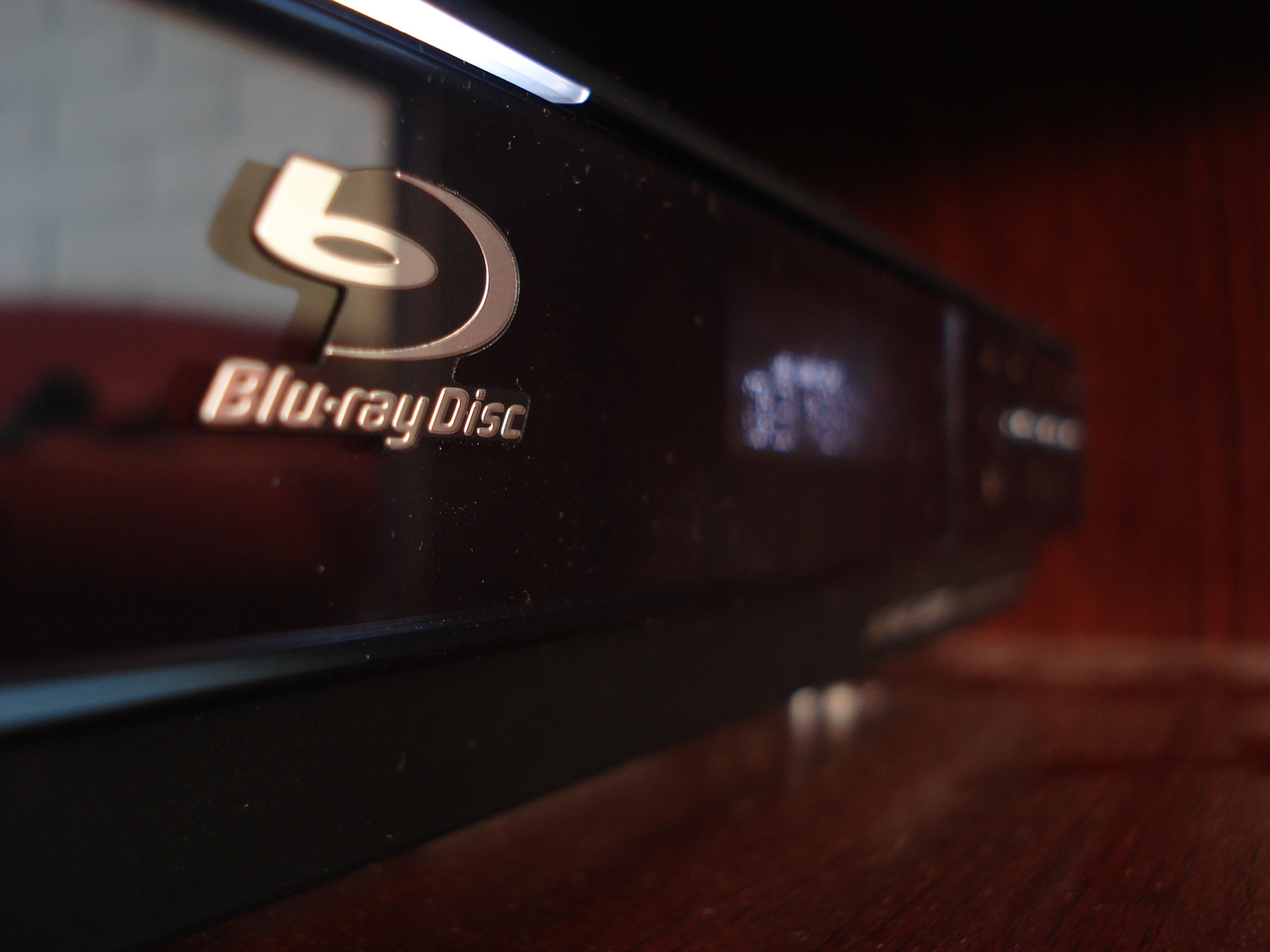
Blu-ray Player

Blu-ray is unlikely to reach the sales highs that DVDs once enjoyed, but it’s not going away any time soon

Those that follow our weekly Blu-ray sales analysis will be able to spot the trend of a rapidly slowing DVD business, and a slower than expected take up of Blu-ray (unable to make up for the losses in DVD revenue). While Blu-ray is still growing in the US, it’s doing so slowly. Much of the growth in the home entertainment industry is coming from purely digital services like Netflix. And while both the PS4 and Xbox One is using Blu-ray discs for distributing games, even the gaming business is moving towards digital streaming and downloads. Sony has invested heavily in its digital distribution networks in recent times for both its media and gaming businesses, a sign that the company is fairly certain its predictions are correct.

So after considerably effort to win the HD format wars, which looks to have at the very least severely damaged the PS3’s chance to win the last generation wars, has Sony’s support for Blu-ray been worth it? While Blu-ray demand will not grow as quickly as the company had wanted, there is no evidence that Blu-ray is dying (how can there be when its demand is still growing?). And with Microsoft now firmly in the Blu-ray camp with the Xbox One, it’s pretty clear that Blu-ray will take over from DVDs as the dominant disc format. That, however, may be a hollow victory as people move away from discs altogether.

So Blu-ray’s peak will be a smaller peak that that of DVD’s, but it will still be around.

Well, I’ve definitely passed my peak for the day, so it’s time to call it. See you next week!

Weekly News Roundup (27 April 2014)

Sunday, April 27th, 2014

Welcome to another WNR. I usually write this intro after I finish writing the rest of the article, and I’ve just realised all of this week’s stories are about giving people what they want (or not giving them what they want). Unsated demand creates services like Popcorn Time, and this week, Zona. It also forces people to use VPNs to access US online services like Hulu Plus. And Nintendo failed to take into account what people wanted when they designed the Wii U. Give people what they want. It’s not that hard!

Copyright

Zona

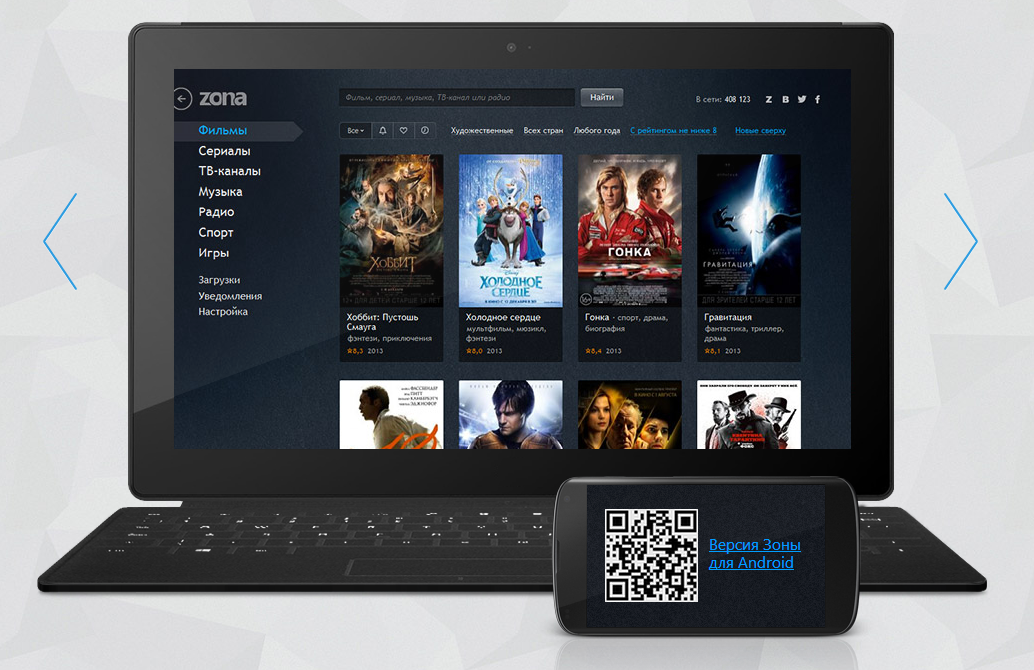
Zona: Combining the best of Netflix, Hulu Plus, HBO Go, Spotify and many others into a killer piracy tool

Last month we had Popcorn Time. This month, it’s all about the Zona. If Popcorn Time as the Netflix of piracy, then think of Zona as Netflix combined with Hulu Plus, with a dash of HBO Go, stir in Spotify and you’re about half way there to what the new pirated streaming and download tool Zona is all about. There’s also live TV and sports streaming, millions of music tracks and streaming radio. And even porn! There’s also Android support, and DLNA streaming to enabled TVs.

With a super slick interface, and features that you can’t even get on Netflix, tools like Zona might just give Hollywood and the music industry something new to keep them awake at night. The greatest barrier to mass adoption of piracy has always been the technical hurdles, but if tools like Zona can make streaming and downloading easier than using iTunes, then it’s likely to reach a whole new group of users. It’s the MPAA and RIAA’s worst nightmare, and what was always going to happen due to the arms race they’ve been building against the pirates. Actually I take the last statement back, because the MPAA/RIAA’s worst nightmare would be a tool like Zona, but totally decentralized and anonymous. No one to sue? Scary!

No doubt the likes of the MPAA, RIAA and the law enforcement friends are ready to dial up the pressure. But the Russian based Zona might just find itself in a fortunate position, what with Russia unlikely to be very receptive of US demands at the moment, whether it’s the situation in the Ukraine, or copyright stuff.

——

Oh crap! How else am I gonna get my fix of the excellent Review show now that Hulu has started banning VPN access. They’ve not yet made a move against DNS geo-unblockers like the one I’m using, but it may simply be a matter of time.

Obviously Hulu are under pressure from rights holders (well, I mean they’re owned by rights holders too) to stop overseas viewers from accessing the delicious new release goodness, but it appears the network ban has also blocked US subscribers using VPNs for piracy purposes. Collateral damage, I guess.

I’m sure an eventual workaround will be invented to allow people like me a taste of what those lucky enough to be in the US take for granted, or even better, if they don’t ban DNS geo-unblockers at all.

It’s all about greed though. Greedy studios looking to extract as much money as possible (but unable to do so in their most competitive markets) overcharge people overseas or deny them speedy access to content. Then when people go out of their way to try and pay for more affordable content, studios aren’t happy about that either (because in their mind, if 100,000 people in Australia are paying Hulu $7.99 per month instead of $79.99 per month for overpriced local services, then that’s $7.2 million they’re “losing” every month). Except by denying them the cheaper services, people won’t just fork over the cash for the overpriced ones – they’re just flock to piracy (see Game of Thrones and Australia). It’s a lose lose for everyone, but it’s the direction that content holders are always taking.

So. Hulu VPN banning: I give it half a star (because I cannot give it zero stars).

Gaming

Last week I asked if the Xbox One was in trouble. Not “Wii U” trouble I said, but trouble as in losing their dominance on the U.S. video games market. This week, I shall expand upon what exactly I meant by “Wii U trouble”, and it does not make good reading for Nintendo and fans of their consoles.

Just how much trouble is the Wii U in? To say that it’s not selling as well as the Wii is probably the understatement of the decade, but that was to be expected – the Wii was a freak of nature, a one off perfect storm of the motion and casual gaming crazes, taking advantage the then current situation where you had the overpriced PS3 (at that time), and the noisy and unreliable (at that time, too) Xbox 360. So if I told you that the Wii sold ten (10!) times as many units as the Wii U during the second March for both consoles (having both being released in November a year and a half prior), that’s probably not too surprising.

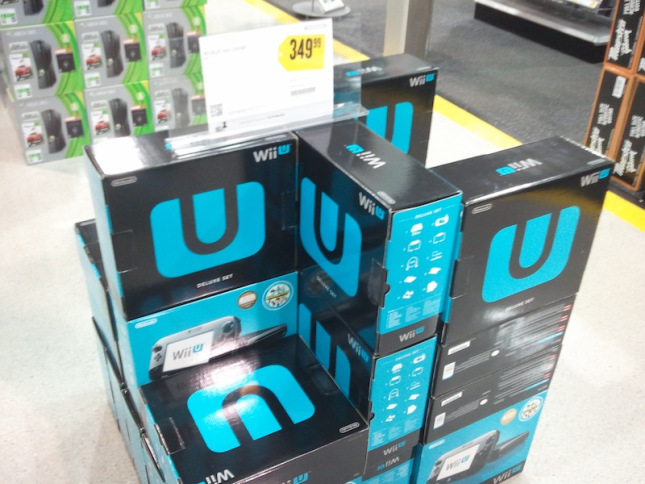
Wii U Boxes

Wii U sales trail the GameCube at the same stage of their sales cycles

But if I were to tell you that the much maligned GameCube was more than twice as popular as the Wii U, again during its second March (and again, after a November release from the year before the last), it does provide some perspective as to just how much trouble the Wii U is in.

In their second Marches, the Wii sold 721,000 units and the GameCube managed 165,000. The Wii U has just managed 70,000.

It’s interesting to note that the Sega Dreamcast was cancelled at the end of its second March, having sold more units during its limited lifetime than the Wii U during a similar time frame. The Dreamcast’s cancellation had more to do with Sega’s financial woes, not something Nintendo has to worry about, so there’s no suggestion that Nintendo will cancel the Wii U. What might happen is that a new console will be brought out to try and get Nintendo out of this hole, and much sooner than expected. A console that could compete on price and performance with the Xbox One and PS4, perhaps, with Nintendo’s own special touches. Or Nintendo could keep on digging and hope for the best.

I know which I’d choose.

——

That’s it for this week. Hope you’ve enjoyed this WNR, see you in seven days!

Weekly News Roundup (20 April 2014)

Sunday, April 20th, 2014

Happy Easter! May you have success hunting for the chocolate flavored seeds of a perculiar non-mamalian species of Lepus curpaeums. Another slow week, I guess Easter had something to do with it.

So let’s get on with it then.

Copyright

BitTorrent Logo

BitTorrent Inc under attack from “copyright monetization” firm Rightscorp

Not content with the goodwill garnered from threatening downloaders with lawsuits in order to extract “pre-trial settlement” fees, “copyright monetization” firm Rightscorp has again made headlines this week against after its COO Robert Steele launched a broadside at BitTorrent Inc. No, not the BitTorrent network and its piracy connections, but the company that invented the network, and also publishes the uTorrent client.

In a Facebook rant, Steele accused BitTorrent Inc of “driving and facilitating piracy” and says the company is profiting from piracy in the same way the now defunct Limewire and Napster were. Strangely, Steele also attacked the decentralized architecture of BitTorrent, in particular the use of trackers, which he says was a way for BitTorrent Inc to avoid the kind of legal trouble that came out of LimeWire and Napster’s centralized systems.

Of course, it’s BitTorrent’s decentralized and public trackers that allows companies like Steele’s own Rightscorp to make their money, money they could not make if piracy also did not exist on BitTorrent networks. Sounds like to be me they should be thanking BitTorrent Inc and the file transfer protocol they invented.

And that’s what BitTorrent is – a file transfer protocol not unlike FTP or HTTP. The latter two can also be used for piracy, and they are (and FTP was certain the pirate’s choice back in the early days of the ‘net’). But uTorrent is really just a client for this protocol, not unlike the Chrome browser for HTTP and FileZilla for FTP. People download heaps of pirated stuff via Chrome every day, all un-monitored by the way by companies like Rightscorp, so where’s the outrage?

I’ll be the devil’s advocate for a second and make the argument that the proportion of legal data transfer via uTorrent is a lot lower than the proportion of legal data transfer for Chrome or FileZilla, and that despite there being tons of legal stuff available on BitTorrent networks, most people use it to download pirated content. But at the end of the day, BitTorrent just an unsexy file transfer protocol, and it’s silly to be so emotionally charged at something so boring, especially if you’re making money off people using it in the wrong way.

So it’s probably not great timing for BitTorrent Inc that another big piracy story of the week was Game of Thrones breaking yet another BitTorrent downloading record, with 193,000 simultaneous file sharers for one unique copy of the second episode of season 4. The previous record, set by last year’s season finale, was around 170,000. The second episode, which features the heavily anticipated “purple wedding”, also easily beat the season premier’s 140,000. Remember, these figures are only for the most active torrent, as usually there are dozens of different torrents for the same episode.

Australians were again the most enthusiastic downloaders, followed by the U.S., U.K., Canada and The Netherlands. The high price of watching the show legally here in Australia not only makes it not affordable for some, I think it also gives the rest (even those that can afford it) moral justification for pirating, whether rightfully or jofferily.

Gaming

Is the Xbox One in trouble? Not in trouble as in “Wii U” trouble, but trouble as in Microsoft losing their grip on the only market in which their console is the dominant force? Titanfall was supposed to be the title that allowed the Xbox One to gain supremacy over the PS4, but while it was the best selling game for March, the PS4 still managed to retain its crown as the most popular console in the U.S for the month (according to the latest NPD figures). That’s three month in a row.

Xbox One Forza 5

Is the Xbox One in trouble? The early sales results seems to suggest so …

The U.S. was the only major market really where the Xbox 360 comprehensive beat the PS3. Worldwide, the situation was mostly the opposite. But after Microsoft’s DRM SNAFU and pricing stupidity cause by a bad case of force-Kinect-on-gamers-that-don’t-want-it-itis, the Xbox One looks like to have lost the N.A. market. It’s still very early, but the trend is pretty clear and the Xbox One will find it difficult to shake its image of being an inferior console that’s also $100 more expensive (even if the reality isn’t nearly as dramatic).

An early price cut could be a double edged sword though. It could get the Xbox One back into the game, but it could also reinforce the idea that the Xbox One is a bit of a loser, one that is struggling to fight off the all powerful PS4. I still vote for a price cut, mainly because it’s good for consumers and there’s nothing much else Microsoft could do at this time. If they could somehow get rid of Kinect and then lower the price to be $50-100 lower than the PS4, then that could be a game-changer. Because it’s still a very powerful game console that has a lot of great media features, and one that will get all the good games and then some, let’s not forget.

As for the other consoles, the Wii U is still struggling at around 70,000 units sold, behind the Xbox 360’s 111K. The last-gen is falling away quite spectacularly sales wise, which is a lot to do with the perceived value of the new-gen consoles (which are a lot cheaper than equivalent models from the last gen this early in its life cycle). I think we’re still awaiting some must-have games before next-gen sales skyrocket – not necessarily exclusives, but games that really show off what the next-gen is all about.

——

That’s it for another rather short WNR. Have a Happy Easter, don’t eat too much chocolate, and see you in a week.

Weekly News Roundup (13 April 2014)

Sunday, April 13th, 2014

Oh Heartbleed, you stupid annoying thing. While none of Digital Digest’s servers used the vulnerable OpenSSL versions that is now responsible for the biggest IT crisis since the Y2K bug, you’d have to be a under-rock living Luddite to not have been affected by this horrendous bug, no matter how much you try to convince yourself that everything is still fine. The weird side effect is that people now generally know much more about OpenSSL and overflow bugs than they need to (and if you need a quick refresher, refer to xkcd).

There were other news too!

Copyright

Game of Thrones: Season 4

A new season of GoT: More nudity, larger dragons, and more pirates (of the downloading variety)

The only thing more predictable than the far too frequent appearance of gratuitous nudity in Game of Thrones episodes is the fact that a new season of it will break piracy record, and the season 4 debut did not disappoint. 300,000 simultaneous downloaders at its peak (not to mention the million downloads that took place in less than half a day), up from 160,000 a season ago, is a feat almost as amazing as the building of The Wall.

Australia once again led all other countries in piracy, the nation with 0.3% of the world’s population managed to be responsible for 11.6% of all GoT downloads. You can thank our one and only greedy cable provider, and their exclusive airing deal with HBO, for this. The deal prevents all other digital platforms, including iTunes, from providing access to new episode until after the entire season has finished airing, some months away from now. Sacrificing availability for short term profits seems extremely, well, short sighted for me – it encourages a culture of piracy that will be harder and harder to break. I just hope HBO got enough money out of it to make up for all the money they just lost on preventing people from buying season passes on iTunes.

And also expect this record to be broken again for the season finale.

——

MegaUpload Logo

It’s been a while since I’ve had to use the Megaupload logo, but it’s not everyday the MPAA/RIAA sues a dead website

Either they’re really desperate, or its more of a “kick ’em while they’re down” situation, depending on who you believe. The MPAA and RIAA have launched separate civil lawsuits against the very much dead and buried Megaupload, claiming millions in damages.

If you believe the spin by Megaupload and Kim Dotcom’s legal people, then this is simply a reaction to the stalled criminal case against Mega. If you believe the pressers from the MPAA and RIAA, then it’s about recouping the billions and billions lost due to piracy on a massive scale yada yada yada.

We all know that the DoJ has been sharing data with the MPAA and others (legally, via a secret court order, but still a morally questionable act of using tax payer resources to benefit lobbyist buddies), so is this the MPAA/RIAA swooping in to save the DoJ’s troubled case against Megaupload? Most of these civil cases are about shutting down a site, but with Megaupload already down and out, so is getting some of that sweet, sweet (frozen) Megaupload treasure the MPAA/RIAA’s main objective?

I for one find it hard to believe that the MPAA/RIAA would go to all this trouble just for the money, and since it’s not about shutting down Megaupload, this all seems to be about a victory for victory’s sake (and I would think that, given Megaupload isn’t exactly in a position to put up a staunch defense, a win here is almost guaranteed). A win here would relieve the pressure on the DoJ to win their criminal case, so this would be my guess for the motivations behind these lawsuits.

Just friends helping each other out.

High Definition

Netflix has officially started streaming 4K, but many early adopters will miss out because their TVs do not support the HEVC/H.265 codec that Netflix will be using. Most TVs announced for release this year will support HEVC/H.265, but most sets purchased before won’t support the advanced codec. It’s part of the risk of being an early adopter, but this one kind of bites because of the short time span between 4K and HEVC adoption.

Samsung 4K TV

Some 4K early adopters will rue Netflix’s decision to use HEVC for the 4K streams, as older TVs do not support it

Of course, with Google throwing their VP9 codec into the hat for serious consideration as a 4K codec, the situation could get even messier. So for those thinking about 4K, it’s probably still not quite the right time to buy in yet, even if you have the cash. Best to wait until the codec situation is resolved, and also to ensure that the TV set you want to buy has HDMI 2.0.

Then there’s Blu-ray 4K discs (I’m not talking about those “mastered in 4K” discs, which are still very much 1080p), which possibly means new hardware requirements for the TV (although I think HEVC + VP9 + HDMI 2.0 is probably all that’s needed, other than the new Blu-ray 4K player you’ll need to buy).

For now, 4K content is limited to House of Cards and a few nature documentaries. A nice teaser of the potential of 4K, but that’s it really. Most new films will have a 4K master floating around somewhere, and so it’s not inconceivable that Netflix’s 4K library will start growing exponentially once studios start providing the content.

So wait another year before seriously considering buying a 4K TV, is my opinion. All the technical stuff will have become standardized, and the content situation will have dramatically improve too.

That’s it for the week. Stay safe out there on the interwebs, it’s getting scary out there!