Archive for the ‘Gaming’ Category

Weekly News Roundup (19 April 2009)

Sunday, April 19th, 2009

After last week’s WNR non starter, there’s definitely more news this week. And big news as well, as you will read later on. I posted something that looked very much like an advertorial for Amazon. But no, I was sadly not paid to write that piece, and while I do earn affiliate credits, you’ll find no such link in that particular blog post. What I posted is what I really feel, due to a recent incident involving a slightly damaged item, and I think it’s very hard these days to find a company that values the customer experience more so than the bottom line. 

Copyright

Let’s start with the copyright news. The big news of the week, and you will most likely have heard about it already, is of course Macrovision’s purchase of metadata firm Muze. Not the big story you were expecting huh? I guess I’m just a little hesitant to get to what is essential pretty bad news for everyone (we’ll come back to the Macrovision story later on).

The Pirate Bay: found guilty, but not the end of the story

The Pirate Bay: found guilty, but not the end of the story

In mid-week, the news was that a verdict was due on Friday for the The Pirate Bay trial. Everyone eagerly awaited this news for the next few days, but when it hit, and although you can’t say it’s a huge surprise, it was still somewhat of a shock. The guys of The Pirate Bay were found guilty, each sentenced to a year in prison and fined $3.6 million. Was there ever a chance of another decision? But even so, the severity of the judgement meant that it was like a MPAA wet dream. But all is not lost. Cynthia, our forum’s Swedish expert, explains just what will happen next in the Swedish justice system:

The first instance in the Swedish trial system is based on one Judge + 3 political elected “ordinary” people. The next step is to go to the higher court and that one is 3 judges + 2 political elected “ordinary people”. Most certainly this case will also end up in the highest court and in that one is at least 9 judges. 

So the final verdict will take some years to come and during that time it looks as it will be business as usual from TPB.

So this is by no means a final verdict. In fact, even has the TPB guys won, the decision would still have been appealed all the way to the highest court and it might be years before we finally know what the outcome could be. For now, TPB remains as it is, still offering thousands of torrents and a huge user base that is slowly moving towards anonymous file sharing, which will become impossible to track. So round one goes to the MPAA (or the Swedish equivalent/puppet organisation), but this one could still go either way.

Going back to the Macrovision story. It appears they’ve purchase Muze, which collects and makes available meta data (or descriptive data) for media such as DVDs. What this means is that Macrovision could incorporate this into DVD players, and it would open up a new revenue stream for the company by putting in ads when you play DVDs that will recommend other movies based on what you’re watching. Privacy issues aside, this could become even more annoying than Macrovision analogue protection. 

The MPAA’s use of hacking to retrieve information to sue the likes of TorrentSpy and TPB could come back to haunt them. Apparently, they used the services of a hacker to steal confidential information from these sites to use in their court case, and this illegal act could be used as a way to appeal the verdict, at least in the TorrentSpy’s case. Data theft is an even more serious problem than content theft on the Internet, and it just goes to show how low the MPAA may go to achieve their ultimate victory of stopping the well known torrent sites (of course, it won’t stop new torrent sites to be set up, many of which are already waiting in the wings in case the big ones fall).

And in news that suggests DRM is still alive and well in the video arena, BBC’s UK HDTV broadcast will now employ DRM because this was the only way to allow Blu-ray recorders into the market. There will be tons of restrictions on what you can and cannot record, and how you can use the recorded content, which makes the whole thing all so useless to most users that they will probably go back to DVD recording (another victory for DRM over Blu-ray!). DRM is harmful not only to the sanity of the consumer, but it appears it is also harmful to entire industries. If Blu-ray recorders fail to sell because of these restrictions, then that will hurt the Blu-ray format, and also hurt the very same content owners that want to place these restrictions. Very short sighted thinking that will lead them to their doom if they do not change ways, like the music industry has had to do at the cost of wasting millions of dollars on useless DRM and lost of business.

High Definition

Onto high-def news, another form of DRM is region protection. DVD region protection proved to be the single most useless “feature” of the DVD format. And even the movie studios themselves eventually saw region control as fairly useless, as more and more movies are now released simultaneously around the world.

Momitsu BDP-899: Region-free Blu-ray out of the box

Momitsu BDP-899: Region-free Blu-ray out of the box

So it was no surprise that region control went from mandatory to optional on the Blu-ray format, and completely removed from the HD DVD specs. Unfortunately, for some studios, “optional” was not in their vocabulary. And I’m mainly talking about Fox here. All Blu-ray movies from Warner (not including subsidiaries, some of which still employ region locking), Universal and Paramount are now region-free. Most Sony releases are region-free as well, with only certain new releases being locked. Disney is similar as well, except more of their titles are locked. The situation, you can say, has become even more confusing, because if you randomly buy some movies from the store, half of them might play overseas, while the other might not.

The good news is that the first factory produced region-free Blu-ray player is soon to be available (not really though, because there had been players manufactured for certain countries that were region-free). Momitsu may not be a brand that everyone’s heard of, but it is a brand I’m familiar with as this was the brand of my first DVD upscaling player. Even then, they were pushing the boundaries by producing a DVD upscaler that could upscale over component and unprotected DVI output. It was also DVD region-free, of course. Their new region-free Blu-ray players seems to have all the features that you would want, plus of course the ability to play *any* Blu-ray movie you buy anywhere. For now at least, before the studios update their code perhaps to lock out Momitsu players. But hopefully, this will be a catalyst for more companies to start releasing region-free Blu-ray movies, which should be much less of a deal than region-free DVD players as it affects less movies.

Gaming

And finally, we get to Gaming news. The March NPD figures are out and it was a particularly bad month for the video gaming industry, at least in terms of hardware numbers. There were unexpected drops for almost all the game consoles, and perhaps it’s a sign that the economy is finally catching up with the gaming industry, which looked recession proof for the last 6 months. However, Microsoft’s Xbox 360 still managed to record a year-on-year growth, and as it is the cheapest console now available, perhaps that’s not too surprising. The full analysis will be coming early next week right here, of course. The PlayStation brand is still struggling, although it is doing well in Japan, but that’s what you get if you don’t give users a price cut. Sony will tout their superior attach rate for selected multi-platform hit titles, but overall attach rate still goes to the 360, and these “selected multi-platform hit titles” are still too rare to make any point. 

And with this news, Microsoft have confidently proclaimed that they have won the console war. Well, second place anyway. I don’t know if this is perhaps a bit too early, but they’ve certainly made great strides compared to the last generation where the superior Xbox was beaten by the cheaper PS2 which was released earlier. Sounds familiar?

Microsoft's RRoD and E74 errors gets more publicity, but the PS3's firmware bricking problem is serious and real

Microsoft's RRoD and E74 errors gets more publicity, but the PS3's firmware bricking problem is serious and real

But it’s not all good news for Microsoft (although you can argue it is good news for Xbox 360 owners), in that they have finally admitted that the other 360 hardware error, the E74 error, is part of the RRoD problem and will now be covered by the extended warranty. While you can’t argue with the fact that the 360 just isn’t a very well designed console, but at least Microsoft’s response to the problem, albeit a bit late on all fronts, is encouraging. Now if only Sony come clean on their firmware update “no disc drive” problem (and now, there are new problems involving fast spinning fans and then shutdown, to do with the latest 2.70 firmware)  that you will see thousands of posts on the official PS board with not a single official response. And the other fanboy comments that say “your stupid and you don’t no how to use your PS3” whenever someone posts a serious question about this problem is quite annoying. Yes, most of the posters of these problems are first time posters because like many people, myself included, I only signed up the PS3 board after I had a problem that I wanted to find out more information about. It’s not spamming, it’s not trolling, and the fanboy-ish reactions are really typical of the fever in which some people “support” their consoles. There are serious problems with the PS3 firmware update system, and you can go through the boards and see software engineers and other experts all chime in with their theory of why this is the case. Even for such a small blog such as this one, there’s already several people who have reported the same problem, so I think the problem could be affecting hundreds of thousands of machines. Sony needs to act now and stop charging people $150 to repair a problem that may not be their fault.

So that’s my rant over for this week. Maybe I should rename this the Weekly News Rant. Ranting is good for the soul, good for your health. Or is that venting? Is venting and ranting the same? Am I ranting now? Or is that rambling? Why are there so many question marks in this paragraph?


Weekly News Roundup (5 April 2009)

Sunday, April 5th, 2009

Sorry for this somewhat late edition of the WNR. This daylight savings thing has me all confused, and despite the clocks going forward, I end up doing things later than before. The “2008 Game of the Year Poll” has been closed, and the results are in. My game of the decade, Fallout 3, did not win, but still came third which is pretty good for a game that doesn’t appeal to everyone’s tastes. Call of Duty: World at War won, followed by GTA IV – looks more like “best sellers of 2008”, rather than “best games of 2008” to me. Also, April Fools occurred during the week so chances are, some of the news you read below will have been made up. That in itself is not strange, because there’s made up news pretty much every week, but the only difference is that the made up stories this week have been done in the name of comedy, rather than about getting hits to your website.   

Copyright

Let’s get on with the copyright news because it’s already 8 pm, or 6pm, or something in between, I don’t know anymore thanks to the daylight savings (which has either ended or started, I don’t know either).

Sweden has passed new Internet copyright laws and Internet traffic fell dramatically as a result. I’m surprised at the results to be honest, because this would suggest a huge majority of Swedish users are pirates, which goes against what I’ve read (and I think posted here) recently. However, there are already ways to ensure the authorities cannot track your usage, by using encryption, and so the more enterprising users are already downloading free games and movies without the eyes of the law prying into their activities. A new generation of smarter, faster, and more efficient pirates, is what this will breed. 

X-Men Origins: Wolverine is already available to download, but who is to blame?

X-Men Origins: Wolverine is already available to download illegally, but who is to blame?

And then we had the big news of the new X-Men movie being leaked online a whole month before the official release date. I’m sure the Internet and Internet users will get all the blame, but really, how would they get access to an early unfinished print of the movie without some insider doing all the hard work? The Internet is responsible to distributing this movie in a timely and efficient fashion, as that’s what it is designed for, but it is the people who leak the movie that are the very people the MPAA should be going after, not the people who put them online or download them. Before the Internet, the leaked print would have been distributed on bootlegged VHS or DVD, or even in the original film containers – less widespread, but still damaging. Don’t blame the Internet for being good at what it is designed for, is all I’m saying.  

And it’s not only the Internet that’s getting blamed, but also legitimate Internet companies, such as Yahoo and Google. News Corp’s Murdoch, a kingpin of traditional media, is blaming Yahoo and Google for being thieves when it comes to copyright. New media, such as Google’s YouTube, are bringing information and content to people in new ways which are harder to control compared to traditional media, and so it’s only natural for TV networks or movie studios to be afraid. There is maybe less money to be made, but then again, the audience has increased too. But the writing is on the wall for traditional media, and this includes perhaps newspapers, radio, as well as TV, and they will not be able to compete against the “what you want, when you want it” way that the Internet works. But what the Internet has is quantity and not necessarily quality, and this is perhaps an area that traditional media can expand into – to provide quality Internet content that you would want to pay for (or put up with ads). A high quality version of YouTube with the same quality guidelines and editing as your average TV network, as opposed to one that allows any idiot to post their Rickroll’s.  The same with newspapers, which needs to go back to offering quality that’s so good that people will want to subscribe and pay for it (along with the high quality services that you normally wouldn’t expect from a blog, for example). Still, it’s a challenge for the traditional media, and those unwiling or unable to change will be the losers. 

High Definition

Onto high-def news, it’s a somewhat quiet week. The only major news, and it was a bit of a shock, so much so that I still think it’s an April Fools joke, was that Netflix will increase Blu-ray rental prices by as much as $8 per month.

NetFlix Blu-ray rental prices increased

NetFlix Blu-ray rental prices increased

Netflix has various subscription packages allowing you to have X number of discs rented at any one time. To upgrade one of these packages to include Blu-ray means you used to have to pay an extra $1 per month, regardless of what package you’ve chosen. But now, the extra Blu-ray surcharge is has been increased and it goes up depending on which package you’ve chosen. For their most expensive package, which allows 8 discs to be rented out at any time, you’ll need to pay an extra $8 to allow Blu-ray titles to be rented, which works out to be about an 16% increase to the monthly fee. That in itself is okay, except many of the Blu-ray discs you rent from Netflix will be so scratched, that they won’t be playable. Or you end up waiting months on end for a title to be sent out to you because so few of each title are available. Of course, the increase in fees will help in both regards, but other online rental firms aren’t charging more for Blu-ray, and I don’t think this will help Netflix (or Blu-ray).

Which is all reason why I still think it’s an April Fools joke. But then again,  the Sony PlayStation price drop story also seemed like an April Fools, but it turned out to be sadly true, which brings us to …

Gaming

Gaming news – There was rumour going around early last week that Sony was going to make a global announcement in regards to the PS3. Of course, Sony denied that such an announcement was going to occur, but that’s expected and it did not rule out a PS3 announcement. And of course, if it is a major PS3 announcement, then it has to be about a price drop, right?

Sony has dropped PS2 prices, but will this help it sell better against the Wii?

Sony has dropped PS2 prices, but will this help it sell better against the Wii?

But then Sony scheduled a press conference and more reliable sources said that, yes, it would be about the PlayStation game console. Everybody got excited, waited for the announcement, and yes, it was a price drop. It was just for the wrong PlayStation game console. That’s right, Sony has dropped PS2 prices to $99 (although many retailers were already selling at or below this price). The reasoning behind this was that it would make the PS2 competitive with the Wii. The past NPD monthly game console sales reports show that the PS2 is on its last legs, and down 60% compared to the same time last year. Will this price drop help it out?

Maybe, but the real question is why would you want to help out the PS2 at this stage of its life cycle? Sony seems to think that the only reason the Wii is doing well is because it’s cheap. That’s not even remotely true. The Wii is now the second most expensive console on the market (the Xbox 360 Arcade is the cheapest), and it is on the only console not to have had a price drop or a hardware upgrade since release. People like the Wii because it’s fun and it has games that bring enjoyment to a wider range of people, not just hardcore gamers. The PS2 cannot offer this. Now Sony might introduce a Wii-mote like controller for the PS2, but if they can do this and not get sued by Nintendo, then why can’t they do it for the PS3, which already has a motion sensitive controller? And why bring attention to a dying platform, when you’ve got a new platform that could die if not given enough attention? The cost of dropping PS2 prices could have been used to give a small price drop to the PS3, in conjunction with offering a budget version of the PS3 with a smaller HDD or less non essential feature (no built-in wireless, for example). Or just bite the bullet and offer a big price drop to the PS3, take the temporary financial hit, but reap the rewards of better game sales in the future. But people, including myself, has said all this  before time and time again and all we get is a PS2 price drop.  

Which is why I still think it’s an April Fools joke, and a cruel one at that.

The only PS3 news was that firmware 2.7 being released. Sony is at least keeping its promise to add more and more features to the PS3 through software updates. This is a good idea, but it’s not unique since Nintendo and Microsoft, both to a lesser extent, have been doing the same through channel and dashboard updates. And it can’t last forever, because the hardware has limitations and if Microsoft releases the Xbox 720 with more powerful hardware, then Sony will have to abandon the PS3 and go make the PS4, because superior software can only do so much to catch up to  superior hardware.

Super Smash Bros. Brawl on Wii, in 720p

Super Smash Bros. Brawl on Wii, in 720p

Nintendo could very well release an HD version of the Wii too, let not forget. But somebody has beaten them to it, although it may rest in a legal gray area. There is a Wii emulator out now that can run games at 720p, and it doesn’t use upscaling, rather, it renders the game using the emulator’s 3D engine at this higher resolution. And it works well and can make existing Wii games look very good indeed (videos). The Wii controller can already be used on the PC if you have a Bluetooth adapter, and so this could mean a potential way to play Wii games without even having a Wii game console. Although at the moment, you need a monster PC just to get average framerates. In any case, I’m not sure Nintendo will be too happy about this development, but it may show that people do want Wii in HD and maybe Nintendo can come up with something official on this front.

Alright, that’s it for this week. It’s already either 11pm or 9pm or 10pm, so it’s late anyway. See you next week.

2008 Game of the Year Poll – Results

Wednesday, April 1st, 2009

I know I know, a 2008 Game of the Year post when it’s already April? Surely, this must be an April Fools thing. Sadly, it’s not. While there’s only 2 months and a bit left before it is officially closer to 2010 than 2008 (may not be true, my calendar maths is bad), it’s never too late to look back at 2008 and see which games Digital Digest users thought were the best of the year. Or maybe it is too late, who knows.

Anyway, at the start of February, I started a poll on the best game of 2008. Why as late as February? Because the 2008 NPD video game sales analysis was only posted a couple of days earlier, and so with that information, I was able to compile a list of “nominated” video games for the poll – add a few more PC games, and the list was complete. The polls have closed (well not really, but it’s off the front news page anyway), and so here are the results:


2008 Game of the Year Poll Results

2008 Game of the Year Poll Results

While I’m obviously disappointed that Fallout 3 was not game of the year, I think the results are fairly sensible.  Call of Duty: World at War was first place by quite a bit, followed by the year’s most hyped up release, GTA IV. Fallout 3 came a respectable third, and it’s understandable because RPG are not everyone’s cup of tea (it certainly wasn’t mine until fairly recently). All top 3 games are multi-platform releases. 

Honorable mentions goes to MGS4 for the PS3, FIFA 09 (the best FIFA in quite a while), and Left 4 Dead. Dead Space, Gears of War 2 and Wii Fit fall into the “average” category, despite these games selling quite a lot in numbers. No More Heroes got no votes, while other titles, like LittleBigPlanet and Guitar Hero: World Tour, were just as disappointing again despite selling in good numbers. 

So what does this poll tell us? Not much. 2008 was a great year for games though, and I don’t think any of the games I’ve picked for the poll can be considered “bad”, despite the votes. Hopefully, 2009 will be just as good.

Weekly News Roundup (29 March 2009)

Sunday, March 29th, 2009

Finally found a bit a free time to diagnose and fix my P4 system, which has graphics corruption problems. Changing the graphics card seemed to have solved it (was thinking it might have been a power supply problem, which it may still be). I also took the opportunity to upgrade the graphics card to a Blu-ray decoding capable one, just to see if the old dog can still learn a new trick or two. And it could! While if you do the maths, it’s probably not worth to spend too much money on an old P4, not when you can get a brand new system up for not much more, but there is an odd kind of attraction to see such an old system play Blu-ray movies perfectly.

Copyright

Starting with Copyright news for the week, RealNetworks has stated that they never thought they would get sued for marketing a DVD copying software, not when it adds even more DRM I suppose.

RealDVD: The "Real" crime is not the copying, but the new playback mode

RealDVD: The "Real" crime is not the copying, but the new playback mode

What RealNetworks didn’t get is that it’s not about the copying at all. Controlling how the user interacts with the material, whether it leads to piracy or not, is the best way to protect your income stream. If there exist a system where the user has to pay for each use of the content, where they don’t own anything, but rather, only rents the content, then that would mean a steady and continuing income stream. The content owners will never get such a system, not when people are already used to “owning” content, but they can at least try to limit what you can do with the content. What RealDVD did was to allow the content to be used in a manner in which the content owners did not approve of – it will lead to no more piracy than the current DRM scheme (because DVD CSS doesn’t work) – and that’s their biggest “crime” here. The question is, once you’ve purchased the DVD, and you’re not allowing piracy to occur, do the content owners even have a say in what you can and cannot do from this point onwards? This again goes back to the point of fair use, of whether backups are allowed to be made, and all the same arguments have been going on since the turn of the century.

With three other major Bittorrent lawsuits going on, or about to start, at the moment, TorrentFreak catches up with the owner of TorrentSpy, one of the first torrent sites to go down in the courts, to see what’s happened in the year since.  TorrentSpy are still appealing a massive $110m ruling against them, and it’s an interesting read on just how the legal system works and how perhaps all the cards are stacked in favour of content owners, because that’s where the money is. This is especially true in the US, where $47 million dollars were given to politicians by the entertainment lobby – you can just imagine the amount of influence this buys, from both side of politics. We can only hope that because the other torrent cases are outside of the US, that their legal systems will produce a fairer judgement. 

A big week for the RIAA, as its threats against ISPs worked

A big week for the RIAA, as its threats against ISPs worked

It’s a bad news week for Internet users as several large US ISPs have agreed to work with the RIAA. There is still a lot of confusion as to what this actually means, but Comcast and a few others have denied that this means the introduction of the three-strikes system. What is clear is that they will be spying on their paying customers for the benefit of large corporations. There’s simply no other way to put what is happening, and I hope it frightens you as much as it does me. But monitoring can only go so far. The Pirate Bay is trialing a new secure system where it would be impossible to track usage. This is nothing new, because today’s torrent network is much harder to track down and stop than yesterday’s simple P2P services. If stopping piracy is the goal here, then the ever increasing monitoring and lawsuits will only lead to systems where it would then be impossible to track or stop. The ironic thing is that if the government was doing this spying, instead of anonymous multinational corporations, there would be a huge outcry. And there may still be, but so far, the ISPs have caved in rather quickly.

The developers of World of Goo, a popular puzzle game, has said that DRM is essentially a waste of time. If anti-piracy technology does not stop piracy at all, then this is the only conclusion one can come up with. Valve’s Steam game download service, always critical of DRM, will also come up with a new distribution system that will make DRM obsolete. It works by generating unique versions of the game for each users, so in essence, it is still a form of digital rights management. But it won’t have the usual trademark of DRM, which is the  inconvenience it causes to legitimate users. You can’t blame publishers from wanting to stop people copying their games illegally, but you can blame them if they inconvenience legitimate users, and so if DRM exists where it’s transparent to users (and doesn’t impede on their privacy), then any argument you make against it would then be an argument for piracy, which is not what anti-DRM people are trying to do. In more bad news for DRM, the FTC has come out to warn content owners to restrain themselves when it comes to DRM usage, and not let it get out of control like the whole Sony rootkit incident, or the recent EA Spore disaster. It looks like EA is finally listening though, because Sim 3, their next big PC hit, will only come with standard disc/serial based DRM that has existed since the days of CD-ROMs. So overall, a good week for the anti-DRM movement, but unfortunately, content owners are already moving quickly to find another way to infringe on our rights with the Big Brother ISP monitoring programme being implemented. 

High Definition

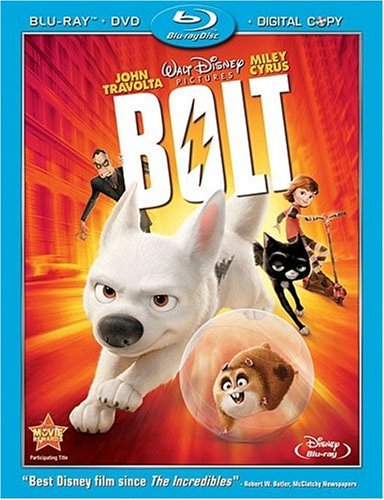
Onto high-def news. Disney did something interesting during last week, where it released the Blu-ray version of Bolt two days earlier than the DVD version, in a move to help out the HD format.

Bolt: Early release on Blu-ray caused confusion

Bolt: Early release on Blu-ray caused confusion

Unfortunately, it seems to have backfired with many stores having to break the release date of the DVD version as confused customers turned up to buy the movie, only to be told that the Blu-ray version is the only version available. Blu-ray supporters will see this as a good move to promote Blu-ray, but anything that prevents people getting what they want when they want it will almost always backfire. This is something that might work when BD has 50% market share and it only needs a small push to get over the line, but when it has at best only 10% market share, you are effectively denying 90% of buyers from buying, all in the attempt to push a format that they are not ready to buy into. More evidence that is has backfired because Bolt barely made it into the weekly Blu-ray top 10, outsold 4-to-1 by Disney’s simultaneous Blu-ray/DVD release of Pinocchio. Of course as it was released rather late in the data period so it may do better next week, although it’s market share of 19% compared to the DVD version is a bit confusing, as the DVD version wasn’t supposed to have been released until the next reporting week. 

Warner Bros. is opening a DVD-on-demand service, for rare films that are not worth publishing through normal channels, but still may have some demand. The “what you want, when you want it” principles behind this is very sound, and just imagine how easy and cheaper this system would be if instead of on demand DVD pressing, that digital distribution was used. Criterion already has such a digital system operating, called Criterion Online Cinematheque. An on-demand pressing service may very well be the only future optical discs have, if digital gets its way. 

GamingAnd finally in gaming, Sony has finally cut price to something PS3 related. Unfortunately, it won’t affect consumers (directly), as it is only a price cut to the development kit. Still no sign of an official price drop for the PS3, despite every sign showing that it needs one badly.

And that’s all we have for this week. Thank-you for reading. Hope I didn’t waste too much of your time by ranting on about this and that, which is very easy to do when you’re sitting in front of a keyboard sometimes. See you next week.

Weekly News Roundup (22 March 2009)

Sunday, March 22nd, 2009

Twice this week I wrote “2008” as the date. It’s funny because I was pretty clear that it was 2009 back in January and February, but I seemed to have forgotten that fact now we’re in March. March Madness, as they say. I did the NPD analysis for February 2009 yesterday, pretty much the same old story with a bit more positive spin for the PS3, but not enough to make it outsell the same period in 2008 (looks like I’m not the only one pining for 2008). There’s more bad news coming the PS3’s way, as you’ll find out later on.

Copyright

But before we get to that, let’s go through the copyright news first. The story of the week (well earlier on anyway) was Apple’s new iPod Shuffle that seems to have a DRM chip on it.

This caused a bit of a stir as expected, but Apple later came out and denied that the chip would be used for anti-piracy measures. Instead, the chip is used to authenticate third party accessory licensing, making sure third party products go through Apple’s licensing scheme. Not really sure if this is any better than anti-piracy DRM, to be honest. 

When I made a list of all the major copyright trials going on at the moment, I forgot about Mininova’s trial which will start in two month’s time. So that’s IsoHunt (Canada), iiNet (Australia), The Pirate Bay (Sweden) and Mininova (Netherlands). Looks like a very international operation is happening to rid the world of nasty pirates, except in Australia’s case, it’s actually an ISP (and one that responds to infringement notices like most other ISPs around the world). But iiNet apart, it looks like all the major torrent sites are being hit in a co-ordinated effort by various agencies, but of course illegal torrents are now even more popular than before, and still being offered on the above sites. And if they fall, others will take their place. 

Google: Most DMCA complains are illegitimate

Google: Most DMCA complains are illegitimate

So while going after the distributors of torrents, the powers that be will also go after individuals (through threatening ISPs), with the so called “three strikes” rule being their current modus operandi. Basically this means that if they detect infringement activity, they will pass it on to the ISP which will then warn the user for three times before automatic disconnection occurs. The ISPs are supposed to absorb the cost of doing this, which only means they’ll pass it on to users. Google has also spoken out against this method, calling it disproportionate. In many cases (far too many cases), the infringement may not even have occured, or was done by someone who did not own the Internet connection (Wi-Fi stealing neighbour, for example). And without an appeals system, many legitimate users and businesses will be disconnected and there’s nothing they can do about it, other than to sue for damages. And of course, they’ll be up against teams of lawyers with unlimited funds if they do go to court. Imagine a court where the prosecutor is also the judge, and you do not get to defend yourself and you have to pay for everything, and this is pretty much what the industry want . Google has a lot of experience with how such a system would not work, as it handles DMCA complains regarding its own listings. The DMCA allows for content owners to send “takedown” notices to sites like Google, asking them to take down infringing content, which in Google’s case is usually just links to piracy websites. Google has to process each request, and they have come out with the unbelievable statement that most DMCA takedown notices are in fact illegitimate. 57% of these notices were done to get rid of competitors, while 37% were not valid copyright notices at all.

Back to Australia, where the government is on a crusade to censor the Internet worse than the worst of Internet censoring countries. They even produced a blacklist of all the sites that would be banned, which included quite a few legitimate ones as they always do, and also blacklisted sites that have published the blacklist. And linking to any of these sites, including the legitimate dentist’s website, or the tour operator, or the sites that have published the blacklist, could cost the website operator a $11,000 per day per link penalty. This is because in Australia, linking is considered as bad as hosting the content, whereas other countries do make the distinction. Technically, this could apply to Google, which in their huge database probably links to all the sites on the blacklist, and so in the face of the severe penalty, may have to withdraw from the Australian market if indeed the government gets its wish of a national filter scheme. If this scheme became a reality, you can just imagine the 57% of complains to get competitors added to the blacklist, can’t you? 

High Definition

Onto happier HD news. Is DVD better than Blu-ray? IGN seem to think so, and they’ve published an entire article going through the various reasons.

Oppo BDP-83: The most fully featured Blu-ray player so far?

Oppo BDP-83: The most fully featured Blu-ray player so far?

I don’t think it’s a case that DVD is better than Blu-ray, but more that DVD is a *better option* than Blu-ray *at the moment*. Much in the same way that a Core 2 Duo is “better” than an Core i7. Nobody is saying that Blu-ray isn’t superior to DVDs, it’s just that perhaps it has some ways to go before it really is the must have, economical, option to home videos. For one, the current range of Blu-ray hardware has a lot of room for improvement, and prices can still come down even more.

But the hardware situation may change soon with Oppo now getting into the Blu-ray game. The Oppo BDP-83 may be the first universal Blu-ray players with excellent DVD upscaling, and comes at a price that won’t require starvation at some point in the near future. It supports BD-Live, decodes all the HD audio formats, plays back all the audio DVD formats, and will almost certainly feature the DVD upscaling engine that made Oppo famous. All they need to do is to make it region-free, and it will become a must-have.  

Apple will start to offer HD movies on iTunes, which is yet another step towards movie downloads taking over from the humble optical disc. It won’t happen overnight, but it’s gonna happen.

GamingAnd in gaming, developers, like gamers, bloggers, forumers, and basically anyone knows what a PS3 is, wants Sony to cut PS3 prices. 

Sony may start to charge developers for hosting content on PSN

Sony may start to charge developers for hosting content on PSN

But instead of agreeing, Sony has responded by mocking developers for asking the world. when all they have asked is for the best solution to save the PS3. Not satisfied with the mocking, they proceeded to make it even more costly for developers to publish games on the PS3 by introducing bandwidth fees for downloadable content. This could mean an extra quarter or half million for your typical 1 GB demo. Xbox Live has no such fee for developers. Sony claims this is needed because they don’t charge users for PSN, which is fair enough, except demos on the 360 are free to download for non paying users (Xbox Live Silver accounts), after the usual first few days of exclusivity on Xbox Live Gold.  Expect more and more developers refusing to release demos on the PS3, which will then mean less games sales for all concerned and make the PS3 even less popular. Is this what Sony wants? I think it is, because everything they do seems to be to try and kill the PlayStation brand. Of course, the other explanation is that they’re still acting as if they’re the kings of video gaming, when in fact, they’re now in a distant third place. 

The other bit of news was Sony wanting to bring Wii like controls, but not to the PS3. Instead, they want to do it for the PS2. It makes sense, since the Wii’s graphics isn’t that much better than the PS2’s, but as you’ll see from my NPD analysis, the PS2 is on its last legs and it doesn’t really make sense to try to prolong its life, when you’ve got a new console to try and save. 

Okay, that’s it for this week. Sorry about the lateness of this post, as it’s been a busy (and very unproductive) day for me. See you next week.