Archive for the ‘Electronics’ Category

Weekly News Roundup (7 August 2011)

Sunday, August 7th, 2011

A pretty light week in term of news, and since I’m running a bit behind, let’s see if I can wrap this one up quickly.

CopyrightStarting as usual with the copyright news, we start with the MPAA’s win against Zediva, as the judge in the case handed down a preliminary injunction against the “innovative” video rental service.

Zediva Promo

Zediva is a great deal for consumers, but it can only do it by using loop holes that Hollywood is trying to close

A little background info. Zediva’s service works by allowing you to rent physical discs, but instead of sending the disc to you like what Netflix would do, they do what Netflix’s other service does, by offering you a streaming version of the same movie. Zediva then reserves the disc you “rented”, and removes it from circulation. Or basically as Zediva puts it, you rent the disc, and they play it for you over the Internet (imagine a DVD player with a really really long cable). Why did Zediva do this? They did this – and this is where I think Zediva’s downfall will be – to avoid having to pay licensing fees for streaming content.

You see, the problem is that Zediva’s motivations, it seems to me, are born out of trying to avoid paying these licensing fees and release restrictions, and make more money than they would otherwise. If this is Zediva’s real motivation, then good luck to them, but I don’t think they have a snowball’s chance in hell with their case. And in the judge’s summary of the ruling, it’s made quite clear that the judge sees real problems with Zediva’s argument, and that if Zediva was allowed to continue operating, it could harm the existing video-on-demand industry, Netflix included.

Now, it could be debated that what Zediva is doing actually does not hurt Hollywood if you compare it to traditional disc rental, but that it does hurt Hollywood studios when compared to what they can make from streaming deals, and even Zediva won’t deny this, as after all, their business model is to save on licencing costs. This then leads to the debate as to why streaming should cost more than traditional rentals, why Hollywood should choose to not only “tax” new innovative distribution methods, but to place artificial limits (like a 30-day embargo to help increase disc rental income), when these help to fight piracy. But that’s their business decision, and they may be right or wrong, but that’s not for Zediva to decide. So people get pissed off with Redbox waiting times for new releases, or the somewhat hysterical reaction to the Netflix price increases (best encapsulated in this video), and it might hurt Hollywood more to be too greedy when it comes to streaming licensing fees and release schedules, if people do decide to “screw it” and use BitTorrent.

Pron magazine/website Perfect 10 is making legal headlines again this week, twice actually, as they launch yet another lawsuit against yet another online company, this time Megaupload. As you may or may not know, Perfect 10 has in the past sued Microsoft, Google, Amazon, the middle of these three recorded a win against Perfect 10 this week in which the Ninth Circuit court rejected Perfect 10’s appeal over an earlier decision favouring the search giant. But while courts are reluctant to rule about top tech companies that have been Perfect 10’s target before, they may be more favourable to ruling in Perfect 10’s favour against Megaupload, especially since the MPAA’s case against similar file hosting provider, Hotfile, seems to be going okay. So I wouldn’t be surprised if this turns out to be Perfect 10’s first victory, but it all depends on how frequently their content has been uploaded by users of Megaupload, and if it’s not frequent at all, why Perfect 10 didn’t file DMCA notices to get those content removed, instead of launching a lawsuit (“to make more money” is not an excuse the court would accept, I think).

Diablo III

Diablo III will use 'always-on' DRM, but not for anti-piracy, says Blizzard

Good will amongst gamers is something every game developer needs, and up until this week, Blizzard, the makers of the addictive World of Warcraft and Starcraft series,  probably thought that the had enough good will stored in the bank to pull a nasty surprise. But, as Blizzard will admit, they might have miscalculated. What happened was that Blizzard announced the next episode in another one of their addictive franchises, Diablo III, would have “always-on” DRM, meaning gamers won’t be able to play the game offline, even for a couple of seconds. So Blizzard decided to do a Ubi, and as I talked about last week, nobody likes Ubi DRM. The funny thing was that Blizzard probably never intended to do this as a form of anti-piracy, but only as an anti-cheating feature. This may very well be true, but Blizzard could have avoided this whole controversy (and still used “always-on” DRM) by including an offline mode, much like how Test Drive Unlimited 2 does it (offline and online progress are recoded separately). The statements made by Blizzard immediately after the backlash began didn’t help either – executive vice president of game design Rob Pardo’s statement about there being other games to play when people are offline, for example on long plane trips, was the most ill-conceived of them all (yes, “other games” that people will buy instead of your games).

So it’s a lesson for Blizzard and any other company that chooses to use draconian DRM, for whatever reason – beware of the backlash, which might ultimately hurt revenue more than a couple of extra pirated copies would have (or the cost of adding an offline play mode).

High Definition

In Blu-ray/3D news, exciting news, sort of, although it’s technically neither HD nor 3D (not yet anyway).

I’ve been talking up UltraViolet for a while now, and it’s not like me really to voice my support for anything Hollywood comes up with, especially if it’s wrapped up in all sorts of DRM, which UltraViolet will no doubt be. But for me, UV is a huge shift in the way we “buy” movies, and it comes just at the right time when cloud storage is all the rage.

UV, simply puts, turns buying a movie into really buying a movie. The idea is that, instead of buying a movie on each platform, on disc, then on iTunes,  then another version for your Android device … instead of doing this, you buy the license to watch the movie, and then you get access to all the versions via the cloud, for all of your popular devices. It’s like Digital Copy, except it’s all done in the cloud. So when you buy a Blu-ray movie at Walmart, you can instantly get the movie to play on your Android phone, as long as you have a good Internet connection. And at home, instead of finding and popping the disc in or pre-ripping it to your media player, you can just fire up your TV’s UV app, and watch all your purchased movies from the cloud.

Flixster for iOS

Flixster is already available on a variety of mobile devices, and so, it's the natural fit for delivering and managing UltraViolet

The big news this week in regards to UV is the first announcement of UV compatible movies, as Warner Bros. announced both Bad Bosses and Green Lantern will feature UV support. I’m not surprised at all WB is one of the first companies to announced UV support, as they’ve always been quite open to new formats, having supported VCD in Asia, and HD DVD before they decided not to. And WB’s recent acquisition of Flixster is starting to make sense as well, as it seems Flixster is the app that WB plans to use to allow users to manage and watch UV content. As Flixster is already available on a wide variety of mobile devices, it’s an easy decision for WB to use it for UV.

What was more interesting was that WB also announced that it would even be possible for users to bring in their old DVDs to retailers, and have them “enable” access to the UV version of the movie. I don’t know how this will work, or whether there might be a way to do it without having to go to the store, but it does sound interesting. And as mentioned earlier, I really hope TV and console manufacturers embrace UV as well, as this would allow me to digitally stream my movie collection without ripping (also need studios and ISPs to work out some kind of deal to offer free bandwidth for watching UV movies).

In related news, Time Warner owned HBO plans to make available console versions of the HBO Go app, which is great news for those that are actually in the regions that can access HBO Go, which sadly does not seem to include Australia (we miss out on Hulu as well … boo!). The announcement also mentioned other “connected devices”, which sounds a bit vague, but hopefully will include things like Blu-ray players and TVs, for easy peasy catch-up viewing.

Gaming

And finally in gaming, Sony has, as expected really, announced a strong degree of integration between their upcoming portable console, the PlayStation Vita, and the PS3.

This will include the ability to use the Vita as a controller for the PS3 (so allowing the touch surface, gyroscope, microphone, camera … all to be used to control PS3 games), plus the PS3 can also send graphics data to the Vita to display. Sounds familiar? It should, because this is exactly how the Wii U controller would work.

PlayStation Vita

PS Vita will offer Wii U like features, much earlier than Nintendo's console

With the Vita coming to the US probably early next year, and the Wii U much later than that, it’s a shot across the bow for Nintendo, if not directly at them. The only issue is the price. At the expected price of $249, and add the $299 cost of the PS3, yes, you might have a system that rivals some of the innovative parts of the Wii U, but might be more expensive, and not have as good  graphics as the Wii U (which must surely be an ironic situation for both Sony and Nintendo). But then again, the Vita can be used as a standalone gaming console far far away from the Wii U (the Wii U controller also allows independent play, but only within close proximity to the main Wii U console). So a Vita + PS3 combination could in fact replace the Wii U + DS combination, and if that’s true (and if graphics quality is discounted as a factor), then Sony becomes the better value proposition. And a PS3 price drop, or a PS3 + Vita bundle, may help.  Of course, Nintendo knows how to make fun games, and Sony struggles at times, and this could be the deciding factor.

For the Xbox 360, they’re going in a totally different direction, which could work for and against them. But Microsoft has demonstrated Windows Phone integration with Kinect and the Xbox 360, so they’re planning something similar too – and it will be even better value for those already with Windows Phones.

So we come to the end of another WNR. Hope you enjoyed this issue, and see you next week.

Weekly News Roundup (27 February 2011)

Sunday, February 27th, 2011

The last week of the “high maintenance” month of February is upon us, and it’s a relatively quiet one in terms of news stories (quantity wise, anyway). I did finally write that US video game sales 2010 year-in-review blog that I promised over a month ago. And it was pretty short as promised as well, mainly thanks to NPD no longer releasing publicly all the figures needed to do a proper analysis. But really, the story of 2010 was the Xbox 360 revival (not that it was ever close to dying or anything), with the last of the three graphs I posted in the review blog being the most telling, showing the trend of the three major home-based consoles. Anyway, onto the news roundup.

CopyrightIn copyright news, let’s start with more bad news for isoHunt. Not only did they get sued again last week, now, even a potential ally in Google has come out blasting the BitTorrent search engine.

Now, on first glance, you might expect Google to back isoHunt, considering both are search engines. And since Google is fighting its own copyright battle against Viacom, surely this puts them on the same side as isoHunt. But that’s not really the case. Viacom’s strategy in their appeal of the YouTube verdict is to say that it’s no longer enough for websites to be DMCA compliant, that is to remove infringing content when requested. Instead, Viacom says that there is something called “red flag” infringement, which means that if it’s somewhat obvious that infringement is occurring, then Google/YouTube should take action even without any specific DMCA complaints. The problem for Google in regards to the isoHunt appeal is that the MPAA might just win the case against isoHunt on the basis of “red flag” infringement, and it would set a precedent that would disadvantage Google. So what’s Google’s legal strategy? It’s to paint isoHunt not as a search engine, but just a really really bad copyright infringer. It’s arguing that there’s no need for the MPAA to even use “red flag” infringement, because isoHunt is plainly guilty of actively and deliberately supporting piracy, something that Google/YouTube cannot be accused of. Yes, it really hurts isoHunt’s defence that they’re just a search engine, like Google, but this is Google in self-protection mode.

Red Flag

The so called "red flag" infringement ruling could spell an end to online innovation

Regardless, “red flag” infringement is actually quite a dangerous precedent to set, so I do support Google’s efforts in trying to fight against it, even if it means that isoHunt will be sacrificed as a result. The problem with “red flag” infringement is that it potentially could kill innovation on the Internet, because let’s admit it, a lot of even today’s most popular and mainstream web services had to tolerate or even support “red flag” infringement, to get their business up and running. Would YouTube exist today if people weren’t allowed to upload copyrighted content back when it first started out? Would Google, the search engine, have become the most popular search engine if it blocked all piracy related search results when it was first launched? Would any of the free file hosting websites even exist, allowing us to share large (legal) files that otherwise would be too big for email? “Red flag” infringement is basically the content owner’s way of stopping all innovation, even if there is a remote chance that infringement could occur at some unspecified time in the present or future, and that’s dangerous. And it also puts the onus on identifying infringing activity on the side of the website publishers, as opposed to the content owners, which doesn’t even make sense, since how would I know what content belonged to whom and whether it’s really authorized or not (case in point, Viacom’s own employees uploading copyrighted clips under fake accounts, to create fake hype and promote their shows)?

And so we move on to the next set of news, which is also about appeals. This time, it’s the Australian Federation Against Copyright Theft’s (AFACT) appeal of a verdict from a year ago which found Internet Service Provider, iiNet, not guilty of authorizing copyright infringement committed by its subscribers, even though iiNet failed to act on infringement notices sent by the AFACT. The result of the appeal was announced this week, and it’s victory again for iiNet, even if it’s mostly symbolic at this point. While iiNet won the appeal, several decision has been overturned in favour of the AFACT, and it probably paves the way for AFACT stepping up its campaign to make ISPs the copyright police. iiNet’s victory apparently was more due to technical reasons, the precise design of the copyright infringement notices which the court found inadequate, and really, the decision probably gives the AFACT a very clear set of guidelines on just how to send infringement notices to ISPs. Basically, a symbolic victory for iiNet, but probably a more substantial win for the AFACT in the long run.

What frustrates me most about these types of trials, and about ISP warnings and/or three-strikes system, is that, in the end, it will be so so easy for users to bypass monitoring and escape being caught, or even cautioned. This is because anti-piracy monitoring today is basically just based on monitoring BitTorrent networks, which is only one way to obtain pirated content. Encryption, VPNs, or even just direct Internet downloads via digital lockers, can all escape the watching eyes of the piracy police, and so with millions of dollars being spent on lawsuits, and even more millions per year for monitoring and policing, the result will, as always, just push people towards using new piracy tools that will make online piracy harder and harder to track and stop. Remember in the good old days when websites simply hosted the pirated files, and how easy that was to stop compared to stopping torrents? Civil liberties are being sacrificed to give corporations a *false* sense of security, and that’s a really really bad reason to force us to give up our rights (is there even such a thing as a “good reason”?)

High Definition

Again, not much happening for HD/3D news, and I’m not even going to mention the stupid “Inception to be converted to 3D” news, because if there’s one thing worse than the 3D hype, then it’s “taking a 2D movie and converting it to fake 3D so we can squeeze more money out of the fans” phenomenon. Note to studios: not everything has to be in 3D!

XviD 1.3.0

XviD 1.3.0 has been released this week

While not exactly HD news, exactly, but a new version of Xvid has been released, version 1.3.0, and it’s the first new version in quite a while. MPEG-4 ASP based codecs may no longer be as sexy or “cool” as the MPEG-4 AVC/H.264 ones, but there’s still a place for the good old Xvid codec  for medium quality video files.

And the absence of real news means that I will have to plug my weekly US Blu-ray (and DVD) sales analysis feature, the latest analysis found here. It’s a place where Blu-ray fans can go to bask in the glory of “their” format’s sales successes, and where die hard HD DVD fans like myself can go and find any signs that show Blu-ray’s weakening stance, no matter how statistically insignificant (“OMG, Blu-ray sales fell 20% compared to last week – it’s doooomed!!”).

And as part of compiling the stats, I also regularly update a series of related graphs, that are never actually posted anywhere (other than on our on-and-off “Blu-ray: The State of Play” feature). So instead, I’ll post some of the graphs here right now, for your enjoyment.

Every week, there are stats to show how Blu-ray revenue as a percentage of combined disc (Blu-ray + DVD) revenue, and here’s the stats plotted that compare the most recent weeks (in red) to the same week a year ago (blue):

Blu-ray Sales Percentage: Currents vs a Year Ago (as of 2011-02-12)

Blu-ray Sales Percentage: Currents vs a Year Ago (as of 2011-02-12)

The graph below shows the same stat as above, except plotted in a linear time fashion, with a trend line showing Blu-ray’s growth.

Blu-ray Market Share Trend: As of 2011-02-12

Blu-ray Market Share Trend: As of 2011-02-12

And finally, this graph shows the Blu-ray growth rate (so if Blu-ray’s market share was 5% a year ago, and now it’s 10%, the the growth rate is 100%, or doubled), again with a trend line.

Blu-ray growth rate trend: As of 2011-02-12

Blu-ray growth rate trend: As of 2011-02-12

Gaming

And finally in gaming, which these days, should probably be renamed to the “PS3 Jailbreak” section instead. Last week ended with Sony banning a bunch of users from PSN for using hacked firmware, and now the hackers have fought back by hacking PSN to un-ban themselves, as well as make it possible to ban anyone they want.

Note to Sony: don’t try to out-hack hackers.

geohot's rap video

geohot's takes the battle with Sony to rap form

Then we had the news of Sony attempting to bring out a new PS3 SKU that would be hack proof (famous last words). geohot and others have already said that the only way for Sony to really combat the PS3 hack is to release a new hardware, and it seems Sony has taken their advice. At the same time, Sony is beefing up their own legal team as they seek to sue their way out of this mess (what could possibly go wrong?). Sony have also got the German police to raid the home of PS3 Linux hacker graf_chokolo, which will please the Linux/hacking community. You can read more on these stories here.

For those that think I’ve been too hard on Sony, perhaps you’re right. Personal history with the company aside, the main reason I and a lot of people detest Sony is solely based on their recent actions, best described in this Make article/rant. I started Digital Digest talking about how to play DVDs in Windows, back when commercial solutions were few and far in between, and with Pentium 4’s still an expensive early-adopter thing, you just needed to hack your way to  play DVDs on PCs smoothly, from tweaking drivers to using custom decoders and more. And from then on, it’s always been about using products and software beyond the purposes intended by manufacturers and publishers. Sony’s hatred towards anyone that wants to do things outside of Sony’s own limited imagination, and their arrogance of forcing people to use Sony products in Sony’s own prescribed manner (and it’s not just end users, it’s also developers too, having to adapt themselves to Sony’s way of doing things, as opposed to the other way around – a philosophy that Microsoft, for example, do not share, which is why the Xbox 360 is a much more developer friendly platform). And it’s also the arrogance in their response, which is almost always an overreaction (eg. CD root-kit fiasco), because it’s as if they believe that using, developing for or even selling a Sony product is a privilege, and so if you make Sony angry, expect retribution. Point out a flaw in their security design? Sony will get you. Make their products do more than advertised? Sony will get you. Sell products to help Sony users in a way Sony doesn’t like? Sony will double get you (as geohot wisely raps in his video, “I shed a tear everytime I think of Lik Sang”).

Speaking of Microsoft as a “good guy” when it comes to consumer right seems quite wrong to me, but compared to Sony, there are a lot of “good guys”. But Microsoft’s response to the Kinect hacks (not the first response, which was similar to Sony’s, but the subsequent responses by openly welcoming the hacks) is to be commended, and really, it’s the best business decision as well (Sony’s actions have often hurt themselves more than anyone else, to be fair). And now Microsoft is following up by releasing an official PC developer kit for Kinect, available for free to non commercial users and researchers. Of course, opening up the development of an console accessory is different to the reaction of seeing your product hacked into oblivion, but still, it’s hard to imagine Sony reacting to the hack in the same manner (as the Make article mentioned, the Aibo hacking incident kind of shows what a typical Sony response might have been).

Also, Kinect will work with Windows Phone sometime in the future (not this year though), which given the recent Nokia announcement regarding moving to the Windows Phone platform, can only be a good thing for Kinect. Still, Kinect needs some better, more varied games, because frankly, I’m a bit tired (in both sense of the word) from playing Kinect Sports soccer and winning 4-3 all the time (I’m not that good at goalkeeping, which for me, consists of flapping my arms wildly).

Alright, enough ranting for this week. Have a good one.

Weekly News Roundup (13 February 2011)

Sunday, February 13th, 2011

Sorry for the slightly late edition of the WNR, couldn’t be helped unfortunately. Luckily, there weren’t too many news stories this week, especially if you really count the whole PS3 jailbreak saga as just one story, so hopefully we can get through this rather quickly.

And don’t forget our Facebook/Twitter competition where anyone who likes/follows will enter into the draw to win some $20 Amazon gift cards. The more likes/follows, the more prizes (up to 15 GCs – I have to save the rest of the website earnings  for food), and from the current count, I should be handing out something like 7 or 8 of these GCs. So get clicking, and good luck!

CopyrightLet’s start with the copyright news. Last week. I talked about how increasing access to content reduces piracy, and if you take the same principle and use it for the other side, then decreasing access should lead to more piracy.

Sky Atlantic

Making TV shows exclusive to a subscription channel could increase piracy

Which is exactly what experts are warning now that the UK has a new subscription channel that has made a lot of shows, previ0usly available on free-to-air TV, a channel exclusive. It means that for popular shows like Boardwalk Empire, the only way to actually watch these shows is to sign up to Sky Atlantic, or wait until the show hits DVDs/Blu-rays. Legally, that is. Illegally, well, you won’t really have to wait more than 2 hours after the original US airing date to find torrents posted everywhere for that particular episode. In fact, I bet that the torrent release schedule probably beats the airing schedule of Sky Atlantic, probably even by days or even weeks. So release windows, exclusive broadcasts, and no legal free option will only really drive people to pursue less than legal options. Those more adventurous (and technical minded) will go for torrents, while there are still plenty of file sharing and streaming sites that offer the rest the ability to watch the shows without the associated legal risk (since most of the legal focus is on BitTorrent downloads these days). Now, somebody will benefit financially from exclusivity and release delays, but it all seems very short term to me, and the reason why TV piracy is on the up. It’s more understandable for US cable based shows, that were never really on free-to-air anyway, but for shows that air in the US on the big networks, there’s no reason why these shows shouldn’t be shown simultaneously around the world (taking into account time zone differences). Do that, and I think piracy rates will be lowered by quite a bit. Yes, pirated shows don’t have ads, which is a big draw card, but with PVR/DVRs and a little bit of fast forwarding, it’s probably worth the pain to avoid the risk of receiving a letter from an opportunist law firm.

Hotfile

Hotfile is being sued by major Hollywood studios for promoting web piracy

Speaking of file sharing sites like Hotfile, Hotfile has just been sued by the MPAA and five movie studios it represents. Now, I don’t think anyone can deny that there are lots of pirated files on Hotfile, but it is an upload service, and it’s the users that populate their servers. Like how people upload pirated Viacom clips to YouTube, and look how that turned out for Viacom, in the court room. The MPAA claims that Hotfile rewards users for uploading pirated movies and TV shows, because Hotfile has an affiliate program where you can earn movie depending on how popular your downloads are and how many of your downloaders sign up for the premium service. Now, I think it’s also fair to admit that many pirates are probably making money this way, but then again, in my line of work, I see a lot of software publishers that also use Hotfile and other file hosting services to save money on file hosting, as well as make a couple of bucks back. So Hotfile’s affiliate program really is just about growing their business and rewarding their customers, whomever they may be, and can you really blame a business for trying to do this? As for the ratio of legal to illegal downloads? I have no idea. But what can a company like Hotfile do to fight piracy, other than not exist (which is the MPAA’s preferred option – in fact, I think they’d rather the Internet not exist either, the same opinion also held by quite a few dictators around the world right now). They can try and filter based on file names, but all users will do is to name their downloads sdkj3489sd.zip or something similar, and piracy will continue. They can actively scan downloads, but pirates can then simply password protect and/or encrypt files (if they’re not doing it already), and piracy will continue. Hotfile can put in a system where copyright holders can submit removal requests, but they already have such a system which the MPAA studios appears to be not very fond of (mainly because it means they will actually have to do a bit of work themselves). So what’s a digital file locker hosting website to do? What can they do? They can get sued, apparently. And the likes of RapidShare and MegaUpload are surely not immune from similar lawsuits, although it’s understandable why the MPAA chose a lower profile website like Hotfile to sue, since it’s like RapidShare, which already has a lot of experience in the courts, will put up a much stronger fight.

6,500 people have been added to the “The Expendables” mass lawsuit. Nothing really surprising there, because as long as you have producers who don’t care about public opinion and a negative backlash, law firms like the US Copyright Group will continue to have clients.

The PS3 jailbreak stuff will be posted under the Gaming section as per usual.

High Definition

In HD/3D news, again, not a lot happening. I did catch a few 3D Blu-ray titles on sales at Amazon and elsewhere online recently, and so even without Fox/Panasonic’s mean-hearted/short-sighted-ness in making Avatar 3D an exclusive (now selling for a little bit less on eBay, around $150).

The one I was tempted to buy was Piranha 3D. I loved the original Piranha movies, and this latest edition of the latest remake has both the 2D version, as well as the anaglyph version (red/blue glasses version), in addition to the 3D Blu-ray version, so it’s a good introductory package for 3D (because you can always go back to the 2D version in case 3D is not for you, or if you don’t have a 3D Blu-ray system right now, you can still enjoy the old fuzzy, washed out colours, style 3D with the cheap paper glasses).

While neither HD or 3D related, I did post a news item about publishers moving away from Apple’s iTunes towards Android and other more open marketplaces. While software restrictions are the real issue right now, it also I guess applies to movies, and some of these movies might be HD (I’m really stretching here, aren’t I). Basically, you have Apple who wants to control everything and then some, and it may be their right since they did produce the excellent iDevices in question, and most of their income is derived from having so much control. And there’s also the issue of quality control too. But being able to play any movie you want simply by using a USB cable to copying it, like you would do with any USB storage device, means that Android phones appeal to those who simply cannot stand iTunes or the idea of being locked to the software. And for publishers, it means they can publish without having to hand over 30% for every transaction, or to have to abide by Apple’s stupid licensing restrictions, which requires even free software have use Apple’s DRM (hence the whole VLC player for iOS debacle).

Gaming

And finally in gaming, most of the news as you may have guessed relates to Sony’s legal action against the security researchers who uncovered the major security hole within Sony’s own security infrastructure, and famous/infamous PS3 hacker George Hotz, who did the awful thing is re-enabling homebrew on the PS3 (but not piracy).

The week started with Sony attempting to get the likes of YouTube and Twitter to hand over user information in relation to anyone remotely related to the PS3 hack, even those who simply watched the hacking video on YouTube. Their intention was to expand the case to include anyone who releases or distributes custom firmware and other security hacks. Basically, a fishing expedition. But one that was ultimately denied by the judge for the case.

I might have some sympathy for Sony if they only went after those that release firmware that included the ability to play copied games. But to go after fail0verflow, basically just a security research team, and also geohot, who has time and time again denounced piracy and went out of his way to ensure his custom firmware cannot play pirated games, it seems Sony have chosen the wrong targets really. And then to try and go after Linux hackers like Graf_Chokolo, whose sole aim was only to bring Linux back to the PS3, a feature that Sony once fully supported, it just seems unnecessary.

Major Nelson: Twitter Battleship

Major Nelson pokes fun at Sony's Kevin Butler "Battleship" SNAFU

And then Linux community responded by fooling fake PS3 VP and twitter personality Kevin Butler into re-tweeting a hacked PS3 security code. Embarrassing, and even Xbox 360’s Major Nelson poked fun at the incident, but what’s more worrying for Sony is that all of these are taking attention away from the console and the great games that they will have out this year, and that’s something they can’t really afford at the moment, not when the race with the Xbox 360 is so close and with the threat from Kinect hanging around.

And speaking of Kinect, the PlayStation Move’s creator (Dr. Richard Marks) seems a bit jealous of the attention Kinect has gotten with the PC community, and wants something similar for the Move, except to make it even more accessible. I suppose this means that instead of having access to just the raw data, some of the software and processing algorithms may be opened up too, if Dr. Marks is able to overrule Sony’s “we don’t like anyone poking their heads under the hood” stance. Of course, what most interested the programmers was the potential of Kinect, and how different it was to any consumer tech on the market (something like this would otherwise be thousands and thousands of dollars, for the professionals market). The Move, while somewhat innovative, is really just a more accurate Wii, and programmers have already had their fun with hacking the Wii-mote when it first came out. If anything, the PlayStation Eye is a more interesting device, but one that still can’t compare to the Kinect in terms of innovation.

And so, we come to the end of another edition of the Weekly News Roundup. Enjoy your week!

Weekly News Roundup (30 January 2011)

Sunday, January 30th, 2011

It looks like my pathetic begging last week paid off, sort of, as I managed to get a few likes on Digital Digest’s Facebook page, and a few more on Twitter. All those that participated will be noted, and when the competition launches next week or the week after, you shall all be rewarded handsomely (with better chances at winning)!

Paper (Star) Wars

This Android game I made may look crudely drawn, it's gameplay is only slightly better

The current set up means every news article posted on the Digital Digest website, plus every blog and posts in the deals & freebies section, will all be added to the feeds, allowing for an easy way to get notified of updates on the websites. And occasionally, I will post a few things that aren’t really big enough to make the news, but are nonetheless interesting. One thing I did post about was my first attempt at an Android app, a game based on a paper based game based on video games based a movie. Paper (Star) Wars is my take on a paper based Star Wars game that I used to play with friends in middle school. It’s my first app, so please be kind and tolerant of the numerous bugs within the game. There’s a free “Not Very Special Edition” and a paid for version for around a buck, depending on exchange rates.

Self promotion finished, time for this week’s news, and there’s plenty to go through so let’s get started.

CopyrightLet’s start the copyright news, the UK may have seen a change of government, the non violent kind, but its anti-piracy policies remains unchanged it seems. Their proposed three-strikes system, which will first start with a warning-but-no-action system, is set to be introduced, and UK ISPs will have to pay 25% of the cost of enforcing this law which will see private subscriber data being given to copyright holders.

In other words, the UK government thinks that ISPs are at least 25% responsible for anti-piracy policing on the net, even though they don’t receive any benefits from it at all if this thing works (and the UK government optimistically thinks that it will reduce online piracy by 50% – amazing!). So it seems ISPs have been cast as a guilty party. But ISPs will no doubt pass on the cost to subscribers. So it seems, we’re all being cast as the guilty party. And with higher ISP costs, and so less money to spend online, and when people start getting booted off the Internet, all of these actions which will no doubt affect the Internet economy, most likely the legitimate kind. Pirates will be pirates, and they will find (and have found) ways around being monitored, so I would really like to see how the UK government comes up with the figure of £200m as the amount of benefits that will result from this. They would be lucky to get away with less than £200m of damages to the economy. But this whole thing has become an ideological crusade, so common sense went out the window ages ago.

ACS:Law Logo

ACS:Law may have quit the mass lawsuit game

The new UK law should come into affect as anti-piracy law firms in the UK might be starting to wrap up their profit seeking mass lawsuit enterprises, when the head of one of the most notorious anti-piracy law firms, ACS:Law, said in court that his firm was no longer involved in anti-piracy stuff due to “death threats and bomb threats”, amongst other things (no longer profitable?). Not to condone threats of this kind, which is totally unacceptable despite the number of people ACS:Law has pissed off in recent times, but that’s the side effect of the kind of business ACS:Law is involved in, just as its predecessor Davenport Lyons realised when they also quit the game. And they were in court because the judge found their lawsuit somewhat dubious and wanted to examine it further, despite ACS:Law’s attempt to drop the lawsuits against the downloaders in question, in a last ditch attempt to avoid having any kind of court ruling on the matter (because it could go either way, and it looks like it’s going the wrong way for ACS:Law). The best way to go after these law firms is to take a leaf out of the entertainment lobby’s latest doctrine on online anti-piracy: go after their revenue source. If no profit can be made via mass lawsuits, because perhaps it’s difficult to ascertain jurisdiction or that people are fighting back by tying up these law firms in paper work, then these kinds of law suits will stop.

Google Piracy

Google is the net's new piracy cop

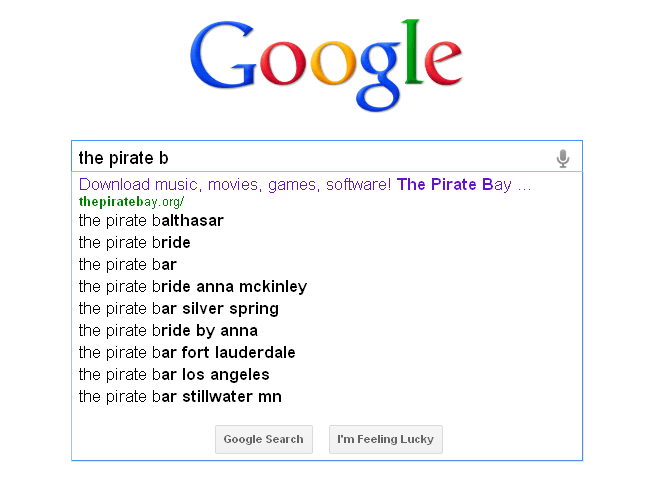
But these lawsuits are still gaining popularity in the US, where this week, hundreds more were sued for download the Paris Hilton sex tapes. I wonder if Paris Hilton gets a percentage of the settlement fees, and if she does, then that’s one more reason to fight these lawsuits as tenaciously as possible. And people seeking to download this “movie” illegally be warned – the publishers, XPAYS, is still monitoring download networks for potential targets. But finding a torrent of this film may have just gotten about 1.5% harder, thanks to Google’s new filtering scheme which became active this week, something they warned us would happen back in December. It’s no doubt Google’s way to try and appease the entertainment industry, not that they would be pleased much by this, since only the suggested search phrases as part of auto-complete and instant search have been filtered – the results are still the same as before. And the way Google has did it was full of inconsistencies, like why a BitTorrent client software like uTorrent needs to be filtered at all (and yet, other popular clients like BitComet or Vuze are not filtered), or why RapidShare is filtered, but not MediaFire. In any case, this latest move by Google sets a very dangerous precedent, and goes completely against the Mountain View company’s principles on the open web. And as mentioned before, it will do little to appease the entertainment industry and instead, it will just make them ask the question “if you can filter recommended search phrases, why can’t you also filter out the results”. An appeasement of groups backed by a Fascist launched organization, yeah that doesn’t sound familiar at all. Maybe it’s just me, but has Google abandoned their “do no evil” policy, since they’re very much acting like just any other corporation these days. Even their recent withdrawal of support for H.264 in Chrome was very much an exercise in protecting self-interests (dropping H.264 so people will have to adopt their own WebM, for example), as opposed to their stated goal of supporting open software – this is the very same company that bundles Adobe Flash with the same browser in question, so it’s a bit rich for them to lecture other on support of open platforms.

For all of the entertainment industry’s pomp and bluster, they still haven’t even managed to close down The Pirate Bay. They talk big about closing down a lot of websites, another 50 this week apparently, but they don’t dare mention how many new websites spring up the second they close down one, fairly obscure, torrent indexer. And if The Pirate Bay people are to be believed, the RIAA are in for a rude awakening when TPB launches its music sharing service in a few months time. No details as yet, or even confirmation as to whether this thing is real or not, but a TPB insider has promised that this thing will scare the pants off the RIAA. It’s set to be launched around the 78th birthday of the International Federation of the Phonographic Industry, and I thought it was interesting that this organization was launched by none other than Mussolini in 1933 (yes, that Mussolini).  So when old Benito said that “Fascism should more properly be called corporatism because it is the merger of state and corporate power,” he wasn’t that far off the mark it seems (ignoring the fact that he was talking about a totally different kind of “corporate” to today’s corporations).

And in potential silly DRM news of the week, how about DRM’d web images? Not quite, but it only takes a little bit of effort to turn this thing into the online newspaper’s favourite new toy, as expiring image links is quite effective at cutting down hot linking. Of course, those that really do want to steal your pics will just do so via a print-screen, while you make your legitimate visitors download and install plug-in after plug-in just to view the damn image. A totally ineffective DRM which only makes the life of legitimate users that much more painful. So definitely happening, then.

High Definition

Onto HD/3D news, price of Blu-ray players are tipped to drop below $40 in 2011. Not that surprising when you consider that it’s been available for around $50 already.

But this does mean one thing: if you don’t have a Blu-ray player now, you may just not want or need one. They’re so cheap now, when they’re not being given away freely with TV purchases, that there really aren’t any other excuses left for people not to have one. And with retailers often discounting Blu-ray/combo versions of movies below the price of DVD sets, it’s a no brainer. And so much for the higher premiums manufacturers had hoped that Blu-ray hardware (and movies) would bring on a more permanent basis.

Samsung 3D active shutter glasses

Not everyone can enjoy 3D without wanting to throw up

So if plain old Blu-ray isn’t  helping to bring in higher premiums, perhaps the 3D kind will. And when manufacturers and studios are not trying to kill the format by signing excruciatingly long exclusivity deals (I’m looking at you, Panasonic and Fox) on titles that will launch the format, there’s also the issue that many people just can’t stand watching 3D. I think I’m one of these people, since watching 3D for more than half an hour makes me uncomfortable, and watching something like Avatar all the way through would probably kill me (or at least make me very very sick). But I did still buy a 3D TV, and I’ve definitely paid more money for even less interesting gimmicks before. Expect all TVs to have 3D support by the end of the year though, and competition will ensure the higher premiums will be gone by then too.

And going back to the Chrome/H.264 decision I referred to above, there’s a new service that aims to end the problem of cross-browser compatibility for uploaded web videos. Vid.ly takes in your videos and then transcode them millions of times (or just a dozen times, I don’t know) so that it will work on any browser, regardless of whether it took the very corporate decision to back one of its own, albeit open, video standards, or whether it’s backing a video standard that it owns a lot of patent on. And the same for mobile videos, iOS, Android, Blackberry. I fed the service my recently uploaded Transformers: Dark of the Moon HD 1080p Trailer. Vid.ly ate it up, and spat out a link half an hour later, and I’ve put the sample embed video and mobile video links in this forum thread. For no other reason, it’s a great way to compare the various qualities of web video standards, H.264 vs WebM vs Theora, as the same embed code automatically detects what software you’re using and gives you the compatible stream (it looks by far the worst on Firefox at the moment, as it uses Ogg Theora). Anyway, an interesting service that may bypass the whole very confusing, and annoying, HTML5 format wars.

Gaming

And last but not least, in gaming, Sony has reacted to the hacked 3.55 firmware by releasing the 3.65 firmware. And it was hacked within hours. Stable. Doors. Horse. Bolted.

Sony did have better success in the courts, with the judge granting a temporary injunction against, I don’t know what, geohot’s firmware or something. Because a temporary injunction on fail0verflow’s research into pointing out the security flaw on the PS3, doesn’t seem to make much sense, as it’s now common knowledge that Sony doesn’t know the difference between a constant and a randomly generated number.

Sony NGP

Sony's Next Generation Portable is packed full of the latest tech, but at what price?

But Sony are at their best when they show off cool stuff, as opposed to trying all sorts of anti-piracy measures, and they did impress a lot of people and refocus people’s thoughts away from the PS3 security disaster, by revealing the NGP – the Next Generation Portable – the successor to the ailing (some would argue, dead and buried) PSP. It does seem pretty cool, all the best features from phones (Wi-Fi, GPS, multiple cameras, multi-touch), a kick-ass processor that can run PS3 games, albeit at the reduced resolution of the still kick-ass OLED screen (960×544). Still, it faces stiff competition from smartphones, the 3DS and tablets, all vying for a share of the portable gaming market these days (although Sony has promised a common development platform for its Android phones and the NGP, so we know at least Angry Birds will be on the NGP). Nobody knows what the price of the NGP will be, but with so much tech inside, it can’t be cheap, or can’t be cheaper than the 3DS, right?

Speaking of the 3DS, yes, it will have region-control, and downloaded games won’t be transferable to another console, at least not at first.

And so that’s it for another week. Have a good one and see you at the same time, same place, in 7 days.

Weekly News Roundup (23 January 2011)

Sunday, January 23rd, 2011

You may have noticed something different at the bottom of this blog (if you’re viewing this post on my blog, as opposed to through the newsletter that is) – that’s right, WNR (via Digital Digest) has joined the 21st century social media thingamajig. This means that if you like this post, you can use one of the dozens of social media tools to let others know, and help me increase my readership numbers into double (or even triple!) digits. In addition, I’ve also set up what the kids call a ‘book of faces’ page right here (where every single news, deals and blog post will be pinned up on the wall, or something like that), and even managed to employ the services of that blue twittering bird here. So please, friend, follow, tweet, twang, hurl, zomg me on Facebook and Twitter, since I’m a bit lonely and pathetic on there at the moment and will soon have to resort to making up fake accounts just so I have some “friends”. And many of the news stories that I link to in the WNR will now be to the Digital Digest news section (as opposed to the forum thread like before, although a link to the relevant forum threads will still be located at the end of the news articles), and there, you will also see FB like buttons, Twitter tweet buttons, and even a FB powered comments section where you can point out the numerous speling mistakes I’ve made in the news post.

And there might be something in it for those of you that goes through the laborious process of clicking on a button to indicate your “friendship” or “cult follower status” with me, and the earlier you do it (and the greater number of you who do it) will increase the likelihood of something like this happening. Did someone say prizes? Amazon gift certificates? Details (if any) to be released soon. Just to be clear, yes, I am trying to buy some friends, so fingers crossed it works and I get enough likes and followers to make launching a competition possible!

Lots of news this week, so let’s get started.

CopyrightLet’s start the copyright news. The big wigs at the music arms of Sony and Universal did some brain storming the other day and came up with a new brilliant way to combat piracy: allow people to actually buy the music!

Apparently, not allowing people to legally buy something actually encourages people to seek illegal ways to obtain the same content, which must have come as a big shock to the Sony and Universal execs when their million dollar research revealed these findings, or something. Currently, when new music is released, it’s given airtime on the radio during an exclusive period before it was possible to buy the music legally, but research found that people searching for the new songs peaked weeks before the start of the sales period, and so, naturally, people just managed to get the song from “other” sources. So now, music will be made available for sale at the same time as when the radio airplay period starts, in a bid to curb online piracy. And it will only take a dozen more research reports before Sony, Universal and others realize that the same thing works for TV shows and movies, and that rental, release windows and delaying new TV show episodes by as long as 6 month in overseas markets, all contribute to the online piracy phenomenon.

Still staying in the music industry, the RIAA this week issued more threats to companies and organizations that it perceives as potential partners in the CRusade Against Piracy (CRAP™). The RIAA knows that the only way it can get others to do their dirty work in the futile war against online piracy (FWOP™) is to threaten them. This time, it’s ICANN, the people responsible for making the domain name standards, and the RIAA warns them that piracy syndicates might hijack planned music based TLDs like .music. Like as if music piracy websites would need to bother with .music, not if .riaasucks is available. It’s very likely though that the warning comes because the RIAA wants control of .music, but doesn’t have the cash to bid for it, and so they’re dreaming up an imaginary threat to force ICANN’s hands, a tactic that has worked well with governments around the world.

Malware

Malware is a more serious problem than online piracy, yet it receives almost no attention at all

A threat that is not so imaginary is malware. Hands up those that *haven’t* been affected by malware, or know someone that has. Malware costs the economy something like $50+ billion a year, that’s even more than the imaginary numbers that the RIAA likes to invent, and yet it seems there’s hardly any action against the spread of malware, apart from the odd arrest of hacker or two, and only when the malware story makes national news (and this happens only because it  infected all the computers at said news network). And yet, the US government alone is throwing millions of dollars and resources of the FBI, Homeland Security at fighting the online piracy problem, which may or may not even be a problem. I mention all this because of the story this week that malware writers are now using that old RIAA favourite, DRM, to protect their toolkits to sell or rent to those seeking to make a profit infecting unsuspecting servers and computers. But we already know for a fact the resources at the FBI have already been diverted away from investigating online and identity fraud, towards online piracy investigations, but I guess that’s because there is no such things as the “online fraud victims” lobby, or at least it doesn’t have as much cash to splash around compared to the entertainment lobby (probably because all of their cash has already been stolen via malware and identify fraud).

High Definition

Onto HD/3D news, I posted a story about LG’s plans to make people buy more 3D TVs that use passive glasses, but mainly, it was just an excuse to post a link to this video.

But 3D TVs using passive glasses do have some advantages, after all, cinema 3D presentations are mostly based on the same technology. Sure, you won’t get a 1080p picture, but if it means less headaches and cheaper glasses, then it’s probably a good thing. Having had my 3D TV for about 6 month now, I’m still firmly convinced that 3D is still very much a gimmick, although one that’s very likely to be in every TV pretty soon (but only the active glasses kind, since it’s very inexpensive to add active glasses 3D support to HDTVs).

Scent Sciences - ScentScape

Smell-O-Vision may be coming to games and movies for a low price, but not all smells are pleasant!

Something that also smells very gimmicky, possibly literally at some stage, is smell-o-vision. But what caught my eye about Scent Science’s new ScentScape machine is the low price attached to it. I don’t think it makes a huge difference to me if I can smell burning petrol or not as I blow up yet another car with my RPG in GTA IV,  but for $70, the price of the ScentScape machine, it might just be worth a try. I wonder though what the most popular smells would be. Gunpowder would be one, blood another. But I do have reservations about playing a game like Fallout: New Vegas. I can’t imagine the post apocalyptic world and its inhabitants (and mutants) smelling very nice at all! Nor would watching Generation Kill (brilliant mini-series by the way) be pleasant if “a MOPP suit that smells like four days of piss and ball sweat” was made a reality, smell wise.

And Star Wars on Blu-ray now has a solid release date. September 27th, 2011. It will be the best seller on Blu-ray to date when released, I suspect.

Gaming

And finally in gaming, some new developments in the PS3 hack saga. Sony’s court case against fail0verflow and geohot has been delayed due to jurisdiction issues relating to the fact that geohot, aka Geroge Hotz, does not live in California where the lawsuit was filed. Sony reasoned with the judge that, due to various clauses in the PSN user agreement and whatnot, it could still sue someone who doesn’t live in California, in California, but the judge has reservations about allowing Sony to bypass jurisdiction so easily this way. The EFF has also come out attacking Sony’s lawsuit, saying it sends a ‘dangerous message’, suing security researchers for exposing security flaws, when really, Sony should had worked with people like Hotz to plug any security holes before the console was released. Both fail0verflow and geohot stressed that they did this for academic purposes and for enabling homebrew, and all have made sure that piracy would not be promoted or allowed directly by their hacks (although indirectly, the hack can be further modified to enable piracy). So instead of suing those that actually use this hack to allow piracy, Sony are suing the guys that actually exposed the hack. It’s like arresting the guy who pointed out to you that your car is unlocked, as opposed to the guy who actually stole your car.

Waninkoko PS3 3.55 CFW

Waninkoko has a custom PS3 3.55 firmware that played backed up games, but it's bricking some PS3s (screencap credit: PSGroove.com)

More custom firmware has been released, this time by infamous Wii hacker Waninkoko, and this ones does allow pirated games to work. But the firmware apparently bricks older PS3s, those with 256MB NAND chips, a list of affected models here. The warning forum user Budreaux posted in the forum thread should be listened to … playing around with hacked firmware is a quick way to brick your PS3, void you warranty, and get you banned on PSN probably, not to mention possibly breaking the law depending on where you are. So do it strictly at your own risk!

And games that relied on the PS3’s now hacked security framework are beginning to feel the effect, with Modern Warfare 2 servers hacked to erase gamer scores and all sorts of other things that make the experience unbearable to gamers. Not all games are affected because developers wisely decided that solely relying on Sony’s framework wasn’t a good idea.

And the worst is yet to come, since Sony’s official response will almost certainly be harsh. Remember that this is the same company that thought a rootkit was a good idea. And so it comes as no surprise that Sony may be planning to bring serial keys to PS3 games in a bid to curb piracy. Not only do you have to type in the 16 character serial code into your PS3, which is painful enough already, these keys may only be reused 5 times, which makes selling and buying second hand games that much more annoying. And it will also mean that you won’t be able to play offline games without going online for authentication. But at this stage, this is just a unsubstantiated rumour, so who knows.

Another unsubstantiated rumous is that the Nintendo 3DS, still weeks away from an official release, has already been hacked despite Nintendo’s assurance of better anti-piracy measures. This does not surprise me one bit, if it’s true.

And even though geohot is busy defending himself against Sony’s legal onslaught, he still has time to hack, this time, Windows Phone 7. But Microsoft, probably giddy from the disasters befalling the PS3 at the moment, isn’t so mad at geohot, and has even promised to work together to “let dev creativity flourish”. This after Microsoft actively not caring about people hacking the Kinect … has the corporate monster changed?

Speaking of Kinect, the PR machine rolled on, and just like how the Wii gained public exposure due to the thousands of broken TV screens and vases, “Wii tennis elbow” and other medical phenomenons, the Kinect is gaining similar public exposure via YouTube ‘Kinect Fail’ videos and reports of even more serious injuries, and even a potential arrest. These fluff pieces may all sound like bad publicity, but there is no such thing as bad publicity, because everyone thinks that these things only happens to stupid people, not themselves, so there is no way one would get ‘Kinect Sports volleyball shoulders’ that is so painful that it makes sleeping difficult. Ow.

And that’s all for this week.

… checks FB and Twitter for the 15th time today … still no likes or followers  :(