Archive for the ‘Video Technology’ Category

Weekly News Roundup (18 May 2014)

Sunday, May 18th, 2014

A rather shortened WNR since I was up pretty late last night/pretty early today watching, cringing, suffering and celebrating Arsenal winning the FA Cup for the 11th time in the club’s glorious history. Bloody Arsenal, they never do things the easy way!

Let’s get started before I fall asleep.

Copyright

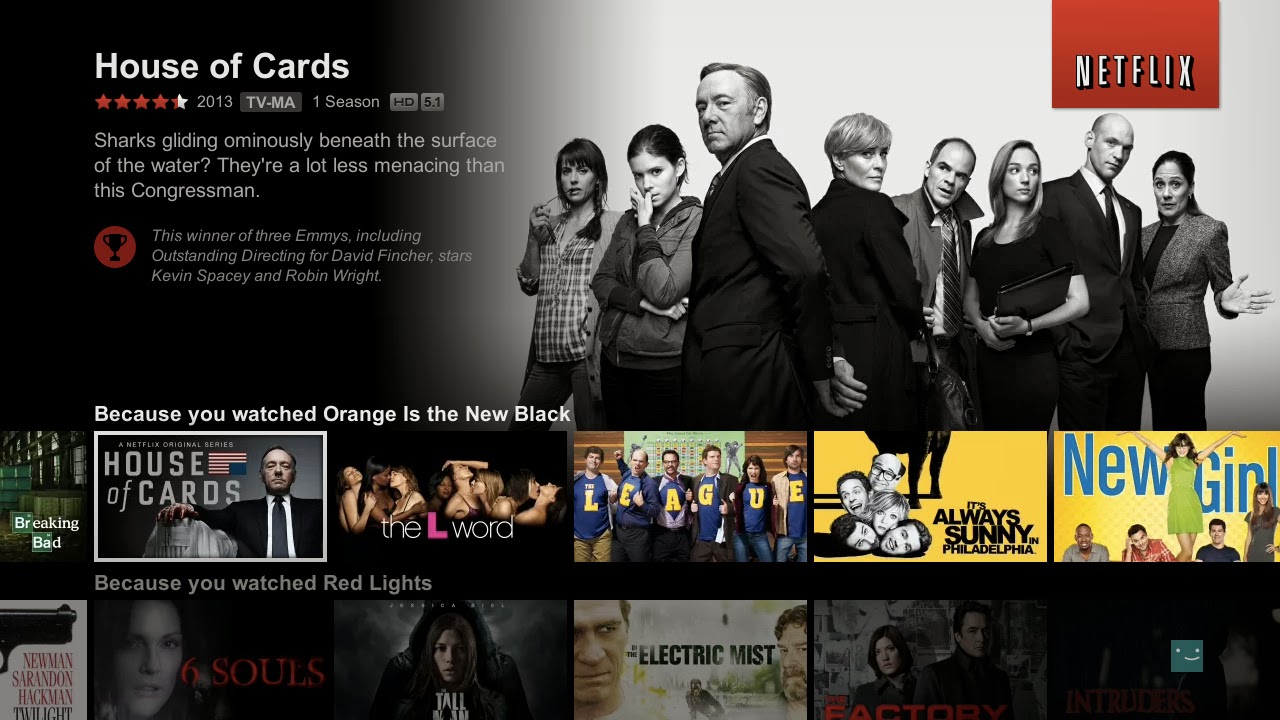
New Netflix UI

All this original programming does not come cheap – Netflix raises prices by $1 for new subscribers

Having just binged watched through all six seasons of Lost, currently in the middle of an epic It’s Always Sunny in Philadelphia marathon, while also re-watching the first season of Orange is the New Black in preparation for season 2, I can totally see how it is possible to use 212 GB of data every month for Netflix. That’s how much is being used, on average, by the top 15% of streamers according to a new report which also says Netflix usage during peak times now accounts for 34% of all Internet traffic.

The same report also found the file sharing traffic during the same peak hours has dropped to 8.3%, down from the high of 31% in 2008. Looks like Netflix is single-handedly winning the war against piracy, by giving people what they want.

Let’s just hope people will still want it after the price rise. Netflix has decided to raise prices from the ubiquitous and industry defining $7.99 per month, to $8.99. But only for new subscribers – existing subscribers will be able to keep their current rates for another 2 years. Netflix says the higher price is to account for new content, but their recent peering agreements with top ISPs must have also played a role in determine the new price.

So is Netflix worth $8.99? I think so, and Netflix will hope others do too.

Gaming

It looks like Microsoft has heeded the same advice I handed out right here a couple of weeks ago – Kinect has been separated from the Xbox One, which means the price of Microsoft’s beleaguered (not really, but I just wanted to use the word ‘beleaguered’) console has now achieved parity with the PS4 thanks to a a new $399 package that will not come with Kinect.

Xbox One Forza 5

Kinect (the boxy thing below the TV on the photo above) is no longer an “essential” part of the Xbox One

This is the second major u-turn by the Redmond based firm for the Xbox One – the first, if you can remember (of course you can!) related to the removal of ‘always-on’ DRM. This latest reversal removes the one last bit of strategic difference between the two major consoles.

It’s a shame really, because I can see what Microsoft were trying to achieve. Being different in a crowded and competitive marketplace is always risky, and you have to commend Microsoft for trying to do things differently, even if what they were trying to do was not what gamers wanted. The whole DRM things came from overestimating the tolerance of gamers to this kind of stuff, and while I still maintain that being able to play games without using discs is a great idea, Microsoft’s implementation left a lot to be desires.

The same with Kinect. It’s an innovative solution, that was kind of staggering around looking for a problem. You didn’t really need it, and to force gamers to buy it at a $100 premium was a bad idea. If the Xbox One launch titles had at least one great title that made the Kinect an essential accessory, things might have been different, but the reality is that it falls into the “nice to have, but not essential” category at the moment.

So what will Microsoft’s price drop do for the console? Even at the same price as the PS4, the Xbox One will still be playing catch up. This is due to the general perception is that the PS4 is a more powerful and future-proof console. It doesn’t even matter if this perception is true or not, but it will play on the minds of potential buyers. So for me, the Xbox One has to be cheaper than the PS4 in order to compete, and without Kinect being bundled with every console, Microsoft may have room to do exactly this. There are still a lot of people playing Xbox 360s that have yet to decide which next-gen console they want, and so it’s still not too late for Microsoft to regain dominance in the key U.S. market.

And this brings us nicely to the April NPD results, in which the PS4 was again the top selling console in the U.S. The Xbox One managed to ship 115,000 units in second place, which would make it the a slower April than any April for the Xbox 360, except for the current one (the Xbox 360 only managed to sell 71,000 units).

No word on Wii U numbers yet at the time of going to press (by press, I don’t mean the printing press, but just the press of the big “Publish” button in WordPress), so I will post an update if/when more numbers come in.

This is all I can muster for now, as I have to go and rest my eyes, before very likely re-watch parts of the FA Cup final relive (this time without nearly having a heart attack). See you next week!
Weekly News Roundup (13 April 2014)

Sunday, April 13th, 2014

Oh Heartbleed, you stupid annoying thing. While none of Digital Digest’s servers used the vulnerable OpenSSL versions that is now responsible for the biggest IT crisis since the Y2K bug, you’d have to be a under-rock living Luddite to not have been affected by this horrendous bug, no matter how much you try to convince yourself that everything is still fine. The weird side effect is that people now generally know much more about OpenSSL and overflow bugs than they need to (and if you need a quick refresher, refer to xkcd).

There were other news too!

Copyright

Game of Thrones: Season 4

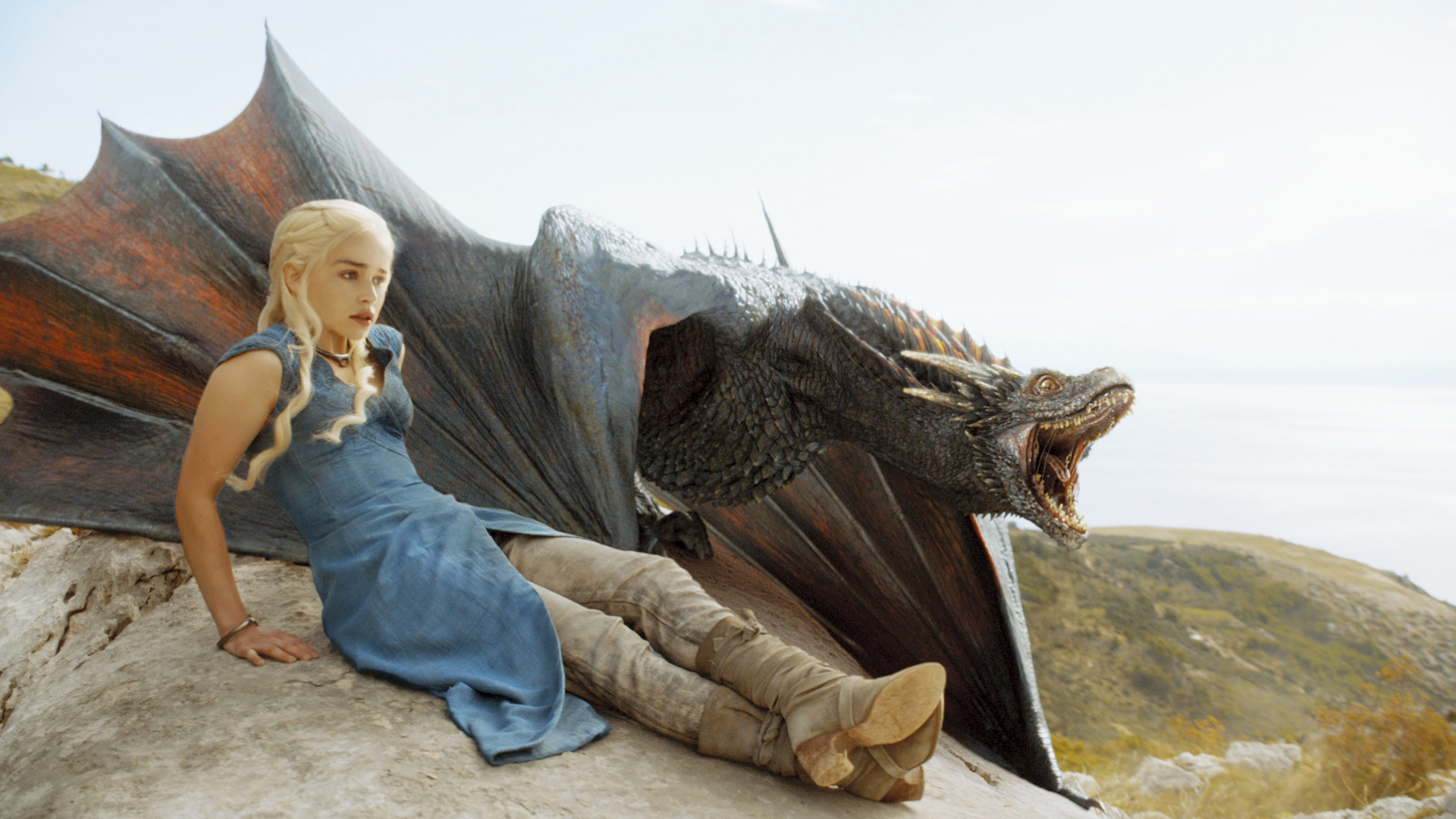
A new season of GoT: More nudity, larger dragons, and more pirates (of the downloading variety)

The only thing more predictable than the far too frequent appearance of gratuitous nudity in Game of Thrones episodes is the fact that a new season of it will break piracy record, and the season 4 debut did not disappoint. 300,000 simultaneous downloaders at its peak (not to mention the million downloads that took place in less than half a day), up from 160,000 a season ago, is a feat almost as amazing as the building of The Wall.

Australia once again led all other countries in piracy, the nation with 0.3% of the world’s population managed to be responsible for 11.6% of all GoT downloads. You can thank our one and only greedy cable provider, and their exclusive airing deal with HBO, for this. The deal prevents all other digital platforms, including iTunes, from providing access to new episode until after the entire season has finished airing, some months away from now. Sacrificing availability for short term profits seems extremely, well, short sighted for me – it encourages a culture of piracy that will be harder and harder to break. I just hope HBO got enough money out of it to make up for all the money they just lost on preventing people from buying season passes on iTunes.

And also expect this record to be broken again for the season finale.

——

MegaUpload Logo

It’s been a while since I’ve had to use the Megaupload logo, but it’s not everyday the MPAA/RIAA sues a dead website

Either they’re really desperate, or its more of a “kick ’em while they’re down” situation, depending on who you believe. The MPAA and RIAA have launched separate civil lawsuits against the very much dead and buried Megaupload, claiming millions in damages.

If you believe the spin by Megaupload and Kim Dotcom’s legal people, then this is simply a reaction to the stalled criminal case against Mega. If you believe the pressers from the MPAA and RIAA, then it’s about recouping the billions and billions lost due to piracy on a massive scale yada yada yada.

We all know that the DoJ has been sharing data with the MPAA and others (legally, via a secret court order, but still a morally questionable act of using tax payer resources to benefit lobbyist buddies), so is this the MPAA/RIAA swooping in to save the DoJ’s troubled case against Megaupload? Most of these civil cases are about shutting down a site, but with Megaupload already down and out, so is getting some of that sweet, sweet (frozen) Megaupload treasure the MPAA/RIAA’s main objective?

I for one find it hard to believe that the MPAA/RIAA would go to all this trouble just for the money, and since it’s not about shutting down Megaupload, this all seems to be about a victory for victory’s sake (and I would think that, given Megaupload isn’t exactly in a position to put up a staunch defense, a win here is almost guaranteed). A win here would relieve the pressure on the DoJ to win their criminal case, so this would be my guess for the motivations behind these lawsuits.

Just friends helping each other out.

High Definition

Netflix has officially started streaming 4K, but many early adopters will miss out because their TVs do not support the HEVC/H.265 codec that Netflix will be using. Most TVs announced for release this year will support HEVC/H.265, but most sets purchased before won’t support the advanced codec. It’s part of the risk of being an early adopter, but this one kind of bites because of the short time span between 4K and HEVC adoption.

Samsung 4K TV

Some 4K early adopters will rue Netflix’s decision to use HEVC for the 4K streams, as older TVs do not support it

Of course, with Google throwing their VP9 codec into the hat for serious consideration as a 4K codec, the situation could get even messier. So for those thinking about 4K, it’s probably still not quite the right time to buy in yet, even if you have the cash. Best to wait until the codec situation is resolved, and also to ensure that the TV set you want to buy has HDMI 2.0.

Then there’s Blu-ray 4K discs (I’m not talking about those “mastered in 4K” discs, which are still very much 1080p), which possibly means new hardware requirements for the TV (although I think HEVC + VP9 + HDMI 2.0 is probably all that’s needed, other than the new Blu-ray 4K player you’ll need to buy).

For now, 4K content is limited to House of Cards and a few nature documentaries. A nice teaser of the potential of 4K, but that’s it really. Most new films will have a 4K master floating around somewhere, and so it’s not inconceivable that Netflix’s 4K library will start growing exponentially once studios start providing the content.

So wait another year before seriously considering buying a 4K TV, is my opinion. All the technical stuff will have become standardized, and the content situation will have dramatically improve too.

That’s it for the week. Stay safe out there on the interwebs, it’s getting scary out there!

Weekly News Roundup (6 April 2014)

Sunday, April 6th, 2014

Excitement and dread. That’s what I feel when I purchase a big ticket item. Maybe I should be a bit more excited, with a bit less dread, as I’m sure this will improve my sense of joy when buying stuff. But maybe feeling joy is the wrong emotion to feel in the already far too consumerism driven world that we live in.

Let’s zoom right into this week’s WNR.

Copyright

Good news for those living in the UK. but still living in the ‘noughties’ – you’ll finally be able to rip CDs as CD ripping and other format shifting will become legal in the UK. But only if there’s no DRM protecting the content – in that case, it’s still very much illegal.

So basically, not much of a change unless you still buy CDs, and have always felt guilty about ripping them (so basically “nobody” on both accounts). Now you can rip it without feeling guilty. Isn’t copyright law reform great?

If you really really need to rip something that is protected, there is recourse for action – contact the Secretary of State! Seriously, look it up, that’s the only thing you can do if you want to format-shift something and excessive copyright is standing in your way.

I for one am looking forward to 2025, when we’ll finally get the right to convert DVDs to DivX.

Antigua Beach

Antigua: Not the copyright paradise first thought

But for now, you’ll be lucky to not don’t end up in an Antiguan jail if you happen to own a company that makes DVD or Blu-ray rippers. Because that’s where Slysoft’s owner Giancarla Bettini might end up following a legal decision against the company’s products. It won’t get that far, because fines will be paid and that will be that (not to mention the appeal), but for those that thought Antigua was a safe haven for all things copyright related, it might be time to think again.

Antigua’s anti-copyright stance comes from a dispute with the US over online gambling, a dispute that the island eventually won via a WTO ruling, which allowed Antigua to ignore US copyright claims as a way to recoup their losses. However, Antigua’s own copyright laws does have an anti-circumvention clause, which the AACS LA, the company responsible for managing Blu-ray’s copy protection scheme, managed to exploit to full advantage.

While normally a civil matter in other countries, Antiguan copyright laws made circumvention a criminal matter, with fines or jail time being the penalties.

The AACS LA has certainly been busy lately, going after both DVDFab and Slysoft, with the latter also named in the USTR’s Notorious Piracy Market list for this year. Is this a renewed attack on rippers, particularly Blu-ray ones? Time will tell.

High Definition

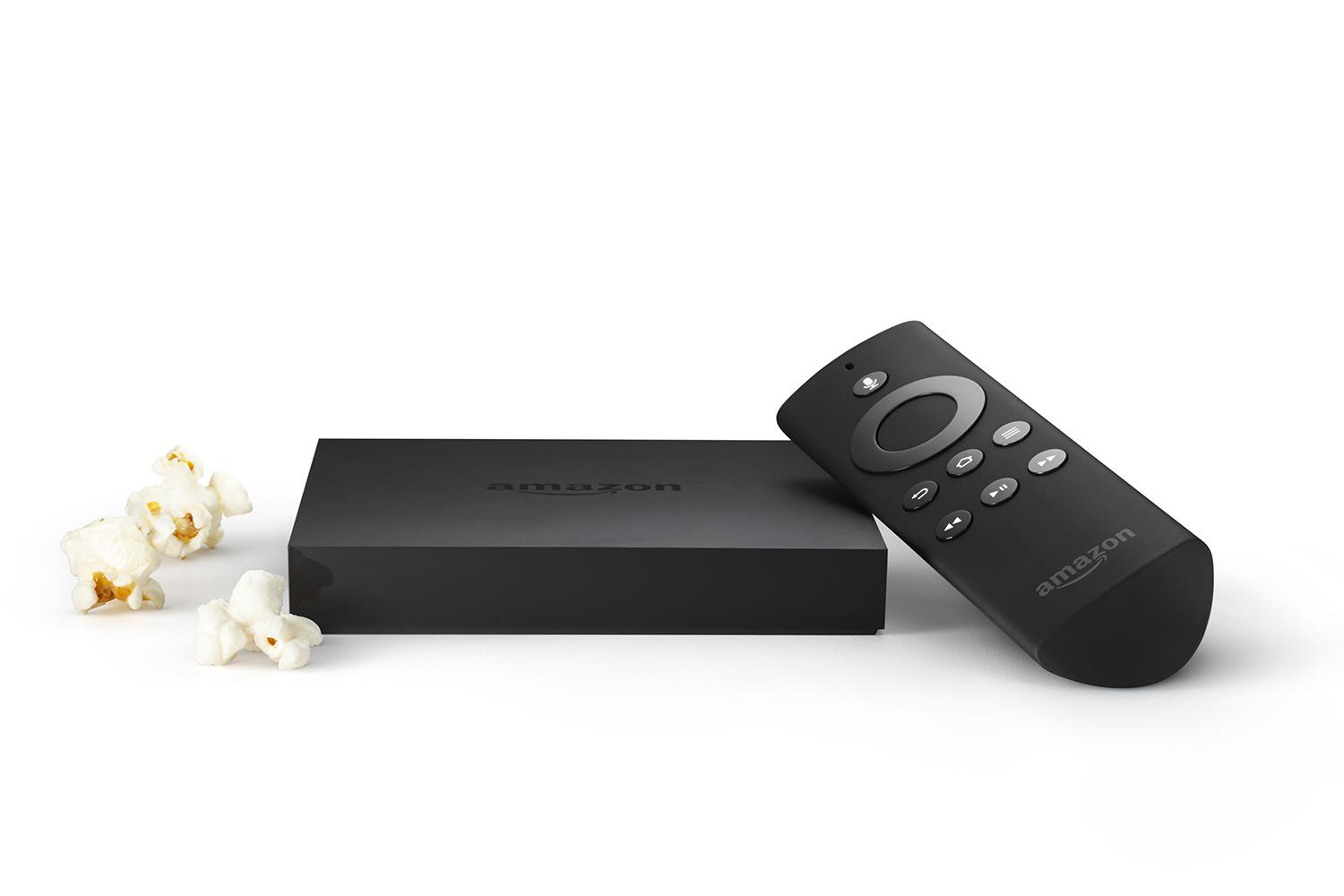
Amazon Fire TV

Is the Amazon Fire TV the device that is set to shake up the media streamer market? For $99, it has a really good chance to do just that!

The Kindle Fire, when first released, heralded the age of cheap branded tablets (cheap because they’re subsidized by content sellers like Amazon and Google). Amazon is trying their luck again with the Fire TV device, but this time for the streaming set-top box market. Taking on the likes of the Apple TV, Roku and to a lesser extent, the Chromecast, the Amazon Fire TV aims to bring not only streaming films to the lounge room, but also cheap games too – a $99 device that supports almost all of the streaming providers, plus offers apps from Amazon, and potentially thousands of games too (playability made easier with a $40 game controller add-on).

Interestingly, despite being competitors in the SVOD field, Netflix is a launch partner for the Fire TV (which, of course, supports Amazon’s Prime streaming service).

The big question is whether another streaming box is needed, since even if you discount the game consoles (which you shouldn’t), there are already plenty of streamers out there. In Amazon’s corner is the promise of a more open ecosystem (as the Fire TV is based on a fork of Android, albeit a very very heavily modified version of it), and easier searching via the built-in voice search feature. The quad-core, 2GB RAM powered device also promises to be a performance king, even if it only has a small 8GB storage (not really needed for streaming, but certainly for game and apps).

The Android nature of the device also means games will be plentiful for the system, although some games don’t necessarily translate well from phones/tablets to the TV screen (even with Amazon’s promised app that will allow you to control games via existing tablets).

It’s an interesting device, and for $99, it might be just worth playing around with.

Gaming

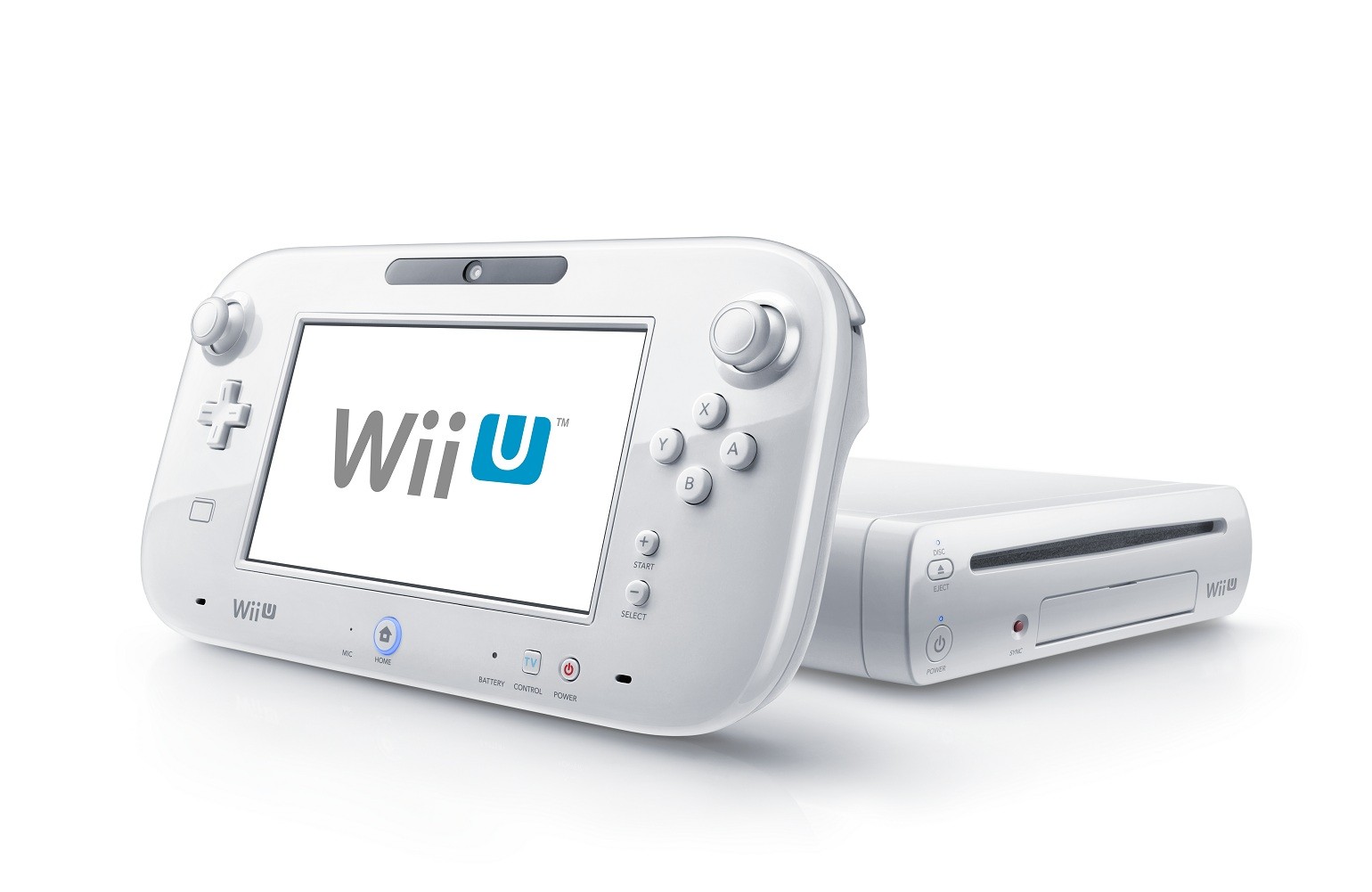
Wii U

EA subsidiary adding insult to injury by mocking the Wii U during April Fools, forcing an official apology from the company

EA just can’t seem to get out of trouble with Nintendo. Last year, they shocked the gaming world by announcing they had no games in the works for the Wii U, only to come out a few days later to say they did. Their Frostbite engine works on all the popular gaming platforms, except for the Wii U, and so Nintendo fans have always felt that EA isn’t giving Nintendo the love the company deserves.

So the mean spirited April Fools tweets that came out of the Frostbite Twitter account probably didn’t help matters for all concerned, forcing EA to issue an apology. The tweets mocked the Wii U’s perceived underpowered status, and the fact that the Wii U does not support the Frostbite engine.

EA’s COO Peter Moore called those tweets ‘stupid’ and ‘unacceptable’, but I would also like to add ‘unfunny’ to the list.

On that note, let’s end this week’s WNR before I have to end up issuing an official apology on Twitter for writing something stupid, unacceptable and unfunny (the last one is a given though). See you next week.

Weekly News Roundup (30 March 2014)

Sunday, March 30th, 2014

A somewhat shorter WNR this week, as there were a couple of interesting news stories that I decided to save for next week instead. Squirreling away for a possible (news) winter.

Let’s chew on these nuts first.

Copyright

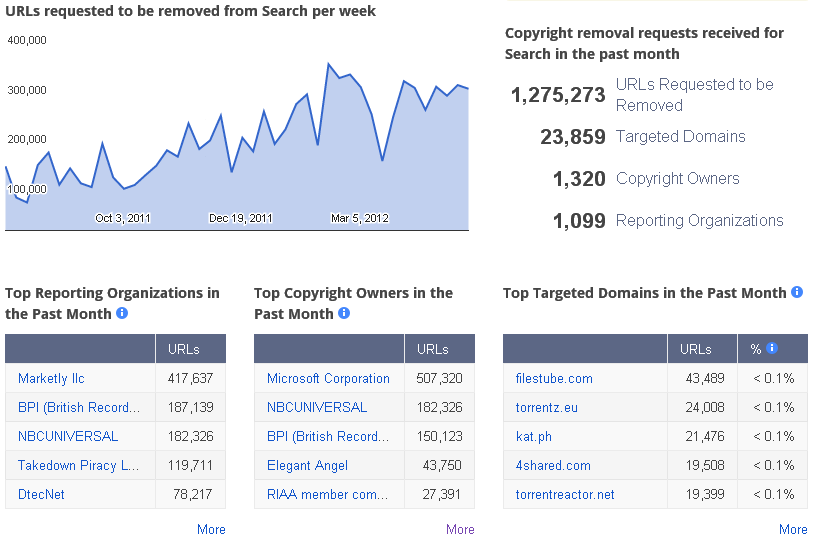
It’s a good thing that Google knows how to work with big amounts of data, because the 711,787% rise in the number of DMCA takedown requests sent to the company from 2010 to 2012 would have stumped most other companies.

Google DMCA Takedown Stats

A six digit percentage increase in the number of Google DMCA takedowns in just two years – the RIAA has been busy!

A new research paper studied this dramatic rise, and found that most of the notices comes from just a handful of rights holders. No surprise then that the RIAA was a leader in this field, with more than 7.6 million URLs requested to be removed in just 2012 alone. Porn companies and Microsoft were also very active participants. It’s these small number of rights holders that appear to be dictating the direction of Google and other’s DMCA process, with 95% of rights holders having submitted less than 10 notices in 2012.

The study also found that the number of claims per notice, and the number of URLs per claim, have also risen. This is thanks to largely automated scanning and submission tools that can quickly identify URLs related to a single piece of content (with the occasional false positive thrown in).

This all spells out an alarming trend, and you might even say an abuse of the DMCA takedown process originally envisioned when the act was signed into law by President Bill Clinton in 1998. DMCA spamming, if you will.

And has it helped? I really doubt it. Despite the huge number of URL being submitted, an even greater number of new URLs are created for the same content all the time. While the idea of stopping a flood with a sponge may give the likes of the RIAA some false comfort (“hey, it’s better than nothing”, they would say. But is it?), for those that have been innocently caught up in this DMCA frenzy (this site included), it’s anything but a comfort.

High Definition

This may be the first signs of the fallout from the death of net neutrality , as Apple is said to be in discussions with Comcast to ink a “last mile” deal that gives Apple’s upcoming video streaming service preferential treatment ahead of the likes of Netflix and Amazon.

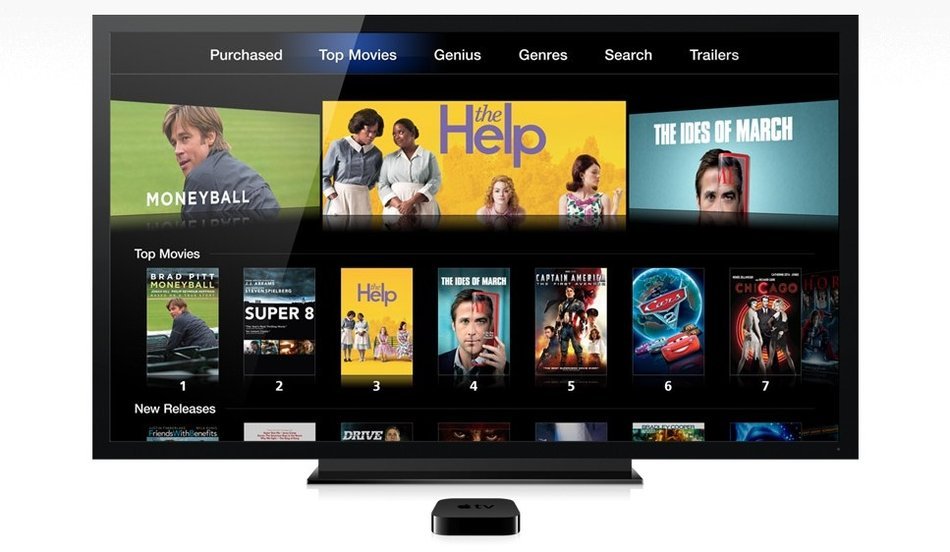
Apple TV Movies

Is Apple secretly signing deals for their even more secretive subscription video-on-demand service?

This news, reported by the WSJ, has huge implications not only for net neutrality, but for the subscription VOD marketplace in general.

If Comcast agrees to give Apple preferential treatment, it could mean the likes of Netflix, Amazon and Hulu will have to contend with a more congested last mile to the U.S’s largest ISP (who might get even larger if they merge with Time Warner Cable). This could mean performance problems and would give Apple’s yet unannounced streaming service a leg up (and they need it too, what with Netflix’s dominance).

But perhaps the even bigger story here is Apple’s move into Netflix territory. With their devices ubiquitously available in people’s homes, an Apple SVOD service could shake up the market in a way that the likes of Amazon have tried and failed to do so. Of course, it’s still hard to see Netflix’s dominance fade away any time soon as its app has also reached ubiquity, unless Apple’s offering is that much more attractive and better value (it’s hard to find more value by lowering the already low $7.99 monthly price, but if Apple can offer newer content, then that could be a game changer).

This one (from both the net neutrality angle is worth keeping an eye on.

And that’s it for now – told you it was short. Definitely more next week, so until then …

Weekly News Roundup (2 March 2014)

Sunday, March 2nd, 2014

Welcome to another WNR. Been having trouble sleeping lately, and the heavy workload for the week eventually culminated in a mild bout of the migraines. All but recovered now, but there’s nothing worse than having a deadly headache just short of a deadline.

It’s been a good week news wise, so no need for me to make excuses this time.

Copyright

Is six-strikes working? It’s been more than a year since the start of the voluntary industry-led six-strikes graduated response regime, and the people running says it’s been a success, despite the complete lack of any evidence to support the claim.

Other than revealing that “a large number of alerts” have been sent out, there has been very little information being released from the system which, in the past, has been accused of being lacking in transparency. The absence of good news, in terms of a piracy rate drop or an increase in sales as a direct result of the regime, most likely suggests that things are not going too well. Which is not all that surprising, considering the French version has already failed.

Indirectly, there are stats that indicate things are actually getting worse. U.S. traffic to sites like The Pirate Bay has actually increased since the introduction of six-strikes, and we all know that many people have signed up for proxies and VPNs to avoid detection (or to use another form of downloading that’s not monitored).

Roll of money

The MPAA has been throwing money in the direction of Republican groups recently

When we do see some stats, it will most likely paint a rosy picture that points to misleading conclusions. A ton of alerts will have been sent, BitTorrent traffic may drop, more likely due to Netflix than six-strikes, and the number of fifth or sixth strikes will be a lot less than the number of first and second strikes, which will be used as “evidence” that things are working as expected. But there will be no real drop in piracy, no real rise in revenue, and no real effect for a regime that was never really about real results, just imaginary safety.

And if industry-led action doesn’t work, there’s also government intervention. The MPAA has been busy spraying money around, and according to the Wall Street Journal (paywall) and The Hollywood Reporter, they’re spraying it in increasingly GOP directions. Both articles highlight the MPAA’s increasing lobbying payments to right wing political action groups including U.S. Chamber of Commerce ($100,000), Americans For Tax Reform ($200,000) and Let Freedom Ring, and also key appointments that have Republican ties. This is perhaps not surprising considering who controls Congress at the moment, so if that situation changes, expect the MPAA’s political leanings to change too. They’re far too smart to play politics, when spreading money to everyone seems to be the best strategy these days in the lobbying game.

High Definition

Netflix’s deal with Comcast has been discussed in the webosphere as the inevitable result of the death of net neutrality, but the actual deal has nothing to do with it. Whereas net neutrality is about ISPs messing around with last mile delivery of content, this deal is all about the interconnections between Netflix and ISPs, namely Comcast, which has been the real cause of performance issues in recent times.

Netflix

The Netflix/Comcast deal’s only real effect is a better viewing experience for viewers .. for now

Despite rumors suggesting Comcast has been throttling Netflix traffic, something they are now allowed to do with the death of net neutrality, the congestion has actually been occurring higher up the chain. This deal will see Comcast connect directly to Netflix’s servers, as opposed to through a third party network – in exchange, Netflix will pay Comcast for traffic that flows from their servers to user’s homes, money they would otherwise have paid to third parties like Cogent and L3. In essence, this is a peering agreement and is nothing new, and has nothing really to do with the net neutrality debate.

With that said, the sheer size of the likes of Netflix and Comcast (thanks to their planned absorption of Time Warner Cable) means these peering agreements may be something to worry about in the future. It’s all easy and good for the big guys to make big deals, but this will end up hurting content providers that don’t have the clout of Netflix when it comes to making deals with a behemoth like Comcast. So some of the very same issues that people are concerned about over net neutrality may apply to these kinds of increasingly secretive deals (had Comcast not announced their Netflix deal publicly, none of us would have ever known – just as we don’t really know what kind of deals Netflix has with others ISPs).

Gaming

The PS4’s Japanese launch was, as expected, a huge success. The PlayStation brand has always been well received in Japan, even when PS3 sales were disappointing elsewhere. But with the PS4 being an international hit already, the home islands weren’t going to offer up any surprises. Early data indicates that the PS4 is selling four times as many PS3s when comparing both console’s launch, so there we go.

PS4 with controller and PS Eye

The PS4 will remain stock limited until at least April, says Sony

The success of the PS4 in Japan isn’t good news for gamers still waiting for a console elsewhere though, as stock problems could continue well into April. It appears that Sony has severely underestimated the demand for the console, PlayStation UK managing director Fergal Gara even admitting that the company had a hard time believing the pre-order numbers were correct, even thinking they may have been faked for some reason, or that people were making pre-orders at multiple places in order to secure a launch day unit.

The PS4’s success is bad news for Microsoft though, and a price cut for their Xbox One has already been rolled out … in the UK. Gamers in the UK were already overpaying for the Xbox One, even compared to smaller markets like Australia, so this price cut is unsurprising, even if the timing is slightly surprising given how new the console is. But even with the price cut, the Xbox One (with Titanfall) is still $USD 80 more than the PS4 in the UK.

For all the differences between the consoles, and their different philosophies this generation round (almost a reverse of the last gen, where the PS3 concentrated on media capability, while the Xbox 360 focused on hardcore gaming), I think all things being equal (and the PS4 and Xbox One are equals, with the Wii U a step behind), pricing is probably the key factor. The Xbox 360 only surged ahead of the PS3 and the Wii in the U.S. after its price cut, for example.

So it’s time for Microsoft to rethink its strategy. Either go for broke (possibly literally) and drop the Xbox One’s price to equal that of the PS4, perhaps by repackaging the console to make Kinect an accessory again, or dramatically increase the value of the console bundle to entice buyers. Something needs to be done, and it needs to be done quickly to ensure the Xbox One remains competitive.

I think that’s it for the week. Hope you enjoy this March, my favorite month of the year and not just because it’s the month containing my birthday 🙂