Archive for the ‘PS3, PS4’ Category

Weekly News Roundup (20 October 2013)

Sunday, October 20th, 2013

I spent most of the week alternating between viewing Ken Burns’s The War, Saving Private Ryan, Band of Brothers and The Pacific. It all started with The War, and escalated very quickly from there. Some of my dreams this week were in black and white.

On to the news!

Copyright

IsoHunt Logo

isoHunt to close within 7 days, as settlement deal means the torrent search engine will have to pay the MPAA $110m in damages

isoHunt is no more. The site, and its beleaguered owner finally threw in the towel this week and agreed to a $110m settlement deal with the MPAA, which will see the 10 year old site shut down within the next 7 days.

The big settlement figure will bankrupt both isoHunt and Fung, and so it’s unlikely the MPAA will receive much of the $110m, if any at all. But the MPAA is not here to make money – the big number is simply there to scare others into submission, although I don’t think the likes of TPB or KAT will be quaking in their boots at the result.

All it will do is drive site operators underground, and push sites to relocate to countries where the MPAA won’t have an easy time filing and winning lawsuits. You can’t sue anyone if you can’t find them, or even know who they are!

——

A sign that distributors are finally getting the message. 20th Fox, the international distributors of the hit zombie TV series The Walking Dead, this week announced a plan to reduce the international airing delay for the new season 4 episodes of the show to a single day or less, in a bid to reduce piracy. The commendable plan, however, has not been the shot in the head needed to kill the piracy problem, as the new season of The Walking Dead broke new piracy records for the show on torrent networks.
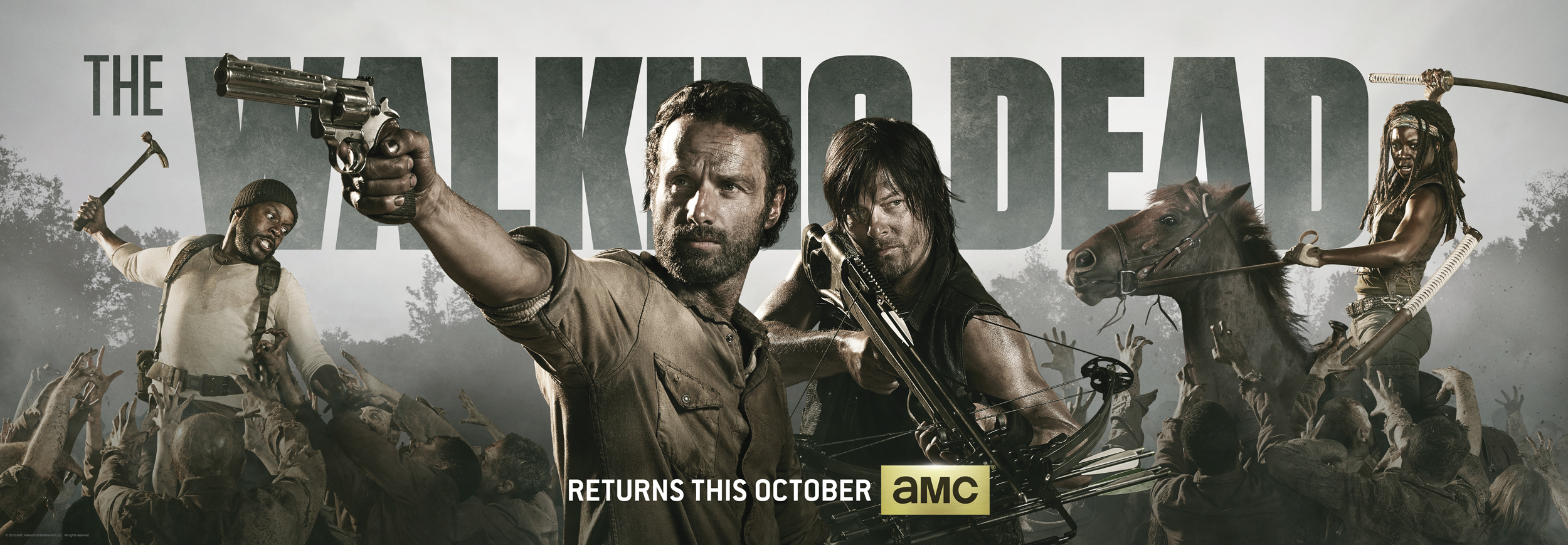
The Walking Dead Season 4

Killing piracy is much harder than killing zombies on TWD

Most interestingly, the premier episode of season 4 had been made available for free streaming for US viewers, legally, on AMC’s website. Despite this, 15.5% of downloaders came from the US, the most popular country for downloaders. This in itself is not unusual. When the new season of Arrested Development was aired exclusively on Netflix earlier in the year, many paying subscribers also chose torrent download as their viewing options of choice. And it was revealed recently that in Australia, pay TV subscribers that had paid access to new episodes of Game of Thrones still went out of their way to download the pirated version, all in an effort to bypass the 2 hour airing delay. Less Australians chose to download The Walking Dead in Australia, as a percentage of total downloaders, compared to Game of Thrones – new TWD episodes air 90 minutes after the US broadcast in Australia.

So what does this all mean? For one, it shows users are pretty specific about their viewing habits, and many simple prefer the convenience of piracy (the platform agnostic nature of it), even when a less convenient, but free and legal option is available. And while it’s commendable that airing delays are being seen as a cause to piracy, any delay, even a 2 hour one, may still be pushing viewers towards piracy. And of course pricing is an issue, as many people simply cannot afford the $45 needed here in Australia per month to subscribe to our sole cable provider, Foxtel, and access new episodes of The Walking Dead. Nor do they want to get tied up to cable or satellite subscription, which isn’t even available in all areas of the country. Even Foxtel’s recently launched Internet streaming plan (Foxtel Play) is limited in that, while it gives you access to the channel that airs The Walking Dead, the Foxtel Play app only works on the Xbox 360, PCs and Samsung Smart TVs (effectively ruling out the most popular entertainment devices here in Australia, the PS3 and iPad).

No airing delays, maximum platform compatibility, and more reasonable pricing. That’s what’s needed to beat TV piracy. It won’t kill piracy, it will always exist, but it can be made irrelevant, a manageable threat like the zombies on The Walking Dead (may no longer be true for season 4).

To beat film piracy requires largely the same approach. The issue of platform compatibility, of allowing the film to be rented or bought on the platform of choice for consumers, is as important as making sure the price is reasonable. And despite the film industry blaming pretty much everyone else for the piracy problem, the industry itself is not without blame. That’s what a new website, piracydata.org, plans to highlight.

piracydata.org takes the most pirated films data from TorrentFreak and then does an online search to find legal alternatives for these films, and unsurprisingly found that very few of them are available digitally. Most are available to buy legally from places like iTunes, but try to rent it digitally or stream it on Netflix, and you’ll be out of luck.

There is an issue with the methodology used by piracydata.org though, in that the most pirated films are almost always new releases, and it is unrealistic to expect these films to be available on legal streaming options like Netflix. But I was surprised at how few films were available for digital rental, and how many are still unavailable to buy outright. So much for the MPAA blaming Google for displaying piracy results for film searches – what exactly is Google supposed to do when there are no legal options available?

For the films that are available to buy digitally, their pricing makes them entirely unattractive. For example, the most pirated film currently is Pacific Rim. The Blu-ray combo edition, which includes an UltraViolet digital copy of the film, plus the Blu-ray and DVD versions, is only $3 more than the iTunes version at current prices. This either makes the Blu-ray combo edition extremely good value (not really, considering Blu-rays have always been around this price), or the digital edition a total rip-off. And they wonder why people download torrents!

Gaming

Sony has done it! After 32 month of Xbox 360 domination, the PS3 finally became last month’s best selling home based console. The September NPD data, which looks at video game hardware and game sales in the US, might as well have been renamed the September GTA. GTA V represented 50% of all dollars being spent on gaming for the entire month, and it was the catalyst behind the PS3 win. The PS3’s win comes largely off the back of the PS3 GTA V bundle – an equivalent bundle was not available for Microsoft’s console.

PS3 GTA V Bundle

The 500GB PS3 GTA V Bundle helped the PS3 become September’s best selling console

The Xbox 360’s loss is possibly just a one-off, with normal service likely resuming once GTA V sales dies down (when they run out of people who don’t have the game to sell the game to). 1.6 million Xbox 360s have been sold so far this year, with the holiday period yet to come. But if early pre-order reports are to be believed, the PS4 will win the first few month of the next-gen console wars at the very least, thanks to its $100 lower price tag.

There was also good news for Nintendo, with Wii U sales jumping by 200% (or 3 times as many) compared to August thanks to a price cut and a limited edition The Legend of Zelda: The Wind Waker HD bundle. Three times as many console sales probably still saw the Wii U selling fewer units than the Xbox 360.

I haven’t played GTA V all last week. Just haven’t found the time to do it, and was dispirited after trying GTA Online, only to be killed and have money stolen because I could not move my character for some reason. My character is one of the thousands of characters in the game based on Jesse Pinkman from Breaking Bad (well, a really ugly version of him anyway), so (slight BB spoiler ahead) a depression induced catatonic state and being liberal with your hard-earned money is probably not that unrealistic for a Pinkman based character.

That reminds me, I have to make a Walter White character, which, given the right clothing and facial hair choices, should be easier to create.

See you next week.
Weekly News Roundup (29 September 2013)

Sunday, September 29th, 2013

Welcome to another edition of the WNR. I’m still well immersed in the world of GTA V and Los Santos this week, and haven’t been so enamored with a game since the early days of Skyrim (before killing giants got boring). To those that criticize people like me for not embracing reality, and instead choosing to hide in the fantastic world of GTA V – well, if I could steal a blimp, skydive from it as I watch it crash and burn into a well populated area in the real world without danger or a lengthy prison sentence, then I would have done it already. GTA V is not about reality. It’s about hijacking someone’s car, running over them, and then getting out of the car to steal the money they just dropped.

Oh yes, the boring reality of “real” news. Oh well, let’s get started.

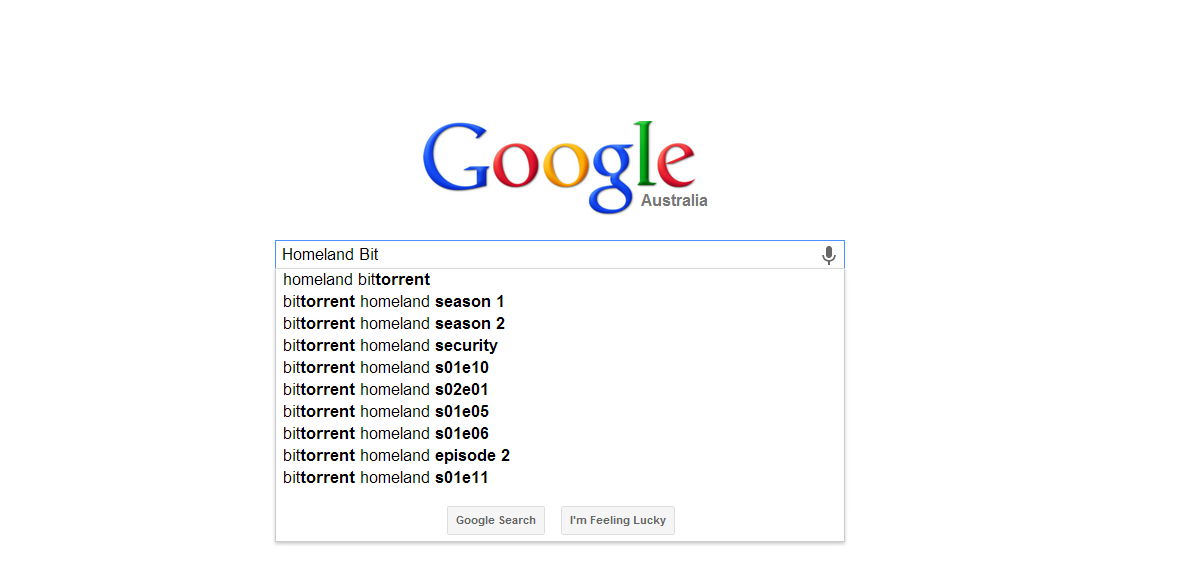
CopyrightGoogle must have been feeling generous this week when it removed the term “BitTorrent” from the list of blacklisted auto-complete keywords. Or maybe BitTorrent Inc’s recent PR campaign has had the intended effect in illustrating the fact that BitTorrent is in fact the legal name of a company that does completely legitimate business. Even Google, with its slew of lawyers, might have had a hard time arguing why the name of a well known company was being blacklisted, on purpose, in court.

Google Auto-complete BitTorrent

BitTorrent is no longer a dirty piracy word, according to Google

Of course, how most people use the term is very different to how BitTorrent Inc want people to use it, and allowing BitTorrent to grace the selection choices of auto-complete opens the door slightly again to piracy related search phrases. Type “Homeland bit” into Google, and you can see for yourself just what kind of suggested search terms Google is once again providing (most of these terms lead to pirated content, it has to be said).

The MPAA and their ilk will probably paint this as Google brazenly encouraging piracy. But I feel it is a bit of a stretch to suggest that people searching for “Homeland bit” would have otherwise not finished typing the “torrent” part of the search term had it not been for Google’s auto-complete suggestion. Or that not offering the suggestion somehow leads to less piracy.

High Definition

Should HBO offer an online-only subscription plan à la Netflix? Ask almost anyone on the Internet, and they will say yes. Ask anyone with a bit of authority at HBO, and they’ll tell you they’re not interested. At a Goldman Sachs conference this week, it was potential HBO competitor Netflix that made the suggestion again that HBO should look towards online if it wants to grow its customer base.

If HBO were to take Netflix’s suggestion on board, then viewers would be the obvious winners. It means many will no longer need to keep an expensive cable subscription just to watch Game of Thrones, and it will also have a hugely positive effect on piracy by offering people the opportunity to view HBO’s hit shows in the medium of their choice, possibly at a lower cost.

HBO Go

A standalone HBO Go subscription plan might bring in more customers for HBO, says Netflix

The obvious losers would be the cable networks, who are increasingly dependent on premium networks like HBO to keep them in business. And this is perhaps why Netflix wants HBO to compete in the same space as themselves, which at first doesn’t seem to be in Netflix’s own interests. If it happens, Netflix can then become the new basic cable to HBO’s premium online offerings, and both companies, while operating on the same medium, would not then be natural competitors.

In further Netflix news, the company announced this week that all US subscribers will now have access to Super HD and 3D content. Previously, Super HD and 3D content were only available with selected participating ISPs, those that had signed up to Netflix’s Open Connect Network (which is free for ISPs to join). Comcast, for example, did not support Super HD even though many smaller ISPs did. Now, all users will have access to Netflix’s best quality streams, regardless of their ISP. Although those using ISPs not on Open Connect may experience slow downs during peak usage times, something that Open Connect was designed to prevent.

In my experience, Netflix’s Super HD, while not quite Blu-ray quality, is definitely superior to their standard 1080p streams. At a distance of about 10 feet, staring at a 60″ TV, it can be hard at times to tell the difference between Netflix Super HD and Blu-ray. Netflix’s 1080p uses 5 Mbps, compared to Super HD’s 7 Mbps, and 3D’s 12 Mbps.

Obviously, you’ll also need a device capable of supporting Super HD streams. This should mean almost all devices capable of Netflix 1080p output, which covers most of the popular devices. The notable exception being the Xbox 360, which only supports 720p Netflix streams.

Gaming

Having started a new website about streaming recently (not so subtle plug, I know), I’ve been keeping an eye on all things streaming. But not just Netflix, but also game streaming. With both next-gen consoles promising game streaming of some kind, and has been the trend for this generation of the console war, Sony was the first to fill us in with juicy details of what their service could offer. And it also (sort of) solves another problem for potential PS4 owners – PS3 compatibility!

Gaikai

PS3 games can be played on the PS4 via the Gaikai cloud gaming service

Sony announced this week at the Tokyo Game Show that PS3 games will be playable on the PS4, but only via the Gaikai cloud game streaming platform. The same set of supported PS3 titles can also be streamed on the PS3 (it does makes sense if you think about it a bit more) and even the Vita. The game will be rendered on Gaikai’s servers and beamed to your PS4 as a video stream, and will be perfectly playable as long as your connection has low latency.

For this to become a true backwards compatible solution, Sony will have to think up a way to allow previously purchased PS3 games to be playable on Gaikai, on the PS4, without the need to fork over any more cash. One possible technical solution could be as simple as inserting your PS3 game disc into the PS4, which will be used purely for authentication purposes. But the hurdle for this to happen isn’t a technical one, but one of will on Sony’s part. If Sony finds the kindness in their heart to allow this to happen, that is to allow previously purchased PS3 games to be played on Gaikai for free, then this is the kind of thing that would tip the upcoming console war crushingly in Sony’s favor.

I think that’s it for the week. Back to GTA V for me. Hurray for escapism!

Weekly News Roundup (15 September 2013)

Sunday, September 15th, 2013

How are you on this fine Sunday. Most of this WNR was written ahead of time as I went sand crab catching on Saturday. [INSERT UPDATE ON HOW MANY CRABS WERE CAUGHT OR INSERT SOMETHING FUNNY IF NO CRABS WERE CAUGHT]. It was a very enjoyable, “and very rewarding”/”but not very fruitful” [DELETE AS APPROPRIATE], trip. So a short WNR, but still with a few interesting tidbits to go through. Let’s get started.

CopyrightCommon sense tells us that graduated response, or three-four-or-however-many strikes, hasn’t really worked as a piracy deterrent. Or as a way to promote the purchase of legitimate content. It’s common sense because many countries, like France, New Zealand, Taiwan, South Korea, have had their own regimes for a while now, and there doesn’t seem to be a lot of noise regarding their effectiveness, even from the most biased sources. It is also common sense to us because we’re not idiots.

At the same time, there has been many studies that point out the ineffectiveness of three-strikes. The latest one comes from Australia’s Monash University. A new paper by Dr Rebecca Giblin finds that graduated response has failed in the three key areas that it was designed to have an effect in. Namely, reduced infringement, to promote the purchase of legitimate content, and to promote the creation and distribution of new content. The study found little evidence, if any, that graduated response has had a positive effect in any of these three key areas.

Three Strikes

Three, or however many, strikes doesn’t work to stop piracy, encourage legal purchases, or the creation of new content, a new study finds

It doesn’t reduce infringement because people can simply use another method to download their movies and TV shows, one that is not monitored by three-strikes. It doesn’t promote the purchase of legitimate content because of the previous point, and also because it doesn’t really solve any of the issues that encourages people to pirate (namely price, availability, usability). This is all fairly obvious to anyone who just thinks a little bit about the problem with piracy. In that piracy isn’t a problem of enforcement, it’s an issue of convenience and pricing. And effective enforcement was never really going to be possible anyway, not without a herculean effort that would fail even the most optimistic cost/benefit analysis, and at the same time, shred our privacy rights.

Simply stated, graduated response doesn’t work. It’s a waste of money, and it unnecessarily reduces our right to privacy and due process. But it’s considered a panacea among the pro-copyright lobby, so expect more countries to adopt this in the near future.

The only thing more pointless than graduated response, and more dangerous, may be search engine censorship. And in an effort to hold the fort against the mounting pressure from copyright holders to start messing around with search results, Google has released a report detailing the company’s anti-piracy principles and the successes in fighting the good fight.

Other than the usual self propelled back patting, the report does state quite clearly what methods the search engine giants thinks is most effective in reducing online piracy. It starts with the perfectly reasonable call for better legitimate alternative to piracy, more of your Netflixes and Spotifys, and in a somewhat transparent gesture of self promotion, Google Play and YouTube. The rest of the report simply states Google’s anti-piracy efforts, including the 4 million DMCA takedown requests the company has to deal with every week, as well as efforts in shutting down revenue sources for pirates.

An interesting read, no doubt. But will it placate the copyright lobby and their political servants? Probably not, but it was worth a shot anyway.

High Definition

I mentioned a couple of months ago that the BDA (Blu-ray Disc Association) has been investigating the potential for 4K movies to be distributed via Blu-ray discs. New rumors suggest that a positive announcement from the BDA on this is not too far away. Adding fuel to the fire is this story about a German Blu-ray disc manufacturer announcing a new line of triple-layer 100GB Blu-ray discs, and their press release specifically mentions 4K as one of the intended uses.

Blu-ray Player

Could existing Blu-ray players be made capable of reading 100GB triple-layer discs containing 4K content? Does it even matter, as these players may not be powerful enough to decode 4K content anyway …

100GB should be more than enough for 4K movies, especially if it uses the new H.265/HEVC codec (but even with H.264/AVC, 100GB should be enough). The big question is whether these new discs would be compatible with existing Blu-ray players, perhaps after an obligatory firmware update. However, new players will probably have to be produced to support 4K output and support for H.265/HEVC, and older players may lack the processing grunt to handle the decoding anyway; so having these discs be readable by older Blu-ray players may be somewhat pointless (although being able to downscale Blu-ray 4K content to 1080p would be a very nice feature to have for existing Blu-ray owners, and will no doubt help push Blu-ray 4K sales at a time when 4K TVs are still too expensive).

The other main advantage of backwards compatibility is that with the PS4 and Xbox One both having Blu-ray drives, and both capable of outputting at 4K resolutions, these would instantly become the Blu-ray 4K players of choice in the same way the PS3 was the Blu-ray player of choice back when Blu-ray first launched. Stay tuned to this space.

If any of this is true, it would definitely keep Blu-ray relevant in the 4K era. I know Sony, of all people, are going down the disc-less route in terms of 4K, but discs are still the most efficient way to transmit the large amounts of data required by 4K right now. That will change with the increase penetration of fiber based broadband, but this could take years. And we’ll probably have the bandwidth hogging holographic TV to worry about by then!

Gaming

The August NPD report has been released. The Xbox 360 was once again the most popular home based console for the month of August 2013 for the US market. This is the 32nd time in a row that Microsoft’s console has won the accolade.

GTA V Screenshot

GTA V will be occupying most of my free time over the next couple of weeks, I suspect

However, only 96,000 Xbox 360s were sold, only half of what it was a year ago. This is the first time in a long time that the Xbox 360 has sold less than 100,000 units in a given month, and the fact that it was still the best selling out of the other home based consoles, tells a rather unfortunate story. Still, with only months left before the Xbox One and PS4 are on the market, the low hardware sales are to be expected. GTA V’s release this month will boost hardware sales when the NPD releases its report this time next month though.

Speaking of GTA V, I’ve pre-ordered my copy (despite the fact that the pre-ordering phenomenon is directly incentivizing the video game industry’s many bad habits these days – but I just can’t say no to a GTA game). I doubt I’ll have time to play it until next weekend, so please do not expect a surprisingly wordly edition of the WNR next week. It ain’t gonna happen!

That’s it for the week. I’m off the enjoy a nice dinner that includes crabs/no crabs [DELETE AS APPROPRIATE]. See you next week.

Weekly News Roundup (25 August 2013)

Sunday, August 25th, 2013

A busy week for me, but not a busy week for news apparently. Just your usual mix of overreaching censorship, continued DRM infestation, and another shot fired in the ongoing game console wars. Same old, same old, really.

Before you start your way through this week’s WNR, have your say in our new poll about Netflix and your changing DVD/Blu-ray buying habits. I think it has changed mine, in that I buy less (well, I’ve already stopped buying DVDs, but I find I’m now skipping Blu-rays of movies that are already on Netflix as well). It’s not a dramatic change, since the net effect is that I end up watching more while spending about the same amount of money. Anyway, on to the WNR.

CopyrightIt appears that blocking people from visiting The Pirate Bay has no effect on the overall piracy rate, according to a new study in the Netherlands on the country’s own censorship efforts. In fact, in the 6 month after TPB was blocked, piracy rates actually increased.

The Pirate Bay

Blocking the Pirate Bay has had no real effect on piracy rates in the Netherlands, a new study finds

While the study found that 20-25% of those who had been downloading prior to the blockade did stop or reduce their downloading, the number of people who admitted to downloading actually went up from 15% to 18% in the 6 month since the blockade. The researchers say that this means that the ban failed to prevent new downloaders from picking up the habit, even if it did stop some old downloaders.

The study also monitored BitTorrent swarms to see if the blockade had any effect. At first, it appeared that the number of downloaders had dropped from ISPs that had implemented the block, but the number soon reverted back to normal. So it seems that people are also easily able to find ways around the blockade, the report concludes.

Overall, it seems that censorship really isn’t the best way to deal with the piracy issue, since there are too many alternatives and workarounds. It won’t stop the copyright lobby from trying their darnedest to get every country in the world to participate in their censorship experiments though.

Speaking of censorship, popular copyright issues website TorrentFreak was at the wrong end of a mistaken censorship effort this week, as Comcast tried to get the news website to remove a link to publicly available court document. The cease and desist notice was also sent to TorrentFreak’s web host, and they would have been forced to take down the entire website had the notice issuer not reversed their decision in time, which they eventually did (citing unspecified errors). A close call, but with web hosts and domain registrars (you’ll remember the trouble we had earlier in the year) so freaked out over potential copyright and other legal issues, more such close calls will happen with increased regularity unless ISPs and web hosts get more, not less, legal protection.

——

Hollywood: Stop DRM in HTML5

DRM comes to HTML5 via the Chrome for Android browser

It was always only a matter of time. Ever since the HTML standards people, the W3C, gave the green light for DRM to worm its way into the heart of HTML, it was just a matter of waiting for the browser makers to start their implementations. So when Google engineers this week announced that the Widevine DRM will be coming to the Chrome for Android browser, we can hardly say it was a surprise.

As much as I don’t like DRM being baked into HTML, the truth that the W3C had to face was that the alternative wouldn’t have been much better. DRM would still be there, but it would be in closed off, proprietary apps that, while still using the Internet infrastructure, would largely live in their own little walled gardens. The trend, if allowed to be continued, would then see more and more of these walled gardens being created, and eventually killing off the open web as we know it. DRM for HTML is the W3C’s attempt to keep the web (the web, as in browsers and HTTP and all that) still relevant in the age of smartphones and tablets.

The actual content delivery people, Netflix and co, will welcome the announcement as well. Apps are hard to maintain, especially now with so many “smart” devices that one needs to support. It’s much easier to just have their videos work via a standard compliant browser, a piece of software they don’t need to maintain, and then they can concentrate on making their UI improvements and adding new features through relatively bog standard web based coding.

Gaming

With the PS4 just around the corner, Sony hasn’t completely given up on the PS3, with a new model released just this week. It is of course not really a new model, as the 12GB flash-storage based version of the PS3 has been available in other regions for quite a while now, but this would be the first time the $199 priced console is available to buy in North America.

The big question of course is whether it’s worth the price savings compared to its hard-drive included siblings. I’m afraid though the answer, at this time, seems to be a ‘no’.

"Super Slim" PS3

The PS3 Super Slim 12GB is now available in the US for $199, but it’s not as good value as it sounds

For example, you can get a PS3 500GB console with the eagerly awaited GTA V game in a bundle for just under $70 more. To me, 488GB of more storage plus GTA V is worth the extra $70. Second, PlayStation Plus has become increasingly better value due to all the free games that Sony are giving away. The “Instant Game Collection” feature means you get a monthly collection of free games as part of your PS Plus subscription as digital downloads, and 12GB is just not going to cut it. And with the OS taking up space, 12GB end up being something like 8GB, which is just barely enough for one disc based game install, and not enough for most digital downloads.

And yes, you can install your hard-drive, but work in the price of a cheap laptop drive plus your time and effort, and it’s probably not worth doing, especially not compared to the GTA V bundle currently available (assuming you want the game. And you should).

Now, if the 12GB console gets its own game bundle, and drops in price by another $50, then we may be onto a winner. I wouldn’t rule something like this out for the 2013 holiday sales period.

And that’s it for the week. Hope it wasn’t too short, or too long, or too boring, or too many ‘toos’. See you next week.

Weekly News Roundup (18 August 2013)

Sunday, August 18th, 2013

I’m finding it a bit difficult to come up with an intro to this WNR. Probably because I only slept about 5 hours last night. And that I have nothing of real interest, and on topic, to share this week (although I have to say I’m quite enjoying the Netflix original Orange is the New Black). But most likely the sleep thing.

Onto the WNR.

CopyrightThe anti-DMCA, anti-censorship, and pro gay rights movements combined this week to form the perfect storm. It all started when controversial heterosexual rights group (yep, you read it right) ‘Straight Pride UK’ used the DMCA takedown process to censor their own response to a Q&A.

Not happy at how their own answers looked on student and freelance journalist Oliver Hotham’s WordPress blog, Straights Pride UK threatened Hotham with a DMCA takedown notice if he did not remove the content voluntarily; a threat that was eventually carried out.

The Streisand Effect did its thing and the removed article got more attention than it might have ever had, had Straights Pride UK simply let Hotham publish it without interference. Even Automattic, the owners of WordPress, eventually had to make a statement calling the DMCA takedown a clear case of abuse and censorship.

Not going into details about Straight Pride UK’s assertions, this latest incident shows again why the DMCA is deeply flawed, and how copyright laws now hamper creativity and speech, when the whole idea behind copyright is to promote these things (by giving copyright owners incentive to continue to create and speak). Copyright is one of many things that have been co-opted by moneyed interests to work directly against its original intended purpose.

To put it in another way, piracy isn’t always an anathema to the creative industry. While all the others are hitching a ride on the Internet-piracy-is-to-blame-for-everything bandwagon, it’s much easier to see piracy more as a nuisance than a curse if you happen to have *the* hit show of the moment. And if take this a couple of more steps in the same direction, piracy is not only not harmful, it’s actually quite good. Or more precisely, it is the reflection, the response, to something quite good.

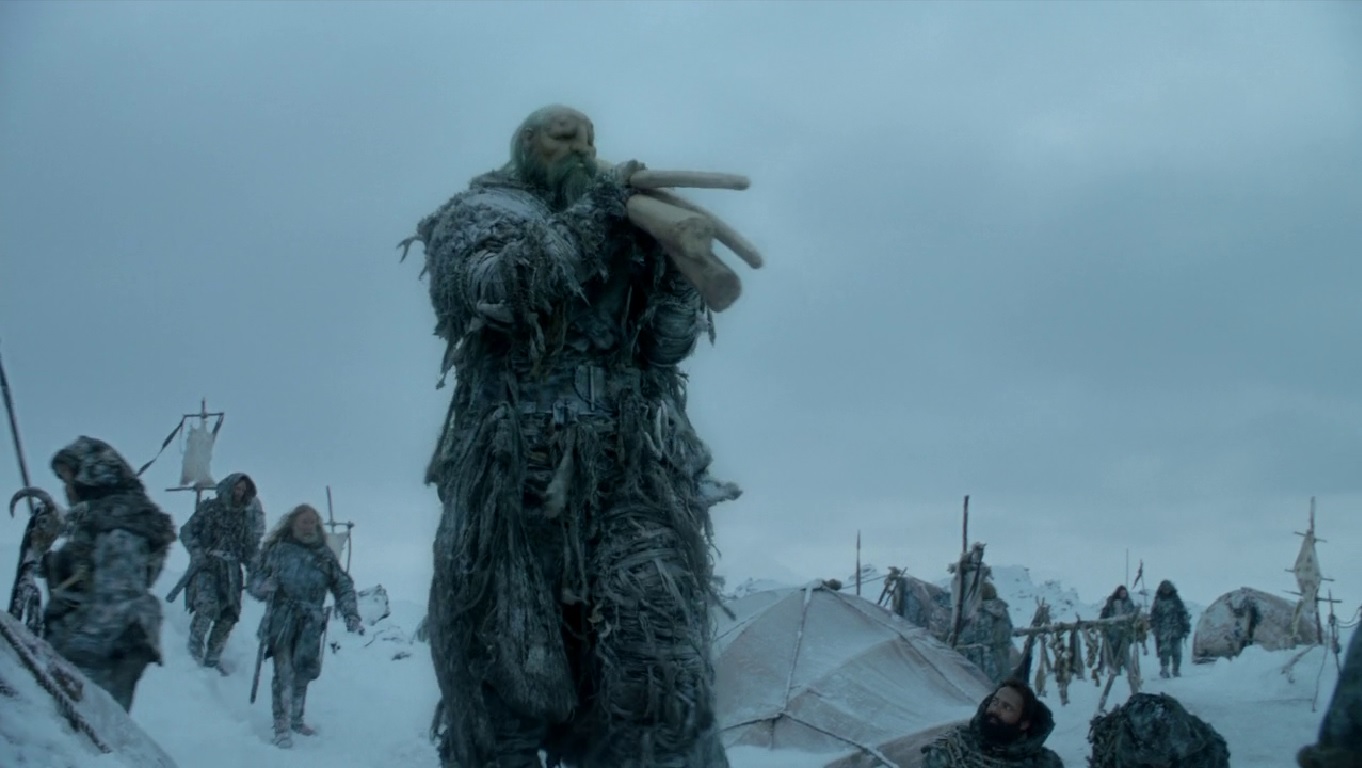
Game of Thrones: Giants

Piracy has not been a Giant problem for Game of Thrones (sorry)

At least that’s what the CEO of HBO’s parent company, Time Warner, thinks. Jeff Bewkes told investors during an earnings call that Game of Thrones’s piracy record is actually better than winning an Emmy thanks to piracy’s “tremendous word of mouth thing”. And word of mouth, or buzz, is what drives new subscribers, according to Bewkes.

Premium cable isn’t a stranger to piracy. Whether it’s the old fashioned illegal hook-up, or shared subscriptions, or the Internet, piracy is piracy. And in Bewkes’s experience, piracy eventually leads to paying subscribers.

It’s definitely an enlightened view from an industry that hasn’t always been very enlightened when it comes to the “nothing good has come out of it” Internet. It also makes sense. The reasons for people wanting to pirate something is also the same reasons that makes people want to pay for whatever it is. With desire taken care of, it’s just then a problem of finding out why people aren’t paying; whether it’s an issue of price; user friendliness; or availability.

It’s only when you have a poor product, or a business model based on poor value, that piracy then starts to play a bigger role in determining profitability.

As for Game of Thrones, it’s good to be the King (of television drama).

Gaming

Has the anti Xbox One DRM backlash been unfair to Microsoft? Veteran game designer Peter Molyneux thinks it has, as he says gamers have misunderstood the long term vision behind Microsoft’s ill-fated and now reversed changes. Molyneux not only thinks that gamers too harshly judged Microsoft for its bold vision, but that they continue to harshly treat the company even after it folded and gave gamers everything they wanted.

Xbox One Controller

Have we judged Microsoft too harshly for their DRM snafu?

Molyneux believes in Microsoft’s vision because he says that the future of gaming is indeed online, and being online almost all of the time. But he also adds that it is up to game companies like Microsoft to create the applications that take advantage of being online all the time, and to explain the benefits; something I think everyone can agree that Microsoft did a poor job of.

To me, everything Microsoft did seemed to be too reactive. They failed to anticipate the backlash and once it materialized, they continued playing a losing game of catch-up. For example, the whole used game trading scheme seemed like an afterthought, instead of being baked right into the design – either Microsoft didn’t explain it better, or it really was a reaction to the backlash. And the reversal was the ultimate reaction, some might say over-reaction.

Personally, I liked the idea of not having to use game discs. I thought that by allowing the re-sale and trading of digital purchases was a revolutionary idea (one that could have changed copyright law, for the good, forever). And I too agree that the future of game distribution lies online. But I also think that discs still have a place, and that gamers should have been given a choice of whether they wanted to do it the old way or the new. And at the very least, Microsoft should have lined up all of its re-sale/trading/sharing ducks before they unleashed their creation onto the world (and then failed to answer some very simple and expected questions).

It’s not what you say. It’s how you say it. Sometimes.

As for the latest NPD results, showing US video games sales in July, the only thing I can say about the Xbox 360 being the most popular (home based) console is that its sales were poor, but others were poorer. With only 107,000 Xbox 360 units sold in the whole month, this was 47% down compared to just a year ago. And the Wii, the Wii U and the PS3 all did worse as well.

Wii U sales are pegged at closer to (and probably under) 30,000, according to unofficial sources, and it is steadily dropping as well. The PS3 will have come closest to the 360 numbers, but not close enough.

But it is close enough to the end of this WNR. So close, that it could end at any moment. Like, right in the middle of this sente