Archive for the ‘Gaming’ Category

Weekly News Roundup (14 March 2010)

Sunday, March 14th, 2010

The February NPD analysis has been posted. The analysis looks at video games sales stats in the US based on figures released by the NPD. The big surprise for February was that the Xbox 360 actually managed to beat both the Wii and the PS3, something that I don’t remember happening before. Both Nintendo and Sony blamed stock shortages though. I keep on expecting Xbox 360 sales to disappoint, but good game releases seems to come along just at the right time for the console to give it a much needed bump. For all the talk of the PS3’s strong year on year growth, it’s worth noting (again) that it’s a bit like comparing apples to oranges, due to the price cut and Slim and everything. Or more precisely, it’s like comparing apples with rotten oranges, thanks to the PS3’s dismal sales figures for most of 2008 and 2009. To further illustrate this point, for the month of February, the Xbox 360 enjoyed a massive 66% increase in sales between 2008 and 2010, to the PS3’s 28% bump (and the Wii’s 6% drop). Basically, the PS3 is now enjoying figures that it should have been enjoying this time last year. With some hit games coming to the PS3 in March, Sony will hope this will be yet another important milestone for the console, much like the price cut/Slim back in September last year.

Anyway, there’s a few news items to go through today and it also happens to be my birthday as well, so yeah!

Copyright

Let’s get started with some copyright news. The Ubisoft DRM controversy keeps on going this week with a couple of related news stories as well. With Assassin’s Creed II released, the Ubisoft DRM servers came under some serious test, and unfortunately it failed.

Ubisoft blamed a DDoS attack for the server downtime, which caused paying gamers to not be able to play the games that they paid for, while those pirating it weren’t affected. Ubisoft still says that the only complete version of the games are the legitimate ones, since some files or content can only be accessed through Ubisoft’s servers. I think it’s safe to say that the games hasn’t been completely cracked, but it might also be safe to say that it will be sooner or later. But that’s all beside the point. The point is paying customers weren’t able to play the games because of a situation that Ubisoft hadn’t anticipated (the server attack), and there will be plenty of situations that Ubisoft hasn’t and won’t be able to anticipate. Is this really fair to gamers? Following the Ubisoft controversy, a lot of other game companies have come out with their opinions on the matter. Futuremark, the makers of 3D Mark and the upcoming game Shattered Horizon, says DRM that “gets in the way” is only going to harm the game companies because “it’s not like there is a shortage of other games demanding my attention”. How many gamers have decided to buy some other game because they don’t want the hassle associated with playing Silent Hunter 5 or Assassin’s Creed II (and for the latter, they can still get the console version if they really want to play it).

Steam logo

Steam's popularity shows that there are still some kinds of DRM people might accept

Valve’s Gabe Newell, the guy behind the Half-Life series, and also the successful Steam platform (which has just been made available for the Mac, finally) also says something similar. While accepting an award at the Game Developer’s Choice Awards, Newell believes game companies should adopt a ”what have I done for my customers today?’ attitude. Basically, Newell thinks DRM is a negative that takes something away from games, and if you do that, then you better also give them something extra to make up for it, which is what the Steam platform attempts to do. But if one goes overboard with DRM, as Ubisoft appears to have done, then it’s going to take a lot of positives (more than just online save games) to be able to justify something like this. The Steam platform does have DRM as well, but it seems to offer enough for paying customers to accept the limitations. The often discounted games might also help gamers ignore the inconvenience of needing the Steam client and having to be online before playing a game.

There’s a real battle in the UK over the future of the Internet, with the music industry being represented by the BPI who wants three-strikes, ISP monitoring and all that good stuff. The ISPs, and pretty much everyone else, don’t want it. In a new tactic, the BPI is trying to entice ISPs to get on board by luring them with the possibility of huge amounts of extra revenue from working with the music industry and selling legal music. I don’t see any problem with this, except why do we need three-strikes to make this a possibility, since this is something the music industry should have been working on ages on (and perhaps if they did, piracy wouldn’t be such a big problem now). ISPs are not impressed and one spokesman questioned the ‘value of such insight from an industry which has failed to acknowledge the impact of new technology on its own business models’. Touché. The music industry has been slow to adapt to the new digital and Internet revolution, there’s no greater evidence than the fact that the most popular online music store is being owned and operated by a computer company, Apple, and not one of the big music labels. But a new study also shows that even with the dominance of iTunes, there’s still a significant number of people that don’t know where to buy music online legally. While most know of Amazon or iTunes, 20% didn’t know any online stores. This isn’t to say that the cause for piracy is due to people now knowing where to buy music, because people who pirate will always pirate, and people who buy will find a way to do it. But it does highlight that the music industry has plenty left to do before it can declare that they’ve done all they could and that it’s time for the government in intervene with harsh legislation. The music industry was quick to try and discredit the new study, by saying their own study shows that 96% of Internet users were aware of either Amazon or iTunes.

Hadopi Logo

Hadopi, the French agency overseeing three-strikes, only regulates P2P networks for three-strikes

But does three-strike actually work to one, deter pirates, and two, increase revenue? The French have had three-strikes for a while now, and the results are not promising. Piracy is actually up three percent compared to before three-strikes was introduced. While noting that the habits of downloaders have changed, less people now use P2P and more use HTTP or streaming sources to get their pirated content (these sources are not covered by three-strikes), the overall number of cases of piracy has actually increased. It’s also worth noting that secure P2P means that it’s hard to track just exactly what is being downloaded and by whom, and so the figures could be higher depending on how the study was conducted. In any case, it definitely shows that three-strikes is not the cure all solution that the music and movie industries thinks it is. The same study also found that 50% of people who pirate stuff also buys stuff online, and of course if all of these people are kicked off the Internet by three-strikes, then that’s going to mean a direct revenue drop for the music/movie industry, not to mention other online based industries. The reality is that many users see purchasing and illegal downloads as two possible ways to get what they  want, and it’s up to the music/movie industry to convince them that one way is better than the other. Instead, they’re trying to punish these users for choosing the wrong option, and all that does is to close off both possible ways to get content. Pricing and convenience will win this war, not bannings.

And then there’s also the theory that even illegal downloads help sales eventually. The number of people who have been introduced to new music, new artists, new TV shows, new games, through pirated content at first and then leading them to buy more stuff, cannot be underestimated. Pirated content offers “try before you buy” and sometimes that’s the only way to get new customers. Then there’s also the Internet hype effect, and the more people that talk about the content (and logic says that the more pirated the content is, the more users there are that have experienced it, and therefore, the more discussions there will be about it), the more hype it generates and that can help sales. Of course, bad content might get found out faster, and I sometimes wonder if that’s what really the studios and labels are worried about, that bad content are being “filtered” out too quickly and they may actually be forced to produce good content consistently in the future. For the movie studios, the last few years has been bad ones in terms of piracy, but the MPAA was happy to note this week that global box office receipts have jumped a massive 30% since 2005, and 2009’s global earning was just shy of the 30 billion dollar mark, a new record for the industry. So is piracy really hurting the industry at all? We know that increases in box office receipts may have more to do with 3D screenings that are becoming standard for big releases, and that if piracy affects anything it will be home video sales. Home video sales have dropped, although with Blu-ray revenue increasing, studios are relatively confident in this area. But I just don’t believe the Internet has had no effect on box office receipts, since it has had an effect (both positive and negative) on everything else in our lives.

High Definition

Let’s move onto Blu-ray and HD news. Manufacturers are rolling out their 3D TVs and Blu-ray players in droves, but the cost of getting 3D for your home may just be too high for some, if not all.

Panasonic 3DTV and 3D Blu-ray Player

3DTV is going to cost a lot, as you'll need a new TV, new Blu-ray player and new 3D glasses

For one, you’ll need a new TV. One thing that has been confirmed is that 3D capable TVs will carry a premium over standard ones, up to 50% more expensive for Sony Bravias for example. And then you have the need to upgrade your Blu-ray player to one that is capable of 3D, although you can skip this requirement if you have the PS3 (another reason to recommend the PS3 as the Blu-ray player of choice). But if you can’t skip it, at least 3D capable Blu-ray players should not carry a huge premium over standard ones (although you might need to buy a new HDMI cable as well). Then you will have to get glasses. Most of the systems use active shutter glasses, which means expensive glasses that cost upwards of $150 per pair. Some of the 3D TVs will come with a few sets (for 50% more, you’d expect them to come with at least 4 pairs), but if you want the whole family to enjoy a 3D nights in, then be prepared to pay for it. And then lastly, you’ll need to get 3D movies to feed your 3D system, which has now cost you several thousand dollars probably. This may mean that you’ll need to double dip and buy new versions of recent movies that have been released on Blu-ray as 2D versions only. And knowing studios, they’ll release a 2D version of the movie first on Blu-ray, and then hope for the double dip with a 3D version later on, which is exactly what Fox is planning with Avatar. And with plans to re-release classics like Star Wars on 3D again, be prepared to buy some of your movie collections again (again (again)) if you want to watch it in 3D.

Moving onto online content. The war between HTML5 and Flash is intensifying. A benchmark review was attempted recently to find performance differences between HTML5 and Flash, but it appears to have failed because compatibility meant that it was almost impossible to compare apples and apples. The problem is that the latest beta of Flash has GPU assisted decoding, but not on all platforms, and then you have HTML5, in which some browsers will support H.264 content, while others like Firefox won’t. It would be nice if a proper standard like HTML5 can supersede the need to install third party plugins like Flash, to allow all browsers to play interactive and video content out of the box, but if HTML5 doesn’t set a standard for whether H.264 support is mandatory or not, then it’s next to useless and I’d rather have Flash, which promises universal support (even if some won’t have GPU assist enabled). My opinion is that HTML5 must make H.264 mandatory. I know there are licensing issues with H.264, and more needs to be done in this area to ensure free and open source browser makers can continue to do their excellent work, but H.264 has industry support and that’s crucial in terms of performance and compatibility. It would be nice of Ogg Theora or another open source format become widely adopted, but it just hasn’t happened and it’s unlikely to do so unfortunately. Perhaps if someone like Nvidia added Theora acceleration support to their GPUs, then the situation might change.

Speaking of Nvidia, they’ve not had a good time in the graphics card market recently, with ATI/AMD dominating with the Radeon HD range in both the price and performance criteria. Then there was the whole failing GPUs in Macbook disaster a year and half ago. Now it seems Nvidia’s new driver is killing GPUs. Those that have upgraded to 196.75 need to perform a downgrade immediately, or face the possibility of having their GPU, or even mothergboards, fried due to overheating. Nvidia has since removed the offending version from download, and has urged users to downgrade as their soonest convenience.

Gaming

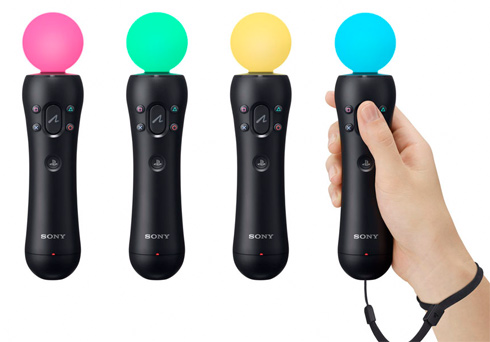
And finally in gaming, with Sony officially naming their Wii like motion controller, the PS3 Dildo Move has been in the news this week. Will it kill the Wii? What about Natal? And why does it look like a dildo?

The answer to all these questions might be a simple “wait and see” (except the last one, since the answer to that is it’s a combination of the need for the strobe light to interact with the PS3 Eye Toy and some unfortunate design decisions). It’s easy to see why it can kill the Wii, with the PS3 superior 3D graphics and more accurate controller bringing us what we think the Wii 2 will be like. It’s also easy to see why it will fail, since failure is exactly how you would describe the efforts of third party game developers when it comes to taking advantage of the Wii. Can Sony make fun games like Nintendo seems to be able to do in their sleep?
PS3 Move Controller

The PS3 controller now has an official name, the PS3 Move

For the Natal question, again, it’s far too early to say anything about it. For one, we don’t know what kind of games will benefit from Natal, and we still don’t even know if the whole concept works, due to issues with lag and whatnot. Obviously, the controller-less Natal seems a far bigger leap than the PS3 Move, but bigger leaps can succeed like the Wii or fail like the proverbial Virtual Boy. If it does work (that is, if the lag issue can be resolved), then it would be easier to market than the PS3 Move, which for the average Joe, seems too much like the Wii (even though it’s not). Some have suggested the lag is around 0.1 seconds on average, but others have likened it to what the original Wii remote was like when people play tested it, which I guess worked out just fine for Nintendo. I think for Natal to succeed, it needs integration with the traditional controller. Instead of making games that require you to use the Wii-mote, or the Move all the time, Natal’s camera system and the ability to map your body movements, plus facial and voice recognition should allow you to hold the good old Xbox 360 controller and then use body/limb movements, and voice controls, to enhance the normal gaming experience. Think taking penalties during football/soccer games. Throwing grenades in a FPS. Navigating the Xbox 360 interface like your garden variety Tom Cruise. Giving competitors the finger in a racing game, etc. The possibilities are endless!

But if I had to use the Wii-mote or the Move or Natal to play traditional games that already work perfectly fine with a controller, then I’m not really interested in that, since if it works, it works and there’s no need to reinvent the wheel.

That’s it from me this week. Off to enjoy what’s left of my birthday today. See you next week when I’ll be older but definitely not wiser.
Game Consoles – February 2010 NPD Sales Figure Analysis

Saturday, March 13th, 2010

This February is an important month for several reasons. Following the disappointing numbers for January, there was hope that the gaming industry would pick up again in February. February also marked the release of several new releases, including Bioshock 2 and the PS3 exclusive and critically acclaimed Heavy Rain. So will any of these games make the difference, will the industry start to have positive year to year growth, or are we still in a period of decline? Read on to find out. The figures are from NPD, a marketing research firm that releases games console sale data every month.

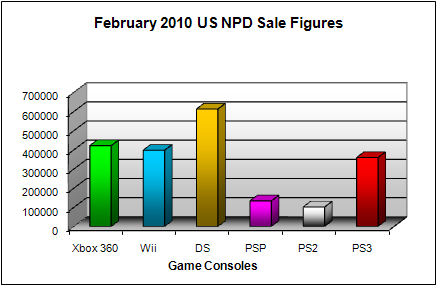
The figures for US sales in February 2010 are below, ranked in order of number of sales (February 2009 figures also shown, including percentage change):

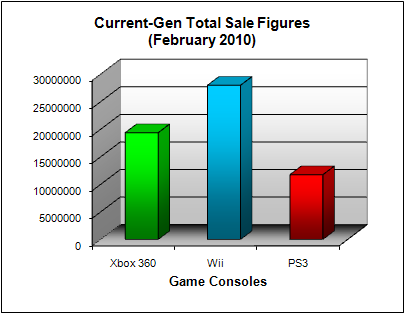
  • DS: 613,200 (Total: 40.5 million; February 2009: 588,000 – up 4%)
  • Xbox 360: 422,000 (Total: 19.4 million; February 2009: 391,000 – up 8%)
  • Wii: 397,900 (Total: 28 million; February 2009: 753,000 – down 47%)
  • PS3: 360,100 (Total: 11.8 million; February 2009: 276,000 – up 30%)
  • PSP: 133,400 (Total: 17.1 million; February 2009: 199,000 – down 33%)
  • PS2: 101,900 (Total: 45.4 million; February 2009: 131,000 – down 22%)
NPD February 2010 Game Console US Sales Figures

NPD February 2010 Game Console US Sales Figures

NPD Game Console Total US Sales Figures (as of February 2010)

NPD Game Console Total US Sales Figures (as of February 2010)

My prediction from last month was:

There are some big titles being released in February, several that will help the PS3 more than the Xbox 360, including the platform exclusive Heavy Rain, and while it’s no longer exclusive, Final Fantasy XIII should have a bigger following on the PlayStation platform than on the 360. As a result, I expect the PS3 to outsell the Xbox 360 at the very least and maybe make a run on the Wii. BioShock 2 should do well on the Xbox 360, but the usual Nintendo Wii titles should also be in the top 10.

I think the only thing I got right was that Bioshock 2 on the Xbox 360 did well, and relatively good sales for Heavy Rain. I didn’t even get the Final Fantasy release date right, so it’s best to just forget my prediction and move on (please?).

There was little chance that I would have gotten this month’s hardware sales order right. The Xbox 360 outselling both the Wii and the PS3 was totally unexpected, to be honest. Both Nintendo and Sony have blamed stock shortages for the problem, and a quick browse on most online stores at least confirm the PS3 250GB being sold out for quite a while now. I can sort of understand the Wii having trouble with stock, since it had a monster December, but January was relatively weak in sales and usually stock problems pop up then and gets fixed in February. For the PS3, sales have been much better than last year and I can see why Sony would not have planned for the sales increase with production increases. But still, if Microsoft can meet demand, despite selling more consoles than the PS3 in the last two months, then you have to say for Sony (and Nintendo) that it was an opportunity missed. I might also guess that Sony might be keeping supply short deliberately so that they have enough units to ship out in March, when Final Fantasy XIII is actually released (not February, as I had thought last month, for some reason).

Looking at the year on year figures, the DS, Xbox 360 and PS3 all recorded growth, while the rest fell. The Xbox 360 has consistently had year on year growth, albeit marginal, and that’s quite a feat and Microsoft has the luck of having key game releases spread out evenly to allow this to happen (for example, Modern Warfare 2 came just at the time when it look like the Xbox 360 was running out of steam when faced with superior competition in the form of the price reduced PS3 Slim). The PS3’s growth can be largely attributed to the Slim/price cut, and also the fact that it was doing horribly last year (and the year before). As I showed last month, while the year to year growth for the PS3 was a high 30%, comparing 2010 to 2008 only yielded a 28% sales increase (because February 2009 was actually worse than February 2008 for the PS3). That’s a 28% sales increase in two years, which is not that good at all, especially considering the fact that Xbox 360 sales grew by 66% in the same time period (and as I noted last month, there was a 45% growth for the Xbox 360 comparing January 2008 and 2010 figures, with the PS3 only recording a negligible 3%). The PS3 should be doing a lot better than it still is, but maybe we’ll see that for the rest of the year, as the PS3 has some really high profile exclusives (or semi-exclusives) lined up.

Looking at the red figures, the decline in year on year for the Wii is worrying, even with Nintendo’s assertion that stock shortages were the reason. The Wii has been consistently doing worse the a year before, and has done this for most of 2009, so while February was especially worse due to stock issues, it still would have been a red month for the Wii without the stock issues. Of course, what’s happening with the Wii is almost the opposite of the PS3, whereas the PS3 had a bad 2008/2009 and so it was easy for Sony to record growth, the Wii had a great 2008/first few months of 2009 and so it’s really hard for them to avoid year on year declines. Things should stabilise for the Wii around April, I feel. The PSP and PS2’s decline slowed a bit in February, particularly the PS2, but the PSP is irrelevant now compared to the DS.

Let’s move on to software. The biggest hit of the month, as expected, was Bioshock 2. The fact that the PS3 port didn’t even rank in the top 10 is a bit of a surprise, it was 12th and sold nearly 3 times fewer copies than the Xbox 360 version. The fact that the original Bioshock was a Xbox 360 exclusive may have something to do with it, and expect a similar, but not as extreme, scenario when the formerly PS3 exclusive Final Fantasy XIII is released in March. Another reason could be because buyers had to choose between Heavy Rain and Bioshock 2, and many chose the former instead. Modern Warfare 2 is still holding up in the sales charts, again showing how amazing it has done since release. Last month’s hit, Mass Effect 2, is still doing relatively well. Another surprise is the Wii hit, Just Dance, which somehow managed to increase in sales. It seems to be getting popular and popular! Another interesting situation with Dante’s Inferno, in which the PS3 version outsold the Xbox 360 version – again, expect the PS3 version of FFXIII to do the same next month (although the PS3 having an exclusive edition of the game might have helped). And lastly, we have the critically acclaimed PS3 exclusive Heavy Rain coming in at 10th. Not great, considering how Mass Effect 2 (another console exclusive) did last month (and this month) and how Uncharted 2 did on the same console, but both were sequels which are easier to sell. But as many have noted, Heavy Rain was released towards the end of February, and so it was at an disadvantage compared to most of the other titles. This isn’t the first time Sony has done this with a platform exclusive, by releasing it towards the end of the month as opposed to giving it a whole month to gather sales. I don’t know what is the reason behind this, but they didn’t do this with Uncharted and it managed a number one, but they did it with inFAMOUS and I firmly believe that it could have ranked higher had it been released just a bit earlier. They also did this with Killzone 2, again costing it a few places in the charts perhaps. But I doubt Sony cares too much about the monthly NPD rankings, so games gets released when they get released, I suppose. For Nintendo, New Super Mario Bros. continue to rank, as does Wii Sports Resort, but some of the other usual entries, like Wii Fit Plus or Mario Kart, have been pushed out of the top 10. Overall, the Xbox 360 had the most titles in the top 10, and had 42.6% of sales. The Wii was second with 3 titles and 34.8%, and the PS3 did relatively well with also 3 titles (the equal most ever?) and 22.6%.

Here’s the complete list of the top 10 software sales:

  1. Bioshock 2 (Xbox 360, Take-Two) – 562,900
  2. New Super Mario Bros. Wii (Wii, Nintendo) – 555,600
  3. Call of Duty: Modern Warfare 2 (Xbox 360, Activision) – 314,300
  4. Just Dance (Wii, Ubisoft) – 275,400
  5. Wii Sports Resort (Wii, Nintendo) – 272,500
  6. Call of Duty: Modern Warfare 2 (PS3, Activision) – 252,800
  7. Mass Effect 2 (Xbox 360, EA) – 246,500
  8. Dante’s Inferno (PS3, EA) – 242,500
  9. Dante’s Inferno (Xbox 360, EA) – 224,700
  10. Heavy Rain (PS3, Sony) – 219,300

It’s time to make a prediction. I find it hard to make one for hardware sales because of the stock shortage issue, but if I had to go out on a limb, then I say the PS3 is second, behind the DS, and above the Wii and Xbox 360. I think the Xbox 360 will come fourth, with the Wii recovering a bit. The reason I say the PS3 is going to top the other home consoles is because of two things. One is called Final Fantasy XIII, the other is called God of War III. Having two huge releases in the same month should help hardware sales, but I wonder if it isn’t better to separate these two titles, which might get into each other’s way in terms of vying for gamers’ pocket money. But what do I know. In any case, there aren’t too many new releases for either the Xbox 360 or the Wii, so Sony could really clean up in March.

See you next month.

Weekly News Roundup (7 March 2010)

Sunday, March 7th, 2010

I wrote that DRM article that I mentioned I might do in last week’s WNR. The article looks at the various kinds of PC gaming DRM and whether they good or bad. The conclusion seems to be that none of them are piracy proof, some not even remotely close, and they all have varying degrees of being annoying to legitimate customers. But I think there are some compromises that can be made by both sides, more by consumers though, since to me, it seems consumers are having to pay a high cost to give game companies the false sense of security that DRM offers. Quite a few interesting news stories this week, so let’s go through them, especially given the late nature of this update (and no, I did not forget to press the “Publish” button).

Copyright

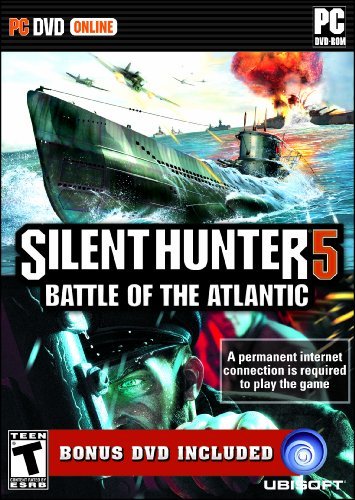
In copyright news, Ubisoft’s new DRM, which was the reason why I wanted to write a blog on PC gaming DRM, has officially released the first game, Silent Hunter 5, that uses the new “constant Internet connection required” DRM system.

Silent Hunter 5 Box Art

"Permanent Internet Connection Required" - It's always not a good thing when you have to put a huge warning sticker on the box of a game

Unfortunately for Ubisoft, their new, expensive, controversial DRM system was cracked in less than 24 hours. Ubisoft issued an immediate denial that their DRM system had been cracked, saying that while it had been cracked to the extent that the game now works without constant online verification, certain sections of the game was still locked. Ubisoft also quickly released a patch to fix several issues, and to no doubt make the hack ineffective, but the patch it self was cracked in even shorter time. And no doubt, the certain sections that haven’t been cracked will be given time. It is interesting reading Ubisoft’s own FAQ on the new DRM system, which I also referred to in my PC gaming DRM blog, when asked what will happen if they cease operation of their DRM authentication servers, which then makes these games unplayable. Instead of saying that they don’t plan on to ever cease operations, which would be a lie anyway, they said that if that happens, they’ll release a patch to make these games playable without the DRM server. Which means if Ubisoft can release a patch that removes the DRM checks, then so can hackers, so Ubisoft’s insistence that their DRM can’t be hacked is, by their own words, not possible. And yet, legitimate consumers are the ones that are most affected by the badly designed DRM, and just how many have used it as a reason, or excuse, to go down the illegal route, we’ll never know.

The controversial ACTA global copyright treaty, being discussed in secret, has had yet more leaks that reveal just what each country at the negotiation table are trying to get out of the treaty. Before we get to the leaks though, I would just like to address the secret nature of the negotiations. Sure, these type of things goes on all the time and nobody really cares, and for the most part, the ACTA negotiations are only slightly more interesting than watching paint dry. But there are some important things being discussed that will affect all Internet users, and it’s a shame to see the whole thing being kept secret, even given the numerous leaks. It appears some of the European countries wanted the secrecy, the US is citing national security, although nothing so far has suggested anything of that sort being discussed (it’s hard to keep national secrets when you’re in discussion with so many other countries). My guess, and it is purely a guess, is that it’s being kept secret because they don’t want a public backlash. And that’s a scary thing, that governments are conspiring to keep ordinary people out of it because people won’t like it.

Anyway, back to the leak. The US negotiators, with the RIAA/MPAA whispering in their ears no doubt, are pushing hard on various issues including making other countries adopt the severely flawed US DMCA. Other issues include ISP monitoring, three-strikes and all the nasty stuff “people” don’t like. But the push for US style DMCA has met with some resistance. New Zealand also questioned why Internet links can be considered copyright abuse, in that if you operate a website that has a link to another website that had pirated stuff on it, then you’re also liable for copyright infringement. On one hand, this is done to attack torrent websites like The Pirate Bay, which don’t actually link to pirated content, only to files that then link to the content. And there are also aggregator websites like isoHunt that then links to The Pirate Bay and other torrent websites. So it’s understandable why the copyright holders, which are the real powers behind the talks, want to make even linking illegal. But the problem is that this also puts search engines like Google into the same category as sites like isoHunt, since it’s quite easy to find torrents on Google (not quite as easy as say on isoHunt, but certainly not impossible). But it’s unlikely that Google will be sued because of this, but isoHunt will/has. And then there’s user submitted links, and whether for example if someone posts a comment for a blog post that contained a link to pirated content, then whether it’s the blog or the comment poster that is liable. The flow of responsibility has to stop somewhere. If site A is hosting illegal contents, then site A should be responsible, and not site B that links to site A. Because if site B is liable, then what about site C that links to site B, and site D that links to site C and so on. I think it just shows that most legislators don’t really understand how the Internet really works, and they are being easily convinced of this and that by powerful lobby groups, who themselves don’t fully understand the Internet and in general, the digital revolution. And so we, the people, have to suffer for it.

Most of the resistance seems to coming from Europe, and in the UK, the House of Lords are offering some resistance to the government’s proposed changes to digital copyright laws, but their alternative solution leaves much to be desired as well. The Lords are largely objecting to a clause which will allow ministers to bypass the parliament and implement new copyright laws as they see fit. Without public consultation, without a vote, straight from Hollywood’s lips to legislation. The government says that this is necessary because of the fast moving nature of the Internet, but no matter how you spin it, it just doesn’t have a place in a democratic government. The Lords’ proposed compromise is to allow the banning of entire websites on allegation of piracy, which is not going down well with consumer and Internet groups. More evidence of legislators not really understanding the full consequences of their actions in relation to the new digital world. The harm they can do to the digital economy is one thing, but it’s also the potential that they’re not seeing and we’re all missing out on. There are many things that would open up so many opportunities, but fear means that instead of trying to embrace change, they’re doing everything they can to avoid it.

Also in the UK, the group that regulates lawyers in the UK are taking action to stop law firms from flaunting copyright law to make a quick buck by sending infringement notices and demanding settlement fees to private individuals, whose IP address had been identified as one that participated in the download of something illegal. I’ve previously reported on the activities of law firms such as Davenport Lyons and recently, ACS:Law, that prey on those who do not want legal action and so pay up promptly, even in cases when they were sure they didn’t download anything illegal. Especially if the claimed download is pornography. Apparently, the letters sent out say that failing to secure one’s own Internet connection still makes one liable (that is, if your Wi-Fi was hacked and somebody used it to download pirated porn, then it’s still your fault), which is not true, and this could get them in big trouble with the regulators. Right now, it’s only two Davenport Lyons partners that’s been investigated, but DL has already withdrawn from these types of activities, and so ACS:Law will be next. DL pulled out rightly it seems, albeit probably too late to avoid issues with the regulator, and any law firm that participates in these type of activities is best described as a law firm for ambulance chasers, in my opinion.

RealDVD

This is probably the last time I will get to re-use this RealDVD screenshot

One of the things that I think is a missed opportunity is with the digitizing of movie collections, for which a legal solution simply does not exist, other than to repurchase your entire movie collection, often in a inferior digital only format. Hollywood’s determination to kill off anything that allows this to occur has been well documented. This week, they’ve managed to kill off RealNetworks’ RealDVD, which promised to allow people to convert their legally purchased DVDs to a fully digital, disc-less, format (with additional DRM to prevent online sharing). RealNetworks settled the case, admitting defeat and paying costs and will refund all purchasers of RealDVD. That’s a real shame. Not so much that RealDVD is dead, because it never really amounted to much, and the additional layers of DRM tied the digital “rips” to RealDVD’s software, which because it takes one relatively open format like DVD/MPEG-2, and turn it into a proprietary format that Real controls, means that it’s practically useless. However, it is the idea that Hollywood studios won’t allow DVDs to be copied in any way, that makes me angry, because there are a lot of legitimate reasons why someone would want to do it. Being digital, movies are easy to store and easy to transport. They’re also easier to catalogue, and when coupled with one of numerous media hub solutions out there, it makes finding and watching movies so much easier. The same reason why people now prefer MP3s to CDs, if you will.  Hollywood’s perceived danger here is that if such a system is not implemented well, it will allow “rent and rip” piracy (renting DVDs, ripping them, and returning the discs), or it will somehow make it easier to pirated movies online (which is hard to achieve, considering how easy it *already* is). These may be real problems, but that’s for Hollywood and their technical people to solve. You can’t deny your customers a much wanted and needed feature just because a minority of them might take advantage of holes in your system to do something they can already do so easily today. Keep on denying people, and people will find a way, regardless of whether it technically breaks the law or not. Hollywood might now turn a blind eye to these kind of “for personal use” ripping, but I think this is even more dangerous than implementing a “managed copy” system, because you’re effectively encouraging people to do something illegal (as stated in the copyright message that pops up before DVDs play, and also due to the US DMCA legislation) by not legally pursuing them (impossible, due to the number of people that are doing it) nor offering a legal alternative. The opportunity of having a fully digital movie library that can be created from your legally purchased discs is enormous, and it is technically much easier to achieve now thanks to development in hardware and storage technologies.

But I still think that we will have a system like this eventually. Which then makes the RealDVD decision even more ridiculous, and anti-competitive if the very people trying to kill RealDVD on copyright abuse grounds produces their own version of RealDVD in the future.

In more legal news, Viacom’s much publicized lawsuit against Google/YouTube reached a milestone this week, as both sides filed their summary judgement petitions. Viacom’s chances in the case is much diminished due to recent developments in recent cases, namely the Universal music versus Veoh case. And with Google now offering lots of opportunities for content owners like Viacom to make money off YouTube videos, even those uploaded without authorization, and the ability to remove videos, there’s not much logic in siding with Viacom on this one. And don’t forget about the free publicity that YouTube gives to new content, which is very much essential to companies like Viacom.

And in the most distasteful claim of the week section, we have the RIAA claiming that file sharers are undermining the Haiti relief effort. I don’t want to even want to go in to how the RIAA came up with this conclusion, but even if they’re right, it’s just really really really (really) bad taste, isn’t it? Using a disaster where so many died to promote their pro copyright agenda is just so wrong, but then again, it’s exactly the sort of thing you expect from the RIAA and MPAA. Techdirt’s analysis showed that hardly anyone was downloading the torrent of the Haiti relief album. And for those that downloaded, who knows if they donated to the Haiti relief effort or not. Maybe they donated a lot of money and then downloaded the album illegally, and maybe some of the people who paid for the album’s only contribution was the actual purchase of the album. And maybe the people who downloaded the album just didn’t have any money to donate, and who is to say that Haitian themselves aren’t downloading the album that’s been produced to help their flight (much of the Internet infrastructure survived the earthquake, for which the design of the Internet helped, as it was originally invented to tackle the problem of communication after nuclear war), and surely it doesn’t make sense to make them pay for it as well?

High Definition

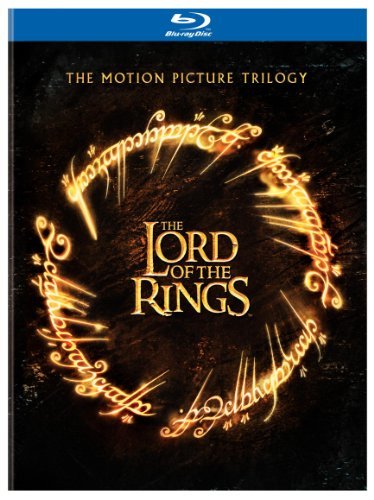
Onto Blu-ray and HD news. The Lord of the Rings is coming to Blu-ray in April, and it is one of the most eagerly awaited titles on the format. But I won’t be buying it and I know a lot of other Blu-ray collectors that won’t be either. And judging by ratings on Amazon.com, 2045 one star votes versus 149 five star ones, most people seems to be thinking of doing the same.

Lord of the Rings Trilogy Theatrical Cut Blu-ray

LOTR finally coming to Blu-ray, but it's not all good news

The reason is that the April version will be the theatrical version of the movies only, not the extended version. Instead of releasing one version that contained all the cuts (or at least release both cuts at the same time), there will instead be another Blu-ray release probably later in the year that houses the extended version along with more extra features. This “double dipping” is a well known way to get people to pay twice (or more) for the same movie, each time promising just a little more stuff that you must see and artificially putting breaks between the release dates of the various versions to get more sales. Well at least this time they didn’t release each movie individually, and then release a trilogy box set with more stuff a few month later. But with so many LOTR fans having both versions of the films on DVD, perhaps this is one time the studios will find it difficult to force a sale, as I’m perfectly happy to watch the theatrical version on upscaled DVD if I have to (and I’ve never watched it again ever since getting the extended cut, which I’ve watched about 4 times already, for each movie). Although with that said, I can see fans not wanting to wait and buying the April version anyway, which is exactly what the studio wants and they can make this happen by not releasing any details of the extended Blu-ray version until they’ve had enough sales from the theatrical version. Don’t fall for their tricks (say the guy that has 6 versions of Terminator 2 on DVD, HD DVD and Blu-ray)!

Netflix coming to the iPhone? If true, then expect the iPad to have it as well. Which means that by my calculation, 87.47% of all media devices sold today will be Netflix enabled, which is awesome news for Netflix and for digital video distribution, which was always thought to be entirely dependent on a large scale deployment of set top boxes.

Gaming

And finally in gaming, there was the infamous PS3 leap year date bug earlier in the week that managed to cripple a huge percentage of PS3s. Apparently, a date logic error in most of the “fat” PS3 hardware meant that the consoles were wondering just what the hell had happened to February 29 2010, and then decided to fail to connect to the PlayStation Network.

This is fine, except many new games require a connection to the PSN even if you don’t play online, due to the need to sync trophy data, and so people were left with a PS3 that could only function as a media hub and a Blu-ray player. This was fine for me because I only use my PS3 as a media hub and Blu-ray player, and I had several good gaming sessions on my Xbox 360 while this whole thing was going down and it seemed like the official PS3 board was going to explode with all the complaining.

In the end, it was fixed relatively quickly. The date bug still exists on the PS3, but Sony somehow managed to fix the problem on their end.

All’s well that ends well? Not quite. And this again highlights a weakness of the increasingly net dependent nature of electronics, not just PS3s, and just how useful certain devices become when the Internet (or the connecting server) goes down. Full offline mode should be a prerequisite for any device I think, as well as lessons on just when leap years occur for their programmers.

And we come to the end of another WNR. Hope you’ve enjoyed this edition, and see you next week.

PC Gaming DRM – A Sensible Discussion

Thursday, March 4th, 2010

The uproar over Ubisoft’s new DRM, that I covered in the 21 Feb WNR, got me thinking that how can a game company’s idea of a sensible DRM solution be so far from that of the average gamer. Did Ubisoft not know that their new DRM solution that requires a constant Internet connection would not go down with the general gaming community? Or did they simply not care?

So instead of having a whinge, like most of my other posts on this blog, I though it would be nice to try and take a balanced approach to the problem and analyse the situation closely, playing the Devil’s advocate if I have to. Perhaps it will shed light on any compromises that may make DRM workable.

No DRM

From a pragmatic point of view, DRM is not needed as it doesn't work, but game publishers feel better when games have it

Why do you need DRM?

Games get pirated. PC games especially. Game companies need to protect their products and make it as difficult as possible to pirate them. Games without DRM are an open invitation to online piracy, and also casual piracy where friends share a single purchase and install the game multiple times on multiple PCs. And without protecting their games, publisher fear that people will start to think that it is acceptable to pirate them.

But DRM has so far not stop games from being pirated. It may be effective against less popular titles that crackers ignore because it’s not worth it, but for the popular games, they are made online in a matter of days, if not sooner. Ubisoft may think their always connected approach will make the games harder to crack, but Silent Hunter 5, which uses the new DRM system, was cracked just a few hours ago, and less than 24 hours after the game was released.

It does make playing the games more inconvenient for people who have purchased the game, and it’s no secret that many resort to cracks to remove DRM from their games, or failing that, download the pirated version even after they’ve paid for the legal one.

Conclusion: Games get pirated regardless of DRM. At best, it slows the availability of the pirated version of make it more difficult to run, but determined users will find a way, and it might still be easier to deal with than DRM. All DRM does right now is to inconvenience legitimate customers.

SecuROM Logo

DVD check systems like SecuROM are outdated in today's online world

DRM Type 1: DVD Checks

These are the easiest form of DRM to crack, and the oldest around. Sure, some things have changed like blacklisting and background services being installed to prevent the use of DVD emulators, but again it’s only a matter of time before it is cracked. This is also the form of DRM that buyers of the game frequently removes, as having to find and insert the DVD every time you want to play the game is a pain. Also, it means you must carry the DVD with you if you want to play the game while away from home. And only one person can play the game at the same time. Not only that, the SecuROM loader may also be hard to remove and it can interfere with your legitimate apps. The more advanced SecuROM also requires online activation, which basically bundles a DVD check with the type 2 DRM method listed below. And even if you jump through the hoops, the game still may not work due to compatibility and other issues, and the only alternative is to crack it if you want to play it.

Conclusion: This type of DRM is the easiest to crack and potentially very annoying to legitimate customers. It is also quite outdated as it doesn’t offer multiple install limitations by itself, and serial  and perhaps time will see it phased out in favour of online based authentication solutions, like the Steam or Ubisoft systems.

DRM Type 2: Once only online authentication

EA/Dice’s Battlefield 2: Bad Company uses this method, along with the “limited install” method. After you install the game, you only need to go online once to authenticate it, and it will never check again until some 27 years later. DVD checking is removed, so once you do the initial online authentication, you’ll never have to “prove” your innocence again. To prevent people authenticating and then giving the game away to do the same, the same serial can’t be used too many times (more on that later). As with any kind of DRM, it can be cracked (and it is probably quite easy to do so as well), but legitimate users may find that they don’t need to do it, and multiple install limit of 10 usually is generously enough to never having to worry about this aspect of the protection. Of course, this means that you must have an Internet connection if you want to play the game, but not many people have machines capable of playing new games and yet have no access to the Internet.

If the authentication server is down, then new users can’t start to play games until it does up again, but you only have to authenticate once anyway. If the authentication service is shutdown and no longer supports aging games, then purchased games can’t be played, although it stands to reason that the game won’t be sold at that time anymore, or will be sold in a variety that comes pre-authenticated.

Additional online features, such as trophies/achievements, can be optionally enjoyed, although this probably turns the game to a “type 3” (see below) DRM, where logging into the optional online environment requires some sort of rudimentary authentication check (although probably less involved than a true “type 3”).

Conclusion: This is probably the most sensible type of DRM, although like all others, it fails to prevent piracy. It does prevent most legitimate users from having to resort to cracks to play the game conveniently, and this is also the least intrusive method, requiring no background apps that are hard to uninstall or constant Internet checks.

Steam logo

Steam's popularity shows that there are still some kinds of DRM people might accept

DRM Type 3: Once every startup online authentication

Steam uses this kind of method, although it does have an offline mode. Every time you start the game, it will check online to make sure you’re running a legitimate version. This again is easy to crack, and is slightly annoying to legitimate users as it locks them to a platform like Steam, and it means they need to ensure they have an Internet connection whenever they want to play the game. However, Steam does offer an offline mode that works like the “Type 2 DRM” above. Other platforms, do not. Platforms such as this also offers online features, such as chatting, trophies/achievements and other community features, that a totally offline game would not (or a game that loses its Internet connection during a session). If the authentication server is down, the you’re out of luck. If authentication support is removed due to old age, then you’re left relying on the platform operator to do the right thing and release offline patches, or otherwise, all your games will be unplayable. Judging from Steam’s success, people don’t seem to mind these restrictions too much and it’s unlikely to cease supporting games, although given a choice, most people would probably prefer not to have the Steam client on their system at all.

Conclusion: This kind of DRM is just about acceptable to the masses, although the option to go completely offline is required. The additional online features, which are optional, does add value to games. But you are reliant on others to ensure the authentication server is online.

Ubisoft Logo

Ubisoft uses the "constant authentication" method, much to the disgust of gamers

DRM Type 4: Constant connection online authentication

And we come to Ubisoft’s system. It doesn’t work because it’s already been cracked. And it inconveniences legitimate users because those without a steady, constant Internet connection won’t get to enjoy the game as it pops up an error message every time the connection dies. It also means it’s impossible to play the game with an Internet connection, so no offline mode. The same kind of additional online features can be offered as with the “type 2” and “type 3” DRMs.

Conclusion: This type of DRM seems to offer no advantages to the other kinds of online authentication, other than to show the game publisher’s total lack of trust in their customers. The pirates will play the cracked version with the authentication part removed, while legitimate users will play games hoping their Internet connection, or the authentication server, doesn’t die.

DRM Type 5: Multiple Install Limitations

Often used in combination to one of the above DRM types, multiple install limitations places a limit on how many copies of the game you can have installed on computers at any one time. The authenticate once DRM relies on this to ensure a single serial isn’t used hundreds of times over. This is different to how many concurrent gaming sessions you have on at any time, which may be just the single. You may need multiple installs for multiple PCs you have at home or work. Or if you’ve changed PCs, then you will need to have another install. The older type of system will keep track of how many installs you’ve made, and once that limit is reached, you won’t get to install the game anymore. In the bad old days, the limit wasn’t very generous, and people who upgrade their PCs a few time will then get locked out and have to contact tech support to unlock the game. The newer kind allows you to uninstall a copy to get back an “install credit”, which then allows you to install it on as many new computers as you wish, as long as you keep on uninstalling the copy on the old computer.

This type of limitation may be a bit redundant depending on which type of authentication the game also uses. With the type 4 constant connection DRM, this is redundant because the authentication server is able to track how many concurrent sessions there are and ban any serial that has too many. Even with the once at start up authentication method, this can be checked during authentication, and a pirated serial is likely to have many trying to authenticate at the same time from all over the world (this is the theory anyway, in practice, the pirated version doesn’t even need to contact the authentication server).

In real practice, there is really no need for this type of DRM unless it’s coupled with the once only type of authentication (type 2), and to be fair, this is usually the case. For example, Ubisoft’s new DRM places no install limits (it will only allow one session at any one time). Steam, likewise, has no install limits. But in some rare cases, like Bioshock 2, this limitation is placed (and it’s the bad old kind, the one that requires you to call tech support) along with a SecuROM DVD check and once per start up online authentication (Games for Windows).

Conclusion: This one is only need with the authenticate once method. Using it with any other method in place is overkill.

So what kind of DRM is acceptable and unacceptable to the general public?

So we get to the crux of this blog post. Just what kind of DRM are people willing to accept, and will still provide game publishers with that false sense of security that they crave. We’re of course talking about people who are willing to pay for games in the first place, as people who pirate will always do so either because they can’t afford to do anything else, or because they don’t want to. Based on the above analysis, here’s what’s acceptable and reasonable:

  • Online authenticate, but please only do it once, even if it means install limits
  • If you must authenticate for each gaming session, at least have a fallback offline mode for those with wobbly Internet connections and there should be no install limits
  • Neither of these methods should use DVD checks

And of course, what isn’t reasonable:

  • DVD checks because it really doesn’t protect the game publisher, as it is too easy to get rid of, and is redundant if used with online authentication
  • Constant online authentication – it’s just a bad idea that offers no extra protection for the publisher, and offers plenty of reasons for gamers to abandon the system for a pirated version
  • Combining two or more of the five listed types of DRM above (excluding the combination of type 2 and 5, since once only authentication can only work in conjunction with install limits)
Steam Achievements

Online services such as achievements can add to the gaming experience, while doubling as a DRM system

If DRM doesn’t prevent piracy, and if game companies must have them as a security blanket, what can game companies do to compensate paying customers for the inconvenience or encourage others to pay for the game?

The answer is already mentioned above: have lots of online based, but optional services that helps to provide extra value to the legal version. One thing the pirated version find it hard to do is to connect online to official servers, since any connection could invalidate the installed version or prevent usage. So having these online services like chatting, video/screenshot uploads, trophies/achievements, and perhaps even extra downloadable content (free or paid for), will all help convince people that the legal version is the best, most complete, version of the game.

And of course, price the game competitively, especially downloadable versions that offer savings to the publisher in terms of production, transportation and retail costs.

But whatever game companies do, they should respect paying customers and respect their legitimate concerns about annoying DRM system. Do the best to ease the  inconvenience and compensate customers for their troubles. Don’t force them to prove time and time again that they’re not breaking the law by adopting a guilty until proven innocent attitude.

And then, and only maybe then, they’ll win back some of the people they’ve lost to piracy.

Game Consoles – January 2010 NPD Sales Figure Analysis

Monday, February 15th, 2010

The first figures from 2010 are out. December 2009 was a monster month for hardware sales, for the Nintendo consoles in particular. January usually means a considerable drop as the holiday sales period ends. But unlike most January’s, this one is harder to predict as we have the economy, the PS3 surge, the potential decline of the Xbox 360 and the usual stock shortage problems to contend with. The figures are from NPD, a marketing research firm that releases games console sale data every month.

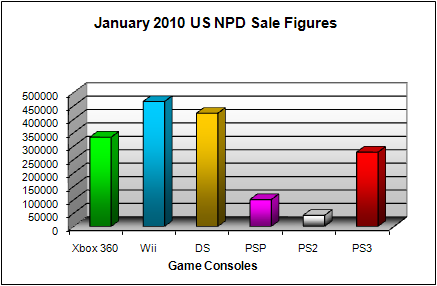
The figures for US sales in January 2010 are below, ranked in order of number of sales (January 2009 figures also shown, including percentage change):

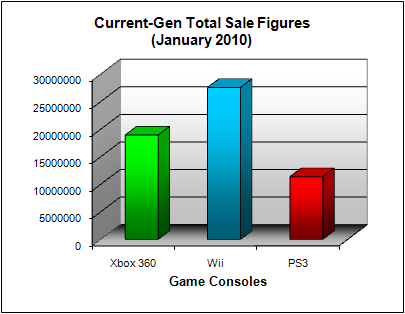
  • Wii: 465,800 (Total: 27.6 million; January 2009: 679,200 – down 31%)
  • DS: 422,200 (Total: 39.9 million; January 2009: 510,800 – down 17%)
  • Xbox 360: 332,800 (Total: 19 million; January 2009: 309,000 – up 8%)
  • PS3: 276,900 (Total: 11.4 million; January 2009: 203,000 – up 36%)
  • PSP: 100,100 (Total: 17 million; January 2009: 172,300 – down 42%)
  • PS2: 41,600 (Total: 45.3 million; January 2009: 101,200 – down 59%)
NPD January 2010 Game Console US Sales Figures

NPD January 2010 Game Console US Sales Figures

NPD Game Console Total US Sales Figures (as of January 2010)

NPD Game Console Total US Sales Figures (as of January 2010)

My prediction from last month was:

January should see huge sales drop across the board, but that’s just a seasonal thing. And as such, it’s very hard to predict the order of things, although I believe the hardware sales ordering will remain the same. On the software front, January will be largely quiet, Mass Effect 2 on the Xbox 360 should do well, and the rest of the top 10 should have a familiar look to December’s. There are some big releases coming in February and March, so consumers can take a breather in January (and save up).

January’s figures are a mixed bag really. While the ordering was largely the same, the only difference being the Xbox 360 and the PS3 swapping places, there were larger than expected drops for all the consoles. On the software front, Mass Effect 2 on the Xbox 360 did indeed do well, being a console exclusive, and the top 10 had a familiar look, although still room to add in a few new entries.

Compared to January a year ago, only the Xbox 360 and the PS3 managed sales growth. This the second January in a row that the Xbox 360 managed growth, and that’s probably largely thanks to Mass Effects 2. Last January, the PS3 actually recorded a sales drop compared to January 2008, but this January, the PS3 showed the most positive growth. But this has to be taken into context, as the PS3 was doing extremely poorly back in January a year go – take this into account, the PS3 only grew by a paltry 3% between the two January’s of 2008 and 2010 (and for the same comparison, Xbox 360 sales grew by 45%). Sony has said that stock issues were partly responsible, or will be in February at least. Whether that’s true, or it just signals the Slim/price cut led surge in sales is dissipating, we’ll have to wait until March and April’s stats come out to confirm. The Xbox 360 showed growth largely thanks to Mass Effect 2 one would guess, and sales are being kept above the PS3 thanks to strong software sales (including Modern Warfare 2) in two of the last three months.

Looking at the negatives, and there were a lot of them, the Wii continues on with its 30+% month to month drop in sales after taking a break in December. The DS also saw a drop of 17% compared to January 2009. While the PS3 managed growth, the other PlayStation consoles saw massive drops, with the PS2 dropping below 100,000 units sold for the first time since I’ve started recording figures (since September 2007). The PSP was only 100 units away from having this unwanted distinction as well. Both of these platforms are dying a slow death, the PS2 understandably (although Sony would have wanted more PS2 owners to upgrade straight to the PS3 than what is evident), but it’s the PSP that must be worrying for Sony, especially compared to the DS. And as mentioned in the 2009 year in review, the revenue increase from the PS3 doesn’t come anywhere near the revenue drop from these two consoles.

Lets move onto software. As expected, Mass Effect 2 did well, but not enough to unseat New Super Mario Bros. for the Wii, which held on to the top spot. All the usual Wii titles are in there, with only Wii Play missing out on a top 10 spot. Modern Warfare 2 is still selling relatively strong, both console versions are represented in the top 10, with the lower placed one the only PS3 title in the top 10 once again. The Xbox 360 had two more titles, making it a total of four – Army of Two: The 40th Day and Darksiders made the list at 8th and 10th. There was also a non Nintendo Wii title in the top 10 as well, with Ubisoft’s Just Dance sneaking in at 9th. The Wii needs more titles like this to be hitting the top 10 to remain viable in the long term.

Here’s the complete list of the top 10 software sales:

  1. New Super Mario Bros. Wii (Wii, Nintendo) – 656,700
  2. Mass Effect 2 (Xbox 360, EA) – 572,100
  3. Wii Fit Plus (Wii, Nintendo) – 555,700
  4. Call of Duty: Modern Warfare 2 (Xbox 360, Activision) – 326,700
  5. Mario Kart w/ Wheel (Wii, Nintendo) – 310,900
  6. Wii Sports Resort (Wii, Nintendo) – 297,600
  7. Call of Duty: Modern Warfare 2 (PS3, Activision) – 259,000
  8. Army of Two: The 40th Day (Xbox 360, EA) – 246,500
  9. Just Dance (Wii, Ubisoft) – 191,900
  10. Darksiders (Xbox 360, THQ) – 171,200

Prediction time. There are some big titles being released in February, several that will help the PS3 more than the Xbox 360, including the platform exclusive Heavy Rain, and while it’s no longer exclusive, Final Fantasy XIII should have a bigger following on the PlayStation platform than on the 360. As a result, I expect the PS3 to outsell the Xbox 360 at the very least and maybe make a run on the Wii. BioShock 2 should do well on the Xbox 360, but the usual Nintendo Wii titles should also be in the top 10.

See you next month.