Archive for the ‘Video Technology’ Category

Weekly News Roundup (17 June 2012)

Sunday, June 17th, 2012

Hello to you on this a rainy, windy and cold Sunday here in Melbourne, Australia. How’s the week been treating you? Not too badly I hope. Another rather quiet news week, but maybe I was just too busy to pay attention. A little bit from column A, a little bit from column B, I suspect. Well, whatever news I did find, they were quite interesting, so let’s get started.

Copyright

The fallout (not to be confused with another, in my opinion quite fantastic, gaming franchise) from the Diablo 3 DRM choice continues this week, as videos emerged showing an item duplication exploit in Diablo 3 – the kind of thing that always-on DRM, at least according to Blizzard, was supposed to stop.

The video, originating from South Korea, showed a gamer doing the very thing that Blizzard was afraid of – duping items. The exploit was so damaging that Blizzard had to shut off South Korean game servers while a fix was rolled out. Thousands of gamers were also banned for using this and other cheating methods. Duplication hacks can be extremely damaging for Blizzard, while profitable for hackers – Diablo 3 features a real money Auction House where users can sell their hard-earned or not so hard-earned virtual in-game items, and as a result, item duping in D3 becomes just as bad as counterfeit money is in the real economy.

Diablo 3 Auction House

Real money trading of in-game items has made Diablo 3 a tempting target for hackers and scammers

So despite the harsh “always-on” DRM that Blizzard chose to employ for Diablo 3, which the company itself says wasn’t for anti-piracy but for protection against cheaters and hackers, it has not really lived up to expectations. If anything, the inclusion of real money transactions, which necessitates the use of an always-on DRM/access control system, has provided hackers with extra incentive to find exploits and loopholes that they can profit from. For us gamers though, it meant a frustrating (and still frustrating) gaming experience, although some have already started making good money from the Auction House.

And I’m still not convinced that Blizzard couldn’t have created an offline mode for the game. By implementing some kind of local virtual server that the game can connect to, this could provide emulation of an online experience, without the need to actually be online all the time. This may very well be the tact that the piracy community will use to crack the game, so we’ll have to wait and see if they can help out D3 gamers by creating an unofficial offline mode.

But some in the gaming industry are already pointing at Diablo 3’s fantastic sales figures and using that as justification for always-on DRM – at the other end of the spectrum, DRM-free gaming is also booming. And not only that, the “pay what you want” pricing model is also providing to be more than effective too. The latest Humble Indie Bundle (the 5th edition, for those keeping count) has managed to sell within a cat’s whisker of 600,000 bundles, raking in over $5 million in the process. Despite the basic bundle being available for as low as a penny, on average, gamers chose to pay $8.53 for the 4 game (plus 4 bonus games) bundle, proving that, if the price is right, people will pay. More remarkable is the fact that former buyers of the bundle, Steam sale addicts, and indie gaming enthusiasts would mostly already have most of the games on offer (I had 5 of the 8), so even from a shrinking sales pool, this latest bundle has managed to beat all expectations, and has actually earned twice as much as the last bundle.

The Humble Indie Bundle V

The Humble Indie Bundle V has generated more than $5 million in sales, from nearly 600,000 bundles sold

While I’m sure Diablo 3 raked in a lot more money than all the Humble Indie Bundles combined (and then some), then again, none of the games in the Humble bundle took 10 years to materialise either. And all were made with considerably less budget than Blizzard’s latest hit. At the very least, the Humble bundles prove that DRM-free can work, and so can the pay what you want model, even with the availability of both free pirated, and free (well, almost free – a penny) legal ways to get the games.

For those still holding out hope for a way to retrieve their legally uploaded files from Megaupload, especially after last week’s news that the MPAA is not totally against the idea, the news doesn’t look very promising. Responding to a lawsuit filed by an affected Megaupload user, US government prosecutors says that while they were responsible for shutting down Megaupload, they’re no longer responsible for the servers that now holds user files. Copies of the important data have already been made by the government, and as a result, they no longer have “possession” of the original data and can’t grant or deny access to them. It seems the data is now back in the possession of Megaupload’s former web host, Carpathia – data that is costing the company $9,000 a day to host. With the government also against unfreezing Megaupload assets to allow the company to pay Carpathia to keep the data alive (data that could also help Megaupload’s case), the most likely outcome, unless the court intervenes, will see the data completely wiped, and any hope of recovery gone. Before this happens, the government says users can pay Carpathia for access, and then acquire the services of forensic experts (at further cost) to retrieve any data – an unrealistic proposal due to the thousands of dollars this would require. The other “alternative”, the government says, is for users to sue both Carpathia and Megaupload for breach of contract relating to the storage of their files, again, also very unrealistic.

In other words, the government is washing their hands of any responsibility in the matter. They closed down Megaupload and then decide to not give two craps about the resulting collateral damage. But as screwed up as this is, it’s also an important lesson for those that are relying on the “cloud” to store their digital assets. Cloud storage will usually prevent data loss as a result of hardware or software failure, but it won’t stop things like user error (“hmm, that big red button that says “DELETE ALL” looks tempting – I wonder what it does …”), hacked or banned accounts, or as in Megaupload’s case, catastrophic failure. So it’s best to have copies of your files both in online *and* offline locations, or at the very least, at two different cloud providers.

High Definition

Is Blu-ray on the way out? Anthony Wood thinks so. But then again, he’s the CEO of the company that makes Roku, a popular little streaming set-top box, and both Blu-ray, the disc, and Blu-ray players are competitors.

Roku 2 XS

Roku currently provides a level of service that Blu-ray players and Smart TVs cannot provide with their in-built streaming apps, according to Roku’s CEO

So will Blu-ray be obsolete in four year’s time, as Wood predicts? If in four year’s time, most homes can access the Internet at speeds far greater than today’s average, then yes, this could be a possibility. If not, then the most efficient way to deliver the GBs of data needed for each HD movie (and if 4Kx2K become more common, the tens of GBs could grow to hundreds of GBs), might still be found on some kind of physical media, even if isn’t Blu-ray.

Whatever happens though. I for one hopes that ownership, and preferably ownership of something physical, is still reality 4 or 10 years down the track. I’m a huge supporter of cloud based streaming and all that, but I also love being able to hold something in my hands, or display something in my TV room, and I think a lot of movie lovers are like me in this regard.

Gaming

In gaming news, the May NPD results have been released, but once again, only Microsoft took the risk of releasing hardware figures. That’s probably because they won the month again with 40% of the home based console market share, but only 160,000 units sold. That’s a 40% decline compared to the same month last year, and you can see why many in the industry are so worried (and why “some” have stopped releasing detailed hardware figures).

With the next gen consoles from Microsoft and Sony not arriving until 2013 (got a news story on the next Xbox that was too late for publishing for this WNR, so I’ll cover it early next week), and the Wii U only coming at the end of the year, things are unlikely to pick up until then.

I’m still optimistically (but perhaps also foolishly) hoping that someone will leak the hardware data for the Wii or the PS3 in the next few days, and so the NPD monthly feature can resume, but it’s not looking good at the moment. If it doesn’t happen, I’ll get into more details about the May NPD in the next WNR.

Nothing much left to say in this WNR, so let’s call it a day. See you next week.

Weekly News Roundup (20 May 2012)

Sunday, May 20th, 2012

Welcome to this slightly late edition of the WNR. Normally, I would link to the latest edition of the monthly NPD analysis here for your consumption, but as it turns out, neither Nintendo nor Sony decided to release hardware figures for the month. This means that there’s no NPD analysis for this month, an all too frequent occurrence lately. I’ll try to give you what I have in the gaming section.

Another fairly substantial news week, well in my opinion anyway, so let’s get started.

Copyright

In copyright news, let’s start with the MPAA’s response to the recent well publicized filtering of The Pirate Bay, happening as I type across Europe.

Unsurprisingly, the MPAA backed the recent court decisions around Europe to have The Pirate Bay blocked, and also rather unsurprisingly, spun this form of censorship as being ultimately good for the consumer. The reasoning, they say, is that by removing the threat of websites like The Pirate Bay, it gives the creative community more incentive to not only create, but also to “provide consumers with content when they want it”. Apparently, the mere fact that consumers want it is not enough of a reason for the “creative community” to cater to their needs, but you also need the right environment (although the real creative community, the artists and the like, usually have no power to decide how something is released, a decision that’s usually left to men in suits). This might at least be a point you could argue, but only if filtering actually works.

VHS Tape

If the MPAA had their way, this VHS tape would have never existed - photo by Jared C. Benedict, Creative Commons License

It’s also rich hearing it from the MPAA, considering their own history with innovations, to suggest that websites like The Pirate Bay are the only reason why they’ve not yet bothered to fulfil the needs of today’s consumers. Remember that these were the guys that were against the VCR, were for region control that barred consumers from getting content “when they want it”, and possibly still pretty angry at the whole Interweb thing. Apple, Netflix, Amazon have done much more to fulfil the consumer’s needs in recent times, and the interesting thing here is that all of these companies are tech companies, not film or music companies.

If anything, it’s BitTorrent and The Pirate Bay that has forced the industry to be more malleable to the demands of consumers. They can no longer afford to fool around with release windows (which are now far shorter than they were a decade ago), with region control (much less common on Blu-rays than compared to DVDs), with price control (note the ever decreasing price of discs), and they’re now forced to support services like Netflix, even if it means making less money. They’ve had to compete with the likes of The Pirate Bay out of necessity, but maybe they’re hoping censorship can allow them to turn back the clock, although  in my opinion – and if you’ll allow me to use another cliche – the genie may already be out of the bottle.

And does piracy really affect revenue that much? A new research paper suggests that pre-release piracy, the worst kind according to the MPAA and RIAA, may actually help sales. The research paper by North Carolina State University’s Robert Hammond suggests that pre-release piracy may actually help album sales. No theory is given as to why this may be the case, but I suspect it’s because piracy has become just another way to advertise. This follow another study a couple of months ago which found no correlation between pre-release movie piracy and US movie ticket sales. Both studies seems to go against industry sponsored studies, and the common believe that, piracy, especially pre-release piracy, is costing the industry billions. But the industry has never really looked at the reasons why people prefer pirated content, instead, choosing to believe it’s simply a case of freeloaders “stealing” because they’re freeloaders.

People pirate because they might not have the money to pursue the legal alternatives; or they never felt it was worth the money and want to try it out for free; or they might feel piracy is more accessible than the legal alternatives; or they just like to get stuff for free, even if they have the money for it. Two of the above scenarios will not lead to any extra revenue, no matter how many websites you block, while one of them is clearly the fault of the content owner. Only the last scenario, probably the least likely (that people who have loads of money are shunning the likes of  iTunes and Blu-rays in favour of manually loading MP3s onto iPhones, and watching blurry movies on their laptops), derives any benefit from blocking out piracy altogether, which in itself is a fantastically unrealistic proposition (although I suspect Hollywood execs are used to the fantastically unrealistic, considering they produce so much of the same crap for our consumption).

Speaking of unrealistic propositions, Microsoft is providing funding to a Russian company working on a way to block BitTorrent downloads. With no details being available about how it works, and little detail about how it actually works in the real world, there’s not much one can actually say about it. Most of these types of blocks works by seeding fake data into streams, and this is not new. BitTorrent is incredibly adept at filtering out the bad and leaving the good, so while it may temporarily make downloads a pain, it won’t do it forever. At the end of the day, BitTorrent is just another file transfer protocol, so the problem with going after the protocol is that you’ll have a new and even more robust protocols to deal with later down the track. If you really want to solve the problem of piracy, you’ve got to go back and examine the reasons why people choose to pirate in the first place (and take note of the people who don’t have a valid legal alternative, due to regional restrictions or release windows, or unrealistic pricing, and maybe offer them a choice).

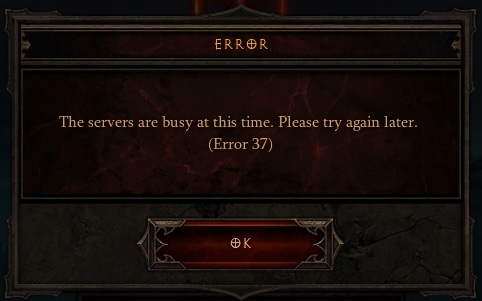
Diablo 3 - Error 37

The dreaded Error 37 plagued Diablo III on launch day, as it becomes the highest profile DRM-fail in the history of gaming

A lot of people saw it coming, but as expected, the launch of Diablo III turned into a DRM-tastic disaster for Blizzard this week. One of the most anticipated games of the year (or decade), with one of the most controversial DRM decisions in regards to the single player campaign, and a near simultaneous global launch – a recipe for disaster, unless Blizzard go beyond the call of duty to provide adequate servers for all. Unfortunately, they did not.

Back when Blizzard first announced the controversial DRM, they were keen to stress that it wasn’t piracy related. Rather, it was suppose to be a sort of elaborate anti-cheating system, although that seemed confusing at the time for a game that was always largely a single player experience. But as we now know more about the game, and especially the built-in Auction House system, it’s much more clear why Blizzard went with the “always-on” DRM approach (and they were right, it’s not about piracy, or at least not all about it). In order to ensure the subscription-free Diablo III doesn’t cannibalize Blizzard’s major subscription based property, WoW, and to take the “black market” trade for in-game items in-house, the Auction House system was devised as the solution. But in order for the market place to remain rational, cheating, hacking and other unfair tactics had to be stopped – the always-on DRM is Blizzard’s solution to this. It’s a valid explanation as to why it’s present, and why it may be needed, but having a valid, non anti-piracy related explanation, won’t please diehard fans, who were none too pleased with the Auction House addition in the first place. But Diablo III is the only Diablo game in town, so to speak, so it’s not as if they have a choice if they want their fix of Diablo (disclaimer: I’ve purchased Diablo, even though I should know better).

But for games where it’s easy to make the decision not to bother buying, I’d caution publishers against taking gamers for granted in this way. DRM should either not exist, or it should be invisible, as otherwise, it becomes a liability.

High Definition

Does the world need another physical media based format, even if it is a royalty free, open standard, based one?

Well, whether you think one is needed or not, free software advocate (free as in freedom, not as in beer) Terry Hancock is going to make one. Dubbed “Lib-Ray”, it’s based on a MKV container, using the VP8 video codec, with an HTML5 based menu system, with everything stored on SD media. The name may sound similar, but this is definitely not a Blu-ray challenger (and not intended to be), although it could give independent filmmakers a nice standardized way to distribute a physical copy of their films, without having to pay the likes of Sony, Panasonic and Microsoft for the privilege. It’s not the worst idea in the world, although without real hardware support, the format will have a long and hard struggle for acceptance, even by the indie scene.

Gaming

Very much related to Blu-ray, but also very much a gaming related news item, was a former Microsoft boss’s take on the relative “success” of the Xbox 360, and why it actually happened.

Robbie Bach, the former president of Microsoft’s Entertainment & Devices Division, says that Sony’s ill planned and badly managed transition from the hugely successful PS2 (70% market share) to the expensive, delayed PS3 (30% market share) made it possible for the Xbox brand to triple its market share during the same period. The expense and delay had a lot to do with the inclusion of Blu-ray support for the PS3, although it did help Sony win the HD format wars.

Sony PlayStation 2

The PS2 dominated the video games market with 70% market share, but the transition to the PS3 was problematic for Sony, not just because developers were actively backing a second horse in the race - the Xbox 360

The ease in which developers could develop on the Xbox 360, compared to the PS3, also seems to be a factor (something that even Sony admits), but the same developers also had a vested interest in seeing Sony’s standing knocked down a peg or two – nobody wants to publish in a market with only one big player, and support and investment by publishers like Activision and EA, in Microsoft’s then new console, made it possible for a second major player to emerge, according to Bach. Of course at the time, nobody expected Nintendo to ultimately come up with the most popular console of this generation, but that didn’t really change the strategy for publishers much, as the Wii was never a serious platform revenue wise for them.

As mentioned earlier, lack of NPD hardware stats means our monthly NPD analysis is not going to happen, and so I’ll talk about it in brief here instead.

The Xbox 360 was the most popular home-based console for the month, with 42% market share amongst the home based console, selling 236,000 consoles (down 21% compared to the same month last year). This leaves 326,000 units sold between the other two, and using a similar split as last month for the Wii/PS3, then it’s about 214,500 for the PS3, and 111,500 for the Wii – but the split is probably a bit more even, as the Wii numbers looks too small, and Easter is usually kinder to the cheaper consoles.

Software wise, Prototype 2 dominated, but it looks like it sold less than 236,000 copies on all platforms combined, which is pretty weak for a top selling title. Kinect Star Wars was in second place, decent in terms of ranking, but still weak in terms of actual unit sales probably.

Hopefully, normality resumes for the NPD analysis next month, but we’ll have to wait and see.

And with that, we come to the end of another WNR. Hope you’ve had a good week, hope the next week will be better, and see you again in seven days.

Weekly News Roundup (6 May 2012)

Sunday, May 6th, 2012

Hope you had a good Star Wars Day on May the 4th. Unfortunately, I totally forgot about it, as otherwise it would have been a great occasion to finally watch my Star Wars Blu-rays, which I had been saving until my TV problem had been solved (which it was, last week).

You know how three of Digital Digest’s URL were removed from Google due to a bogus DMCA complaint? Nearly 6 weeks later, all three of the removed URLs have finally been reinstated. It could have happened a bit sooner, but Google messed up my first counter-notification and failed to process it, forcing me to re-submit one about 2 weeks ago, which was finally processed this week. Luckily, none of the URLs were bringing in a lot of traffic from Google to cause any major disruptions, but it could very well turned out to be an expensive problem, but not expensive enough to actually warrant getting  lawyers involved!

A pretty good news week, not that all the news was good news, but just that there were plenty of interesting news items to write about, so let’s get started.

Copyright

We start with news of the blocking of The Pirate Bay in the UK, something that had been coming admittedly, but the required court order was finally handed down this week.

A good number of UK ISPs will have to start blocking access to The Pirate Bay within the next couple of weeks, with some ISPs having already activated their filters. The filtering appears to be in the form of both a DNS filter, and an IP filter. The DNS filter will make sure typing thepiratebay.org (or thepiratebay.se) will no longer resolve to the correct IP address for the website, and the IP filter will ensure that even if you knew the IP address, you won’t be able to access the website.

VPNReactor

A VPN service is a worth investment if you value your privacy, or want to access geo-locked legal content, but there are also free (albeit limited) alternatives such as VPNReactor

Of course, this kind of filtering is easily circumvented. By changing to a un-filtered DNS server, such as the ones provided for free by OpenDNS or even Google, it will allow the TPB domains to fully resolve. But this doesn’t really help in the case where the IP address has also been filtered, and so you’ll have to rely on VPNs or proxies to get your TBP fix. Generally speaking, using VPNs for BitTorrent is a good idea these days, as even if you can access TPB and get the Magnet links needed, chances are, your BitTorrent activities (for popular torrents) are still being monitored by one or more agencies (some to involve you in a mass lawsuit, others as part of ‘graduated response’ monitoring regimes). With the right VPN service though, your BitTorrent speed shouldn’t be affected too much, while your activities should now be anonymized. But do check to make sure what the VPN service’s privacy policies are, as some openly state they will hand over server logs to third parties upon request, which kind of makes it pointless if privacy is your biggest concern. VPNs also have the added bonus of allowing you to access geo-locked content from places like Hulu and Netflix, if they offer the option to choose the country where your “fake” IP address comes from.

The news of the block made headlines around the world, and as such, actually drove more traffic to The Pirate Bay. And with plenty of articles and blogs covering the possible solutions to the block, I wonder if all this has done is to actually make more people aware of TPB. And rather than scare them into not using BitTorrent, it may have only helped to push them to make the extra effort to conceal their activities. It could end all rather badly for future anti-piracy efforts if the trend towards VPNs and other anonymizers continue.

And ISPs are also well aware that these kinds of filtering will largely be pointless, and many are now calling on the entertainment industry to find other more effective ways to combat piracy, rather than scapegoating everything on ISPs. A better way, according to ISP Virgin Media, would be to offer more “compelling legal alternatives”. They specifically named Spotify, as the lawsuit that resulted in the blocking was a music industry led one, but it applies just the same to home video. And as you’ll see later in this WNR, consumers have already started to embrace these “compelling legal alternatives” by voting with their hard earned cash.

There's no place like home T-shirt

An IP address is not a person, just like the owner of a phone account is not necessarily the person that made a specific phone call, a judge says

A very interesting legal development happened across the Atlantic too this week, as a New York judge finally took the time to write a detailed ruling on why IP address evidence by themselves are not sufficient to identify individuals. Judge Gary Brown used the same phone account analogy that I’ve used in the past, but hit the bullseye by comparing the use of this type of IP address evidence to an individual who pays the telephone bill being linked with a specific phone call. Judge Brown also raised another interesting point regarding the widespread use of Wi-Fi routers, but not in the traditional “hijacking” scenario where unauthorized use of your Wi-Fi connection may have been responsible for the infringing actions. What the popularity of Wi-Fi does mean, according to Judge Brown, is that it proves more and more authorized individuals are sharing the same Internet account, and this again makes it hard to ascertain just who actually performed the action that broke the law. The copyright groups will argue that, as the owner of the connection, they are always liable for how it’s used even if they’re not at all aware of how it is being used (say goodbye to Wi-Fi hotspots), but again, this doesn’t seem to apply to phone accounts (otherwise, payphones wouldn’t exist because the owners of the payphones would be liable for all illegal activities being conducted on these phones).

I believe the the lack of a deeper understanding of technology by the judiciary has been responsible for the misuse of IP address as evidence, something that copyright groups have been more than willing to exploit. But as the technical proficiency of judges improve, I think we’ll see a lot of these accepted notions challenged. For one, I would like a further examination of the role data transfer and usage plays in infringement, in that how much data must be downloaded (and uploaded) before infringement actually occurs, and how the data has been used. For example, if I attempted to download an infringing file , say from RapidShare, and that download stopped at 95% (thus making the file completely useless), have I committed copyright infringement? And if I make a successful download but never use the file, am I still liable (even though I’ve done no harm to anyone). For uploads, if I only uploaded a single bit of data to a BitTorrent swarm (let’s say, a single zero), am I just as guilty as someone who’s been seeding for weeks?

If Hollywood want to continue their obsession with finding a legal solution to the web piracy problem, instead of focusing on innovation, then these are the issues that need to be cleared up.

High Definition

There are some encouraging signs that, despite the piracy problem, home video revenue is on the rise again, and it’s largely thanks to the Internet.

The biggest rise came in the area of subscription streaming, with an amazing 545.5% increase in revenue in just a year. Of course, a lot of it comes from disc rental subscribers transitioning to digital, and disc rental revenue was expectedly down, but all this shows, and it’s something that I alluded to earlier in this post, is that consumers are making the choice towards streaming. It could be because it’s convenient, or it’s good value considering how much content you have access to “on tap”, but probably because of both, and it shows that people are happy to use the Internet for legal videos, even if it costs money.

The only thing streaming can’t do effectively right now is to offer ubiquitous high quality HD streaming. The minimum broadband requirement for semi-decent HD that you’d want to watch on your 60″ TV seems to hover around the 10 Mbps mark, and while that’s achievable for many, it also means that a large chunk of their connection has been saturated, and by just a single video stream. Here in Australia, those with 10 Mbps or higher are probably in the minority. Until most homes are capable of receiving at least two such streams at the same time without saturating connections, I think Blu-ray will still have to carry the majority of “HD bits” being delivered to people’s homes. And accordingly, the latest sales results still shows Blu-ray sales rising. With the decline of DVD sales also slowing down, it has allowed the HD format to offset most of the revenue losses (overall, revenue was only down 1% from a year ago for disc based sales).

So to make HD streaming, and possibly even Blu-ray quality streaming, a reality, what we need now is a faster Internet network for everyone. One of the ways to deliver it is via high speed fiber (or fibre, depending on where you’re from), and Google has been building fiber towns all over the US in anticipation. Even in Australia, our government is committed to connecting 93% of homes to fiber, with speeds up to 1Gbp. Even at 100 Mbps, it is still more than enough to stream two full Blu-rays. So you’d think, given the trend towards Internet based video streaming, Big Content should be rejoicing at the advancements in network speeds that will allow for the continued evolution of web based streaming. But once again, the piracy issue turns out to be the one that movie studios are most concerned about.

NBN Fibre Rollout

Here in Australia, the government is rolling out high speed fibre broadband to 93% of households, something that has Hollywood scared (photo credits: NBN Blog)

The MPAA supported AFACT group here in Australia have already issued dire warnings in regards to the country’s fiber project, about what pirates could be doing on super fast networks. And so instead of focusing on the opportunities (the same opportunities that the likes of Google, Apple and Amazon will probably exploit to their, and the consumer’s, advantage), the focus has been on new legislation to curb piracy on the still unfinished network. This week, Google’s fiber town projects have also attracted the same kind of fear and uncertainty from Hollywood’s major studios.

Now, being afraid that a pirate might be able to download an entire Blu-ray disc every 4 minutes over a 1Gbps connection is a perfectly reasonable response. But the thing is that, however scared Hollywood is at this prospect, high speed Internet is coming to people’s homes with or without their support, and no amount of fear-mongering is going to stop it. So instead of trying to DRM the whole Internet and legislate it to death, why not take a breath, calm down, and try to see the possibilities – that instead of fretting about a pirated Blu-ray disc being downloaded in 4 minutes,  how about seeing the opportunity to offers consumers the ability to buy, stream and even download and burn their own Blu-ray discs in a nice and easy to use service that’s at a reasonable price, and beat the pirates at their own game.

But that would be too easy, wouldn’t it, so expect more pressure on the legislature to help “protect” the entertainment industry from progress, as the fiber (and next-gen 4G) rollout continues.

Well, that was the week that was. Hope you enjoyed this edition of the WNR. See you in 7.

Weekly News Roundup (15 April 2012)

Sunday, April 15th, 2012

Welcome to another edition of the WNR. Not a very busy weeks judging by the number of news stories, so hopefully we can get this done rather quickly. I’ve been busy working on that little update for Digital Digest, which I promise will be launched next week, even if it’s still only half-completed (to be fair, it’s more like 80% completed). And you know I’m serious about meeting this rather artificial deadline by the fact that I didn’t even play that much Skyrim this past week!

One development that came too late in the week to be included was the March NPD results, and I’ll write the full report early next week.

Copyright

Let’s start with the copyright news, starting with the revelation that, even within the MPAA itself, not everyone was convinced that SOPA was the right solution for the web piracy problem.

SOPA Protests

It seems the anti-SOPA/PIPA sentiment was also alive and well within the MPAA itself (photo credits: Alain-Christian @ flickr)

When the anti-SOPA Internet Society hired a former MPAA executive, there was a bit of a controversy as you would expect. This prompted the MPAA’s former chief technology policy officer, Paul Brigner, to come out and explain a few things about his new appointment, including his apparent opposition to SOPA/PIPA. It seems Brigner left the MPAA at least partially because he felt SOPA was not the right solution to the piracy problem, and that SOPA and other “mandated technical solutions” are not “mutually compatible with the health of the Internet”. If the MPAA can’t even convince it’s own tech policy officer of the merits of SOPA, perhaps it really doesn’t have much merit at all.

But you get the feeling that the MPAA will never be fully satisfied until they get the power to not only squash any website it wants, but also to force others (like ISPs, governments) to help them do most of the heavy lifting. They will have ruined the Internet by then of course, probably only to find out that piracy has not only not slowed, but it has shifted to other parts of the Internet that can’t be easily controlled or legislated. And that, without argument, would be a far worse situation than what the one today.

It appears “blowback” invariably happens every time the copyright lobby launches a new crackdown, especially using technological measures. Every DRM has been met with an even stronger anti-DRM. Going after torrent sites have only resulted in more resilient torrenting methods. Which seems to indicate that going after video embedding, the MPAA’s latest manoeuvre, may backfire as well. The MPAA is getting itself involved in a legal showdown that originally only involved an adult entertainment company, Flava Works, and myVidster, a website that allowed people to post and share their video embeds, but  now includes the likes of Google, Facebook, the EFF, and of course, the MPAA. The tech giants saw the original court ruling, which was in favour of Flava Works, as severely flawed, setting a precedent that could have huge repercussions for the entire Internet. The judge in the case failed to make the distinction between linking/embedding, and hosting, something that could make Google Images liable for the copyright infringement of any image in its database for example, or make Facebook sharing a legal minefield. There was also the issue of a “repeat infringer” policy, or Flava Works’ claim that myVidster did not have one, and how it relates to linked/embedded and hosted infringement. It seems to me that the DMCA is rather unclear about what a “repeat infringer” is, and it seems the law leaves service providers and Internet intermediaries to define what it actually means and what kind of policy to implement, even if it is one not to the satisfactory of content holders. And since myVidster did have a working DMCA take-down process, and that it did not host anything, the ruling seems a bit harsh. Also, you have to question why Flava Works went after myVidster, instead of going after the hosts of the actual videos, the dime a dozen porn tube sites. The responsibility cannot keep on flowing downwards until you get to someone that’s easier to sue.

Hotfile

Hotfile's expert says the most downloaded files on their network were two open source files

An anti-MPAA theme seems to be developing this week, since the only other copyright story is also MPAA related. This one has to do with the MPAA’s lawsuit against Hotfile, where the MPAA, using their own expert, argued that 90% of all downloads on Hotfile were infringing content, and that the Hotfile had few, if any, legitimate uses. This week it was revealed that Hotfile’s own expert, Duke University law professor James Boyle, found that this really wasn’t the case at all. Professor Boyle found that in actual fact, the two most downloaded files on Hotfile were actually open source software, with more than 1.5 million downloads between them. And while the “90%” figure wasn’t entirely debunked, and I think it’s hard to argue against the fact that a large percentage of total downloads on file hosting sites like Hotfile and Megaupload are of the infringing nature, I think in terms of the sheer number of different uploads (ie. not taking into account the number of downloads), I suspect there is also a large percentage of non infringing files on these networks (your typical spreadsheet, Word doc, PDF, home videos and other files too large to share via email, that may very well only be downloaded once, but still a key reason why people use file hosting sites).

This really is another grey area in the law. Take an extreme example where 90% of all different files on Hotfile were non infringing, but 90% of all downloads were infringing, then would Hotfile’s non infringing uses make it legal, assuming the website had a working DMCA process? How much is too much, and how much is “enough” when it comes to anti-piracy?

High Definition

I read an interesting article this week on Forbes’ blog, where the headline was “Sony’s Blues Caused By Blu-ray”, a rather controversial title if you ask me.

The actual article, despite the headline, did cover more than just Blu-ray, and it did raise a couple of interesting points. So are Sony’s recent woes caused by Blu-ray? The recent woes being the global layoffs and the lack of profitability, of course, but to blame it on Blu-ray seems a bit counter-intuitive, considering Blu-ray seems to be the only recent success for Sony.

But what the Forbes blog, written by contributor Stephen Pope, was perhaps trying to say is that while Blu-ray is a victory for Sony, it just wasn’t a big enough victory to help the company stay profitable, and that in the end, it may even only a fleeting victory, considering the growing popularity of streaming vs discs.

Sony Blu-ray

Sony's Blu-ray victory may be short lived, as consumers are keen to move onto streaming (photo credits: mroach @ flickr)

I’ve long held the believe that Sony lost its dominance in the gaming sector by allowing the Xbox 360 to be a viable successor to the PS2, due to the one year delay in releasing the PS3 and the high initial cost of the hardware – both factors very much related to the included Blu-ray support. So while the PS3 helped Sony win the HD format wars, it also hindered Sony in keeping their dominance in the gaming arena. Looking at the current range of multi-platform games and the quality difference between the PC/Xbox 360 DVD version of the PS3 Blu-ray version, it seems the Blu-ray disc’s superior capacity has done little to actually benefit the gaming experience. And while the platform exclusives do try and make the best use of Blu-ray, they just aren’t selling enough to make a huge difference compared to the mega multi-platform franchises of Call of Duty or FIFA or GTA.

And streaming certainly does look like the future, if only for the fact that discs and the drives that read them are just not compatible with today’s portable devices. There is also a trend to consume more content (often for less money), and the physical cost and space that discs (and their packaging) requires, puts a limit on this consumption (while raising the price of it – last year, the average price people paid for streaming content was 51 cents, compared to $4.72 for discs). And access, with discs being limited to what you have purchased or what your rental outlet has in stock, just can’t compete with a streaming digital library of hundreds of thousands of titles that will never “run out of copies” (or suffer from bad scratches).

And even in terms of data storage, the 50GB Blu-ray offers, or even the 100+GB of BDXL pales in comparison to the TBs of data people need these days for their digital needs. So you have a multi-TB drive the size of a small book versus shelves full of BDs that you have to take time to burn, label, organize, that actually costs many more times than the drive – even in data storage, Blu-ray may be too little, too late.

So Pope certainly makes a few valid points, although I would say the biggest problem for Sony is that it is neither the design powerhouse that is Apple (Sony is at times too preoccupied with things like copy protection to consider things like ease of use, in my opinion), nor can it compete in the value stakes with the likes of Samsung (a company that’s also doing more on the innovation front than Sony, in my opinion).

Gaming

For gaming, the March NPD was yet another victory for the Xbox 360 (that’s 15 months in a row where the Xbox 360 has been the top selling home based console), although being the best of a bad bunch may not be such a meaningful award.

Also interesting was the news that Mass Effect 3 sold 4 times as many copies on the Xbox 360 than on the PS3 (I’m assuming this is North America only). This is perhaps a special case because the game carries on your saved progress from the last game in the series, not helped by the fact that the original game wasn’t even available on the PS3 (instead, relying on an interactive comic to record the key decision carried over from the first game). Also not helping is the fact that the PS3 is getting itself a rather bad reputation for having inferior multi-platform games, not just on ME3, but also on the other mega franchises such as Skyrim and CoD.

And I guess I also have to mention Skyrim’s upcoming Kinect support for the Xbox 360 version. The preview video looks pretty cool, although it looks like the game will only take advantage of Kinect’s voice support (and so the same features can probably be replicated via the PlayStation Eye’s microphone, if Sony really wanted it to happen by giving Bethesda some financial incentives, or making it really easy programming wise to do so. Some of the new Kinect features are already available via PC mods though, with a normal microphone, or even via the Kinect connected to your PC).

Screaming Fus Ro Dah at your TV is probably the geekiest thing anyone will do this year!

The unrelenting force of my addiction to Skyrim means that, just by mentioning it, I now have the sudden urge to play it for another hour or two. Which of course means we’ve come to the end of this WNR. See you next week.

Weekly News Roundup (1 April 2012)

Sunday, April 1st, 2012

I know what the date is, and no, I’m not going do something for it. The expectation is always too high, and I can never live up to it. Besides, all the interesting ones have been done, and the rest, I’m fairly sure, constitute libel. So nobody is making a fool out of anyone else for this year, not Digital Digest anyway.

Or maybe I’m just luring you into a false sense of security …

But before we get into any April based tomfoolery, which may or may not happen, let’s get through the news roundup first.

But before that even, a linky link to Digital Digest’s “new” Facebook page, or rather, the same page with the new Timeline thingy on it that has been forced upon all of us by all knowing Facebook. The timeline feature is definitely quite interesting, and if I have the time, I might just start adding a few of Digital Digest’s milestones into the timeline (having only added in one entry for the launch of the website back in 1999, so far). I’ve never been a big fan of Facebook’s user interface, but I must say this timeline thing does look good.

Copyright

First, a follow-up to a story from last week regarding RapidShare. I mentioned last week, in a brief sentence, that RapidShare may soon be forced to filter all user uploads due to a recent court decision. Apparently, this is not actually  the case at all.

What had happened is that the groups suing RapidShare in Germany, a collection of book and music rights groups, had released a statement celebrating their “victory”, despite the court having not yet released the full written verdict. But now that the written verdict has been released, it paints a rather different picture, one that RapidShare says gives them an important victory as well.

Now I’m aware of the spin that is probably being produced by both sides, but it’s clear the the verdict wasn’t the clear victory the rights holders had hoped for. What the court did, at least according to RapidShare, was to recognise RapidShare’s overall business model as a legal one, while at the same time asking RapidShare to do more on the issues of copyright infringement. The court says that RapidShare needs to actively seek out links to infringing content (hosted on its servers) by visiting the common haunts for these types of things – popular forums, blogs, websites and such, and remove said content once it is aware of the likely legal status of the upload. This is opposed to scanning each and every download, without knowing anything about the legality of the download (which, according to the European Court of Justice, may constitute a violation of privacy rights). But RapidShare says they’re already doing exactly this, and so for them, the court’s verdict won’t actually affect them too much. Despite this, RapidShare still plan to appeal the decision on the grounds that while they think these measures are a reasonable part of their business strategy, they don’t believe the court has the right to order websites to comply.

Hotfile

Hotfile will soon scan all uploads for pirated content, but it may be too little, and too late, as far as the MPAA is concerned

Another file sharing host is taking a different approach to anti-piracy, although it might be too late, if not too little. A press release alerted me to the fact that Hotfile will start using Vobile’s vCloud9 scanning solution to scan uploads for infringing content. Apparently, the technology employs a database of known file “fingerprints”, and can even scan compressed archives to see if the upload contains infringing content. This comes after the company recently changed its affiliate program to no longer pay based on download volume (ie. heavily favoured towards pirated downloads), but instead, when uploads result in the downloader signing up to a premium account, and uploaders get a commission on that. With the MPAA still insistent on a summary judgement against Hotfile in its lawsuit, this may all be too late, and it’s probably too little as well when it comes to what the MPAA really wants (which is to shut down Hotfile and make an example out of them, probably).

For those that take an interest in things like DVD and Blu-ray copy protection, as well as region coding and stuff, you should be well aware that Fox are one of the “hard-asses” when it comes to these sort of things. Being pretty much the only studio that consistently makes its US Blu-rays region locked (even Sony has seen the light, and forgoes region control for catalogue releases), and having early on declared their support for Blu-ray based solely on the format’s preference for tougher copy protection methods (all of which has since been cracked, of course), you’d expect that Fox, and its parent company, to be the last one to have a copyright scandal. Which was why it was very ironical to see News Corp embroiled in its own piracy scandal this week, as claims were made by BBC’s Panorama program, and also separately by an Australian newspaper, that a (former) subsidiary of News Corp may have helped to fuel piracy of competitor’s services in order to gain an unfair market advantage. Apparently, the subsidiary, NDS, helped to crack rival pay TV networks’ encryption cards, and then helped to ensure the cracked codes got into the hands of people who sell pirated services. News Corp, and NDS, have both denied these allegations, but both the BBC and the Australian paper, the Australian Financial Review, say they have gathered a lot of evidence on this (with the AFR saying that this investigation has been four years in the making). With the Australian government already considering launching its own official investigation into this incident, this could be a story to watch out for.

And finally for this week’s copyright section, I have a story that hits pretty close to home. Actually, it hits directly at home like a guided missile, and for the fun of it, takes out a few neighbouring properties too.  This week, the home page of Digital Digest, and two PowerDVD related pages, were removed from the Google search results due to a DMCA take-down request filed by Guardlex.com. You can read the full story here, and the DMCA notice here on Chilling Effects if/when it’s ever made available, but the gist of it is that Guardlex, probably working on behalf of Cyberlink (the makers of PowerDVD) to take down results related to pirated downloads of PowerDVD, took down our pages as part of a DMCA notice that included thousands of other URLs. The thousands of URLs also included well known legitimate websites such as Cnet’s download.com, Afterdawn, Softonic.com and other clearly legal URLs, including a dozen URLs from Cyberlink’s own website (including their home page!).

Digital Digest DMCA Google

The Digital Digest home page have been removed from the Google results due to the DMCA complaint that does not seem to be valid at all

The whole DMCA removal process with Google goes something like this. When Google receives a DMCA notice, and if the notice has all the proper documentations, they immediately remove the URL from their search results (and you’ll see the “In response to a complaint we received under the US Digital Millennium Copyright Act, we have removed … message at the bottom of any search results page that has removed results – do a search for “PowerDVD” right now, and you’ll see 3 such messages, meaning 3 URLs were removed). Some time later, could be days or weeks, Google informs the owner of the removed page(s), assuming they have a webmaster central account with Google, of the take-down. And a few days after that, Google may send the website owner the actual DMCA notice. You then have the option to file a counter-notification, and if Google does not receive any further notice on this matter within 14 working days, the URLs get reinstated back into Google’s index.

So even in the case of a mistaken identity, as was the case here I believe, it may take weeks to get it all sorted, with financial and a reputation loss that cannot be avoided. Under the DMCA, if I’m the victim of a mistaken take-down, I can sue for damages. The problem is that this is rarely worth the time and trouble when you factor in legal fees, and so DMCA agents can get away with these innocent and sometimes not so innocent mistakes, most of the time. This is probably why 57% of all DMCA claims made to Google are by companies out to “get” their competitors, and that 37% aren’t even valid claims. It’s clear that the DMCA is currently being abused by rights holders, and that was always going to happen if you have the level of bias present in these sets of laws.

And so it scares me very much to think that rights holders still say the DMCA is not biased enough, and they want something like SOPA or PIPA to make it even easier to take down entire websites, just for a few bad pages that may not even be bad. Sure, the major backers of the bills will say it’s only for “foreign rogue” websites, and that they will promise not to abuse it, but can you really trust them? And even if you can, can you trust all the people and companies that will have access to SOPA/PIPA, to not abuse it in the same way they’re currently abusing the DMCA?

High Definition

A couple of WNR’s ago, for an issue where I ran out of stuff to write, I enthused about how great streaming video-on-demand was, and how it look destined to be the future of home video.

It seems that the future is going to get here sooner than I though. The latest research via IHS Screen Digest (no relations) says that streaming has just overtaken discs as *the* way to watch movies and TV shows at home, having increased by about 140% in the last year alone. 3.4 billion viewings were made on streaming media, compared to only 2.4 billion on DVDs and Blu-ray, for 2011.

What was more interesting is that, on average, people only paid 51 cents for each streaming title, while they paid $4.72 for discs. The cost of an Internet connection and bandwidth is probably not counted for streaming, which will increase the cost, but I think the main idea is that people watch more on streaming, especially unlimited streaming offers, because they have access to more content for a far lower price than compared to “owning” content.

Netflix vs Blu-ray

Is Netflix going to doom Blu-ray? Maybe not now, but you can't dent that VOD is the best way to access and maintain a huge library of titles

Of course, this story has led to people saying the end of nigh for Blu-ray, but until true Blu-ray quality 1080p can be streamed to most people’s homes, the reality is that Blu-ray is still very much needed.

But for those that don’t really care that much about seeing a few extra pixels or “owning” content, or for content that can’t benefit from the full bandwidth HD treatment, then $7.99 per month for Netflix may be a much better deal than having a collection of hundreds or even thousands of discs (just making available the shelving space is a pain, trust me).

But for me, having something physical to hold on to that won’t refuse to play simply because my Internet connection is down, is still worth the extra $4.21.

And with that, we come to the end of another WNR. See you next week.