Archive for the ‘Video Technology’ Category

Weekly News Roundup (17 November 2013)

Sunday, November 17th, 2013

A slightly longer one for you this week. Last week’s short one was kind of my fault, but this week’s longer one has little to do with me, and more to do with, um, things actually happening.

Let’s get started.

Copyright

You’ve got to get them young! The RIAA and MPAA obviously agree, because they’re backing a plan to start teaching their pro-copyright propaganda to kids still trying to master the tricky art of finger painting.

A new curriculum that teaches kids the awesomeness of copyright, and the evilness of piracy, has been proposed by the Center for Copyright Information (which is backed by Big Content, as well as America’s top ISPs). The lesson plans, which start at the kindergarten level and all the way through elementary school, teaches the importance of “protecting copyright”, and covers such fun topics as “Copyright Matters” and “It’s Great to Create”.

Immediately after the plans were made public, everyone with a bit of common sense came out and suggested that this probably wasn’t the best idea. Or even a very good one. The EFF worries about some of the bias that may be present in the lesson plans, such as equating downloading TV shows to copying off someone else’s homework. Teachers, via the California Teachers Association, worry about fitting in corporate sponsored messages into a curriculum that barely has enough room for the basics, like English (so you can read the lawsuit that the RIAA may file against you) and maths (so you can work out how many millions you owe the MPAA for downloading Spongebob episodes).

My biggest concern is that the MPAA/RIAA’s curriculum may be just too confusing for elementary school kids. I mean how do you explain to kids why artists, the “creators” that the curriculum so lauds, get such a small percentage of earnings compared to the middlemen that make up the members of the MPAA/RIAA. Especially in such a technologically advanced age where creators can sell directly to consumers? It just doesn’t make any sense!

Netflix

Netflix and YouTube dominate US prime time downloading

It seems every time the MPAA comes up with some new ridiculous way to fight piracy, we also have, at the same time, a story that shows you how to beat piracy by simply providing people with a better product. For this week, and for a while now, that better product is Netflix. Nearly 32% of downloads during peak usage times in North America now belongs single-handedly to Netflix, and when combined with YouTube, they account for more than half of all download traffic.

Now I know people have their gripes with the service. And I do too. Not enough new content; too many missing classics; streaming quality/speed issues – to name a few. Yes, we have original content now (and some really good stuff too), and there’s the occasional blockbuster that makes its way on there after a lengthy delay (Skyfall, just last week, for example), but having almost destroyed the brick & mortar video renting business with its disc-by-mail service, Netflix streaming has managed to destroy whatever was left of that business. Instead of going to a video store and renting some old crap, you can watch the same old crap, and more older and crapper stuff, in the comfort of your own home without having to spend any extra money.

It’s great for me, the procrastinator, because instead of spending an hour at the local Blockbuster and being unable to decide what to rent, I can now spend an even longer time clicking through Netflix’s library, still unable to decide. But I can do it all now while sitting down and and stuffing my face full of trans fat, so it’s a lot better than going to Blockbuster (the only exception being their excellent caramel popcorn).

Hoping that it goes the way of Blockbuster, but unfortunately not happening quickly enough, is gaming DRM. And the CEO of anti-DRM developer CD Projekt Red, the people behind the DRM free game store GOG.com and The Witcher series, explains why this is the case.

Apparently, the gaming industry knows full well that DRM does work, but still persists with it because it is seen as doing something. Anything. And they need to be seen doing something in front of bosses, investors and shareholders, most of whom don’t have a clue (or chooses not to have one). But that’s okay, the only loser in the whole thing are gamers and paying customers. You know, the unimportant people. It’s this kind of deluded, and lazy thinking that has mired the industry in an unending war against pirates, one that they’re losing pretty badly and where the collateral damage extends to anyone who tries to play the game.

Just to reiterate, DRM doesn’t do what it is supposed to do (stop piracy), but instead, it actually hurts paying customers and make them want to buy your games less. And “well, what else are we supposed to do” is not an acceptable answer when faced with the question of piracy. And there are plenty of things you can do to make the legal experience much better than the illegal one – just look at GOG.com or Steam, for example.

High Definition

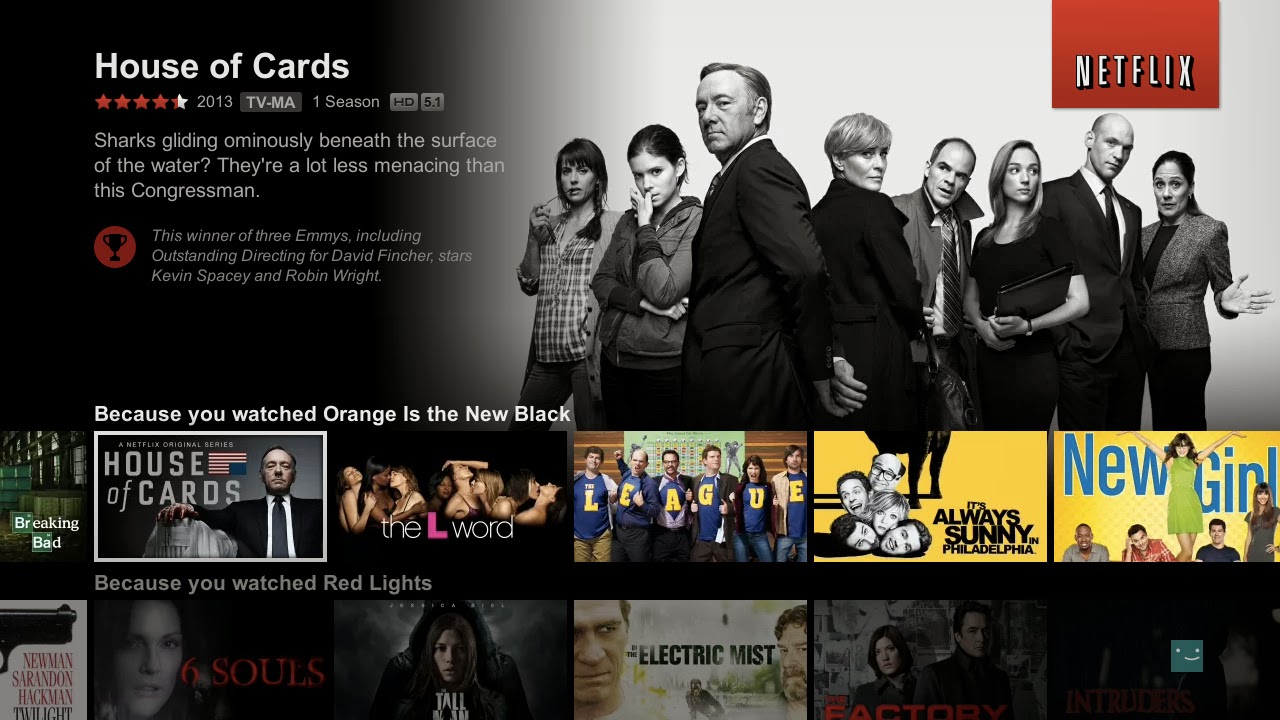
New Netflix UI

The new Netflix UI for TV connected devices looks good and works well

Just a quick follow-up to last week’s story about the Xbox One not supporting Blu-ray 3D at launch – the PS4 won’t play 3D films either, as it turns out. Both Microsoft and Sony are coming out with the “not at launch” caveat, which probably means that support will be added at a later time. Perhaps free, but perhaps at a small cost. Not too many tears will be shed from me for the loss of 3D, even if it’s kind of crappy to lose features when going from the current gen to the next gen.

Another quick digital video related update, this time for Netflix, who has rolled out a major UI change for all of its TV connected devices. I’ve been using it for the last couple of days, and it’s very usable, and I like the more detailed descriptions about why certain streams have been recommended for me or why I should watch them. With that said, I would still like the option of being able to select language/subtitles before the film starts (right now, you have to do it when the film is playing). And showing a screenshot of the current scene for resuming titles would be helpful. I’ve also noticed there are some issues with saving the last played spot, especially if I turn off my PS3 too quickly.

Gaming

The Wii U is still stuck in the sales doldrums, but instead of being pleased with the contrasting fortunes of their PS3 and PS4 consoles, Sony says it’s actually in their interest for the Wii U to start selling well. Sony Worldwide Studios Prez Shuhei Yoshida expressed these sentiments in a recent interview with IGN, in which he also suggested part of the problem with the Wii U was the inconsistent messaging that Nintendo was trying to send out.

In particular, Yoshida found Nintendo’s “core gamers” strategy a bit odd, as in his opinion, the Wii U should have been marketed like the original Wii, as a “safe” family friendly console. But you can see why Nintendo had to change strategies with the Wii U. While the Wii can be considered a success, its later years were marked by a steady decline in sales, thanks to the ever competitive “casual gamers” market, and the lack of A-list third party releases on the platform. You can’t blame Nintendo for wanting to get a piece of the Call of Duty pie, and this cannot be possible if they stayed true to their family-only strategy.
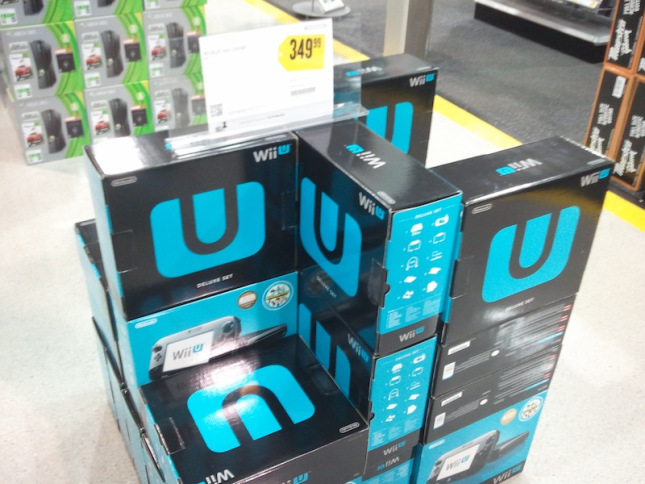
Wii U Boxes

Sony wants the Wii U to sell well, and says Nintendo should concentrate on their family-friendly strength instead of going after “core gamers”

What they failed to do, in my opinion, was to understand how “core gamers” think. “Slightly better than last-gen” is not good enough to sate the appetites of core gamers hungry for next-gen graphics. It was also hard for Nintendo to shake their “video gaming for kids” image to appeal to core gamers. In the end, Nintendo wanted a console that combined mobile/tablet gaming with their core gaming strength (their first party titles, and the family friend reputation), and marry that with zombies and grenades. Perhaps it was just asking too much from a single console, and you end up with a machine that’s neither this nor that. And it didn’t help that Nintendo failed to demonstrate the full potential of their touchscreen GamePad, either for casual gaming or for the hardcore audience.

And all of this brings us to October’s NPD results, for US video game sales. The Wii U, unsurprisingly, was the poorest selling home based console out of the current crop, with the Xbox 360 regaining top spot after the PS3 ended its 32-month winning streak last week (thanks to GTA V). The Xbox 360 sold 166,000 units, but we don’t have figures for the PS3 and Wii U (other than the PS3 outselling the Wii U). The Wii U has only managed to sell 300,000 units in the last quarter, worldwide, and that’s actually a much better result than the previous quarter, in which only 160,000 units were sold.

With the PS4 now released, and the Xbox One coming next week, we’ll start seeing those number (or something vague about them) this time next month, which is kind of exciting. A new console generation and all that.

And on that note, we come to the end of this WNR. See you in a week’s time.

Weekly News Roundup (3 November 2013)

Sunday, November 3rd, 2013

Welcome to another edition of the WNR. Can’t believe it’s November already, still haven’t even gotten used to writing 2013 on dates yet. A final reminder for our Australian readers of my other site Streambly’s Chromecast competition – entry closes 6th of November.

Let’s go!

Copyright

Let the whack-a-mole games begin. And may the odds be ever against the MPAA’s favor. Or something like that. A week after the original isoHunt was downed, a site claiming to be the new isoHunt has been launched, and another group called ArchiveTeam has also revealed that they managed to save 240 GB worth of isoHunt data before it was taken down.

Cynics may decry the opportunistic launch of isoHunt.to, which other than a similar design to the original isoHunt, has very little in common with the original (and is definitely not associated with anyone who used to work on the site). The even more cynical have said that this new site may even be a trap, a honeypot, to catch unsuspecting uploaders and downloaders.

I don’t know who is correct, but it does show how pointless lawsuits and shutdowns are, when it’s so easy to just start a new torrent site. Instead of one isoHunt to deal with, the MPAA may find themselves dealing with hundreds of clones, all started by people that now know it’s smarter to remain anonymous –  a Balkanization of torrent sites that will lead to an un-winnable game of whack-a-mole for rights holders.

The MPAA’s legal and political maneuvering might make sense in the corporate world in which they exist, the truth is that on the Internet, it’s the individual that has the power. Individuals can start a new torrent site and remain anonymous (or out of the reach of the law). Individuals can also seek other ways to upload and download copyrighted content. And even the MPAA and their members’ vast resources will not be enough to go after and take down everyone.

High Definition

Fresh from a positive set of third quarter earnings results, Netflix wasted no time in lining up their next line of attack: cinemas. Netflix’s content guy Ted Sarandos used his keynote address at the Film Independent Forum to attack theater owners for stifling innovation, something that he says could eventually kill movies as we know it.

Netflix

Netflix aiming to disrupt the cinema business by launching original movies that will be available at a theater near you, and via Netflix, at the same time

Pressure from theater owners put paid to plans by studios to try simultaneous VOD releases for movies that are still on their theatrical run, as a way to fight against film piracy. Sarandos says you cannot prevent people from getting movies the way they want it (legally), and not have serious consequences, including the death of theaters and movies.

Netflix already have plans for the release of an original movie on 2014, to be made available on Netflix on the same day as its theatrical release, and Sarandos wants Hollywood’s biggest movies to join in the experiment.

Theater owners are not convinced. To be precise, they’re incensed that Netflix would even suggest it, and says that Netflix are the ones that will kill movies (after having already killed DVDs, according to them).

Sarandos’s plans are good for consumers, by giving them more choice, and obviously good for Netflix. It’s not so good for cinema owners, but it probably won’t kill them either, as the cinematic experience cannot really be replicated. If the market has to respond to what users want, then less business for theater owners, and more for online services may just be the new reality. Someone wins, and someone else will inevitably lose.

But before Netflix start thinking about competing with a movie’s theatrical run, how about just making sure the big movies are all available on Netflix within a reasonable timeframe of their Blu-ray/DVD debut? It’s far too random at the moment.

——

Mozilla Logo

Mozilla happy Cisco decided to pay up and make H.264 royalty free

Just when Mozilla was ready the throw in the towel in their brave but ultimately futile war against proprietary video codecs, specifically H.264, networking giant Cisco comes out of nowhere to provide a third option. Cisco has announced they will absorb licensing costs for their open source implementation of H.264, allowing open source developers like Mozilla to bake in native H.264 support without endangering their own licensing terms.

So while H.264 remains encumbered with royalty fees, Cisco will pay all these fees for anyone using their open source implementation. And thus ends the incredibly tedious HTML5 codec wars, in which HTML5’s default choice of video codecs became a serious point of contention, with the industry preferring H.264, and the open source community unwilling to accept the closed off and commercial nature of the codec. Cisco’s intervention now makes everyone happy.

And if you need to know why Cisco, a company you usually associate with the Internet’s backbone, would intervene is a debate about online video, then all you need to do is to read Cisco’s white paper on network usage forecasts. It’s their predictions that the growth in bandwidth consumption will be largely driven by video applications, and more bandwidth means more Cisco equipment everywhere. So it’s easy to see why the company is willing to spend a small part of their vast fortunes to smooth out any speedbumps for the future of online video transmission.

Gaming

A sprinkling of gaming stories this week. We start with the Wii being discontinued in Europe and Japan. It’s been a good run for the Wii. Probably the first console since the original Nintendo Entertainment System to be so successful at capturing the attention of so called non gamers, and one that in all likelihood will outsell the original PlayStation console when it is finally discontinued in the US. I somehow ended up with two of these things, a white one and a black one, neither of which I’ve played with for the better part of two years. But I might just do that next week, dust off the old Wii Sports (still probably the best game on the console) and give Wii tennis a whack or two.

Out with the old, and in with the new, we have a couple of PS4 related stories too. With Sony still supporting the PS3 for a little while longer, the possibility of cross-platform multiplayer between the PS3 and PS4 version of the same game may be possible, according to Sony.

PS4 with controller and PS Eye

No audio CD support, no MP3 playback, and no DLNA client support – the PS4’s media capabilities are much worse than the PS3’s

Other interesting facts revealed in the reveal-all FAQ document include the fact that the PS4 will be quieter in general than the already pretty quiet PS3, with a stepless speed fan system to eliminate the “jet engine” effect. The PS4 will also be featuring a faster and better browser than the PS3, which in all honesty, isn’t a hard thing to do.

Slightly more interesting for me is the revelation that Netflix will be one of the launch apps available on the PS4, and just like on the PS3, you don’t need a PS Plus subscription in order to use it.

Not so nice is the fact that the PS4 won’t support audio CDs (I guess that’s not a huge problem), nor MP3s (that is a huge problem). It seems the only music that Sony wants you to listen to on the PS4 will have to come via their Music Unlimited subscription service. Alright, I’ll just use PS3 Media Server or TVersity to stream stuff to the PS4 via DLNA, you might be thinking. Unfortunately, the PS4 does not support DLNA either, which is strange considering this is one of most useful non gaming features of the PS3.

With Microsoft focusing on media integration, the PS4 can ill afford to start removing features that were standard on the PS3. They’ve gotten a lot of goodwill over their DRM stance, but not having DLNA support seems crazy considering almost every other Sony device has it.

But if this upcoming generation of console gaming has taught us anything already, is that making a fuss actually brings results. There is already enough of a public backlash for Sony’s President of Worldwide Studios, Shuhei Yoshida, to suggest that these missing media features (specifically, MP3 playback and DLNA support) will be up for “future consideration” by the PS4 dev team, so let’s keep it up!

Alrighty then, that’s that for the week. See you in seven.

Weekly News Roundup (27 October 2013)

Sunday, October 27th, 2013

If there’s one theme running through this week’s WNR, it’s that I’m doing my best to stretch the definition of “interesting” and “news”, trying to find something, anything, to write about.  A non statement from Vince Gilligan, a dry report to the government and an earnings report (yes, a freaking earnings report), and a story about an upcoming Blu-ray player being region locked like most other Blu-ray players, makes up the bulk of this week’s news shenanigans.

Let’s get on with it for f-sakes.

Copyright

The demise of isoHunt, confirmed this week when the website shut down for good, was one of the things that the MPAA was gloating about in its submission the Office of the USTR (US Trade Representatives) detailing Hollywood’s view on “notorious pirates”.

There’s nothing particularly interesting about the MPAA’s latest annual update (a story I might otherwise have skipped, if not for the lack of anything else interesting to write about), other than the removal of isoHunt, but a lot of the regulars this time now appear to have new domain names too (The Pirate Bay, moving to .sx, and KickassTorrents movie to .to). A visible response to the increasing use of domain seizures as part of a new global anti-piracy strategy. Despite the domain name changes, these sites are still popular, still “notorious” according to the MPAA, so nothing much has really changed. That’s because these sites are so popular, that people are willing to accommodate and adapt to new domain name, in a way they wouldn’t for most other websites. These sites have become brands (ironically, thanks to free promotion from the likes of the MPAA’s notorious pirates list), and once this happens, the actual domain name matters less.

—–

Breaking Bad creator Vince Gilligan has waded into the piracy debate by acknowledging that piracy has helped the show become as popular it is, but at the same time also warned that it is taking money out of the pockets of people working on the show. There is a growing trend even among industry types to acknowledge that, at the very least, it is simply a reflection and measure of the popularity of something. But very few are keen to admit to the positive effects of piracy.

Breaking Bad Blu-ray Boxset

Does piracy take money out of the pocket of the people behind Breaking Bad? You can help put it back by buying this awesome Blu-ray box set

It may be that Breaking Bad is pirated a lot because it is popular, but according to Gilligan, BB is popular, in a small part, because it is pirated a lot. Gilligan attributes this to “brand awareness”.

Gilligan also says that had all those pirated downloads been legal, it would have meant more money for the people who worked on the show, including himself. Maybe this is true in a perfect world where a chemistry teacher with cancer doesn’t have to become a drug lord to pay for his medical expenses and to provide for his family, but piracy does not always equal lost sale. It’s like saying if all the people who had already purchased the BB Blu-ray boxset went out and bought another copy, or two, or twenty-seven, then that would also mean more money to the wonderful people behind BB (and they would deserve it). To use another analogy, only because I’m severely sleep deprived at the moment, if I set up a street stall giving away free coffee to morning commuters, I can’t then go back and say that, had I not given it away for free, all of those people who had grabbed a cup would have paid for it. On the other hand, some will have, because coffee is something they want (and need). Just how many would pay, and how many still won’t, is at the heart of the debate.

This debate is pointless though, as we all know it’s impossible to get rid of piracy. Instead, the question should be “how do we make piracy irrelevant”, and there are ways to do this.

High Definition

Netflix is doing alright for it self. The company has just announced that it has now more than 40 million subscribers, adding nearly 11 million new members in the last year. The international market for Netflix has become more important in the past year, with nearly a quarter of all subscribers now belonging to international markets.

Unfortunately, these international markets are still not yet profitable, despite more than a $100 million increase in revenue. Overall profit remains low at $32 million from a high revenue figure of more than $1.1 billion, but content acquisition costs are unlikely to drop any time soon.

Also likely to increase will be expenses for original content, with Netflix set to double their investment in 2014 (although still only 10% of their total content expenditure). The cost may be high, but Netflix seems to be getting good value from their investment, with Emmy awards to offer proof of the success of the strategy, and increased membership numbers too.

The company’s recent link-up with UK cable TV operator Virgin Media was also noted in the letter to shareholders. Netflix and cable TV operators are rivals normally (with Netflix winning quite handsomely at the moment), but this link-up could be a sign of the future. If you can’t beat them, join them, may be something cable operators (many of which also provide Internet services) will have to accept in the future.

Gaming

PS4 DualShock 4 Controller

PS4 DualShock 4 controller can be used on the PS3 (sort of)

Straddling the barrier between HD and gaming news is this quickie about the PS4’s Blu-ray player being region locked. Just like the PS3’s Blu-ray player, and every other Blu-ray player Sony has made. Slow news week or what? Next week’s breaking news: Xbox One Blu-ray player also region locked.

In other earth shattering news, the PS4’s DualShock 4 controller can be used with the PS3, but not all games. Granted, this one is slightly more interesting than the news above, and in the absence of PS3 backwards compatibility, at least something is sort of backwards (or is that forwards) compatible with the PS4. But you can’t play GTA V with the DS4 for some reason.

I think that’s all I have the energy for today. From lack of sleep and boredom, mostly. Will pray to the News Gods for something, anything, more interesting next week. Until then …

Weekly News Roundup (13 October 2013)

Sunday, October 13th, 2013

A heads up to our Australian readers, you can win one of 3 Google Chromecast devices that my new website, streambly.com.au, is giving away. A Facebook like is required to access the entry form (I know, I know) – more details here. I’ve been playing around with the Chromecast, and it’s a nice little device. Very useful for those that prefer to watch YouTube videos on a big screen, or those invested in Google Play. The browser and desktop mirroring is also very useful.

On to the news …

Copyright

It didn’t take long, but the MPAA was never going to just ignore a report from the hugely influential London School of Economics (and Political Science) that attacked the biased and fervently ideological “debate” of the Internet piracy question, especially in the political arena. The MPAA’s rebuttal, on several key points in the report, unfortunately seems to have completely missed the point.

Instead of accepting the argument that data from the film and music industry are often one-sided, and that the industry as a whole was too defensive when it came to others (including scholars, like the ones from the LSE) making counter-arguments, the MPAA decided the best approach was to become way too defensive against the counter-arguments made by the LSE scholars.

As with most ideological crusades, there is no gray area. Either piracy is going to destroy the entertainment industries, or that it is completely harmless. I will gladly put my hand up and say that I am guilty of taking part in the crusade, making arguments and using facts that, while opposite of what the MPAA will try to tell you, may still be far too one-sided objectively speaking. I will argue that I have done what I have done as a response to the constant stream of bias that the other side comes up with, but that’s probably not an excuse.

Piracy is Stealing?

Piracy: stealing, perfectly alright, or somewhere in between?

The truth is that piracy does hurt the creative industry. Probably more so than the minor annoyance people on my side of the fence likes to think, and much less than the absolutely apocalyptic scenario that the MPAA and their ilk paints. But I’m a pragmatic man, and for me, what counts are solutions, not complaints. I believe the best way, and maybe the only way to fix the piracy problem (and yes, it is a problem that needs to be fixed) is to innovate. The MPAA, while frequently mouthing support for innovation, believe that technological and political solutions are the way forward. A biased scare campaign is simply the best means to an end for the former (I’ll let the actual batting record for technological solutions to speak for themselves), and that’s what the LSE media brief is warning against.

And it’s not just the piracy debate. Almost every debate these days lacks the nuance that’s needed to come up with any kind of consensus, let alone a solution. Some are guilty more than others, but we’re all guilty of it in some way. I guess we just don’t have the time and energy to come up with nuanced positions, or just don’t have the required knowledge (the media have to take some blame for this). Although in my opinion, unending and needless arguments wastes more time and energy and hurts all of us, regardless of which side of the debate we think we’re on.

London seems to be the center of controversy this week, as the City of London Police’s Operation Creative may have forced several domain registrars to breach ICANN policies and to open themselves up to lawsuits, when these registrars, at the request of the police, suspended and seized several Torrent related domain names. Among the best known websites caught in Operation Creative are SumoTorrent and ExtraTorrent, the latter is now threatening to sue their domain registrar.

Apparently, police acted without initiating any legal proceedings against these websites, and under ICANN rules, seizures cannot happen without due process. At the very least, these domain registrars should allow the rightful owners of these domains to transfer to another registrar, under ICANN policies.

While you can blame these registrars, who didn’t have to act if they did not want to, you also have to question the actions of the London Police. You can definitely argue that they used their position of authority to scare these registrars into acting, knowing full well that there is no legal basis for the domain seizures at all, as these websites have not been proven, in a court of law, to be acting illegally at all.  That the police were probably fed information by copyright lobby groups, and in essence, are acting like the entertainment industry’s private police force, makes this story all the more disturbing.

This incident also brings back bad memories for yours truly. If you can remember back to January when our domain name was similarly suspended, ironically happening around the one-year anniversary of the defeat of SOPA. Our domain was seized due to an IP address that used to allocated to our domain name, but one that no longer has any association with us, being used for suspected illegal activities. It was akin to getting arrested for the act of a total stranger, just because he now lives in a house that you once lived in. Many many years ago. We have yet to recover fully, and may never recover fully, from this particular incident.

Our registrar at that time could have simply contacted us for clarification, which would have resolved the issue without any disruptions, but instead chose to act first and ask questions later (or never, if I had not contacted them) to protect their own interests. The same rationale that the registrars targeted by the London Police were acting under, probably.

The moral of our story, and the story of these Torrent websites (and for any website owner, probably) is to find yourself a proper domain registrar, one that has enough strength to resist bullying tactics and are willing to defend their customers and stand up for their own legal rights. Like EasyDNS, who resisted London Police’s call to have TorrentPond’s domain name seized.

At the very least, find a registrar that has a good 24/7 support system and one that is willing to talk to its paying customers before bringing down the ban hammer.

High Definition

Well, someone had to ask. As an owner of Microsoft’s HD DVD add-on for the Xbox 360, one of the thousands of people that made in the investment in the heady days of the HD format wars, the inclusion of Blu-ray playback in the Xbox One does hurt a bit.

Xbox 360 HD DVD Add-on

No HD DVD support for the Xbox One, in case anyone was wondering

But what if you were to plug in the HD DVD add-on drive into the Xbox One console? Would Microsoft, feeling sorry for us losers and build in a little surprise and allow our dust collecting HD DVD discs to be playable (alongside our large collection of Blu-rays)? Someone did ask the question, and Microsoft’s Director of Product Planning Albert Penello was kind enough to offer a definitive answer.

No is the answer.

Oh well, someone had to ask.

Sick and tired of not being able to view your favorite YouTube funny cat videos when your smartphone or tablet is not connected online? Worry no more, as starting next month, you’ll be able to pre-download YouTube videos for offline viewing without having to resort to YouTube-policy-breaking tools.

Thanks to a DRM that YouTube has already been using to rent out content, users will soon be able to pre-download videos for offline viewing, with the DRM ensuring the 16 hours of fail compilations you have queued for later viewing will be viewable offline, and then automatically disappeared after the 48 hour viewing window.

Uploaders can opt out of the system, although they have little reason to do so because ad revenue will still be available via the pre-downloaded in-stream ads, and even view counts will be counted when offline viewing data uploads to the YouTube servers the next time the app connects online.

I guess this is a welcomed feature, although I’m not sure how I feel about DRM being applied to videos that were free to begin with (some of them free as in copyright free, or creative commons). And there may be legal issues as well. Now that YouTube is not only a video streaming service, but a video download service, what does this mean, from a legal point of view, for infringing videos that can now be downloaded and viewed offline?

But I guess anything that means more funny cat videos, more of the time, is a good thing.

On that note, I shall go check out some more funny cat videos (this link is neither a video, nor funny, but it is a cat, and it it awesome). See you next week.

Weekly News Roundup (6 October 2013)

Sunday, October 6th, 2013

A very very slow week, in which, instead of writing a WNR, I seriously contemplated going on a long rant about everything that annoys me right now. From un-skippable 15 second YouTube ads, to people who line up to buy phones, to people who don’t signal early enough before making a turn, to combo packs that make finding the Blu-ray disc a puzzle of some sort by making the disc type label so freakingly small. I mean, I didn’t even want the DVD or the Digital Copy anyway, and I only decided to buy the Blu-ray 3D combo version because it was $3 more expensive than the non 3D version. I don’t even like 3D. Which brings me to cinemas that only have 3D sessions of films. And don’t even get me started on Syria.

But I’m far too impressed by the Breaking Bad finale and GTA V this week to go this negative. Maybe next week.

Copyright

I’d like to think that part of the reason for the extra slow (and somewhat boring) week was due to people being too preoccupied with the finale of Breaking Bad. As expected, piracy records for the show were broken easily, with half a million having downloaded the final episode in the first 12 hours alone. I was patient enough to wait for the Netflix UK aired version, made available some 24 hours after the original US airing. The piracy stats seems to show that I was in the minority, and I have to admit I was tempted (it was the last episode, after all). But no spoilers from me, for those who are even more patient.

Breaking Bad Promo

Internet users were breaking bad, and breaking records, all over the place – swarming to illegal copies of the finale like a meth addict to blue meth

Australia was once against the piracy capital of the world, with 18% of downloaders coming from a country that has less people than Texas. Our limited and expensive legal viewing options might have been a contributor. Also interesting was that, despite the Netflix availability, UK was still the third most popular country for downloaders. The 24 hour wait, as I mentioned before, was not something everyone was willing to abide by.

I know I said no spoilers before, but still, you have to credit the bravery of the writers in making everything that has happened since episode one just a long daydream in Walter’s head (kind of like an uber version of J.D’s daydreams on Scrubs), with the final scene cutting back to Walter still sitting in the doctor’s office as he ponders what might have been. Oops, I think I’ve said too much!

——

Thousands of jobs will be lost. Entire industries in decline. New films and music will no longer be produced. These are the predictions the creative industries have made, and continues to make, in their lobbying efforts to get governments around the world to enact favorable protectionist policies. But despite making these dire predictions years ago, and with the piracy problem far from being solved, the expected economic and cultural meltdown has not yet materialized.

And a new policy brief released by the prestigious London School and Economics and Political Science makes the case that the government should stop listening to the Chicken Little tales from the creative industries, and instead, embrace piracy’s sharing culture, which actually benefits creativity and commerce.

The report criticizes the film and music industry’s predictions of doom and gloom, and shows that, far from being ravaged by piracy, these industries are actually doing pretty well. Hollywood is doing roaring business these days, and while the music industry is stagnating, it’s far from the apocalyptic decline that was forewarned.

The report’s authors even go as far as suggesting that the sharing culture embraced by the no good Internet pirates is something that these industries can exploit to find new ways to generate revenue. Something that Internet savvy content providers like Netflix and Spotify have known about since the beginning.

Consumers, tech companies, and now academia, have all embraced the Internet for what it is – both the good and the bad (and finding ways to take advantage of both). And there are now signs that the creative industries are finally getting it, now that they’re finally seeing the dollar signs in lucrative licensing deals with the likes of Netflix and the relative successes of platforms like iTunes and Spotify. All they need to do now is to let go of their obsession with piracy, and stop counting the losses from imaginary income that was never going to materialize anyway. If you’ve already got a barrel full of cash, stop fretting about the other barrels that may or may not still exist elsewhere, that’s all I’m saying.

High Definition

Netflix 5.0 on iOS 7

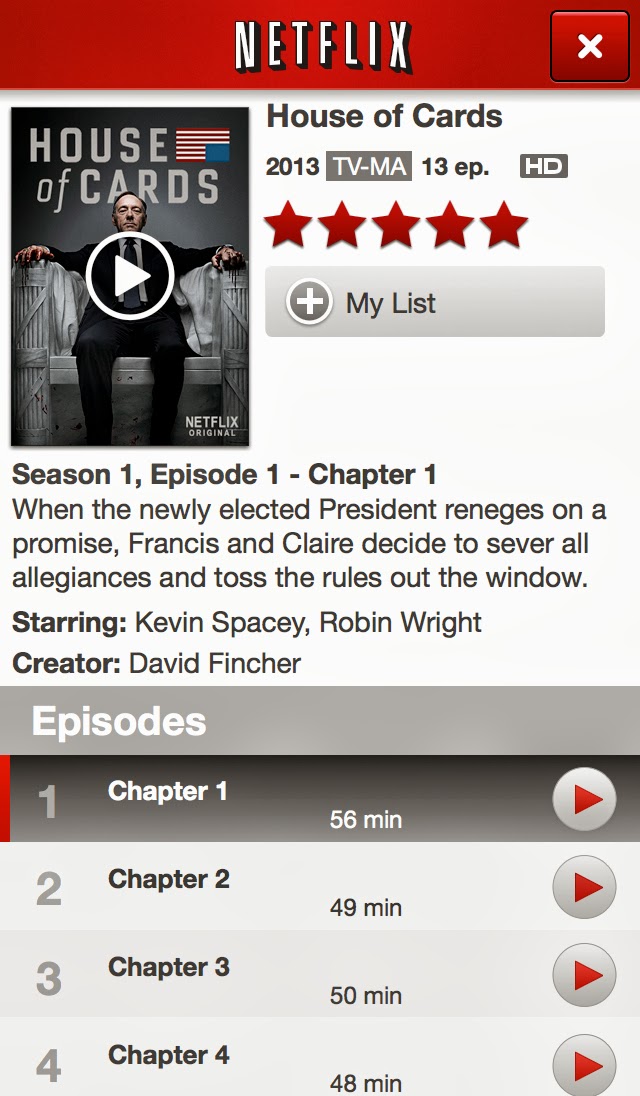
Netflix for iOS has been updated to support HD and AirPlay

It took a while, but HD is finally coming to Netflix for iOS – but only for iOS 7 users. With Super HD rolled out to all and sundry last week, the new app update couldn’t have come at a better time. Finally, users are able to take advantage of the better than 1080p resolution of the iPad (3rd and 4th gen), and watch their favorite shows and movies in glorious Super HD 1080p. Blue meth has never looked bluer, or in higher definition.

Also new in the app update is AirPlay support, finally allowing users of the iPod Touch/iPhone/iPad app to stream video to their Apple TV device and use the mobile devices as a remote control.

While the updated app is already available to download, the new features may take a week or two to roll out to all Netflix subscribers (as Netflix slowly update things on their end).

Believe it or not, that’s it for the week. A more news-ish next week awaits, I hope.