Archive for the ‘News Roundup’ Category

Weekly News Roundup (6 April 2014)

Sunday, April 6th, 2014

Excitement and dread. That’s what I feel when I purchase a big ticket item. Maybe I should be a bit more excited, with a bit less dread, as I’m sure this will improve my sense of joy when buying stuff. But maybe feeling joy is the wrong emotion to feel in the already far too consumerism driven world that we live in.

Let’s zoom right into this week’s WNR.

Copyright

Good news for those living in the UK. but still living in the ‘noughties’ – you’ll finally be able to rip CDs as CD ripping and other format shifting will become legal in the UK. But only if there’s no DRM protecting the content – in that case, it’s still very much illegal.

So basically, not much of a change unless you still buy CDs, and have always felt guilty about ripping them (so basically “nobody” on both accounts). Now you can rip it without feeling guilty. Isn’t copyright law reform great?

If you really really need to rip something that is protected, there is recourse for action – contact the Secretary of State! Seriously, look it up, that’s the only thing you can do if you want to format-shift something and excessive copyright is standing in your way.

I for one am looking forward to 2025, when we’ll finally get the right to convert DVDs to DivX.

Antigua Beach

Antigua: Not the copyright paradise first thought

But for now, you’ll be lucky to not don’t end up in an Antiguan jail if you happen to own a company that makes DVD or Blu-ray rippers. Because that’s where Slysoft’s owner Giancarla Bettini might end up following a legal decision against the company’s products. It won’t get that far, because fines will be paid and that will be that (not to mention the appeal), but for those that thought Antigua was a safe haven for all things copyright related, it might be time to think again.

Antigua’s anti-copyright stance comes from a dispute with the US over online gambling, a dispute that the island eventually won via a WTO ruling, which allowed Antigua to ignore US copyright claims as a way to recoup their losses. However, Antigua’s own copyright laws does have an anti-circumvention clause, which the AACS LA, the company responsible for managing Blu-ray’s copy protection scheme, managed to exploit to full advantage.

While normally a civil matter in other countries, Antiguan copyright laws made circumvention a criminal matter, with fines or jail time being the penalties.

The AACS LA has certainly been busy lately, going after both DVDFab and Slysoft, with the latter also named in the USTR’s Notorious Piracy Market list for this year. Is this a renewed attack on rippers, particularly Blu-ray ones? Time will tell.

High Definition

Amazon Fire TV

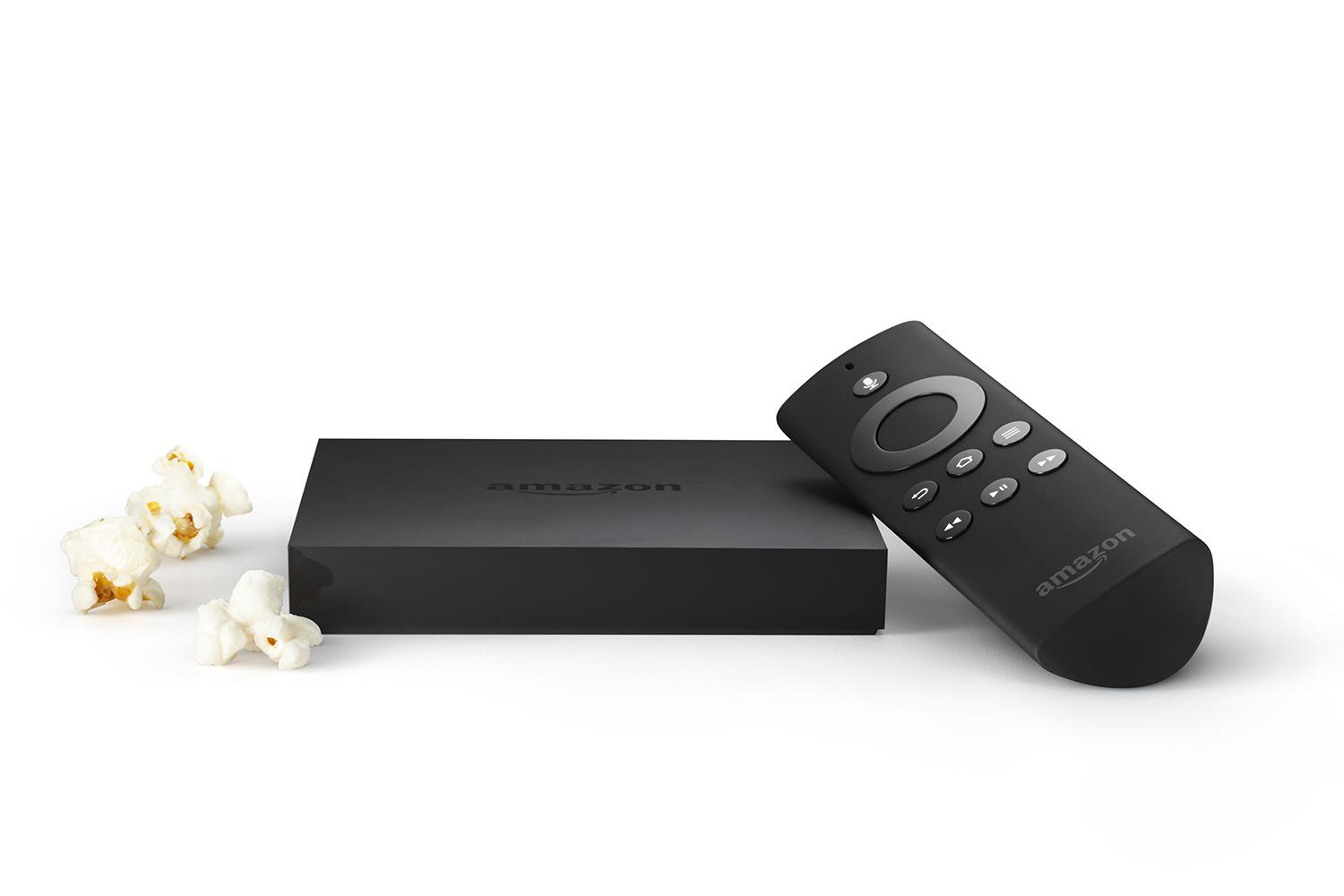
Is the Amazon Fire TV the device that is set to shake up the media streamer market? For $99, it has a really good chance to do just that!

The Kindle Fire, when first released, heralded the age of cheap branded tablets (cheap because they’re subsidized by content sellers like Amazon and Google). Amazon is trying their luck again with the Fire TV device, but this time for the streaming set-top box market. Taking on the likes of the Apple TV, Roku and to a lesser extent, the Chromecast, the Amazon Fire TV aims to bring not only streaming films to the lounge room, but also cheap games too – a $99 device that supports almost all of the streaming providers, plus offers apps from Amazon, and potentially thousands of games too (playability made easier with a $40 game controller add-on).

Interestingly, despite being competitors in the SVOD field, Netflix is a launch partner for the Fire TV (which, of course, supports Amazon’s Prime streaming service).

The big question is whether another streaming box is needed, since even if you discount the game consoles (which you shouldn’t), there are already plenty of streamers out there. In Amazon’s corner is the promise of a more open ecosystem (as the Fire TV is based on a fork of Android, albeit a very very heavily modified version of it), and easier searching via the built-in voice search feature. The quad-core, 2GB RAM powered device also promises to be a performance king, even if it only has a small 8GB storage (not really needed for streaming, but certainly for game and apps).

The Android nature of the device also means games will be plentiful for the system, although some games don’t necessarily translate well from phones/tablets to the TV screen (even with Amazon’s promised app that will allow you to control games via existing tablets).

It’s an interesting device, and for $99, it might be just worth playing around with.

Gaming

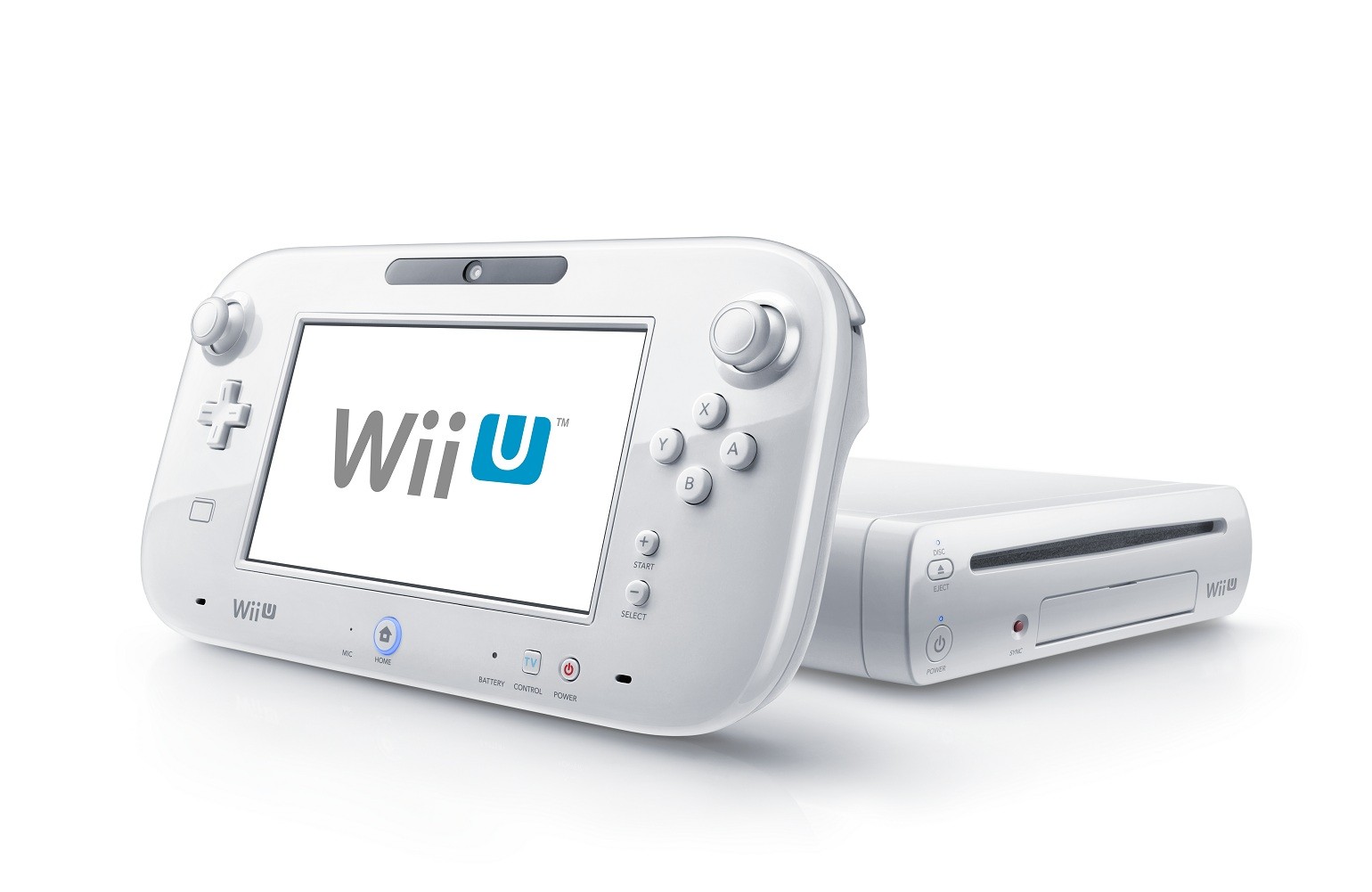
Wii U

EA subsidiary adding insult to injury by mocking the Wii U during April Fools, forcing an official apology from the company

EA just can’t seem to get out of trouble with Nintendo. Last year, they shocked the gaming world by announcing they had no games in the works for the Wii U, only to come out a few days later to say they did. Their Frostbite engine works on all the popular gaming platforms, except for the Wii U, and so Nintendo fans have always felt that EA isn’t giving Nintendo the love the company deserves.

So the mean spirited April Fools tweets that came out of the Frostbite Twitter account probably didn’t help matters for all concerned, forcing EA to issue an apology. The tweets mocked the Wii U’s perceived underpowered status, and the fact that the Wii U does not support the Frostbite engine.

EA’s COO Peter Moore called those tweets ‘stupid’ and ‘unacceptable’, but I would also like to add ‘unfunny’ to the list.

On that note, let’s end this week’s WNR before I have to end up issuing an official apology on Twitter for writing something stupid, unacceptable and unfunny (the last one is a given though). See you next week.
Weekly News Roundup (30 March 2014)

Sunday, March 30th, 2014

A somewhat shorter WNR this week, as there were a couple of interesting news stories that I decided to save for next week instead. Squirreling away for a possible (news) winter.

Let’s chew on these nuts first.

Copyright

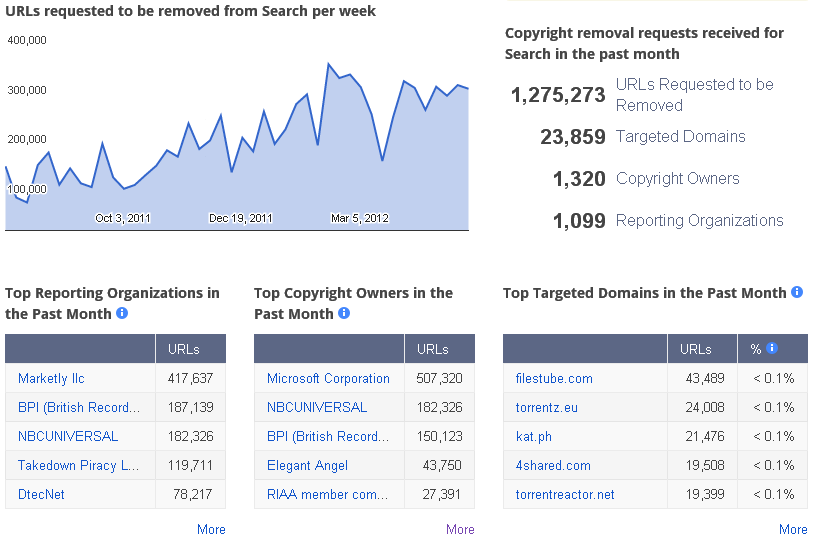
It’s a good thing that Google knows how to work with big amounts of data, because the 711,787% rise in the number of DMCA takedown requests sent to the company from 2010 to 2012 would have stumped most other companies.

Google DMCA Takedown Stats

A six digit percentage increase in the number of Google DMCA takedowns in just two years – the RIAA has been busy!

A new research paper studied this dramatic rise, and found that most of the notices comes from just a handful of rights holders. No surprise then that the RIAA was a leader in this field, with more than 7.6 million URLs requested to be removed in just 2012 alone. Porn companies and Microsoft were also very active participants. It’s these small number of rights holders that appear to be dictating the direction of Google and other’s DMCA process, with 95% of rights holders having submitted less than 10 notices in 2012.

The study also found that the number of claims per notice, and the number of URLs per claim, have also risen. This is thanks to largely automated scanning and submission tools that can quickly identify URLs related to a single piece of content (with the occasional false positive thrown in).

This all spells out an alarming trend, and you might even say an abuse of the DMCA takedown process originally envisioned when the act was signed into law by President Bill Clinton in 1998. DMCA spamming, if you will.

And has it helped? I really doubt it. Despite the huge number of URL being submitted, an even greater number of new URLs are created for the same content all the time. While the idea of stopping a flood with a sponge may give the likes of the RIAA some false comfort (“hey, it’s better than nothing”, they would say. But is it?), for those that have been innocently caught up in this DMCA frenzy (this site included), it’s anything but a comfort.

High Definition

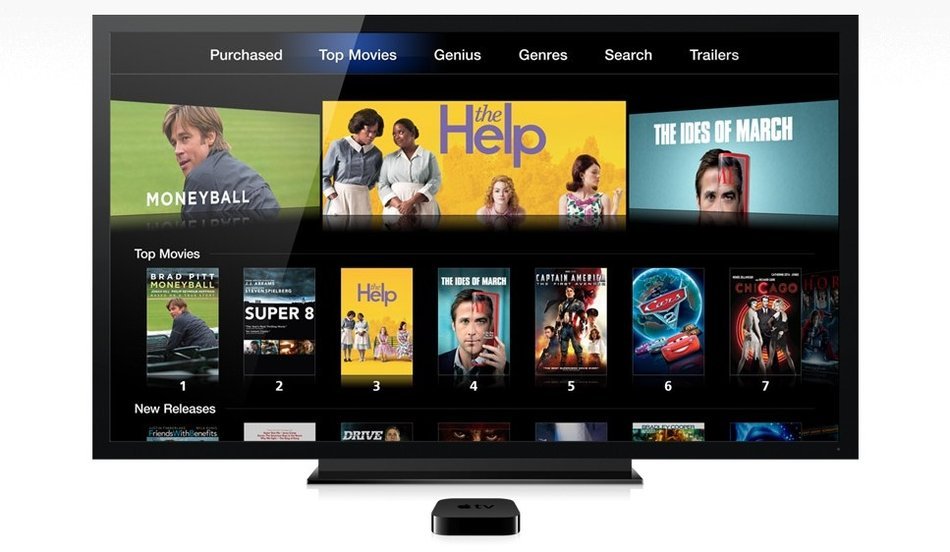
This may be the first signs of the fallout from the death of net neutrality , as Apple is said to be in discussions with Comcast to ink a “last mile” deal that gives Apple’s upcoming video streaming service preferential treatment ahead of the likes of Netflix and Amazon.

Apple TV Movies

Is Apple secretly signing deals for their even more secretive subscription video-on-demand service?

This news, reported by the WSJ, has huge implications not only for net neutrality, but for the subscription VOD marketplace in general.

If Comcast agrees to give Apple preferential treatment, it could mean the likes of Netflix, Amazon and Hulu will have to contend with a more congested last mile to the U.S’s largest ISP (who might get even larger if they merge with Time Warner Cable). This could mean performance problems and would give Apple’s yet unannounced streaming service a leg up (and they need it too, what with Netflix’s dominance).

But perhaps the even bigger story here is Apple’s move into Netflix territory. With their devices ubiquitously available in people’s homes, an Apple SVOD service could shake up the market in a way that the likes of Amazon have tried and failed to do so. Of course, it’s still hard to see Netflix’s dominance fade away any time soon as its app has also reached ubiquity, unless Apple’s offering is that much more attractive and better value (it’s hard to find more value by lowering the already low $7.99 monthly price, but if Apple can offer newer content, then that could be a game changer).

This one (from both the net neutrality angle is worth keeping an eye on.

And that’s it for now – told you it was short. Definitely more next week, so until then …

Weekly News Roundup (23 March 2014)

Sunday, March 23rd, 2014

A fairly short, in text rather than in content, WNR for this week. Just didn’t feel like writing too much, and I suspect you probably don’t like reading that much either.

Let’s get it done.

Copyright

Viacom Logo

Viacom and Google hugs it out, as settlement brings to an end to a tedious legal battle

Well that was tedious. The long running legal battle between Viacom and Google has finally ended, both sides having just signed an undisclosed settlement deal. Seven years in the running, it brings to the end of one of the most contentious copyright legal battles of recent time, all started when Viacom sued YouTube for $1 billion back in 2007.

Of course, the YouTube of 2007 (and actually earlier than that, since a big part of the lawsuit hinged on what had happened at YouTube before Google took over in 2006) is a lot different to the YouTube of today. Many of the things Viacom had wanted back then, are now the norm, like ContentID scanning and account bans for excessive copyright abuse.

And while piracy still exists on YouTube, the positives of the platform for content publishers like Viacom outweigh the negatives, and it’s just silly to continue this feud any longer. Which is basically what both companies have jointly said following the announcement of the settlement.

——

A good idea nearly ruined by bad execution. Nothing new, and certainly not when DRM is involved. So when Warner Bros. decided to go with UltraViolet/Flixster as the digital platform of choice for the Kickstarter backed Veronica Mars movie, backers, and investors of the film, weren’t happy.

Flixster for iOS

Veronica Mars fans and Kickstarter backers don’t like Flixster as the choice for the digital version of the movie

While the DRM-free concept is a popular one in the crowdfunding scene, Warner was never going to release Veronica Mars DRM-free. This meant that Warner went with what they know, or rather, what’s good for them, and this meant the same UltraViolet/Flixster setup they use for their disc products. But the Warner owned Flixster is not as commonly used as iTunes or Amazon, and it’s not as compatible on devices that users primarily use. This left many backers with a digital download they can’t watch on their Apple TV or Roku, and the negative comments poured on on the movie’s Kickstarter page.

UltraViolet/Flixster related hatred has made the news before, and just like last time, Warner has had to backtrack and offer monetary compensation for affected users. This time, users will be refunded the cost of their iTunes or Amazon purchase if they had a previously complaint about the Flixster version.

It’s not uncommon for studios to screw over their customers for their own shortsighted benefit, but in this case, the Kickstarter backers are the actual investors of the movie, and so Warner’s screw-up is less forgivable this time.

——

An update to last week’s story about Popcorn Time – the software has been brought back from the dead thanks to torrent site YTS, and installers and source code is available on their GitHut page. It’s impossible to really kill an open source software, as this latest development proves.

High Definition

Netflix’s CEO Reed Hastings has weighed in on the net neutrality debate in the wake of the company’s high profile deal with Comcast. Hastings wants more government action on the issue of net neutrality, or he fears that ISPs will have too much power to charge ever increasing “tolls” on bandwidth hungry companies like Netflix.

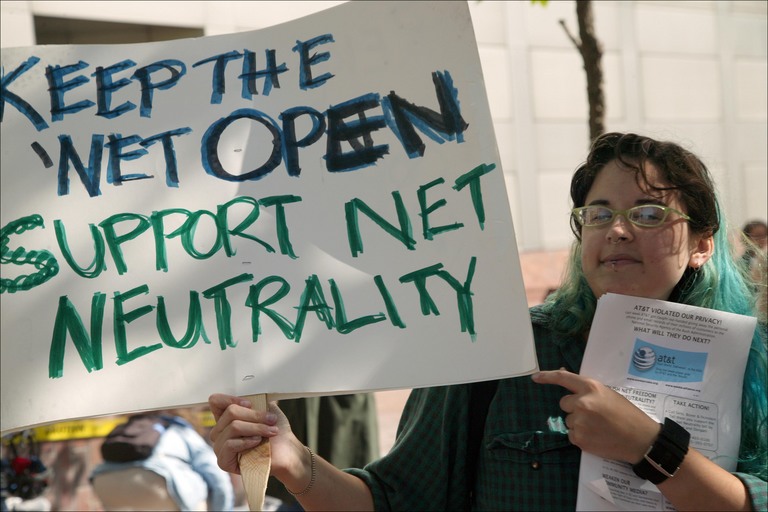
Net Neutrality

Netflix CEO says we still need strong net neutrality rules to ensure ISPs don’t get too greedy

While the Netflix/Comcast deal skirted the issue of net neutrality by dealing with the interconnect between the two companies, as opposed to preferential treatment of traffic in the last mile, the end effect may be the same, says Hastings. With ISPs consolidating market share, and the courts backing them via a silly free-market argument, net neutrality is needed more now than ever. Or, as Hastings warns, ISPs will be able to charge whatever they want from companies like Google or Netflix, just simply because they can.

They can because while there is nominally competition in the market place, most users choose to bundle their services together, which means there is less incentive and capability for them to change providers on a whim. This effectively means there is very little free-market competition to prevent ISPs from gouging companies like Netflix (whether it’s via peering agreements, or last mile hijinks), and without competition, the court’s argument that net neutrality regulation isn’t needed is an invalid one.

Netflix’s only course of action is to put up the cash to solve the problem, which is good for their customers, but eventually the cost will be passed on.

Rhetoric and ideology aside, the truth is that a free market needs strong regulation in order to ensure it remains free. And this is why a strong net neutrality rule is needed, or us consumers will ultimately be the ones being out of pocket.

Told you it was short, as we reach the end of another WNR. Enjoy what’s left of your weekend, and have a good week. See you in seven days.

Weekly News Roundup (16 March 2014)

Sunday, March 16th, 2014

Happy Birthday to Me, Happy Birthday to Me, Happy Birthday Dear Webmaster Dude, Happy Birthday to Me (not to the tune of that well known song, as I don’t want to pay royalties). I had to work through my birthday this year, which was no fun. Birthdays are definitely getting less fun as I get older, and the quantity of cake I can have before feeling guilty is also on the decrease. It’s an alarming trend!

News time!

Copyright

Google’s common sense submission to the Australian government is likely to fall on deaf years, as the search giant spells out quite clearly that they do not want harsher new copyright laws to try and solve the piracy puzzle. Instead, Google believes that piracy is an issue of availability and pricing that is best solved by investments in innovation, rather than legislation.

The then newly elected conservative government of Australia called on industry submissions for reducing communication regulations, and it was in Google’s submission that the company outlined their believes in regards to piracy.

Unfortunately, the pro big-business government is likely to ignore Google and side with Hollywood, as the country’s Attorney-General has already hinted at the introduction of a three-strikes regime as well as domain blocking via legislation, the type of actions that Google says will yield “little effect”.

What Google says makes a lot of sense. Despite the lack of availability and outrageous pricing here in Australia, which has led to high piracy rates, we are still one of the most eager consumers of digital content in the world. Recent data shows that digital film and TV spending rose 22.4% in the last year. If anything, the high piracy rate may simply be an indicator of huge unmet consumer demand, as hit shows like Game of Thrones are being locked away in exclusive deals that makes it harder and harder for fans to actually download or stream the show legally.

It seems to me that the only way that legislation and technical measures such as DRM and domain blocking can have an effect on piracy, not just in Australian but anywhere, is if it’s succeeds in reducing the enthusiasm people have for TV and movies, or music and games. And I’m not sure this is what rights holders actually want, to have a less enthusiastic customer base. People pirate because they like the content, and it does not mean they won’t pay for it when pricing and availability makes the legal option a viable one. As Google says, it’s not really an enforcement issue (not that you can successfully enforce it anyway, no matter how many laws you pass)

——-

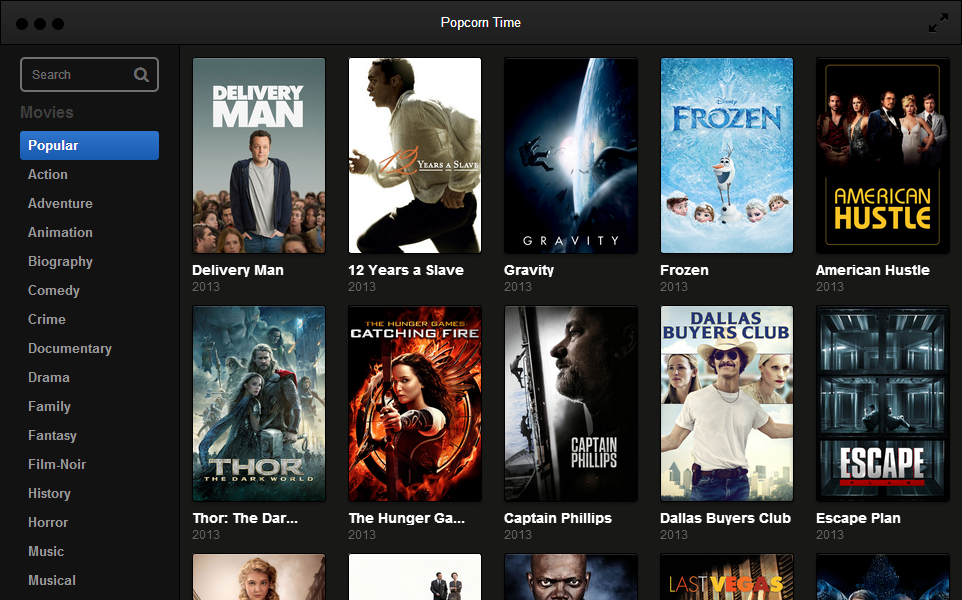
Popcorn Time

Popcorn Time in all of its past glory before it was taken offline

Well, that didn’t last long. Only a few hours after I wrote the original article on Popcorn Time, the BitTorrent powered consumer friendly movie streaming app (being called the Netflix of piracy), the official website has since been closed and the project shuttered. Well, as much as an open source project can be shuttered anyway.

The developers didn’t cite any specific reason (or threats) that was responsible for their decision, but it was pretty clear, reading between the lines and one particular sentence (“legal threats and the shady machinery that makes us feel in danger for doing what we love”), what had occurred.

So what was Popcorn Time? Think of it as the easiest way yet to watch movies online for free. By combining a super sleek user interface, designed specifically for watching movies, and using the power of BitTorrent and a few publicly available APIs, here is, no strike that, “was” an app that made finding movies to stream online easier than using Netflix. Of course, many of these free movies are pirated movies, but Popcorn Time’s simplicity meant that it was no more than a web browser with a BitTorrent client strapped to it.

No surprise then that the legality issue was the biggest one surrounding Popcorn Time in the short period it was actually live. The developers were adamant that it was legal. I mean, how could a web browser and a BitTorrent client not be legal? But then again, The Pirate Bay is just a search engine. And if even a megacorp like Google can get heat for copyright issues, Popcorn Time wasn’t going to be left out of the spotlight. It seems today the criteria for liability relating to inducement  or contributory copyright infringement is *anything* that makes piracy a tiny bit easier, even if it was just a heavily customized web browser. This is perhaps why Popcorn Time’s fate was sealed the second it made headlines.

But all is not lost. In their infinite wisdom, the developers of Popcorn Time decided to go open source from the get go. Once something is open source, it can never really be taken down. Given the hype and publicity, and the enthusiasm already shown by the open source community, I fully expect others to build and improve upon what was Popcorn Time.

Popcorn Time and its mascot Pochoclín – we hardly knew ye. But maybe we’ll get to know you better in your new reincarnated form.

DVDFab

DVDFab is under serious legal pressure, and others are taking note

This one did last a bit longer though. DVDFab, the company synonymous with DVD and Blu-ray ripping, has met with a major legal setback after a New York federal court ordered its domain names, social media account and funds to be seized and frozen. This comes after AACS LA, the licensing firm responsible for the copy protection schemes found on Blu-ray (and HD DVD – you shall not be forgotten), sued DVDFab, a Chinese company, in the U.S.

The only real surprise was that it took this long for some kind of legal action to be taken, to be fair. DVDFab has since relocated its website to a more hospitable .cn domain, started up a protest site, and offered absolutely zero legal defense of its legal position in the U.S (they did not even respond to the motion for a preliminary injunction, which led to the seizures).

Other companies, including the USTR “notorious piracy list” nominee Aiseesoft, have responded by removing their ripping products. May be too little, a little too late, from a legal perspective though.

Slysoft now leads the DVD and Blu-ray market, if they wasn’t head of the pack before. It too was named in the USTR list, so could legal action soon follow? Who knows.

Gaming

The February NPD results have been released. The PS4 was once again the winner, but the winning margin was pretty narrow for February. The PS4 is estimated to have sold around 280K to 286K units, compared to the Xbox One’s 258K.

With Titanfall to be included in March’s NPD results, next month could see the Xbox One regain its next-gen console throne, even if it’s just for one month.

The Wii U managed to sell 82.5K units, behind the Xbox 360’s 114K. No PS3 numbers this time, but you’d expect it to be somewhere between the Wii U’s and Xbox 360’s.

That’s it for this WNR. See you next week.

Weekly News Roundup (9 March 2014)

Sunday, March 9th, 2014

I don’t get to talk about coffee much here in the WNR, mainly because I’m not a huge consumer of it. I do have a Nespresso machine, one that I bought for a single cent during a sales event at an Australian daily sale website, and I have been buying “compatible” pods for it. I’ve always wondered why Nestle didn’t put DRM into their pods as to prevent the use of compatibles, but I suspect a fair segment of their customer base are far too pretentious to even think about using compatible pods. I’m looking at you George Clooney!

(just kidding, Clooney is awesome)

Copyright

I occasionally buy Blu-rays from the UK (and by occasionally, I mean all the time), and one thing I’ve noticed is that the anti-piracy message has softened a lot since the days of “you wouldn’t download a car” (I would if I could!). For example, Universal has a “Thank-you” message on its UK Blu-rays that thanks the viewer for not pirating. A nice and positive message that I think plays much better than accusations of criminal activity (and false accusations too, at people who have already paid for the movie).

So it turns out that this wasn’t accidental, but was the result of extensive research on having the most effective anti-piracy message. The same research may have also included the fact that some of the biggest pirates are also the movie industry’s best customers. And for the first time that I can remember, a British anti-piracy group has openly admitted this fact.

And its new anti-piracy will focus on the positive viewing experience of going to the movies and asks users to pay for a little bit more and pirate a little less, asking instead of demanding. I’ve always said that going to the movies has no equal experience wise, not even if you have an uber home theater set up, and so placing more focus on the uniqueness of going to the movies is a good idea. Not treating potential customers as criminals is also a bit more productive, I think.

Keurig 2.0

Keurig’s new coffeemaker will incorporate advanced tagging technology to prevent unlicensed compatible pods from being used

Not treating your customers like cash machines is also a good way to run a business, and as someone who just spent another $70 buying ink refills for a $200 printer, I can relate. Unfortunately, the coffee pod business, already using the same business model of cheap machines vs expensive refills, is borrowing another trick: DRM’d pods.

Well, it’s not strictly a DRM since there are no digital rights being managed. Instead, it’s your coffee drinking rights that is being messed around with, by denying cheap compatible pods from being used. But in the same way you can’t use non-official game discs in your Xbox 360, this system does the same with coffee pods, and so it is the same form of licensing control. Makers of compatible pods will call it anti-competitive, and consumers will be worse off because there will be less choice and higher prices, but this sounds like the kind of thing that will eventually end up in court, especially if a competitor tries to break the authentication.

The makers of this new coffee machine and pods explains the use of the authentication, which consists of a proprietary “taggant material” on the pods (something akin to an RFID tag, I suppose) and a camera that scans this in the machine, is “critical for performance and safety reasons”. The same reason why you should never use compatible ink cartridges because they’re lower in performance and could damage your printer – according to the printer companies, that is.

High Definition

In case you haven’t gotten sick of hearing me talk about  my new Australian website Streambly, I’m going to talk about it some more. With good reason this time, as it turns out I’m one of 200,000 that subscribes to Netflix here in Australia, courtesy of a geo-unblocker (but I’m guessing I’m one of the few who has created a website telling the 20,000 others who have read my Netflix guide so far on how to do it).

Netflix

Australians are enjoying Netflix in their homes without Netflix actually being available in Australia (and obviously also in not as nice homes, compared to the one in the picture above)

The apparent popularity of a service that isn’t technically available here has our TV networks, and local Netflix wannabes, in a twist. The “P” word (erm, “pirates”, in case you’re not sure) has already been used to describe those that sign up to Netflix here, despite our previous Attorney General specifically stating that using VPNs to access Netflix isn’t considered infringement under current copyright laws.

I can understand their fears and frustration. Here’s a $7.99 per month service that gives you thousands of movies and TV shows, and it’s up against local TV networks that often air new episodes a year after their original broadcast in the U.S (if they air them at all), and a local video streaming service that perhaps only has 10% of the content on offer from Netflix. With catch-up services ranging from non existent to poor, there’s no Hulu or Hulu Plus equivalent here either. All we have is a single cable TV provider that has a market monopoly and is willing to use its market position to get exclusivity to shows like Game of Thrones. No competition. No value. Sometimes just ‘no’, in terms of legal streaming or download options. Yep, I can understand why they fear Netflix.

Adapt, Evolve, Compete or Die. It’s their choice!

Finish, Writing, Play Games or Be Bored. That’s my choice. See you next week.