Archive for the ‘PS3, PS4’ Category

Weekly News Roundup (26 January 2014)

Sunday, January 26th, 2014

I’m nearly through with my annual The Wire re-up, so I haven’t been watching much Netflix recently (as my bandwidth usage graphs will attest to). If you haven’t watched the show, I highly recommend it (just don’t give up until you’ve finished the first season, but I suspect you’ll be hooked around episode 6 or so, or it’s not the show for you). I don’t want to be one of those people that annoy others by evangelizing The Wire, but the show is so good that you feel others are missing out (and most that have been told about it have been “converted”, after the obligatory “nothing happens” statement after watching the first couple of episodes).

Oh yes, the WNR. Here we go.

Copyright

For those lucky enough to get a pair of Google Glasses, here’s a tip: don’t wear them to the cinema unless you want to get interrogated by Homeland Security. What started out like one of those Internet tales that eventually gets disproved on Snopes has been confirmed to be totally true (by the theater chain, the MPAA and ICE), a story in which an Ohio man (and his wife) were pulled midway out of a viewing session, detained and questioned for more than an hour on the suspicion that his (turned off) Google Glasses were being used to record the movie.

This is despite the man explaining from the offset that the device had been turned off, and gave permission (or rather, pleaded) with the federal agent to check the contents on the Google Glass device and confirm that nothing had been recorded. The ICE Homeland Security agent was apparently asked to intervene in the matter by a MPAA rep present that day to monitor the screening of the popular (and popular piracy target) ‘Jack Ryan: Shadow Recruit’.

Google Glass

Wearers beware: Don’t wear your Google Glasses to the movie cinema

Instead, the man was interrogated for an hour and asked who he worked for, and funnily (although probably not to the man at the time), whether Google was employing him to record the movie. I know the MPAA (and by extension, ICE Homeland Security) has no love for Google , but this was a bit of a stretch.

For his troubles, the man and his wife were offered two free movie tickets by the MPAA rep by the MPAA rep so the couple could finally finish watching Shadow Recruit. Amazingly, The MPAA rep’s name was Bob Hope, a distant relative of the more famous Bob Hope (again, just to reiterate, this story is true). When the frustrated cinema patron, who only wanted an genuine apology instead of an explanation as to why he was targeted (due to the movie’s popularity, and the theater’s recent problems with piracy), did not seem placated by the two free tickets, two more free tickets were offered. The man was now infuriated.

You can read the entire description of the ordeal on The Gadgeteer website, where the story was first published. Scroll down to read the updates too, which includes confirmations from ICE Homeland Security of the incident.

Incidentally, a cam’d copy of Shadow Recruit made its way onto the usual places roughly around the same time. Presumably one now recorded on a Google Glass device. So the record for Shadow Recruit goes Pirates 1, MPAA 0, Poor Google Glass Guy (and his wife) -999.

High Definition

The BDA, that’s the Blu-ray Disc Association, has approved plans to expand the Blu-ray specifications to include support for 4K UltaHD content. A task force consisting of 17 members, including Technicolor, Dolby, Fox, Disney and Sony, has been asked to come up with the final specifications for Blu-ray 4K. The changes could include more than just a larger capacity disc and a new video codec, and other improvements such as support for higher framerates could be introduced (finally allowing The Hobbit films to be shown in HFR 3D at home).

One of the proposed changes could see the introduction of 10, 12 and 16-bit deep color encodings. One company working on this claims to have developed an algorithm that allows for deep color encodings without an increase in bandwidth, and the finished output would also be backwards compatible. Studios would need to update their encoding technology, and Blu-ray players will also need to be updated to take advantage, but with the 4K specifications meaning changes are coming anyway, it might be a case of killing two birds with the same stone.

Netflix

Netflix within 6 months of breaking 50 million user barrier

A disc based approach to 4K is still the best way to go for now, in my opinion. That’s not to say that streaming based 4K, which was a highlight of CES, doesn’t have its place. It’s certainly where Netflix thinks subscriber growth will come from in the future, although they seem to be doing quite alright even without 4K. A new shareholder report revealed Netflix’s total subscriber figure rose by 10% in the last three months of 2013 alone, with the company now having 44 million subscribers. I would gather the attention that original programming has garnered, via award nominations and wins, has contributed heavily to the growth figures. Despite the high cost of production of these shows, the investment appears to be well worth it, with net profit for the company up dramatically as well during the last quarter.

Netflix also commented on the recent Net Neutrality ruling. Netflix probably has the most to lose from the ruling, and the company is calling on ISPs to act responsibility. Netflix says ISPs should adopt a voluntary code of conduct on the matter, although they also believe that no ISP is stupid enough (in my words, not theirs) to do anything too “draconian” (their words, not mine). If ISPs start to get too “aggressive”, Netflix still wants the government to intervene via new regulations. You can read the shareholder report here.

Shameless plug time: Click here to sign up to Netflix, get a month long free trial and help me make a few bucks!

Gaming

As promised last week, we take a slightly more detailed look at the NPD results for December in this week’s WNR, now that more numbers have been made available. As mentioned in the last issue, the Xbox One was the best selling non-portable console for the month (the best selling console being the DS, which sold over a million units). The PS4 was not that far behind though.

Xbox One Forza 5

The Xbox One was the most popular console in the US for December

With 908,000 units sold compared to the PS4’s 860,000, the Xbox One did well to follow up on November’s 909,000 units sold – that’s 1.8 million in about five or six weeks of sales, which is not bad at all. Globally, the PS4 still has a comfortable sales lead though.

If we count the Wii U as a next-gen console, then its 480,000 units sold means it is in a distant third place against the the two powerhouses from Microsoft and Sony. 480,000 is still the Wii U’s best month ever, but Nintendo would have expected more sales, particularly with the company’s consoles having a history of being a popular gift idea in holidays past.

Data provided by Microsoft also showed that the Xbox 360 sold 643,000 units, far ahead of the PS3’s 299,000. The PS3’s low number can be explained by the smaller difference in pricing between it and Sony’s next-gen offering compared to the Microsoft offerings (the Xbox 360 was available for cheaper than the PS3, and competes with Microsoft’s own Xbox One, which is $100 more expensive than the PS4). It seems PS4 sales may be cannibalizing PS3 sales in a more dramatic way than the Xbox One is doing to the Xbox 360.

Regardless, sales of both of the older consoles seems to have more than halved compared to just a year ago, which is making game publishers worried about the continued viability of both platforms, according to analyst Michael Pachter. This is why Wedbush Securities’s Pachter believes a price cut could be coming for both the Xbox 360 and PS3 in February, a move pushed through by publishers concerned that holidays 2014 could be one where the Xbox 360 and PS3 are no longer relevant.

The good news, Pachter says, is that both Microsoft and Sony can afford a price cut due to the ever decreasing cost of manufacturing.

I think a price cut could be a good thing, but I don’t know if publishers are so concerned as to start “threatening” Sony and Microsoft for a price cut. There are already a hundred something million PS3s and Xbox 360s being owned by people right now, and I don’t see how adding a couple of extra million via a price cut will help the situation all that much. Besides, if people are abandoning their PS3/360 for a PS4/XB1, then that’s a good thing isn’t it? PS4/XB1 games will be more expensive, and so publishers should be able to make more money (assuming production costs are similar).

Surprisingly, here in Australia, prices have already started dropping (I say surprisingly because we seem to overpay for everything here). The lowest Xbox 360 price I’ve seen is $USD 130, $USD 165 for the PS3. So there’s definitely room for US pricing to drop.

And while there’s plenty of room left to write, I think I’ll end the WNR right here for this week. Have a great one, and talk to you again soon.


Weekly News Roundup (19 January 2014)

Sunday, January 19th, 2014

Welcome back. In this edition of the WNR, we talk about everything from Ellen, to the Dreamcast, and THE VERY FATE OF THE WEB ITSELF. Hope this issue is as interesting to read for you as it was to write for me.

Starting in 3, 2, 1 …

Copyright

Screencap of The Secret Life of Walter Mitty, with "Ellen DeGeneres" watermark

Screencap of The Secret Life of Walter Mitty, with “Ellen DeGeneres” watermark

A screener copy of the Ben Stiller movie The Secret Life of Walter Mitty that has been leaked onto file sharing network apparently carries a watermark that identifies the original owner as talk show host Ellen DeGeneres. The show’s producers have vowed to track down whomever is responsible, possibly a staffer, intern or even a janitor who is also a BitTorrent fanatic. They also maintain they may not be the source of the leak, which seems unlikely based on the evidence so far.

It’s not surprising that screeners get leaked. In fact, it’s more surprising when screeners don’t end up on file sharing networks. It is a bit rare for the owner of the screener to be identified as a celebrity though.

So does this point to the secret life of Ellen DeGeneres as a notorious BitTorrent pirate? Probably not. Or if she is, then she’s not a very good at covering her tracks!

——

Hollywood: Stop DRM in HTML5

MPAA joins W3C. Hollyweb, here we come!

It’s not quite letting the fox guard the hen house, but it isn’t that much better either. The MPAA, Hollywood’s lobby group, is now a member of the W3C, the organisation responsible for setting web standards. This comes after the W3C approved steps to add DRM to the HTML5 standards, a move that keeps the web relevant in the age of video streaming, but at the expense of open source goodness and interoperability.

The members that make up the MPAA have not hidden their slight disdain towards the openness of the web, and they would love it if it was locked down, closed down and made all proprietary, so that things like piracy can be better controlled. The W3C’s poor decision last year on EMEs already means that Hollywood can slap DRM into every HTML5 web video they can get their hands on, and do it in a proprietary way that means these videos may simply not work in open source browsers like Firefox. The fracturing of the web as we know it may be a possible consequence, but will Hollywood really cares if the web breaks down? They’ll probably be too busy celebrating.

Just how much influence the MPAA will have within the W3C is debatable, so while it’s not quite letting the fox guard the hen house, it’s still kind of like letting the fox’s lobby group having a say in how the hen house is constructed and protected. Which doesn’t sound like the best idea ever.

It’s not been the best week ever for the Internet as a whole, and arguably the biggest blow of the week came when The U.S. Court of Appeals for the District of Columbia effectively killed off Net Neutrality by siding with Verizon and gutting the FCC’s attempt to regulate for an open Internet.

Short gist of it is that ISPs can now force companies like Netflix and YouTube to pay them in order to ensure the smooth delivery of traffic to end users, due to the heavy load these sites place on their network. If they refuse to pay, ISPs can now degrade connection speeds to these services, possibly to the point of making these services unusable. And if said ISPs have their own competing video streaming offerings, then that may just lend them an extra reason to be extra harsh on the likes of Netflix and Amazon.

The court’s argument is that market forces would prevent ISPs from shooting themselves in the foot like this, not when consumers can go and find another ISP that hasn’t throttled Netflix/YouTube services. Of course, this depends on users actually having a choice in the first place, many do not, and for these choices to actually differ in their self-foot-shooting policies (I mean it’s not likely that big businesses with a common interest would collude or anything like that, right?).

Are the major ISPs short-sighted enough to actually engage in this kind of anti-competitive behavior, even if they now seem to have the power and permission to do so? I almost kind of wish they would in a “go ahead, make my day” kind of way, and force Google to expand their Google Fiber rollout and become a truly nationwide ISP. Netflix too. Let’s see how Verizon will like that.

Gaming

When developers talk about next-gen gaming these days, it’s all about the Xbox One and PS4. The Wii U is not so much forgotten, as it is ignored. And a developer who helped to make one of the earliest third-party Wii U games explains why third-party developers are abandoning the Wii U, and it’s not just because of its low sales numbers.

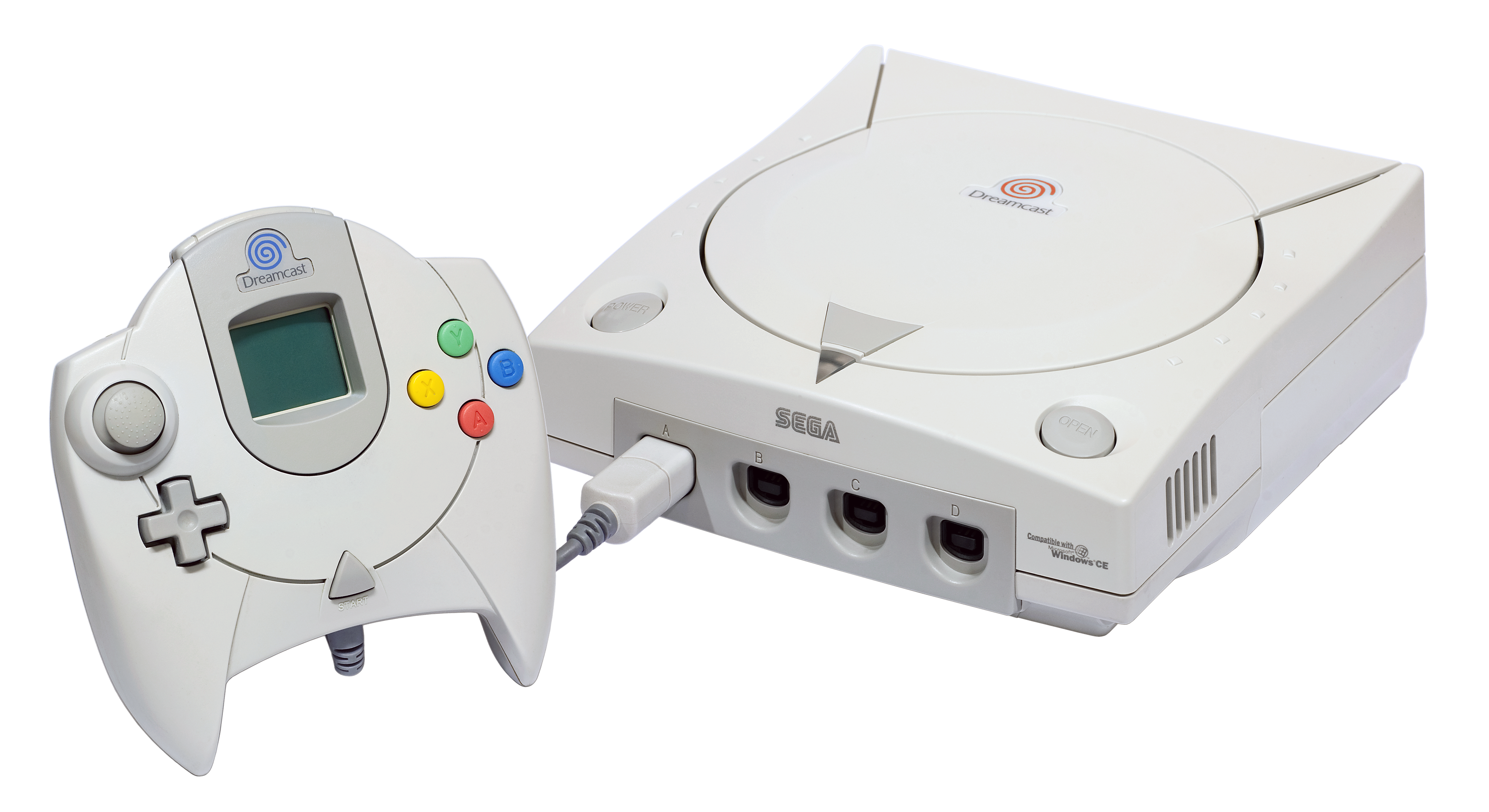
Sega Dreamcast

The poor sales figures means people are comparing the Wii U to the Sega Dreamcast

I’ll leave you to read my summary of the problems with developing for the Wii U in this article, and if you have time, you should also read the full article here. Suffice to say, Nintendo went out to design a console that was small, quiet and not power hungry, and unfortunately, they succeeded. I say unfortunately because these weren’t the things gamers were looking for, and the market segment that Nintendo wanted to sell to, moms who “wouldn’t mind having it in the living room”, seems to be a very limited segment. And that’s before the difficulty developers found with developing for the Wii U, and the difficulty Nintendo found moving from a SD to HD gaming environment, and also in developing their own Live/PSN alternative.

Nintendo just didn’t have the experience to do it right the first time, but even if they did get it right, it was still just playing catch-up. Maybe the Wii U will give Nintendo the experience, to allow them to make the mistakes they have to make, to allow them to do it right for their next console. It’s a difficult learning curve for Nintendo, but an unavoidable one. Whether they can afford to have a relative “failure” like the Wii U, remains to be seen.

Note that I wrote most of this stuff about the Wii U before the December NPD results were released. The Xbox One outsold the PS4 in December, in the US at least, although we already know that worldwide the PS4 is ahead. Supply constraints were an issue, particularly for the PS4, so take these numbers with a grain of salt. The Xbox One was the best selling non-portable console for the month.

From what little information Nintendo released about the Wii U, we know that December was the Wii U’s best month, thanks largely to the new Mario game. Leaked numbers put the Wii U sales figure at 481,000, which sounds reasonable (considering the Xbox 360 only managed 643,000 and the PS3 only 299,000). However, the Xbox One sold 908,000, so comparing next-gen to next-gen, the Wii U is still far far behind.

Plus, looking at historical trends, the Wii U is actually doing less well at this stage of its life cycle than the GameCube. In fact, it’s trending fairly similarly to the ill-fated Sega Dreamcast (although the DC’s demise had to do with other factors, not just poor sales, so no need to panic … yet).

I’m still waiting on a few other figures to trickle in before discussion the Wii U’s fate, plus the PS4/XB1 comparison, in more detail in the next WNR.

So until then, I bid adieu. Have a great week and see you again in seven days.

Weekly News Roundup (12 January 2014)

Sunday, January 12th, 2014

And we’re back. News wise, that is. With CES happening this week, there’s a lot of interesting stuff floating around, and that makes my job a lot easier than trying to write up the latest non-story about how some intern at The Ellen Show might be leaking screeners to torrent sites. That’s for next week!

Let’s go.

Copyright

There was a peek into the mindset of the MPAA this week as The Hollywood Reporter published an interview with the MPAA’s top lawyer Steven Fabrizio, in which everything from SOPA to Hotfile was touched upon.

My take from the interview is that the MPAA seems to think it’s everyone else’s responsibility to do more on the piracy problem, yet it is the MPAA’s efforts that have led the way for the successes enjoyed by legal services such as Netflix. The government can do more, Fabrizio says, and not just the US government but “all governments around the world”. Google should do more too, because “they have a great responsibility to do more” and that’s because Google apparently “benefits tremendously” by providing search engines access to pirated content. Other industries must also do more and “adopt meaningful and voluntary reforms”.

IsoHunt Logo

Did the MPAA’s victory over sites like isoHunt help legitimate services like Netflix?

So why should everyone else help out the home entertainment industry, and in particular, the movie industry? It’s the jobs, stupid. And the MPAA creates them and adds $$$ to the economy. Of course, other industries also creates jobs and $$$, and if the MPAA gets their way, it may mean less jobs and $$$ for the others. Google’s revenue alone is half of the movie industry’s entire worldwide revenue, I believe.

As for the MPAA’s victories being the legal foundation for the success of legal services, the question I would ask is: what victories? Granted, the music industry has had its successes, but could you really say that Spotify wouldn’t exist today if the RIAA hadn’t won against Napster? If anything, it’s the music industry itself that Spotify had to fight and win, and continues to fight today, to gain its success. But perhaps the paper victories over Napster and LimeWire was what gave the industry the false sense of security that allowed them to take more risks in licensing content to Spotify and others. So I guess there is a point here.

High Definition

Samsung 4K TV

Samsung betting on both discs and streaming for 4K

There might be a third Blu-ray video format joining standard Blu-ray and Blu-ray 3D later this year. Blu-ray 4K could be here by the end of the year, at least according to Samsung, who already has a four-layer 125GB disc ready to use, along with the players needed to play it. The only stumbling block now is the choice of video codec, which given the VP9 vs HEVC tussle I mentioned in the WNR last week, could become a complicated thing.

On the other end, and also backed by Samsung, Netflix thinks that disc formats are a “yesterday’s solution” to the problem of 4K content distribution, having just announced at the CES that Netflix 4K streaming will be available immediately on new 4K/UltraHD TVs from Sony, LG and Samsung, among others. These new TVs comes with a dedicated HEVC decoder chip, but beyond House of Cards in 4K, there’s not a lot of 4K content on Netflix at the moment. Plus, you’ll also need a 16 Mbps web connection, which is out of reach for many people.

So I think discs will have a place in the post 4K world. It also means new TVs and new (4K enabled) Blu-ray players that people will “have to” upgrade to, which is good news for the consumer electronics industry.

Gaming

Sometimes it’s nice to be an early adopter. Most of the time, it’s not. And that’s what some PS4 owners have come to realise, when their new $400 machine fails to do what $50 ones, and Sony’s old console, can do flawlessly. PS4 owners are reporting various Blu-ray playback problems, when the same discs works perfectly fine in other Blu-ray players, including the PS3. Affected titles include Despicable Me 2, Fast & Furious 6 and Sony’s own The Amazing Spider-Man.

Symptoms include freezing during playback, or a black screen when the disc first loads.

It’s very likely these problems will be fixed eventually via software patches, but for me, it’s more evidence that both the PS4 and Xbox One were rushed to market in an effort to compete with one other. Neither console looks completely ready for prime time, and it’s mostly in areas that have already been perfected in the previous gen. I think it’s just easier these days to release a (relatively perfect) piece of hardware with beta software, and then patch it up afterwards (the Windows model). In the days when hardware wasn’t so easy to update (when most didn’t have an Internet connection, or a USB port), I’m sure more effort was taken to ensure the software was also near perfect prior to release.

Wii U

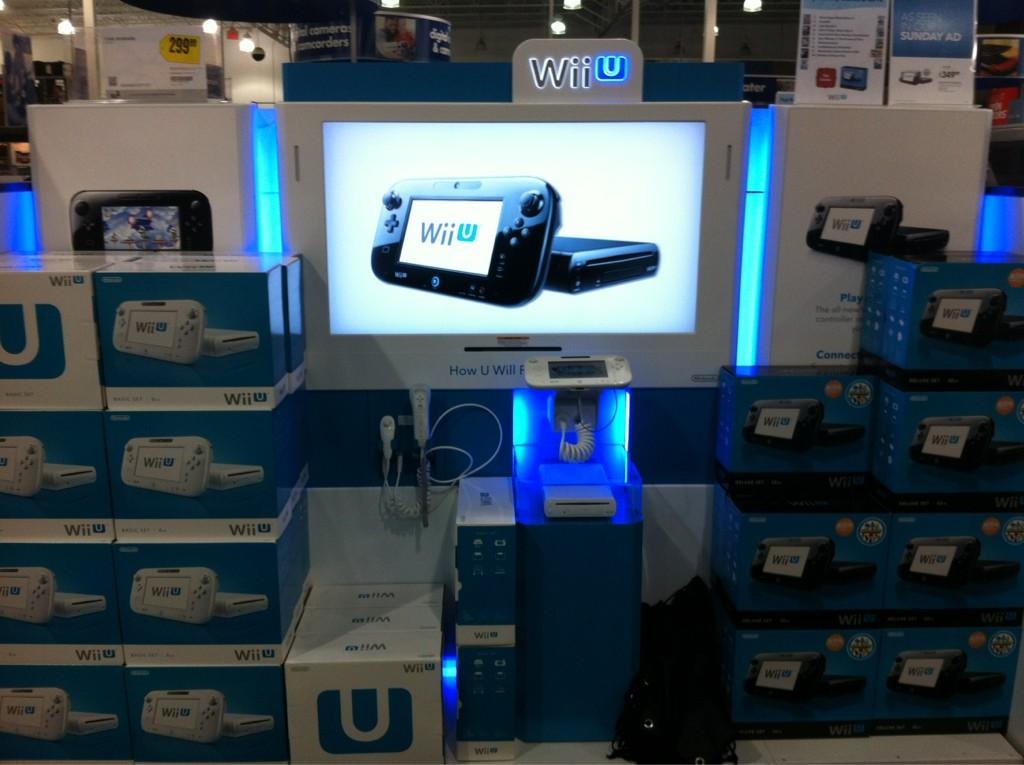
With PS4 and Xbox One short of stock, Wii U stock remains plenty this holiday season. Photo credits: levelsave.com

Regardless of the issues with either console, gamers don’t seem to mind too much. Sony announced at the CES that 4.2 million PS4s have been sold worldwide in the 6 and a bit weeks of 2013, beating the Xbox One’s 3 million. The PS4’s lower price tag seems to be paying dividends for Sony, while Microsoft has struggled so far to justify the value of Kinect, which is included in the price tag. Until there are more compelling reasons for using Kinect, other than the haphazard voice and motion control currently in place, gamers will choose the console that seems to be better for games. Which is the PS4 at the moment.

News of the 4.2 million PS4s sold in 2013 must make painful reading for Nintendo execs, as the number comes perilously close to the total number of Wii Us out there in the wild (which at last count was somewhere just north of 5 million). This is despite the Wii U having had more than a year’s head start, and it’s now inevitable that the PS4 will outsell the Wii U in the first few months of 2014, with the Xbox One doing the same a little bit later. The more people that join the next-gen by choosing a Microsoft or Sony console, the fewer the number of people that will desire a Wii U, and this has to be a big worry for Nintendo.

Perhaps another price cut is what is needed to keep the Wii U in the game. Poll: What do you think the right price should be?

This is probably a good place to end this WNR. See you next week.

Weekly News Roundup (22 December 2013)

Sunday, December 22nd, 2013

With Christmas and New Years just around the corner, this may very well be the last full (-ish) WNR for 2013, as I don’t expect there to be a lot of news in the next week or so. Not that there was much this week, but there will be even less next week. A nice break before things get back to normal in January.

Here goes.

Copyright

The Pirate Bay Cloud Hosting

The Pirate Bay’s look for a more permanent home may rely on BitTorrent

So that’s three more domain names off of the list for The Pirate Bay, as the torrent search engine went on a South Atlantic and South American trip to find a new home, before settling for good old Sweden. The Ascension Island proved to be no more hospitable for the Pirate Bay than Peru or Guyana, as domain seizures quickly followed in all three places.

The Pirate Bay’s latest sojourn started when its .SX domain named was seized by Dutch authorities at the behest of anti-piracy agency BREIN. With the .SE domain name threatened with a similar fate since April, TPB wasted no time in trying to find a new friendly port, but to no avail. For now, TPB is back in Sweden’s SE domain name, which won’t be seized until a court order forces it to be.

It’s obvious that TPB’s current domain strategy isn’t working, although it may not need one as urgently if its BitTorrent based PirateBrowser is ever released, and things like web hosting and domains names all become decentralized.

High Definition

Sony’s changed tact of focusing less on the multimedia aspect of their flagship gaming console, and more on gaming, seems to be paying dividends for them in terms of sales. But for those like me that had their PS3 as a hub for their home entertainment needs, the PS4’s missing media features has been a bit of a disappointment. And the disappointment continues as one of the first professional disc performance benchmarks has the PS4 failing to tick many of the required boxes in terms of video performance, to the point where it’s a poorer Blu-ray player than most standalones. And the PS3!

PS4 with controller and PS Eye

PS4 may be a great game console, but it’s only an average Blu-ray player

The PS4’s lousy deinterlacer is to blame, further compounded by the lack of 1080i output. The lack of 2:2 cadence detection for PAL films also means that it’s not a very good DVD player either, at least for those in PAL regions (like most of Europe, Asia and here in Australia). It’s probably not something that anyone other than eagle-eyed home theater nerds will notice, but for $400, and considering the close relationship between Sony and Blu-ray, as well as the PS3’s disc playing pedigree, it’s still disappointing. A lot of the problem may be fixed via software at a later time, but this is not like the PS3 when it was first launched and when Blu-ray was still a new format – this is something Sony should have gotten right the first time round.

At least it’s more tolerable, at least in my opinion, than the Xbox One’s 50Hz bug (where 50Hz content is converted, poorly to 60Hz). If there’s one thing I cannot stand it’s judder. And it’s harder to forgive Microsoft for this problem, considering their marketing of the Xbox One as an “all-in-one” media powerhouse. Had Microsoft actually did what their marketing said, and released a perfect Blu-ray/DVD player with Blu-ray 3D support out of the box, it would have been a great selling point for those that do actually want an all-in-one machine. But right now, neither systems are worthy of a recommendation purely based on their media capabilities, great game consoles they may be.

——

DVD vs Blu-ray vs 4K

Netflix plan to use HEVC to reduce the bandwidth requirement of 4K content

I think I’ve mentioned here before that H.265, or HEVC, seems to be the perfect fit for online based 4K content delivery. HEVC was made for 4K, and this may actually be literally true. It seems to be the codec, absent a huge jump in progress for super fast broadband rollout around the world, that the Internet needs right now to help ease video data induced net congestion. So no surprises then that Netflix is considering HEVC for their 4K streaming launch in 2014.

And even if you’re not interesting in 4K, Netflix says that once the HEVC codec matures, it’s conceivable that all of Netflix’s existing content, even those in standard def, will be delivered via HEVC in the future. This could mean Super HD streams that require less bandwidth, and still manage to maintain or improve upon their current quality. The only problem in the way of total HEVC adoption could be the processing power of older devices, not great enough to handle the increasing demand of HEVC decoding, which is estimated at between two and three times that of your typical H.264 AVC decoder.

That’s it for this WNR. Merry Christmas and Happy Holidays from everyone here at Digital Digest.

Weekly News Roundup (15 December 2013)

Sunday, December 15th, 2013

It’s been a bad week for YouTube, copyright wise. Which makes it a good week for me, since I have something to write about. We also have the first round of the expectantly bitter PS4 vs Xbox One console wars (with the Wii U on the sidelines, waving arms furiously trying to get someone’s, anyone’s, attention).

Let’s go!

Copyright

So another YouTube parody video has been taken down, another one that falls well within YouTube’s own guidelines and the law’s fair use exclusions. This kind of thing has happened so many times, and continues to happen, that it’s probably not even worth writing up as a news item. And at the time of writing, the affected video has been reinstated, so it’s even more of a non-news. But I haven’t talked about this in a while, and this is actually one of two YouTube copyright stories this week, so this provides a nice platform of a bit of ranting. Which, after all, is what the WNR is all about anyway.

So fair use for parody – what does it mean? It means that in the US (and not all countries have a fair use clause), and because the country has freedom of speech laws (again, not all countries, even democratic ones, have freedom of speech laws), parody is protected under fair use exclusions for copyright law. Parody is defined as more than just taking someone else’s work and making it funny (or funnier) though – it is only protected if the parody serves as a platform for criticism of the original material. So taking Lorde’s Royals video and simply replacing the people in it with Prince William and Kate Middleton (royals, geddit?) without commenting on the original video is not parody, at least not the protected kind. Making a parody pointing out the potentially racist undertones of the original and the blandness of the video, which was the case this time, is the very definition of fair use parody.

YouTube Content ID

ContentID in the news a lot this week, as it wreaks havoc against parody and gaming videos

So why did it happen? YouTube’s ContentID, the automated system used to detect potential copyright abuse, is notoriously bad when it comes to false positives. Rights holders (or at least their licensing management firms) are supposed to go through potentially infringing videos and weed out the false positives. And even after all that, the uploader can appeal the ban, which will hopefully mean a pair of human eyes will finally get to judge the video in question. Unfortunately, there are probably too many flagged videos to go through, and many short-cuts are taken in the process, leading to many cases where clearly non infringing videos stay removed even after appeals (for this particular video, the appeal process appears to have worked as intended).

Parodies weren’t the only kind videos in YouTube’s copyright line of fire this week, with Let’s Play video game videos once again targeted in one of the biggest sweeps so far. Affiliate of MCNs like Machinima were the target this week, as thousands of Let’s Play videos were flagged and removed by YouTube.

It got so bad that game publishers, the people what YouTube’s copyright detection system was supposed to be helping, had to intervene on behalf of YouTubers and had to painstakingly reinstate videos manually. Publishers have long realised that Let’s Play videos are an essential part of the promotional machine, and having Let’s Play creators on your side is a necessary thing these days. So YouTube’s over sensitivity this week has annoyed both sides of the copyright divide.

And this is where harsh copyright control can be dangerous. This week’s events have caused a chilling effect among the Let’s Play community, with many less keen to dedicate their free time to create videos and channels which could so easily be banned. On the positive side, it has also alerted game publisher to the danger of YouTube’s ContentID system, and many have clarified their stance on fan videos as a result.

What can we do about it? Nothing, really. As long as copyright laws favor the money makers over freedom of expression, criticism and true creativity, YouTube will remain under enormous pressure to “shoot before asking questions”. If your video gets falsely taken down, don’t be afraid to use the appeals system, and if that doesn’t work, speak out and hope that someone will hear you.

——

Spotify Mobile

Spotify Mobile now available for free Spotify accounts … with limitations

Since I’ve mentioned Spotify regularly in the copyright section of the WNR, it seems appropriate to mention the latest bit of Spotify news here, although it doesn’t really have anything to do with copyright or piracy. At least not directly. Spotify Mobile is now free for all. This means you can stream your Spotify playlists on your Android or iOS smartphone without having to pay a cent, which is really awesome.

Free means limitations, and with the free version of Spotify Mobile it means that playlists can only be played in shuffle mode (fine by me, since this is how I listen, am listening to, Spotify). You can only skip tracks 6 times in an hour, which is a limitation put in there to specifically disallow users from pick and choose to play any one specific track, a feature that’s only available to subscribers of the Premium account. And there will be ads for cheapskates like me. No offline playback and high quality audio either. Still, for most people this will be enough and there is now one less reason why people would want to down the piracy route.

Gaming

We now know who won the console war. Well, in South Park, Colorado anyway. But out here in the real world, or at least in the US for the small part of November for which both the PS4 and Xbox One were available, it was the PS4 that ended up winning the console game of thrones. Not so fast, I hear the Xbox fans say. The PS4 was released a week earlier (and for $100 less to boot), and so it’s only natural that the PS4 would sell more.

PS4 with controller and PS Eye

PS4 wins the first next-gen NPD showdown

Which is totally true, of course, although most of the nearly a million Xbox Ones sold in November (in the US) would have been in the first few days of sale. And Microsoft took full advantage of this statistical reality by claiming they won the “fastest selling” console crown for November, which might not have been the case had they had the same number of days of sale as the PS4.

For me, it’s far too early to say whether the PS4 or the Xbox One will come out on top. What is interesting though is that nobody is predicting any sort of success for the Wii U. The fact that the recent South Park trilogy completely ignored the Wii U, especially given they’ve done a trilogy on the Wii before, is telling I think. Only 220,000 Wii U consoles were sold in the whole of November, nearly 3 times less than the Xbox 360. To further compare, the Sega Dreamcast was doing better at this stage of its sales life-cycle. Ouch.

Speaking of ouch, I’m gonna go a play some games on my much neglected Kinect. Holidays equals overeating, and so I better burn a few more calories now in preparation. See you next week.