Archive for the ‘PS3, PS4’ Category

Weekly News Roundup (21 September 2014)

Sunday, September 21st, 2014

If you’re sick of the iPhone 6 overload this week, then you’ve come to the right place. There’s only one paragraph in this WNR about Apple’s new phone, and it has to do with perhaps the most boring aspect of the phone. There’s also a rant in there about print media. Fun times!

Copyright

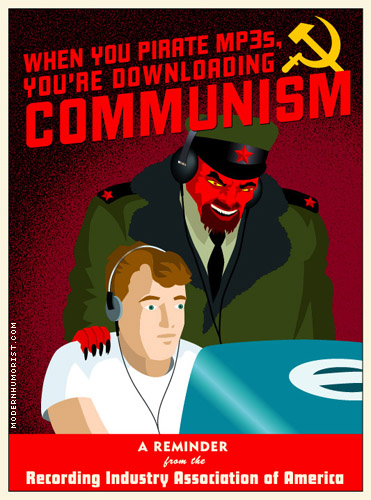
Downloading Communism

Time to bring out this classic poster again …

Piracy losses are translating to higher prices for consumers and is having a negative effect on the economy. This has been one of the major argument for a crackdown on piracy, but according to leading economists in Australia, the reverse might be true. This week we again turn our focus to Australia and the heated debate there over what to do about the piracy problem. A submission this week to the government from leading economist Henry Ergas and the former head of Australia’s peak consumer body Allan Fels argues that the government’s plan to make ISPs monitor user downloads is actually bad for the economy, and bad for consumers.

Their argument is that the high cost of running such a program, nearly $150 million a year, will not translate to anything close to this in terms of increased revenue and benefits to the economy, based on current evidence. And any increased revenue to rights holders are unlikely to be passed on to consumers. In the most optimistic scenario under the government’s proposals, where piracy is substantially reduced, the removal of the need for rights holders to “compete” with pirated downloads may actually bring about higher prices for consumers, and actually end up “incentivizing” piracy, the submission also warns.

If this “incentivizing” happens, then piracy rates will back up again and the only options left for rights holders would be to improve the value of their offerings, greatly improve the availability of legal content on services that consumers want to use, and also ensure things like release window delays are as short as possible. Basically all of the things that they should be doing right now to fight piracy instead of asking the government to intervene, argues the economists.

The most worrying thing about the Australian debate right now is that all of these same arguments have been heard before, and the practical actions suggested have already been tried, tested and shown to be largely ineffective. And yet, we still have rights holders asking for legislative action. It’s interesting that rights holders in the US have stopped asking for the same, at least not publicly, all because they fear the same kind of consumer backlash that occurred when SOPA/PIPA was being debated. Which is why the MPAA this week again re-iterated their lack of desire for legislative action. The MPAA’s Chris Dodd was saying all the right things too, about not “finger pointing at everyone” and “arresting 14 year-olds”, but instead to focus on “accessibility” and releasing content at “price points [consumers] can afford”. At the very least, it seems rights holders there have lost their appetite for new laws (publicly at least), just like how rights holders here in Australia have lost their appetite for legal action (having lost a major case a couple of years back). Well, at least they’re learning (in terms of what they say publicly, at least).

——

I was going to write a full length news article on this story based on the attention grabbing headline of “NewsCorp: Google is a ‘platform for piracy'”. Ohh, I though, Murdoch is on one of his piracy rants against Google again, oh goodie. But then I read the article and it wasn’t really focusing on the piracy problem, or the kind of piracy that I usually talk about here. Rather, it was mainly about the dispute between NewsCorp and Google, and goes much deeper than who is downloading what via the search engine. In case you don’t know, newspapers have a love/hate relationship with search engines like Google. Mostly hate these days. They don’t like the fact that Google “aggressively aggregates” content (some of us webmasters don’t like it either), in which Google takes content from sites and sticks it in the search results (with credit and links, but done in a way that makes visiting the site unnecessary – do a search for “aggregation definition” on Google, and you’ll know what I mean). Which is why drastic measures such as blocking Google crawling have been employed in the past to try and stop Google’s content “stealing”, which unfortunately has the side effect of greatly reducing your visibility to users. Pay walls were then introduced to try and make news profitable again, but in my opinion, it only made aggregated content more valuable (as sometimes a headline and summary is enough, especially compared to the cost of paying for the full thing). Google’s argument is that it’s good for the end users, which it is, but it’s also easy to see why some content creators are not happy with what Google (and to be fair, the other search engine too) is doing.
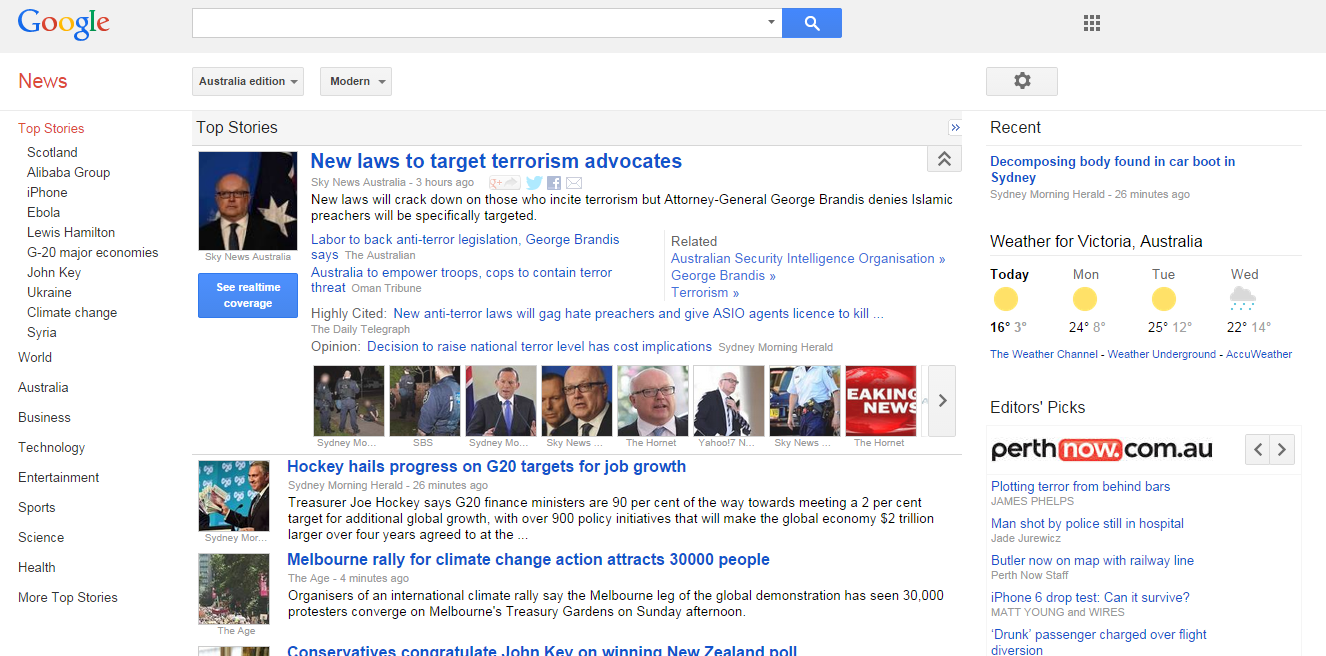
Google News

Google’s news aggregation – good for users, bad for content creators?

While there are legitimate arguments to be made about the content aggregation issue; the lack of genuine competition in the search sector; and issues of anti-competitive behaviour with Google’s perceived favourable treatment of its own products over those from other companies (Google is both a partner, and a competitor, to content creators, in my opinion); on the flip side of the coin you could argue this is just another case of old media not being able to adapt quickly enough. In NewsCorp’s accusations against Google, this interesting passage caught my eye: “For example access to 75% of the Wall Street Journal demographic at 25% of the price, thus undermining the business model of the content creator”. Undermining, or just doing business in a more efficient way? Google could label the same accusation against more successful social media platform, which are offering even better targeting at even lower prices (with Google+ having failed to be as successful in doing the same). But isn’t this just progress and innovation?

As for the woes of the newspaper industry, I don’t know if it’s fair to blame Google, or even the Internet in general for their troubles. To me, if a product is worth paying for, people will pay for it. If people’s expectations of what something is worth has changed, and you can’t re-engage with people again to convince them that paying for news is worthwhile, then perhaps it’s time to re-think the whole business of news. Maybe it shouldn’t be a business at all, but a publicly funded, truly independent institution who’s goal is not profit, but the actual betterment of society and democracy. Then maybe we’ll get back true journalism that protects, not undermines, democracy (via the dumbification of news and the serving of vile populist garbage in the name of profit – the click-baiters of their time – tactics that NewsCorp should be very familar with).

High Definition

iPhone 6 Comparison

Obligatory iPhone 6 pic

I suppose I should mention the iPhone 6. Not that it has much to do with what I cover in the WNR, except for this slightly related story about the choice of codec being used for FaceTime over cellular 3G/4G. The use of HEVC/H.265 makes a lot of sense when combined with the iPhone 6’s more powerful processor (which is needed for realtime HEVC encoding/decoding) and the need to reduce bandwidth requirements, while increasing the quality of video calls. Would this be the first mass consumer product to feature built-in HEVC/H.265 support? Possibly, and it won’t hurt the format’s chances to become the next de facto standard for web video.

Which is why things are not looking great for Google’s VPx, their open source, royalty free alternative to HEVC/H.265. I’m sure Google’s Android will be pushing VP10 if/when it is released sometime next year, but apart from the lack of industry support for the format, technically, it just doesn’t seem to be quite there compared to the more polished and efficient HEVC. As one industry analyst said recently, “The industry has already selected HEVC,” and that, I’m afraid, is that for Google’s VPx.

Tests have shown that VP9, while perhaps better than H.264, cannot really compete at the moment with HEVC. Surprisingly, VP9 is in practical use to a much larger degree than HEVC at the moment, thanks to Google pushing the use of the codec for YouTube, and also superior native browser support due to the codec’s open-sourcedness. But with Netflix 4K choosing HEVC, Blu-ray 4K also choosing HEVC, and now Apple also going down the HEVC route, there’s not much room for VP9/VP10 to grow into. Nobody wants another format war, especially one as tame as this one, so the industry will choose one format and just go ahead with it – and right now, the choice is definitely HEVC.

Gaming

As promised last week, more on August’s NPD results right here. The PS4 was again the most popular console, 8 month in a row, but it appears that its lead has shrunk somewhat. Unconfirmed information suggests that the PS4’s 175,000 units sold was just ahead of Xbox One’s 150,000. Nothing official from either Microsoft or Nintendo though, so the difference could actually be much greater than that (especially for the Wii, as Mario Kart fell out of the top 10 games chart in August).

White Xbox One

Xbox One needs to be cheaper than the PS4

More worrying for Microsoft is that traditional Xbox 360 favourites like the Madden series are being won by Sony, with the PS4 version of Madden NFL 15 outselling the Xbox One and Xbox 360 version. In fact, the same trend is true for all of the top selling multiplatform games right now except for Call of Duty: Ghosts. The next Call of Duty game will be interesting, not only is it one of the biggest franchises around, this time, we may actually see the PlayStation become the top performing platform for the series’ next chapter. If this were to happen, it could have serious implications, in that developers will most likely make the PS4 their lead platform (if they haven’t done so already) and the Xbox One version of the same game will suffer, thus causing the sales/quality/value gap to grow even larger.

I bet Microsoft wishes now more than ever that they can have a do-over, so that they would have never bothered with all that DRM crap, and released the Xbox One without Kinect for cheaper than the PS4. It would have made the Xbox One a sure winner, but I guess they grew overconfident and felt they had room to experiment. The same kind of “arrogance” maybe that was responsible for the PS3’s relative failure. The good news for Microsoft is that their backflips have been fast and decisive, and so there’s still time to pull one out of the hat. But the Xbox One needs to be cheaper than the PS4 to have a real chance, and I’m not sure if Microsoft can afford to do it at the moment.

——

A longer than expected WNR this week, and sorry for the incoherent ranting. See you in a week (for more incoherent ranting, no doubt)!

Weekly News Roundup (14 September 2014)

Sunday, September 14th, 2014

It’s going to be a short one this week, as I’ve got somewhere I need to be at shortly after pressing the “submit” button on this WNR. You might then question why, considering I’ve had an entire week to prepare and write this WNR, didn’t I just do it earlier? Because news waits for no man. Or rather, man has to wait for news to happen, and it again happened pretty late during this very quiet week. So quiet that, again, we only have to Australian oriented stories for you this week, although stories that do have global implications. Enjoy!

Copyright

Spotify Logo

Spotify has released research showing piracy rates dropping rapidly in Australia since Spotify’s introduction

After being challenged by those in Australian that believe tougher laws and technological solutions like DRM and censorship are the way forwards for the fight against piracy, Spotify has released data from its own research showing that introducing more affordable legal options is the way to go. According to Spotify’s data, music piracy download rates in Australia (based on calculating BitTorrent downloads) dropped by more than 20% only a year after Spotify’s introduction here in Australia.

The piracy rate has continued to steadily decline since then, proving that if you provide a service people are willing to pay for, they will. Of course, some people will simply never pay for music and will continue to download – but you can’t lose money from people that were never willing to spend it in the first place (the argument is that if the only options were legal options, then some of these people might eventually pay up – but this argument is not valid because it would require piracy to be completely prevented, which even the most optimistic industry person will agree is impossible).

There is this huge amount of resistance to change in the industry, and for them, it’s so much easier to simply blame everyone else for their problems. Piracy has become a convenient excuse, but it’s only just a symptom of a much larger problem the creative industries seems unwilling, or unable to address. It’s all good news for the IT industry though, since (without a sense of entitlement that people in the creative industries, particularly the movie and music industries, seem to have) they’re the ones that are coming up with the solutions at the moment, and bit by bit, they’re the ones inserting themselves into critical junctures of the creative industries.

Despite not wanting to admit the obvious, piracy is also providing competitive pressure for companies that have had it too easy for too long. This is particularly evident in Australia, where many of the major global players, like Netflix, have not been been able to, or willing to influence the market conditions here – very likely because our market is so small that it’s mostly an afterthought for many companies. This lack of competition, the “taking it for granted” nature of the companies that operate here, and our relatively high average salary has meant prices are exorbitant (up to 431% more for TV shows online) compared to almost any other place in the world. But with Netflix predicted to make its debut locally in 2015, and with 200,000 already signing up via various geo-unblocking methods (which is legal here in Australia, thanks to a court case in the 90’s that basically said region control is not acceptable), the pressure is finally on, and some companies have started to respond.

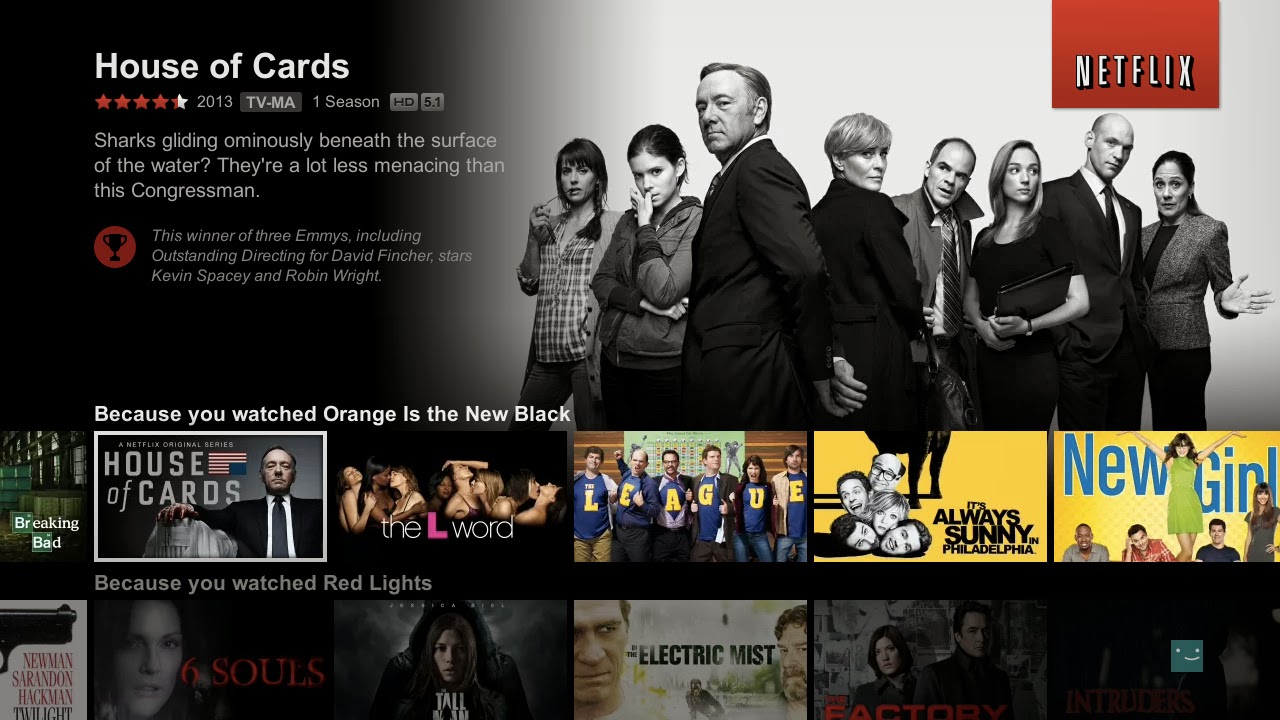
New Netflix UI

Australian companies sh*t scared about Netflix and actual competition

As mentioned last week, one such company, our only cable operator Foxtel, has decided to drop prices to prepare for the Netflix onslaught next year. This is despite the company raising prices annually for the past decade, including at the start of this year (just before rumours started circulating that Netflix was coming). The current debate over the poor value Australians get in terms of what they pay for, and Foxtel’s virtual monopolistic position, has also added to the price cut pressure.

In fact, the general trend recently has seen various companies scramble in full panic mode to try and deal with the arrival of Netflix. We’ve seen indirect competitors, like Foxtel, finally starting to be more competitive price wise, even if at the same time, they’re locking up content so Netflix can’t get their hands on it. It’s very likely that our local Netflix offering will be very much limited compared to overseas equivalents, which may mean that VPNs and geo-unblockers will still have their use. This is why there is still pressure from local companies, and also direct competitors to Netflix, on the government to ban the use of geo-unblockers (again, despite legal precedent ruling that busting geo-restrictions is perfectly legal here in Australia).

While all of this “discussion” is happening under the guise of a “debate” on solving the piracy issue, you can’t help but feel it’s more about local companies trying to protecting their privileged positions in our noncompetitive market – basically to get the government to bail them out now that some real competition is about the arrive. And that, perhaps, is what the piracy debate is all about, not just in Australia – industries that have grown too comfortable with the way they do business and will do everything in their lobbying power to keep the status quo, and prevent new forms of competition from succeeding, whether it’s piracy or Netflix.

Gaming

The early NPD stats for August 2014 are out, and no big surprise here. The PS4 outsold the Xbox One to claim the throne as the best selling console eight month in a row. It’s a still a bit early, and so I’m still waiting for other stuff to filter through. I’ll cover the NPD results in more detail next month.

——

That’s it for this edition of the WNR. Not the most interesting, I know, but hopefully stuff will happen (and happen sooner than  Friday afternoon, thank-you very much) next week. Until then, have a great one!

Weekly News Roundup (24 August 2014)

Sunday, August 24th, 2014

Welcome to another edition of the WNR. We have some good stuff in here, including a look at why movies flop, how to prevent piracy from happening, all the video game stuff from NPD to more Wii U misery, and my favourite, a look at if the original un-altered non-special edition original Star Wars trilogy films might be heading to Blu-ray soon.

Let’s get started!

Copyright

The Expendables 3

The Expendables 3 does badly at the box office. One ‘Expendables’ movie too many, too much competition due to other blockbusters, or pre-release piracy to blame?

What makes a movie flop? More specifically, what made ‘The Expendables 3’ a box office turd (relatively speaking)? According to the distributors of the film, Lionsgate, it was the pre-release piracy of the film that was ultimately responsible, and they’re even suing 10 individuals accused of downloading and sharing the movie. But maybe there are more tangible and more traditional reasons why movies like ‘The Expendables 3’ flops.

As one executive pointed out when asked about ‘The Expendables 3’ failure, if pre-release piracy does have an effect on box office results, it’s less likely to do with the actual download (or the number of people who downloaded it, and however many out of these people that will then not pay for a movie ticket), and more to do with the word-of-mouth effect.

Imagine, if someone downloaded a crappy pre-release version of a very cinematic movie like Gravity, really liked it and told their friends. Most of them will most likely go and pay to see the movie at the cinema rather than download the same crappy copy themselves. Even the original downloader, if he/she really liked the film, might pay to see it on the big screen properly. In this case, pre-release piracy probably doesn’t hurt the movie as much (but probably doesn’t help as much either, since positive word of mouth would have happened regardless of whether people downloaded it or watched it in the cinema and then told their friends about it).

But if the movie was crap, like say, oh I don’t know, the third movie released in four years, in a series that’s beginning to lose its novelty value, then perhaps word of mouth will only discourage others to pay for the movie, and instead, to download a pirated copy to sate their curiosity. In this case, the box office revenue would be negatively affected. But isn’t more the case of recycled movie ideas and badly made movies not getting the punishment at the box office that they deserved, because people were not more adequately informed of the movie’s said poor quality in the first place? If piracy does have this kind of effect, isn’t this a good thing for the industry, and for moviegoers, to force studios to be more competitive and to be more creative in coming up with the kind of movies that we, their customers, actually want? Hmm …

This is why financial losses due to pre-release piracy is hard to calculate. There are just too many reasons why a movie might flop, like competition (“Guardians of the Galaxy” and “The Teenage Mutant Ninja Turtles”, for example), the aforementioned franchise-fatigue, bad reviews, poor marketing, or even a misleading trailer, might all be reasons for the flop. Blaming piracy is easy though. Too easy!

One show that won’t be blaming piracy, mainly because almost no one is pirating it, is John Oliver’s Last Week Tonight news satire show. And there’s a very good reason why people don’t pirate it – it’s available on YouTube, even here in Australia, for free! Australia’s Gizmodo says, and I fully agree, that because of this, the show and its distributors, HBO, should be applauded for making content so easy to access, and the growing popularity of the show means HBO won’t be losing much in the process anyway.

High Definition

Star Wars on Blu-ray

Will we ever see the original unmodified Star Wars trilogy on Blu-ray?

Speaking of HBO, the premium cable channel may soon look towards Netflix for inspiration, as its HBO Go app may soon add other network’s shows to its original programming (kind of what Netflix has done, but in reverse). Unfortunately with HBO Go still tethered to a traditional HBO cable package, any real talk of being in competition with Netflix is still far too premature.

Possibly the most exciting news for me this week is that the original cuts of Star Wars may be heading to Blu-ray! Den of Geek looks at the evidence and tries to see if the rumours may have something to them. It’s a fairly long read, but with George Lucas having sold Lucasfilm to Disney, with the new Star Wars movie going for the look of the original trilogy rather than the CGI based prequels (thank goodness), and of course the clamour for a new 4K version of the film, there might be just enough there to suggest the original trilogy might just make its Blu-ray debut sooner rather than later. Fingers crossed!

Gaming

The July NPD results showed that the PS4 was yet again the top selling console in the key U.S. market, for the seventh straight month. Despite the Xbox One price drop and the continued strength of Mario Kart 8 on the Wii U, the PS4 accounted for more than half of all hardware and game sales for next-gen consoles. The margin between PlayStation and Xbox appears to be growing bigger as well, with the PS4 and PS3 combined beating the Xbox One and Xbox 360 combined for the second straight month. Even Sony is finding it hard to figure out why so many people are buying the PS4, to the point where it has them worried.

PS4 with controller and PS Eye

Sony “worried” about the success of the PS4, and where future sales will come from

Not knowing why your console is a success can be just as “terrifying”, according to Sony, as not knowing why it is a failure (yeah, but tell that to Nintendo!). It makes planning for the future much harder, they say, and Sony are worried about exhausting all the sales derived from “core gamers” and don’t know where future sales might possibly come from.

But it’s still a nice problem to have, at least compared to Nintendo’s. Nintendo’s hopes of turning the Wii U into a more “hardcore gaming” friendly console does not seem to have worked, with Ubisoft this week announcing that they will stop releasing “mature’ games on the Wii U. So games from the ‘Assassin’s Creed’, ‘Far Cry’ and ‘Ghost Recon’ series will no longer feature on the Wii U, despite being available on the PS4 and Xbox One. Ubisoft says that there just aren’t enough sales of these types of games on the Wii U to justify making more of them, and the company will concentrate on family games like ‘Just Dance’.

In a similar announcement, Capcom says the Wii U will not be getting a new Street Fighter game that the other next-gen consoles will be getting. It’s kind of sad really. My first home console version of Street Fighter was on the SNES, which at that time, was every hardcore gamer’s preferred console. But Nintendo’s policy of having “no blood” in their games was already a sign of things to come, with Sega, and then Sony (and eventually Microsoft), having no qualms about violence in video games. It’s ironic that Nintendo is now trying to entice publishers to make these kind of games, and finding it quite difficult indeed.

——

And with those last few words, we reach the 1,000 words count, which feels like a good time to stop. See you next week!

Weekly News Roundup (17 August 2014)

Sunday, August 17th, 2014

It’s rather short WNR this week, where we have a couple of interesting news stories, but ones that don’t really need a lot of words to be written about. With Gamescom happening, there is definitely a slant towards gaming, which is also probably why news on other topics were a bit light.

Let’s get started!

Copyright

What piracy problem? U.S. households are spending up to $1,000 each year, every year, on video entertainment products such as cable TV, Netflix and Blu-rays. This means that the video entertainment industry could be worth $123 billion by 2015, and this is despite piracy having “nearly” brought the industry down to its knees or something hyperbolic like that. Futuresource Consulting’s report on the industry reads nothing like one for an industry on its last breathes, and actually sounds like one that is doing extremely well, and thanks largely to the Internet, not despite of it. Digital spending is growing so fast that it will exceed packaged media spending in 2015, for example.

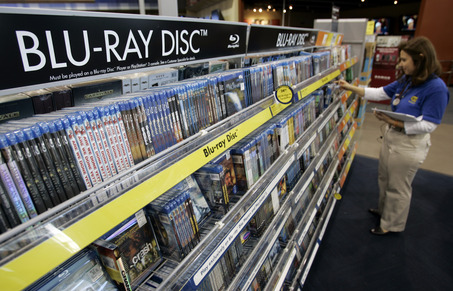
Dropping disc sales have very little to do with piracy, and more to do with market saturation and the transition to digital

Dropping disc sales have very little to do with piracy, and more to do with market saturation and the transition to digital

As part of my “job”, I read a lot of reports of this kind, and most of them almost never mention piracy. Sure, packaged media sales are on the slide, but this and other reports clearly state that it’s most likely due to “market saturation, declining retail space and the growth in video consumption on subscription VOD services”. On the other hand, if you listen to the studios, then any decline is almost always down to piracy.

The fact of the matter is that consumer tastes have changed rapidly due to the Internet, and the industry was too slow to adapt, hence the surge in piracy and a (what looks like temporary) decline in revenue. The same thing happened/is happening with the music industry, possibly even more dramatically, as the transition from physical media to digital continues apace (and with the industry, not grasping the opportunity earlier enough, allowing the likes of Apple and Spotify to be the winners). Piracy is a side effect, a symptom of the problem, but perhaps not the real problem itself.

Gaming

Gamescom this week, and so we have the expected slew of gaming news. Sony got off to a good start by announcing that PS4 sales has topped 10 million worldwide. Microsoft, for understandable reasons, did not provide a comparable figure but was at 5 million as of April. With the PS4 beating the Xbox One for every month of this year in the key U.S. market that was once dominated by the Xbox 360, the gap between the two consoles appear to be growing. Here in Australia, the PS4 is outselling the Xbox One by a 2-to-1 margin!

Xbox One Media Playback

Xbox One about to become one of the best media players, thanks to September update

But the announcement of Gamescom so far, at least in terms of stuff that I cover in the WNR, would be Microsoft’s announcement of a full capable media player for the Xbox One, coming in September. The media player will support almost every format, including the ever more popular (but the rarely supported, at least on game consoles) MKV format (the format of choice for HD downloads), and also the reintroduction of DLNA streaming support.

With Sony yet to announce when they’ll bring back DLNA support, and to add to the PS4’s media support, it seems the Xbox One is now the console of choice when it comes to media playback. But given the intense competition between the two big consoles that has so far characterized this generation’s console wars, I wouldn’t be surprised if Sony make their move in this area soon.

As I was writing this, the NPD stuff for July has just been released. I think I’ll cover it next week instead of right now, but spoiler alert: PS4 wins again.

——

And so ends this rather short WNR. See you next week!

Weekly News Roundup (3 August 2014)

Sunday, August 3rd, 2014

Hello everyone. Due to personal commitments, I’m writing this WNR on Saturday and schedule-posting this at the right time on Sunday. So if you’re reading this, it means the scheduler has done its work. If it didn’t work, then you’re not reading this, and so never mind, carry on.

Let’s get started.

Copyright

I don’t like to get into politics, but I think it’s now a fairly mainstream opinion that the current government here in Australia is one of the worst ever. And for Net-active individuals such as myself, our opinions of this government might still get even lower, if that’s even possible.

Hollywood still bitter over court defeat to Aussie ISP iiNet, and now wants the government to step in and help them out

Hollywood still bitter over court defeat to Aussie ISP iiNet, and now wants the government to step in and help them out

The reason is simple. It’s this government’s fairly transparent plan to basically toe the Hollywood line and let the likes of Sony and Warner Bros. write our new copyright laws. Laws, that if becomes reality, would be one of the harshest in the world. Everything is on the table, from domain blocking, to censorship, to three-strikes, to making ISPs liable for user downloads … basically “a wish list from Hollywood” as one academic puts it. This is despite a 2012 High Court ruling that specifically said that ISPs aren’t liable for user actions, a defeat that still haunts Hollywood and their lackeys here in Australia to this day.

They lost that day, and since then, they’ve tried playing a different game. A game of politics that may start to pay off thanks to the election of a new big business friendly government.

Despite all the evidence pointing to the piracy problem here in Australia as one of access and availability, the government seems very keen to divert blame away from big business (not unusual for this government), and instead lay blame on those that don’t have the political clout or the lobbying power to have a real voice (again, not unusual for this government).

For me, it’s clear where the problem is. It could have been many things, and it was always inevitable, but in the end, it was the Internet (and perhaps not even piracy specifically) that finally exposed in the entertainment industry’s flawed and outdated business model. No other industry gets away with investing so much money in producing such awful products, time and time again. Hollywood gets away with it because, for years, they’ve not had any real competition. Sure, there is competition between studios, but if you wanted to watch a summer blockbuster, do you really have any choice other than a Hollywood movie (and often a crappy one)?

The Internet has brought us many things. It has brought us competing forms of entertainment that is cheaper and better, as well as new delivery technologies that are better for the consumer than the ones that Hollywood wants to force us to use. So the business model of making million dollar garbage after garbage and then cramming it down our throats in a process that Hollywood wants 100% control over, that business model, is no longer relevant today. They’ve bought themselves some time thanks to the 3D hype, and the fact that people still like going to the movies, but their reluctance to embrace change has seen companies like Apple and Netflix, and even ISPs, all establishing themselves as important cogs in the process that H0llywood once had total control over. The political lobbying, their only remaining and potent weapon, is now be deployed in the last throes of a futile attempt to hold on to the past.

And piracy is the convenient excuse that gives Hollywood’s political lobbying a purpose, a visible boogeyman for politicians to justify their thoughtless decisions. I’m not saying that piracy is harmless, but in my mind, Hollywood’s problems are much bigger than penniless teenagers and college students downloading movies.

It’s not that much different for the music industry, who’s territory is being encroached by the likes of Spotify, Pandora, and yes, Apple as well. Techdirt has an article this week that looks at the trouble legal streaming services like Spotify and Pandora has with revenue, troubles that are primarily caused by rights holder royalty demands. Spotify, for examples, spends 75% of their total revenue on royalty payments. Despite this, rights holders are demanding even more in royalty payments.

Techdirt’s Mike Masnick argues that this demand could be the undoing of services like Spotify and Pandora. Perhaps not these precise services, but certainly smaller players that would otherwise have offered more choice and competition in the same market space. Masnick argues that the music industry’s short term-ism could endanger the great potential of these services, and in doing so, endanger the industry’s own futures.

Again, I think this goes back to the point I was trying to make earlier, that the music industry, like the movie industry, has found itself on the outside of the Internet revolution and has allowed others (mostly tech companies) to come in and take a piece of the pie. But instead of accepting that they were too slow to embrace the Internet, they still want to operate, and to earn, in the same way they have before, when they controlled 100% of the production and distribution process. Or as Masnick notes, the industry seems to think all the value is in the content, their content, and there’s no or little value in the service. Consumers, on the other hand, may disagree. Especially those that are choosing to pay for Spotify over getting the same content for free via piracy.

Knife

Finger amputations to end piracy scourge once and for all?

For those that still choose piracy, there’s one proposed punishment for pirates that could end the piracy problem overnight: finger amputations. Nigerian singer Stella Monye says that “drastic measures” need to be taken to stop pirates, and cutting off their fingers might just do the trick. This “ten-strikes” regime would see pirates lose a finger for every song they download, and Monye says that it will only take two finger amputations before pirates start wising up.

The thing is, I’m still not quite sure if Monye was being serious, or whether this was a brilliant attempt at satirizing how rights holders perceive pirates. Or it could be that the original source of this news story is actually The Onion. I just don’t know. But you have to say, this is probably the most effective solution proposed so far!

And it’s also probably cheaper than the “six-strikes” regime that the U.S. currently enjoys. The organisation in charge of running the program has reported that it costs $3 million a year on its end to send the 1.3 million notices so far. This is just the cost of sending the warning notices, as costs for ISPs to implement the monitoring and the “punishments” is not included.

Kind of expensive for no real effect. Knives are much cheaper, you have to say, although the disposal of severed fingers may have additional costs, I’m not sure.

Gaming

The success of the PS4 hasn’t just been a moral victory for Sony, after the dismal relative failure of the PS3, but it’s also helped the company become profitable this past quarter. Sales in the gaming division rose 96%, with an operating profit for 4.3bn yen, up from a loss of 16.4bn yen from the same quarter a year ago. Sony still expects a loss for the financial year, but with the PS4 looking stronger each month, things are looking up for Sony.

——

That’s it for the week. See you in 8 days (well, 7 from when you read this, but 8 from when I wrote this).