Blu-ray: The State of Play – May 2011

May 27th, 2011

It’s been just a bit over a year since the last “Blu-ray: The State of Play” article, and so it’s time to have a look again at how Blu-ray has performed since then, in what are still difficult economic conditions, and in a period where, particularly in the last few months, where there has been a dearth of new, hit releases.

Like the last article, the statistic that this “analysis” focuses on will be the market share figure. This figure tells us what percentage of disc sales belong to the Blu-ray format, and can be used effectively to gouge the growth of Blu-ray, even if general market conditions are not ideal.

The figures come from Home Media Magazine’s published data, which I have been analysing weekly, and because the calculation metric has been modified during the year, some of the graphs may appear different to what was published last year, but the differences are not significant enough to have changed the big picture.

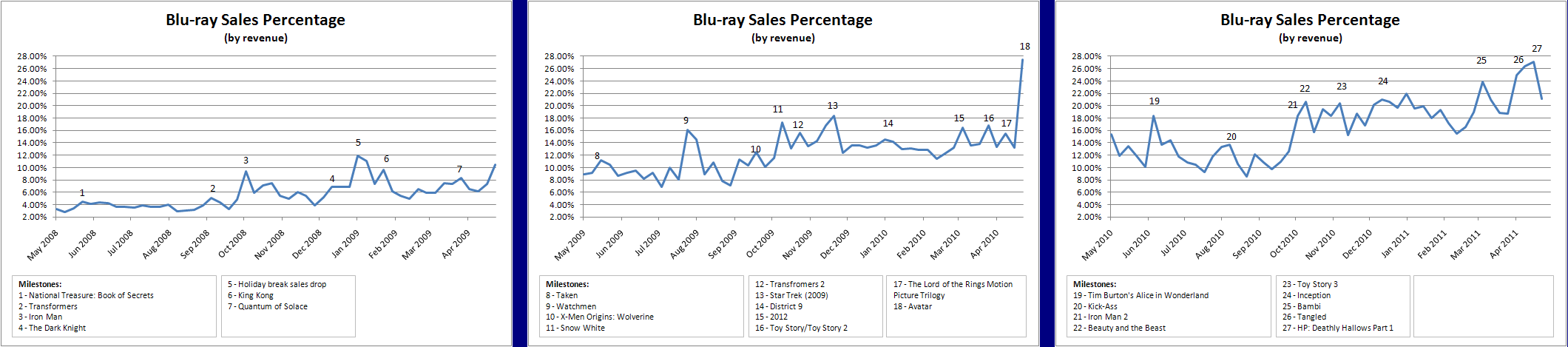
The first set of graphs show Blu-ray market share through the three year period that I have tracked them, with the release milestones pointed out.

Blu-ray Sales Percentage - 4 May 2008 to 30 April 2011 - Click to see larger version

Blu-ray Sales Percentage - 4 May 2008 to 30 April 2011 - Click to see larger version

Just by looking at the graphs, you can see that Blu-ray market share has indeed grown. However, from looking at the number of milestone releases, the last 12 month has produced fewer such titles than the preceding 12 month. For one, there’s no Avatar, which still sets the benchmark when it comes to Blu-ray releases, with only Harry Potter and the Deathly Hallows Part 1 coming close this year. But even with fewer milestones, the bar has already been raised by the 2009/2010 performance, where back then, apart from Avatar, there was only one week that managed to break the 18% market share mark, whereas about half of the weeks were above 18% than were below it in 2010/2011. Also interesting was that quite a large percentage of milestone releases were from Disney, some titles such as Beauty and the Beast, and Bambi benefited from being time limited Blu-ray exclusives. And pretty much all of this past year’s milestone releases were combo releases (combo releases, for the benefit of the stats, are counted only as Blu-ray releases).

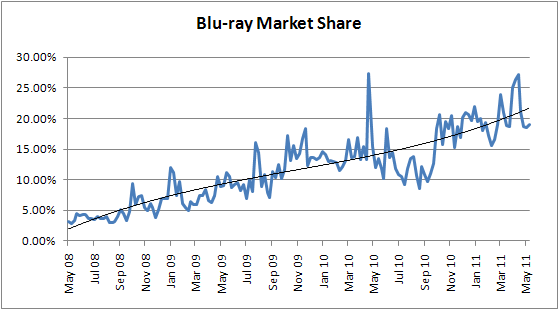
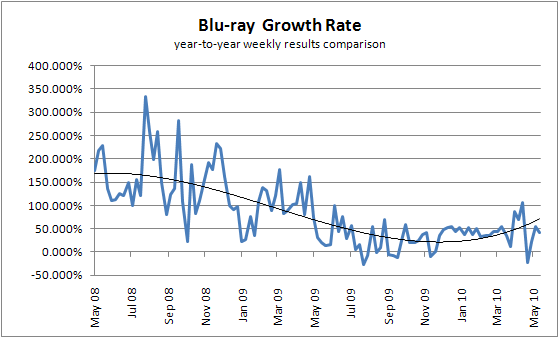
The next set of graphs show the market share as one continuous graph, as well as the growth rate when comparing one week’s market share with the market share figure of the same week a year ago (so if week 32 in 2010 had a Blu-ray market share figure of 15%, and week 32 in 2011 had a market share figure of 20%, the growth would be: (20 – 15) / 15 => 33%).

Blu-ray Market Share - May 2008 to April 2011

Blu-ray Market Share - May 2008 to April 2011

Blu-ray Market Share Growth - May 2008 to April 2011

Blu-ray Market Share Growth - May 2008 to April 2011

The first graph shows the fairly steady upwards trajectory of market share growth, which a slight dip in growth during the middle of 2010, but picking up again towards the end. The second graph shows this more clearly, and shows growth slowing down and picking up again (but seasonal factors probably account for this). But you cannot escape the fact that three years ago, Blu-ray market share was at 5%, and it is now above 20%.

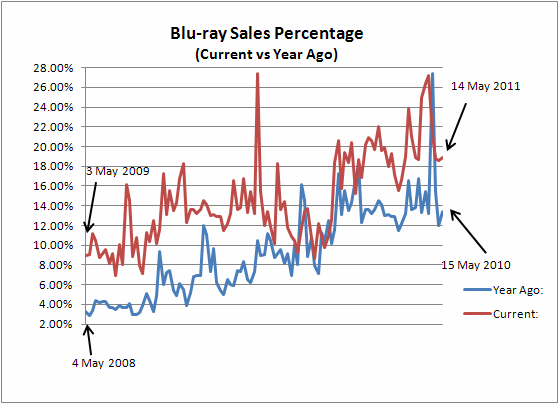
The last graph below shows a comparison of weekly market share figures with the same figure from a year ago, with 2 year’s worth of comparisons based on 3 years of data.

Blu-ray Sales Percentage: 2008/10 versus 2009/11 Comparison (May to April)

Blu-ray Sales Percentage: 2008/10 versus 2009/11 Comparison (May to April)

Unlike the same comparison I did last year, there were a few weeks in the last 12 month in which the week’s Blu-ray market share actually shrank compared to a year ago. This is largely to do with the timing of new releases, but overall, most weeks showed growth.

While we’re not specifically looking at revenue figures, which are much more volatile as it largely depends on the box office of new releases, we can still take a look at the first part of 2011, and how it compared to the same period in 2010. Including the period last year where Avatar was released, Blu-ray revenue averaged $29.21m. For the same period this year, it’s $32.54m. Not quite that impressive, but considering the overall drop in disc revenue and the poorer box office of the new releases this year compared to the last, Blu-ray is not only holding up, it’s growing (market share for the same period was 20.26% on average, compared to 14.89% a year ago). Highlighting the volatility of using revenue figures, percentage growth in this period ranged from 205% in one week, to a decline of 29.41% in the week immediately after … again, confirming that using market share figures yield a more consistent comparison.

So in summary, Blu-ray is still growing, albeit at a slower pace than previously, and raw revenue has not increased significantly, although that’s largely due to the calibre of new releases.

Weekly News Roundup (22 May 2011)

May 22nd, 2011

A fairly quiet week this one, I guess there’s not really much of a point to write news when the world is ending today. I guess there’s also not much point in writing this WNR, but I can’t think of a better way to go out than in a blaze of angry, angry ranting. There’s no time to waste, as the apocalypse may be upon us any second, and I’d hate to write all this and not have time to send it out. So let’s get started.

CopyrightLet’s start with copyright news. The French have enjoyed their three-strikes system for some time now, although I’ve yet to actually hear any good news about a reduction in piracy or rise in consumer purchasing or anything like that, which is the whole point of the exercise, non?

TMG hacked server directory

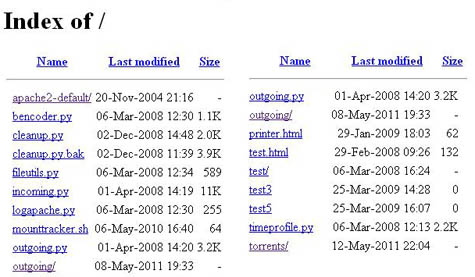
This screenshot shows the contents of TMG's "hacked" server

Anyway, one of the private firms the government pays to spy on its own citizens, to gather IP addresses for warning notifications and all that, has had a security breach this week. Trident Media Guard had one of its test servers “hacked” into, with data and tools stolen. From what I gather, it’s not much a case of hacking, as a case of very very lax security, which allowed anyone to browse the contents of the server. A lot of stuff turned up, which ironically made its way to P2P networks in short order, and it includes things like IP addresses that the company uses to track users, plus tools to create fake peers (again, for data collection). Basically stuff that hackers can take a look at and find a way to block TMG from being able to conduct their activities successfully. But the bigger issue is that whether a company tasked with handling sensitive data should be held to higher standards when it comes to security, because while no personal data has been leaked so far, it could very well have if TMG maintains their other servers in the same manner.

But by far the biggest story of the week was a response to last week’s big story, which was the proposed PROTECT IP act, which will give the government power to shut down any website it deems “unacceptable”, including messing with the domain name system (DNS) at the very core of the Internet, as well as forcing search engines to adopt censorship. And as expected, a search engine company, the biggest in fact, has come out fighting against the proposed act. Google’s Chairman, Eric Schmidt, says the company will fight PROTECT IP even if it becomes law. While Schmidt was primary talking about the government messing with DNS, I’m sure Google is even more concerned about the forced search engine result filtering. But messing with DNS is extremely dangerous, because the DNS system is probably the most important Internet protocol, as it maps domain names to the IP address of the servers that hosts the website. The current system is like a huge peer-to-peer network, where an authority server shares information with the rest of the world, and data propagates to every other DNS server. But if the US starts messing with the DNS records in the US, and then Europe does the same, and every other country, then this could very well break down the very thing that is essential for visiting websites. Prominent engineers and Internet pioneer have already warned the US against this, but the RIAA/MPAA lobbying was just too great (and they could care less if the Internet breaks, and it’s probably something they’ll welcome).

And make no mistake, the push behind PROTECT IP is all RIAA and MPAA. This is why, following Google’s statements, both the RIAA and MPAA came out attacking Google, one accusing the search giant of benefiting from criminal activities, and the other saying Google is acting as if they’re above the law. Last week, I ranted about the aim of copyright, which is to protect the public’s right to have access to information, as well as to promote creativity. What the RIAA and MPAA want almost the exact opposite of what copyright is all about, and so if anyone is acting as if they’re “above the law”, it’s the movie studios and record labels. And even if they’re right about copyright and the need to censor certain websites, then why should the tax payer, search engines like Google, ISPs, pay for this? And all for something that will probably be easy to bypass anyway. The RIAA and MPAA thinks they’re entitled to their business model and large profits forever, and want everyone else to pay to ensure they keep their entitlements.

Protest brick

One of the lovely packaged bricks being sent to Nintendo HQ to protest the 3DS's DRM

Moving on now to gaming. The Free Software Foundation (FSF) is launching a protest against the DRM regime of Nintendo’s new 3DS, which actually allows Nintendo to brick anyone’s 3DS console if it detects that it has been modified in any way. So instead of waiting for Nintendo to brick their consoles, they decided that Nintendo should be the one that’s “bricked” first. The FSF has started an  innovative protest, with people donating money to the recognized non-profit organisation, and for every $10 donated, they will send a brick to Nintendo’s CEO (presumably via mail, not via a projection through a window). For those that want better bang, or bricks, for their buck, they can donate $250, the cost of a 3Ds, and have 30 bricks delivered to Nintendo HQ. The campaign was set to end once 200 bricks had been delivered, but due to popular demand, it’s still going on at the moment, and if you want Nintendo to get the message that we are buying the hardware, not just merely licensing it (and so we should be able to do whatever we want with it), go here and donate.

High Definition

Not much in HD or 3D news, but I’ll try to jam in something almost unrelated here just to take up some space. It’s not to unrelated, as Netflix does do HD, and I’m sure they’ll offer 3D sometime soon as well.

The good news is that Netflix is finally coming to Android. The slightly bad news is that it won’t be available on all phones, and Netflix are individually testing each and every phone to ensure compatibility. This is necessary because of the lack of a standardized streaming platform for Android phones, something Google really needs to look at. But I’m also pretty sure this has something, or maybe everything, to do with DRM, something the Netflix has hinted before when asked why it’s taking so long for the Android app the arrive. To try and do anything innovative on the Internet these days when it comes to entertainment, companies have to jump through hoops to meet the paranoid demands of entertainment companies, the rights holders, and in this case, Netflix has to get DRM nice and tight before the movie studios would allow Netflix to deliver content on Android phones. I guess the studios are worried that somehow people will crack the app, and capture the video stream and distribute the SD YouTube quality footage online. Yeah, I’m sure that’s likely, considering how hard it is for people to rip DVDs and Blu-ray’s. Almost as likely as people ripping movies via HDMI, now that HDCP has been cracked. Luddites. Interestingly, he original Luddite movement was borne out of fear of the Industrial revolution, with Luddites destroying machines and anything that represented progress. Sound like anyone to you? The only difference is that the RIAA and MPAA have the government on their side, which the original Luddites did not.

Gaming

And finally in gaming, yep, the PSN is back baby. Well sort of. Some of the functions are still not, um, functioning, but at least gaming is back.

Of course, it’s another week, and another set of security breaches being discovered at Sony and their affiliates. The most annoying of all was that a rather stupid flaw was found in the very system that was supposed to bring security back to the PSN – the password reset function. With Sony forcing everyone to update their firmware and then change their PSN password before they’re allowed back on, you would think that Sony would at the very least ensure this process was secure. But alas, that was too much wishful thinking. The flawed password reset system would allow anyone who had your birth date, and PSN email address (which at this point, is about everyone), to reset your password, and hence gain access to your account on the “new and secure” PSN. And so while Sony went about fixing the flaw, the password reset system was down, and so people like me, who had not reset their password yet, were left without PSN for another couple of days. A lot of people would have been able to reset their passwords on the console it self, but many, who like me, that didn’t create the account on my current console had to use the web version (my original died and was replaced by Sony, more on that below), which was down. There were also other stories about Sony owned ISPs also revealing user information, but I suppose these kind of stories will be plentiful as Sony conduct a full security audit of all their systems.

Dead Nation

Zombie killing fun in Dead Nation - one of the free games available in selected regions as part of the PSN "Welcome Back" package

Sony also detailed the goodies people will get once the PSN store, one of those non-functioning functions, comes back. People will be able to download two games from a list of five, including inFAMOUS, Wipeout HD + Fury, and Little Big Planet. Different regions will get slightly different sets of free games, and there are also PSP games that PSP gamers can download. I think I’ll get Wipeout HD + Fury for my 3D TV, and so far undecided between inFAMOUS, LittleBigPlanet, or Dead Nation (I just can’t resist Zombie games).

One slight problem, that doesn’t affect me, is that at least in the EU and here in Australia (and NZ), only those that had PSN accounts before the network went down on the 20th of April are eligible for the freebies. Which kind of sucks, because I would have thought that the people who got new PS3s after the 20th would be even more deserving of a “we’re sorry” gift, as the last thing you want after forking out a lot of money for a PS3 is for half the functions to not even work for weeks. I mean how much could it actually cost Sony to allow all PSN users, up to say today, to be eligible for the welcome back package? This is exactly why people hate Sony.

Thinking about the earlier 3DS protest thing, one lesson I hope Sony learns from this incident is that people *buy* their console, not license them, so you can’t just take away features without repercussions. And if we’re really just licensing the hardware, then the hardware should be a lot cheaper, and we should receive refunds for outages (just like anything you can license, if you can’t actually use the licensed service of feature, then you should get your money back). Without these checks and balances, what’s to stop Sony from removing a core feature, like say AVI/DivX playback or DLNA support to stop pirated files from being played on the console? I mean, if they are allowed to remove “OtherOS” for “financial reason”, then they can use the same argument to remove other features as well. Of course, it’s not in Sony’s interest to remove either of these features, but that’s now, who knows what will happen in the future.

For Xbox 360 owners, you should now be getting the “Spring” update notice, or will get it soon. There’s misleading information around that this update will brick certain Xbox 360’s, which is not true (at least not yet). What had happened was that a previous update, and not the Spring update, had caused some Xbox 360’s to fail, and Microsoft has already promised to replace all failed 360’s due to that other firmware update  (mostly older Xbox 360 60GB Pro’s) with brand new consoles. You see, that’s the right thing to do. The PS3 is actually more notorious for firmware induced bricking (or at least a drive that no longer reads any discs – something that I’ve experienced personally – luckily, my PS3 was still in warranty at that time, as otherwise I would have had to pay $AUD 250 for the repair), and the only response from Sony was to respond to the various class action lawsuits launched against the company for this alleged fault. This is also exactly why people hate Sony.

Alright, that’s it for this week. See you next week (if the world hasn’t ended by then).

Weekly News Roundup (15 May 2011)

May 15th, 2011

I’ve had a busy week. Early on, I finished writing the review for PowerDVD 11. You’ll have to read the review to find out whether the new version of PowerDVD is worth it or not, but I really like the Android/iOS remote app, which basically turns your touch device into a touchpad for your computer. And being able to stream content from my phone to my PC through my home Wi-Fi is a lot easier than connecting via USB or Bluetooth. Pity the streaming doesn’t go the other way, from the PC to the smart device, but I’m sure Cyberlink will be sued into oblivion by the entertainment industry if they ever tried something as innovative and useful as this.

Not only that, I managed to get the April 2011 NPD US video game analysis up yesterday. That’s right, the feature is back, big time. Well, not big time, since I suspect it will go missing again next month as Sony tries to hide the PS3 sales figures. It’s actually quite funny, because if you read the April 18th edition of the WNR, I made a joke about the possible reason why Sony did not want to release PS3 sales figures for March, where it goes “This can only mean one thing, and that is that PS3 sales for March was negative – more people returned PS3s in March than people who actually purchased one #NotIntendedToBeAFactualStatement“. Not only did I write that *during* the PSN intrusion, which nobody, not even Sony, were aware of at that time, what I wrote is actually coming true, with lots of stories of people returning their PS3s. I had nothing to do with the hack, I swear! I barely even know how to use Internet banking!

And so before the FBI breaks down my door, here’s this week’s WNR, which doesn’t feature as many news stories, because there probably hasn’t been any really interesting news stories (and considering the fact that I’m not the only one writing the news these days, I’m much more certain this is the case, as opposed to everybody suddenly getting a case of the lazies).

CopyrightSo staring with copyright news, and while there are only three real news stories covered this week, the second one is a real doozy. What exactly is a doozy? I have no idea. But the second story is a real one.

LimeWire Logo

LimeWire settles again, this time with rights holders, for $105m. It's a much better result for LimeWire than the billions and trillions the RIAA had wanted

The first story is LimeWire’s settlement of one of their remaining lawsuits, or is this the last one, I don’t know, there are so many! LimeWire has settled with copyright holders, after settling with publishers back in March (for an undisclosed amount). Copyright holders hold the copyright on the song, while publishers hold the copyright on a recording of the song. Of course, with the way the studio system works, the same label is sometimes both the copyright holder and the publisher, so basically even with two possibly nine figure settlements, the actual artists that created the songs will probably get nothing, or if they do get something. You know, this is where I think copyright laws have gone completely out of control. If you ask an average Joe on the street,  “Hey Joe, who do you think copyright laws are really meant to help?”, that person will probably say “My name is not Joe”. And then he or she will say that copyright laws, with the way they’re being used, are obvious created to help rights holders make money, and prevent nasty pirates from sharing their works without permission. But you know what Joe, you’re absolutely wrong.

The aim of copyright has always been to promote freedom of expression, the spread of culture and to promote creativity. It is not solely, as the RIAA stated when commenting on the LimeWire settlement, to help “rewards creators”, and even if that were the case, the creators are not the RIAA or the four major labels it represents. Copyright is very much a balancing game. If you don’t have copyright protection, then original works will be disseminated in a much freer fashion, and so ticks the first two of the three criteria I mentioned above. But the problem is that, and I hate to agree with the RIAA here, if the original creators are not properly rewarded for their efforts monetarily, then there is less incentive to create, especially in today’s money obsessed society. I mean, yes, some artists do art not for money, and you might even say that these are the real artists. But even real artists need to eat. And as a society, we value art and creativity, and so it’s only natural that there is a financial aspect to it.

But if you take copyright the way it is currently being used, or rather, abused by the rights holders, then you have things like DRM, DMCA take-downs, mass lawsuits, and all with the aim to lock in the profits, and not usually on behalf of the artists themselves either. It’s not a very expensive process to publish your own Blu-ray movie, due to licensing, the need to purchase DRM keys, and so how does this foster creativity for the public good. And with the major studios and labels controlling the scene, unless you’re a major artists that can negotiate your own terms, others have to put up with giving the studios and labels a large chunk of the money earned on their works, and so the current system doesn’t really “reward creators” either. Fortunately, the Internet and computing technology in general has helped to level the playing field a little bit, allowing consumers to do more with their purchased content, allowing independent artists and publishers to distribute their work without having to rely on the majors’ connections. And it’s true, piracy do hurt the independents as well, but with piracy, comes publicity, and if your work is good, really good, than you can make fans of pirates, and fans will provide financial reward, either through live performances, or a iTunes purchase to show their support for the artists (even if they’re already downloaded his or her songs). If anything, piracy means creative works are being judged on their merits more than ever now, and only the really good works will benefit financially. And isn’t that a good thing, to promote good work over bad? And it’s almost these points, the level of playing field, the greater access to the market by independents, and having to actually produce good work, that is most worrying the entertainment industry, not the money *directly* lost through piracy. They don’t want to lose their monopoly, so that artists can distribute and promote their own songs without the need for the labels and studios, and end up keeping all of their money (which is why the RIAA ordered Homeland Security to close down blogs that artists were using to leak songs and promote their music). They’re afraid that one day, artists will wake up and realise that “We have the Internet now. We don’t need you any more”, and so they’re trying protect their position by law, using copyright and piracy as an excuse. What the major studios and label want is against the public interest, against what copyright stands for, and they are the real abusers of copyright laws.

US Department of Justice

If PROTECT IP is passed, the DoJ can use tax payer money to help movie studios and music labels sue websites

And they want to abuse it more, and create more laws that makes it easier to abuse copyright, which brings us to our second story. The PROTECT IP act, currently being considered in the US congress, will tip the copyright scale even more in favour of the multi-billion dollar corporations that are calling themselves “creators” these days. The details are scary, to say the least. If the bill is passed, it will authorize even more domain seizures by Homeland Security and ICE. The Department of Justice will now be authorized, to use tax payer funds, to file civil lawsuits on behalf of rights holders, to save the billion dollar corporations even more money, time, and effort, and even if the domain name or website is not hosted in the US, the Attorney General can step in and force US based search engines to remove results for the website (“site:thepiratebay.org” -> no results found), ISPs to stop providing access to the website and even financial companies to stop providing services to those websites, all on the say so of the rights holders. If the recent domain name seizures as part of Operation In Our Sites are anything to judge by, the “defendants” will have almost no way to defend themselves until their businesses have been ruined, and even after that, it will be extremely difficult. In other words, a judge is now required to make a judgement on a one sided story, presented by the full might of the US government and billion dollar corporations, and represented on the other side by nobody, and this is what due process has become. So if the RIAA spots another website that is threatening its control over artists, all they have to do is to make a phone call to the politicians that are already in their pockets via lobbying money to get exert pressure on the DoJ and the AG to act, and then that website will exist no more. That’s what due process will become, if PROTECT IP is passed (and given the lobbying cash being thrown around to both sides of politics, as expected, there’s already a lot of support for the bill).

And sometimes they don’t even have to make that phone call, because PROTECT IP will grant corporations governmental powers (hey, if they’re already people, or so the US Supreme Court says, and people run the government, why not let corporations have the powers of government as well?). Corporations can force financial service providers to cut services for websites they don’t like, much like how the government “convinced” the likes of Amazon, PayPal and Mastercard to cut service to Wikileaks. They don’t yet have the powers to force search engines to remove search results or the force ISPs to cut service to websites they don’t like, but give it time.

So if you don’t like the way PROTECT IP overreaches, now is the time to contact your congressman and senator. It probably won’t do much good, because most of them can’t understand the technical ramifications of what they’re voting for, or what they’ve already been paid to vote for, but it’s your only weapon against this monstrosity of a bill, and it is still supposedly the best weapon in a supposedly democratic society.

Google Music

Google Music will anger music labels because it helps consumers too much

Another great weapon is innovation. The Internet is so innovative and allows so much innovation, the TPTB are incredibly afraid of it. And Google now follows Amazon’s lead and taking music to the cloud, much to the chagrin of the music industry. I dislike the way Google is trying to take on everything and everybody, often forgetting their core responsibilities, but putting my opinions aside, innovation is always welcomed. The service is currently in beta, and only open via invitation in the US, but like Amazon’s service, you get GBs of space online to store all your music, and the music will then be accessible everywhere there is an Internet connection, and also on Android devices of course. The music industry don’t like it because it means they can’t make people re-buy the same music half a dozen times, one for each device, so they’ve used the excuse that the service will be used to host pirated songs by individuals. So? If people have already stolen your songs, then how they play those songs should be the least of your concern, I would think. On the other hand, if the music industry had embraced the Internet instead of being afraid of it, they could have launched their own similar service, charged people for it, and kept a lid on copyright issues through policing. And make a bundle out of it as well. At least the movie industry are looking at UltraViolet, which would do something similar with movies, but even better because you don’t even have to download anything if you don’t want to (stream it right after you buy it), which is kind of a necessity with GB sized movies really. But the RIAA will sue Amazon and Google, and probably Apple too, and anyone daring to give consumers more freedom as to what they can do with the purchased content.

Not much happening in HD news, and I’m already over my word count with only three stories covered, so I’ll skip this section for the week.

Gaming

But there’s still gaming, and of course, there’s still the PSN thing. The story out now is that the PSN is slowly coming back online, and so we’ll start to find out just what kind of compensation Sony will be providing for the more than three weeks of downtime.

It will most likely be a free PSN game or two (and I really hope they don’t make it so people have to input their credit card numbers to get the free games, because that would be kind of perverse), free identity theft protection for a year (it’s never a good thing when a company has to do something like this), and a free trial of PlayStation Plus. Sony, during the week, sent letters to game publishers which provided a bit more information on how the hack went down, including the interesting fact that they company didn’t even know they were being hacked until the servers went down from too much hacking (or data transfer, probably), and that hackers managed to hide their tracks by deleting logs, which probably didn’t have real time log monitoring and offsite log retention, which could have allowed Sony to detect the problem earlier, and to have clues as to what the hackers had done.

Of course, for some, nothing can make up for the lost in trust, from comments right here on Digital Digest, to comments I’ve read in other public and private forums, this latest incident appears to be the straw that breaks the camel’s back (except it’s more like a bale of straw, given the magnitude of this f***-up). The same comments have people saying they’re trading in their PS3s for Xbox’s, and there are news reports floating around with retailers also reporting the same thing, but you know, for every person that does the trade in, there are probably tens and hundreds that are not keeping their PS3, but every little bit hurts Sony, especially since they’re locked in a bitter battle with the Xbox 360 for global dominance, even if they’ve appeared to already have lost the battle in the US (the PS3 is now comfortably third in total sales in the US).

If Sony wants to get back into the game, if you excuse pun, then they have to admit that it isn’t just this single incident that has made people reconsider Sony, as a brand. It’s the DRM rookit, the alienation of the hacking community that was once your greatest supporter, thanks to OtherOS. If is the same community that you should have embraced instead of sued, after they discovered your flawed security system, to help you make your system more secure, and perhaps bring OtherOS back as a open source project that will require no financial commitment from Sony (if that was what they were really worried about). And it’s also the arrogance, in their advertising campaigns and slogans. “It only does everything?” Yeah, it did do everything, except a lot of the things you wanted it to do, and it was just unfortunate that it did a lot of things for hackers too. The whole Sony Knows Best attitude has to go, they have to become a much humbler company that truly puts customers first. To go back to the Sony that fought bitterly for our rights in the Universal vs Betamax case, the same Sony that revolutionized portable music via the Walkman, the same company that ended the Nintendo/Sega hegemony with the PlayStation. Do all of that, and they can stop becoming one of the most hated companies in the world. If you make Microsoft look like the good guys, and if you lose to a console that used to have a 1-in-3 fault record, then you’re doing something really really wrong.

Speaking of the devil, the Xbox 360 may be getting a dashboard update next week, which only seems to add PayPal support. But with Netflix Kinect support, Hulu Plus (with Kinect), and Avatar Kinect all coming recently, perhaps the good old “Spring Update” isn’t as an important occasion as it used to be. Either that, or Microsoft are too busy reinforcing their online security to bother with adding more features. I suspect many web companies that hold a lot of credit card info have done the same in the last few weeks, and so I guess that’s the silver lining out of the PSN fiasco (the silver lining is for other companies though, not for Sony).

Alright, already too much ranting this week. Got to save up something for next week, so until then, have a good one!

Game Consoles – April 2011 NPD Sales Figure Analysis

May 14th, 2011

We’re back! Well, for this month anyway. Following last month’s lack of PS3 numbers because Sony didn’t want people laughing at the fact that PS3 sales was actually negative for the month (Not Intended To Be A Factual Statement), the monthly NPD analysis had to be temporarily suspended. But we’re back, stronger than ever this month (erm, sort of), largely thanks to PS3 numbers not being so miserable that Sony decided to release some numbers again. It still didn’t really matter because the Xbox 360 still solidly outsold the PS3, but to be fair to Sony, given the month they’ve just had, everything looks like good news these days. For those that are new to this, this analysis looks at US video games sales figures compiled by NPD, unreleased by NPD due to pressure from the gaming companies, but then leaked by various sources, including gaming companies, if/when it suits them.

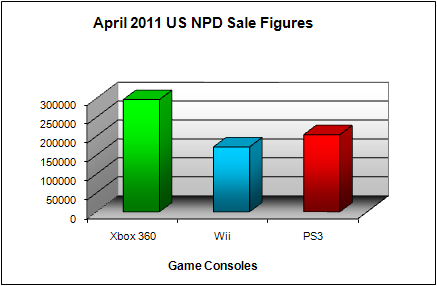
The figures for US sales in April 2011 are below, ranked in order of number of sales (April 2010 figures also shown, including percentage change):

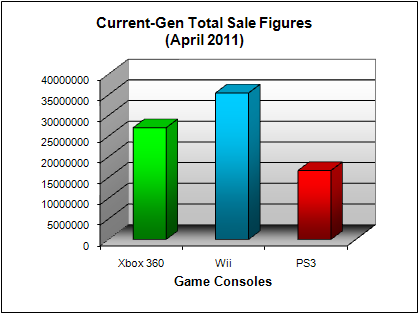
  • Xbox 360: 297,000 (Total: 27 million; April 2010: 185,400 – up 60%)
  • PS3: 204,300 (Total: 16.7 million; April 2010: 180,800 – up 13%)
  • Wii: 172,000  (Total: 35.4 million; April 2010: 277,200 – down 38%)
NPD April 2011 Game Console US Sales Figures

NPD April 2011 Game Console US Sales Figures

NPD Game Console Total US Sales Figures (as of April 2011)

NPD Game Console Total US Sales Figures (as of April 2011)

My prediction from last month was:

I didn’t make a prediction because I didn’t do a NPD analysis last month because of those ******* at Sony (possibly)

Note that some of the figures above are extrapolated, and somewhat based on guestimates. For example, I gave Sony the benefit of the doubt and gave the PS3 350,000 units sold for last month, so I could have an estimate for the total sales figures graph. And this month, Sony only said that the PS3 grew by “nearly” 13% compared to April 2010, and so I again gave them the benefit of the doubt and made the growth exactly 13%. But these figures have always been rounded up and down, and so they’re not that accurate, but accurate enough in terms of providing a general feel of what’s going on, allowing “analysts” like myself to extrapolate the data and make things up, basically.

So the Xbox 360 was the winner again, just like last month (the PS3 numbers weren’t present, but the Xbox 360 and Wii numbers were present, and presented in the gaming section of the April 24 edition of the Weekly News Roundup). In fact, Xbox 360 sales are 60% up compared to the same month last year, which is quite a result. This makes for the best month-to-month-a-year-ago result since last November, when the Xbox 360 recorded 67% growth. It’s hard to explain where the result comes from, but (and this is where the “make things up” thing comes in), with software sales higher than in April 2010 thanks to some a-list releases, and most of them, while being multi-platform, sold better on the Xbox 360 than any other console, and this probably helped hardware sales as well. Microsoft also said that Kinect sales were promising, with Michael Jackson: The Experience the pick of the Kinect new releases for the month.

And as mentioned earlier, the PS3 numbers were good enough for Sony to release figures for this month. This time last year, the Xbox 360 and PS3 were neck and neck (with the Wii way ahead in the lead … more on that later), but the Xbox 360 managed to outsell the PS3 comfortably this month, despite the PS3’s “near” 13% growth figure. Sony would point to this figure showing that the PSN outage for the last ten days of April did not really have a profound effect on sales, but we’ll only know the full scale of the damage in May’s NPD (no doubt if the numbers don’t go well, Sony will withhold the figures again, so we may never find out), when it is revealed that millions of PSN account details and some credit card numbers were leaked. Various sources are already posting information which shows increasing number of PS3 to Xbox 360 console trade-ins at retailers, an increasing number of gamers switching pre-orders from PS3 versions to Xbox 360 versions (for those that presumably owns both consoles), and Sony’s share of game sales dropping from 37% from before the PSN outage, to only 21% with the most recent data.

The Wii was the worst performer out of the home based consoles this month, with sales being 38% down compared to the same period last year, a somewhat consistent decline. Which is probably why the Wii has just received a price cut, and that Nintendo plans to announced the Wii 2 at E3 in less than a month’s time. Nintendo’s other consoles, including the new 3Ds, aren’t doing much better though, with the original DS once again outselling the more expensive 3Ds.

For games, Mortal Kombat was the best seller, followed by Portal 2. Mortal Kombat sold 900,000 copies on the two platforms, the Xbox 360 and PS3, on which it was released, and the Xbox 360 version most likely led the PS3 version in sales (as otherwise Sony would have mentioned that the top selling game of the month did best on their platform). Same with Portal as well, according to GfK-ChartTrack, despite the PS3 version having several exclusives, including a free PC version of the game, plus cross-platform gaming (according to released figures, the Xbox 360 version outsold the PS3 version by about a 1.5-to-1 margin). Michael Jackson The Experience also made the top 10, despite only the PS3 Move and Xbox 360 Kinect SKUs of the game being new in April (the other SKUs were released ages ago). Another game that didn’t make the top 10, but would have if a bundled version had counted as software, as opposed to accessories, sales was SOCOM 4. The “Full Deployment” bundle consisted of a Move controller and the Sharpshooter accessory, and had this bundle been included in the software numbers, SOCOM 4 would have made the top 10. As it is, the bundle was the highest ranking new accessory for the month. Here’s the full software sales chart for April:

  1. Mortal Kombat 2011 (Warner Bros. Interactive, Xbox 360, PS3)
  2. Portal 2 (Electronic Arts, Xbox 360, PS3, PC)
  3. Lego Star Wars III: The Clone Wars (LucasArts, Xbox 360, PS3, Wii, NDS, 3DS, PC)
  4. Call of Duty: Black Ops (Activision Blizzard, Xbox 360, PS3, Wii, NDS,PC)
  5. Tiger Woods PGA Tour 12: The Masters (Electronic Arts, Xbox 360, PS3, Wii)
  6. Crysis 2 (Electronic Arts, Xbox 360, PS3, PC)
  7. Just Dance 2 (Ubisoft, Wii)
  8. Michael Jackson The Experience (Ubisoft, Xbox 360, PS3, Wii, NDS, PSP)
  9. Pokemon White Version (Nintendo, NDS)
  10. NBA 2K11 (Warner Bros. Interactive, Xbox 360, PS3)

I don’t really want to make a prediction next month, because if I’m right, and that the PS3 number falls due to the PSN outage, then Sony won’t release the figures, and we don’t have an NPD. Regardless, I think the Xbox 360 would still be the top selling console, so it’s just a matter of how much the PSN outage hurts the PS3, and how much the Wii price cut helps the Wii. The biggest game new releases for May are L.A. Noire, Brink and LEGO Pirates of the Caribbean.

See you next month, hopefully.

Weekly News Roundup (8 May 2011)

May 8th, 2011

Hello everyone. Wow, what a week, right? It’s one of those moments where you remember exactly where you were when the news broke, which you will turn into a story to bore your children and grandchildren with in the future. And it’s impact, real or just emotional, is still being debated, but for me, it was very much a “WTF” moment. I am of course talking about “May the 4th be with you” Star Wars Blu-ray “event”, that took place, surprisingly, on May the 4th. Why, what else do you think I would talk about on *this* blog?

About that other thing, a mission that countless future Call of Duty games will try to replicate, I do have a few things I want to say about it, mainly about the reactions to it, from all sides, but I think that’s best left for my other blog. Except I don’t have another blog. Oh well.

And sorry about last week’s “May Day” “joke”, it seems it didn’t go down too well with some of our capitalist readers judging by the unusually high amount of  “un-subscribe me, you commie a**hole” requests.

CopyrightSo let’s start with copyright news, my fellow freedom loving capitalists. I ended last week’s copyright section with a story about US pressuring Canadia to do the “right thing” in regards to copyright reform. That was from Wikileaks, and more leaks have shown the same kind of pressure being applied to countries all over the world, as I had suspected.

NZ Map US Flag

The US is trying to write New Zealand's copyright laws

But who would have thought that little New Zealand, you know the country where Frodo comes from, would be the target of serious US pressure. Seriously, New Zealand? What, are the sheep now downloading pirated songs too? (Sorry Kiwis, it had to be done!) In any case, it appears the US was even willing to pay for NZ’s copyright crackdown, a program created and run by private companies with links back to US companies. It wasn’t a lot of money, but it’s the idea that the US government is paying for something like this that doesn’t sit right with me. Is there nothing else the US needs to spend money on, other than helping the billion dollar entertainment companies solve a problem that may not even be solvable (or a problem) – and then do it all the way on the other side of the world? And why the need to exert pressure on other countries? When did copyright reform, reforms that really only help out one industry (and usually at the expense of another),  become a foreign policy thing? Is it right that the US government should be abusing its power and damaging foreign relations in services of the RIAA and MPAA. But it’s not really that surprising though, because we’ve seen what the US is capable and willing to do for the RIAA and MPAA masters, during the ACTA negotiations, and it was our luck that during those negotiations other countries stood firm to US pressure.

Then there was the US offering help to draft NZ’s copyright laws, offering them advice such as “don’t have fair use laws”, the very laws that exists in the US, and other things that would not fly back home, but might just work elsewhere. It’s through these leaks that you get to see how things would be done in the US if the likes of the ACLU and EFF didn’t speak out for us. Might as well just turn the RIAA and MPAA into governmental agencies, with full police *and* judicial powers, and get it over with. Luckily, opposition still exists. Whether it’s just people like you and me ranting into the void of cyberspace, or groups like Anonymous who do things, um, slightly differently. And there are also Internet companies like Mozilla, who don’t like where things are headed and are willing to make a stand. Regular readers will know about the Homeland Security ICE domain seizures, but seizing the domain name is different to seizing the websites, because the websites can still pop up under a different domain name. So to make it easier to find alternative websites for seized domains, a Firefox add-on was released called MafiaaFire Redirector, which automatically takes people to the right website whenever they try to visit a seized domain.

Mozilla Logo

Mozilla is standing firm against ICE pressure to have the MafiaaFire Redirector add-on removed

Obviously, a simple add-on like this makes the US immigration and Customs Enforcement’s (ICE’s) “Operation In Our Sites” completely redundant, as people can and still visit the websites that have had their domains seized, and as long as the add-on is updated, ICE can seize all the domains it wants and people can still visit like nothing has happened. And so after millions of dollars of tax payer money wasted, ICE did the next best thing and went after MafiaaFire Redirector, threatening Mozilla to remove the add-on from the Firefox add-on website. What they didn’t expect was Mozilla to refuse the request. Mozilla business and legal affairs guy Harvey Anderson explained the whole thing on his blog, and basically Mozilla refused to be scared into complying with an ICE demand that didn’t come with any legal authorisation at all, nothing to prove that MafiaaFire Redirector was even illegal. And is MafiaaFire Redirector really illegal? All it does is to redirect website requests from one place to another. In effect, ICE has moved on from not allowing these websites to provide content that may be illegal, it’s also saying that people shouldn’t be allowed to visit these websites. It’s one thing to say that a website offering pirated downloads is breaking the law, but to then jump to the conclusion that even people visiting the website should be considered law breakers, and that anyone making it easier for people to get to these sites is also breaking the law. But this is the base argument for censorship and net filters, because I can argue that I can visit The Pirate Bay all day long without breaking a single law by making the decision not to download anything illegal, but the government argues that they can’t trust people like you and me to make this decision. So they have to make it for us, for our own good, to protect us from ourselves, and to protect companies like Sony and Fox from us.

As for the next story, I still can’t decide what it’s all about. CNET has been sued for providing the download for LimeWire. On the surface, this might seem your usual copyright lawsuit. But the people who are behind the lawsuit are the same people behind FilmOn, which itself was sued for copyright abuse by, which I’m sure it was just a coincidence, the parent company of CNET (amongst others). And so it’s hard to know what to make of this. It could be just a “revenge” lawsuit, to get back at CNET’s parent company CBS (whose parent company is Viacom, who is suing YouTube). Or it could be trying to prove a very good point that, the very companies that are suing left and right for copyright are in fact themselves profiting from copyright abuse, in this case, distributing (and promoting, according to the plaintiffs) LimeWire. Or perhaps Alki David, the man behind the lawsuit (and FilmOn), really does think that hosting P2P software is enough when it comes to copyright abuse, something that I don’t think will be easy to argue in court. It’s the same argument as I made above, because I can use The Pirate Bay or P2P tools, but I can also control my actions so that I don’t break any laws, and so it’s not visiting the website or downloading the software that’s illegal, it’s what you do after.

High Definition

So I said that Blu-ray managed to break a few records recently. It appears I was wrong, but to quote Han Solo, “it’s not my fault”.

What happened was that thanks to Tangled, Tron: Legacy and Harry Potter and the Deathly Hallows: Part 1, it appeared that Blu-ray broke through the 25%, 26% and 27% market share barriers for the first time ever. But then when HMM revised last year’s figures for the week in which Avatar was released, it turns out Avatar was and still is the record breaker, as the 27% barrier was already breached a year ago. And to me, this makes sense. As big as Tron: Legacy and HPDH Pt.1 were, they were  no Avatar. Not at the box office, nor as a must-have Blu-ray title. But whenever the record was broken, it was broken, and Blu-ray is quickly becoming a third of all disc sales, and it might not be too long before it overtakes DVDs as the dominant format.

But even as Blu-ray is breaking all the records (or not), DVDs are struggling. Spending on discs is down a massive 10% for Q1 2011, compared to the same quarter in 2010. Analysts are blaming on the poor box office performance of the released titles, which is fair enough. But while Blu-ray has grown, it only grew 10%. Now box office of new releases is also the reason for the smaller growth figure, but I would have though that a new format like Blu-ray, growth is more cumulative, with older titles continue to sell well way beyond the original release date as people who are new to Blu-ray update their collections (which is why you still see older titles pop in the top 10 from time to time. For example, I just purchased Forrest Gump on Blu-ray recently, and I doubt anybody will be still buying this movie on DVD these days.

I will also to look to do a Blu-ray sales review sometime soon, since the 3rd year anniversary of the first Blu-ray revenue analysis has just been reached.

Star Wars Blu-ray Cover

Don't get me wrong, I'm excited about Star Wars on Blu-ray, but the "May 4th" event was a real let down

Then came May 4th, Star Wars Day as it is known because of the play on words (“May the 4th Be With You” geddit?). And so the clever marketing people, assuming for a second that this is not an oxymoron, at Fox and Lucasfilms decided this would be the perfect even to do something special, especially with the Star Wars Blu-ray box set coming in September. So they set up a mini-site, put a counter on it that counts down to May 4th, and got the fans excited. But when the timer counted down to zero, and the website crashed, and then when it did come back on, what was provided was, and still is, a bit of a mystery. So basically, Fox/Lucasfilms wanted people to artificially create social media buzz (yes, because this always works), to “unlock the website”, whatever that means, and when it was all unlocked, it was nothing more than a promo for the Blu-ray set, which has been on sale at Amazon since January. The only useful bit of information was probably the full feature list of the sets, but you know, that’s still promo material, material used to sell something. And this is not how you use social media. I mean, if they had provided something cool, like a free iPhone/Android app, or an exclusive video of one of the new extra features from the boxset, or something that actually befits Star Wars Day, other than very cynical marketing exercise, then perhaps it would have worked better. Or even if this thing was done before the boxset was announced in January, and put on pre-order back then, then it would have been a real surprise and I think that would have been cool, but the marketing people had to put the set out for sale some nine month before it’s actually available, to squeeze in as many sales as possible. And to top it off, the details of the boxset was put into what has to be the world’s slowest scrolling Flash enabled pop-up, making it a chore just to check out what in the boxset that I had already pre-ordered since January (for everyone’s sanity, the features list has been uploaded here in plain text). In other words, in my opinion, this whole event can be described using a word that is an anagram of Sith. I mean, how can they ruin Star Wars. Oh.

Gaming

Ah, gaming. So the PSN is still down as I type, with internal testing going on right now, so the public re-launch should not be too far away. I’ve lost track of the number of days the PSN has been down, but I’m not a huge PS3 gamer (or gamer of any system these days, due to lack of available time), so perhaps others will know down to the exact hour, minute and second the network has been down for.

The event of the week, the one that has rehabilitated the phrase “kill site”, taking it back from serial killers and making it a shoe-in for a level name in the next CoD game, has sort of spared Sony a lot of the focus on the PSN disaster. So much that even Stephen Colbert made a mention of the PSN data theft on his show, in the segment where he explains why this is the best time ever to get bad news out, because nobody is paying any attention. Actually, the theft Cobert mentioned was a new one, where an additional 25 million Sony Online Entertainment accounts had been stolen, including thousands of credit card numbers. It seems Sony has finally decided that a security audit would be a good thing to do once in a while, and they’re uncovering all sorts of stuff. Actually, the OBL stuff might actually have actually hurt Sony this week, because I don’t know about you, but the first thing I did after hearing the news (and after I’ve completed all of the day’s work, of course), was to fire up Modern Warfare 2 and replay the Loose Ends mission (the Makarov takedown mission). If I was into online gaming, which I’m not, then I would have gone online to try and recreate what the Navy Seals did in real life, and I bet a lot of other people tried to do the same, but wait, the PSN was down. Oh well.

And so would some have jumped ship over to the Xbox 360? Perhaps, and if enough people do it, then this could really hurt Sony in the long run. Online gaming is all about swarming to the crowd, about getting on the system that your friends are already on, and if just a few of them switch to the Xbox Live, then others may have to follow. And especially with the perception that Xbox Live is already a superior service, this generation of console gaming may just be won, or lost, on online multiplayer. Along with analysts who feel the same, that the PS3, and all Sony hardware, will suffer as a result of this breach of trust, the news also broke that hackers have managed to re-enable OtherOS support for the PS3 via hacked firmware. So the total effect of Sony removing OtherOS, for security or financial reasons, was that the PS3 got hacked, PSN got hacked, data of 100 million accounts get stolen and OtherOS is back anyway. Oh well.

I should probably say something about this whole f***ed up saga, but I think I shall leave it until next week, since I’m already over my word limit, plus let’s see what goodies Sony gives us as compensation before we begin the moaning process.

In other gaming news, the Wii saw an official price drop, and for the first time ever, Wii Sports is no longer part of the console bundle. Nintendo Prez also says he’s not worried about Kinect, because it doesn’t have any hit games and stuff. I’d be interested to see what the Wii 2 can do before expressing my opinion on Kinect vs Wii.

Alright, that’s that for this week. Have a good one.


About Digital Digest | Help | Privacy | Submissions | Sitemap

© Copyright 1999-2012 Digital Digest. Duplication of links or content is strictly prohibited.