Game Consoles – May 2011 NPD Sales Figure Analysis

June 15th, 2011

Thank the stars that through relatively good sales results, leaks and blind luck, that we have fairly accurate NPD sales stats for all three home consoles for the month of May 2011, and so our monthly NPD analysis continues for another month. With the PSN outage lasting for pretty much all of May (if you include the PSN Store outage), this month’s PS3 sales stats are particularly interesting to see if the outage has affected sales. E3’s major announcements have all been made, and so, it’s been a busy few weeks for gaming. For those that are new to this, this analysis looks at US video games sales figures compiled by NPD, unreleased by NPD due to pressure from the gaming companies, but then leaked by various sources, including gaming companies, if/when it suits them.

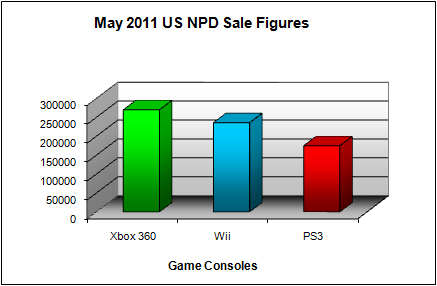
The figures for US sales in May 2011 are below, ranked in order of number of sales (May 2010 figures also shown, including percentage change):

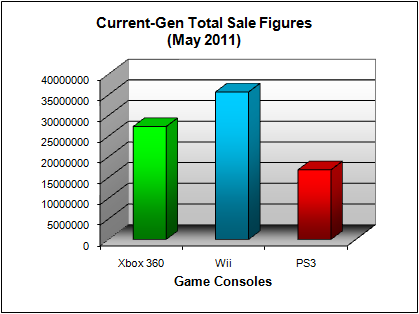
  • Xbox 360: 270,000 (Total: 27.3 million; May 2010: 194,600 – up 39%)
  • Wii: 236,000  (Total: 35.7 million; May 2010: 334,900 – down 30%)
  • PS3: 175,000 (Total: 16.9 million; May 2010: 154,500 – up 13%)
NPD May 2011 Game Console US Sales Figures

NPD May 2011 Game Console US Sales Figures

NPD Game Console Total US Sales Figures (as of May 2011)

NPD Game Console Total US Sales Figures (as of May 2011)

My prediction from last month was:

I don’t really want to make a prediction next month, because if I’m right, and that the PS3 number falls due to the PSN outage, then Sony won’t release the figures, and we don’t have an NPD. Regardless, I think the Xbox 360 would still be the top selling console, so it’s just a matter of how much the PSN outage hurts the PS3, and how much the Wii price cut helps the Wii. The biggest game new releases for May are L.A. Noire, Brink and LEGO Pirates of the Caribbean.

I should have stuck to my guns and not made any predictions, because it turns out that PS3 sales held and even rose compared to last month, and also compared to a year ago, and so Sony had no qualms about releasing the figures. It was Nintendo, strangely, that was the holdout until good old reliable Michael Pachter came to the rescue again and released the Wii numbers in an investor report. The Wii price cut did help the Wii to record a sales rise compared to April, thanks to the price drop. Ironically, it was the Xbox 360 that was the only home based console to record a drop in sales compared to April, but it was also the console that recorded by far the highest year-on-year growth – go figure! As for games, I did make the right prediction here, and even made it in the right order in terms of the top 3 sellers for May.

Let’s start with the PS3 numbers, which was the most anticipated set. The PS3, while still coming last in terms of sales, did record a year-on-year growth of 13%, as well as a minor increase in sales compared to April. This seems to suggest the PSN outage did not affect sales all that much. Sony also stated that this was the 4th month in a row that PS3 sales saw double digit growth, which is impressive considering the shenanigans of the last two month with the PSN. Apart from touting exclusives, Sony spent much of the time showing off their new portable, PlayStation Vita, as well as a PS3 3D TV that allows two player game play without a split screen, turning the 3D technology and glasses for 2D use.

Xbox 360 sales did fall compared to April, but compared to May 2010, hardware sales rose 39%, the highest out of all the consoles. The reason for the monthly fall may be due to April’s better than average result (which was 60% higher than April 2010, double the usual average). Certainly, looking at these numbers, the Xbox 360 looks the most healthy. For E3, Kinect was the focus, as it has been the catalyst behind the recent good results. Microsoft is promising all future first party titles will feature some Kinect features, which will be interesting. They also launched Kinect Labs, which is the Kinect app store. Kinect is keeping the Xbox 360 on top, and so it makes sense for Microsoft to concentrate on this area, especially since with the announcement of Wii U, we know that it is the sole console doing the “no controllers” thing.

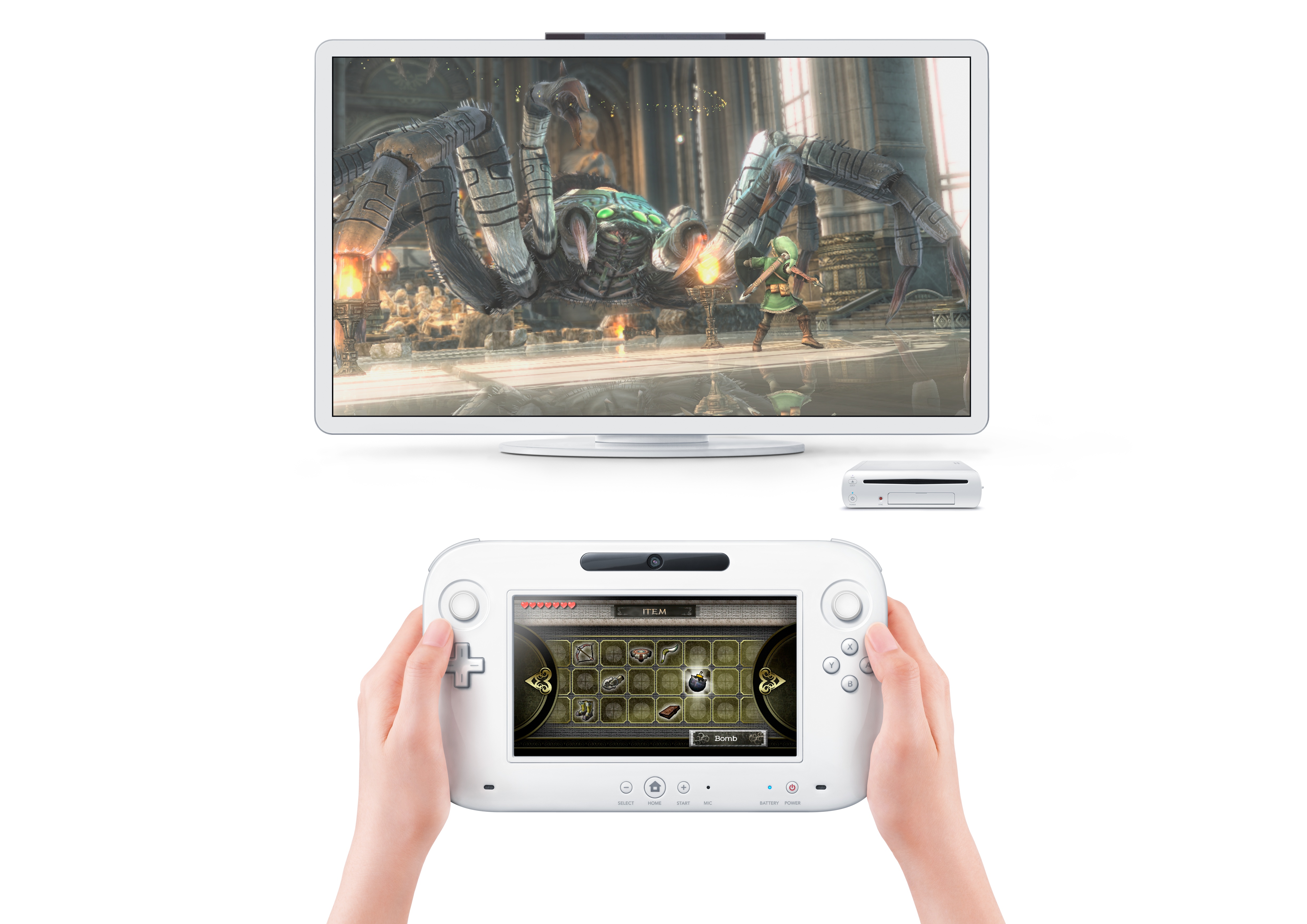
That leaves the Wii, which could become the most sickly of all the consoles, despite outselling the PS3. The reason I say this is that given the trend of decline, around 30% compared to a year ago, by this time next year, it will be the worst selling home console. The trend has been pretty consistent, and it doesn’t look like it’s slowing at all. Which probably explains why Nintendo was the only company to unveiled a new home based console at E3, the Wii U. With no firm release date other than “sometime in 2012”, the Wii will have to suffer for a bit longer, but by the time that the PS3 does finally overtake the console the Wii U surely won’t be far away from release, which is probably what Nintendo is counting on. Certainly, it makes sense that Nintendo would be the first company out of the three to launch a new console, despite not being the first company to release their current generation consoles (Microsoft’s Xbox 360 was launched a year earlier). The Wii hardware is the oldest out of the three consoles, and it needed a refresh most urgently. The Wii U will feature hardware that’s 50% more powerful than the PS3, which sounds really impressive until you realise that the PS3 hardware is about 6 years old already (developed in 2005, launched in 2006), so 50% may not even be enough, because the next Microsoft or Sony console could again leave the Wii trailing behind in the graphics stakes. But graphics are not that important any more, considering the 6 year old PS3 still looks fantastic even on a 1080p screen. As for the Wii U’s innovative control system, with the controller that also doubles as a second screen, it certainly is different. It could be the difference that makes it a hit, or it could be just too complicated for the casual gaming market that’s used to the Wii’s simplicity. With that said, what Nintendo is promising could already be possible on the PS3 and Xbox 360 if you listen closely to recent announcement. Back in February, Microsoft announced that future Windows Phones (and tablets, I’m guessing), would come with Kinect interactivity, and with Sony launching Vita, it could also link to the PS3 in the same way the Wii U controller links to on screen action. Sure, it wouldn’t be a nice and polished package as the Wii U, but if either company can demo something similar on existing hardware before the Wii U launches, then that will steal a lot of Nintendo’s thunder. For me though, the Wii U is as much about innovation, as it is about getting back in favor with the hardcore gaming crowd.

Onto games. As predicted, the month’s top 3 sellers were L.A. Noire, Brink and Lego Pirates of the Caribbean, in this order. Nothing else on the list was of any surprise, so it’s probably not worth the trouble to discuss game sales any further, other than to add that combined, games sales are down 19% compared to last year, and that only the Xbox 360 recorded an increase in software unit sales (but that increase was only 1%, so it’s hardly a great result). Fewer games were released in May though, and genre specific releases that were not as good as what was present last year. The steady decline in physical disc sales may be attributed to digital sales (especially on the PC, which is included in the NPD figures), and probably also due to increased competition from smartphone/tablet gaming – something that Nintendo is hoping to address via Wii U (Sony via Android gaming phones, and Microsoft via Windows Phone Xbox 360 connectivity). Here’s the full software sales chart for May:

  1. L.A Noire (Take 2, Xbox 360, PS3)
  2. Brink (Bethesda, Xbox 360, PS3, PC)
  3. Lego Pirates of the Caribbean (Disney, Wii, Xbox 360, NDS, PS3, 3DS, PSP, PC)
  4. Portal 2 (Electronic Arts, Xbox 360, PS3, PC)
  5. Mortal Kombat 2011 (Warner Bros. Interactive, PS3, Xbox 360)
  6. Call of Duty: Black Ops (Activision Blizzard, Xbox 360, PS3, Wii, NDS,PC)
  7. Zumba Fitness: Join the Party (Majesco, Wii, Xbox 360, PS3)
  8. NBA 2K11 (Take 2, Xbox 360, PS3, Wii, PS2, PSP, PC)
  9. Just Dance 2 (Ubisoft, Wii)
  10. Lego Star Wars III: The Clone Wars (LucasArts, Wii, NDS, Xbox 360, PS3, 3DS, PSP, PC)

Prediction time? No big changes, so the same hardware ordering as this month. The new top selling games will be Infamous 2 and Duke Nukem Forever (on a side note, ‘Forever’ really is such an apt name for the game considering the development time), but the overall top sellers will be some of the same titles as in May.

See you next month.

Weekly News Roundup (12 June 2011)

June 12th, 2011

Quality over quantity, is something I firmly believe in. Which brings up to this week’s WNR, which is pretty light in terms of quantity of news items, but high in terms of quality of the mindless ranting that I can produce from these discussion worthy stories. So let’s not waste precious words on the intro, and get started with the roundup/rant, because this WNR is a fairly long one.

CopyrightStarting with copyright news, there’s one story that I really want to talk about, you know, the one that may just change the face of the music business, but for now, let’s quickly get through the other stuff.

United Nations

The UN thinks that 'three-strikes' is a human rights violation

You know it’s bad when the UN has to write a report just to call you jerks, but that’s exactly the kind of face slap France and the UK faced this week, when an UN report found that three-strikes anti-piracy legislation is a human rights violation. UN Special Rapporteur Frank La Rue found that cutting off people’s Internet connections, for piracy or any other reason, is tantamount to violating their rights of expression, because governments should not have the right to limit a specific kind of communication. The UN believes that nobody should be banned from using a communication medium, especially by the government, and certainly not for something as trivial such allegations (and they’re only allegations) of copyright infringement. While the Internet is very different, the principle is the same, in that the government should not be able to ban you from using the telephone, reading books and newspapers, listening to the radio or sending letters, as these would all be rights violations (note that whether you can afford to use any of these services, that’s a totally different matter – the point is that if you had the resources to do so, you should be able to do so, without the government interfering). The report made special mention of France’s three-strike laws, and the UK’s Digital Economy Act, so looks like France and the UK will join the list of human rights violators unless they change tract. It’s also a warning to any other country thinking of doing the same (I’m looking at you, Australia).

And it’s not just the UN that is attacking the bias in copyright legislation and legal actions, the legal establishment is taking action as well. The UK Solicitors Regulation Authority (SRA) has handed down its ruling against two former employees of Davenport Lyons who are considered pioneers of the mass copyright lawsuit schemes – and it’s guilty, on all six counts, of professional misconduct. David Gore and Brian Miller came up with the clever idea to extract pre-trial settlement fees by threatening suspected copyright infringers with massive penalties. But following many complaints, from any that said they were completely innocent, the SRA stepped in and a thorough investigation found the pair guilty of a lot of things. If targeting people based on flimsy evidence wasn’t enough (the SRA felt that IP address alone isn’t sufficient, in terms of proving copyright infringement – an important ruling), then targeting knowingly innocent people was a step too far. The pair could now face disbarment. The SRA’s decision is welcomed, but really, everyone knows that, at best, these types of practices are nothing but legal blackmail. Law firms should not be able to ask for pre-trial settlement fees if they have no intention to go to trial, period.

And also bad news for the US Copyright Group in their massive ‘The Expendables’ lawsuit, which now consists of 23,000 named and unnamed defendants. The judge in the case, having earlier allowed the USCG to issue subpoenas to get more information about the defendants, is reconsidering, and is beginning to see the whole thing as “inappropriate and a waste of scarce judicial resources”. And that’s the sensible conclusion that all judges should come to, when it’s plain as daylight that firms like the USCG are out to make money, with almost zero intentions of actually going court. Please refer to the last sentence of the previous paragraph.

iTunes Match

iTunes Match will either make buying music obsolete, or it will do absolutely nothing, depending on who you talk to

And of course, we come to the main course. Steve Jobs’ “one more thing” at the Apple Developer Conference has the whole Internet both excited and confused, with some really angry as well. The whole iCloud thing is fairly standard, but iTunes Match promises to be something else, or nothing at all, depending on who you believe. The problem is that we just don’t have enough information, but based on what we’ve heard so far, anyone could be right. So what is iTunes Match? Well, basically, it’s an addition to iTunes and iCloud that scans your hard-drive for songs, and regardless of whether these were purchased from iTunes, or elsewhere, or even pirated, iTunes Match will try to match the song to one of the 18 million songs in iTunes, and then from that point onwards, you will be able to download the 256 Kbps iTunes legal version of the same song for free on all your iDevices (and if the song doesn’t exist, you can upload your local copy to iCloud). That’s right, even if you have some crappy 128 Kbps MP3 of a song you copied from a friend who downloaded from LimeWire, you’ll now get a clean, high quality (relatively speaking) version of the song from iTunes. After you pay the $25 per year fee, of course. And best of all, all the major labels, all four of them, seems to be fully supportive of Apple’s plans (no doubt because they get 70% of the $25 annual fee).

As so the Internet nearly exploded, with some calling this a piracy amnesty, the term “music laundering” was mentioned, while others feel that it’s $25 to access music you already had, which is totally pointless. The truth is probably somewhere amongst the mix.

Before we get to the pros and cons, let’s just go through how iTunes Match will work, or at least how I think it will work based on the current information. So you start iTunes Match, and it scans the songs on your hard-drive. Now, I doubt it will be as simple as an ID3 tag match, because ID3 tags are not exactly accurate. What I think will happen is an actual audio match, like how the SoundHound app works, which I think should be the most accurate way of matching tracks. And if the song does exist on iTunes, the song is “uploaded” to your iCloud account (and it does not count as quota either), or rather, Apple simply allows you permission to download the song using your iCloud account, and you now get to download (not stream) the same song on all your iDevices, as if you had manually uploaded the 256 Kbps iTunes downloaded AAC to your iCloud account.

So now you know how it works, let’s get some of the misconceptions out of the way. Some are saying this is a Trojan Horse, that by scanning your files, Apple will send all the info to the RIAA so they can sue the crap out of you. This is not going to happen, simply because there does not yet exist a tool that can accurately tell the difference between a DRM-free legal track, a track you ripped from your legally purchased CD, and one that you downloaded from the Internet illegally. First of all, the illegally downloaded track may very well be a DRM-free track that somebody else uploaded, minus some tracking tags perhaps. Or it could be just a CD rip that someone had uploaded, and there’s no way to tell if it’s your CD rip, or someone else’s. Another popular one is that iTunes Match will delete all the matched songs from your hard-drive, thus destroying your precious pirated music collection. Ridiculous really, because what’s to stop you making a backup of the songs before you “iTunes match” it? And why would Apple bother when, immediately after deleting all your shoddy pirated MP3s, they immediately give you pristine HQ AAC copies to download, copies that are also DRM free. As for making your iTunes Match downloaded AACs stop working once you stop paying the $25, not going to happen either, because the tracks are DRM free, and because they’re downloads, not streaming, you can keep downloaded copies forever, on multiple devices, after you stop paying the $25.

So it iTunes Match really a godsend for pirated music collectors, does iTunes Match really give you the iTunes download version of songs even if your original was a pirated track? Yes it does, absolutely. And is this a piracy amnesty or music laundering? It depends.

It depends on information that’s just not available yet, and the differences are very subtle between the “Yes” answer, and the “No” answer, and it’s more of a legal and moral position, than anything else. What do I mean? Well, let’s take someone who decides that iTunes Match is a piracy amnesty, music laundering service, so they go and download 300 pirated songs every month. First of all, the act of downloading pirated songs is still illegal, and iTunes Match doesn’t even come into play here, so you may still get caught and get fined. But let’s assume you’ve found a way to download without being detected, okay, you run iTunes Match on those 300 songs, and voila, record label approved iTunes downloads on your iPod.
iTunes 10

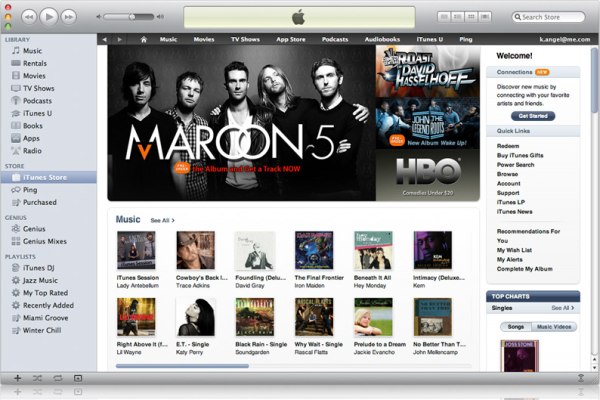
Buying a song from iTunes and downloading a copy from iTunes Match may be two very different transactions, with different legal rights

This is where it gets tricky. See, if the iTunes Match downloads come with the same license as a regular purchased iTunes song, then yes, you’ve just turned pirated songs without licenses into iTunes downloads with licenses, and laundering is complete. However, if iTunes Match merely provide a license to download the matched song, with no proof of purchase included, then no laundering has been done. You still don’t have a proof of purchase for your pirated songs, and you never will. Not that anyone really cares about proof of purchase or anything.

As for the argument that iTunes Match helps people to pirate songs, well, that doesn’t really hold true either, as people need to have pirated before they use iTunes Match. Similarly for the argument that iTunes Match allows people to enjoy more songs than what could otherwise be had for $25, iTunes Match can only allow you to download copies of songs you already have, and if you already have those songs (pirated or legal), then you could already enjoy those songs, so iTunes Match doesn’t really “add” to the enjoyment in any way.

And as for whether iTunes Match will encourage people to buy less, it depends on why people buy songs the first place. Those morally bound to buy them will still do so, same as those who buy music to support the artists (but you’d be better off going to see their concert, as they get more of your money that way). And basically, anyone already buying legal music probably won’t be swayed either way by iTunes Match.

For those that do pirate a lot, iTunes Match may make you feel a little bit better about your activities, with no real legal protection (if, as I assume, you don’t get a license/proof of purchase with your iTunes Matched downloads), and the convenience of having everything done through iTunes (if you think that is a convenience), and all for the low low price of $25 per year. That’s (70% of) $25 more than what the record labels would have gotten before, so for them, it’s a bonus. The only real problem could be that, because of existing artist licensing deals, they may miss out on any share of the $25, so if you want to support the artists, this is not the worst way to do so.

So there you have it, Apple iTunes Match explained. Clear as mud.

High Definition

In HD and 3D news, nothing much again, but NPD has a new research paper out that says Blu-ray penetration, after the first five years of the format, has reached 15%. If this sounds a little bit underwhelming, perhaps it is, because DVDs at the same point had a much higher penetration level.

But Blu-ray is not DVD, and Blu-ray has to work a lot harder for every percent, since it’s a much more subtle upgrade to DVD than DVD was for VHS. It’s like going from horse cart to a car, and then going from a 1990’s car to a brand new model. What I found interesting in the report was that half of the people wanting to buy a Blu-ray player in the next six month wanted one because it could deliver digital content, because all Blu-ray players can do it now. So in a way, Blu-ray is helping optical disc formats stay relevant in the Internet age, and at the same time, it’s helping its own demise by helping to improve the penetration of digital delivery hardware. It’s very much a bridging format, between the optical and digital, but just because there’s a bridge, it doesn’t mean everyone will cross over it, and I still firmly support disc formats because, call me old fashioned, I still like to have something to hold in my hand and also something to display on non-virtual bookshelves.

Gaming

This is a big week for gaming, thanks to E3, but as this is not really a gaming website/blog, I’m going to skip most of E3’s announcement, because I just don’t feel like making a big deal out of the next Batman game or whatever.

But that doesn’t mean there aren’t some announcements that are too big to ignore. Of course, the big one being the announcement by Nintendo of their new console, but I shall ignore this for a moment while I talk about the other game company’s announcements.

Microsoft’s E3 was all about Kinect, and they showed demos of the Star Wars Kinect game, which looks more like an on-rails game, which is kind of disappointing, but probably not unexpected. Microsoft surprised us last year with the Xbox 360 “Slim”, but this year’s “surprise” was less significant, something about Live TV that’s not going to make its way to Australia (although YouTube integration should be helpful, but it’s  hardly unique). Microsoft did unveil Kinect Labs, which is like an app market for Kinect, and it now includes a few free “gadgets”, including one that tries to make a life-like avatar, or one that turns inanimate objects into something that comes alive on the screen (it’s not as good as it sounds). With the Kinect SDK coming soon, launching Kinect Labs is a solid step. As for full Kinect games, Microsoft promises more on the way, including Mass Effect 3, which will allow you to speak the lines of Commander Sheppard as a way to choose dialogue options (of course, you could just select and click – and since the character itself always elaborates on the chosen dialogue, speaking out the choice may feel a bit strange, like saying everything twice). As for why Kinect is needed for simple voice recognition, when a headset is all that’s required, BioWare says it’s all to do with the Kinect system, where developers don’t need to do much when it comes to doing voice recognition as it’s all handled by the Kinect hardware/software combo. Microsoft even promised that all first party games will come with some Kinect interaction, which is something that I felt was the right thing to do back when Microsoft were saying they would only make games that could be played entirely with Kinect and nothing else. With EA announcing FIFA will support Kinect, I’m looking forward to taking and saving penalties by kicking and diving around the living room.

PlayStation TV

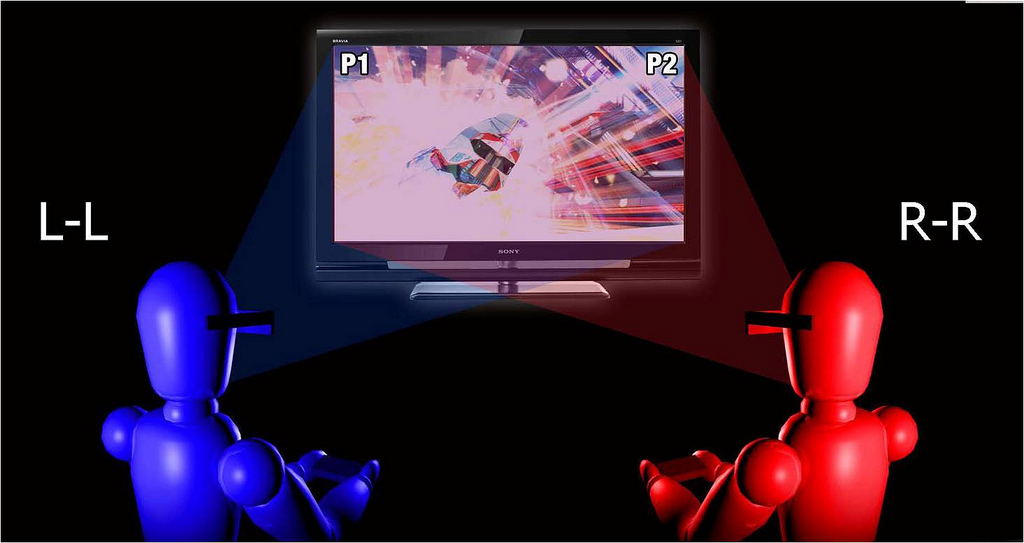
PlayStation TV can let two players play on the same screen without a split screen, using special glasses based on 3D technology

For Sony, other than apologising to everyone over and over again, E3 was about the Next Generation Portable, now called PlayStation Vita (vita means “life” in Latin and Italian, of course). Sony have already announced a lot about NGP/Vita, so there were no big surprises. What I found interesting was the PS3 branded TV. What was interesting is that it allows two players to play on the same TV *without* a split screen, and that’s totally possible using the 3D TV in a 2D way. 3D works by displaying two images at the same time (well, not really, but that’s what our eyes perceive when looking at the picture without the glasses), with the glasses separating the image into ones for the left and right eyes. The same principle can be used to display two images, one for player one, and one for player 2, and if the glasses instead of separating the image for each eye, simply separated the image for different players, then you have two player gaming without split screen. Of course, without glasses, it will look like a right mess. Theoretically, with the right glasses, almost any 3D TV can be made to do the same. Whether it’s better to wear glasses and have a full screen picture, or to not wear glasses and have a split screen, that’s an entirely different debate.

You can read more about the Microsoft and Sony announcements in this news post.

Wii U

The Wii U promises to do a lot ... maybe too much!

And then there’s Nintendo’s announcement. The Wii U will be the Wii’s formal successor. I’m not going to get into the debate about the name, because everyone though the Wii was stupid, and it is, but it didn’t really matter. What does matter is the humongous thing that Nintendo calls a controller, and it’s certainly been a point of debate. By having a 6.2″ touch-screen on a controller, and with the controller’s screen able to interact with the main screen, or even operate independently, it does add to the versatility. For example, you can play simple board games on the controller without even turning on the TV, or use the controller to display additional gaming information à la the dual DS screens, and with Nintendo promising minimal lag between the main screen and the controller screen, it can even be used as part of the game, for example using the controller’s screen as a binocular to zoom in on the action, where the main screen still stays the same (making sniper game play a bit easier).

But as Nintendo later conceded, perhaps too much was made of the controller itself, and not enough on the console. The Wii U console will be more powerful than the Xbox 360 and PS3, considering it is using hardware that’s years newer than what’s in those other consoles, and so with the gaming line-up, it seems Nintendo is firmly moving back into the ‘hardcore’ gaming sector, after straying perhaps a bit too far with the original Wii. That should help Nintendo, because the Wii U is still very “family friendly”, and even if you don’t like the new controller, all old Wii accessories will still be supported, as well as full backwards compatibility for Wii games.

And this could also be perhaps Nintendo’s biggest problem. The Wii was simple, clearly focused at one sector of gamers, but the Wii U tries to do much more, and it is this versatility and ambition that could ultimate sink it as a console. Everyone can imagine what you can do with a Wii-mote, and it was perfectly demonstrated by just one play of Wii Sports, but it’s much harder to imagine what you could do with the Wii U controller. Plus, with Nintendo intent on making the Wii U a hardcore gamer’s console too, as well as a console for the smartphone/tablet gaming generation, and maybe even taking on the portable consoles market that’s already dominated by their own DS, it may be trying to do too much with the same console. Or it could work out great, who knows.

Alright, that’s more than enough writing for this week, I just hope it’s not a long and laborious read. Well, not more than usual anyway. See you next week.

Weekly News Roundup (5 June 2011)

June 5th, 2011
ASUS P8Z68-V PRO

If this picture of a motherboard turns you on, then my computer buying guide is for you

Are you planning to buy a new PC soon? And are you willing to spend more money on a PC than what’s considered sane today? Then read the latest edition of my If I Were To Buy A New Computer Today feature, dubbed the Sandy Bridge edition, as this is the CPU that’s all the rage these days. You may laugh and point at any guide that recommends paying more than $1800 for a new PC, in these days of tablets and netbooks and whatnot, but hey, some of us still play PC games. And do CPU intensive things such as video conversion. I have to say, the most exciting thing about Sandy Bridge for me, apart from the lower starting price points for such a new part, is the SSD caching feature introduced by the new Z68 chipset. Regular reader(s) will be aware that I’ve been bigging up SSDs since 2009, but the stupid things refuse to drop down in price enough to prove that I was right. But with SSD caching, where you use a much smaller (and hence, cheaper) SSD drive as a cache for your TB sized cheap HDDs, can give you some of the benefits of SSDs without most of the negatives (low capacity, high price, etc…). For this alone, Sandy Bridge is worth upgrading too, even with the added hardware DRM (or not).

News wise, it’s not been a huge week, hence why I felt the need to pad the week with the computer buying feature. So let’s get started.

CopyrightLet’s start with the copyright news, which surprisingly, isn’t too forthcoming this week. In fact, there is only one story in the “copyright gone insane” category this week, which, you have to say, is an improvement.

Unfortunately, this one is right up there in the insane rankings, as the US senate debate plans to jail people up to 5 years for sharing YouTube videos. This isn’t as far fetched as you might think, because this is one of those “road to hell is paved with …” things, and if you break down the issues, all of them seem to make sense. First of all, you have the disharmony between civil and criminal copyright laws, in which there are civil penalties for performances, but no criminal penalties. So let’s “harmonize” the two sections of the copyright act. Fine. How about classifying video streaming as a kind of performance? Well, it appears the courts have been doing this for a while now, so I guess it’s fine too. And what about the differences between hosting a video, linking to it and embedding it on your website? Well, ICE has seized several domain names recently for websites that only linked or embedded content, uploaded to websites such as Megavideo, and ICE got the seizure orders by going through the court (albeit in a very one sided argument), so I guess that’s not a huge problem either. So to sum up, video streaming is a performance, and hosting, linking and embedding is really the same thing, when the court is concerned these days. And an unauthorized performance should carry criminal sanctions of up to 5 years in jail, much like like every other kind of copyright abuse. Add them all up: new senate bill that could lead to 5 years in jail for embedding YouTube clips. Now, if Senators are more educated when it comes to technology, particularly the issue of Internet content distribution, and/or if they’re not being “pressured” by lobbyist, then maybe, you would have a bill that doesn’t threaten to send half of the entire US population to jail (who hasn’t embedded a video, and who hasn’t done it with a video that used copyrighted clips, even if only for a small part of the video or soundtrack). For example, you could ensure that criminal sanctions would only apply in the case of massive infringement, such as linking/embedding thousands of videos, and for profit. Instead, we have a bill that describes a digital “performance” as 10 viewings in any 180 day period. Maybe in the real world, if I had a show and 10 people turned up, that may count as a performance. In the digital world, 10 views is hardly viral stuff, especially if it took 180 days to get this many views. But what can you do? Well, you can go after the people that upload the infringing content and only those people, but that would be too hard, so let’s just arrest everybody.

yongzh's N64oid Emulator App

The removal of yongzh's emulator apps from the official Android Market by Google may not be what it looks like

There are two more copyright related stories, but they’re not as crazy, and so as a rule, are not as interesting. First up, we have Google possibly going after emulator apps on the Android Market, with apps from two developers being removed in the past month alone. Emulators have been proven time and time again to be legal in courts all over the world, so Google going after them, especially proclaiming Android as the “open” platform, seems to be a bit hypocritical. On the other hand, we don’t know why the removed apps were removed, while others are still happily being offered, so perhaps there are other reasons for the removal. Certainly, with some of the removed apps by developer Yong Zhang, there are licensing issues at play (open source related stuff), so who knows. If by this time next month, more emulators have been removed, then perhaps it signifies a trend. Right now, it just means you’ll have to get these apps from one of the billions of other Android markets.

The other Android related story has a bit more substance to it. This involves the newly released YouTube video rental service on the mobile platform, and how you can’t use it on rooted phones. It’s definitely a DRM related thing, and I’m sure the content holders providing content for the service will have asked for  these draconian restrictions. But it’s the typical backwards thinking that plagues the digital entertainment industry, where they’re so afraid of their precious streams being stolen, that they end up barring people from being able to pay for content, legally. Wouldn’t it be better to ensure more people had access to your legal service, as opposed to less? And it’s not as if ripping movies from DRM protected YouTube video streams is the most popular or easiest way to illegally obtain or share movies online, so they could have no DRM, and nobody would probably even bother, when they can just rip a DVD or Blu-ray. It’s like HDCP protection in HDMI, which was initially such a big deal and caused untold compatibility problems and silliness, because content owners were afraid people would record/rip digital content straight from the cable, if it went unprotected. Then HDCP got cracked, as expected, and do we see a huge surge in HDMI-rips? No. Do you know why I know? Because I just made up the term “HDMI-rips”. In fact, if you search for “HDMI rips” on Google or Bing, all you end up with are articles about HDMI cable rip offs, which is a discussion for another day.

Also, if I somehow manage to get the YouTube rental app running on my rooted phone, does that stream them become unauthorized, and jail time?

High Definition

In HD and 3D news, following last week’s story about the 3D cinema craze coming to an end, box office results for the US Memorial Day Weekend seems to suggest that it really is happening.

The long weekend capped off a set of very disappointing results, but only for 3D showings. In fact, the best performing movie wasn’t even available in 3D, and perhaps it was only successful because of the lack of the 3D distraction. Certainly the theory mooted last week was that for every extra dollar that 3D presentations earn, there’s more money being lost through increased 3D production costs, marketing costs, and lost sales at the popcorn stand. But it’s the usual Hollywood thing, 3D for 3D’s sake, whereas they’d better off having movies like Avatar that’s been written, directed and shot for 3D, even if it means only a couple of such movies every once in a while. But no, everything has to be in 3D, and the hype dies out because of all the lame 3D movies.

Gaming

And finally in gaming, after a nausea inducing session of Wipeout HD on my 3DTV yesterday, I can confirm the PSN is back and the “Welcome Back” goodies are now available to download as well (I still haven’t made my decision on which other free game I will download).

PSN Welcome Back Pack

PSN is back online, and the welcome back pack is available to download

Those that want to download the free games need to be patient though, because the claim and download process for me was riddled with error messages, that retrying time and time again seem so to fix. Some will and are still complaining about the free games being offered, and how old most of them are, but as someone who didn’t really used the PSN that much in the past before, I’m not complaining too much.

So just as things seems to be getting back to normal for Sony, guess what? They get hacked again. It’s not the PSN again, so no need to ring your nearest game store and ask what kind of console exchange offer they have on at the moment, but it’s certainly not what Sony wanted so close to the PSN hack. SonyPictures.com was hacked by the same group that recently hacked PBS, with account details accessed and taken, as well as other stuff. According to the hacking group, LulzSec, they had access up to one million Sony Pictures account passwords, all of which were stored as plain text in the database. Read any “noob guide to user databases” on the Interweb, and the first lesson is always about not storing passwords as plain text, so how Sony could have got it so wrong, I have no idea. I guess because no financial information was being stored, Sony thought nobody would bother to hack the database, and the rest is history. It really paints a picture of a company that doesn’t seem to have any security policy at all, or at least it’s not enforced, and really, would you trust such a company with your financial details? And this is not a rhetorical question either, because you can answer this very question in a new poll I just put up.

Also, the hackers detailed how they got into the Sony system, and it wasn’t some kind of super hack that can only be pulled off by a hacker that would make Neo from the Matrix look like a script kiddie, or a sophisticated social engineering “my voice is my password” style operation involving a blind guy that has great hearing. No, it was just your plain old SQL injection, which for the uninitiated, means injecting SQL commands via poorly written web scripts that don’t check for inputs. To be fair, it is the most common type of web programming security SNAFU, but you would have thought that after the PSN hack, Sony would have performed an extensive security audit on all their web assets, knowing now that they’re a major target for hackers (but they always were, even if they didn’t want to believe it). Sony has since confirmed the attack, and have contacted the FBI.

Alright, that’s it for the week. Thanks for reading, linking, tweeting, facebooking or whatever it is that you young folk do these days. Have a good one.

If I were to buy a new computer today (June 2011) – Sandy Bridge Edition

June 4th, 2011
Intel Second Generation Core i5

It's now all about Sandy Bridge, Intel's second generation Core processors

It’s been nearly a year since my last “If I were to buy a new computer …” feature, and whereas the last one was about 3D Blu-ray, this one is all about Sandy Bridge, Intel’s second generation Core processor. The original Sandy Bridge launch was scuppered due to a manufacturing fault, and it’s only now that these new Intel CPUs are being launched proper. While normally, it’s never a good time to buy a new computer just after a new CPU/socket launch, due to the premium pricing, Sandy Bridge changes the equation because, for once, Intel is launching a new range of CPUs that not only undercuts AMD’s offerings, but also its own CPUs, making the SB CPUs the best in terms of price/performance, despite the “newness” of the part.

Just like the last edition of this feature, I will provide three different builds, one a general purpose machine, another a Mini ITX build for home theater use, and what I called the “Lottery Winner’s Special” the last time, basically a system if money (as well as power consumption/noise) is not an issue.

Let’s get started.


General Purpose System / Lottery Winner’s Special

Our general purpose system is slightly higher spec’d than your average PC, because with this PC, we want to pretty much do everything on it. This includes playing the latest games, playing and burning Blu-ray discs, video editing and conversion, and also a system that is somewhat future proof.

So let’s look at what I think are the key features that you need to be looking for:

* CPU: We’re choosing to go with a Sandy Bridge CPU. But which one? The sweet spot at the moment, in terms of pricing and performance, appears to the Core i5-2500K. The ‘K’ indicates an unlocked CPU, which allows for overclocking. The ‘K’ version is only slightly more expensive than the standard version. For our Lottery Winner Special (LWS) system, we’re going with a top of the range i7-2600K, which despite being super fast, does not carry the usual super premium.

* Motherboard: Since Sandy Bridge uses a new socket type, we’ll also need a new motherboard. And the best ones to go with SB utilize the Z68 chipset, which has only recently been released, but it allows you to get the best out of SB thanks to the support of hybrid graphics, SSD caching and overclocking of ‘K’ branded CPUs. As for brand and model, we’re going with the ASUS P8Z68-V PRO, which has received good reviews recently.

* RAM: Our last general purpose system had 4GB of RAM. This time, we’re going with 8GB. It won’t give you any performance gains, not much anyway, but with the low price of RAM these days, the real question is “why not?” For our LWS syetem, we’re going to cram in 16GB of RAM just because we can.

* GPU: The ATI Radeon range has dominated the GPU market for quite a while now, and the last couple editions of this feature have all relied on this particular range of GPUs. However, with the release of Nvidia’s Fermi, the momentum has shifted somewhat back towards Nvidia. So this time, we’re going an Nvidia GTX-570. For our LWS, we’re opting for the fastest single card GPU solution available, which is currently the Radeon HD 6990, a dual-GPU solution. Then we’re going to put two of these in CrossFire config, for a total of 4 physical GPUs and 8GB of video RAM. Awesome.

* SSD: Thanks to the Z68’s SSD caching feature, adding an SSD will increase disk performance dramatically. Unlike having a dedicated SSD boot drive, which means an expensive investment in a large SSD drive, caching allows us to use a smaller, cheaper SSD drive, and still benefit from the speed boost offered by SSDs, with transparent background caching. Think of it like a stepping stone between your large, but slow HDD, and your small but super fast RAM. For our LWS system, we’re still going with a large SSD as our boot drive for maximum performance.

Sample Configuration:

Intel Core i5-2500K
ASUS P8Z68-V PRO
Corsair Vengeance 8GB DDR3 (2x4GB)
Intel 320 Series 40GB SATA II SSD
2 x Wester Digital Caviar Black 2TB HDD
Nvidia GTX-570 (3D Option: Add GeForce 3D Vision Kit)
Asus VW246H 24″ Monitor (3D Option: Asus VG236HE 23″ 3D Ready Monitor)
12x Blu-ray burner drive
Case and (at least 750W) power supply of your choice
Price Range: Around $1800 (Add $300 for 3D Option) – based on Newegg.com pricing

So yeah, this system is $400 more expensive than our last general purposes system, but you’re paying for the latest CPU and chispet, which in the past, would have carried a lot more than a $400 premium (plus we’ve also included a SSD caching drive, along with double the RAM, an upgrade to a Blu-ray burner drive and up to 4TB of storage).

Just for the fun of it, here’s specs for a monster system where price isn’t an issue. What I call the “Lottery Winner Special”. The total price of such a system, despite being upgraded with the latest second generation Core processor, plus a bigger SSD, more RAM, a huge 30″ monitor, and the aforementioned dual monter graphics cards, ends up being about $1000 less than last year’s LWS system. The savings mainly come from the top of the range Intel CPU no longer costing upwards of $1000.

Sample LWS Configuration:

Intel Core i7-2600K
ASUS P8Z68-V PRO
Corsair Dominator DDR3 (4x4GB)
Crucial M4 SATA III 512GB SSD
2 x 2TB WD RE-4 HDDs
2 x XFX ATI Radeon HD 6990 4GB
Dell 30″ Ultrasharp IPS LCD Monitor
12x Blu-ray burner drive
Case and huge power supply (1200W?) for your choice
Price Range: Around $5000 – based on Newegg.com pricing


Home Theater System

For the home theater system, we’ll need a Mini ITX form factor machine that’s capable of playing and burning Blu-ray, and that’s pretty much it. With such basic demands, we could have really just stuck with the specs of last year’s system, but let’s see what we can do with a Sandy Bridge CPU.

* CPU: We’re going with an i3-2120, as it’s overkill to go with anything faster for an HTPC system.

* Motherboard: I would like to stick with the Z68 chipset, but since it’s pretty new, the Mini ITX motherboard we need is actually not yet available. The alternative would be to go for a H67 Mini ITX motherboard, and these are more plentiful. Get one with built-in Wi-Fi for extra convenience.

Sample Configuration:

Intel Core i3-2120
ZOTAC H67ITX-C-E (Mini-ITX, SATA III, USB 3.0, Wi-Fi)
Cosair 4GB DDR3
WD Caviar Green 1.5TB HDD
12x Blu-ray burner drive
Dual HDTV tuner card of your choice (low profile)
Case of your choice (Mini-ITX or HTPC case)
Price Range: Around $700 – based on Newegg.com pricing

So basically, you’re looking at an HTPC that’s similar in pricing to last year’s, but with the latest Intel CPU. The built-in Intel HD 2000 may not be much, but it’s good enough for Blu-ray and even 3D Blu-ray, and a bit of occasional gaming (at low res/quality).


And so this concludes another edition of “If I were to buy a new computer today”. Hopefully, I will have another edition of this feature ready for you when AMD’s Bulldozer CPUs are out. So until then …

Weekly News Roundup (29 May 2011)

May 29th, 2011

I’ve had a busy week, with not one, but two days worth of work being done! On the first work day, I managed to write up that Blu-ray sales analysis I’ve been promising since the start of May, which looks at Blu-ray sales stats in the past 12 month (since the last analysis of the same kind). You can read it here.

Feeling pretty happy I’ve done enough work for the day, I suddenly realised that I haven’t written an article, guide or tutorial in ages. Well yes, I did write the PowerDVD review recently, but that doesn’t really count. So I decide to take a whole day and write a tutorial for a software that I’ve been growing fond of recently, VidCoder. Based on the Handbrake encoding engine, VidCoder tries to make converting to MKV and MP4 simpler, which suits someone like me who gets easily frustrated. And best of all, it supports Blu-ray conversions too, something that I must admit that I haven’t really tried until now. And so if you want to find out how to convert video files, DVDs and Blu-ray discs to MKV or MP4, then read my new tutorial here. The MP4s produced, if you follow my guide, will work on the Xbox 360 and PS3 (and the MKV should too, after you use my mkv2vob guide).

And of course, there’s the news. I’ll try to keep this WNR short, because I’ve already written something like 10,000 words this week, and my keyboard needs a rest. So let’s get started.

CopyrightIn Copyright news, a new study in the UK, commissioned by the Prime Minster no less, gives us hard evidence of what we’ve suspected all along – that political lobbying is influencing copyright legislation too much.

The study looked at how copyright legislation came to be in the UK, and found that politicians are under increasing pressure from copyright lobbyists, and that the pressure is working, with ministers more likely to listen to lobbyists, than their own impact studies. Everyone knows that political lobbying is much more of a serious problem in the US, and so if British MPs are under this kind of pressure, you can imagine what US politicians are experiencing. Of course, this is the kind of pressure that most people don’t mind, you know, the kind where you end up with a new holiday house at the end of it. But it just shows that there is this force working against consumers and sensible copyright legislation, and what we need now is an opposite force to counter the excessive copyright lobbying. Come on Google, Microsoft, Facebook and all the Internet and tech companies that are really the ultimate targets of the copyright lobby, put your money where your mouth is and create the biggest, most well funded, lobbying organisation on the planet to safe our rights (and your bottom line). Of course, in a perfect world, we wouldn’t need financial based lobbying, but what can you do.

IPRC Seizure Notice

More domain name seizures this week by ICE

US Immigration and Customs, ICE, are back seizing domain names again, this time from websites that don’t even host pirated content. Apparently, simply linking to a YouTube video uploaded by someone else that may or may not contain infringing content is enough to get your domain seized. That’s exactly what happened to Re1ease.net, a website that linked to, alright infringing content, but uploaded and hosted by sites like Megavideo and Veoh. To be honest, if the admins of the website went to court, given the current copyright climate, they would still probably lose. But since ICE has decided that having a fair trial is no longer necessary these days when it comes to seizing domain names, I would think the standards should be higher than third party linking. Because, what would happen, let’s say, if there was a fan website for the TV show Community, and they had a web forum where users were posting embeds and links to YouTube/Megavideo/Veoh videos of full episodes. Should ICE then seize the domain name of the entire website, just to get the forum offline? Once upon a time, the DMCA, the very legislation that the entertainment industry lobbied for, would have been used to warn the forum admins, and probably put an end to the practice once and for all. But the same entertainment industry is now saying the controversial DMCA isn’t controversial enough any more. For the record, the admins of Re1ease.net says they’ve always complied with DMCA requests, and Megavideo in the past have said they do so too. Any again, pointing to the waste of tax payer money, the Re1ease.net website, minus the domain name, is now back up and running again less than 48 hours after the seizure. ICE Director John Morton says that it’s the educational values of these seizures that tax payers are paying for, not actual quantifiable actual results in reduction of piracy or anything silly like that.

The controversial PROTECT IP bill has been unanimously passed through the Senate Judiciary committee. It’s not a surprise, given the amount of lobbying cash being thrown around, but it’s still not acceptable. For those that don’t know, the bill aims to formalize what ICE has been doing recently, and then give the DoJ the power to file civil lawsuits against copyright infringers, to seize more domain names and screw up the Internet’s DNS system in the process, to force web hosts to remove websites,  force the likes of Google to filter out search results, and finally force financial providers to cut off support to offending websites. The MPAA/RIAA will also get a subset of these rights. But luckily, there are still politicians that put the country and its citizen’s interest ahead of their own financial interests and that of multi-billion dollar corporations. The Democratic Senator from Oregon, Ron Wyden, has put a hold on proceedings, which means that unless the Senate leader can marshal up the 60 votes required to defeat the hold, PROTECT IP will not be voted on in the senate. Wyden also put a hold on last year’s similar COICA bill. Wyden says that he did it because he doesn’t want to “muzzle free speech” using this “overeaching approach” to stop the legitimate problem of online copyright infringement. It’s sad that a US senator has to use a hold to protect free speech in what is supposed to be a democratic and free society.

Come back with a warrant

The RIAA and MPAA are lobbying for an end of the 4th Amendment, so police can search and seize suspected piracy operations without a warrant

But even with PROTECT IP, the DoJ and ICE will most likely still has to have some court involvement to allow them to seize domain names (but because the judge only ever gets to hear the ICE/MPAA/RIAA’s side of the story, it’s not exactly a fair judicial proceeding, is it?). So wouldn’t it be nice if ICE and other government agencies can simply just seize whatever they want without having to cross all the i’s and dot all the t’s? It would be nice, except for that pesky 4th Amendment in the US Constitution, you know, the useless one about unreasonable searches and seizures. So why not just ignore it, like what is current being proposed in California and fully supported by the RIAA and MPAA. Californian State Senator Alex Padilla wants the 4th Amendment waived in cases of disc piracy, so that law enforcement can enter, search and seize any place where CD/DVD/Blu-ray duplicators are present, all without having to obtain a warrant or having any hint of probable cause. The RIAA and MPAA, who are probably behind this idea in the first place, came out totally supporting it, once again doling out that old chestnut about saving jobs and benefits, despite the fact that the only people that have ever cut jobs and benefits for the hard workers of the entertainment industry are the same people running the RIAA and MPAA. So it’s clear now, the MPAA and RIAA will let nothing, and I mean nothing, get in their way when it comes to protecting their dying business model. If the MPAA and RIAA thought that bringing back slavery could help protect their business model, than that’s what they’ll be lobbying for, you can bet on it. And as for how law enforcement would even know if a premise had disc duplication equipment, I don’t even want to get into this, because this is exactly why things like probable cause and warrants are necessary, to ensure an investigation has already been made, that the police are not searching random places. And does having one of those desktop disc duplicators at home mean the police can enter, search and seize, any time they want?

It’s been a while since I mentioned the US Copyright Group, but they’re back in style this week, adding some 20,000 new IP addresses to the Hurt Locker lawsuit. That makes nearly 25,000 IP addresses that the USCG is “suing” for allegedly downloading The Hurt Locker, and I say allegedly because nothing has been proven in court, and if the USCG get their way, nothing will ever get proven. This is because the goal is not to catch pirates, but to make people who are afraid of court proceedings to pay up the thousands of dollars in “pre-trial settlement” fees. The people who say they’re innocent, and want a trial, can’t get one. It’s funny, because The Hurt Locker only made $17 million at the box office (don’t know about DVD and Blu-ray sales, but it was pretty popular at one point), but if the USCG gets their way and all 25,000 pay the $2,000 or more settlement fee, that’s $50 million, almost three times as much as the box office – is that really fair? But with ICE, PROTECT IP – the USCG is fast becoming the “good guys” in copyright enforcement, because at the very least, they’re not out there actively trying to destroying one of the basic tenets of liberty.

High Definition

In HD and 3D news, well, there’s obviously my Blu-ray sales analysis. The conclusion wasn’t really a surprise, that Blu-ray grew, while DVD shrank, but overall disc sale dropped as Blu-ray’s growth wasn’t enough to offset DVD’s decline.

Star Wars Blu-ray Cover

Star Wars on Blu-ray may just be the biggest release on the HD format ever

Although to be fair, the overall decline has much much more to do with the box office of the new releases, and Q1 2011 hasn’t been as good as Q1 2010. I’ve also noticed far fewer “big name” catalogue releases recently, but to be fair, most of the good ones have already been released. The Lord of the Rings Extended Editions and the Star Wars movies should help in this front, and particularly for the Star Wars movies, expect a huge bump in market share when this “Blu-ray exclusive” is released.

As for 3D, one analyst is convinced the 3D craze is near an end and that studios should stop investing in 3D productions. BTIG Research analyst Richard Greenfield made the call, based on recent figures which show a decline in 3D revenue. Greenfield cites recent ticket sale figures for Pirates of the Caribbean: On Stranger Tides, of which only 38% of ticket sales belonged to the 3D screening, down from the typical 50%+ expected of these types of movies. Greenfield says that the decline is mainly down to cost, and eye strain. On the cost front, with 3D tickets sometimes as much 40% dearer than the 2D counterpart, the extra cost may be driving people away from the cinema screening, or are making people spend less on overpriced popcorns and other treats, all of which is hurting the bottom line. And with more than 40 3D movies this US summer, perhaps there’s the case of “too much of a good thing” here, considering it was never really that good, not for your eyes, anyway.

Gaming

And finally in gaming, with the PlayStation Store still down the last time I checked (me wantey free games!), and with no ETA other than the vague “before the end of the month” quote from Sony some time ago, Sony’s Howard Stringer gave us a sneak peak of the mindset over at Sony HQ, and about the company didn’t expect to be hacked because PSN was a free service.

What?

His exact words were: “We have a network that gave people services free. It didn’t seem like the likeliest place for an attack.”

Yes, because nobody would ever want to hack Sony, not even when Sony declared war on hackers, first by removing the OtherOS feature that many paid for, and then by going after everyone involved in the PS3 hack, and then by suing several hackers. Sony didn’t really expect any blowback at all, and I totally believe them, because that’s how arrogant and out of touch they have become.

Alright, the red light on my keyboard if flashing, which means that I’ve nearly used up my weekly “key click” allowance. Better stop writing before I’m locked out, and unable to finish off this edition of the WNR. So until next week, have a good o


About Digital Digest | Help | Privacy | Submissions | Sitemap

© Copyright 1999-2012 Digital Digest. Duplication of links or content is strictly prohibited.