Weekly News Roundup (22 June 2014)

June 22nd, 2014

How are you then? Been keeping up with the World Cup? I must say as an avid football (or “soccer”) fan, I found it hard to give a crap at the start, but I’m starting to get the fever. Still not enough to get me to stay up at 2 a.m., or to get up in the early morning to catch a live game here in Australia, not even on the weekends.

A quick glance at this WNR and you might wonder where the “news that wasn’t” section has gone, where I cover the stories that weren’t really important enough, but are still worth a mention. They’re still here, but are now integrated into the main WNR below, which works best with the stories we have this week.

Time for kick-off …

Copyright

I’m not even sure if you can still call it news if it happens with such regularity and frequency, but in case you haven’t guessed, Game of Thrones broke yet another piracy record with the season 4 finale ‘The Children’. I’ll leave it to you to check the actual stats (hint: a lot of people downloaded it), but the reaction to this latest non-news was what interested me the most. Especially the reaction here in down-under-land.
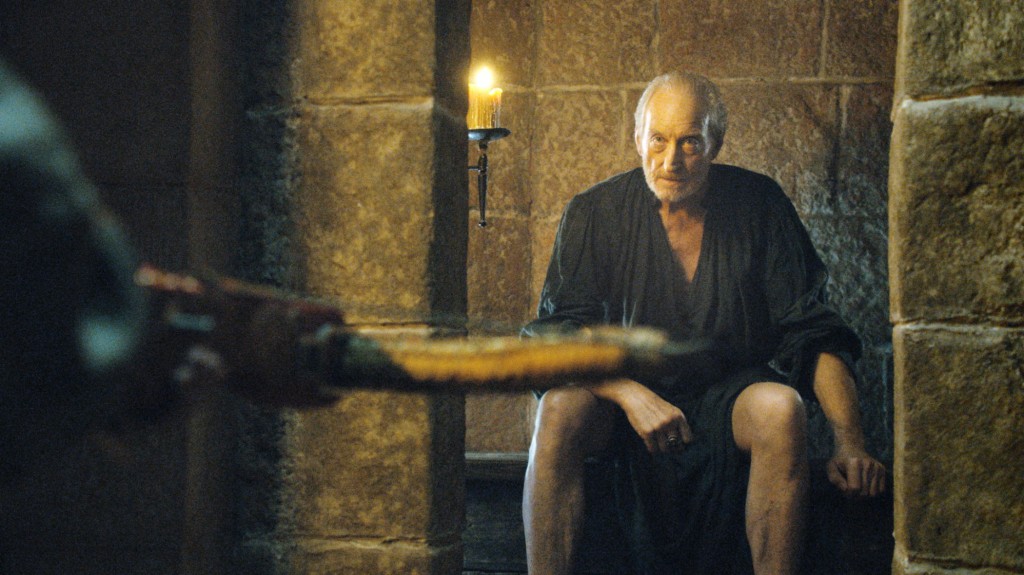
Game of Thrones: Season 4

Does anyone still give a crap about how many times GoT is pirated?

So Australians were once again top when it came to downloading GoT, and our consistency in outperforming all other countries by once again lifting the World Cup trophy for piracy is, from a neutral point of view, quite impressive really. Unfortunately, it’s attracted the wrong kind of attention, from the kind of people our newly elected, right wing, pro big business government likes to take advice/orders from. So plans involving of thousand dollar fines and Internet suspensions have all been floated, to the opposition of Internet users, ISPs, consumer groups and pretty much everyone who is not in the entertainment industry or in government (so definitely will become law, then).

Our situation, compared to the rest of world, is also unique in that we have a virtual monopoly controlling exactly how Game of Thrones can be watched legally here. We only have one cable TV provider, Foxtel, and they’ve snapped up the exclusive broadcasting as well as online rights to the show. So no iTunes, no equivalent of HBO or HBO Go (where you can minimize your subscription to just basic cable and HBO – here, the cheapest pack that includes the HD version of the show will run you well into the $80+ per month territory) – just the overpriced bundles being advertised as part of a so called “freedom of choice” (the choice Foxtel or Foxtel). It’s as if we’re the world’s experiment in seeing if piracy is influenced by lack of choice, high prices and competition, and you have to say that results are pretty conclusive. An experiment and set of results that are completely ignored by those that have the power to reduce piracy by affecting positive changes (as opposed to changes that have already been tried in other countries with no success).

Oh well.

No DRM

Are game publishers starting to speak out against DRM?

It’s one thing to try and criminalize those that pirate stuff, but it’s quite another to treat everyone as criminals. Which, according to game publisher GOG, is exactly what DRM does. DRM assumes that the user is trying to do something untoward and then makes that user jump through hoops to prove that they’re actually trying to behave. Sometimes the hoops are so tricky that the user ends up not being able to use the product at all. So something that is only intended to prevent a very tiny minority of users that actually attempt to break DRM ends up affecting all paying customers. The proverbial trying to swat fly with a sledgehammer (if such a proverb actually does exist).

While GOG’s hatred of DRM is well documented, Ubisoft’s statement that DRM simply doesn’t work was, in my opinion, far more interesting. It’s the first time I think a major game publishers has so clearly outlined just how useless DRM is. Ubisoft’s VP of digital publishing Chris Early basically admitted that, given time, any DRM will be cracked (and after that happens, it becomes trivial for the layman to remove the DRM). What is more difficult to pirate, Ubisoft says, are the services that surround the game, mostly online services that enhance the gaming experience.

While it’s nice to see companies like Ubisoft give a red card to DRM, but as the recent Watch Dogs fiasco showed, these enhanced services must be well supported and resourced in order for them to become enhancements, and not just a fancy way of doing authentication and DRM.

But what if you want to deter pirates using something just as useless as DRM, but much easier to implement? How about a symbol for “no piracy” that you can display proudly on your products, whether it be a web page or on the box of the game? Now you can! The Unicode Consortium (had no idea that it actually existed) has released the latest version of Unicode, 7.0 (also had no idea that unicode had versions, and/or could be updated), which now features a “no piracy” symbol. There is no “yes piracy” symbol, but the classic skull and crossbones is in there, as is a extended middle finger that one can also use to thwart off the likes of the MPAA and RIAA. You can view the complete list of symbols here.

Gaming

The NPD stats for May have been released and the PS4 again was the best selling console in the US. No longer surprising really, but what was interesting was that Wii U sales were up 85% compared to last May, largely on the back of Mario Kart 8. The latest Mario Kart game was also the second best seller for the month, behind Watch Dogs, which is impressive given that it was only available one the one platform.

Mario Kart 8

Mario Kart 8 lifts Wii U sales

Microsoft were surprisingly quiet about the performance of either of their consoles, so it must not have been great news on these fronts. With the $399 Xbox Ones now available, to atone for the own goal of forcing Kinect 2.0 on everyone, Microsoft will hope for a better June than May. The advertising blitz, starring Breaking Bad’s Aaron Paul, should also be hitting screens in the US right now to let everyone know about the new price, although for existing owners, the ad itself seems to have a few side effects.

These latest PS4 results seems to suggest that it is the console to beat in this generation, and Sony say they know why. Sony says that according to Nielsen stats, 31% of PS4 owners didn’t own a PS3, but did in fact own a Xbox 360 or Wii. Hmm, interesting. 17% didn’t own any last-gen consoles (PS2 holdouts?).

These results probably surprised Sony as much as anyone. Which explains why demand still outstrips supply in many parts of the world, including Europe – so sales might be even higher if Sony could keep up with demand for the console.

There’s no doubt that Sony is winning over gamers that were far from convinced about the PS3, both from a value proposition and other important factors such as online capabilities and quality of multiplatform games (better framerate, resolution and things like that). Whereas the PS3 was a (relative) pain to develop for, with online features that were sub-optimal, the PS4 seems to have addressed all of these issues. With Microsoft busy shooting themselves in their feet and other appendages, even some of the PS4’s flaws (such as scaled back media capabilities, compared to the PS3) are easily overlooked. And that price, as they say, is right!

——

Alright, enough trying to cram football related terms into this week’s WNR. See you next week.
Weekly News Roundup (15 June 2014)

June 15th, 2014

Hello again. Hope you’ve had a pleasant week. I suppose I should mention the World Cup, but as I’m not a big fan of nationalistic, poorer-quality, FIFA mismanaged, money-spinning international football competitions (as opposed to club football), I don’t think I need to say too much about it. I’m sure you’ve been inundated with World Cup stuff from every media and online outlet, so you don’t need me to bang on about it as well.

As per usual (for the last few weeks, at least), let’s get through the stuff that wasn’t quite “newsy” enough. We start with MPAA suspending their lawsuit against Kim DotCom. While it sounds like good news for Mr DotCom et al, the MPAA are only suspending things pending the verdict in the criminal case against Megaupload and its operators, possibly awaiting a precedent to be set to make their jobs easier.

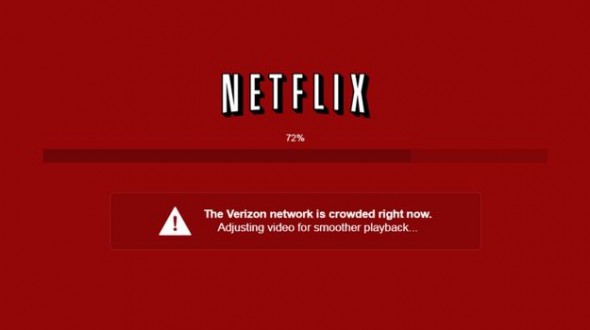
Netflix Verizon Error Message

Netflix shifts blame onto Verizon for poor streaming performance

In Netflix news, the streaming firm has ended their war of words (or error messages) against ISP Verizon over poor streaming speeds. Netflix blamed Verizon for poor connection speeds via error messages shown to subscribers, while Verizon blames Netflix and the way they’ve chosen to route traffic for the speed problems. Lawyers got involved, and Netflix backed down. But the little spat has caught the attention of the FCC, which is launching its own investigation into the matter.

In Gaming news, Microsoft’s Xbox One missteps could cost the company up to $1 billion in losses, according to analysts. Just goes to show that messing with DRM and forcing things on consumers can be very dangerous and costly. Microsoft and Nintendo’s woes of course benefits Sony, which has helped the company sell more consoles than Nintendo for the first time in 8 years. 8 years ago was when the original Wii was released, which then went on to become a big hit. The PS4 may not reach the same highs as the Wii (being not as much of a “casual gaming” console as the Wii), but it certainly looks to be the dominant force in this current generation of consoles (which includes the Xbox One and Wii U).

With these out of the way, let’s get started with the “real” news.

Copyright

Is Apple about to launch a copyright smack-down on apps that allow you to download music from streaming sites like YouTube and SoundCloud? That’s the theory according to MacRumors, and it may all be part of a big clean up of the App Store in time for the launch of iOS 8, later this year.

Apple App Store Icon

Apple cleaning up the App Store for iOS 8?

Other apps targeted are those that produce excessive notifications or annoyingly posts to social media, in order for self promotion. In other words, it’s about crushing Candy Crush. Another type of app in the firing line are those that provide in-game rewards for looking at ads and other slightly dishonest practices.

Those more cynical will point to the fact that Apple now actively promotes their own music listening apps, like iTunes Radio, when users search for “music download” on the App Store. Isn’t this the kind of thing that got Google in trouble? I’m not so sure these latest changes is evidence of this kind of slightly anti-competitive behavior, but it always struck me as a huge conflict of interest when a company is competing with its own customers in the same marketplace (that this company owns and operates). Whether it’s Google competing with other websites in the search results, or Apple’s stuff competing with other apps on the App Store.

Speaking of competition, Steam may be getting a new PC competitor in the form of GOG Galaxy. From GOG, the game publisher known for proudly carrying the DRM-free banner, GOG Galaxy will keep to the company’s DRM-free philosophies by producing a Steam-like platform, minus the DRM restrictions.

This means that the platform itself is entirely optional, unlike Steam, and that no online activation of authentication is required. Offline play, is of course, supported without restrictions. In exchange for opting for GOG Galaxy, gamers will have access to Steam like features, including automatic game updates, achievements, and online social features.

Gaming

Ubisoft Logo

Ubisoft looking out for numero uno by not releasing completed Wii U game

You know it’s bad for the Wii U when Ubisoft, one of the biggest backers of Nintendo’s console, is withholding releasing a fully completed game for the console because there’s just not enough people that own it.

While it seems a bit counter intuitive to spend all that money making a game and then not release it, Ubisoft says the cost of marketing a new game is an additional cost that cannot be justified right now due to the Wii U’s small install base.

But if things don’t improve, the unnamed game and several other titles in development may never see the light of day on the Wii U, and instead, may be ported to other platforms.

The problem is that without games, the Wii U will find it very difficult to take off. But without the Wii U being in enough people’s homes, third party developers like Ubisoft will find it very hard to justify the economics of it all. It’s the classic chicken or the egg situation (egg is the answer, by the way).

——

I think that’s it. See you again next week.

Weekly News Roundup (8 June 2014)

June 8th, 2014

Hello again. Hope you’ve had a good and productive week. Or just a good one, as being productive is way overrated. Speaking of productivity, I enjoyed writing last week’s “the news that wasn’t” section, where I went through the news stories that didn’t quite make it into a fully fledged write-up, and I think I’ll make that a regular feature from now on.

We start with the news that Pirate Bay co-founder Peter Sunde has been arrested in Sweden to serve out his outstanding copyright violation sentence. Sunde has been on the run for two years since the original sentence was handed down, and was finally caught in the southern Swedish county of Skane. He now has to serve his 8 month sentence.

Skipping to the world of video streaming, Netflix has now enabled HTML5 streaming on Safari in the just announced OS X Yosemite beta. This means that users of the still being tested OS X version can now stream Netflix in their Safari browsers without the need for a third-party plug-in. With playback completely integrated into the browser and the operating system, Apple says this will mean increased battery efficiency, up to two extra hours of streaming content in some cases.

Finally, we have two Xbox One related stories (in addition to the one we cover in detail below). With Xbox One dropping Kinect as a mandatory requirement, ironically, the PC now gets official Kinect 2.0 support. But before you get yourself ready for a bit of PC motion gaming, or dream about controlling Windows 8.1 Minority Report style, the $199 Kinect 2.0 kit would only be for developers seeking to make games and apps for the Xbox One. Another release that is a bit more useful for the average user is the official release of PC drivers for the Xbox One controller. Users can now connect their controller via a micro USB cable and play any PC games that already has official support for the Xbox 360 controller.

Now on to the main attraction …

Copyright

Are you breaking the law if you watch a pirated stream online? Most people don’t seem that bothered with the answer to this particular question, choosing to watch pirated shows online regardless. Some do hold the believe that streaming is less illegal than downloading, or not illegal at all. And you know what, it seem they’re right! Streaming is not copyright infringement.

A EU court ruling has confirmed that streaming isn’t the same as copying, mainly because technically, a copy isn’t made at all when you stream something online. The cached content, or temporary copy, is specifically exempt from existing EU copyright laws and so users are not breaking any laws, even if they’re watching that particularly distressing scene in an recent episode of Game of Thrones (urgh … so harsh).

What is still very much illegal is offering those streams in the first place, so don’t even think about it!

——

Netflix

Netflix and other legal services helping to reshape how young people feel about piracy?

Just last week, Spotify mentioned that music piracy rates in Sweden has dropped significantly thanks to services like Spotify. And this week, data released by the Lund University (with help from The Pirate Bay) backs up their assertions and directly credits services like Spotify for helping change the trend.

Most notably, 1 in 3 young Swedes say they’ve never even bothered to do any file sharing, and the researchers credit the changing attitudes of young people to new legal services like Spotify and Netflix. With the survey finding that fewer people are concerned about the legal ramifications of piracy than ever before, it definitely seems like viable legal alternatives, and not legal sanctions, seems to be the more effective in changing the habits of young Internet users.

Which again flies in the face of the assertions made by Australian royalty collection organisation APRA AMCOS last week that legal alternatives are ineffective in stopping piracy. Rights holder groups in Australia are currently pushing the government to introduce new harsher laws and new punishment and censorship regimes, so anything to discredit the effect of industry based solutions like Spotify (but no Netflix in Australia, yet) would be welcomed at this time.

Gaming

Xbox One Forza 5

Xbox One gets 10% GPU lift from removing Kinect

It seems Microsoft’s decision to dump Kinect 2.0 from being a mandatory part of the Xbox One has paid dividends for the company, not just on the price battle front with the PS4. By removing Kinect 2.0 from being an integral part of the Xbox One operating system, GPU power reserved for the motion gaming system can now be accessed by developers to boost gaming performance, by as much as 10%.

So much for Microsoft’s previous claims that Kinect 2.0 has its own resources and that is won’t negatively impact on system performance. Yet all this time, Kinect 2.0 was at the same time both costing Microsoft precious U.S. market share by making the Xbox One $100 more expensive than the PS4, and also robbing it of crucial system resources.

Microsoft’s Major Nelson, aka Larry Hryb, was keen to point out that the extra performance doesn’t just come from unplugging Kinect – developers have to add code to their games in order access the new found reserves, so don’t all rush to unplug that Kinect camera you probably never use and expect instant miracles.

——

That’s it for this week. Talk to you again soon.

Weekly News Roundup (1 June 2014)

June 1st, 2014

That’s more like it. A solid news week, where I had a good choice of stories, and even discarded a few that I didn’t think would be worthy of an extended mention. Like this story about a possible breakthrough in PS4 jailbreaking – almost no other news sources carried this story, and so the authoritativeness of this news story was questionable.

Or this story about how the Wii U has outsold the PS4 in Japan. This could be due to issues with the PS4, such as stock or lack of games, or an issue with the Wii U (which isn’t doing that well either – so I guess nobody wants next-gen consoles in Japan), or just consumer trends. The fact that the Japanese video gaming market has always been a bit different to the rest of the world also means that this wasn’t the best story to cover.

Moving away from gaming, we have this story about the latest stats from the “six strikes” regime in the U.S. – an interesting read if you’re interested in stats and stuff, but the gist of it is that U.S. pirates seem to be more persistent than pirates say in France, where the first warning is usually enough to deter them from doing it again (whereas 30% of those that receive a first warning continue to pirate in the U.S).

And then we have this story where UK MPs are calling on Google to do more on piracy. I don’t even care what my own country’s MPs say, let alone what UK MPs have to on an issue they know little if anything about!

So that was the news that didn’t make the headlines here, let’s see which ones did.

Copyright

Cinavia Logo

A German firm claims to have broken Cinavia!

One of the most annoying, and hence successful anti-piracy measures ever devised has been broken. Cinavia anti-piracy protection, which has become more and more prevalent in Blu-ray releases, has been broken, according to a German company that has been working on it for years.

For those that haven’t had the pleasure of dealing with Cinavia, it’s an anti-piracy technology that embeds a watermark into the audio track, one that cannot be removed even via numerous re-encodings (both digitally and analog re-recordings). Once a Cinavia compatible player (which is all Blu-ray players, even ones on the PC, since 2012) detects the watermark, it warns the users of their transgressions and then does one of several things ranging from muting the audio to stopping playback altogether.

The common technique for dealing with Cinavia has been to substitute the audio with one from a release that does not use Cinavia, or to use a player that doesn’t support it. German company Pixbyte says they have now produced a tool that allows Cinavia encoded videos to be stripped of the Cinavia watermark, with only the audio needing to be re-encoded. On average, the company says, it only takes 20 minutes to get rid of Cinavia.

Pixbyte says they don’t fear any legal repercussions, as removing Cinavia isn’t the same as removing AACS or other types of copy protection. This is because Cinavia doesn’t prevent copying per se. I’m not sure if this line of argument will hold up in court though, since CSS and AACS technically doesn’t prevent you from copying the files either – they just come out all scrambled at the other end and unplayable. Much less playable than a Cinavia-borked file, but the idea is nearly the same. Time will tell if Pixbyte is right, or if they’ll be embroiled in some legal drama.

——

Spotify Logo

Has Spotify helped to reduce piracy? Anecdotal evidence suggests it has, but the music industry says otherwise.

It’s common knowledge that services like Spotify have helped greatly in the fight against piracy. But some in the music industry do not believe that making available cheap or free legal alternatives is an answer to the piracy problem. Case in point, Australia’s music royalty collection organization, APRA AMCOS, recently wrote an op-ed piece blasting those that say legal alternatives are the way forward in the piracy fight (specifically in response to those who blame the lack of legal options for the high Game of Thrones piracy rate in Australia). APRA AMCOS’s Andrew Harris says the introduction of Spotify in Australia has done nothing to combat piracy, with piracy rate just as high as when Spotify and other legal services weren’t available.

By dragging Spotify into the Game of Thrones fight, Spotify had to respond and respond they did. Spotify’s managing director here in Australia, Kate Vale, rejected Harris’s assertions, saying there are plenty of anecdotal evidence around to suggest that Spotify is helping to win the war against piracy, and that the company is currently working on a project to illustrate just how effective Spotify has been. Vale also noted that music piracy was reduced by 30% in Sweden in the six years that Spotify has been available there, for example.

The problem as I see it is that the music industry has managed to indoctrinate themselves into believing the often hyped up and biased stats that they have paid to have produced. It’s as if they don’t want services like Spotify to actually be responsible for reductions in piracy, because these may not be things that helps labels make more money, and also because they’re platforms the music industry did not come up with themselves. It also makes their lobbying efforts harder if there is seen to be a simple and industry based solution, even if that solution comes from a different (I.T., Internet) industry. They’d rather be proven wrong about new harsher laws and anti-consumer technological solutions, than to be proven right that piracy is a pricing and availability issue.

Gaming

Ubisoft Logo

Ubisoft screws up another release thanks to DRM

Ubisoft is back in the headlines, and unfortunately, it’s again to do with DRM. Unfortunately, the much hyped and eagerly anticipated ‘Watch Dogs’ could not be released without a DRM controversy, as the PC version of the game was practically unplayable as the rush to play it on launch day crashed Ubisoft’s Uplay service. Despite the game having an offline mode, it also required online authentication with Uplay before gamers could be allowed to go offline. And so, PC gamers were left with an unplayable game they just purchased or pre-ordered at full cost.

This kind of thing has become too common to be ignored, and to be fair, it has less to do with DRM, and more to do with companies not investing enough in excess online capacity. You’d think with an industry so reliant on pre-orders, that they could and should have been able to predict the amount of traffic expected on launch day and plan for it. It’s just symptomatic of an industry that do not seem to have much regard for their most important asset: their customers. But with so many so willing to pre-paying for something that hasn’t really been properly reviewed (thanks to embargoes in place), perhaps it’s us gamers that are encouraging this bad behavior of treating us for granted. Because, the truth is, we do end up paying (and pre-paying) for all sorts of crap, and put up with even more unacceptable crap, and so maybe we do want to be taken for granted!

——

I would never take you, dear reader, for granted of course. That’s why I painstakingly hand pick through all the useless and boring news stories for you, personally, every week. Beacuse I have to maintain a high standard of quality. It’s definitely not because I was lazy or busy playing video games or anything like that.  Ahem.

See you next week.

Weekly News Roundup (25 May 2014)

May 25th, 2014

Sorry for the relatively tardy nature of this week’s WNR – it’s been a weird weekend, after a long and boring week. The boringness doesn’t just extend to my personal life, but also to the professional – mainly the lack of really engaging news stories. I judge the worthiness of news stories by whether it’s something I think it’s worthy of bringing to your, my dear reader’s, attentions. And unfortunately, most of the stories this week just didn’t cut the grade, including the ones that I will discuss in this issue.

I mean, just judge for yourselves. Take this story of Netflix dominating UK traffic (story digest: Netflix is popular in the UK. Whatsapp is popular in Africa). Here’s a story that I tossed and turned about, nearly wrote it up as I was desperate, but in the end, common sense prevailed. How much of a Netflix fanatic must you be to be interested in a non-story like that? I don’t think such a person actually exists.

Or this story (story digest: uTorrent bug might be causing errant traffic stats), which caught my attention, but at the end of the day doesn’t really make much of a difference. While I’m sure some will be interested in this story, I for one just couldn’t bring myself to write a story about a software bug that will probably be fixed by the time I wrap it up on here (story digest update: uTorrent bug identified and now fixed).

And there were many many other such examples for the week, including re-hashes of the major stories from the last few weeks (Xbox One Kinect blah blah blah, Netflix price rise and what it means for you blah, and so on). Even an expected update to the “Wii U is doomed” story line failed to materialise due to the lack of further April NPD updates.

So in other words, a slow news week. Apologies in advanced for the rest of the WNR, which covers two almost pointless stories, but were considered to be the best of the what’s available. Again, deeply sorry.

Copyright

The Pirate Bay Cloud Hosting

The Pirate Bay website may exists in the cloud only, and distributed on millions of people’s computers, if their P2P web browsing vision becomes a reality

The Pirate Bay’s official web browser, the PirateBrowser, has been downloaded more than 5 million times since its release last August. For those that don’t know, the PirateBrowser combines a version of Firefox with a Tor based tool and custom configurations to make sure censored sites, like The Pirate Bay, can still be browsed.

While the PirateBrowser definitely allows users to bypass copyright censorship regimes in countries like the UK and Denmark, it also works in countries like Iran and North Korea (assuming users there have the Internet. And a computer. And electricity), helping people there bypass their country’s freedom-curbing censorship regimes.

What is more interesting may be The Pirate Bay’s next software project, which will produce a P2P based web browser that allows websites, not just music, movies and games, to be distributed and stored in a peer-to-peer fashion. Imagine if instead of having a central server where The Pirate Bay content and data are stored, a server that can be shut down, that the website stuff is actually being seeded and shared by everyone who is browsing the website at the time. This effectively means that the website cannot be taken down, as long as at least one users is still seeding it, and it would also greatly reduce the resources needed to maintain such a site by the site’s owners.

Now combine the PirateBrowser and this new P2P way of web hosting, and you’ll have a side that cannot be blocked, or shut down. I hope those that supports copyright filtering and censorship will soon realise how much trouble they’re in for when this happens.

Gaming

Good news for Sony and the PS4 – the $399 console, released only six months ago, is already profitable. This compares much favorably to the PS3, which took 4 years and several re-designs to be finally not a financial burden for Sony.

PS4 with controller and PS Eye

The PS4 got the balance between performance and pricing just right, and gambled and won on a couple of smart design decision

What this also means, for us consumers, is that Sony can and probably will give us a price cut for the wildly popular PS4 if the competition between it and the Xbox One heats up as expected (following the Xbox One’s “price cut”). I don’t think it will happen in the short term though, as Sony is still not quite there yet in terms of being a profitable company (and it’s not really needed yet, given the popularity of the PS4).

Now some cynics might say this proves the PS4 was nothing more than an evolutionary upgrade, not the revolutionary stuff that we should have had. Others will say that Sony lucked out with the PS4 thanks to a gamble on the choice of memory, with improved availability and price very late on in the PS4’s design process allowing Sony to make a superior performing machine without an uninspiring price point. The fact that Microsoft decided to shoot themselves in both feet, first with the DRM (decision reversed) and the higher pricing due to mandatory Kinect bundling (decision now also reversed). also helped.

For me, the PS4 is what the PS3 should have been. The PS4 is a great combination of performance and pricing, and corrects most of the mistakes Sony made with the PS3, from design to promotion.

——

Okay, that wasn’t as bad as I thought it would be. Not entirely boring or pointless, but not the most riveting stuff either. The next week is already looking better with a couple of late breaking stories, so fingers crossed. See you in a week!


About Digital Digest | Help | Privacy | Submissions | Sitemap

© Copyright 1999-2012 Digital Digest. Duplication of links or content is strictly prohibited.