Archive for the ‘Movies’ Category

Weekly News Roundup (31 July 2011)

Sunday, July 31st, 2011

Hope the past week has treated you well? Me, same as usual, and not getting that much work done despite feeling like I’ve done a lot of work (yeah, one of those weeks). I did re-organize the forum a bit (and yes, we do have a forum, it seems to be a fact that’s not commonly known going by the forum’s visitor stats), tried to reduce the number of forums, and re-focus some of the discussions. And so if you ever have a digital video authoring, conversion, editing or encoding problem, or want to post your opinions on some of the news articles mentioned in the WNR (there should be a thread for each news item linked to here in the “Latest News” forum), then feel free to pop over and I’ll be there to say hi.

A couple of interesting stories to go through this week, so let’s get started before it becomes August.

CopyrightLet’s do something different and start with the copyright news. The world’s unluckiest file sharer, Jammie Thomas-Rasset. Not that being fined $54,000 for downloading 24 song can be considered luck, but when you’re that unlucky, you have to take what you get.

For what seems like the billionth time, Thomas-Rasset has received a new figure representing the damages she needs to pay the RIAA, for daring to do the incredibly nasty act of downloading 24 songs without paying. Once again, a judge had to intervene and overrule an earlier jury decision to award the RIAA $1.5 million, by reducing the damages to “only” $54,000. The judge cited the Constitution and justice as reasons for reducing the unjustifiable 7 figure damages reward. The RIAA has voiced their disapproval at the decision, and it does not surprise me one bit the RIAA seems to have no respect for either the US Constitution or justice. Hopefully, Thomas-Rasset will not make the earlier mistake of trying to appeal the decision, and simply pay the $54,000 (or make some kind of financial arrangement), as her previous attempts at reducing damages has not worked, other than to add to her mounting legal bills. But even if she accepts the terms, the RIAA could still appeal, all the way to the Supreme Court, because reports suggests they’ve already spent at least $3 million on the case, which they hoped would be a deterrent for music pirates (hasn’t really worked), and $54,000 is not much of a deterrent compared to $1.92 million.

BT Logo

UK court forces BT to block access to Newzbin2 at the request of the MPAA

A couple of weeks ago, I brought to your attention the MPA’s (the International arm of the MPAA) UK high court battle with UK ISP BT (holy trinity of acronyms, Batman). The high court has handed down its decision, and it’s one that will have long lasting repercussions. The judge has ruled that BT should help the MPA block Newzbin2 so BT’s subscribers cannot access the website. BT’s arguments that they’re simply an utility, like an electricity provider, did not wash with the judge who ruled that, unlike an electricity company, BT is fully aware of what its subscribers are using its services for, and thus, has the responsibility to turn off supply if the uses are judged to be unlawful. The major problem with this argument is that it assumes just because BT *can* find out what its services are being used for, that it *should* find out and help groups like the MPA monitor usage. It’s like saying the phone company can find out about all you by listening on your conversations, and so because *can*, they *should* (and then should report or tak action against unlawful activities). The second problem with this decision is that, the judge, MPA and even BT are satisfied that Newzbin2 does distribute unauthorized content, based on an earlier high court case, but that case was for the UK operated Newzbin. Nobody has actually bothered to establish the guilt or even the ownership of Newzbin2, and while it might be obvious in this case that both sites are trying to do the same thing, the question is does the MPA need to launch a new lawsuit against, say, The Pirate Bay, or can they use this decision to force all ISPs to block any website they allege is promoting piracy?

But in the world of Internet piracy, mere allegation is “good enough” it seems, and hardly any distinction is made between sites that host, link, embed, or link to links, because if the RIAA/MPAA says you’re bad, then you must be. Staying in the UK, and taking the “allegations equals guilt” model further, a new plan wants search engine results to be classified by a “traffic light” system, where “bad” sites that may be offering pirated content are marked with a red light to warn users not to use these sites. Without getting into the implementation issues of a system that’s supposed to judge and classify billions of web pages, this whole idea assumes that people, the so called “moral majority”, aren’t aware that they’re visiting certain websites and the content there is not legal, and so would be warned away by a simple graphic. I think if people aren’t aware of what they’re downloading, listening to, or watching is legal or not is mainly because they don’t care. You go to YouTube and watch a music video, do you really care that much if it’s an official, authorized upload, or one of the billion mirrors for the same thing. And when people watch on MegaVideo, or download from RapidShare, are they really so clueless that they haven’t worked out that it isn’t legal, and do they really care, especially knowing that these download methods are not being monitored for anti-piracy activities? I guess the only positive of this plan is that it will make finding pirated content a lot easier – simply follow the “red lights”, to get all your piracy fix.

HBO Logo

HBO has been used as a example in a new study that tries to show improving quality best helps to fight piracy

I’ve always said the best way to combat piracy is to increase quality (or at least decrease price so that it fairly reflects the product’s lack of quality). Now, people way smarter than me have written a new study that tries to quantify, what seems to me, is common sense. The new study specifically cites HBO and Valve as examples of where quality improvements have led to reduction in piracy and, most importantly, an increase in revenue. To me, both of these companies are innovative in their approach (HBO Go is very useful, if you’re in the US, and we all know Valve has single-handedly saved the PC gaming industry via the Steam model), and neither has focused their energy on copyright enforcement (take Steam’s DRM approach, for example). The study also reinforces this point, that the companies focused less on copyright enforcement tended to focus more on quality, and as a direct result, has more successfully raised their revenue. The study doesn’t mention Ubisoft’s draconian DRM approach, but I think it would make an interesting study in itself, to map out the full effect of Ubi DRM in regards to piracy rate and revenue, compared to say the success of Valve with their games, and also the Steam model.

But as far Ubisoft is concerned, Ubi DRM is a huge success. I know this because they’ve come out and said it, that Ubi DRM is a huge success. They say it’s a huge success because they have stats that show piracy rates have decreased dramatically for games that uses the “always-on Internet connection required” DRM. And you know what, I don’t doubt that at all. But you can often tell the truth not by what someone says, but by what they don’t say, and Ubisoft didn’t really mention revenue at all, which is strange. Considering that Ubisoft used the phrase “clear reduction in piracy”, you would think there would be a “clear increase in revenue” to follow that statement. But this statement was not made, and so I can only assume that revenue has not risen (and it’s hard to calculate anyway, as how can you compared say the revenue made from one game release to that of another?). The problem is that decreasing piracy does not mean increasing revenue, because pirates have a huge choice of pirated games to play, and if they don’t find one available (because the DRM hasn’t been cracked yet), they’ll just play another (even the most avid pirate gamer can’t possibly play all the pirated games out there). And this assumes Ubi DRM is hard to crack, which is not true any more. And there are also negative forces in play, with excessive DRM causing a drop in revenue as paying gamers, who also have far too many games to choose from, choose games that don’t use Ubi DRM. During the recent Steam Summer sales, I saw countless comments on countless forums where people posted their hesitation in buying Ubisoft games due to Ubi DRM, despite games like Assassin’s Creed 2 being on sales for less than $7 (and only committed in the end because others replied saying Ubisoft have toned down Ubi DRM in older releases). So how much money is Ubisoft losing because of Ubi DRM?

Of course, for truly great must-have games, gamers will put up with ridiculous DRM, but for these types of games, even some of the biggest pirates may come out of the woodworks and make this the one game they do buy. Quality is still very much king.

High Definition

In Blu-ray/3D news, apparently the Windows 7 (and Vista) native Blu-ray burning tool has a huge bug that prevents successful burns, if the compilation size is over a certain size.

ImgBurn

Why bother with the buggy Windows 7 Blu-ray burner when you can simply use the freeware ImgBurn

This comes as a huge surprise to people because, one, they didn’t even know that Windows 7 could burn Blu-ray discs, and two, they didn’t know why anyone would use the native Blu-ray burner, when you’ve got cool free tools like ImgBurn (whose official website is proudly hosted by us).

From analysing the very small amount of information Microsoft released about the bug, it appears the bug could be related to how Microsoft loves using Binary prefix, while storage manufacturers prefer to use SI prefix. With SI prefix, 1 KB is 1000 or 10^3 bytes, while with binary prefix, it takes 1024 bytes, or 2^10. So 25GB with SI prefix is only equal to about5 23.3GB with a binary prefix (to avoid confusion, a new standard was set up to use KiB, MiB and GiB to indicate binary prefix, but hardly anyone uses it, and certainly not Microsoft). So maybe Microsoft’s native Blu-ray burner thought that discs could hold 25GB in Windows notation (or 25GiB), even though Blu-ray only holds 23.3GiB, and so of course the burns would fail is the tool doesn’t warn users that they’re trying to burn over the allowed limit. This seems like a simple fix, so it’s strange that there’s no hotfix, or even a hint of one from Microsoft, for this bug that seems to have been present since Vista SP2 introduced Blu-ray burning support.

Gaming

And in gaming, not much again, except two more stories about Sony. The first one has Sony being sued again over the PSN hack, but this time by their own insurer, as Zurich American tries to get out of having to pay Sony to cover the costs of expected class action lawsuits and settlements related to the hack and outage.

It’s probably just standard procedure for insurance companies, or it could mean that Zurich American really thinks that the class action lawsuits could end up costing Sony a lot, and they want to protect themselves as early as possible. I don’t think even Sony feels they can placate everyone angered by the PSN hack just by giving them a couple of outdated games, despite inFAMOUS being pretty good fun.

The other news relates to Sony’s profit results for fiscal Q1 (April 1st to June 30, covering the entire PSN hack saga), and it’s not great news. PS3 console unit sales dropped by 25% compared to the same quarter last year, although Sony still expects the fiscal year to end in growth of the console. Surprisingly, the PSP was the only Sony console to see a unit sale increase, but that’s probably due to the super discounting that has been going on ($99 for a PSP with God Of War Ghost Of Sparta, is pretty good value here in Australia). And more surprisingly, PS2 sales are still holding up well, almost selling as many units as the PS3 (1.4m compared to the PS3’s 1.8m). It just shows how successful the PS2 was, and how Sony have totally failed to replicate the same success with the PS3. Globally, the PS3 still managed to outsell both the Wii and Xbox 360 (individually, not combined), thanks to strong performances in Japan, but the Xbox 360 was the only console to record growth out of these three.

And that brings us to the end of this WNR. Have a good one.

Weekly News Roundup (24 July 2011)

Sunday, July 24th, 2011

A solemn start to this week’s WNR. Our thoughts go out to those affected by the events in Norway. Tragedies such as this makes the issues that the WNR covers pale in significance to the many other problems in the world today, and while this is true, just because something is less significant, it doesn’t mean it’s not significant in its own limited way, it shouldn’t become an ignored topic. And life, as cliche as it sounds, must go on.

But, and I’m going a little bit off topic here, what really struck me was the media coverage immediately following the bombing, and, when looking back at it now, how slanted it was. I think many people, if not most, immediately came to certain conclusions about the terrorist attack. Conclusions that ultimately painted the suspect(s) as Middle Eastern. This, I can understand, because we are human beings, and we are  emotion creatures and ones that that need a sense of understanding, when an event that makes little sense happens. We we jump to conclusions, join the dots even if it meant drawing some of our own dots to complete the picture. It’s understandable.

Once upon a time, the news meant facts. And in the absence of facts, the media kept us safe from our own human nature, or at least attempted to, to prevent us from jumping to conclusions, to remind us to hold our judgement until the facts, and the full facts, have emerged. But that today’s news media, and even the  so called respected sources, all became cheerleaders for the view that only terrorists of the Islamic fundamentalist persuasion could have been responsible for the tragedy in Norway, shows us how news has become entertainment, how facts (and fact checking) has become optional, how accuracy has given way to expediency and the need to set a clearly defined narrative, and why all of this hurts our democratic society in more ways than even the most insidious terrorist masterminds can hope for.

Anyway, this was just something I wanted to get off my chest before we start this week’s, very much opinionated, narrative drive, and fact-check-lacking WNR (and you should consider yourself  lucky that a hack like myself is not allowed to cover the more important issues), so sorry for the interruption.

CopyrightStarting with copyright news, we start with the FBI’s arrest of members of the hactivism group, Anonymous.

Anonymous

Anonymous members are arrested by the FBI, but the attacks continue

I’ve expressed the opinion before that I was surprised the FBI or other law enforcement hadn’t taken action against Anonymous. I thought that, sooner or later, one of the targets Anonymous chose, and they did choose quite deliberately, would come screaming to law enforcement for assistance (as some of them were targeted *because* of their “too close for comfort” relationship with governments and law enforcement via lobbying). I don’t really want to get into a debate about the right and wrongs of hacking, leaks (wiki or otherwise), and hacktivism in general, but groups like Anonymous don’t exist in a vacuum – they exist and they are supported because of real (and sometimes perceived) bias, and until these biases are addressed, and the disenfranchaised feel they and their opinions are represented, there will only be more groups like Anonymous and LulzSec, not less, no matter how many arrests the FBI makes.

And you know something is not right when a private company, really out there to protects its own interests, end up being more representative of the general public than the government that the people have elected. This time, it’s Google arguing against the recently passed, and soon to be adopted, copyright law amendments in New Zealand. The NZ government, under pressure from the entertainment industry (and not even the industry in their own country), passed three-strike type laws, which allowed rights holders to force ISPs to issue warnings to suspected copyright infringers. But these kind of laws always assumed that an allegation equals guilt, that an IP address is enough to “convict”, and Google is arguing that, this shouldn’t be the case. The NZ laws actually specifically state that all allegations should be treated as fact, when the tribunal set up to deal with cases hand down rulings, even if the tribunal felt that the evidence was not enough. The whole rationale behind graduated response is to short circuit the legal system, to turn allegations into facts, because the problem is otherwise “too big” to deal with via the courts. An IP address is circumstantial evidence, at best, and the quantity of such evidence should not improve their quality.

A different kind of pirated porn

As otherwise, we might end up doing something silly like suing 70 year old grandmothers for illegally downloading porn. Oh. As far as I’m concerned, there’s not a huge bit of difference between the “sue for settlement” gang, and the graduated response proponents – both are taking flimsy evidence and trying to make a buck (or to prevent a possibly non-existent buck from being lost). So we have a grandmother who doesn’t even know what a torrent is, using a wireless router set up by a family member probably, one that was subsequently unsecured, and hacked into for “nefarious” usage. And we have the law firm involved allegedly telling her that the “unsecured router” defence was not a sound one, and that she should just charge the thousands of dollars in settlement fees to her credit card or possibly face a six figure amount in court. Other than the fact that it is a defence, and one that has been used even recently, there’s also the fact that had she gone to court (and it seems she’s determined to do so, good on her), there’s no way that any judge or jury, in their right minds, would ever reward $150,000 against her, that’s assuming the law firm involved even turns up to court. Expect the case to be dropped double quick, now that the media is involved (so I guess the news media is not entirely useless these days, not when it comes to potential “sensationalist” stories such as this one). But the 30 year old single males, using the same defence, probably won’t get very far, unfortunately, nor would he get the same kind of media coverage, despite probably being just as innocent.

The madness that is copyright enforcement these days all center around the idea that, stopping piracy is important because piracy is bad, M’kay.  But is stopping or even just caring about piracy really that important? Not according to Super Meat Boy (no, this is not the porno the 70 year old grandma downloaded) developers, Team Meat. Super Meat Boy, again not a porno, is an indie game for Xbox Live Arcade and PC, and a pretty popular one at that, with 600,000 buyers as of April. The popularity of the game also means that it’s pirated a lot, but Team Meat’s Edmund McMillen says he just doesn’t care about piracy, his exact words were “we don’t f**king care”. It’s all about word of mouth, McMillen says, and piracy helps to spread it. I would add that people also tend to buy good games, or anything they feel has value, regardless of whether it’s available for free (illegally) or not. Nobody likes “stealing”, or at least committing morally ambiguous actions, and if they can afford it and it it’s good “value”, they will buy. So if game developers cared less about piracy and stopping it, and cared more about making good games like Team Meat has done, then maybe, maybe, piracy will solve itself (it also helps for Super Meat Boy to be part of a lot of Steam sales – I got my copy for $3.75).

High Definition

In HD/3D news, a milestone of sorts for Blu-ray this week as Disney announce their release plans for ‘Pirates of the Caribbean: On Stranger Tides’.

Instead of having a Blu-ray+DVD combo, a Blu-ray only and one or two DVD editions, for the first time ever on a new A-list release, Disney will delay the DVD-only edition of the film for a month, and forgo the  Blu-ray only edition entirely. So when the movie comes out on disc in October, it will only be available in two different combos (three, if you count the “DVD packaging” edition), including a 5-disc combo that also includes the Blu-ray 3D and Digital Copy versions, for $4 more (on Amazon). And since Blu-ray combos, even the ones with DVD packaging, are counted as Blu-ray sales, it effectively means ‘On Stranger Tides’ will be a Blu-ray exclusive, until the DVD only version is released a month later.

Disney is not new to this kind of release schedule, previously employing this for their classic animated releases like Snow White. And it has worked wonders to boost, artificially in some respect, Blu-ray sales numbers, making these Disney releases some of the most popular on the HD format. And it looks like ‘On Stranger Tides’ will be the next record breaker (although ‘Deathly Hallows Part 2’ might have something to say about this).

Is this really a big deal? I think it is. It’s the first step towards making DVDs obsolete, although it might mean they’re still around in combo form for some time yet. The truth is that, it doesn’t really cost studios all that much to include a DVD copy with the Blu-ray version (or vice versa), so it’s all about demand, perception of value and all that.

Digital Copy

Digital Copy - insert, enter code, transfer, copy ... and then only in the "allowed" formats, is not worth the trouble

There was also the news that Fox is bringing Digital Copy to Android phones, which I didn’t think was big enough of a news item, since I already have a Fox Blu-ray that has a digital copy for Android (Unstoppable), and when UltraViolet rolls out, cross format compatibility of digital copies may not be such a huge issue any more. But it is kind of annoying, that if studios don’t include the right digital copy, your only choice to enjoy the movie on the platform of your choice is to buy it again, or illegally rip it (but the kind of “illegal” that nobody would get into trouble for, if you don’t share the copy with others). When we “buy” a Blu-ray, we’re not really buying the movie, or even licensing the movie itself – we’re only licensing the copy of the movie that appears on the platforms/media we are paying for.

Gaming

And in gaming, not much, expect that I did manage to get the NPD analysis written, using the “guestimated” (ie. made up) numbers of the PS3 that I threatened to use in the last WNR.

The Xbox 360 was once again the king of consoles, although I predict the year on year growth the console has been experiencing may experience a slight pause, thanks largely to the larger than expected bump the console got last year this time for the then new “Slim” version of the console.

Story that I didn’t really cover this week included one about the PS3 3D headset. I’m sorry, but VR headsets, to me, are so 90’s, and you can never really make them light enough for them not to be a literal pain in the neck. The idea is sound though, that instead of having headache inducing 3D glasses based on flickering between images for your left and right eye, have goggles that actually give each of your eye a different picture, and then add head tracking to boot.

There’s also a story about the next-gen Xbox 360 having “Avatar-like” graphics. Maybe it’s just me, but I might be the small minority that thought Avatar’s CGI still looked quite fake, and some of the plants definitely had a “game console” look to them.

That’s all I have for the week. See you in seven day’s time.

Weekly News Roundup (17 July 2011)

Sunday, July 17th, 2011

A news-tastic week, and I guess we were due one. It’s a shame, because I was quite busy messing up my Paper (Star) Wars Android game update, in which I released not one, not two, but three versions of the app. It always happens like this though, you get ready to release an update, do all the testing you can, confident that it works, and then you release it only to find that it’s introduced even more bugs than before. But sometimes it’s hard to properly test an app that, according to Android Market, can be deployed on 430+ different Android devices. I added a crash report feature to the app, so that I can get a report every time it crashes, and so far, no new crash reports in the last 72 hours, so that’s something I guess. I also took the opportunity to add an official website for the app, which includes some getting started tips, and also Facebook and Twitter pages.

With plenty of news to go through, let’s get started.

CopyrightIn Copyright news, opposition to the controversial PROTECT IP act is gaining momentum, as this week, more than 100 law professors from around the United States have signed an open letter urging Congress to reconsider the new copyright legislation.

So we’ve had Internet pioneer, leaders in the field of technology, and now also law experts, all coming out attacking PROTECT IP. The law professors repeated the same warnings about messing with the Internet’s naming system, but more importantly, they argued that, from a freedom of speech point of view. But it won’t be the first time Congress has ignored expert advice in favour of lobbyist suggestions, and so, I’m not too hopeful that PROTECT IP will be defeated.

Fair Use

Fair use creates jobs, while tougher copyright may destroy them

And the politicians will not find it a difficult to support the RIAA and MPAA, because, as you know, it’s all about the jobs. The RIAA and MPAA have been arguing that tougher copyright protection means more jobs, and a politician in the current climate can’t afford to be seen as being anti-jobs, even if it is at the expense of being anti-free speech. But a new report by the Computer and Communications Industry Association (CCIA) shows that tougher copyright laws may actually have a negative effect on job creation, as it turns out, the US economy these days are very much driven by fair use related activities. Even I didn’t realise that fair use related industries accounted for 17% of the entire United States’ GDP, some $4.5 trillion in value added contributions. That’s much greater than the film and music business combined, and it makes sense when you see companies like Google, Facebook, Mozilla all embracing open source and taking advantage of fair use in some way.

PROTECT IP, in many ways, is just a protectionist measure in favour of the film and music business, and such measures always hurt other industries, and in this case, it’s the huge tech/Internet industry. But because one industry is more active in lobbying than the others, common sense does not always prevail in Washington. And just because the film and music business receives more protection, it doesn’t mean that they actually benefit financially as well, because tougher copyright laws does not equal more sales (and could even equal less).

If the US wants to see a real world example of tougher copyright laws, and the effect it has on revenue, they can simple look towards France, and see how their “Hadopi” three-strikes law (named after the agency, Hadopi, that is in charge of administering the program)  is working out. A new report shows the extraordinary level of monitoring that occurs, some 18 million incidents of piracy were recorded in just nine months. But out of the 18 million, only 470,000 users were sent “first-strike” emails, warning them of alleged copyright infringement being conducted via their Internet accounts. And then, in what seems to be strongest indication of the effectiveness of three-strikes, only 20,000 “second-strike” emails were sent out, suggesting that 450,000 people took the first warning the right way and “stopped” pirating. And at the end of it all, only 10 people were being considered for further action after reaching their third strike – so that’s millions spent to catch 10 people.

But despite what appears to be a 95% reduction in piracy (going from 470,000 first time offenders to only 20,000 second time offenders), there’s almost no information on the actual economic benefits of the reduction in piracy, if the reduction even exists. I can only assume that there has been no positive effect on music and movie sales in France as a result of three-strikes, because otherwise, the RIAA/MPAA would be using it as evidence that every country in the world should adopt graduated response. And just because people stopped being detected, it doesn’t mean they’ve stopped pirating – direct downloads have never been monitored by Hadopi, and it’s impossible for them to monitor BitTorrent usage if it’s done via a VPN either.

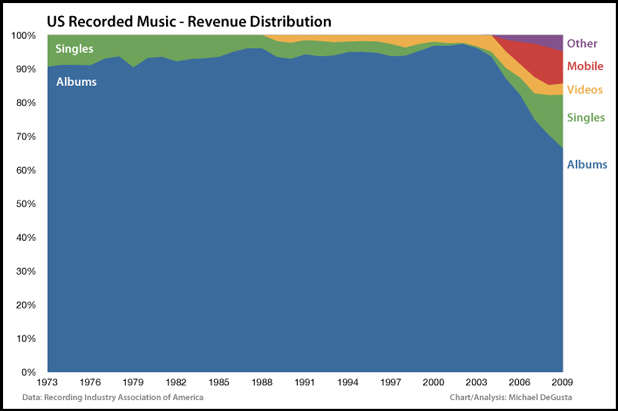
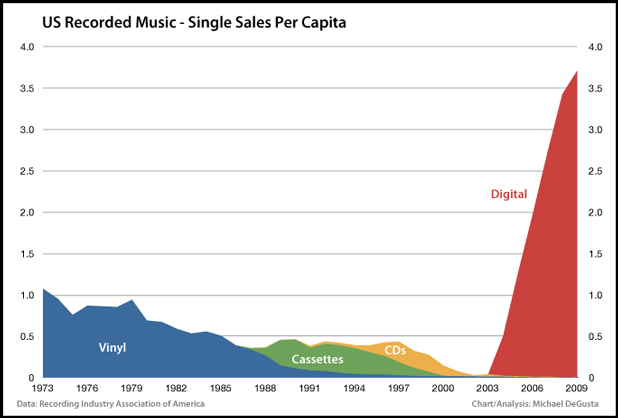
It makes perfect sense to me though, that if someone who couldn’t afford to buy a movie or a piece of music still remains in the same situation after tougher copyright laws are introduced, and as long as this is true, there can be no increase in revenue. People will stop enjoying content illegally, and if they can’t afford the legal version, they will simply stop enjoying the content entirely. And this reduces the word of mouth effect, and also prevents “upgraders”, those that download illegally and then purchase later because they really liked the content. And so, tougher copyright laws may actually lead to revenue loss. The truth of the matter is that movie home entertainment revenue is much higher than what it was before the Internet become popular, and so is gaming. And that while the music industry isn’t doing as well, increased competition from other sectors (such as movies and gaming), and the increasing popularity of purchasing music singles over albums, are all more accountable for the decline in revenue than just piracy. The music industry needs to stop blaming piracy on all of its problems, and the movie industry needs to stop pretending there is a problem (what with box office receipts at an all time high, and home entertainment revenue up significantly compared to 15 years ago).

Music Industry Revenue by Content Type

This graph shows that music industry revenue has been dominated by album sales ...

Music industry revenue for albums on different formats

... and as you can see, albums were popular on CD but has been declining ...

Music industry revenue for singles on different formats

... and this graph shows digital music is all about singles, which may explain the industry's revenue loss

The truth is that the way people consume content has changed drastically, and yes, a lot of that is due to the Internet. But with change, comes opportunity, and if the film and music industry aren’t interested in exploring the new opportunities, others will, and in this case, it has been the technology companies, like Apple and Netflix, that has benefited the most. And the latest to join their ranks may be Spotify, which has just been launched in the United States, albeit in a limited invitation only phase. Spotify attempts to address one of the fundamental shifts in media consumption, the lessening need to “own” music (well, people never owned music anyway, there merely licensed a recording of it), and the increasing need to consume (which makes owning far too expensive and time consuming to manage). So instead, people stream all the music they want in an on-demand fashion, for free if they’re willing to put up with ads. It’s completely legal, so no moral guilty as compared to piracy, plus the music industry can receive financial compensation. And those that do want to “own”, or at least rent, can buy one of Spotify’s paid for plans, with more money going towards the music industry. With Spotify, there’s almost no reason at all for pirating music.

Spotify Logo

Spotify is launching in the US, and there are now even fewer reasons for people to pirate music

And in a similar vein, UltraViolet for movies also attempt to change the way content is sold to more closely follow the consumer’s needs, an ambitious project that has the backing of more than 70 companies from a range of industries, with support, albeit reluctantly at certain aspects of it, from the movie industry. This week, UltraViolet licensing beings officially, and beta testing is also under way for an official launch later this year. If it works, it will finally allow movie lovers to buy the movie (or license it), as opposed to just buying the media that the movies comes on. It’s Digital Copy, but done right, with industry wide support, and done via the Internet.

And so, there is hope, that the music and film industry can embrace change and come out the other side stronger than before. Let’s just hope they don’t erode all of our civil rights, in a vain attempt to use legislation to stop copyright infringement, before then.

And finally, before we move on to other topics, the MPAA’s lawsuit against Hotfile has some new developments this week, as the judge in case threw out the MPAA’s claim of direct copyright infringement, simply on the grounds that Hotfile themselves did not upload any of the content that is considered to be infringing on the MPAA’s copyrights. However, the judge did feel Hotfile can be found guilty of secondary copyright infringement, of inducement to infringement by paying affiliates money for uploading popular content. I don’t think it will end well for Hotfile unfortunately, as the MPAA has chosen their target wisely, by choosing a file sharing host that actively promotes popular uploads with payment, and thus, encourage users  to upload pirated content.

High Definition

In HD/3D news, a new report suggests that Blu-ray will beat DVD by 2014 to become the most popular disc format around.

But even by then, Blu-ray’s gain in revenue would not have offset DVD’s loss, and so it will be digital media that saves the day. The report, from London-based Futuresource, says that at that time, physical media will still account for more than half of the industry’s revenue, but digital media won’t be too far behind, accounting for 46% of the market.

While Blu-ray only accounts for 13% of the sell-through market last year, it’s not too hard to believe Blu-ray will get close to 50% by 2014, especially if you look at recent data as listed in our weekly Blu-ray/DVD sales analysis. Blu-ray revenue, in the US at least, appears to be already above the 20% mark on average, and for some recent releases like ‘Sucker Punch’ have managed to has a first week Blu-ray market share way above this average (61.42% to be precise).

Blu-ray 3D Logo

Over 3.5 million Blu-ray 3D discs have been sold so far, but half of them were given away

There was also the news that 3D Blu-ray, despite the predictions of doom, has already sold some 3.5 million discs. Of course, half of these discs were given away with hardware, but with Avatar still not available for general sale on Blu-ray 3D, the number is still impressive. The main reason for the good result, and the good result of Blu-ray in general, is pricing. Blu-ray combos are now the best value packaging around usually, and with Blu-ray 3D “mega” combos becoming more popular (that is, the Blu-ray 3D version plus the Blu-ray 2D version, plus the DVD and Digital Copy versions), 3D is benefiting as a result.

What has decrease in value this week though is Netflix subscriptions, with price rises of up to 60% being announced. Netflix says the reason for the increase is due to their renewed focus on DVDs, by separating DVD and streaming into two separate, and cheaper plans (but at the same time, increasing the price of the combined plan). I suspect this price rise has to do with Netflix’s need to renegotiate digital rights for movies, with them having just agreed a new deal with Universal, and the need for a new deal with Sony. The rise in popularity of Netflix is obviously making studios feel they’ve not got the best deal they can, and they will want to squeeze as much out of Netflix as possible.

And before we move onto gaming, the news this week that new PS3s won’t be able to output Blu-ray in HD over component shouldn’t come as a surprise for those that read my news article on the Blu-ray analog sunset. Blu-ray’s copy protections system, AACS, mandated the removal of HD component support for all new players manufactured after January 1st 2011, and so the new PS3 model is just following the licensing agreement. The misinformation over HD being disabled even for games and streaming, is just that, misinformation.

Gaming

And in gaming, there’s actually not much, but I wanted to address the NPD issue again. The NPD report for June has just been released, and as been the case recently, it’s light on actual details, especially for hardware sales figures. But Microsoft and Nintendo have decided to released hardware sales figures for their consoles, once again leaving Sony as the holdout.

I’m hoping a leak will reveal the Sony PS3 numbers in the next few days, but even without the leak we can deduce that the PS3 probably didn’t do very well in June, despite Infamous 2 selling extremely well. First of all, the Xbox 360 was the most popular console with 507,000 units sold, while Nintendo revealed the sale of 273,000 Wiis. Microsoft’s statement mentioned their 507,000 was nearly twice as much as other home consoles, confirming the Wii number at least and pointing to the fact that the Wii was probably the second best selling console. And with Sony’s statement only pointing to the success of Infamous 2, with no acknowledgement of year-on-year growth for the PS3 (something they’ve been vocal about recently). In fact, Microsoft’s statement actually says the Xbox 360 is the only console to have year-on-year growth in June.

So the PS3 sold less than in June 2010 (304,800 units), and so the only issue is whether the PS3 outsold the Wii or not. Microsoft’s statement mentioned that the Xbox 360 held a “48% share of the overall current-generation console market share”, although it was unclear whether this referred to June or the whole of 2011 (it’s not lifetime sales, that’s for sure). Assuming it is for June, and for home based consoles only, then a little bit of maths puts the PS3 at 276,250 units (if 507,000 was 48%, extrapolate to 100%, then minus the known 360 and Wii numbers, to get the PS3 number).

But I hate guessing, so I’ll wait a few more days to see if there are any leaks to confirm my theory, but if not, then I’ll give Sony the benefit of the doubt for not mentioned they outsold the Wii, and use the estimated 276,000 figure.

That’s all for this news filled week. I suspect the next week will be very barren indeed news wise. See you next week.

Weekly News Roundup (3 July 2011)

Sunday, July 3rd, 2011

How’s the second half of 2011 been treating you? Not too bad I hope. I’ve been busy working on my little Android app, which you might remember me mentioning a couple of months ago. I’ve learnt a bit more about Android programming since I last updated the app, you know things like how not to make it crash every time it starts up, or how not to make it drain up all your CPU and your phone’s battery in no time. Small things like that. And so I thought I better update the app. It’s coming along, and it should be ready next week or the one after. Android programming is not easy, as there are quite a few quirks you have to work around with, and also deal with the constant OS updates (what works in Android 2.2 may not work in 2.3, with Google not providing a whole lot of warning about the impact of potential changes). So the next time an app crashes on you, don’t immediately curse the programmers, because it’s not always their fault (it’s mostly their fault, but not always).

Let’s get on with the news roundup.

CopyrightIn copyright news, the MPAA has been busy this week, with two lawsuits to contend with, one in the UK (via the MPA, its International wing), and another back in the States.

In the UK, the MPA is trying to get the high court to force BT, a large British ISP, to ban access to the Usenet sharing website Newzbin. The high court has already ruled in favour of the MPA agaqinst Newzbin, except shortly afterwards, Newzbin2 sprang up overseas, and it’s still unknown whether this new incarnation of Newzbin has anything to do with the original. Regardless, the MPA doesn’t want the millions they’ve spent fighting Newzbin to go to waste, and now want to force ISPs to block access to all incarnations of Newzbin. This brings up an interesting question. If this new Newzbin, dubbed Newzbin2, is run by completely different people, outside of the jurisdiction of the UK, then does the earlier Newzbin ruling really apply? And if the high court this time is treating Newzbin2 as a new website, ruling it guilty based on past precedent, then can they also apply the same to every other website that the MPA wants banned?

Newzbin 2 Logo

The MPA wants UK ISPs to block access to Newzbin

And at what cost to ISPs? The MPA says that BT already has a filtering system, used to block child pornography, which they say can be used to block Newzbin/Newzbin2. But for other ISPs that don’t have a blocking system in place, they will have to invest in one at great cost. And whatever system will probably be easily bypassed anyway. And of course any ruling that forces ISPs to take action in effect shifts responsibility to copyright control over to ISPs, and somehow make them all responsible for their subscriber’s activities. I hate to use the same analogy again, but should a phone company be held responsible for all crimes committed by account holders? Some argue that ISPs profit from infringing activities (users buy more bandwidth to download pirated stuff), but phone companies do also benefit from illegal activities by charging account holder fees, so what’s the difference, other than the fact that the “crimes by phone” lobby, if it exists, isn’t as strong as the entertainment industry lobby. And since the MPA/MPAA’s members only include the big 6 studios (Disney, Fox, Paramount, Sony, Universal and Warner Bros.), it’s not even a situation where the lobby group representing all studio’s interests.

The other lawsuit the MPAA is involved in is against file hosting website, Hotfile. Hotfile has complained to the court that the MPAA’s request for information has become unreasonable. Court documents reveal the MPAA simply wants everything Hotfile has, including financial records, all user details (even those not participating in unauthorized sharing and downloading), and even Hotfile’s website’s source code. Hotfile’s business would effectively be ruined if any of these are handed over, but the MPAA wants it all, and Hotfile are calling this “murder by litigation”. And maybe that’s the MPAA’s real goal. The way I see it, if you’re going to offer online digital storage with sharing, then unauthorized sharing is unstoppable. It may not be a movie, TV show or a music track, but it could still be the unauthorized sharing of business documents, trade secrets, or even national security data. So the choices are to ban this type of extremely useful service online, and go back to the bad old days of sending files section by section via email, or prosecute those that actually do the uploading. Analogy time again. If a spy steals national secrets and send them back to his home country via Gmail, should Gmail be held responsible for not properly filtering all emails and attachments?

I guess the argument would be that Gmail is not primarily used to share national secrets, and one of Hotfile’s main uses may be piracy related. But then if this is true, why are ISPs being held responsible for pirated downloads, because piracy is not one of the main uses of an Internet subscription (despite what the MPAA wants you to believe).

A Lonely Place for Dying Poster

'A Lonely Place for Dying' is trying to change the way movies are funded for their theatrical release, by embracing BitTorrent networks

And while Hollywood, and by Hollywood, I mean the big six studios, are obsessed with fighting the Internet, independent producers are trying to find ways to leverage the web to promote and sell their movies. Hollywood veteran and Star Trek icon James Cromwell has produced a film, ‘A Lonely Place for Dying’, and instead of being afraid of BitTorrent networks and people downloading the movie for free, he’s embracing it as a new way to promote and secure funding for the film’s theatrical release. Instead of using Hollywood connections to secure major studio backing for the film’s theatrical run, instead, the film is being distributed for free in serialized form on the BitTorrent powered VODO network, along with other notable P2P partners, including The Pirate Bay, isoHunt, uTorrent and Frostwire (a who’s who list of “Hollywood’s” most wanted, if there ever was one). Funding will be via donations, and the hope is that enough publicity is built up to allow the film to have a loyal following *before* it makes its way to the big screen, almost the reverse of what usually happens.

This is great for independent film producers, without the budget and backing of major studios. But it could be bad for the majors. Not just that independents can now find other ways to get their movies screened, without having to play by the majors’ rules, but also because the Internet has become the ultimate critic. If a movie is bad, the Internet will be all over it, and pretty soon, it will be all over for the film’s theatrical run (and future disc sales).  And for those that still enjoy a bad movie now and then, instead of having to pay to see it, they can simply torrent it instead, and denying the major studios an important source of their income: crappy movies. Hollywood produces a lot of crap, and in the past, people would go and see the movie and then find out it’s crap, and even then, some will be adventurous enough to rent or even buy the movie on disc. Then the Internet came along, and people no longer needed to pay to enjoy crappy movies, and this is when Hollywood became extremely worried. The reason why I think this is the case is because good movies have still managed to earn a lot of money, despite Internet piracy becoming widespread – some have earned even more than before, and some of that is actually because of the Internet and the word of mouth effect (and you can tell the studios know this, because find me one movie these days that doesn’t have its own website, Twitter account and Facebook page?). In many ways, the film business has become a lot more democratic. The choice used to be between paying to watch a movie, and not watching the movie. Now, the choice is between paying to watch something, and not paying to watch the same thing – and that has made the people that want to maintain the monopoly scared, and they’ve tried everything, from DRM, to political lobbying, to maintain the status quo.

High Definition

Which brings us to HD/3D news. 3D has helped the majors in a big way because, without having the same 3D experience at home, the viewer’s choice becomes limited again to paying for something, or not watching it at all. Except Hollywood’s greed has ensured every movie, including all the bad ones, are in 3D, and even ones that aren’t shot in 3D are converted to 3D in post processing.

As much as I hate Michael Bay’s films, and I do hate most of his films, at least he sees the importance of giving viewers the proper 3D viewing experience (or as he claims with Transformers 3), and not some half-assed afterthought that so many 3D movies are these days. Of course, it would be even better if Bay also paid a little bit of attention to plot, dialogue and character developmental as well, but that’s a debate for another day.

And to make it worse, the 3D premium is getting ridiculous, to the point where it is hurting 3D presentations at the box office.

So really, if Hollywood wants viewers to make the right choice, to pay for movies, then they need to stop making bad movies. And if they’re still complaining about not making enough money on movies such as Avatar, or The Dark Knight, then that’s just greed talking, because a billion or more in pure revenue for a single movie, in my mind, is good enough already.

For some reason, the rest of this WNR is all to do with Sony. It wasn’t intentional at all, but that how the week unfolded.

The first news item has to do with Sony movies disappearing from Netflix. Hands up if you thought that this was some kind of move by Sony to do with DRM, a protest against digital distribution from the owners of Blu-ray, or some kind of anti-competitive thing. In the end, it had nothing to do with Sony at all, well not directly anyway. It’s all to do with digital distribution deals that Sony signed with Starz, who then sold the rights onto Netflix, and in the short-sightedness of it all, the deal has included a provision which limited the number of people that are allowed to access Sony movies online at any one time. With Netflix’s explosion in popularity, this limit was soon reached, and hence, the agreement had to be terminated, and Sony movies pulled until a new agreement can be made. It certainly looks like Sony sold the online rights to its movies very cheaply back in 2008, and that Netflix, via Starz, will now have to pay a lot more to get the rights back.

Gaming

The second of the Sony related stories (don’t worry, there are still two more), has only a tenuous link to Sony. Former enemy, George Hotz (geohot), has apparently landed a great job at Facebook, just months after being sued by Sony.

Some will think, hack Sony => great job at Facebook, but it’s more of a case of smart guy => get job at Facebook, I think. Regardless of what you think of geohot’s actions, he’s one smart guy. And Facebook users should be relieved that he’s now working for the right side, because if you think Sony’s 100 million user data leak was something, just imagine if Facebook had a similar data breach – bedlam, I think, is the best word to use if this were to happen. Remember when geohot quipped that Sony should hire him if they’re serious about security, and then Sony tried to use this against him in the lawsuit as evidence of financial blackmail … maybe, just maybe, Sony should have done what Facebook has done and hired the guy, and maybe, just maybe, they wouldn’t be the butt of every Internet security joke at the moment.

Sony PS3 Hacked

Let's not forget that the PS3 was only hacked because Sony's poor implementation of their security design

Or they can just stick their head in the sand and blame the whole incident on something else. Apparently, it was not Sony’s awful decision to remove OtherOS from the PS3, not when it has been so heavily promoted by the company as a feature that sets the PS3 apart from all the other consoles. No. Sony’s controversial CEO, Howard Stringer, says it was all because poor innocent Sony tried to do the right thing, to protect their games from piracy, that led to the PSN hack. This seems to suggest OtherOS was an attempt to prevent the PS3 from being hacked for piracy, something Sony has denied time and time again (saying OtherOS removal was for financial reasons, due to the high cost of maintaining this feature), and seems to suggest Sony is linking OtherOS and the Linux community to piracy once again. Of course, removing OtherOS not only did not prevent the hacking of the PS3, it led to it, and hacking groups all concentrated their effort on cracking the then impregnable PS3 security system. And then came the lawsuits, the Anonymous DDoS attacks, and the rest is history. A couple of weeks ago, I posted my opinion of how Sony should change as a company in order to put this whole incident behind them properly. Right now, it looks like business as usual for Sony, as they arrogantly deny that, in the end, they were more to blame for the PS3 hacking and PSN breach than anyone else. Not pirates. Not hackers, who could only have exploited the gaping holes you left for them. But the blames lies with a company that just doesn’t really give a crap about its customers, and are proud to show that they don’t care in multiple ways, from badly designed DRM, to pulling features people paid for, to not securing their data.

Which is probably why the lawsuit launched in New York against Sony won’t be the last. The lawsuit claims Sony neglected to protects it customer’s security, and not only did they fail to pay attention to “known vulnerabilities” in the outwards facing servers, they even sacked security staff just weeks before the PSN breach, the lawsuit claims. I don’t want to comment on the merits of the lawsuit, but it’s clear that Sony needs to be held responsible for their total lack of respect for security, because a breach like this doesn’t usually happen without a corporate policy that actively contributed to the disaster.

Alright, enough ranting this week. See you in 7 day’s time.

And I suppose I should mention tomorrow is the 12th anniversary of this website, Digital Digest (well, it wasn’t called this back then). Hard to believe I’ve been doing this for 12 years already, but I’ve never been bored (thanks to companies like Sony that continue to make headlines for all the wrong reasons, and reasons that I can explain here). Thanks for everyone who has visited, and put up with my ramblings (luckily, the WNR is a relatively new invention in the history of Digital Digest), this website wouldn’t be here without people like you!

Weekly News Roundup (19 June 2011)

Sunday, June 19th, 2011

The NPD stats for US video game sales for the month of May has been released, or rather, leaked, and so for one more month, the NPD analysis can be compiled. NPD’s releasing policy really is quite annoying. I can understand them not releasing the figures because commercial reasons, such as if they wanted to charge people access to them, but everyone knows they’re holding out due to industry pressure. The whole point of compiling sales data is to try and present an accurate and non subjective view of the health of the industry,  so for NPD to cave in to industry pressure because the industry doesn’t like the results, is, totally counter-productive. It’s like financial analysts only providing analysis that paints a rosy picture, because otherwise it might anger the companies and sectors they’re analysing, which then causes things like financial bubbles and eventual market collapse. Oh.

Anyway, analysts this time are the heroes for leaking the NPD data, and it’s just as well, because this week’s news is a bit on the light side. And it’s even rant worthy like last week either, so I think we can get through this pretty quickly (says the guy who then writes 2000 words).

CopyrightIn copyright news this week, we have a couple of stories, involving advertisers, Google, extradition and copyright trolls. You know, the usual lineup.

GroupM Logo

Advertising buyer GroupM has compiled a list of notorious piracy websites, except some are not notorious, and some aren't even piracy websites

Starting with advertisers, major online advertising buyer GroupM has had enough with web piracy, and wants to help out in any way they can. And GroupM, in no way pressured by their major clients who also just happen to be major copyright holders, clients like Warner Bros. and Universal Music, have decided to do what they can to stop the flow of money to piracy websites. And so they’ve compiled a ‘blacklist’ of websites that they will not purchase advertising from, a list which their major copyright holding clients helped to create (but no pressure from them, you see, they were just trying to be helpful). And to be fair, there’s nothing wrong with any of this. They’re a private company, and if they don’t want to do business with websites that their clients don’t like, then that’s their prerogative. But the problem with blacklists, and particularly ones created with little accountability, is that websites gets added to that list that really shouldn’t be there, and there’s no way for these websites to take corrective action, other than to perhaps sue GroupM. Which might just happen. So it was pretty interesting to find that, thanks to the alphabetized list, Archive.org was one of the first few websites listed out of the 2,000+ websites on the list. Disregarding the fact that Archive.org doesn’t really have much in terms of advertising, if any, the fact that one of the premier sources of legal content on the Internet has been added to the piracy blacklist is, ironic to say the least. I didn’t really go through the list in great detail, but towards the bottom, I did find wiisave.com listed. It was of interest to me because I recently visited the site, and I had no idea it was a one of the top 2,000 sources of piracy on the web, as the website only dealt with user uploads of Wii save files (I’m playing through Twilight Princess again, don’t ask me why). Now, if I could find two mistakes in less than a minute, I wonder how many other mistakes are there (luckily, Digital Digest isn’t on the list … yet).

The real problem I have is that there has been talk of the US government producing a similar list, in a similar fashion (with input from the copyright holders, which just means that they get to produce the entire list). And this would be much more worrying, if it happens. And after being black listed, domain seizure if probably not too far away, and if the website owner happens to be not in the United States, then they may even face extradition there to face charges. Which is what’s happening with the admin of TVShack, a link database that contained links to other websites that may or may not have provided copyright content without authorization. 23 year old British University student Richard O’Dwyer ran TVShack, and after having the domain name of the website seized twice by ICE (US Immigration and Customs Enforcement), he was then visited by UK police and unnamed American officials, after which he immediately shut down the website. And a couple of month later, ICE now wants to try the student in the US, filing an extradition order for the serious crime of having the wrong types of links on a website that doesn’t even exist any more. If this doesn’t sound like the kind of “crime” that would warrant extradition, considering the fact that something like this could easily be pursued in UK, then you’re right. The problem with pursuing the case in the UK though, from ICE’s perspective, if that ICE may not win. Past cases in the UK relating to websites link seems to suggest that O’Dwyer will probably escape legal sanctions if the case is tried in the UK, which is probably why ICE wants to try the case in the US. What I don’t get is why ICE is interfering in what most consider at best a civil action, and overseas as well (TVShack was never hosted in the US either, so there are jurisdiction issues as well). Why is US tax payer money being spent on something that’s of no real significance (because I’ve never even heard of TVShack before this), and possibly hundreds of thousands of dollars being spent on something that’s the responsibility of the *billion* dollar entertainment industry?

For me, this looks very much like a test case, because the PROTECT IP bill being debated in the US senate at the moment would make this kind of actions quite common, if it is passed, as it gives the Justice Department the right to pursue any website, even ones outside of the United States.

Staying in politics, Righthaven is back in the news again after facing several setbacks in their “lawsuits” against political websites. For whatever reason, a few month ago, Righthaven decided to do their “sue for settlement” thing on several political websites, including the well known Drudge Report and the Democractic Underground (DU), a forum for left leaning thinkers. We already know that Drudge settled the case, when Righthaven decided that just because a single unauthorized image was used on the website, that they were owed the entire domain name as penalty of the action. But the folks at DU decided to fight this thing, and guess what, they won. Not only did they win, the judge’s ruling could impact on *all* of Righthaven’s lawsuits, and Righthaven could even face severe sanctions for making “dishonest statements to the Court”. The summation was basically the judge calling Righthaven a “copyright troll”, in legal terms of course. And in a rare display of left and right solidarity against a common enemy, the DU ruling may just help a Tea Party group fight off their own Righthaven lawsuit too, even as the group counter-sues Righthaven for being basically, um, copyright trolls.

If the courts really want to prevent copyright trolling, they need to ensure that mere allegations of copyright abuse is not enough to extract settlement fees and definitely not enough to take the matter to court. Copyright infringement with no clear financial motive and clear financial gain, to me, is not copyright infringement. And the damage claim must be proportional to the financial loss incurred, so people shouldn’t have to face six figure punitive damages just for downloading a few 99 cent songs, for example. Certainly, damages against individuals and companies should be differentiated, because the financial motives are different.

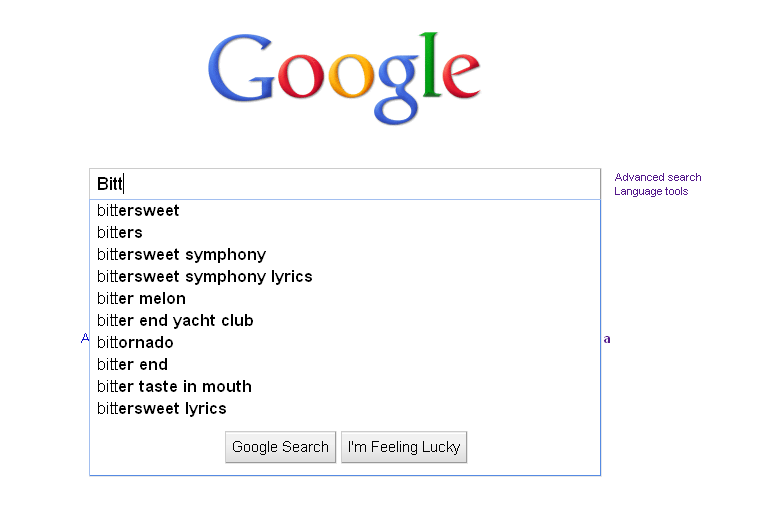
Google Autocomplete

MAFIAA Fire's 'Gee! No evil!' add-on attempts to restore "piracy related" keywords to Google auto-suggest/recommend

And finally, we come to the Google news I mentioned above. Several months ago, Google, in a bid to placate the entertainment industry, started to filter out piracy related keywords in their auto-suggest and auto-complete features. So when you typed in “bitt”, you now no longer get “BitTorrent” as a recommended search phrase, now does Google Instant take you to the result page for this term, um, instantly (you have to type out the whole thing and press enter). Of course, you could argue that “BitTorrent” is hardly a piracy related keyword (since most people simply use the term “torrent”, since “BitTorrent” is most commonly referring to the “official” BitTorrent client). Long story short, the people that brought you the MAFIAA Fire Redirector add-0n for Firefox, which allows ICE seized domains to work again as if ICE had just wasted a huge chunk of tax payer money on nothing in a bid to provide corporate welfare to the billion dollar entertainment industry, has a new add-on. The MAFIAA Fire “Gee! No evil!” add-on restores the banned keywords on Google auto-suggest/complete/Instant, with “Gee! No evil!” obviously referring to Google’s slogan of “Do No Evil” (which is quickly turning into an ironic slogan for the company). It just highlights how stupid these anti-piracy things are, when millions of dollars of research, development and deployment can be neutralised with a free-addon that probably only took a couple of days to develop.

Not much happening in HD/3D, so we’ll skip straight to …

Gaming

… gaming! All the focus is still very much on the Wii U, as I think people are still struggling somewhat to come to terms with just how the Wii U will work. The recent focus, and I guess this could also fall under HD news as well, is that what the Wii’s optical disc drive will be capable of.

Wii U Console

The Wii U console will have a Blu-ray like disc drive, but won't even be able to play DVDs

We already know that it uses a 25GB single layer disc format, which very much sound like Blu-ray. But just like Wii discs are like DVDs, but not really DVDs, I suspect the Wii U disc format will be a similar modification to Blu-ray discs. Which then begs the question, will the Wii U be able to play DVDs and Blu-rays? The answer is, unfortunately, no – the Wii U won’t be able to play DVDs or Blu-ray movies. When asked why this was the case, Nintendo chief Satoru Iwata explained that the high cost of royalties was the reason, although with DVD players available as low $20, this excuse is a little bit hard to believe. Iwata also said that because everyone already has a standalone player, there’s not much point in having disc player functionality in the Wii U. It may be true that standalones are everywhere, and that it’s probably better to play movie discs on standalones, the sad fact is that there are so many devices these days that, if one can do multiple functions, it’s much better than having a billion different things all trying to connect to the TV. So if the Wii U could play DVD and Blu-ray, especially when the hardware to do it is already present, then it could mean getting rid of a DVD or Blu-ray player. But it’s very likely the Wii U will have digital movie streaming services like Netflix, so perhaps Nintendo sees the future in digital, not in optical.

That’s it for this week’s edition. See you next week.