
Archive for the ‘High Definition (Blu-ray/HD DVD/4K)’ Category

Weekly News Roundup (10 March 2013)

Sunday, March 10th, 2013

BAM! A new game app, made by yours truly, out of nowhere! Other than the fact that I mentioned it way back in September, and then again in December … I guess you can say I had tiny bout of development slippage. But better late than never I suppose.

What’s it about? Well, unlike my last effort, this one actually has something to do with what we talk about here and on Digital Digest in general. One of the most absurd things about current copyright laws in the U.S. is the notion of statutory damages. It’s the law that awards up to $150,000 in damages per work. It made sense when it was about commercial piracy, one company ripping off another for commercial gain, but applying it to personal usage piracy or when there’s little commercial intent, is just ridiculous. From Jammie Thomas-Rasset‘s $1.92 million damages, to Joel Tenenbaum, to outrageous damages claims of $75 trillion. It’s the very thing that magnifies the actual cost of piracy, scares politicians into taking drastic actions, encourages law firms to scare people into paying “pre-trial settlements”, and helps to fuel the ongoing crusade against piracy.

Pirate This!

Pirate This is my new game app that highlights the ridiculousness of statutory copyright damages … a game with a message (and no DRM)

Pirate This! is my crappy little app (that somehow still managed to cost me over $1,000 to develop) that aims to highlight the unfairness of statutory damages by making a game out of it. You play as a “typical” web pirate, ‘downloading’ and ‘uploading’ music, movies and games. The aim? To “bankrupting the world, one download at a time’, as you try and increase the amount of damages being awarded against you, with 30 levels to notch up as much total damages as possible. It’s a short game (I have some additional content on the way though), but a game with a message. Apptivism, if you will.

So if you think current copyright laws are wrong, then you should buy my very reasonably priced ($0.99) app. If you don’t like the way ordinary citizens, whose only intention are to listen, view or play content, are being forced to pay thousands and more for downloading something that may have cost less than a cup of coffee, then buy the app (which also costs less than a cup of coffee). If anything you read here makes sense to you, then buy the app. Tell your friends, your family, even your enemies, and get them to buy a copy too. And then buy another two copies for yourself,  just to be safe. And if you manage to grab a pirated version of Pirate This online somewhere, that’s fine too.

Pirate This is currently available on the Google Play store and the Amazon Appstore for the Android platform, both DRM free (well, as much as each platform allows for anyway), and will be available on the Apple App Store soon for your iOS devices (currently waiting on the standard app review process).

And on that note, we come to the end of another weekly news … oh wait, we haven’t done the news thing yet, have we? OK, here we go …

Copyright

Most people don’t like DRM (well, I don’t), but we’ve largely had to live with it. What if not only do we have to live with it, we have to sit on it as well? That is perhaps the rationale behind the design and creation of the world’s very first DRM chair.

Clever in its simplicity, the DRM chair uses a simple sensor to count how many times it has been sat on. Once it reaches the usage limit (8, in this case), the chair disassembles itself via electrically melted wax joints. There’s a video in the link above where you can see it in action – all 8 times, before the DRM kicks in.

DRM Chair

A chair with DRM. At least it’s not “always-online”!

I hear you saying, technically, how can something analogue like a chair employ *digital* rights management? It’s true, and ironically, the only piece of digital-ness in the whole thing is the DRM system itself. Maybe that was the point the designers were trying to make though, with the project borne out of the brief to re-think “the world as we know it”, as part of The Deconstruction global design project/competition. And I think the DRM chair fits the brief quite effective, asking us to re-think the way DRM has infested our everyday digital lives, how we’ve come to live with it like some chronic incurable disease, even though its very premise is something quite alien to us in terms of our everyday dealings (like with chairs, for example).

And as frustrating as a chair that falls apart after only 8 sittings is, you know the good folks in the game publishing industry can always come up with something even more annoying. So when EA decided to go with the “always-online” route for the latest incarnation of SimCity, the only question was whether they would learn from the mistakes of Blizzard with their botched Diablo III launch or not.

“Or not”, as it happens, as SimCity’s launch was a complete disaster, and possibly even worse than the Diablo III debacle. Gamers were not only met with “server busy” error messages when they tried to play their $60 game, the whole waiting for a free spot thing was made as annoying as possible by essentially having no queue, with only a timer that re-tries a connection every half-hour (at which time, the server might still be busy). Even those that managed to log on were sometimes kicked off due to server problems, sometimes with hours of work wiped out as all saves are online based.

SimCity Error

SimCity is a series of error message dialog boxes, and also a game in there somewhere

A good DRM has to be invisible, and while it’s admirable that the developers of SimCity tried their best to add value to the always-online requirement, the end result is still a DRM that ruins all the hard work that was put into the game. A good DRM also needs to be field tested, as I’m sure the game is great when used on the mostly empty servers during beta testing.

It’s the little things that can makes gamers feel they’re being punished for some reason. For example, if there are online only saves, why not have a temporary offline save that can be queued for later upload if the servers are down? And if it’s not viable to have a full offline mode, then why not have a limited offline mode (a series of complex offline tutorials for example) that might keep users occupied while they’re waiting for a free server. Hell, even a mini-game might have helped!

Of course, all of this could have been avoided if EA had invested as much effort in traffic management as they did in coming up with ludicrous DRM!

From a DRM chair that nobody would really want, to a chair that everyone wants so much that they take part in what’s commonly referred to as a Game of Thrones. Yes, lame segue, but there you go. Game of Thrones is no stranger to the WNR. Not only is it one of my favourite sources of violence and gratuitous nudity (not to mention awesome storytelling and characters), it’s also very much linked to piracy.

Game of Thrones - Wildfire

How pirates (the ship kind) are dealt with in the Game of Thrones universe

HBO isn’t a stranger to piracy either, and that’s mainly because their shows are some of the most pirated around. Their shows are pirated a lot because they make great shows, and also because not everyone can afford (or want to have) an HBO subscription. And without a cable/HBO subscription, it’s hard to source their shows legally from elsewhere, at least for the new episodes. That’s a perfectly fair thing to do though, as that’s their business model, and everyone should hope they continue to make money so they can continue spend it on shows like Game of Thrones. But the problem arises when access to a HBO subscription isn’t possible, or you simply want to give money to HBO without having to have a cable subscription (eg. via iTunes). Or it’s like in Australia, where once upon a time you had to pay the best part of $80 per month just for the pleasure of watching an episode a week after the same season has already ended in the U.S.

These artificial delays are a real piracy promoter. Most reasonable people are willing to wait a short time, say 24 to 48 hours. But a wait of weeks or months is not reasonable, and so it’s unreasonable to expect people to not seek alternative sources for the same content. Whereas once upon a time I might have pirated episodes of The Walking Dead, now, I watch the 33-hour delayed version on what amounts to basic cable here in Australia. It’s a delay I’m willing to live with, and the added value of not doing anything illegal, HD video, 5.1 surround sound and closed captions more than makes up for the delay and the annoying ad-breaks.

Which is why HBO’s anti-piracy policy for the upcoming season will see the network trying to remove artificial barriers and delays as much as possible. A noble effort, but I think one that will still ultimately mean a lot of pirated downloads. HBO shows are a premium commodity, and a lot of people, rightly or wrongly, just can’t justify spending so much in order to watch a TV show. I’m not saying this is right, it isn’t, but that’s the reality, and that’s what drives piracy ultimately. But for those that can afford it, and are now able to pay for it and receive the latest episodes in a timely fashion thanks to minimal artificial delays, then do it and keep HBO going strong!

——

With The Pirate Bay constantly on the lookout for a new refuge, as the Javert-like anti-piracy agencies pursue the Jean Valjean-like website across the vast digital landscape (sorry, just had to jump on the Les Misérable hype bandwagon), the website may very well have just found a new sanctuary: North Korea!

The irony of the situation wasn’t lost on The Pirate Bay, as it seeks the freedom to freely distribute information in a country where that very freedom is very much not a guaranteed type of thing, but their blog post described this as a necessary evil in their battle against US corporations.

Apart from the fact that the daily traffic of The Pirate Bay probably equals the yearly traffic for the entire Democratic People’s Republic, this story also failed the smell test on many other fronts, for many others. Including one blogger who went on to ruin it for everyone by confirming this is most likely a case of clever IP spoofing. Oh well, it was fun while it lasted.

Still, it would have been fun to see the RIAA/MPAA go after the North Korea government owned ISP that may have hosted The Pirate Bay. I’m thinking the DPRK government probably doesn’t respond too well to lawsuits.

And so that’s another WNR. The lessons learnt? Don’t buy the DRM chair. Don’t buy SimCity. Buy a subscription to HBO if you can afford it. And most importantly, buy my Pirate This app (or pirate it, like the title of the game says).

Update 1: Despite my advice above, I did end up buying a copy of SimCity, mainly because I’m still a huge fan of the franchise, plus it was on sale. After finishing downloading the 3GB or so of files from Origin at 3am, to my surprise, both Oceania servers were still full at that time. I will try again later today.

Update 2: I’m taking the next weekend off and going on vacation (for the first time in 7 years). So the WNR won’t be posted at a later time (most likely next Tuesday or  Wednesday).
Weekly News Roundup (10 February 2013)

Sunday, February 10th, 2013

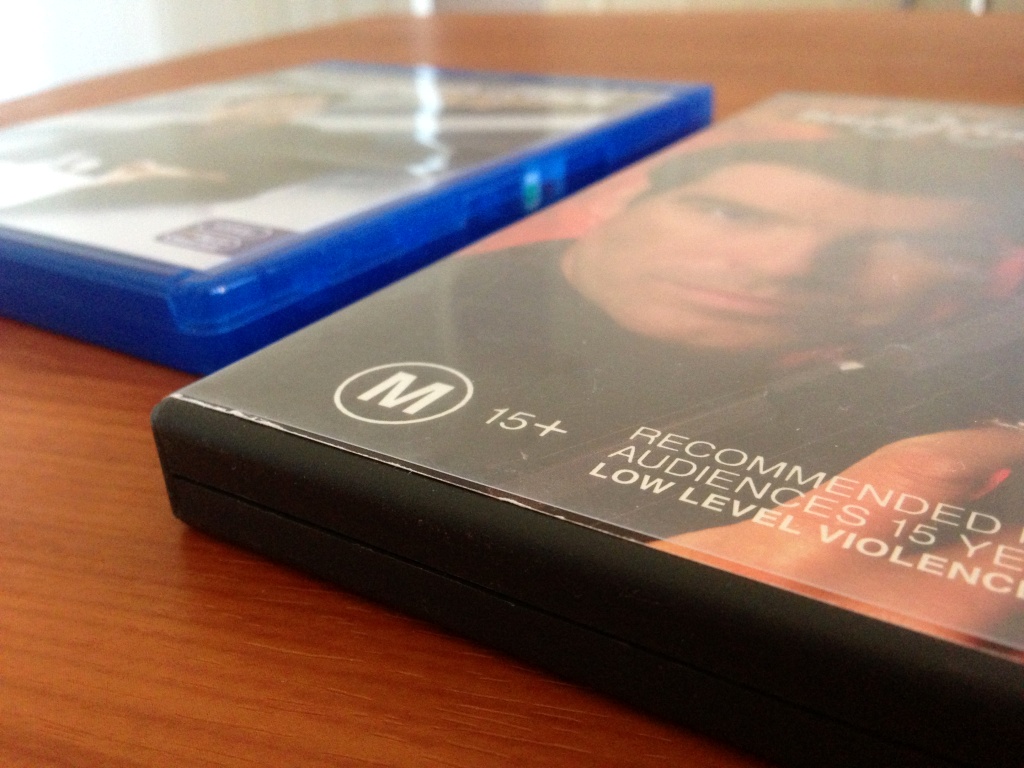
It’s surely some kind of milestone for me this week, as I’ve obtained the Blu-ray copy of a movie that was the first one I purchased on DVD. Back in 1999, when DVD was first launched here in Australia, there wasn’t much choice in terms of movies you can buy on DVD. In fact, you were lucky if the store had any at all, and even luckier if you had more than a dozen titles to choose from. Tomorrow Never Dies was the movie that I chose to be my first ever on DVD (incidentally, Daniel Craig’s Casino Royale was the first Blu-ray that I owned). And you can tell this was an early release because it listed “chapter search” among the special features.

Tomorrow Never Dies DVD and Blu-ray

My first DVD purchase from 14 years ago, and its Blu-ray replacement

I didn’t buy my first standalone DVD player (for $USD 1,000, no less) until much later that year, and I only had a computer with a DVD-ROM drive that wasn’t powerful enough to play the DVD without skipping a few frames now and then. But it was all great fun, mixing and matching software decoder filters and players and squeezing just extra bit of performance just so you can reach the magic 25 frames per second playback rate. A few months after my first DVD purchase, I started this very website in the hope of sharing all that I’ve learnt about DVDs.

But back to Tomorrow Never Dies. The 4.03 GB worth of MPEG-2 and Dolby 5.1 goodness on DVD has now been replaced with 41.3 GB of MPEG-4 AVC deliciousness and a pounding DTS-HD Master Audio 5.1 soundtrack. And despite Bond fans and critics generally dismissing the movie as middling at best, Tomorrow Never Dies remains one of my favourite movies for the sole reason that it introduced me to the world of DVD, almost exactly 14 years ago.

Oh yes, the news …

Copyright

It’s not often that I link to a Pirate Bay torrent here for you to download, but this one happens to be a must-watch, and it also happens to be legal. You see, this is a torrent to a documentary titled TPB AFK, about the infamous Pirate Bay trials and the people who were caught up in it all. You can also watch it on YouTube.

I haven’t seen the film except for snippets here and there, but for anyone interested in just what happens when one of these things actually go to trial, I’m sure it will be very interesting. I did see a clip regarding the personal attacks aimed at a professor who testified in favour of TPB co-founders. It’s a tired old tactic used by Big Money whenever someone questions their ideology, but despite the constant pressure, we are still seeing more and more research back up the idea that piracy isn’t as damaging as being hyped us, and that it might even have some positive things to contribute to the creative economy.

Nice gesture by supporters of TPB to send flowers to the home of the professor though …

——

CNET Download.com uTorrent

uTorrent, one of the most popular BitTorrent clients, is still available on CNET’s Download.com – but for how long?

Maybe this is exactly what Alki David had in mind when he sued CNET’s Download.com for distributing LimeWire – to force CNET’s parent company, CBS Interactive, to come out and mount a legal defence of peer-to-peer downloading technology. This is exactly what happened this week when CBS/CNET file a motion in court defending their distribution of BitTorrent clients, citing all the reasons that readers of this news roundup should be familiar with.

In case you haven’t gotten your head around this ultimate case of irony, CNET’s parent company is also the same company that owns the major Hollywood studio, Paramount. This is probably as close as you can get to hear Hollywood come out and defend BitTorrent!

I would like to assume this is what David and co had in mind when they asked the court to grant them a preliminary injunction against CNET from distributing all BitTorrent clients, that this moment was what David, a former victim of Hollywood’s own crusade against tech innovation, had wanted from day one. I would like to think this, as otherwise, this is a very dangerous path that has been taken and the repercussions could be severe if the court somehow finds a distribution technology to be liable for what is being distributed using it.

Still, it was funny to see CBS come out and make all the right points about BitTorrent, of its legal uses in the field of research, entertainment and even political freedom. But to be fair to Hollywood and major rightsholders, they’ve never  focused their efforts on going after BitTorrent, the technology, because I suspect it’s not the kind of thing that’s going to hold up in court. So there’s still hope that common sense will prevail in this case.

Not going after the technology, but going after those who use it illegally can also be fraught with problems too. With the U.S. slowing coming under their own six-strikes regime, it’s worth having a look at the same regimes in other countries to see just what may be in store. New Zealand has one of the toughest copyright laws and their own three-strikes system, but apparently, after 16 month and more than $USD 200,000 spent, all that the NZ version of the RIAA have to show for it is just over $USD 500 in fines received, from a single person.

Three Strikes

Three-strikes in New Zealand hasn’t really produced the right results

And that single person even denies being a major downloader, having little or no knowledge of how BitTorrent actually works (including that an upload component is included with every download).

RIANZ, New Zealand’s version of the RIAA, has defended the $NZD 250,000 cost, 60% of which went to sending out some 6,000 notices to Internet subscribers, saying that people who receive notices are less likely to continue downloading, which they will probably feel is worth the $25 per notice fee that has been imposed on them by the government (for their part, they want the fee lowered to $2). RIANZ even claimed last year that piracy rates have halved in New Zealand since the introduction of the law in September 2011.

Similarly, the France three-strikes experience also led to claims of a dramatic reduction in pirated downloads. It has been reported that the French have already spent millions of euros on their “Hadopi” system with few successful prosecutions.

Of course, not a single person has presented any evidence that music sales have increased thanks graduated response efforts in New Zealand, France and elsewhere. And even the claim of a reduction in piracy can be questioned, since I’m sure many have simply employed encryption or migrated to other downloading methods to avoid detection.

And there we have it, another (fairly short) edition of the WNR done and dusted. See you next week.

Weekly News Roundup (27 January 2013)

Sunday, January 27th, 2013

So for the first time in five years (may not be factually accurate), I missed sending out an issue of the WNR. Not only that, the entire website went down for a couple of days. Coming on the eve of the SOPA protests a year ago, you can be forgiven for thinking that this was something sinister (or a repeat of the protest), but in the end, it was just a series of unfortunate events really. You can read about what actually happened here.

So with two week’s worth of WNR to go though, you might be forgiven again to think that this will be a choc-a-bloc special edition, but actually, news-wise, it has been pretty quiet (although I may have been too busy kicking myself to have noticed all the going-ons). So let’s get started before I or someone else accidentally borks the website again.

Aaron Swartz

R.I.P. Aaron Swartz

But before we start, I want to say a few things about the untimely death of Aaron Swartz, things that I had wanted to say last week but didn’t get the chance to. My first emotion upon hearing the news was obviously anger. Anger at the way prosecutors hounded a young and talented man, who has already contributed so much, and had so much more to contribute, to his death over such a petty things as copyright. Especially when those on Wall Street that were responsible for nearly destroying the world economy for their own petty gains never got the kind of prosecutorial attention that Aaron was subject to.

But instead of focusing on these negative emotions, something that young Aaron might have been doing too before his final act, perhaps it’s best to simply remember Aaron for all of this contributions, from RSS to Reddit, to Creative Commons to Demand Progress. If we can all, in our small way, continue to carry the torch for Aaron and continue the great work he started, then that’s how we will win!

Copyright

American Assembly have finally released the full copy of their eagerly awaited Copy Culture Survey, after a sneak preview last October seems to hint that pirates are also the best buyers of music.

The survey, conducted in the US and Germany, attempts to paint a fuller picture of the piracy scene, one that’s a bit more complex than the “they’re all nasty little thieves that have stolen our precious” picture that the content industries often paint. Some interesting results were obtained, definitely, including that fact that almost half of the Americans surveyed have engaged in one form of copyright infringement or another, with 70% of 18-29 year-olds admitting to copying or downloading content.

An astonishing 80% of those surveyed also felt that it was perfectly acceptable to share copyright media with family members, the kind of casual piracy rate that Hollywood and the music industry absolutely loath, but are afraid to do much about because everyone’s doing it (brings to mind the infamous ineffective “home taping is killing the music industry” campaign).

The good news is that hard-core piracy remains in the domain of a very small minority, with only 3% admitting that most if not all of their media collection consists of pirated stuff.

Still, it’s probably a good time for the industry to take a good look at these numbers and find out just why so many people feel it is acceptable to commit acts of copyright infringement (or feel that it’s unacceptable, but still do it anyway), and what is the best way to stop it without alienating all your potential customers – an absolute majority of those surveyed were against the industry-led and government supported censorship plans, as well as ISP based snooping on an individual’s activities. Maybe then they will find a solution that benefits all.

Not holding my breath though.

Antigua Beach

Antigua: Sun, surf and legal “pirated” downloads. Photo Credit: margory.june @ Flickr, CC

And piracy may become just a bit more acceptable soon if the government of the twin-island nation of Antigua and Barbuda follow through on their plans to offer unlicensed content legally. Due to the US’s illegal blockade of the islands’ internet gambling services, the WTO, of all places, authorized the islands to take matters into their own hands and legally “suspend” $21 million worth of U.S. owned copyright every year.

With the U.S. still refusing to lift the blockade, the Antiguan government has finally had enough, and will proceed with plans to launch perhaps the world’s fully authorized, and legal, piracy website. Piracy is probably the wrong word though, since according to the WTO ruling, Antigua now owns $21 million worth of U.S. copyright per annum, so there’s nothing pirat-ey about it at all.

The U.S., as expected, aren’t entirely pleased with Antigua’s plans, calling it a “theft of intellectual property”. I guess it is “theft” in the same way that repo men are thieves, and if the U.S. government has a problem with this, I suggest they take it up with the WTO, who are the ones authorizing this “theft”.

I for one will look forward to getting my legal $15 boxset of The Walking Dead Season 3 burned onto recordable BDs that are labeled with black markers. A real collector’s item!

——

A year after helicopters, police dogs and SWAT teams swooped down on Kim DotCom’s New Zealand compound, DotCom is back in the headlines (is it me or does raids like this never actually happens outside of movies, not to to drug lords, organised crime heads, or corrupt Wall Street bankers. Do a search on Google for “police helicopter mansion”, and the DotCom raid ranks 9 out of the top 10 links for me, which says a lot about what the government deems “a serious offence” these days – I guess DotCom wasn’t too big enough to fail – not a fat joke).

Mega Launch Fake FBI Raid

Mega’s launch, complete with re-enactment of the FBI’s raid on the DotCom mansion a year ago

This time, he’s launching his new and improved Megaupload website, now simply called Mega. It might seem like an odd move to make what with the Megaupload matter still unresolved, and with the new site likely to be a huge lawsuit magnet, but I would hope that DotCom has consulted his legal team before making the move.

The improvement of Mega over Megaupload can be summed up in one word: encryption. Mega now allows users to publicly share files that they don’t necessarily want the public to be able to use. So instead of uploading a password protected ZIP archive, files can be encrypted, downloaded in its encrypted fashion and remain a useless jumble of zeros and ones until one receives the decryption key (privately, and hopefully through some more secure channel than email). This way, the download link can be made public to allow for easy downloading, but security can be maintained. Mega also works the traditional way if the encryption key is attached to the link itself, as the person downloading the file will then get access to the decrypted version straight away.

What seems like a simple enough improvement actually does a greater deal more in terms of protecting the operators of Mega from lawsuits. With all uploads being encrpyted, Mega can reasonably argue that there’s no easy way for them to identify just what’s actually in the uploaded files. And without this monitoring capability, they can argue that they are simply not aware of any shenanigans happening on their network.

And if you examine the design of the encryption feature more closely, this latter aim (of protecting themselves from lawsuits) may be a bigger motivator behind the use of encryption. Security experts have found that there are chinks in the armor when it comes to the encryption methodology used by Mega, the result of the website’s aim to be as “thin” as possible (ie. no plug-ins or add-ons required for normal usage, other than support for Javascript, which almost all browsers support natively). So for mission critical, top secret stuff, relying on Mega could be less than ideal (although I guess that’s a given considering you’re still uploading something to a third party site, over a public link).

In any case, it’s an interesting approach to cyberlocker storage, if not entirely new. It might help make the case that these kind of websites shouldn’t be responsible for its user’s activities (considering Mega now makes it impossible to fully monitor that), but it might also make the argument that DotCom and co are only taking a “see no evil, hear no evil” approach when they are fully aware that “evil” is going on.

And in scary news of the week, the MPAA is lobbying the US government harder than usual to obtain the right to operate a fleet of UAVs, or more commonly referred to as ‘drones’. No, it’s not some wacky and potentially lethal new way to fight pirates, and it’s not even in retaliation to The Pirate Bay’s own planned fleet of drone servers – Hollywood’s interest is far less sinister, and less interesting: using drones to film aerial shots that otherwise would have been done via helicopters and expensive cranes. So nothing to worry about. For now!

High Definition

With the 4K Ultra HD hype reaching deafening levels, the big question still remains how people can actually get their hands on 4K content. While Sony is investing heavily in online digital distribution, consumers are wondering if Sony’s other major format, Blu-ray, can play a role too.

The huge interest in 4K has led the Blu-ray Disc Association to launch a task force to study if it is in fact possible to shoehorn 4K onto a Blu-ray disc. The current Blu-ray specs only allow for 1080p content, and with the increased processing requirements of 4K, as well as the increases capacity requirement, on paper, it looks like 4K on Blu-ray is a lame duck.

DVD vs Blu-ray vs 4K

4 times as many information as Blu-ray, 4K, or Ultra HD, will require more storage space, and processing power, than what today’s Blu-ray discs and players can offer

Even if one manages to squeeze a poor quality 4K resolution video onto a 50GB Blu-ray disc using one of the existing optimized for 1080p codecs, players that are not versatile enough simply won’t understand the four times larger resolution of a 4K movie. But a PS3, with the right software update, may just be able to decode and output such a Blu-ray disc, although this also largely depends on whether the HDMI output of the PS3 is capable of carrying the signal (the HDMI 1.4 specs do allow for resolutions up to 4096×2160).

If backwards compatibility isn’t a primary concern, then a BDXL 128GB disc, combined with the more efficient HEVC video codec, may just do 4K quite well. People will need new players of course, but given the price of Blu-ray players these days, I don’t think people would mind replacing their players in the next couple of years again, especially if 4K TVs start becoming affordable.

My money is still on OLED making a bigger impact than 4K before this happens though.

That’s it for this bumper (not really) edition of the WNR. See you next week. Hopefully.

Weekly News Roundup (13 January 2013)

Sunday, January 13th, 2013

It’s back to work for most people, which sucks, but at least there does seem to be news again. Yeah, that’s just what you need after your first week back at work, a long and ranty WNR to read!

I’ll try to keep this as painless as possible, so let’s not waste more time.

Copyright

A new study has proved what most of us suspected anyway, that DMCA take-downs, and even closing down the likes of Megapload won’t really do much in terms of reducing the availability of pirated downloads from cyberlocker sites.

The problem, according to the study, is that the moment you remove one upload, many others pop up in its place. And even removing entire file hosting websites, either through censorship, domain seizures or a well coordinated international law enforcement action like with the Megaupload shutdown, won’t work because new sites will just pop up the next day. In fact, the closure of Megaupload may have had a detrimental effect on efforts to curb cyberlocker piracy, because it has fragmented the upload scene to the point where uploaders are uploading to multiple cyberlocker sites to avoid any one being taken down. It’s like blowing up a big asteroid headed for earth, only for it to fragment into thousands of smaller and still dangerous pieces still coming at you.

In other words, the cat-and-mouse game between pirates and those seeking to reduce pirated uploads is being truly, fundamentally and comprehensively won by the mice. Not surprising when the ratio is probably something like 17,374 mice to every cat, mind you.

Rapidshare logo

RapidShare is forcing its users to go legit with transfer caps, which has only managed to force some of its users to transfer to competing services

So what’s the solution? RapidShare’s solution to keep pirated content off its network is to implement a transfer cap system that went into effect in late November. Since then, RapidShare’s pageview traffic appears to have dropped by more than a third, although it has no doubt led to probably an even greater reduction in the amount of pirated content on the network. But all this means is that piracy was shifted to other sites.

For those file hosting providers that are not self-policing, the study suggests that perhaps going after payment providers that some of the more blatantly pro-piracy cyberlockers may be more effective, but the best way the study concludes, as it always has been, is to innovate. Instead of trying to reduce piracy, reduce the demand for piracy by introducing good value, innovative services that people actually want to use. An obvious solution that the content industry seems totally oblivious to.

Innovation can be expensive and prone to disaster though. But part of the reason why the content industries don’t seem to innovate as much as, say, the IT industry, in my opinion, is that the content industries (especially the music and movie mobs) seem to enjoy special protection through copyright legislation. This means they have very little incentive to do anything new when there’s already legislation there to protect your ageing business model, and plenty of opportunity to pay for new legislation. This is the kind of thing borne out of the initial desire to “protect” capitalism by some misguided notion that this means giving corporations whatever they want, the kind of thing which actually leads away from the free market capitalism model that the politicians creating these kind of laws actually believe in.

This was something raised by Republican Study Committee (RSC) staffer Derek Khanna in his copyright memo, now simply referred to as that “sensible” one. You know the one that was canned almost instantly after it was published by the RSC, and possibly the catalyst behind the  firing of Derek. This week, Derek, now out of a job, was able to speak  for the first time about the entire ordeal.

Derek Khanna

Derek Khanna, the RSC staffer fired after writing a sensible memo on copyright, speaks out on his ordeal

The RSC canned the memo because it claimed that insufficient review had gone into the memo before it was published, but according to Derek, there was nothing out of the ordinary for the process that went into getting his memo published. If anything, it received more feedback than what is deemed necessary.

What was surprising to Derek, but hopefully not to readers of the WNR, was the backlash the memo received from the content industries. All Derek had wanted was to start a debate, but it seems that’s the last thing movie studios and record labels, long since a protected species under the guardianship of the political structure in Washington, wanted.

As for the firing, Derek was unable to speak candidly about it for obvious reasons, but according to the The Washington Examiner, Tennessee congresswoman Rep. Marsha Blackburn, who has close ties to the record industry due to her district’s geographical location in the suburbs of Nashville, was somewhat instrumental in kicking Derek out of the RSC. So for now, the record industry (and the movie industry) remains a protected species, but one that has had its instincts dulled to the point where it isn’t able to live unassisted in the wild, not with competing species the likes of Apple, Amazon, Netflix and Spotify all flourishing on their own abilities. This is not a sustainable situation, in my opinion.

High Definition

If you had to sum up this year’s CES using using 5 unique letters and a single number, then OLED and 4K is all you need. The 4K hype seems to be gathering pace especially quickly.

Almost all of the major TV manufactures announced both OLED TVs and 4K TVs (or TVs with both), even though in my opinion, OLED is going to be the one that makes the most immediate impact. Boring old 1080p OLED TVs can tap into the vast amount of existing HD content and improve them immediately, but the lack of native 4K content should keep 4K away from the mainstream for a while yet.

Samsung Curve OLED TV

OLED might make the more immediate impact between it and 4K, as exhibitors at this year’s CES show off their OLED TVs, including this curved one

Sony has seen the content problem, and devised their own solutions of sorts – “Mastered in 4K” Blu-ray movies. Soon, Sony will release movies mastered from pristine 4K transfers (which isn’t actually something that hasn’t been done before, by many other studios, eg. Jaws) with extra focus on quality through the use of extra bitrate (those old enough will remember Sony’s similar attempt with Superbit DVDs). These Blu-ray titles, when upscaled and displayed on 4K TVs, is said to present a “near 4K” picture, which is actually kind of cynical when you think about it. That you can fluff around with a, no doubt super looking, 1080p stream and make people believe it’s “near 4K” probably says more about the lack of perceivable difference 4K TV is going to make, especially if one isn’t sitting within touching distance of the screen, or aren’t in possession of a 85″ monster. It’s also questionable whether simply throwing bits at an AVC/VC-1 encoding will actually dramatically improve the picture, diminished returns and all that.

Well at the very least it’s better than Sony’s current solution to the lack of 4K content problem, notably “loaning” 4K TV owners with hard-drives pre-loaded with selected 4K content. Their upcoming online 4K video distribution service does sound a bit more promising though.

The truth of the matter is, due to the limited nature of the human perception system in relation to small details, 4K TVs aren’t going to be the game changer that HDTV was, not unless you go above a certain size (at which point the pixel spacing problem may rear its ugly head). OLED’s superb and vibrant colours and deep deep blacks will give you a much bigger “wow factor”, even with existing 1080p content of which there’s a plentiful supply of. Now combine OLED and 4K, and you may have something that’s really really tempting, as long as you can stomach the astronomical price tag, that is.

Gaming

The December US NPD numbers are out, and once again, the Xbox 360 was on top. This is despite the global situation being reversed, with Sony’s PS3 just having managed  to outsell the Xbox 360 in the worldwide race, despite the Xbox 360 having had a year’s head start. But the situation in the US is actually getting worse for the PS3, with Microsoft happily promoting the fact that its Xbox 360, which sold 1.4 million units in December, sold more than twice as many units as the unnamed next best non-portable console, which had to be the PS3 because the Wii and Wii U sold nowhere near 700,000 units (475,000 and 460,000 units respectively for the Wiis).

The Xbox 360’s 1.4 million units, while impressive, still represented a 17% decline compared to December from a year ago. Still, the decline was smaller than in recent months.

Overall, 2012 was a disappointing year for the gaming industry revenue wise, at least compared to 2011. The age of the current generation of consoles is a major factor, but the lack of new game releases, 29% less than 2011, also contributed to a very lackluster year. On average though, each SKU generated 8% more unit sales and 11% more revenue, so there’s definitely some silver lining in this cloud.

Well, that’s that for the first real news week of 2013. See you next week.

R.I.P Aaron Swartz

Weekly News Roundup (23 December 2012)

Sunday, December 23rd, 2012

The fact that you’re still reading this means that the world did not end. I for one feel disappointed. All that hype for nothing. Or maybe I was just disappointed that I actually had to write this WNR, although I guess between doing this and post-apocalyptic scrounging for canned goods all the while on the lookout for cannibals, this wins out. Slightly.

Maybe because people were too busy stockpiling supplies of toilet paper, long life milk and batteries, news was a bit light this week. So we should get through this pretty quickly, so you can get back to last minute frantic holiday shopping, or back to ignoring your relatives.

Copyright

The Office of the United States Trade Representative (USTR) has finally released their annual “notorious markets” list, listing all the best places where you can get your piracy fix, or something like that. Actually, it’s a list of copyright do-no-gooders, which is supposed to shame them into doing something or another. Or rather, it shames the governments of the countries that these websites or physical markets are located in.

No surprises really, with The Pirate Bay and isoHunt leading the BitTorrent indexer category. Also unsurprisingly, Megaupload and Demonoid does not grace this year’s list – other cyberlocker websites, including Rapidgator, Putlocker and the Ukraine based Ex.ua, are still listed.

Netflix

Netflix has done more to fight video piracy than the closure of Megaupload

I like how the document goes into great detail about the successes during year, most notably the Megaupload thing, but there’s hardly a mention of any positive effects in terms of trade and revenue, which is the whole point behind anti-piracy and counterfeiting, isn’t it? It’s been nearly a year since Megaupload was shuttered and the whole file hosting industry was shaken to its core, yet has anything really changed?

Spotify and Netflix seems to have far more effective at reducing piracy and increasing revenue than the closures of LimeWire and Megaupload respectively.

——

It took a while, and after a lot of threatening letters and whatnot, Warner Bros. and Intel (well, Intel’s daughter company Digital Content Protection) have finally launched a full scale lawsuit against a company that makes a HDCP circumvention device.

Some backgrounder on HDCP – it is the copy protection used in HDMI cables. Without a successful “handshake” between two HDCP compliant devices, video and audio functions via the cable will cease to function. If you’ve ever had a problem with a HDMI input not showing anything, and a problem that was fixed by restarting one or both of the devices involved, then HDCP was the culprit.

HDMI Cable

Is Hollywood really worried about people copying movies via HDMI cables?

Early DVI inputs did not support HDCP, and so many legacy devices (such as monitors, TVs, projectors) could not be made to work with newer devices that mandated the use of HDCP. HDCP is also responsible for preventing HDMI to component/VGA conversion. That is unless you manage to circumvent HDCP, which isn’t as hard as it sounds since it was successfully cracked back in 2010. And so a range of devices went on the market that finally allowed those still with HDCP-less DVI or component only devices to work with newer HDMI only ones, or to record things like PS3 gaming footgage for review or walkthroughs. I specifically won’t mentioned using HDCP-less HDMI to copy Blu-ray or DVD  movies, because nobody in their right mind would do this when there are far simpler solutions around.

Anyway, Warner and Intel have threatened to sue on many occasions, but if I’m not mistaken, this is the first time they’ve decided to actually take the next step. The company being sued is Freedom USA, an Ohio based company that manufacturers several such devices under the brands SIIG, SABRENT and CE Labs.

Of course, the fair use argument is strong in this case, in that an argument can be made that the primary use of these devices isn’t for copyright infringement (again, there are far easier ways to copy Blu-ray or DVD without having to record via a hacked HDMI stream), but to allow the use of legacy devices. How Warner Bros. and Intel can prove that Freedom USA’s devices were used to infringe the copyrights owned by Warner Bros., I just don’t know. Just because a device could be used in that way, doesn’t mean it is commonly used that way, or is the reason why people buy it. I suppose the argument could be made that cable shows are being recorded this way, but even with HDCP uncracked, analog copies can still be made easily by anyone with a semi-decent PC capture card.

High Definition

Remember when Walmart debuted their “disc to digital” program, and you had to bring your DVDs or Blu-ray to the store so you get the “privilege” to pay $2 to $5 for the SD or HD version of the film on VUDU? The service even stamps on some kind of ink on your disc as to ensure you don’t try to cheat them and try to use the same disc to buy multiple version of the digital copies.

Others simply ripped their DVD and Blu-ray with free software, with no need for fees or invisible ink, or even a car trip to the store.

Seeing the gap between these two consumer friendly/unfriendly extremes, Best Buy has started beta testing a way for consumers to do the disc to digital conversion at home. Users can pay a similar amount to get a UltraViolet version of their existing DVD film, or pay a little bit more to “upgrade” to the HD version, with 3,500 titles currently supported. Blu-ray discs are currently not supported though.

CinemaNow Disc to Digital

Convert your DVDs to UltraViolet digital copies using CinemaNow Disc to DIgital

So no car trip, and no need for invisible ink (are they really worried people are gonna pass around the same disc just to trick the store into accepting their $2 or $5, for a SD version that’s probably not even worth that much anyway). Still not as easy as ripping your own discs, but at least you do get a cloud hosted downloadable or streaming version that some may find more convenient than having to lug an external HDD around all the time.

I would never pay just so I can get a digital copy of a film I already own. I might buy the Blu-ray edition that comes with a UltraViolet copy, but I still prefer discs for the movies/shows that I like, and for the rest, I can probably rely on one of the subscription VOD services. I end up spending less on movies every year, and still end up watching more this way. Which is the way it should be.

And that’s it for the week. Have a Merry Christmas, Happy Hanukkah, or just a nice, relaxing (yeah right) few days off. See you next week, unless nothing happens during the week (a high probability).