Archive for the ‘High Definition (Blu-ray/HD DVD/4K)’ Category

Weekly News Roundup (6 September 2015)

Sunday, September 6th, 2015

A lot of news this week, but as is the sign of the times, most of it had to do with streaming. The big news coming out of the IFA consumer electronics show in Berlin was Samsung’s unveiling of the world’s first UHD Blu-ray player. UHD is the next big hope for TV manufacturers, and maybe the last best hope for physical media.

Here’s the news roundup …

Copyright

The MPAA’s piracy paranoia has been highlighted again this week via detailed published on Amazon’s MPAA compliance page. With security guidelines that seems to have been taken from the CIA (with a few additional paranoia-fueled security precautions), the MPAA is taking no chances when it comes to having their content stolen (content, that Amazon helps to host on its AWS platform).

So baggy clothes are out, as are non transparent food containers (which you might use to hide storage devices). Random searches, body pat-downs are what employees at Amazon (those poor, poor souls) are expected to comply with, all in the name of preventing the very same movie leaks that happens all the time. I guess the MPAA must find the idea of pirates infiltrating Amazon, impersonating an employee (or maybe even actually getting a job there) so they can somehow hack into Amazon’s system, break through the encryption/security system that’s standard practice for hosting companies, all just to steal some pre-release content, all very plausible. Just as plausible as award season screeners DVDs that get sent to almost everybody getting ripped and put online? You’ll have to ask them.

Netflix Remote

Netflix 4K streaming getting ripped and uploaded online?

So instead of worrying about people putting USB drives in their sandwiches in non-transparent food containers, perhaps they should be more worried about Netflix’s 4K content somehow getting ripped and uploaded online, despite the use of a new copy protection mechanism (HDMI 2.0’s HDCP 2.2). Or maybe they should learn to stop worrying and love the bomb, the bomb in this scenario being things getting pirated. Okay, love is perhaps too strong of a word, but surely they must realise by now that if something can be used/played, it can be ripped. The sane approach would be to stop worrying about something that’s almost certainly going to happen, and learn to accept the fact and try to work around the problem. Then there’s the MPAA’s approach …

High Definition

Microsoft, Google, Netflix, Amazon, Intel, Mozilla and Cisco have joined forces. To do what? To come up with a new video codec, of course. So that’s software, hardware, networking, web services, video and content delivery and Internet software all covered, but despite this, the chance of something new coming in and taking over from HEVC, despite HEVC’s expensive and difficult to deal with licensing terms, appears slim. It’s very difficult to create a new codec and get the entire industry to accept it, especially when most, for all of its flaws, have already accepted HEVC and have adapted their strategy to deal with it. Then there’s the problem of patent claims, and it’s very hard to come up with any video codec these days without somebody trying to claim an existing patent from the myriad of technologies and concepts being used.

Good luck to them though, because the reality is that we really do need a viable royalty free alternative to HEVC.
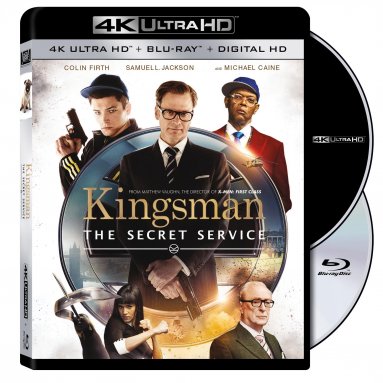
The Kingsman Ultra HD Blu-ray

This is what 4K Ultra HD Blu-ray cover art will look like when discs become available early next year

The problem of HEVC royalties will be apparent with Ultra HD Blu-ray discs that will start being available towards the end of this year, as HEVC is one of the supported codecs for the format. At the IFA consumer electronics show in Berlin, Samsung this week unveiled the “world’s first” Ultra HD Blu-ray player, although with it not being available until early next year, it may not actually be the world’s first Ultra HD Blu-ray player available on the market.

Fox also took to the same stage to announce their Ultra HD Blu-ray movie line-up. New releases starting next year will be simultaneously available on standard Blu-ray, Digital HD and UHD Blu-ray, with catalogue titles like Exodus: Gods and Kings, Fantastic Four, Kingsman: The Secret Service, Life of Pi, and X-Men: Days of Future Past all being made available on the new disc format.

It’s difficult to predict whether UHD Blu-ray will be a success or not, give the hard time Blu-ray is having at the moment and the public’s growing predilection towards all things digital. So despite the big IFA show in Germany, a lot of the news stories I’ve written this week has been about streaming (and most streaming news these days gets published on my new site, Streambly). For example, Amazon’s move to allow offline playback for selected titles in their streaming library, I think, is huge news. It’s the one thing that still bugs a lot of people about streaming services, that there’s no easy way to access the content you’ve subscribed to when you’re away from a reliable Internet connection (or if your home Internet is temporarily down). To be honest, I’m surprised rights-holders allowed this to happen, since this really blurs the lines between streaming and downloading, and I would have thought this kind of thing would eat into their, and Amazon’s, transactional VOD and digital sell-through business.

Amazon, Netflix and Hulu Plus

Hulu, and Amazon too, adding new features, content to compete with Netflix

The other big news is Hulu’s addition of a $12 no-ads plan, which finally makes it acceptable to many who finds the idea of paying money and still having to put up with ads detestable. With Hulu also signing deals left and right – including stealing Epix from Netflix, which will bring a lot of hit movies to Hulu to strengthen the one area that Hulu is extremely weak on at the moment – it looks like Hulu is set to go head to head with Netflix full on. $12 might be higher than Netflix’s $9, but you do get a whole host of new TV shows with Hulu that you would otherwise have to wait a year or more for on Netflix, so if Hulu can get their movie offerings up to scratch, they may have a chance.

Gaming

So much for that rumour. The Xbox One Mini is not real. We now know it’s not real because Xbox boss Phil Spencer tweeted “not real” when asked about the possibly of a Blu-ray-less Xbox One. Good to know.

——

That’s it for this week. Remember to keep an eye on Streambly for streaming news (although most will only be relevant to Australian visitors). See you again soon.

 

Weekly News Roundup (30 August 2015)

Sunday, August 30th, 2015
John Oliver

It was a real pleasure seeing John Oliver in person at the Palais on Thursday

I had the good fortune (and quick online ticket ordering skills) to catch John Oliver performing at the Palais Theatre here in Melbourne last night – it was a fantastic show from a fantastic comedian. He really doesn’t like our Prime Minister, which isn’t all that strange because nobody likes him, not even people from this own political party. All very funny stuff.

This week’s news stories are not that funny. Not just because I’m not a particularly good comedian (or a comedian at all), but because these stories were never meant to be funny anyway. Most of the stories you read here carry a fog of sadness, and at best, they’re funny in a “I would laugh if this wasn’t so depressing” kind of way. I bet you can’t wait to read them now!

Copyright

Some more Windows 10 headlines this week, as it’s been revealed that some old games with outdated DRM won’t be supported by Microsoft’s new OS. Many of these old DRM toolkits were notorious when it comes to being security risks, and Microsoft has said enough is enough when it comes to these being supported on their brand new OS.

Windows 10

Windows 10’s default privacy settings are disconcerting

Unfortunately, Windows 10 is also getting a bit of notoriety due to Microsoft playing fast and loose with the new OS’s privacy rules. Apart from the bizarre Wi-Fi password sharing feature, which shares an encrypted hash of your Wi-Fi password with your email, Skype and Facebook contacts, via Microsoft’s server. Microsoft’s justification is that this means you no longer have to share your password with you people (which may be more insecure), but sharing anything with so many people, especially a group as diverse as your contacts list (many of whom on mine I’ve only ever talked to once, and probably only via email), can never be that secure. The fact that the password hash is also stored on Microsoft’s servers, is also troubling.

And with this, along with other troubling behaviour from W10, including sending the results of local searches to Microsoft, plus the company’s data sharing with a well known anti-piracy firm, and also add to this last week’s news story about Microsoft’s controversial service agreement changes, has now led to many torrent trackers banning users who use the OS.

It does seem like an overreaction to me, to ban an entire OS. Yes, the privacy in Windows 10 is an issue, but there are workarounds, plus some of the claims are more speculation than actual privacy intrusions (for example, Microsoft has been working with anti-piracy firm MarkMonitor for years, not just with Windows 10).

I’ve been using Windows 10 for a couple of weeks now (after accidentally agreeing to upgrade from 8.1 – stupid dialog box popping up while I was typing something), and it’s clearly Microsoft’s best OS since 7. More and more people will start to use it, and to ban everyone just because of a few problems, and a few misconceptions, doesn’t seem quite right.

——

Spotify Mobile

Please don’t mess with Spotify’s free plan – it’s the only thing keeping piracy at bay

Some in the music industry are not happy with Spotify, because the company isn’t earning much from the ads on the free tier of the subscription service, and so isn’t paying out much, despite the huge number of people listening to songs. Spotify argues that the free tier’s real competition is with radio (also free to listen) and piracy, and that it should be used as a promotional tool, rather than a revenue earner. Those in the music industry argue that this devalues their work, and ultimately affects their earnings.

So the pressure has been building on Spotify to drop their free tier, and basically do what Apple Music is doing – a long trial, but after that, it’s pay or go away. But Spotify warns that if this were to happen, the only real winner would be piracy.

To me, it’s clear that free Spotify’s real benefit is its anti-piracy effects. Not only does it help convert pirates to paying customers, through ad revenue, it also convinces others of the value of upgrading to a premium plan. And most importantly, it’s helping to create a new generation of music listeners that have never had to resort to piracy just to listen to a new song (Taylor Swift songs aside). And this has to be worth something to the music industry.

High Definition

Those keeping up with my weekly Blu-ray revenue updates will have noticed the very depressing trend lately. Lack or really good releases haven’t help, but Blu-ray revenue seems to have plateaued. But new data shows that discs are still quite popular, and still making studios most of their money when it comes to home entertainment. In fact, Nielsen’s data shows that 20% of users still exclusively buy movies on discs.

The data also shows that SVOD is changing how people watch their movies. It’s making them go to the movies less, and also buying less TV shows on discs. And I bet if you actually asked one of the respondents, they would tell you it’s also making them buy less crappy movies and TV shows, the kind of stuff that’s very prevalent on Netflix and others, and stuff you used to buy from the bargain bin (or go watch at the cinema, ideally using a discounted ticket offer, when there’s nothing else to do). I know it’s saved me a lot of money already, and that has made me far less guilty about my disc buying habits!

Gaming

Xbox One Controller

What is this obsession with adding or removing Blu-ray drives to Xbox consoles?

Add another one to the “Xbox One Slim” rumor pile. Or rather, this one is for the Xbox One Mini – a Xbox One console that removes the Blu-ray drive, making it only a digital only console.

I’m not sure I quite believe this one. While removing the Blu-ray drive is the easiest way to make the Xbox One both smaller and cheaper, I’m just not sure if we’re ready for a digital only game console. Maybe the Internet situation in the US is a lot better than here in Australia, but I wouldn’t want to wait ages to download GBs of game data. And what happens after you fill the HDD? Start deleting games and then re-download them later if you want to play them again – what a waste of time and bandwidth! A digital only game console would only work if it had a huge (I mean 5TB+) hard-drive, and when fiber broadband becomes the norm.

This particular rumour also brings back memories about the obsession of adding a Blu-ray drive to the previous Xbox console – a popular and long running rumour about a Blu-ray add-on drive for the 360. I’m sure it was mostly spread by PS3 fans, mocking 360 owners for not having Blu-ray capabilities and for Microsoft’s backing of HD DVD. But now that the Xbox has a Blu-ray drive, all the rumours are about getting rid of it. Kind of ironic!

——

That’s it for another week, same bat-time, same bat-channel, next week!

Weekly News Roundup (26 July 2015)

Sunday, July 26th, 2015

A nice and short one for you this week, but very likely still much longer than next two week’s WNR. The reason for the abridged versions of the WNR in the coming weeks is that I’m going on a much needed vacation, and it might be hard to find time to write up news stories, as well as the WNR.

No time to waste, lots of packing and planning still left to do, so here’s this week’s news stories …

Copyright

KickassTorrents Logo

KAT suffers Google penalty

Scammers may be profiting from Google’s decision to remove KickassTorrents pages from their search results. Google appears to have applied some kind of penalty to the site, pages from the site have either been removed or down-ranked (possibly down-ranked to position 1000+, something that Google typically does when it brings down the ban-hammer). Without official KAT pages in Google’s search results, using KAT related keywords now bring up a bunch of unofficial results, many stealing content from the real KAT and inserting their own (often adult) ads, or even malware sites offering fake KAT branded downloads.

This complete site removal doesn’t seem to be piracy related, since Google’s anti-piracy penalty doesn’t seem to down-rank sites so much. Plus whatever is happening seems to be unique to KickassTorrents, with no other piracy sites appearing to be affected.

Putting on my webmaster hat for a moment, the way KAT moved their site to a new domain could be responsible. If they did not use the “permanent” 301 redirect code, and instead used the default “302” redirect, or if content wasn’t redirected and was instead duplicated on both the new and old domains, then Google could have problems with this (although a quick redirect check now doesn’t seem to indicate this is the actual problem). Google does provide a tool that lets website owners tell them ahead of time about site moves.

But this kinds of highlights the problem with Google. It’s really hard to get any sort of concrete feedback from them when it comes to penalties (Google wants to keep website owners confused intentionally so they can’t find loopholes to exploit in relation to Google’s algorithm), and even if KAT fixes whatever was causing the penalty, it won’t be lifted immediately (may take 6 weeks, 3 months, 6 months … nobody really knows the answer). So it could be a while before official KAT links are back on Google’s results pages, and that’s assuming the people running KAT ever figure out what the penalty was for.

On a somewhat related note, uTorrent’s site and downloads were blocked by Google Chrome earlier in the week, similar to what Google did to major torrent sites earlier in the month. Google’s anti-PUP (potentially unwanted software) algorithm has been turned up to 11 in recent weeks, and it has caught out many sites. Some were complete false positives and some were semi-false positives like with the major torrent sites and uTorrent (these sites advertised or had downloads that included bundled offers and things like toolbars, which Google considers PUP. But these are not as malicious as actual fake downloads and scam-ware, which is the real problem Google is trying to tackle).

Google Auto-complete BitTorrent

Google seems to be going after piracy sites, but that’s not really what’s happening

For the casual observer, all of this seems to add up to a new war against piracy sites, but for now, it all appears to be coincidences or unintended consequences or Google’s ongoing war against, um, a lot of different groups (webmasters who try to game the Google search rankings, bundle ads providers, malware distributors …).

At least with bundled offers, you always have the option to not install them if you pay close attention to the installer. What’s less optional these days is insecure DRM that potentially opens up your system to all sorts of nasties. The last place you’d probably expect to be forced to install DRM is during a long flight, but that’s what United Airlines is forcing passengers to do if they want to watch movies on their own personal devices. And not only that, users also have to install the insecure Flash plug-in.

But the blame doesn’t really lie with United, but with paranoid Hollywood studios that genuinely fear users will go to all the trouble to book a flight on United just so they can rip movies, most of which have been out on DVD for years. You and I might think this is ridiculous, but Hollywood’s paranoia goes way beyond reason.

High Definition

Sony Blu-ray

Blu-ray revenue stagnating – is it because of digital downloads and streaming, or the lack of hit releases?

Blu-ray revenue is on the slide, with a recent week’s revenue figures falling to levels not seen since 2010. Those that follow our weekly Blu-ray revenue analysis will have seen the signs, and there is no doubt that since about the second half of last year, Blu-ray’s meteoric rise has been stalling.

A lot of it has to do with the poor release slate for this year. There have been some big releases this year, including Gone Girl, Interstellar, Big Hero 6, Fifty Shades and American Sniper, but these cannot compare to Thor, Frozen or The Lego Movie (but mostly Frozen). Interestingly, I think Blu-ray’s fortunes will pick up later this year and next year when Jurassic World, the new Avengers movie, Inside Out and the coming attractions M:I 5, the last Hunger Games movie and the new Star bloody Wars, all make their way onto Blu-ray in 2015 and 2016.

So it’s a bit early to write Blu-ray’s obituary, but things have definitely slowed down.

It’s easy to blame things like streaming for the potential downfall of discs, and services like HBO Now and Hulu that gives you access to newly aired TV episodes may affect TV box set sales, for new release movies, Blu-ray and DVD is still the best choice for many.

Speaking of Hulu, the ad-supported streaming outfit is considering going ad-free via a higher priced subscription plan. Considering how many people freaked out when Netflix experimented with in-house ad-spots for its original programming a while back, I’d say going ad-free can only make Hulu more popular (currently 19 times less popular than Netflix, according to user download data). It always struck me as weird to be forced to watch unskippable ads even after I’ve paid a monthly fee, regardless of how new the content is compared to Netflix.

—–

That’s it for the week. Wasn’t as short as I thought, but this will have to do for the next couple of weeks while I’m holidaying it up. Talk to you soon.

Weekly News Roundup (19 July 2015)

Sunday, July 19th, 2015

Welcome to another edition of the WNR. Windows 10 is just around the corner, and most believe it will be the Windows 7 to 8’s Vista (if you know what I mean). I’ve been using Windows 8 for about 4 months now, and it really isn’t as bad as people make out, although definitely not as good as it should be. So I’ll be upgrading to Windows 10 as soon as possible (and by as soon possible, I mean until others have tried it on the Surface Pro 3 and found no real problems with it).

Here’s this week’s news …

Copyright

Censorship

Piracy site censorship doesn’t stop piracy, and may actually give piracy sites a boost

There’s more evidence this week that piracy site censorship just doesn’t work. In fact, not only does it not work, it seems to actually help boost piracy, by giving undue publicity to sites that have been blocked. A new study from Italy gives evidence showing a dozen different sites all gaining in popularity after being blocked in Italy, including sites that had almost zero profile in the country prior to the banning. One site even managed to enjoy a 1000% (that’s one *thousand* percent!) increase in search engine traffic after the blocking took place, all largely thanks to the media (and online) attention gained by the block.

It’s almost as if the list of blocked sites has become a list of must-visit piracy sites, and the numerous proxies sites (many of which were set up to make easy advertising dollars) that spring up for these blocked sites also help with the visibility of these sites on search engines.

None of this will make any different to rights-holders though, since to them, any action, no matter how pointless, is better than actually addressing the real issues at hand. Embracing change and innovating is just too hard and risky, in their minds.

One unwanted change that might be happening is this: DRM for JPG. It sounds like a terrible idea at first thought, and it might just turn out to be one, but the standards committee, JPEG, says that the DRM will mainly be for privacy reasons. The DRM could be used, for example, to protect your private photos – and if these photos were to leak online, the original owners can simply activate the DRM controls and make the photos unviewable. It could also be used to prevent government surveillance, as one research paper noted recently (although my guess is that the encryption used in the DRM would be a trivial to break for any half competent government agency).

All of this sounds nice, but you just know that once the DRM is in there, privacy won’t be the only application for it. News and photo sites will use it to prevent copying of images (although they can’t prevent the simple print-screen), and porn sites may even use it to protect their content.

High Definition

The Simpsons Season 17 Blu-ray

Studios treating Blu-ray like a mass consumer format, when it was always just a niche format, along with inconsistent releasing has ruined the format, says Blu-ray producers

Blu-ray is a failure. This sounds strange coming from someone who has purchased hundreds of Blu-ray discs, and will continue to purchase them, but given the expectations behind the format, it certainly can’t be considered a total success. And this expectation, Blu-ray producers say, is exactly why studios have failed Blu-ray.

A panel of top Blu-ray producers at Comic-Con let loose on studios and how the Blu-ray format as mismanaged. They say that instead of being the next DVD, Blu-ray was always going to be a niche format, a format that only those that wanted to absolute top picture and audio quality would want. For most people, they say, DVD (and now downloads and streaming) is more than good enough.

But studios expected more, and they will label anything less than their expectations as a failure, including Blu-ray. The panelists fear that studios will make the same mistake with 4K Ultra HD Blu-ray, which they say is even more of a niche format than Blu-ray (fair enough, considering how few people will have 4K TVs by the time the new disc format launches at the end of the year).

The producers also criticised studio greed in relation to “double dipping” (making people buy the same content over and over again) and the lack of commitment to releasing (such as suddenly stopping releases of season box sets half way through the collection), all of which led to consumers losing confidence in the format.

And that confidence is shifting to other ways to watch content, such as streaming. With Netflix alone now accounting for 36% of all peak download traffic in North America, consumers are definitely voting with their feet. However, while Netflix is popular, a quick browse through their catalogue still shows just how much content isn’t on there. While some of it are on rival subscription streaming platforms, but even when you combine the content on Netflix, Amazon, Hulu and HBO Now, there’s still a huge swathe of content that’s missing, especially newer content. DVD and Blu-ray is the the studio’s platform of choice for these types of content, but it may not be the consumer’s choice.

New Netflix UI

Netflix is great, but most of the stuff you want to watch won’t be on there

And this is where piracy comes in – to fill the gaps between consumer demand and studio supply. Which is why I completely disagree with the statement made by Shaun James, the chief executive of Australian streaming platform Presto. James says: “It’s a really hard argument for a pirate to run when you’ve got a multitude of services from $10 per month, to say it’s too expensive, I can’t get it, I can’t afford it – that’s a really shallow argument.”

Shallow or Straw Man? Presto is the exclusive streaming providers for HBO content in Australia, but you cannot watch any new shows or even old episodes of Game of Thrones on it, because Presto’s owner, cable operator Foxtel, has locked up these programming exclusively to their cable platform. The cheapest package to get Game of Thrones in HD on Foxtel costs USD $40 per month, and requires a cable or satellite set up that isn’t available everywhere – so the argument “I can’t get it, I can’t afford it” still seem fairly valid.

With that said, there will always be people that are unwilling to pay for content no matter how cheap, or easily available, it is. These people are not the problem though, because you can’t lose money from people that were never going to pay.

Gaming

PS4 DualShock 4 Controller

PS4 leading in hardware and software sales

It’s not the hardware, it’s the games. When it comes to making money off video games, this is certainly true. This is why game companies often take an initial loss on the game console to gain market share, so they can easily recoup the losses via game sales and licensing.

And for the current generation, Sony is definitely the winner so far when it comes to market share. Ubisoft’s earnings reveal just how far ahead the PS4 really is at this stage, with 27 percent of Ubisoft’s game sales happening on Sony’s platform, compared to just 11% for the Xbox One (the 360 and PS3 were also on 11%, just to give you a comparison of how poorly the XBO is doing).

It’s not game over yet though for Microsoft’s console. The backwards compatibility addition should help, but only price cuts will help the Xbox One catch up.

——

And on that note, we come to the end of another WNR. Hope you’ve enjoyed reading. See you next week.

Weekly News Roundup (28 June 2015)

Sunday, June 28th, 2015

Not a very long WNR today, felt a bit too depressed while writing the two main copyright stories this week to write too much. But you have to admire the lobbying efforts of Hollywood – they have reach as far as Australia, and closer to (their) home, reach that’s powerful enough to cause massive disruption to how domain names work on the Internet. This is not what I’m depressed about though. No, it’s the way how efficient Hollywood can be at getting things done, and the fact that they’re doing all the wrong things, that’s making me feel like a sad panda today.

Still, as they say, the show must go on, and so here’s this week’s news stories.

Copyright

The MPAA is lobbying the Internet’s naming authority on changes that could make it easier for cyber criminals to steal the identity of businesses. It’s all part of the strategy by rights-holder groups to make it harder for domain registrants to protect their identities via domain privacy services. Groups like the MPAA says that this makes it more difficult for them to find information on the people who own domains linked to piracy, and the Internet’s naming authority, ICANN, appears to be buckling under the intense lobbying pressure to do something on this front. ICANN has released a report which proposes to ban domain privacy services for any domains used for commercial reasons.

While this would definitely make it easier for the MPAA to get domain ownership details, assuming the details aren’t faked (although ICANN has a rule that allows registrars to suspend domains if they suspect the details are fake), they can already do so easily via DMCA requests.

But by no longer allowing businesses to use domain privacy tools, digital rights groups and domain registrars say that it could allow cyber criminals to harvest domain data, which could lead to phishing attempts and even identity theft. Namecheap, one of the biggest domain registrars (and one of the good guys, who did a lot in protesting against SOPA), has also expressed concern about these proposed changes and have even mass emailed their own customers to ask them to try and stop these changes.

So once again we have the MPAA and their ilk trying to mess with the Internet, make it worse for everyone, just so they can have it a tiny bit easier time of it in their futile crusade against piracy.

Censorship

Australian government gives in to Hollywood demands for censorship

Speaking of futile, Australia’s parliament has passed controversial changes to copyright law that grants private companies the avenue to seek a nation-wide censorship of websites that they disagree with. Australia now joins a small exclusive club of countries that censors the Internet, all in the futile attempt to stop the piracy problem (without addressing issues such as availability and pricing).

To make matters worse, the language contained in the passed legislation is so vague, that I and many others fear that the law will be abused by private companies to their own end. The language says that website whose “primary” purpose is to “facilitate” piracy will be targeted, but these terms are not defined clearly enough, according to critics. The law could also be interpreted in a way that would be eventually used to target VPN providers.

In other words, the Australian government (with bi-partisan help from the opposition) has just given Hollywood what they want – we’ll see if blocking The Pirate Bay (a block that can be easily bypassed by anyone that cares), which will happen sooner rather than later, will have any effect on piracy without addressing the high pricing and poor legal availability of content in Australia.

High Definition

Dolby Vision

HDR promises to make everything brighter, better – but you need HDR content plus a 4K TV capable of displaying HDR

With 4K TV sets quickly approaching mainstream status, TV manufacturers are already on the look-out for the next best thing. And HDR, or high dynamic range, may be it. For those that don’t know, this essentially increases the difference between the minimum and maximum brightness in a scene, giving it a more dynamic (and therefore, better looking) picture. This involves both an encoding process to encode the movie with HDR information in it, as well as a display technology that produces TVs capable of displaying the increased dynamic range.

HDR capable TVs are still somewhat rare, and content is even rarer, although if you’re an Amazon Prime subscriber, you’re in luck, as they’ve just become the first streaming platform to offer HDR streaming, for free. It’s only limited to Amazon’s original series ‘Mozart in the Jungle’, for now, but you can bet the likes of Netflix won’t be far behind with their own HDR content (especially since the company has already stated the importance of HDR in the past).

Another first, but for another streaming platform. HBO Now is just starting out in the streaming game, but already, HBO’s standalone OTT product may be cutting its exclusive ties with the cable operators. HBO will air the tennis TV movie ‘7 Days in Hell’ on its own HBO Now platform before it airs on its cable channel. It’s become increasingly clear that streaming is fast approaching being a “first air” platform, rather than just showing left-overs from linear TV – it reflects the changing ways people are watching content these days.

——

Well looks like that’s it for another week. Hope you’ve enjoyed this latest edition of the WNR, see you next week!