
Archive for the ‘Copyright’ Category

Weekly News Roundup (13 May 2012)

Sunday, May 13th, 2012

Welcome to another edition of the WNR. As promised, the annual Blu-ray sales stats analysis has been posted, complete with lots of graphs that, really don’t say much. Glad to have gotten that out of the way for the year, and I wish more things could be annual ones, rather than ones that you’d had to do every week!

Monthly things are good too, and next week should see the next monthly installement of our captivating NPD US video game sales analysis (yes, even more captivating than the title of the piece). Xbox 360 is set to win the crown again for being the least suckiest console, in terms of sales, for April.

And Happy Mother’s Day to all the moms and mums out there, including my own!

A fairly quiet news week that had me struggling to find anything interesting to talk about, but let’s get started anyway on this fairly short WNR.

Copyright

In copyright news, with UK ISPs starting their filtering of The Pirate Bay, hacktivist group Anonymous, or rather, an offshoot of the “organisation”, decided that payback was necessary, and promptly DDoS attacked the website of Virgin Media, one of the first ISPs to implement the blocking.

Unfortunately for them, criticism of the attack came from the most unexpected source: The Pirate Bay! It’s not only that the choice of the target wasn’t that appropriate, as Virgin Media and other ISPs had been fighting the block in court, at their own expense, for some time now, but TPB also condemned all forms of denial of service attacks, saying that it’s just another form of censorship. The Pirate Bay believes that there are better ways to protest the blocking of the website, including setting up your own proxy, or by joining a local branch of The Pirate Party. The proxy thing is interesting, because a Dutch court has just ordered their country’s Pirate Party to shut down their reverse proxy for The Pirate Bay. With no such ruling yet in the UK and elsewhere, if enough people create their own proxies, then it may force the courts to rethink their stance, or at least it would make enforcing the ruling a right nightmare.

The issue of cinema release windows has been raised recently, in relation to revenue and piracy. But for a long time now, a small war has been brewing between cinema operators and movie studios over the length of theatrical runs. Up to 90% of revenue from ticket sales during the first week of a theatrical release goes to the movie studios, with the share slowly decreasing over the typical 17 week release window. What this means is that, for movie studios, a shorter release window makes little difference to them financially, while it may be a huge thing for cinema operators. And when you add web piracy to the mix, where longer windows may encourage more piracy, as the disc rental, sell-through and digitally distributed versions of the movie fails to materialise quickly enough for today’s “I want it now” consumers, some of which will seek out piracy as an alternative – so there’s definitely extra incentive for studios to want a shorter theatrical run. Which is why the CEO of Time Warner predicted this week that, in a bid to fight piracy, theatrical release windows will need to be shortened, while DVD and Blu-ray prices will have to be lowered as well.

I don’t really have a problem with the latter, since value proposition wise, buying discs has started to feel like bad value compared to services  like subscription streaming. But perhaps with cinema release windows, a fairer profit sharing regime might be needed to ensure cinema operators don’t lose out, while cinema operators may also need to do more to get the same amount of “bum on seats” in a shorter period if release windows need to be shortened  (a price reduction would help, and would also help directly reduce piracy at the same time).

IPR Copyright Warning

The new warning screen you'll soon see on DVDs and Blu-rays, giving people more incentive to actually download movies

And while cheaper discs would definitely help to fight piracy, the issue of convenience also plays a key part these days. A pet hate amongst even disc lovers are those unskippable sections at the start of the disc. You know, the studios trailer, copyright notices, anti-piracy trailer, “on home video” trailers, “coming to a cinema near you” trailers, a promo for Blu-ray, more studio trailers, then you get to the main menu to start the movie, and some legal liability notices, and then and only then does the movie start (and it usually starts with another studio trailer). Copyright notices are probably the worst of the bunch, as at least, some trailers can be interesting (but still very annoying if unskippable). Unfortunately, things are about to get worse, as the MPAA and their allies in the War Against Downloads have decided to double the number of potentially unskippable copyright messages on discs. The new screen will feature the tag line “Piracy is not a victimless crime”, and leaving aside the point that I don’t think anyone actually thinks it is, it’s not really true is it. Lots of cases of piracy is completely victimless, and even sometimes beneficial to the very victims that the message is referring to.

But the message is beside the point. The point is that movie buyers, you know, the people that do the right thing, are actually being punished for doing so, especially since the pirated version would most definitely have removed these warnings, or made them easily skippable. And if you want to make people aware of the copyright issues, there are much better ideas that are already being deployed in other countries. For example, in the UK, some Blu-rays provide a “thank-you” message that applaud buyers for doing the right thing, while still relatively ineffective (a case of  preaching to the converted, perhaps), it does at least portray a more positive message than “you might be going to prison for 5 years”. Now I’m not saying that convenience is the only reason people are downloading pirated movies, but if something is free and easy to get to and use, while the paid for one is less accessible and less consumer friendly, then it does make the decision a lot easier.

And I think this is pretty much the reason behind comedian Louis CK’s little DRM-free experiment last year, in which he sold a show of his for $5 on his website, and did it without bothering with any sort of DRM. Sure, the show was pirated (it’s not as if DRM would have prevented it), but it also made a million dollars in a couple of weeks, and people who paid for it had just as usable of a copy of the show as the people who had downloaded it. Louis is back at it again though, this time releasing a couple of audio-only shows in the same method, and at the same price (which may hurt sales a bit, I suspect).

High Definition

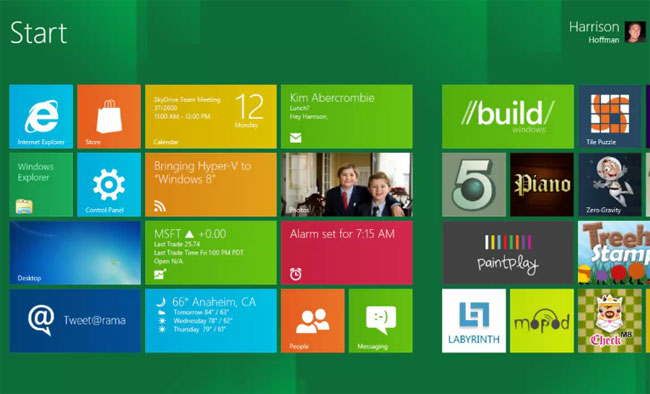
Things like DRM also adds to the licensing cost of implementing playback support, and it’s partly the reason why Windows 8 will remove native DVD playback from the list of standard features that come with the upcoming OS.

Not only that, the standard “home premium” equivalent version of Windows 8 (simply called “Windows 8”) will not have support for media center either, so you’ll have to spring for the “Pro” version to have it as a (paid) option.
Windows 8 Metro

Windows 8, the standard release, won't have DVD playback built-in - Microsoft says that people are no longer interested in disc based movie playback on PCs - do you agree?

So of course, this means Blu-ray playback support is not going to be included either. Microsoft says the declining of interest in disc based movie playback and the steep licensing fees are the reasons for the exclusion. That may very well be true, but Microsoft also has its own digital distribution strategy, so that may be the cynic’s view of why it’s happening.

But there will still be commercial options for DVD and Blu-ray on Windows 8, and there may even be a free alternative too via VLC, and you’re probably better off using those solutions anyway.

Personally, I like to pretend Windows Media Player doesn’t exist.

And on that note, we end this week’s WNR. See you next week.

Weekly News Roundup (6 May 2012)

Sunday, May 6th, 2012

Hope you had a good Star Wars Day on May the 4th. Unfortunately, I totally forgot about it, as otherwise it would have been a great occasion to finally watch my Star Wars Blu-rays, which I had been saving until my TV problem had been solved (which it was, last week).

You know how three of Digital Digest’s URL were removed from Google due to a bogus DMCA complaint? Nearly 6 weeks later, all three of the removed URLs have finally been reinstated. It could have happened a bit sooner, but Google messed up my first counter-notification and failed to process it, forcing me to re-submit one about 2 weeks ago, which was finally processed this week. Luckily, none of the URLs were bringing in a lot of traffic from Google to cause any major disruptions, but it could very well turned out to be an expensive problem, but not expensive enough to actually warrant getting  lawyers involved!

A pretty good news week, not that all the news was good news, but just that there were plenty of interesting news items to write about, so let’s get started.

Copyright

We start with news of the blocking of The Pirate Bay in the UK, something that had been coming admittedly, but the required court order was finally handed down this week.

A good number of UK ISPs will have to start blocking access to The Pirate Bay within the next couple of weeks, with some ISPs having already activated their filters. The filtering appears to be in the form of both a DNS filter, and an IP filter. The DNS filter will make sure typing thepiratebay.org (or thepiratebay.se) will no longer resolve to the correct IP address for the website, and the IP filter will ensure that even if you knew the IP address, you won’t be able to access the website.

VPNReactor

A VPN service is a worth investment if you value your privacy, or want to access geo-locked legal content, but there are also free (albeit limited) alternatives such as VPNReactor

Of course, this kind of filtering is easily circumvented. By changing to a un-filtered DNS server, such as the ones provided for free by OpenDNS or even Google, it will allow the TPB domains to fully resolve. But this doesn’t really help in the case where the IP address has also been filtered, and so you’ll have to rely on VPNs or proxies to get your TBP fix. Generally speaking, using VPNs for BitTorrent is a good idea these days, as even if you can access TPB and get the Magnet links needed, chances are, your BitTorrent activities (for popular torrents) are still being monitored by one or more agencies (some to involve you in a mass lawsuit, others as part of ‘graduated response’ monitoring regimes). With the right VPN service though, your BitTorrent speed shouldn’t be affected too much, while your activities should now be anonymized. But do check to make sure what the VPN service’s privacy policies are, as some openly state they will hand over server logs to third parties upon request, which kind of makes it pointless if privacy is your biggest concern. VPNs also have the added bonus of allowing you to access geo-locked content from places like Hulu and Netflix, if they offer the option to choose the country where your “fake” IP address comes from.

The news of the block made headlines around the world, and as such, actually drove more traffic to The Pirate Bay. And with plenty of articles and blogs covering the possible solutions to the block, I wonder if all this has done is to actually make more people aware of TPB. And rather than scare them into not using BitTorrent, it may have only helped to push them to make the extra effort to conceal their activities. It could end all rather badly for future anti-piracy efforts if the trend towards VPNs and other anonymizers continue.

And ISPs are also well aware that these kinds of filtering will largely be pointless, and many are now calling on the entertainment industry to find other more effective ways to combat piracy, rather than scapegoating everything on ISPs. A better way, according to ISP Virgin Media, would be to offer more “compelling legal alternatives”. They specifically named Spotify, as the lawsuit that resulted in the blocking was a music industry led one, but it applies just the same to home video. And as you’ll see later in this WNR, consumers have already started to embrace these “compelling legal alternatives” by voting with their hard earned cash.

There's no place like home T-shirt

An IP address is not a person, just like the owner of a phone account is not necessarily the person that made a specific phone call, a judge says

A very interesting legal development happened across the Atlantic too this week, as a New York judge finally took the time to write a detailed ruling on why IP address evidence by themselves are not sufficient to identify individuals. Judge Gary Brown used the same phone account analogy that I’ve used in the past, but hit the bullseye by comparing the use of this type of IP address evidence to an individual who pays the telephone bill being linked with a specific phone call. Judge Brown also raised another interesting point regarding the widespread use of Wi-Fi routers, but not in the traditional “hijacking” scenario where unauthorized use of your Wi-Fi connection may have been responsible for the infringing actions. What the popularity of Wi-Fi does mean, according to Judge Brown, is that it proves more and more authorized individuals are sharing the same Internet account, and this again makes it hard to ascertain just who actually performed the action that broke the law. The copyright groups will argue that, as the owner of the connection, they are always liable for how it’s used even if they’re not at all aware of how it is being used (say goodbye to Wi-Fi hotspots), but again, this doesn’t seem to apply to phone accounts (otherwise, payphones wouldn’t exist because the owners of the payphones would be liable for all illegal activities being conducted on these phones).

I believe the the lack of a deeper understanding of technology by the judiciary has been responsible for the misuse of IP address as evidence, something that copyright groups have been more than willing to exploit. But as the technical proficiency of judges improve, I think we’ll see a lot of these accepted notions challenged. For one, I would like a further examination of the role data transfer and usage plays in infringement, in that how much data must be downloaded (and uploaded) before infringement actually occurs, and how the data has been used. For example, if I attempted to download an infringing file , say from RapidShare, and that download stopped at 95% (thus making the file completely useless), have I committed copyright infringement? And if I make a successful download but never use the file, am I still liable (even though I’ve done no harm to anyone). For uploads, if I only uploaded a single bit of data to a BitTorrent swarm (let’s say, a single zero), am I just as guilty as someone who’s been seeding for weeks?

If Hollywood want to continue their obsession with finding a legal solution to the web piracy problem, instead of focusing on innovation, then these are the issues that need to be cleared up.

High Definition

There are some encouraging signs that, despite the piracy problem, home video revenue is on the rise again, and it’s largely thanks to the Internet.

The biggest rise came in the area of subscription streaming, with an amazing 545.5% increase in revenue in just a year. Of course, a lot of it comes from disc rental subscribers transitioning to digital, and disc rental revenue was expectedly down, but all this shows, and it’s something that I alluded to earlier in this post, is that consumers are making the choice towards streaming. It could be because it’s convenient, or it’s good value considering how much content you have access to “on tap”, but probably because of both, and it shows that people are happy to use the Internet for legal videos, even if it costs money.

The only thing streaming can’t do effectively right now is to offer ubiquitous high quality HD streaming. The minimum broadband requirement for semi-decent HD that you’d want to watch on your 60″ TV seems to hover around the 10 Mbps mark, and while that’s achievable for many, it also means that a large chunk of their connection has been saturated, and by just a single video stream. Here in Australia, those with 10 Mbps or higher are probably in the minority. Until most homes are capable of receiving at least two such streams at the same time without saturating connections, I think Blu-ray will still have to carry the majority of “HD bits” being delivered to people’s homes. And accordingly, the latest sales results still shows Blu-ray sales rising. With the decline of DVD sales also slowing down, it has allowed the HD format to offset most of the revenue losses (overall, revenue was only down 1% from a year ago for disc based sales).

So to make HD streaming, and possibly even Blu-ray quality streaming, a reality, what we need now is a faster Internet network for everyone. One of the ways to deliver it is via high speed fiber (or fibre, depending on where you’re from), and Google has been building fiber towns all over the US in anticipation. Even in Australia, our government is committed to connecting 93% of homes to fiber, with speeds up to 1Gbp. Even at 100 Mbps, it is still more than enough to stream two full Blu-rays. So you’d think, given the trend towards Internet based video streaming, Big Content should be rejoicing at the advancements in network speeds that will allow for the continued evolution of web based streaming. But once again, the piracy issue turns out to be the one that movie studios are most concerned about.

NBN Fibre Rollout

Here in Australia, the government is rolling out high speed fibre broadband to 93% of households, something that has Hollywood scared (photo credits: NBN Blog)

The MPAA supported AFACT group here in Australia have already issued dire warnings in regards to the country’s fiber project, about what pirates could be doing on super fast networks. And so instead of focusing on the opportunities (the same opportunities that the likes of Google, Apple and Amazon will probably exploit to their, and the consumer’s, advantage), the focus has been on new legislation to curb piracy on the still unfinished network. This week, Google’s fiber town projects have also attracted the same kind of fear and uncertainty from Hollywood’s major studios.

Now, being afraid that a pirate might be able to download an entire Blu-ray disc every 4 minutes over a 1Gbps connection is a perfectly reasonable response. But the thing is that, however scared Hollywood is at this prospect, high speed Internet is coming to people’s homes with or without their support, and no amount of fear-mongering is going to stop it. So instead of trying to DRM the whole Internet and legislate it to death, why not take a breath, calm down, and try to see the possibilities – that instead of fretting about a pirated Blu-ray disc being downloaded in 4 minutes,  how about seeing the opportunity to offers consumers the ability to buy, stream and even download and burn their own Blu-ray discs in a nice and easy to use service that’s at a reasonable price, and beat the pirates at their own game.

But that would be too easy, wouldn’t it, so expect more pressure on the legislature to help “protect” the entertainment industry from progress, as the fiber (and next-gen 4G) rollout continues.

Well, that was the week that was. Hope you enjoyed this edition of the WNR. See you in 7.

Weekly News Roundup (29 April 2012)

Sunday, April 29th, 2012

Going to be a short one this week I think, mainly due to the lack of news. I really did try hard to find interesting stuff for you this week, but after the 10th “Tor goes DRM free” story, I gave up. Spent the week playing around with my new 60″ Samsung TV, really like it so far. I’m currently “breaking-in” the plasma TV, something that I’m sure is 90% myth. During the break-in period, it is suggested that you turn the brightness/contrast/cell light to something low, while avoiding black bars or any image that uses the pixels in an uneven way – all for the first 100 hours. This is supposed to reduce the chance of burn-in and reduce image retention (the temporary kind). I never did this with my first plasma, a Pioneer 4th gen purchased (for ridiculous money) back in 2004, and it’s still going fine in regards to the aforementioned, and while I did it with my 58″, and the temporary IR was still above more than normal on that set. Ask HT enthusiasts and they’ll tell you that you have to do it. Ask the manufacturers, and none of them tell you it’s necessary. But I’m still inclined to do it – better safe than sorry I suppose.

Copyright

As stated earlier, not a lot of interesting news this week. All of the ones I did find were copyright related, so I think we can get this done quite quickly if we put our heads down and power through.

YouTube Content ID

German court says YouTube's oversensitive Content ID still isn't good enough of an anti-piracy measure

We start in Germany this week, where a regional court has accused YouTube of not doing enough to combat piracy, despite the use of Content ID (automatic content scanning) and a well implemented take-down regime. Instead, it wants YouTube to add in things like word filters and to be even more proactive in stopping piracy. I’m sure subsequent appeals will change the ruling once again, but this latest ruling seems excessive to me. Content ID is already well known for giving lots of false positives, and I can’t see how adding a word filter on the video’s title, which will be so easy to circumvent by real pirates, will do anything other than increase the rate of false positives (so “community bulletin” gets filtered because of the TV show, “Community”, for example). It just seems to me that this is a ruling from a judge that’s not clued in to how YouTube actually works, and what kind of role the website now plays in terms of content promotion (a lot of content holders actually hope people upload unauthorised clips, for promotional purposes).

With relatively little fanfare, the US House of Representatives passed the CISPA cybersecurity data sharing bill last week by an overwhelming majority, 248 to 168. With so much attention having been garnered for SOPA (and PIPA), it may be surprising that the so called “Son of SOPA” passed so easily. There may be some good reasons for this though. First of all, I’m not quite sure CISPA can even be called the “son of SOPA” (at best, it’s a nephew). CISPA is aimed, not at copyright infringement, but at cybersecurity threats, such as hacking. And while SOPA allows the government to take specific action, CISPA is more about data sharing between ISPs and government agencies. And I also think that people may be suffering from post SOPA-fatigue and so have been less willing to make big noises about CISPA. And most importantly, unlike SOPA, CISPA has the support of major tech companies such as Facebook and Microsoft, and this made an organized opposition difficult.

None of this is to say that CISPA shouldn’t be opposed, because it’s appears to be yet another one of those “short-cuts” in due process that I talked about last week. The justification is that because something happens so frequently, like web piracy, that somehow the law no longer really applies. So instead of needing a warrant to force ISPs to hand over data about a suspect, CISPA does away with this and many other requirements, and that has serious implications to privacy and due process. Which is probably why its passing through the senate is far from being certain, and the threat of a presidential veto still remains (despite last minutes changes to the bill).

Tor Logo

Publishers Tor and Forge will now only sell DRM-free e-books - could this be the beginning of the end for e-book DRM?

Some positive development in the e-book world. Last week, I highlighted the evilness of DRM for the e-book industry, in that it’s now being used more for market protection and anti-competitive behaviour than as a means to stop piracy. And that while publishers are being suckered in to supporting and even specifically requesting DRM to be present, even though in the long run, the anti-competitive nature of it means they’ll be the ones that ultimately loses out. So it was interesting this week to hear that major Sci-Fi publisher, Tor, a subsidiary of Macmillan, have decided to ditch DRM for all of their e-books. Books from Tor, and related brand Forge, will now only be available in DRM-free form. The publisher puts the decision down to demand from consumers, as well as authors.

In the long run, going DRM free should allow Tor’s e-books to be sold by more online distributors, including the smaller players, and this should help avoid a situation where Amazon has a virtual monopoly on the e-book market, where they’re free to use their market power to force publishers (and authors) to accept less and less money. It’s a step in the right direction, and hopefully it will start the DRM-free revolution for e-books, following in the footsteps of the music business. Now, we just need the same thing to happen with games and movies! But I suspect Hollywood will be the last bastion of the pro-DRM movement, and they’ll attempt to hold out for far longer than what is necessarily a healthy decision for the industry.

So how can you avoid getting sued or even arrested, despite making and sending 200,000 pirated DVDs over an eight year period? Easy, just make sure you’re a 92-year-old war veteran, and you’re only sending discs to support troops fighting overseas. I don’t know what’s more impressive, that a 92-year-old (84 when he started) not only learned how to copy DVDs (that DVD DRM really isn’t working, is it?), with up to 200 discs being produced a day at the peak of his operation, or that he’s avoided legal scrutiny all this time. Fearing from the bad publicity of going after a 92-year-old war veteran with the noble goal of supporting the troops, even the MPAA could only come up with a meek statement about being “grateful” that their products “can bring some enjoyment” to troops fighting overseas (that’s not what they were saying in declassified documents though).

So I guess not all piracy is bad, right MPAA?

And that’s all we have this week. Short and sweet. And at least 50% of that last statement was factual. See you next week.

Weekly News Roundup (22 April 2012)

Sunday, April 22nd, 2012

So, are you underwhelmed or what? Of course, I’m talking about the new re-designed Digital Digest homepage (and a couple of other section home pages, as well as the top navigational bar), that “little project” I first hinted at a couple of weeks ago (I told you it was “little”). The old homepage had been designed for yesterday’s lower resolution monitors, and so it was a bit too narrow and a bit too long. It’s now been simplified to highlight the most important stuff, namely news and software updates. And there’s also a new News section to go along with these changes (as well as changes to the actual news pages). The top navigational bar, and even our site logo, has also been renovated, with the top bar taking a little bit less vertical space, and reducing the number of links shown there by highlighting only the most important sections. A few pages remain unchanged, as I ran out of time with my self imposed deadline of yesterday, so I’ll slowly re-work these pages to get them into line.

Despite a busy week in which I also had to exchange my Samsung plasma TV for a new one due to an unrepairable fault (so getting a nice and new 2012 model 60″ on Monday as a no-cost replacement, which is an alright outcome), I also managed to write the March 2012 US video game sales analysis, which you can read here. Nothing too surprising, with the Xbox 360 still leading, although the PS3 is catching up a bit. Mass Effect 3 dominated the month and sold 4 times as many copies on the 360 than on the PS3 (in the US, at least).

Onto the news roundup then …

Copyright

Starting with copyright news for the week, Google guy Sergey Brin issued a warning this week that web freedoms are in peril, thanks to increasing attack by interested parties.

Apple and Facebook

Apple and Facebook, the root of some of the evil, according to Google's Sergey Brin

Those interested parties of course include the entertainment industry, who are increasingly painting themselves into a corner as the enemy of the Internet (which I personally don’t think is a very good strategy), governments who do the bidding of the entertainment industry, and perhaps controversially, the likes of Apple and Facebook, according to Brin. The inclusion of the two tech giants, and Google competitors, may seem a bit cynical, but Brin’s main point is that the closed, proprietary nature of Apple/Facebook (probably needs to add Amazon to the list too) means that they have full control of what can and cannot be done on their platforms, which goes against the principles of the open web. But while Google embraces open source and should be commended for it, anyone who makes websites will know that Google themselves are not exactly that transparent when it comes to a lot of issues, and their practical monopoly on the search market gives them the same sort of power that Apple/Facebook derive from having more proprietary platforms.

With Apple under fire for eBook price fixing from the DoJ, and Apple firing back by calling Amazon a monopoly, a lot of what Brin is saying does make a lot of sense. The role that DRM plays in all of this is actually quite interesting. Even though it was originally designed to prevent piracy, DRM these days are far more effective at solidifying monopolies and preventing competition. By locking proprietary formats to hardware platforms, and tying DRM to these proprietary formats, it all sounds a bit more sinister than simple copyright enforcement. Most publishers are stupid and paranoid enough to actually want the DRM, but this insatiable appetite for unreliable technology is also driving out the small players from the market, one such small player revealed this week. The cost of DRM, the actual financial cost, is quite large for a new start-up – often in the tens of thousands, not even including the technical knowledge requirements. This means that as long as publishers are still keen on DRM (to offer them that false sense of security they crave), it benefits the big guys at the expense of the smaller players, and the monopolistic situation this creates in the end probably hurts the publishers more than had they not used DRM (DRM mostly only prevents casual piracy, the type where people share the same eBook with friends, as opposed to straight up piracy where pirate groups can easily circumvent DRM and upload the content online for all the enjoy).

AFACT vs iiNet

AFACT vs iiNet, The Final Chapter - the good guys, iiNet, wins in the end in your typical Hollywood style ending. Ironic.

Good news, that may soon turn to bad in Australia – our second largest ISP here managed to actually win a copyright case against the Hollywood-backed AFACT. So for now at least, ISPs have been found to be largely not responsible for the actions of its subscribers. The High Court also found that ISPs does not need to deal with infringement notices that are not accompanied by a court order – going totally against the precedents being set in other countries, where ISPs have been made the scapegoats in the war against piracy. And as this was a High Court decision, the highest court in the land, the win is final, and no more appeals can be granted. An obviously embarrassed AFACT, who have long been accused of taking orders directly from the MPAA (with Wikileaks documents showing that’s exactly what happened with this legal case), will now deploy a new tactic. They have blamed the existing copyright laws for not being biased enough towards rights holders, and want them changed so that, in the future, they could easily win lawsuits such as this one. This is where the possible bad news may come from, as the government bails out the AFACT by implementing new laws. So it’s just like that old saying, if you can’t beat them, have the rules changed so you can!

I’ve always felt that making ISPs liable for the activities of their users, especially when most ISPs don’t even have the capability to monitor the user’s downloads, was suspect. I’m not quite sure if the phone or electricity company analogy fully applies to ISPs, but I don’t think it’s that far off. These companies, like ISPs, provide a service to users, and users are liable for how they use the service. The only difference is that ISPs are made to be different under the DMCA (there’s no DMCA or equivalent for the phone company, for example), but they really shouldn’t be. The content holders will argue that it’s much easier for ISPs to spy on their subscribers and to stop their illegal activities. But just because it’s easy, does it really mean that it should happen? By all means, the ISP should take action if there’s a corresponding court order, but for “infringement notices”, which are merely untested allegations, why should the ISP be liable for something that’s hasn’t even been established to be illegal yet?

Rapidshare logo

RapidShare is rapidly turning into the MPAA and RIAA's best friend, with a new manifesto that destroys the rights of its users to appease its new friends

There’s probably a better term for it, but for me, the issue of web piracy has suffered from a lot of “legal slippage”. What I mean is that, because the problem has been so widespread, and the impact of the problem so exaggerated by the usual suspects, there’s this acceptance that corners need to be cut in order to “streamline” the legal process. So due process is out, and even basic distinctions like “evidence” and “proof” has been blurred to the point where “allegation” has become “guilt”. The lobbyists have pushed for this outcome, the government has been supportive, and the tech companies have been scared into accepting it all. Which is why it was disappointing, but not too surprising, to read RapidShare’s manifesto on “Responsible Practices for Cloud Storage Providers”, a defeatist piece of article that signals the surrender of the cloud storage industry to the power of the entertainment lobby. According to the manifesto, of the various aspect of DMCA takedown request, including its validity, the only factor that actually matter is the actual formatting. If it’s properly formatted, then RapidShare says that the takedown request should be deemed valid, even if it’s for something ridiculous like removing open source software. So, in RapidShare’s eyes, it’s perfectly reasonable for me to get a competitor’s RapidShare account closed down as long as I submit a *properly formatted* DMCA request, and if my request turns out to be invalid, then it’s up to my competitor to prove that it is (in RapidShare’s own words, it’s up to the user to explain “why the suspicions are unfounded”), and for them to take legal action against me for filing a false request (if I was stupid enough to use my real name in the first place). This must give the business users of RapidShare real confidence in the reliability of the service.

Worse yet, those same business users that use RapidShare to privately store and share commercially confidential information should be even more worried about RapidShare’s stated policy of reserving the right to “inspect” the files for users who have failed to prove their innocence.

What, no strip searches?

High Definition

Nothing much happening HD wise, although this one story about Sony’s upcoming archival storage format was interesting, mostly due to the reaction to it.

Sony’s announced a new archival storage format, based on the Blu-ray format, that aims to offer 1.5TB of storage. It does it in a pretty old fashioned way, by putting as many as 12 discs into the same cartridge unit (so 12 times 125GB BDXL equals 1.5TB). By the time I saw the story, it had already gathered a lot of attention, which I thought was weird for a product aimed mainly at broadcasters and corporations. A lot of the comments were the usual “why pay $$$ for this when you can get a 1.5TB HDD for $79” and the like, and as much as I like to bash Sony, and I really do, I felt compelled to write the story just so I can clarify a few things here.

A 1.5TB HDD will definitely be cheaper than Sony’s proprietary drive and disc cartridge system, but they’re for entirely different purposes. For archival storage, data retention is everything, and an active system like a hard-drive with mechanical bits and bobs is not best. So optical discs do have a few advantages here, and you can’t really blame Sony for using Blu-ray as the basis of this new format. Putting 12 discs in a cartridge may seem like a “dumb” solution, especially since it appears the cartridge simply act as a carousel system, and doesn’t allow for parallel writes and reads (so only one disc is extracted from the cartridge and written/read at a time), but for archival purposes where you’re only likely to write to disc once (and, if things go well, never actually read the damn thing), it gets the job done. Using an active hard-drive for archival storage is suicidal, unless it’s part of a well maintained array of discs, which doesn’t seem to make much sense from an economics point of view.

I also did a bit of research to see if SSDs are more suited to these kind of tasks, considering mechanical drives are on the way out – but SSDs data retention may actually be worse if you don’t get the right type of drive, as the electrons used to “store” the data may leak to the point where the data simply disappears (this info comes via a web forum, so it may in fact be made up). So it seems optical discs, at least for archive purposes, do have a role to play, although whether they’re better than current tape based systems, I don’t know and really don’t care to know since I’ve already spent way too much time researching and writing about something that’s not even remotely interesting to most people.

But for those that are interested in these kind of things, here’s a forum thread that may help you waste a few hours of your life.

That’s probably as good a place to stop writing, so I can stop wasting your time, but mainly because I’ve run out of things to write about. See you next week.

Weekly News Roundup (15 April 2012)

Sunday, April 15th, 2012

Welcome to another edition of the WNR. Not a very busy weeks judging by the number of news stories, so hopefully we can get this done rather quickly. I’ve been busy working on that little update for Digital Digest, which I promise will be launched next week, even if it’s still only half-completed (to be fair, it’s more like 80% completed). And you know I’m serious about meeting this rather artificial deadline by the fact that I didn’t even play that much Skyrim this past week!

One development that came too late in the week to be included was the March NPD results, and I’ll write the full report early next week.

Copyright

Let’s start with the copyright news, starting with the revelation that, even within the MPAA itself, not everyone was convinced that SOPA was the right solution for the web piracy problem.

SOPA Protests

It seems the anti-SOPA/PIPA sentiment was also alive and well within the MPAA itself (photo credits: Alain-Christian @ flickr)

When the anti-SOPA Internet Society hired a former MPAA executive, there was a bit of a controversy as you would expect. This prompted the MPAA’s former chief technology policy officer, Paul Brigner, to come out and explain a few things about his new appointment, including his apparent opposition to SOPA/PIPA. It seems Brigner left the MPAA at least partially because he felt SOPA was not the right solution to the piracy problem, and that SOPA and other “mandated technical solutions” are not “mutually compatible with the health of the Internet”. If the MPAA can’t even convince it’s own tech policy officer of the merits of SOPA, perhaps it really doesn’t have much merit at all.

But you get the feeling that the MPAA will never be fully satisfied until they get the power to not only squash any website it wants, but also to force others (like ISPs, governments) to help them do most of the heavy lifting. They will have ruined the Internet by then of course, probably only to find out that piracy has not only not slowed, but it has shifted to other parts of the Internet that can’t be easily controlled or legislated. And that, without argument, would be a far worse situation than what the one today.

It appears “blowback” invariably happens every time the copyright lobby launches a new crackdown, especially using technological measures. Every DRM has been met with an even stronger anti-DRM. Going after torrent sites have only resulted in more resilient torrenting methods. Which seems to indicate that going after video embedding, the MPAA’s latest manoeuvre, may backfire as well. The MPAA is getting itself involved in a legal showdown that originally only involved an adult entertainment company, Flava Works, and myVidster, a website that allowed people to post and share their video embeds, but  now includes the likes of Google, Facebook, the EFF, and of course, the MPAA. The tech giants saw the original court ruling, which was in favour of Flava Works, as severely flawed, setting a precedent that could have huge repercussions for the entire Internet. The judge in the case failed to make the distinction between linking/embedding, and hosting, something that could make Google Images liable for the copyright infringement of any image in its database for example, or make Facebook sharing a legal minefield. There was also the issue of a “repeat infringer” policy, or Flava Works’ claim that myVidster did not have one, and how it relates to linked/embedded and hosted infringement. It seems to me that the DMCA is rather unclear about what a “repeat infringer” is, and it seems the law leaves service providers and Internet intermediaries to define what it actually means and what kind of policy to implement, even if it is one not to the satisfactory of content holders. And since myVidster did have a working DMCA take-down process, and that it did not host anything, the ruling seems a bit harsh. Also, you have to question why Flava Works went after myVidster, instead of going after the hosts of the actual videos, the dime a dozen porn tube sites. The responsibility cannot keep on flowing downwards until you get to someone that’s easier to sue.

Hotfile

Hotfile's expert says the most downloaded files on their network were two open source files

An anti-MPAA theme seems to be developing this week, since the only other copyright story is also MPAA related. This one has to do with the MPAA’s lawsuit against Hotfile, where the MPAA, using their own expert, argued that 90% of all downloads on Hotfile were infringing content, and that the Hotfile had few, if any, legitimate uses. This week it was revealed that Hotfile’s own expert, Duke University law professor James Boyle, found that this really wasn’t the case at all. Professor Boyle found that in actual fact, the two most downloaded files on Hotfile were actually open source software, with more than 1.5 million downloads between them. And while the “90%” figure wasn’t entirely debunked, and I think it’s hard to argue against the fact that a large percentage of total downloads on file hosting sites like Hotfile and Megaupload are of the infringing nature, I think in terms of the sheer number of different uploads (ie. not taking into account the number of downloads), I suspect there is also a large percentage of non infringing files on these networks (your typical spreadsheet, Word doc, PDF, home videos and other files too large to share via email, that may very well only be downloaded once, but still a key reason why people use file hosting sites).

This really is another grey area in the law. Take an extreme example where 90% of all different files on Hotfile were non infringing, but 90% of all downloads were infringing, then would Hotfile’s non infringing uses make it legal, assuming the website had a working DMCA process? How much is too much, and how much is “enough” when it comes to anti-piracy?

High Definition

I read an interesting article this week on Forbes’ blog, where the headline was “Sony’s Blues Caused By Blu-ray”, a rather controversial title if you ask me.

The actual article, despite the headline, did cover more than just Blu-ray, and it did raise a couple of interesting points. So are Sony’s recent woes caused by Blu-ray? The recent woes being the global layoffs and the lack of profitability, of course, but to blame it on Blu-ray seems a bit counter-intuitive, considering Blu-ray seems to be the only recent success for Sony.

But what the Forbes blog, written by contributor Stephen Pope, was perhaps trying to say is that while Blu-ray is a victory for Sony, it just wasn’t a big enough victory to help the company stay profitable, and that in the end, it may even only a fleeting victory, considering the growing popularity of streaming vs discs.

Sony Blu-ray

Sony's Blu-ray victory may be short lived, as consumers are keen to move onto streaming (photo credits: mroach @ flickr)

I’ve long held the believe that Sony lost its dominance in the gaming sector by allowing the Xbox 360 to be a viable successor to the PS2, due to the one year delay in releasing the PS3 and the high initial cost of the hardware – both factors very much related to the included Blu-ray support. So while the PS3 helped Sony win the HD format wars, it also hindered Sony in keeping their dominance in the gaming arena. Looking at the current range of multi-platform games and the quality difference between the PC/Xbox 360 DVD version of the PS3 Blu-ray version, it seems the Blu-ray disc’s superior capacity has done little to actually benefit the gaming experience. And while the platform exclusives do try and make the best use of Blu-ray, they just aren’t selling enough to make a huge difference compared to the mega multi-platform franchises of Call of Duty or FIFA or GTA.

And streaming certainly does look like the future, if only for the fact that discs and the drives that read them are just not compatible with today’s portable devices. There is also a trend to consume more content (often for less money), and the physical cost and space that discs (and their packaging) requires, puts a limit on this consumption (while raising the price of it – last year, the average price people paid for streaming content was 51 cents, compared to $4.72 for discs). And access, with discs being limited to what you have purchased or what your rental outlet has in stock, just can’t compete with a streaming digital library of hundreds of thousands of titles that will never “run out of copies” (or suffer from bad scratches).

And even in terms of data storage, the 50GB Blu-ray offers, or even the 100+GB of BDXL pales in comparison to the TBs of data people need these days for their digital needs. So you have a multi-TB drive the size of a small book versus shelves full of BDs that you have to take time to burn, label, organize, that actually costs many more times than the drive – even in data storage, Blu-ray may be too little, too late.

So Pope certainly makes a few valid points, although I would say the biggest problem for Sony is that it is neither the design powerhouse that is Apple (Sony is at times too preoccupied with things like copy protection to consider things like ease of use, in my opinion), nor can it compete in the value stakes with the likes of Samsung (a company that’s also doing more on the innovation front than Sony, in my opinion).

Gaming

For gaming, the March NPD was yet another victory for the Xbox 360 (that’s 15 months in a row where the Xbox 360 has been the top selling home based console), although being the best of a bad bunch may not be such a meaningful award.

Also interesting was the news that Mass Effect 3 sold 4 times as many copies on the Xbox 360 than on the PS3 (I’m assuming this is North America only). This is perhaps a special case because the game carries on your saved progress from the last game in the series, not helped by the fact that the original game wasn’t even available on the PS3 (instead, relying on an interactive comic to record the key decision carried over from the first game). Also not helping is the fact that the PS3 is getting itself a rather bad reputation for having inferior multi-platform games, not just on ME3, but also on the other mega franchises such as Skyrim and CoD.

And I guess I also have to mention Skyrim’s upcoming Kinect support for the Xbox 360 version. The preview video looks pretty cool, although it looks like the game will only take advantage of Kinect’s voice support (and so the same features can probably be replicated via the PlayStation Eye’s microphone, if Sony really wanted it to happen by giving Bethesda some financial incentives, or making it really easy programming wise to do so. Some of the new Kinect features are already available via PC mods though, with a normal microphone, or even via the Kinect connected to your PC).

Screaming Fus Ro Dah at your TV is probably the geekiest thing anyone will do this year!

The unrelenting force of my addiction to Skyrim means that, just by mentioning it, I now have the sudden urge to play it for another hour or two. Which of course means we’ve come to the end of this WNR. See you next week.