Weekly News Roundup (14 February 2010)

February 14th, 2010

It’s two occasions in one today, a happy Valentines Day and Happy Chinese New Year to everyone. There’s slight more news this week, so no need to drag a single story out to a full blog, like last week. I also wrote a new guide this week on how to get MKV files to play on your Xbox 360, using the software GOTSent. The PS3 version of the guide, which will be using mkv2vob should be up sometime next week.

Copyright

Let’s get things started with copyright news. We start with the, perhaps slightly optimistic, but potentially good news that the secret copyright treaty, the ACTA, might be in trouble.

Apparently, the various parties negotiating the treaty are failing to agree on various matters, and not all parties are keen on the secrecy part. The RIAA, MPAA and other trade organisations are no doubt busy trying to save the treaty, which could be the best thing since the DMCA in their eyes. They’ve tried to keep in a secret because the public backlash from controversial provisions (that could see people’s iPods being searched at airports for illegal downloads) would be too great. But it’s hard to keep a secret when the Internet exists. And countries typically don’t like a treaty that locks them into something too rigidly, and without rigid obedience to it, there’s really not much point in having this type of treaty.

Alice in Wonderland

Alice in Wonderland may not get shown across screens in the UK ...

Tim Burton’s new film Alice in Wonderland (HD trailer) may not be shown across the majority of cinemas in the UK due to a dispute with Disney. Disney’s plans to reduce the theatrical showing window, from 17 weeks to 12 weeks, have angered the cinema owners and they have threatened to boycott the film. Disney tried the same with animated hit Up, and cinema owners responded in the same way, but the studio backed down eventually. Studios like Disney are trying to bring films earlier to DVD and Blu-ray, as they have much more control over these formats in terms of revenue, and studios are also claiming it somehow prevents piracy as well. They do have a point in that most of the business at the cinema goes away after the first 8 weeks, so 12 weeks should be enough. But the problem is that if people know that they don’t have to wait long for the home video version, then they may skip the film at the cinema entirely. Of course, that’s only true of some people, as most feel that going to the cinema and watching the same movie at home are two completely different experiences, much like eating at home or at a restaurant – when money is not an issue, you can’t really substitute one for the other. But it just shows that for all the talk about protecting the industry, film studios only really care about protecting their own profits, and who cares if others in the business suffer as a result.

Staying in the UK, a couple of months ago, the BBC applied for DRM to be added to their high definition TV broadcasts. At that time, the British Office of Communication, Ofcom, denied the request, but it seems that persistence is paying off and the BBC might get its wish (or rather, the US TV networks and movie studios might see their pressuring of the BBC bear fruit). So why is DRM bad for HDTV? It’s bad because it can be used to prevent the recording or time shifting of TV programmes. It can also limit development of open source and free viewing software, since a licensing fee has to be paid to the DRM creators. And this fee also adds to the cost of otherwise free to air television. And it will still fail to prevent some clever person from recording the TV show and uploading it online. So why is the BBC so keen on DRM? Well, the pressure from the US might be intense and I’m sure threats of stopping the supply of programmes to the BBC and moving them onto other more secure broadcast systems such as subscription television will have the BBC, and Ofcom, worried as well.
BioShock 2

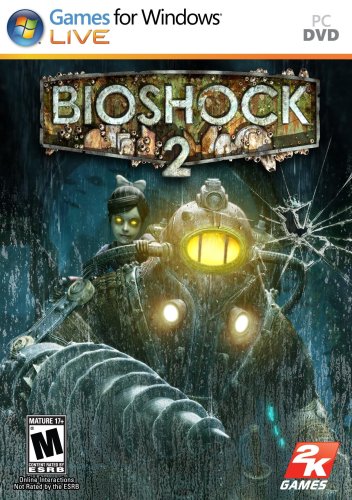
BioShock 2 on the PC: DRM Galore

Also in the “we love DRM camp” is the publishers of the game Bioshock  2, 2K Games. So much so, they’ve added 3 different layers of DRM to the game to provide redundant copy protection that still failed to protect the game from being copied. Microsoft’s “Games For Windows” system is used for the disc version, and it already provides a few layers of DRM, and that would be more than enough for most publishers as it features online authentication. But add in limited installs, and then Sony’s SecuROM (the system that’s so hard to remove, that it’s starting to look like malware), and you just have to shake your head at how paranoid game publishers have become. A word of advice: stop losing sleep about the “lost” income from piracy, income that you probably wouldn’t have earned anyway had the pirated version not been made available, as there’s a finite amount of money people can spend on games. Instead, worry about losing your customers to piracy due to idiotic DRM schemes, because that’s a real threat. This is all part of the theory that game publishers’ actions may actually be contributing to piracy. I’m not sure about that, but they certainly have failed to prevent it.

One theory is that lower prices do help to combat piracy, not only for games but for movies and music as well. Apple is keen to test out this theory, and they want TV networks to agree to lowering prices of TV shows on iTunes to under $1, which will no doubt also help the iPad at launch. As expected, they are running into resistance from the TV networks, who sees any price cut as an invitation for more in the future. While it may be simplistic to say that something is only worth as much as people are willing to pay for it, but this is truer for digital content then physical goods, which have physical costs attached to producing each individual item. For me, it’s all about finding the right price, that will discourage people to get the content from illegal sources, and at the same time also provide a healthy profit for content owners.

And bad news for video sharing website Veoh. After winning a legal battle against Universal Music, they may be going out of business anyway. The legal battle prevented the sale of the website, and when it was over, it was too late to obtain further funding. Whether this is more due to the increasing competition in the sector, or whether the legal battle too more of a toll than it appears, it’s hard to say.

High Definition

Let move on 3D/HD news. I’ve mentioned Toshiba’s impressive Cell TV before, the one that uses the same processor as the PS3 to enable 8 HDTV channels to be simultaneously displayed on the TV, in Back to the Future II style.

Toshiba's Cell TV

Toshiba's Cell TV can convert 2D into 3D

But with every other manufacturing trumpeting their 3D lineups, Toshiba was oddly quiet, and refused to even provide information as to which 3D format they will be going with. Perhaps they don’t want to get burned again with another format war by choosing a side right now. Or perhaps there’s really no format to go with even if they wanted to. The Blu-ray 3D specs are a start though. In any case, the Toshiba Cell TV has enough power to convert 2D broadcasts into 3D (well, pseudo 3D, anyway), so whichever format Toshiba decides to go with, it should be quite brilliant.

Speaking of format wars, the HTML5 format war is brewing nicely, with the latest version of Opera supporting HTML5, but only the Ogg Theora codec. So on top of the Flash vs HTML5 video delivery war, we also have the Ogg Theora vs H.264 war. Makers of free browsers like Ogg Theora because it’s free, whereas H.264 has licensing costs that have to be paid by somebody. But the industry prefers H.264, since hardware acceleration support is widely available, and it produces better quality streams than Theora at the moment. The likes of Apple and Google can of course absorb the costs, but it’s probably too much for the likes of Mozilla or Opera to do the same. The H.264 licensing people, the MPEG-LA, really needs to do something about this, perhaps eliminate royalty payments for certain browser manufacturers or something.

And on a related note, Hulu is gearing up for HTML5 compatibility (it uses H.264, just like YouTube and Vimeo’s HTML5 efforts), and so this could mean Hulu for the iPad, which would be a big selling point for Apple.

Gaming

And finally in gaming, the January NPD US video game sales figures are out, and I will have the write up of it nearly next week. A sneak preview: The Wii won, the Xbox 360 beat the PS3 thanks to Mass Effect 2. Only the PS3 showed significant growth year on year, but that’s only because it wasn’t exactly selling like the proverbial hotcakes this time last year.

And the 2009 Game of the Year poll has been closed, or rather, moved off the front pages. CoD: Modern Warfare 2 won, beating second place Assassin’s Creed 2, with Uncharted 2 being the best of the platform exclusive titles.

And so that’s another week. It’s now the year of the Tiger, so 恭喜发财, 万事如意 (which roughly translates to “may you get rich, may your wishes come true and death to DRM”).


Weekly News Roundup (7 February 2010) – The iiVictory Edition

February 7th, 2010

A very quiet week, in fact, not really enough news to even write up an WNR. Maybe it was just me being lazy, or in a bad mood because Arsenal lost, or the iPad stories going on and on and on. But there was a big story and that also took a large chunk of the news cycle.

Australian ISP iiNet won its court case against the AFACT, which you can think of as the MPAA of Australia. The verdict was a total surprise to anyone who has been following the trial, but it appears that iiNet got a judge that at least tried to understand just how the Internet worked.

A little background to the story. The AFACT conducted an operation against the iiNet, Australia’s third largest ISP, in which they monitored and recorded illegal BitTorrent and other file sharing usage. After detecting IP addresses that belonged to iiNet customers, the AFACT proceeded to send infringement notices to iiNet to get them to take action against their own customers. iiNet chose to forward these notices to the police as they did not believe they had the legal right to cut off subscribers. The AFACT continued to send notices to successfully set up grounds for a lawsuit.

So the lawsuit would be about whether an ISP was responsible for the actions of its subscribers, and whether when given evidence of suspected piracy, whether the ISP should have acted to cut off the subscribers in question. The AFACT obviously thought that iiNet had to take action, while iiNet maintained that the issue was for the police and eventually, the courts to decide.

iiNet's CEO Michael Malone

The winner, iiNet's CEO Michael Malone ...

And this week, we had a verdict in which the judge found iiNet not guilty of infringement. The judge, Justice Cowdroy, found that the AFACT’s claims of infringement were somewhat exaggerated. But the main issue that Justice Cowdroy found is that while piracy occurred frequently on the file sharing networks, these networks are not under the control of iiNet. And nor is providing access to these file sharing networks the primary service offered by iiNet. Justice Cowdroy correct identified that providing Internet access is not the same as providing access to file sharing (which is again different to access to illegal file sharing).

The safe harbour provisions were also mentioned. These provisions under most copyright acts around the world protects companies like ISPs and websites like YouTube from being sued for the actions of their users, as long as they have a policy in place to deal with illegal behaviour. Justice Cowdroy believed that iiNet did have such a policy, but the fact that the AFACT did not think much of iiNet’s policy does not mean iiNet shouldn’t be protected under safe habour. You can read Justice Cowdroy’s judgement in full here.

And in a further blow to the AFACT, they were ordered to pay for iiNet’s legal costs, which has amounted to more than $4 million Australian dollars ($USD 3.5m). The AFACT has yet to decide whether they will appeal the decision, and has already reached out to the government to enact new legislation that would force ISPs to comply with their demands.

AFACT's Executive Director Neil Gane

... and the loser, AFACT's Executive Director Neil Gane

So what does this mean in terms of the copyright debate? Well, it’s an important victory for the Internet industry in general, and a blow for the copyright crusaders. It’s very likely that the Australian government will do what the courts failed to do for the AFACT, and it might even use the planned mandatory Internet censorship filter to block access to Torrent websites and file sharing services, if it does not enact laws to force ISPs to kick off subscribers with or without due process. And that’s assuming AFACT’s appeal fails, and all it takes is a judge that is less enlightened than Justice Cowdroy to side with the big money. But whatever the eventual conclusion, the fact of the matter now is that there is sufficient argument, that stood up in court, to suggest ISP based copyright policing should not occur for all the reasons Justice Cowdroy outlined in his judgement. The fact that so many governments around the world are so willing to drop due process and bypass the court system does not mean that their actions are correct or should be unchallenged. Hopefully, this verdict will be referenced  in cases all around the world to put a stop to the “three-strikes, ISP copyright cop” nonsense and get all parties to sit down and find an equitable solution to the real problem of online piracy.

Speaking of equitable solutions, EA might be publishing a game with a very reasonable DRM, ironically. Although it probably occurred as a direct request by the game’s producers, DICE, Battlefield: Bad Company 2 will have a DRM system that offers gamers a choice of authentication options. They could go with the the standard DVD check, a simple one without the need for persistent or background software to be installed and without any install limits. Or if they wish, they can authenticate once online and never have to authenticate, either online or do a disc check, for 10,000 days (or 27 years), but be subject to a very reasonable install limit of 10 computers at any one time (if you reach the limit, you can uninstall on one of the computers to be able to install it to another one). Last week, I talked about Ubisoft’s new DRM system, which like Steam, will require online authentication each and every time you want to play the game. Bad Company 2’s system by comparison is much simpler and much more fair. Of course, you could argue that this system will allow games to be ripped more easily, and that may be true, but harder to rip games still end up being ripped and when that happens, nothing will stop it being distributed illegally.

As for HD news, there wasn’t much other than the typical marketing hype. There are a couple of sales on though at Amazon for Blu-ray movies, and including some very cheap ones and possibly the cheapest ever “major” Blu-ray movie (Heathers for $5.99). Check out these deals and more in our Amazon Blu-ray Price Index section.

And ditto for gaming as well, with the typical stories about how well our game consoles are doing blah blah blah.

Hopefully there will be more news next week, there has to be. But I doubt it will be as monumental as the iiNet iiVictory. See you next week.

Weekly News Roundup (31 January 2010)

January 31st, 2010

It’s been Apple iPad this, Apple iPad that, this week, it seems. For some reason, I keep on referring it as the iTab, what with it being billed as a tablet, although strictly speaking, it’s not a tablet at all. Later on in this WNR, I shall talk about the iPad’s potential as a video player. There were a couple of other major stories as well, so let’s get started.

Copyright

In Copyright news, the biggest news of the week has to be the new developments in the RIAA vs Jammie Thomas-Rasset case, the one with the infamous $1.92 million damages being awarded to the RIAA. The good news is that the ridiculous $1.92 million has now been reduced. The bad news is that the reduced figure of “only” $54,000 was deemed unacceptable by both sides.

The judge that reduced the damages called the original $1.92 million as unjustifiable for the act of distributing 24 songs. What I thought was important was that the judge acknowledged that the intention was not to distribute, rather, it was to download 24 free songs, valued at less than $24 in today’s prices. The distribution was simply a side-effect of the process. Of course, Thomas-Rasset downloaded (and shared) more than 24 songs, but you have to distinguish her actions from say those that intentionally upload ripped songs to the Internet for the sole purpose of distributing it illegally. I have never understood why the RIAA went to the trouble of making an example of Thomas-Rasset, when there must have been other more suitable candidates, those that are less sympathetic than a struggling single mother, and at least those that had the intention to distribute and perhaps even profit directly from such actions. I guess they wanted to send out a message to downloaders, not uploaders, which perhaps they feel is more responsible for their piracy troubles. But whatever message they wanted to send before, it is not extremely unclear, and a new trial has been requested by the RIAA. Publicity wise, this is a very bad move by the RIAA, as the $54,000 amount was already excessive and the request for a retrial will be seen as more evidence of the music industry’s greed. The ironic thing is that had Ms Rasset simply walked into a store and shoplifted the CDs in question, she would be in much less trouble, and this is when real loss has occurred compared to the act of simply making a copy of something which costs nothing to anyone if the person making the copy never had intentions to pay for anything.

BPI Logo

The BPI believes that everyone else should pay for their anti-piracy campaign, except themselves

But then again, on their anti-piracy moral crusade, good publicity is not all that important for the likes of the RIAA and MPAA and their members. A blog post by the Geoff Taylor, chief executive of UK version of the RIAA, the BPI, further shows the lack of respect for anyone who isn’t firmly on their side of the piracy debate. Mr Taylor talked about the cost of helping the music industry and dismissed the fact that the government, ISPs and mostly non pirating consumers have to pay for it by suggesting that ISPs simply absorb the cost. Well, since this whole charade is to help out the music industry, you must then ask why can’t the music industry absorb the cost themselves, or even absorb the whole cost of piracy which they’ve been doing this whole time and still managed to earn record profits. The music industry see piracy as everyone else’s problem, even though they’re partially responsible for  it by not adapting quickly enough to the digital revolution while holding on hopelessly to their outdated business model. The music and movie industries have been spoiled by the government’s extreme pro copyright views, not just in the UK but all around the world, and they’ve started to believe that its their right to earn a profit, when no other industry gets as much protection. Adapt or die. These industries believe that so much will be lost if they’re left to die, but in reality,  studios and labels hamper the creative process and cultural development, as they rip off artists and shape the “products” with only commercial interests in mind. Everyone, from artists to consumers, would be better off with less powerful studios and labels, not more powerful ones as the recent copyright laws makes them.

Still in the UK, the recent mailing campaigns by law firm ACS:Law which I talked about some time ago, has come under fire yet again, but this time from some powerful voices. ACS:Law monitors torrent networks and obtain details of the connecting users and threaten them with lawsuits if they do not pay damages to settle the claims, with most of the money going to the law firm rather than the copyright holders. They appear to deliberately target those vulnerable to a lawsuit or otherwise more willing to pay up, for example those charged with attempting to download pirated porn. It’s can be seen entirely motivated by money, and I suspect ACS:Law and other firms like them are the last ones to wish for an end to piracy. And the worst part is that many of the people they send the notices to, and probably many of those that pay up, are entirely innocent and merely wanted to make the matter go away as quickly as possible (nobody wants to go to court to defend charges against them downloading porn). The problem with their approach is that IP addresses do not tell you the whole picture. It doesn’t even tell you which computer made the connection, it only tells you which ISP account made the connection. And with wireless security being less than what it is in most homes, access hijacking may account for most of the claims of innocence. And a single connection does not piracy make, because unless someone has downloaded 100% of the data in question, they’re just downloading gibberish while sharing chunks of this gibberish with others. Those that have downloaded a massively corrupted ZIP file will attest to just how useful it actually is. But it seems more than just the tech and consumer publications that have noticed the actions of ACS:Law. The very issue was raised in the British Parliament, in the House of Lords, where the actions of ACS:Law were called “legal blackmail” and the whole thing a “scam” – you can see a videos of the Lords speeches here. Harassment, bullying and intrusion were also used to describe the actions of ACS:Law and other similar agencies (and you might as well extend that to the entire music and movie industry as well, when it comes to their copyright crusade).

Steam logo

Steam is powering ahead with 25 million users and an ever increasing revenue base

Moving onto PC gaming piracy. Ubisoft is to introduce a new anti-piracy system where online authentication will be required each and every time you wish to play one of their games. So if you don’t have an Internet connection, you can’t play their upcoming games. The advantages of such a system for gamers is that they no longer need to insert the DVD once the game has been installed, that unlimited number of PCs can be used to play the game, and that save games can be saved online for widespread access. In other words, it’s basically their own version of Steam. Steam itself has been doing very well lately, now having 25 million members and a yearly growth rate that other gaming companies and retailers can only dream of. I like Steam and I suppose Ubisoft’s system does make anti-piracy less of a chore than the horrible StarForce or SecuROM systems, where you have to jump through several hoops, with your hands behind your back, all the while singing the Canadian national anthem, just to be able to play a game. The online save game function, as long as it’s optional, would also be welcomed especially if it comes with time based backups just in case you overwrite a much needed save game. What I don’t like is the online authentication requirement. I understand that it is needed, but surely not every time? Perhaps a system where you only need to check back in every 3 or 5 game sessions would be better, and that would at least allow you to play in the rare event that your Internet connection goes down (in fact, I often resort to gaming when my connection is down and I have nothing better to do). If they’re paranoid, they can request a DVD check during these allowed offline sessions. An even better approach may be to create value added content that is optional but is online only (and therefore, requires authentication), so for those seeking the complete gaming experience, they need to have a legal version. The carrot approach will always be better than the stick approach, especially when the stick can be easily avoided with a “patch”.

High Definition

Let move on to HD. Well actually, there’s not much in terms of HD, not unless you count the Apple iPad as an HD device, which it really isn’t (and this is why it’s so disappointing). There’s also some 3D news and news about  Flash video, which does come in HD, so let’s start with that.

HTML5 on YouTube

HTML5 is now available on YouTube

HTML5 is the new version of HTML that adds standardized support for Flash type video, but without the need for the Flash Player. Instead, browsers will support the decoding internally, and HTML5 uses H.264 amongst other formats. I’ve reported here before that many browser makers don’t like this, because H.264 is not a free format and it costs money to include support. Which is why YouTube’s and Vimeo’s HTML5 tests only support the Chrome and Safari browsers at the moment. So a war is brewing, between browser manufacturers that support H.264, and those that prefer Ogg Theora, the open source codec. Both parties want their codecs to be made standard in HTML5, but HTML5 is format neutral at the moment. H.264 is better as there’s more industry support and hardware support, but it also requires licensing fees to be paid which will hurt the open source browsers. Then there is Adobe, whose Flash Player is being left out of HTML5 (and the iPad), and they surely won’t take this lying down.

The format issues aside, video served through HTML5 will have several advantages over Flash video. First of all, you will be able to skip to any part of the video without having to wait for the buffers to catch up. And of course, not needing to install a piece of software just to view videos is always a good things, considering that Flash Player still doesn’t support the 64-bit version of IE. My experience with HTML5 has been patchy so far. Vimeo videos worked great, but YouTube ones where pixelated in Chrome (I didn’t test it under Safari). There’s also no full screen mode at the moment. These are all teething issues that will be resolved sooner rather than later, so it’s not fair to judge HTML5 videos based on these limitations at the moment.

The Apple iPad

Apple iPad will do a lot of things, but video functions may be limited

And this is why the Apple iPad doesn’t support Flash either, although it does support HTML 5 and H.264. So is the iPad the device you need to complement your home theater? It’s hard to say, really. The lack of an even 720p resolution screen (which is only 1024×768, which is just short of the 1280×720 required to be classified 720p), no Blu-ray support, and as yet unrevealed specifications in regards to HD H.264 playback makes it far from the perfect media player. There’s also no HDMI, and without an optical drive anyway, there’s no route to Blu-ray playback (which is just about right for an Apple device when it comes to dismissing Blu-ray). There isn’t even an USB connector to connect to an external drive. But the iPad will be able to do many things. I’ve always wanted a device that can browse the net while I watch TV and movies, sometimes because I need to find out a fact or to find out more about a certain topic that’s being shown on TV. And through Apps, you can probably turn the iPad into a giant universal remote control, sort of like an XXL Harmony remote. And through more Apps, turning the iPad into a UPnP server/DLNA compatible device should be possible, and that could be interesting. So should you want the  iPad? Probably. But like with the iPhone, you might want to wait for the next generation device, which will probably remove many of the limitations with the current device, like 720p video support for example.

And as for the 3D news, well in the UK, Sky Sports will broadcast the world’s first live football (soccer) match in glorious 3D, well for all the 7 people that actually have the 3D ready TV and glasses to watch it of course. Some nine pubs are being equipped with 3D equipment for the crucial match between the mighty Arsenal and that team from Manchester that Beckham used to play for. And to further make my allegiances clearer, COME ON YOU GUNNERS!!!

Not much happening in gaming at the moment, although I suppose I should bring the 2009 game of the year poll to a close soon. I think Modern Warfare 2 is the winner, although Assassin’s Creed 2 came close, and there was a good showing for Uncharted 2 in third place.

See you next week.

Weekly News Roundup (24 January 2010)

January 24th, 2010

A somewhat fairly quiet week, so I decided to finish off the NPD 2009 analysis, which you can see here. Nothing all too surprising if you’ve been following my monthly NDP analysis, although it was interesting to see that the Wii was still down 5.7% in sales compared to last year despite the most excellent December numbers. Xbox 360 console sales remained pretty much unchanged from last year, which is either a good thing (in that sales haven’t fallen) or a bad things, considering PS3 sales, thanks to the price cut and the Slim, rose 22.3% over the year (although it still didn’t manage to outsell the Xbox 360, which just shows how poorly the PS3 did in 2008).

Copyright

Let’s start with the copyright news. The hypocritical French government is at it again, this time committing yet another act of copyright abuse. This time, it was the anti-piracy agency HADOPI, which is tasked with overseeing the three-strikes system. By using unauthorised fonts in their logo, they are now threatened with a lawsuit from the owner of the copyright holder. By my count, that’s a lot more than 3 strikes for the French government and their anti-piracy brigade – time to ban them from the Internet I suppose, or better, ban them from messing up the Internet.

When they’re not busy suing single mothers and students (more on that later), the RIAA, MPAA and their lackeys are looking for other targets to attack. And this time, it’s the military. Personnel serving overseas will try to stay in touch with what’s going on back at home in any way they can, and this includes trying to get access to the latest entertainment, including the latest music releases and movies. Unfortunately, it’s not always easy to find legal sources for these content, with many online stores refusing to ship items to certain overseas locations (and not to mention the cost). And this is why many resort to illegal downloads, which provides a source of entertainment when legal ones do not exist. The RIAA and MPAA often use patriotism in their arguments, about protecting American jobs and such, so surely it would be another act of patriotism to provide cheap or free content for overseas military personnel. But instead, the RIAA and the MPAA with support from the US Department of Defence is launching a crackdown on illegal downloads. I do wonder just how much money the RIAA and the MPAA has lost to illegal downloads attributed to the military, and is it really that huge of a problem to get the DoD involved, during wartime no less. It’s more to do with the principle of the thing, I mean how bad would it look for the RIAA/MPAA  if the very people risking live and limb everyday to defend their freedoms didn’t even pay for the latest Lady Gaga single, even though they don’t actually have the choice to pay for it due to lack of a legal source. I mean, how dare they!

RIAA Logo

The RIAA has yet to resond to the $1.92m verdict being reduced to $54,000

And I guess if they can squeeze $1.92 million from single mothers, the RIAA probably thinks it can squeeze a couple of million more from the military. They may have to think again if that’s their strategy, because a judge has finally put an end to incredible damages and reduced it by $1,866,000. Jammie Thomas-Rasset will now only have to pay $54,000 in damages, or $2,250 per song (that’s worth about $0.80 today). It’s still a lot, but it will give hope to that other RIAA victim, Joel Tenenbaum, who is seeking to appeal his own verdict and to ask the $675,000 damages to be reduced as well. The judge couldn’t justify a near two million dollar judgement for the simple act of trying to secure some free music, which made it necessary to also share these music files with others. Finally, a judge that seems to understand that the intention of Rasset and Tenenbaum was never to illegal distribute songs, but rather, to get free music. Any file sharing was just a side effect of the process. The difference between this and someone who actually intentionally leaks copyright materials online, or who seeks profit from sharing music, needs to be distinguished when it comes to handing out damages. The RIAA has yet to respond to this “setback”, and they could even seek a new trial, as their attempt to make an example of Jammie Thomas-Rasset by seeking huge damages would be in vain.

The BPI, the UK version of the RIAA, has attacked ISP estimates on the cost of implementing a three-strikes type system for the UK. Even their estimates put the costs at tens of millions of pounds every year, and not a single cent will be contributed by the BPI, whose members have just had a record year in terms of profits. If groups like the BPI believes that a three-strikes system will work to stop piracy and improve their revenue, then you had to wonder why they are not willing to put their money where their mouth is. They will argue that they’re not responsible for online piracy, but are ISPs? And when ISPs pass on the cost to the consumers, most of whom will not be pirates either, and yet they have to pay. Then there’s the cost to the judicial system, which the government has to pay (which might still get passed to your average non pirating citizen via taxes). If the system works, then the music industry will benefit, so why would it be unfair to ask them to contribute to the cost of such a system, which according to their own estimates, will probably be less than their monthly lobbying spending. Of course, one reason why one might not want to put money towards something like this is that if you knew deep down that it simply won’t work. It might scare a few more people into not pirating, and it forces the government to accept online piracy as their responsibility (since they’re the ones now administering the three-strikes system), but through VPNs and encryption, any monitoring efforts by ISPs can be bypassed, and piracy will still go on. But I think the copyright holders know this, but getting the government to accept responsibility for piracy is probably all they need from this, after which it will make it much easier to ask for things like a piracy tax, basically a government guaranteed income. It’s certainly easier than evolving your business model or anything.

Oppo BDP-80 Blu-ray Player

Back of Oppo BDP-80

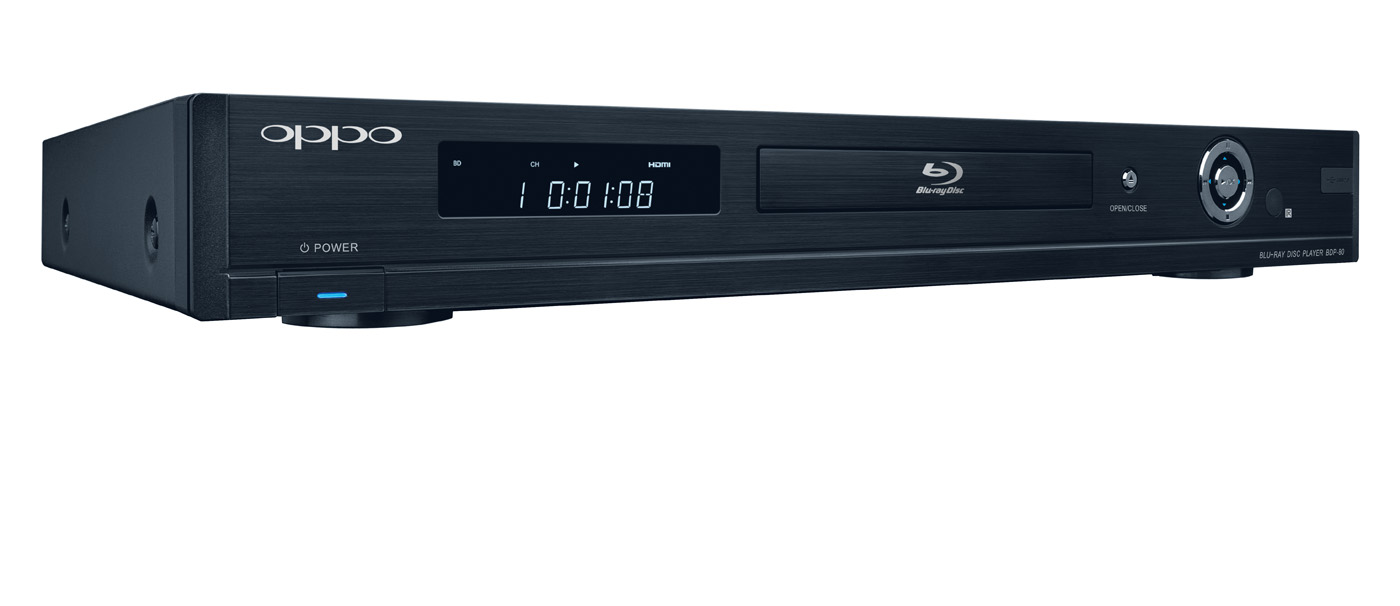
The Oppo BDP-80 costs $200 less then the highly rated BDP-83, with some removed features

But changing the business model may be the only way to truly halt piracy, since technical solutions will always have technical workarounds. Radiohead’s guitarist, Ed O’Brien, believes this to be the case, that the music industry needs to stop running “an analogue business model in a digital era”. The digital revolution has been bad for many traditional industries, like the newspaper industry, but I for one thinks that it actually brings more benefit to the music and movie industries. Certainly, DVDs (and now Blu-ray) has been pretty good for the movie industry. But the next step needs to be taken, where VHS to DVD still relies on physical media, the next step would be to move to an entirely digital platform. Physical media means production, transportation and display space and warehousing requirements for retailers. Digital media does not carry any of these overheads. So instead of stocking the top 100 CDs, retailers could easily stock a collection consisting of hundreds of thousands of songs through kiosks. And it’s even easier to do this online, by putting every single song, movie, expired TV show, lost episodes – everything – online and for sale. The obscure then becomes accessible, and anyone wanting to watch an episode of a long cancelled TV show, or a single from a virtually unknown artist from 1965, can do so and copyright holders can benefit, as long as the price it competitively. Instead of trying to sell millions of copies of the same thing to consumers, they can sell millions of different things. That’s the power of digital and the Internet.

High Definition

Let’s move onto HD. Oppo has released details of their sub $300 Blu-ray player, the BDP-80. The cost cutting has been made by removing a video processor, cutting back on analogue outputs and SACD analog output, as well as removing some of the remote control functions like IR In/Out ports and a back-lit remote. Oppo recommends the new player for most people, other than those with the largest screens and want the best possible picture quality courtesy of the on-board ABT2010 video processing chip found on the $500 BDP-83.

Once the player gets released, I’m sure there will be more extensive reviews and video testing to see if the BDP-83 is still work spending extra for.

Gaming

And finally in gaming, the PS3 motion controller has been delayed until just before the Xbox 360’s Project Natal is set to be released. I think Microsoft will be thrilled with the news, since the PS3 motion controller was supposed to have been released in the next few month.

Instead, the controller add-on will be available in Autumn/Fall of 2010, possibly just before the November release date of Project Natal. The Wii-like PS3 motion controller will give a much more accurate than the Wii controller, and coupled with the PS3’s EyeToy, it can give the Wii some competition when it comes to casual games, and the Natal as well in terms of motion controls mixed together with augmented reality.

Despite the recent PS3 successes, Sony is actually suffering quite a bit as price cuts, dropping PS2 sales, and more worryingly, dropping PSP sales have caused a huge $1.3 billion revenue loss from 2008 to 2009. Both Nintendo and Microsoft only experienced negligible losses compared to 2008 ($200 million for both). Most of Sony’s losses stemmed from a $700 million drop in PS2 revenue, which was always going to happen at some point. What Sony had hoped is that PS2 gamers would have moved straight to the PS3, but that apparently hasn’t materialized (not yet, anyway). Brand loyalty apart, there are more options for PS2 gamers to upgrade to compared to PS1 games when they moved en mass to the PS2. The Xbox 360 offers cheaper gaming, while the Wii offers casual gaming that was once served by selected PS2 titles. And in terms of PS2 platform exclusives, many of them are no longer exclusive, and the must have PS3 exclusives are mostly new to the platform (Uncharted, for example). With that said, the new Final Fantasy game is coming soon that may be enough to convince many PS2 owners to upgrade, but once again, it’s no longer a platform exclusive either.

Anyhoo, that’s all I wanted to write this week. Have a nice one.

Game Consoles – NPD Sales Figures – 2009 Year in Review

January 21st, 2010

2009 is now over, and we now have enough stats to go back and review the entire year, with focus on the PS3, Xbox 360 and the Nintendo Wii. The stats are from NPD, and are for the US market.

The total hardware sales figures for 2009 are as follows:

  • DS: 11,185,400 – up 12.4% (from 2008)
  • Wii: 9,594,000 – down 5.7%
  • Xbox 360: 4,770,700 – up 0.8%
  • PS3: 4,334,500 – up 22.3%
  • PSP: 2,495,900 – down 34.8%
  • PS2: 1,799,900 – down 28.1%

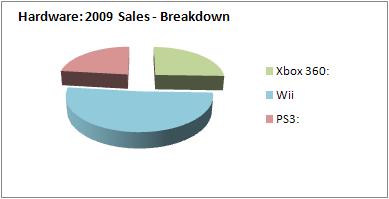
This is a breakdown of these numbers, for the Xbox 360, PS3 and Wii:

NPD 2009: Console hardware sales breakdown

NPD 2009: Console hardware sales breakdown

If you compare the above graph with the equivalent one for 2008, you can see that overall, the situation is still fairly similar. The Wii domination is still present, although it has lost a small chunk of that pie to the PS3 mostly (the Wii had 55% of the three way pie in 2008, compared to 51% in 2009). The Xbox 360’s market share remains quite similar, with the green piece of pie above representing around 25.5% of the market (in 2008, it was 25.6%). So the quick conclusion is that the PS3 is the winner in terms of growth in 2009, with the Xbox 360 just about pulling even, and the Wii losing out. Looking at the total hardware sales numbers above the graph, this is pretty evident, with Wii sales down nearly 6% for the year. Wii sales has been disappointing for much of 2009, even when PS3 sales were also disappointing at the beginning of the year. It was during this time that Xbox 360 sales were strong, but there was a weak period in the middle for the Microsoft console. The PS3 finished the year strongly, and the Wii even stronger. So while the graph seems to show the PS3 taking away sales from the, the actual series of events was more complicated.

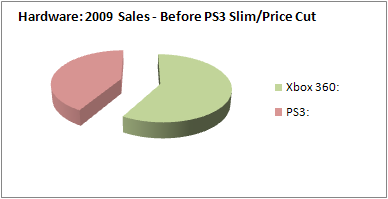
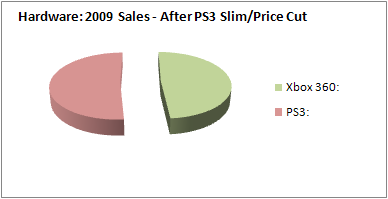
Of course, if there is one event which really defined the year for the PS3 then it came in September when the PS3 Slim was released. More importantly, it was also this time that Sony decided to cut prices for the PS3, to bring it more in line with that of the other two home based consoles. To demonstrate this turning point graphically, it is best to compare sales of the PS3 to the Xbox 360 both before and after the official introduction of the Slim:

NPD 2009: Hardware Sales, Before PS3 Slim/Price Cut

NPD 2009: Hardware Sales, Before PS3 Slim/Price Cut

NPD 2009: Hardware Sales, After PS3 Slim/Price Cut

NPD 2009: Hardware Sales, After PS3 Slim/Price Cut

I think the graphs speak for themselves. Note that it again would inaccurate to say that PS3 took sales away from the Xbox 360, and although there is some truth in that, it isn’t the whole picture. The above graphs are almost exactly the opposite of what happened in 2008, when the PS3 had a good lead over the Xbox 360, but the subsequent price cuts helped the Microsoft console fight back in style. The PS3 “fightback” was less stylish than what happened last year, but the price cut was also more moderate, and the Xbox 360 had Modern Warfare 2 to help with sales.

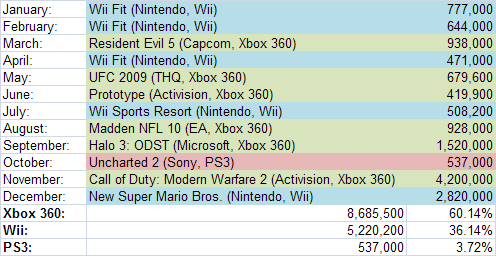
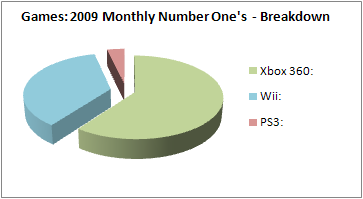
Now let’s look at game sales. Looking only at the monthly number one titles, here they are:

NPD 2009: Monthly Number One's

NPD 2009: Monthly Number One's

NPD 2009: Monthly Number One's

NPD 2009: Monthly Number One's

Microsoft’s dominance continues on from last year (60.96% back then versus 60.14% in 2009), but the Wii has managed to grab a few more spots, with the a single title that won best selling game of the month for the PS3. Only looking at the monthly number one’s is always a bit misleading, because monthly winners do not always equal yearly winners, and several of the listed titles are not in the yearly top 10. But monthly number ones are important, in that it provides hype and recognition for the console and games that win it. Developers will develop for the console that can allow them to top the monthly and yearly charts. But this is also where we see the big problem with the Wii, that despite having many monthly number one’s, all of them are first party Nintendo developed games. Third party games on the Wii are doing quite poorly and many developers have already signaled their intention to reduce resources towards Wii game productions, which is not good news in the long term for Nintendo. So while Nintendo is making the big bucks, they need to share or end up with a console with a very limited range of in house produced games.

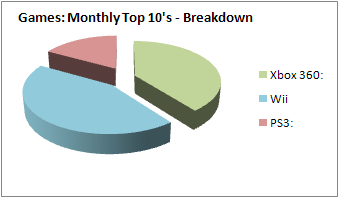
Taking the above approach and extending it to the top 10 games every month, we have the following breakdown in terms of game units sold:

  • Wii: 22,600,500 (43.65%, up 523,400 from 2008)
  • Xbox 360: 20,425,300 (39.44%, up 1,500,700)
  • PS3: 8,756,100 (16.91%, up 2,388,900)
NPD 2009: Monthly Top 10

NPD 2009: Monthly Top 10

On the surface, this seems to indicate tremendous growth for software sales in 2009, but software revenue is down nearly 10% compared to the year before. The biggest games of 2009 were bigger than the biggest games of 2008, but everything else was down. But you will also see the Wii domination here, and the software growth for the PS3 as more and more consoles get into people’s homes.

The yearly top 10 will give us an even better picture of where things are, although at the current time of writing, I do not have actual figures for sales, just the ranking, which you can see in the table below:

NPD 2009: Yearly Top 10

NPD 2009: Yearly Top 10

If and when I get concrete stats, I will update this article with them and the related graphs, but even without them you can see the clear Nintendo domination in games. While the Xbox 360 had the top title in Modern Warfare 2 (whereas last year’s top 4 were all Wii titles), it appears that the Wii domination has been extended. The PS3 still has the solitary single game in the top 10. But again, the problem of poor third party games on the Wii is clearly evident, 6 Wii titles and 1 DS title in the top 10 and not a single third party game. Meanwhile, the top Xbox 360 game and the only PS3 game were all third party titles. It’s clear why third party publishers like Activision or EA likes the PS3 and Xbox 360, and not so much the Wii when it comes to counting profits. It is an area that Nintendo needs to work on, perhaps helping third party developers to get more out of the Wii and throw in some more promotion and product bundling.

What the stats that I posted monthly, and what is shown above doesn’t tell you is overall revenue. Gamasutra has these stats here and despite the PS3, Sony is actually the biggest loser of 2009, in terms of revenue. This is because despite positive PS3 growth, PS2 and PSP sales are down 28 and 34% in number of units sold and probably greater in terms of revenue due to price cuts. Sony lost more than a billion dollars worth of revenue between 2008 and 2009, and the market share of the PlayStation brand shrank from 34% in 2007 to 26% in 2009. Nintendo is the big winner, and now controls 50% of the market in terms of revenue, with the Xbox 360 being a small winner compared to 2008, but still losing market share compared to 2007. While Sony may be confident that PS3 growth will eventually replace lost PS2 sales, the PSP is less positive and has not been able to compete with the DS and DSi for sometime now, with the DS/DSi recording the second best set of growth numbers in 2009 . For Microsoft, having only a single home based console, there’s less room to maneuverer and they will hope that Project Natal will be able to grab back some of the market share from the Wii’s casual gaming audience.

So that was the year that was. The economy, PS3 price cuts, and a few selected high profile games (Modern Warfare 2 comes to mind) were the major factors influencing the year. While sales are down compared to 2008, which was a record year like never before, the industry can still be relatively positive and 2009 still represents the best year apart from 2008.


About Digital Digest | Help | Privacy | Submissions | Sitemap

© Copyright 1999-2012 Digital Digest. Duplication of links or content is strictly prohibited.