Weekly News Roundup (7 March 2010)

March 7th, 2010

I wrote that DRM article that I mentioned I might do in last week’s WNR. The article looks at the various kinds of PC gaming DRM and whether they good or bad. The conclusion seems to be that none of them are piracy proof, some not even remotely close, and they all have varying degrees of being annoying to legitimate customers. But I think there are some compromises that can be made by both sides, more by consumers though, since to me, it seems consumers are having to pay a high cost to give game companies the false sense of security that DRM offers. Quite a few interesting news stories this week, so let’s go through them, especially given the late nature of this update (and no, I did not forget to press the “Publish” button).

Copyright

In copyright news, Ubisoft’s new DRM, which was the reason why I wanted to write a blog on PC gaming DRM, has officially released the first game, Silent Hunter 5, that uses the new “constant Internet connection required” DRM system.
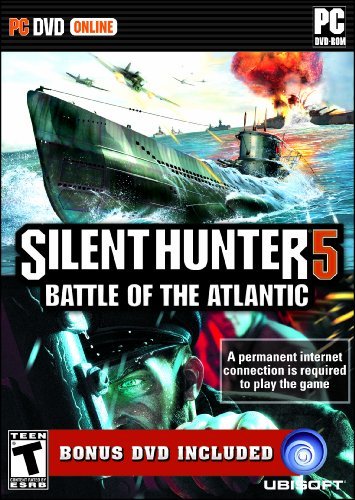
Silent Hunter 5 Box Art

"Permanent Internet Connection Required" - It's always not a good thing when you have to put a huge warning sticker on the box of a game

Unfortunately for Ubisoft, their new, expensive, controversial DRM system was cracked in less than 24 hours. Ubisoft issued an immediate denial that their DRM system had been cracked, saying that while it had been cracked to the extent that the game now works without constant online verification, certain sections of the game was still locked. Ubisoft also quickly released a patch to fix several issues, and to no doubt make the hack ineffective, but the patch it self was cracked in even shorter time. And no doubt, the certain sections that haven’t been cracked will be given time. It is interesting reading Ubisoft’s own FAQ on the new DRM system, which I also referred to in my PC gaming DRM blog, when asked what will happen if they cease operation of their DRM authentication servers, which then makes these games unplayable. Instead of saying that they don’t plan on to ever cease operations, which would be a lie anyway, they said that if that happens, they’ll release a patch to make these games playable without the DRM server. Which means if Ubisoft can release a patch that removes the DRM checks, then so can hackers, so Ubisoft’s insistence that their DRM can’t be hacked is, by their own words, not possible. And yet, legitimate consumers are the ones that are most affected by the badly designed DRM, and just how many have used it as a reason, or excuse, to go down the illegal route, we’ll never know.

The controversial ACTA global copyright treaty, being discussed in secret, has had yet more leaks that reveal just what each country at the negotiation table are trying to get out of the treaty. Before we get to the leaks though, I would just like to address the secret nature of the negotiations. Sure, these type of things goes on all the time and nobody really cares, and for the most part, the ACTA negotiations are only slightly more interesting than watching paint dry. But there are some important things being discussed that will affect all Internet users, and it’s a shame to see the whole thing being kept secret, even given the numerous leaks. It appears some of the European countries wanted the secrecy, the US is citing national security, although nothing so far has suggested anything of that sort being discussed (it’s hard to keep national secrets when you’re in discussion with so many other countries). My guess, and it is purely a guess, is that it’s being kept secret because they don’t want a public backlash. And that’s a scary thing, that governments are conspiring to keep ordinary people out of it because people won’t like it.

Anyway, back to the leak. The US negotiators, with the RIAA/MPAA whispering in their ears no doubt, are pushing hard on various issues including making other countries adopt the severely flawed US DMCA. Other issues include ISP monitoring, three-strikes and all the nasty stuff “people” don’t like. But the push for US style DMCA has met with some resistance. New Zealand also questioned why Internet links can be considered copyright abuse, in that if you operate a website that has a link to another website that had pirated stuff on it, then you’re also liable for copyright infringement. On one hand, this is done to attack torrent websites like The Pirate Bay, which don’t actually link to pirated content, only to files that then link to the content. And there are also aggregator websites like isoHunt that then links to The Pirate Bay and other torrent websites. So it’s understandable why the copyright holders, which are the real powers behind the talks, want to make even linking illegal. But the problem is that this also puts search engines like Google into the same category as sites like isoHunt, since it’s quite easy to find torrents on Google (not quite as easy as say on isoHunt, but certainly not impossible). But it’s unlikely that Google will be sued because of this, but isoHunt will/has. And then there’s user submitted links, and whether for example if someone posts a comment for a blog post that contained a link to pirated content, then whether it’s the blog or the comment poster that is liable. The flow of responsibility has to stop somewhere. If site A is hosting illegal contents, then site A should be responsible, and not site B that links to site A. Because if site B is liable, then what about site C that links to site B, and site D that links to site C and so on. I think it just shows that most legislators don’t really understand how the Internet really works, and they are being easily convinced of this and that by powerful lobby groups, who themselves don’t fully understand the Internet and in general, the digital revolution. And so we, the people, have to suffer for it.

Most of the resistance seems to coming from Europe, and in the UK, the House of Lords are offering some resistance to the government’s proposed changes to digital copyright laws, but their alternative solution leaves much to be desired as well. The Lords are largely objecting to a clause which will allow ministers to bypass the parliament and implement new copyright laws as they see fit. Without public consultation, without a vote, straight from Hollywood’s lips to legislation. The government says that this is necessary because of the fast moving nature of the Internet, but no matter how you spin it, it just doesn’t have a place in a democratic government. The Lords’ proposed compromise is to allow the banning of entire websites on allegation of piracy, which is not going down well with consumer and Internet groups. More evidence of legislators not really understanding the full consequences of their actions in relation to the new digital world. The harm they can do to the digital economy is one thing, but it’s also the potential that they’re not seeing and we’re all missing out on. There are many things that would open up so many opportunities, but fear means that instead of trying to embrace change, they’re doing everything they can to avoid it.

Also in the UK, the group that regulates lawyers in the UK are taking action to stop law firms from flaunting copyright law to make a quick buck by sending infringement notices and demanding settlement fees to private individuals, whose IP address had been identified as one that participated in the download of something illegal. I’ve previously reported on the activities of law firms such as Davenport Lyons and recently, ACS:Law, that prey on those who do not want legal action and so pay up promptly, even in cases when they were sure they didn’t download anything illegal. Especially if the claimed download is pornography. Apparently, the letters sent out say that failing to secure one’s own Internet connection still makes one liable (that is, if your Wi-Fi was hacked and somebody used it to download pirated porn, then it’s still your fault), which is not true, and this could get them in big trouble with the regulators. Right now, it’s only two Davenport Lyons partners that’s been investigated, but DL has already withdrawn from these types of activities, and so ACS:Law will be next. DL pulled out rightly it seems, albeit probably too late to avoid issues with the regulator, and any law firm that participates in these type of activities is best described as a law firm for ambulance chasers, in my opinion.

RealDVD

This is probably the last time I will get to re-use this RealDVD screenshot

One of the things that I think is a missed opportunity is with the digitizing of movie collections, for which a legal solution simply does not exist, other than to repurchase your entire movie collection, often in a inferior digital only format. Hollywood’s determination to kill off anything that allows this to occur has been well documented. This week, they’ve managed to kill off RealNetworks’ RealDVD, which promised to allow people to convert their legally purchased DVDs to a fully digital, disc-less, format (with additional DRM to prevent online sharing). RealNetworks settled the case, admitting defeat and paying costs and will refund all purchasers of RealDVD. That’s a real shame. Not so much that RealDVD is dead, because it never really amounted to much, and the additional layers of DRM tied the digital “rips” to RealDVD’s software, which because it takes one relatively open format like DVD/MPEG-2, and turn it into a proprietary format that Real controls, means that it’s practically useless. However, it is the idea that Hollywood studios won’t allow DVDs to be copied in any way, that makes me angry, because there are a lot of legitimate reasons why someone would want to do it. Being digital, movies are easy to store and easy to transport. They’re also easier to catalogue, and when coupled with one of numerous media hub solutions out there, it makes finding and watching movies so much easier. The same reason why people now prefer MP3s to CDs, if you will.  Hollywood’s perceived danger here is that if such a system is not implemented well, it will allow “rent and rip” piracy (renting DVDs, ripping them, and returning the discs), or it will somehow make it easier to pirated movies online (which is hard to achieve, considering how easy it *already* is). These may be real problems, but that’s for Hollywood and their technical people to solve. You can’t deny your customers a much wanted and needed feature just because a minority of them might take advantage of holes in your system to do something they can already do so easily today. Keep on denying people, and people will find a way, regardless of whether it technically breaks the law or not. Hollywood might now turn a blind eye to these kind of “for personal use” ripping, but I think this is even more dangerous than implementing a “managed copy” system, because you’re effectively encouraging people to do something illegal (as stated in the copyright message that pops up before DVDs play, and also due to the US DMCA legislation) by not legally pursuing them (impossible, due to the number of people that are doing it) nor offering a legal alternative. The opportunity of having a fully digital movie library that can be created from your legally purchased discs is enormous, and it is technically much easier to achieve now thanks to development in hardware and storage technologies.

But I still think that we will have a system like this eventually. Which then makes the RealDVD decision even more ridiculous, and anti-competitive if the very people trying to kill RealDVD on copyright abuse grounds produces their own version of RealDVD in the future.

In more legal news, Viacom’s much publicized lawsuit against Google/YouTube reached a milestone this week, as both sides filed their summary judgement petitions. Viacom’s chances in the case is much diminished due to recent developments in recent cases, namely the Universal music versus Veoh case. And with Google now offering lots of opportunities for content owners like Viacom to make money off YouTube videos, even those uploaded without authorization, and the ability to remove videos, there’s not much logic in siding with Viacom on this one. And don’t forget about the free publicity that YouTube gives to new content, which is very much essential to companies like Viacom.

And in the most distasteful claim of the week section, we have the RIAA claiming that file sharers are undermining the Haiti relief effort. I don’t want to even want to go in to how the RIAA came up with this conclusion, but even if they’re right, it’s just really really really (really) bad taste, isn’t it? Using a disaster where so many died to promote their pro copyright agenda is just so wrong, but then again, it’s exactly the sort of thing you expect from the RIAA and MPAA. Techdirt’s analysis showed that hardly anyone was downloading the torrent of the Haiti relief album. And for those that downloaded, who knows if they donated to the Haiti relief effort or not. Maybe they donated a lot of money and then downloaded the album illegally, and maybe some of the people who paid for the album’s only contribution was the actual purchase of the album. And maybe the people who downloaded the album just didn’t have any money to donate, and who is to say that Haitian themselves aren’t downloading the album that’s been produced to help their flight (much of the Internet infrastructure survived the earthquake, for which the design of the Internet helped, as it was originally invented to tackle the problem of communication after nuclear war), and surely it doesn’t make sense to make them pay for it as well?

High Definition

Onto Blu-ray and HD news. The Lord of the Rings is coming to Blu-ray in April, and it is one of the most eagerly awaited titles on the format. But I won’t be buying it and I know a lot of other Blu-ray collectors that won’t be either. And judging by ratings on Amazon.com, 2045 one star votes versus 149 five star ones, most people seems to be thinking of doing the same.
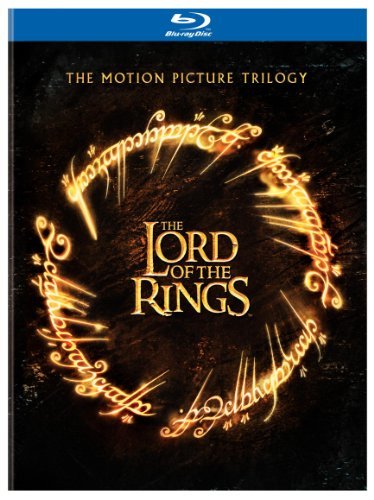
Lord of the Rings Trilogy Theatrical Cut Blu-ray

LOTR finally coming to Blu-ray, but it's not all good news

The reason is that the April version will be the theatrical version of the movies only, not the extended version. Instead of releasing one version that contained all the cuts (or at least release both cuts at the same time), there will instead be another Blu-ray release probably later in the year that houses the extended version along with more extra features. This “double dipping” is a well known way to get people to pay twice (or more) for the same movie, each time promising just a little more stuff that you must see and artificially putting breaks between the release dates of the various versions to get more sales. Well at least this time they didn’t release each movie individually, and then release a trilogy box set with more stuff a few month later. But with so many LOTR fans having both versions of the films on DVD, perhaps this is one time the studios will find it difficult to force a sale, as I’m perfectly happy to watch the theatrical version on upscaled DVD if I have to (and I’ve never watched it again ever since getting the extended cut, which I’ve watched about 4 times already, for each movie). Although with that said, I can see fans not wanting to wait and buying the April version anyway, which is exactly what the studio wants and they can make this happen by not releasing any details of the extended Blu-ray version until they’ve had enough sales from the theatrical version. Don’t fall for their tricks (say the guy that has 6 versions of Terminator 2 on DVD, HD DVD and Blu-ray)!

Netflix coming to the iPhone? If true, then expect the iPad to have it as well. Which means that by my calculation, 87.47% of all media devices sold today will be Netflix enabled, which is awesome news for Netflix and for digital video distribution, which was always thought to be entirely dependent on a large scale deployment of set top boxes.

Gaming

And finally in gaming, there was the infamous PS3 leap year date bug earlier in the week that managed to cripple a huge percentage of PS3s. Apparently, a date logic error in most of the “fat” PS3 hardware meant that the consoles were wondering just what the hell had happened to February 29 2010, and then decided to fail to connect to the PlayStation Network.

This is fine, except many new games require a connection to the PSN even if you don’t play online, due to the need to sync trophy data, and so people were left with a PS3 that could only function as a media hub and a Blu-ray player. This was fine for me because I only use my PS3 as a media hub and Blu-ray player, and I had several good gaming sessions on my Xbox 360 while this whole thing was going down and it seemed like the official PS3 board was going to explode with all the complaining.

In the end, it was fixed relatively quickly. The date bug still exists on the PS3, but Sony somehow managed to fix the problem on their end.

All’s well that ends well? Not quite. And this again highlights a weakness of the increasingly net dependent nature of electronics, not just PS3s, and just how useful certain devices become when the Internet (or the connecting server) goes down. Full offline mode should be a prerequisite for any device I think, as well as lessons on just when leap years occur for their programmers.

And we come to the end of another WNR. Hope you’ve enjoyed this edition, and see you next week.

PC Gaming DRM – A Sensible Discussion

March 4th, 2010

The uproar over Ubisoft’s new DRM, that I covered in the 21 Feb WNR, got me thinking that how can a game company’s idea of a sensible DRM solution be so far from that of the average gamer. Did Ubisoft not know that their new DRM solution that requires a constant Internet connection would not go down with the general gaming community? Or did they simply not care?

So instead of having a whinge, like most of my other posts on this blog, I though it would be nice to try and take a balanced approach to the problem and analyse the situation closely, playing the Devil’s advocate if I have to. Perhaps it will shed light on any compromises that may make DRM workable.

No DRM

From a pragmatic point of view, DRM is not needed as it doesn't work, but game publishers feel better when games have it

Why do you need DRM?

Games get pirated. PC games especially. Game companies need to protect their products and make it as difficult as possible to pirate them. Games without DRM are an open invitation to online piracy, and also casual piracy where friends share a single purchase and install the game multiple times on multiple PCs. And without protecting their games, publisher fear that people will start to think that it is acceptable to pirate them.

But DRM has so far not stop games from being pirated. It may be effective against less popular titles that crackers ignore because it’s not worth it, but for the popular games, they are made online in a matter of days, if not sooner. Ubisoft may think their always connected approach will make the games harder to crack, but Silent Hunter 5, which uses the new DRM system, was cracked just a few hours ago, and less than 24 hours after the game was released.

It does make playing the games more inconvenient for people who have purchased the game, and it’s no secret that many resort to cracks to remove DRM from their games, or failing that, download the pirated version even after they’ve paid for the legal one.

Conclusion: Games get pirated regardless of DRM. At best, it slows the availability of the pirated version of make it more difficult to run, but determined users will find a way, and it might still be easier to deal with than DRM. All DRM does right now is to inconvenience legitimate customers.

SecuROM Logo

DVD check systems like SecuROM are outdated in today's online world

DRM Type 1: DVD Checks

These are the easiest form of DRM to crack, and the oldest around. Sure, some things have changed like blacklisting and background services being installed to prevent the use of DVD emulators, but again it’s only a matter of time before it is cracked. This is also the form of DRM that buyers of the game frequently removes, as having to find and insert the DVD every time you want to play the game is a pain. Also, it means you must carry the DVD with you if you want to play the game while away from home. And only one person can play the game at the same time. Not only that, the SecuROM loader may also be hard to remove and it can interfere with your legitimate apps. The more advanced SecuROM also requires online activation, which basically bundles a DVD check with the type 2 DRM method listed below. And even if you jump through the hoops, the game still may not work due to compatibility and other issues, and the only alternative is to crack it if you want to play it.

Conclusion: This type of DRM is the easiest to crack and potentially very annoying to legitimate customers. It is also quite outdated as it doesn’t offer multiple install limitations by itself, and serial  and perhaps time will see it phased out in favour of online based authentication solutions, like the Steam or Ubisoft systems.

DRM Type 2: Once only online authentication

EA/Dice’s Battlefield 2: Bad Company uses this method, along with the “limited install” method. After you install the game, you only need to go online once to authenticate it, and it will never check again until some 27 years later. DVD checking is removed, so once you do the initial online authentication, you’ll never have to “prove” your innocence again. To prevent people authenticating and then giving the game away to do the same, the same serial can’t be used too many times (more on that later). As with any kind of DRM, it can be cracked (and it is probably quite easy to do so as well), but legitimate users may find that they don’t need to do it, and multiple install limit of 10 usually is generously enough to never having to worry about this aspect of the protection. Of course, this means that you must have an Internet connection if you want to play the game, but not many people have machines capable of playing new games and yet have no access to the Internet.

If the authentication server is down, then new users can’t start to play games until it does up again, but you only have to authenticate once anyway. If the authentication service is shutdown and no longer supports aging games, then purchased games can’t be played, although it stands to reason that the game won’t be sold at that time anymore, or will be sold in a variety that comes pre-authenticated.

Additional online features, such as trophies/achievements, can be optionally enjoyed, although this probably turns the game to a “type 3” (see below) DRM, where logging into the optional online environment requires some sort of rudimentary authentication check (although probably less involved than a true “type 3”).

Conclusion: This is probably the most sensible type of DRM, although like all others, it fails to prevent piracy. It does prevent most legitimate users from having to resort to cracks to play the game conveniently, and this is also the least intrusive method, requiring no background apps that are hard to uninstall or constant Internet checks.

Steam logo

Steam's popularity shows that there are still some kinds of DRM people might accept

DRM Type 3: Once every startup online authentication

Steam uses this kind of method, although it does have an offline mode. Every time you start the game, it will check online to make sure you’re running a legitimate version. This again is easy to crack, and is slightly annoying to legitimate users as it locks them to a platform like Steam, and it means they need to ensure they have an Internet connection whenever they want to play the game. However, Steam does offer an offline mode that works like the “Type 2 DRM” above. Other platforms, do not. Platforms such as this also offers online features, such as chatting, trophies/achievements and other community features, that a totally offline game would not (or a game that loses its Internet connection during a session). If the authentication server is down, the you’re out of luck. If authentication support is removed due to old age, then you’re left relying on the platform operator to do the right thing and release offline patches, or otherwise, all your games will be unplayable. Judging from Steam’s success, people don’t seem to mind these restrictions too much and it’s unlikely to cease supporting games, although given a choice, most people would probably prefer not to have the Steam client on their system at all.

Conclusion: This kind of DRM is just about acceptable to the masses, although the option to go completely offline is required. The additional online features, which are optional, does add value to games. But you are reliant on others to ensure the authentication server is online.

Ubisoft Logo

Ubisoft uses the "constant authentication" method, much to the disgust of gamers

DRM Type 4: Constant connection online authentication

And we come to Ubisoft’s system. It doesn’t work because it’s already been cracked. And it inconveniences legitimate users because those without a steady, constant Internet connection won’t get to enjoy the game as it pops up an error message every time the connection dies. It also means it’s impossible to play the game with an Internet connection, so no offline mode. The same kind of additional online features can be offered as with the “type 2” and “type 3” DRMs.

Conclusion: This type of DRM seems to offer no advantages to the other kinds of online authentication, other than to show the game publisher’s total lack of trust in their customers. The pirates will play the cracked version with the authentication part removed, while legitimate users will play games hoping their Internet connection, or the authentication server, doesn’t die.

DRM Type 5: Multiple Install Limitations

Often used in combination to one of the above DRM types, multiple install limitations places a limit on how many copies of the game you can have installed on computers at any one time. The authenticate once DRM relies on this to ensure a single serial isn’t used hundreds of times over. This is different to how many concurrent gaming sessions you have on at any time, which may be just the single. You may need multiple installs for multiple PCs you have at home or work. Or if you’ve changed PCs, then you will need to have another install. The older type of system will keep track of how many installs you’ve made, and once that limit is reached, you won’t get to install the game anymore. In the bad old days, the limit wasn’t very generous, and people who upgrade their PCs a few time will then get locked out and have to contact tech support to unlock the game. The newer kind allows you to uninstall a copy to get back an “install credit”, which then allows you to install it on as many new computers as you wish, as long as you keep on uninstalling the copy on the old computer.

This type of limitation may be a bit redundant depending on which type of authentication the game also uses. With the type 4 constant connection DRM, this is redundant because the authentication server is able to track how many concurrent sessions there are and ban any serial that has too many. Even with the once at start up authentication method, this can be checked during authentication, and a pirated serial is likely to have many trying to authenticate at the same time from all over the world (this is the theory anyway, in practice, the pirated version doesn’t even need to contact the authentication server).

In real practice, there is really no need for this type of DRM unless it’s coupled with the once only type of authentication (type 2), and to be fair, this is usually the case. For example, Ubisoft’s new DRM places no install limits (it will only allow one session at any one time). Steam, likewise, has no install limits. But in some rare cases, like Bioshock 2, this limitation is placed (and it’s the bad old kind, the one that requires you to call tech support) along with a SecuROM DVD check and once per start up online authentication (Games for Windows).

Conclusion: This one is only need with the authenticate once method. Using it with any other method in place is overkill.

So what kind of DRM is acceptable and unacceptable to the general public?

So we get to the crux of this blog post. Just what kind of DRM are people willing to accept, and will still provide game publishers with that false sense of security that they crave. We’re of course talking about people who are willing to pay for games in the first place, as people who pirate will always do so either because they can’t afford to do anything else, or because they don’t want to. Based on the above analysis, here’s what’s acceptable and reasonable:

  • Online authenticate, but please only do it once, even if it means install limits
  • If you must authenticate for each gaming session, at least have a fallback offline mode for those with wobbly Internet connections and there should be no install limits
  • Neither of these methods should use DVD checks

And of course, what isn’t reasonable:

  • DVD checks because it really doesn’t protect the game publisher, as it is too easy to get rid of, and is redundant if used with online authentication
  • Constant online authentication – it’s just a bad idea that offers no extra protection for the publisher, and offers plenty of reasons for gamers to abandon the system for a pirated version
  • Combining two or more of the five listed types of DRM above (excluding the combination of type 2 and 5, since once only authentication can only work in conjunction with install limits)
Steam Achievements

Online services such as achievements can add to the gaming experience, while doubling as a DRM system

If DRM doesn’t prevent piracy, and if game companies must have them as a security blanket, what can game companies do to compensate paying customers for the inconvenience or encourage others to pay for the game?

The answer is already mentioned above: have lots of online based, but optional services that helps to provide extra value to the legal version. One thing the pirated version find it hard to do is to connect online to official servers, since any connection could invalidate the installed version or prevent usage. So having these online services like chatting, video/screenshot uploads, trophies/achievements, and perhaps even extra downloadable content (free or paid for), will all help convince people that the legal version is the best, most complete, version of the game.

And of course, price the game competitively, especially downloadable versions that offer savings to the publisher in terms of production, transportation and retail costs.

But whatever game companies do, they should respect paying customers and respect their legitimate concerns about annoying DRM system. Do the best to ease the  inconvenience and compensate customers for their troubles. Don’t force them to prove time and time again that they’re not breaking the law by adopting a guilty until proven innocent attitude.

And then, and only maybe then, they’ll win back some of the people they’ve lost to piracy.

Weekly News Roundup (28 February 2010)

February 28th, 2010

Having had more time to think about Ubisoft’s excessive DRM, I wanted to write a detailed analysis that provides a balanced look at both sides of the DRM debate, and perhaps try to find in the middle-ground, a solution that can prevent piracy (more importantly, make game companies feel more secure when it comes to preventing piracy), but also won’t affect the legitimate gamers. But I was feeling a bit lazy so I didn’t write it. However, I did promise that I would do a PS3 MKV playback guide, using mkv2vob, and that’s what I did do. It’s a useful guide and I’ve already used it twice this week to get downloaded MKV files (legal of course) to play on my PS3. I’m also planning another PS3 related guide to be up within the next two to three weeks. As for news, there’s a good sprinkling of it, so let’s get to it.

Copyright

Let’s start with copyright news. After losing a landmark case, the AFACT (aka the Australian MPAA) came out of shock and decided as a first measure to reduce the amount of cost they have to pay, claiming that for the parts of the case that they won, they shouldn’t have to pay. But that was just the appetizer. The main course was filled right on deadline day, and the AFACT will seek to appeal the Australian Federal court’s decision.

None of this is really of any surprise, but the AFACT, backed by Hollywood, has practically unlimited funds at their disposal thanks to Hollywood studios’ record breaking profits (no thanks to “massive” piracy), and they were never going to let such a decision stand without challenge. Lose here, and they will have a tough time getting their beloved “three-strikes” system to roll out – I mean, if the ISP is not responsible for authorising piracy, then why should they bare the burden of monitoring and cutting off suspected pirates, and leave the likes of the AFACT with nothing left to do other than receiving the benefits of this arrangement? And also considering the fact that “massive piracy” may be partially caused by the lack of innovation (and maybe even the deliberate attempt to kill off innovation – see Blockbuster Australia news below), the AFACT have no right to ask iiNet to do anything without at least coming up with the cash to do it.

So it’s judge lottery, and if the iiNet can roll a hard six and get another tech savvy judge, then the appeal will fail. If not, then anything could happen.

Rapidshare logo

Is Rapidshare becoming a popular destination for pirated content?

To another important court decision, a Hamburg court has ordered file sharing website Rapidshare to clean up its act and remove digital books that have been uploaded and shared illegally, and also to prevent future offences from occurring somehow. With all the focus on BitTorrent, it’s easy to forget that straight HTTP piracy still occurs, and websites like Rapidshare, who host the content rather than just link to a torrent file, do often have a large repository of pirated files. There’s also Usenet, which is another popular source for piracy. The solution that Rapidshare may have to put in would be some kind of file scanning and filtering services, to block suspected copyrighted content from being uploaded. This would be very much hit and miss, with a high false detection rate, and I wonder if it is possible to bypass it through clever file naming (ie. use random characters, as opposed to a descriptive name) and encryption – this would make files harder to search for, but if there’s another website that links to and organises these files, then they don’t need to be easily found through searching.

And going to another court case, this time in Norway, but unlike the other cases, even the verdict in this case seems to be a big secret. The case involves the upload of a movie and a lawfirm’s insistence on an ISP to give out subscriber details based on an IP address they obtained. A judge has issued a verdict, but whatever the decision, which remains a secret, it is being appealed by someone. In any case, the IP address may not even belong to the first uploaders of the movie, rather, it might just be a secondary uploader. It’s always harder to find the original uploaders, who usually go by a scene/group name and can be illusive to track. While secondary uploaders are much easier to find and prosecute. One might argue that the reason all these lawsuits have been relatively unsuccessful in stopping piracy is because they’re not really going after the major players, only the minor and easier to get targets, such as a secondary uploader, or your single mother and student downloaders. Even going after the bigger torrent websites may not be effective, since these are easy to set up and you’re still not getting to the source of the pirated content. For those who have watched The Wire, there are some parallels with the War on Drugs and the War on Downloads. Going after downloaders seems to be the equivalent of doing street-level rips, buy-busts, while bringing down torrent websites is just like bringing down a corner – another one pops up the next day (or the same one, with a different group running it). Going after secondary uploaders is then like going after the mid level operators, a little bit more effective, but still not getting anywhere near the source. Or maybe they just need to set up a digital version of Hamsterdam.

Pro copyright group tries to link open source to anti-capitalist activities

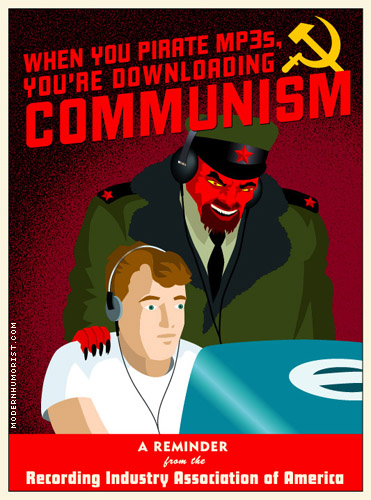
And we might just have some sympathy for pro copyright groups if they didn’t come up with ridiculous things to justify their little war. The latest is the IIPA, the umbrella group for the likes of the RIAA, MPAA and BSA, saying that open source leads to communism (which gives me yet another opportunity to bring out *that* made up poster again). The IIPA is attacking governments that promote the use of free open source software, saying that all this free stuff makes people forget to pay for things and therefore leads to the downfall of capitalism and eventually democracy. Or something. And their lobbying has seen Canada become an enemy of capitalism, to be joined by the likes of India (world’s largest democractic country) and perhaps soon, the UK as well. Having had a look at the software section here at Digital Digest, just over half of the software we list are freeware or open source, so I guess Digital Digest is an enemy of capitalism as well. Looks like our secret has been discovered, comrades.

And then we had RIAA’s CEO likening the recent hack of Google by Chinese hackers to people downloading free music, and using this to attack Google for not being friendly enough to the RIAA’s demands. The logic behind this is that Google being hacked and some of their source code being stolen is IP theft, just like music downloads, and that the Chinese government’s reluctance to crackdown on “patriotic hackers” is the same as other government’s reluctance to introduce three-strikes, and this allows the RIAA to point at Google and do the infamous The Simpson’s Nelson “Ha Ha”. I’m sure I don’t need to point out the large chasm of difference between the fairly passive act of downloading music that’s been made available illegally online (by someone else), and the fairly non passive act of hacking Google. And is the Chinese government’s actions, mainly motivated by political and military aims, really the same as other government’s concerns over three-strikes being unconstitutional? In the RIAA’s eyes, anything can be justified, it seems.

Some of the governments that don’t like three-strikes still want to maintain their self governing rights as to not be forced to adopt it as part of a global copyright treaty. And it is this concern that has the EU coming out against having a three-strikes provision as part of the ACTA agreement, that’s been negotiated mostly in secret. Did the RIAA and MPAA really think they can force something as controversial as this on every single country in the world and not face some objections? Well, they can just classify those who don’t go along as enemies of capitalism, I suppose.

One government that’s not so against the idea of three-strikes is the UK government, which is still debating what to add to their Digital Economy Bill, the bill that the big players  in the digital economy (Google, Yahoo, Facebook, eBay) hates. And the side effect of having a three strikes system is that it places burden on ISPs and Internet service operators to monitor their customers, and this will include the likes of libraries and cafes that offer public Internet services, like free Wi-Fi hotspots. But monitoring these connections will be almost impossible, due to the high turnover of customers, not to mention privacy concerns, and it could forces these services to be shut down, which I’m sure will do wonders for the digital and non digital economy. All this while UK consumers are more confused than ever over existing copyright laws that don’t really make much sense to them as well. It is illegal to rip CDs to your iPod or portable music player, despite everyone doing it and in most cases having no negative effect for copyright holders. Of course, if people were prevented from ripping their CDs and forced to buy a new digital copy of all their songs, then yes, copyright holders would get more money, but that’s like thinking about the money lost currently if each song could be made to cost $10,000 to buy. Why not just make consumers buy the song every time they want to hear it, for $100,000 each time, that could even make more money. Your product is only worth as much as people are willing to pay for it, never forget.

High Definition

In HD news, Adobe has released another beta version of Flash Player version 10.1. This long awaited release, with no official final release date, will add GPU assisted decoding for the playback of Flash H.264 content, which is very much needed at the moment due to the increasing popularity of 720p and 1080p videos, and the fact that even desktop CPUs sometimes struggle with 1080p videos without GPU assist.

ASUS Eee PC 1201HA

Flash Player 10.1 Beta 3 adds Intel GMA 500 acceleration support, enabling netbooks such as this Asus Eee PC 1201HA, to play HD H.264 Flash video without skipping

The new beta adds acceleration support for Intel GMA 500 integrated GPUs, which is important because quite a few Netbooks, CULV laptops and hybrids use this chipset, and with their less than powerful CPUs, GPU assisted decoding in the only way to get HD H.264 to play with any sort of decent framerate.

The other news item, that I referred to earlier before, is about the head of Blockbuster Australia (and the Video Ezy rental chain), Paul Uniack, basically saying that Hollywood studio greed is killing the video download business. We all suspected that may be the case, but it is interesting to see someone in the business confirm it so clearly. Uniack says that studios are not pricing downloads fairly, and that studios are asking for as much as 70% of the revenue for doing nothing other than allowing the sale or rental of the digital format. He also believes that the studio’s arrogance may be their downfall, as it is similar to the attitude of the music labels before “digital downloads and piracy destroyed them”. Blockbusters Australia had an agreement with TiVo to produce downloads, but has since had to pull out due to lack of support from studios. I don’t know if studios are doing this on purpose, that if they’re afraid of opening the digital floodgates, unsure of the eventual outcome. Maybe they’re just greedy or short sighted enough not to be able to see the potential of digital. I believe they will eventually change their minds on this matter, but it might already be too late for them by then.

Not much in gaming news, so skipping the section yet again this week.

See you next week.

Weekly News Roundup (21 February 2010)

February 21st, 2010

Another relatively quiet week. Which is why the release of the NPD January US video games sales figures was timely, since it allows me to pad this WNR with a few more words than otherwise about the analysis. With stats now available spanning a two year period, it was interesting to compared January of 2008 with that of 2010, and to find that the PS3 only managed a 3% sale increase in that time. The reason Sony are still happy is because 2009 was best forgotten in terms of PS3 sales, and so 2010 seems like the best year ever, and it is, but only by 3%. The economy might have something to do with the small size of the increase, but consider the fact that the Xbox 360 managed a 45% increase with the same comparison, suggesting there’s still some time to go before Sony should start the celebrations, especially with the alarming decline of both the PS2 and the PSP. But with a good lineup of PS3 exclusives, Sony might not have to wait too long to declare themselves the winners (which is different to “being declared the winners”). The Wii continues its steady decline, having received a (what seems temporary) reprieve in December. Anyway, on to the news.

Copyright

In copyright news, The Pirate Bay may still be open, despite lawsuits, seizures and various other tactics, but it’s not stopping anti-piracy agencies from still going after its members. This time, it was the Danish Antipiratgruppen that went after a Danish TPB user, who had done the terrible thing of uploading 4 movie torrents.

The user’s home was searched, equipment seized, and the Antipiratgruppen declared the operation as stopping a “big fish” from committing “massive piracy”. Antipiratgruppen apparently found more material than they had expected, so it seems their fishing expedition had paid off with a catch, although just exactly what they found nobody knows at the moment. Is it beyond agencies like Antipiratgruppen to talk up their seizures when in reality they’ve found very little? No it isn’t. On a similar theme, Nintendo recently went after a man in Australia for leaking the game New Super Mario Bros. Wii a week earlier than the official release date. The man pleaded guilty and was fined $USD 1.3m. The only thing uploaded was a copy of the game DVD, which was still uncracked and so was not usable, but that was enough.

Moving on to the war against ISPs (new strategy in content owners fight again online piracy), NBC Universal Vice President Richard Cotton says that ISPs should filter out illegally uploaded copyrighted content just like how they filter out viruses. The thing is, I’m not even aware that ISPs filter out viruses, or at least not successfully, since many people, if not most, still get sent them via emails or get infected through web pages. Sure, they block attacks and probes, but these are attacks aimed at their own networks – home users still have to install firewalls to protect their own networks, for example. And when email filtering is activated, there is almost always a way to deactivate it or still allow “suspected” emails to go through with a tag added for easier identification, because false positives are still quite common and nobody wants real emails to get blocked. Just like nobody wants real, legal content to get blocked, which is a distinct possibility if ISP level filtering were introduced. The content owners seem to want everyone else to take responsibility for online piracy except themselves, even though they may be the ones most responsible for the increase in popularity of online piracy, thanks to outdated pricing models, lack of online services and excessive DRM.

Assassin's Creed II PC

Ubisoft's new DRM, which comes with Assassin's Creed II on the PC, may drive gamers to piracy

Speaking of excessive DRM, Ubisoft’s new approach to DRM, which was mentioned here a few weeks ago, is even worse than first thought. Some reviewers that managed to review Assassin’s Creed II on the PC, one of the first games to feature the new DRM along with Silent Hunter 5 and Settlers VII, were shocked to discover that not only is online authentication required, it is required for virtually every second of gameplay. In other words, it’s not just the type of online authentication you find at Steam where you need to do it whenever you start the game, this new DRM requires that you connect to the Ubisoft servers every single second the game is running (and there’s no offline mode either, so no Internet = no game). And if for one second, you connection to the Ubisoft server dies (or if the Ubisoft server dies), then you are kicked back to the main menu and you lose all unsaved progress, at least for Assassin’s Creed II. Upon hearing the news, I thought that this may be just a temporary issue, one that Ubisoft would address. Address they did, by saying that this is all intentional and if you don’t like it, blame the pirates. Blame them, or join them? Now, I would never advocate pirating a game, because a lot of people have put a lot of work into it and they expect to be paid just like you would, but it seems that the only way to get any sort of decent experience out of these games is to go with the pirated version. Ubisoft has turned a moral and legal decision into one of necessity. Having had a look at Ubisoft’s incredibly long FAQ page about this DRM platform, all the usual questions are covered such as what happens if Ubisoft’s authentication servers are down. The answer they give is that, well, it won’t go down because they’ve got people monitoring it and stuff. Big websites like Google and Microsoft can go down and do go down, so do we really expect Ubisoft, a company that has had a dubious record when it comes to hosting gaming servers, to not fail? And fail they have, judging by the backlash they’ve received, and the series of funny YouTube videos mocking their new DRM system (see Das DRM Part 1, 2 and 3, as well as the obligatory Downfall Hitler parody). And on the question of why there isn’t an offline mode, the answer is simply that if they did, then the constant authentication system wouldn’t work anymore.

What Ubisoft is advocating is the end of PC game ownership. Instead of buying a game and playing it the way you want to, you are now only leasing it from Ubisoft and they tell you when and when you can play the game. Once Ubisoft finds 24/7 monitoring of their servers too expensive, especially for older games, they can simply remove support for such games and you’re left with a useless box of junk. On their FAQ, Ubisoft promises to release a patch to solve this problem if they ever remove support for the game, but all that tells us is that they do in fact plan to stop supporting games in the future, and that gamers will have to be relying on a company to release a patch for an old game in order to keep on playing it. Anyone who has failed at finding a patch of a five year old game that no longer works in Windows 7, and with no response from the publishers other than “sorry, the game’s too old to be supported”, will know what’s in store for potential Ubisoft customers. I’m hoping Ubisoft’s extreme actions will prompt a extreme response from consumers, and hopefully lead to the eventual downfall of PC DRM, much like how EA’s Spore has made EA a bit more friendlier in terms of DRM. In the end, all this does is to punish those that actually purchased the game. The people who pirate may get a version that doesn’t do this at all, and will play happily never worrying about their Net connection dying in between saves. The situation is very similar the one with those un-skippable trailer on DVDs and Blu-ray’s (see this illustration that has been circulating around the net about piracy versus pay), which you had to admit is a lot less annoying that this Ubisoft thing. There was a story last week about whether game publishers are encouraging piracy, and I said I wasn’t sure about that, but in this case, then you have to say that Ubisoft is encouraging piracy like no other company has done before, by making the pirated version the most user friendly and enjoyable version available.

By comparison, console games have a lot less DRM, although their hardware makes it harder to play downloaded games. But that may be about to change, as Sony are testing their own DRM system which will require a complicated system of vouchers and registration. Basically, the game comes with a voucher that needs to be redeemed online if you want to play online. If you purchased a second hand copy of the game, then you’ll have to buy a new voucher for $20. Just like the Ubisoft DRM, this plan seems to have unintended or intended consequence of killing off the second hand games market (Ubisoft’s new DRM games can’t be re-sold).

High Definition

Moving onto HD, Blu-ray has been slow in terms of PC and Laptop adoption, but that may soon change with MSI pricing a Blu-ray, Intel Core i3 laptop for less than $700.

Sony's OLED TV

Sony's OLED TV: Thin, beautiful, but really really (really) expensive

Now, that may still seem expensive compared to a Blu-ray player, but you do get a laptop too, even if the screen is not 1080p (but it does have an HDMI output, to connect to your HDTV). I’ve seen recently some super expensive gaming laptops that still come with DVD drives, and so perhaps this marks the start of a new trend, because there’s no reason why all PCs and laptop aren’t coming with Blu-ray drives (the cost has come down, Blu-ray movies are widely available, and pretty much all modern PC hardware can play Blu-ray movies without breaking a sweat).

Sony has cancelled it’s OLED screen for sale in Japan. I guess the relatively poor Japanese economy meant that hardly anyone was willing to pay $227 per inch of screen, and what would one do with a netbook like screen size anyway. Of course, Sony’s OLED TV is more of a technology test than an actual product, and I expect bigger and cheaper screens to come eventually, as I see OLED as the successor to LCD and Plasma screens.

As for gaming news, there wasn’t much, but I’ve already covered the NPD and Ubisoft DRM thing so I’ll skip this section for this WNR.

See you next week.

Game Consoles – January 2010 NPD Sales Figure Analysis

February 15th, 2010

The first figures from 2010 are out. December 2009 was a monster month for hardware sales, for the Nintendo consoles in particular. January usually means a considerable drop as the holiday sales period ends. But unlike most January’s, this one is harder to predict as we have the economy, the PS3 surge, the potential decline of the Xbox 360 and the usual stock shortage problems to contend with. The figures are from NPD, a marketing research firm that releases games console sale data every month.

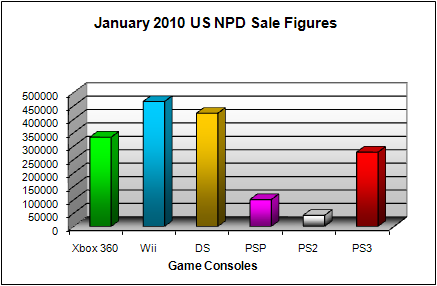
The figures for US sales in January 2010 are below, ranked in order of number of sales (January 2009 figures also shown, including percentage change):

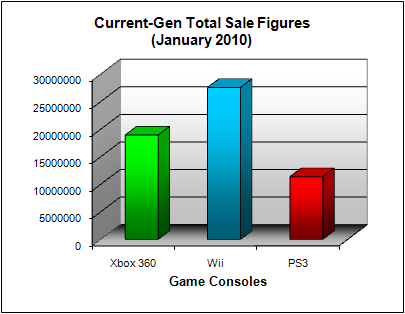
  • Wii: 465,800 (Total: 27.6 million; January 2009: 679,200 – down 31%)
  • DS: 422,200 (Total: 39.9 million; January 2009: 510,800 – down 17%)
  • Xbox 360: 332,800 (Total: 19 million; January 2009: 309,000 – up 8%)
  • PS3: 276,900 (Total: 11.4 million; January 2009: 203,000 – up 36%)
  • PSP: 100,100 (Total: 17 million; January 2009: 172,300 – down 42%)
  • PS2: 41,600 (Total: 45.3 million; January 2009: 101,200 – down 59%)
NPD January 2010 Game Console US Sales Figures

NPD January 2010 Game Console US Sales Figures

NPD Game Console Total US Sales Figures (as of January 2010)

NPD Game Console Total US Sales Figures (as of January 2010)

My prediction from last month was:

January should see huge sales drop across the board, but that’s just a seasonal thing. And as such, it’s very hard to predict the order of things, although I believe the hardware sales ordering will remain the same. On the software front, January will be largely quiet, Mass Effect 2 on the Xbox 360 should do well, and the rest of the top 10 should have a familiar look to December’s. There are some big releases coming in February and March, so consumers can take a breather in January (and save up).

January’s figures are a mixed bag really. While the ordering was largely the same, the only difference being the Xbox 360 and the PS3 swapping places, there were larger than expected drops for all the consoles. On the software front, Mass Effect 2 on the Xbox 360 did indeed do well, being a console exclusive, and the top 10 had a familiar look, although still room to add in a few new entries.

Compared to January a year ago, only the Xbox 360 and the PS3 managed sales growth. This the second January in a row that the Xbox 360 managed growth, and that’s probably largely thanks to Mass Effects 2. Last January, the PS3 actually recorded a sales drop compared to January 2008, but this January, the PS3 showed the most positive growth. But this has to be taken into context, as the PS3 was doing extremely poorly back in January a year go – take this into account, the PS3 only grew by a paltry 3% between the two January’s of 2008 and 2010 (and for the same comparison, Xbox 360 sales grew by 45%). Sony has said that stock issues were partly responsible, or will be in February at least. Whether that’s true, or it just signals the Slim/price cut led surge in sales is dissipating, we’ll have to wait until March and April’s stats come out to confirm. The Xbox 360 showed growth largely thanks to Mass Effect 2 one would guess, and sales are being kept above the PS3 thanks to strong software sales (including Modern Warfare 2) in two of the last three months.

Looking at the negatives, and there were a lot of them, the Wii continues on with its 30+% month to month drop in sales after taking a break in December. The DS also saw a drop of 17% compared to January 2009. While the PS3 managed growth, the other PlayStation consoles saw massive drops, with the PS2 dropping below 100,000 units sold for the first time since I’ve started recording figures (since September 2007). The PSP was only 100 units away from having this unwanted distinction as well. Both of these platforms are dying a slow death, the PS2 understandably (although Sony would have wanted more PS2 owners to upgrade straight to the PS3 than what is evident), but it’s the PSP that must be worrying for Sony, especially compared to the DS. And as mentioned in the 2009 year in review, the revenue increase from the PS3 doesn’t come anywhere near the revenue drop from these two consoles.

Lets move onto software. As expected, Mass Effect 2 did well, but not enough to unseat New Super Mario Bros. for the Wii, which held on to the top spot. All the usual Wii titles are in there, with only Wii Play missing out on a top 10 spot. Modern Warfare 2 is still selling relatively strong, both console versions are represented in the top 10, with the lower placed one the only PS3 title in the top 10 once again. The Xbox 360 had two more titles, making it a total of four – Army of Two: The 40th Day and Darksiders made the list at 8th and 10th. There was also a non Nintendo Wii title in the top 10 as well, with Ubisoft’s Just Dance sneaking in at 9th. The Wii needs more titles like this to be hitting the top 10 to remain viable in the long term.

Here’s the complete list of the top 10 software sales:

  1. New Super Mario Bros. Wii (Wii, Nintendo) – 656,700
  2. Mass Effect 2 (Xbox 360, EA) – 572,100
  3. Wii Fit Plus (Wii, Nintendo) – 555,700
  4. Call of Duty: Modern Warfare 2 (Xbox 360, Activision) – 326,700
  5. Mario Kart w/ Wheel (Wii, Nintendo) – 310,900
  6. Wii Sports Resort (Wii, Nintendo) – 297,600
  7. Call of Duty: Modern Warfare 2 (PS3, Activision) – 259,000
  8. Army of Two: The 40th Day (Xbox 360, EA) – 246,500
  9. Just Dance (Wii, Ubisoft) – 191,900
  10. Darksiders (Xbox 360, THQ) – 171,200

Prediction time. There are some big titles being released in February, several that will help the PS3 more than the Xbox 360, including the platform exclusive Heavy Rain, and while it’s no longer exclusive, Final Fantasy XIII should have a bigger following on the PlayStation platform than on the 360. As a result, I expect the PS3 to outsell the Xbox 360 at the very least and maybe make a run on the Wii. BioShock 2 should do well on the Xbox 360, but the usual Nintendo Wii titles should also be in the top 10.

See you next month.


About Digital Digest | Help | Privacy | Submissions | Sitemap

© Copyright 1999-2012 Digital Digest. Duplication of links or content is strictly prohibited.