Blu-ray Year To Date Stats + PC Playback

December 6th, 2008

Home Media Magazine last week published year to date sales stats for Blu-ray and DVD. While the year isn’t over yet, they are still worth taking a look at. 

Overall, Blu-ray sales accounted for 4% of the market by disc volume (the number of actual packages sold) for the top 20 titles. If you look at dollar volume (the total amount of money taken in), Blu-ray did a little better at 6.11%, which is not a surprise considering that a typical Blu-ray movie is more expensive than a DVD.

If you look at the growth figures, Blu-ray sales are way up on last year, a 233.23% increase to $USD 410.28 million dollars. DVDs, on the other hand, were down 8.47% at $6,306.01 million, taking into account that the YTD figures are only up to 16th November.

With the above set of figures, it is possible to extrapolate last year’s figures, which are as follows:

  • Blu-ray: $175.91 million (2.5%)
  • DVD: $6,889.56 million (97.5%)

These figures look right to me, as Blu-ray did have a 2.5% market share this time last year (with HD DVD still holding around 1.5%). It looks like Blu-ray has successfully absorbed the HD DVD market share, and still managed to grow about 2%. This may not sound like a lot, but considering that most of Blu-ray’s growth has been in the second half of the year (and in the last quarter of 2008, which is yet to finish), things are looking pretty bright.

But Blu-ray was brought in make up for the ever shrinking DVD profits, and with the above set of figures, it is now possible to see if Blu-ray has managed to do just this for the studios. DVD sales dropped by $583.55 million from 2007 to 2008 (up to 16th November). However, Blu-ray sales have only increased by $234.37 million in the same period. Since these figures do not represent the entire calendar year, so it’s still a bit premature to provide any concrete conclusions at this moment. Blu-ray sales will increase in the one and a half months left in the year, and the DVD sales decrease will lessen – it will only take a little bit of movement on either front for Blu-ray sales to completely cover any losses in DVD sales, and after that, it’s all extra profit. Of course, this does not take into account the amount of money that studios have spent in developing and promoting Blu-ray, but many of these are once off costs.

To conclude, Blu-ray sales have increased beyond simply absorbing the HD DVD market share, and looks set to at the very least cover any decreases in sales for the DVD format, which was the whole point of having a new format. While there’s still a long way to go before one can say that Blu-ray is competing with DVD, it is already supplementing it quite nicely and perhaps that’s the intentions of the studios all along.

As for the second part of this blog post, as you may be aware, I recently purchased a new C2D E8500 powered computer, with an Asus 4850 as the Blu-ray decoding assisting GPU using the latest Catalyst drivers (8.11) in Windows XP. Desktop resolution was set to 1920×1080, the native resolution for Blu-ray (and my LCD monitor). Audio decoding settings in PowerDVD were set to 6 channel output. 

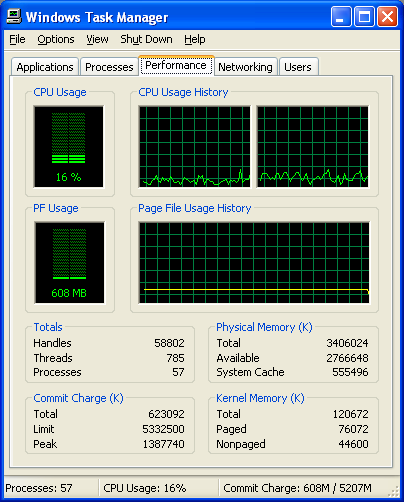
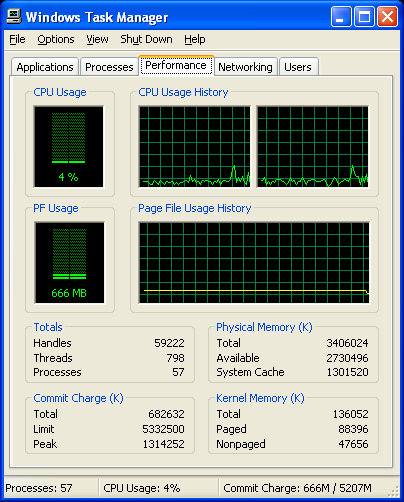
I was interested in CPU usage while playing a H.264 and VC-1 encoded Blu-ray discs, and here are the results.


CPU usage while playing VC-1 encoded Blu-ray in PowerDVD 8 Ultra

CPU usage while playing VC-1 encoded Blu-ray in PowerDVD 8 Ultra

CPU usage while playing H.264 encoded Blu-ray in PowerDVD 8 Ultra

CPU usage while playing H.264 encoded Blu-ray in PowerDVD 8 Ultra

As you can see from the above CPU usage graphs, the CPU usage for both VC-1 and H.264 encodes were at a very reasonable 10% on average. ATi’s Avivo HD is doing an excellent job at assisting Blu-ray decoding. It’s unfortunate that PowerDVD no longer allows HD acceleration to be switched off, as I would be interested to see how the CPU handles decoding by itself. It was also interesting that, since I had Intel SpeedStep turned on, the CPU was in power saving mode during most of the playback (CPU multiplier reduced from 9.5x to 6.0x). With this kind of GPU acceleration, you can get away with using one of Intel or AMD’s budget CPUs and still get perfect Blu-ray playback. More sensible though would be getting a silent cooling GPU, with an equally low power CPU part, to build yourself a near silent home theatre PC system.

Weekly News Roundup (30 November 2008)

November 30th, 2008

My Fallout 3 addiction continues this week, and throw in the Thanksgiving holidays, and you have a pretty quiet week. I wrote a mid-week blog about my new PC, which ties in well with my If I were to buy a new computer today feature. I didn’t really follow my own advice there, did I, but then again this is a work computer I’m buying, even though it plays Fallout 3 at 1360×768 with 4xAA in high quality mode. Yep, it’s a work computer alright.

In the same feature, I also wrote some Fallout 3 troubleshooting tips. As great a game as it is, the stability sucks and there are a whole bunch of bugs. If you got the game on the PC, really the best platform to play the game on, then you’ll in luck as there are many ways around the bugs through the console interface (for example, bringing back dead NPCs that aren’t supposed to be dead). If you own it on the console, then you’re out of luck I’m afraid. One thing I did forget to mention in the feature is that you shouldn’t complete the main storyline quests until you’ve done all the other stuff, as once the main story is complete, the game ends and you can’t continue on playing. I’m done about 8 quests already, but only the first storyline quest, and that’s only because the game’s pretty pointless if you don’t get out of the damn vault. But even with all these problems, it’s still a great game. I even love the game’s soundtrack: “I’m as horny as Kansas in august” (I know, I know).

Anyway, onto the news that I managed to find in between the 4 hour long Fallout 3 gaming sessions.

CopyrightIn copyright news, France’s “3 strikes” copyright infringement law has been struck down by the EU, which is good news for everyone in Europe. It’s good that there’s a legal body such as the EU to provide oversight over “too eager to please the MPAA” countries and their ridiculous copyright legislation.

AFACT sues iiNet

AFACT sues iiNet

The movie industry’s lawsuit against Australian ISP iiNet’s has been publicly condemned, and here’s another write-up of the potential consequences. Holding ISPs responsible for their customer’s possible actions is like holding the Yellow Pages responsible for the acts of every company that it lists. I just hope all of iiNet’s rival ISPs are banding together and contributing to iiNet’s legal costs, because a loss for them is a loss for every ISP in Australia. There’s already a lot of public outcry over the government’s ridiculous Internet filtering scheme, which fortunately looks like it won’t be voted in. Even though I voted for this current government, you just cannot support something as ridiculous as a National Filtering Scheme (read “government censorship”). The future of Australia’s Internet is now very much on the line, pun unintended. 

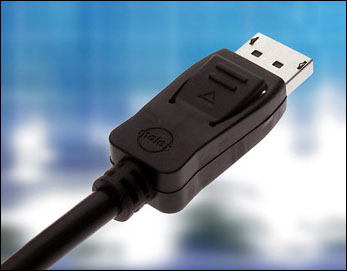
DisplayPort - HDCP is mandatory

DisplayPort - HDCP is mandatory

Apple’s latest MacBooks now support DisplayPort, DVI’s successor in PC display connections. Unfortunately, DisplayPort also comes with HDCP DRM, and that has the Apple users up in arms. HDCP has been in DVI for a long time now, and it is already mandatory on HDMI. DisplayPort, being backwards compatible with HDMI and DVI, was always going to feature HDCP. iTunes content will now no longer play on non HDCP displays, and this is the source of the biggest complaint, but Blu-ray/HD DVD has been like this from day one. All HDMI capable displays are HDCP compatible, as are monitors with DVI input made anytime in the last year or two, so only older displays are affected. There are devices you can use to get around this though, I think. HDCP is a load of crock, I mean how many people actually strip the digital signal from DVI or HDMI to copy movies? Maybe professional pirates, but they also have easier methods to strip DRM. But the industry in general has moved on, and only Apple was behind when it came to the adoption of HDCP, so it’s now too late to do anything about it. On the subject of DisplayPort, it is a logical step up from DVI, since it supports audio as well, and unlike HDMI, it supports it two ways (web cams/mics built into monitors can now be connected through the monitor’s cable, for example). Plus, DVI bandwidth is beginning to be a problem, so DisplayPort will become necessary soon. Plus, it’s an open standard, so at least there’s some good news in this area.

SecuROM - it's all about control

SecuROM - it's all about control

Staying on the computing theme, the PC version of GTA IV is coming out soon and it uses SecuROM DRM like most of the recent games, including the infamous Spore. That’s not much of a news, except that Rockstar Games, the makers of GTA, had to come out and explain why they use DRM and how it isn’t as restrictive as the full set of SecuROM features allow (ie. it hasn’t been “Spored”). I like this, not the DRM part, but the fact that publishers now see the need to justify their use of DRM, when in the past, nobody talked about it (even though customers always complained). This reminds me of the early days of music DRM, and if gamers take the path of music lovers and demand DRM-free, they will get it. At the very least, any game that requires Internet authentication should now play without the original disc – I mean, why do you need two levels of authentication, when one’s enough. Authenticate the serial so that it can be used on an unlimited number of computers but never at the same time (with a few authentication free sessions after each authentication, so you can play without an Internet connection, but only for a few times before you need to re-authenticate), and that should kill off casual piracy that consists of your friends borrowing your game CDs to install on their computers. After all, that’s what the DRM is there for isn’t it? DRM-free is even better, but that relies on publisher making good content that people want to buy, and that’s just too much to ask isn’t it? But I do feel that people who buy games won’t pirate, and vice versa, so no money is actually lost anyway. 

High DefinitionLet’s dig into Blu-ray news, Home Media Magazine has published in it’s latest digital edition of the magazine figures for year to date Blu-ray (and DVD) sales. Blu-ray held 6.11% of the market based on dollar volume (but as Blu-ray is more expensive than DVDs, the actual disc volume will be less than this – counting only the top 20 titles by disc volume, Blu-ray only held 4% of the market). That’s not too bad I suppose, because this time last year, Blu-ray only had 2 or 3% (with HD DVD holding a further 1 to 2%), so Blu-ray has absorbed HD DVD owners, plus increased uptake a bit. Hit titles such as Iron Man (number one selling Blu-ray title of the year, but soon to be displayed by The Dark Knight) held as much as 17% of the market, although less stellar titles often fall towards 5%. It’s the 5% that Blu-ray needs to improve on, because 17% is pretty good at this point in Blu-ray’s development.

But a survey of shoppers suggest that this holiday period won’t really be a key one for Blu-ray, as consumers say they are not planning a Blu-ray Christmas. Amazon’s Black Friday sales has started but it’s all a bit underwhelming (although I picked up Iron Man, Kung Fu Panda and Indy 4 on Blu-ray for $14.99 each in their early bird special, which wasn’t all that early for us Australians as it was 9pm here when it started). There are some cheap titles in there, many under $11, but you really do expect a bit more. The early bird specials were okay, but that’s only like 6 titles, and only 4 of them are new releases. More sales like that, then we’re talking.
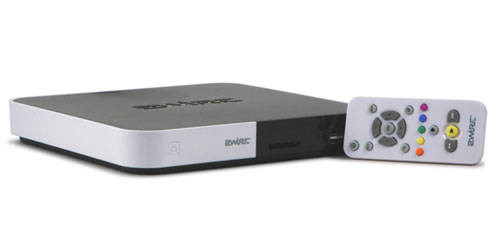
Blockbuster launches it's new set-top box

Blockbuster launches it's new set-top box

But you can’t help but feel that some of the Blu-ray backers are now thinking that Blu-ray alone won’t help their fortunes. Panasonic, on the the main backers, is now talking up 3D technology and want to add it to the Blu-ray specs. If HD can’t do it, if BD can’t do it, then let’s go 3D. Blockbusters, another company that backed Blu-ray early when it went Blu-ray exclusive months before any other company, is now launching their Blu-ray killing next-gen video streaming service. Not really though, because SD video streaming and HD Blu-ray are not really competitors, other than in the general sense that one service takes away money that people can spend on the other. Video streaming may kill off DVD, but until Blu-ray quality video streaming becomes a reality, Blu-ray will have a place in the market. From a technical standpoint, all you need is a non theoretical speed of 50 Mbps to be able to stream Blu-ray content, and BD-J can already accommodate streamed Blu-ray movies from what I’ve read. 50 Mbps is still out of reach for most people these days (if you’re already downloading stuff at 6.5 MB/s, then you’re good to go, but I can barely do 650 KB/s at the moment), and even more so when everyone will be streaming stuff at the same time. Of course, this is assuming the the Blu-ray movie is at the maximum specified bitrate (basically max out video and audio bitrates), which most movies do not reach. Plus, it also assumes realtime streaming, and not a partial download/streaming service (say 2 hours of wait before you can start watching – that’s stil quicker than buying Blu-ray discs online, or even going to the shops sometimes). Plus, video codec improvements will mean reduced bitrate, but still the same excellent quality. But anyway, the first step will be to get people used to having streaming movie set-top boxes, and Blockbuster, Netflix, Microsoft, and even Sony have already made moves in this direction. 

GamingAnd finally in gaming news, a new PS3 firmware should now be available by the time you read this. I like Sony’s commitment to providing regular firmware updates, but the problem is that these firmware do not get the testing time they require, and that’s why almost every single firmware release has been buggy, not helped by there being so many PS3 SKUs. Overall, I still prefer Microsoft’s bi-annual major updates (with lots of small silent updates in between). 

In other gaming news, Fallout 3 is awesome. That is all.

Speaking of an awesome game, I’m off to play one now and hope I don’t set the world on fire. See you next week.

My new PC + Fallout 3 Troubleshooting

November 28th, 2008

It’s been a week or two since I started using my new computer full time and so I think the time is right to write a little review and share with you the reasons why I bought what I bought these parts in the first place. Here are the complete specs for my new work computer, including parts (monitor, Blu-ray drive) that I had purchased previously:

Antec Sonata Designer 500

Antec Sonata Designer 500

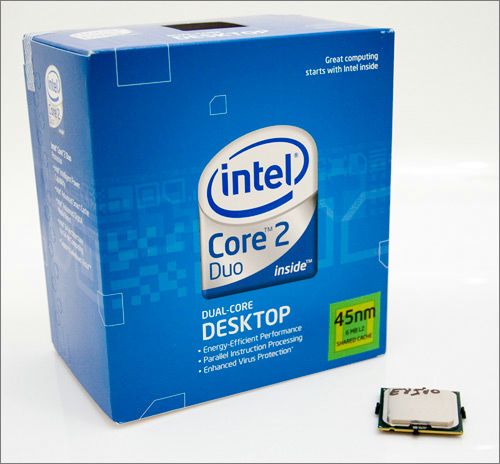
Intel E8500
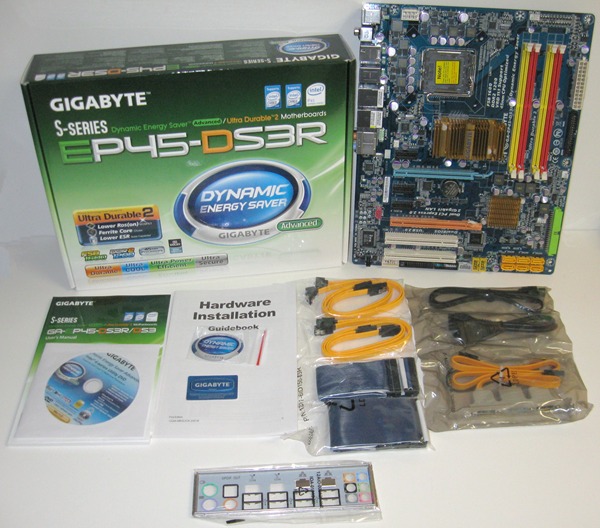
Gigabyte GA-EP45T-DS3R
OCZ 4GB 1333 C9
2 x Western Digital 640GB WD6400AAKS
LG GGC-H20L Blu-ray/HD DVD reader, DVD writer
Asus 512 MB 4850 
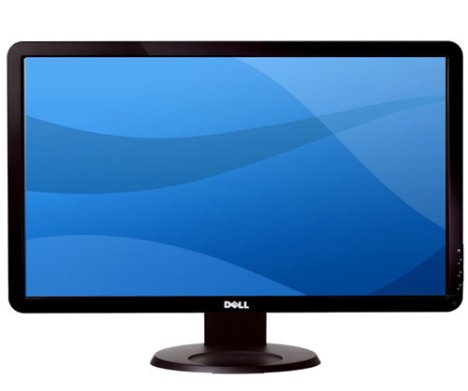
Dell S2409W 24″ 1080p LCD monitor 
Antec Sonata Designer 500 case (includes 500W Antec EarthWatts power supply)
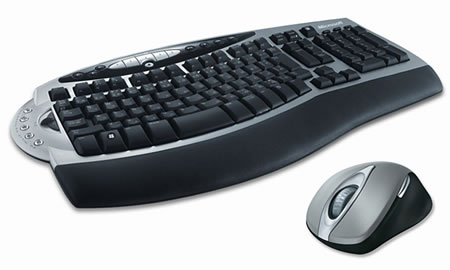
Microsoft Laser Desktop 4000


Intel E8500

Intel E8500

The E8400 has been the sweet spot, in terms of pricing and performance, for the upper end of the Intel Core 2 Duo line-up for some time now. Quad-core is nice, but it’s also expensive and unless you use apps optimized to use all 4 cores, the Core 2 Duos still represent better value for money and raw performance when it comes to these unoptimized programs (most games, for example). I went with the E8500 instead of the E8400 due to recent price rises (thanks to the low Australian dollar), certain parts, especially the popular ones, went up in price by greater amounts than the less popular ones. The E8400, being more popular, was only now about $30 cheaper than the E8500, whereas previously, the difference had been as high as $130. At $130 difference, the E8400 is clearly the better choice. At $30 difference, especially with the current socket coming to the end of life, it’s worth it to get a faster processor that will last a bit longer.

Gigabyte GA-EP45T-DS3R

Gigabyte GA-EP45T-DS3R

The motherboard sort of picks itself, as I like Gigabyte’s stuff and their EP45 series are well priced and very fully featured (eSata, on-board audio, 2 Ethernet ports, dual BIOS …). The only choice you have to make really is whether you want to use DDR3 or DDR2 memory (the ‘T’ in EP45T denotes a DDR3 only board). I went with DDR3 because it will probably be easier and cheaper to replace in the future, as DDR2 will be phased out soon by both Intel and AMD. I went with 4 GB (2 x 2GB) to give Windows and newer apps a bit of breathing room, and although it’s not the fastest RAM, it does run at 1333 MHz and I have the option to run it at slower speeds, with lower latency, if needed. It’s probably not worth spending more on RAM, as you get little out of it. I originally ran into problems with the OCZ RAM, as the ones supplied were faulty on arrival. This brings up the issue of testing, and it was obvious that the computer store (Computer Parts Land) I purchased from did not test this build at all. I can tell because the default RAM timings were used, and it is a well known thing that these OCZ RAM had wrong SPD settings for 1333 MHz operation (it shows 1.5v, but the RAM is actually 1.7v as stated on the OCZ website). If they had done testing at this original setting, the RAM would not have passed the required tests (Memtest86+). And this is a good time to recommend you test your system with Memtest86+ and other stress test tools before you install software on it – otherwise, you could end up wasting a lot of time like I did before I figured out that the random crashes were RAM related.

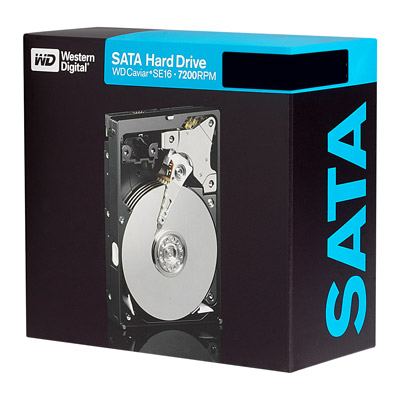
Western Digital 640GB 6400AAKS

Western Digital 640GB 6400AAKS

The HDD I had to decide between the Samsung or the WD AAKS series that I eventually picked. The Samsung is a bit more expensive, and I’ve heard of problems with faulty drives. Plus the AAKS 640 GB series is supposed to be one of the fastest mainstream drives around, and 640 GB sits nicely between 500 GB and 750 GB and offers a good compromise between these two sizes. I got two drives and run them in RAID 1 for improved data integrity, as this is my work computer and the data is more important than performance of a RAID 0 array (the “Russian Roulette of RAID”, that’s what I call it, because if one drive dies in a RAID 0 array …). The Blu-ray/HD DVD reader (and DVD writer) drive from LG I actually purchased several month ago due to a sale, and it’s great little drive that writes every kind of DVDs (including Lightscribe), and reads both HD formats which is necessary for me because I still have lots of HD DVDs (that’s now 3 HD DVD players that I have, the Xbox 360 add-on, the Toshiba standalone, and now the PC – this should ensure that my HD DVD collection remains playable for some time, especially considering that HD DVD reader drives are still being made). 

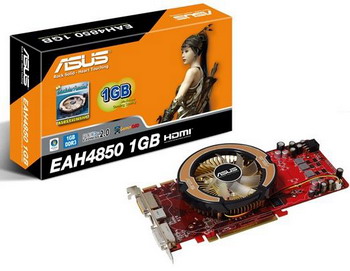
Asus Radeon HD 4850

Asus Radeon HD 4850

I chose the ATi Radeon 4850 because it is the best “budget” 3D card that can play almost all the latest games at the highest quality and resolution. Maybe it will struggle with some games at 1600×1200 with high quality (and won’t play others in “ultra” quality mode), but you’ll have to pay double or triple the price for a GPU that does and it will be obsolete in no time. I do regret a bit not spending more money on a GTX 260, as it has CUDA support which means you can use it as a second CPU for applications such as video encoding. But at double the price, they’re not worth it at the moment and I can always grab a cheap one (possibly a GTX 280) when they do come down in price. There’s also the issue of these GTX cards being noisy compared to the 4850, plus the 4850’s more numerous stream processors actually give it GTX 260 like performances in certain games. To sum up, the 4850 represents the price/performance sweet spot for GPUs at the moment, especially if getting more FPS out of your system is not your top priority. The Radeon HD range is particularly good for Blu-ray playback, as it features full acceleration for all the video formats used by Blu-ray, not just the usual H.264 with partial acceleration for VC-1 like on Nvidia cards. I chose the Asus version because it comes with a custom heatsink-fan that reduces the heat/noise even further, and all at the standard price.

Dell 24" S2409W

Dell 24" S2409W

For the monitor, I’m using the Dell 24″ I got for cheap a couple of months ago due to a Dell pricing error. It’s great for playing HD movies due to the 1080p (1920×1080) native resolution, and for games as well, as more and more are now using console based HD resolutions (720p, 1080p), rather than the more traditional PC resolutions such as 1920×1200 (you may get letterboxing effect if you do uses these PC resolutions in multi-platform games such as Fallout 3). On the negative side, your choice of PC resolutions are greatly reduced if you want the full undistorted picture, and some cards do not even support certain resolution combinations such as 1600×900, which sits between the too low 1360×768 and the too high 1920×1080.

Microsoft Laser Desktop 4000

Microsoft Laser Desktop 4000

For the case, I chose the Antec Sonata Designer 500. The Antec Sonata range is all about quiet operation, at the expense of support for high performance systems (hence the small 500W power supply). The Designer range is new to Sonata, and I prefer it over the original black Sonata range (my other computer’s case). Just a note that despite the picture on the website and on the box, the case is actually white, not silver – only the front facade is silver. It’s still an excellent looking case, and the noise level is very low, and the case stays very cool to the touch (actually feels cold when touching the outside). For the keyboard mouse, I got the Microsoft Laser Desktop 4000 due to Microsoft having a cash back offer for it (so it only cost me $45 after cash back, when the normal pricing is $130). It’s a very nice combination, and much much better than my previously wired Microsoft pair or my Logitech wireless set on my other computer. Money well spent, I think.

So that’s my system. It’s not a budget system nor is it expensive, not the fastest gaming PC nor does it fail to play the latest games, and it’s not a quad core either, but it does a bit of everything and do them quite well. It does H.264 encoding in no time, plays Blu-ray movies with only 10% CPU utilization, can play Fallout 3 at full quality in 1920×1080 (I play it at 1360×768 with 4x AA in high quality mode), and can run Crysis at high quality if you don’t mind the framerates being a bit inconsistent at times.

As for Fallout 3, I’ve been playing it a lot recently. But the PC version is well known for being quite unstable, and crashes are quite common unless you do a few things. I managed to get the game to run for hours without crashing, and here are some tips on how to do this, as well as solve some bugs the games has:

  • You have to ensure ffdshow is disabled for the video and audio decoding the game uses. This is especially needed if the game crashes on start up. 
  • The game seems to crash the more heavily pushed the GPU is, so even if Fallout 3 tells you you can run the game in “Ultra” mode, go back down one mode to “High” and the game will be a lot more stable.
  • While some say that you cannot run Fallout 3 on an ATi card with both AA and HDR. That’s not true, because I’ve managed to do so without crashing or any side effects, but the previous point stands – if you’re pushing your system to the limit, the game will crash more often.
  • If NPC disappear, especially in Megaton, then you can resurrect them on the PC version. This is a well known bug and characters such as Walter (the water plant, scrap metal guy) will disappear from time to time. This happens because they may fall off a platform into some null space somewhere. I’ve also had Billy Creel disappear on me, both him and Walter were at exactly the same null space place when I used the ‘player moveto’ command to find them. 
  • Save and save often. And don’t overwrite your saves. RPG are always save heavy, meaning that you almost need 100 saves before you complete the game. This is because certain actions and decisions you make can affect a lot of things, and you may miss out on certain optional quests if you don’t pay attention. With saves, you can sacrifice a few hours of game play to complete a quest that otherwise would have been unavailable. Plus, with the game crashing all the time, saves become even more important. 
  • If you plan on using Games for Windows to get the achievements and gamer points, log into “Live” before you start the game, as otherwise the achievements won’t be given.

That’s all for today, I think I’ve yapped on long enough.

Weekly News Roundup (23 November 2008)

November 23rd, 2008

A relatively quiet week for news, and not just because I’ve been playing Fallout 3. Honest. I did manage to get the October NPD analysis done, which incidentally was before I started playing Fallout 3. Just a coincidence, I suspect. Okay, let’s not waste any time, I’ve got some “stuff” I need to do later on. 

CopyrightIn copyright news, the MPAA led coalition are now targeting ISPs around the world, and Australia is the latest victim, with movie companies suing one of Australia’s largest ISPs, iiNet. I am a former customer of iiNet, but all Net users in Australia should be worried at this development, because if the movie companies win in court, then all other ISPs will become targets too. I just hope iiNet can win this one, because you can’t tell me that ISPs are now responsible for the Internet usages of their customers, and that they, as private companies, have the right to monitor private communications for signs of impropriety.

Can you spot the pirated Blu-ray?

Can you spot the pirated Blu-ray?

While the studios are fighting the ISPs, the real pirates in China are now able to pirate Blu-ray movies by converting the movies to another format, such as AVCHD. If Blu-ray media was actually cheap enough, then they would have just made 1:1 copies, but as such, Blu-ray recorder’s slow uptake is helping to fight piracy for the time being. Just goes to show that with all the effort and money spent trying to protect Blu-ray from the pirates, it didn’t take very long for these resourceful people to find a way. The news has the BDA scrambling, and as you’ll note later on in the HD news section, they are launching Blu-ray in China ASAP.

And while they’re usually on the other end of lawsuits, this time, Sony has lost a patent infringement case for its PSP handheld console and have been ordered to pay $18.5 million in damages. There are some very innovative devices on the market today, and it’s perfectly reasonable to think that someone has probably already patented the idea some time back, but without the actual technical know-how or resources to produce the devices. Expect DS, Wii, iPhone and all other devices to come under attack if Sony cannot successfully appeal this verdict.

High DefinitionOnto Blu-ray now, Sony execs are the latest to downgrade Blu-ray’s fortunes for 2008. They still expect Blu-ray to be a top seller this holiday period, but because the whole retail situation is extremely bad at the moment, being at the top of a very small mound does nothing really for the format.

Blu-ray sales not going as well as Sony, studios, had planned

Blu-ray sales not going as well as Sony, studios, had planned

This comes a few days after studios also downgraded the expected Blu-ray sales. Previously thought to reach $1 billion in sales, this figure has been slashed by up to 35%. And it’s not just Blu-rays, but DVD sales are also feeling the pinch from the economic meltdown. Most of the sales drop are in the higher priced new releases, which shouldn’t surprise anybody. Blu-ray is supposed to be the saviour of the steadily declining DVD sales, but they’ve marketed the thing as an even higher priced upgrade to DVD, and that’s just not helping. Of course, if they market it as a low or same cost alternative, then it means no extra profit (or a small loss, considering the higher manufacturing costs of Blu-ray), which defeats the purpose of having a new format in the first place. Stuck between a rock and a hard place probably best describe the situation concerning DVD and Blu-ray.

At least the retailers are still on Blu-ray’s side, and Wal-Mart will do their best to promote Blu-ray for this year’s Black Friday sales by selling a $128 Blu-ray player. It’s a good deal, even if the player in question won’t do everything the more expensive players will do. Hopefully, there will be some movie deals to go along with the cheap player.

And in a bid to fight off competition in China from Toshiba’s “China Blue High-Def” format, and to fight piracy, and possibly to try to lower prices a bit thanks to the economy of scale principle, Sony will launch Blu-ray officially in China. I would gather the reason they did not do so earlier was because of the fear of piracy, but now that Blu-ray piracy is already starting there (see above), there’s no harm now to launch a legal alternative.

And last week I talked about the HDMI con. This week, I’ll talk about the extended warranty con, another favourite product or service that salespeople like to push onto potential customers. I must admit that I fell prey to this one several times, and usually of my own doing without much of a push from the sales person. I guess to buy a false sense of peace of mind is probably worth the price for some people. Like myself.

GamingAnd in gaming news, Microsoft’s New Xbox Experience was launched in the week. I installed it, and it took a lot less time than I had imagined (compared Sony’s normal and buggy PS3 firmware updates, this one took no time and I’ve had no problems with it since, although I might be one of the lucky ones). The new interface is very nice, and the Mii rip-offs Avatars are a nice touch, possibly even better than Nintendo’s originally effort. The install to HDD option is great (no so great is my lack of HDD space), and games now play much quieter without the constant whirl of the DVD drive (and the numerous times when I’ve had the “faulty disc” problem as the drive overheats). If the Xbox 360 can come with a decent sized HDD, something like 500 GB, and then the full HDD install option might become essential. If they can also do something so that no disc checks are required (easy to do if they force you to connect to Live to authenticate your HDD install), then that would be perfect.

Fallout 3 on the PC is a Games for Windows title, and my favourite at the moment

Fallout 3 on the PC is a Games for Windows title, and my favourite at the moment

Also looking perfect for Microsoft is the fact that the Xbox 360 is selling games for myriad of publishers to establish itself as the platform of choice for publishers, at least according to the NPD figures. I’ve kept track of the monthly NPD numbers for a while now and it’s clear that the Xbox 360 is selling the most games. Most of the top selling monthly titles have been Xbox 360 games, and unlike the few times when a Wii title has stolen the spot, most of the games are third-party efforts. This is why publishers will want to publish on the Xbox 360, because they know they have a chance to have a number 1 title. Not so much on the Wii due to the strong first-party efforts by Nintendo, and no chance on the PS3 due to the relatively low hardware install base. Also being pushed at the moment is Microsoft’s Games for Windows platform, which basically brings Xbox Live to PC, along with things like Gamerpoints and achievements. Just press the “Home” button on your keyboard, and it brings up the PC equivalent of a dashboard, to chat with friends or check out your achievements. I’ve been using this feature with Fallout 3 on the PC, and it’s a pretty neat system that works flawlessly (not something I can say about the actual game, which is a crash-fest). Say what you will about achievements, but they do add a new dimension to playability and it’s no surprise that Sony saw fit to rip-off for their own PS3’s Trophies, which will now be mandatory for all games in 2009

Speaking of Fallout 3, I’ve got to go now. Got to get back to Megaton to have a bit or R&R, do some trading, before launching an all out attack on the Super Mutants (and their Centaur companions). See you next week.

Game Consoles – October 2008 NPD Sales Figure Analysis

November 17th, 2008

The October 2008 NPD sales figures are out, and there are no big surprises. There is the usual sales bump associated with the holiday season, and we get to see the Xbox 360 price drop in full effect, plus LittleBigPlanet and how it did for the PS3. You can read last month’s analysis here. The figures are from NPD, a marketing research firm that releases games console sale data every month.

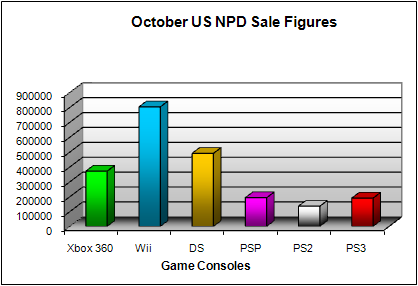
The figures for US sales in October are below, ranked in order of number of sales:

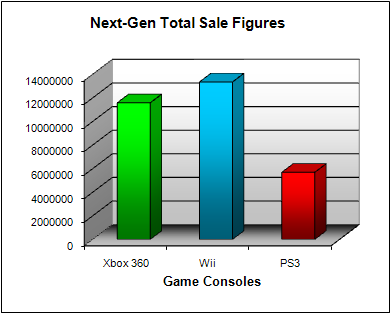
  • Wii: 803,000 (Total: 13.4 million)  
  • DS: 491,000 (Total: 23 million)  
  • Xbox 360: 371,000 (Total: 11.6 million)
  • PSP: 193,000 (Total: 12.9 million)
  • PS3: 190,000 (Total: 5.7 million)
  • PS2: 136,000 (Total: 42.9 million)
  •  

    NPD October 2008 Game Console US Sales Figures

    NPD October 2008 Game Console US Sales Figures


    NPD Game Console Total US Sales Figures (as of October 2008)

    NPD Game Console Total US Sales Figures (as of October 2008)


    My prediction last month was:

    The next month should see an increase in sales all around, but I suspect it will be the same as this months in terms of the ranking, the Wii ahead by quite a bit, the Xbox 360 following with the PS3 third (in between are the portables, while the PS2 is sixth). Common sense really. See you next month.

    Looks like I was right on the mark there. Not too hard as basically it’s the same as last month, with more sales. Actually, last month’s figures included 5 week’s worth, while this month’s is only 4 week’s worth. This explains why the figures show some sales drops, but despite having a week less to work with, both the Nintendo Wii and the Xbox 360 rose in sales. Taking this into account, Wii sales rose by 46.1%, Xbox 360 sales rose by 33.7%, but PS3 sales only rose  2.4%.

    The Xbox 360 price cut continues to pay dividends for Microsoft, as it outsold the PS3 once more, although not by the 2:1 margin that analysts originally predicted (although it was pretty close). This is looking like a very good holiday season for the Xbox 360, and software sales reflect this too (more on this later on). A 33% sales increase in a month is fantastic, especially when PS3 sales only rose a pitiful 2.4%. No doubt the current economic crisis and the high cost of PS3s are a contributing factor, as well as the price crash of Blu-ray standalones making the PS3 a much less attractive prospect for potential Blu-ray owners. The PS3 looked like to be running away with it earlier this year, but with price cuts and key software releases, Microsoft are now back in it. 

    The Wii continues to thrive, and if you want one this holiday season, you better buy one now because it looks like stock shortages might still be an issue if sales continue like this. It’s amazing to think that the Wii could be the “must have” item three holiday periods in a row!

    The same cannot be said of the PS3, which is struggling now due to Sony’s insistence on not dropping prices. On value, I agree that the PS3 is worth the price as you get an excellent media hub, game console and Blu-ray player. But as things are developing, now is not the time to go for premium hardware, even if it is well worth the price. The continued sales surge of the much cheaper Wii and (after the price drops) the Xbox 360 shows that price is the main factor in driving sales, not features. At least for this holiday. Time is still on Sony’s side though as their superior hardware can last longer without a major update than either Nintendo or Microsoft’s console, and Blu-ray’s gradual uptake will help too. But you can’t but feel that this holiday season, especially with the long awaited LittleBigPlanet being released, should have been Sony’s if only they dropped prices just a little bit. 

    It was about this time last year that I started the NPD analysis feature on this blog, and so we actually have the sales data from exactly a year ago to compare right here. The two monthly charts from a year apart actually looks very similar, with the PS3 doing better than the same time last year. The Wii is clearly the winner though, and to a lesser extent, the DS. Both have actually managed to keep up sales, and in Wii’s case, increase them significantly. Sony’s other two products, the PSP and PS2 just cannot keep up, while the PS3 has made up some ground, but not significantly enough to suggest it will beat either the Wii or the 360 in the current generation console war, not yet anyway. 

    Moving onto software sales, this is another big Xbox 360 month. While the Wii has overtaken the Xbox 360 in the total number of consoles figures, the Xbox 360 continues to outperform the Wii in software sales, although the difference is much less so than a year ago, thanks to the must-have trio of Wii Fit, Mario Kart and Wii Play. And this may be the problem for the Wii. Other consoles have top games come and go every month, but the Wii’s top entries are always dominated by these three titles. This is a good thing in that it shows that sales of these games/devices can stand up to the test of time, but less so for developers trying to market Wii games and seeing none of their efforts reaching the top 10. The Xbox 360, on the other hand, has successfully taken the number 1 spot so many times this year and all with different games, and from different developers. This month, it’s Fable II, a Microsoft own production (and obviously exclusive to the 360/PC) that took the top spot. The PS3, due to the lower number of consoles out there in people’s homes (and many of them servicing as media hubs/Blu-ray players, rather than game consoles), continues to do poorly. LittleBigPlanet, which has received rave reviews, should have been the title to kick start the PS3’s software dominance, but it was barely able to command a spot in the top 10 (of course, we’ll have to wait until next month’s figures to see if this was due to it being released later in the cycle than the other games). I must say I’m a bit surprised at LBP’s low sales volume, being outsold by Sony’s other effort (SOCOM). Last on the list is Dead Space, a very capable game that is currently scaring the bejesus out of gamers (and onlookers) all around the world. Overall, the Xbox 360 had a massive 54.9% of the top 10 sales with 5 titles, the Wii next on 31.7% with the same 3 titles as usual, and the PS3 at last place with only 13.4% of the top 10. Here’s the complete list of the top 10 software sales:

    1. Fable II (Xbox 360, Microsoft) – 790,000
    2. Wii Fit w/Board (Wii, Nintendo) – 487,000   
    3. Fallout 3 (Xbox 360, Bethesda) – 375,000
    4. Mario Kart w/ Wheel (Wii, Nintendo) – 290,000
    5. Wii Play w/ Remote (Wii, Nintendo) – 282,000
    6. Saint’s Row 2 (Xbox 360, THQ) – 270,000
    7. SOCOM: U.S. Navy Seals Confrontation (PS3, Sony) – 231,000
    8. LittleBigPlanet (PS3, Sony) – 215,000
    9. NBA 2K9 (Xbox 360, Take-Two) – 202,000
    10. Dead Space (Xbox 360, EA) – 193,000

    So that’s it for this month. No big surprises next month, I don’t think, so I won’t even bother making a prediction. Same as before. Which I guess is a prediction of sorts. Anyway. See you then.


    About Digital Digest | Help | Privacy | Submissions | Sitemap

    © Copyright 1999-2012 Digital Digest. Duplication of links or content is strictly prohibited.