Archive for the ‘Gaming’ Category

Weekly News Roundup (15 July 2012)

Sunday, July 15th, 2012

Happy belated Bastille Day. I’m not French. I don’t speak French, and I don’t really know anybody from France, but 14 is my lucky number, and so that’s the connection I have with the French. That and their fries are a personal favourite.

A couple of real eye openers that I will be covering in this week’s WNR, so without further ado …

CopyrightStarting with copyright news, Wikipedia’s Jimmy Wales has once against caught the ire of the MPAA by, well, not saying anything everyone else hasn’t been saying all along.

Wikipedia Blackout

Wikipedia went black to protest SOPA/PIPA, and founder Jimmy Wales says the site may do it again if Hollywood insists on censoring the web to solves its piracy problem

Speaking at the Wikimedia conference, Wales drew upon personal experience in trying to legally watch the latest episode of Game of Thrones and criticized content holders for not giving the people what they want (and not just to see Joffrey’s head on a spike). Wales also warned that Wikipedia might go dark again if the entertainment industry continues to see web censorship as the solution to everything.

None of Wales remarks were that controversial in my opinion, but anyone who doesn’t agree with the MPAA’s line about pirates being thieves will always be savaged by the lobby group, and the MPAA didn’t disappoint on this occasion. Once again, the MPAA compared downloads to “stealing”, but went one step further by attacking those who only pirate out of convenience (like say if I didn’t feel like jumping through a dozen DRM’d hoops just to satisfy the studio’s piracy paranoia, or I had to download something even though I had already purchased it, just due to ease of use issues). But look at it this way: when your own customers would rather break the law and be called “thieves” than buy your product due to the sole reason of convenience, then maybe, just maybe, you have some work to do before you take a sledgehammer to the Internet. Just a thought.

Of course, even if Hollywood can’t get the government that they’ve already paid for to pass pro-censorship legislation, they can always rely on the threat of legal action to force other private companies to self-censor. PayPal is the latest to demonstrate what a good boy it is when it comes to all this anti-piracy stuff, and it has created a set of new rules for file sharing/newsgroup websites that, effectively, prevent these sites from using PayPal services. In what is surely another nail in the coffin for the once thriving cloud uploading industry (a shame really, since the legitimate services they do provide are invaluable in my opinion), the new rules basically allow PayPal (not even content holders) to dictate what can and cannot be stored on any file sharing website that uses its services. One service provider that has been in talks with PayPal even suggests that PayPal wants full access to all the backend tools to monitor al file uploads, even legitimate, private and confidential ones – a demand that is frankly insane. It would be like if a bank wanted to read all pieces of mail going through private post office boxes (which the bank handles payments for), just so it can reduce its liability in case something dangerous or illegal was sent. Of course, the bank would never be held liable for anything like this, but on the Internet and with the copyright lobby pushing hard, PayPal can become liable (so I guess it’s not all their fault).

At this point though, nothing from PayPal surprises people any more, everyone has had bad experiences with PayPal, and it’s worthwhile to remember that they were the same people who enthusiastically dumped Wikileaks over the tiny bit of governmental pressure. Part of SOPA/PIPA was to give content holders even more power to force private companies like PayPal to do exactly this sort of stuff, but it looks like existing laws and corporate bullying tactics are more than sufficient to ensure exactly the same outcome. So between this and Megaupload, it just goes to show SOPA/PIPA isn’t needed at all.

Napster Logo

The death of Napster gave the RIAA the legal precedent and confidence to engage in a campaign of anti innovation in the years following, according to a new report

Speaking of Megaupload, the decision from this case could very well lead to the kind of landmark decision that will reverberate for years to come. And we don’t even need to look back that far to find how much of a hit on innovation such a decision, or a new set of biased laws, could be. A newly released report goes into detail on how the established music industry profited from now more than a decade ago’s Napster decision. Interviewing 31 leaders of digital music, including CEOs of some of digital music’s biggest firms, the report by Associate Professor Michael A. Carrier of Rutgers University School of Law attempts to show just how much of an effect a copyright decision can have on innovation.

On a high after the victory over Napster, the major music labels, represented by the RIAA, allegedly went on a crusade against all things Internet-y and innovative. By using the funds “earned” from one lawsuit, other websites and start-ups would be sued, until the funds, or suable start-ups, ran out. Not only that, the report alleges that labels strung along start-ups with “good” (and potentially status quo threatening) ideas by refusing to license content to them until these sites had enough traffic, and once they did, sued them for massive copyright infringement. But at the same time, labels were happy to receive huge up-front fees for start-ups they knew would never make it, or made licensing agreements that allowed labels to slowly bleed these new companies dry, the report further alleges. And instead of going after companies, labels would go after individuals associated with the companies, to perhaps add further intimidation for force a favourable outcome in any legal proceedings (although to be fair, everyone does this). Some in the rap business even spoke of physical intimidation,  “being hung out of windows” and things of that nature.

For me, this show why Apple was so bloody clever with the iPod. By making the hardware first, instead of the software/website, Apple made a device that people wanted, loved, and one that the music industry *had* to accept. Had they gone with opening the iTunes store first (and by allowing non Apple devices to buy and play songs), it’s very likely that they too would have been hindered in their attempt to innovate.

With both Hollywood and the recording industry now strongly supporting (if not leading) the case against Megaupload, perhaps both feel another major decision is required to chill the next round of innovation, such as Megaupload’s very own “music label circumventing” Megabox. This mustn’t happen, and I hope it won’t.

As for the actual Megaupload case, the extradition hearing against Kim DotCom, a German-Finnish citizen that ran a Hong Kong based business and currently living in New Zealand and is now being extradited to the US for some reason, won’t be heard until next year, so this one could take a while. DotCom has offered to go to the US voluntarily to avoid the need for an extradition hearing, but only if he gets access to his own frozen/seized funds to pay for mounting legal expenses.

High Definition

People who visit my house often complement, or make fun of, my “oversized” DVD, HD DVD and Blu-ray collection, which I always explain is perfectly reasonable and nowhere near as big as a lot of other people’s.

And now, I finally have proof that my collection is actually perfectly reasonable and I’m not at all an obsessed movie nut that must buy movies even though I only ever watch most of them once. Having spent $500,000 Australian dollars (which is about the same in US dollars), avid collector Greg (you thought that I was talking about myself for a second there, didn’t ya) has now put his entire collection of 50,000 CD, DVD and HD DVD titles, and some 3,500 Blu-ray titles, up for sale for “only” $55,000. Just the storage systems cost Greg $5,000, covers and sleeves another $12,000, and he’s including it all as part of the sale, as well as a HD DVD player, and a region A Blu-ray player.

Greg's Movie Collection

Greg from Sydney Australia shows what a real movie collector is like, and you can be just like him if you pay $55,000 to buy his entire collection!

Greg is selling because his flat is no longer big enough for his, possibly still growing, collection. Ironically, the $500,000 he did spend on the discs could have gone a long way to buying a bigger house, which could have housed his collection in a more permanent fashion (or $445,000 on the house, and $55,000 to buy someone else’s 50,000+ title collection). But I’m sure Greg, like all collectors, regret nothing. Although, as one commenter, it looks like Greg might have spent $500,000 to do what an $8 per month Netflix streaming account can do. Ouch, but not really 100% accurate, since I’m sure he has tons of titles that Netflix doesn’t have, some of them in glorious high def that Netflix can’t provide (yet), but perhaps there’s a good point there too about a new more efficient way to have a movie collection ($8 per month for 50 years, the lifespan of DVDs and Blu-rays, still works out to be less than what Greg paid just for his shelves).

In any case, it does make my collection look rather small by comparison. I’m just hoping the saying “size doesn’t matter” also applies to movie collections!

Gaming

Good news everyone. The NPD analysis will be back for June, as some intern somewhere probably screwed up and actually released some sales figures to allow for a proper comparison between the three major home based consoles, as well as a look at the sales figures for the new Vita portable. Will cover the results in detail in the next few days.

By my calculations, the PS3 sold just under 194,000 units in June, that’s almost 100,000 units more than the Wii, but also 63,000 units less than the Xbox 360. While the Wii has clearly dropped out of the race for the home console market, not by choice really, the PS3 still has a chance to compete with the Xbox 360 and get its user base up in time for the PS4 or whatever it will be called.

While the PS3 is actually pretty good value considering its media credentials, where the PS3 has really struggled though is in the lower end of the market, where the Wii used to dominate, and now the Xbox 360 with its cheaper 4GB console. So the news that Sony might release a 16GB version of the PS3, according to recently leaked photos and documents in Brazil, might not sound too surprising. Still very much a rumour at the moment, so I wouldn’t, say, bet your $500,000 movie collection on the news being true, but it would make a lot of sense if Sony really wanted to extend the life of the PS3. There’s still a market for the PS2 today, and that’s proof the low price strategy works.

What also works though is quitting while you’re ahead, which might be good advice for Sony, but I was talking more about this issue of the WNR to be honest. Any excuse to stop writing! See you next week.


Weekly News Roundup (8 July 2012)

Monday, July 9th, 2012

I know I’ve been late with the WNR before, but never a whole day (maybe not strictly true). Sometimes life gets into the way of work, and for the few times when it’s actually good things interfering, then a little interruption to work here and there can be well worth it. This was one of those times, so I hope you’ll forgive me. Besides, by the time you get this, it might still very well be Sunday wherever you are, so hopefully it will still be the right day, even if it is the wrong time. Not a lot of news to actually go through this week to be honest, but we’ll make do as usual.

CopyrightIn copyright news, we have a couple (and using the more stricter definition of the term ‘couple’) of follow-ups to recent major stories I’ve been covering in this very section.

The Dutch ban on The Pirate Bay, while starting in February, has gained more recent attention due to a similar ban coming into effect in the UK, as well as the attention from the “IP switching” game TPB have been playing recently with the Dutch anti-piracy group, BREIN. But this week, one of the major ISPs participating in the ban has released data that questions the effectiveness of the block. Instead of making BitTorrent traffic decrease after the ban of The Pirate Bay in February, BitTorrent traffic has actually increased!

BitTorrent traffic graph from ISP XS4All

BitTorrent traffic since the Pirate Bay ban in the Netherlands (red line) does not seem to have decreased, despite 90% of the population now blocked from accessing the world’s largest BitTorrent indexer

ISP XS4All theorizes that the extra publicity the ban received may have actually help drive more traffic to The Pirate Bay and to other BitTorrent websites. For people that had relied on The Pirate Bay, it’s likely they’ve simply started using one of the hundreds of other BitTorrent indexers instead. And with the increasing use of magnet links, there’s a lesser need these days to have well run indexers that always have working .torrent downloads, which then allows more “competing” websites to be set up with lower technical requirements. All of this, and the numerous web proxies that still allow people easy access to the TPB, means the ban has little, if any, effect on torrent downloads. Of course, without looking at past trends, it’s hard to come to any firm conclusions about the data (for example, while BitTorrent downloads are still growing, perhaps it has slowed down thank to the ban – without looking at historical data, one cannot rule out this conclusion).

XS4All suggests that, instead of focusing on preventing people from downloading via technical means, the better solution is to offer them legitimate services that are just as enticing. You won’t get an argument from me about this, um, argument, but this is already kind of happening naturally via services like Netflix (more on that later).

Joe Biden Official Portrait

Did Vice President Biden order the shutdown of Megaupload as claimed by Kim DotCom – current evidence suggest that’s not the case

The Megaupload affair took a strange turn this week when owner of the defunct file hosting website Kim DotCom claimed that Vice President Joe Biden was the key man behind the Megaupload shutdown. The allegations surrounds a meeting which took place between the vice president and members of the MPAA, at which DotCom alleges (citing a “credible source”) that the Megaupload shutdown was one a topic of discussion – a suggestion that has since been shot down by the MPAA. So far, no evidence has been released by DotCom which backs up his claim, so based on what we know currently, it’s unlikely Biden was so deeply involved with the whole affair. This isn’t to say that Biden would not have been a big supporter of the takedown had the matter been discussed – Biden has always been known for his support for the copyright lobby.

There were also some grumblings about the timing of the Megaupload raid, happening just days after the defeat of SOPA/PIPA by the Interwebs. Some suggest that this was revenge for the failure of the legislations, or that it was a way for the administration to appear to be still strong on copyright, despite the White House’s wavering support for SOPA/PIPA towards the end. But this fails to take into account the time between petitioning for a warrant (even if it turned out to be invalid later on), and executing the search – the indictments against Megaupload were actually filed weeks before the planned Internet-wide protest against SOPA/PIPA. And an investigation like this would most likely have taken years, not weeks, so any direct links between SOPA/PIPA and the Megaupload raid would be tenuous at most.

High Definition

Going back to the earlier mentioned idea that legitimate services can compete effectively with piracy, we have the news this week that over 1 billion hours of content had been viewed by subscribers of Netflix’s net based streaming service in just one month.

This statistic comes from the usage stats for June, and means that each Netflix subscriber watched around 40 hours of streamed content for that month, or 80 minutes per day. That may not sound like a lot compared to normal TV, disc and cable viewing habits, but when you compare that to say your typical movie or TV pirate, then 80 minutes per day (which would be 2 “hour long” episodes with the ads removed) does seem quite significant. And this matches the fact that Netflix’s bandwidth usage, in the US at least, has grown to become much much greater than that of say BitTorrent, based on recent statistics. But due to the lack of unique and really new content, right now, I think Netflix is more of a complementary service to piracy, and a really competing one, if I had to be totally honest.

But with Netflix trying to bring more exclusive content to their network, including the highly anticipated return of Arrested Development, this particular viewing record could be easily broken again. It seems that, once again, the tech industry has stepped up to the challenge of giving people what they want, while the content industry lags behind and will ultimately be the losers (again) as they obsess over things like piracy and DRM.

Gaming

The next story is probably better located in the Copyright section, but it also holds great significance to me from a gaming (and nostalgia) point of view, so this is where it goes.

The Leisure Suit Larry games series’s protagonist, Larry Laffer, is coming back to a PC or a mobile device near you. The leisure suit wearing, socially awkward, sex obsessed and hair challenged Larry brings back great memories for me during my teenage years, when the Larry games were a great time occupier. The news that a remake in on the way is awesome, even more so because it’s being done via crowd funding with a series of hilarious rewards, but even more awesomer because the creator of the games, the legendary Al Lowe, also hates DRM with a passion.

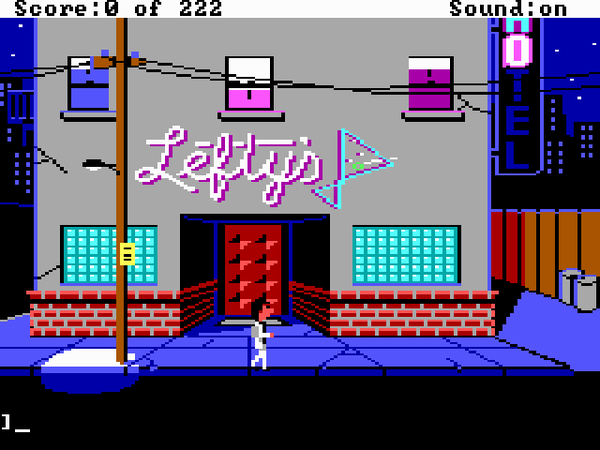
Leisure Suit Larry in the Land of the Lounge Lizards - Original

The original Larry game in all its EGA glory

Going one step further than even myself, Lowe refuses to buy anything with DRM (so not a fan of Diablo 3 then), and has been trying to avoid DRM ever since his first involvement with it in 1982. Not that Lowe condones piracy – his Larry games were so pirated that more more hint books for the games were sold than the actual games themselves – but from a pragmatic point of view, he just doesn’t think DRM does anything other than “hassle people who paid for the product”. DRM is about as useful as pocket lint is in an adventure game.

I for one can’t wait for pay for the remake, especially knowing I won’t be hassled for doing the right thing. Plus free pocket lint!

And on that note, we reach the end of another, and very very late, WNR. See you next week.

Weekly News Roundup (24 June 2012)

Sunday, June 24th, 2012

Welcome to another edition of the WNR. Whether you had a busy and productive week, or a slow and unfruitful one (or combinations of the aforementioned), I hope that you at least had a good week. I’ve long since believed that being productive does not equal good, and sometimes an unfruitful week can have its own rewards too (like levelling up 6 levels in Diablo 3). News wise, same old same old, really – not much, but still a few interesting ones to poke a stick at. Running kind of late, and far too tired to be doing any sort of writing in be fully honest (didn’t sleep well last night), so let’s get started and let’s get it ended as soon as possible!

Copyright

Could the MPAA and RIAA start suing individuals again? Well, if you refer to the details of the “graduated response” deal they made with US ISPs, then yes, it could happen again.

Of course, just because they could, it doesn’t mean they will. The negative publicity from these lawsuits far outweigh any perceived benefit from going after your single mothers and college students, that is for these cases to become deterrents for others (hasn’t really worked, has it?), and both groups have signalled they’re no longer going in this direction. The language will be there in the agreement because nobody wants any doors to be closed for future potential actions, however remote the chances of these actions occurring are. Still, the agreement does say that ISPs will be providing an awful lot of information about repeat offenders to the likes of the MPAA and RIAA, but when you’re already playing the copyright police and spying on your own paying customers, passing on their personal details to the lawyers of some of the world’s biggest corporations does seem to fit the trend.

Megabox

Could Megabox still be set for a 2012 launch? Megaupload’s Kim DotCom seems to think so!

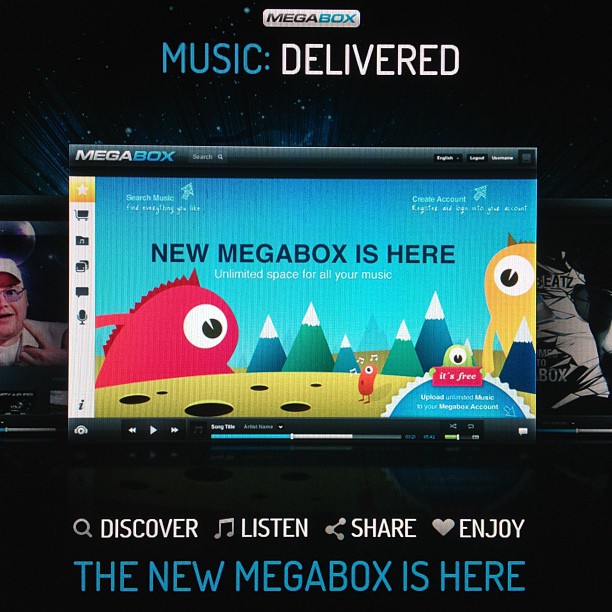
Megaupload’s Kim DotCom (he really does need to change his name if he wants people to take him serious again, in my opinion) got himself on Twitter this week, and the charismatic (former?) billionaire didn’t disappoint. Revealing that he was visited by none other than Apple’s co-founder Steve Wozniak, the more interesting reveal was that Megabox, the new music sales and sharing platform that’s supposed to end the major recording label’s monopoly on music distribution, is not as dead as everyone had thought it was. While providing little detail except for a blurry screenshot, DotCom did post that “It is coming and it will unchain you”. I talked about Megabox back in January after Megaupload was shuttered, but sensibly, everyone had just assumed that the site was dead in the water –  a real coup for the RIAA, intentionally or otherwise. The idea behind Megabox seems solid – artists sell directly to fans without having to go through labels, and as a result, artists get to keep up to 90% of the revenue. The Internet being the best self-publishing platform to have ever been invented, it’s no surprise that traditional publishing will be hurt as people cleverer than me come up new ways for creative people and their work to get noticed without having to hand over most of the revenue. So even if Megabox is dead, something like it will emerge, eventually.

High Definition

Last week, Roku’s CEO said Blu-ray was dead. This week, research released by the NPD shows that Blu-ray players are not dead at all – they’re just not being always used as Blu-ray players!

NPD’s latest research shows that 80% of those who have Blu-ray players connected to the Internet have used their players to download or stream video content. With the number of connected Blu-ray players growing (considering how many of these now come with Wi-Fi built-in, as opposed to being dependent on a well placed Ethernet cable), it appears at first that Net savvy consumers are voting with their remotes and telling content distributors how they want their content. Of course, without detailed stats on how frequently people use streaming service, all we can see is a possible trend (if that), but it’s clear that this Internet streaming thing isn’t just another fad.

The study also found that “only” 64% of connected game consoles were used to access services like Netflix and Hulu, but since it’s probably more likely that a game console is connected to the Internet than a Blu-ray player, this kind of makes sense. What I did find surprising was that only 15% of tablet and smartphone users were viewing movies via the Internet, but I think this figure will rise dramatically once you remove smartphones from the figure (and I suspect none of these figures include YouTube).

Gaming

And finally, in gaming news, a leaked Microsoft document from a couple of years ago could provide some clues as to what the Redmond giant’s next game console could look like.

The leaked document, which has since been removed, supposedly provide details of a presentation made in 2010 about the future of the Xbox gaming system. I’ll leave you to read the full news story to get the gist of it, but suffice to say, Kinect 2 plays a big part, and augmented reality, head/eye controllable glasses are also being considered.

OnLive

Microsoft was considering either acquiring OnLive, or launching their own similar “microconsole” concept

What I found most interesting was the concept of a “dumb console”, with a similar meaning to the more common use of this term, but applied perhaps even more appropriately to game “consoles”. Using a similar technology to OnLive (which apparently Microsoft had wanted to acquire at that time), games are processed “in the cloud” with the A/V being streamed to “microconsoles” that do very little other than process input and output. This way, the console itself does not need to be upgraded, but the content will continue to improve in quality, with all of the heavy lifting done in the cloud. Of course, things like latency, so important for gaming, could be an issue – but OnLive seems to make it work okay, as long as you have a good broadband connection. But the appeal is definitely there – not only are publishers satisfied by forcing gamers to be “always online”, and thus reduce piracy issues, the ability to get next-gen graphics without buying new hardware does seem like a good deal for gamers too (and for gaming companies like Microsoft and Sony, who make most of their money from games, when they’re not losing tons of it on the actual consoles themselves).

Of course, the leaked document might not be real, and even if it is real, it’s quite dated, As we get closer to the actual release date sometime in 2013, the real information will be artfully leaked, and completely accidentally, I’m sure.

Even with this WNR barely getting over the 1000 word mark, it’s still time to call it a day (or night) as we’ve run out of news. See you next week.

Weekly News Roundup (17 June 2012)

Sunday, June 17th, 2012

Hello to you on this a rainy, windy and cold Sunday here in Melbourne, Australia. How’s the week been treating you? Not too badly I hope. Another rather quiet news week, but maybe I was just too busy to pay attention. A little bit from column A, a little bit from column B, I suspect. Well, whatever news I did find, they were quite interesting, so let’s get started.

Copyright

The fallout (not to be confused with another, in my opinion quite fantastic, gaming franchise) from the Diablo 3 DRM choice continues this week, as videos emerged showing an item duplication exploit in Diablo 3 – the kind of thing that always-on DRM, at least according to Blizzard, was supposed to stop.

The video, originating from South Korea, showed a gamer doing the very thing that Blizzard was afraid of – duping items. The exploit was so damaging that Blizzard had to shut off South Korean game servers while a fix was rolled out. Thousands of gamers were also banned for using this and other cheating methods. Duplication hacks can be extremely damaging for Blizzard, while profitable for hackers – Diablo 3 features a real money Auction House where users can sell their hard-earned or not so hard-earned virtual in-game items, and as a result, item duping in D3 becomes just as bad as counterfeit money is in the real economy.

Diablo 3 Auction House

Real money trading of in-game items has made Diablo 3 a tempting target for hackers and scammers

So despite the harsh “always-on” DRM that Blizzard chose to employ for Diablo 3, which the company itself says wasn’t for anti-piracy but for protection against cheaters and hackers, it has not really lived up to expectations. If anything, the inclusion of real money transactions, which necessitates the use of an always-on DRM/access control system, has provided hackers with extra incentive to find exploits and loopholes that they can profit from. For us gamers though, it meant a frustrating (and still frustrating) gaming experience, although some have already started making good money from the Auction House.

And I’m still not convinced that Blizzard couldn’t have created an offline mode for the game. By implementing some kind of local virtual server that the game can connect to, this could provide emulation of an online experience, without the need to actually be online all the time. This may very well be the tact that the piracy community will use to crack the game, so we’ll have to wait and see if they can help out D3 gamers by creating an unofficial offline mode.

But some in the gaming industry are already pointing at Diablo 3’s fantastic sales figures and using that as justification for always-on DRM – at the other end of the spectrum, DRM-free gaming is also booming. And not only that, the “pay what you want” pricing model is also providing to be more than effective too. The latest Humble Indie Bundle (the 5th edition, for those keeping count) has managed to sell within a cat’s whisker of 600,000 bundles, raking in over $5 million in the process. Despite the basic bundle being available for as low as a penny, on average, gamers chose to pay $8.53 for the 4 game (plus 4 bonus games) bundle, proving that, if the price is right, people will pay. More remarkable is the fact that former buyers of the bundle, Steam sale addicts, and indie gaming enthusiasts would mostly already have most of the games on offer (I had 5 of the 8), so even from a shrinking sales pool, this latest bundle has managed to beat all expectations, and has actually earned twice as much as the last bundle.

The Humble Indie Bundle V

The Humble Indie Bundle V has generated more than $5 million in sales, from nearly 600,000 bundles sold

While I’m sure Diablo 3 raked in a lot more money than all the Humble Indie Bundles combined (and then some), then again, none of the games in the Humble bundle took 10 years to materialise either. And all were made with considerably less budget than Blizzard’s latest hit. At the very least, the Humble bundles prove that DRM-free can work, and so can the pay what you want model, even with the availability of both free pirated, and free (well, almost free – a penny) legal ways to get the games.

For those still holding out hope for a way to retrieve their legally uploaded files from Megaupload, especially after last week’s news that the MPAA is not totally against the idea, the news doesn’t look very promising. Responding to a lawsuit filed by an affected Megaupload user, US government prosecutors says that while they were responsible for shutting down Megaupload, they’re no longer responsible for the servers that now holds user files. Copies of the important data have already been made by the government, and as a result, they no longer have “possession” of the original data and can’t grant or deny access to them. It seems the data is now back in the possession of Megaupload’s former web host, Carpathia – data that is costing the company $9,000 a day to host. With the government also against unfreezing Megaupload assets to allow the company to pay Carpathia to keep the data alive (data that could also help Megaupload’s case), the most likely outcome, unless the court intervenes, will see the data completely wiped, and any hope of recovery gone. Before this happens, the government says users can pay Carpathia for access, and then acquire the services of forensic experts (at further cost) to retrieve any data – an unrealistic proposal due to the thousands of dollars this would require. The other “alternative”, the government says, is for users to sue both Carpathia and Megaupload for breach of contract relating to the storage of their files, again, also very unrealistic.

In other words, the government is washing their hands of any responsibility in the matter. They closed down Megaupload and then decide to not give two craps about the resulting collateral damage. But as screwed up as this is, it’s also an important lesson for those that are relying on the “cloud” to store their digital assets. Cloud storage will usually prevent data loss as a result of hardware or software failure, but it won’t stop things like user error (“hmm, that big red button that says “DELETE ALL” looks tempting – I wonder what it does …”), hacked or banned accounts, or as in Megaupload’s case, catastrophic failure. So it’s best to have copies of your files both in online *and* offline locations, or at the very least, at two different cloud providers.

High Definition

Is Blu-ray on the way out? Anthony Wood thinks so. But then again, he’s the CEO of the company that makes Roku, a popular little streaming set-top box, and both Blu-ray, the disc, and Blu-ray players are competitors.

Roku 2 XS

Roku currently provides a level of service that Blu-ray players and Smart TVs cannot provide with their in-built streaming apps, according to Roku’s CEO

So will Blu-ray be obsolete in four year’s time, as Wood predicts? If in four year’s time, most homes can access the Internet at speeds far greater than today’s average, then yes, this could be a possibility. If not, then the most efficient way to deliver the GBs of data needed for each HD movie (and if 4Kx2K become more common, the tens of GBs could grow to hundreds of GBs), might still be found on some kind of physical media, even if isn’t Blu-ray.

Whatever happens though. I for one hopes that ownership, and preferably ownership of something physical, is still reality 4 or 10 years down the track. I’m a huge supporter of cloud based streaming and all that, but I also love being able to hold something in my hands, or display something in my TV room, and I think a lot of movie lovers are like me in this regard.

Gaming

In gaming news, the May NPD results have been released, but once again, only Microsoft took the risk of releasing hardware figures. That’s probably because they won the month again with 40% of the home based console market share, but only 160,000 units sold. That’s a 40% decline compared to the same month last year, and you can see why many in the industry are so worried (and why “some” have stopped releasing detailed hardware figures).

With the next gen consoles from Microsoft and Sony not arriving until 2013 (got a news story on the next Xbox that was too late for publishing for this WNR, so I’ll cover it early next week), and the Wii U only coming at the end of the year, things are unlikely to pick up until then.

I’m still optimistically (but perhaps also foolishly) hoping that someone will leak the hardware data for the Wii or the PS3 in the next few days, and so the NPD monthly feature can resume, but it’s not looking good at the moment. If it doesn’t happen, I’ll get into more details about the May NPD in the next WNR.

Nothing much left to say in this WNR, so let’s call it a day. See you next week.

Weekly News Roundup (10 June 2012)

Monday, June 11th, 2012

Hello to you on this fine (or maybe not so fine) Sunday (may very well be Monday already, depending on how late this WNR gets sent out). A fairly quiet news week again, but like always, we shall persevere. My copy of Diablo III actually did arrive early this week, but I haven’t had much time to play it yet. The one time I did, the server had to go down for maintenance, which meant that my play session was not only cut short, but I also lost unsaved progress. The fact that a server maintenance could stop me playing the single player game doesn’t give me much confidence that, say 5 years from now, people will still be able to play this game without interruption (or even be able to play it at all). If game publishers insist on using “always-on” DRM, the least they could do is to guarantee the number of years that I’ll be able to play the game I purchased – 10 years would be ideal, but I suspect that this would cost quite a lot, and a lot of planning and risk management would be required to allow for this  (eg. obsolete server software/hardware, and how this affects compatibility with the game server software).

Copyright

Once again, we have mainly copyright news. That may sound strange considering E3 and everything, but really, I just couldn’t get that excited over this year’s event, since we already know much about the Wii U, and neither Sony nor Microsoft stepped up to the plate with an official announcement of their next consoles (although it hasn’t stopped the rumours from flying around).

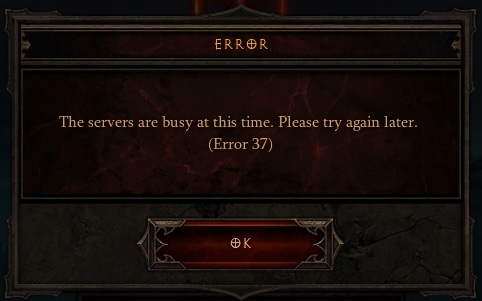
Diablo 3 - Error 37

Diablo 3's dreaded Error 37 has gotten the South Korean branch of Blizzard into trouble with the government

Anyway, copyright stuff. No, wait, back to the game stuff for a sec. Continuing the Diablo 3 theme from the intro, and the outro from last week’s WNR, Blizzard’s South Korean offices were raided by the country’s Fair Trade Commission (FTC) over issues related with Diablo 3’s DRM. Just like gamers in other parts of the world, South Korean gamers were also frustrated by the game’s launch day fiasco, and many went and sought a refund for the game. But the game’s terms and conditions apparently does not allow for refunds, and this is when gamers got the FTC involved. While this actual story is less about the DRM, and more about Blizzard’s refund policy, the issue of whether DRM problems can be counted as a “product fault” will be examined by the investigation.

As I said in the intro, there ought to be some guarantees for games that require server based DRM. An uptime guarantee, say 99% in any given month (which isn’t as impressive as it sounds – 1% of a month is about 7 hours, and that’s still quite a long outage), and a guarantee that the game will be supported for how ever long the game is expected to be played (if the next Diablo sequel is as long coming as this one, then 10 years ought to be just about right). If publishers want to make games into services, rather than products, then it’s reasonable for gamers to expect a certain level of quality of service. I feel though that the $50 gamers pay is no way near enough money to cover long term server support (hence why games like World of Warcraft have monthly fees), so I don’t expect games like Diablo 3 to be playable in 5 year’s time, unless the in-game purchases can keep the servers running. And in the same way, game publishers should understand that this kind of DRM can be very expensive over the long term, and they need to consider whether it’s worth it financially or not.

Last week, the RIAA accused Google of not doing enough on DMCA take-downs, and instead, want the search engine to perma-ban sites like The Pirate Bay, as opposed to having to constantly submit DMCA notices. This week, The Pirate Bay responded by welcoming any blanket bans of torrent indexers, saying that this would actually boost traffic numbers for the world’s most popular indexer. The reasoning is that, as the biggest brand in torrents, TPB would suffer much less from the removal of Google referrals (which they say, at best, only accounts for 10% of their traffic) compared to other torrent sites. Whereas Google often still redirects people to other less well known torrent sites, if Google stopped showing torrent results, this could mean more and more people would simply bypass Google altogether and log straight on to TPB. What’s bad for other indexer (and in a way, Google as well), will ultimately be good for The Pirate Bay, since you have to pretty naive to think that just because Google can’t provide you with torrent results, that people would still stop pirating.

And TPB’s IP address war of attrition continues. With last week’s newly released IP address just added to the banned list, a new IP address has been released – 194.71.107.80 becomes 194.71.107.81 (the old IP address will still continue to work in countries without the censorship). So round 2 begins, and I wonder how many rounds BREIN, the Dutch anti-piracy agency, will last before they start whining again. The TPB has also jumped on the IPv6 bandwagon, meaning those that have migrated over to the new IP address system will have a new way to access TPB, one that’s not blocked (so far) by any filters (as most failed to take into account IPv6). Plus, you can use one of the many IPv6 to IPv4 tunnel services as a pseudo-proxy to bypass the filter too, for example, thepiratebay.se.ipv4.sixxs.org. Just goes to show how pointless these multi-million dollar filtering implementations are, but if they want to play the IP merry go around in the IPv6 domain, then I’m sure TPB will gladly oblige too.

Those caught in the crossfires of the US government’s war on Megaupload, that is those that had used the cloud hosting service legally, may yet get back access to their files, after the MPAA signalled it had no general objections against the idea. However, it did have some specific objections, in that they don’t want anyone involved with Megaupload to be handling any system for (legal) file retrievals, and they also want to ensure only legal content can be downloaded. While probably reasonable requests, how practical meeting them would be is a different question altogether. I can’t see the required time, effort and money being spent to build a system which would allow for this, and the MPAA rightly says that even Megaupload’s user policy doesn’t guarantee continued access to stored files. The lesson here is that while the cloud is a great idea, and it’s made things very convenient, backups stored in multiple locations, ideally offline too, is still as important as ever.

Lane Pryce - Mad Men

Legal options for hit show like Mad Men are very limited here in Australia - and if I was feeling mean, I could post another picture of Lane Pryce that would be a huge spoiler for those who haven't seen the latest episode

And finally, an Australian online survey has found that 1 in 10 have stopped pirating film and TV content, and most say the availability of more legal options was one of the reasons they’ve stopped. There were also some other interesting findings. Only 10% of those surveyed downloaded pirated TV shows and movies on a weekly basis, and out of this group, 72% say they’re doing it because there’s simply no legal alternative available. Being in Australia, this is a fairly accurate reflection of the legal scene, especially for TV based content, and for hit shows like Game of Thrones or Mad Men. Someone here (or there, in the US) is making deals (and profiting greatly from it) that’s ensuring we only get time delayed releases. That may have worked in the past, but in this day and age, even a 24 hour delay might as well be an eternity. Both considering how quickly the same content is available via the illegal channels, as well as the spoiler-ridden and at the same time, ubiquitous, nature of the Internet itself.

Or “there’s no legal option” could simply be an excuse – a convenient one because it’s mostly true, but still believable to use when it isn’t (for example when the content is available on iTunes at extortionate prices, although you could argue about the viability of such an option). I think anti-piracy really has to be about getting rid of these excuses first, by providing legal options (at a price that makes it a viable option), and once you make piracy simply a moral decision and one that’s solely based on the fact that the content is free, then at the very least, the rights holders would have more justification to implement tougher piracy prevention methods (being careful not to create new excuses in the process).

And so we come to the end of another quite short (and late) WNR. Can’t be helped I’m afraid. Well, it can, but that would require too much work (or just work), so no, it can’t be helped. See you next week.