
Archive for the ‘Gaming’ Category

Weekly News Roundup (4 August 2013)

Sunday, August 4th, 2013

A pretty quiet week this one. Not sure why, not that I mind too much. We can get through this one pretty quick, I think.

High Definition

Well it’s about time! Netflix has finally come through with one of the most demanded features – the ability to have individual user accounts. From now on, subscribers will be able to create up to 5 profiles, one for each person that shares the same Netflix account. Each profile will have its own suggestions based on that user’s viewing habits, as well as a separate instant queue and recently watched list. So no more Fireman Sam cartoons in your most excellent instant queue featuring only ultra violent martial arts films.
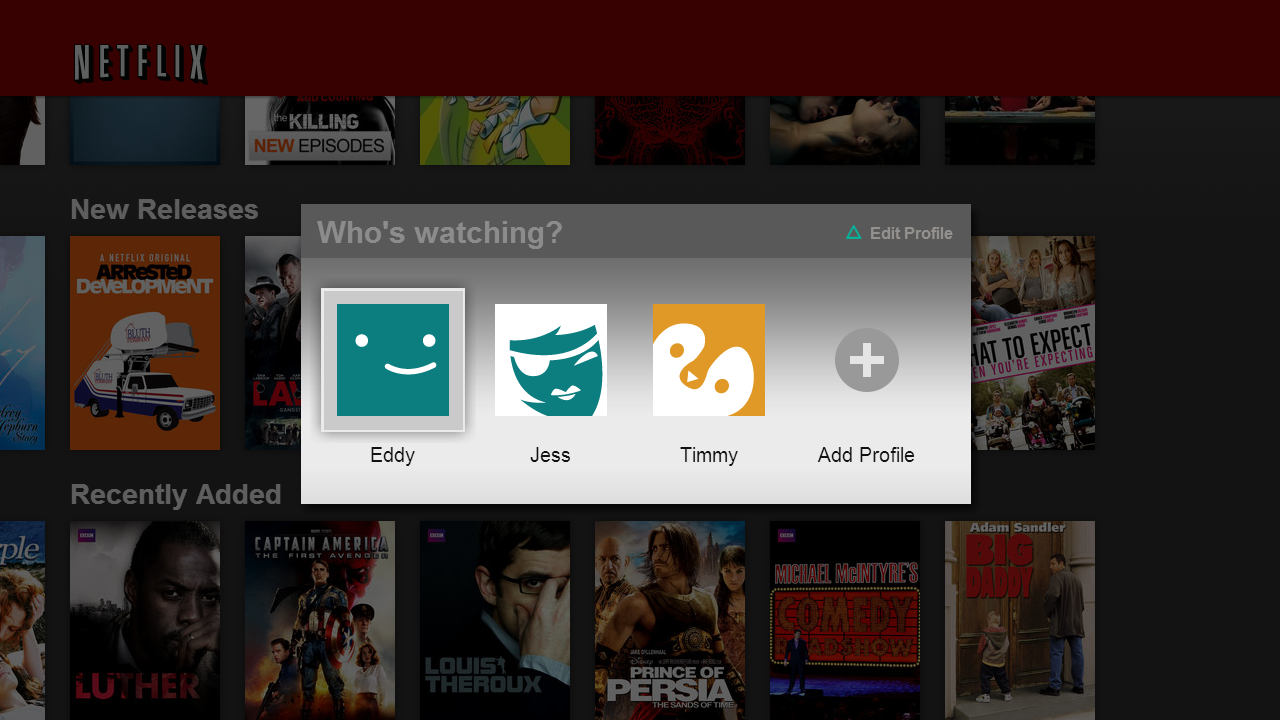
Netflix Profiles

Netflix profiles is exactly what users have been demanding

You can also connect each profile to your Facebook account, and then the Facebook profile picture will be used to identify the account, but then your friends will all think you’re some kind of weirdo because you’ve managed to watch  72 episodes of Dexter in the span of about 5 days.

As for which apps will support profiles, pretty much all of them will except for the Android and Wii apps (updates for both are coming soon). Although it might take a week or two for the feature to finish rolling out to all the currently supported devices. You can only create profiles on the PS3 app or via the Netflix website at the moment, but the other apps will be able to access any created profiles.

While streaming definitely seems like the way things are headed, the good old optical discs might still have a place if bandwidth hogging applications like 4K become mainstream. And then there’s always the world of archival storage, which might very well be where old storage formats go to die (and where magnetic tape is still king, at least for high capacity storage). So this is why Sony and Panasonic announced this week that they’re joining forces again to develop the next generation optical disc for the long-term storage market, a disc that will hold 300GB of data.

Both companies made it very clear that the format is only intended for the archival storage market, possibly a deliberate effort to not make Blu-ray seem obsolete. But if 4K does take off, and the Internet as a delivery platform can’t do the job even with more advanced codecs, then I wouldn’t bet against this so far unnamed format stepping in and carrying the load, all 300GB of it.

Gaming

I’m feeling a bit sorry for Nintendo at the moment. The Wii U is a pretty nice console with a good dose of innovation, but a poor games line-up (always a killer when it comes to a new console), and now intense competition from the yet unreleased PS4 and Xbox One means it’s going to be a major uphill struggle for Nintendo’s flagship console. I knew Wii U sales weren’t that good, but without readily available NPD data, all I could do was to guess how bad they really were. But while it’s easy to hide sales data from journalists and bloggers, the financial reporting world is a bit harder to fool, and Nintendo has had to come clean with its Wii U sales figures. Only 160,000 units sold in three month, worldwide, is more than just bad though. As a comparison, the nearly 8 year-old Xbox 360 managed to sell 140,000 units in June alone, and that was only just US sales.

Wii U

Only Zelda (and Mario) can save the Wii U now

Nintendo blames the poor results on the lack of first-party titles, the likes of Mario, Zelda, Donkey Kong and Pikmin, all of which have new Wii U version arriving during the next quarter or two. The problem is that both the PS4 and Xbox One will be launching right in the middle of this release schedule, and I’m not sure even a Mario and Zelda game can save the Wii U at this point. Even if it does, it doesn’t really solve any problems for Nintendo, whose Wii console suffered because it relied too much on first-party releases. The whole point of Nintendo going “hardcore” with the updated Wii U hardware was to get new kinds of gamers on board, along with third-party developers that are good at reaching this particular demographic. But without hardware sales, developers won’t dare to invest in Wii U development. And the longer this goes on, the more outdated and limited the Wii U hardware will be, and you can bet developers will be even less keen to focus on what is essentially last-gen tech.

A huge price cut seems to be the only way to save the Wii U at the moment, to position itself as the budget console against, not the PS4 and Xbox One, but the PS3 and Xbox 360 (which is still very hard, as both of these platforms have a huge library of games that the Wii U does not).

Is the Wii U this generation’s Dreamcast? No idea, but let’s hope Nintendo can ride out the storm better than Sega couldn’t.

And believe it or not, that’s it for the week. Hoping for more next week. Until then, have a great one!

Weekly News Roundup (21 July 2013)

Sunday, July 21st, 2013

I spent most of this last week watching Dexter on Netflix. I do worry though that binge watching a show about a serial killer might have a bigger impact on my psyche than your typical binge watching choice. Binge watching is great for killing a bit of time now and then, but if it cuts too much into your life schedule, then it can become harmful.

But it’s okay, I’m far too lazy to ever become a serial killer. Or a serial anything.

Onto the news.

CopyrightThe randomness of DMCA takedown submissions to Google has once again reared its ugly head, with HBO asking a page containing a download for the popular open-source VLC media player to be delisted from Google’s results.

With more than 14 million links being removed from Google’s results just in the last month alone, and with little or no consequence for submitting incorrect takedown requests, mistakes are going to happen. It’s likely that HBO outsourced the collation of these links to a third party, which then probably used an automated keyword based algorithm to locate suspicious links. If that third party failed to do some basic verification of the automatically gathered links, then this is what happens.

While Google probably has their own method to detect and ignore incorrect takedown requests, but mistakes still do happen. If it’s a popular domain or page, then the site owner might file a counter claim which will be successful and will get the URL reinstated. But on a page like this one, where it’s a legal download on a torrent site, it’s unlikely the site’s owner, or the people who make VLC, will make the effort to file a counter claim, and so once the mistake happens, it’s permanent. Just how many permanent mistakes have happened via Google’s DMCA process, nobody knows.

As for HBO, at least they didn’t try to remove their own webpages like they did last time.

Roll of money

The MPAA supports getting money out of piracy, but not if it has to do any of the work

Opening up another front in the war against piracy, Google (and Microsoft, Yahoo and other major web advertisers) this week announced new plans to stop the flow of money to websites suspected of providing infringing content. The new plan was brokered by the Internet Advertising Bureau with help from the White House, and will allow rightsholders to alert ad networks of potentially infringing sites and get them booted off the network.

With the MPAA harping on about getting money out of piracy, you’d think they would be the first to offer support to this new initiative. But surprisingly, or perhaps unsurprisingly, the MPAA wasn’t impressed at all, calling the new initiative too narrow, and saying that too much of the anti-piracy burden is being placed on rightsholders.

The “everyone else should do the work, not us” stance isn’t a new one from the film industry, but having just months ago praised industry-led efforts like this one, the MPAA’s dissatisfaction is a bit hard to understand. If I didn’t know better, and I don’t, it would almost as if the MPAA preferred the likes of Google and Microsoft to do nothing. This way, the tech industry can continue to be the scapegoats in all of this, the straw men in their bid to get continue the government subsidization of this billion dollar industry.

Whatever the reason is for the entertainment industry’s single-minded pursuit of a technologically-led solution, the technology sector is actually coming up with real and working entertainment-led solutions to the same problem. A newly published report from Norway shows that music piracy rates are now only a sixth of what they were in 2008, and it’s largely thanks to legal alternatives such as Spotify.

The report found that illegal music downloads topped 1.2 billion in 2008 in Norway, but is now down to only 210 million (as of 2012). Further proving that Spotify and platforms like it are solving the piracy problem, the report found that 47% of those surveyed used Spotify, with an amazing half of these people also choosing to pay for the premium version of the music streaming service. Just goes to show that people are willing to pay for music, as long as you give them a product that’s worth paying for.

Spotify Logo

Spotify helping to kill music piracy at least in Norway

Film and TV piracy in Norway also declined, but not by as much as music piracy. With Netflix only available in Norway from October 2012, we’ll probably see bigger declines when the 2013 figures are out.

But not everyone is happy with Spotify though. Thom Yorke and Nigel Godrich of Radiohead last week pulled their music from Spotify, criticizing the music streaming platform of being “bad for new music”. The musicians criticized Spotify’s royalty payment system, which they say ensures new musicians will never make it, while Spotify “shareholders will shortly being rolling in it”.

Spotify responded to the criticism by saying that $500 million in royalty payments have already been paid out to rightsholders, and that this figure is likely to reach $1 billion by the end of 2013, and that much of this money “is being invested in nurturing new talent and producing great new music”.

Note that payments to rightsholders does not always equal payment to artists. Music labels talk about artist rights, but the reality is that only a small slice of revenue actually goes to the artists. In the age of record stores and CDs, where labels did all the promotional work, this may have made sense. But in the age of self-publishing, perhaps it’s time for artists to take control of their own destinies, and get a bigger slice of the pie as a result.

Gaming

The June NPD stats are out looking at US video game sales in that month, and Microsoft’s Xbox 360 was again the top selling home-based console with 140,000 unit sales. This is the 30th month in a row that the 360 has been the best selling console.

Sony was their usual quiet self, despite the critically acclaimed The Last of Us being the top selling title of the month, the third highest selling game in June since 1995.

Nintendo did put out a PR statement, but it was exclusively focused on the 3DS, which did sell 225,000 units. No mention of the Wii U at all, which doesn’t bode well for the much-maligned console.

It’s definitely the calm before the storm at the moment, what with only a few more months left until the release of the PS4 and Xbox One. I just hope that with a new generation, the NPD and the gaming companies involved will be more generous when it comes to releasing sales figures. Wishful thinking, perhaps.

All right, that’s it for the week. Not too long, not too short. Just right. See you next week.

Weekly News Roundup (14 July 2013)

Sunday, July 14th, 2013

Hi there. I hope you’ve had a good week. I have all the usual goodness for you in this week’s WNR, which is not too long, but not too short. Just right!

Let’s get started.

CopyrightAs promised earlier, the French government has redrafted the country’s controversial copyright laws, and the Hadopi experiment is now officially dead. The government announced changes that will mean an end to the threat of Internet disconnections – instead, an escalating series of fines will now be used to deter users from downloading pirated stuff. The French government also called for greater focus on commercial piracy and websites that supply pirated content.

Hadopi Logo

Hadopi is dead – French government kills of controversial three-strikes program

In the nearly four years since the introduction of Hadopi, there has only been one disconnections which also resulted in a “massive” 150 euros fine. And as reported here before, even that single disconnection was fraught with controversy, as the 40-year old artisan from rural France at the center of the case denied ever making the download in question.

What we do know is that during the reign of Hadopi, piracy rates have not decreased noticeably, and even if it has, the fortunes of the creative industries have not improved as a result. Hadopi has cost the French government millions of euros in maintenance costs instead.

Just goes to show that giving the entertainment industry exactly what they want is often not to the advantage of anyone involved, not even the entertainment industry.

Speaking of getting what they want, the RIAA now wants “notorious” music piracy Jammie Thomas-Rasset to publicly speak out against piracy, in exchange for a reduction from the $222,000 she owes the billion dollar music industry for downloading 24 songs. But the single mother says she will not submit to the RIAA’s demands.

The $222,000 she has been ordered to pay is already a reduction from the $1.92 million that a jury originally awarded against her, a figure that even the judge in the case found excessive. Through appeals and new trials, the damages now stand at the $222,000 (a nonsensical $9,250 per song), and Thomas-Rasset’s lawyers have only recently failed in their bid to have their day in the US supreme court to make the argument that the excessive damages are unconstitutional.

The next step, according to her lawyers, may be to file for bankruptcy, although the RIAA has hinted that other non-monetary settlement options may be available, as the industry’s copyright lobby tries to find a PR-friendly way to end the matter once and for all.

When the RIAA isn’t busy suing single mothers and college students, it appears they’re working day and night submitting DMCA takedown requests to Google it seems, as the RIAA has just passed 25 million URL takedowns mark. And the RIAA isn’t slowing down, if anything, it appears they’re accelerating their efforts to clean up the Interwebs.

I do wonder though in the time it has taken the RIAA to remove 25 million URLs, how many new URLs with the same content has sprung up in its place. Probably more than 25 million, my guess.

——

If reading your Dickens, Austen, or heavens forbid, Brown, suddenly seems like an inferior literary experience, then you may be the victim of a new e-book DRM that randomly changes the words in the text every time a copy of the e-book is made.

Amazon Kindle Paperwhite

New e-book DRM could change the text of your favourite novels

The new DRM called SiDiM, developed with funding from the German government, makes small variations in punctuation and replaces some words with synonyms in copies that also allows these modified copies to be traced back to its original owner. The idea is that copies, while still readable, would not contain the original experience, and that since copies are traceable, original owners will be less keen to share or upload the e-book online.

An interesting, but definitely not new idea, that can also be easily defeated. A simple comparison with an original will allow these variations to be “corrected”, and even just comparing and merging two different modified copies will in most cases allow you to recreate the original (assuming the random variations are spread evenly throughout the book – two modified copies will be unlikely to have the same modifications).

And while the threat of having a Pirate Bay copy traced back to you is real, legally, there may still be nothing that publishers can do to the original leaker. Because they would have to first proof the intent to distribute, as there are many reasons why the original ended up being copied (perhaps in an unauthorized manner by friends or family, if the e-book reader or storage device was lost or stolen, or discarded intentionally). And real hardcore pirates would simply set up fake disposable accounts to buy one copy to share with the world anyway.

Gaming

Sony seems to have a very refined strategy for promoting the PS4: by owning up to all the PS3’s problems and mistakes and promising not to do it again. First it was the admission that the PS3 launch price was indeed too high, something that Sony has addressed with the $399 priced PS4. Now, it’s the final admission that the PS3 was indeed less developer friendly that it should have been.

PS3 160GB

PS3 was made too difficult to develop for, says PS4’s lead architect

The PS4’s lead architect Mark Cerny explained that the PS3 was designed to suit developers of triple-A titles, those that had the resources to fully take advantage of the console. So for smaller developers, it wasn’t as easy to simply take an idea and then letting it happen on the PS3. Rather, it meant working within the PS3’s framework and then coming up with an idea that would fit into the framework (time and budget and difficulty, all constraining factors). It’s this that drove smaller developers and those that had great gaming ideas away from the PS3, and this meant less games with the “fun factor”, games that were key to the success of the original PlayStation.

And of course, Cerny says that this will no longer be a problem with the PS4, which based on at least Sony’s marketing, is a much more indie-friendly console.

So be on the look out for more PS3 bashing, from Sony of all people, in the lead up to the PS4’s release.

While Sony’s strategy may be clear, Microsoft’s strategy of pretending the Xbox One DRM fiasco never happened is being hampered by their most loyal fans, who have put up a petition to get Microsoft to reinstate the controversial DRM.

The pro-DRM gamers’ petition argues that not everything about Microsoft’s original plan was bad, and that features like the ability to share games within a family, to play games without discs, to access game libraries across different consoles, and to be able to sell and trade digital purchases, should be reinstated.

Others on the Internet are not so convinced that this group’s intentions are genuine, some have even said that this is nothing but a guerrilla PR campaign by Sony to keep the Xbox One DRM controversy fresh in gamer’s minds in the lead up to the launch of both consoles.

But I think Microsoft’s problems go beyond just the DRM clusterf**k. They have a console that’s more expense due to the built-in motion gaming device that gamers don’t really want, a device which Microsoft have failed so far to convince anyone that it’s worth the extra $100 over the PS4’s base price. And a console that, by all technical previews I’ve seen, appears to be less powerful than the PS4. All the while, Microsoft is busy touting the media capabilities of the Xbox One, despite it not doing anything that the PS4 cannot do, other than some fancy OSD overlays that won’t even be available outside of the US – at least that’s what most people are thinking.

If Microsoft don’t want to lose this upcoming generation’s console war, then they need to get the word out fast about why they think the Xbox One is $100 superior to the PS4, whether it’s Kinect 2.0, or fancy overlays, or whatever. Keep selling this message, and if you’re successful, then nobody will be talking about the DRM thing anymore.

I will probably still talk about it though, but it’s what I do for a living (sort of).

And we come to the end of another WNR. Hope you’ve enjoyed this issue. See you next week.

Weekly News Roundup (7 July 2013)

Sunday, July 7th, 2013

Welcome to another WNR. Another fairly quiet week this one, so a nice an short WNR for y’all. I’m still PS3-less, as I switched my Netflix device from the PS3 to my Samsung smart TV. It’s a shame that the Samsung Netflix app isn’t as updated as the one on the PS3, and less usable in my opinion. I’ve also been playing around with switching the Netflix region, a feature that’s part of my Unblock-Us subscription. It’s amazing how much more content you can get access to if you switch regions (currently watching Dexter from scratch on Netflix UK, which isn’t available on Netflix US). For $4.99 Canadian, I’d say it’s a good investment even for those in the US that don’t normally need a geo-unblocker.

On to the WNR.

CopyrightThere was more EA/Maxis DRM drama this week as one of their old games, Darkspore, became unplayable due to DRM server bug. The problem was so bad that Steam was forced to remove the game from sale temporarily.

Darkspore

Darkspore’s DRM related “blackout” shows server based single player games are a bad thing

This latest server bug was eventually fixed, although other bugs, like the infamous 7300x server bug, may remain unfixed forever. That’s the problem with single player games with server connection requirements – even though you may have paid full price for the game, you’re only really getting half of the game, if that. The other half, the server based one, could at any time cease to work, and you’re left with possibly nothing or a very limited experience, even in single player mode. It’s expensive for publishers to keep and maintain game servers, and at some point, the financial cost of maintaining the servers will start to outweigh the cost of keeping gamers happy and you know what happens next.

It would at least be better if these server based single player games are cheaper than “standalone” ones, but normally they’re not.

Overall, it hasn’t been a good week for gaming companies as Ubisoft’s user database was hacked this week. User names, email and hashed passwords were all accessed, prompting Ubisoft to send out emails urging users to reset their passwords. If you were one of the affected users, and you used the same password on other sites, it’s probably a good idea to change those passwords too. This is despite the leaked passwords being stored in an encrypted form, which is difficult (but not impossible), to reverse back to clear form (especially if your password isn’t complex enough).

Luckily, no payment information was stolen, at least according to Ubisoft. There’s also no information as to the motive behind the attack, whether it has anything to do with the game publisher’s previously controversial DRM stance (most likely not though).

It’s quite annoying that every gaming company these days seems to have their own login system. It’s all very inefficient, not just for us users, but for each company having to secure all these user databases (not very well, I might add).

High Definition

Studios are eager to push 4K video as the next evolution of home video, now that the 3D hype has largely died down, and Blu-ray has become more or less mainstream. But behind the main intent of trying to squeeze more money out of consumers lies an equally important intent to introduce new layers of copy protection to the masses. So at the Anti-Piracy and Content Protection Summit in Los Angeles last week, Sony Pictures CTO Spencer Stephens took the opportunity to outline some of the DRM measures he wants to see in 4K’s future, a Dystopian vision of home “entertainment” if there ever was one.

Killzone 4

4K video could be a Trojan Horse for new forms of DRM

Online authentication before each playback, digital watermarked content that includes trackable personally identifiable data of the purchaser/purchase device, a new version of HDCP that limits the length of cables between the player and the display, and unique title-by-title protection that reduces the chance of a single hack or flaw making all content vulnerable in one go.

You’d think Sony would have learned something from the whole PS4 DRM victory, but I suspect what Sony’s consumer electronics people think about DRM, and what their studio/content people think about it, are very different things.

And that was the week, basically. Told you it was quiet. Let’s hope this coming week is a bit more interesting. Talk to you again, same time, same place.

Weekly News Roundup (30 June 2013)

Sunday, June 30th, 2013

So I was watching The Colbert Report on Hulu Plus last night, and out of nowhere, the screen goes black, the PS3 beeps a few times, and it now refuses to start up again. The dreaded Yellow Light of Death. I guess it was only a matter of time for my launch model PS3, and it’s not worth spending money to repair it, not with the price of the PS3 Slim and not when the PS4 is just around the corner. I might try one of the DIY fixes for the YLOD problem, nothing to lose really now. This brings the number of devices connected to my TV (or the TV itself) capable of Netflix and Hulu Plus playback down to “only” three.

On with the news …

CopyrightBitTorrent Inc fired another salvo in their war of semantics over the term ‘BitTorrent’ this week by declaring war on news stories that said Game of Thrones broke a ‘BitTorrent piracy record’.

BitTorrent Inc says that there’s no such thing as a ‘BitTorrent piracy record’, since piracy does not exist on the BitTorrent ecosystem. Of course, what  Matt Mason, VP of marketing at BitTorrent Inc was referring to was the part of the BitTorrent ecosystem that BitTorrent Inc has direct control over. All fine and good, except nobody (probably not even the MPAA) has actually accused BitTorrent Inc of doing anything untoward.

BitTorrent Logo

BitTorrent Inc again trying to distance themselves from piracy, even though most people aren’t making the connection, nor even know that BitTorrent, the company, actually exists

When people do use phrases like ‘BitTorrent piracy record’, they’re of course referring to the BitTorrent network that is publicly accessible over the open source BitTorrent protocol.

This kind of arguments over semantics isn’t new or limited to BitTorrent either. Usenet is the next most prominent example, and even FTP, at one point in time, become far too closely linked to piracy for its own good. It’s just that in the case of BitTorrent, it’s unfortunate that an actual company exists with the same name as the protocol.

As I posted before, maybe a company name change is the best way forward. After all, most people who transfer files over BitTorrent aren’t even aware of BitTorrent Inc’s existence, nor do most people realise that this is the same company behind the super popular uTorrent client. There’s nothing to be lost really from changing BitTorrent Inc to something else.

I would also suggest BitTorrent Inc go and look up the Streisand Effect the next time they want to distance themselves from the BitTorrent/piracy controversy.

But maybe piracy isn’t the dirty word it used to be. The anti-piracy chief at Warner Bros. says that pirates may in fact be consumers that have not been served well by movie studios. In a frank Q&A ahead of the Anti-Piracy and Content Protection Summit, anti-piracy boss David Kaplan admits that the piracy problem may in fact be a supply and demand one, rather than the traditional thinking that all pirates are dirty rotten no-good thieves.

Piracy may very well be the result of poorly met demand. And Kaplan says that a studio like WB should “take advantage of that demand by offering fans what they are looking for when they are looking for it.”

While I think it’s true that some will always pirate, many others can be swayed by a good offer to “go legit”, if the price, and the service, is right. It doesn’t have to be free, as in beer or as in DRM, but it has to be seen as good value, and that’s all it takes.

Kaplan also touched on the issue of ‘fan use’, and says WB plans to take a much looser view of such infractions, to allows fans to use copyright content in a creative way. It’s certainly cheaper and easier than hiring a PR firm to create fake fan videos in the hope they’d go viral.

But let’s wait and see if WB’s actions match their words, as it’s only been a couple of weeks since it was revealed that WB was behind one of the more recent attempts to go after downloaders.

ZackScottGames - Nintendo Videos

Nintendo videos are making a comeback on the ZackScottGames YouTube channel, as Nintendo relaxes copyright grip on Let’s Play videos

Speaking of taking it easy on ‘fan use’, you may remember that Nintendo found itself in a PR nightmare recently by clamping down on exactly this kind of fan use, by claiming copyright on YouTube Let’s Play videos. While they didn’t remove any videos, they did take away the small amount of revenue the creators of these videos needed to keep their hobby alive. Nobody at that time, including me, could understand why Nintendo had to step in. Were they that desperate for revenue, considering the misfiring nature of the Wii U?

But just this week, Nintendo seems to have copied Microsoft and has done its own copyright 180. It appears the company is no longer claiming revenue on at least one Let’s Play video series, owned by the very same Zack Scott that issued a boycott of Nintendo games because of the copyright claim. Zack is getting revenue again for this Nintendo videos, and if it continues, it means he can afford to publish more Nintendo videos in the future.

If Nintendo are still unsure what they need to do here, here’s some sage advice from Warner Bros’ anti-piracy head David Kaplan: “We give a wide berth to ‘fan use’ and permit fans to use and interact with our content in ways that might technically still constitute copyright infringement, but do not directly substitute for the full length feature, episode or game.”

And on that note, we come to the end of this rather short WNR. See you next week.