Archive for the ‘Nintendo Wii, Wii U, Switch’ Category

Weekly News Roundup (9 September 2012)

Sunday, September 9th, 2012

Hello there (saying this in my head in my best Obi-Wan Kenobi impersonation). Another week, another WNR. I know I’ve said it before (and this is the main problem, actually), but it’s hard coming up with a fresh and interesting intro, or just any intro, for the WNR week after week. I guess I could talk about the August NPD stats, which gave the Xbox 360 yet another monthly win as the most popular home based console (an 18 month record that will very likely end come the holidays, when the Wii U is released). But it’s depressing talking about the video games sales stats for the US, not only because the stats themselves are depressing (and they are), but it also reminds me how regular our NPD analysis feature used to be, and how, um, it’s not any more.

Let’s get through the news then …

Copyright

If you had to guess which Hollywood celebrity would be the next to get himself involved in the digital culture wars, Bruce Willis was probably not the first name you would have guessed. So when the story that the Die Hard action hero was set to become a new type of hero, by standing up to Apple and fighting for our right to own the media we “buy”, it just seemed a little too good to be true. And guess what? It was!
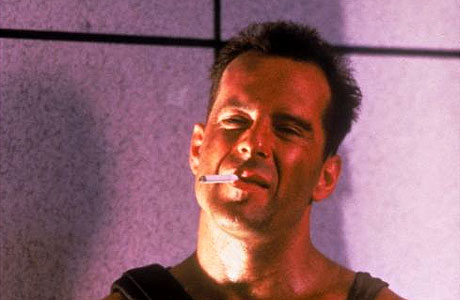
John McClane

What would John McClane do about Apple’s insistence that what you buy on iTunes will expire once you expire?

The story goes that Bruce Willis wanted to leave his considerable iTunes music collection to his kids after he dies (cue Bruce Willis is dead Internet rumours), but he is unable to do so because Apple’s user agreement (you know that 58 page thing that you didn’t read and clicked “I agree” anyway) does not allow licenses to be transferred. While it’s p0ssible to download a local copy of all the songs, they will all instantly and technically become illegal downloads once Bruce passes away, as the user agreement would then be invalidated at that sad moment. And Bruce, unwillingly to let this one go just like his off-duty alter ego John McClane wouldn’t let terrorists die without screaming memorable catchphrases just before or after, decided to do something about it and take on Apple in a lawsuit to fight for his, and all of our, rights.

But the story turned out to be yet another Internet rumour, one that seems to have been started by the UK’s usually credible Sunday Times (although their lack of a source for the story was a big warning sign), but it does raise an important point and bring it to the public consciousness, which is all that the fictional Internet hero Bruce Willis would have wanted anyway with his imaginary attempt to sue Apple.

As consumers, we really do put up with far too much from companies that, at the end of the day, are totally dependent on our patronage. Said companies are also far too eager to take advantage of our want for their products, tempting us with the next delicious iDevice, all the while taking away the rights that we’ve always taken for granted. In iTunes’s case, there really shouldn’t be any difference between a digital download that you burn to a CD (or store on a hard-drive), and a CD that you buy in a shop (that you then rip to your hard-drive). If anything, you should be able to do more with your digital downloads, because you *can* do more with them. But to be fair to Apple, they’re forced into doing this by the real powers to be – the record companies, who are just short-sighted and greedy enough to insist on something like this.

So whether it’s taking away our right to – own is probably the wrong word – forever hold a usable, transferable, license to the stuff that we pay for, digital or otherwise, or to harsh DRMs that we have to put up with that limits our right to do what we need and want with the same purchased goods, it’s really up to us, and heroes like the imaginary Bruce Willis, to fight for these rights.

Ubisoft Logo

Ubisoft’s controversial always-on DRM has been scrapped by the company, now hoping to make back lost customers due to their DRM shenanigans

And voting with our wallets, as hard as it may be sometimes, may be the best way to fight. With Blizzard still on a high following the financial success of Diablo III and its “always-on” DRM that seems to have prevented piracy (although clearly not hacking), another company has not been so lucky with its own “always-on” DRM experiment. Ubisoft, in an interview this week, finally admitted that their infamous UbiDRM has failed, and the company will no longer use the draconian DRM for their upcoming PC games.

Despite at first hailing the DRM as a huge success in reducing piracy rates, Ubisoft recently revealed that their piracy rate now was as high as 95%, certainly higher than other publishers which have never used “always-on” DRM. The quality and pricing of games may be a factor, but it could also be a factor that gamers deliberately chose not to buy Ubisoft titles as a way to protest the use of the harsh DRM measures.

Regardless, Ubisoft will now stick to an once only online authentication, and offer full offline gameplay for all their upcoming PC games, including Assassin’s Creed III. It’s good news for gamers, but it may be too little, too late, as the company’s reputation may have suffered irreparable harm from their DRM shenanigans.

Which begs the question, why has Blizzard manage to make “always-on” a “success”, at least financially? My guess is that because the game was so heavily anticipated, it still would have sold well if the requirement to play was, say, to strip off all your clothes, lather yourself with baby oil, and chant “Blizzard is awesome” backwards (the disturbing thing is that some do this anyway). The nature of the game, with online trading of in-game items, also lends itself to being more of an onliney type of game, and so in people’s minds, the requirement to be connected to the Internet to play doesn’t feel too much out of place. And also the fact that the game itself is pretty good, helped people overlook its deficiencies in terms of DRM.

It’s a tough balancing act though, because while the financial benefits are plain to see, Blizzard’s loss of reputation is not as easy to quantify. Every mistake, every server downtime, or hacking attempt, will lead gamers to blame Blizzard, as they have done so far, and it all adds up. But I guess as long as people are still willing to pay for the game (myself included), Blizzard won’t mind too much.

For those that did pirate Ubisoft games, I would hazard to guess that most of them did it via BitTorrent. Some, in order to prevent prying eyes, would have used a blocklist software in an attempt to prevent unwanted legal monitoring. Debate has raged on about whether these blocklists actually work, or simply do nothing except slow down your downloads (by blocking perfectly “innocent” peers), but researchers may have finally proved that these blocklists may not work all that well at all.

Researchers monitored 60 torrent files and eventually found hundreds of potential IP addresses belonging to monitoring agencies. But they found that only two-thirds were blocked by the blocklist software i-Blocklist. And all it takes it one agency to record your IP address, and that information can then be shared by a wide variety of groups, including law firms engaged in pre-trial settlement lawsuits, agencies helping with “three-strikes” regimes, and law enforcement agencies out to get the big fish pirates.

So the only safe way to BitTorrent, it seems, would be to use a VPN service, and one that takes your privacy seriously. VPNs can have a huge impact on download speeds, and also comes at a monthly cost that most would rather not pay, which is why so many rely on free blocklists software. The other alternatives are Usenet, or the ever shrinking pool of direct download sites. Oh, and not downloading pirated stuff.

So for now, it seems clear that the battle is being won by those seeking to monitor and stop BitTorrent pirates, but this escalation in the war against BitTorrent will probably only lead to the release of a free and totally private extension to the protocol, one that naturally guards against unwanted listening. It’s only a matter of time.

——

And another one bites the dust. Filesonic this week closed its virtual doors, or at least the website fell and couldn’t get up again, the latest victim of the US government’s crackdown on Megaupload.

Filesonic was one of the first to respond to the Megaupload takedown, some say an overreaction – it immediately shut down the ability for users to share files with third parties, as well as closing down its reward programs completely. The company had hoped it would reinvent itself as a personal cloud hosting service, but with players like Dropbox and Microsoft’s Livedrive already established, and a declining popularity that saw the website lose as much as 90% of its original traffic, it was always going to be a difficult task for Filesonic. Too difficult, apparently.

Whatever you say about Filesonic and websites like this (and yes, they did help people share pirated goods), they did have their (legal) uses too. If you had to share a 20MB file with several dozen people, email is not going to cut it, and unless you have your own web server, then services like Filesonic are essential. With that said though, without the need for pirated storage, there might not have been the need for so many players in the file hosting scene, and so perhaps what we’re seeing now is not only the reaction (and overreaction) to the Megaupload seizure, but also a general consolidation of the industry itself.

——

One of the co-founders of The Pirate Bay, Gottfrid Svartholm, has been arrested in Cambodia on orders from the Swedish government. Svartholm was one of the co-founders found guilty by a Swedish court of criminal copyright infringement, fined $1.1m and sentenced to a year in prison, time he has yet to serve.

Initial reports suggested that The Pirate Bay charges were behind Svartholm’s arrest by Cambodian police, but later reports suggested that it was more likely his hacking activities related to the Swedish Tax agency that prompted the international cooperation between the two law enforcement entities.

Whatever the reason, it doesn’t really change the fact that Svartholm, currently suffering from poor health, is being imprisoned in possibly quite poor conditions in a Cambodian deportation jail, and one wonders if there was a better way to have handled this matter by authorities on both sides (house arrest seems a bit more appropriate).

Based on the suggestion that The Pirate Bay verdict was the reason behind the arrest, the hacking community immediately responded by hacking the Cambodian government’s websites. But the clarification that a tax hack was behind the arrest may not change anything for hackers wanting revenge, and may even lead to an escalation the attacks.

With the two countries having no extradition treaty in effect, some legal wrangling will have to be performed before Svartholm is sent back to Sweden (but given his current living conditions, this may not be a bad thing).

Gaming

On to gaming now. I haven’t talked about the Wii U in a while, but with its official launch event not too far away, and the release date certainly within the next couple of month, I thought now would be a good time to wet my beak in the rumour mill business.

Wii U

The Wii U could get a release date by this time next week

The latest rumours sees the release date of the Wii U being November 18, which is probably not true, but also probably close enough to the real release date to not matter. The price of Nintendo’s next console could be anywhere from $199 to $299, based on baseless rumours, and it’s either much more powerful than the PS3/Xbox 360, or it’s not.

I think that’s all my bases covered.

I’m still not quite convinced by the huge controller though, and game consoles have been made or broken on bad controllers before. It’s a nice accessory, but I’m just not sure if that’s something people will want to use for all their games. Will it be comfortable enough to play, say, the latest Call of Duty game or even Mario?

And will the graphics, one of the key complaints of the original Wii after the hype surrounding the wand control system died down, stand up scrutiny in the face of the PS4 and Xbox 720, if/when they ever get released?

Time will tell I suppose, starting with the launch event in 4 day’s time.

Which should be just after the expected iPhone 5 launch event taking place on the other, Western, side of the US coast. So a lot of rumours being proven right, or totally wrong, this week it seems.

That’s all folks. See you next week.
Weekly News Roundup (19 August 2012)

Sunday, August 19th, 2012

Welcome to another edition of the WNR. NPD “released” its July 2012 sales stats for US video game sales, but unfortunately, only Microsoft again chose to divulge its hardware sales stats. So no July NPD analysis, which is a shame, but there wasn’t any real surprises anyway. I’ll talk a bit about it in the gaming section below.

Another pretty full news week, so let’s get started …

Copyright

So much for “do no evil”. Google gave in to the demands of the MPAA and the RIAA this week by signalling it is ready to start self-censoring its own results to reduce the visibility of alleged piracy websites. Without going as far as removing suspected websites, Google will start demoting any website that receives an unspecified number of DMCA notices.

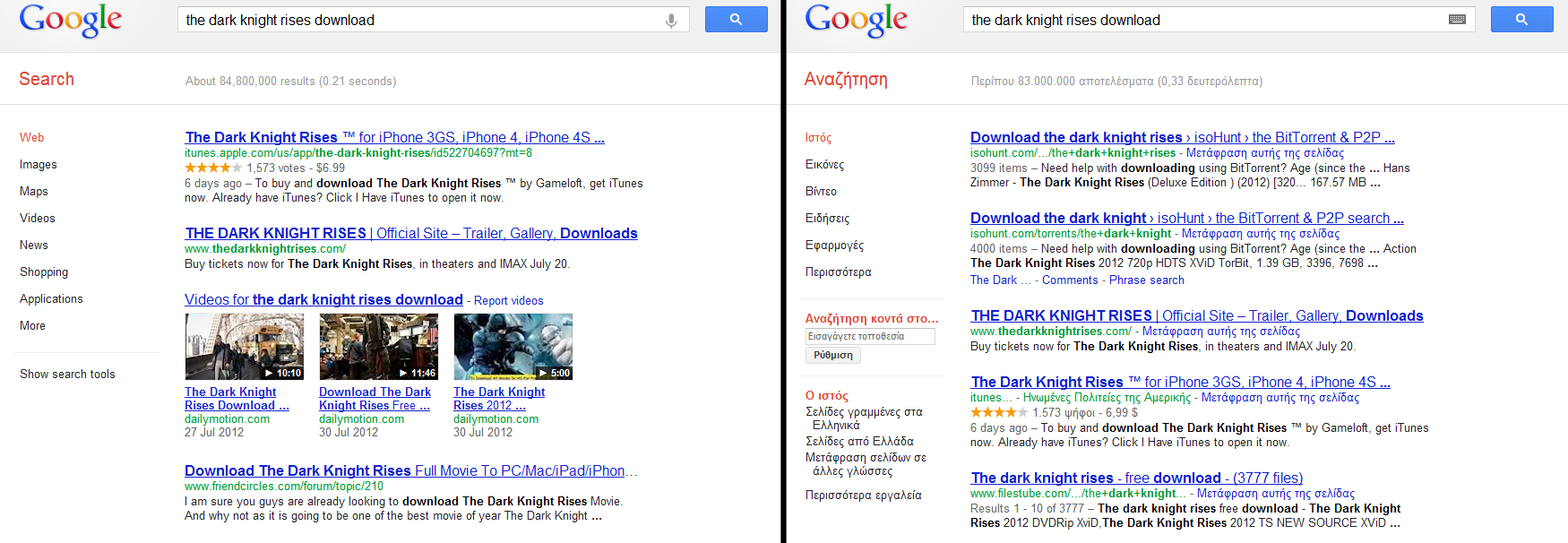
Google DMCA Demote

Google has started demoting websites that receive too many DMCA notices, the image on the left shows the demoted rankings, while the image on the right (for the yet unchanged Greek version of Google) shows the previous rankings

It’s own YouTube website, and “major brands” will apparently be exempt from this new rule (webmasters have long suspected there’s one rule for the web top 100, and another rule for the rest), but the rest will now have to live in fear of the system, which is already being massive abused by those seeking an unfair advantage (57% of all filed notices, according to a Google report from 2006), and made even more attractive as a “black hat” weapon of choice now that the entire domains of competitors can be demoted. Since Google started releasing DMCA stats, the number of DMCA notifications has risen from about a million per month, to now over 4!

Except none of this will work to stop piracy, because people aren’t turning into pirates just because they see some links to The Pirate Bay on Google. I don’t know if it’s naivety, a head in sand attitude, or a deliberate attempt to muddy the waters, but the idea that good, people are being fooled and misled into downloading pirated content online is, to put it simply, hogwash. People pirate and they do it willingly, and knowingly. And they spent a lot of effort learning and honing their piracy skills. They will most likely alredy have go-to places to get their piracy fix, or custom search engines that does more work separating the wheat from the chaff, so the idea that they’re all relying on Google to find the S01E08 of The Newsroom is simply a fantasy.

But despite Google’s proactive steps in reducing piracy, the MPAA/RIAA still wants more. In a joint submission to the US Copyright Czar, the MPAA and the RIAA have called on the government to do even more in the CRusade Against Piracy (CRAP™), including going all “Megaupload” on websites like The Pirate Bay. Basically a wish-list and a preview of what the copyright landscape could be like if the MPAA/RIAA get their way, the submission also talks about increasing criminal sentences for copyright offences, including making the unauthorised streaming of videos a felony.

Showing that they’ve not quite given up on SOPA/PIPA, the submission also calls for tighter control of domain names, including those outside of the jurisdiction of the US government. The groups also say that the government needs to go out and threaten private businesses like domain name registrars, search engines, and advertising agencies and get them to fall in line with the MPAA/RIAA’s vision of copyright enforcement. So it’s simply not good enough for Google to only demote websites that have yet to be proven, in a court of law at least, of doing anything wrong – no, the MPAA/RIAA says search engines like Google must “delist rogue sites”. Note the use of the term “rogue”, the same type of language that’s also being used to describes countries like North Korea and Iran, and I don’t think this is a coincidence either.

Feeding into the paranoia and hysterics that aims to paint college kids downloading movies as something much more serious, the MPAA/RIAA also strategically brings “organized crime” and “gangs” into the equation in this submission. But as far as I know, Tony Soprano purchased his copy of The Godfather, and it may be just me, but I just can’t imagine the Crips and the Bloods getting into the torrent search engine business.

High Definition

The wait is finally over. The kind people at Fox studios have finally allowed their customers to buy Avatar on Blu-ray 3D, for a price that isn’t a ridiculous 3 figure number.

Fox’s deal with Panasonic, where the electronic giant has exclusive rights to distribute the Blu-ray 3D version of Avatar with the 3D electronics, was one of the more controversial movie deals in recent times. Coming just at a time when Blu-ray 3D needed a launch title that could only come from the most acclaimed and most financially successful 3D movie of all time, the exclusivity deal meant that the format lacked a killer title available in stores that would have helped the format’s early adoption. As such, Blu-ray 3D hasn’t taken off in the way that electronic manufacturers and movie studios had hoped.

Avatar 3D Blu-ray Panasonic Exclusive

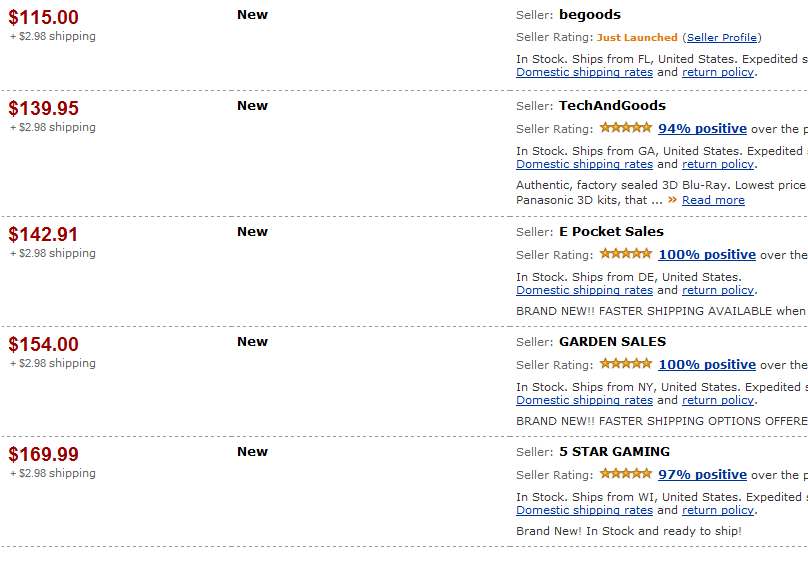
The Panasonic exclusive version of Avatar on Blu-ray 3D is still fetching 3 figures on eBay and Amazon, but the retail version will be available in October

With that said though, while people aren’t using 3D as much as studios would have liked, they’re still buying them because the price premium of 3D over 2D ranges between inconsequential and non-existent. Try and find a top of the range 2D TV that isn’t also 3D, and you’ll struggle. And when there’s only a $20 difference between a 2D Blu-ray player and its 3D equivalent, consumers don’t really have to make any hard choices.

Still, the retail release of Avatar on Blu-ray 3D should help the format break all kinds of records when the disc is released in October. The price is a bit higher than your average Blu-ray movie, $28 at Amazon, but it’s definitely better than paying $128 for it on eBay, right?

But don’t bet on this Blu-ray 3D Limited Collector’s edition to be the most definitive 3D version of the film to arrive on disc. The fact that this release might not even feature the extended cut means that Fox is already planning a quadruple dip of the film sometime in the near future.

Even for the 2D version, it’s only a matter of time before we see the 4K or whatever version of the film on possibly a new disc format, or if bandwidth issues are resolved, via streaming or download. Projects like Australia’s NBN and Google Fiber will aim to fix for the bandwidth issue once and for all with the move to fibre optics, which has almost an unlimited capacity to carry TB/s and beyond, but another solution is to increase the efficiency of the delivery codec. Which is why it was interesting to read about the news of a new format being officially approved by the Moving Picture Experts Group (MPEG), which promises to provide the same visual quality as H.264 with only half of the bandwidth needed.

H.264 is already super efficient, so it’s hard to believe that something could come along and double that efficiency, but HEVC, or H.265, aims to do just that through more computational intensive algorithms. Mobile applications would probably benefit the most from H.265/HEVC, due to their inherent bandwidth limitations, although faster (and more power hungry) devices may be needed to decode the video.

The other main beneficiary from a more efficient codec would be the web streaming industry, finally allowing the likes of Netflix to do true Blu-ray quality streams on connections less than 20 Mbps.

For other applications, 4K is an obvious candidate, but 4K only really benefits super large screens (say 80″ or above), and it’s an overkill for anything smaller. And if staying at 2K or 1080p resolution, the increased efficiency of H.265/HEVC may allow for same bitrate, but higher quality encodes, although you’ll get diminishing returns on any quality improvement for Blu-ray encodes, many of which are already visually flawless to the average viewer.

Gaming

Blizzard’s Battle.net has become, perhaps, one of the most tempting targets for hackers in recent times. Not only does the company hold a heck of a lot of data for a heck of a lot of people, Blizzard also holds tons of financial information for all those subscribers to WoW, and all those buyers/sellers on Diablo III’s Auction House. And the company’s stance towards “always-on” DRM for D3 meant that anyone who pokes holes in their security will instantly receive a lot of “web cred” for their efforts.

Blizzard Security Notice

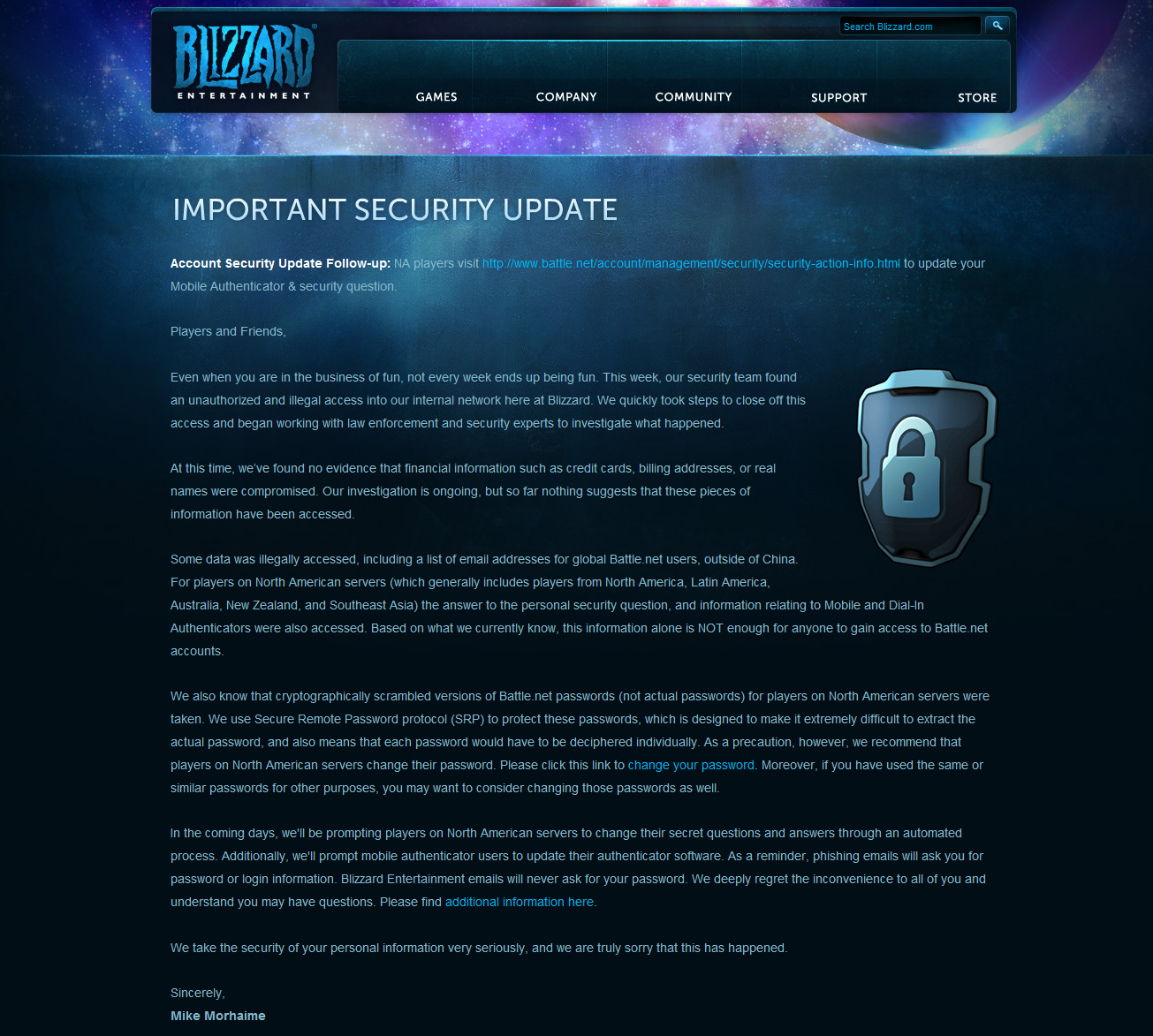
Blizzard was hacked last week, with a ton of user information stolen in the process.

So unsurprisingly, Battle.net was hacked this week, with a heck of a lot of data being stolen in the process, including emails, (encrypted) passwords, security questions/answers, and even data related to the mobile authenticator that’s supposed to prevent hackers from getting into your account. The scale of the breach is actually quite spectacular, with the email addresses of every Battle.net account (except for those in China – probably on different servers) being leaked, and pretty much all accounts on the North American servers being compromised further.

Just the other week, Blizzard was boasting about how effective “always-on” DRM has been in preventing piracy, which has meant the company has made record amounts of money selling the hit game. It’s a shame that they didn’t invest enough of their loot (using it in the Diablo III sense) in protecting their users, but when you treat your customers as criminals by forcing draconian DRM on them, their rights were never that important to start with.

And as mentioned in the intro, the July NPD report was released, with the Xbox 360 once again riding high among the home based consoles, selling 203,000 units. But it was still 26.7% down compared to the same month last year, although the other home based consoles probably didn’t fare much better (the Wii in particular). The holiday sales period is coming up soon, and with the Wii U out around that time, it will be interesting to see if the Xbox 360 and PS3 will make a comeback, or take a further hit, when sales ramp up for this period.

But a price discount could do wonders for the two ageing consoles, especially when up against the compartively pricey Wii U.

That’s that for the week. See you in seven!

Game Consoles – June 2012 NPD Sales Figure Analysis

Tuesday, July 17th, 2012

After a 2 month break, the NPD analysis is back!

As NPD no longer releases full hardware sales figures, this feature is reliant on the game companies, namely Microsoft, Nintendo and Sony, to release their set of figures, and then calculating missing figures based on “statement math” (that is, arithmetically calculate missing figures based on statements made). For June 2012, these are the statements made by the gaming companies:

  • “Nintendo sold more than 400,000 total hardware units in June and saw double-digit growth across each of its product lines compared to May. This includes more than 155,000 Nintendo 3DS systems, more than 150,000 units of the Nintendo DS family of systems and nearly 95,000 Wii consoles,” via Gaming Examiner
  • Microsoft revealed 257,000 Xbox 360 units were sold, with 47% of the home based console market share (source)
  • Sony did not reveal any figures for the PS3

A little bit of “statement maths” tells us that just under 195,000 PS3s were sold.

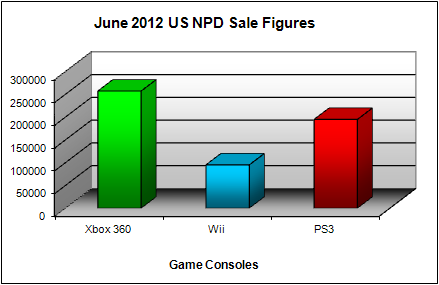
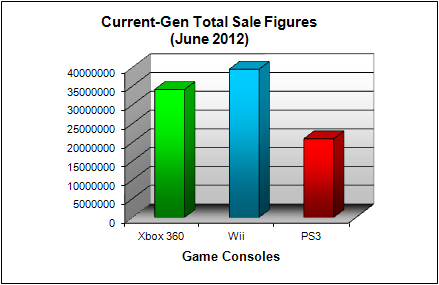
And so the figures for US sales in June 2012 are below, ranked in order of number of sales (June 2011 figures also shown when available, including percentage change – note that totals for the PS3/Wii are now only rough estimates, as exact figures were not available for all months):

  • Xbox 360: 257,000 (Total: 34.1 million; June 2011: 507,000 – down 49.3%)
  • PS3: 195,000 (Total: ~21 million; June 2011: 276,000 – down 29.3%)
  • Wii: 95,000 (Total: ~39.5 million; June 2011: 273,000 – down 65.2%)
NPD June 2012 Game Console US Sales Figures

NPD June 2012 Game Console US Sales Figures

NPD Game Console Total US Sales Figures (as of June 2012)

NPD Game Console Total US Sales Figures (as of June 2012)

This is the first time I can remember of the Wii numbers dropping below the 100k mark, but the 65% drop from the same time last year was probably not unexpected, considering how close the Wii U is to retail.

While the Xbox 360 continues to “impress” by winning the most popular home based console award, 18 month in a row now, its numbers were down a considerable 49% from the same time last year, which to be honest, was a fantastic month for the console (and the Xbox 360 was the only console then to record a year-on-year growth figure). A bit worrying is that the decline seems to have sped up in the last couple of months too, perhaps as a indirect response to the Wii U, but more so perhaps due to this time last year’s numbers being “above normal”.

The PS3 has the smallest year-on-year decline of all the home based consoles, but that’s not to say that it isn’t struggling itself. It’s still down some 36% compared to 2 years ago (Xbox 360 down 43% for the same period – although that’s comparing now to the then launch of the Xbox 360 Slim – the Wii is down 78%!), and it still doesn’t look like its ever going to beat the Xbox 360 unless the 360 is retired early by Microsoft.

It’s not exactly all doom and gloom, since we’re approaching the end of a cycle even if Microsoft and Sony don’t want to admit it publicly, but I think it’s safe to say that we’ve already seen the best of these three home based consoles, and the only way forward now is downwards for them all.

Numbers have also been made available for the PS Vita, which along with the PSP, only sold a combined 100,000 units. Compare and contrast to the Nintendo DS, which sold 150,000 units, and the 3DS, which sold 155,000 units, and you can see the Vita has been a disappointment for Sony so far. The sales figure also highlights a significant drop compared to the earlier sales figures for Vita, which can’t be a good sign either. I think once again, Sony has misjudged the market. Trying to get on the casual gaming bandwagon, while still offering hardcore gamers an exciting gadget, Sony might have ended up catering to neither market. They don’t have the expertise in making fun and casual games like Nintendo, everyone already has a smartphone or tablet that can do what the Vita does, and the high cost of hardware and software, proprietary formats and DRM, means that the Vita was already at a disadvantage before it was even launched. Still, the holiday period will be decisive and if the Vita can have a good one, and if it can have more linkage to the PS3 and other Sony devices, then it can still carve outs its own niche.

In game sales, it’s not exactly been another great month, with the top selling title on all platforms, Lego Batman 2: DC Super Heores, only selling 450,000 copies or so. Speaking of the Vita, what Sony also doesn’t have is a Pokemon like franchise to exploit like the DS/3DS is able to do this month with Pokemon Conquest, coming in at a high 7th for a single platform release (all other listed in the top 10 are multi-platform games). Here’s the full software sales chart for June (new releases shown in bold):

  1. Lego Batman 2: DC Super Heores (Warner Bros – Xbox 360, Wii, PS3, NDS, 3DS, PSV, PC)
  2. Tom Clancy’s Ghost Recon: Future Soldier (Ubisoft – Xbox 360, PS3, PC)
  3. Diablo 3 (Activision Blizzard – PC)
  4. Max Payne 3 (Take-Two Interactive- Xbox 360, PS3, PC)
  5. NBA 2K12 (Take-Two Interactive – Xbox 360, PS3, PS2, PSP, Wii, PC)
  6. Batman: Arkham City (Warner Bros – Xbox 360, PS3, PC)
  7. Pokemon Conquest (Nintendo – NDS)
  8. Call of Duty: Modern Warfare 3 (Activision – Xbox 360, PS3, Wii, PC)
  9. Battlefield 3 (EA – Xbox 360, PS3, PC)
  10. The Amazing Spider-Man (Activision Blizzard – Xbox 360, PS3, 3DS, NDS, Wii)
I don’t think I’ll bother to make a prediction. Firstly because I don’t think we’ll have enough figures to do an analysis next month, and secondly, the hardware sales order  will be pretty much the same as this month (and will be the case until the Wii U is introduced later this year).
See you next month?

Weekly News Roundup (17 June 2012)

Sunday, June 17th, 2012

Hello to you on this a rainy, windy and cold Sunday here in Melbourne, Australia. How’s the week been treating you? Not too badly I hope. Another rather quiet news week, but maybe I was just too busy to pay attention. A little bit from column A, a little bit from column B, I suspect. Well, whatever news I did find, they were quite interesting, so let’s get started.

Copyright

The fallout (not to be confused with another, in my opinion quite fantastic, gaming franchise) from the Diablo 3 DRM choice continues this week, as videos emerged showing an item duplication exploit in Diablo 3 – the kind of thing that always-on DRM, at least according to Blizzard, was supposed to stop.

The video, originating from South Korea, showed a gamer doing the very thing that Blizzard was afraid of – duping items. The exploit was so damaging that Blizzard had to shut off South Korean game servers while a fix was rolled out. Thousands of gamers were also banned for using this and other cheating methods. Duplication hacks can be extremely damaging for Blizzard, while profitable for hackers – Diablo 3 features a real money Auction House where users can sell their hard-earned or not so hard-earned virtual in-game items, and as a result, item duping in D3 becomes just as bad as counterfeit money is in the real economy.

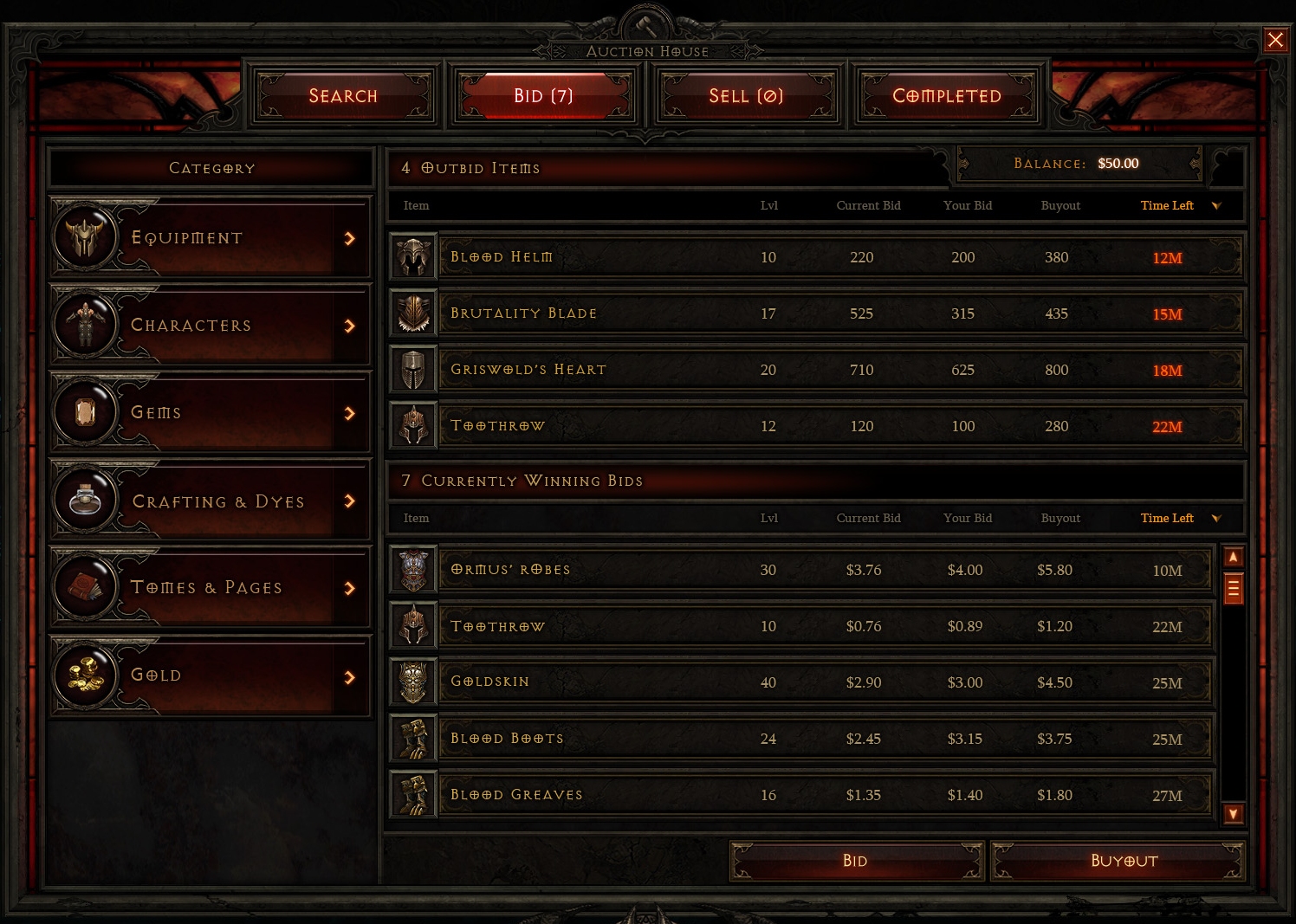
Diablo 3 Auction House

Real money trading of in-game items has made Diablo 3 a tempting target for hackers and scammers

So despite the harsh “always-on” DRM that Blizzard chose to employ for Diablo 3, which the company itself says wasn’t for anti-piracy but for protection against cheaters and hackers, it has not really lived up to expectations. If anything, the inclusion of real money transactions, which necessitates the use of an always-on DRM/access control system, has provided hackers with extra incentive to find exploits and loopholes that they can profit from. For us gamers though, it meant a frustrating (and still frustrating) gaming experience, although some have already started making good money from the Auction House.

And I’m still not convinced that Blizzard couldn’t have created an offline mode for the game. By implementing some kind of local virtual server that the game can connect to, this could provide emulation of an online experience, without the need to actually be online all the time. This may very well be the tact that the piracy community will use to crack the game, so we’ll have to wait and see if they can help out D3 gamers by creating an unofficial offline mode.

But some in the gaming industry are already pointing at Diablo 3’s fantastic sales figures and using that as justification for always-on DRM – at the other end of the spectrum, DRM-free gaming is also booming. And not only that, the “pay what you want” pricing model is also providing to be more than effective too. The latest Humble Indie Bundle (the 5th edition, for those keeping count) has managed to sell within a cat’s whisker of 600,000 bundles, raking in over $5 million in the process. Despite the basic bundle being available for as low as a penny, on average, gamers chose to pay $8.53 for the 4 game (plus 4 bonus games) bundle, proving that, if the price is right, people will pay. More remarkable is the fact that former buyers of the bundle, Steam sale addicts, and indie gaming enthusiasts would mostly already have most of the games on offer (I had 5 of the 8), so even from a shrinking sales pool, this latest bundle has managed to beat all expectations, and has actually earned twice as much as the last bundle.

The Humble Indie Bundle V

The Humble Indie Bundle V has generated more than $5 million in sales, from nearly 600,000 bundles sold

While I’m sure Diablo 3 raked in a lot more money than all the Humble Indie Bundles combined (and then some), then again, none of the games in the Humble bundle took 10 years to materialise either. And all were made with considerably less budget than Blizzard’s latest hit. At the very least, the Humble bundles prove that DRM-free can work, and so can the pay what you want model, even with the availability of both free pirated, and free (well, almost free – a penny) legal ways to get the games.

For those still holding out hope for a way to retrieve their legally uploaded files from Megaupload, especially after last week’s news that the MPAA is not totally against the idea, the news doesn’t look very promising. Responding to a lawsuit filed by an affected Megaupload user, US government prosecutors says that while they were responsible for shutting down Megaupload, they’re no longer responsible for the servers that now holds user files. Copies of the important data have already been made by the government, and as a result, they no longer have “possession” of the original data and can’t grant or deny access to them. It seems the data is now back in the possession of Megaupload’s former web host, Carpathia – data that is costing the company $9,000 a day to host. With the government also against unfreezing Megaupload assets to allow the company to pay Carpathia to keep the data alive (data that could also help Megaupload’s case), the most likely outcome, unless the court intervenes, will see the data completely wiped, and any hope of recovery gone. Before this happens, the government says users can pay Carpathia for access, and then acquire the services of forensic experts (at further cost) to retrieve any data – an unrealistic proposal due to the thousands of dollars this would require. The other “alternative”, the government says, is for users to sue both Carpathia and Megaupload for breach of contract relating to the storage of their files, again, also very unrealistic.

In other words, the government is washing their hands of any responsibility in the matter. They closed down Megaupload and then decide to not give two craps about the resulting collateral damage. But as screwed up as this is, it’s also an important lesson for those that are relying on the “cloud” to store their digital assets. Cloud storage will usually prevent data loss as a result of hardware or software failure, but it won’t stop things like user error (“hmm, that big red button that says “DELETE ALL” looks tempting – I wonder what it does …”), hacked or banned accounts, or as in Megaupload’s case, catastrophic failure. So it’s best to have copies of your files both in online *and* offline locations, or at the very least, at two different cloud providers.

High Definition

Is Blu-ray on the way out? Anthony Wood thinks so. But then again, he’s the CEO of the company that makes Roku, a popular little streaming set-top box, and both Blu-ray, the disc, and Blu-ray players are competitors.

Roku 2 XS

Roku currently provides a level of service that Blu-ray players and Smart TVs cannot provide with their in-built streaming apps, according to Roku’s CEO

So will Blu-ray be obsolete in four year’s time, as Wood predicts? If in four year’s time, most homes can access the Internet at speeds far greater than today’s average, then yes, this could be a possibility. If not, then the most efficient way to deliver the GBs of data needed for each HD movie (and if 4Kx2K become more common, the tens of GBs could grow to hundreds of GBs), might still be found on some kind of physical media, even if isn’t Blu-ray.

Whatever happens though. I for one hopes that ownership, and preferably ownership of something physical, is still reality 4 or 10 years down the track. I’m a huge supporter of cloud based streaming and all that, but I also love being able to hold something in my hands, or display something in my TV room, and I think a lot of movie lovers are like me in this regard.

Gaming

In gaming news, the May NPD results have been released, but once again, only Microsoft took the risk of releasing hardware figures. That’s probably because they won the month again with 40% of the home based console market share, but only 160,000 units sold. That’s a 40% decline compared to the same month last year, and you can see why many in the industry are so worried (and why “some” have stopped releasing detailed hardware figures).

With the next gen consoles from Microsoft and Sony not arriving until 2013 (got a news story on the next Xbox that was too late for publishing for this WNR, so I’ll cover it early next week), and the Wii U only coming at the end of the year, things are unlikely to pick up until then.

I’m still optimistically (but perhaps also foolishly) hoping that someone will leak the hardware data for the Wii or the PS3 in the next few days, and so the NPD monthly feature can resume, but it’s not looking good at the moment. If it doesn’t happen, I’ll get into more details about the May NPD in the next WNR.

Nothing much left to say in this WNR, so let’s call it a day. See you next week.

Weekly News Roundup (10 June 2012)

Monday, June 11th, 2012

Hello to you on this fine (or maybe not so fine) Sunday (may very well be Monday already, depending on how late this WNR gets sent out). A fairly quiet news week again, but like always, we shall persevere. My copy of Diablo III actually did arrive early this week, but I haven’t had much time to play it yet. The one time I did, the server had to go down for maintenance, which meant that my play session was not only cut short, but I also lost unsaved progress. The fact that a server maintenance could stop me playing the single player game doesn’t give me much confidence that, say 5 years from now, people will still be able to play this game without interruption (or even be able to play it at all). If game publishers insist on using “always-on” DRM, the least they could do is to guarantee the number of years that I’ll be able to play the game I purchased – 10 years would be ideal, but I suspect that this would cost quite a lot, and a lot of planning and risk management would be required to allow for this  (eg. obsolete server software/hardware, and how this affects compatibility with the game server software).

Copyright

Once again, we have mainly copyright news. That may sound strange considering E3 and everything, but really, I just couldn’t get that excited over this year’s event, since we already know much about the Wii U, and neither Sony nor Microsoft stepped up to the plate with an official announcement of their next consoles (although it hasn’t stopped the rumours from flying around).

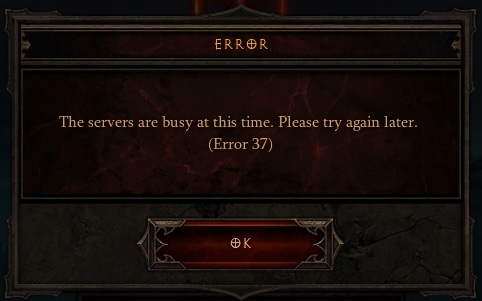
Diablo 3 - Error 37

Diablo 3's dreaded Error 37 has gotten the South Korean branch of Blizzard into trouble with the government

Anyway, copyright stuff. No, wait, back to the game stuff for a sec. Continuing the Diablo 3 theme from the intro, and the outro from last week’s WNR, Blizzard’s South Korean offices were raided by the country’s Fair Trade Commission (FTC) over issues related with Diablo 3’s DRM. Just like gamers in other parts of the world, South Korean gamers were also frustrated by the game’s launch day fiasco, and many went and sought a refund for the game. But the game’s terms and conditions apparently does not allow for refunds, and this is when gamers got the FTC involved. While this actual story is less about the DRM, and more about Blizzard’s refund policy, the issue of whether DRM problems can be counted as a “product fault” will be examined by the investigation.

As I said in the intro, there ought to be some guarantees for games that require server based DRM. An uptime guarantee, say 99% in any given month (which isn’t as impressive as it sounds – 1% of a month is about 7 hours, and that’s still quite a long outage), and a guarantee that the game will be supported for how ever long the game is expected to be played (if the next Diablo sequel is as long coming as this one, then 10 years ought to be just about right). If publishers want to make games into services, rather than products, then it’s reasonable for gamers to expect a certain level of quality of service. I feel though that the $50 gamers pay is no way near enough money to cover long term server support (hence why games like World of Warcraft have monthly fees), so I don’t expect games like Diablo 3 to be playable in 5 year’s time, unless the in-game purchases can keep the servers running. And in the same way, game publishers should understand that this kind of DRM can be very expensive over the long term, and they need to consider whether it’s worth it financially or not.

Last week, the RIAA accused Google of not doing enough on DMCA take-downs, and instead, want the search engine to perma-ban sites like The Pirate Bay, as opposed to having to constantly submit DMCA notices. This week, The Pirate Bay responded by welcoming any blanket bans of torrent indexers, saying that this would actually boost traffic numbers for the world’s most popular indexer. The reasoning is that, as the biggest brand in torrents, TPB would suffer much less from the removal of Google referrals (which they say, at best, only accounts for 10% of their traffic) compared to other torrent sites. Whereas Google often still redirects people to other less well known torrent sites, if Google stopped showing torrent results, this could mean more and more people would simply bypass Google altogether and log straight on to TPB. What’s bad for other indexer (and in a way, Google as well), will ultimately be good for The Pirate Bay, since you have to pretty naive to think that just because Google can’t provide you with torrent results, that people would still stop pirating.

And TPB’s IP address war of attrition continues. With last week’s newly released IP address just added to the banned list, a new IP address has been released – 194.71.107.80 becomes 194.71.107.81 (the old IP address will still continue to work in countries without the censorship). So round 2 begins, and I wonder how many rounds BREIN, the Dutch anti-piracy agency, will last before they start whining again. The TPB has also jumped on the IPv6 bandwagon, meaning those that have migrated over to the new IP address system will have a new way to access TPB, one that’s not blocked (so far) by any filters (as most failed to take into account IPv6). Plus, you can use one of the many IPv6 to IPv4 tunnel services as a pseudo-proxy to bypass the filter too, for example, thepiratebay.se.ipv4.sixxs.org. Just goes to show how pointless these multi-million dollar filtering implementations are, but if they want to play the IP merry go around in the IPv6 domain, then I’m sure TPB will gladly oblige too.

Those caught in the crossfires of the US government’s war on Megaupload, that is those that had used the cloud hosting service legally, may yet get back access to their files, after the MPAA signalled it had no general objections against the idea. However, it did have some specific objections, in that they don’t want anyone involved with Megaupload to be handling any system for (legal) file retrievals, and they also want to ensure only legal content can be downloaded. While probably reasonable requests, how practical meeting them would be is a different question altogether. I can’t see the required time, effort and money being spent to build a system which would allow for this, and the MPAA rightly says that even Megaupload’s user policy doesn’t guarantee continued access to stored files. The lesson here is that while the cloud is a great idea, and it’s made things very convenient, backups stored in multiple locations, ideally offline too, is still as important as ever.

Lane Pryce - Mad Men

Legal options for hit show like Mad Men are very limited here in Australia - and if I was feeling mean, I could post another picture of Lane Pryce that would be a huge spoiler for those who haven't seen the latest episode

And finally, an Australian online survey has found that 1 in 10 have stopped pirating film and TV content, and most say the availability of more legal options was one of the reasons they’ve stopped. There were also some other interesting findings. Only 10% of those surveyed downloaded pirated TV shows and movies on a weekly basis, and out of this group, 72% say they’re doing it because there’s simply no legal alternative available. Being in Australia, this is a fairly accurate reflection of the legal scene, especially for TV based content, and for hit shows like Game of Thrones or Mad Men. Someone here (or there, in the US) is making deals (and profiting greatly from it) that’s ensuring we only get time delayed releases. That may have worked in the past, but in this day and age, even a 24 hour delay might as well be an eternity. Both considering how quickly the same content is available via the illegal channels, as well as the spoiler-ridden and at the same time, ubiquitous, nature of the Internet itself.

Or “there’s no legal option” could simply be an excuse – a convenient one because it’s mostly true, but still believable to use when it isn’t (for example when the content is available on iTunes at extortionate prices, although you could argue about the viability of such an option). I think anti-piracy really has to be about getting rid of these excuses first, by providing legal options (at a price that makes it a viable option), and once you make piracy simply a moral decision and one that’s solely based on the fact that the content is free, then at the very least, the rights holders would have more justification to implement tougher piracy prevention methods (being careful not to create new excuses in the process).

And so we come to the end of another quite short (and late) WNR. Can’t be helped I’m afraid. Well, it can, but that would require too much work (or just work), so no, it can’t be helped. See you next week.