Archive for the ‘Electronics’ Category

Weekly News Roundup (9 January 2011)

Sunday, January 9th, 2011

How has the first full week of 2011 been treating you? Good I hope. Lots of news this week, but I’ve found an easy solution against having to write a lot of news articles this week: ignore the CES!! The plans is to cover some of the more interesting news out of the CES here, in a very brief fashion, but to be honest, I haven’t been keeping track of the developments as closely as I should because the dozen or so games I picked up during Steam’s Holiday Sale aren’t going to play themselves! Right?

CopyrightLet’s star with copyright news. I attempted to destroy the optimism gained from the new year by writing about what could have been, had the powers that be not made the the financial aspect of copyright more important than the social aspect, in my piece titled A Sad New Year For Copyright.

Sadly, this is one aspect of copyright that’s not been discussed a lot recently, with the focus more on the details (DRM, court cases …). There’s a very important reason why copyrights expire, and a lot of people have forgotten about it. The US Library of Congress has already warned of the risks of copyright and copyright technology getting out of control and hurting cultural preservation, this was in reference to audio recordings, but the same warning applies to every other type of media. I mean can you imagine, due to the use of DRM and lawsuits, that in 95 year’s time, when the copyright for Transformers 2 or something expires, that nobody actually has a copy of the movie preserved without DRM that can be played at that time. On second thought, this may not be such a bad thing …

But seriously, it’s only the blatant disregard for copyright law, and the ever faster pace of technological progress and the increasing ease of information sharing (which has long since made current copyright laws outdated, even the recent changes), that is ensuring cultural preservation is not at severe risk. But how many early 20th century, but still copyrighted content, has been lost forever (something the Library of Congress says has already happened), and think of the copy protected games from the early 90’s that would not be playable today (even with legacy emulators) had pirates not cracked the DRM back then? Piracy making a contribution to cultural preservation? Why not!

Intel Insider

Intel Insider is not DRM according to Intel, it is "content protection"

You may notice that I used the term ‘DRM’ to refer to copy protection from decade old games, when people weren’t using the term DRM at all. DRM stands for Digital Rights Management, and in my mind, it refers to any kind of technology in which our ability to manipulate digital media is restricted. Perhaps I’m wrong. I mention this because of the controversy surrounding Intel’s announcement of a new technology called Intel Insider, designed to secure online HD video streaming. It’s built into the hardware of Sandy Bridge processors, and so everyone has been referring to it as hardware DRM. Fearing the consumer backlash, Intel’s Nick Knupffer took the time to post an entire blog explaining why Intel Insider is not a DRM. Nick says DRM is about things like preventing people copying the movies and distributing it online, or setting a limit on how long someone can watch a rented piece of content. Intel Insider, Knupffer says, is “an extra layer of content protection” (direct quote from his blog entry), and that Intel Insider will be even more important when things like Intel’s wireless display technology, WiDi, takes off to “prevent pirates from stealing movies remotely just by snooping the airwaves”. So basically, in Nick’s own words, Intel Insider is designed to stop piracy, and offer hardware content protection. And that’s not DRM? And in Nick’s update of the blog, which came after “strong feelings in the comments” (haha), he refers to the fact that HDCP (which Intel also owns, and was cracked last year BTW) is everywhere already anyway. And that makes it better? HDCP, the DRM (sorry, “content protection”) for HDMI is one of the worst things ever, and if Intel Insider is a new take on HDCP (to protect Intel’s “content protection” related licensing revenue stream that must have taken a hit when HDCP was hacked), one that is built into every new CPU, then that’s even worse than I had first imagined. Bring on AMD’s Bulldozer then (unless it also sucks up to the entertainment industry with its own version of hardware DRM, sorry, “content protection”). But what pleased me most about this whole incident was that Intel and other companies now realises that DRM is a bad thing that they must use PR and spin to soften the negative impact it has on consumer sentiment. That’s progress, I suppose.

An update on the Ubisoft DRM, sorry “content .. wait, no, this one really is DRM, I think. Anyway, Ubisoft says they have not given up completely on UbiDRM, and they may still use it for future games on a case by cases basis, that it is still effective, and that it cannot be defeated, and that its enemies are committing suicide under the walls of Ubisoft HQ.

The Expendables

The USCG is now planning to sue those that download The Expendables

Everyone’s favourite copyright law firm is starting the new year with a bang, and now planning to sue people for downloading The Expendables. The recent setbacks suffered by the US Copyright Group, and the bad publicity they’ve received, seems to not have had a huge effect, as Nu Image Films, the production company behind The Expendables, sought out USCG’s services. Just like how the anti-piracy lobby is now going after the revenue sources of online piracy, going after the revenue source of firms like the USCG seems to me like the best way to stop these mass lawsuits. Tie them up in paperwork, make them actually do the lawyer-y stuff that costs a lot of time and money (like proving actual damages, or even actual infringement), seems to me the best way to stop mass lawsuit law firms.

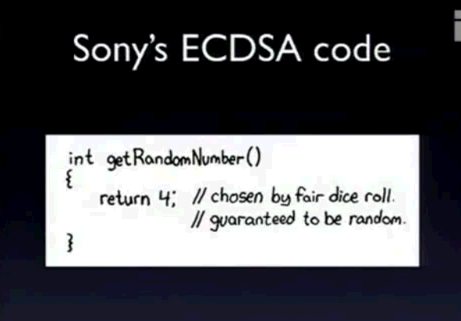
But by far the biggest copy protection related news this week was the hacking of the PS3. The fascinating story (well for a computer geek anyway) behind the hack is well worth watching the video here (especially the slide where Sony’s random number generator algorithm is explained), but the implications of this hack are rather big. The leak of the master key basically destroys the PS3’s ability to tell what’s an authorised piece of code, and what is not, and so in other words, pirated games can now be made to appear as if it was a legally, store bought version. This is stuff Sony have nightmares about, and makes the PS3 the least protected console currently on the market, completely reversing the position in just a few months time. And not coincidentally, it all started when Sony announced they would remove the Other OS feature from old PS3 (new “Slim” PS3 never had this feature), and this is when hackers around the world decided that hacking the PS3’s copy protection system would be the right thing to do. And the funniest thing is that Sony removed Other OS because they feared it would *eventually* be used for piracy, and this pre-emptive actions seems to have been the cause of opening up the console to massive piracy. Whatever limited piracy that could have been achieved with Other OS (which was all theoretical), can now be achieved without Other OS, all thanks to hackers wanting to bring back Other OS to the PS3. Awesome. And since the leak of the master key, progress on opening up the PS3 has moved along at a brisk pace, with tools for creating custom firmware already available, and at least one video demo of homebrew running on the latest, now jailbroken, firmware for the PS3. Sony issued the expected overly-optimistic evaluation of the situation (“committing suicide under the walls of Sony HQ”, etc …), but they know they’re beat. Solving the problem would probably require Sony to release new version of the hardware with a new key system (not just a new key), and there’s always the risk they will make *all* existing games unplayable due to the need for a new key system (a risk, I’m sure, Sony wouldn’t mind taking, given their track record on creating DRM related problems). Detecting modified consoles and banning them from PSN could also be on the cards.

But I actually think this will be good for the PS3. It makes the console even more versatile, and let’s be honest, piracy is one of the key drivers behind hardware sales. But of course, a strong selling PS3, and mass game piracy, won’t make Sony’s financial situation any better (it will be worse, actually). But at least the PS3 will be popular!

High Definition

In HD/3D news, Blu-ray broke through the $100m weekly sales barrier according to stats released this week. Of course, this is more an estimate, than actual sales figures, but it is still a sort of milestone for the format.

Blu-ray’s growth this year has been significant, but a lot of it is really just making for DVD’s losses, and not always capable of replacing all the lost sales. In fact, DVD sales are down 16% for 2010 compared to 2009, and despite Blu-ray’s revenue growth of 53%, total home video revenue is down 3%. But 3% is better than the 7.6% decline in 2009 (compared to 2008), and following the trend in everything last year, “not as bad” is the new “good”. Growth in digital media continues, with digital movie sales up 17%, and vide0-on-demand up 21%. And with Blu-ray, digital, and rentals, all taking away sales from DVD, it’s not surprising then that DVD sales are down. The problem for the industry is whether it can create more revenue, not just make up for lost ones, but in the current economic climate, and with some many other rivals in the entertainment space (games and gadgets of all kinds), maybe a 3% decline really is good news.

Star Wars on Blu-ray

Star Wars is coming to Blu-ray in September

And to the big news, from the CES I’ve been ignoring no less, is that Star Wars is coming to Blu-ray. Wait, hang on, didn’t we already know this? Yes, but we now have a release date, or rather, the month in which the release will happen: September 2011! Unfortunately, if you want all the new extra features and all that, you’ll have to buy the pack with the prequels in it too. They make you buy it, but you can’t force you to watch it (they haven’t invented the DRM to do this yet), so I guess it’s alright. At $90 at Amazon at the moment (purchase links, which will help out this poor blogger financially, plus videos of the launch/launch trailer are available here), it’s not the worst value in the world (not the best either).

Some of the other interesting things I’ve picked up from the CES news include the world’s first Wireless HDMI Blu-ray player, from Philips. Now all that’s needed are TVs that actually support Wireless HDMI. But if the wire-free future doesn’t interest you, how about a super wide future? 21:9 TVs, using the resolution 2560×1080, seems to be one of the highlights of the CES, with both Philips and Vizio announcing new models. Why is 21:9 good I hear you ask? Well, most movies are made using the aspect ratio 2.35/2.39/2.40 to 1, which roughly equals 21:9. You’ll then be able to watch these movies, like Star Wars, without those pesky black borders on the top and bottom of the screen. So what’s bad about 21:9? Well, you know how you have to watch old TV shows with the black border on the left and right? Well, with 21:9 TVs, you’ll have to watch all HDTV broadcasts this way as well, since these broadcasts, and many other movies, employ the 16:9 ratio, which wouldn’t fit into 21:9 TVs without black borders on the sides (unless you prefer seeing a very squashed picture). So these TVs are obviously aimed at home theatre fanatics, who probably have a automatic flip system installed so they can switch between 16:9 and 21:9 TVs depending on what they watch (and it’s only these people that can afford these TVs at the moment anyway).

Gaming

And finally in gaming, while Sony is busy doing damage control over the PS3 hack, Microsoft have had a happier time at the CES, announcing a couple of Kinect related news of interest.

First up is Microsoft’s bold claim of 8 million Kinects “sold”, but it was “sold” in the same way Sony says that 4.1 million Move was “sold” – it was 8 million Kinects shipped, not sold, but probably more than 5 million sold for Microsoft in the first 60 days of sales, beating the previous target which was already revised up (from the original target of 3 million). It’s an impressive set of results. Microsoft also launched Avatar Kinect, which nothing to do with blue people tails, but rather, it’s a way to do video chat without video. Instead of having a video of my ugly face, I can use my much prettier avatar and do a virtual chat with groups of people at a selectable virtual environment. And the Kinect camera is able to pick up not only my body motions, it can also pick up some basic facial expressions too.

And so when gamers make that angry face because their new Xbox 360’s are scratching their Kinect Adventures disc, it will all be picked up by the camera. All that Kinect related jumping is probably what’s causing the disc scratching, which is why it’s a must to install games to the HDD, and those with 4GB Kinects … do yourself (and your console) a favour and buy the 250GB accessory (or if you’re braver than me, buy the cheaper unofficial variety).

And here are some leaked pics of the upcoming Nintendo 3DS, which looks exactly like the official pics release earlier in the year, except with a lot poorer photography.

That’s all for now. Must rest for epic gaming session. Haven’t been outside in 4 days. Oh noes, soft drink and junk food supplies almost running out. And other hardcore gamer stereotypes.

See you next week.

Weekly News Roundup (2 January 2011)

Sunday, January 2nd, 2011

Welcome to this side of 2011, and the first WNR of the new decade. It is a new decade right? Because there was no year zero and all that nonsense. As expected, not a whole lot of news this week, but still actually more than I expected. Which is good, as otherwise, I would have had to do one of those awful “2010 year in review” pieces, and I hate doing those (mainly because I can barely remember what I wrote last week, let alone the whole year). So let’s not waste any time (one of my new year resolutions).

CopyrightStarting with a new year in copyright news, unfortunately it’s still the same old crap of government using *our* tax money to defend the business interests of an industry still relying on a old, decaying business model.

NYC Piracy Campaign

Piracy will cost New York a lot of money ... a lot in tax payer handouts to the MPAA

This time, it’s the city of New York, which is launching a new tax payer funded anti-piracy campaign. Not only is the campaign funny, in a stupid way, it is also severely misleading, and made worse by the fact that the city is struggling to balance its budget as it is, without spending a huge chunk of it helping out movie studios which has just had a record year in terms of profits. The MPAA used their usual scare campaign with made up figures such as “40% of camcorded pirated films come from New York”, a statement they made a couple of years ago (and then only days after claiming that “70%” of the same films come from Canada). This campaign uses the same scary figures, such as suggesting that if you pirate films, you’re putting 900,000 jobs in NYC in jeopardy. Not buying a movie that I wasn’t going to buy anyway, apparently, equals job losses. Nothing to do with austerity, cutting the city’s budget, and putting people out of a job just when the economy needs people to buy things (but that’s a debate for another blog, me thinks).

In any case, the fact that the MPAA can squeeze money out of a city that barely has the funds to even clean up the snowed in streets, shows just how powerful and successful their lobbying efforts, and that of their sister group, the RIAA, have been recently – both groups spent more than two millions dollars on lobbying combined in the last quarter alone. But lobbying can go both ways, and it appears that the under attack Rapidshare, which was recently listed by the RIAA/MPAA as a “notorious” website for piracy, is using some of its earnings to good effect, by lobbying the US government themselves so they can be treated fairly. The cyber locker company feels that they already have a takedown policy in place, a feature that the RIAA/MPAA could easily use to bring down pirated content, and so it makes them not so different to websites like YouTube, which relies on user uploaded content, and also suffers from users uploading copyrighted content. But we all know that while the RIAA/MPAA talks big about the consequences of piracy (twenty billion jobs lost every year!), but they aren’t really prepared to the hard work of actually stopping piracy online. Because going through the millions of uploads every day on RapidShare, most of them being legal, would take a lot of work indeed. Even suing is risky in that you could lose. And so it’s easier to just lobby the US government, which seems incapable of taking any other position other than the one the RIAA/MPAA wants them to take. And again, this all assumes that Internet downloads are seriously hurting both industries, and not their outdated business model (and it’s even debatable whether either industry are hurting at all, what with record profits and everything).

More news on mass litigation. Time Warner Cable has been accused of being a haven for pirates, after the company was sticking with an earlier agreement to only provide 10 IP to subscriber matches per month, making mass litigation against TWC customers almost impossible (if 5,000 people are sued,  it would take 41.7 years to get all of their info from TWC). But why does TWC have to do the hard work for law firms whose only interest is to make money, and having others do most of the work for them? In the newspaper mass lawsuits, Righthaven has defended the fact that they were suing non-profits for copyright infringement. Moral objections aside (yes, taking money away from charities and non-profits to make lawyers rich), Righthaven argues that just because people or organisations are not making money off re-posting newspaper articles, it doesn’t mean they can’t be sued for it. And they’ve also attacked the “fair use” defence, which some defendants have used. The argument is that because the newspaper provides sharing links and email sharing features, it means the newspaper is actively encouraging sharing, and so this makes copying the articles alright. I’m actually in somewhat of an agreement with Righthaven on this issue (shock, horror), since there’s a big difference between linking to an article and copying its contents (even if you do link to the original article). But there is also a big difference between a partial copying of the article, with link back to the original, and a full copy, but this is one distinction that Righthaven is not making when it is choosing its targets. In any case, I think it would be a mistake to use this fair use defence, as I don’t think it will stand up in court. Instead, one should concentrate on the actual damages being caused to the newspapers in question, and perhaps even highlight the positives of copying (making the article well known, improving the authoritativeness of the source, and if a link to the original was provided, extra “foot traffic” to the newspaper’s website). The reality is that newspapers aren’t losing a lot of money from people copying their articles – they’re losing a lot of money because they can’t solely rely on online advertising revenue to pay for costs, not if they make their news free. Which is why iPad and tablet subscriptions seems to be the next big thing, and my advice to them is that to concentrate less on suing potential customers, and actually try to give them attractive products they’re willing to pay for. Don’t abuse your online reputation for a quick buck, a short term decision that could cost you big in the long run.

Unfortunately, copyright gone mad is not a phenomenon that’s only limited to the US – it’s happening in Europe as well. The latest has Germany declaring war on kindergartens for daring to teach children songs, without paying royalty to the music labels. They want kindergartens to pay up every time they copy the lyrics of songs or the songs themselves, in their effort to educate the next generation. So far, they’re not actually preventing children from singing songs without paying royalty, but you know it’s only a matter of time before they do it. Pretty soon, even humming a song in public will be considered a public performance with royalty attached. Although this sounds far fetched and ridiculously, it isn’t that far from the truth when even ringtones have already been claimed by copyright groups as a public performance.

The other big news of the week was that the Windows 7 Phone DRM has already been broken. But that’s the nature of DRM isn’t it? If it can be used/played, then being copied isn’t so different that it can’t be eventually performed, even with ridiculous DRM in place. The only real way to stop copying is to stop the content being used in *any* way at all via DRM, something Sony is obviously working towards (see last week’s news about the DRM on the Salt DVD).

High Definition

Not much in HD/3D news, so despite promising not to do a year in review type of thing, I might just have to do it. But I’ll keep it short in the interest of writer and reader.

Blu-ray and DVD pricing on Amazon.com

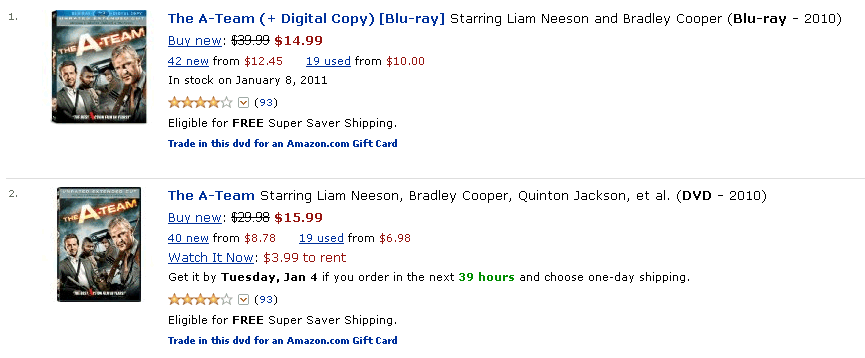
Blu-ray movies are starting to be priced cheaper than their DVD counterparts

So Blu-ray ended the year on a high, with records broken, although not really a huge advance on last year, despite aggressive pricing (can’t remember the number of times I’ve come across where the more fully featured Blu-ray version is cheaper than the DVD version, and sometimes the Blu-ray+DVD combo version is cheaper too). In my mind, the aggressive pricing indicates that studios are now prepared to let Blu-ray become a mainstream format, as opposed to a premium format that sells side by side with cheaper DVDs. This is good for consumers I think, since we’ll be able to get more (resolution, content) for less, something that may not be true if Blu-ray remained a premium product. 3D Blu-ray, on the other hand, seems to be fizzling out due to greedy studios and 3D TV manufacturers. For me, having the Avatar 3D Blu-ray on general release will help the 3D Blu-ray format take off, and make Fox a lot of money in the process, but making it a Panasonic exclusive gives 3D critics something legitimate to complain about. When 3D is already a hyped up, content scarce and gimmicky feature, the last thing it needs is content exclusivity. The whole point of 3D Blu-ray was to have a common format that allows for cross-brand compatibility, but exclusivity kills this in the most artificial way possible.

Gaming

In gaming, two pieces of DRM related news, and surprisingly, it’s all good (for the consumer, that is). It makes for a good end for 2010, and bodes well for 2011, I suppose.

The first piece of “good” news is that Ubisoft may have finally realised that making buyers of your games jump through hoops to play your games, may not be the best financial strategy, especially when it doesn’t stop piracy, and the pirated versions offer a better experience than the legitimate version. Through recent patches, Ubisoft has removed the requirement for an always-on Internet connection for the games Assassin’s Creed 2, and Splinter Cell: Conviction. Hopefully, it will be expanded to cover all their games. The DRM now only authenticates at every game start up, and does not come on during actual gaming.

In fact, while taking advantage of the Steam Holiday Sales (which is still going on as I type, with the big final day of sales coming tomorrow/in a few hours time depending on where you are), I noticed a lot of people avoiding UbiDRM games, even when they were offered for peanuts. Hopefully, Ubisoft has noticed this trend and that’s why they’ve reversed their previous stance.

Speaking of Steam’s sales, it’s confirmed to me the benefits of digital copies, particularly during sales. I’ve taken part in sales of physical goods, games in particular, in the last month, and there are so many more problems associated with that old model compared to the digital only model. First of all, stock is limited, meaning if you don’t rush in, you’ll miss out. And then, delivery is an issue, especially during the holidays, and especially during the adverse weather conditions experienced around the world right now. But with Steam, they can sell unlimited copies of a game at a low price without having to worry about stock levels, and delivery is instant. Although because Steam’s servers has been pounded by people downloading the dozens of games they’ve all purchased, downloads are not very quick at the moment, if it starts at all. That’s a problem, and hopefully Steam will bring more mirrors and CDNs online, to avoid the same congestion next year (they really need to work with ISPs to come up with some kind of local mirroring system).

Sony PS3 Hacked

A stupid error on Sony's part means that the PS3 is now hacked

The second piece of good news, at least for those that are cursing Sony for removing “Other OS” from the PS3, is that due to a serious security flaw in the PS3 authentication system, hackers were able to obtain the PS3’s private cryptography key, which for lay persons like myself, it means that the PS3 has been cracked, big time. The private key allows any application to be signed and accepted by the PS3 as a legitimate piece of code, meaning anything can now be run on the PS3, whether it’s pirated games, or a custom version of Linux used to turn the PS3 into a more fully featured media center. The irony is that Sony removed “Other OS” to pre-empt piracy, and if was this single act that spurred the hacking community’s best and brightest to completely destroy the PS3’s DRM system, and thus open the system up to unrestricted piracy. The PS3 – it really does do everything now.

While this will now open up the PS3 to pirated games, and turning it from one of the most secure game platforms to the least secure in a single stroke (or in this case, a single variable that should have been randomized, and not made a constant), it will also allow the continued development of custom HTPC solutions for the vastly powerful PS3 hardware, turning it into one of those must have pieces of kit, but only if you use custom software (like the original Xbox, and the subsequent XBMC development). And that, in the long run, probably helps the PS3 more than it hurts it. Maybe.

As for a roundup of 2010 for gaming? It’s quite simple really. Wii dying, PS3 hacked to pieces, Xbox 360 Slim FTW, and Kinect is actually pretty good.

And that’s that for the first ever issue of the WNR for 2011. The thought of having to bring out another 51 issues of WNR for this year alone makes me weep slightly inside, but a little ranting every week is good for the soul. Or something.

Weekly News Roundup (19 December 2010)

Sunday, December 19th, 2010

Welcome to the penultimate (I told you I would find a way to use this word) WNR for 2010. It’s nearly the end of the year, and as expected, news is a bit light at the moment. But news there is, and cover it we shall. I’m sure you’re as busy as me around this time of the year, so let’s not waste any time on silly introductions that attempts to be witty even though the author doesn’t actually know what witty means. Is it the same as being ironical?

CopyrightLet’s start with copyright news, Warner Bros commissioned a report into online piracy a couple of months ago, and the results are in, and are somewhat surprising.

Boardwalk Empire Foreign Subtitles

Foreign dubs and subtitled version of latest movies and TV shows are top downloads on torrent networks

Apparently, pirates do occasionally buy stuff too. And this means that when studios are fighting pirates, they are essentially fighting their own potential customers. None of this should be too surprising to readers of this feature, but I’m sure it was a surprise to Warner Bros. And they have vowed to find out just why pirates sometimes pirate stuff, and sometimes decide to buy stuff, and if they can ever work out the formula for this, then it could really help to reduce piracy. I’m sure Warner has just commissioned another report to get to the bottom of this, but here’s a (free) hint for Warner: cheap and good = sales; expensive and bad = piracy. The other interesting findings include that while pirate downloaders are usually men, it is woman that download TVs shows more often than men. And another interesting finding was that foreign subtitled/dubbed version of TV and movie downloads often become the most popular downloads only a few days after the original English release, suggesting that there may be some kind of market that is being under-served at the moment. For many foreign viewers, this is perhaps the only way, legal or otherwise, to watch the latest movies or TV shows in particular, since the alternative could be waiting months for the official version to be released. So to add to the earlier hints: worldwide simultaneous release = good; staggered release in attempt to squeeze as much money out of each market = piracy (might also add exclusivity deals to this – more on this in the 3D/HD  section). So basically, the conclusion seems to be that, no, studios aren’t doing everything they can to stop piracy because they are not really matching the market’s needs, in terms of release schedules, or pricing, or a lot of other things under their control. So instead of blaming torrent sites, and trying to sue users, maybe they should go fix their own mistakes first.

OnSmash.com

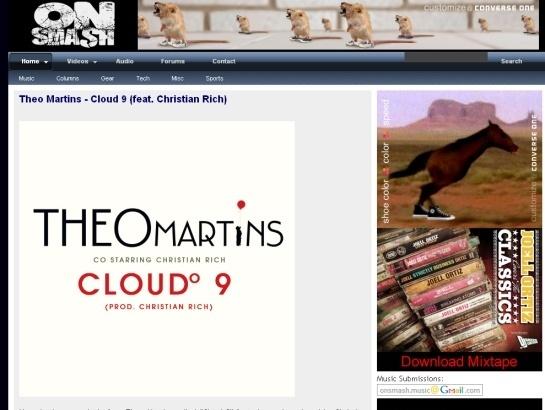
OnSmash.com - Shut down by the government on orders from the RIAA, but was it the right decision?

A follow-up to the story on the US Homeland Security, ICE operation that closed down 80+ websites in late November. We know now, via a story in the New York Times, that at least one of the websites closed, OnSmash.com, should not have been closed, or at the very least, should have left the decision up to that of a judge and jury. OnSmash.com provided hip-hop music and videos, publishing stuff that is often leaked to them directly from labels and artists such as Kayne West. These leaks might constitute copyright infringement in the strictest sense, but there’s a good reason why the leaks came from official sources such as the copyright owners themselves and artists. All for promotional reasons, a great way to reach the fan-base in this day and age. And now this way has been closed, without explanation and without any sort of paperwork that can be obtained by the defendant for probably weeks and months. To say that those in the industry were surprised would not be a lie, but it probably also wasn’t a surprise that major studios represented by the RIAA did not like the way things were working. And straight from the RIAA’s lips to Homeland Security’s ears, bypassing due process as much as possible in the, um, process. A little copyright infringement is sometimes a good thing. Sometimes a great thing. Remember Susan Boyle’s audition video? You know, the one that now has 55 million views. Was that video from an official source, or was it pirated? Would it have served the copyright owners of Britain’s Got Talent to have had this video removed, or did it serve them better to keep it up? The RIAA would have probably sued for unauthorised use of ‘I Dreamed A Dream’, or got their ICE buddies to knock down a few doors.

Dutch anti-piracy agency BREIN wants to get in on the website closure business too, and they’ve had 29 websites shut down, with visitors redirected to the BREIN website. And they can keep doing this because the minute those 29 websites were shut down, hundreds probably sprang up in their place. Hurray for perpetual war.

Meanwhile, more bad news for law firms seeking to profit from mass lawsuits, as another judge has declared that little things like jurisdiction does matter, even in embarrassing porn lawsuits. So it means that copyright trolls will now have to work a little bit harder, to determine just where the people they’re suing are actually located, before threatening people with massive amounts of damages and public humiliation if they don’t pay up by the close of biz tomorrow, capiche? But these little things to add up, in terms of cost, and if the EFF can keep up their small victories, eventually, it will all add up to a major victory when it no longer becomes profitable to pursue these kinds of lawsuits (and more on how you can support the EFF financially, and also get some great games for peanuts, later on).

High Definition

In HD/3D news, bad news for Avatar fans that don’t have Panasonic 3D TVs – no Avatar for you until 2012, maybe.

Avatar 3D Blu-ray for sale on eBay

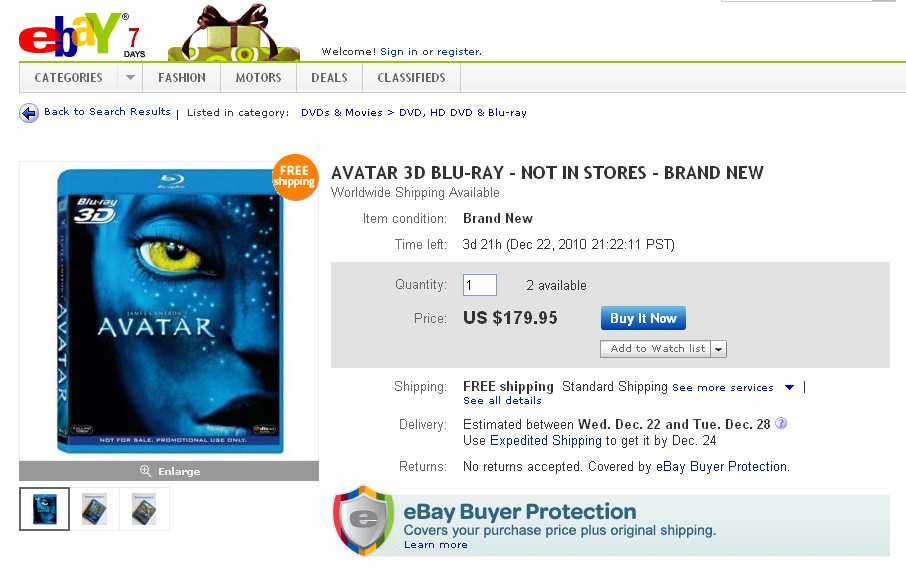
Be prepared to pay higher and higher prices for Avatar 3D Blu-ray, as the exclusivity deal with Panasonic may last until 2012

A Panasonic UK spokesperson has confirmed that Panasonic’s exclusive Avatar 3D Blu-ray deal actually lasts until 2012. So until then, it’s paying $200 (if you’re lucky on eBay) for a copy, or those willing to risk it can get it from less then legal sources. I don’t condone piracy, but really, if these are the choices, then what would most people do? I just hope Fox is getting enough money from Panasonic for this deal, because by the time 2012 comes, how many people would have found another less than legal way of obtaining the 3D version of this film already, and how much would that cost the studio in terms of lost sales (assuming the 3D hype is still around by that time). My opinion, which is absolutely opposite of the actual legal position, is that if I can’t buy it, then I’m free to try and obtain it in any way I wish.

And these kind of exclusivity deals destroys almost all the progress made by unifying the 3D Blu-ray standard, because it’s back to the bad old days of buying hardware based on the movies that are available for the platform.

But I think something will give before 2012, because I just can’t see companies like Samsung standing idly by, or Fox having the patience to wait it out until 2012 when the demand for it is there, and not when they see the 3D BDRip torrent of the movie doing great “business” on the net.

The H.264 vs WebM vs Ogg Theora vs HTML5 vs Flash war just got even more confusing, with Microsoft helping competitor Firefox by producing a H.264 add-on for the open source browser, allowing Windows 7 Firefox users to experience HTML5 H.264 videos. Of course, Microsoft never helps anyone without gaining something themselves, and as staunch supporters of H.264, this is not a surprising move. So to summarise, Firefox and Opera don’t want HTML5 to adopt H.264 because it’s incompatible with their open source licenses, while Apple, Microsoft love H.264 because they hold patents to it (and it is an industry standard that’s widely supported already). Google remains on the fence and has been playing everyone off everyone else  – even though they’re the ones that came up with WebM/VP8, Chrome also natively supports H.264, so the only one that stands to gain regardless of the result is, once again, Google. Meanwhile, Adobe sits in a dark corner cursing everyone, while stabbing pins into a Steve Jobs voodoo doll. And that’s what you missed last time on Glee.

Gaming

And in gaming, The Humble Indie Bundle is back. The deal is simple – five highly rated indie games that normally retail for $85 can be had for the princely sum of … anything you want.

That’s right, you decide what you want to pay for the bundle of five DRM-free games, and you can even direct part of the payment to one of Child’s Play charity, the EFF or the people who are running this campaign. So if you’ve been porn or Far Cry mass-sued, and want to give something back to the EFF, or if you hate DRM and want your voice heard, or you want to support a very worthy charity, or just because you actually want to buy the five excellent games included, this is your chance! The top amount paid so far stands at $3141.59 at the time of writing, but the average is $7.66. The million dollar barrier has already been broken as well.

A Kinect update. Wedbush analyst Michael Pachter says that he has access to NPD figures that show the Kinect Xbox 360 console bundle outsold the Move PS3 console bundle by more than a 5 to 1 ratio in November. That’s not surprising considering the half a billion dollars that Microsoft threw in to promote Kinect, and the subsequent hype the motion sensor device has since generated. And I’m not just talking about Oprah or Ellen Kinect appearances/give-aways, but also with independent developers “hacking” and the various impressive demo videos. The same kind of hype is just not being generated for Move. And with free DLC downloads already appearing for two of Kinect’s most popular games, thanks to commercial sponsorship, and software updates that promises to make Kinect even more accurate (like finger tracking), the momentum is definitely with Kinect at the moment, even if Microsoft says no to Kinect sex games. The only thing holding it back is supply issues (just checking now, it’s out of stock on both Amazon.com and Wal-mart.com, while the PS Move is in stock on both, albeit in very short supply on Amazon).

And that’s pretty much it for news this week. Short and sweet. Or at least just short. See you next week.

Weekly News Roundup (12 December 2010)

Sunday, December 12th, 2010

Another pretty quiet week, but with the NPD US November video games sales figures being leaked out in a timely fashion, I was able to get the analysis up. The big surprises were how well the Xbox 360 did (up 68% from the same time last year!), and how poorly the Wii *didn’t* do (up 1% from last year, much better than the usual 30+% decline in previous months). The PS3 continues the trend in recent months of year-on-year declines, which is mostly due to the post Slim/price cut bump from last year, but it’s still somewhat of a concern that the PS3 didn’t even manage to sell half as many units in November as the Wii. And with Kinect being a bigger hit than Move, and with Blu-ray players being dirt cheap these days, Sony may have to re-evaluate pricing to spur sales. Speaking of Kinect, I managed to buy one this week. I haven’t had much time to play with it yet (especially on the PC), but I can see the potential and the appeal (for casual gamers in particular), although the space requirement thing is kind of annoying. Let’s get started with the news roundup.

CopyrightIn copyright news, more bad news for the US Copyright Group, as they had to drop 97% of the unnamed defendants in their “Far Cry” lawsuit.

The judge in the case ruled that due to jurisdiction reasons, most of the defendants had to be removed from the case, and so now, only 140 remain. The USCG has previously said that this wouldn’t hurt their business, as they had always planned to do it this way, but with having to respect jurisdiction and having to file multiple lawsuits all over the place, the USCG’s business case may have been damaged. These mass lawsuits rely on defendants paying up quickly, and so all these extra court procedures may very well be expenses that eventually make these lawsuits unprofitable.

The Drudge Report

The Drudge Report is the latest victim of Righthaven's mass lawsuits

The other famous mass copyright lawsuit law firm at the moment is Righthaven, doing the exact same thing but for posted newspaper articles. Even though they’ve had even less success than USCG, and have had to backtrack a few times when they sued the wrong high profile target, they’re not giving up and have instead picked an even larger target this time – The Drudge Report. Righthaven is suing Matt Drudge and both drudgereport.com and DrudgeReportArchives.com for using images owned by The Denver Post, the latest newspaper to join the Righthaven stables. Righthaven is demanding Matt Drudge hand over these two domain names to them so the serious copyright abuse (of using one single image owned by The Denver Post) can be stopped post haste. According to my own estimates, the drudge.com domain name is worth about $7.8m alone (just the domain name, not the content), so I guess that’s how much Righthaven thinks a single image is worth. Of course, picking on such a high profile target has its own problems, and although it will get Righthaven in the news, it could also backfire if the Drudge Report mount a legal defence instead of just paying the settlement fee, which appears to be the case.

But still, $7.8m for a single image may seem like a lot even when you compare that to the insane damage amounts being handed out for MP3 downloads. The most famous MP3 download case of all, you know the one, has had some development this week too, with Jammie Thomas-Rassett’s lawyers asking the damages, of $62,500 per song, to be reduced to $0 per song. Yep, I can really see the RIAA agreeing to this latest demand. But Thomas-Rassett’s lawyers do have a point in saying that the RIAA has not proved the financial damage being done by their client’s actions, but with the current copyright laws and statutory damages, the RIAA does not need to prove actual damages,which I think is really unfair. I can see the value of statutory and punitive damages in commercial copyright cases, in which sometimes it is difficult to proof actual damages, but when you’re suing students, single mothers and other net users, I just don’t think it is appropriate. And judges don’t think it’s appropriate either, which is why the Thomas-Rassett case is still unresolved in terms of damages. The thing is, if the RIAA is trying to use this case to scare off other downloaders, it’s not exactly working is it? And I think the laws needs to be updated so that a fairer punishment can be handed out. $50 per song, for a song that costs $0.99 to download (but one must also consider uploads in cases such as these), should be more than enough. It certainly shouldn’t be $62,500, and such large amounts should remain for commercial cases only, such as when a TV network broadcasts a song without permission.

Eircom

Eircom has made a deal with the devil, to offer free music streaming for spying on customer downloads

The RIAA’s answer to this is three-strikes, or something like it. Strategically, it makes sense to keep pursuing Thomas-Rassett, keep on getting awarded huge damages, and they too can use it as example of how the current copyright laws do not work. But the change they want will be to their own benefit, so that it would make it easier to sue and suspend downloaders, and lawmakers may just make this dream a reality via Three-Strikes. But before the music industry seeks government cooperation, they’ll do a bit of ISP threatening to get them to adopt Three-Strikes “willingly”, and it appears this strategy is working, at least in Ireland. Eircom has agreed to the Irish music industry’s demand for Three-Strikes, and will begin to ban users from their network after spying on their downloading activities and detecting anything the music industry finds offensive. And to stop the mass exodus of users to other ISPs that don’t spy on their paying customers, Eircom and the music industry has come up with some sweetners, such as unlimited music streaming and cheaper music downloads. Of course, if they really believe that music streaming and discounted music downloads can help people move on from piracy, they should have just offered this, without three-strikes, in the first place.

I’ve talked a lot of nonsense in the copyright section of the WNR in the last couple of years (yes, it really has been that long!). But I think if I had to sum up my opinion on web anti-piracy, it would this: be pragmatic! It’s clear that the technological solutions, namely DRM, has failed. Whether it’s Blu-ray releases like Avatar that come with “enhanced” anti-piracy solutions, or the latest Ubisoft game – the only disruption these new DRM measures usually cause is to legitimate buyers, with pirates still easily able to pirate the content (and without the pesky annoyances brought on by DRM, and so pirates are actually getting a better product thanks to the use of DRM by publishers). One news I found interesting this week was that pirates have found a way to pirate 3D movie screenings at the cinemas, using a special lens on video cameras. If pirates are going to this length to pirate a movie, I just don’t think there are any technical solution to piracy, nothing that can’t be bypassed, hacked or simply ignored.

The legal solutions, like the mass lawsuits or Three-Strikes either have no intention in stopping piracy (only to monetize it), or will only push people towards piracy solutions that cannot be tracked, and that means they don’t work either. So why not be pragmatic, and seek a real solution, instead of band-aids or measures that will only give the industry a false sense of security, and at the same time, cause massive collateral damage in terms of consumer and civil rights.

But the industry is obsessed with doing things the wrong way, and with all the powers granted to them by governments, they are getting more and more belligerent. The MPAA’s latest demand is for Universities to crack down on students downloading movies, or face the possibility of losing federal funding, following the RIAA’s footsteps in making similar threats. But they could only make this threat if they can back up their threat, and unfortunately, they can, via the Higher Education Opportunity Act of 2008. So the RIAA/MPAA have gone to a lot of trouble, a lot of money spent on lobbying, to get the act passed, and this act forces Universities to divert funding away from education, and towards deploying anti-piracy tech, and what has it all achieved? This is what I mean about being pragmatic, because I don’t think this “solution” solves any problems. College students downloading movies may be stopped (or maybe they’ll just use their own personal Internet accounts to do so), but how much money has that made for the RIAA/MPAA? Will these students, many of whom have trouble paying their tuition fees, all suddenly stop downloading pirated content and start paying for everything? And all of this “result” after millions and millions of dollars, was it worth it? And is it really worth it to endanger the education of tomorrow’s workforce so that the RIAA/MPAA can chalk up another “theoretical” victory, which gains them little, if any, actual benefit? It is really worth it?

And to round off the copyright news, LimeWire is shutting down again, but this time, it’s the legal part of LimeWire. It was originally set up to appease the music industry and to transition LimeWire to a legal service, but it looks like it failed to achieve either of its objectives. The service will shut on at the end of the year.

High Definition

In HD/3D news, not much going on really. I suppose I should cover the fact that Blu-ray has just had its best Black Friday sales yet.

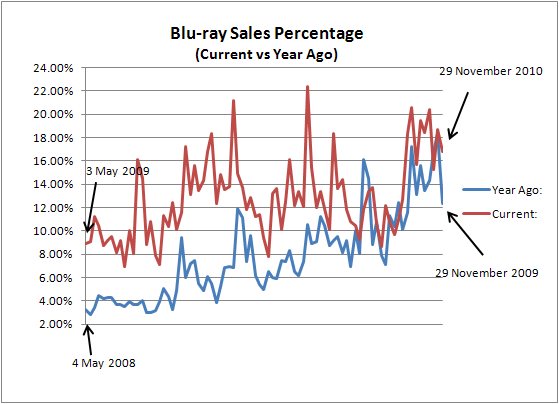
Blu-ray Sales Percentage - Year-on-Year Comparison (As of 29 Nov 2010)

Blu-ray sales growth has slowed this year, but this Black Friday (last entry in graph) was a good one for the HD format

$83 million dollars worth of Blu-ray movies were purchased during the Black Friday sales week. This in itself is not a record, and “only” represented a 20% increase on last year’s Black Friday results, but what was more impressive was the market share, which traditionally favours DVDs during this period (due to aggressive discounting). This year, Blu-ray’s market share was 16.82%, an improvement on last year’s 12.33%. It seems that the aggressive Blu-ray pricing has had an effect.

The next few weeks will generally favour Blu-ray as well, so while Blu-ray growth has slowed a bit, it is at least growing, which cannot be said of DVDs. The economy, Blu-ray, and downloads are all taking market share away from DVDs, so its decline isn’t too surprising either.

And on a personal note, the Blu-ray’s I picked up during Amazon’s Black Friday sales arrived this week. This is why I prefer to shop from Amazon: not only did they upgrade shipping from standard to express at no charge (the item arrived from the US to Australia in only 4 days, and one of those days was a customs delay), they didn’t even make a fuss about it – I only found on when they sent me the “dispatched” email with the shipping details and tracking option, which is normally not available with standard shipping. This contrasts to an experience I had with an Australian online store this week. I purchased Kinect Sports from Big W as part of their online sales at the end of November. My credit card charged immediately. But having not heard anything about the order, and with their online order tracking system down, I emailed customer service. I only received a response a day later, and was told that in fact, my order had not gone through due to an IT problem, and that instead of resolving this and sending out my item, they had simply cancelled it. My credit card has yet to be refunded! And the worst part is that I could have picked this title up for even cheaper just a few days after my original order, but I chose to stick with Big W since I thought, wrongly, that my order had already been processed and dispatched. Was I angry? Well, put it this way, it’s unlikely that I would shop at Big W ever again, online or in store. Not if I have a choice.

Not much to say in gaming, nothing that I haven’t already covered in the NPD analysis anyway, so I’ll skip it for this edition. Although I will add that the NPD analysis focuses on US sales only, and the global picture, especially in Japan, is actually very different, with the PS3 outperforming the Xbox 360 and the Wii quite consistently. Global sales wise, the PS3 has nearly caught up, or has already caught up, to Xbox 360 sales, whereas in the US, the Xbox 360 still has a 1.6:1 advantage over the PS3. But if Kinect is the next big thing, or really just the next Wii, then even global sales may start to reflect the Xbox 360 dominance, because finally, we have a console that can do almost any kind of games – from the hard core, to the casual. The only thing it doesn’t do is Blu-ray, but with standalones so cheap these days, the PS3’s advantage in this area is diminishing, especially since multi-platform games aren’t really taking advantage of the space offered by Blu-ray, and the PS3 version is often worse than the Xbox 360 version, due to the more difficult time devs have with PS3 development.

And this “PS3 is harder to develop for” isn’t just a myth, or can be attributed to lazy programmers. I’ve heard this personally, and constantly, from people working in the industry, and it seems the main issue is the whole hardware architecture of the PS3, which will always makes it more difficult to develop for than the Xbox 360 – even doing the same things on the PS3 takes a lot longer than on the Xbox 360, and so while developers may be able to do more with the PS3, time constraints means that they end up doing less (or just the minimum required to get the game running at the desired FPS). It seems Microsoft, being primarily a software company, did a lot of work to ensure the Xbox 360 was easier to programme for, while Sony, being primarily a hardware company, made a superior piece of kit. So it’s no surprise, really.

Okay, no more writing. Head hurt. Want Fallout gaming. NOW! See you next week.

Weekly News Roundup (28 November 2010)

Sunday, November 28th, 2010

Another week, another WNR. I know it’s easy to get cynical about the Black Friday sales in the US (particularly if, you’re like me, not actually located in the US), just like it may be easy to get caught up in the hype, but if you’re do your research, there are potentially a lot of bargains to pick up without leaving the comfort of your home. Since Blu-ray is a major topic of this website, I’ve posted some of the best Amazon Black Friday Blu-ray deals on this page. Most of the discounts are still available, and there will be more on Monday as well, so it’s a good time to stock up on some Blu-ray movies. The prices are so good that they’re almost HD DVD level! I’ve purchase a dozen of so movies myself as part of this sale, as there are some really good bargains around for the movies that I had planned to buy anyway (and that’s the the trap, is that you end up buying things you didn’t really want or need just because they were cheap). More on this in the HD/Blu-ray section of this WNR, including one confession about how I compromised my principles a bit!

I continue to play through Fallout New Vegas, encountering another quite annoying glitch during the week. This one involved the companion Veronica, and how she become frozen in one spot after a certain mission. And this leads me to recommend one most excellent resource for Fallout games, The Value. It is a Wikia for all the Fallout games, and it gives precious advice on how to overcome glitches. And this is also why I prefer playing Fallout on the PC, because you get access to the console, and this allows you to fix the most stubborn glitches. In any case, I solve the Veronica glitch after reading a tip on The Vault. The glitches in this game almost ruin the game, but it’s actually quite satisfying when you do find a solution or workaround, and it has become part of the Fallout/Bethesda experience really.

Not a huge amount of news by any standard, but still enough to do some ranting, possibly between the 1800 and 2400 word mark, by my best guestimate. So let’s get started.

Copyright

In copyright news, news broke not too long ago that The Pirate Bay founders have lost their appeal in the Swedish courts. This means that, following the original verdict, the founders now face a hefty fine and prison time of up to 10 month.

Prison time for Pirate Bay founders confirmed, at least until further action in the courts

Only three of the original four defendants were part of this trial, the other missed out due to illness, but will be certain to face the exact same result. Despite jail time being handed out, the likes of the MPAA are still not satisfied at the result, claiming that the $6.5 million dollars of damages isn’t anywhere near the $17 million they had wanted. Talk about being greedy! The case will now most likely go to the highest court in Sweden, even if the prosecutors seem to think this case won’t go that far. I can’t be bothered to dig up the previous edition of the WNR where I said that this case won’t be decided until it is examined by the highest court in the country, and I think I also mentioned that I don’t hold much hope that any appeal would yield satisfactory results for the TPB. The cards were stacked against them from the start.

The copyright news this week doesn’t really get much better unfortunately, but there was at least one bright spot when there was at least a sign of common sense on Capitol Hill this week, when US Senator Ron Wyden (D-OR) torpedoed efforts to enact the controversial Combating Online Infringement and Counterfeits Act (COICA) into law. He has placed a hold on it and it won’t be heard before the senate until next year. Unfortunately, I can only see this as a temporary delay, because with so much support for this ridiculous act, it will be made into law and we’ll all have to suffer the consequences. Most support it because they don’t know any better, or have received enough incentive to support it without asking serious questions. And most know there’s no political points being earned by going against the entertainment industry in the US. And that’s partly our fault too, for not pressuring out representatives in government in doing the right thing. But the thing is, unless you’re someone who reads this or similar blogs and websites regularly, you won’t really be aware of the issues, or understand (or care) about them, and it then boils down to an issue of whether people should or shouldn’t “steal” (a dumbed down talking point that the entertainment industry has been pushing), and most people wouldn’t support stealing. Except we know that copying and stealing are two different things entirely, and that even if it is possible to stop piracy (it isn’t), there are certain things that are far more sacred than protecting the dying business model of the entertainment industry. Things like our right to privacy. And freedom of speech. And due process, which systems like ‘Three Strikes’ attempt to short-circuit by assuming guilt and denying people their right of appeal (or to even address the matter in a court of law, like they’re entitled to). And this goes back to what I said a couple of WNRs ago, that we must do more to protect our rights and treat this more than just a matter of being able to “downloading movies and games and stuff”, something that the copyright lobby and their supporters has tried to reduce the arguments to. This is about protecting our democratic rights, which politicians these days are too eager to sacrifice in the name of “protecting” us (whether it’s terrorism, or the perceived and possibly imaginary threat to the economy, due to piracy).

IPRC Seizure Notice

Seized domains now display only this seizure notice from the DoJ, IPRC, and Homeland Security

And so we move on to the news this week that Homeland Security closed down another 80 websites suspected of providing pirated content. The only positive is that due process was followed, that warrants were obtained via the court, but it doesn’t really matter if the process itself is flawed. My biggest problem with this is that I have no idea if any of the websites/domains seized were really illegal, and who determined their status. I don’t trust most judges’ level of technical understanding to pass judgement on technical issues such as this, and perhaps when faced with such overwhelming force (Justice Department, Homeland Security, ICE), and some scaremongering about the consequences of piracy (billions of jobs will be lost!), most will just go along with whatever is in the warrant request. And if one of the 80 websites was truly innocent, what’s the process of appeal, and what kind of compensation would be due if the website was deemed by a court of law as not guilty, compensation for the financial and emotional damages caused by the temporary closure of the website. I mean, this is not like going after drug dealers or counterfeit drugs, there are a lot of complicated issues involved in determining whether a website is guilty or not of copyright infringement, issues that must be addressed in court before any punitive actions can be handed out. And what if the domain really did host illegal stuff, but it was uploaded unknowingly by third parties, or as part of a user-generated section on the website – is if fair that the entire domain is taken offline? It would be like shutting down blogger.com because somebody created an account on there to share pirated MP3s. This scenario could be avoided via a DMCA takedown notice, but these seizures bypass the very laws that were created to avoid situations like this. And this is why COICA is so controversial, in that it gives the US government even greater power to do all of this and more, and on a much larger scale as well, potentially killing off tens of thousands of websites in one fell swoop, and many by “collateral damage”. And this is why anyone who knows and cares about the Internet ought to be against COICA, and many prominent companies and individuals have already spoken out, but all will be silenced by the constant chattering of lobbyists into the ears of those that can decide the fate of COICA. Senator Wyden excepted.

And so the next step would be to even make talking about piracy illegal, which is what the RIAA attempted to do this week, and caused some collateral damage of their own in the process. PCMag.com posted an article after LimeWire was shut down, examining the possible alternatives that are still left. This is a valid discussion, because it points to the fact that even though it took years and millions of dollars to bring down LimeWire, the next LimeWire could pop up in a matter of weeks or could already exist, and thus making the whole process an expensive, and pointless, exercise. And for this, the RIAA and its cohorts sent a letter to PCMag.com’s CEO, attacking the website for daring to suggest alternatives and supporting and encouraging piracy in the process. It then attacked PCMag for simply referring to another article, published by TorrentFreak, regarding LimeWire being resurrected. The problem is that PCMag didn’t write that article, it was PC World, by facts and accuracy does not matter when one is acting the bully like the RIAA and Co. are. PCMag are standing firm by their journalistic principles, and refuse to be silenced and used as a scapegoat in the RIAA’s attempt to blame someone, anyone, for the piracy problem. Anyone except for themselves for sticking with a dying business model, even when alternatives and opportunities were presented, opportunities that were eventually taken by the likes of Apple with iTunes. The only bit of innovation the RIAA and its members have come up with recently has been new ways to sue and intimidate those perceived to be their enemies (the Internet and anyone who uses the Internet), and of course the whole failed DRM experiment.

The Witcher 2 Screenshot

The Witcher 2, to be released next year, will be DRM free

And DRM has been in the news this week too, but in regards to the use of it in the gaming industry. Gamasutra, one of the most respected gaming industry website on the Internet, has had one of its bloggers write an interesting article examining the failure of DRM, and how illegal copying can be prevented. The conclusion seems to be one that I’ve come to as well, in that the solution is to add value to the gaming experience, not to take it away via horrible DRM. Value adding explains the success of Steam, and even though it does use DRM, it is pretty weak stuff, and in fact probably better than buying off the shelve due to the lack of need of a DVD check. The best DRM should prevent casual copying, but should otherwise be invisible to the end user, and if it forces gamers to connect to an online service for authentication, free value added services should be given as compensation (achievements, community, social features …). But even the best, or worst (as in draconian), DRM will not prevent copying by those that really want to copy it, and groups with the skill to hack away, as Ubisoft’s DRM experiment showed recently, and so really, there’s no point to DRM at all. And this is a point shared by at least some game developers, including the developer of The Witcher series, and operators of the classic, DRM-free, gaming website GOG.com. In fact, their CEO and co-founder, Marcin Iwiński, goes on to say that DRM treats customers like criminals. Iwiński believes there’s no need to debate whether their upcoming game, The Witcher 2, should use DRM or not, simply because he believes DRM doesn’t work. And this is why The Witcher 2 will be released DRM-free. Iwiński also criticized the way DRM adds restrictions that the pirated versions are free from, calling it “totally stupid”. He also attacks online based protection, saying that it isn’t fair to people who want to play games when they’re away from a reliable Internet connection. And it’s hard to argue against any of these points really. The industry, when it relies on DRM, is basically trying to sell something that’s not as good as the pirated version even when you don’t consider the price, and then getting mad when it’s not selling well. I mean this is an industry that isn’t even bothering to print manuals any more, and yet it expects us to jump through hoops just to play a badly bugged game that it rushed through testing. But luckily, there are still the smarter companies that are doing more innovative things to stop piracy, things like bundling physical collector’s items that can’t be pirated, building immersive online experiences and communities, being innovative with pricing, and either not using DRM or at least not overdoing it. And then you have companies like Ubisoft.

High Definition

Moving on from the ranting to happier grounds, as mentioned before, I did take part in the Black Friday sales on Amazon, trying to take advantage of the historically favourable AUD/USD exchange rates (not as favourable to be honest this week).

The Lord of the Rings Amazon Purchase

Yes I know I said I won't buy it out of protest, but they were really really cheap!

And yes, I did completely compromise my principles on an issue I’ve ranted about a lot right here. That’s right, I purchased the theatrical Blu-ray version of The Lord of the Rings movies, despite bitching about it for weeks back when it was first released. My rant then was about how the trilogy boxset should have included the extended edition, as opposed to the theatrical edition, and should have at least featured some new extra features and put them on Blu-ray at least even if they weren’t HD (the extra features are actually on DVDs, and probably could have fitted onto a single dual layer Blu-ray, but that would have made the boxset look famished). Also, the first movie had a sub-standard transfer, although some of it was unavoidable it seems (a fact that wasn’t available at the time of my original rant).  In my defence, I didn’t buy the box set, but only the individual movies separately for $7.99 each. And at that price, some of these shortcomings, can be forgiven (certainly better than paying $65 for the boxset anyway). So “I won’t be buying it” really meant “I won’t be buying it unless it’s heavily discounted and I must join in the hype of Black Friday or I will feel left out”.

Well, at least I didn’t pay $400 for a copy of Avatar on 3D Blu-ray.

Gaming

Kinect is in the news again this week, and funnily, it had almost nothing to do with gaming. The news broke last week that only a week after the release of Kinect, it had been hacked, and Microsoft couldn’t have been pleased at the development.

Kinect Manboob Tracker

It's always nice to see technology used in a way to benefit humanity as a whole

Then it turn out that they didn’t really care either way, because the “hack” wasn’t really a hack at all, at least according to Microsoft’s definition of what a hack is. What happened was that somebody wrote open source drivers for Kinect so that it can be used on the PC, and because Microsoft intentionally (or they claim now) left the USB thingy open, Microsoft claims they were always hoping something like this would happen. I’m not sure about that, but Microsoft do have a history of mixing Xbox 360 and PC compatibility (the wired Xbox 360 gamepad works perfectly on the PC, and even the wireless one can be made to work via a dongle). And “unofficial” drivers aren’t new, the Sony Sixaxis controller has a PC driver, and even the Wii-mote has one too.

Anyway, what was more interesting was how people decided to use the open source drivers and write their own PC based Kinect applications. And if you follow the link above, you’ll see videos of object recognition, a Minority Report style web browsing experience using a simple Javascript add-on. And even a man boob tracker (not a typo). It just goes to show that Kinect has serious potential, but only if the right software is there for it. But that’s always the hard part, and the reason why the Wii is struggling now is because, apart from Nintendo, nobody really knows how to makes good games for it.

And I was way off.  I’m already over the 2700 word mark, and so my guestimate wasn’t really close at all. But if you remove the Black Friday and Fallout related waffle, then it just about gets in there. So I probably should stop typing now, wish you all a great week, and type something along the lines of “see you next week”.

See you next week.