Archive for the ‘Copyright’ Category

Weekly News Roundup (8 September 2013)

Sunday, September 8th, 2013

So Australia is getting a new government that promises to takes us back to the past by stopping work on our national fiber network, in favor of a FTTN one relying on our badly maintained copper wires. (Up to) 25 Mbps here we come!

Coincidentally, this is the week that Sony launched their 4K download service. With 40GB+ per 4K movie download, even downloading via a 100 Mbps fiber connection will seem like a long wait, although this should theoretically allow for uninterrupted streaming. HEVC, which also features in the news roundup this week, will help to reduce the bandwidth a bit, but 40GB is still probably the benchmark when it comes to the size of a typical 2 hour movie, if you don’t want to sacrifice quality. Of course, our new prime minister says that there’s no need for high speed broadband, not when most people are just using Facebook and Twitter and whatever (seriously, that’s what he said).

Enough politics for now though, we’ve got an WNR to get through.

CopyrightA huge copyright fight over 3D printing is brewing. It’s actually two fights, one that involves the creator of 3D designs and those that want to obtain it without having to pay; the other involved ensuring those designs are in fact original and not ripping off existing designs, say based on objects in popular movies and TV shows. An impending copyright storm inevitably leads to a pre-emptive solution, and no surprise that DRM is being chosen as the answer.

3D Printed Bust

The copyright storm is brewing over 3D printing (Credits: Mirko Tobias Schaefer via Flickr, CC)

Sendshapes is a new service, currently in alpha testing, that aims to solve one or maybe both of these copyright problems by allowing content designers to enforce a one-time printing rule. This act of digital right management is performed using software that only allows designs to be streamed to the host PC for printing, pieces at a time, and with the design completely removed once the printing is done.

While this solves the problem of ensuring designs won’t end up on The Pirate Bay (well, at least until the DRM is cracked), the second and larger problem may be harder to enforce. Sendshapes will need to have a system to ensure all shared designs are fully licensed, or at the very least, ensure safe harbor applies to their service (as, after all, they are a service provider and should not be entirely liable for what their customers end up doing).

But none of this prevents people reverse-engineering the designs of popular physical objects, and then uploading the designs gratis to sites like The Pirate Bay. Yes, self-printing these things may end up costing more than the original mass manufactured version, but there will be plenty of people who will want to do a bit of self-printing. For fun and stuff. Licensed owners of these designs need to take proactive action and offer a legal self-printed alternative, if they want to avoid creating a new piracy problem.

——

If you’re like me and you’re a fan of Homeland, you might have been quite confused when people you know started talking about plot elements in the premier episode of season 3. Confused because the damn episode wasn’t supposed to air until the end of this month. While spoilers are indeed annoying, it surely must have annoyed Showtime more that such an eagerly awaited episode was leaked online almost a month earlier than the air date.
Leaked Homeland Episode Missing Effects

S03E01 of Homeland has been leaked a month before the air date, but the leaked version is missing some special effects

The leaked episode, missing opening credits and some special effects, made its way to the usual BitTorrent places earlier this week and has already been downloaded hundreds of thousands of times. I don’t really want to get into the legal and moral debate of the leak (in that it’s both illegal and probably immoral as well), but it struck me as interesting how popular the download was. Most people who downloaded the episode were well aware of the missing special effects, knowing they were downloading an inferior and incomplete product. But still, they downloaded and downloaded, and downloaded.

So is quality really that important, or is timeliness of availability a much bigger draw? Someone like me who prefers to make the viewing experience as perfect as possible, especially for top quality content like Homeland, the leaked screener or workprint just won’t do (I’m also too lazy to watch both the leaked version, and the official version when it airs here in Australia most likely on a seven day delay). But I also feel tempted, very tempted, to watch the leaked version. So timeliness is probably the biggest draw, and I think a lesson is here to be learnt by those who still insists on release windows and unnecessary delays.

——

Jealous at their French rivals and their American friends having all the fun with their own graduated response systems, the UK’s record industry trade group is apparently working on their own system. The BPI have been in negotiations with UK’s major ISPs for several months now, working on a voluntarily agreement that could see a central database of “piracy offenders” being created to help dish out warnings and disconnections.

Unsurprisingly, ISPs have rejected the BPI’s preferred solutions, calling them “unworkable”, and also citing concerns that customer’s rights are being compromised. It is believed that the BPI is fed up with waiting for action to come via the government’s Digital Economy Act, which was passed into law in 2010, but has yet to actually do anything.

The BPI also doesn’t appear to be concerned about the fact that the graduated response experiment across the Channel has failed. I mean, let’s not let facts get into the way of rhetoric, right?

High Definition

In HD, or rather, Ultra HD news, Sony’s long awaited 4K video download service finally launched this week. Video Unlimited 4K will offer 4K movies to rent for $7.99 per 24 hour viewing window, or to buy from $29.99. Launch titles includes Men in Black I and II, The Da Vinci Code, with Moneyball and Ghostbusters available to buy. Even episodes of Breaking Bad gets the 4K treatment.

Sony 4K TV with 4K Media Player

Sony launches Video Unlimited 4K, with rentals starting from $7.99 per 24 hours, and purchases starting at $29.99

Some interesting stats I’ve gathered from places. A typical 2 hour movie uses around 40GB of storage, which isn’t a lot when you consider the fact that 4K video has 4 times as much data as 1080p videos. Some movies play instantly, suggesting some kind of buffering/pre-caching system. Still, some kind of ultra fast broadband connection would be required to get the best out of system. Something like Google Fiber would be a natural complement to the service. Which brings me back to the point I made in the intro about Australia’s soon to be abandoned fiber network.

On a related note, DivX (yes, they’re still around) has had a major release milestone this week with version 10 of their codec being released. Most interestingly, it includes HEVC support, possibly the first consumer based solution for the relatively new codec. HEVC, also known as H.265, is the natural successor to the ubiquitous H.264 and promises even more efficient encodes. It’s the perfect complement to 4K.

Might be time for me to start playing with HEVC and see what I can do with it. I might even can create some sample 4K videos and make them available to download.

I think that’s it for the week. See you in seven.
Weekly News Roundup (1 September 2013)

Sunday, September 1st, 2013

Another short WNR this week. From the feedback I’ve received, it seems people don’t really mind the the short WNRs. And by feedback, I mean a rather poignantly written email which simply stated “you suck less this week cause their [sic] was less carp to read”. And by “carp” I think the gentleman or lady meant crap, as I haven’t added a fishing section to Digital Digest. Not yet. Speaking of carp, I actually quite enjoy Asian carp. Bony, but worth the effort, in my opinion. And so my suggestion to the gentleman/lady that emailed me is: read less, eat more.

CopyrightIt took a while, but it eventually got there. A Southern Florida court this week summarily ruled against file uploader Hotfile in favor of the MPAA, in a ruling that won’t surprise anyone who has followed the case.

While Hotfile did put up a good fight, the actions taken against Megaupload (which occurred after the lawsuit was initiated), and the fact that Hotfile did seem to go out of there way to award those who uploaded the most popular files (which, surprise surprise, were mostly files of a pirated nature), has all led to Hotfile’s downfall. The owner/chief executive of Hotfile, Anton Titov, was also found personally liable for what could be hundreds of millions of dollars worth of damages.

Hotfile may yet appeal, but a summary judgement means that the judge deemed the MPAA’s case strong enough to not require a full trial to hand down a ruling. So it’s not looking good for Hotfile, although at the time of writing the website was still operational.

And the effect on piracy if/when Hotfile is closed down? Zilch, probably.

High Definition

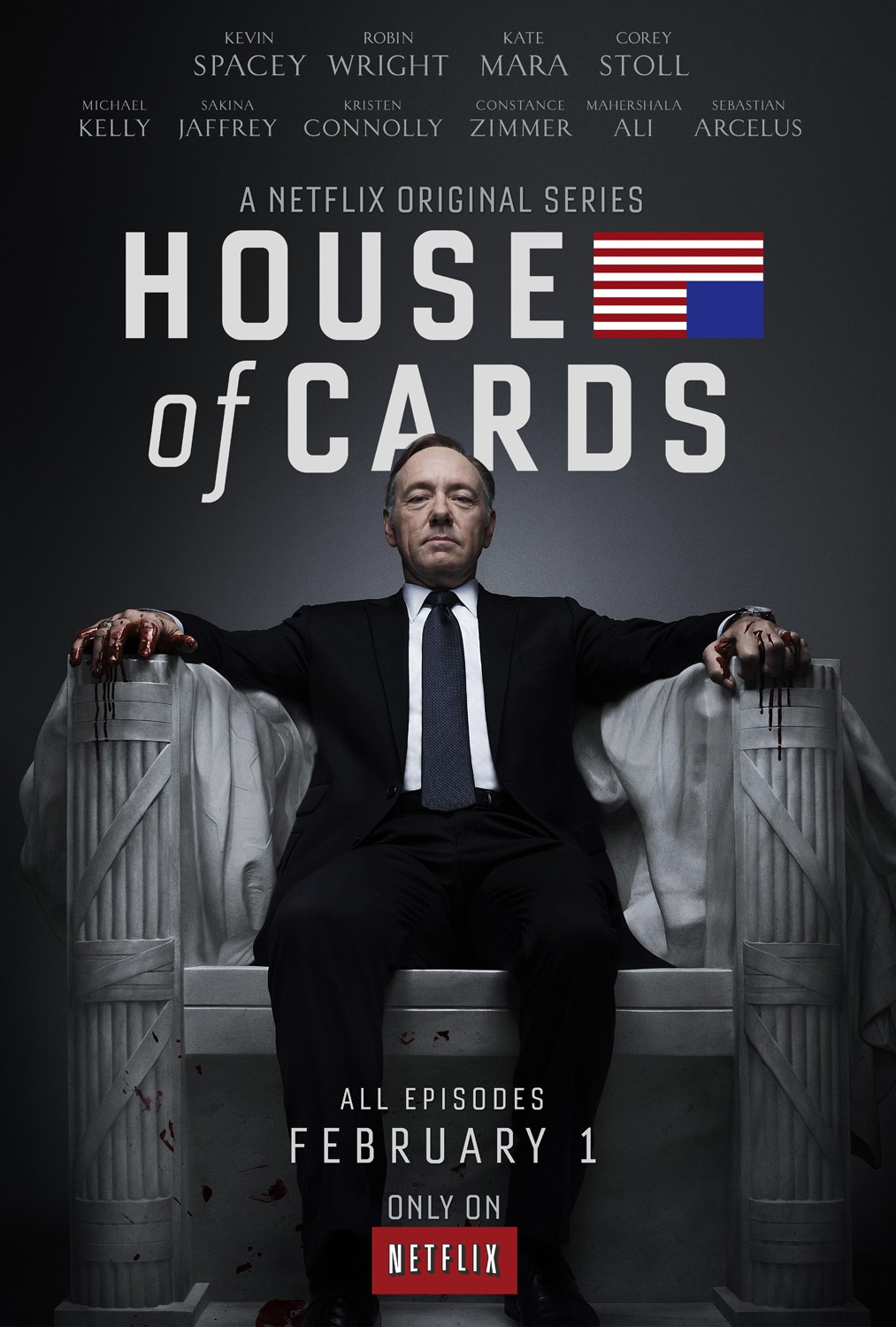
Can traditional TV networks learn a thing or two from Netflix? Well, Kevin Spacey thinks so, as the star of the Emmy nominated Netflix original series House of Cards says that giving people what they want is the future of film and TV, and the solution to the piracy problem.

House of Cards Poster

Can traditional TV networks learn from the successful distribution model of Netflix Originals, like House of Cards?

With the debut season of House of Cards made available on Netflix all at once, and across the world at the same time, Spacey thinks this kind of universal availability is what will make a serious dent into the piracy problem. He says that if movie theater owners and studios can be convinced to allow for the release of movies on the big screen, the small screen and on smart screens all at the same time, it can become a new way to fight piracy.

An interesting idea that theater owners will never, ever, agree to, but it’s at the very least worthy of academic discussion. How will piracy be affected if a film is made available everywhere, on every platform and device, all around the world at the same time? I think it will go a long way towards reducing piracy, but some will always pirate, just because they can.

As for releasing all episodes of a season at the same time, I don’t think this is something the big TV networks will embrace either. If anything, they want to stretch a season over as long a time span as possible, although I suppose if a revenue model can be worked out where months worth of advertising can be gained from instant releasing, they’d probably go for it.

At the end of the day, it’s all about money, rightly or wrongly. I believe the right revenue model can found that strikes the right balance between giving people what they want (freedom and value) versus what the creative industry wants (money).

Gaming

It may very well be too little, too late, but Nintendo has upped the ante by dropping $50 from the price of the Wii U. The 32GB version of the console, which includes a copy of the game Nintendo Land, will now retail for $299.99. In addition, a limited edition Zelda: Wind Waker HD bundle is also being released at the same price point. The 8GB version of the console will now be phased out.

Wii U The Legend of Zelda Wind Waker Limited Edition Bundle

A new Zelda Wind Waker bundle being released at the same time as a $50 price cut for the struggling Wii U

This now puts the Wii U’s price at a point between that of the Xbox 360/PS3 and the PS4, but closer to the current-gen consoles than the next-gen one. The problem with the Wii U is that while it is technically superior to the Xbox 360/PS3, the graphical differences aren’t day and night, and these older consoles have a much better (and cheaper) game library. So even at the same price as the Xbox 360/PS3, the Wii U may still be perceived as poor value.

With the holiday sales period just around the corner, a period that traditionally favors Nintendo, there is still some hope for the Wii U just yet. Recent sale figures suggest that Xbox 360 and PS3 sales may have reached saturation point – most people who want one will have one already; the same cannot be said of the Wii U. So the Wii U can be seen as a cheaper next-gen option for the masses, for those unwilling to spend big on a PS4 and spend even bigger on a Xbox One. Nintendo will also have a stronger game line-up by then.

The next couple of months of gaming, for me, will be all about GTA V. IV was a relative disappointment to me, but I just can’t resist a good open world game. Or a bad one. No GTA V for Wii U though, which is a shame as I think the GamePad and asymmetric gameplay could have been used to great effect. Oh well.

I think that’s it for this short and reduced carp version of the WNR. See you next week.

Weekly News Roundup (25 August 2013)

Sunday, August 25th, 2013

A busy week for me, but not a busy week for news apparently. Just your usual mix of overreaching censorship, continued DRM infestation, and another shot fired in the ongoing game console wars. Same old, same old, really.

Before you start your way through this week’s WNR, have your say in our new poll about Netflix and your changing DVD/Blu-ray buying habits. I think it has changed mine, in that I buy less (well, I’ve already stopped buying DVDs, but I find I’m now skipping Blu-rays of movies that are already on Netflix as well). It’s not a dramatic change, since the net effect is that I end up watching more while spending about the same amount of money. Anyway, on to the WNR.

CopyrightIt appears that blocking people from visiting The Pirate Bay has no effect on the overall piracy rate, according to a new study in the Netherlands on the country’s own censorship efforts. In fact, in the 6 month after TPB was blocked, piracy rates actually increased.

The Pirate Bay

Blocking the Pirate Bay has had no real effect on piracy rates in the Netherlands, a new study finds

While the study found that 20-25% of those who had been downloading prior to the blockade did stop or reduce their downloading, the number of people who admitted to downloading actually went up from 15% to 18% in the 6 month since the blockade. The researchers say that this means that the ban failed to prevent new downloaders from picking up the habit, even if it did stop some old downloaders.

The study also monitored BitTorrent swarms to see if the blockade had any effect. At first, it appeared that the number of downloaders had dropped from ISPs that had implemented the block, but the number soon reverted back to normal. So it seems that people are also easily able to find ways around the blockade, the report concludes.

Overall, it seems that censorship really isn’t the best way to deal with the piracy issue, since there are too many alternatives and workarounds. It won’t stop the copyright lobby from trying their darnedest to get every country in the world to participate in their censorship experiments though.

Speaking of censorship, popular copyright issues website TorrentFreak was at the wrong end of a mistaken censorship effort this week, as Comcast tried to get the news website to remove a link to publicly available court document. The cease and desist notice was also sent to TorrentFreak’s web host, and they would have been forced to take down the entire website had the notice issuer not reversed their decision in time, which they eventually did (citing unspecified errors). A close call, but with web hosts and domain registrars (you’ll remember the trouble we had earlier in the year) so freaked out over potential copyright and other legal issues, more such close calls will happen with increased regularity unless ISPs and web hosts get more, not less, legal protection.

——

Hollywood: Stop DRM in HTML5

DRM comes to HTML5 via the Chrome for Android browser

It was always only a matter of time. Ever since the HTML standards people, the W3C, gave the green light for DRM to worm its way into the heart of HTML, it was just a matter of waiting for the browser makers to start their implementations. So when Google engineers this week announced that the Widevine DRM will be coming to the Chrome for Android browser, we can hardly say it was a surprise.

As much as I don’t like DRM being baked into HTML, the truth that the W3C had to face was that the alternative wouldn’t have been much better. DRM would still be there, but it would be in closed off, proprietary apps that, while still using the Internet infrastructure, would largely live in their own little walled gardens. The trend, if allowed to be continued, would then see more and more of these walled gardens being created, and eventually killing off the open web as we know it. DRM for HTML is the W3C’s attempt to keep the web (the web, as in browsers and HTTP and all that) still relevant in the age of smartphones and tablets.

The actual content delivery people, Netflix and co, will welcome the announcement as well. Apps are hard to maintain, especially now with so many “smart” devices that one needs to support. It’s much easier to just have their videos work via a standard compliant browser, a piece of software they don’t need to maintain, and then they can concentrate on making their UI improvements and adding new features through relatively bog standard web based coding.

Gaming

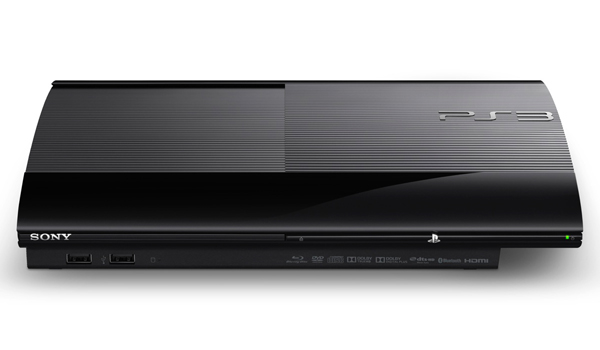
With the PS4 just around the corner, Sony hasn’t completely given up on the PS3, with a new model released just this week. It is of course not really a new model, as the 12GB flash-storage based version of the PS3 has been available in other regions for quite a while now, but this would be the first time the $199 priced console is available to buy in North America.

The big question of course is whether it’s worth the price savings compared to its hard-drive included siblings. I’m afraid though the answer, at this time, seems to be a ‘no’.

"Super Slim" PS3

The PS3 Super Slim 12GB is now available in the US for $199, but it’s not as good value as it sounds

For example, you can get a PS3 500GB console with the eagerly awaited GTA V game in a bundle for just under $70 more. To me, 488GB of more storage plus GTA V is worth the extra $70. Second, PlayStation Plus has become increasingly better value due to all the free games that Sony are giving away. The “Instant Game Collection” feature means you get a monthly collection of free games as part of your PS Plus subscription as digital downloads, and 12GB is just not going to cut it. And with the OS taking up space, 12GB end up being something like 8GB, which is just barely enough for one disc based game install, and not enough for most digital downloads.

And yes, you can install your hard-drive, but work in the price of a cheap laptop drive plus your time and effort, and it’s probably not worth doing, especially not compared to the GTA V bundle currently available (assuming you want the game. And you should).

Now, if the 12GB console gets its own game bundle, and drops in price by another $50, then we may be onto a winner. I wouldn’t rule something like this out for the 2013 holiday sales period.

And that’s it for the week. Hope it wasn’t too short, or too long, or too boring, or too many ‘toos’. See you next week.

Weekly News Roundup (18 August 2013)

Sunday, August 18th, 2013

I’m finding it a bit difficult to come up with an intro to this WNR. Probably because I only slept about 5 hours last night. And that I have nothing of real interest, and on topic, to share this week (although I have to say I’m quite enjoying the Netflix original Orange is the New Black). But most likely the sleep thing.

Onto the WNR.

CopyrightThe anti-DMCA, anti-censorship, and pro gay rights movements combined this week to form the perfect storm. It all started when controversial heterosexual rights group (yep, you read it right) ‘Straight Pride UK’ used the DMCA takedown process to censor their own response to a Q&A.

Not happy at how their own answers looked on student and freelance journalist Oliver Hotham’s WordPress blog, Straights Pride UK threatened Hotham with a DMCA takedown notice if he did not remove the content voluntarily; a threat that was eventually carried out.

The Streisand Effect did its thing and the removed article got more attention than it might have ever had, had Straights Pride UK simply let Hotham publish it without interference. Even Automattic, the owners of WordPress, eventually had to make a statement calling the DMCA takedown a clear case of abuse and censorship.

Not going into details about Straight Pride UK’s assertions, this latest incident shows again why the DMCA is deeply flawed, and how copyright laws now hamper creativity and speech, when the whole idea behind copyright is to promote these things (by giving copyright owners incentive to continue to create and speak). Copyright is one of many things that have been co-opted by moneyed interests to work directly against its original intended purpose.

To put it in another way, piracy isn’t always an anathema to the creative industry. While all the others are hitching a ride on the Internet-piracy-is-to-blame-for-everything bandwagon, it’s much easier to see piracy more as a nuisance than a curse if you happen to have *the* hit show of the moment. And if take this a couple of more steps in the same direction, piracy is not only not harmful, it’s actually quite good. Or more precisely, it is the reflection, the response, to something quite good.

Game of Thrones: Giants

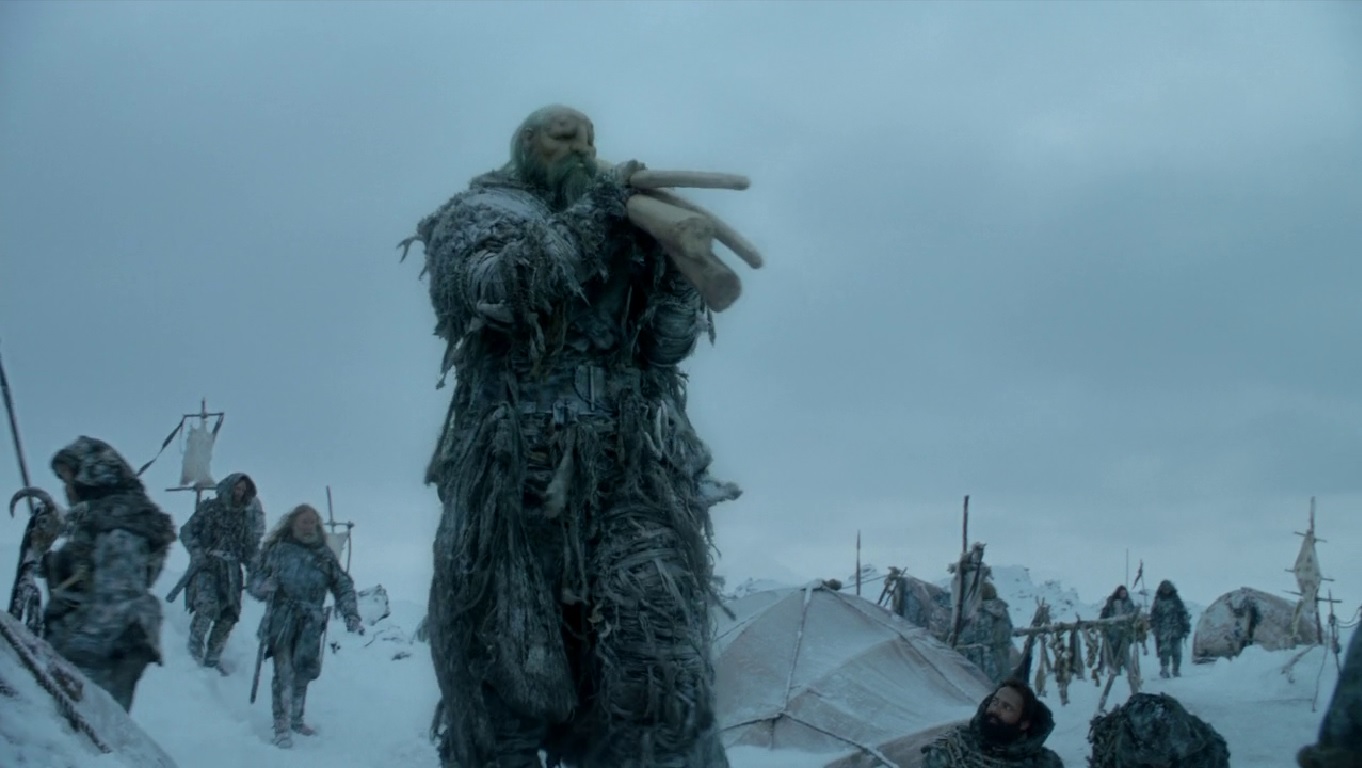
Piracy has not been a Giant problem for Game of Thrones (sorry)

At least that’s what the CEO of HBO’s parent company, Time Warner, thinks. Jeff Bewkes told investors during an earnings call that Game of Thrones’s piracy record is actually better than winning an Emmy thanks to piracy’s “tremendous word of mouth thing”. And word of mouth, or buzz, is what drives new subscribers, according to Bewkes.

Premium cable isn’t a stranger to piracy. Whether it’s the old fashioned illegal hook-up, or shared subscriptions, or the Internet, piracy is piracy. And in Bewkes’s experience, piracy eventually leads to paying subscribers.

It’s definitely an enlightened view from an industry that hasn’t always been very enlightened when it comes to the “nothing good has come out of it” Internet. It also makes sense. The reasons for people wanting to pirate something is also the same reasons that makes people want to pay for whatever it is. With desire taken care of, it’s just then a problem of finding out why people aren’t paying; whether it’s an issue of price; user friendliness; or availability.

It’s only when you have a poor product, or a business model based on poor value, that piracy then starts to play a bigger role in determining profitability.

As for Game of Thrones, it’s good to be the King (of television drama).

Gaming

Has the anti Xbox One DRM backlash been unfair to Microsoft? Veteran game designer Peter Molyneux thinks it has, as he says gamers have misunderstood the long term vision behind Microsoft’s ill-fated and now reversed changes. Molyneux not only thinks that gamers too harshly judged Microsoft for its bold vision, but that they continue to harshly treat the company even after it folded and gave gamers everything they wanted.

Xbox One Controller

Have we judged Microsoft too harshly for their DRM snafu?

Molyneux believes in Microsoft’s vision because he says that the future of gaming is indeed online, and being online almost all of the time. But he also adds that it is up to game companies like Microsoft to create the applications that take advantage of being online all the time, and to explain the benefits; something I think everyone can agree that Microsoft did a poor job of.

To me, everything Microsoft did seemed to be too reactive. They failed to anticipate the backlash and once it materialized, they continued playing a losing game of catch-up. For example, the whole used game trading scheme seemed like an afterthought, instead of being baked right into the design – either Microsoft didn’t explain it better, or it really was a reaction to the backlash. And the reversal was the ultimate reaction, some might say over-reaction.

Personally, I liked the idea of not having to use game discs. I thought that by allowing the re-sale and trading of digital purchases was a revolutionary idea (one that could have changed copyright law, for the good, forever). And I too agree that the future of game distribution lies online. But I also think that discs still have a place, and that gamers should have been given a choice of whether they wanted to do it the old way or the new. And at the very least, Microsoft should have lined up all of its re-sale/trading/sharing ducks before they unleashed their creation onto the world (and then failed to answer some very simple and expected questions).

It’s not what you say. It’s how you say it. Sometimes.

As for the latest NPD results, showing US video games sales in July, the only thing I can say about the Xbox 360 being the most popular (home based) console is that its sales were poor, but others were poorer. With only 107,000 Xbox 360 units sold in the whole month, this was 47% down compared to just a year ago. And the Wii, the Wii U and the PS3 all did worse as well.

Wii U sales are pegged at closer to (and probably under) 30,000, according to unofficial sources, and it is steadily dropping as well. The PS3 will have come closest to the 360 numbers, but not close enough.

But it is close enough to the end of this WNR. So close, that it could end at any moment. Like, right in the middle of this sente

Weekly News Roundup (11 August 2013)

Sunday, August 11th, 2013

Welcome to the latest edition of the WNR, filled with the copyright, high def and gaming goodness that you know and love. Nothing much new to update from my end. I ordered a Chromecast a few weeks back from Amazon (to ship it to Australia via one of those relay shippers), but alas, the lack of stock is becoming a bit frustrating. I’ve received numerous notices from Amazon about the shipping date, giving me all sorts of different information, so who know when I’ll get one. Not that it’s of that much use to me in Australia, since the built-in Netflix support appears to used hard-wired DNS settings, which rules out geo-unblocker services until the device can be hacked or an easy workaround found (which I’ll definitely write about on streambly if/when it is found). Anyway, the news.

CopyrightNot this again. I guess the Obama administration has run out of things to do, now that it’s commerce department is again trying to revive one of the most controversial parts of the very controversial SOPA bill – to make unauthorized streaming a felony.

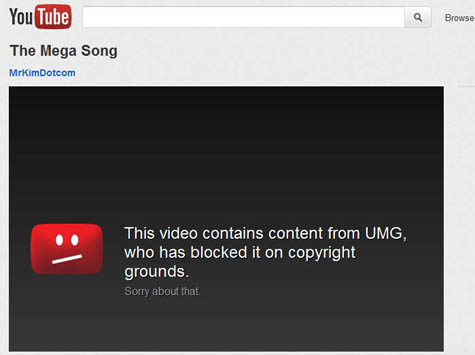
Megaupload's Mega Song was blocked on YouTube by UMG

Getting your video removed by YouTube could be the least of your worries, under new plans that could make the offense a felony

If all of this sounds familiar, then it’s because it is. Check out this WNR from November 2011, in which the same issue was discussed due to an independent piece of legislation urging for the same (which was then rolled up into the mega monstrosity that was SOPA and PIPA). The obsession that the creative industries, via their political lackeys, have with the whole streaming/felony thing comes down to the fact that unauthorized reproduction and distribution of copyrighted works is counted as a felony, whereas public performances (such as streaming) is only counted as a misdemeanor. This is the discrepancy that all these various proposals attempt to address, to uniformize (I’ve been assured that this is an actual word) and to unify the differences . I guess it must be an OCD thing.

While I do agree that many of the people posting soul destroying covers of what was once a great song should indeed be locked up, I’m not sure that copyright infringement should be the main reason for doing so. I will also note that this is the same administration that is defending the unauthorized reproduction, distribution and streaming of every conversation that everyone has ever had (where’s my damn copyright protection?), and that these changes may see YouTubers get harsher sentences than the people who destroyed the global financial system.

Technological solutions to piracy don’t usually work well, but when they are capable of causing collateral damage, they become dangerous. That’s what copyright news website TorrentFreak found out this week when their website was blocked by Sky UK’s court mandated piracy filter using a flaw that can allow virtually any website to be blocked.

Apparently, when an already blocked website, such as TV torrent indexer EZTV, changes their DNS settings to point to another IP address (regardless of whether the IP address actually belongs to the website or not), Sky’s system automatically adds the new IP address to the list of blocked addresses. This means that EZTV could in fact add Google’s IP addresses to their DNS, and Sky’s system will block access to Google for its four million customers.

This is what happens when you replace due process with an automated system, a badly programmed one at that. Even the full legal system with its due process is by no means infallible to unjust outcomes, but one where there is zero accountability and legal recourse was always bound to fail, with or without a serious flaw like this one. Technology can improve efficiency if used correctly, but taking legal short cuts is not making the process more efficient, just more flawed.

High Definition

Blu-ray and digital revenue is helping to offset the decline in DVD sales and rental revenue, according to new data released by the DEG. While packaged media sales declined by an alarming 13% in the second quarter of 2013, compared to the same quarter a year ago, overall revenue remained relatively steady.

Netflix Blu-ray Rentals

Netflix’s streaming business is booming, while its disc rental business is in a steady decline

This is largely due to Blu-ray sales again showing double digit growth, 15% in the first six months of 2013 compared to the first half of 2012; and also digital revenue rising by an impressive 24% in the same period (with electronic sellthroughs up an amazing 50%). Subscription based Internet streaming was a particular highlight within the digital umbrella, with spending up 32.13%.

For Blu-ray, sales of new releases was up 19%, compared to only 8% for catalog/classic releases.

Rental revenue continues to decline, by 5.5% for the first half of 2013. So while Netflix streaming was growing by 30%+, its disc rental business was most likely in a relatively steep decline, as subscription rental revenue for the whole industry declined by 21%.

The same data also showed that 5 million new Blu-ray players were sold in the first half of 2013, bringing the total number households with at least one Blu-ray players in the U.S. to 61 million.

In short, Blu-ray, digital good; DVD, rental bad.

Gaming

The Xbox One received a much needed boost, literally, this week as Microsoft officially revealed that the Xbox One’s GPU speed has been upped from 800MHz to 853MHz. This 6.6% performance boost gets the Xbox One’s performance a little bit closer to the PS4, but the PS4 still looks set to easily be the more powerful machine.

Pure GPU shader throughput on the PS4 is still expected to be nearly 40% greater than that of the Xbox One, even after this latest GPU speed bump. And this is despite the Xbox One being $100 dearer than the PS4 at launch, but most of that is due to the inclusion of Kinect 2.0 with every console.

Xbox One Forza 5

Xbox One’s GPU speed increased to close the gap on the PS4

On paper, this seems to give the PS4 a huge advantage when it comes to the game’s visual quality; but in reality, developers of multi-platform games tend to go with the lowest common denominator, as opposed to doing extra work (which costs extra $$$) on one particular platform to leverage its hardware advantage. But as developers become more accustomed to working on both consoles, they might begin to find less resource consuming ways to get the best out of the PS4, and so expect later stage PS4 games to look better than their Xbox One counterparts. And of course, PS4 exclusives will be able to take advantage much earlier on.

I’m 80% certain at this point that I probably won’t buy an Xbox One, not until it’s a bit cheaper at the very least. At the same time, I’m maybe 80% certain that I will own a PS4 before I own an Xbox One. Microsoft’s DRM snafu; the price difference; and the hardware superiority, the latter two being in favor of the PS4, is what is largely responsible for my stance.

That’s it for the week. Hope you enjoyed it. See you next week.