Archive for the ‘High Definition (Blu-ray/HD DVD/4K)’ Category

Weekly News Roundup (5 January 2014)

Sunday, January 5th, 2014

Happy New Year and welcome to 2014! Another quiet week, for obvious and alcohol related reasons. Still a slow news week, but it’s starting to slowly trickle in as people shake off their NYE induced hangovers and contemplate the unwelcoming thought of a return to full time work.

Urgh … here we go again.

Copyright

iTunes 10

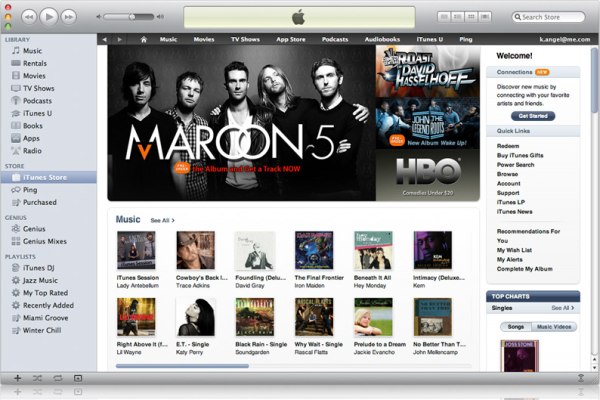
iTunes, Netflix, Spotify … just some of the digital services that helped the UK music industry records its first revenue growth five years

Who’d have thunk it? Giving consumers what they want actually helps you make more money. Providing partial proof that the piracy epidemic has more to do with unmet user demand than a sudden surge in the number of dirty stinking no-good thieves, the latest home entertainment results (for movies, music and gaming) proves that the digital transition is real and profitable. With physical sales declining by 6.8%, 7.6% and 2.9% for the movie, music and game sales in the UK, the rise in digital downloads and streaming has not only helped to offset these declines, but also helped the industry to post its first rise in revenue in over five years.

Music streaming was up 33.7%, with Spotify alone now accounting for 10% of all UK music revenue. Digital video downloads and streaming rose by 40.2%, and digital game sales exceeded physical sales for the first time ever after posting a 16.4% increase.

So while physical sales were still 56% of all sales, the shift to digital is clearly happening and happening quickly. Perhaps it didn’t happen quickly enough, hence the troubles of the last five years. All transitions are difficult, and it appears this one isn’t any different, with digital piracy now looking more and more like the effect to the cause of the industry as a whole not responding to the changing market quickly enough.

High Definition

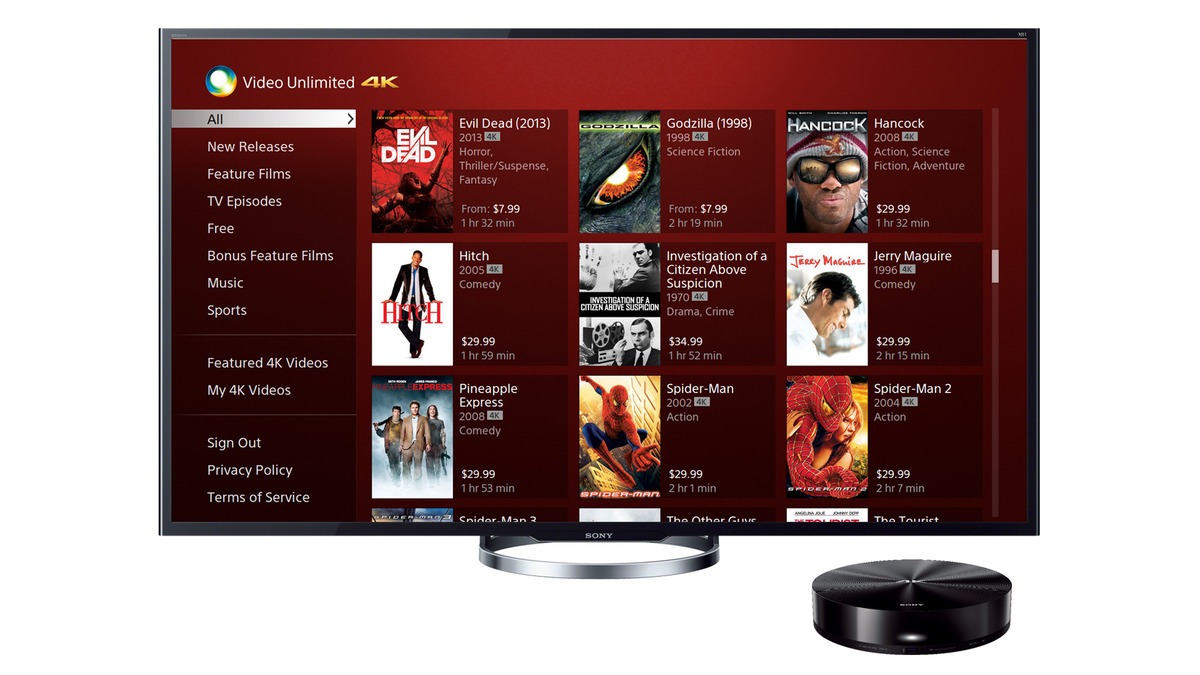
Sony 4K TV with 4K Media Player

Sony’s 4K stuff, pictured here, may support Google’s VP9 as the 4K codec of choice, along with LG and Panasonic

Just when the WebM vs H.264 war was concluded by an act of “kindness” by Cisco, a new codec war has started between, well, pretty much the same people behind the previous one. Google is now pushing its WebM/VP9 codec for 4K streaming on YouTube, and has signed up an impressive list of hardware and software partners for the codec, including ARM, Intel, LG, Nvidia, Samsung, LG, Panasonic and Sony, the latter three will be demonstrating Google’s tech at CES (Google has clearly learned the lessons from its participation in the WebM vs H.264 tussle, with WebM’s lack of hardware support seen as a key factor in the industry’s hesitance to embrace the format). This then puts the open source VP9 head to head with HEVC, or H.265, which was recently selected by Netflix as its 4K codec of choice.

But unlike a disc based format war, this is one war that may never yield a winner. Or a loser. It’s not inconceivable for all of the previously listed companies to support both HEVC and VP9, and even Google/YouTube has signaled that they’re not ruling out HEVC for future 4K use. And were this to happen, then everyone can be happy-ish, with open-source advocates like Mozilla happily using VP9, while others may prefer HEVC.

And if it’s done right (ie. with hardware and software support available freely for both codecs), users will not even have to care, just like they don’t care that the Blu-ray standard includes two different video codecs, H.264 and VC-1.

That’s that for the week. Not much, but things are ramping up, especially with CES just around the corner. See you next week.

Weekly News Roundup (22 December 2013)

Sunday, December 22nd, 2013

With Christmas and New Years just around the corner, this may very well be the last full (-ish) WNR for 2013, as I don’t expect there to be a lot of news in the next week or so. Not that there was much this week, but there will be even less next week. A nice break before things get back to normal in January.

Here goes.

Copyright

The Pirate Bay Cloud Hosting

The Pirate Bay’s look for a more permanent home may rely on BitTorrent

So that’s three more domain names off of the list for The Pirate Bay, as the torrent search engine went on a South Atlantic and South American trip to find a new home, before settling for good old Sweden. The Ascension Island proved to be no more hospitable for the Pirate Bay than Peru or Guyana, as domain seizures quickly followed in all three places.

The Pirate Bay’s latest sojourn started when its .SX domain named was seized by Dutch authorities at the behest of anti-piracy agency BREIN. With the .SE domain name threatened with a similar fate since April, TPB wasted no time in trying to find a new friendly port, but to no avail. For now, TPB is back in Sweden’s SE domain name, which won’t be seized until a court order forces it to be.

It’s obvious that TPB’s current domain strategy isn’t working, although it may not need one as urgently if its BitTorrent based PirateBrowser is ever released, and things like web hosting and domains names all become decentralized.

High Definition

Sony’s changed tact of focusing less on the multimedia aspect of their flagship gaming console, and more on gaming, seems to be paying dividends for them in terms of sales. But for those like me that had their PS3 as a hub for their home entertainment needs, the PS4’s missing media features has been a bit of a disappointment. And the disappointment continues as one of the first professional disc performance benchmarks has the PS4 failing to tick many of the required boxes in terms of video performance, to the point where it’s a poorer Blu-ray player than most standalones. And the PS3!

PS4 with controller and PS Eye

PS4 may be a great game console, but it’s only an average Blu-ray player

The PS4’s lousy deinterlacer is to blame, further compounded by the lack of 1080i output. The lack of 2:2 cadence detection for PAL films also means that it’s not a very good DVD player either, at least for those in PAL regions (like most of Europe, Asia and here in Australia). It’s probably not something that anyone other than eagle-eyed home theater nerds will notice, but for $400, and considering the close relationship between Sony and Blu-ray, as well as the PS3’s disc playing pedigree, it’s still disappointing. A lot of the problem may be fixed via software at a later time, but this is not like the PS3 when it was first launched and when Blu-ray was still a new format – this is something Sony should have gotten right the first time round.

At least it’s more tolerable, at least in my opinion, than the Xbox One’s 50Hz bug (where 50Hz content is converted, poorly to 60Hz). If there’s one thing I cannot stand it’s judder. And it’s harder to forgive Microsoft for this problem, considering their marketing of the Xbox One as an “all-in-one” media powerhouse. Had Microsoft actually did what their marketing said, and released a perfect Blu-ray/DVD player with Blu-ray 3D support out of the box, it would have been a great selling point for those that do actually want an all-in-one machine. But right now, neither systems are worthy of a recommendation purely based on their media capabilities, great game consoles they may be.

——

DVD vs Blu-ray vs 4K

Netflix plan to use HEVC to reduce the bandwidth requirement of 4K content

I think I’ve mentioned here before that H.265, or HEVC, seems to be the perfect fit for online based 4K content delivery. HEVC was made for 4K, and this may actually be literally true. It seems to be the codec, absent a huge jump in progress for super fast broadband rollout around the world, that the Internet needs right now to help ease video data induced net congestion. So no surprises then that Netflix is considering HEVC for their 4K streaming launch in 2014.

And even if you’re not interesting in 4K, Netflix says that once the HEVC codec matures, it’s conceivable that all of Netflix’s existing content, even those in standard def, will be delivered via HEVC in the future. This could mean Super HD streams that require less bandwidth, and still manage to maintain or improve upon their current quality. The only problem in the way of total HEVC adoption could be the processing power of older devices, not great enough to handle the increasing demand of HEVC decoding, which is estimated at between two and three times that of your typical H.264 AVC decoder.

That’s it for this WNR. Merry Christmas and Happy Holidays from everyone here at Digital Digest.

Weekly News Roundup (1 December 2013)

Sunday, December 1st, 2013

Happy belated Thanksgiving. We don’t have Thanksgiving here in Australia – it’s just another Thursday for us, but as someone who has a lot of US-centric interests, it’s hard not to get caught up. Then there’s Black Friday as well. I haven’t done much shopping, if any, online this year. Traditionally, I would buy a bunch of Blu-rays at this time, but I’ve reduced my need to buy Blu-rays as a result of Netflix and Hulu Plus. This means I’m also less inclined to wait until a big sale to save a few bucks – I’m willing to pay more for the fewer discs that I deem to be collection worthy, and I actually end up watching more and spending less thanks to this system and Netflix/Hulu.

Being a public holiday in the US, news is pretty sporadic, and even if it wasn’t, I wouldn’t want to waste your time by writing a whole bunch of stuff you’re probably too drunk to read anyway.

Copyright

You know it’s a slow week when you start going through someone else’s tax filings for news. To be fair, when that someone is the MPAA, even a tax filing can contain a bevy of interesting information. Such as the fact that MPAA members, the major movie studios, have upped their contribution to the MPAA for unspecified reason. That chairman Chris Dodd is paid handsomely for his political connections, at a (relatively cheap) $3.3 million per year.

There’s also a list of groups that the MPAA have issued grants to, most of then surprisingly have helped the MPAA in someway in the past, either via a study that backs one of their many assertions, or a friendly word or two in the media. Also unsurprising was the political donations the film industry’s lobby group made in 2012, to a wide spectrum of left, center and right political groups, from left-wing bleeding hearts, to Tea Party and anti-tax groups. Much like Wall Street, the politically neutrality maintained by these industry lobby groups is what makes them so powerful in Washington, with very good friends on both side of the aisle (and in the White House). That Dodd himself was a Democratic politician doesn’t really mean a thing, nor does the view regarding Hollywood’s progressive lean (which applies more to the people who work in the industry, rather than the corporate interests that govern it).

Spotify Logo

Radio doesn’t make artists a lot of money directly, so why is Spotify under attack for basically doing the same thing, but with less ads?

From the movie industry to the music industry. Musician Moby, who recently released his new album for free on BitTorrent (and included all the stems too for those interested in remixing their own stuff), has been talking about piracy, Spotify and BitTorrent, and he has some interesting things to say.

I don’t want to go over the entire interview here (you can read it here instead), but basically, Moby says that creating good music is key to getting new fans, which is then key to making money in the music business. So even if new fans are created because people have downloaded his songs illegally, Moby says that’s alright, because they will spend money down the line, whether it’s through song purchases, merchandising or even concerts. Another interesting point that Moby makes in regards to people who are not happy with Spotify’s revenue model. Moby says that the same people are complaining are the ones overjoyed at their songs being played on the Radio, even though this is just as unprofitable. In other words, Spotify is a promotional tool, like radio, and artists shouldn’t be too disheartened just because they’re not making mega-bucks from it.

High Definition

Gravity (Film) Wallpaper

Gravity is designed to be watched on a big screen in the best quality possible – piracy is not a real competitor, at least not where revenue is concerned

I finally got around to watching Gravity at the cinemas last week. That’s another thing I’ve been doing more of thanks to Netflix and the money I’ve saved from buying less Blu-rays. People can argue about the “apparent” simplistic nature of the storyline, but it was entertaining, it was well made, it broke new ground technologically and it’s the kind of film that only the cinema does justice (although I’ll definitely get it on Blu-ray as well). Anyone who loves watching movies, I think will agree that, unless you’ve go a kick-ass home theater system, there is no substitute for going to the movies, for films like this.

But the main reason I wanted to talk about Gravity is because of the new trailer I’ve just uploaded for it here. It’s not just any old trailer though, this one is a 2K one (2048×858). It won’t play on the PS3 and Xbox 360 (I know, I’ve tried), but it should work on your PC. The next small step/giant leap for our trailers section would be to make some 4K and HEVC trailers available for you all, so stay tuned.

Gaming

This is starting to get a little ridiculous. If there was one thing that both the PS3 and Xbox 360 did well (with the PS3 being better) was their media capabilities. It’s not just Netflix and other apps, but just the ability to play a whole bunch of different types of media, either digital or on disc, that made these consoles the heart of your home entertainment set up. The last thing I would have expected with the so called next-gen consoles was for them to start going backwards in this area. But go backwards they did.

The PS4 can’t play CDs, MP3s and no longer works as a DLNA client. The Xbox One can’t play MP3s natively, but does at least allow them to be played via your home network. Neither supports Blu-ray 3D, which is not a huge loss, although still a surprising omission, for both Sony (them being the founding fathers of Blu-ray) and Microsoft (what with them trying to convince us of the Xbox One’s “all-in-one” credentials).

Xbox One

Xbox One can’t read BD-R/BD-REs. A new anti-piracy measure?

So I guess I shouldn’t be surprised at the news of the Xbox One not being able to read recordable Blu-ray discs – it fits into the theme of this generation so far in terms of media compatibility. Apparently, this has been done deliberately on the software level, possibly as a way to prevent piracy (not just movies, but also, and probably more importantly, of game discs).

The Microsoft support pages even goes as far as saying that only mastered DVDs will play, although many have since confirmed that DVD recordables do work (for now at least).

While this one definitely smells of heavy handed copy protection, the other omissions may be less about restricting user rights. To me, they feel like the result of a rushed launch, with Sony and Microsoft wanting to at least not lose to each other when it comes to the timing of the launches. The news that TV-integration on the Xbox One doesn’t work well in PAL/50Hz  regions, due to the system being designed to work with US 60Hz signals, seems to confirm my suspicions that the console wasn’t quite ready for prime time.

So if you’re not in a hurry, I’d suggest you wait a couple of months at least, until both consoles have ironed their bugs and added back the necessary features, before committing.

That’s it for the week. See you again in seven.

Weekly News Roundup (17 November 2013)

Sunday, November 17th, 2013

A slightly longer one for you this week. Last week’s short one was kind of my fault, but this week’s longer one has little to do with me, and more to do with, um, things actually happening.

Let’s get started.

Copyright

You’ve got to get them young! The RIAA and MPAA obviously agree, because they’re backing a plan to start teaching their pro-copyright propaganda to kids still trying to master the tricky art of finger painting.

A new curriculum that teaches kids the awesomeness of copyright, and the evilness of piracy, has been proposed by the Center for Copyright Information (which is backed by Big Content, as well as America’s top ISPs). The lesson plans, which start at the kindergarten level and all the way through elementary school, teaches the importance of “protecting copyright”, and covers such fun topics as “Copyright Matters” and “It’s Great to Create”.

Immediately after the plans were made public, everyone with a bit of common sense came out and suggested that this probably wasn’t the best idea. Or even a very good one. The EFF worries about some of the bias that may be present in the lesson plans, such as equating downloading TV shows to copying off someone else’s homework. Teachers, via the California Teachers Association, worry about fitting in corporate sponsored messages into a curriculum that barely has enough room for the basics, like English (so you can read the lawsuit that the RIAA may file against you) and maths (so you can work out how many millions you owe the MPAA for downloading Spongebob episodes).

My biggest concern is that the MPAA/RIAA’s curriculum may be just too confusing for elementary school kids. I mean how do you explain to kids why artists, the “creators” that the curriculum so lauds, get such a small percentage of earnings compared to the middlemen that make up the members of the MPAA/RIAA. Especially in such a technologically advanced age where creators can sell directly to consumers? It just doesn’t make any sense!

Netflix

Netflix and YouTube dominate US prime time downloading

It seems every time the MPAA comes up with some new ridiculous way to fight piracy, we also have, at the same time, a story that shows you how to beat piracy by simply providing people with a better product. For this week, and for a while now, that better product is Netflix. Nearly 32% of downloads during peak usage times in North America now belongs single-handedly to Netflix, and when combined with YouTube, they account for more than half of all download traffic.

Now I know people have their gripes with the service. And I do too. Not enough new content; too many missing classics; streaming quality/speed issues – to name a few. Yes, we have original content now (and some really good stuff too), and there’s the occasional blockbuster that makes its way on there after a lengthy delay (Skyfall, just last week, for example), but having almost destroyed the brick & mortar video renting business with its disc-by-mail service, Netflix streaming has managed to destroy whatever was left of that business. Instead of going to a video store and renting some old crap, you can watch the same old crap, and more older and crapper stuff, in the comfort of your own home without having to spend any extra money.

It’s great for me, the procrastinator, because instead of spending an hour at the local Blockbuster and being unable to decide what to rent, I can now spend an even longer time clicking through Netflix’s library, still unable to decide. But I can do it all now while sitting down and and stuffing my face full of trans fat, so it’s a lot better than going to Blockbuster (the only exception being their excellent caramel popcorn).

Hoping that it goes the way of Blockbuster, but unfortunately not happening quickly enough, is gaming DRM. And the CEO of anti-DRM developer CD Projekt Red, the people behind the DRM free game store GOG.com and The Witcher series, explains why this is the case.

Apparently, the gaming industry knows full well that DRM does work, but still persists with it because it is seen as doing something. Anything. And they need to be seen doing something in front of bosses, investors and shareholders, most of whom don’t have a clue (or chooses not to have one). But that’s okay, the only loser in the whole thing are gamers and paying customers. You know, the unimportant people. It’s this kind of deluded, and lazy thinking that has mired the industry in an unending war against pirates, one that they’re losing pretty badly and where the collateral damage extends to anyone who tries to play the game.

Just to reiterate, DRM doesn’t do what it is supposed to do (stop piracy), but instead, it actually hurts paying customers and make them want to buy your games less. And “well, what else are we supposed to do” is not an acceptable answer when faced with the question of piracy. And there are plenty of things you can do to make the legal experience much better than the illegal one – just look at GOG.com or Steam, for example.


High Definition

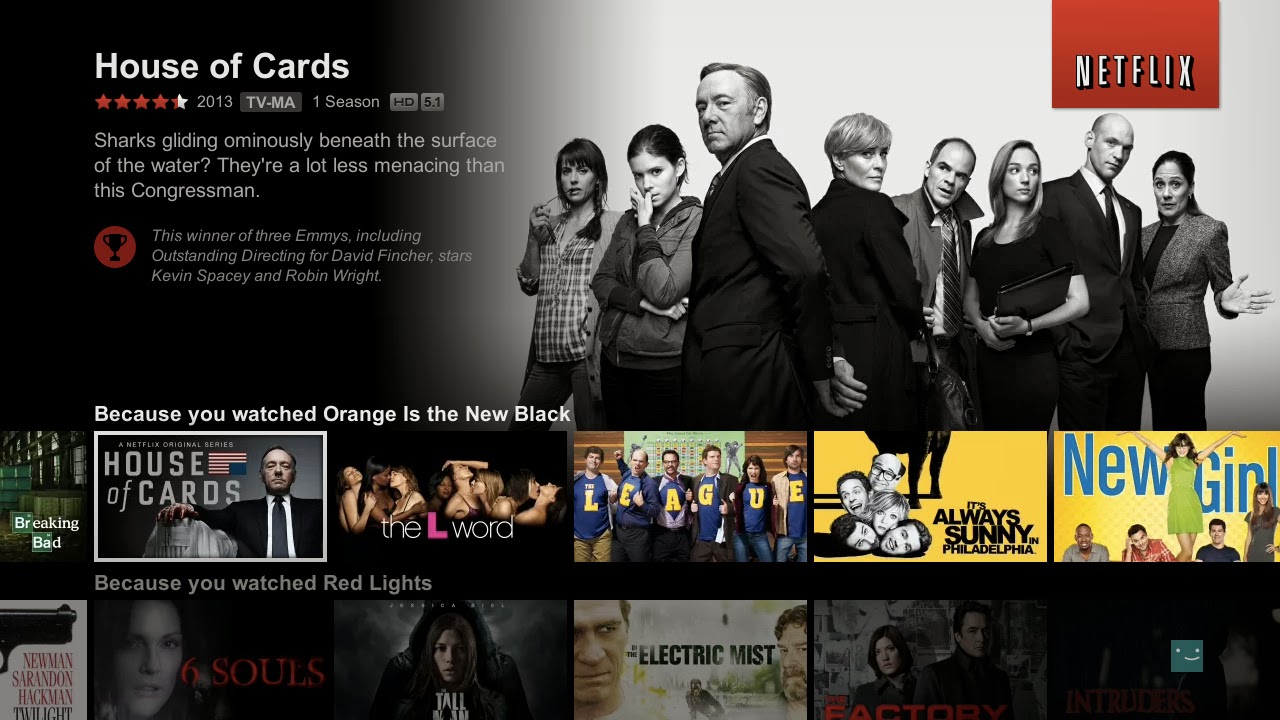
New Netflix UI

The new Netflix UI for TV connected devices looks good and works well

Just a quick follow-up to last week’s story about the Xbox One not supporting Blu-ray 3D at launch – the PS4 won’t play 3D films either, as it turns out. Both Microsoft and Sony are coming out with the “not at launch” caveat, which probably means that support will be added at a later time. Perhaps free, but perhaps at a small cost. Not too many tears will be shed from me for the loss of 3D, even if it’s kind of crappy to lose features when going from the current gen to the next gen.

Another quick digital video related update, this time for Netflix, who has rolled out a major UI change for all of its TV connected devices. I’ve been using it for the last couple of days, and it’s very usable, and I like the more detailed descriptions about why certain streams have been recommended for me or why I should watch them. With that said, I would still like the option of being able to select language/subtitles before the film starts (right now, you have to do it when the film is playing). And showing a screenshot of the current scene for resuming titles would be helpful. I’ve also noticed there are some issues with saving the last played spot, especially if I turn off my PS3 too quickly.

Gaming

The Wii U is still stuck in the sales doldrums, but instead of being pleased with the contrasting fortunes of their PS3 and PS4 consoles, Sony says it’s actually in their interest for the Wii U to start selling well. Sony Worldwide Studios Prez Shuhei Yoshida expressed these sentiments in a recent interview with IGN, in which he also suggested part of the problem with the Wii U was the inconsistent messaging that Nintendo was trying to send out.

In particular, Yoshida found Nintendo’s “core gamers” strategy a bit odd, as in his opinion, the Wii U should have been marketed like the original Wii, as a “safe” family friendly console. But you can see why Nintendo had to change strategies with the Wii U. While the Wii can be considered a success, its later years were marked by a steady decline in sales, thanks to the ever competitive “casual gamers” market, and the lack of A-list third party releases on the platform. You can’t blame Nintendo for wanting to get a piece of the Call of Duty pie, and this cannot be possible if they stayed true to their family-only strategy.

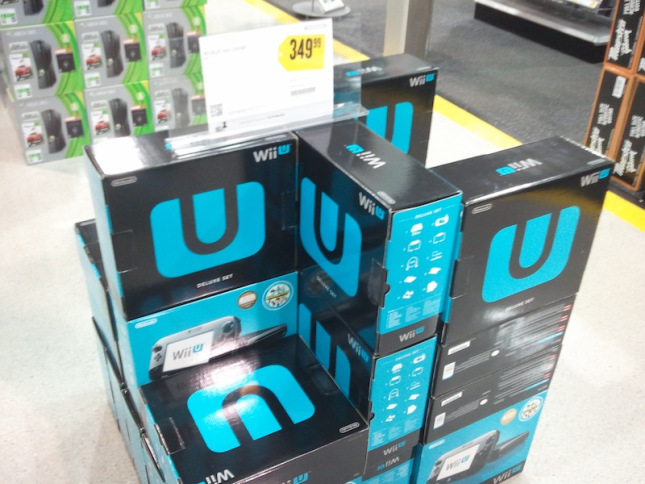
Wii U Boxes

Sony wants the Wii U to sell well, and says Nintendo should concentrate on their family-friendly strength instead of going after “core gamers”

What they failed to do, in my opinion, was to understand how “core gamers” think. “Slightly better than last-gen” is not good enough to sate the appetites of core gamers hungry for next-gen graphics. It was also hard for Nintendo to shake their “video gaming for kids” image to appeal to core gamers. In the end, Nintendo wanted a console that combined mobile/tablet gaming with their core gaming strength (their first party titles, and the family friend reputation), and marry that with zombies and grenades. Perhaps it was just asking too much from a single console, and you end up with a machine that’s neither this nor that. And it didn’t help that Nintendo failed to demonstrate the full potential of their touchscreen GamePad, either for casual gaming or for the hardcore audience.

And all of this brings us to October’s NPD results, for US video game sales. The Wii U, unsurprisingly, was the poorest selling home based console out of the current crop, with the Xbox 360 regaining top spot after the PS3 ended its 32-month winning streak last week (thanks to GTA V). The Xbox 360 sold 166,000 units, but we don’t have figures for the PS3 and Wii U (other than the PS3 outselling the Wii U). The Wii U has only managed to sell 300,000 units in the last quarter, worldwide, and that’s actually a much better result than the previous quarter, in which only 160,000 units were sold.

With the PS4 now released, and the Xbox One coming next week, we’ll start seeing those number (or something vague about them) this time next month, which is kind of exciting. A new console generation and all that.

And on that note, we come to the end of this WNR. See you in a week’s time.

Weekly News Roundup (10 November 2013)

Sunday, November 10th, 2013

Another short one for you this week. This one is kind of my fault though. As you know, I’m the arbiter of what gets written up here, and that’s mostly based on personal interest (I believe this is what they refer to as journalism), and I just wasn’t really in a mood to be interested in much of anything this whole week. I think watching The Perks of Being a Wallflower and Never Let Me Go back to back may have been a real detriment to my mood for the whole week, especially given the order I watched them in.

Okay, enough word padding, here we go.

Copyright

What is that idiom again? Something about people who live in glass houses. Or to be precise, people who are part of a global online copyright crusade and how they should really make sure their own copyright house is in order before pointing fingers at everyone else. The fact that the websites of the RIAA and the BPI, the music industry’s two main copyright lobbyists, both appeared to have been guilty of a case of copyright abuse isn’t really the point, as the fault was minor at best (and it’s common enough). No, the point is that if you’re going to be so rigid and strict in your interpretation of copyright law, like the RIAA and BPI have done so many times in the past, then you better make sure you’re not living in that glass house.

I think copyright is a fluid thing. It exist for some pretty good reasons, but it definitely should not be interpreted in a fundamentalist manner. There are lots of examples of copyright abuse that is perfectly reasonable, and if anything, should be encouraged by the copyright holder, or at the very least, a blind eyed turned to it. For example, using copyrighted music in a YouTube video, for example, is copyright abuse by the standards of the law. And the rights holders have the right to take action. But if the video would ever only be viewed a couple of hundred times, does it really matter? Or if it is a funny take on an unrelated subject (which would then fail to make it protected under parody exemptions, as the parody’s subject matter has to be related to the copyrighted material), one which would never hurt the original’s chance at making money, who is actually being wronged there? Another example. A piece of music that never achieved popularity becomes part of an Internet meme, should you then go on a massive DMCA crackdown campaign, which is of course your right. As I said, copyright is fluid.

So if we can forgive the RIAA and BPI for their copyright trespasses, perhaps they can show a little bit more flexibility and compassion the next time their rights are infringed. That’s all we’re asking.

High Definition

This deal is getting worse all the time! Last week, it was the Sony bombshell that the PS4 won’t play audio CDs and MP3s, and won’t support DLNA. This week, Microsoft has confirmed that the Xbox One won’t play Blu-ray 3D films.

That in itself is not as big of a loss as say the lack of MP3 and in particular DLNA support. But it begs the question: why? There are tons of el-cheapo Blu-ray players that support 3D these days, is it really that much more costly for Microsoft to include 3D playback?

Blu-ray 3D Logo

The Xbox One can play Blu-ray films, but not 3D ones

The answer is probably a yes. Licensing and royalty payments means that, even at a couple of bucks for each Xbox One sold, it will still end up amounting to millions of dollars in the long run. If the demand is there, Microsoft might add support via a patch. If not, they can either ignore it or sell it as an add-on pack in the future.

Both consoles will be fighting to win the upcoming console war, and profitability (which affects pricing) will be key to victory.

While the PS4 and Xbox One are deciding which previous generation formats they will and won’t play, Netflix is going ahead with the next-gen. Seven 4K clips, each around 8 minutes, are already available for streaming on Netflix. The description of these clips say they’re an “example of 4K”, with each clip being at different framerates (24, 59.94, 29.97 …). One would supposedly need a 4K capable Netflix player (and a 4K TV) in order to play these clips at their stated resolutions.

DVD vs Blu-ray vs 4K

Netflix will have to weave a bit of bandwidth magic in order to make 4K work under current broadband limitations

So it looks like Netflix are serious about getting into 4K, something their CEO hinted at a couple of months ago. The testing done now will determine the likely bandwidth requirements, which will have to balance the need to provide a high quality 4K picture, along with a low enough bitrate to allow a greater number of households access to 4K.

It’s all very exciting (at least for video nerds like myself), but the overall feeling I have is that all these new exciting things are being held back by the current state of the Internet. Even as it is, web video services like Netflix and YouTube would be a lot more usable if they were coupled with an ultra speed broadband connection, one that can only be consistently offered by fiber-to-the-home connections at the moment (so speeds in excess of 100 Mbps, with 25 Mbps or higher upload speeds). That Netflix has to make sacrifices to quality for 4K, or even 1080p, proves that the Internet is just not fast enough (on average) at the moment.

That’s it for the week. I promise I’ll try to be less disinterested next week, which should ultimately mean more news stories. Until then, have a nice one.