Archive for the ‘High Definition (Blu-ray/HD DVD/4K)’ Category

Weekly News Roundup (13 April 2014)

Sunday, April 13th, 2014

Oh Heartbleed, you stupid annoying thing. While none of Digital Digest’s servers used the vulnerable OpenSSL versions that is now responsible for the biggest IT crisis since the Y2K bug, you’d have to be a under-rock living Luddite to not have been affected by this horrendous bug, no matter how much you try to convince yourself that everything is still fine. The weird side effect is that people now generally know much more about OpenSSL and overflow bugs than they need to (and if you need a quick refresher, refer to xkcd).

There were other news too!

Copyright

Game of Thrones: Season 4

A new season of GoT: More nudity, larger dragons, and more pirates (of the downloading variety)

The only thing more predictable than the far too frequent appearance of gratuitous nudity in Game of Thrones episodes is the fact that a new season of it will break piracy record, and the season 4 debut did not disappoint. 300,000 simultaneous downloaders at its peak (not to mention the million downloads that took place in less than half a day), up from 160,000 a season ago, is a feat almost as amazing as the building of The Wall.

Australia once again led all other countries in piracy, the nation with 0.3% of the world’s population managed to be responsible for 11.6% of all GoT downloads. You can thank our one and only greedy cable provider, and their exclusive airing deal with HBO, for this. The deal prevents all other digital platforms, including iTunes, from providing access to new episode until after the entire season has finished airing, some months away from now. Sacrificing availability for short term profits seems extremely, well, short sighted for me – it encourages a culture of piracy that will be harder and harder to break. I just hope HBO got enough money out of it to make up for all the money they just lost on preventing people from buying season passes on iTunes.

And also expect this record to be broken again for the season finale.

——

MegaUpload Logo

It’s been a while since I’ve had to use the Megaupload logo, but it’s not everyday the MPAA/RIAA sues a dead website

Either they’re really desperate, or its more of a “kick ’em while they’re down” situation, depending on who you believe. The MPAA and RIAA have launched separate civil lawsuits against the very much dead and buried Megaupload, claiming millions in damages.

If you believe the spin by Megaupload and Kim Dotcom’s legal people, then this is simply a reaction to the stalled criminal case against Mega. If you believe the pressers from the MPAA and RIAA, then it’s about recouping the billions and billions lost due to piracy on a massive scale yada yada yada.

We all know that the DoJ has been sharing data with the MPAA and others (legally, via a secret court order, but still a morally questionable act of using tax payer resources to benefit lobbyist buddies), so is this the MPAA/RIAA swooping in to save the DoJ’s troubled case against Megaupload? Most of these civil cases are about shutting down a site, but with Megaupload already down and out, so is getting some of that sweet, sweet (frozen) Megaupload treasure the MPAA/RIAA’s main objective?

I for one find it hard to believe that the MPAA/RIAA would go to all this trouble just for the money, and since it’s not about shutting down Megaupload, this all seems to be about a victory for victory’s sake (and I would think that, given Megaupload isn’t exactly in a position to put up a staunch defense, a win here is almost guaranteed). A win here would relieve the pressure on the DoJ to win their criminal case, so this would be my guess for the motivations behind these lawsuits.

Just friends helping each other out.

High Definition

Netflix has officially started streaming 4K, but many early adopters will miss out because their TVs do not support the HEVC/H.265 codec that Netflix will be using. Most TVs announced for release this year will support HEVC/H.265, but most sets purchased before won’t support the advanced codec. It’s part of the risk of being an early adopter, but this one kind of bites because of the short time span between 4K and HEVC adoption.

Samsung 4K TV

Some 4K early adopters will rue Netflix’s decision to use HEVC for the 4K streams, as older TVs do not support it

Of course, with Google throwing their VP9 codec into the hat for serious consideration as a 4K codec, the situation could get even messier. So for those thinking about 4K, it’s probably still not quite the right time to buy in yet, even if you have the cash. Best to wait until the codec situation is resolved, and also to ensure that the TV set you want to buy has HDMI 2.0.

Then there’s Blu-ray 4K discs (I’m not talking about those “mastered in 4K” discs, which are still very much 1080p), which possibly means new hardware requirements for the TV (although I think HEVC + VP9 + HDMI 2.0 is probably all that’s needed, other than the new Blu-ray 4K player you’ll need to buy).

For now, 4K content is limited to House of Cards and a few nature documentaries. A nice teaser of the potential of 4K, but that’s it really. Most new films will have a 4K master floating around somewhere, and so it’s not inconceivable that Netflix’s 4K library will start growing exponentially once studios start providing the content.

So wait another year before seriously considering buying a 4K TV, is my opinion. All the technical stuff will have become standardized, and the content situation will have dramatically improve too.

That’s it for the week. Stay safe out there on the interwebs, it’s getting scary out there!

Weekly News Roundup (23 February 2014)

Sunday, February 23rd, 2014

A very short WNR this week, and that’s partly my fault. I took part last night in Melbourne’s second annual White Night festival, and that and other distractions during the week meant that I just didn’t have time to scour the interwebs for interesting news stories. So as compensation, I present to you these creative commons licensed, rather common and uncreative photos of my own taking, of some scenes at White Night. This is probably the most interesting part of the WNR for this week, unfortunately.

IMG_20140223_001123 IMG_20140222_234614 IMG_20140222_213839

Here’s goes anyway.

Copyright

The Pirate Bay ship may soon sail unencumbered in the waters of the Netherlands, after the country’s second largest ISP forced anti-piracy agency BREIN to agree to a lifting of a ban on visits to the notorious piracy website. This comes after January’s ruling by The Court of The Hague which found that the banning was ineffective and anti-business.

The Pirate Bay

The Pirate Bay blocking may be about to become history in the Netherlands

Other ISPs will probably follow suit (nobody wants to be at a competitive disadvantage), and could be the clearest signal yet that Dutch anti-piracy BREIN may be throwing in the towel when it comes to its website banning ambitions.

The Court of The Hague’s ruling was based on a report that found website bannings to be ineffective in stopping piracy, and also unfairly restricts ISPs’ freedom to conduct business. BREIN has yet to decide to appeal the ruling, but even if they do, it could take years for a final decision. To continue to ban The Pirate Bay during this time, when a court has already ruled against the banning, would not be in the best interest of anyone involved, even BREIN, and perhaps this is why BREIN agreed to the lifting (even though this court decision did not apply to the ISP in question, UPC).

I’m hoping this court ruling sets the right precedent and forces anti-piracy groups to rethink their strategy on website bannings, but I suspect it won’t. It’s not the first time that these anti-piracy crusaders have ignored facts and common sense in their pursuit of a victory against piracy, and so I don’t expect anything different this time.

High Definition

You know it’s a slow news week when I have to talk about bacteria and other microorganisms in the HD/Blu-ray section. Ironically, this was actually the most interesting story of the week, as scientists have discovered a new way to use a Blu-ray player: for lab work!

Using a standard commercial Blu-ray disc and the Blu-ray player’s laser, scientist have found a way to use these to identify the type and concentration of bacteria, and to a degree of accuracy that matches much more expensive lab equipment.

I don’t know about you, this is one feature that I will demand to be part of my next Blu-ray player!

Well, that’s that for the week. I’ll try harder next week. I promise!

Weekly News Roundup (2 February 2014)

Sunday, February 2nd, 2014

A pretty quiet week, the first week of the Year of the Horse. My Chinese horoscopes says work is going to be pretty light for the first half of the year, but I hope this isn’t due to a lack of news, because scrounging around for news is much harder work than having lots and just writing about it.

For what it’s worth, here’s the news.

Copyright

Hadopi Logo

Hadopi has been pretty useless, says new study

A new study confirms that Hadopi, the French three-strikes laws, has been a total waste of time and money. The study found that Hadopi had little or no effect on the downloading habits of French Internet users, even those that had received a warning under the system. Most simply migrated to another method of downloading that did not fall under the monitoring of Hadopi, and while some lessened the intensity of their downloading, these changes were “insignificant” according to the survey data.

Those in favor of a legal solution to the piracy problem has, in the past, pointed to some data that showed decreases in P2P piracy and also an increase in digital revenue. The migration to other un-monitored services may explain the P2P piracy stats, and digital revenue has been rising for the music industry around the world, even in countries without tough legal measures (I think I even remember reading an article where it showed French growth in digital revenue had lagged that of other countries with less legal sanctions).

In the end, it’s services like iTunes, Spotify and Netflix, and helping people to find out about these legal alternatives that end up providing positive results for the entertainment industry, something the study also concludes.

High Definition

Here’s an interesting story I read during the week. Not important enough to write it up as news, but apparently Facebook has data that is stored and retrieved from a 10,000 Blu-ray disc array. It’s for data that is rarely accessed, also known as “cold storage”, and so things like response time and speed isn’t a huge factor. It saves Facebook money and it’s also a greener solution than powering the equivalent number of hard-drives.

I can see this type of storage being used for other data-rich websites, where some of the data is rarely accessed. My irony meter would explode though if Netflix start using this method – just think of it, Netflix streaming movies from Blu-ray discs!

Gaming

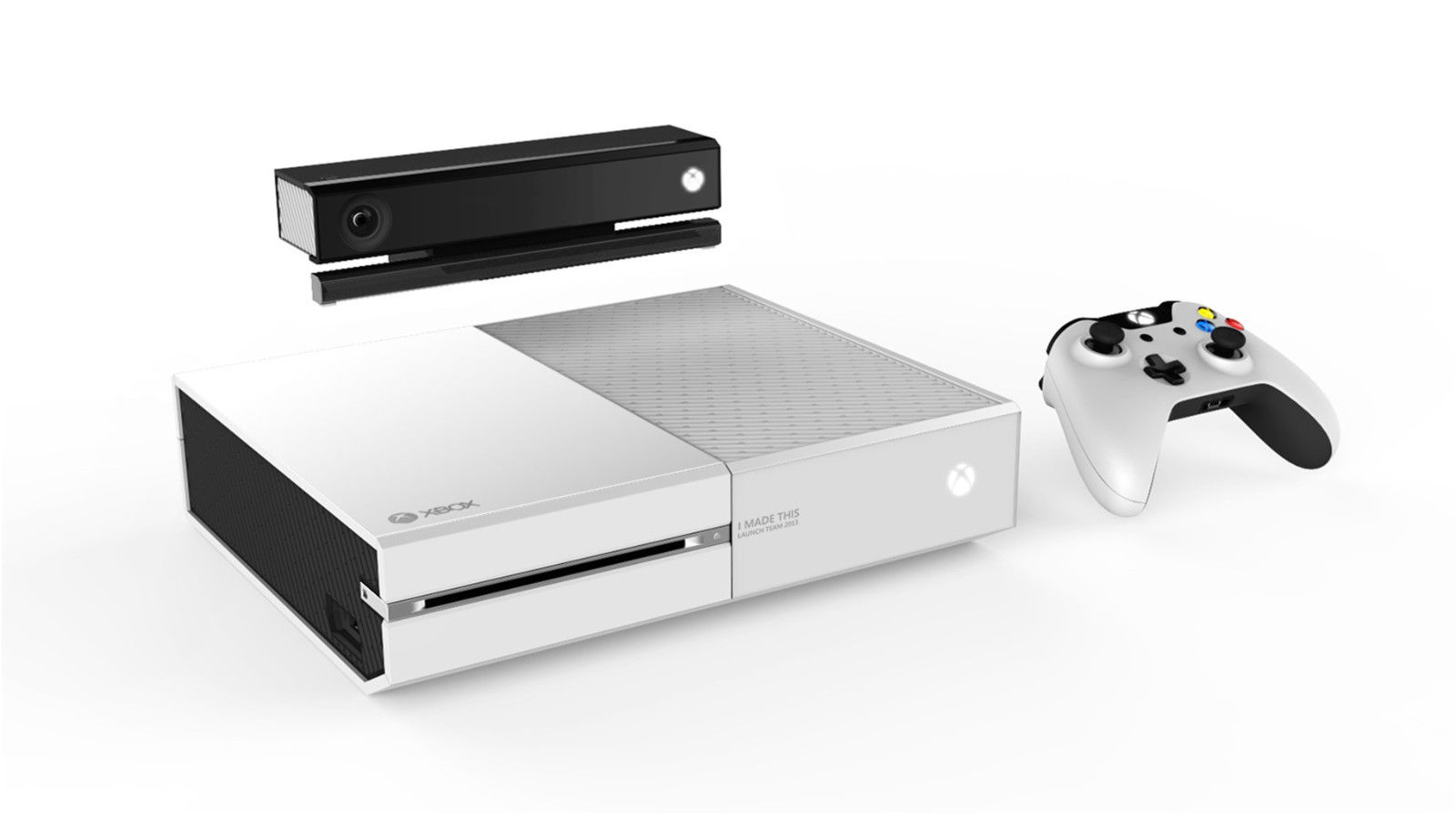
While one unlikely industry is taking an interest in Blu-ray discs, another one that has always relied on discs is thinking of giving it up. Not giving up on the idea of getting rid of discs, Microsoft may be testing a new budget version of the Xbox One that does not include a Blu-ray drive. Instead, gamers would have to get their games via digital downloads, cutting out retailers in the process.

White Xbox One

You might be able to buy one of these white Xbox Ones sometime this year without paying $11,000 for it

Of course, this is just a rumor. Even if Microsoft is testing the concept, there’s no way to know whether they will actually be brave enough to go ahead with the plan.

Regardless, the rumor has already been called “one of the dumbest ideas in history” by one analyst, although I guess it all depends on how cheap the drive-less Xbox One is going to be. At $399, the same price as the PS4, it won’t be competitive. And if the price drops too low, then people will wonder why the “normal” Xbox One, simply with a Blu-ray drive added to the mix, would cost so much more. I also think this flies in the face of Microsoft’s main “all-in-one” strategy – you can’t have an “all-in-one” media device that won’t play Blu-ray movies, can you?

More believable are the rumors of a white Xbox One, and one with a 1TB drive, both coming just in time for this year’s holiday shopping period. The 1TB Xbox One, in particular, is a much needed add-on considering the size of games these days.

And that’s all I could find this week. It’s not much, but it’ll have to do for now. Wishing you a happy, healthy and prosperous Year of the Horse. See you next week.

Weekly News Roundup (26 January 2014)

Sunday, January 26th, 2014

I’m nearly through with my annual The Wire re-up, so I haven’t been watching much Netflix recently (as my bandwidth usage graphs will attest to). If you haven’t watched the show, I highly recommend it (just don’t give up until you’ve finished the first season, but I suspect you’ll be hooked around episode 6 or so, or it’s not the show for you). I don’t want to be one of those people that annoy others by evangelizing The Wire, but the show is so good that you feel others are missing out (and most that have been told about it have been “converted”, after the obligatory “nothing happens” statement after watching the first couple of episodes).

Oh yes, the WNR. Here we go.

Copyright

For those lucky enough to get a pair of Google Glasses, here’s a tip: don’t wear them to the cinema unless you want to get interrogated by Homeland Security. What started out like one of those Internet tales that eventually gets disproved on Snopes has been confirmed to be totally true (by the theater chain, the MPAA and ICE), a story in which an Ohio man (and his wife) were pulled midway out of a viewing session, detained and questioned for more than an hour on the suspicion that his (turned off) Google Glasses were being used to record the movie.

This is despite the man explaining from the offset that the device had been turned off, and gave permission (or rather, pleaded) with the federal agent to check the contents on the Google Glass device and confirm that nothing had been recorded. The ICE Homeland Security agent was apparently asked to intervene in the matter by a MPAA rep present that day to monitor the screening of the popular (and popular piracy target) ‘Jack Ryan: Shadow Recruit’.

Google Glass

Wearers beware: Don’t wear your Google Glasses to the movie cinema

Instead, the man was interrogated for an hour and asked who he worked for, and funnily (although probably not to the man at the time), whether Google was employing him to record the movie. I know the MPAA (and by extension, ICE Homeland Security) has no love for Google , but this was a bit of a stretch.

For his troubles, the man and his wife were offered two free movie tickets by the MPAA rep by the MPAA rep so the couple could finally finish watching Shadow Recruit. Amazingly, The MPAA rep’s name was Bob Hope, a distant relative of the more famous Bob Hope (again, just to reiterate, this story is true). When the frustrated cinema patron, who only wanted an genuine apology instead of an explanation as to why he was targeted (due to the movie’s popularity, and the theater’s recent problems with piracy), did not seem placated by the two free tickets, two more free tickets were offered. The man was now infuriated.

You can read the entire description of the ordeal on The Gadgeteer website, where the story was first published. Scroll down to read the updates too, which includes confirmations from ICE Homeland Security of the incident.

Incidentally, a cam’d copy of Shadow Recruit made its way onto the usual places roughly around the same time. Presumably one now recorded on a Google Glass device. So the record for Shadow Recruit goes Pirates 1, MPAA 0, Poor Google Glass Guy (and his wife) -999.

High Definition

The BDA, that’s the Blu-ray Disc Association, has approved plans to expand the Blu-ray specifications to include support for 4K UltaHD content. A task force consisting of 17 members, including Technicolor, Dolby, Fox, Disney and Sony, has been asked to come up with the final specifications for Blu-ray 4K. The changes could include more than just a larger capacity disc and a new video codec, and other improvements such as support for higher framerates could be introduced (finally allowing The Hobbit films to be shown in HFR 3D at home).

One of the proposed changes could see the introduction of 10, 12 and 16-bit deep color encodings. One company working on this claims to have developed an algorithm that allows for deep color encodings without an increase in bandwidth, and the finished output would also be backwards compatible. Studios would need to update their encoding technology, and Blu-ray players will also need to be updated to take advantage, but with the 4K specifications meaning changes are coming anyway, it might be a case of killing two birds with the same stone.

Netflix

Netflix within 6 months of breaking 50 million user barrier

A disc based approach to 4K is still the best way to go for now, in my opinion. That’s not to say that streaming based 4K, which was a highlight of CES, doesn’t have its place. It’s certainly where Netflix thinks subscriber growth will come from in the future, although they seem to be doing quite alright even without 4K. A new shareholder report revealed Netflix’s total subscriber figure rose by 10% in the last three months of 2013 alone, with the company now having 44 million subscribers. I would gather the attention that original programming has garnered, via award nominations and wins, has contributed heavily to the growth figures. Despite the high cost of production of these shows, the investment appears to be well worth it, with net profit for the company up dramatically as well during the last quarter.

Netflix also commented on the recent Net Neutrality ruling. Netflix probably has the most to lose from the ruling, and the company is calling on ISPs to act responsibility. Netflix says ISPs should adopt a voluntary code of conduct on the matter, although they also believe that no ISP is stupid enough (in my words, not theirs) to do anything too “draconian” (their words, not mine). If ISPs start to get too “aggressive”, Netflix still wants the government to intervene via new regulations. You can read the shareholder report here.

Shameless plug time: Click here to sign up to Netflix, get a month long free trial and help me make a few bucks!

Gaming

As promised last week, we take a slightly more detailed look at the NPD results for December in this week’s WNR, now that more numbers have been made available. As mentioned in the last issue, the Xbox One was the best selling non-portable console for the month (the best selling console being the DS, which sold over a million units). The PS4 was not that far behind though.

Xbox One Forza 5

The Xbox One was the most popular console in the US for December

With 908,000 units sold compared to the PS4’s 860,000, the Xbox One did well to follow up on November’s 909,000 units sold – that’s 1.8 million in about five or six weeks of sales, which is not bad at all. Globally, the PS4 still has a comfortable sales lead though.

If we count the Wii U as a next-gen console, then its 480,000 units sold means it is in a distant third place against the the two powerhouses from Microsoft and Sony. 480,000 is still the Wii U’s best month ever, but Nintendo would have expected more sales, particularly with the company’s consoles having a history of being a popular gift idea in holidays past.

Data provided by Microsoft also showed that the Xbox 360 sold 643,000 units, far ahead of the PS3’s 299,000. The PS3’s low number can be explained by the smaller difference in pricing between it and Sony’s next-gen offering compared to the Microsoft offerings (the Xbox 360 was available for cheaper than the PS3, and competes with Microsoft’s own Xbox One, which is $100 more expensive than the PS4). It seems PS4 sales may be cannibalizing PS3 sales in a more dramatic way than the Xbox One is doing to the Xbox 360.

Regardless, sales of both of the older consoles seems to have more than halved compared to just a year ago, which is making game publishers worried about the continued viability of both platforms, according to analyst Michael Pachter. This is why Wedbush Securities’s Pachter believes a price cut could be coming for both the Xbox 360 and PS3 in February, a move pushed through by publishers concerned that holidays 2014 could be one where the Xbox 360 and PS3 are no longer relevant.

The good news, Pachter says, is that both Microsoft and Sony can afford a price cut due to the ever decreasing cost of manufacturing.

I think a price cut could be a good thing, but I don’t know if publishers are so concerned as to start “threatening” Sony and Microsoft for a price cut. There are already a hundred something million PS3s and Xbox 360s being owned by people right now, and I don’t see how adding a couple of extra million via a price cut will help the situation all that much. Besides, if people are abandoning their PS3/360 for a PS4/XB1, then that’s a good thing isn’t it? PS4/XB1 games will be more expensive, and so publishers should be able to make more money (assuming production costs are similar).

Surprisingly, here in Australia, prices have already started dropping (I say surprisingly because we seem to overpay for everything here). The lowest Xbox 360 price I’ve seen is $USD 130, $USD 165 for the PS3. So there’s definitely room for US pricing to drop.

And while there’s plenty of room left to write, I think I’ll end the WNR right here for this week. Have a great one, and talk to you again soon.

Weekly News Roundup (12 January 2014)

Sunday, January 12th, 2014

And we’re back. News wise, that is. With CES happening this week, there’s a lot of interesting stuff floating around, and that makes my job a lot easier than trying to write up the latest non-story about how some intern at The Ellen Show might be leaking screeners to torrent sites. That’s for next week!

Let’s go.

Copyright

There was a peek into the mindset of the MPAA this week as The Hollywood Reporter published an interview with the MPAA’s top lawyer Steven Fabrizio, in which everything from SOPA to Hotfile was touched upon.

My take from the interview is that the MPAA seems to think it’s everyone else’s responsibility to do more on the piracy problem, yet it is the MPAA’s efforts that have led the way for the successes enjoyed by legal services such as Netflix. The government can do more, Fabrizio says, and not just the US government but “all governments around the world”. Google should do more too, because “they have a great responsibility to do more” and that’s because Google apparently “benefits tremendously” by providing search engines access to pirated content. Other industries must also do more and “adopt meaningful and voluntary reforms”.

IsoHunt Logo

Did the MPAA’s victory over sites like isoHunt help legitimate services like Netflix?

So why should everyone else help out the home entertainment industry, and in particular, the movie industry? It’s the jobs, stupid. And the MPAA creates them and adds $$$ to the economy. Of course, other industries also creates jobs and $$$, and if the MPAA gets their way, it may mean less jobs and $$$ for the others. Google’s revenue alone is half of the movie industry’s entire worldwide revenue, I believe.

As for the MPAA’s victories being the legal foundation for the success of legal services, the question I would ask is: what victories? Granted, the music industry has had its successes, but could you really say that Spotify wouldn’t exist today if the RIAA hadn’t won against Napster? If anything, it’s the music industry itself that Spotify had to fight and win, and continues to fight today, to gain its success. But perhaps the paper victories over Napster and LimeWire was what gave the industry the false sense of security that allowed them to take more risks in licensing content to Spotify and others. So I guess there is a point here.

High Definition

Samsung 4K TV

Samsung betting on both discs and streaming for 4K

There might be a third Blu-ray video format joining standard Blu-ray and Blu-ray 3D later this year. Blu-ray 4K could be here by the end of the year, at least according to Samsung, who already has a four-layer 125GB disc ready to use, along with the players needed to play it. The only stumbling block now is the choice of video codec, which given the VP9 vs HEVC tussle I mentioned in the WNR last week, could become a complicated thing.

On the other end, and also backed by Samsung, Netflix thinks that disc formats are a “yesterday’s solution” to the problem of 4K content distribution, having just announced at the CES that Netflix 4K streaming will be available immediately on new 4K/UltraHD TVs from Sony, LG and Samsung, among others. These new TVs comes with a dedicated HEVC decoder chip, but beyond House of Cards in 4K, there’s not a lot of 4K content on Netflix at the moment. Plus, you’ll also need a 16 Mbps web connection, which is out of reach for many people.

So I think discs will have a place in the post 4K world. It also means new TVs and new (4K enabled) Blu-ray players that people will “have to” upgrade to, which is good news for the consumer electronics industry.

Gaming

Sometimes it’s nice to be an early adopter. Most of the time, it’s not. And that’s what some PS4 owners have come to realise, when their new $400 machine fails to do what $50 ones, and Sony’s old console, can do flawlessly. PS4 owners are reporting various Blu-ray playback problems, when the same discs works perfectly fine in other Blu-ray players, including the PS3. Affected titles include Despicable Me 2, Fast & Furious 6 and Sony’s own The Amazing Spider-Man.

Symptoms include freezing during playback, or a black screen when the disc first loads.

It’s very likely these problems will be fixed eventually via software patches, but for me, it’s more evidence that both the PS4 and Xbox One were rushed to market in an effort to compete with one other. Neither console looks completely ready for prime time, and it’s mostly in areas that have already been perfected in the previous gen. I think it’s just easier these days to release a (relatively perfect) piece of hardware with beta software, and then patch it up afterwards (the Windows model). In the days when hardware wasn’t so easy to update (when most didn’t have an Internet connection, or a USB port), I’m sure more effort was taken to ensure the software was also near perfect prior to release.

Wii U

With PS4 and Xbox One short of stock, Wii U stock remains plenty this holiday season. Photo credits: levelsave.com

Regardless of the issues with either console, gamers don’t seem to mind too much. Sony announced at the CES that 4.2 million PS4s have been sold worldwide in the 6 and a bit weeks of 2013, beating the Xbox One’s 3 million. The PS4’s lower price tag seems to be paying dividends for Sony, while Microsoft has struggled so far to justify the value of Kinect, which is included in the price tag. Until there are more compelling reasons for using Kinect, other than the haphazard voice and motion control currently in place, gamers will choose the console that seems to be better for games. Which is the PS4 at the moment.

News of the 4.2 million PS4s sold in 2013 must make painful reading for Nintendo execs, as the number comes perilously close to the total number of Wii Us out there in the wild (which at last count was somewhere just north of 5 million). This is despite the Wii U having had more than a year’s head start, and it’s now inevitable that the PS4 will outsell the Wii U in the first few months of 2014, with the Xbox One doing the same a little bit later. The more people that join the next-gen by choosing a Microsoft or Sony console, the fewer the number of people that will desire a Wii U, and this has to be a big worry for Nintendo.

Perhaps another price cut is what is needed to keep the Wii U in the game. Poll: What do you think the right price should be?

This is probably a good place to end this WNR. See you next week.