Archive for the ‘High Definition (Blu-ray/HD DVD/4K)’ Category

Weekly News Roundup (5 October 2014)

Sunday, October 5th, 2014

Welcome to another WNR. Another fairly short one this week, as the news was thinner than the too-thin aluminium that Apple used for the iPhone 6 Plus, apparently. This WNR doesn’t bend though (might fold, break, snap, but definitely doesn’t bend).

Let’s get going!

Copyright

The developers behind DRM-free gaming platform GoG and The Witcher series have once again reiterated their hatred of all things DRM related. If this wasn’t the 28th time they’ve mentioned this, and if I hadn’t already written the same news story eight times, it might have been an interesting news story to write. But at this point I think it’s almost a lie to call this “news” (“olds”?). Slightly less repetitive was the developer’s views on downloadable content. They’re not 100% against it per se, but they do believe that gamers shouldn’t be forced to pay for a DLC that is only “one-thousandth of the whole game”. Take note EA!

High Definition

Blu-ray Player

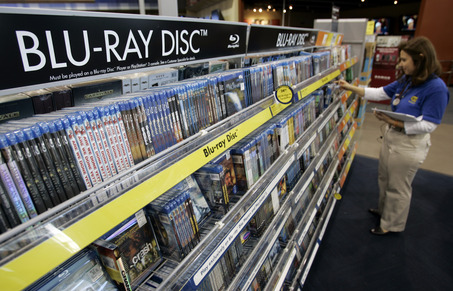
Blu-ray players are not as popular as game consoles for streaming Netflix. Not as responsive or as easy to use?

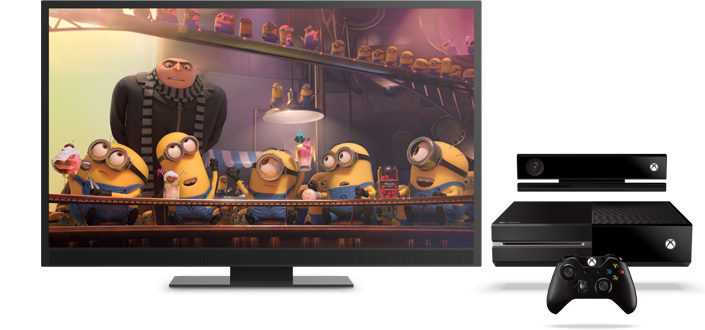
New research shows that nearly half of U.S. broadband households are using their game console as their main connected CE device, with many consuming more than 10 hours of non-gaming content each week on these devices. I guess I would fall into the more atypical household where I *only* use my game console for non gaming related tasks (more than 20 hours per week), since after a hard day’s work, I just don’t have the energy to even think about playing games (watching Netflix in a semi-vegetative state, however …).

Interestingly (or not), the survey of 10,000 U.S. households found that the Xbox platform was still more popular than PlayStation – 35% compared to 27%. The Wii was up there too with 35%. Blu-ray players, on the other hand, are not being used as much as game consoles, with only 9% of households using these as their primary device. Smart TV lags behind game consoles as well. I think the poor responsiveness, lack of app updates on Smart TVs and Blu-ray player for app such as Netflix is why these devices aren’t being used more – a missed opportunity by the CE manufacturers, if there ever was one. Smart TVs, in particular, have been largely a disappointment, considering how much easier it should be to just turn on the TV, press a button to access Netflix, as opposed to using a game console that often doesn’t even have a dedicated remote control. A lack of a common app platform on TVs and Blu-ray players, which makes making/updating apps for each and every device a time consuming exercise, is probably why the equivalent apps on these devices are so poor in quality, performance and features compared to say the PS3’s Netflix app (that and the low capability processors found in these devices, compared to the powerhouse that is a game console).

Coincidentally, another study was released this week suggesting that game console Netflix usage is actually down, compared to standalone media players and smart TVs. The survey says that 28% of users now use devices like the Roku and Chromecast for their Netflix streaming needs in the living room, which is double what is was in 2013. Smart TVs usage is at 28% as well (up from 20%), leaving video console usage, while still top, at the reduced usage of 43%.

Crouching Tiger, Hidden Dragon: The Green Legend

The ‘Crouching Tiger’ sequel will be available on Netflix and in the cinemas at the same time … cinema chains are not pleased

No matter which device you watch it on, one movie that many of these households will definitely be watching via Netflix next year will be the sequel to the Oscar winning ‘Crouching Tiger, Hidden Dragon’, which will air exclusively on Netflix at the same time as the movie’s theatrical/IMAX debut. The reason for the Netflix exclusivity is because Netflix are one of the producers of the film – a Netflix original movie, if you will. This might just be the highest profile movie to have SVOD release window coincide with its theatrical run, and it hasn’t gone unnoticed by U.S. cinema chains, most of which (Regal, Cinemark and AMC) have vowed to not screen the film in their theaters.

The chains have simply dismissed the movie as a “made for video” one, and they have cited this as the main reason why they won’t air it. But based on history, we know cinemas are notoriously sensitive to their exclusivity window, and are willing to do everything to protect it, including boycotting a potentially popular film. Even when all powerful Hollywood studios attempted to shorten the exclusivity window by a couple of weeks in order to bring forward the digital/disc release window and to fight piracy, the chains retaliated quite swiftly (even though the last few week bring in very few cinema patrons) and Hollywood eventually backed down. So Netflix’s recent move, which also includes signing up Adam Sandler on a four film deal, is sure to keep theater execs up at night, even if they don’t want to admit it.

Personally, I’m looking forward to Crouching Tiger Part II. Not so much the Adam Sandler films. Let’s hope they’re more ‘The Wedding Singer’ and ‘Punch-Drunk Love’ than almost every other film (although I liked ‘Click’ and ’50 First Dates’).

Chances are, the films that Netflix will be producing will also be made available in 4K to help Netflix promotes its nascent 4K service. So it’s good news that the licensing terms for Netflix’s choice of 4K codec, HEVC, has been announced and it’s actually better than the one for the current industry standard H.264. The MPEG LA has decided against charging any fees for the codec’s use on videos streamed over the Internet or sold on Blu-ray disc, which will surely help HEVC gain further industry acceptance. Products that can encode or decode HEVC will be charged at a rate of 20 cents per product, with the first 100,000 units per year free of charge. Yeah, you know it’s a slow news week when licensing terms and fees become a subject of discourse.

Gaming

Windows Product Family

One Windows, many devices

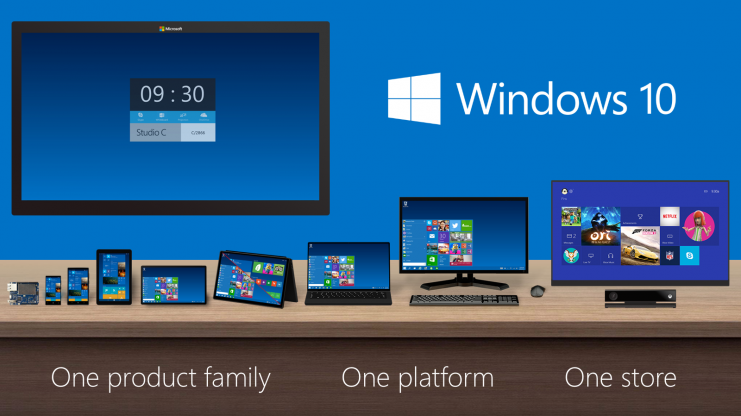
Not that much happening in gaming (or anything else, really), except the somewhat surprising announcement of Windows 10 (skipping Windows 9 entirely … perhaps it was considered too confusing due to existence of Windows 95/98 (hopefully not on any actual in-use computers) and what it will mean for gaming on the Xbox platform. The unified approach, which didn’t really work with Windows 8 (okay for tablets, horrible for desktops), will be kicked up a notch by trying to unify not only desktops and laptops with smartphones and tablets, but also the Xbox One game console as well. Games made for Windows 10 could be made to be compatible across every Windows device, from 4″ phones all the way to 80″ TVs connected to the Xbox One.

I seriously doubt we’ll see “proper” Xbox One games also being playable on Windows PCs, due to the huge differences in architecture and differences in optimisation techniques between Xbox One and Windows games. So it will be more things like apps or perhaps even MMOs, that will have universal Windows support. At the very least, it’s something Microsoft can say they have that Sony cannot really compete, since Sony don’t make their own smartphone/tablet and computing OS. Sony can adopt Android as their own though, and port support for certain Android apps to the PS4.

——

And that’s all we have this week. See you next time!
Weekly News Roundup (21 September 2014)

Sunday, September 21st, 2014

If you’re sick of the iPhone 6 overload this week, then you’ve come to the right place. There’s only one paragraph in this WNR about Apple’s new phone, and it has to do with perhaps the most boring aspect of the phone. There’s also a rant in there about print media. Fun times!

Copyright

Downloading Communism

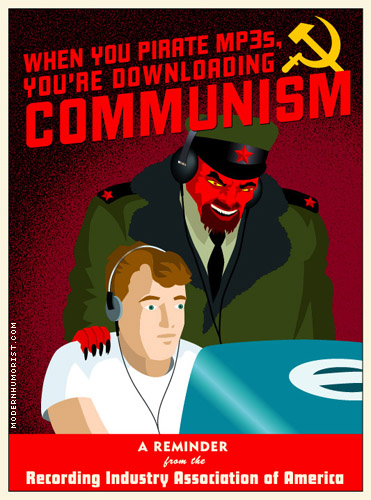
Time to bring out this classic poster again …

Piracy losses are translating to higher prices for consumers and is having a negative effect on the economy. This has been one of the major argument for a crackdown on piracy, but according to leading economists in Australia, the reverse might be true. This week we again turn our focus to Australia and the heated debate there over what to do about the piracy problem. A submission this week to the government from leading economist Henry Ergas and the former head of Australia’s peak consumer body Allan Fels argues that the government’s plan to make ISPs monitor user downloads is actually bad for the economy, and bad for consumers.

Their argument is that the high cost of running such a program, nearly $150 million a year, will not translate to anything close to this in terms of increased revenue and benefits to the economy, based on current evidence. And any increased revenue to rights holders are unlikely to be passed on to consumers. In the most optimistic scenario under the government’s proposals, where piracy is substantially reduced, the removal of the need for rights holders to “compete” with pirated downloads may actually bring about higher prices for consumers, and actually end up “incentivizing” piracy, the submission also warns.

If this “incentivizing” happens, then piracy rates will back up again and the only options left for rights holders would be to improve the value of their offerings, greatly improve the availability of legal content on services that consumers want to use, and also ensure things like release window delays are as short as possible. Basically all of the things that they should be doing right now to fight piracy instead of asking the government to intervene, argues the economists.

The most worrying thing about the Australian debate right now is that all of these same arguments have been heard before, and the practical actions suggested have already been tried, tested and shown to be largely ineffective. And yet, we still have rights holders asking for legislative action. It’s interesting that rights holders in the US have stopped asking for the same, at least not publicly, all because they fear the same kind of consumer backlash that occurred when SOPA/PIPA was being debated. Which is why the MPAA this week again re-iterated their lack of desire for legislative action. The MPAA’s Chris Dodd was saying all the right things too, about not “finger pointing at everyone” and “arresting 14 year-olds”, but instead to focus on “accessibility” and releasing content at “price points [consumers] can afford”. At the very least, it seems rights holders there have lost their appetite for new laws (publicly at least), just like how rights holders here in Australia have lost their appetite for legal action (having lost a major case a couple of years back). Well, at least they’re learning (in terms of what they say publicly, at least).

——

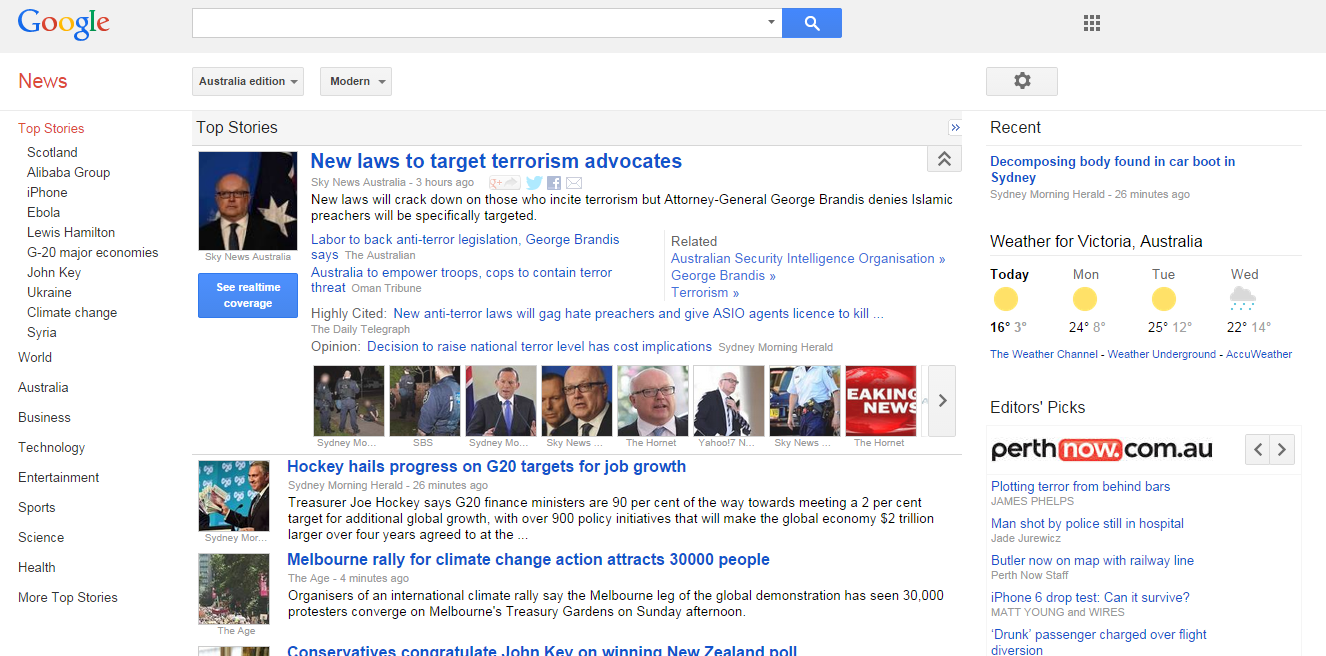
I was going to write a full length news article on this story based on the attention grabbing headline of “NewsCorp: Google is a ‘platform for piracy'”. Ohh, I though, Murdoch is on one of his piracy rants against Google again, oh goodie. But then I read the article and it wasn’t really focusing on the piracy problem, or the kind of piracy that I usually talk about here. Rather, it was mainly about the dispute between NewsCorp and Google, and goes much deeper than who is downloading what via the search engine. In case you don’t know, newspapers have a love/hate relationship with search engines like Google. Mostly hate these days. They don’t like the fact that Google “aggressively aggregates” content (some of us webmasters don’t like it either), in which Google takes content from sites and sticks it in the search results (with credit and links, but done in a way that makes visiting the site unnecessary – do a search for “aggregation definition” on Google, and you’ll know what I mean). Which is why drastic measures such as blocking Google crawling have been employed in the past to try and stop Google’s content “stealing”, which unfortunately has the side effect of greatly reducing your visibility to users. Pay walls were then introduced to try and make news profitable again, but in my opinion, it only made aggregated content more valuable (as sometimes a headline and summary is enough, especially compared to the cost of paying for the full thing). Google’s argument is that it’s good for the end users, which it is, but it’s also easy to see why some content creators are not happy with what Google (and to be fair, the other search engine too) is doing.

Google News

Google’s news aggregation – good for users, bad for content creators?

While there are legitimate arguments to be made about the content aggregation issue; the lack of genuine competition in the search sector; and issues of anti-competitive behaviour with Google’s perceived favourable treatment of its own products over those from other companies (Google is both a partner, and a competitor, to content creators, in my opinion); on the flip side of the coin you could argue this is just another case of old media not being able to adapt quickly enough. In NewsCorp’s accusations against Google, this interesting passage caught my eye: “For example access to 75% of the Wall Street Journal demographic at 25% of the price, thus undermining the business model of the content creator”. Undermining, or just doing business in a more efficient way? Google could label the same accusation against more successful social media platform, which are offering even better targeting at even lower prices (with Google+ having failed to be as successful in doing the same). But isn’t this just progress and innovation?

As for the woes of the newspaper industry, I don’t know if it’s fair to blame Google, or even the Internet in general for their troubles. To me, if a product is worth paying for, people will pay for it. If people’s expectations of what something is worth has changed, and you can’t re-engage with people again to convince them that paying for news is worthwhile, then perhaps it’s time to re-think the whole business of news. Maybe it shouldn’t be a business at all, but a publicly funded, truly independent institution who’s goal is not profit, but the actual betterment of society and democracy. Then maybe we’ll get back true journalism that protects, not undermines, democracy (via the dumbification of news and the serving of vile populist garbage in the name of profit – the click-baiters of their time – tactics that NewsCorp should be very familar with).

High Definition

iPhone 6 Comparison

Obligatory iPhone 6 pic

I suppose I should mention the iPhone 6. Not that it has much to do with what I cover in the WNR, except for this slightly related story about the choice of codec being used for FaceTime over cellular 3G/4G. The use of HEVC/H.265 makes a lot of sense when combined with the iPhone 6’s more powerful processor (which is needed for realtime HEVC encoding/decoding) and the need to reduce bandwidth requirements, while increasing the quality of video calls. Would this be the first mass consumer product to feature built-in HEVC/H.265 support? Possibly, and it won’t hurt the format’s chances to become the next de facto standard for web video.

Which is why things are not looking great for Google’s VPx, their open source, royalty free alternative to HEVC/H.265. I’m sure Google’s Android will be pushing VP10 if/when it is released sometime next year, but apart from the lack of industry support for the format, technically, it just doesn’t seem to be quite there compared to the more polished and efficient HEVC. As one industry analyst said recently, “The industry has already selected HEVC,” and that, I’m afraid, is that for Google’s VPx.

Tests have shown that VP9, while perhaps better than H.264, cannot really compete at the moment with HEVC. Surprisingly, VP9 is in practical use to a much larger degree than HEVC at the moment, thanks to Google pushing the use of the codec for YouTube, and also superior native browser support due to the codec’s open-sourcedness. But with Netflix 4K choosing HEVC, Blu-ray 4K also choosing HEVC, and now Apple also going down the HEVC route, there’s not much room for VP9/VP10 to grow into. Nobody wants another format war, especially one as tame as this one, so the industry will choose one format and just go ahead with it – and right now, the choice is definitely HEVC.

Gaming

As promised last week, more on August’s NPD results right here. The PS4 was again the most popular console, 8 month in a row, but it appears that its lead has shrunk somewhat. Unconfirmed information suggests that the PS4’s 175,000 units sold was just ahead of Xbox One’s 150,000. Nothing official from either Microsoft or Nintendo though, so the difference could actually be much greater than that (especially for the Wii, as Mario Kart fell out of the top 10 games chart in August).

White Xbox One

Xbox One needs to be cheaper than the PS4

More worrying for Microsoft is that traditional Xbox 360 favourites like the Madden series are being won by Sony, with the PS4 version of Madden NFL 15 outselling the Xbox One and Xbox 360 version. In fact, the same trend is true for all of the top selling multiplatform games right now except for Call of Duty: Ghosts. The next Call of Duty game will be interesting, not only is it one of the biggest franchises around, this time, we may actually see the PlayStation become the top performing platform for the series’ next chapter. If this were to happen, it could have serious implications, in that developers will most likely make the PS4 their lead platform (if they haven’t done so already) and the Xbox One version of the same game will suffer, thus causing the sales/quality/value gap to grow even larger.

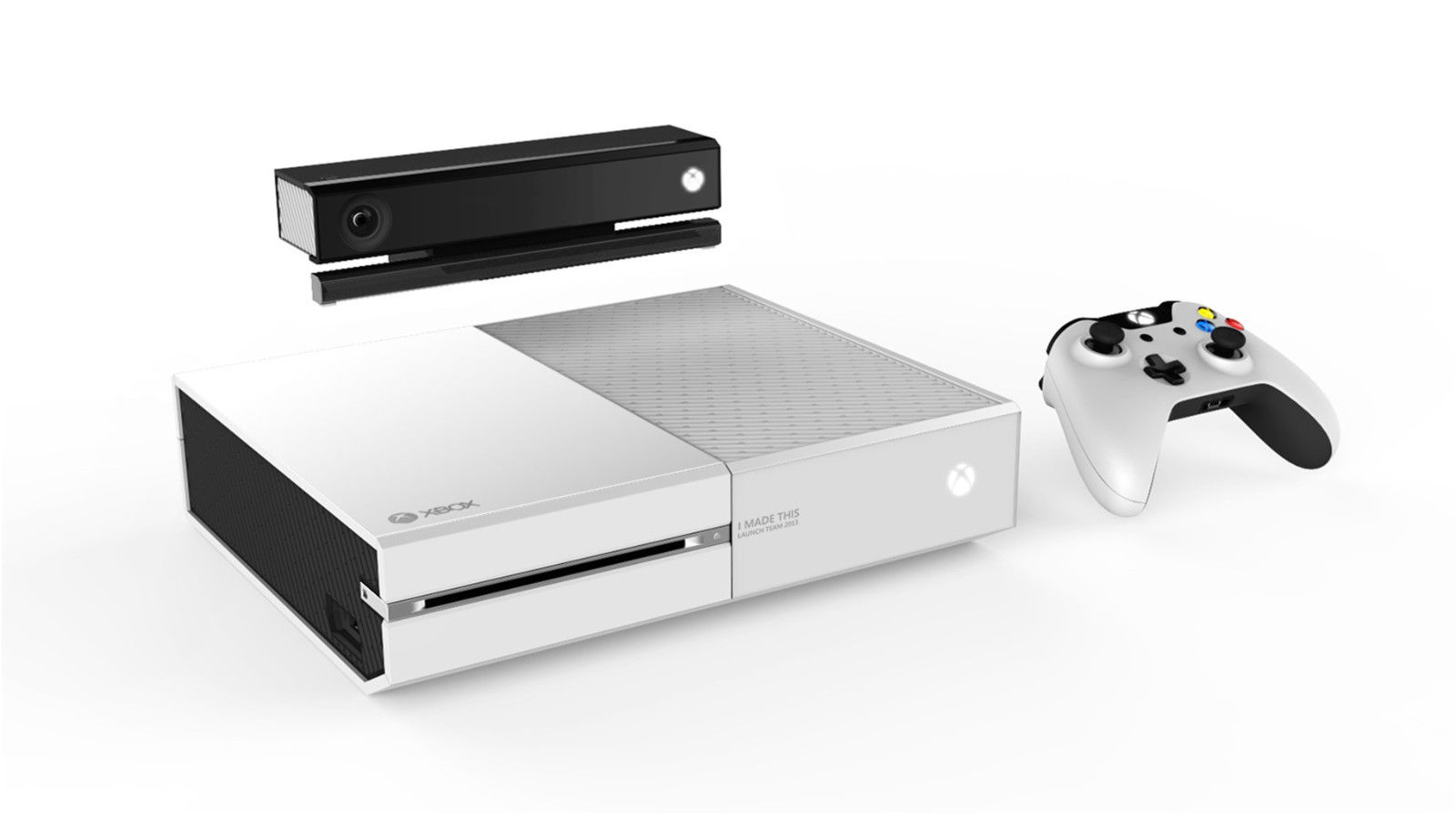
I bet Microsoft wishes now more than ever that they can have a do-over, so that they would have never bothered with all that DRM crap, and released the Xbox One without Kinect for cheaper than the PS4. It would have made the Xbox One a sure winner, but I guess they grew overconfident and felt they had room to experiment. The same kind of “arrogance” maybe that was responsible for the PS3’s relative failure. The good news for Microsoft is that their backflips have been fast and decisive, and so there’s still time to pull one out of the hat. But the Xbox One needs to be cheaper than the PS4 to have a real chance, and I’m not sure if Microsoft can afford to do it at the moment.

——

A longer than expected WNR this week, and sorry for the incoherent ranting. See you in a week (for more incoherent ranting, no doubt)!

Weekly News Roundup (7 September 2014)

Sunday, September 7th, 2014

Happy father’s day for those that do not live in the UK or US. In fact, I’m not quite sure if it’s father’s day anywhere else but here in Australia (although a quick search suggests Belgium, out of all places, also celebrate it on the same day). I watched Alexander Payne’s Nebraska over the last few days, and I have to say it was definitely an appropriate movie for father’s day, even if when I started watching it I had no idea.

Lots to go through this week, most of the stories unfortunately only came about in the last couple of days which meant weekdays of mostly thumb twiddling, and then rushing to get everything done on Saturday. Please excuse teh lower than norml quality.

Copyright

Evansville Indiana SWAT raid

Downloading movies is just as bad as promoting terrorism online, or sharing child pornography, according to an Australian media company

Hyperbolic much? So movie piracy is basically the same thing as terrorism and pedophilia, according to Australian movie studio Village Roadshow. Statements like this do not help to elevate the so called dangers of piracy (because most people realise that, at its heart, it’s all just a question of money), but I worry that it trivialises the much more insidious, dangerous and very much real threat of online terrorism and  pedophilia. This is also the same company, in its submission to an Australian government call for input on ways to solve the piracy problem by giving Hollywood everything they want, that says 900,000 jobs are at stake if piracy isn’t stopped. 900,000 is 8% of Australia’s workforce, and a number that’s higher than the total number of unemployed in the country at this time – sounds like quite a lot considering we don’t really have a movie industry.

The same week also saw Australia’s Media, Entertainment, and Arts Alliance back the government’s Internet censorship plans, only for the same union to backtrack and withdraw their support soon after. Turns out this union that represents journalists (whom are almost always against censorship) also represents people working in film and TV (which do support censorship), hence the schizophrenic positions the union seems to be taking.

Silicon Valley has also stepped into the debate here, and you can’t but help feel that Australia has become a pivotal arena for those that have different views on how to battle piracy (simply because our government is stupid and clueless enough to be persuaded to do just about anything). The Computer and Communications Association (CCIA), an industry group that represents pretty much every tech company that exists including Facebook, Google, Microsoft and Samsung, has waded into the debate on the side of consumers by saying that things like domain blocking and three-strikes simply do not work. Instead, content owners should focus on availability, ease of use and more equitable pricing, in order to fight piracy. A common sense position that will no doubt be ignored by our center-right government.

Fun times in Australia, that’s for sure.

All this focus on piracy has had a positive effect though. One of the focal points of criticism here has been the high cost of legal options, or rather, just the single option, singular. This is because we only have one pay TV operator here in Australia, and their strategy has been to lock up content on an exclusive basis in order to justify their high pricing. A strategy that obviously gives pirates the moral justification they need to do what they do. This week, the pay TV operator, Foxtel, finally announced a price cut (after years and yearly price increases), with $25 being taken off almost all of the packages and with more pocket friendly packages available for those that only want to watch shows like Game of Thrones and The Newsroom without having to subscribe to a bunch of other crap. The cynical part of me thinks this is the company’s way of trying to nullify a particular argument against the introduction of harsher laws, and that once these monopoly friendly laws are passed, prices will simply go back up again. But assuming this is a genuine attempt to find a market based solution to piracy, as well as counter any moves by Netflix into the Australian market next year, then this is definitely a step in the right direction. And it goes to show that there are solutions to the piracy problem that do not require going down the tricky path of censorship and domain blocking.

If domain blocking does gets approved here in Australia, one might have to look at the UK to see just how slippery the slippery slope of “guilty by association” can become. A story this week sees UK police now threatening domain hosts for selling domains to suspected owners of piracy websites. Apparently, if you’re an individual that has once upon a time possibly been linked with owning a domain name that might have been used to provide pirated content, none of it proven in a court or anything, then domain registrars must police these people and not sell them domains names that might possibly have some relation to piracy, even though the domain at the time of purchase would not be connected to a live website at all and so there’s no way to know how the domain name will be used, or even if it will be used at all in the future. Easy!

——

An update to a story from earlier this year, when DRM came to coffee. Apparently, the DRM in Keurig coffee machines that prevents third party pods from being used has been cracked by, surprise surprise, a third party pod maker. It’s hard to say if the DMCA could apply in this case and whether Keurig can take Mother Parkers Tea & Coffee to court over the “hacking” or not. Sometimes company put in DRM they know will be cracked simply because it gives them the legal option to sue later on.

High Definition

DVD vs Blu-ray vs 4K

4K Blu-ray will have four times the pixels, but won’t need more space thanks to HEVC – 4K Blu-ray players coming to a store near you in 2015

Excited about 4K? Then 2015 is the year for you, as that’s when 4K Blu-ray players and discs will be available (towards the end of 2015, it has to be said). The Blu-ray Disc Association (BDA) revealed the current status of 4K on Blu-ray at the IFA electronics show, and they say that the specs are almost done, and licensing will start “Spring or Summer 2015”.

The BDA also revealed some technical specs for 4K on Blu-ray. The physical disc won’t actually change, and 50GB will be enough with the more efficient HEVC/H.265 codec being used. The increased resolution of 4K isn’t the only improvement to the picture quality, as other additions such as an improved color gamut (which ups the visible color spectrum from the current 30-35% to 70-80%) as well as increasing video bit depth from 8-bit to 10-bit will also bring about picture quality improvements.

Even though the currently agreed upon specs do not call for higher capacity discs, the BDA also revealed that larger discs are in consideration, with 66GB and 100GB discs being considered for 4K (or even 1080p) use. 4K Blu-ray players are expected to hit the market for the 2015 holiday sales period, and 4K TVs will hopefully be affordable enough then as well.

For those that want to make the argument that discs have had its time, and I’m definitely leaning towards this camp, here’s an interesting argument against digital downloads: carbon footprint. Despite logic suggesting otherwise, large downloads are actually more costly to the environment in terms their carbon footprint than discs. This is due to the electricity used by devices that download large content, such as PS4s. Of course, the numbers can be played around to suggest the opposite conclusion, if for example you use your car to get to the shops to buy the Blu-ray, or if you use the background downloading feature of the PS4 while you’re using it for some other function which means the download doesn’t use much excess power. And there’s also the issue of millions of plastic discs that will one day be useless and what to do about these. Something to think about, perhaps.

Gaming

The Sims 4: Pixelation "Bug"

Catastrophic Bug or annoying DRM? It’s so hard to tell these days …

While this story probably fits better in the Copyright section above, it might just be that it’s a gaming story after all. You see the confusion comes from the fact that the new Sims game might contain a major glitch, that may also be an intentional way to annoy pirates. For those not familiar with The Sims, the characters you control in the game, sims, can performs acts such as going to the toilet and taking a shower. With EA keen to keep the game family friendly, pixelation is used to keep the naughty parts hidden. However with this “bug”, the area of pixelation increases every time the sim does something that requires it, until it covers virtually the entire screen.

Gamers are already reporting that the bug seems to occur only in pirated versions of the game, which suggests that this is more likely an anti-piracy measure, than careless programming on the part of the developers. Like other games that have employed this type of DRM, some gamers are apparently posting about this bug on forums and to tech support, not aware that they are inadvertently outing themselves as pirates in the process.

Of course, patches and fixes will remove this “bug” from the pirated version if it indeed turns out to be an anti-protection thing, but as long as this glitch does not affect paying customers, then this is one DRM that I don’t mind!

——

Well that went longer than expected.

Weekly News Roundup (24 August 2014)

Sunday, August 24th, 2014

Welcome to another edition of the WNR. We have some good stuff in here, including a look at why movies flop, how to prevent piracy from happening, all the video game stuff from NPD to more Wii U misery, and my favourite, a look at if the original un-altered non-special edition original Star Wars trilogy films might be heading to Blu-ray soon.

Let’s get started!

Copyright

The Expendables 3

The Expendables 3 does badly at the box office. One ‘Expendables’ movie too many, too much competition due to other blockbusters, or pre-release piracy to blame?

What makes a movie flop? More specifically, what made ‘The Expendables 3’ a box office turd (relatively speaking)? According to the distributors of the film, Lionsgate, it was the pre-release piracy of the film that was ultimately responsible, and they’re even suing 10 individuals accused of downloading and sharing the movie. But maybe there are more tangible and more traditional reasons why movies like ‘The Expendables 3’ flops.

As one executive pointed out when asked about ‘The Expendables 3’ failure, if pre-release piracy does have an effect on box office results, it’s less likely to do with the actual download (or the number of people who downloaded it, and however many out of these people that will then not pay for a movie ticket), and more to do with the word-of-mouth effect.

Imagine, if someone downloaded a crappy pre-release version of a very cinematic movie like Gravity, really liked it and told their friends. Most of them will most likely go and pay to see the movie at the cinema rather than download the same crappy copy themselves. Even the original downloader, if he/she really liked the film, might pay to see it on the big screen properly. In this case, pre-release piracy probably doesn’t hurt the movie as much (but probably doesn’t help as much either, since positive word of mouth would have happened regardless of whether people downloaded it or watched it in the cinema and then told their friends about it).

But if the movie was crap, like say, oh I don’t know, the third movie released in four years, in a series that’s beginning to lose its novelty value, then perhaps word of mouth will only discourage others to pay for the movie, and instead, to download a pirated copy to sate their curiosity. In this case, the box office revenue would be negatively affected. But isn’t more the case of recycled movie ideas and badly made movies not getting the punishment at the box office that they deserved, because people were not more adequately informed of the movie’s said poor quality in the first place? If piracy does have this kind of effect, isn’t this a good thing for the industry, and for moviegoers, to force studios to be more competitive and to be more creative in coming up with the kind of movies that we, their customers, actually want? Hmm …

This is why financial losses due to pre-release piracy is hard to calculate. There are just too many reasons why a movie might flop, like competition (“Guardians of the Galaxy” and “The Teenage Mutant Ninja Turtles”, for example), the aforementioned franchise-fatigue, bad reviews, poor marketing, or even a misleading trailer, might all be reasons for the flop. Blaming piracy is easy though. Too easy!

One show that won’t be blaming piracy, mainly because almost no one is pirating it, is John Oliver’s Last Week Tonight news satire show. And there’s a very good reason why people don’t pirate it – it’s available on YouTube, even here in Australia, for free! Australia’s Gizmodo says, and I fully agree, that because of this, the show and its distributors, HBO, should be applauded for making content so easy to access, and the growing popularity of the show means HBO won’t be losing much in the process anyway.

High Definition

Star Wars on Blu-ray

Will we ever see the original unmodified Star Wars trilogy on Blu-ray?

Speaking of HBO, the premium cable channel may soon look towards Netflix for inspiration, as its HBO Go app may soon add other network’s shows to its original programming (kind of what Netflix has done, but in reverse). Unfortunately with HBO Go still tethered to a traditional HBO cable package, any real talk of being in competition with Netflix is still far too premature.

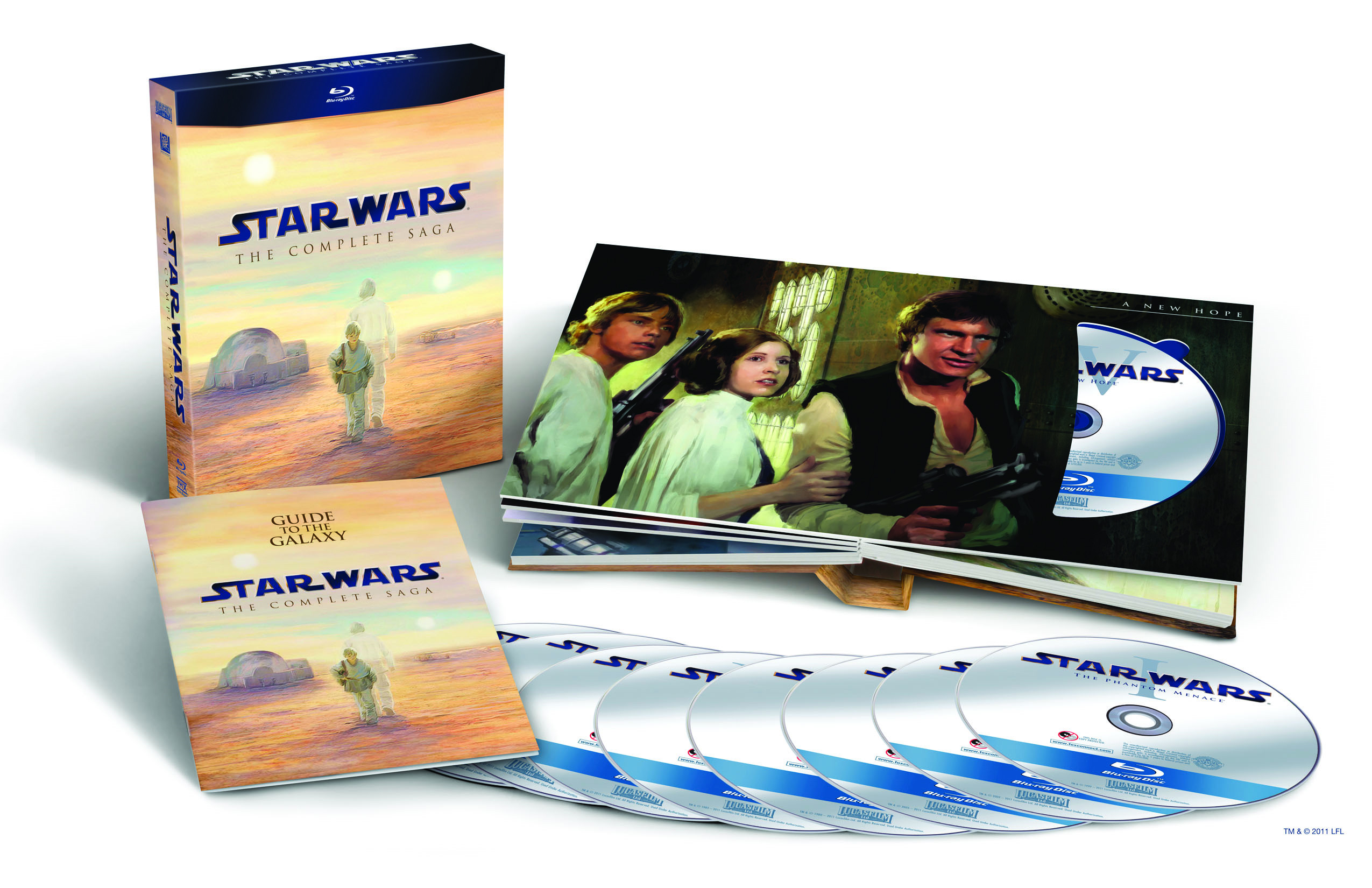
Possibly the most exciting news for me this week is that the original cuts of Star Wars may be heading to Blu-ray! Den of Geek looks at the evidence and tries to see if the rumours may have something to them. It’s a fairly long read, but with George Lucas having sold Lucasfilm to Disney, with the new Star Wars movie going for the look of the original trilogy rather than the CGI based prequels (thank goodness), and of course the clamour for a new 4K version of the film, there might be just enough there to suggest the original trilogy might just make its Blu-ray debut sooner rather than later. Fingers crossed!

Gaming

The July NPD results showed that the PS4 was yet again the top selling console in the key U.S. market, for the seventh straight month. Despite the Xbox One price drop and the continued strength of Mario Kart 8 on the Wii U, the PS4 accounted for more than half of all hardware and game sales for next-gen consoles. The margin between PlayStation and Xbox appears to be growing bigger as well, with the PS4 and PS3 combined beating the Xbox One and Xbox 360 combined for the second straight month. Even Sony is finding it hard to figure out why so many people are buying the PS4, to the point where it has them worried.

PS4 with controller and PS Eye

Sony “worried” about the success of the PS4, and where future sales will come from

Not knowing why your console is a success can be just as “terrifying”, according to Sony, as not knowing why it is a failure (yeah, but tell that to Nintendo!). It makes planning for the future much harder, they say, and Sony are worried about exhausting all the sales derived from “core gamers” and don’t know where future sales might possibly come from.

But it’s still a nice problem to have, at least compared to Nintendo’s. Nintendo’s hopes of turning the Wii U into a more “hardcore gaming” friendly console does not seem to have worked, with Ubisoft this week announcing that they will stop releasing “mature’ games on the Wii U. So games from the ‘Assassin’s Creed’, ‘Far Cry’ and ‘Ghost Recon’ series will no longer feature on the Wii U, despite being available on the PS4 and Xbox One. Ubisoft says that there just aren’t enough sales of these types of games on the Wii U to justify making more of them, and the company will concentrate on family games like ‘Just Dance’.

In a similar announcement, Capcom says the Wii U will not be getting a new Street Fighter game that the other next-gen consoles will be getting. It’s kind of sad really. My first home console version of Street Fighter was on the SNES, which at that time, was every hardcore gamer’s preferred console. But Nintendo’s policy of having “no blood” in their games was already a sign of things to come, with Sega, and then Sony (and eventually Microsoft), having no qualms about violence in video games. It’s ironic that Nintendo is now trying to entice publishers to make these kind of games, and finding it quite difficult indeed.

——

And with those last few words, we reach the 1,000 words count, which feels like a good time to stop. See you next week!

Weekly News Roundup (17 August 2014)

Sunday, August 17th, 2014

It’s rather short WNR this week, where we have a couple of interesting news stories, but ones that don’t really need a lot of words to be written about. With Gamescom happening, there is definitely a slant towards gaming, which is also probably why news on other topics were a bit light.

Let’s get started!

Copyright

What piracy problem? U.S. households are spending up to $1,000 each year, every year, on video entertainment products such as cable TV, Netflix and Blu-rays. This means that the video entertainment industry could be worth $123 billion by 2015, and this is despite piracy having “nearly” brought the industry down to its knees or something hyperbolic like that. Futuresource Consulting’s report on the industry reads nothing like one for an industry on its last breathes, and actually sounds like one that is doing extremely well, and thanks largely to the Internet, not despite of it. Digital spending is growing so fast that it will exceed packaged media spending in 2015, for example.

Dropping disc sales have very little to do with piracy, and more to do with market saturation and the transition to digital

Dropping disc sales have very little to do with piracy, and more to do with market saturation and the transition to digital

As part of my “job”, I read a lot of reports of this kind, and most of them almost never mention piracy. Sure, packaged media sales are on the slide, but this and other reports clearly state that it’s most likely due to “market saturation, declining retail space and the growth in video consumption on subscription VOD services”. On the other hand, if you listen to the studios, then any decline is almost always down to piracy.

The fact of the matter is that consumer tastes have changed rapidly due to the Internet, and the industry was too slow to adapt, hence the surge in piracy and a (what looks like temporary) decline in revenue. The same thing happened/is happening with the music industry, possibly even more dramatically, as the transition from physical media to digital continues apace (and with the industry, not grasping the opportunity earlier enough, allowing the likes of Apple and Spotify to be the winners). Piracy is a side effect, a symptom of the problem, but perhaps not the real problem itself.

Gaming

Gamescom this week, and so we have the expected slew of gaming news. Sony got off to a good start by announcing that PS4 sales has topped 10 million worldwide. Microsoft, for understandable reasons, did not provide a comparable figure but was at 5 million as of April. With the PS4 beating the Xbox One for every month of this year in the key U.S. market that was once dominated by the Xbox 360, the gap between the two consoles appear to be growing. Here in Australia, the PS4 is outselling the Xbox One by a 2-to-1 margin!

Xbox One Media Playback

Xbox One about to become one of the best media players, thanks to September update

But the announcement of Gamescom so far, at least in terms of stuff that I cover in the WNR, would be Microsoft’s announcement of a full capable media player for the Xbox One, coming in September. The media player will support almost every format, including the ever more popular (but the rarely supported, at least on game consoles) MKV format (the format of choice for HD downloads), and also the reintroduction of DLNA streaming support.

With Sony yet to announce when they’ll bring back DLNA support, and to add to the PS4’s media support, it seems the Xbox One is now the console of choice when it comes to media playback. But given the intense competition between the two big consoles that has so far characterized this generation’s console wars, I wouldn’t be surprised if Sony make their move in this area soon.

As I was writing this, the NPD stuff for July has just been released. I think I’ll cover it next week instead of right now, but spoiler alert: PS4 wins again.

——

And so ends this rather short WNR. See you next week!