Archive for the ‘Gaming’ Category

Weekly News Roundup (15 December 2013)

Sunday, December 15th, 2013

It’s been a bad week for YouTube, copyright wise. Which makes it a good week for me, since I have something to write about. We also have the first round of the expectantly bitter PS4 vs Xbox One console wars (with the Wii U on the sidelines, waving arms furiously trying to get someone’s, anyone’s, attention).

Let’s go!

Copyright

So another YouTube parody video has been taken down, another one that falls well within YouTube’s own guidelines and the law’s fair use exclusions. This kind of thing has happened so many times, and continues to happen, that it’s probably not even worth writing up as a news item. And at the time of writing, the affected video has been reinstated, so it’s even more of a non-news. But I haven’t talked about this in a while, and this is actually one of two YouTube copyright stories this week, so this provides a nice platform of a bit of ranting. Which, after all, is what the WNR is all about anyway.

So fair use for parody – what does it mean? It means that in the US (and not all countries have a fair use clause), and because the country has freedom of speech laws (again, not all countries, even democratic ones, have freedom of speech laws), parody is protected under fair use exclusions for copyright law. Parody is defined as more than just taking someone else’s work and making it funny (or funnier) though – it is only protected if the parody serves as a platform for criticism of the original material. So taking Lorde’s Royals video and simply replacing the people in it with Prince William and Kate Middleton (royals, geddit?) without commenting on the original video is not parody, at least not the protected kind. Making a parody pointing out the potentially racist undertones of the original and the blandness of the video, which was the case this time, is the very definition of fair use parody.

YouTube Content ID

ContentID in the news a lot this week, as it wreaks havoc against parody and gaming videos

So why did it happen? YouTube’s ContentID, the automated system used to detect potential copyright abuse, is notoriously bad when it comes to false positives. Rights holders (or at least their licensing management firms) are supposed to go through potentially infringing videos and weed out the false positives. And even after all that, the uploader can appeal the ban, which will hopefully mean a pair of human eyes will finally get to judge the video in question. Unfortunately, there are probably too many flagged videos to go through, and many short-cuts are taken in the process, leading to many cases where clearly non infringing videos stay removed even after appeals (for this particular video, the appeal process appears to have worked as intended).

Parodies weren’t the only kind videos in YouTube’s copyright line of fire this week, with Let’s Play video game videos once again targeted in one of the biggest sweeps so far. Affiliate of MCNs like Machinima were the target this week, as thousands of Let’s Play videos were flagged and removed by YouTube.

It got so bad that game publishers, the people what YouTube’s copyright detection system was supposed to be helping, had to intervene on behalf of YouTubers and had to painstakingly reinstate videos manually. Publishers have long realised that Let’s Play videos are an essential part of the promotional machine, and having Let’s Play creators on your side is a necessary thing these days. So YouTube’s over sensitivity this week has annoyed both sides of the copyright divide.

And this is where harsh copyright control can be dangerous. This week’s events have caused a chilling effect among the Let’s Play community, with many less keen to dedicate their free time to create videos and channels which could so easily be banned. On the positive side, it has also alerted game publisher to the danger of YouTube’s ContentID system, and many have clarified their stance on fan videos as a result.

What can we do about it? Nothing, really. As long as copyright laws favor the money makers over freedom of expression, criticism and true creativity, YouTube will remain under enormous pressure to “shoot before asking questions”. If your video gets falsely taken down, don’t be afraid to use the appeals system, and if that doesn’t work, speak out and hope that someone will hear you.

——
Spotify Mobile

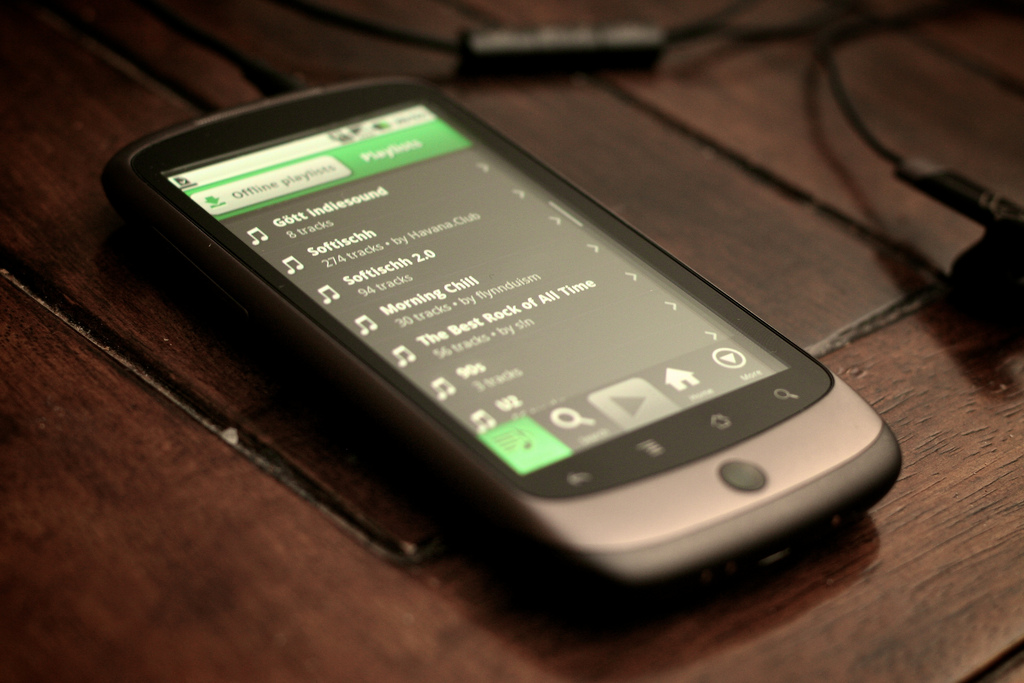
Spotify Mobile now available for free Spotify accounts … with limitations

Since I’ve mentioned Spotify regularly in the copyright section of the WNR, it seems appropriate to mention the latest bit of Spotify news here, although it doesn’t really have anything to do with copyright or piracy. At least not directly. Spotify Mobile is now free for all. This means you can stream your Spotify playlists on your Android or iOS smartphone without having to pay a cent, which is really awesome.

Free means limitations, and with the free version of Spotify Mobile it means that playlists can only be played in shuffle mode (fine by me, since this is how I listen, am listening to, Spotify). You can only skip tracks 6 times in an hour, which is a limitation put in there to specifically disallow users from pick and choose to play any one specific track, a feature that’s only available to subscribers of the Premium account. And there will be ads for cheapskates like me. No offline playback and high quality audio either. Still, for most people this will be enough and there is now one less reason why people would want to down the piracy route.

Gaming

We now know who won the console war. Well, in South Park, Colorado anyway. But out here in the real world, or at least in the US for the small part of November for which both the PS4 and Xbox One were available, it was the PS4 that ended up winning the console game of thrones. Not so fast, I hear the Xbox fans say. The PS4 was released a week earlier (and for $100 less to boot), and so it’s only natural that the PS4 would sell more.

PS4 with controller and PS Eye

PS4 wins the first next-gen NPD showdown

Which is totally true, of course, although most of the nearly a million Xbox Ones sold in November (in the US) would have been in the first few days of sale. And Microsoft took full advantage of this statistical reality by claiming they won the “fastest selling” console crown for November, which might not have been the case had they had the same number of days of sale as the PS4.

For me, it’s far too early to say whether the PS4 or the Xbox One will come out on top. What is interesting though is that nobody is predicting any sort of success for the Wii U. The fact that the recent South Park trilogy completely ignored the Wii U, especially given they’ve done a trilogy on the Wii before, is telling I think. Only 220,000 Wii U consoles were sold in the whole of November, nearly 3 times less than the Xbox 360. To further compare, the Sega Dreamcast was doing better at this stage of its sales life-cycle. Ouch.

Speaking of ouch, I’m gonna go a play some games on my much neglected Kinect. Holidays equals overeating, and so I better burn a few more calories now in preparation. See you next week.

Weekly News Roundup (8 December 2013)

Sunday, December 8th, 2013

Another short one this week. I hope you’ll be understanding, what with the holidays so close, it just doesn’t feel right to do a lot of work. I suspect this feeling will last well into the new year.

On with the WNR.

Copyright

So another one down the drain. As you will probably have heard by now, Hotfile is dead. Which makes this the MPAA’s second big anti-piracy victory in as many months, after the closure of isoHunt back in October. And this one didn’t even need a trial.

Hotfile

Hotfile is no more, as MPAA scores another major victory

Hotfile and their lawyers decided that the best course of action was to settle the case a week before the trial was set to start, with the file host agreeing to pay $80 million in damages. Under the deal, the site itself could still operate if they implemented a copyright filtering system. Failing that, the would have to close down. I guess those responsible for Hotfile found the latter to be easier than the former, and Hotfile has been closed permanently.

So that’s one less place where pirated downloads can be gotten, which leaves only several hundred other places that offer the exact same feature and downloads. Another pointless victory in the war against piracy.

Speaking of pointless, DRM. But far from being pointless, it appears DRM did have a use for music sales – it made sure there were less of them!

A new working paper has gone through the figures, done the maths and found that the removal of DRM actually helped to increase digital music sales by 10%. While popular music sales weren’t affected much, “long tail” sales of less well known albums increased by about 30%. The researcher who wrote the report, Laurina Zhang, theorizes that by removing DRM and making it easier to share music, this helped lesser known works to be discovered. This also explains why the top sellers, which are already heavily publicized, didn’t benefit as much from DRM removal.

If I interpret this correctly, then it means that while the removal of DRM was the catalyst, it was sharing (and mostly unauthorized sharing I might add) that actually helped to boost sales. Hmm, something to think about.

And for all the problems with Spotify’s revenue model, perhaps it too has a hand in helping music sales (and other related revenue). Now that would make an interesting study, to see what effect Spotify has on music sales.

Gaming

While we wait the conclusion of the epic South Park PS4 vs Xbox One trilogy, the first trickle of Black Friday video game sales data has come out, and it appears that the more expensive Xbox One is winning, at least at Walmart and Target. According to data released by analytics firm InfoScout, the best selling non-portable console at two of the largest retail chains in the U.S. was the most expensive one, the Xbox One. It accounted for 31% of all sales, just ahead of Microsoft’s other console, the Xbox 360, which came in at 30%.

Xbox One Controller

Xbox One wins Black Friday, at least at Walmart and Target

The PS4 and PS3 both came in at 15% each, half as many as their Xbox equivalents. The Xbox 360 was always going to beat the PS3, but the lower PS4 numbers may be due to stock issues.

As for the Wiis, the lesser said the better, at least according to the InfoScout data. The Wii, previously the king of Black Fridays, only managed to be 1% of all sales, while the Wii U wasn’t much better at 6%.

Of course, with both Microsoft and Sony’s consoles being new probably meant that the Black Friday data was slightly unfair to the Wii U. The overall holiday sales will be much more even, and the next holiday’s data would be even more conclusive, given that Nintendo’s big games (your Marios, with or without Karts, Donkey Kongs and Zeldas) would have all been released by then.

And that was pretty much it for the week, I know, not much. And the situation probably won’t improve in the next couple of weeks as others join me in taking their feet off the gas pedal, and dream of sleep-ins, holidays and new toys to place with.

See you next week.

Weekly News Roundup (1 December 2013)

Sunday, December 1st, 2013

Happy belated Thanksgiving. We don’t have Thanksgiving here in Australia – it’s just another Thursday for us, but as someone who has a lot of US-centric interests, it’s hard not to get caught up. Then there’s Black Friday as well. I haven’t done much shopping, if any, online this year. Traditionally, I would buy a bunch of Blu-rays at this time, but I’ve reduced my need to buy Blu-rays as a result of Netflix and Hulu Plus. This means I’m also less inclined to wait until a big sale to save a few bucks – I’m willing to pay more for the fewer discs that I deem to be collection worthy, and I actually end up watching more and spending less thanks to this system and Netflix/Hulu.

Being a public holiday in the US, news is pretty sporadic, and even if it wasn’t, I wouldn’t want to waste your time by writing a whole bunch of stuff you’re probably too drunk to read anyway.

Copyright

You know it’s a slow week when you start going through someone else’s tax filings for news. To be fair, when that someone is the MPAA, even a tax filing can contain a bevy of interesting information. Such as the fact that MPAA members, the major movie studios, have upped their contribution to the MPAA for unspecified reason. That chairman Chris Dodd is paid handsomely for his political connections, at a (relatively cheap) $3.3 million per year.

There’s also a list of groups that the MPAA have issued grants to, most of then surprisingly have helped the MPAA in someway in the past, either via a study that backs one of their many assertions, or a friendly word or two in the media. Also unsurprising was the political donations the film industry’s lobby group made in 2012, to a wide spectrum of left, center and right political groups, from left-wing bleeding hearts, to Tea Party and anti-tax groups. Much like Wall Street, the politically neutrality maintained by these industry lobby groups is what makes them so powerful in Washington, with very good friends on both side of the aisle (and in the White House). That Dodd himself was a Democratic politician doesn’t really mean a thing, nor does the view regarding Hollywood’s progressive lean (which applies more to the people who work in the industry, rather than the corporate interests that govern it).

Spotify Logo

Radio doesn’t make artists a lot of money directly, so why is Spotify under attack for basically doing the same thing, but with less ads?

From the movie industry to the music industry. Musician Moby, who recently released his new album for free on BitTorrent (and included all the stems too for those interested in remixing their own stuff), has been talking about piracy, Spotify and BitTorrent, and he has some interesting things to say.

I don’t want to go over the entire interview here (you can read it here instead), but basically, Moby says that creating good music is key to getting new fans, which is then key to making money in the music business. So even if new fans are created because people have downloaded his songs illegally, Moby says that’s alright, because they will spend money down the line, whether it’s through song purchases, merchandising or even concerts. Another interesting point that Moby makes in regards to people who are not happy with Spotify’s revenue model. Moby says that the same people are complaining are the ones overjoyed at their songs being played on the Radio, even though this is just as unprofitable. In other words, Spotify is a promotional tool, like radio, and artists shouldn’t be too disheartened just because they’re not making mega-bucks from it.

High Definition

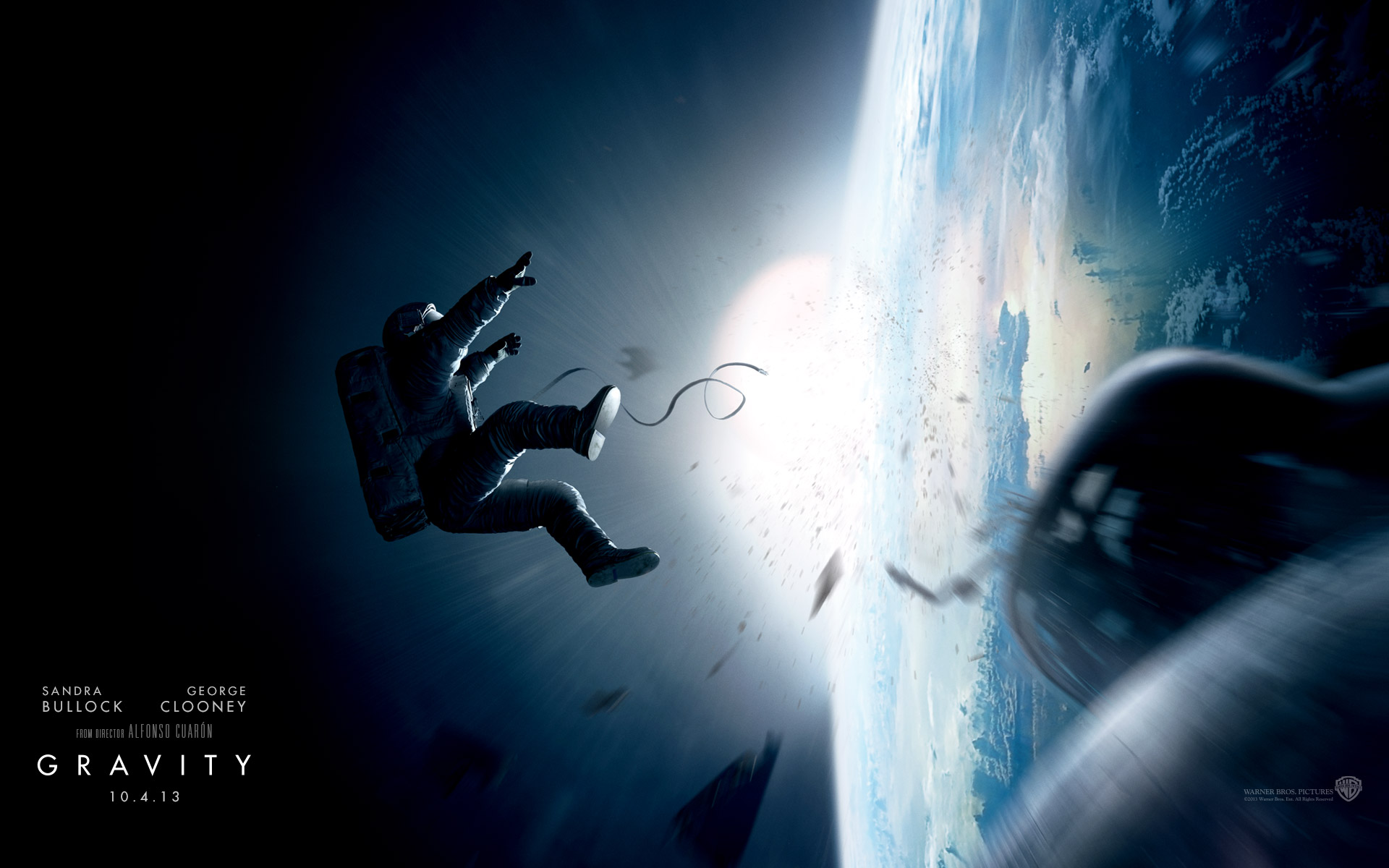
Gravity (Film) Wallpaper

Gravity is designed to be watched on a big screen in the best quality possible – piracy is not a real competitor, at least not where revenue is concerned

I finally got around to watching Gravity at the cinemas last week. That’s another thing I’ve been doing more of thanks to Netflix and the money I’ve saved from buying less Blu-rays. People can argue about the “apparent” simplistic nature of the storyline, but it was entertaining, it was well made, it broke new ground technologically and it’s the kind of film that only the cinema does justice (although I’ll definitely get it on Blu-ray as well). Anyone who loves watching movies, I think will agree that, unless you’ve go a kick-ass home theater system, there is no substitute for going to the movies, for films like this.

But the main reason I wanted to talk about Gravity is because of the new trailer I’ve just uploaded for it here. It’s not just any old trailer though, this one is a 2K one (2048×858). It won’t play on the PS3 and Xbox 360 (I know, I’ve tried), but it should work on your PC. The next small step/giant leap for our trailers section would be to make some 4K and HEVC trailers available for you all, so stay tuned.

Gaming

This is starting to get a little ridiculous. If there was one thing that both the PS3 and Xbox 360 did well (with the PS3 being better) was their media capabilities. It’s not just Netflix and other apps, but just the ability to play a whole bunch of different types of media, either digital or on disc, that made these consoles the heart of your home entertainment set up. The last thing I would have expected with the so called next-gen consoles was for them to start going backwards in this area. But go backwards they did.

The PS4 can’t play CDs, MP3s and no longer works as a DLNA client. The Xbox One can’t play MP3s natively, but does at least allow them to be played via your home network. Neither supports Blu-ray 3D, which is not a huge loss, although still a surprising omission, for both Sony (them being the founding fathers of Blu-ray) and Microsoft (what with them trying to convince us of the Xbox One’s “all-in-one” credentials).

Xbox One

Xbox One can’t read BD-R/BD-REs. A new anti-piracy measure?

So I guess I shouldn’t be surprised at the news of the Xbox One not being able to read recordable Blu-ray discs – it fits into the theme of this generation so far in terms of media compatibility. Apparently, this has been done deliberately on the software level, possibly as a way to prevent piracy (not just movies, but also, and probably more importantly, of game discs).

The Microsoft support pages even goes as far as saying that only mastered DVDs will play, although many have since confirmed that DVD recordables do work (for now at least).

While this one definitely smells of heavy handed copy protection, the other omissions may be less about restricting user rights. To me, they feel like the result of a rushed launch, with Sony and Microsoft wanting to at least not lose to each other when it comes to the timing of the launches. The news that TV-integration on the Xbox One doesn’t work well in PAL/50Hz  regions, due to the system being designed to work with US 60Hz signals, seems to confirm my suspicions that the console wasn’t quite ready for prime time.

So if you’re not in a hurry, I’d suggest you wait a couple of months at least, until both consoles have ironed their bugs and added back the necessary features, before committing.

That’s it for the week. See you again in seven.

Weekly News Roundup (24 November 2013)

Sunday, November 24th, 2013

So a big week in which we have the aftermath of the PS4 launch, and the Xbox One launch later during the week. I don’t know if I will ever understand the desire to line-up for launch day releases. Sounds like a lot of time and effort that could be better used. Like wasting hours trying to decide what to watch on Netflix (see last week’s WNR).

Here comes the news.

Copyright

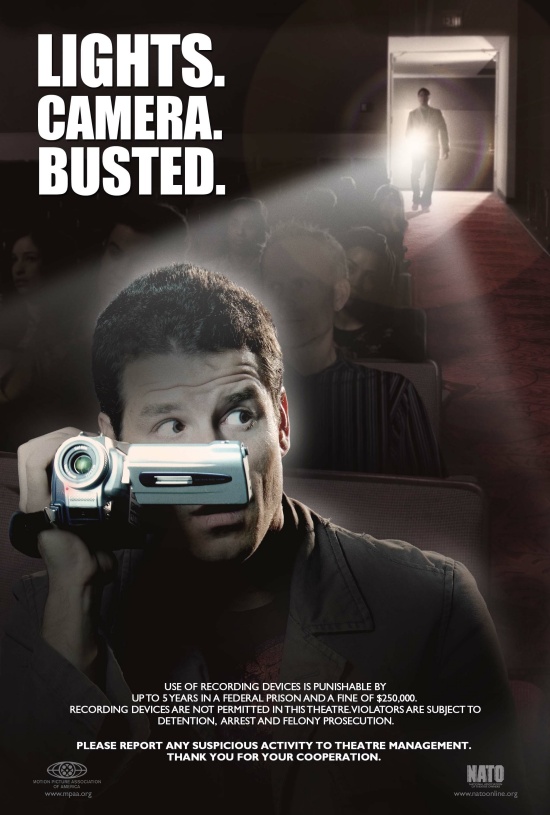
Paranoid much? Reading the MPAA’s updated guidelines for theater owners, in regards to preventing cam-recordings, you really do get a glimpse of the paranoid world in which the MPAA operates (and the paranoia extends beyond just piracy – if you have time, check out the documentary This Film Is Not Yet Rated, which I believe is on Netflix at the moment). People with walking canes; people with long coats; people who put their phones in the cup holder; people that go to cinemas; people what work at cinemas; and their friends, are all potential movie pirates. All suspicious activity, even if it’s just someone sitting in a weird way, should be looked and reported to law enforcement for further action.

Anti Piracy Poster

The MPAA’s paranoia shines through in their anti-camcording guidelines

And that’s just for regular screenings. For pre-screenings, the MPAA recommends mandatory bag searches, the use of night vision equipment and procedures that even airport security might find a tad harsh. I’m sure in a lab somewhere, the MPAA is researching the viability of camera sniffing dogs and the use of full body scanners, to be recommended for next year’s guideline update.

What strikes me most about the guidelines is how the MPAA is completely willing to ignore the fact that someone who is completely satisfied by an awful, partially blocked, muffled recording of say a hit film like Gravity will probably never ever spend a single cent on the film, at the theater or otherwise. The biggest loss of revenue, and certainly not in the billions or whatever the MPAA claims, might be from those who are unconvinced by the film and are using the CAM copy to decide whether it’s worth spending their hard-earned. Good films will suffer less from this kind of “trial”, and the box office records that are being broken year on year seems to support this notion. Only the bad films will suffer. It just happens to be that bad films are the MPAA’s bread and butter, unfortunately.

And publishing paranoid anti-piracy guidelines is certainly a lot easier than trying to create better movies, and so that’s what the MPAA will do.

Also easy to do, for the MPAA (and RIAA) is to use the threat of copyright fines to inject an element of fear into the piracy debate. Easy, but but perhaps not so effective. We’ve all seen those FBI and Homeland Security notices at the beginning of DVD and Blu-rays, but piracy is still happening with no signs of slowing down. Other than the two high profile RIAA cases which saw high statutory damages making headlines, statutory damages hasn’t really done much to deter pirates. Instead, it has encouraged predatory lawsuits targeting unsuspecting individuals, threatening them with high copyright fines (based on statutory damages), all to extract thousands of dollars in “pre-trial settlement” fees for lawsuit that were never going to court.

Which is why the U.S. Department of Commerce’s Internet Policy Task Force urged for a “recalibration” of copyright statutory damages in a Green Paper published earlier in the year, which also asked for comments on any proposed changes. The MPAA and RIAA’s responses have just been made public, and as expected, both groups were against any changes to the status quo.

The MPAA argues that statutory damages is working perfectly fine to deter pirates, which doesn’t explain why the MPAA have continued to argue for tougher copyright laws, citing existing laws as being not enough of a deterrent. The RIAA goes as far as to defend the obscene judgments made in the Thomas-Rasset and Tenenbaum cases (of $1.92 million for 24 songs, and $675,000 for 30 songs, initially), saying both were “entirely appropriate, based on the facts of each case.”

I think high statutory damages is actually counterproductive to even the misguided aims of the MPAA/RIAA. For example, had Thomas-Rasset being fined just $19,200, it would have had the same effect deterrent wise (because $19,200, for 24 songs, is still quite a lot of money especially for the teenagers and college students that are the main demographics behind downloads), and it would not have attracted the same level of outrage and disgust that forced the RIAA to abandon their “sue the individual” tactics.

But a smaller statutory damages maximum would then wreck havoc to the MPAA/RIAA’s “annual losses to piracy” calculations, making it much harder to claim that billions of dollars are being lost. For them though, this may be more important, since it’s these heady figures that scare politicians, and judges and juries, into believing that major wrongs have been committed and drastic action is needed, whether it’s SOPA or six figure judgments against college students.

Gaming

PS4 with controller and PS Eye

PS4 off to a solid start, sales wise

Amazing sales numbers for the PS4, and the most surprising part was that it wasn’t unexpected at all! Over a million units sold in the first 24 hours in North America, thanks to super strong pre-order numbers, means that the PS4 is the most popular console launch in history, probably. Plaudits must go to Sony for recognising everything that went wrong with the PS3 launch, and doing it (mostly) right this time round. This includes pricing mainly, but also being on the right side of consumer rights, for once.

With such a huge launch, there was always a chance that something would go wrong. And something did, in relation to the “Blue light of death” problem that gamers have so creatively (sarcasm alert) named. A troubleshooting guide has been made available, but worst case scenario, you’ll have to exchange the console for a new one. Sony says only a small number of consoles is affected, perhaps less than 0.4%.

Over at Redmond, Microsoft’s Xbox One launch experience was actually incredibly similar. Again, over a million units were reported to be sold in the first 24 hours, with the caveat that the Xbox One was released in more markets than the PS4 (which was only available in North America). Being more expensive, and with a semi-botched pre-launch, the Xbox One was never going to sell as many units as the PS4, but a million on the first day is impressive (the Xbox 360 managed just over 300,000, in North America, in the first week).

Xbox One Forza 5

The Xbox One not doing too badly on release either

And just like the PS4 launch, there are reports of hardware issues, the most common being the disc drive grinding issue. Microsoft has promised to do advanced returns, which means Microsoft will send out a replacement console immediately without waiting for the defective console to arrive, which means affected gamers will only have to wait a matter of days as opposed to weeks to have a working console.

All to be expected for a launch of these magnitudes, which is one more reason why you shouldn’t join the launch day madness if you’re like me and don’t like the hassle.

Speaking of hassles, let me stop hassling you with news, rants and stuff for this week, for we have reached the end of another issue of the WNR. See you next week.

Weekly News Roundup (17 November 2013)

Sunday, November 17th, 2013

A slightly longer one for you this week. Last week’s short one was kind of my fault, but this week’s longer one has little to do with me, and more to do with, um, things actually happening.

Let’s get started.

Copyright

You’ve got to get them young! The RIAA and MPAA obviously agree, because they’re backing a plan to start teaching their pro-copyright propaganda to kids still trying to master the tricky art of finger painting.

A new curriculum that teaches kids the awesomeness of copyright, and the evilness of piracy, has been proposed by the Center for Copyright Information (which is backed by Big Content, as well as America’s top ISPs). The lesson plans, which start at the kindergarten level and all the way through elementary school, teaches the importance of “protecting copyright”, and covers such fun topics as “Copyright Matters” and “It’s Great to Create”.

Immediately after the plans were made public, everyone with a bit of common sense came out and suggested that this probably wasn’t the best idea. Or even a very good one. The EFF worries about some of the bias that may be present in the lesson plans, such as equating downloading TV shows to copying off someone else’s homework. Teachers, via the California Teachers Association, worry about fitting in corporate sponsored messages into a curriculum that barely has enough room for the basics, like English (so you can read the lawsuit that the RIAA may file against you) and maths (so you can work out how many millions you owe the MPAA for downloading Spongebob episodes).

My biggest concern is that the MPAA/RIAA’s curriculum may be just too confusing for elementary school kids. I mean how do you explain to kids why artists, the “creators” that the curriculum so lauds, get such a small percentage of earnings compared to the middlemen that make up the members of the MPAA/RIAA. Especially in such a technologically advanced age where creators can sell directly to consumers? It just doesn’t make any sense!

Netflix

Netflix and YouTube dominate US prime time downloading

It seems every time the MPAA comes up with some new ridiculous way to fight piracy, we also have, at the same time, a story that shows you how to beat piracy by simply providing people with a better product. For this week, and for a while now, that better product is Netflix. Nearly 32% of downloads during peak usage times in North America now belongs single-handedly to Netflix, and when combined with YouTube, they account for more than half of all download traffic.

Now I know people have their gripes with the service. And I do too. Not enough new content; too many missing classics; streaming quality/speed issues – to name a few. Yes, we have original content now (and some really good stuff too), and there’s the occasional blockbuster that makes its way on there after a lengthy delay (Skyfall, just last week, for example), but having almost destroyed the brick & mortar video renting business with its disc-by-mail service, Netflix streaming has managed to destroy whatever was left of that business. Instead of going to a video store and renting some old crap, you can watch the same old crap, and more older and crapper stuff, in the comfort of your own home without having to spend any extra money.

It’s great for me, the procrastinator, because instead of spending an hour at the local Blockbuster and being unable to decide what to rent, I can now spend an even longer time clicking through Netflix’s library, still unable to decide. But I can do it all now while sitting down and and stuffing my face full of trans fat, so it’s a lot better than going to Blockbuster (the only exception being their excellent caramel popcorn).

Hoping that it goes the way of Blockbuster, but unfortunately not happening quickly enough, is gaming DRM. And the CEO of anti-DRM developer CD Projekt Red, the people behind the DRM free game store GOG.com and The Witcher series, explains why this is the case.

Apparently, the gaming industry knows full well that DRM does work, but still persists with it because it is seen as doing something. Anything. And they need to be seen doing something in front of bosses, investors and shareholders, most of whom don’t have a clue (or chooses not to have one). But that’s okay, the only loser in the whole thing are gamers and paying customers. You know, the unimportant people. It’s this kind of deluded, and lazy thinking that has mired the industry in an unending war against pirates, one that they’re losing pretty badly and where the collateral damage extends to anyone who tries to play the game.

Just to reiterate, DRM doesn’t do what it is supposed to do (stop piracy), but instead, it actually hurts paying customers and make them want to buy your games less. And “well, what else are we supposed to do” is not an acceptable answer when faced with the question of piracy. And there are plenty of things you can do to make the legal experience much better than the illegal one – just look at GOG.com or Steam, for example.

High Definition

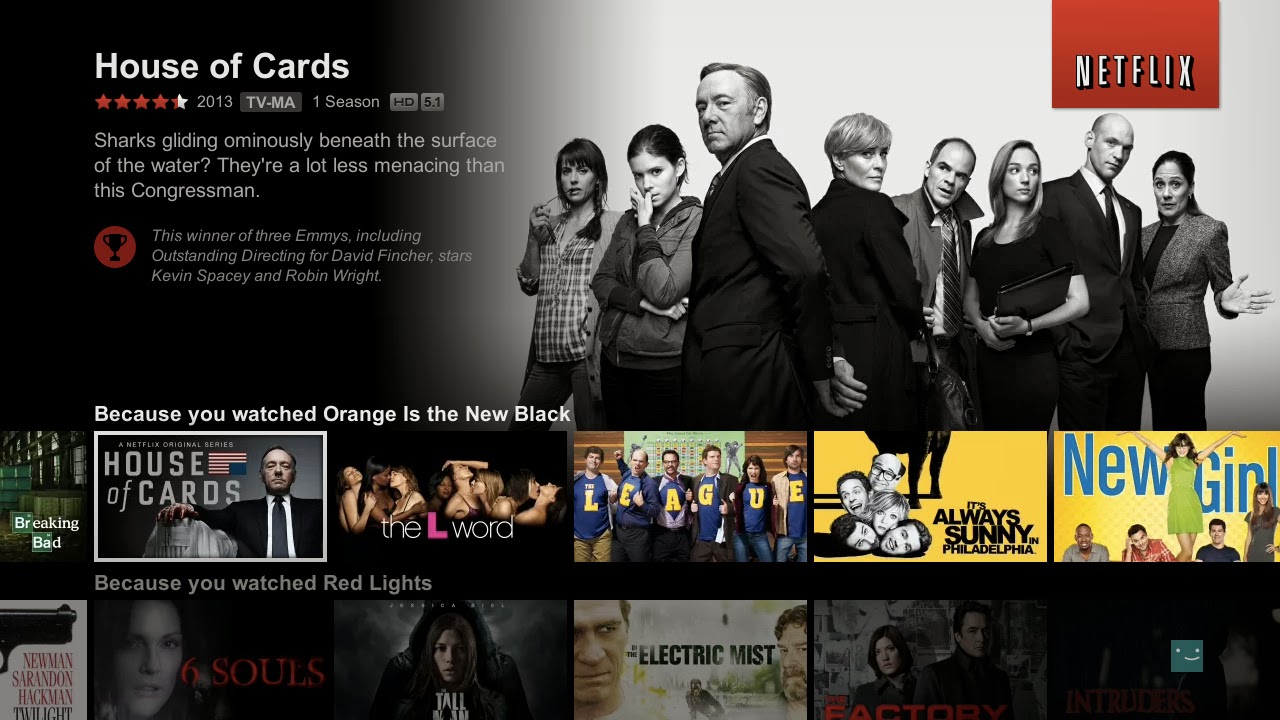
New Netflix UI

The new Netflix UI for TV connected devices looks good and works well

Just a quick follow-up to last week’s story about the Xbox One not supporting Blu-ray 3D at launch – the PS4 won’t play 3D films either, as it turns out. Both Microsoft and Sony are coming out with the “not at launch” caveat, which probably means that support will be added at a later time. Perhaps free, but perhaps at a small cost. Not too many tears will be shed from me for the loss of 3D, even if it’s kind of crappy to lose features when going from the current gen to the next gen.

Another quick digital video related update, this time for Netflix, who has rolled out a major UI change for all of its TV connected devices. I’ve been using it for the last couple of days, and it’s very usable, and I like the more detailed descriptions about why certain streams have been recommended for me or why I should watch them. With that said, I would still like the option of being able to select language/subtitles before the film starts (right now, you have to do it when the film is playing). And showing a screenshot of the current scene for resuming titles would be helpful. I’ve also noticed there are some issues with saving the last played spot, especially if I turn off my PS3 too quickly.

Gaming

The Wii U is still stuck in the sales doldrums, but instead of being pleased with the contrasting fortunes of their PS3 and PS4 consoles, Sony says it’s actually in their interest for the Wii U to start selling well. Sony Worldwide Studios Prez Shuhei Yoshida expressed these sentiments in a recent interview with IGN, in which he also suggested part of the problem with the Wii U was the inconsistent messaging that Nintendo was trying to send out.

In particular, Yoshida found Nintendo’s “core gamers” strategy a bit odd, as in his opinion, the Wii U should have been marketed like the original Wii, as a “safe” family friendly console. But you can see why Nintendo had to change strategies with the Wii U. While the Wii can be considered a success, its later years were marked by a steady decline in sales, thanks to the ever competitive “casual gamers” market, and the lack of A-list third party releases on the platform. You can’t blame Nintendo for wanting to get a piece of the Call of Duty pie, and this cannot be possible if they stayed true to their family-only strategy.

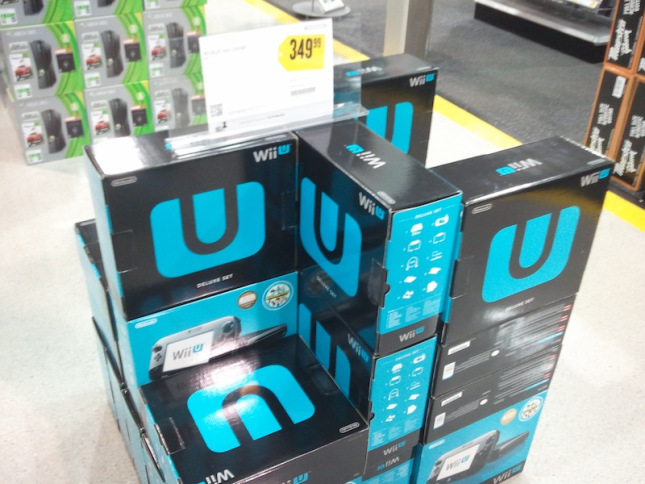
Wii U Boxes

Sony wants the Wii U to sell well, and says Nintendo should concentrate on their family-friendly strength instead of going after “core gamers”

What they failed to do, in my opinion, was to understand how “core gamers” think. “Slightly better than last-gen” is not good enough to sate the appetites of core gamers hungry for next-gen graphics. It was also hard for Nintendo to shake their “video gaming for kids” image to appeal to core gamers. In the end, Nintendo wanted a console that combined mobile/tablet gaming with their core gaming strength (their first party titles, and the family friend reputation), and marry that with zombies and grenades. Perhaps it was just asking too much from a single console, and you end up with a machine that’s neither this nor that. And it didn’t help that Nintendo failed to demonstrate the full potential of their touchscreen GamePad, either for casual gaming or for the hardcore audience.

And all of this brings us to October’s NPD results, for US video game sales. The Wii U, unsurprisingly, was the poorest selling home based console out of the current crop, with the Xbox 360 regaining top spot after the PS3 ended its 32-month winning streak last week (thanks to GTA V). The Xbox 360 sold 166,000 units, but we don’t have figures for the PS3 and Wii U (other than the PS3 outselling the Wii U). The Wii U has only managed to sell 300,000 units in the last quarter, worldwide, and that’s actually a much better result than the previous quarter, in which only 160,000 units were sold.

With the PS4 now released, and the Xbox One coming next week, we’ll start seeing those number (or something vague about them) this time next month, which is kind of exciting. A new console generation and all that.

And on that note, we come to the end of this WNR. See you in a week’s time.