Archive for the ‘Nintendo Wii, Wii U, Switch’ Category

Weekly News Roundup (27 April 2014)

Sunday, April 27th, 2014

Welcome to another WNR. I usually write this intro after I finish writing the rest of the article, and I’ve just realised all of this week’s stories are about giving people what they want (or not giving them what they want). Unsated demand creates services like Popcorn Time, and this week, Zona. It also forces people to use VPNs to access US online services like Hulu Plus. And Nintendo failed to take into account what people wanted when they designed the Wii U. Give people what they want. It’s not that hard!

Copyright

Zona

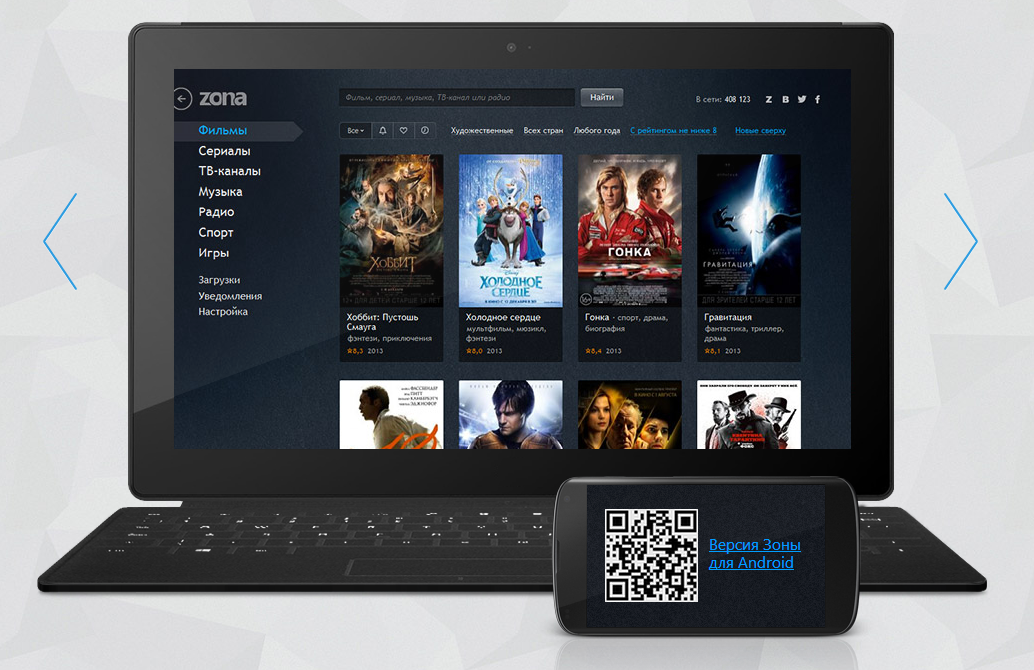
Zona: Combining the best of Netflix, Hulu Plus, HBO Go, Spotify and many others into a killer piracy tool

Last month we had Popcorn Time. This month, it’s all about the Zona. If Popcorn Time as the Netflix of piracy, then think of Zona as Netflix combined with Hulu Plus, with a dash of HBO Go, stir in Spotify and you’re about half way there to what the new pirated streaming and download tool Zona is all about. There’s also live TV and sports streaming, millions of music tracks and streaming radio. And even porn! There’s also Android support, and DLNA streaming to enabled TVs.

With a super slick interface, and features that you can’t even get on Netflix, tools like Zona might just give Hollywood and the music industry something new to keep them awake at night. The greatest barrier to mass adoption of piracy has always been the technical hurdles, but if tools like Zona can make streaming and downloading easier than using iTunes, then it’s likely to reach a whole new group of users. It’s the MPAA and RIAA’s worst nightmare, and what was always going to happen due to the arms race they’ve been building against the pirates. Actually I take the last statement back, because the MPAA/RIAA’s worst nightmare would be a tool like Zona, but totally decentralized and anonymous. No one to sue? Scary!

No doubt the likes of the MPAA, RIAA and the law enforcement friends are ready to dial up the pressure. But the Russian based Zona might just find itself in a fortunate position, what with Russia unlikely to be very receptive of US demands at the moment, whether it’s the situation in the Ukraine, or copyright stuff.

——

Oh crap! How else am I gonna get my fix of the excellent Review show now that Hulu has started banning VPN access. They’ve not yet made a move against DNS geo-unblockers like the one I’m using, but it may simply be a matter of time.

Obviously Hulu are under pressure from rights holders (well, I mean they’re owned by rights holders too) to stop overseas viewers from accessing the delicious new release goodness, but it appears the network ban has also blocked US subscribers using VPNs for piracy purposes. Collateral damage, I guess.

I’m sure an eventual workaround will be invented to allow people like me a taste of what those lucky enough to be in the US take for granted, or even better, if they don’t ban DNS geo-unblockers at all.

It’s all about greed though. Greedy studios looking to extract as much money as possible (but unable to do so in their most competitive markets) overcharge people overseas or deny them speedy access to content. Then when people go out of their way to try and pay for more affordable content, studios aren’t happy about that either (because in their mind, if 100,000 people in Australia are paying Hulu $7.99 per month instead of $79.99 per month for overpriced local services, then that’s $7.2 million they’re “losing” every month). Except by denying them the cheaper services, people won’t just fork over the cash for the overpriced ones – they’re just flock to piracy (see Game of Thrones and Australia). It’s a lose lose for everyone, but it’s the direction that content holders are always taking.

So. Hulu VPN banning: I give it half a star (because I cannot give it zero stars).

Gaming

Last week I asked if the Xbox One was in trouble. Not “Wii U” trouble I said, but trouble as in losing their dominance on the U.S. video games market. This week, I shall expand upon what exactly I meant by “Wii U trouble”, and it does not make good reading for Nintendo and fans of their consoles.

Just how much trouble is the Wii U in? To say that it’s not selling as well as the Wii is probably the understatement of the decade, but that was to be expected – the Wii was a freak of nature, a one off perfect storm of the motion and casual gaming crazes, taking advantage the then current situation where you had the overpriced PS3 (at that time), and the noisy and unreliable (at that time, too) Xbox 360. So if I told you that the Wii sold ten (10!) times as many units as the Wii U during the second March for both consoles (having both being released in November a year and a half prior), that’s probably not too surprising.
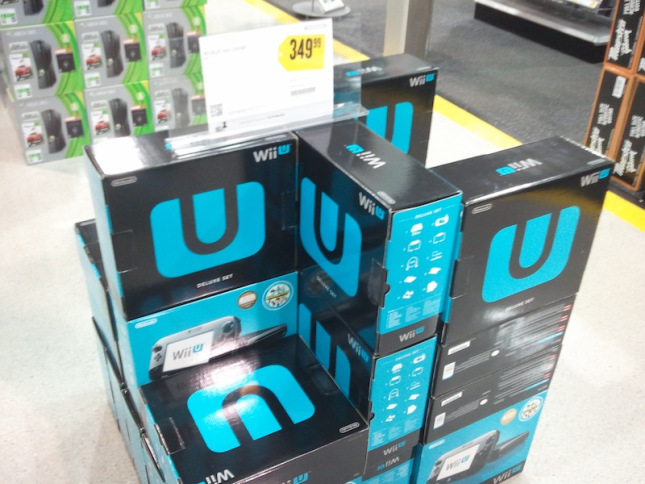
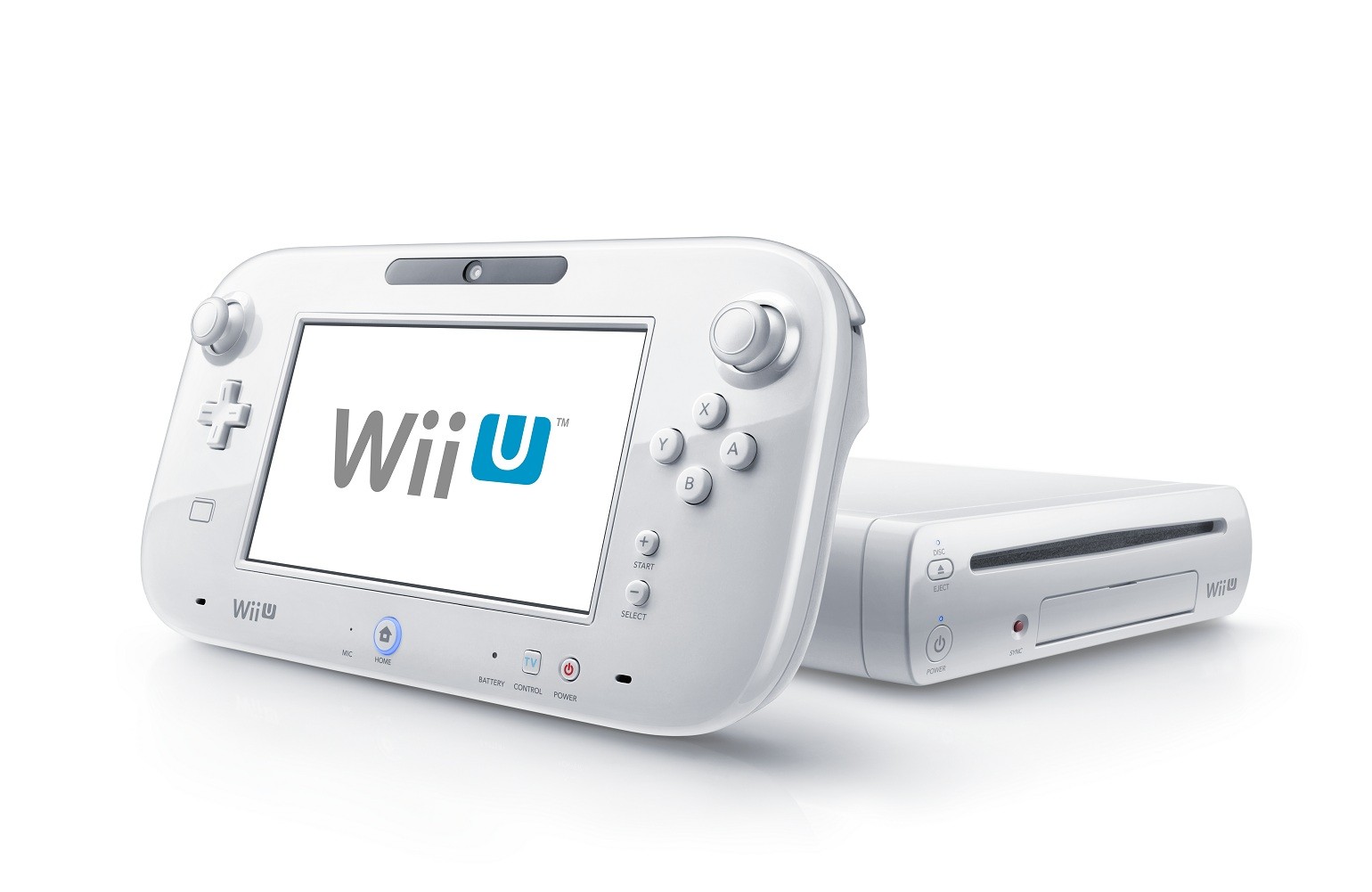
Wii U Boxes

Wii U sales trail the GameCube at the same stage of their sales cycles

But if I were to tell you that the much maligned GameCube was more than twice as popular as the Wii U, again during its second March (and again, after a November release from the year before the last), it does provide some perspective as to just how much trouble the Wii U is in.

In their second Marches, the Wii sold 721,000 units and the GameCube managed 165,000. The Wii U has just managed 70,000.

It’s interesting to note that the Sega Dreamcast was cancelled at the end of its second March, having sold more units during its limited lifetime than the Wii U during a similar time frame. The Dreamcast’s cancellation had more to do with Sega’s financial woes, not something Nintendo has to worry about, so there’s no suggestion that Nintendo will cancel the Wii U. What might happen is that a new console will be brought out to try and get Nintendo out of this hole, and much sooner than expected. A console that could compete on price and performance with the Xbox One and PS4, perhaps, with Nintendo’s own special touches. Or Nintendo could keep on digging and hope for the best.

I know which I’d choose.

——

That’s it for this week. Hope you’ve enjoyed this WNR, see you in seven days!

Weekly News Roundup (20 April 2014)

Sunday, April 20th, 2014

Happy Easter! May you have success hunting for the chocolate flavored seeds of a perculiar non-mamalian species of Lepus curpaeums. Another slow week, I guess Easter had something to do with it.

So let’s get on with it then.

Copyright

BitTorrent Logo

BitTorrent Inc under attack from “copyright monetization” firm Rightscorp

Not content with the goodwill garnered from threatening downloaders with lawsuits in order to extract “pre-trial settlement” fees, “copyright monetization” firm Rightscorp has again made headlines this week against after its COO Robert Steele launched a broadside at BitTorrent Inc. No, not the BitTorrent network and its piracy connections, but the company that invented the network, and also publishes the uTorrent client.

In a Facebook rant, Steele accused BitTorrent Inc of “driving and facilitating piracy” and says the company is profiting from piracy in the same way the now defunct Limewire and Napster were. Strangely, Steele also attacked the decentralized architecture of BitTorrent, in particular the use of trackers, which he says was a way for BitTorrent Inc to avoid the kind of legal trouble that came out of LimeWire and Napster’s centralized systems.

Of course, it’s BitTorrent’s decentralized and public trackers that allows companies like Steele’s own Rightscorp to make their money, money they could not make if piracy also did not exist on BitTorrent networks. Sounds like to be me they should be thanking BitTorrent Inc and the file transfer protocol they invented.

And that’s what BitTorrent is – a file transfer protocol not unlike FTP or HTTP. The latter two can also be used for piracy, and they are (and FTP was certain the pirate’s choice back in the early days of the ‘net’). But uTorrent is really just a client for this protocol, not unlike the Chrome browser for HTTP and FileZilla for FTP. People download heaps of pirated stuff via Chrome every day, all un-monitored by the way by companies like Rightscorp, so where’s the outrage?

I’ll be the devil’s advocate for a second and make the argument that the proportion of legal data transfer via uTorrent is a lot lower than the proportion of legal data transfer for Chrome or FileZilla, and that despite there being tons of legal stuff available on BitTorrent networks, most people use it to download pirated content. But at the end of the day, BitTorrent just an unsexy file transfer protocol, and it’s silly to be so emotionally charged at something so boring, especially if you’re making money off people using it in the wrong way.

So it’s probably not great timing for BitTorrent Inc that another big piracy story of the week was Game of Thrones breaking yet another BitTorrent downloading record, with 193,000 simultaneous file sharers for one unique copy of the second episode of season 4. The previous record, set by last year’s season finale, was around 170,000. The second episode, which features the heavily anticipated “purple wedding”, also easily beat the season premier’s 140,000. Remember, these figures are only for the most active torrent, as usually there are dozens of different torrents for the same episode.

Australians were again the most enthusiastic downloaders, followed by the U.S., U.K., Canada and The Netherlands. The high price of watching the show legally here in Australia not only makes it not affordable for some, I think it also gives the rest (even those that can afford it) moral justification for pirating, whether rightfully or jofferily.

Gaming

Is the Xbox One in trouble? Not in trouble as in “Wii U” trouble, but trouble as in Microsoft losing their grip on the only market in which their console is the dominant force? Titanfall was supposed to be the title that allowed the Xbox One to gain supremacy over the PS4, but while it was the best selling game for March, the PS4 still managed to retain its crown as the most popular console in the U.S for the month (according to the latest NPD figures). That’s three month in a row.

Xbox One Forza 5

Is the Xbox One in trouble? The early sales results seems to suggest so …

The U.S. was the only major market really where the Xbox 360 comprehensive beat the PS3. Worldwide, the situation was mostly the opposite. But after Microsoft’s DRM SNAFU and pricing stupidity cause by a bad case of force-Kinect-on-gamers-that-don’t-want-it-itis, the Xbox One looks like to have lost the N.A. market. It’s still very early, but the trend is pretty clear and the Xbox One will find it difficult to shake its image of being an inferior console that’s also $100 more expensive (even if the reality isn’t nearly as dramatic).

An early price cut could be a double edged sword though. It could get the Xbox One back into the game, but it could also reinforce the idea that the Xbox One is a bit of a loser, one that is struggling to fight off the all powerful PS4. I still vote for a price cut, mainly because it’s good for consumers and there’s nothing much else Microsoft could do at this time. If they could somehow get rid of Kinect and then lower the price to be $50-100 lower than the PS4, then that could be a game-changer. Because it’s still a very powerful game console that has a lot of great media features, and one that will get all the good games and then some, let’s not forget.

As for the other consoles, the Wii U is still struggling at around 70,000 units sold, behind the Xbox 360’s 111K. The last-gen is falling away quite spectacularly sales wise, which is a lot to do with the perceived value of the new-gen consoles (which are a lot cheaper than equivalent models from the last gen this early in its life cycle). I think we’re still awaiting some must-have games before next-gen sales skyrocket – not necessarily exclusives, but games that really show off what the next-gen is all about.

——

That’s it for another rather short WNR. Have a Happy Easter, don’t eat too much chocolate, and see you in a week.

Weekly News Roundup (6 April 2014)

Sunday, April 6th, 2014

Excitement and dread. That’s what I feel when I purchase a big ticket item. Maybe I should be a bit more excited, with a bit less dread, as I’m sure this will improve my sense of joy when buying stuff. But maybe feeling joy is the wrong emotion to feel in the already far too consumerism driven world that we live in.

Let’s zoom right into this week’s WNR.

Copyright

Good news for those living in the UK. but still living in the ‘noughties’ – you’ll finally be able to rip CDs as CD ripping and other format shifting will become legal in the UK. But only if there’s no DRM protecting the content – in that case, it’s still very much illegal.

So basically, not much of a change unless you still buy CDs, and have always felt guilty about ripping them (so basically “nobody” on both accounts). Now you can rip it without feeling guilty. Isn’t copyright law reform great?

If you really really need to rip something that is protected, there is recourse for action – contact the Secretary of State! Seriously, look it up, that’s the only thing you can do if you want to format-shift something and excessive copyright is standing in your way.

I for one am looking forward to 2025, when we’ll finally get the right to convert DVDs to DivX.

Antigua Beach

Antigua: Not the copyright paradise first thought

But for now, you’ll be lucky to not don’t end up in an Antiguan jail if you happen to own a company that makes DVD or Blu-ray rippers. Because that’s where Slysoft’s owner Giancarla Bettini might end up following a legal decision against the company’s products. It won’t get that far, because fines will be paid and that will be that (not to mention the appeal), but for those that thought Antigua was a safe haven for all things copyright related, it might be time to think again.

Antigua’s anti-copyright stance comes from a dispute with the US over online gambling, a dispute that the island eventually won via a WTO ruling, which allowed Antigua to ignore US copyright claims as a way to recoup their losses. However, Antigua’s own copyright laws does have an anti-circumvention clause, which the AACS LA, the company responsible for managing Blu-ray’s copy protection scheme, managed to exploit to full advantage.

While normally a civil matter in other countries, Antiguan copyright laws made circumvention a criminal matter, with fines or jail time being the penalties.

The AACS LA has certainly been busy lately, going after both DVDFab and Slysoft, with the latter also named in the USTR’s Notorious Piracy Market list for this year. Is this a renewed attack on rippers, particularly Blu-ray ones? Time will tell.

High Definition

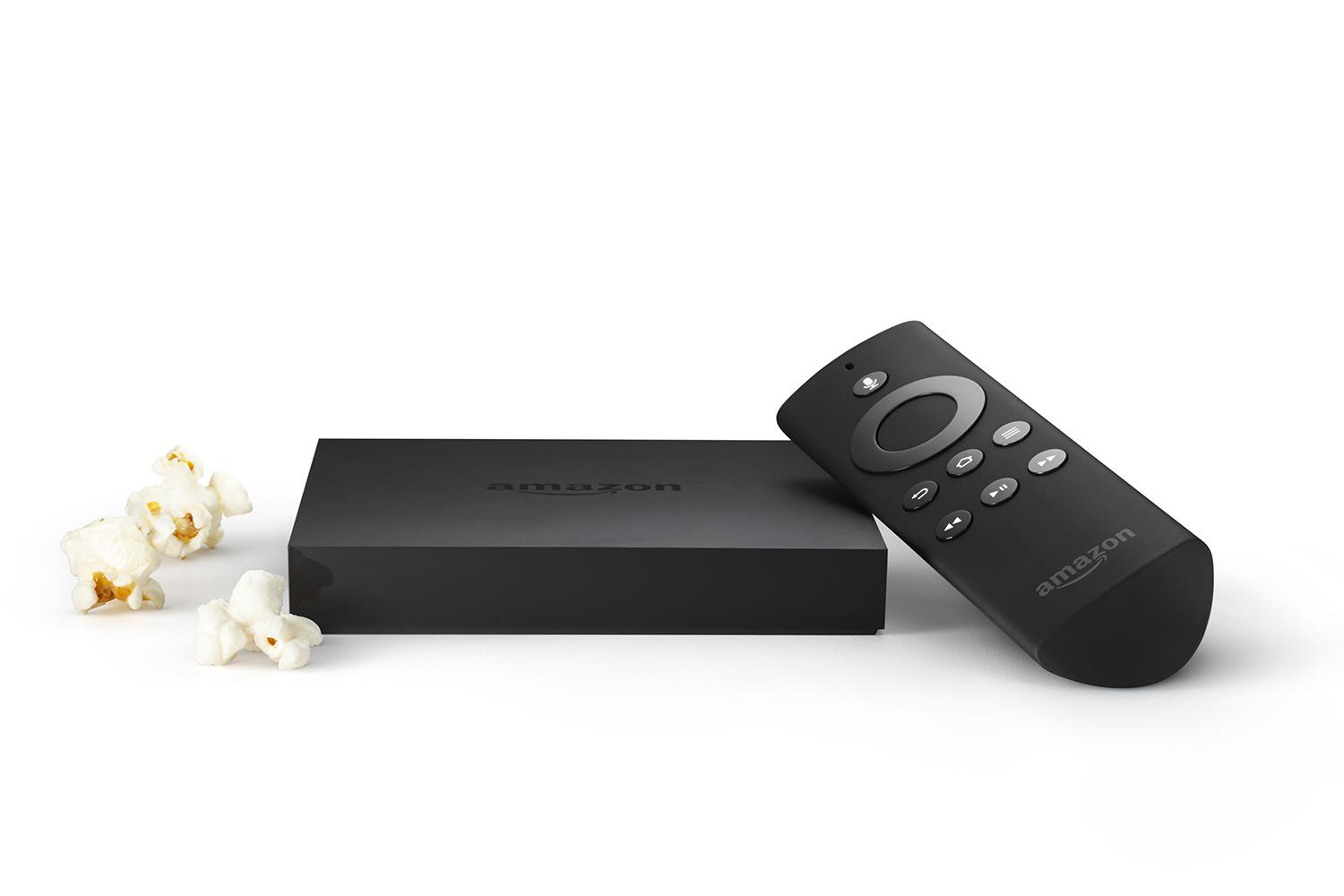
Amazon Fire TV

Is the Amazon Fire TV the device that is set to shake up the media streamer market? For $99, it has a really good chance to do just that!

The Kindle Fire, when first released, heralded the age of cheap branded tablets (cheap because they’re subsidized by content sellers like Amazon and Google). Amazon is trying their luck again with the Fire TV device, but this time for the streaming set-top box market. Taking on the likes of the Apple TV, Roku and to a lesser extent, the Chromecast, the Amazon Fire TV aims to bring not only streaming films to the lounge room, but also cheap games too – a $99 device that supports almost all of the streaming providers, plus offers apps from Amazon, and potentially thousands of games too (playability made easier with a $40 game controller add-on).

Interestingly, despite being competitors in the SVOD field, Netflix is a launch partner for the Fire TV (which, of course, supports Amazon’s Prime streaming service).

The big question is whether another streaming box is needed, since even if you discount the game consoles (which you shouldn’t), there are already plenty of streamers out there. In Amazon’s corner is the promise of a more open ecosystem (as the Fire TV is based on a fork of Android, albeit a very very heavily modified version of it), and easier searching via the built-in voice search feature. The quad-core, 2GB RAM powered device also promises to be a performance king, even if it only has a small 8GB storage (not really needed for streaming, but certainly for game and apps).

The Android nature of the device also means games will be plentiful for the system, although some games don’t necessarily translate well from phones/tablets to the TV screen (even with Amazon’s promised app that will allow you to control games via existing tablets).

It’s an interesting device, and for $99, it might be just worth playing around with.

Gaming

Wii U

EA subsidiary adding insult to injury by mocking the Wii U during April Fools, forcing an official apology from the company

EA just can’t seem to get out of trouble with Nintendo. Last year, they shocked the gaming world by announcing they had no games in the works for the Wii U, only to come out a few days later to say they did. Their Frostbite engine works on all the popular gaming platforms, except for the Wii U, and so Nintendo fans have always felt that EA isn’t giving Nintendo the love the company deserves.

So the mean spirited April Fools tweets that came out of the Frostbite Twitter account probably didn’t help matters for all concerned, forcing EA to issue an apology. The tweets mocked the Wii U’s perceived underpowered status, and the fact that the Wii U does not support the Frostbite engine.

EA’s COO Peter Moore called those tweets ‘stupid’ and ‘unacceptable’, but I would also like to add ‘unfunny’ to the list.

On that note, let’s end this week’s WNR before I have to end up issuing an official apology on Twitter for writing something stupid, unacceptable and unfunny (the last one is a given though). See you next week.

Weekly News Roundup (16 March 2014)

Sunday, March 16th, 2014

Happy Birthday to Me, Happy Birthday to Me, Happy Birthday Dear Webmaster Dude, Happy Birthday to Me (not to the tune of that well known song, as I don’t want to pay royalties). I had to work through my birthday this year, which was no fun. Birthdays are definitely getting less fun as I get older, and the quantity of cake I can have before feeling guilty is also on the decrease. It’s an alarming trend!

News time!

Copyright

Google’s common sense submission to the Australian government is likely to fall on deaf years, as the search giant spells out quite clearly that they do not want harsher new copyright laws to try and solve the piracy puzzle. Instead, Google believes that piracy is an issue of availability and pricing that is best solved by investments in innovation, rather than legislation.

The then newly elected conservative government of Australia called on industry submissions for reducing communication regulations, and it was in Google’s submission that the company outlined their believes in regards to piracy.

Unfortunately, the pro big-business government is likely to ignore Google and side with Hollywood, as the country’s Attorney-General has already hinted at the introduction of a three-strikes regime as well as domain blocking via legislation, the type of actions that Google says will yield “little effect”.

What Google says makes a lot of sense. Despite the lack of availability and outrageous pricing here in Australia, which has led to high piracy rates, we are still one of the most eager consumers of digital content in the world. Recent data shows that digital film and TV spending rose 22.4% in the last year. If anything, the high piracy rate may simply be an indicator of huge unmet consumer demand, as hit shows like Game of Thrones are being locked away in exclusive deals that makes it harder and harder for fans to actually download or stream the show legally.

It seems to me that the only way that legislation and technical measures such as DRM and domain blocking can have an effect on piracy, not just in Australian but anywhere, is if it’s succeeds in reducing the enthusiasm people have for TV and movies, or music and games. And I’m not sure this is what rights holders actually want, to have a less enthusiastic customer base. People pirate because they like the content, and it does not mean they won’t pay for it when pricing and availability makes the legal option a viable one. As Google says, it’s not really an enforcement issue (not that you can successfully enforce it anyway, no matter how many laws you pass)

——-

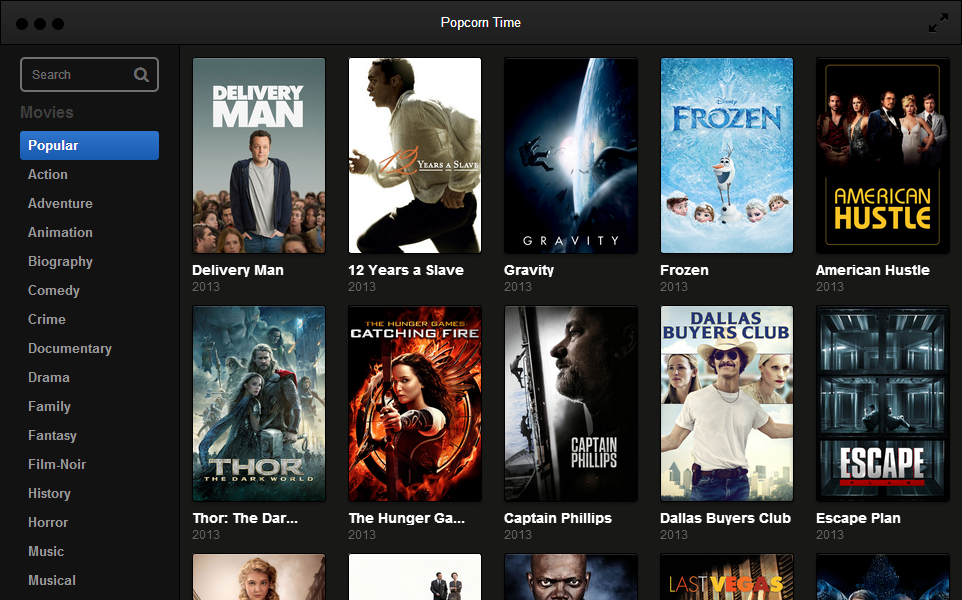
Popcorn Time

Popcorn Time in all of its past glory before it was taken offline

Well, that didn’t last long. Only a few hours after I wrote the original article on Popcorn Time, the BitTorrent powered consumer friendly movie streaming app (being called the Netflix of piracy), the official website has since been closed and the project shuttered. Well, as much as an open source project can be shuttered anyway.

The developers didn’t cite any specific reason (or threats) that was responsible for their decision, but it was pretty clear, reading between the lines and one particular sentence (“legal threats and the shady machinery that makes us feel in danger for doing what we love”), what had occurred.

So what was Popcorn Time? Think of it as the easiest way yet to watch movies online for free. By combining a super sleek user interface, designed specifically for watching movies, and using the power of BitTorrent and a few publicly available APIs, here is, no strike that, “was” an app that made finding movies to stream online easier than using Netflix. Of course, many of these free movies are pirated movies, but Popcorn Time’s simplicity meant that it was no more than a web browser with a BitTorrent client strapped to it.

No surprise then that the legality issue was the biggest one surrounding Popcorn Time in the short period it was actually live. The developers were adamant that it was legal. I mean, how could a web browser and a BitTorrent client not be legal? But then again, The Pirate Bay is just a search engine. And if even a megacorp like Google can get heat for copyright issues, Popcorn Time wasn’t going to be left out of the spotlight. It seems today the criteria for liability relating to inducement  or contributory copyright infringement is *anything* that makes piracy a tiny bit easier, even if it was just a heavily customized web browser. This is perhaps why Popcorn Time’s fate was sealed the second it made headlines.

But all is not lost. In their infinite wisdom, the developers of Popcorn Time decided to go open source from the get go. Once something is open source, it can never really be taken down. Given the hype and publicity, and the enthusiasm already shown by the open source community, I fully expect others to build and improve upon what was Popcorn Time.

Popcorn Time and its mascot Pochoclín – we hardly knew ye. But maybe we’ll get to know you better in your new reincarnated form.

DVDFab

DVDFab is under serious legal pressure, and others are taking note

This one did last a bit longer though. DVDFab, the company synonymous with DVD and Blu-ray ripping, has met with a major legal setback after a New York federal court ordered its domain names, social media account and funds to be seized and frozen. This comes after AACS LA, the licensing firm responsible for the copy protection schemes found on Blu-ray (and HD DVD – you shall not be forgotten), sued DVDFab, a Chinese company, in the U.S.

The only real surprise was that it took this long for some kind of legal action to be taken, to be fair. DVDFab has since relocated its website to a more hospitable .cn domain, started up a protest site, and offered absolutely zero legal defense of its legal position in the U.S (they did not even respond to the motion for a preliminary injunction, which led to the seizures).

Other companies, including the USTR “notorious piracy list” nominee Aiseesoft, have responded by removing their ripping products. May be too little, a little too late, from a legal perspective though.

Slysoft now leads the DVD and Blu-ray market, if they wasn’t head of the pack before. It too was named in the USTR list, so could legal action soon follow? Who knows.

Gaming

The February NPD results have been released. The PS4 was once again the winner, but the winning margin was pretty narrow for February. The PS4 is estimated to have sold around 280K to 286K units, compared to the Xbox One’s 258K.

With Titanfall to be included in March’s NPD results, next month could see the Xbox One regain its next-gen console throne, even if it’s just for one month.

The Wii U managed to sell 82.5K units, behind the Xbox 360’s 114K. No PS3 numbers this time, but you’d expect it to be somewhere between the Wii U’s and Xbox 360’s.

That’s it for this WNR. See you next week.

Weekly News Roundup (16 February 2014)

Sunday, February 16th, 2014

Welcome to the WNR. Hope Valentine’s Day was a nice one for you couples out there, and for you singles out there, I hope at the very least it was a decent Friday.

Let’s get started.

Copyright

Despite RapidShare’s appeasement policy towards rights holders, the file hosting site has been re-added back to the “notorious pirates” list by the USTR (United States Trade Representative). The new updated list also includes software firms Aiseesoft and SlySoft, two companies that both sell DVD and Blu-ray ripping software.

RapidSharre logo

RapidSharre no longer a friend of Hollywood and the music industry, despite its draconian anti-piracy measures

It appears sucking up the rights holders did not work as well as RapidShare had hoped. Neither the implementation of quite draconian anti-piracy methods, nor its infamous manifesto helped to prevent rights holders from dobbing in the file hosting website to the USTR for inclusion in this year’s list. You can’t win, really. So you probably shouldn’t try to.

The other new inclusions are interesting too. Despite their products being around for what seemed like a decade already, and with many other companies producing similar software, both Aiseesoft and SlySoft gets special treatment this time around by the USTR. Now I don’t have much personal love for Aiseesoft, having seen either their representatives, their marketing agency or just really really fanatical customers spamming my forum for ages (forcing me to implement a filter to automatically change all references in forum posts from ‘Aiseesoft’ to ‘Aispamforums’). But it’s just one of many, possibly hundreds of companies that are churning out software with the same functionalities, so why pick them out, I have no idea. The SlySoft listing is perhaps a little bit easier to understand, given the company’s higher profile.

Nobody likes being blacklisted, but it probably doesn’t mean much for these companies in the long run.

——

Well that didn’t take long. A week ago, in this news article on yet more viewing restrictions for Game of Thrones in Australia, I wrote “Given these new restrictions, it’s very likely that the piracy rate for the new season (of Game of Thrones) will be even higher, which may prompt the new conservative government of Australia to take action.”

Three Strikes

Three strikes and domain blocking may be coming to Australia

And just a few days later, Australia’s Attorney-General George Brandis has issued the clearest call yet for three-strikes and website censorship to be part of new copyright reforms aimed to modernising existing copyright laws.

This is despite mountains of evidence that graduated response does nothing to curb infringement activities, as well as a recent Dutch court ruling that found website censorship is disproportionate and ineffective – all of which conveniently ignored by the copyright lobby or dismissed as bias.

And none of it addresses the real cause of piracy, which is a problem with access. If users are not getting the choices they want, at the prices they want, then rightly or wrongly, they will seek alternatives. This may be grey imports or circumventing geo-blocking to access the likes of Netflix or Hulu Plus. Or it may be mean piracy. And until these problems are addressed, no technical or legal measure will do a damn thing to curb the piracy problem.

Gaming

A major development in US video games sales with the release of the January NPD results showing the PS4 having a big lead over the Xbox One, despite the former’s stock constraints.

While none of the consoles really sold in great number, not compared to December anyway, the PS4’s 271,000 (based on a pretty solid estimation) put the Xbox One’s 141,000 in the shade. Had PS4s been more widely available in stores, the gap would have been even greater.

Xbox One Forza 5

Xbox One struggling in sales already? Price tag probably main reason for gamers choosing the PS4.

To illustrate how poor the Xbox One numbers were for January, the first January since launch, we can compare it to previously generation consoles. For the PS3 and Xbox 360, their first Januarys meant between 240K and 250K in sales. The Wii U only managed 57K during its first January.

Multiplatform games also sold better on the PS4 than on the Xbox One, with the exception of CoD: Ghosts.

With the PS4 beating the Xbox One comfortably in other markets, and with the Japanese market expected to be dominated by the PS4, North America remains the only major marketplace where the Xbox One has a realistic chance of beating the PS4. On these figures, these chances seem less and less realistic.

Worryingly for Microsoft, it appears the PS3 outsold the Xbox 360 in January as well. In fact, even the Wii U may have done better (although still most likely below 50K).

While it’s far too early to eulogize the Xbox One, there are some pretty clear reasons as to why the Xbox One is not doing as well as it should. The extra $100 Microsoft expects gamers to pay for the largely useless included Kinect 2.0 is the main factor, as is the console’s perceived hardware disadvantages (which are not really showing up dramatically in games, but nevertheless is a factor for buyers).


It’s almost the same mistake Sony made with the PS3, having been released at a higher price with a feature (Blu-ray) not many people needed at the time. This time, Sony listened to gamers and gave them a console that did all the important things right, and it appears the company is reaping the rewards. Microsoft, on the other hand, tried to force excessive DRM onto users, then backtracked, but still ends up with a console that doesn’t do anything particularly better than the cheaper PS4. Only a price cut, and one that has to occur this year before the PS4’s lead grows by too much, can turn things around, in my opinion.

That’s it for the week. See you again in seven.