Archive for the ‘Nintendo Wii, Wii U, Switch’ Category

Weekly News Roundup (21 April 2013)

Sunday, April 21st, 2013

Plenty to go through in this downer of a week, so let’s not waste any time …

Copyright

Is it still going on? Apparently, yes. Viacom is still suing Google’s YouTube for copyright infringement, despite a 2010 court ruling throwing out the case via a summary judgement in favor of Google/YouTube. That decision was appealed, partially successfully, and the case was directed back to the lower courts. But once again, Judge Louis Stanton has ruled in favor of Google, arguing that YouTube was under the protection of the DMCA’s Safe Harbor provision. And guess what? Viacom is going to appeal this decision too.

It’s all getting quite boring now, to be honest. The two companies are actually working side by side these days, so only Viacom knows what the point of the lawsuit is at the moment. That Viacom is still not letting go is probably more face saving than an actual sense of feeling wronged, and whatever YouTube has done in the past, what it does now (in terms of what users do with the service, and what YouTube does for content holders) is so far removed from what went on before, it’s practically like suing a different website.

Just move on Viacom. Everybody’s bored already, including  the judges, and probably your shareholders as well. Concentrate on actually making content that people want to pay for, instead of blaming everyone else for your woes.

Speaking of things that people actually want to pay for, Netflix’s plan to fight off its old and new subscription-VOD competitors appears to be working, as its original programming has helped the company to gain new subscribers. But it’s Netflix’s old business, the DVD (and Blu-ray) rental one, that is now becoming a risk for the company, an analyst has warned.

Photo of Netflix on iPad

Netflix’s growth is dependent on revenue from its disc based business, but with that shrinking, Netflix may be at risk says analyst

While Netflix has over 29 million streaming subscribers, 64% of the company’s 2013 revenue is still expected to come from disc based subscribers. In other words, disc rentals are funding Netflix’s streaming expansion plans, and with disc revenue expected to continue to fall, it could endanger Netflix’s plan to expand to more locations around the world, as well as fund new original programs.

If anything, it seems Netflix’s current problem stem from the fact that it’s too good for its price of $7.99 per month. Compare to say HBO, who can get away with $15 per month for only a few hit shows, Netflix, now with original programming, offers much more (and an essential babysitting tool for any parent or guardian). The increasing cost of securing rights to shows and movies, and increasing competition from the likes of Amazon and Redbox, all means that Netflix is still over-reliant on its declining disc based business to keep the company profitable and in expansion mode.

Subscription VOD is currently stuck with the low cost model first pioneered by Netflix, but I suspect going forward, there will need to be tweaks to the pricing model. Perhaps we’ll see an introduction to a “premium” subscription tier that includes more fresh and original content than the “basic” $7.99 package, and that may be needed to offset the billions Netflix currently spends on licensing and production.

And who wouldn’t pay another $5 or even $10 per month if it meant they could watch new seasons of shows like House of Cards and Arrested Development?

——

It didn’t incite as much hatred as SOPA, but CISPA may be just as bad, and unfortunately, the US House of Reps passed it with an overwhelming majority on Thursday. The CISPA cybersecurity bill will enable private business to share all your most private information with any government agency that requests it, and allows warrant-less database searches. Emails, photos and even passwords could all be shared with government agencies against your will, and there’s nothing you can do about it – CISPA ensure this.

Typically, supporters of this overreaching bill says that it’s targeting terrorists not ordinary citizens, and Rep. McCaul of Texas drove home this point even more clearly by actually using the terrible events in Boston as justification for CISPA.

But unlike SOPA, there isn’t the united front against CISPA that can work together to kill it off before it becomes law. For one, the likes of Apple, Google and Yahoo are cautiously supporting CISPA, despite opposition from the likes of the EFF and the ACLU. At least this time, the White House seems to be on our side, with President Obama threatening to veto the bill in its current form, and the Senate, having already turned away a previous version of CISPA once before, may have something to say about it too.

Gaming

Sony says they’re not going to make the same mistakes they made with their PS3 launch, and will launch the PS4 at a good price.

A photo of the New Xbox 360

Could a cheaper Xbox 360 keep the console alive when the Xbox 720 and PS4 (also to be cheaper at launch) arrives?

The PS3 was launched at a price that was a lot higher than that of rival consoles at the time (in Australia, the launch price of the 60GB console was close to the $USD 900 mark). This was despite Sony still losing money on each console sold. The reason for the high price was the included Blu-ray drive, and Sony argued that since Blu-ray players were quite expensive at the time, the PS3 actually represented good value for those also looking for a Blu-ray player.

This move paid off by ensuring Blu-ray won the highly tedious HD wars, but the victory came at the cost of lost market share to the likes of Nintendo and Microsoft. It also ensured Sony lost a ton of money for the first few years of the PS3.

But with Blu-ray players worth almost nothing these days (saw one today advertised for $USD 40), there aren’t any reasons why the PS4’s price point should be any higher than that of its rivals.

Although it could still be a lot higher than that of the Xbox 360, as Microsoft may be releasing a $99 version of the console to be launched along with the Xbox 720. It may be a response to the Xbox 720’s lack of backwards compatibility, but it could also be a move on Microsoft’s part to add new customers for the console. It might target those that want it as a cheap media streamer, with the added bonus of heaps of games of all types, from the casual/family to the hardcore. The only thing better than it would be a $99 PS3 (hint, hint)!

The cheap Xbox 360 and the cheaper (on debut) PS4 should help lift video game sales, but for now, things are still stuck in the doldrums. The March 2013 NPD US video game sales data has been released, and Microsoft’s Xbox 360 was top of the consoles with 261,000 units solds, but still down nearly 30% compared to a year ago. I actually want to wait a bit to see if any more data emerges for the Wii U in particular before commenting further on March’s NPD results, so let’s talk about it next week.

And that’s it for this edition of the WNR. See you next week.
Weekly News Roundup (7 April 2013)

Sunday, April 7th, 2013

Maybe it’s the post-Easter lull, or I was just even lazier than usual (“that’s not even possible”, I hear you say), but it’s been a spectacular boring week in terms of news this week. After reading the 86th story on how many people illegally downloaded a Game of Thrones, and in the days after I wrote my piece on it, I mean, really?

So as you’ve guessed, this is going to be a really really short WNR. Not my fault. Not really. Maybe a little.

Before we get to the only story of the week (I know, I know), there were a few notable mentions – stories not good enough to warrant an whole article, but still interesting.

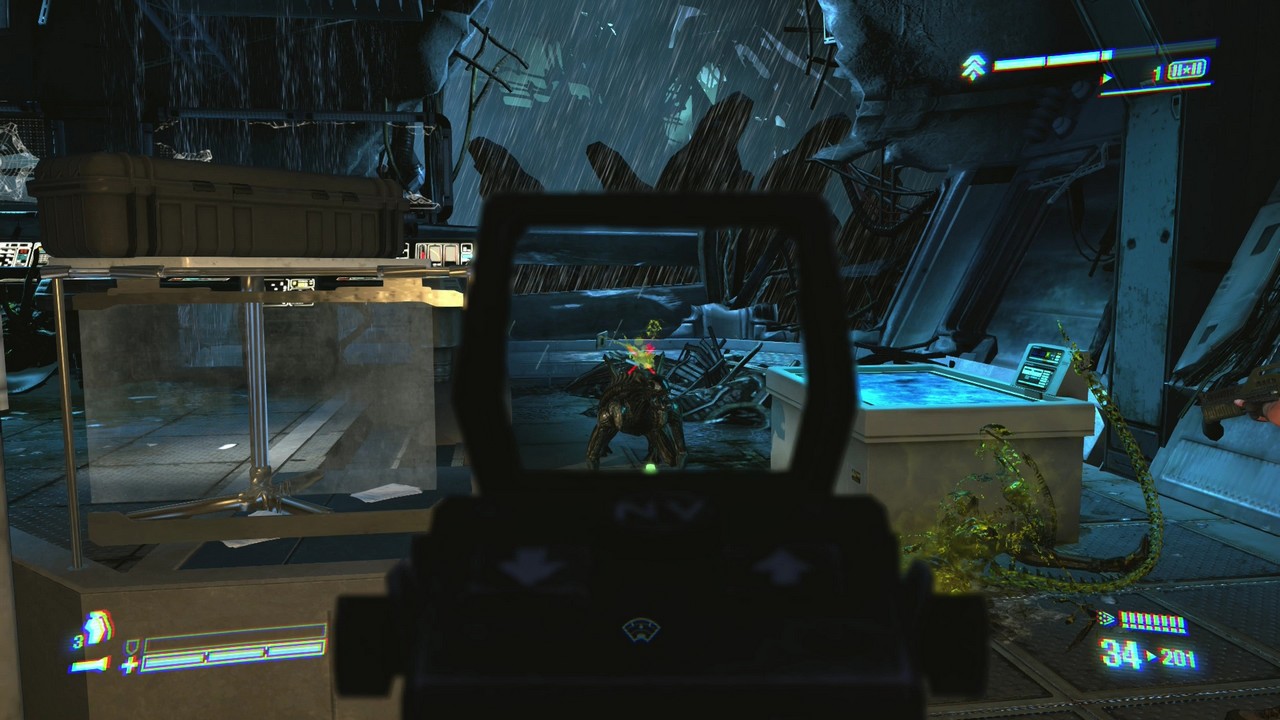
Aliens: Colonial Marines Screenshot

Game cancelled for bad console, or bad game cancelled for console, depends on which way you want to spin it!

First up is the non story about Aliens: Colonial Marines being cancelled on the Wii U. Now, I could have spun into a story about how developers were abandoning the Wii, due to the poor sales figures. But I think it’s really just a case of developer abandoning poorly designed and implemented game. I wish more developers would do that, especially with games based on established franchises, and spare the rest of us the disappointment and frustration that comes from ruining our cherished memories of classics of days gone by.

This article in the WSJ is quite interesting, but has a bout of too-long-didn’t-read about it (to be fair, anything over 140 characters these days are labeled by some as tl;dr, but I do recommend you read this one). It’s about how content industries in the US come up with their controversial calculated losses due to piracy, and the debate surrounding just how much damage web piracy is having on sales. Even the MPAA has backed away from earlier studies that put the estimated cost to the economy at anywhere between millions and billions. I don’t think there’s any doubt that piracy is hurting sales, but how much is the million to billion dollar question. My estimate put losses at $275.5 million per year. It’s true that I pulled that number out of my @$$, but it’s probably no more or less accurate than any other figure out there.

Google DMCA Notice

How long before the Google notice about a DMCA complain is subject to its own DMCA complain?

The ever informative TorrentFreak this week has another wacky story about Google DMCA takedowns, this time a rights holder has asked the actual DMCA takendown notice to be taken down. Whenever Google receives a DMCA takedown request, a copy of it is posted at Chilling Effects, and Google’s search results will usually post a notice with a link to the relevant Chilling Effects page for the notice. But as TorrentFreak notes, it doesn’t take much effort to take the Chilling Effects database of infringing links, and create “one of the largest pirate search engines available” from the data there. So taking down the infringement notice is the logical thing to do, except that this creates another Chilling Effects page, which will need to be taken down again in due time, and on and on we continue until we’re stuck in the deepest level, Limbo.

And now onto the Game of Thrones news I talked about earlier.

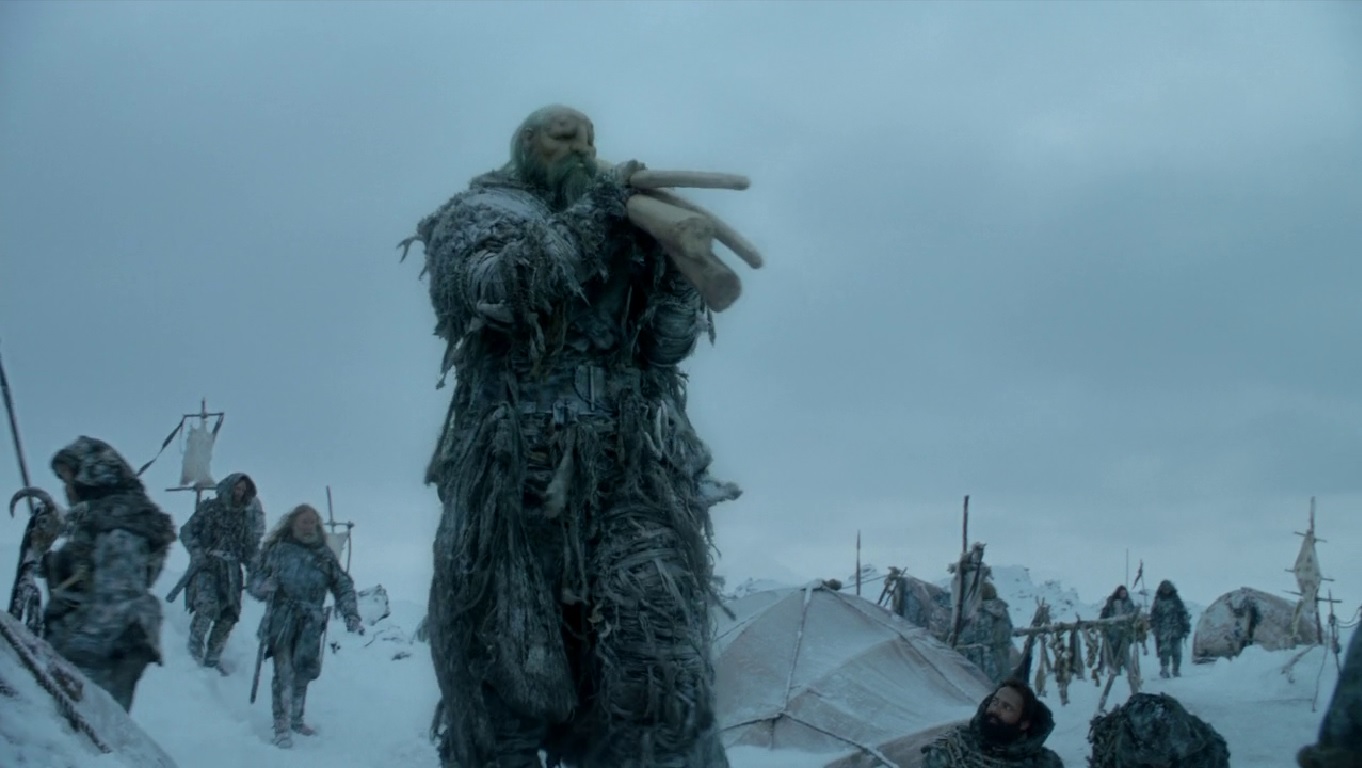
Game of Thrones: Giants

Holy crap! GoT Giants!

Despite the best efforts of HBO, by shortening the artificial airing delays for the latest episodes of Game of Thrones outside of the U.S., the first episode of season 3 of the hit show has still managed to break piracy records.

At one point, the most popular torrent for GoT had more than 160,000 peers, and only a day after the show aired, it has already been downloaded more than a million times.

Surprisingly, or perhaps unsurprisingly if you actually live here, Australia was one of the top locations where the show was downloaded illegally. The show’s popularity in Australia isn’t the issue, and with only a 2-hour delay between the U.S. airing and the Australian subscription TV premier, access seems to be less of an issue as well (originally, subscribers had to wait 6 month for new episodes).

But pricing, I think, is still why so many Aussies turn to BitTorrent. Despite the country being a prosperous one by relative terms, the fact that we end up paying many times the price of people in the U.S. or even the U.K., means that many feel that the legal option cannot be considered as a reasonable option. The cheapest way to watch the latest GoT episodes, with “only” a two hour delay, costs at least $USD 63 per month, most likely double what people in the U.S. are made to pay (this gets you basic cable plus the movie channels, one of which shows the latest episode of HBO shows). Those that want to watch via the net, legally, are left with the option of an iTunes season pass at $35 for the HD version of the show, and a hefty 2-day delay for new episodes.

For now though, it seems HBO and the show’s creators, and even Australia’s subscription TV provider, are not pulling their hairs out over the piracy rate. The high piracy rate is a testament to the show’s popularity, and that’s something you can’t buy, and that’s a good thing. In the end, it all comes down to a simple formula: take the number of people who want to watch the show and subtract away the number of people who can actually afford to watch the show. With the first number really high, and the second number low because of cost and accessibility issues, it’s no wonder the piracy rate is so high, here in Australia, and elsewhere. Reducing piracy may end up lowering the first number without actually increasing the second number, which is totally not what you want (as the first one determines things like DVD and Blu-ray sales too).

That’s about it for this shortened edition of the WNR. Short and sweet. Like a Hobbit marinated in honey sauce. Hmm, soft and juicy Hobbitses.

Weekly News Roundup (24 March 2013)

Sunday, March 24th, 2013

SimCity. The game you love to hate. Or hate to love. I don’t know, one of those. I actually like the game and I find myself quite addicted to it. So it’s unfortunate that the game, in it’s current form, is a broken mess. Therefore, I’m treating it more like it’s an early beta version, and using it to learn how the game works, rather than be too emotionally attached to my metropolis creations (since I’ve already lost a city to one of the numerous city destroying bugs, I can’t afford to be too attached). My advice? Don’t pay full price for the game until most of the time wasting, soul crushing bugs have been fixed.

On to the news roundup …

Copyright

A major decision in the U.S. Supreme Court this week, and a win for “common sense”. The court upheld the “first-sale doctrine”, overruling previous lower court decisions that ruled this doctrine did not cover foreign based works. It all came about when a textbook maker sued a eBayer for buying cheaper textbooks from overseas and selling them on eBay. The lower court initially ruled in favour of the textbook maker, and awarded a ridiculous $600,000 in damages to them. But subsequent appeals ensured the case was heard in front of the highest court of the land, and finally a copyright ruling that makes sense.

Had the ruling, which had a 6-3 split, gone the other way, it would have meant that websites like eBay, game stores, and even libraries, would be under new scrutiny in regards to goods originally purchased from overseas. Even garage sales would have been under threat if “first-sale” did not apply to foreign based goods.

Rooting for such a radical new interpretation of the copyright law, that would severely limit the rights of consumers, were the RIAA, the MPAA and even the Obama administration, a reliable friend of the former two.

While the principle of first-sale is sound, and now reconfirmed, copyright holders have already found many ways to bypass this anyway. Through the use of complicated licensing terms, and DRM, game, movie and music publishers have found it easy so far to prevent the resale of digital goods. That’s why you can sell your iPod, but not the music collection contained within, and why game publishers go to extremes to discourage the sale of second hand games (using one time activation codes and whatnot). I would imagine the marketplace would be far more competitive, and consumer in a far better position, if “first-sale” was vigilantly applied to digital goods too, but that’s just me.

——

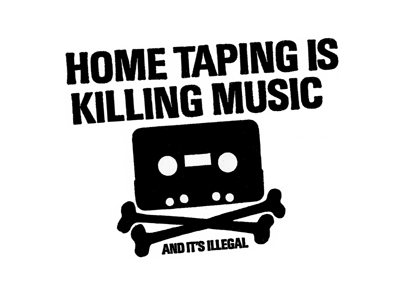
Home Taping is Killing Music

Web music piracy is just as dangerous as home taping was

Common sense would dictate that there isn’t a one-to-one correlation between piracy and lost sales. But what if there’s a correlation between piracy and a *gained* sale?

That’s one of the conclusions to come out of a new European Commission report into music piracy, and it finds that the links between piracy and lost sales are tenuous at best. The study was limited to only looking at website visits, and found that for every 10% increase in visits to websites offering illegal music downloads, there was a 2% – 4% increase in visits to legal music sale websites. The report did not have data on actual music transactions though, but these statistically significant results should not be ignored either.

Overall, the study found that in a hypothetical absence of illegal music downloads (not gonna happen!), people aren’t going to jump straight to buying music, something that’s plainly obvious to most people I would gather. So instead of being the big revenue killer that piracy has been thought of, it may well be a simple matter of “trespassing of private property rights”. As a content producer myself, I can see how, even without revenue loss, the “trespassing of private property rights” might otherwise make me extremely annoyed – nobody wants their private property rights to be violated – but I also understand how everything in the Internet age works, and that having my content pirated, while still annoying, is also a badge of honor of sorts. If my content wasn’t being distributed without my authorisation, it probably just means my content wasn’t good or popular enough in the first place. And if it gets pirated, then it’s up to me to leverage the popularity of my content and monetize it, and there are definitely ways to do this.

The Internet has democratized the natural selection process for content. Instead of publishers having a large hand in selecting what we should and shouldn’t be consuming, the Internet allows the consumer to make their choices directly, bypassing the publishing industry altogether if necessary. That’s what scares the companies that’s represented by the RIAA and the MPAA the most, because they don’t want to lose control. DRM, while being advertised as an anti-piracy tool, is really just a new way for Big Content to maintain control. That it doesn’t work to stop piracy isn’t an issue at all, not when it successfully forces consumers to use content only in the ways publishers want them to.

Just like how if you want to play SimCity, you have to buy it from Origin and play it via Origin. If you don’t like it, you can’t simply grab the Steam version because there is no Steam version.

I think I’ve played every Sim City game ever made, and I simply love the series, even the demented way SimCity 4 managed traffic, or the way you ended up with a city full of Arcologies (and police stations) in Sim City 2000. And this is why, despite the horrible DRM and the known issues with it, I, and many other SimCity fans, still went out and purchased the game. It’s this kind of loyalty that EA has exploited to their advantage, at the expense of everyone else, and not too dissimilar to the way Blizzard launched Diablo III.

SimCity Rollback Error

The dreaded SimCity “rollback” error, that could reset the city you’ve spent hours building

But what seemed like launch glitches with the DRM, now seem like a much bigger issue, as while servers are now widely available, the whole online based gaming experience still leaves much to be desired. Updating cities in the same region can be cumbersome, often taking minutes, even though the instantaneous change is what’s needed. Some sync fails to occur entirely, until one logs off and logs back on. Server still become unresponsive at times, forcing gamers to wait 10 or 15 minutes at the city loading screen, with no explanation for the wait. And for no reason, changes made to the city can be lost and you’re forced to rollback to an earlier version (or even lose the city and region entirely, in some case). And it seems that forcing some of the processing online is not only not helpful (and not an efficient way of doing things), it’s producing gameplay bugs in the game’s traffic and trading management systems.

EA and Maxis defended the use of always-on DRM by saying that some vital game functions had to be pushed online for processing. While this may be true for those playing the game with friends, hackers have shown that this statement is false when it comes to those playing single player games, by producing a hack that allows offline play. As a bonus, the mod also fixes many of the issues that plague the game.

But the hack also allows public cities to be taken over and destroyed, it seems, suggesting that EA and Maxis’s always-online DRM isn’t doing it main job of protecting the integrity of the system from hackers. Again, not too dissimilar to what happened to Diablo III.

As I said a couple of issues ago, a good DRM, or “always-online” implementation, has to be invisible. It should sit in the background and not ever have to make the gamer aware of its presence, while doing everything it is designed to do, including anti-piracy and anti-hacking, and if possible, should bring added value to the game. The SimCity always-online implementation does exactly the opposite in all of these areas.

That SimCity attempts to add an online component to single player gaming isn’t the problem, the problem is that SimCity doesn’t do this properly. Even if we call SimCity an online game, even though most of its gameplay elements can be done offline, the problem is that SimCity is still just a really bad online game. And that’s inexcusable.

While I’m pretty confident that there hasn’t been a lot of pirated versions of SimCity being used by people – the legit version is broken enough as it is, no one will bother with the pirated version, and with SimCity doing good business, does this all count as a financial success for EA and to a lesser extent, Maxis? Fellow game developer, and creator of the mega indie hit Super Meat Boy, Tommy Refenes, says that successful anti-piracy, if it meant ruining it for paying customers, doesn’t make financial sense at all.

Super Meat Boy

Super Meat Boy has been pirated at least 200,000 times, but has sold millions of copies – the creator isn’t too fussed about those 200,000 “lost sales”

Speaking from his own experience with SimCity, a game he purchased but has subsequently requested a refund for, Refenes goes on to explain how losses due to piracy is not something a company can put onto the balance sheet, as it’s not something you can even calculate with any degree of accuracy. On the other hand, angry customers returning products is something that ends up written in red ink, and has long term repercussions that may be irreparable (see Ubisoft’s DRM Adventures).

Refenes also explains that because there are infinite copies of something digital, it is entirely different to say the theft of a physical copy of something. Stringent security measures at say KMart, where Refenes used to work, may help to stop the theft and return the stolen item back to store shelves, with a measurable loss prevented, the same cannot be said of digital piracy, he says. “Your game is infinitely replicable at a negligible or zero cost (the cost bandwidth off your own site or nothing if you’re on a portal like Steam, eShop, etc). Digital inventory has no value. Your company isn’t worth an infinite amount because you have infinite copies of your game. As such, calculating worth and loss based on infinite inventory is impossible. If you have infinite stock, and someone steals one unit from that stock, you still have infinite stock. If you have infinite stock and someone steals 1 trillion units from that stock , you still have infinite stock. There is no loss of stock when you have an infinite amount … it is potentially one less sale but that is irrelevant. Everyone in the world with an internet connection and a form of online payment is a potential buyer for your game but that doesn’t mean everyone in the world will buy your game.”

It’s something that I’ve mentioned before, but the way game publishers are using DRM these days goes beyond a simple comparison of physical versus digital. It’s not just that they are employing security measures, it’s that they’re employing really really bad and intrusive security measures. The equivalent of DRM isn’t a security guard at the entrance of the store, it’s the equivalent of a pat-down search for every customer that leaves the store (or a full body cavity search in the case of always-on DRM – a traumatic experience that will be relived in your head every time you use said product). No store would do that and risk losing their once loyal customers, so why do game publishers think that this is okay? The only reason I can think of is that unlike most stores, game publisher’s products are exclusives. You can’t simply go to a more customer friendly store and buy the same product, you’re stuck with SimCity from EA’s Origin.

Or maybe not. Maybe there *is* a more customer friendly store, and more than one actually, and not only do they not punish you for spending your hard earned money, they’re not even charging you for anything. That store’s name is piracy, and in the battle between free with a side helping of guilt and not free with a big chunk of frustration, the choice that doesn’t frustrate wins most of the time.

Gaming

It’s NPD time, this time for February 2013. Once again, the Xbox 360 was the most popular console in the U.S. market for the month of February, selling some 302,000 units. This beat the PS3’s 263,000. The Wii U languished at the bottom, selling only 66,000 units, 70% of which were the deluxe model of the console.

So once again, we have a double digit decline for retail sales, and both Microsoft and Sony will hope their new console will have a better start than the Wii U.

There’s a lot of talk about the casual gaming market, previously dominated by the Wii, now taken over by mobile apps. Most of the talk has been about how popular smartphones and tablets have gotten. The Wii U even tried to jump on the bandwagon by adding a tablet into the mix, but it doesn’t seem to have worked. But surely, it’s the value proposition that has had the most dramatic change. The choice is now between paying $50+ for a console game that you probably don’t even have time to play, versus a 99 cent game that you can enjoy at a moment’s notice in your spare time. It is comparing apple to oranges, but entertainment is entertainment. Just like how video games become a better value proposition than movies and music (and why it has necessitated the lowering of the price of these forms of entertainment), app gaming has become a better value proposition than console gaming. It may really be that simple.

But I’m sure someone will find a way to blame piracy for everything.

With the 2,000 word barrier broken according to WordPress’s word counter, it’s time to wrap things up. See you next week.

Weekly News Roundup (17 February 2013)

Sunday, February 17th, 2013

A belated Happy Chinese New Year of the Snake. I was born in the year of the Monkey, and they say only the Monkey can handle Snakes, so all your Snakes better behave yourselves. Those born in the Year of the Snake should also wear something red on them at all times to deflect bad luck, preferably something given to them rather than something they’ve bought themselves.

In this first WNR for the Year of the Snake (technically not true), there are quite a few news items to go through, so let’s get started.

Copyright

Joining the list of people who really shouldn’t be downloading pirated videos may be FBI employees, caught downloading hit TV shows such as Homeland and Dexter. They join employees from Hollywood studios, the DoJ, congressional offices, national parliaments, anti-piracy lobbyists and many other places where they’re pretty sensitive about this whole Internet piracy things.

And even if they weren’t downloading at work, something most people would probably not do, many are probably downloading in the privacy of their own homes.

While this highlights how widespread the “problem” of piracy is, to me, this isn’t actually reason to take harsher action against it. I liken this Piracy Plague® to jaywalking, something that almost everyone does (while knowing they probably shouldn’t), and that they do get in trouble if they’re caught doing it, but in the grand scheme of things, it’s not exactly a high priority for law enforcement (even though jaywalking, unlike pirated downloads, can lead to a life and death situations, so it’s actually more serious than piracy will ever be). I guess the difference is that there is no such thing as an anti-jaywalking lobby group (Car Manufacturers of America? ), so nobody cares.

The other major difference being that there is no monetary loss involved, although that’s debatable with piracy as well.

But there also exist a difference in solving these two problems. If it is identified that people are jaywalking in particular area, and it’s leading to a public safety issue, I would hope there’s an effort to find out why people are jaywalking excessively in this area, but not in others. Perhaps the lack of pedestrian crossings could be the issue. But for piracy, there’s strong pressure against finding out why it happens, with the focus is instead on labeling people who download as criminals, and leveling penalties against them. So instead of adding a pedestrian crossing to fix the problem, the focus would instead be on an ad campaign linking jaywalking to terrorism or something like that, and then setting up a hidden police presence around the corner and fining those that get caught, all the while ignoring the real cause of the “infringement”.

SoShare Logo

SoShare promises to combine the best of cyberlocker storage with BitTorrent technology. It might run into some legal headwind, mind you …

But soon there may be a new and better way for these FBI agents to get their Homeland fix. BitTorrent Inc has launched a new cyberlocker storage service that promises unlimited uploads, and unlimited transfer limits, and uses BitTorrent technology to speed up downloads. The new service, SoShare, has just been made live as a public beta test, and only requires a browser plug-in in order to utilize the BitTorrent based enhancements.

SoShare works by allowing the the uploader and downloaders to use their own bandwidth to help other downloaders speed up their downloads, much like how BitTorrent works. A master copy of the file is also store on SoShare’s servers to allow downloading to continue even if the original uploader is not online.

So with BitTorrent coming to the under pressure cyberlocker scene, the most immediate question that comes to mind, at least for me, is the copyright question. A quick look at SoShare’s copyright policy shows all the typical DMCA related information, but as SoShare does store a copy of the uploaded file, therein lies the danger from a copyright point of view. SoShare will have to be extra responsive to DMCA takedown requests to protect themselves. So far, the service is offered for free, with no monetization and no financial incentives for uploaders, which should also offer some additional protection if the service is ever accused of “incentivizing” illegal uploads.

But for downloaders, SoShare downloading may be a better bet privacy wise than BitTorrent downloads. While not much is known about how exactly the service works, one would hope it does not easily make public the details of all connections to the download swarm like BitTorrent naturally does.

——

In other news, The Pirate Bay is threatening to sue an anti-piracy group for copyright infringement. And no, I did not mix up the subjects in the preceding sentence.

Fake Pirate Bay

This “fake” Pirate Bay, set up by an anti-piracy agency, may be infringing on the copyright of the real Pirate Bay

This all started when Finnish anti-piracy group CIAPC launched a spoof website that imitates the look and feel of The Pirate Bay, in a perhaps misguided attempt to educate the masses about the legal alternatives to piracy. The problem though is that the website wasn’t so much an imitation, but a downright like for like copy in many instances, included the CSS file, which was virtually identical to the one used by the real Pirate Bay. So much for educating others to respect copyright!

This blatant theft, which is against The Pirate Bay’s usage policies, has prompted The Pirate Bay to consider taking legal action against CIAPC, if the group does not “move on”, not just from the spoof website campaign, but from copyright enforcement in general. With The Pirate Bay generally supporting a copy-free ideal, their threat definitely did have the feel of a “not sure if serious” vibe to it. Look here, I for one would love to report on ironic lawsuits, just as long as TPB people do indeed make clear that irony is a clear intent (unlike a certain Mr. David).

Regardless, the CIAPC does deserves everything bad that happens to them, as these are the same people, if you can remember, that raided the home of a 9 year-old and snatched away her Winnie the Pooh laptop for the heinous act of downloading a song.

And in ominous news of the week, the W3C has asked the HTML Working Group to consider adding native DRM support to HTML, to placate the likes of Netflix, BBC, Google and Microsoft. These majors are hoping for a native HTML 5 solution to web video streaming, but that can only happen if DRM is present. To be fair, the requirement for DRM does not come directly from these companies, but from the overly paranoid content producers that supply these companies with content. No DRM, no content.

Gaming

The January NPD US video game sales report has been released, and it’s grim reading for Nintendo’s new flagship console, the Wii U. As per the course, Microsoft’s Xbox 360 remained the best selling console for the month, with 281,000 units sold. This is actually up on January 2012, but only because of the 5-week and 4-week reporting difference between the two Januarys.

With Sony not providing any hardware sale details, but based on the Xbox 360’s “44 percent share of current-generation console sales” figure, that would most likely put the PS3 at around 200,000 units sold, and the Wii at slightly more than half of this.

Which makes the Wii U’s 57,000 (a figure that comes from sources that have access to more detailed NPD reports) rather pathetic. As a comparison, the original Wii sold 435,000 units at the same time in its release cycle, and that was with stock shortage constraints in place. The Wii U, being widely available in stores, is already looking like a flop given the dramatic fall-off from the early sales figures. Still, it’s probably too soon to tell if the Wii U is dead in the water, but unless Nintendo have some killer must-have games and apps out in the next few month, it’s not looking good at all.

Xbox 360 Kinect vs PlayStation Move

Kinect beat Move because of Sony’s “stumbling failure”, more so than anything Microsoft did, according to engineer who designed the original Xbox

With such dismal numbers for the Wii U, and the Xbox 360 selling 5 times as many units, it almost feels churlish to talk about this next story. With 76 million units sold, and one in three of them having a Kinect camera connected (albeit perhaps not used … based on personal experience), and with 46 million members connected online, can the Xbox 360 and the Xbox platform really be considered a failure? Apparently it can be, according to one of the engineers that started this whole Xbox project, Nat Brown.

Brown describes the last couple of year’s development of the Xbox platform as “painful to watch”, mainly because the console will lose the “living room war” to the likes of Apple and Google, unless “somebody with a brain” starts running things.

Nat notes the biggest problem with the Xbox platform is one, indie development, and two, a good user experience. It’s worth noting that both of these areas are where the likes of iOS and Android shine, and Nat says that what Microsoft is doing simply isn’t good enough.

And Nat has a great point. Android development can be started with almost zero cost, and apps can be published for not much more. iOS development is a bit more expensive due to Apple’s more stringent requirements regarding coding environments (ie. Mac only), but it’s still well within reach for most semi-professional coders and cashed up enthusiasts. But more importantly, apps published on both platforms are given plenty of opportunities to be found and are actively promoted. On the other hand, Nat says Microsoft offers indie developers very little help in terms of accessibility, support and promotion, which has alienated “a generation of loyal kids and teens to making games” (not just kids and teens, but also 30-something guys with too much free time on their hands).

Nat’s other big gripe with Xbox is the user experience, the inconsistent nature of it all, and how counter-intuitive it can be given today’s more casual user base. Anyone who has tried to access the initially heavily promoted Kinect Fun Labs on the new Xbox 360 dashboard will certainly agree with this point – the fact that someone had to write a guide on how to access it shows how the UI has failed.

But to be fair to the Xbox 360, none of the other consoles are doing much better, a point Nat concedes as he also says that Microsoft’s recent successes have been due to the “stumbling failure” of Sony and Nintendo (Kinect vs PS Move, and the Wii in general). Might as well add the Wii U to that list of “stumbling failures” too, I suppose.

And with that, we come to the end of this week’s WNR. Hope you’ve enjoyed reading it more than I enjoyed writing it (well, given that I didn’t enjoy writing it, it’s kind of a low bar). See you next week.

Weekly News Roundup (3 February 2013)

Sunday, February 3rd, 2013

A rather more normal week this week, although still very quiet. Not a bad thing really, coming when I’ve started obsessively watching the entire 8 seasons of ’24’ back to back on Amazon Prime. I have to say that I much prefer this method of watching than compared to buying the DVD or Blu-ray – the act of putting in a disc and waiting it to load has become a turn off for me, and I suspect it’s one of those things we’ll look back fondly one day but at the same time, wonder why we put up with it for so long.

Anyway, let’s get started.

Copyright

Barely a week has gone by since Mega’s launch, and the takedown requests have already flooded in. More than 150 have been processed so far covering at least 250 files, and all have been dealt with quickly, and if Mega’s operators have learned their lessons, they will continue to get through them as quickly as possible.

Mega Search Engines

Just some of the pirated downloads available on Mega, searchable a third party search engine

Maintaining the protection offered by “safe harbor” is a very important cog in Mega’s plans to stay out of legal trouble (the other being the new encryption feature to help maintain the haze of “I have no idea what’s going on, honestly”), so I do expect them to do everything in their power to get this part up to scratch, and maybe even some extra voluntary stuff to prove that they’re serious. Of course, this won’t actually stop those seeking to use Mega for their piracy upload and download needs, just like YouTube cannot really stop every piece of pirated video from being uploaded and viewed.

What’s slightly trickier will be the introduction (or re-introduction) of third-party search engines for Mega, with one already claiming to host links to thousands of pirated downloads. Sure, these aren’t under the control of Mega themselves, but they do help to focus a spotlight on the darker nature of the website. But if I was in charge of copyright enforcement, sites like these can actually be of use, allowing you to quickly spot the popular downloads and then nip them in the bud before they get too popular (I would also do everything in my power to ensure there’s only one dominant search engine, so as to make this process a bit easier). As part of Mega’s “extra voluntary stuff”, they may also want to visit sites like these and voluntary remove content before waiting for the inevitable takedown notice, just to show that they are indeed serious (I believe this was RapidShare’s strategy, before they went all crazy and went with an approach that’s best described as self-harm).

High Definition

When it comes to buying movies and TV shows, people are still mostly opting for disc over digital, a new NPD study has found. While digital distribution now accounts for 12% of the revenue pie (which does not include streaming VOD revenue), Blu-ray and DVD combined easily accounted for another 61% in 2012.

The dominance of discs was actually down compared to 2011 (form 64% to 61%), but that was largely due to the 7% decline in the average price of a Blu-ray title.

Internet based transactional VOD was dominated by iTunes, but Amazon, VUDU and Xbox 360 Video’s combined market share, for the first time, overtook Apple’s juggernaut.

For disc rentals, Redbox’s narrow lead in 2011 has grown considerably in 2012, now 14 percentage points ahead of by-mail subscription based rentals with 46% market share. Brick-and-mortar store rentals continue to hold on, with 22% market share.

What I found the most interesting in the report though was the watching habits of SVOD and electronic sell-through viewers. 80% and 90%, respectively, of all content watched for these two types of transactions were for TV episodic content. My years-late ’24’ binge viewing doesn’t sound too crazy now at all.

Gaming

Nintendo has had to re-adjust its expectations for Wii U sales downwards after the console failed to meet the projected sales figures for the period until the end of March.

Analysts have blamed the relative high price of the console, compared to the company’s original Wii offering, as well as current “previous generation” offerings such as the Xbox 360 and the PS3 (both of whom have a greater library of games). But Nintendo is adamant that the solution does not lie in a price cut so soon after the debut of the console, but with delivering better games and also waiting for the public to be more educated about the potential of the console.

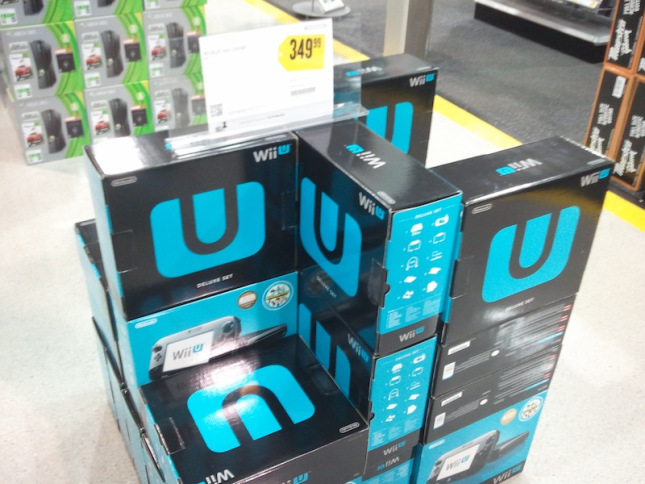
Wii U Boxes

Wii U, unlike the Wii when it was first available, doesn’t seem to be suffering from any stock issues

Mario and Zelda games will help, of course, but the Wii U is competing against smartphone and tablet based casual gaming, as well as the traditional gaming sector dominated by the Xbox 360 and the PS3, so it will be a difficult mountain to climb for Nintendo. Is the Wii U *that* much better for games like Call of Duty and GTA than the Xbox 360/PS3, and we already know it’s not as ubiquitous as smart devices nor can it compete in terms of game prices. So there’s very little that makes the Wii U a must-have console, in my opinion. Once the PS4 and Xbox 720, both looks headed for official reveals this year, arrive with better graphics and who know what else, the Wii U may then already start to look outdated, despite its young age.

A first world problem it may be, but having too many devices that have overlapping functionalities  all vying for the very limited number of connections your TV may have, can be problematic. So choosing a game console is more about choosing an ecosystem these days, one that you can live within and do all you want to do – for example, offline gaming, online gaming, disc playback, video streaming – without having to resort to other devices. Just not sure the Wii U is dominant in any of these areas, to be honest.

Well, we’ve reached the end of this rather short WNR. But as I always say, it’s quality, not quantity. And if you can’t do either, then just finish it as quickly as you can so you can go and watch ’24’.