Archive for the ‘Copyright’ Category

Weekly News Roundup (14 June 2009)

Sunday, June 14th, 2009

Time for another Weekly News Roundup, because, funnily enough, it’s been another week since the last one. Since then, the NPD US video games sales figures for May 2009 came out, and as usual, I have posted my analysis. More bad news for the video gaming industry basically, but a slight improvement since April. And there’s yet another hyped up PS3 exclusive (inFAMOUS) that has failed to really grab a huge chunk of sales, adding to the list including LittleBigPlanet and Killzone 2, to name a few. Sure, they do sell in good numbers eventually, but so do a lot of other quite mediocre titles, including ones that aren’t even exclusive and so by common sense should be selling less on one particular console than exclusives. I do wonder how many people are like me and don’t use their PS3 for games, only for Blu-ray or media playback. I’m sure the percentage of this type of users is much higher than on the Xbox 360, while a competent media hub, is no patch on the PS3 (no Blu-ray, noisy …). Anyway, onto the news.

Copyright

In copyright news, a couple of developments this week, mostly in Europe. That’s understandable, due to the attention the Pirate Bay trial has attracted, and what appears to be several European government’s obsession in pleasing their American overlords to pass strong anti-piracy legislation.

The Swedish Pirate Party now has a seat in the EU parliament

The Swedish Pirate Party now has a seat in the EU parliament

First up is good news, which is rare for this section of the WNR. The Pirate Bay may have lost a trial, but it has gained status as a political party by winning a seat in the European parliament. They won 7.1% of the vote in Sweden, which may not sound quite as impressive to people living in countries with two major parties, but considering that the largest  party in Sweden got 24.6%, and that their Prime Minister’s own party only got 18.8%, the Pirate Party’s 7.1% suddenly looks a lot more significant. The traditional third party in many countries is the Green party, and they only got 3.6% more. The Pirate Party is a single issue protest party, and it’s really unheard of for such a party to receive so many votes. But that’s not to say that the one issue they represent is not an important one, or one worth fighting. Far from it. One can only hope The Pirate Party extends their reach to around the world and they can become a political force that will force some positive change for the lobbyist controlled copyright issue.

Meanwhile, the New York Times posted what appeared to be very bad news for The Pirate Bay in terms of their trial, which the headline that states that their appeal has been denied. This was sourced from an article by the Hollywood Reporter. However, both are wrong in this case, according to our forum’s resident Swedish expert, Cynthia (and a couple of other news sources). The Pirate Bay defence had claimed that the judge ruling the case was biased. The court which will see to the appeal has asked for opinions from the original court that ruled the case in regards to this claim, and the original court has denied any evidence of bias and has submitted this. This is where the confusion comes from, perhaps, because no judgement on the appeal has been made yet, and I doubt this is the only avenue of appeal anyway. Thanks again Cynthia for the update, and no thanks to the NY Times for their lack of research on the issue (even if they don’t consider it “important”).

A couple of weeks ago I posted a news item about France passing a new controversial law, dubbed the “three-strikes” law, which aims to cut off Internet usage for people found to be “guilty” of downloading pirated material three times. Of course, there is no court, no appeal of decisions, and the copyright groups can basically silence anyone it wants to without any hint of a fair process. It is no surprise then the country’s constitutional council has declared this law to be, well, un-constitutional because a system where one is assumed to be guilty and the charged needs to prove their innocence is not one that should belong in a Democratic society. The council basically says that the court has to be involved somehow, so people can prove their innocence. The French government are undeterred and plan to go ahead with the now modified law, which will now require “special judges” to rule on each and every case. But the whole point of the three strikes system is so that it doesn’t go through the criminal justice system to save time and money, but the newly modified law won’t achieve this point and one can see the court system being overwhelmed instantly. Maybe then, it will convince the French government to drop it completely.

All this emphasis on downloads seem to suggest that downloading pirated material has led to a collapse in revenue for industries such as the music industry. While the music industry has suffered from lost of revenue, there is no doubt of this (well, maybe a little), perhaps the reason is not piracy at all. The Guardian, spending a little more time doing research than the NY Times, has came up with a very interesting graph in regards to people’s spending habits. And yes, it does show music spending way down compared to just a few years ago. But the overall spending seems to have increased, to almost double of what it was in 1999. And looking at the graph in more details, it’s easy to see why this is the case. DVD sales went up quickly, but has stayed pretty flat since 2003. Music down as mentioned previously, and so is DVD rental. But people’s spendings on gaming quadrupled in the same period. So instead of piracy getting people’s money, it’s actually gaming, taking money away from music and rentals, and to be lesser degree, gaming. In the intro of this week’s WNR I talked about the NPD analysis, and one of the reasons that I have been doing the analysis posts for over a year now is because gaming is huge business and it needs to be made known that, yes, it is taking money away from the other home entertainment industries. But the point is overall spending increased, and this is despite piracy on the rise, so perhaps piracy isn’t a problem at all – it’s how the music and DVD industry, the passive entertainment industry if you will, can compete with the high level of interactivity that’s offered by video games. And while games are more expensive, say 3 times the cost of a DVD movie, but they also offer at least 3 times the entertainment, sometimes hundreds of hours of interactive entertainment, compared to only 2 or 3 hours for a typical movie (and 72 minutes for a CD). Research shows that piracy actually help to promote content, and thus promote purchases, while people who pirate are not the types to have spent money on it even if there was no pirated alternative. But let’s blame it on the pirates anyway, because that’s easy than confronting the harsher reality that music and movies aren’t as fun for the whole family as video games anymore, especially now with family oriented game consoles like the Wii.

High Definition

While this is probably still Copyright news, but I’ll talk about it in the HD section since the Copyright section above was getting a bit long. The big news this week is that the AACS licensing authority, the people behind copy protection on Blu-ray, has revealed the final specifications for the AACS system. There are a couple of controversial items in the announcement, which is not surprising given the whole attitude of the DRM industry.

Say goodbye to the analog video outputs on your Blu-ray player

Say goodbye to the analog video outputs on your Blu-ray player

The big first controversial item is that analog video output is set to be banned from Blu-ray players. That’s right,  after 2014, no Blu-ray player will be allowed to have component, S-Video, SCART or composite video output or they face not getting the AACS license and therefore, will be unable to play all commercial Blu-ray movies. Starting in 2011, analog output will be limited to SD resolutions only, to set the analog sunset in motion. The argument that analog is useless in the world of HDMI and DisplayPort is a perfectly valid one, and that’s reason enough for manufacturers to stop including them in their players. But to place a ban on it due to copyright reasons is just stupid. If people aren’t smart enough to just download pirated movies online, then I don’t think they’re smart enough to hook up their Blu-ray players to their DVD recorders through analog output, and then somehow find a way to by-pass the Macrovision copy protection present on all analog outputs (for DVD and Blu-ray). It’s certainly not easier than downloading. And if this measure is to stop pirates from making copies, then since existing players support analog output, don’t you think that the pirates, if they needed to pirate through analog (which they don’t), would just keep a few old players lying around to bypass this measure completely. And real pirates work at the Blu-ray disc pressing plants, and have access to the masters, which is why they can bring out a pirated version even before the official release, and this doesn’t stop them. The only thing it stops is Macrovision from getting royalties from Blu-ray (which is not a bad thing, really), and it stops people using Blu-ray on older equipment. I don’t think this will really affect that many people, since I don’t think most people will even remember what analog is in 2014, but it’s the principle of the thing, and it just shows how paranoid the content owners are (possibly thanks to scary propaganda from the DRM industry).

The other big news is that Blu-ray Mandatory Copy will begin to rollout next year. What it is, and it’s already present but not in a standardised form, is that it will allow you to make limited copies of your Blu-ray movies through the Blu-ray player itself. The copies can be on Blu-ray, DVD or even for your portable players (although no Apple based players have signed up for this yet). Blu-ray movies with MC will have an extra menu option to make copies. Each Blu-ray disc with this feature will also have an unique serial number, which is used in an online authentication system to record and place limits on your copying activities (as well as to track if the copied content eventually ends up online or not). That’s pretty much what you would expect from such a system. The problem is that current Blu-ray players do not support MC, and so if you want it, you’ll have to buy yet another Blu-ray player (Blu-ray Profile 4.0?). The PS3 may be able to accommodate this through software updates, and your PC may be updated through software as well to conform to MC standards. And despite the phrase “mandatory” in Mandatory Copy, it isn’t mandatory and is purely optional for both movie studios and hardware manufacturers. And Blu-ray movies with MC enabled will cost more. So MC may be dead before it even starts, but it does add value to be able to make portable versions of movies straight from your Blu-ray player, and it might still end up cheaper than the studio’s preferred method of you purchasing the same content many times over in each different format. I’m going to call this positive progress, because at the very least, it acknowledges the need for people to make legal copies of their movies.

Wal-Mart will be offering cheap Blu-ray players for Father’s Day, at $128 each. But take the advice from our forum members and avoid the ultra cheapo players, because they lack many of the features that the slightly more expensive players have, such as Internet connectivity.

Apple’s upcoming Snow Leopard Mac OS X revision will feature GPU assisted acceleration, including H.264 acceleration, but you will need a Mac with at least the Nvidia 9400M GPU, or you’ll miss out. The $99 iPhone should also entice more people to buy it, and it’s a nice little media player even if you don’t need all the other fancier features. And for $99, you can’t really go wrong, especially if you limit Internet usage to your home WiFi network, as opposed to spending too much on data (more of an issue here in Australia and other countries with rip-off data charges). And no, still no Blu-ray on Apple systems. And speaking of data charges, Microsoft’s HD streaming services will require a 8 to 10 Mbps connection for full quality streaming (quality will drop if connection is slower). That’s out of reach of most Australians at the very least, but maybe you lucky folks in the UK, Asia or US may get to enjoy full quality HD streaming. From a technical point of view, 8 Mbps should give you excellent 720p quality video, while 10 Mbps is probably still too low to offer Blu-ray quality 1080p video (you need at least 15 Mbps to even come close). HD video streaming is still very much bottlenecked at the bandwidth level, I’m afraid.

Gaming

And in gaming, Microsoft’s Natal motion gaming system continues the media promotional blitz by appearing on Late Night with Jimmy Fallon (video in link), in a live demo that was played by Fallon. It’s certainly easier to see the potential of Natal, but until I buy it and test it out in my own home, I’m going to remain skeptical.

Can Natal really work, or will it be too inaccurate to be of any use?

Can Natal really work, or will it be too inaccurate to be of any use?

But Engadget and IGN has both had plays with Natal, and they’ve said some pretty impressive things about it, including the fact that it’s surprisingly accurate. The accuracy thing is the one I’m most worried about. And the live demos showed a modified version of Burnout Paradise that works with Natal, which might mean that lots of existing games can be updated to work with it. I’m really looking forward to playing Crackdown by jumping up and down in my living room like a crazy person.

For those that want to make the comparisons between the Wii, PS3 motion controller (PMC) and Natal, I think Natal is something a bit different to what the Wii and PMC offers. The PMC is a basically a super accurate Wii-mote, and add in the PS3’s HD graphics, it could offer the Wii some real competition. Natal, on the other hand, doesn’t even require a controller, which won’t please the hardcore gamers, but might entice even more of those who don’t consider themselves gamers, much like what the Wii has done. Some people just don’t like having to learn how to use a controller, or are unable to, but being able to use your body to do something is natural to all humans and much easier to learn. Plus Natal offers voice and facial recognition as well. But don’t forget that the PS3 has the PS3 has the EyeToy camera thing, which can be adapted to function in a similar way to Natal, so don’t be surprised if Sony offers body motion controls as well.

My WordPress word counter meter tells me I’ve type 2327 words already, so I’m ready to take a break now. More words coming at you next week.


Weekly News Roundup (7 June 2009)

Sunday, June 7th, 2009

Another pretty quiet week. Well, not so quiet with the E3 going on, but the major stories out of that were gaming which I will cover later on in this WNR. I did manage to write a mid-week blog this week, so no Fallout 3 jokes this time. The blog was about solid state drives and about how awesome I think they are. It’s well worth a read because you will be using one sooner rather than later. If they do manage to replace HDDs, then that’s the second last major mechanical device out of your average PC. What’s the last mechanical device? That’s your optical drive, of course. No wonder Sony says that Blu-ray may be the last optical format around, not so much because it’s so good that you won’t need another one, but rather because once HDDs are gone, the optical drive is going to seem quite quaint as the last mechanical device sitting in your PC (fans and switches excepted, although with cooler components and alternative cooling methods, fans are on their way out as well).

Copyright

Starting with the copyright news, there isn’t much going on actually. I don’t know if this is good news or not.  The MPAA is pretty busy these days with their (and their affiliates’) lawsuits all around the world, so I guess it’s understandable that they don’t have as much time to come out with the usual propaganda.

In the RealDVD case, the MPAA has made a claim that will not surprise anyone, but does give insight into what they perceive to be fair use. They have made the case to the judge that even making one backup copy of a legally purchase DVD for personal use is illegal, as it circumvents the DMCA. There are fair use provisions in the DMCA in relation to archiving, but the MPAA lawyers claim that’s for actual archives (like the National Archive) and does not apply to mere mortals. They even got the Copyright Alliance to claim that if they wanted to give people their rights back, they would have charged more per DVD, and not the current amount, which is too low to allow them to be able to make backups and stuff. Basically they’ve admitted that DRM is used to provide price control on digital content that’s normally (in its DRM-free form) hard to control. So it’s not about piracy at all, and never has been.

Windows 7's codec support may bring more anti-trust lawsuits

Windows 7's codec support may bring more anti-trust lawsuits

While it’s not a copyright issue, but it is still a legal one and that’s the slightly controversial approach that Microsoft has taken with audio/video codec support in the new Windows 7 operating system, which will be released in October. What they have done is locked Windows Media Player so that it won’t work with third party codecs. And the Microsoft codecs will override your third party ones unless unlocked or using a player that will ignore the way Microsoft has done things like Media Player Classic. It’s good news for end users I suppose, in that Microsoft is providing a bunch of codecs with the default OS installation so that you don’t need to go codec hunting just to play a XviD file. What’s not so good is for codec publishers that will lose customers, despite offering a superior product to the one that comes with Windows. Sound familiar? Didn’t Microsoft try to do this when they integrated Internet Explorer into Windows, and had to pay out huge amounts in anti-trust cases brought against them. Microsoft argued then that it was good for their customers, but offering something that come as standard is one thing, but preventing competitors from offering alternatives is another. We’ll have to wait until the release version to see if installing and using third party codecs has been made intentionally hard, or it’s just something that can be bypassed easily.

High Definition

In HD news, it’s all pretty quiet on the Blu-ray front. Most HD news these days is about yet another HD streaming service, or another hardware platform that now streams an existing service.

One of Microsoft’s big E3 announcements (you’ll read more about them in the gaming section), is that 1080p HD video streaming is coming to the Xbox 360. Bandwidth issues mean that none of the 1080p streaming services will come close to matching Blu-ray’s quality, and you can’t argue with the convenience of not having to step outside you home to watch a movie from a catalogue of thousands, more than what your typical store will hold. The best news is that, unlike previous offerings, this one is worldwide. And not only that, the services that Xboxers in the lucky countries have been enjoying will now come to 10 more countries, including Australia. Last week it was the news about UK and Irish Xboxers getting Sky TV channels through the Xbox 360. So one of Microsoft’s major themes for this E3 has been trying to turn the Xbox 360 into a fully fledged media streamer. And unlike Sony, they don’t have to worry about streaming taking customers away from their disc format, because they don’t have a disc format to support (anymore).  

Gaming

And so onto gaming, and most of the news this week has been the various announcements from the gaming companies. Nintendo was relatively quiet this E3, and it’s all been about Sony and Microsoft catching up.

And the best way to do that of course would be to copy Nintendo’s lead and offer motion controlled gaming. But both have decided to go in a slightly different direction to what Nintendo is offering.

Full body motion controls comes to the Xbox 360 through Project Natal

Full body motion controls comes to the Xbox 360 through Project Natal

Microsoft was up first, and they demonstrated their Project Natal, a full body motion gaming system without the need for a controller (click on link to see video of Project Natal, as well as Milo). Well, you can’t accuse them for coming out with a Wii clone, that’s for sure. If the thing works, then it will open up a whole new level of gaming, because gamers don’t want an abstract representation of real world activities, as the gamepad provides. Even the Wii-mote is limited in providing a representation of real world activities, as it only works for one arm (and even with the Wii Fit board, it’s still limited – to go that one step further, then we’ll have to end up looking like the Borg just play Mario).  So a motion and depth sensing camera seems to be the way to go, and Microsoft has also added facial and voice recognition. The criticism of Natal is that without an actual controller with buttons, then the whole system may not work with proper games that require the gamer to do super-human things that only controllers and buttons can simulate. But what’s to say that Natal won’t have controller add-ons in the future? Another problem is accuracy, and I don’t know if the camera can pick up and interpret all the nuances that would be required to have a full gaming experience. But certainly this seems to be the next logical development in gaming, and it was what I thought the Wii-2 would be like. Microsoft also showed a demo featuring a virtual boy called Milo (see video from link above), which combined showed the future potential of Natal by allowing you to interact with your game console/virtual friend in unbelievable ways. 

PlayStation Motion Controller - like the Wii-mote, but in 3D and more accurate

PlayStation Motion Controller - like the Wii-mote, but in 3D and more accurate

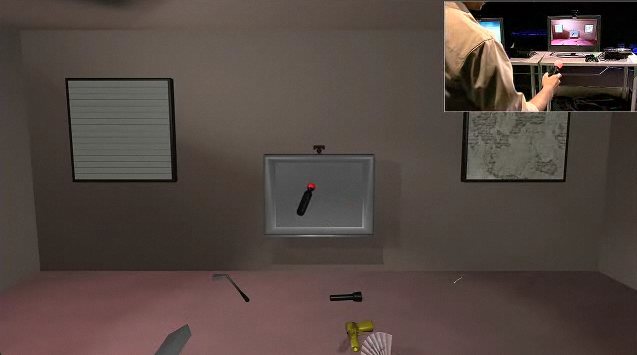
Sony went with the more traditional approach, but added some innovation as well (click on link to see video). A controller wand very much like the Wii is present, but there is a big glowing light that, when combined with the PlayStation Eye, will allow depth to be tracked (based on how “big” the glowing balls are, as seen from the PS Eye) and will also improve accuracy. It’s basically motion capture technology used in 3D effects. And compared to the Wii, it basically means 3D motion controller that’s ultra accurate – and as many have said, basically what the Wii would look like if it was perfect. So it’s not as revolutionary as Natal, but it will be available for public consumption earlier by all estimates, and it is more “gaming”, compared to Microsoft’s more “virtual” approach. And there’s no reason why Sony can’t add some of Natal’s features through the use of the PlayStation Eye (some of which are already present). And yes, it looks like a dildo, but so what? And of course,  no price cut for the PS3.

So two companies and two different approaches. Which one will come out on top? Hard to say at the moment. If Natal works, then that’s the type of gaming I see myself playing in 5 years time. If the PlayStation Motion Controller works, then that’s the one I see myself playing next year instead of the Wii. And in the end, it’s all about the games that will support either system, and that will determine who wins. And don’t forget Nintendo, the masters of this type of thing, has yet to come out with the full response to these two interesting challenges.

On that positive note, here ends this week’s WNR. See you next week.

Weekly News Roundup (31 May 2009)

Sunday, May 31st, 2009

A very quiet week this one. I did write one guide that may or may not be useful – it’s a HDTV viewing distance calculator thingy. I’ve been using a spreadsheet made by someone over at AV Forums, but I thought wouldn’t it be nice if there was an online thingy, but one that’s not too difficult to use either. Basically enter in your TV’s resolution, size and you will get the “ideal” viewing distance based on the human eye’s capabilities to perceive detail. 

I didn’t write a mid-week blog either, so to make up for it, I’m going to post something here in the intro. I’ve been playing Fallout 3 with the new Broken Steel DLC (and before you ask, no, this wasn’t the reason why I didn’t manage to find any worthwhile news items or write a mid-week blog), and I’ve come up with a “Top 10 Things You’ve Played Too Much Fallout 3”, for your enjoyment (in no particular order):

These babies will be worth their weight in gold in the Fallout 3 future

These babies will be worth their weight in gold in the Fallout 3 future

  1. You switch from canned drinks to bottled because you need to buy a new metal helmet, and you need the caps 
  2. You get strange looks at the gun store when you ask the clerk for a flamer, missiles and mini-nukes
  3. You dig out your high school science text book because you think reading it you can increase your sciences skills by 2
  4. You’ve started hording bobby pins
  5. The city you most want to visit on the east coast is no longer Liberty City, but Capital Wasteland.
  6. You approach the subway with trepidation, wishing that you had a ghoul mask with you
  7. When you were watching the Obama inauguration on TV, with all those nice crowd shots, you keep on expecting a Super Mutant Behemoth to show up and you were slightly disappointed that it didn’t happen
  8. You now look forward to the nuclear holocaust
  9. When you have that dream you always have about murdering people, it is now all done through VATS
  10. You voted for the Enclave in the 2008 Presidential Elections

 
Copyright

Let’s get started with this very short news roundup, starting with copyright news. Let’s start with two separate news reports which seem to indicate the same phenomenon – that DRM actually causes more piracy.

Piracy: The safer, easier, faster alternative!

Piracy: The safer, easier, faster alternative!

First up is a landmark UK study that showed that people often had to resort to piracy to counter the ill effects of DRM, despite being willing to pay for the products. This included one sight-impaired woman who had to pirate a copy of the Bible in electronic form because the version she bought from Amazon did not work with her text-to-speech software. The other article deals with video games, and how strong video game DRM also helps to make the pirated version much more attractive to potential buyers, and thus, promote piracy. Many of us has been in or knows someone who has had to break DRM just so they can use a product, which they paid for, in the way that they want. Be it making a backup of  a DVD, or wanting to play a PC game without the original disc. The one thing I like most about purchasing legal products is the higher quality and ease of use. Buying a DVD online or at a store is easy, as it sticking the disc into the drive and pressing play. Downloading a movie takes a long time, you may get a corrupt download, and you will have to burn to your own DVD-R (sometimes converting to DVD first), which may or may not work in your DVD player. Of course, if watching a legal DVD meant that you had to enter a serial-key, do online authentication, and then it limits which players you can play the disc on (this is what happens with many PC games these days), then pirating becomes the easier alternative, and price hasn’t even come into it yet. The legal version should always be more user friendly, higher quality and more fully featured than the pirated version.

Zeropaid theorizes that copyright groups are actually just making up stats about the amount of money lost to piracy. Even if they’re not making them up, and coming up with them using scientific methods and sampling, the numbers are still useless. There is no way to tell if pirates were at any point willing to pay for the content, and so any “money lost” model is going to be very questionable. There was a recent Australian news article which said that illegal downloads are up due to the poor economy. This suggest that people are pirating stuff because they can’t afford to pay for the legal content, and so no money is actually lost from piracy, the money is lost due to the economy. So if the content owners manage to find the perfect DRM to stop all piracy, they would not see increased profits because people still can’t afford their products (and because “perfect DRM” costs more, then even less people would be buying their products, or they would be making less money). I think if people have money, they will pay for things, even if it just part of their retail therapy routines. That is of course what I described one paragraph ago happens, that pirated products become easier to use and more fully featured than their legal counterparts, then people will seek the path of least resistance.

High Definition

In HD news, Vista SP2 adds native Blu-ray data writing support. Not that anybody will use it of course, because would you trust your $15 Blu-ray disc to something Microsoft has made as an afterthought to a dying OS?

HDMI: There are now 10 different versions available

HDMI: There are now 10 different versions available

Then there’s the news that HDMD 1.4 will be released soon. Before you all moan about yet another HDMI version, this update will add quite a few new things and make HDMI very much the cable that does everything (think the home theatre’s equivalent of USB). Built-in Ethernet, support for Higher Than Full HD resolutions, increased bandwidth for 3D transmissions, micro HDMI connectors and an audio-return channel for two way audio communication. There’s even a version of the cable for the car. With so many features, there will now be 5 different versions of HDMI: standard, high speed, standard with Ethernet, high speed with Ethernet and the car one. While the extra features are good and needed for even the short term, it’s a shame they couldn’t have worked all this out before HDMI became the industry standard, because this kind of consumer confusion will cause a lot of problems, and even experts may be stumped at trying to connect their equipment together if they all have different HDMI version ports and using different HDMI version cables (not just the 1.3, 1.4 stuff, but also the 5 different types of 1.4). By my calculations, this means 10 different HDMI cables being used by people (1.0, 1.1, 1.2, 1.3, 1.3a, and the five 1.4 versions) – and that’s not really acceptable. At the very least, they could ease worries by stating that 1.5 won’t be out for another 10 years or something.

Gaming

And while this news is gaming related, it probably belongs to the HD section as well, but since I don’t have any other gaming news, I’m going to put it here. UK Xbox 360’s (and in Ireland as well) will now be able to stream Sky TV channels through the game console. Now, I’m a huge Arsenal fan, and somehow playing a bit of FIFA 09 on my 360 and then tuning into an Arsenal match without even turning off the console appeals to me. But of course, I don’t live in the UK (or Ireland), and so I’ve stuck with the Australian Live Marketplace that doesn’t even have any videos to buy. One can only hope that some kind of deal is made between Microsoft and the Australian version of Sky, Foxtel, to have something similar (and then for my ISP to make a deal with Foxtel to give away free bandwidth for such a service). One can dream.

This ends this week’s rather brisk WNR. More news (or not) next week.

Weekly News Roundup (24 May 2009)

Sunday, May 24th, 2009

The April 2009 NPD game console figures are out. Pretty bad news for all concerned really, except for Nintendo, but only due to the new DSi. The economy is struggling, and regardless of the (in my opinion, unwarranted) optimism regarding an economic recovery, the sad fact is that things are not doing well and going well in reality. I would not be surprised to see the recent gains on the stock markets wiped out sometime in the next few month, because if you talk to people on the ground, there is no recovery and things are only getting worse. Sorry to start the WNR on such a depressing note, but I think it had to be addressed before people go overboard with the optimism and we blow up yet another bubble that will cause a lot of damage when it bursts. Everyone thought the video game industry would be recession proof, and up until February, they were right. And now they are wrong.

Copyright

I hate to go from one depressing area to another, but it is traditional to have the copyright news first so here we go. The RealDVD case continues in court. The MPAA has won a small victory in getting the public kicked out of the courtroom. They say it’s because sensitive trade secrets might come out, as if nobody knows how to rip a DVD or to break the less than weak CSS copy protection system. I think they’re just afraid of the public backing that Real Networks will receive in the courtroom, which might influence the Judge in his decision making (so they pre-empted this by influencing the Judge right away).

In the other major trial at the moment, here in Australia, the AFACT (Australia’s own MPAA) has asked ISP iiNet to stop wasting the court’s time and basically admit all their customers are pirates. That doesn’t sound arrogant at all. The AFACT should stop wasting the court’s time and stop trying to insinuate that all web users are pirates, and that somehow their ISP is responsible for everything. Are phone companies responsible for people making prank phone calls? Exactly.

From the same people that brought you the Scouts Respect Copyright Badge (no joke), classroom propaganda is next

From the same people that brought you the Scouts Respect Copyright Badge (no joke), classroom propaganda is next

Two school related copyright news as well. First up is the good news. A Harvard professor had told the RIAA that P2P is fair use, because unless it can be proven that the user has caused actual losses for the studios, they should not be liable. That sounds perfectly reasonable to me. Stealing music is not like stealing a car, regardless of what those copyright ads tell you. If you steal a car, then the owner of the car has lost money because a car is a physical entity and it has a value. A digital file has not value, regardless of what’s contained in it, simply because it can be duplicated an infinite number of times. Anything that can be duplicated an infinite number of times is not worth anything. So when you steal a copy of a file, which has no value, then the only loss would be the result if you had originally intended to purchase the file, and then was tempted by the free illegal version instead. If the  “illegal” music downloaders never originally intended to pay for the content, then nothing has been lost by anyone. The content owners are still trying to treat digital content as if it were the same content or products that come in physical form, and they just do not get it. They also don’t get how great digital can be, because (bandwidth costs excepted), digital means infinite duplication which means you can afford to sell each copy at a much lower premium and still end up making more money. That’s the magic of digital, and they just don’t get it. And they are trying to make sure the next generation don’t get it either, and they’re now trying to get their pro-copyright propaganda into US classrooms. Just like all their anti-copying attempts, this one won’t work either because the next generation are even more savvy than than current one, and they will understand the exact nature of digital more so than anybody else.

NDS flash carts are the new enemy of Nintendo, eBay and Amazon

NDS flash carts are the new enemy of Nintendo, eBay and Amazon

I mentioned earlier that Nintendo had a relatively good April thanks to the new Nintendo DSi. I also mentioned last week that the DSi had some new features that prevent the use of flash carts and downloaded games, although it was cracked as soon as it was implemented. The next step for Nintendo is to team up with Amazon and eBay to stop the sale of flash carts. Fair enough, but it wont’ stop the sale of flash carts though because they will still be available for sale from a wide variety of online stores. And flash carts are quite useful even if you buy games, because you can put all your favourite games on one card and make the DS/DSi truly portable, and there’s also the more advanced media player functions which has been a weak point of the DS (compared to the PSP, at least). If Nintendo made a similar cart that allowed only the legally purchased games to be copied onto a single cart, as well as having an advanced media player, then they would have more grounds to argue that the current flash carts are nothing but piracy tools. If you do not service a segment of your user base, then they’ll find ways to service themselves. 

High Definition

Onto HD news now. A new Nielsen survey has produced an interesting set of results in regards to HD usage. It seems that nearly one third of US homes now have HDTVs, which is good to hear.

14% of people with HDTVs don't watch HD content

14% of people with HDTVs don't watch HD content

However, it seems that out of the HDTV owners, only some of them are using it for HD content. So some people are not watching HD content on HDTVs, although not a huge percentage (14%). Still, you wonder why they bought the HDTV in the first place, or is it a case of HD content not being available widely/cheaply enough and there’s some future-proofing going on. I think more education might be needed in order to convince people HD, whether true or upscaled, is the future, because the 14% of HDTV owners who don’t watch HD suggests there is a huge percentage of non HDTV owners who don’t know or don’t care about HD. The responsible parties, and that’s the content owners, need to step up to the plate and start advertising the benefits of HD (they can start by buying some ads on this website, for one).

Blu-ray’s 50 GB not big enough? How about being able to store all your movies onto a single disc? A disc with 5 dimensions, able to store 80 TBs of data, was unveiled by Australian scientists. Not that it would help much because studios would never let you be able to copy any of your movies onto a single disc, let alone all your movies (think about the pirating potential!).

Netflix is yet again expanding it’s reach by teaming up with Microsoft to deliver Netflix content to Windows Media Center enabled PCs. Netflix now has a huge reach for its digital distribution network, and it’s amazing to see how quickly something like this can be set up thanks to existing hardware, some of them many years old, all being capable of being adapted into the network through software. Pretty soon (if not already), every A/V device will have audio outputs, video outputs, storage and networking built right in, and that’s all you need really to make it capable of receiving digital distribution. Think of all the devices you already have that fit this description, and if they don’t have Netflix or something similar on it already, then you won’t have to wait too long. This is another aspect of the magic of digital.

Gaming

And finally in gaming. The PS2 did outsell the PS3 in April sales, all thanks to a price drop. But is Sony going to drop the price of the PS3? Well, maybe instead of dropping prices on *existing* PS3s, they can produce a new cheaper one that will do the same job. That’s the rumour going around at the moment anyway, a new PS3 slim that will be cheaper to produce and will sell for cheaper. Maybe it will have less connectors, maybe it won’t have built-in Wi-Fi and maybe the HDD will be smaller, but the lower price is what people want and Sony should try and deliver. But I always thought that slimmer meant more expensive, certainly from the Apple school of thinking at least.

Alrighty then (Copyright, Warner Bros. studio 1994), that’s the week that was (Copyright, somebody). More bad news in the world of copyright, more denials from Sony regarding a price drop, and more unsubstantiated rumours coming right here next week. See you then.

Weekly News Roundup (17 May 2009)

Sunday, May 17th, 2009

It was a long time coming, but I finally managed to write the latest edition in the “If I were to buy a new computer today” series. With Windows 7 around the corner, Intel’s Core i7 and AMD’s Phenom II processors being released, it was a good time to update the series. The poor economic conditions have been factored in as well, so I’ve managed to “assemble” a system that’s cheaper than the last one, while still offering excellent all around performance and features. In my opinion, anyway. People say PC’s are dead, especially when it comes to PC gaming, but I hold the view that there are certain games that are best played on PCs, and until consoles actually become PCs by allowing gamers to use keyboard/mouse controls, there will always be a place for PC gaming.

Copyright

Lots to go through this week so let’s start with the copyright news. In Australia, the copyright case against the ISP iiNet continues. There is sort of good news for iiNet, in that part of the lawsuit against them have been dropped. They are no longer being accused of being the main copyright infringer, rather, they are now only being accused of providing copyrighted material. This was most likely because the Judge in the case asked for evidence of this, and the AFACT (Australia’s very own MPAA , the group suing iiNet) could not provide it.

Meanwhile, the more well known case against The Pirate Bay gets closer to a retrial. There was also evidence that the Judge in that case was not only guilty of a conflict of interest, because he was part of a pro-copyright panel, that he is also biased because he was involved in a scandal relating to the police search of an ISP that wasn’t entirely based on solid evidence. Looks like the other side got a very very friendly Judge in this case. The other big case at the moment is of course the MPAA vs RealNetworks trial. RealNetworks has hit back by filing anti-trust charges against the MPAA, calling it a “price-fixing cartel”. Whatever you feel about RealNetworks’ products (and I’m a huge anti-fan of them), and even what you feel about the software on trial (RealDVD creates more DRM than it removes), you do want the MPAA to lose this one, because it will then open up DVD and even Blu-ray to so many other uses, such as being able to store copies of the movies on NAS to stream to your media device without having to insert the disc all the time.

Good news and bad news in Europe/UK this week. UK ISPs have refused to become copyright cops to police their users’ usage. This is all good, except if the government passes laws to force them to do it, then they have no other choice. Which is what is happening across the Channel in France. The French has passed their “Net Piracy” bill which will people having their Internet connections disconnected if they are “caught” download illegal content three times. It’s a shame to see such a draconian measure being passed in what has traditionally been a very liberal country. I don’t know the details, but I can’t see there being a fair way for people to appeal this decision, since I doubt the court system has the capacity to absorb the hundreds of thousands of cases that will spring up each year. And if the court system is not involved, then are users simply guilty because two corporations (the ISP and content owners) say they are? And having an Internet connection these days is just as important as any other utility such as water or gas for many people, and do you really want your supply to be controlled by multi-national corporations with no chance of appeals?

Better movie, more hype, but less ticket sales because it wasn't pirated

Better movie, more hype, but less ticket sales because it wasn't pirated?

The industry will talk about the threat of piracy, how in the current economic climate it is even more important to crack down (it’s funny how they take advantage of serious issues to cram in their own agendas, such as using an anti child pornography bill to get their anti-piracy stuff through). But does Internet piracy really affect sales, or can the extra (and free) promotion actually help? Last week I mentioned the movie Wolverine, how it was leaked online months before the premier, but still managed to do very well at the box office. This week, we have that other summer sci-fi blockbuster that’s received way more (traditional) hype, Star Trek, and appears to be the better movie. And it was also not leaked online. This makes for an interesting comparison between the two movies – a better and more hyped up one that’s not leaked, and another that was leaked. And guess which movie sold more tickets? Yep, you guessed right, Wolvering beat Star Trek at the box office based on opening weekend numbers, despite (or is that because of) the online leak. So does piracy actually help to promote a movie? The Internet certainly helps to promote movies, and the more piracy, the more Internet hype, and who knows.

Nintendo has also recently released their updated DS handheld, the DSi. Part of the new set of “features” is a firmware update service that has been specifically designed to root out piracy. Unfortunately, it won’t work. The companies that make flashcarts that allows copied games to be played are one step ahead (or technically just one small step behind) by releasing their own “fixed” firmware – one for each new firmware released by Nintendo. This way, users can have the latest Nintendo firmware, but still (within a short period of time) play their copied games. So that’s another DRM problem solved. Which is no wonder that game developers are finally rallying against DRM, because they simply do not work. If they work, then perhaps you can argue for their necessity. But they don’t work, so they cost money, make things more difficult for legitimate users, and maybe even encourage anti DMCA behaviour for those sick and tired of having to insert their game disc or carts every time they want to play something, even just for a few minutes.

High Definition

That was a long copyright section. Next up is high definition news. One needs to be careful when digesting the stories about Blu-ray sales skyrocketing. As Betanews says, Blu-ray sales *are* skyrocketing, but only if you lower the sky. This article talks about hardware, and the stats make interesting reading because the 72% increase in the number of players sold has only resulted in a 14% increase in dollar sales. This suggest that the average Blu-ray player sold today is 34% cheaper than what it was a year ago. This makes perfect sense because hardware prices have dropped as expected, and cheaper products equals more sales. But is a 72% increase enough? Especially considering the low starting point in the first place.

Now, I’ve been keeping track of Blu-ray movie sales figures through Nielsen VideoScan stats, and have been posting analysis of them for over a year now in this forum thread. This means, for the first time, we can actually compare this year and last year’s stats for the same week. This isn’t actually a good way to compare figures, since movie sales are largely related to the titles being released, rather than what week it was. However, if you do an average, then you will be able to get a fair picture of what’s going on with movies as well. It is pretty clear that Blu-ray movies sales have nearly doubled (possibly close to a 72% increase as well), although again the low starting point makes this sound better than it is (if I sold one Blu-ray movie last year, and I sold 5 of them this year, then the 400% increase isn’t as impressive as it sounds). It’s not good enough to replace the lost sales of DVDs, that’s for sure, but again the question is whether it is good enough for the Blu-ray format? I really don’t know the answer. I think if we fast forward another year and we see the same level of increase, then you will probably be able to say that Blu-ray has made it. Right now, it’s too soon I think to declare a winner.

Zulu on Blu-ray: Amazing restoration effort

Zulu on Blu-ray: Amazing restoration effort

But assuming you are one of the additional 72% that purchased a Blu-ray player this year, what movies do you get to show off your system? Engadget HD asks this question of its readers. Personally, I think sections of Planet Earth are absolutely amazing and exactly the type of stuff I picture when I dreamt about going HD some years ago. Other people will have their own list, some concentrating on sound rather than picture, or on interactivity. But I also prefer older movies that have been properly restored on Blu-ray, and you get to see them at the best they’ve ever been shown. Zulu is one such example, where the transfer is simply amazing for a movie of this age. These can often surprise and amaze people more so than say Iron Man, because people expect Iron Man to look great on HD, not so much an older movie that they’ve gotten used to on TV or even DVD with their poor transfers. Certainly, Blu-ray has given studios an excuse to spend a lot of money restoring old movies. Whether the money was worth it commercially or not, remains to be seen.

Gaming

And finally in gaming, the April NDP figures are out and I will analyse them early next week. The numbers look bad across the borad, except for the Nintendo DSi. All the other consoles have dropped in sales, both compared to the last month and also compared to a year ago, with only the cheapest console, the Xbox 360, dropping the least. The PS3 was outsold by the PS2, which has recently received a price drop (hint to Sony?).

There are rumours of a new PS3 build being released, and could Sony be perhaps lowering prices through this new SKU by cutting some corners here and there in the new build? The current models apparently costs 10% more than what the retail price. This is not that surprising, although I thought it would have been much higher than 10% to explain Sony’s stubbornness on price cutting. Another way for them to cut prices without cutting prices would be to put more Sony produced games in game bundles with the console, if you include 5 free games by redemption or something but with the pack remaining at the same price point, then it works out to be good value, especially if there’s a list of games you can choose to redeem. Blu-ray did this at the beginning, and it helped to make the expensive players more attractive, but only at a small cost to the manufacturer.

That’s the news that was for the week. Have a nice weekend, or whatever is left of it depending on your time zone. See you next week.