Archive for the ‘Copyright’ Category

Weekly News Roundup (8 January 2012)

Sunday, January 8th, 2012

Welcome to yet another edition of the WNR. It was either still a relatively quiet week, or that I just haven’t gotten back into “work mode” yet. I actually made two new year resolutions this year, one was to work hard, the other was to play hard. A week later, I’ve definitely managed to follow through on at least one of those resolutions.

In any case, we should be able to get through this one rather quickly.

Copyright

And as all of the news were copyright related, this should make things go even quicker – we’ll start with the SOPA related ones. Having forced a policy change at GoDaddy, albeit one that’s still not 100% convincing, Reddit users have now decided to target politicians that support SOPA as their anti-SOPA next move.

Operation Pull Ryan

Operation Pull Ryan aims to unseat Republican Paul Ryan for his alleged support of SOPA

There are quite a few politicians to choose from though, considering most of them seem to support SOPA or the senate version, PIPA. But with a few key SOPA backers not facing re-election, Reddit has decided to make an example out of rising Republican star Paul Ryan, even though he may not actually fully support SOPA. Despite Ryan’s spokesperson coming out and clarifying the Congressman’s stance on SOPA, or rather, some expertly crafted political language that implies fence-sitting without actually coming out and saying so, Reddit plans to get Ryan’s opponent, Democrat Rob Zerban, elected at the next election. A fantastic result if they can do it, but the successful completion of Operation Pull Ryan will not be easy. Bigger than the issue of SOPA for the Reddit people taking part is Paul Ryan’s controversial budget plan, as well as his support for the equally controversial National Defense Authorization Act.

But the truth is that Ryan’s fence-sitting wouldn’t have been needed just a few month ago, when SOPA was widely supported by politicians on both sides of the aisle. And that’s progress, I suppose. The popular uprising on SOPA shows that people can affect political change, and while SOPA may still get passed, those in the US still retain the right to punish those who openly supports SOPA at the next election. But as expected, it’s perhaps the industry and monied interests that are having the most effect on the weakening political support for SOPA. We already know that most tech companies are against it, but this week, it was revealed that the major gaming companies, who have long complained about web piracy, are also withdrawing support for the controversial bill. Microsoft have already distanced themselves from SOPA (and may have even been secretly working behind the scenes to get others to come out again SOPA), but now, Nintendo, Electronic Arts, and even Sony Electronics, have apparently withdrawn themselves from the official list of supporters for SOPA as well (Sony music is still very much a supporter). Now, the cynical side of me says they’re only doing it to avoid the negative attention SOPA is receiving, perhaps very much the same reasons behind GoDaddy’s change of heart, but maybe that’s the best we can expect from companies like them. Not supporting SOPA is not as good as being all out against SOPA, but at least it’s better than supporting SOPA. And if there’s one positive to come out of this whole mess, it’s probably the realization by many of the real power of the Internet, how it can empowered anyone to make a stand on issues that affect them. And that’s even more reason to fight SOPA and help protect the valuable tool that is the Internet.
MPAA Logo

MPAA using questionable calculations methods to derive losses due to piracy, and may be triple counting non existent losses

At the heart of the argument *for* SOPA is the economic damage caused by web piracy, but it’s been common knowledge that the entertainment industry frequently stretches the truths when it comes to publishing “losses” figures. So when the MPAA made the statement that they estimate there to be $20.5 billion in losses due to piracy every year, it came as no surprise to people that what most likely happened was that the MPAA simple multiplied the number of illegal downloads by the full retail cost of each piece of content. But what most didn’t know was that the MPAA’s figure manipulation went even further, by double and sometimes even triple counting the already exaggerated figures. If you have a $10 DVD, in which $2 goes to the manufacturer, $2 goes to the transportation company, and another $2 goes to the retailer, then the MPAA (or rather, the group the MPAA tasks with making the calculations, the Institute for Policy Innovation) calculates the loss by a clever bit of maths: $10 + $2 + $2 + $2 = $16. This is an  absurd way to calculate losses (that people downloading a $10 DVD costs the economy $16), as this kind of methodology is usually reserved for calculating changes in output and employment.

The MPAA also fails to take into account that SOPA doesn’t affect non US visitors visiting non US websites, and most importantly, it fails to realise (or deliberately ignores) the fact that just because people save money by illegally downloading movies, it doesn’t mean they don’t spend the same money on other parts of the economy. In fact, with the economy so bad and so many families struggling, perhaps the most simple explanation for piracy is that people just don’t have the money to buy movies, preferring to spend all their money on things like food and rent instead (which means they still contribute 100% of the earnings back to the general economy) . In the past, they simply stopped watching movies, now, they don’t have to make that sacrifice as long as they can still afford a cheap-ish Internet plan. But even if the bad economy isn’t to blame, then there are so many different (and some would argue, better) entertainment choices out there, such as video games, that people may simply be shifting their resources towards other parts of the economy. Regardless, the net effect of web piracy might be zero for the overall economy if people have not been hoarding money or throwing it away, although the loss for the affected entertainment companies is still very real.

But that’s what’s actually most wrong about SOPA. It will cost tax payers 10 million dollars a year to maintain the bureaucracy for handling SOPA, and to provide pro bono legal services for billion dollars companies, courtesy of the Department of Justice. And even after all that,  it may not help the overall economy at all, even if it worked to stop piracy (which it won’t). And that’s also if we don’t count the cost of damaging the Internet, innovation and other industries. It ends up being corporate welfare for the music and movie industry, and in the end, it will benefit nobody, not even the very same industries that will be better served in the long term by embracing innovation.
The Hobbit: An Unexpected Journey Poster

The Hobbit: An Unexpected Journey, just one of major releases for 2012, which will probably help Hollywood have another record year

And the industry should also take a long hard look at itself and see if there are any reasons within for their current problems. With box office receipts down in 2011 compared to the record breaking 2010, it would be easy to blame piracy. But piracy is very likely not the cause of the relatively small 3.5% decline, at least not according to film expert Roger Ebert. Ebert’s opinion is that the decline in revenue is largely due to the lack of a blockbuster the likes of The Dark Knight or Avatar, the high cost of going to the movies (3D and refreshments), and the greater choice people have these days when it comes to watching movies (whether it’s at home with Blu-ray on their big screen TV, or via Internet services such as Netflix). The MPAA always seem to believe they “deserve” ongoing revenue increases, but it’s only sensible to accept that this will most likely not be the case, given how much choice people have these days. Although with that said, I think 2012 will be another record breaking year for Hollywood (assuming the world doesn’t end) – what with The Hobbit, the Alien prequel Prometheus, a new Bond film and The Dark Knight Rises. And the music industry should stop conning people about its losses, which are almost 100% to do with the shifting buying habits of music lovers, from CD albums to digital tracks (the industry used to derive almost 90% of its revenue from album sales), and also the improving indie scene (thanks in some degree to the Internet).

That’s all the news I have this week unfortunately, I apologise if you were expecting more. I think there will be much more next week, not just because CES 2012 starts either, but due to everyone waking up from their holiday hibernations. See you next week.


Weekly News Roundup (New Years Day Edition)

Sunday, January 1st, 2012

Happy New Year! Hello from the 2012 side of the world, Australia being one of the first countries to go over to the other side, but you’ll all join me soon enough, whether you like it or not. Having experienced about 18 hours of 2012, I have to say that it has been pretty boring so far. No cataclysmic events yet, but I’ll keep you posted.

I guess it would be customary, at the end of the year, to review the just ended orbit around the sun and summarise the major events. But that would require actually remembering what happened, all year, when I can barely even remember writing last week’s WNR. It should also be a time to look forward to the brand new, still in shrink wraps, year, and make some bold predictions about 2012. But that would require insight and imagination, both of which are in short supply in this 36C (97F) heat.

With the award season upon us soon, I guess I can format this WNR “a look back” in similar fashion, but without spectacular musical numbers, or comedic writing. So basically an award show without any of the interesting bits. Or any actual awards. Sounds like a great idea!

There has been many deserving winners of the prestigious Loser of the Year award, from Sony’s PSN SNAFU, to recent events involving GoDaddy being pwned by Reddit, but there can only be one winner, and of course, it’s Righthaven. The group that helped to redefine the term Copyright Troll has had a horrible year, not only losing court cases, but eventually their shirt (and domain name), as the company is now on the verge of bankruptcy. Will they still be around to compete for next year’s award. Doubtful.

SOPA: winner of our Villain of the Year award

SOPA: winner of our Villain of the Year award

Competition for the always popular Villain of the Year award has been fierce this year, as individuals and companies fight to be total d*cks (hint: not “docks” or “ducks”), in the field of copyright, gaming and beyond. But this year’s award winner is neither an individual, nor a company (and it’s not a duck either). It is, of course, SOPA. The always controversial Stop Online Piracy Act stormed to a clear lead in the voting for the award, at the very last minute I might add. SOPA has managed to unite all against it, be it the conservative Heritage Foundation, Republican as well as Democrats, and even the sworn blood enemies, Reddit and 4chan, and that’s quite an achievement.

The Best Blu-ray of the Year award goes to Harry Potter and the Deathly Hallows, mainly because it was split into two parts and both parts still managed to not only get released in the same year, but both also topped the sales charts. Star Wars just misses out due to a point deduction for George Lucas being a total d*ck (hint: not a duck, named Howard or otherwise).

Skyrim

Skyrim wins our Game of the Year award, for wasting time that could have been used to cure diseases and save the planet

The Best Game of the Year should probably go to the best seller, which would be Modern Warfare 3, but that wouldn’t be fair to the game that everyone is talking about. The amazing world of Skyrim has drawn in thousands of gamers, most of whom have spent hours upon hours arrowing people, and assorted creatures, in the knee, and as a result, the game would have been responsible for breaking up thousands upon thousands of relationships if only gamers actually had real life relationships.

And finally, the Hero of the Year award goes to, in a lame effort to appease my readers, You! For helping to fight SOPA and to punish companies for not agreeing that SOPA is the worst thing to happen to the Internet since Rickrolling, for not buying into the Ultraviolet hype that, I have to admit, I was sucked into when I first heard the phrase “your movie library in the cloud”, for putting up with Sony’s PSN outage and that $600 invoice for adult toys that hackers charged to your credit card account when your details were stolen from PSN, for fighting the likes of Rigthhaven and the US Copyright Group and actually winning, and most courageously of all, for keeping on reading the WNR, rant after rant. You’re a deserving winner!

And as you can probably guess by now, it wasn’t exactly a very newsworthy week. The only real notable piece of news was the GoDaddy anti-SOPA boycott, which Digital Digest was proud to join in, having moved 22 domains out from GoDaddy. It would be easy to feel sorry for GoDaddy right now, as there’s almost nothing they can do or say to repair the damage caused by their ill advised support for SOPA in the first place – even their statement of “we oppose SOPA” was attacked by people claiming the company was opposing SOPA for the wrong reasons (not because SOPA is bad, but because GoDaddy was losing money because of supporting SOPA). Namecheap, hosting the Move Your Domain Day event by offering discounted, below cost domain transfers out of GoDaddy, also managed to raise $64,180 for the Electronic Frontier Foundation, $2 for every domain transfer – not bad work for a day, considering how much of a pain moving a domain (especially an active, website hosting one) is.

And that was it for the week really, so I probably shouldn’t babble on any further, especially on a day most of you will be nursing hangovers of varying degrees. So there’s nothing left to do except wish you a great new year, a prosperous one, a safe one, and one that’s heaps better than the awful, awful, 2011. See you next week.

Weekly News Roundup (25 December 2011)

Sunday, December 25th, 2011

Welcome to this Christmas Day edition of the Weekly News Roundup. I know I said that there might not even be an issue of the WNR this week, as the news might dry up, but it’s actually turned out to be the opposite, so I have to spend Christmas Day writing the WNR in absolutely humid conditions, and also in the middle of a hail storm – looks like I’ve definitely not been nice this year!

Further evidence of me being naughty in 2011 is the fact that all I seems to be getting from the Steam “Winter” Holiday Sale’s Great Gift Pile are lumps and lumps of coal. Other people are getting free games, or really useful coupons, but all I get is coal, and coupons for games I already have. Just in case anyone asks, here’s my Steam profile, so you can check out the games I have and the ones I’ve been playing. Add me as a friend if you like, but I must admit that while I love Steam games, I’ve not been a very active member of the community (and I’ve only just figured out how to create a custom URL for my profile).

Copyright

Anyhow, let’s not waste too much time, as I’d hate to be still writing come Boxing/St. Stephen’s Day. Starting with copyright news, let’s first cover the fallout from last week’s revelation that IP addresses belonging to the RIAA have been used to download pirated songs, movies and even software.

RIAA Piracy Logo

RIAA caught pirating, but they say somebody else did it

The RIAA responded to the allegations with that old excuse of “someone else did it”. Having long argued that a single IP address is evidence enough to identify web pirates, the RIAA did not like being on the other end of the pointy stick, instead coming out with some vague explanation about “third party vendors” and the like. Did these “third party vendors” also only have a single intact arm?

But I’m going to do something controversial and believe in the RIAA’s explanation. Large organisations often have IP addresses within a leased IP block that they provide to third party vendors in order to obtain some kind of service, and so the RIAA’s excuse may very well be valid. Other organisations also caught recently came up with other explanations, such as their IP being spoofed, or that they were downloading only as part of research. And you know what, in the giving mood I’m in, I’m going to believe them all. Because all of these explanations, and some are improbable, are all not impossible, and this is why IP addresses should not be used as evidence of copyright infringement, without knowing the exact intent and establishing that significant downloading (and uploading) has actually occurred. You don’t go ahead an charge a car’s owner just because their car’s plate identified during the commission of a crime – you investigate the owner, see if there’s motive/intent, and of course, see if the car or the plate was stolen.

Louis CK's PayPal Account

There's something perverse about seeing a million dollars in a PayPal account - Louis better get it out of there before PayPal does something naughty

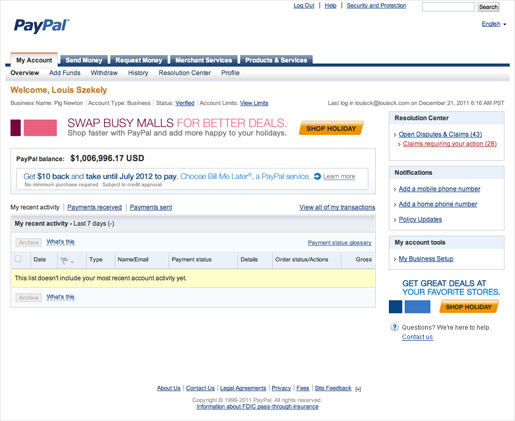
Before we get to all the SOPA stuff, which again dominated the week, let’s continue the follow-ups to last week’s stories. Louis CK’s DRM-free experiment has had an update, and after 12 days of sales, Louis has revealed that sales have reached the million dollar mark (with a screenshot of a PayPal account with the said million dollars – better get the money out of there quick Louis, you know what PayPal is like). So that’s a lot of money, despite rampant piracy, which just goes to show that piracy can never really be stopped, but you can still make decent money if you do the right things. The hype over the experiment has obviously increased the visibility of the show, which explains the high piracy rate, but for artists and performers, reaching people sometimes is just as important, if not more important, than actually making money. And through piracy, Louis CK might have just gained quite a few more fans, and that can only be good for business in the long run. And with Louis donating a large chunk of the money to charity, another large chunk to employees as a bonus, this experiment definitely has a happy ending (for Louis as well, as he’s keeping $220,000 for himself to, in his own words, to “do terrible, horrible things with and none of that is any of your business”). If Louis wants to continue the experiment, perhaps the next time, he can use a “pay what you want” model like the Humble Bundles, as this may help to convert more pirates to payers, as $5, while not expensive, is still quite a lot for a lot of people in this economy, to spend on comedy videos.

So while Louis, his staff, and his charities are all having a merry Christmas, there’s been one naughty boy that’s not having such a nice one. Righthaven’s long, excruciating death continues this week, with news that their website’s domain name has just been seized. And not only that, it may very well be auctioned off to pay creditors. If I had money, I would buy the domain name, and put up a DHS style seizure notice on it warning others from trying to profit using the sue-for-settlement approach. Maybe even linking to a cheesy video explaining why you’re even just for thinking about getting into the sue-for-settlement business. And for Righthaven to lose their own domain name, when they’ve been (without standing) threatening to take away other people’s domain names – I don’t know if that’s justice, or irony. Probably both.

Now for the SOPA stuff. With SOPA under intense pressure, the boss of the MPAA, former US Congressman and Senator Chris Dodd gets back to what politicians (and lawyers) are best at doing to defend SOPA: lying (or at least exaggerating the truth). Dodd, who recently said that China should a model the US should refer to for Internet censorship, now says that if we don’t do something about piracy, the US could end up like Sweden, Egypt or Spain, where their local film industries are “gone”. Not just shrunk, or hurt, but “gone”. And of course, none of it is actually true. These countries still churn out tons of films, and in Sweden’s case, films that have made more than a hundred million worldwide, which is rare for non US based films. Ever heard of ‘The Girl With The Dragon Tattoo’ or ‘Let the Right One In’? The original Swedish productions, which has “inspired” recent remakes, were all big hits. And both Egypt and Spain have produced more films in the last few years, not less (or at least up to 2011 for Egypt, when domestic conflict probably will have reduced film production). And this was probably the last notable defence of SOPA for the week, as the rest of the stories are all about the opposition to SOPA.

If the Internet is good at producing one thing, it’s comedic music videos. And the anti-SOPA protest movement were enriched with not one, but two new protest songs this week. One is from activist Dan Bull, while the other is from the composer of the “Obama Girl” hit. This is the kind of creativity, the kind of freedom of speech, that may very well be endangered if SOPA is passed into law, because the very sites that help to host and promote these kind of original videos, will be the ones under attack by SOPA – the same platform that allows for creativity,  can often also allow pirated content to be hosted as well (in fact, I think you can safely say that YouTube wouldn’t have a been a hit had it not been for the pirated stuff that were dominant during the website’s early days).

Also joining in the protest was Scribd, a document upload and sharing website that has become incredibly useful as a way to embed documents in the same easy manner as videos. But it too would be under attack by SOPA, as it operates on a business model not too different from “rogue” sites such as Megaupload or Rapidshare. I’m sure there are lots of copyrighted content on Scribd, but SOPA punishes an entire website for the act of a very small minority of individuals (outside of the control of the website), and Scribd has a lot to lose if SOPA becomes law. Which is why on Wednesday, Scribd chose to randomly censor words from the billions of documents they hosts, an act of protest to hopefully get people to understand the threat posed by SOPA, and its likely impact on the Internet.

Reddit Closed Logo

Reddit may have to close if SOPA is passed, due to the compliance cost associated with the controversial legislation

Joining Scribd on the potential list of sites that will be hurt by SOPA is Reddit, one of the Internet’s largest communities. The general manager of the website says that if SOPA passes, then Reddit would probably have to close down, due to the legal requirement to make the website compliant with SOPA. With millions of new posts to go through, the team of roughly 11 staff, mostly engineers, would not be able to keep up with the moderation duties required and there would be no choice but to close the website down. This is because, under SOPA, just a single bad link out of the millions of posts would be enough to mark the entire domain for seizure, and with millions and millions of posts, no doubt containing potentially tens or even hundreds of thousands of links to infringing content, that’s probably enough to mark the site as “dedicated to piracy” under the SOPA terms. And when that happens, all that would be then needed would be a content owner to request Reddit.com be blocked, and that would be that. Multiply that by however many user-generated websites there are on the Internet, and you can start to see the full damage that SOPA could cause.

But one tech company that has been outspoken in its support for SOPA has been domain registration and hosting company, GoDaddy. And ironically with Reddit being threatened, it was a post on Reddit that has now helped to reverse the company’s stance on SOPA. A post asking for a boycott of GoDaddy quickly gained popularity, with the likes of the Cheezeburger company (as in “I can has cheezeburger”), and even Wikipedia, all threatened to move their domain registration from GoDaddy to other providers on the 29th. Facing the prospect of losing potentially thousands of customers, GoDaddy relented and dropped their support for SOPA, although they have not formally dropped their support for the equally dangerous Protect IP Act, so the protest could be still on. Update: Apparently, tens of thousands of domain names have already been moved away from GoDaddy, as people are still not convinced of GoDaddy’s position on SOPA (they’re not anti-SOPA, they’re just not supporting it “right now”).

And so GoDaddy joins the list of companies and organisations not backing SOPA, but it was company that should have never supported it anyway. But when the Heritage Foundation also expressed their disapproval of SOPA, that was my “WTF” moment of the week. The Heritage Foundation, a right-wing think-tank, has been as pro-copyright as anyone, and so for them to speak out against SOPA, and as influential as they are amongst conservatives (having just hosted a presidential nominee debate for the Republicans), they must have had some serious reservations about SOPA. And they did. Mainly with how the government will given the power to censor websites, and also search engine results, in effect, censoring the flow of information. Hopefully, Republicans in the House and Senate will now think twice about voting for SOPA, or face being chastised by the Heritage Foundation for being anti free speech.

And in the same news article that I wrote, there was also a bit about Ashton Kutcher coming out against SOPA, but he was never really going to support it, considering his profile on the Internet, and his involvement with start-ups.

But probably the best argument against SOPA, and one that even content holders can possible agree with, is that SOPA probably won’t even work, despite the threat of collateral damage it poses. This week, we had the news of another Firefox add-on that looks set to defeat SOPA’s DNS filtering before it’s even launched, so for anyone serious about pirating, SOPA stops nothing. Nothing except actually ensure that new DNS protocols, designed to prevent DNS spoofing, cannot be implemented. As I’ve mentioned before, if the government was as serious about defeating Internet fraud as they are about helping to prop up a dying business model, then there could be a lot more economic gain to be made by preventing Internet fraud.

Okay, the rain is really coming down now, and the thunder appears to be getting closer. That’s probably a good sign that I should end this edition of the WNR, before the power goes out.  Merry Christmas, and see you next week.

Weekly News Roundup (18 December 2011)

Sunday, December 18th, 2011

As the holiday period truly begins (and by use of the term ‘holiday’, I’m not trying to avoid saying Christmas or in any way take part in the largely fictional “war on Christmas”, rather as a shorthand for saying Christmas and New Year, and I guess having to explain it like this sort of negates the whole shorthand thing, but you can’t be too careful these days) … where as I, um, yes, as the holiday period begins, the news will dry up, and it’s even debatable whether next week’s issue of the WNR is still on or not. Regardless, the week before Christmas is also the last week in which the Copyright Scrooges can manoeuvre to get their beloved SOPA passed in Congress, and so it’s busier than normal.

The US video game sales figures for November was also released during the week, and you can read the full analysis here.

Copyright

Before we talk more about video games, let’s go through the week’s copyright news first. Once again, we see why money and politics shouldn’t really mix, as news that two Congressional staffers largely responsible for drafting SOPA/PIPA have now “managed” to get better jobs at the MPAA and the National Music Publishers’ Association, two copyright lobbying organisations.

While laws prevent these two from coming back and lobbying their former employees (as if that’s even needed), there are the usual Washington loopholes that still allow the two to have influence on Capitol Hill. The MPAA and the NMPA will argue that this is how it’s supposed to work, that the organisations have managed to secure the service of two very capable, and knowledgeable, people who are already familiar with the issues at hand. Everyone else will be made uncomfortable at yet another incident that highlights the incestuous relationship between lobbyists and politicians. While only the MPAA/NMPA and the two new employees will know what the real deal was, the reality is that the two helped to draft bills that (intentionally, or just incidentally) gave their future employers exactly what they wanted, convinced their old bosses to go along with it, and got new, higher paying jobs as a reward. Whether this was just the unintentional consequence of their actions, or something more troubling that involved more coordination between the involved parties, I don’t want to comment, but sometimes just the appearance of something like this is unacceptable for a truly democratic society, or at least it should be.

MPAA Wikipedia Page Censored

A mock up of what Wikipedia's anti-SOPA protest could look like, with sections or even entire pages blanked to show the dangers of Internet censorship

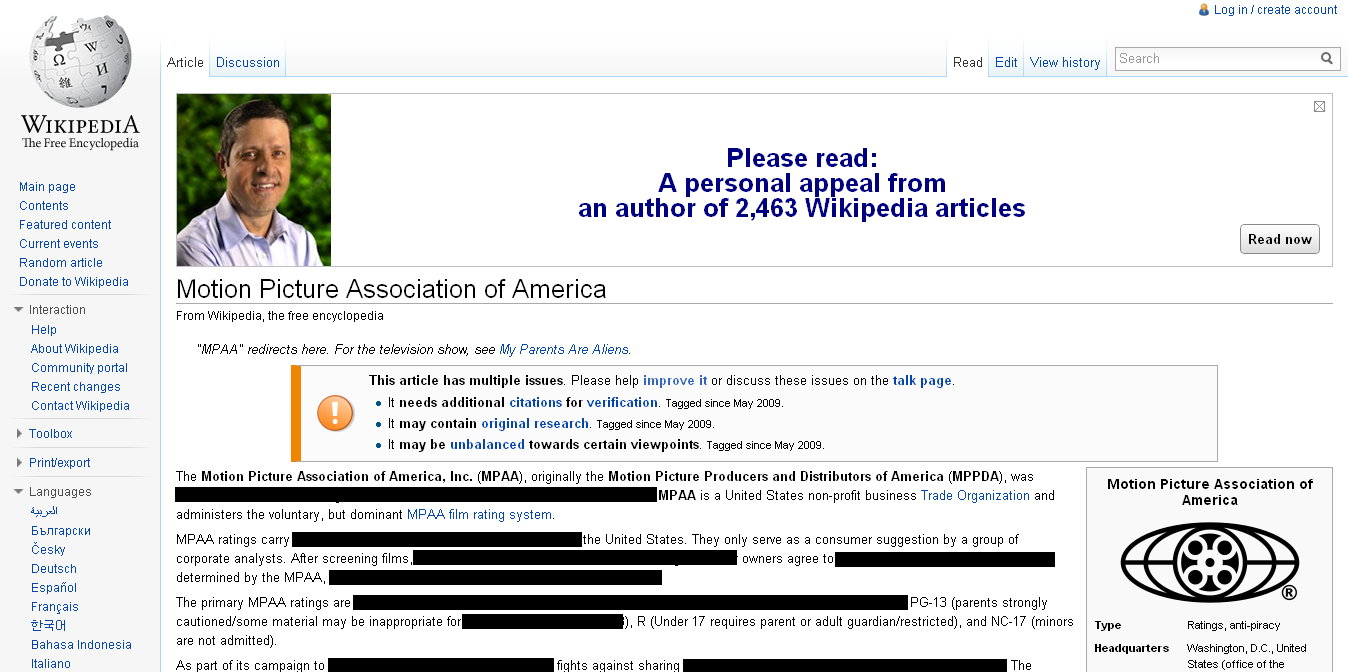
With breaking (well, by the WNR’s  standards anyway) news that further discussion of SOPA will have to wait until after the Congressional break, the anti-SOPA movement main gain an important ally before then, with Wikipedia threatening a day of action to protest the controversial copyright bill. The founder of Wikipedia, the man whose photo you see every couple of months on every Wikipedia page, Jimmy Wales, has suggested that Wikipedia might blank all of its pages, for a short period, to demonstrate against SOPA, something the Italian version of the encyclopaedia has already attempted to great success over a local issue. Right now, it’s all just discussions, because, as Wales rightly points out, doing something like this could have a huge impact on the web. I mean, would somebody please think of the children … who have to write school reports, and what the hell would they do without Wikipedia (and the copy/paste function)? Use another online encyclopaedia, or heavens forbid, go to the library?

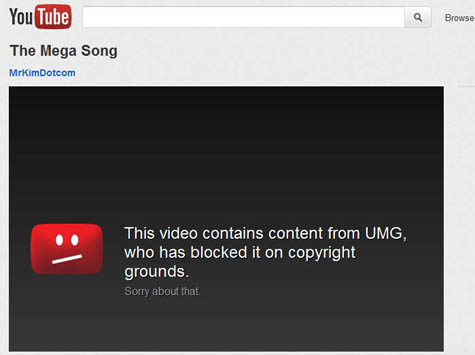
And for the anti-SOPA brigade (for all the work I’ve put into the cause, I must be a lance corporal by now, which ironically is also my rank in BF3 – I’m really really not good at the game), Christmas has come early thanks to Universal Music Group’s Scrooge-tastic act that helped to prove why content holders cannot be trusted with the power to censor the Internet. The story begins with the YouTube upload of Megaupload’s cheesy promotional video, starring some of today’s biggest stars, such as Kim Kardashian, P. Diddy, Will.i.am, Alicia Keys, Kanye West, Snoop Dogg, Chris Brown, and sung by Macy Gray. Using an original song, and with written agreements signed for all the stars, what Megaupload didn’t expect was for Universal Music Group (UMG) to abuse YouTube’s anti-piracy tool, to file an infringement report against the music video and have it censored. But that’s exactly what UMG did, although they now deny they did it for copyright reasons, hinting at some unknown agreement between two private companies (possibly relating to recordings of live performances), YouTube and Universal. Not that this makes it any better, of course, as the end result is that a perfectly legal video that presented views that UMG did not approve of (or rather, they don’t approve of Megaupload, period), and UMG had it taken down, which is the very definition of censorship. And because of an agreement between two other private companies (something SOPA would allow, as content holders can make agreements with financial providers to “kill” websites outside of the legal justice system), the tools/rules designed to handle copyright disputes was “abused” to censor free speech, however cheesy it was. What a wonderful demonstration of what a post-SOPA Internet world could be like.

Megaupload's Mega Song was blocked on YouTube by UMG

Megaupload's Mega Song was blocked on YouTube by UMG - innocent mistake, or censorship masquerading as a copyright take-down?

Megaupload was quick to file a lawsuit against UMG, and YouTube eventually did reinstate the video with the explanation that, yes, UMG did abuse its tool: “Our partners do not have the right to take down videos from YouTube unless they own the rights to them or they are live performances controlled through exclusive agreements with their artists, which is why we reinstated it.”

But the Streisand Effect ensures just the YouTube version, which was blocked for quite a while, now has over half a million views, and made #Megaupload a trending tag for a while on Twitter. Nice one UMG. And who knew controversy is such a great way to promote a music video, perhaps it’s something UMG can leverage to its own benefit the next time.

Speaking of promoting videos, very funny comedian Louis CK has done something that traditional media won’t be laughing at – he’s bypassing the normal distribution channels, and releasing his own video for $5, and without DRM. And it’s proven to be somewhat of a success, with CK taking in over $200,000 (profit after cost) in just 4 days. According to CK himself, that’s less than what he would have gotten from a traditional distributor, but he’s happy because more people have managed to get a legal version of his video, and nobody had to endure horrible DRM or annoying marketing (register here, register there, give us all your personal info, and then get spammed in your inbox forever). Some have argued that this is a bad development for media distribution, since by taking out the middle men, that’s fewer people being employed. And that argument has some merit, and I’ve long argued that the whole wholesale/distribution/retail chain will suffer, if it isn’t suffering already, due to the digital revolution. But there are strategies to adapt, but those too slow, too paranoid or too stubborn to change, that is the companies that insist on charging digital downloads at the same price as retail boxed version, and those that insist on DRM, will not survive this revolution. And the more they try to hold on to the dying model, the more artists will release themselves from the clutches of traditional media and do it their own way – the truth is that nobody wants to do it alone, unless they have to, and through DRM, bad pricing, and incessant marketing and all the things they’ve done to alienate consumers, traditional media are forcing artists to go it alone.

For now, Louis CK’s video is still selling, despite widespread piracy (not that DRM would have lessened it or anything), and Louis urges everyone to keep buying, as so he “can have shitloads of money”.

And buying, as opposed to torrenting, might also help you avoid public embarrassment, as a new website has been launched to try and embarrass torrenters by listing their IP address and the stuff they’ve downloaded, even the videos of the naughty kind. While downloading from a public tracker does have this risk, those with dynamic IPs may not care too much, still, I don’t think I can support any service that publishes data like this. It would be like if a website, say Google, decided to public its web logs, of which IP address searched for what and when, and that has huge privacy implications. Just because this website is seeking to expose illegal behaviour, doesn’t mean it isn’t a privacy violation.

With that said, it was funny that the website would be used to put anti-piracy groups under pressure, as opposed to the people who actually pirate. This is because the website allows you to search for any IP address, including say the IP address of movie studios, or anti-piracy lobbyists, or even the anti-piracy domain seizing Department of Homeland Security. It certainly was interesting to see staff at NBC-Universal downloading the excellent Game of Thrones, perhaps proving that network TV does know a good series when they see one, even if they don’t actually know (or dare) to reproduce it for their own networks. How about someone at Fox downloading Super 8, produced by another studio? Or the RIAA downloading the latest Kanye West album?

Of course, the right argument is that you cannot really hold the RIAA responsible just because one of their IP addresses was used to illegally download something. It could be by an employee, an ex-employee, a visitor who managed to get access to a network connection, or as some have already claimed, be an unlikely case of IP spoofing. And as long as the RIAA has an appropriate anti-piracy policy, and enforces it, then they shouldn’t be held responsible for the actions of individuals. But since the RIAA don’t think any of this applies to, say Google or ISPs, and that they need to pass tough legislation to punish these organisations, I can only conclude that, yes, the RIAA is guilty of copyright infringement, possibly on a massive scale, and they should be punished accordingly.

Gaming

Not much happening in 3D/HD, so let’s skip to gaming. The NPD sales figures for November presented no big surprises in the Xbox 360 outselling everything else, and I think it’s safe to say that it is currently the dominant console in the US, for this generation.

To be fair (or unfair), the PS3 is really the only loser in this generation, in the US or elsewhere, despite PS3 sales doing pretty well worldwide. I say this not to incite fanboy-on-fanboy violence, although that would be an effective way to cull their numbers, but simply because neither Nintendo nor Microsoft could have predicted their respective successes in this generation, which has come largely at the expense of the PlayStation brand. The fact that the PS3 will likely never outsell the PS2 is disappointing given the huge advantage the brand had over the offerings by Nintendo and Microsoft in the last generation, plus the advantage of also being a Blu-ray player (the DVD player in the PS2 being partially responsible for the unit’s success).

It was also interesting to see Modern Warfare 3 break all sales records, despite a struggling economy, wide spread piracy and everything. I’ve only secured my (PC) version recently, and only because it was below retail pricing, so pricing is important as ever. One issue that’s becoming more and more important is regional pricing, especially on Steam for non US buyers. Here in Australia, we get ripped off due to publishers (not Steam) setting higher prices than compared to say the US or the UK. This has led to others using VPNs to buy games from overseas (with the high risk of getting their Steam account banned), or buying from Russian based CD-key sites. It’s a lot of trouble for people to have to go through just so they can hand money to game publishers, and it’s easy to see why some might see piracy as a legitimate source for games, until prices drop to more reasonable levels. The globalised price competition is one of the downsides of a globalised marketplace for sellers, but they benefit from being able to access more markets and more customers than ever, and digital distribution strips away almost all of the manufacturing cost from things, so it should all even out in the end. But only if reasonable pricing policies are put in place, one that is fair to countries like Australia, and can also compete against piracy ($80 vs free is not competition, but $30 to make the guilt go away, plus access online services without fear of having an illegitimate key, might be).

I think that’s enough for this week. See you next week (maybe).

Weekly News Roundup (11 December 2011)

Sunday, December 11th, 2011

Welcome to, by my calculations, the third last WNR of 2011. “You’ve got to be joking”, was a phrase that went through my mind quite a few times this week, while reading and writing some of the news items you’ll read about below. What they say is true, real news is becoming more and more like Onion News these days, which is both funny and incredibly depressing all at the same time.

Copyright

Let’s not waste more of 2011, and let’s started with this week’s copyright rants. We start with a scary peak into the future, if the likes of SOPA and PIPA are made into law, with the story of website that was seized as part of last year’s “Cyber Monday” seizures by the Department of Homeland Security.

I’ll leave you to read the full story for all the details, but suffice to say, domain was seized on the instance of music industry executives, website owner argues fair use, government, probably knowing that they didn’t have justification to make the seizure in the first place, stalls, and a full year later, domain name is returned to owners. Website ruined, financial costs incurred, and all for nothing.

IPRC Seizure Notice

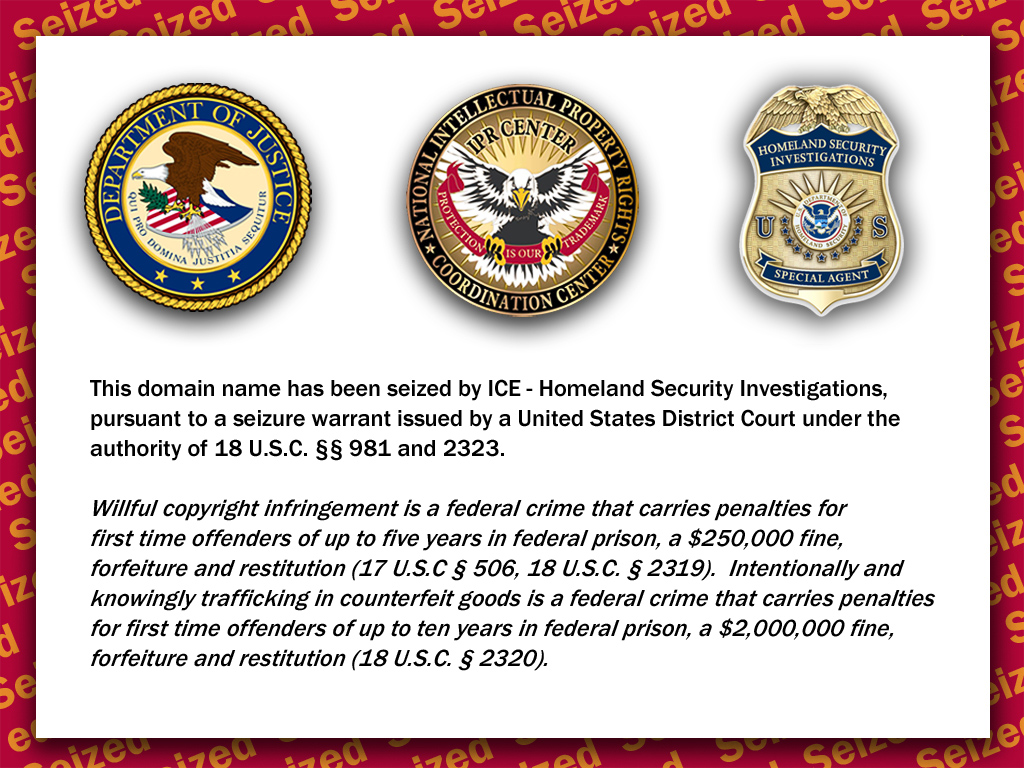
Seized domains displayed this message, except it now seems some of the seizures were improper

The website in question was DaJaz1.com, who offered leaked music for downloads. The record labels told the government to seize the website, but the owners of DaJaz1.com says that the songs they linked to (not hosted) were often provided to them by employees of the record labels, for promotional purposes. But you have government agents too stupid to realise they’ve become pawns of the record (and movie) industry, too lazy to do any real research on the list of “bad” websites handed to them, and a justice system too biased towards rights holders. The full financial cost to DaJaz1.com is incalculable, and for most websites, being offline for a whole year basically means the end.

I do have my little theory about why the RIAA wanted DaJaz1.com shut down, as they also took down a few similar websites during the same operation. At its heart, the job of the RIAA companies is to help promote artists. But these days, the Internet can be leveraged by artists themselves for promotional purposes, and even music distribution, once relying on manufacturing/distribution/retail chain, can be all done digitally these days. In other words, there’s little justification these days for studios to be taking as much from artists as they are, and for all the talk of web piracy, this is what scares the RIAA companies the most. So any website that helps artists to directly promote their work, generate hype by using leaked music, and thus bypassing the studio system, will be seen as a major threat. Maybe not today, but soon enough. And PIPA/SOPA will then allow the record companies to get their dirty hands around the Internet, close down websites that threatens their outdated business model.

But even if the mistake was just an innocent one, how many websites will have to become collateral damage in this un-winnable war against downloads, before a real innovative website, like the next YouTube, will be the ultimate victim (it if hasn’t already occurred). The rights holders keep on saying that websites like YouTube getting blocked is hyperbole, and they may be right at present, because nobody is going to shut down YouTube without facing a mighty smashing courtesy of Google’s legal hammer, but would YouTube have been so safe in its infancy had SOPA/PIPA existed then? People uploading copyrighted clips was what the early days of YouTube was all about, before people realised they could create their own videos and it would be even more popular than a re-upload of something people can get on BitTorrent anyway. While it is now the bastion of creativity, it once was a haven for pirates (at least according to Viacom, in their lawsuit against YouTube), and it might just fall into the “dedicated to piracy” category of SOPA/PIPA. And if YouTube had been destroyed back then, would the web, and creativity and innovation, and the economy, be better off, or much much worse off? Is this a risk we should be taking?

It seems many are finally realising that, SOPA/PIPA, is very very dangerous. And it was a pleasure to read the quotes attributed to the CEO of the Consumer Electronics Association, Gary Shapiro. Not only does the CEA produce the excellent CES exhibition, and represents all the major electronic manufacturers, it appears they’ve joined the anti-SOPA brigade as well. Shapiro used language that even I might be a bit scared to used in the WNR, for fear of appearing too biased, but he’s absolutely right that SOPA will kill “innovation, wealth and jobs”, and that SOPA is nothing more than “a bunch of Hollywood and music industry lobbyists destroying the Internet”. Couldn’t have put it better myself (really, I couldn’t). I wonder if Sony, the only company to actually both belong to the pro-SOPA RIAA, and anti-SOPA CEA, might reconsider their CEA membership, although Shapiro did mention quite clearly that his views had wide ranging support amongst CEA members.

Other trade groups, some staunch supporters of SOPA, are also now reconsidering their support following the public backlash. The BSA, the anti-piracy lobby group for software makers, has in recent days, softened their support for SOPA, basically calling it overreaching. No doubt after many of their members complained about the group’s position of a bill aimed directly at tech companies, and one which ultimately only benefits the music and movie industries. But if the BSA continues to even partially support SOPA, then other companies could join Kaspersky in withdrawing from the group in protest over SOPA. The threat to Internet security posed by SOPA is well known, but it’s nice seeing a security company take a significant step in their protest of SOPA and the damage it could unleash on the Internet.

The MPAA has launched a stern defence of SOPA, by first attacking an alternate, less controversial bill as being too friendly to dirty old web pirates. As the MPAA was most likely the people who actually came up with SOPA, it’s no surprise they aren’t accommodating to any alternatives.  But the MPAA’s Chairman, Chris Dodd, also added fuel to the fire with a couple of curious comments. First up, he question why Google is not accommodating when it comes to filtering search results, by saying “When the Chinese told Google that they had to block sites or they couldn’t do [business] in their country, they managed to figure out how to block sites.”

That comment is simply too stupid to even come up with a reply, it would just be too easy to point out everything that’s wrong with the statement (and at the same time, it’s hard to resist point out the fact that Google pulled out of China for being forced to censor results, are we really comparing the US to China when it comes to web censorship, of all issues). To be fair to Dodd, he was probably referring to the technical aspects of result filtering, but it’s one thing to filter the BBC or CNN, but it’s another when you have to filter the thousands upon thousands of website the MPAA deems “bad”, as well as pre-emptively blocking “red flag” sites.

GTA IV Bank Heist

In Chris Dodd, the MPAA's chairman's eyes, downloading is the same as bank robbery

But Dodd wasn’t finished, because he had an analogy to share as well. Still referring to Google, he added “A guy that drives the getaway car didn’t rob the bank necessarily, but they got you to the bank and they got you out of it, so they are accessories in my view”. You see, in Dodd’s scenario, Google is the getaway driver, while Internet users are the robbers, and the MPAA studios are the bank. Again, too stupid to pull apart, but … can’t … resist. First of all, downloading a movie is not like a bank robbery, and I’m guessing it would be armed robbery as well. Downloading a copy of a movie, isn’t the same as stealing real money from a bank either. And if Google has some role to play in the analogy, it is not the get-away driver. It’s a stupid analogy to compare to downloading, because none the roles match up to anything related to downloading, but at best, the getaway driver would be the guy that transports or shares the burnt DVD copy of The Rise of the Planet of the Apes (in analogy: the bags of money) to your friends after it has been downloaded (in analogy: stolen at gunpoint), and even then, it doesn’t really make much sense. As for Google’s role in all of this? It’s the phone book company that helped the robbers to find the bank they robbed. The ISP would be the manufacturer of the car or the people responsible for the roads. Are they all “accessories” too, Chris?

The RIAA has been busy too, “helping” copyright troll Righthaven. Or rather, they’re trying to hurt Righthaven’s opponent by making sure Wayne Hoehn and his lawyers do not win the case based on fair use issues, which could hurt the RIAA’s stance (which is that there’s not such thing as fair use). At the same time, the RIAA is also trying to hurt Righthaven’s case by agreeing with the court that Righthaven don’t have standing to sue, and because this automatically throws the case out, there’s no need to consider the fair use issues. So the RIAA is basically out to hurt everyone in order to protect their own self interest, and you know, that’s totally within their M.O, and I guess it is kind of “neutral” if you think about it, even though Hoehn’s lawyers would disagree.

Speaking of fair use, the US Copyright Office entertains new suggestions for exemptions to existing copyright laws every couple of years, in the spirit of not allowing copyright to hamper innovation and consumer rights. A couple of years ago, the issue of smart phone jailbreaking was one of the exemption suggestions, and the US Copyright Office last year approved the exemption, to the disgust of Apple. Now, Public Knowledge and the EFF are submitting briefs that call for the exemption of DVD ripping and game console hacking. PK says that DVD ripping should be legal because so many devices these days don’t have DVD drives any more (eg. the iPad), and so in order for consumers to watch the movies they purchased, they should be allowed to bypass CSS and the DMCA restrictions, and rip for personal use. Makes sense. EFF, following their successful application of the smart phone jailbreaking exemption, say the exemption should be extended to game consoles (probably muttering “take that, Sony” while they were preparing the brief). And it also makes sense, because the same issues exist for smart phones and game consoles, being able to run your own apps (like, oh I don’t know, Linux), and both have issues with piracy if jailbreaking is allowed (but if it’s okay for smart phones, then it should be okay for game consoles).

Home Taping is Killing Music

This anti-piracy message was brought to you by the RIAA, and it's not at all an exaggeration or anything

But perhaps the US Copyright Office should take note of the Swiss’s decision to exempt “piracy” for all personal use. The Swiss government found that there was hardly any financial damage from piracy for personal use (as opposed to re-selling the pirated copies for profit), as people’s spending on entertainment products have not been reduced, merely shifted to other things that can’t be pirated, such as concerts or merchandise. And as there’s no financial loss, the Swiss didn’t feel it was right to have laws that hamper innovation, or help protect outdated business models. And they also made note that the industry’s “Chicken Little” response to web piracy is not new, and that these industries should just get over it and find ways to profit from it. Remember when the music industry warned us that hope taping, on cassette tapes, would kill the music industry, and when the MPAA compared VCR taping to leaving a woman alone in a house with the Boston Strangler? Yeah, those industries.

High Definition

I haven’t had a HD/3D section for a while, so I thought I would add one for this issue. I could talk about the Black Friday sales week sales figures, which were somewhat disappointing for Blu-ray (only a 5% gain compared to last year’s Black Friday), but I really wanted to rant about two, slightly disturbing trends, when it comes to Blu-ray.

The trailers you find at the start of discs is beginning to really annoy me, mainly due to the quantity present, and two (not so new) developments. I’m a big fan of movie trailers, evident by Digital Digest’s growing collection of movie trailer downloads, but when you insert a disc to watch a movie, you don’t want to have to skip through half a dozen trailers mostly for movies you’ve already purchased, or have no interest in. Luckily, most can be skipped, but there’s the odd annoying one that can only be fast forwarded.

But the two developments are non movie related advertising, and BD-Live trailer downloads. The first one is particularly annoying, and a trend that has gotten worse in paid for content. I mean, I’ve already paid for the disc, or for the cable TV subscription, why should I still have to sit through ads? They’re not even funny ads, or ads related to movies, or the movie in question, and that to me is unacceptable.

BD-Live trailers is also extremely annoying, as it uses your Internet connection to download an average quality trailer from the Internet to show you. Supposedly, this is to guarantee “fresh” trailers, but in reality, it’s the movie studio’s way to make you pay (via your Internet connection charges) for its own advertising. And the trailers aren’t so fresh anyway, and sometimes you get the odd effect of having the same trailer show up twice. And again, it cannot be skipped, only fast forwarded.

Add these with the anti-piracy trailers, the “Blu-ray is a new format blah blah blah” disclaimer for badly produced, incompatible discs, the other disclaimers for commentaries and stuff, plus studio logos (which gets shown again at the start of the movie anyway), it’s minutes wasted just so I can get to the movie I paid to watch. It’s probably faster to download a pirated copy, than to sit through all of that crap without skipping, and they wonder why people pirate movies.

And on that rant, we come the end of another WNR. See you next week.