Archive for the ‘Copyright’ Category

Weekly News Roundup (17 August 2014)

Sunday, August 17th, 2014

It’s rather short WNR this week, where we have a couple of interesting news stories, but ones that don’t really need a lot of words to be written about. With Gamescom happening, there is definitely a slant towards gaming, which is also probably why news on other topics were a bit light.

Let’s get started!

Copyright

What piracy problem? U.S. households are spending up to $1,000 each year, every year, on video entertainment products such as cable TV, Netflix and Blu-rays. This means that the video entertainment industry could be worth $123 billion by 2015, and this is despite piracy having “nearly” brought the industry down to its knees or something hyperbolic like that. Futuresource Consulting’s report on the industry reads nothing like one for an industry on its last breathes, and actually sounds like one that is doing extremely well, and thanks largely to the Internet, not despite of it. Digital spending is growing so fast that it will exceed packaged media spending in 2015, for example.
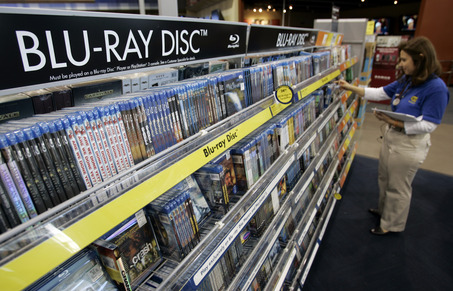
Dropping disc sales have very little to do with piracy, and more to do with market saturation and the transition to digital

Dropping disc sales have very little to do with piracy, and more to do with market saturation and the transition to digital

As part of my “job”, I read a lot of reports of this kind, and most of them almost never mention piracy. Sure, packaged media sales are on the slide, but this and other reports clearly state that it’s most likely due to “market saturation, declining retail space and the growth in video consumption on subscription VOD services”. On the other hand, if you listen to the studios, then any decline is almost always down to piracy.

The fact of the matter is that consumer tastes have changed rapidly due to the Internet, and the industry was too slow to adapt, hence the surge in piracy and a (what looks like temporary) decline in revenue. The same thing happened/is happening with the music industry, possibly even more dramatically, as the transition from physical media to digital continues apace (and with the industry, not grasping the opportunity earlier enough, allowing the likes of Apple and Spotify to be the winners). Piracy is a side effect, a symptom of the problem, but perhaps not the real problem itself.

Gaming

Gamescom this week, and so we have the expected slew of gaming news. Sony got off to a good start by announcing that PS4 sales has topped 10 million worldwide. Microsoft, for understandable reasons, did not provide a comparable figure but was at 5 million as of April. With the PS4 beating the Xbox One for every month of this year in the key U.S. market that was once dominated by the Xbox 360, the gap between the two consoles appear to be growing. Here in Australia, the PS4 is outselling the Xbox One by a 2-to-1 margin!

Xbox One Media Playback

Xbox One about to become one of the best media players, thanks to September update

But the announcement of Gamescom so far, at least in terms of stuff that I cover in the WNR, would be Microsoft’s announcement of a full capable media player for the Xbox One, coming in September. The media player will support almost every format, including the ever more popular (but the rarely supported, at least on game consoles) MKV format (the format of choice for HD downloads), and also the reintroduction of DLNA streaming support.

With Sony yet to announce when they’ll bring back DLNA support, and to add to the PS4’s media support, it seems the Xbox One is now the console of choice when it comes to media playback. But given the intense competition between the two big consoles that has so far characterized this generation’s console wars, I wouldn’t be surprised if Sony make their move in this area soon.

As I was writing this, the NPD stuff for July has just been released. I think I’ll cover it next week instead of right now, but spoiler alert: PS4 wins again.

——

And so ends this rather short WNR. See you next week!

Weekly News Roundup (3 August 2014)

Sunday, August 3rd, 2014

Hello everyone. Due to personal commitments, I’m writing this WNR on Saturday and schedule-posting this at the right time on Sunday. So if you’re reading this, it means the scheduler has done its work. If it didn’t work, then you’re not reading this, and so never mind, carry on.

Let’s get started.

Copyright

I don’t like to get into politics, but I think it’s now a fairly mainstream opinion that the current government here in Australia is one of the worst ever. And for Net-active individuals such as myself, our opinions of this government might still get even lower, if that’s even possible.

Hollywood still bitter over court defeat to Aussie ISP iiNet, and now wants the government to step in and help them out

Hollywood still bitter over court defeat to Aussie ISP iiNet, and now wants the government to step in and help them out

The reason is simple. It’s this government’s fairly transparent plan to basically toe the Hollywood line and let the likes of Sony and Warner Bros. write our new copyright laws. Laws, that if becomes reality, would be one of the harshest in the world. Everything is on the table, from domain blocking, to censorship, to three-strikes, to making ISPs liable for user downloads … basically “a wish list from Hollywood” as one academic puts it. This is despite a 2012 High Court ruling that specifically said that ISPs aren’t liable for user actions, a defeat that still haunts Hollywood and their lackeys here in Australia to this day.

They lost that day, and since then, they’ve tried playing a different game. A game of politics that may start to pay off thanks to the election of a new big business friendly government.

Despite all the evidence pointing to the piracy problem here in Australia as one of access and availability, the government seems very keen to divert blame away from big business (not unusual for this government), and instead lay blame on those that don’t have the political clout or the lobbying power to have a real voice (again, not unusual for this government).

For me, it’s clear where the problem is. It could have been many things, and it was always inevitable, but in the end, it was the Internet (and perhaps not even piracy specifically) that finally exposed in the entertainment industry’s flawed and outdated business model. No other industry gets away with investing so much money in producing such awful products, time and time again. Hollywood gets away with it because, for years, they’ve not had any real competition. Sure, there is competition between studios, but if you wanted to watch a summer blockbuster, do you really have any choice other than a Hollywood movie (and often a crappy one)?

The Internet has brought us many things. It has brought us competing forms of entertainment that is cheaper and better, as well as new delivery technologies that are better for the consumer than the ones that Hollywood wants to force us to use. So the business model of making million dollar garbage after garbage and then cramming it down our throats in a process that Hollywood wants 100% control over, that business model, is no longer relevant today. They’ve bought themselves some time thanks to the 3D hype, and the fact that people still like going to the movies, but their reluctance to embrace change has seen companies like Apple and Netflix, and even ISPs, all establishing themselves as important cogs in the process that H0llywood once had total control over. The political lobbying, their only remaining and potent weapon, is now be deployed in the last throes of a futile attempt to hold on to the past.

And piracy is the convenient excuse that gives Hollywood’s political lobbying a purpose, a visible boogeyman for politicians to justify their thoughtless decisions. I’m not saying that piracy is harmless, but in my mind, Hollywood’s problems are much bigger than penniless teenagers and college students downloading movies.

It’s not that much different for the music industry, who’s territory is being encroached by the likes of Spotify, Pandora, and yes, Apple as well. Techdirt has an article this week that looks at the trouble legal streaming services like Spotify and Pandora has with revenue, troubles that are primarily caused by rights holder royalty demands. Spotify, for examples, spends 75% of their total revenue on royalty payments. Despite this, rights holders are demanding even more in royalty payments.

Techdirt’s Mike Masnick argues that this demand could be the undoing of services like Spotify and Pandora. Perhaps not these precise services, but certainly smaller players that would otherwise have offered more choice and competition in the same market space. Masnick argues that the music industry’s short term-ism could endanger the great potential of these services, and in doing so, endanger the industry’s own futures.

Again, I think this goes back to the point I was trying to make earlier, that the music industry, like the movie industry, has found itself on the outside of the Internet revolution and has allowed others (mostly tech companies) to come in and take a piece of the pie. But instead of accepting that they were too slow to embrace the Internet, they still want to operate, and to earn, in the same way they have before, when they controlled 100% of the production and distribution process. Or as Masnick notes, the industry seems to think all the value is in the content, their content, and there’s no or little value in the service. Consumers, on the other hand, may disagree. Especially those that are choosing to pay for Spotify over getting the same content for free via piracy.

Knife

Finger amputations to end piracy scourge once and for all?

For those that still choose piracy, there’s one proposed punishment for pirates that could end the piracy problem overnight: finger amputations. Nigerian singer Stella Monye says that “drastic measures” need to be taken to stop pirates, and cutting off their fingers might just do the trick. This “ten-strikes” regime would see pirates lose a finger for every song they download, and Monye says that it will only take two finger amputations before pirates start wising up.

The thing is, I’m still not quite sure if Monye was being serious, or whether this was a brilliant attempt at satirizing how rights holders perceive pirates. Or it could be that the original source of this news story is actually The Onion. I just don’t know. But you have to say, this is probably the most effective solution proposed so far!

And it’s also probably cheaper than the “six-strikes” regime that the U.S. currently enjoys. The organisation in charge of running the program has reported that it costs $3 million a year on its end to send the 1.3 million notices so far. This is just the cost of sending the warning notices, as costs for ISPs to implement the monitoring and the “punishments” is not included.

Kind of expensive for no real effect. Knives are much cheaper, you have to say, although the disposal of severed fingers may have additional costs, I’m not sure.

Gaming

The success of the PS4 hasn’t just been a moral victory for Sony, after the dismal relative failure of the PS3, but it’s also helped the company become profitable this past quarter. Sales in the gaming division rose 96%, with an operating profit for 4.3bn yen, up from a loss of 16.4bn yen from the same quarter a year ago. Sony still expects a loss for the financial year, but with the PS4 looking stronger each month, things are looking up for Sony.

——

That’s it for the week. See you in 8 days (well, 7 from when you read this, but 8 from when I wrote this).

Weekly News Roundup (27 July 2014)

Sunday, July 27th, 2014

I’ve been catching up on my list of “to watch” movies, both on Blu-ray, and on my Netflix “My List”. I really wish there was a separate genre for disturbing or depressing films, instead of lumping them all together in the drama genre. It doesn’t feel right that movies as different as ‘Rise of the Planet of the Apes’ and ‘Enough Said’ both belong to the drama genre (at least according to the IMDb), or that a film as disturbing as ‘Blue Jasmine’ would also belong to the comedy genre. I watched ‘Blue Jasmine’ after back-to-back sessions of ‘City of God’ and ‘Inside Llewyn Davis’, and if I hadn’t watched ‘The Muppets’ in between, it would have seriously disturbed my mood (and even so …). Be very careful when choosing to watch a drama, that’s my tip for the week.

(‘Enough Said’ was pretty sweet though, so it was a real mood redeemer thanks to great performances by the late and great James Gandolfini and Julia Louis-Dreyfus)

And yes, I did have time to do (some) work in between epic movie sessions.

Copyright

Google DMCA Stats

Quantity over quality, may be the strategy behind some rightsholders choosing to use Google’s DMCA process over more effective systems

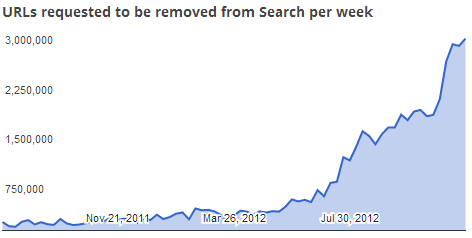
This week TorrentFreak investigates why rightsholders are choosing to use ineffective Google DMCA take-downs as opposed to more efficient take-down tools, specifically the British based BPI. On one hand, rightsholders are submitting millions of take-down requests for URLs that are almost instantly recreated, but are refusing to work with tools that not only take down actual content/files, not links, but also keep them down.

One of the targeted file hosts, 4shared, is using a tool that is now owned by Spotify, that allows rightsholders to request any specific piece of content to be taken down – the tool will then automatically remove all related links to this piece of content, and even prevent future links from being created on 4shared. So it’s curious as to why the BPI and other rightsholders aren’t using this tool. 4shared thinks that the decision comes down to a public relations one. Millions of take-downs make better headlines than say working with a file host that you’ve been publicly admonishing, using a tool that makes piracy take-downs seem almost trivial. Piracy is supposed to be this billion dollar a year headache that cannot be solved without basically giving rightsholders total control over everything, so there is a need to be able to show how big the problem really is, and millions of taken down links will do that. The fact that these take downs are part of an endless game of copyright whack-a-mole, doesn’t really matter, neither is the fact that this does nothing to win the war on piracy.

It’s hard to win when you actually don’t want to win.

High Definition

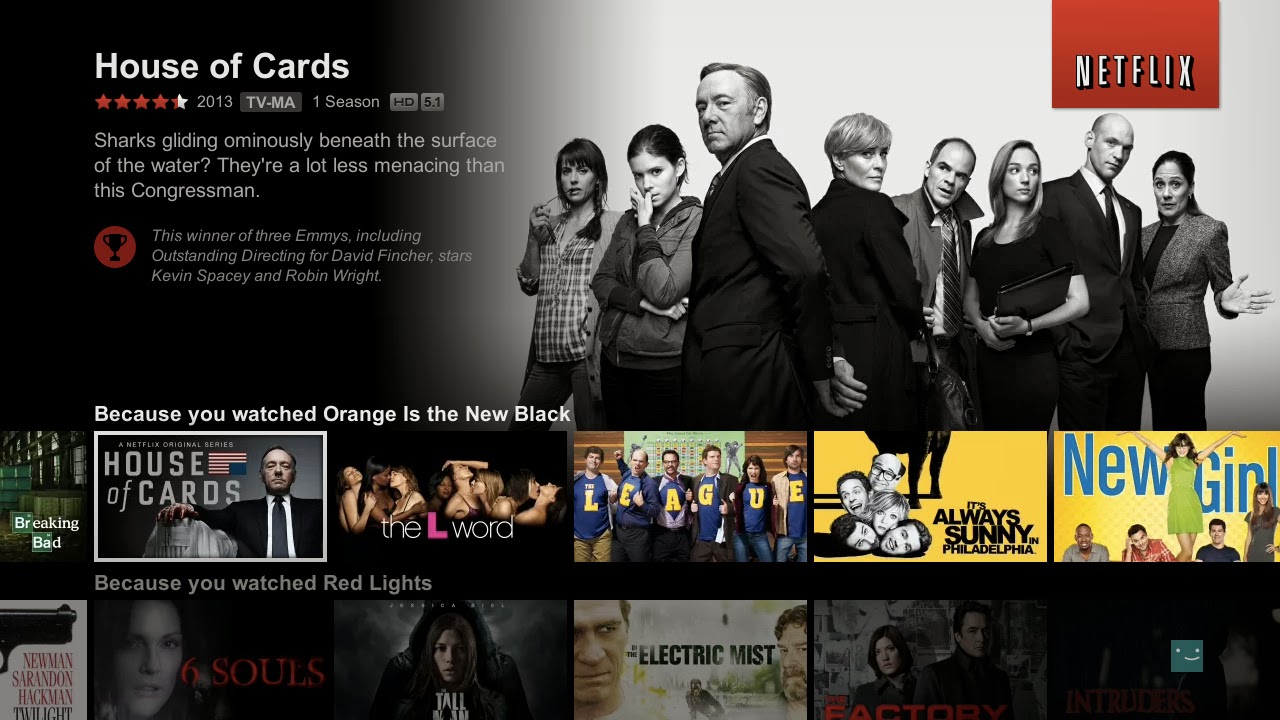
My recent Netflix binge has made me pine for a private viewing mode on Netflix, hoping that the eclectic collection of films I watch won’t end up confusing the Netflix recommendation system. My wish may come true soon, as it appears Netflix is testing a private watching mode. The current workaround is to have a dedicated profile that you create and delete all the time, which also helps to ensure all the softcore porn you’ve been watching on Netflix doesn’t end up on your My List.

Samsung 3D active shutter glasses

PS4 and Xbox One both getting Blu-ray 3D playback in the next few weeks

Meanwhile, Netflix this week announced that they’ve broken through the 50 million users barrier, with nearly 14 million outside of the US. Revenue was up 25% as well, compared to last year, as the company focuses less on securing expensive licensing rights to films and TV shows, and more on original content.

Back to physical media, Microsoft this week announced that Blu-ray 3D support will finally be added to the Xbox One console, and a couple of days later, Sony followed with a similar announcement for the PS4. The PS4’s Blu-ray 3D support will arrive a little earlier than the Xbox One’s – next week versus some time in August. The one-upmanship continues for these two console heavyweights, which I guess is a good thing for the consumer.

Thus far, the lack of Blu-ray 3D support has been a bit more embarrassing for Sony than for Microsoft, considering Sony’s close links to the Blu-ray format (ie. it’s their format). So the update, coming via firmware version 1.75 next week, is most welcomed.

And if Sony can bring back DLNA support to the PS4, then I can finally start thinking about upgrading my PS3.

Gaming

It’s that time of the month again, and the NPD report for June shows a marked improvement for the Xbox One, thanks to the Kinect-removing inspired price drop, while the PS4 was still the best selling console for the month (that’s 6 months in a row).

PS4 with controller and PS Eye

The PS4 is still beating the Xbox One, despite sales doubling in June for the latter

Xbox One sales doubled in June compared to May according to Microsoft, but they’ve not been as willing to release sales data ever since they stopped having the top selling console (funny that). And so without knowing the May results, it doesn’t really tell us much. The only thing we know is that it wasn’t enough to allow the Xbox One to beat the PS4, and Sony will be really pleased with that.

Nintendo are happy too because the Wii U sold 140,000 units, which is a 233% improvement compared to the same month last year. There seem to be a new air of optimism for the Wii U, following the release of the new Mario Kart game, but it will take some time to confirm whether the recent sales bump is a sustaining one.

So everyone with some good news to report in June!

——

That’s all for this week. See you soon.

Weekly News Roundup (20 July 2014)

Sunday, July 20th, 2014

The World Cup has ended. For some reason, it seems like forever since the final was played out on an early and sleepy Monday morning (Australia time), and I had to actually double check to make sure it was actually the previous Monday, and not two weeks ago like it seems. I guess I just got used to being able to watch football almost every other day, and with a week without anything, it just felt like forever. Plus some really crappy news this week from all around the world, one of those weeks where you think back on the events and cannot do anything more than sigh and shake your head.

Well, there’s still the WNR, totally insignificant really compared to anything that has happened in the past week, but, as they say, the show must go on.

Copyright

Perhaps the most comprehensive study yet on piracy’s effect on box office revenue has revealed that file-sharing has almost a negligible effect on revenue. In fact, pre-release piracy may actually boost box office receipts, due to the promotional effect of piracy.

Movie Cinema Tickets

The most extensive study yet shows piracy has little effect on box office revenue. Photo credit: EvelynGiggles, CC

The study, conducted by economist Koleman Strumpf of the University of Kansas School of Business, looked at the top 150 most popular movies, over a 7 years period – sometimes with thousands of daily observations – and only $200 million in reduced revenue could be attributed to the release of pirated torrents. That may sound a lot, but it’s actually only 0.3% of all revenue recorded during the same period. Revenue data comes via the Hollywood Stock Exchange, so there is some degree of estimation and error in the data, but it certainly isn’t the “billion dollar a year problem” that Hollywood likes to portray piracy as. In fact, in the same period, Hollywood spent more than $500 million on anti-piracy activities alone. Good money wasted, if you ask me.

More interesting were the “consistent” results the study found in relation to pre-release piracy (that is when the pirated version is released on BitTorrent networks before the movie even hits the cinemas). The study found that there was actually a “modest positive effect” on box office revenue whenever a pre-release torrent was released. Not what Hollywood wants to hear. Or want you to believe.

What they do want you to hear is that it’s everyone else’s fault that movie studios are “losing” billions of dollars every year. And ISPs and search engines, these days, are at the top of their “public enemies” list. News Corp boss and the inspiration behind at least on Bond villain Rupert Murdoch says that ISPs should be held responsible for piracy. In submissions made to an Australian senate inquiry into a proposed free trade agreement with South Korea, News Corp says that current laws “do not provide rights holders with means to protect rights online”, and want ISPs to be on the front-lines in the un-winnable war on piracy.

It seems now that rights holders are totally convinced this is the way to proceed, just like they were entirely convinced that suing downloaders was the best way to deter others from doing so. The same strategy that the American Bar Association this week says is totally ineffective and even counter-productive. Their white paper says suing individuals is too costly, don’t yield any financial returns and can cause “public relations problems”. And it only took them a decade to figure all of this out!

So maybe a decade from now, News Corp and others will realise that picking on ISPs and treating all Internet users like criminals may not have been the best course of action, and neither is blaming Google for all their piracy woes. We live in hope.

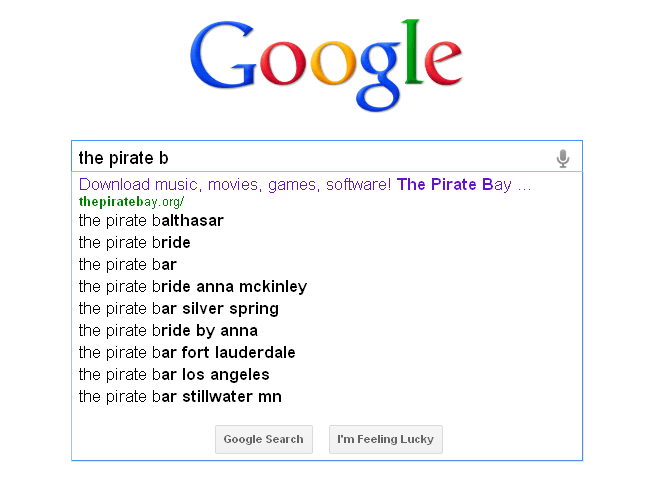
Speaking of Google, TorrentFreak has been testing Google’s anti-piracy demotions and found that while legal music listening alternatives are now easier to find than pirated MP3s, the differences aren’t that significant. It usually only takes a couple of extra clicks and keystrokes to access pirated stuff, compared to legal options like VEVO.

Google Auto-Suggest

Google demotions have made legal music options easier to find, but there are so few legal options that most of the results are still piracy related

An interesting discovery made by TorrentFreak was that while the legal options are there, they are almost always YouTube or VEVO music videos. Other legal options, like iTunes, rarely rank (perhaps due to the way the iTunes website is set up), and TorrentFreak says that this is squarely the fault of the music industry. It’s no good for Google to keep on demoting piracy results when there are only a couple of actual legal results they can promote (and everything after these links become all pirated results again). The music industry will argue that removing the pirated results completely would solve this dilemma, rather than actually providing more legal options, or making legal sites more crawlable as Google suggests.

And it’s the lack of these legal options that seem to determine how many people pirate, and don’t pirate, from region to region. A new global survey has revealed that countries that have access to lots of legal alternatives have a much lower piracy rate than countries, like Australia, that have limited options. In the US, for example, 70% say they are unlikely to pirate, compared to just 40% in Australia. And even those that do pirate in the US, 90% say they only do it a couple of times a year.

The survey also shows pricing becomes an issue in countries with worse economic conditions than developed nations like the US and Australia. In Indonesia, for example, only 9% said they were unlikely to pirate, and out of those that do, 36% said that the high cost of buying content was the main reason they chose to pirate. In comparison, the main reason for Aussies was the lack of legal options.

Overall, the survey seems to show the many different reasons why people don’t want to go down the piracy route, including security issues and poor quality of downloads, and things like better availability, more options, fairer pricing all go towards helping people make the choice that they want to make in the first place.

But nah, just call all of them thieves and try to ban every one of them from the Internet.

——

That’s it for the week, all copyright stuff I know. Hopefully next week will have a bit more variety. See you then.

Weekly News Roundup (13 July 2014)

Sunday, July 13th, 2014

Another short one this week as the World Cup is finally taking a toll on me (and my sleep patterns). So it’s Germany vs Argentina in the final, and I’m backing Germany (but only because they have three players from the club I support, Arsenal – more than any other country). The Germans have a real team, while most of the other countries only have great individuals. Still, if there was one individual that could make a difference it would be Argentina’s Messi. My prediction? Germany wins 2-1 thanks to Müller and Özil – Higuaín to get the consolation for Argentina. Don’t put money on it, but if you do, send me 5% of all winnings.

Alright, let’s get started because I’m heading for an early sleep.

Copyright

Popcorn Time

The MPAA is now going after Popcorn Time, or to be more precise, forks of the original project on GitHub

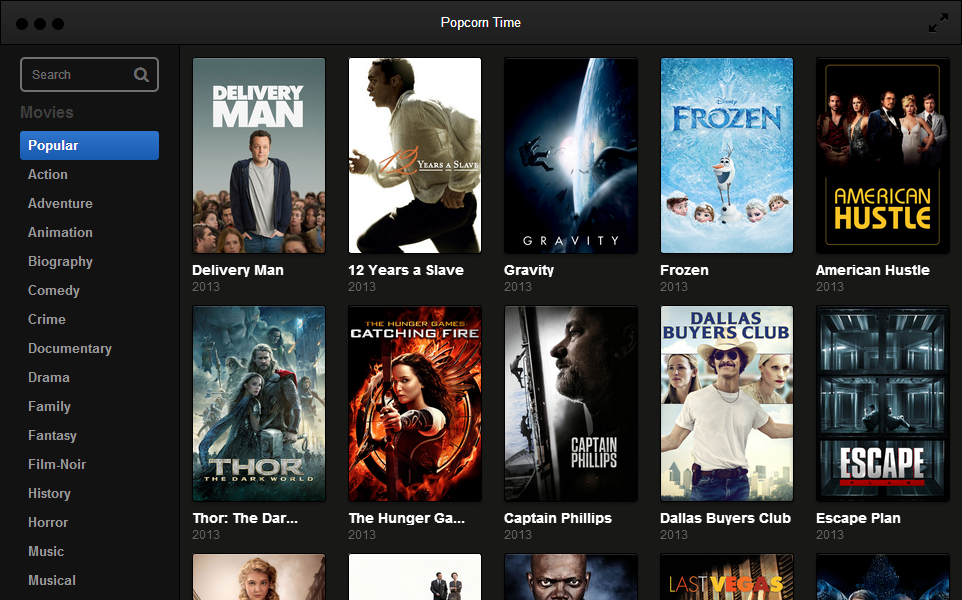
The MPAA is starting to turn its attention to a software tool that has been dubbed the “Netflix of piracy”, Popcorn Time. The MPAA has issued DMCA notices to GitHub for two forks of Popcorn Time, and GitHub has responded immediately by disabling the repositories of these projects. The DMCA notice also asks GitHub to take proactive action on any and all related forks of the project.

But it’s the open source nature of Popcorn Time will most likely save the software from the same fate enjoyed by other targeted tools in the past. After all, the original Popcorn Time has already survived being “removed” once. With the source code out in the open, it will almost be impossible to completely get rid Popcorn Time and its related developments, which is probably the main reason why the original creators chose to go down the open source route.

The MPAA may have won the first round, but it looks like this is going to be a long, and potentially un-winnable, war for them.

But fighting un-winnable wars is what anti-piracy is all about these days. And it’s a war being waged on from on-top, rather than by the people on the ground in Hollywood, who, according to director Lexi Alexander, don’t really care all that much about the piracy problem. Alexander, who directed the film ‘Green Street Hooligan’, also took to task Hollywood’s general attitude to a wide range of issues, from lack of diversity in hirings, to not giving people what they want.

Most interestingly, Alexander says that Hollywood’s woes, if they are in fact real, are mainly due to the lack of variety in the films they release and who they chooses to direct and star in them. Alexander points out several recent flops, including ‘Mars Needs Moms” and ‘Green Lantern’, and says that releasing crappy movies has cost Hollywood a lot more money than any perceived losses from piracy (both of these movies lost more than $100 million each).

But if you point out these and the dross that studios put on with such regularity, those “Fat Cats” (the only ones who regularly complain about piracy, according to Alexander) in Hollywood might lay the blame for these Box Office misses squarely at the feet of piracy.

New Netflix UI

With so many apps, games, and services competing for our time, and awesome platforms like Netflix to keep us occupied, crappy movies are flopping harder and harder at the box office – and it’s got nothing to do with piracy

What the Internet, and piracy, has managed to do is to provide ubiquitous availability of movies, even those that are still in cinemas. So once upon a time you might have had to pay some money to see if the criticism reserved for a flop that has been universally panned by critics is deserved or not, or you’re just curious (or a sadist), whether this means buying a cheap ticket at the cinema, or renting it on VHS – now, you can just download it. So perhaps piracy does have something to do with it.

But another factor to take into consideration is the sheer amount of choice we get these days in terms of content and activities, not just movies, but also video games, social media and other time wasters. There is no way you can do everything, watch everything, listen or play everything, and so we have to be choosy, not just with money, but with our time as well. There’s simply no room for watching a crappy movie on a Saturday night, which might have once upon a time been unavoidable due to the lack of entertainment choices. There’s also not enough money, so even if you have the time, why would you pay $20+ for ‘R.I.P.D’ when you can do so much more with that same $20?

But yeah, let’s just blame piracy.

One thing that I can blame piracy on, or rather the disproportionate response to the piracy problem, is this news where 30,000 people were sent notices of infringement. That in itself isn’t strange, except these notices were fake with a malicious payload attached to cause havoc. The trojan, sent to German Internet users, could steal credit card details and other sensitive information from the user’s computer.

In other short news, Aereo’s plan for survival has taken an interesting turn as the tiny-antenna company now wants a cable provider license. This would then allow Aereo to negotiate licensing deals with content providers and maybe, just maybe, re-launch their services.

High Definition

The Emmy nominations are in and Netflix has doubled the number of nominations they garnered last year. Once again, Netflix originals ‘House of Cards’ and ‘Orange is the New Black’ led the way in terms of nominations. Good luck to them for hopefully putting another nail in the coffin of the cable network hegemony.

I wish for Netflix’s success not just because they provide a kick-ass product at a insanely good price, but also because if/when they come to Australia, I would love to work for them doing this recently posted job. I order waste so many hours on Netflix already, so if I can get paid for do it, it would be just bloody awesome.

Gaming

And finally in gaming news, the PS4 isn’t doing so hot in Japan for some reason. This article tries to find the reasons for it, including the Japanese’s still strong love for last-gen consoles, including the PS3, and the fact that all the connected media services that the people are using the PS4 for in the west, like Netflix, isn’t really a thing in Japan. Worth a read if you need some arguments to fuel your PS4 fanboy fights with non-believers.

——

That was the news that was, for the week just ended. See you next week!