Archive for the ‘Copyright’ Category

Weekly News Roundup (4 January 2015)

Sunday, January 4th, 2015

Welcome to the first WNR for 2015, an abridged version since, well, I don’t think anyone’s in a mood to read (or to write) an essay length article, not this early in the year anyway. Hope your NYE celebrations were awesome, or at the very least, you managed to get a sensible good night’s sleep to get energized for the new year.

So let’s take a look at some of the stories doing the rounds for the last week of 2014 (and the first week of 2015), some of which I may cover in more detail during the next week.
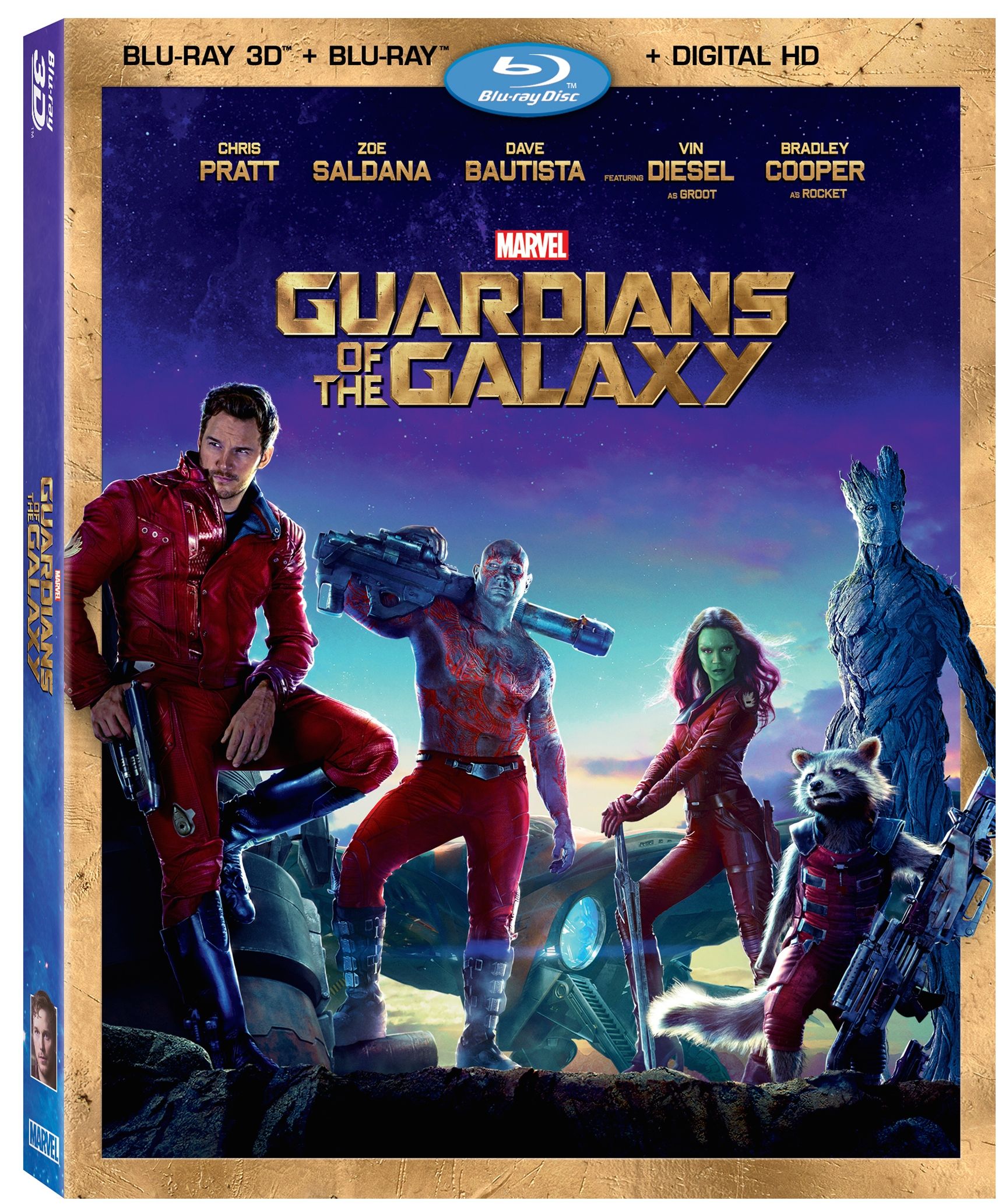
Guardians of the Galaxy

A super hit at the cinemas and on Blu-ray, but not that popular for pirates …

So it’s the end of the year, and as is customary, there are a lot of “top 10”, “best of” and “year in review” type of stories. The top 10 most pirated films for the year, for example, can be found out in this article courtesy of piracy tracking firm Excipio. Surprisingly, at least for me, was the fact that ‘The Wolf of Wall Street’ was the year’s most pirated movie, not ‘Guardians of the Galaxy’ (the top box office earner for 2014), which wasn’t even on the top 20 list. One explanation is that movies like ‘Guardians’ and the new Hunger Games movie, ‘Mockingjay’ were released too late in the year to climb on the list, but movies like ‘The Lego Movie’ (4th on the box office charts) also didn’t make the top 20.

In fact, the most pirated movie released in 2014 was ‘RoboCop’ (3rd on the piracy charts, although it includes the original, and much more superior version, in the numbers) – this is a movie that was 54th on the box office charts, a flop by most standards. The piracy charts also include the 8th placed ‘The Legend of Hercules’ (107th on the box office charts), another flop that somehow beat out top movies like ‘300: Rise of an Empire’ (even if this much worse of the two Hercules films this year was available online for 2 month more than the 300 sequel, released in March).

It seems to me that pirates are very selective in what they download, and it has nothing to do with how they select which movies to watch at the cinemas, or to purchase on Blu-ray and DVD. A point that has already been made recently.

Game of Thrones: Season 4

… while popular TV shows, especially those that aren’t easy to access, *are* popular with pirates

The same may not be exactly true for TV downloads, with the top 10 list compiled by TorrentFreak matching well with the popularity/critical acclaim of said show. Though if you dig into the figures, you’ll find that many of the shows are being pirated more outside of the US, or in areas that do not have as easy/cheap/fast access to the latest episodes. Access is much less of a problem for movies (perhaps more so for certain movies that don’t get wider, or long releases, such as flops, hence the piracy), and when access is the main problem, piracy will usually follow popularity trends. Solve the access problem, then people will pay (like they do for hits like ‘Guardians’), and only pirate those that they deem unworthy of their patronage, or movies that aren’t easily available to view at the cinemas, or on Blu-ray/DVD.

Fibre Optics Cable

Fiber broadband … the MPAA’s next “public enemy number one”

But instead of focusing on the access problem, and solving that by having better and more viable options, particularly taking advantage of new technology like fiber broadband (4K cinema quality movie streaming, anyone?), Hollywood instead lets their fear rule and instantly adopts a over-cautious approach to new innovations in technology. That they’re now fighting against Google Fiber, instead of trying to find new ways to sell content to those on these super-duper fast broadband connections, just goes to show why they keep on losing to tech companies when it comes to innovation. Especially when they use dubious methods to come up with dubious conclusions about said new technology (including the fact that studios would lose $1 billion dollars a year more due to fiber, based on the assumption that 31% of the entire population of Kansas City, including little children, grandparents, those that don’t use a computer, are pirates).

Every change can be seen as an opportunity, or an impending disaster, and I just wish the creative industry, for once, looks on the bright side of things. Stop being so focused on sending DMCA takedowns, or throwing tantrums if you don’t get your way on things, and start confronting change and saying to yourselves “how can I make the best of this”, and maybe, just maybe, things will work out for the best.

So movie studios, please make this your New Year’s resolution, and I think you’ll find this will be a win-win for everyone!

That’s it for the first WNR for 2015. Hope you have a great year!
Weekly News Roundup (28 December 2014)

Sunday, December 28th, 2014

Welcome to this special post-Christmas, pre-New Year edition of the WNR. As expected, it was a really really quiet week, with almost everyone either drunk on eggnog, or whatever delicious alcohol based Christmas/holidays based food product that’s popular in your region (or just plain old alcohol).

There’s still a sprinkling of news stories, so I’ll cover them in super quick fashion and let you get back to your drunken/overeating stupor.

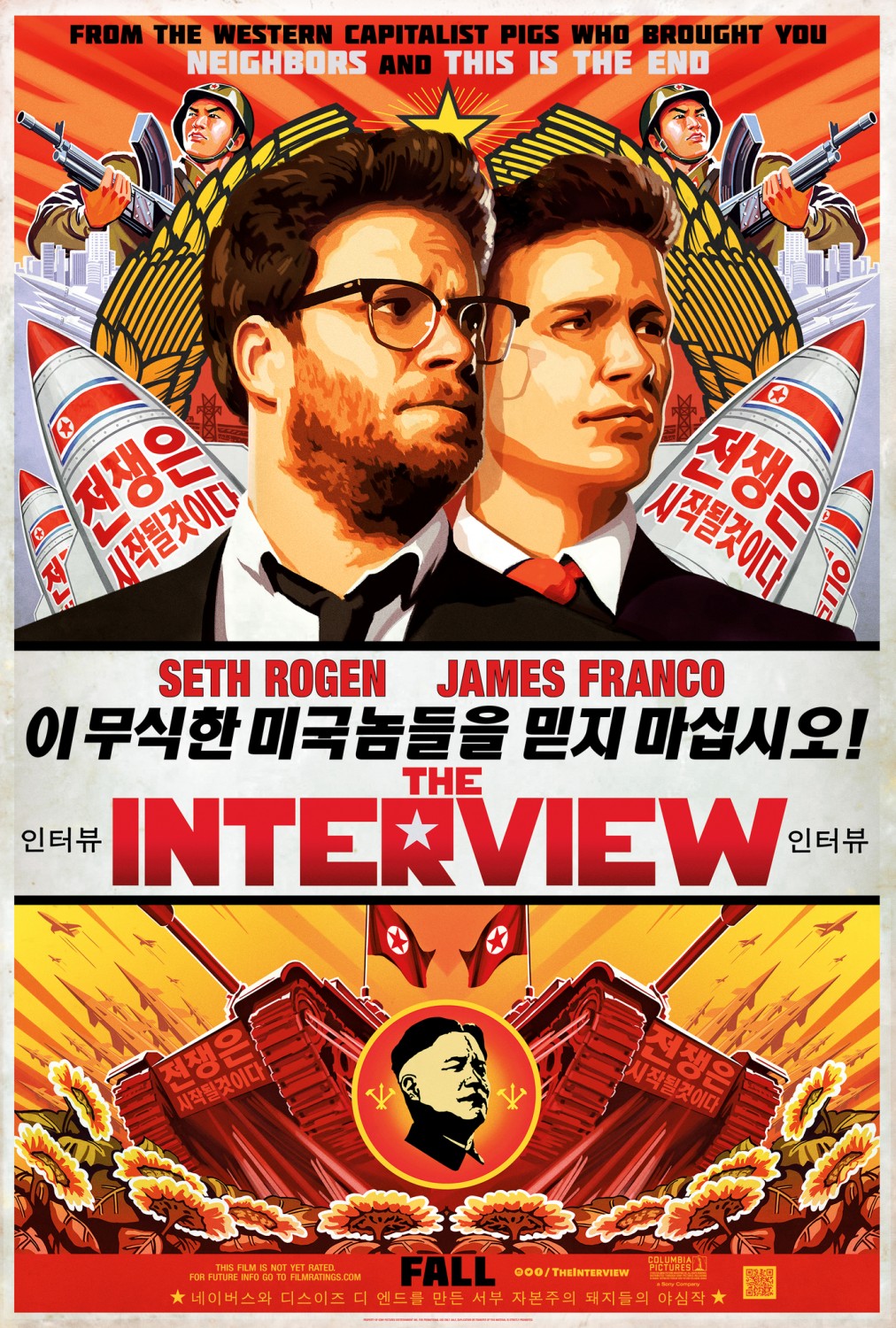
Any news this week will almost certainly have something to do with the Sony hacking, in particular the decision to release/not release The Interview. In the end, Sony decided to compromise on their earlier (and rather cowardly) decision, by allowing independent cinemas (or any cinema that wanted to show the film) to show it, while also releasing the film on streaming and download platforms, like YouTube and Xbox Video (there’s also a rumor that Netflix may be interested in purchasing the rights to the film).

The Interview poster

The mishandling of The Interview’s release has been more damaging than the hack itself. Well, maybe not …

I’m still not 100% convinced North Korea was actually behind the hack (many others have similar doubts), and so any subsequent terror threats from the group will not be genuine (and there’s no evidence that the group, even if it is NK backed, has the capability to carry out their threat). So the decision by cinema chains to abandon the film, and for Sony to not use its power and influence to force cinema chains to reverse their decision, and especially in the light of all the free publicity the film has gotten, seems all very cowardly and unnecessary to me.

Instead of a win-win, Sony chose a lose-lose solution, and by limiting screenings of the film people really want to watch, even if it’s just to prove a point, the inevitable happens: piracy! Within hours of the film hitting the digital platforms, pirated versions sprang up at the usual places and people are downloading like crazy. This time, many feel morally justified to do so, first to stand up for freedom of speech and against threats and intimidation (from NK, or whomever); second to protest the weak decisions made by spineless corporations. “Why should Sony profit from their cowardly move”, some will say. I’m not so sure that’s a valid excuse though, and this comes from a guy who’s not a big fan of the company, even before these events. So don’t give Sony the opportunity to say “piracy is not an availability problem” because it’s still being pirated despite being on digital platforms without a release window, if you were going to pay for a ticket before or have the capability to pay for the movie, you can find out how to buy the film by visiting the film’s official website.

Hotfile

MPAA’s $80 million victory over Hotfile, was more like a $4 million minor one

So while The Interview stuff is still making all the headlines, some of the other more interesting stuff have been buried in the news cycle. This includes the interesting revelation that the MPAA/Hotfile settlement wasn’t the $80 million headline grabbing deal that the studios wanted it to look like, but a much smaller $4 million under the table settlement deal, with Hotfile agreeing to a $80 million settlement judgement being entered. The bigger bogus amount was needed by the MPAA to scare others into submission, although Hotfile did come up with the $4 million in three separate payments. Probably not enough to even cover the MPAA’s legal bills, but whatever.

——

Lastly for the week, and maybe the for the year, Sony has admitted that Microsoft’s aggressive pricing strategy for the Xbox One is making things a lot harder for the PS4, but despite this, supply constraints are still a problem for the popular console. All I know is that both the PS4 and the Xbox One are a lot cheaper than their predecessors at the same stage in their release cycle, and that’s gotta be good for the consumer.

——

Alright, that’s it for this abridged version of the WNR. Merry Belated Christmas, Happy Holidays, and see you in the New Year!

Weekly News Roundup (21 December 2014)

Sunday, December 21st, 2014

Going for a really short one this week, since I’ve just come back from a full day out and for some reason, this WNR remains unwritten (probably because I’ve not written it).

Copyright

The Pirate Bay

The Pirate Bay may have been sunk, but pirates have not be deterred

So The Pirate Bay remains down, perhaps forever. If it stays down, then it will something that rights holders have wanted for a very long time. Or is it? According to the latest piracy stats, piracy remains eerily steady following TPB closure, with a small drop, and then almost back to where it was immediately.

There may be many reasons why closing the world’s biggest piracy website seems to have had no effect on piracy. The fact that there are many other major torrent sites, like isoHunt and KickassTorrents, still operating normally may have something to do with it. The numerous TPB mirror sites that have been set up since its (temporary?) demise, including one opened by isoHunt (which itself is a re-launch of the shuttered original isoHunt), have also helped to keep torrent traffic high.

And even if the piracy rate drops, there’s no guarantee this will actually lead to any noticeable financial benefits for rights holders. I mean, that’s the point of anti-piracy, right?

——

Keurig 2.0

Sticky tape defeats DRM (and not for the first time either)

A couple of quick story roundups. Remember the DRM protected coffee pod? The DRM has been broken, and anyone can do it with scissors and sticky tape. Apparently, the DRM only consists of a special ink placed on official pods, with the machine featuring an ink reader to authenticate the pods. Cut out the part with the ink from a used official pod, secure it over the ink reader with tape, and now all unofficial third-party pods will work. Doesn’t really get any easier than this, does it?

The next couple of stories are all related to the Sony Pictures hack (what isn’t, these days). We start with leaked information showing the MPAA’s plans to destroy the Internet’s naming back bone, the DNS (Domain Name System). DNS works because every other DNS mirror in the world shares and distributes the same set of data, essentially. The MPAA however wants certain ISPs to start messing around with DNS filtering, which could lead some DNS servers having vastly different data than others, thus breaking how the naming system syncs and refreshes itself all around the world.

This is all part of the MPAA’s plans to revive hugely controversial parts of SOPA, not by legislation, but through other means. These other means are explained by Google in a new blog post, where the search giant (who recently ended all cooperation with the MPAA, again due to information gleamed from the leaked data) accused the MPAA of heading a witch hunt, which included lobbying state attorneys general and building legal cases, against the company.

This particular feud could get nasty.

High Definition

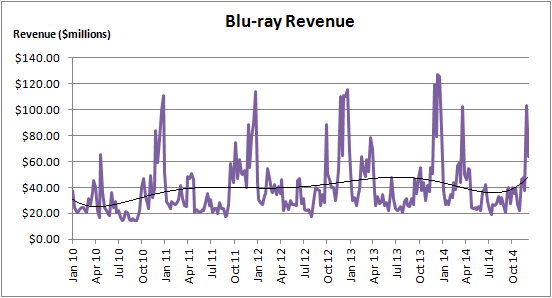
Blu-ray Revenue Growth - January 2010 to December 2014

Blu-ray revenue has hardly grown over the last year, and may have actually declined

I finally took the time to summarise recent Blu-ray sales for my annual(ish) Blu-ray: The State of Play feature, and I was quite surprised at how poorly Blu-ray has done over the last year and a bit. While declining DVD sales are expected, for Blu-ray revenue to decline, that’s infinitely more worrying for the good old physical disc (2014 total sales so far, with a couple of more weeks left, are down 5.8%, or around $115 million. Now, the final couple of weeks for any year (stats for which will be available by the middle of January) are always the biggest, and it isn’t inconceivable that these few weeks will help Blu-ray sales prevent a year-on-year decline, but 2013’s final few weeks were also big (record breaking, in fact).

Even if Blu-ray sales can make a recovery in the last few weeks of 2014, there’s one stat that doesn’t lie. Of the 49 weeks that have been tabulated so far, only 17 of these had a Blu-ray revenue figure that was higher than the same week in 2013. This is the exact opposite situation to last year (for the first 49 weeks), where only 17 weeks recorded a lower revenue figure than the same week from the year before (and the year before had the exact same breakdown).

A poorer new release slate, fewer “first time on Blu-ray” catalog title releases and the rise of digital could all be responsible, but if this is a trend (and it’s a big ‘if’), then this could be the beginning of the end for physical media as we know it.

Gaming

White Xbox One

$50 price cut for the Xbox One has revitalised the console

While Blu-ray is down, the Xbox One is up, at least for November. It appears the stats collected by shopping insights firm Infoscout were right: the Xbox One won Black Friday, and November, not only in the US and also in the UK.

The win comes after aggressive pricing by Microsoft, with discounts starting at $50 and up to $150 for bundles. And this is all after Microsoft dropped the Xbox One bundle price by $100 earlier in the year to match the PS4’s price, when they removed Kinect and changed it to an “accessory” status (as opposed to a mandatory add-on).

It seems that if Microsoft want to get back into the game, keeping the Xbox One cheaper than the PS4 is the way to go. With that said, Sony hasn’t been sitting idle either, with the PS4 getting some fairly aggressive price cuts for the holidays too. All of this is great for gamers of course.

——

That’s it for this slightly abridged version of the WNR. See you next week (maybe, assuming there are stories to cover, which isn’t always true given it’s Christmas and all), and Merry Christmas.

Weekly News Roundup (14 December 2014)

Sunday, December 14th, 2014

Welcome to what is probably the penultimate “proper” WNR for 2014, with the WNR scheduled for December 28 likely to be a very short affair (given it’s that time of the year and everything). Where has 2014 gone? It seems like it was only yesterday that we were talking about The Pirate Bay’s journey to find a new home and HEVC’s growing stature as the industry codec for the (immediate) future. I guess things haven’t really changed that much in a year!

Onto this week’s all copyright, all the time, WNR …

Copyright

The Pirate Bay

Where is The Pirate Bay?

The Pirate Bay ship has been sunk … or at the very least, it has disappeared into a cloud of smoke, fate unknown. With the site still down at the time of writing, this one looks like to be one of the biggest TPB outages in history. All of this is because of a Swedish police raid on the nuclear bunker style data center that TPB (and other sites, including EZTV and a few BitTorrent trackers) used – the bunker may be nuclear bomb proof, but it wasn’t police proof, it appears.

Still hard to find any definitive information on just what happened, but it appears that TPB’s load balancers were taken offline in the raid, while the actual servers that hosts the site and files are “in the cloud” and so, I guess, still there somewhere (without the load balancers to direct users to where the servers are). For all the talk of TPB being “raid proof”, the load balancers still appears to be a single point of failure for the site, although I guess there are solutions for this as well.

——

I found the headline for this article, “Sony Pictures mad at Netflix’s failure to block overseas VPN users”, particularly ironic this week given that pretty much everyone, from President Obama to Kevin Hart to Angelina Jolie will have been pretty mad at Sony Pictures this week (for those not keeping track, leaked emails revealed very insensitive to downright racist remarks made by executives at Sony).

Just as damaging may be the leaked emails explaining the MPAA’s strategy in dealing with piracy, with several key, previously unknown details being revealed. You can read this article for a brief overview of what’s in the leak, but it appears that the MPAA will be moving ahead with litigation in several countries in a bid to stop what they feel is the top piracy priority, cyberlocker and video streaming sites.

The introduction of a “site scoring service” was also interesting, and may tie in neatly with Disney’s patent for a new piracy-free search engine. The service will rank sites based on “trustworthiness”, with I suppose official and legal services being more trustworthy than say the Pirate Bay (if and when it gets back online). Support services such as payment processors and domain name registrars can use the service to identify and boot suspected piracy sites. So in reality, this “site scoring service” may just be a fancy name for an Internet blacklist.

One of the priority targets is piracy related apps, which may or may not have anything to do with this story. Google has pulled piracy related apps from the Play Store, and I wouldn’t be surprised if this is happening as part of a bigger plan, the very plan that was leaked.

This kind of cooperation between the MPAA and Google may be a thing of the past though, as Google’s recent algorithm changes, which have proved quite effective at taking down piracy related sites, were met with a ‘snarky’ response from the MPAA. Against, the Sony Pictures leaked emails proved to be very insightful, as Google’s intentions of doing something helpful for the MPAA was met with disdain and distrust, which may have caused the relationship between Hollywood and the search engine to completely break down. Nice one MPAA!

——

iTunes 10

Pirates buy more stuff on iTunes than “model consumers” who don’t pirate

All of this week’s stories so far have been about stopping downloads, pirates, piracy sites, blah blah blah … but does it all really matter? According to a survey released by Australian consumer group CHOICE, stopping pirates may not be the most important thing ever, and kicking them off the Internet may be the last thing you want to do. This is because, according to the study, people who admit to regularly pirating spend more money than people who say they never pirate. Similar results have been found in the past, in other regions, and it also makes sense if you think about it. It’s because people who like to consume digital content will do so both legally and illegally. People who don’t pirate may also be the same people who just don’t want the content on offer, whether it’s a movie at a cinema or the same movie on BitTorrent.

The interesting question for me is how these so called “regular pirates” decide what to buy and what to download (illegally). I think this is where value, availability, quality, ease of use and things like DRM come in. People ARE spending money, and it’s important to find out why they’re doing so. Of course, once funds are exhausted (consumers do not have unlimited funds, take note RIAA/MPAA), there’s only one real option left. Now whether content owners want people to have this option or not, or to simply stop consuming when they run out of money, that’s sort of where the debate is at right now – either way, they’re not going to get a cent more, but allowing people to still download may have promotional value beyond a simple dollar return.

——

And that’s all we have time for this week. Actually, I have a lot of time, but I also have a lot of stuff in my Netflix queue to catch up on. Like, A LOT of stuff. See you next week!

Weekly News Roundup (7 December 2014)

Sunday, December 7th, 2014

A nice and quick one (I always say this, and often don’t deliver), as I’m running a bit behind having just watched the new Hunger Games movie at the cinemas. No spoilers from me, but I thought the sex scene between Katniss and Haymitch was totally out of place, a real departure from the books (yes, I’ve read them!) and exploitative to say the least.

Now onto this week’s news, of which, just like everything I’ve written so far for this WNR, will be completely truthful.

Copyright

Sony Pictures Hacked

Staff at Sony Pictures had to resort to pen and paper after servers were hacked – image sources

The big story of the week involves Sony and hacking yet again. The PlayStation Network wasn’t the target of hacking this time round, but it was actually Sony’s film division that was victim to one of the most brazen hacking attempts yet. Not only were sensitive and personal data stolen, so were several digital copies of new and upcoming Sony films, some of which will eventually be leaked onto the usual places.

The newest update from the FBI seems to indicate some kind of undetectable malware was used to infiltrate Sony Pictures computers, and gain access to the data. There’s still no confirmation as to whether the North Koreans were involved, which is one of theories doing the rounds due to Sony’s imminent release of The Interview, which provides a the less than flattering look at North Korea. Would be funny if it was true, and would also provide a great premise for a sequel to yet unreleased comedy.

Something perhaps a little bit harder to crack than the security on Sony’s servers (but not that much harder) is the gaming DRM, Denuvo. As with every single other article talking about Denuvo, I must make it clear that Denuvo isn’t actually a DRM, but rather an anti-tampering system designed to protect existing DRM (such as the Steam or Origin DRM). It’s essentially a DRM for DRM. After months of it being unhacked, due to the use of a 64-bit encryption system, many have started calling it an “infallible” copy protection method. But those that have followed the various stories on DRM I’ve reported here will know that no DRM (or anti-tampering system) is infallible, and it appears Denuvo isn’t any different in this regard. While no working crack has been made available for games that deploy Denuvo, including ‘FIFA 15’ and ‘Dragon Age: Inquisition’, it seem it’s only going to be a matter of time.

While doing the research on this story (yes, I do do research … heh, “do do”), I did find some interesting information on FIFA 15, and how despite being completely protected by Denuvo, its sales compared to FIFA 14 wasn’t higher at all (and was something really low like 5,000 copies). Publishers need to take a good look at the hard data and decide if DRM (or DRM for DRM) is really worth it or not.

If publishers want another reason not to use DRM, just have a look at Apple’s ten-year legal battle over a DRM they no longer even use.

Gaming

Denuvo

Denuvo, close to being hacked?

Both the previous story about Denuvo and this subsequent one are ones that I’m not entirely convinced will hold true given the luxury of time. The Denuvo story because it’s based on information posted by a Chinese warez group, without any other confirmation as to its veracity. This story, about the Xbox One’s total pwnage during Black Friday, comes from a credible source, shopping data analysis firm Infoscout, but I’m not too sure about the methodology used to derive at this conclusion. Based on sales receipts received from its panelists, Infoscout’s data shows that Xbox One sales accounted for 53% of all console sales during the BF sales, that’s more than every other console combined, including the PS4 at only 31%.

It does seem quite high for the Xbox One, given the trend over the last year, but it’s important to remember that the Xbox One also won BF last year, and that the Xbox One had a very generous promotion going on during BF (and still on at the moment), making it cheaper (sometimes a lot cheaper, when bundled games are taking into account) than the PS4. But even if the reported 53% is true, the Xbox One still has a long way to go before it starts to catch the PS4, but this would be a good start.

But in Japan, it seems the Xbox One (just like the 360) is struggling, so much so that the boss of Xbox Japan has just resigned due to the poor sales. It’s a hard ask for any non Japanese console to break into the Japanese market, so I don’t know if a new Xbox Japan boss will be able to turn things around by much.

——

Okay, I’ll try to keep to my word and not make this WNR go any longer, although at 800 words, it’s not exactly the shortest WNR in history (which is almost always the Christmas/New Years edition, coming soon to a screen near you). See you next week.