Archive for the ‘Copyright’ Category

Weekly News Roundup (January 1, 2017)

Sunday, January 1st, 2017

Happy New Year! Happy 2017! Wasn’t expecting to put out a WNR today, but surprisingly, we had a few news stories, and so here we are.

Before we get to that though, I finally saw Rogue One and it was actually a lot better than I expected. Granted, my expectations were low, but it really does feel like one of the better movies in the franchise. It really could have come out very badly. Take the premise: mega-corp Disney trying to cash in on its Star Wars license by doing, God forbid, yet another prequel for a story whose synopsis is basically the opening crawl of A New Hope. And then emerged of a troubled production, massive reshoots, and a change of composer (neither of whom are John Williams) with only four weeks given to compose an entire new score for the movie. Almost everything was against the movie, but against the odds, they seems to have done it! Just like the protagonists in the movie, they’ve delivered a victory when defeat seemed inevitable.

Even the Michael Giacchino score was brilliant, and doesn’t take nearly as much time to become part of your humming ensemble as compared to The Force Awakens (which is brilliant in its own right) – you can listen to the entire soundtrack on Spotify.

Rogue One: A Star Wars Story

Rogue One is better enjoyed if you’re already familiar with A New Hope

As much as it is a “standalone” Star Wars movie, it really isn’t, at least not for Star Wars fans. Think of it as an “extended universe” movie, just like how we have extended universe books and games – Rogue One just takes the same formula and applies it to the big screen. You won’t get as much out of the movie if you haven’t seen A New Hope or at least be familiar with concepts like the Force, so it’s not really a standalone and it shouldn’t be judged in isolation like this (the movie, for someone who knows nothing about Star Wars, might be no more than an average action sci-fi film, but for fans, it’s something completely different – and this perhaps explains the wide ranging views on the movie).

The correct viewing order for the Star Wars films was 4, 5, 1, 2, 3, 6, 7. It’s a bit harder to fit Rogue One into the timeline – the story may be before A New Hope, but it wouldn’t be right for this to be the first Star Wars film to watch. If I could, I would pause A New Hope just after the group’s arrival on Yavin 4, watch Rogue One, and then continue on with the big conclusion to Episode IV. I think it would then provides the context needed to enjoy Rogue One, and allow Rogue One to do something prequels rarely do – to improve the original.

I watched it on the day we lost our Princess, and so the movie had an added touch of emotion for me and possibly for many in the theatre with me that day. R.I.P. Carrie Fisher.

Oh yes, the news … I’ll try to keep it short considering how much time I’ve just wasted above.

Copyright

4shared

4shared can’t get a break – despite giving rights-holders what they want

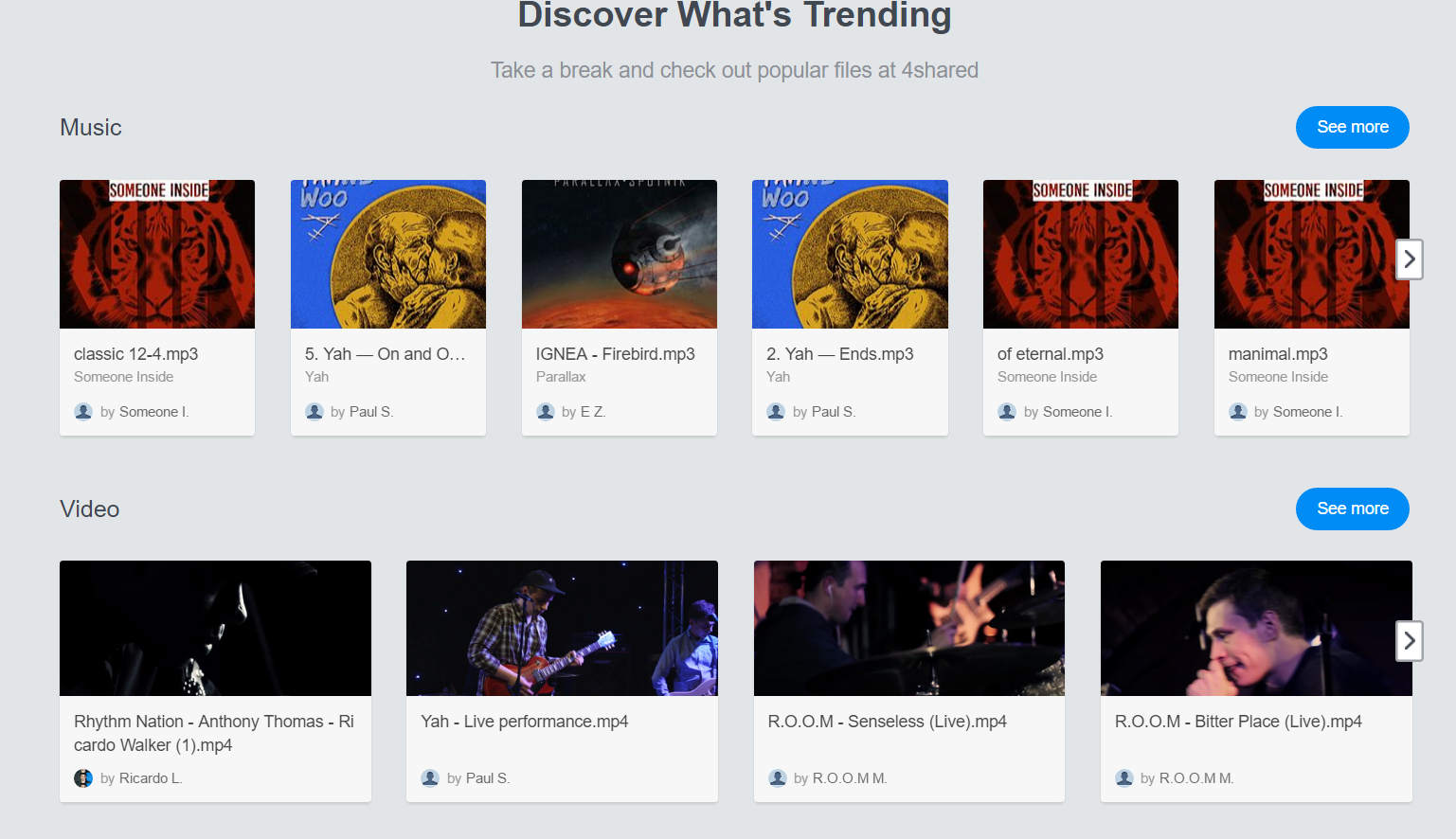
It’s that time of the year again. Everyone is making merry, opening gifts, getting way too full and drunk, and of course, the USTR has to release an updated “notorious market” piracy list. There were all the usual inclusions, but the inclusion of 4shared and Youtube-MP3.org has the EFF concerned. Both sites have fair use on their side, according to the EFF, theformer also has one of the best anti-piracy systems around (despite the EFF saying they’re not being a fan of the system due to the way it could produce false positives). Many people use 4shared and Youtube-MP3.org for legitimate reasons, and just because some, maybe even if most, use it for illegal means, it shouldn’t automatically make these sites illegal. Especially not when one of them has a great system for preventing piracy.

Russian social media site vKontakte got listed again, despite the site working extensively with rights-holders to stamp out piracy. That’s what cooperation gets you, I guess. Chinese site Taobao is listed too, and if you’ve ever browsed products on there, you wouldn’t be too surprised at this listing.

What you might be surprised about are the complaints being raised against Spotify, despite the freemium platform almost single-handedly making music piracy irrelevant. The platform is so successful at defeating piracy because, according to the company’s top lawyer, stopping piracy is part of Spotify’s DNA.

Or rather, I think Spotify saw how attractive piracy was to many people and then found a way to make something even more attractive. It also clearly saw that not all pirates were unwilling to pay for music, and then went about creating a product that they were willing to pay for.

The only question is has Spotify’s popularity cannibalized sell-thru? On the reverse side, it’s also worth examining to see if Spotify’s effect of turning pirates into paying customers has had a net positive effect for the music industry even if it also causes sales to decline. According to Spotify, since the introduction of Spotify, music industry revenue has started growing again after 15 years of continuous year-on-year declines.

So maybe it’s not worth looking at the huge number of listens on Spotify and how little money this translates in terms of direct revenue from Spotify, and perhaps take a look at the big picture. Spotify may be changing user behaviour and making them shy away from illegal sources, it may also be helping with music discovery and helping to drive indirect sales. These effects are harder to quantify, but perhaps far more important than a extra couple of percent in terms of royalty from Spotify. If the music industry starts to work against Spotify, instead of working with it, then this may be a shortsighted way to look at things.

======

That’s that for this week’s WNR, and for 2016 as well. Hope you had a great 2016, and hope 2017 is even better for you!


Weekly News Roundup (December 18, 2016)

Sunday, December 18th, 2016

Welcome to another edition of the WNR. It’s going to be a short one again, after last week’s epic (erm, not really) edition. There are still a few stories to go through, but a few of them are quite similar in nature, while the others don’t really need much analysis on my part.

So short and sweet it is!

Copyright

To block or not to block, that is the question. That is also the theme of this week’s copyright news stories, as countries debate the need to block, others have already decided to go ahead, and what has already been blocked becomes unblocked.

The Pirate Bay

The Pirate Bay is being blocked in Australia, and being considered for blocking in its native Sweden

In Sweden, home of the Pirate Bay, arguments are still being heard in case that will decide whether the world’s most notorious piracy site will have to be blocked by the country’s ISPs. These ISPs, however, argue that piracy site blocking is in essence censorship. The ISPs also don’t want to be made copyright cops, or face being made an “accomplice” in online copyright crimes. With an earlier district court opinion siding with ISPs, there is a good chance that site blocking will never become a reality in the home of the Pirate Bay.

The same cannot be said here in Australia, where the Pirate Bay and other piracy sites will soon be blocked, at the DNS level, by ISPs. Most of this has already been decided via an update to the copyright act, but under the new court ruling, rights-holders will pay a nominal fee to get each domain blocked after seeking an injunction. ISPs then have 15 days to block the domain in question.

It’s a sad state of affairs that this kind of censorship will soon become a reality, as similar blocks in other countries have not resulted in any difference to the piracy rate. Enterprising pirates will easily find a way around the block too, meaning it will just be a waste of time for all involved.

Speaking of wasting time, for all the time and money that went into investigating and then shutting down KickassTorrents, it appears it’s a lot easier and cheaper to just start a new one from scratch. A new KickassTorrent clone that’s being run by many of the same people that ran the old site has just been launched, and despite some early hiccups (like the site being down due to the traffic spike).

The site is actually completely new, with a blank user and torrent database, and uses no code from the original site. So it’s actually quite an accomplishment that the new site looks and works so much like the original one, and with the original team in place, and many of the original uploaders coming back to the site, it looks like KAT might live once more.

Gaming

Xbox One S

The Xbox One original and ‘S’ getting bitstream audio support

The Xbox One S is getting bitstream support to enable external decoding of Dolby Atmos and DTS-X. I covered this story at the back end of October, but there’s been a small update since. With the update scheduled to go live in “early 2017”, some Xbox One owners can already test out this feature for themselves. Xbox Insider members can now update their Xbox One (both the original and S) to enable bistream support for Blu-ray playback. There are still some known issues, such as videos sometimes playing without sound, or a popping sound being heard between transitions, but these issues will likely all be fixed when the “gold” rollout occurs in a few month’s time.

======

Looks like that’s it for the week. Short, but maybe not too sweet. But that’s okay, sugar is bad for you anyway. See you next week!


Weekly News Roundup (December 11, 2016)

Sunday, December 11th, 2016

From nothing to almost too much, this week’s Weekly News Roundup has one ingredient sorely missing from last week’s edition – namely news!

So let’s not waste any more time and dive right into it …

Copyright

YouTube Targeted

YouTube says they’re unfairly being targeted by the music industry despite handing over a billion dollars to them over the last 12 months

Google has produced the numbers to show that, far from being a place where freeloaders gather to get free music (especially ones of pirated origins), YouTube is actually putting a lot of money into the pockets of the music industry. One billion in the last 12 months, to be exact. And this is just ad-revenue from legally uploaded videos and from pirated uploads via Content ID.

You might think the music industry, and some of music’s most well known, and richest stars, might be satisfied with this. But they’re not. They say growth in free music is outpacing growth in revenue from ads and subscriptions, and they’re worried that falling track and album sales will start to hurt in the near future.

They might be right, but it’s not because of piracy or YouTube even. It does feel like the music industry may be in transition again, so soon after the last one from physical CD album sales to digital tracks. The new transition, and it’s something Google is saying as well (and giving the music industry an advanced warning on), is one from sales to subscription/advertising. The last transition has dramatically downgraded the financial fortunes of the music industry, and this new transition may hurt them again. It is a bit of a shame, but this is the free-market, and the market always decides what things are worth.

If music lovers decide that music should be subscription based, or ad-supported but free to listen, and they decide that it’s no longer in their interest to pay the current price for tracks, then that’s bad luck for the music industry. Unless they want government policy to offer special protection to the industry – and I don’t see how it’s fair to give them protection at the expense of other industries – then it’s something that Sony, Warner, Universal and EMI, and stars like Taylor Swift and Katy Perry, will have to learn to live with. They will argue that this will end the music industry, and mean less music being produced, but that would only be true if all musicians are getting into the game just for the money.

In fact, with self publishing easier than it’s ever been, and with YouTube promising to put more resources into promoting the stars of tomorrow, the future of music still looks bright, even if it means the likes of Taylor Swift may have to settle for earnings of $30 million per year, instead of $73 million.

Also looking bright are the prospects of Iceland’s Pirate Party governing the Nordic island nation. The president of the country has allowed the Pirate Party, who came third in recent elections, the chance to form government after the two biggest parties failed to build a workable coalition. Now, the chance of Iceland actually being ruled by a coalition headed by the Pirates appears to be slim, since it will need the support of one of the two bigger parties, and if this was a possibility, it would have happened already. Instead, Icelanders may have to go back to the polls and see if a fresh round of elections can produce an outright winner.

But still, it highlights just how popular the Pirates are doing in the country. It is after all the anti-establishment choice for Iceland, and the recent trend away from the establishment has definitely helped them. Anti-establishment doesn’t always have to mean islamaphobia, xenophobia and electing people with un-explainable hair, and the Pirates do have some solid policies, not to mention it’s refugee-welcoming policies (73% of Icelanders say the country should accept more refugees).

High Definition

Movie Cinema Tickets

Cinema chains will not be happy if Apple’s plans become reality

Not being afraid to change things around is usually a recipe for success. Sometimes I’m a bit harsh on Hollywood when it comes to all things copyright, but often though, it’s not the studios that are resistant to change, but others in the industry. So when Apple and some of the biggest studios are meeting to discuss a way for people who prefer to watch the newest blockbusters not at the cinemas but in their homes, the resistance comes from cinema chains.

To be fair, they have valid concerns. If movies are also made available to view at home during the theatrical window, then cinemas will definitely lose money. How much depends on how much people value the cinematic experience, but with price gouging when it comes to the concession stand, and often sub-standard presentations that can’t match the clarity and aural experience of a well set up home cinema, the cinematic experience definitely has room to improve.

What could happen though is a deal which sees cinema chains get a cut of profits from this kind of premium, fast-tracked home viewing, in exchange for giving up their exclusive rights to screenings. The last thing the studios want is for cinema chains to launch some kind of protest, which ends up having films like Deadpool 2 getting boycotted at release.

For Apple though, the equation is very simple – a faster release equals more money by helping to serve a currently under-served (or really, un-served) market.

Netflix Downloads

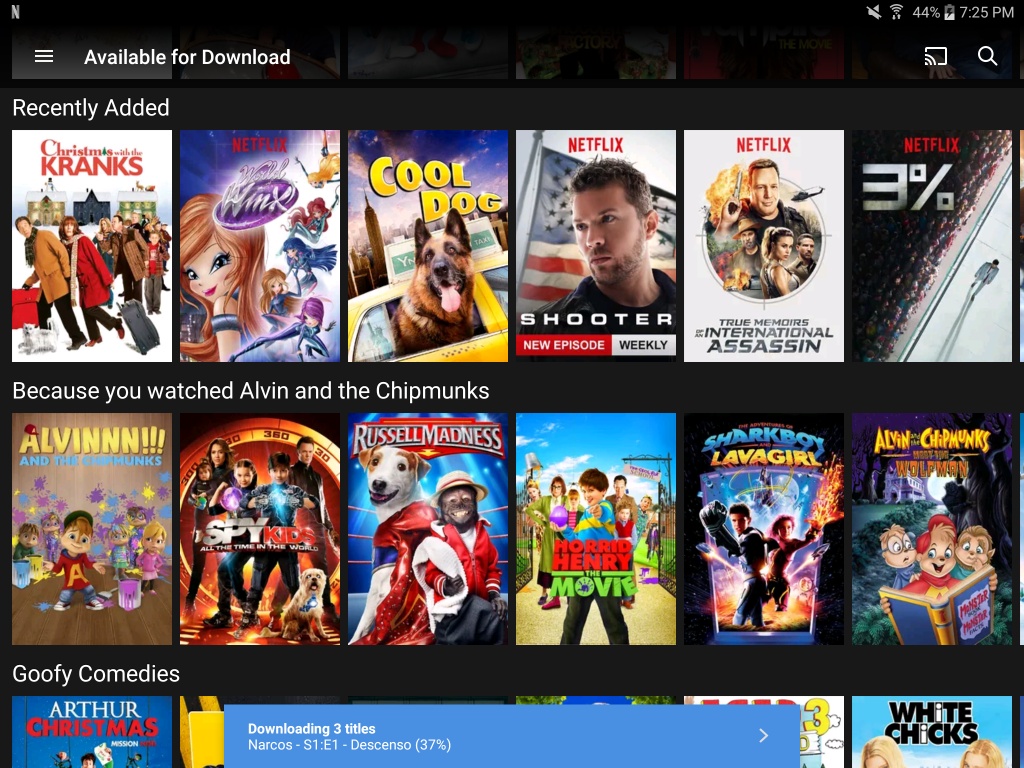
Netflix’s download mode uses a new codec to improve quality without increasing file size

This is probably how Netflix came to the decision to copy Amazon, erm I mean, to come up on their own with the innovative idea of adding downloads to a streaming service. There’s probably not a lot of people that will use the download feature, but there are situations (no Wi-Fi, on a plane, etc…) where downloading is definitely required – so an under-served area becomes served, and everyone is happy.

But that’s not why I wanted to bring up Netflix’s download mode this week. The reason is that now we know a bit more about the technical side of Netflix’s implementation, and so this kind of stuff is right up my alley. A long time supporter for H.264 AVC, Netflix is actually using Google’s VP9 for downloads. At least for selected platforms that natively support VP9, namely Android.

Compared to using the AVC-Main profile, Netflix’s use of VP9-Mobile could actually save up to 36% in terms of bandwidth, for the same perceivable quality. Netflix is also using per-chunk optimization for its encodings, which splits the movie into 1-3 minute segments and then applying a different encoding setting for each chunk, to further minimize file size.

But minimizing file size isn’t Netflix’s only goal, it can also use these enhancements to improve the quality of downloads by keeping the files at the same size, which is that the company is doing with its downloads. And since downloads are currently only supported by a limited number of devices, Netflix are free to experiment with new encoding techniques without running into problems with backwards compatibility. It’s a good idea all around.

Star Wars: The Force Awakens Big Sleeve Edition

Laserdisc makes a comeback, sort of

Speaking of good ideas, and in particularly if you’re stressing about finding a cool Christmas gift idea, how about this. Nostalgia is a thing this holiday (eg. Nintendo Classic), so why not bring back laserdiscs, without actually bringing it back. These laserdisc sized Blu-ray “Big Sleeve Editions” from Disney is obviously another cynical attempt at double-dipping, but they are also very attractive looking packages for that film fan friend or family member that already appears to have everything. They’re only available in the UK at the moment, but don’t be surprised to see it elsewhere in the future.

In Ultra HD Blu-ray news, it does speak to the current state of PCs (and possibly the paranoid copyright culture) that despite the availability of a $299 Ultra HD Blu-ray player in the form of the excellent value Xbox One S, you still can’t play UHD discs on your PC because of the lack of available hardware and software.

But the situations appears to be getting better, with Intel, Nvidia and AMD all working hard to produce new hardware that enables and accelerates UHD playback, and on the software front, Cyberlink has just announced that PowerDVD has received official UHD Blu-ray certification, meaning UHD playback will be coming in 2017.

To get the best out of UHD, you’ll probably end up needing a new CPU, GPU, optical drive and monitor (so basically an entirely new PC), at considerable cost. That $299 Xbox One S is starting to look mighty tempting.

Once things start rolling on the PC UHD Blu-ray front, I might just write a guide on how you can build the cheapest possible UHD capable system that can get the best out of UHD.

======

Well, that was a good news week, and I didn’t even have to resort to fake news. Alright, no more blabbering from me. See you next week!

Weekly News Roundup (November 27, 2016)

Sunday, November 27th, 2016

So how did your Black Friday shopping go? Found a few bargains, or did you refuse to buy in to the hype? One thing I’ve noticed that the phenomenon, for better or worse, seems to be spreading to other countries, including here in Australia. I guess retailers don’t really need another excuse to have a big sale, but if you want to find out more about just what Black Friday really means for retail, have a look at this (super long) infographic, provided to us courtesy of FreeshippingCode.com.

As for the news this week, we have a nice mix of stories for you that will make you happy, angry, and informed.

Copyright

PlayReady 3.0

Netflix 4K requires hardware based DRM, which means most PCs won’t be supported

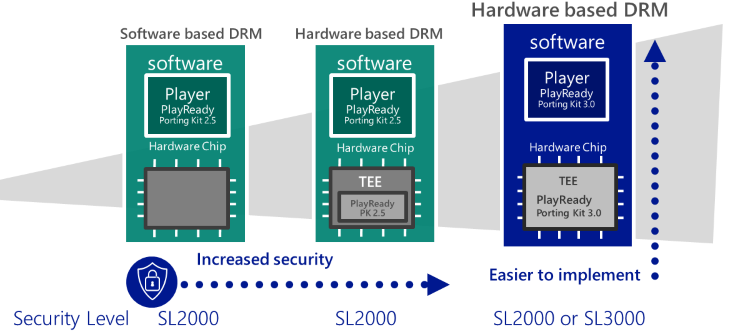
Starting with the angry, this DRM story will definitely get your blood boiling, especially if you’ve just recently upgraded your PC (and you didn’t choose the latest Intel ‘Kaby Lake’ CPU). Your PC may be more than fast enough for 4K video, but you probably won’t be able to play Netflix in 4K, thanks to the sky-high (or rather, higher than Skylake) hardware requirements. Thanks to Hollywood’s paranoia, Netflix 4K requires PlayReady 3.0 DRM, which is only supported by Windows 10 at the moment. And also only by the practically ignored Edge browser. And also only supported by Intel’s latest generation ‘Kaby Lake’ CPUs.

Miss out any of these requirements, and you’re shit out of luck. Even if you purchased a 10-series Nvidia graphics card that supposedly supports PlayReady 3.0 and HEVC 10-bit accelerated decoding, you’re still SOL, because Netflix’s implementation currently doesn’t work this these cards.

Thanks a bunch, DRM.

With that said, the incompatibility with Nvidia cards at the moment may only be temporary and can probably be addressed with a software update. And if you don’t have the latest Nvidia card, then you probably do want a Kaby Lake CPU for Netflix 4K, as it supports accelerated HEVC 10-bit decoding. As for Edge, well, it’s and inoffensive choice while we want for Netflix to update their Windows app.

Still, DRM, what a pain in the hole!

4shared

4shared can’t understand why rights-holders are wasting time submitting “bogus” take-down requests to Google

Speaking of pains in the hole, 4shared has spoken of their own pain at seeing rights-holders waste their time filing Google DMCA take-down requests, many of which are bogus, when the file sharing site has a perfectly good anti-piracy tool at their disposal.

4shared says that rights-holders are wasting money hiring anti-piracy agencies that produce bogus take-down requests using nothing but a simplistic bot script to crawl their site for links, sometimes based on broad keywords such as ‘video’. At best, this results in links being removed from Google’s search results, but the page itself still exists on 4shared, meaning rights-holders are wasting their time.

Despite 4shared pleading with rights-holders and their agents to use the site’s own anti-piracy tool, the same rights-holders have dobbed 4shared in to the authorities, arguing that it’s a “notorious” piracy site that should be shut down. As I theorized a couple of weeks before, rights-holders may be holding off on using 4shared’s tool because they may be looking at suing the site in the future, and any “cooperation” with the site now could hamper these efforts.

Netflix Remote

Netflix helping to combat piracy much more effectively than DRM or new laws

But you know what they could do? Instead of obsessing over links and downloads, maybe, just maybe, the solution is already here. Affordable legal options, such as Netflix and Spotify, are already helping to reduce piracy, and the latest report from Australia confirms this.

It’s worth remembering that Netflix and Spotify, especially the former, aren’t perfect. In fact, there’s still way too much content that you can’t find on legal platforms, unless you’re willing to pay through the roof (and be limited in where and how to play the content). If rights-holder can be more committed to bringing in more value to consumers, then piracy can be reduced by a great deal. It will never be completely abolished though, as some people will never or cannot pay for content, but these people have always existed and in the absence of piracy, they simply consumed less content or none at all.

I get it. Rights-holders want their cake (ie. being able to charge the maximum for content) and eat it too (not having piracy), but that’s just not realistic. Their business model is effectively one where they put out an overpriced product and then force users to accept it via technical and legal measures. And it’s easy to see why consumers are choosing to go down a different route, whether this is piracy or Netflix.

======

That’s it for the week. Hope you smiled, frowned and otherwise felt informed enough to feel that reading this week’s WNR wasn’t such a waste of time. See you next week!

Weekly News Roundup (November 20, 2016)

Sunday, November 20th, 2016

Welcome to another week here on the Weekly News Roundup. Hope everything’s been well? Having Trump-tastically good week or a Trump-sasterously bad one? Having a nice Trump-eekend, on a nice Trump-day (every day is a Trump-day)? Sorry, but we’ve been forced to make some changes here at WNR HQ by President-Elect Trump, so this is how things are now.

It was a good week in terms of news though, in that there were some interesting ones and ones that are away from the usual copyright related bore-fest that fills the WNR all far too often.

Copyright

HDMI Connector

Sony’s buggy firmware, or did HDMI’s nasty DRM HDCP strike again?

I know it’s kind of weird to continue on from the last sentence by bringing you a copyright related story, but this one actually has a little bit of everything in relation to what we usually cover here in the WNR. The new super duper 4K PS4 Pro (gaming – check!) has hit a snatch thanks to a potentially buggy firmware update, that, possibly due to annoying DRM (copyright – check!), causes the console to output nothing but a blank screen (digital video – check!).

Those with selected TVs (especially the older, but 4K variety) and who intend to upgrade to 4.05 may need to hold off (4.06 is out, but it doesn’t fix this issue), or follow the workaround I linked to in the news story, as a potential bug in the HDMI copy protection scheme HDCP may be causing a blank display for some. The workaround involves going into the PS4’s Safe Mode and changing the output to HDMI 1.4, or turning off HDCP entirely.

A proper fix in the form of another firmware update is expected to hit the PS4 eventually, so it’s a good thing that the PS4 allows you to turn off HDCP (primarily used to capture gaming footage), even though this means you’ll not be able to play most videos (Blu-ray, Netflix, etc…) due to the fact that Hollywood is extremely paranoid.

High Definition

You still won’t be able to play Ultra HD Blu-ray movies on the PS4 Pro though, because Sony missed a really big opportunity to market the PS4 Pro as the ultimate 4K machine, not just for gaming, but also for video (that is, until the Xbox One Scorpio arrives). I can understand if Sony wanted to remain more profitable (or less lossy) by not including a new UHD drive in the PS4 Slim, but it just doesn’t make much sense to skip it for the PS4 Pro, especially considering Sony the studio is actually quite active in releasing movies on Ultra HD Blu-ray, and that Sony the consumer electronics firm is bit lacking in the Ultra HD Blu-ray standalone department.

Ultra HD Blu-ray Logo

Ultra HD Blu-ray is a hit with consumers …

And it’s a shame, because UHD Blu-ray actually appears to be doing quite well, better than Blu-ray was at the same time in its release cycle. Over 1 million UHD discs have already been sold in the U.S., and that’s before the format has had its first Holiday sales season even.

For those that follows my weekly Blu-ray/DVD sales analysis, it’s easy to see that studios have (for the most part – Disney, I’m looking at you!) embraced Ultra HD Blu-ray – most new releases, even some you might consider as minor ones, are getting the UHD treatment, many also getting HDR too. Prices are higher, but not astronomical for a new format. Consumer electronics firms have also contributed by ensuring the premium for 4K TVs is mainly due to the increased screen size (and decreased depth) – smaller 4KTVs are actually quite affordable given how new the format is. So with plenty of new content, and affordable hardware, it’s easy to see why the format is doing well.

Gaming

PS4 Slim and PS4 Pro

… so why didn’t the two new PS4s include playback when the Xbox One S did?

Which brings me back to my earlier point about the PS4 Pro’s lack of UHD Blu-ray support being such a missed opportunity. Sony’s wrong turn could benefit Microsoft, as the Xbox One had just beat the PS4 for the fourth straight month in the U.S. largely on the backs of the UHD Blu-ray capable Xbox One S. This is despite Sony releasing the PS4 Slim, which many analysts see as a totally unnecessary addition to the PS4 line-up. I can see why Sony needs a cheaper PS4 Slim to sit alongside the “premium” PS4 Pro, but while the Slim and just like its fatter older sibling is a better console than the original Xbox One, it looks decidedly average in value compared to the S. Even without looking at the lack of UHD Blu-ray playback, the Slim is not as powerful as the S, it’s not capable of 4K (at the moment) for things like Netflix, and the S can also do 4K upscaling for games. Microsoft is on to a winner with the Xbox One S – the PS4 Slim just simply isn’t

With that said, PlayStation VR may tip the battle in favour of Sony again though. But the game may change again when the Xbox One ‘Scorpio’ is unleashed.

Whatever happens, gamers will be the ultimate winner as competition between Sony, Microsoft, and come next year, Nintendo heats up.

======

And that’s all we have for you this week. See you next week, but until then (and as we’re now legally obligated to end all articles this way), May the Trump be with You!