Weekly News Roundup (5 June 2016)

June 5th, 2016

I’m really enjoying the current season of Game of Thrones. It’s moving along rather quickly, perhaps as a result of not having to follow the books anymore. There’s also the obligatory shocking plot twist, senseless violence, and of course, the nudity (both female and the “in your face” male variety). More on the latter, later in the roundup.

A good amount of stuff to go through today (although technically, all of them are copyright stories), so let’s go for it.

Copyright

Porn. There, I got your attention. Game of Thrones. Bang, you’re now even more interested. Mix the two together and what you have? A lawsuit! HBO is taking on porn video site Pornhub over illegally uploaded clips from Got, and given the nature of Pornhub, you can guess which clips those were.
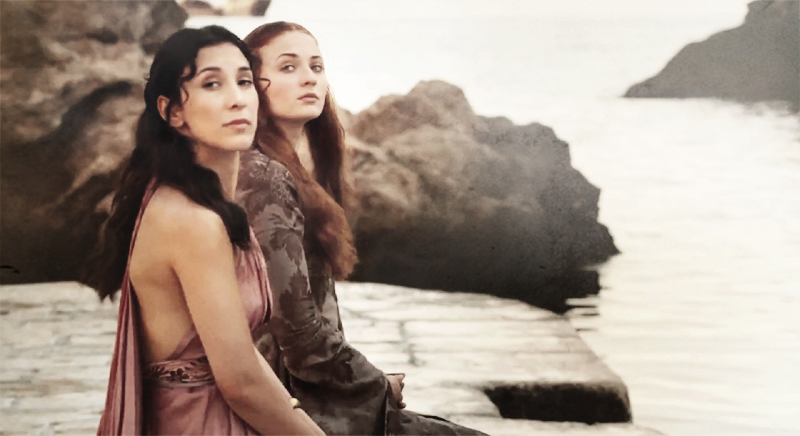
Game of Thrones - Shae

HBO going after porn sites

Pornhub have nobody but themselves to blame though, because they’re the ones who brought attention to the fact that Game of Thrones related porn searches rise dramatically just before the start of a new GoT season. Pornhub proudly publicized this fact, along with a list of the most popular GoT related keywords, only last month, and with HBO in the mood to take on pirates, the expected has happened. HBO is now taking legal action to get those clips removed.

And in case you’re interested in what the top GoT related keywords were, the top one was ‘Emilia Clarke’ (strange, considering how she doesn’t like to do nude scenes anymore, one episode this season apart), followed by ‘Natalie Dormer’ (who plays Queen Margaery). One name that may not be surprising is ‘Sibel Kekilli’, who played Tyrion Lannister’s one time love interest Shae. It isn’t surprising because not only did Sibel take part in several nude scenes, she is also a former porn actress with her previous works available to view on Pornhub. The Game of Thrones producers often cast porn actors and actresses in roles that require nudity or a sex scene (or a dozen), so the connection to sites like Pornhub seems quite natural to me.

And in case you were wondering, yes, there were also some searches for Jon Snow.

High Definition

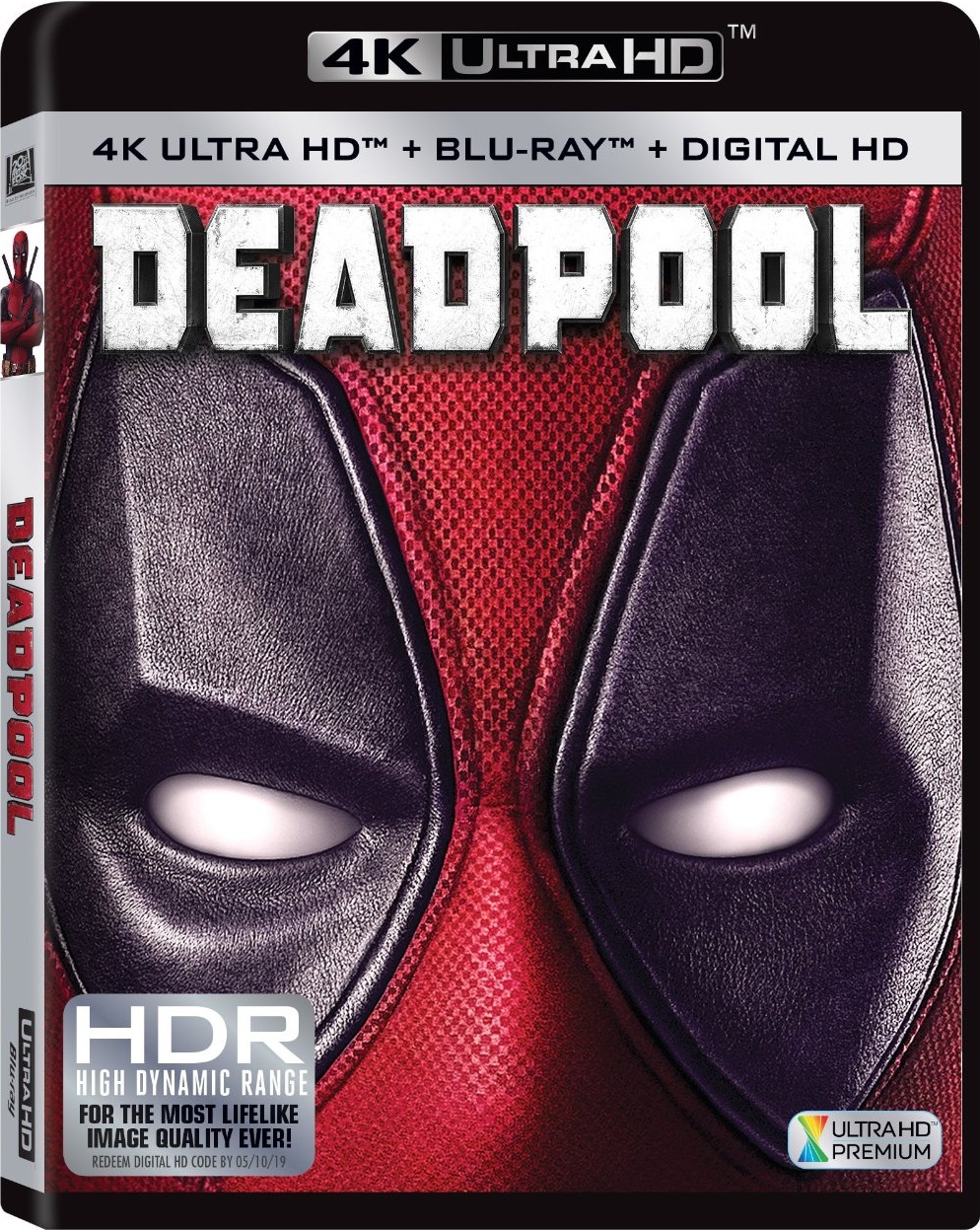
Deadpool on Ultra HD Blu-ray

The Ultra HD Blu-ray version of Deadpool failed to make a huge impact

A new study shows that delaying disc releases in overseas markets may be causing piracy and sales losses. That’s not so surprising, but what is surprising is that the study may have been funded by MPAA money, and so the conclusion that studios themselves are sometimes to blame for piracy is indeed surprising.

There is definitely a strong moral component to the decision to pirate or not. And if people feel justified in doing it, because studios, in their infinite greed, decided to put in artificial release windows, then that justification will simply drive piracy. The same applies to outrageous regional based pricing, region control, and all the other things that studios do to squeeze some extra money out of a release.

Speaking of studios squeezing money out of us poor consumers, their latest effort in trying to make us re-buy everything again, Ultra HD Blu-ray, is off to a start. I can’t say it’s off to a great start because there was an opportunity to really lift the format a few weeks ago, and it didn’t really happen. I’m talking about Deadpool and how, being one of the biggest Blu-ray titles of the year, it was also made available on Ultra HD Blu-ray at the same time. Unfortunately, only 3.28% of all disc copies (or when removing DVDs from the equation, 4.6% of all Blu-ray copies) sold were for the 4K version of the film. I guess it’s still early days for the format, and hardly anyone has the TV or the UHD player for the discs, but I think it’s going to take a really long time before UHD discs start to make a real impact.

Gaming

GOG Connect

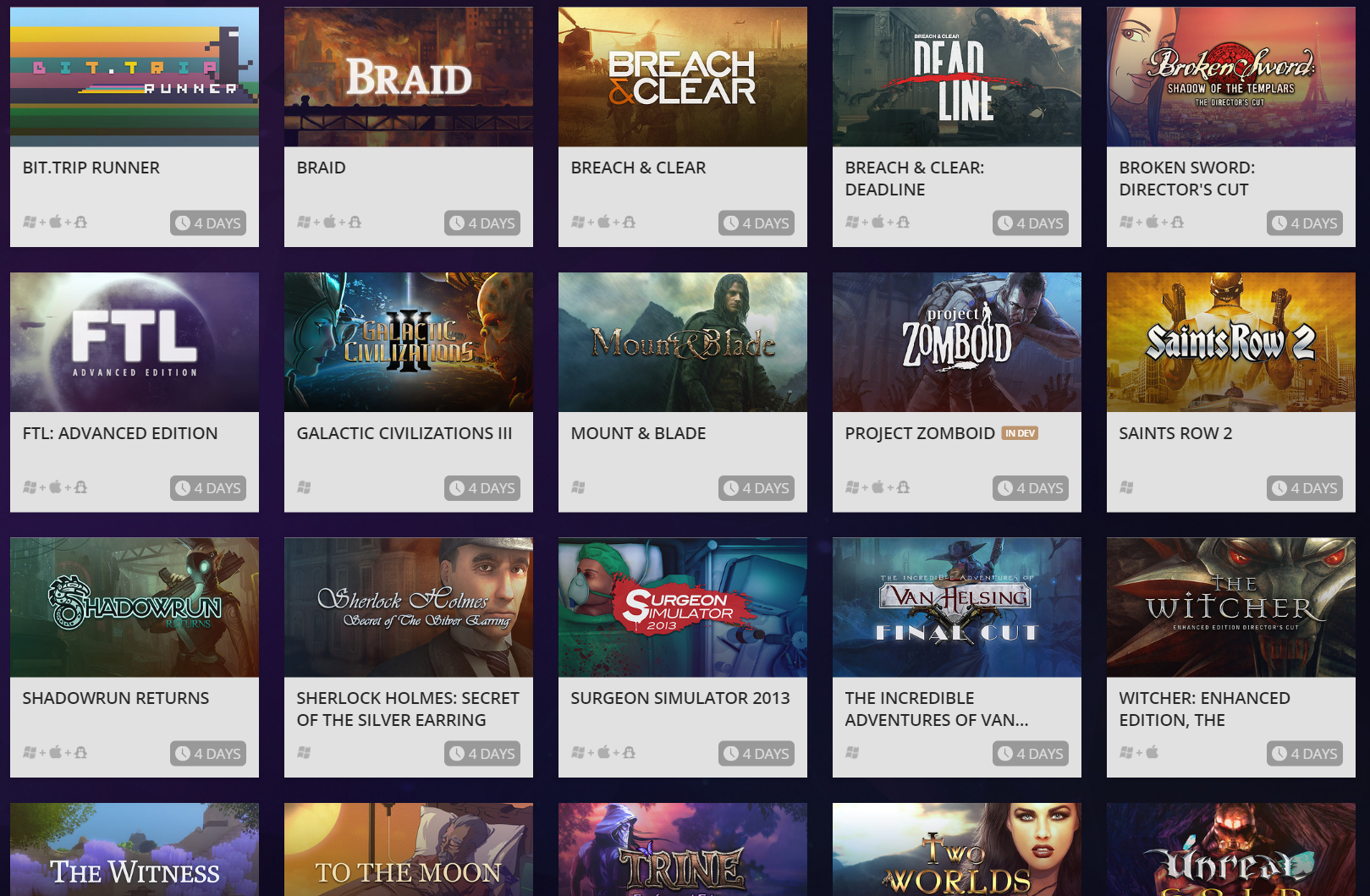
Get DRM-free copies of some of your Steam games – I managed to only get 3 games myself

Want a free DRM-free copy of some of your Steam games? Then head over to GOG Connect, and you may get just what you want. GOG is giving away free, and DRM-free, copies of selected Steam games, and all you have to do is to import your Steam game list into your GOG account, and the free copies will be added to your account. Your Steam games remain the same as before, except you’ve also got a DRM-free version on GOG that will never expire, and will always be playable.

GOG is making this happen by negotiating with these games’ developers, which means they are the one that may be paying for this transfer. As a result, this is strictly a limited time offer, and there are also only 23 games supported so far (mostly indie hits, but some commercial ones including Saints Row 2 and GOG’s own The Witcher).

This is great, but what I would like to see is game publishers guaranteeing that all who buy the game will get a DRM-free version of it some set time after the game’s release. If you buy something, then you should get to use it for as long as you need, and not as long as the publishers deems necessary (ie. when it cost them too much to maintain the DRM).

——

And with that, we come to the end of another issue. See you next week.

Weekly News Roundup (29 May 2016)

May 29th, 2016

Another relatively quiet week, but we have a couple of quite interesting stories to go through, so let’s not waste any time on this very cold Sunday (brrr!).

Copyright

Game of Thrones - Bran Stark

Oh Bran, what have you done? Did you warg into an HBO intern’s mind to leak the new episode?

Starting with copyright news as always, HBO’s anti-piracy efforts took a step backwards this week with their Nordic branch decided that the world couldn’t wait another 24 hours (and a bit) to see the next episode of Game of Thrones. Someone at HBO Nordic decided to try their hand at pre-release leaking, and the new episode was put up online a day earlier than expected. To make matters worse, HBO Nordic has a 30 day trial for their online video services, meaning that anyone from around the world with a VPN were able to enjoy the episode titled “The Door”, and do it for many hours before HBO wised up, and more than a day before the official US premier.

It appears that despite all of HBO’s renewed anti-piracy efforts this season, this gaffe opened the door and held it open for pirates to take advantage – they promptly uploaded a (initially a poor quality version, and then a 1080p version) copy to all the usual piracy places, for all to enjoy. I’m sure HBO will be much more careful this week, when the sixth episode of the sixth season, “Blood of My Blood”, will be broadcast.

And yes, that was deliberate (don’t want to say too much than that – no spoilers from me, thank-you very much).

High Definition

US Netflix subscribers will have some great movies to look forward to, when Netflix’s exclusive deal with Disney starts in September. Under the deal, Netflix will have exclusive pay-TV rights, in the US, to all of Disney’s films, starting from 2016 onwards (so The Force Awakens just miss out … boo!). This includes all Marvel, Pixar and Lucasfilm films, as well as films released under Disney’s banner, all available shortly on Netflix after their initial Blu-ray/DVD release (the same release time-frame that pay TV operators used to enjoy). The exclusivity part ensures Amazon, Hulu and cable operators won’t get these films during the pay TV release window, which is a much needed boost to Netflix’s flagging (non original) movie line-up.

Gaming

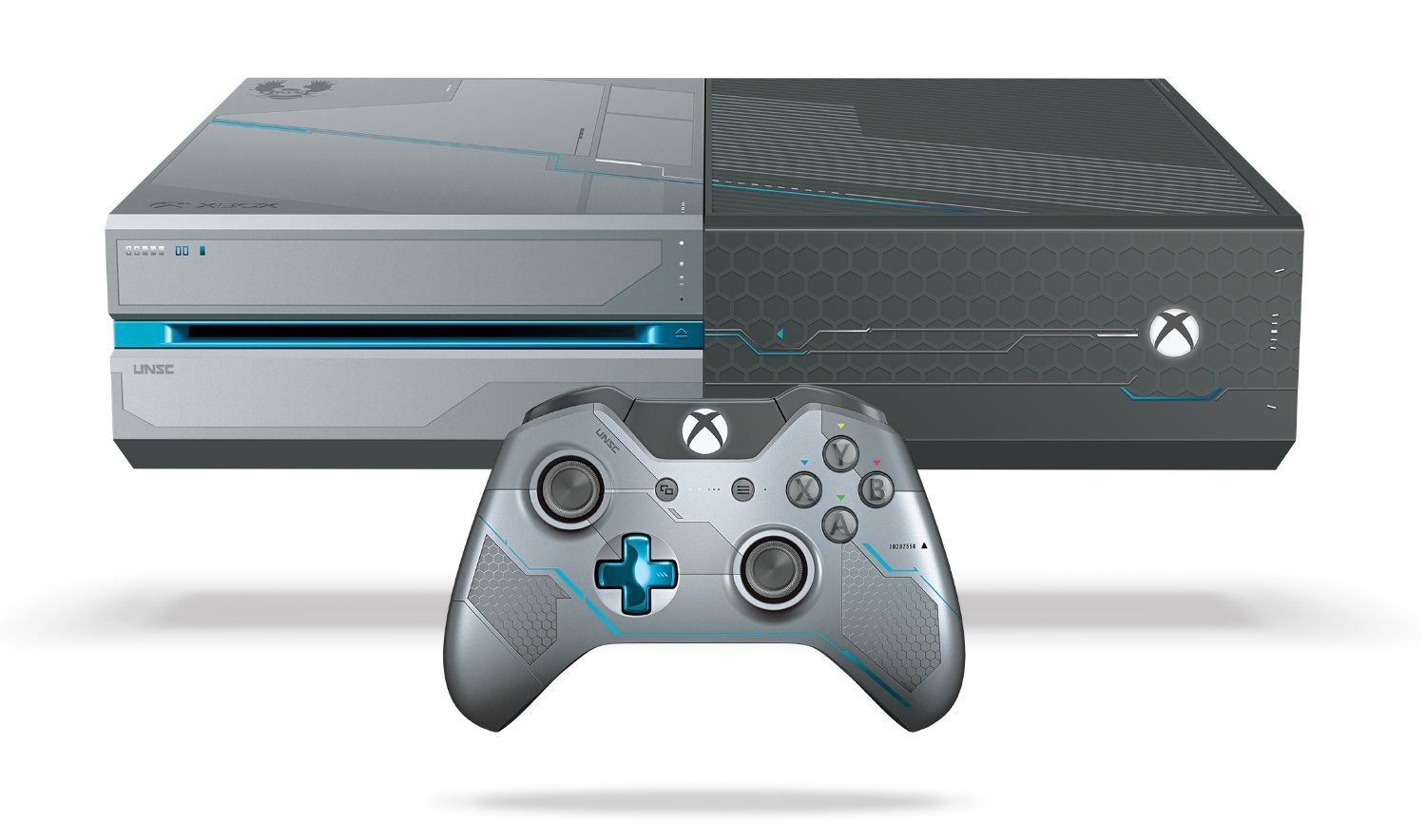
Xbox One Halo 5 Edition

Microsoft will be bringing out own super duper Xbox One to take on the Neo

The Xbox One is getting not one but two upgraded models, and one of which will directly take on the PS4 Neo. Dubbed the ‘Scorpio’, the super powerful Xbox One is rumored to be targeting 6 teraflops of peak power, which compares rather favourably with the Neo’s 4.14 teraflop target (and much better than the Xbox One’s current 1.32 teraflops). Both companies appears to have embraced the iterative upgrade model (think iPhone), and will be releasing upgraded consoles at shorter intervals. I’m not sure I like this to be honest, and I’m not sure if it will even work. It’s one thing to upgrade a phone every year, but a game consoles that has severely reduced resale value (and not as easily passed down to family members)? I just don’t know …

But if it does work, then the PS4 and Xbox One could be the last major console release as we know it. The Neo and Scorpio are basically just new consoles with a healthy dose of backwards compatibility – both Sony and Microsoft can actually keep this up indefinitely if they wanted to. Microsoft Xbox boss Phil Spencer’s remarks about turning to the PC’s model for upgrades, is now starting to make sense. He wasn’t talking about opening up the Xbox One and plugging in a new GPU, but rather on the architecture and design point of view of incremental updates, and in regards to backwards compatibility. So instead of a major new architecture that destroys compatibility, the upgrades will be more minor, but more numerous.

Let’s wait and see how gamers react to all of these changes, especially when it comes to forking over their hard earned cash.

——

That’s all we have time for this week. Actually, we have plenty of time, but we’ve run out of news, so that’s that. See you next week.

Weekly News Roundup (22 May 2016)

May 22nd, 2016

A lot to go through, but I’m time constrained on this cloudy and cold Sunday, so I’ll try to keep it brief. Wait, is that cheering and applause that I hear? I’ll try not to take it too personally …

Copyright

YouTube Content ID

Content ID is not perfect, but the last thing we should do is to make broader and more automated

Now, I love a good rant as much as anyone, but have been responsible for a few of my own right here, but this one by musician Maria Schneider takes the cake. One simply doesn’t throw around terms like “racketeering”, “bullying”, “coercive” and “orgy”, and that was just in the first couple of paragraphs. Basically, Maria thinks YouTube is actively and deliberately encouraging piracy so it can make more money, all at the expense of rights-holders and “creators” (a term that was used often in Schneider’s open letter, one that I’m sure has been picked deliberately for effect).

Basically the crux of the problem comes down to the fact that YouTube assumes an innocent until proven guilty attitude, allowing content to be uploaded and waits for rights-holders to complain before acting. This isn’t just a YouTube policy though, it’s what the DMCA demands and it’s done so for obvious reasons. But Maria doesn’t like it. She wants a guilty until proven innocent policy that starts from the moment the clip is uploaded, and also want a “take down, stay down” approach (which, to be fair to YouTube, is already mostly there with their automated Content ID scanning system).

I’ve reported here time and time again about YouTube’s problematic and false positive prone Content ID system, but Schneider wants to go the other way and have Content ID block more stuff, faster, and with less checks and balances.

And while some of her points are valid, such as the relative high entry hurdle for joining the Content ID program, I’m just not sure she is the best person to launch the complaint. For one, she’s not exactly a prolific artist, with her most popular works (which has won Grammy Awards) barely having a presence online, legally or illegally (in other words, not too many people are clamouring to download or stream her stuff – her most popular video on YouTube only has 40,000 views). And if you do listen or watch her work (mostly as a big-band-leader), it’s the kind of stuff best enjoyed live in concert, as opposed to via a YouTube video. If anything, the illegally uploaded YouTube videos may help raise her profile and her work. Had a Taylor Swift or Drake come out with the same complaint, it might have held more weight, in my opinion.

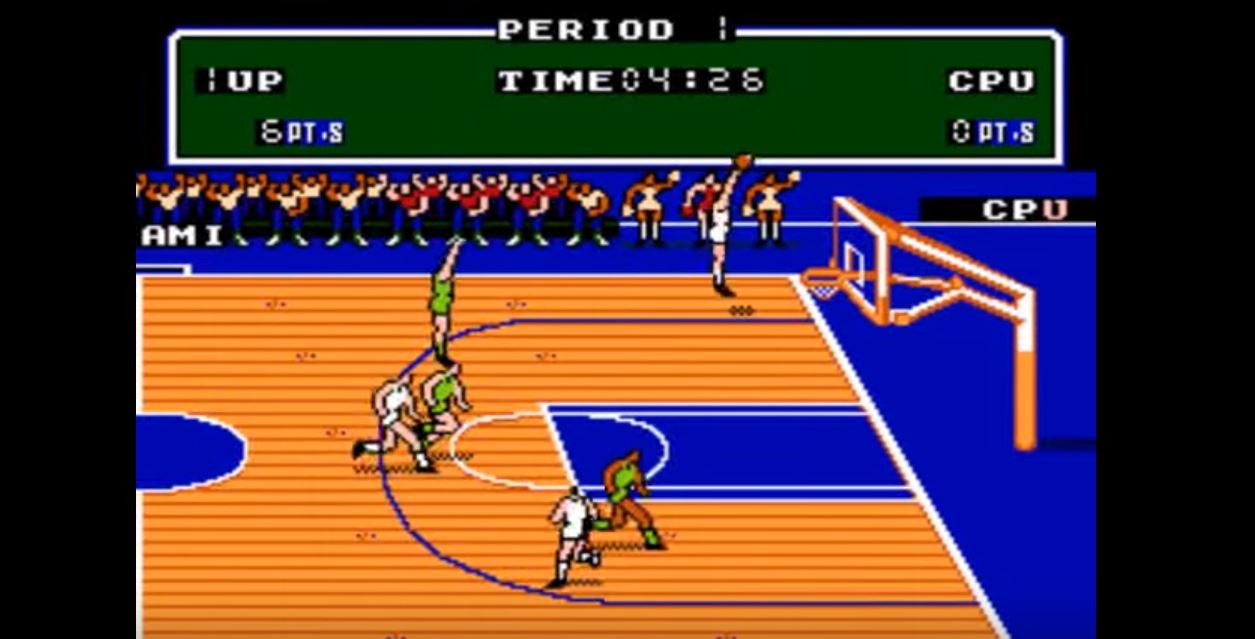
Double Dribble

Double points for those that know what game this screenie is from

Look, the DMCA is not perfect, and neither is Content ID. But if anything, it’s already too prone to false positives, meaning legitimate uploads and creativity is already been impeded. This is already a too high a price to pay in my opinion, and we definitely don’t need more of it!

And just like clockwork, we have another example of why Content ID is flawed and why it should not be expanded. To summarise, Fox used YouTube clip in a Family Guy episode without seeking permission, and then used Content ID to get the original YouTube clip banned. Does this sound like something we need more of?

YouTube doesn’t block all illegally uploads. But only the really popular videos manage to do any harm to rights-holders, and these are easy to find and destroy (via Content ID, or just by reporting it). And in the end, only rights-holders can decide what should be and shouldn’t be allowed on YouTube, since just because a video wasn’t uploaded to an official account, it doesn’t mean that the artist isn’t aware or in support of the upload (but under the system Maria Schneider wants, artists and rights-holders may end up spending all their time apologising to legitimate partners for having their legal uploads banned, with practically no financial benefit).

High Definition

Netflix

Netflix has overtaken live TV in the US

Twice as many people now prefer Netflix over live TV as their preferred viewing choice, according to a new survey. This to me is amazing. Just ten years ago, this would have been unimaginable, and now, it’s a reality. That’s not to say video-on-demand wasn’t something people wanted back then – it was – but it was just hard to imagine having a service like Netflix, for such as relatively small price.

I think this is partly because we used to expect content to be overpriced (think how much it would take to fill an iPod back then with legally purchased music), but the subscription model completely disrupted the market (in a way that some rights-holders, mostly musicians, did not like) and finally gave us the value we were looking for. We want to consume (or have access) to a huge amount of content, that under the old “buy to own” model would never have been possible either due to physical space restrictions (I’ve long run out of shelf space for my movie collection) nor the astronomical cost of it. Subscription solved the problem, and ad-supported free listening also managed to win over the “I would never pay for it” pirates.

And “creators” and rights-holders simply have to adjust, even if it means lowering their expectations.

And to bring all of the stories I’ve mentioned this week so far back to a full circle, one has to talk about YouTube Red (which has just been launched here in Australia). A subscription model for YouTube would have been blasphemy years back, but I think people are finally open to the idea of paying (a small fee) for, what is essentially quite a lot more than what they would have gotten, even illegally, ten years ago. It’s a good thing for content creators, even if it means many won’t get much of that subscription fee. With that said, I’ve noticed seeing a lot more ads on YouTube recently – if this is Google’s way to further differentiate YouTube Red and make it seem like a more attractive product, then this isn’t a good development in my opinion.

Gaming

VR gaming is the all the rage these days, so it was only a matter time before the ugly head of DRM reared itself onto the scene. Those trying to make games from the Oculus store available on non Oculus hardware is now facing a new DRM that prevents just that. Oculus says it’s an anti-piracy measure, but others find it strange that it only seems to do anything on non Oculus hardware. Something to keep an eye (or two, via headset) on.

——

Well so much for brevity. See you next week.

Weekly News Roundup (15 May 2016)

May 15th, 2016

Another quiet week, so I think we can get through everything in double quick time. A late apology for last week’s wonkiness, had a server hardware problem that was compounded with a software problem, but everything was back up again after two nights of lost sleep. Ah well, these things have to happen from time to time, even if it’s just to test our redundancy and backup process (which did okay, but could be and will be improved).

Let’s get started before the server blows up again.

Copyright

The Pirate Bay

The Pirate Bay’s Swedish domain names will soon go offline, but nobody really cares anymore

The Pirate Bay’s Swedish domain names, you know the ones that end in .se, are in the news again as a Swedish appeals court upheld an earlier ruling that would have seen the domain names seized. To be honest, this was always likely to happen, ever since prosecutors in Sweden started making noises about domain seizures, and as a result, The Pirate Bay is no longer depending on the .se domain names.

What’s confusing now is finding out who actually owns the domain names. Pirate Bay co-founder Fredrik Neij is the designated contact for the domain names, but he denies owning them – this is not unusual, the real owners can write in anyone as the owner, as long as the domain’s administrative contact emails point to the right person. Neij is suggesting he may appeal the verdict.

While all of this will have zero effect on the operations of The Pirate Bay, what this does show is how pointless legal proceedings against piracy sites can be at times. It has already taken years, and will most likely take even more time, to just seize two domain names – domain names that aren’t even used much anymore. It’s incredibly hard, and I assume costly, to keep things off the Internet or to prevent people from accessing something, and you’ll get a better return if you address the real reasons behind piracy and reduce or eliminate the need for piracy.

The same goes for HBO’s valiant, but ultimately futile attempt to keep Game of Thrones piracy off the Internet, by warning downloaders and removing torrents. While they, as the rights-holders, have the right to do all of this and more, it’s probably just easier to ensure people can watch your shows without having to jump through hoops or to get a second mortgage – or in Australia’s case, do both.

Which is why an Australian GoT fan has offered to pay HBO $10 per episode so he can continue to download illegally, because the legal alternatives, he says, is just not good enough. With the country’s sole pay TV operator having an exclusive lock on the show, with iTunes and Google Play locked out until the end of the season, GoT fan John Hyslop would rather (over) pay for illegal downloads than be subjected to the pay TV monopoly, and being forced to pay for channels that he doesn’t want (there’s no standalone product that would grant John access to GoT or HBO shows in general – you’ll have to bundle 40+ other channels in order to be able to watch the latest episodes). So in John’s case, it’s not even about the cost, which is high, but about the unfairness of it all.

If HBO doesn’t address this by being tougher on its partners about what they can and cannot do with their programming, I’m afraid more and more people will feel justified in downloading illegally.

Gaming

Metal Gear Solid V PS4

The PS4 (and Xbox One) are so good value that sales may have reached saturation faster than any other previous generation

It may or may not have been a while since I last reported on the NPD’s US video game sales results. Mainly because nothing ever actually changes. But this week being such a light week, and I actually managed to remember reading something about the NPD results this week, so I thought I should share. The PS4 won again, but hardware sales are down on a couple of reasons. The relative cheapness of the consoles is contributing to the lower dollar sales results, and both major console’s faster adoption rate (thanks largely to lower launch prices that has continued to drop ever since) means that sales may have reached saturation faster than in previous generations.

This probably explains both Sony and Microsoft’s intent to produce a “half generation” upgrade for their respective consoles. If people are willing to upgrade much more expensive phones at yearly (or at least bi-annual) intervals, then I guess Sony and Microsoft’s thinking is that maybe the same formula could be applied to game consoles at a slightly longer interval.

I’m personally not sure it will work though. Upgrading a phone is one thing, but other consumer electronics have never been upgraded in this way and gamers may not appreciate what appears to be a cash grab mid-generation.

——

Short and sweet. Well, at least short. See you next week.

Weekly News Roundup (8 May 2016)

May 8th, 2016

Happy Mother’s Day to all the mums, including mine, out there. Why is Father’s Day on a different day here in Australia and in the US? And why is spending on Father’s Day so much less than on Mother’s Day? I smell a conspiracy …

No conspiracies in the news this week, but plenty of paranoia, anger, with just a hint of common sense. Lots of Australian stuff though, but that’s just a coincidence. Not a conspiracy.

Copyright

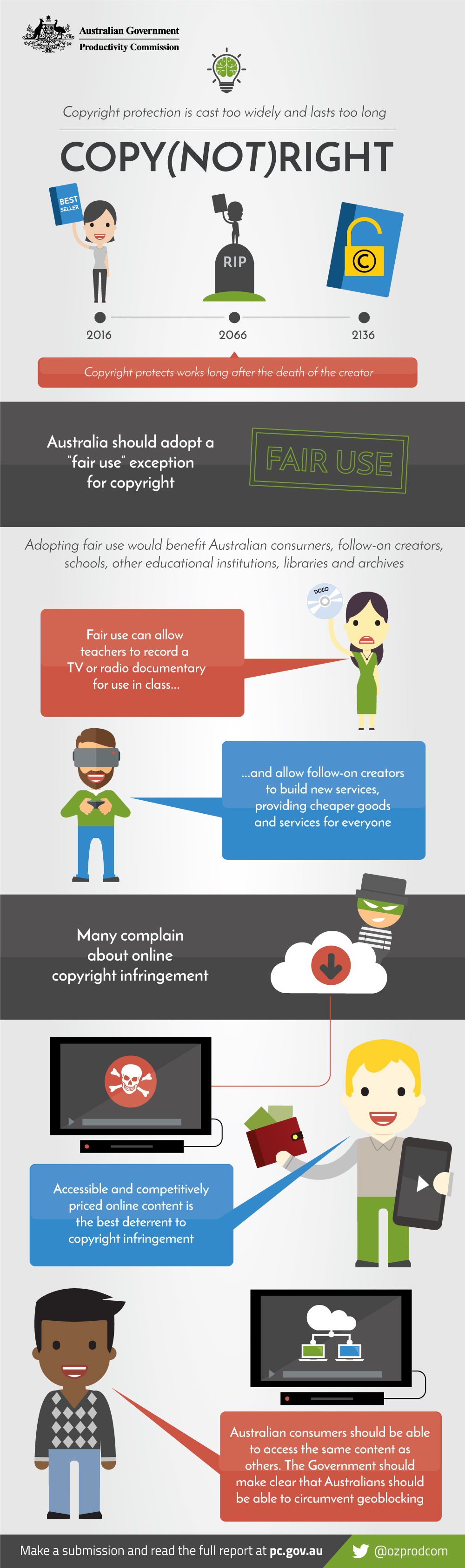
Infographics: Copy(not)right

Common sense copyright discussions are happening in Australia – but nobody (that can make a difference) will listen

Ah common sense. It can be so hard to find these days, but when they make themselves known and heard, it’s absolutely bliss. The pro-copyright Australian government’s copyright policy is all over the place, but we do have an independent advisory body here called the Productivity Commission, and it has released a draft report on copyright that’s the stuff of nightmares to rights-holders.

Why is it so scary? Because it’s full of common sensed goodness, stuff that we, the public, the consuming public, have been calling for all this time, and something rights-holders have been fighting against. Things like having limits on copyright for stuff that rights-holders are no longer making available (the so called “use it or lose it” rule), or introducing fair use (something even the US, the land of DMCAs and SOPAs, have), or more controversially, banning the use of geoblocking to promote competition and fairer pricing.

It’s unlikely the current, or the next government will adopt these recommendations, not if they want to avoid facing the wrath their Hollywood masters, but it’s still nice to see some common sense creep into the copyright debate from time to time.

It’s not just geoblocking that’s reducing competition and raising prices here in Australia. We’re a relatively small country and competition is not robust in almost any sector. This is especially true in the home entertainment industry, where we have basically just one pay TV provider. That provider, Foxtel, uses its might and buying power to lock up content like Game of Thrones in order to maintain market share. This leads to lack of competition and, as a result, we have some pretty high prices for cable. It’s possibly also why piracy rates for the shows that Foxtel have an exclusive on are sky high.

Only rarely does it lose something to a competitor, and when telco Optus stole the rights to the English Premier League soccer broadcasts from Foxtel, things took an interesting turn. Especially since because Optus doesn’t even have a broadcast network to show the matches on.

Piracy Love

People’s love for piracy may be due to their hate for the alternative

The mystery of how to distribute content without a distribution network was solve this week when Optus announced it would be using Internet streaming to get matches into people’s homes. Fair enough, but what wasn’t so fair was Optus’s insistence on users having an existing (and non related) Optus product in order to subscribe to the EPL channel. Imagine if Verizon forced you to have a phone plan before you could even pay for HBO (and imagine if Verizon doesn’t even provide a broadband service to a sizable chunk of the country). Queue public outrage.

So why is this relevant to this blog? Well guess what’s going to happen to people who don’t want to pay for or to switch to an Optus product, one they neither need or want, just in order to watch their favourite team play? Will they feel justified in using a pirated stream to watch the matches? If we had it bad in terms of Game of Thrones piracy, things may get worse when it comes to English soccer here.

Denying consumers access to content in they way they want it and not doing so at a price they’re willing to pay does more to encourage piracy than anything else. So if rights-holders are determined to do just that, then in my opinion, they should not get to complain about piracy.

So if piracy is unmet consumer demand, then surely there must be a way to use piracy data to research consumer needs. There is, and Hulu is already using piracy data to determine which shows to buy.

There is definitely a move away from simply labeling pirates as degenerates and criminals, and towards thinking of them just like any other consumer group (except they’re consuming pirated content), and this is a good thing. Then, we might finally grasp the notion that the solution to piracy isn’t enforcement and technological measures like DRM, but it has and always will be an access problem about unmet consumer demand (even if those demands, at first, seems unreasonable – like being able to access tens of thousands of titles for unlimited streaming for less than $10 a month).

——

That’s it for another edition, I hope it met your demands. See you next week.


About Digital Digest | Help | Privacy | Submissions | Sitemap

© Copyright 1999-2012 Digital Digest. Duplication of links or content is strictly prohibited.