Weekly News Roundup (10 July 2016)

July 10th, 2016

It’s either a birthday present, or a birthday curse, but following the wild seventeenth birthday celebrations here at Digital Digest HQ, this following week has been incredibly boring, news wise. It’s definitely something, because just as the week ended, the news started flooding in and next week already looks like a really busy one.

So as a result, we barely have any stories to cover in this WNR, which is just as well, as I’m not really in the mood to write too much (still nursing a slight cough, and you know, Sunday). Let’s get on with it then.

Copyright

It seems we have finally found a reasonable solution, or compromise depending on where you stand, to the online piracy problem. Or more precisely, something that actually works in helping to reduce piracy. It’s not DRM, and it’s definitely not new laws, but something rather simple – choice! An official report from the UK body responsible for tackling the piracy problem, the Intellectual Property Office, has found that legal streaming services like Spotify and Netflix have helped to greatly reduce online piracy. Dropping 18% in just a year, 44% of users surveyed for the report now only use legal means to get their content, and a whopping 80% of music listeners now rely solely on legal options.

Spotify Logo

Spotify helping to reduce piracy

This is in stark contrast with just a couple of years ago, when nobody wanted to pay for music, and they mostly didn’t thanks to the likes of LimeWire, MP3 download sites and BitTorrent.

I think a couple of things are responsible for this changing consumer behaviour. I think for starters, people have finally felt natural to pay for digital content, whereas in the early days of the “Wild West” Internet, digital usually meant free. Secondly, the removal of DRM from digital purchases and the increasing use of the cloud has meant that you can now buy once and play it everywhere, and you no longer have the feeling that you had to buy the same content multiple times just so you can enjoy it in a way you want – this increases both value and usability. Now, this point applies mainly to music right now, as for video content, DRM and lack of interoperability is still a major issue.

Thirdly, and this was the crux of the Intellectual Property Office report, the increasing popularity of a new way to consume content has helped to greatly increase the value proposition for consumers, and hence, decrease their need for piracy. Of course, I’m talking about streaming, and it’s here, that the greatest impact on piracy has occurred, for music and, in a greater degree, for TV/movie content. Subscription streaming gives you access to enormous amount of content, something that no normal person would ever be able to afford if they went down the purchase route (either physical or digital). Again, increasing value and usability has made paying better than free.
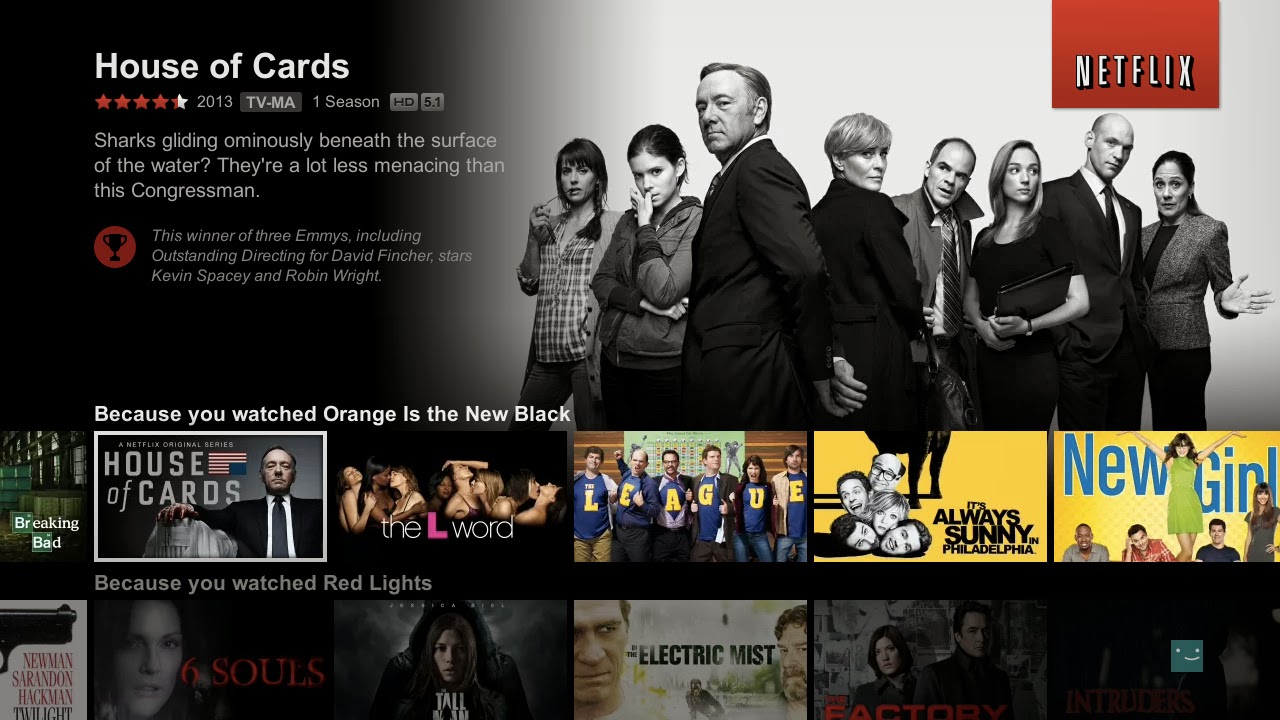
New Netflix UI

Netflix (and YouTube, and iTunes, and Google Play, and …) have helped too

And on the piracy reduction side (but perhaps not directly translating into increasing revenue), the emergence of more free options for content (such as YouTube, for music videos, Spotify for ad-supported listening, and free catch-up services from major TV networks) has allowed legal options to be competitive with piracy. I know content holders don’t like to be put into a position where they have to compete with piracy, but that’s the reality of the situation and ignoring reality has never been a good idea. If for nothing else, having free content help consumers develop a habit of relying on legal options, and this can be important when people have to make a decision to pay for not pay for something later on.

Some to sum up, making legal better is much more productive than trying to make illegal harder (or more legally dangerous), because the sad truth is that piracy will always be pretty easy, even with DRM, and as long as people feel justified in pirating content (because the legal alternative is just too difficult, or too expensive), they will be willing to disregard the law, rightly or wrongly.

——

And that turned out to be more of an op-ed than a news roundup, but you make do with what you have, and we didn’t have much this week. Things will be different next week, I promise. Until then, have a great one!


Weekly News Roundup (3 July 2016)

July 3rd, 2016

Seventeen years ago today, I was sitting in front of a computer monitor, very much smaller and squarish than my current one, typing things, uploading files and images and wondering if anyone will visit my new website when I launch it tomorrow. Tomorrow, Digital Digest turns 17 (almost old enough to vote, and drink here in Australia), and it’s been a roller-coaster of a ride. Things have changed so much in that time, from when DVDs first started appearing on store shelves in 1999, to now where the latest discs now has 24 times more pixels (and costs half as much at least). That is, if you’re still using discs and not downloading or streaming – legally now, as opposed to grainy AVI files from the days past. So much as changed, but so much remains the same – . The formats have changed (and we at Digital Digest have changed with it), but we’re still buying and watching movies, playing games, listening to music – but maybe doing a lot more of it now, and in much better quality, of course. Here’s to another seventeen years!

As for news, there was a lot this week for some strange reason. Let’s get started!

Copyright

Game of Thrones - High Sparrow

Game of Thrones piracy didn’t raise the roof this season

So season six of Game of Thrones has ended. For those that haven’t watched it, don’t worry, no spoilers from me, other than to say that it was a hell of a season, and the finale was no different. What is different this time is the complete lack of any new piracy records being broken. It’s not that people have stopped downloading GoT though – it will still end up being the most pirated TV show in 2016 – it’s just that with HBO’s new anti-piracy measures, it’s a lot harder now for a single torrent to break the record. HBO has been asking torrent sites to remove torrents for the show, but new torrents are uploaded, more are removed, and then more are uploaded. So people are still managing to download the show and in great numbers, but it’s a lot harder now to break the record. So really, HBO’s actions won’t really have a great impact on piracy, but it does help to prevent more “GoT breaks piracy record” news stories, which may convince shareholders that something is being done about the problem.

This is perhaps the rationale behind VR gaming company Oculus’s move to add DRM to software purchased from the Oculus store, to prevent them from working on non Oculus headsets. This is despite earlier promises from the company not to do exactly this. The move serious hampered work on the Revive hack, which attempts to make Oculus work on the HTC Vive headset. The developers behind Revive have been patching and re-patching, playing a game of cat-and-mouse with Oculus to bypass the DRM in recent weeks, but then out of nowhere, Oculus appears to have removed the DRM.

Maybe not out of nowhere, since there was a sizable public backlash to Oculus’s attempt to go back on their word. One more example of how complaining on the Internet can actually get things done!

New Netflix UI

Chrome DRM bug makes ripping Netflix streams possible

There’s another DRM related story this week that showed why DRM, and why protecting circumvention by law, is a bad idea. A bug in the DRM used by Google Chrome to stream protected content, such as Netflix, has emerged, a bug that apparently has been there for the better part of five years. The bug allows video content that is for streaming to be downloaded in decrypted form, which was the only thing the DRM was supposed to prevent (queue the “you had one job” meme). The reason that the bug has existed so long may be due to several factors, but a disturbing possibly could be related to DRM anti-circumvention law, and how it prevents security researchers from finding bugs like this. You see, trying to break a DRM, even if it’s to find a bug with the protection system, is considered illegal in many places. This does not prevent pirates from breaking the DRM for their own purposes because they don’t care about the law, but does prevent researchers from finding and fixing security holes. How’s that for messed up?

So while Netflix are working hard to create an offline mode, it appears Chrome’s DRM has already done it for us!

High Definition

Panasonic DMR-UBZ1

Ultra HD players are a rare breed, but despite this, disc sales are doing well

Now for something that fits nicely into the thoughts I’ve tried to express in the intro. The transition to 4K via Ultra HD Blu-ray was always a tricky one. In this day and age, do people still want a new disc format, even if it is to carry an absolutely pristine transfer? The early answer appears to be a ‘Yes’, with the latest stats showing that Ultra HD Blu-ray is better than plain old Blu-ray was at the same point in its history. This is despite there only being a single Ultra HD Blu-ray player on the market in the US, and only a handful of TVs. But to be fair, that single UHD player is a lot cheaper than the first Blu-ray player, and 4KTVs aren’t carrying nearly the same premium as you might expect from say when SD became HD.

I guess the marketing has also helped. Not only are there a good number of UHD releases already (including some big titles, like ‘Deadpool’), it also helps that the new format carries the well known “Blu-ray” branding. And the fact that Netflix and others have already been laying the groundwork for 4K for some time now, it all made things easier for the new disc format.

Frozen Blu-ray

Frozen is the best selling Blu-ray of all time

Not that Blu-ray is about to become obsolete. For each Ultra HD Blu-ray copy being purchased, dozens of standard Blu-ray will be sold, and that’s likely to continue for some time. To appreciate just how much work UHD Blu-ray has to do, just take a look at the top selling Blu-ray titles of all time. Based on the number of units sold, ‘Frozen’ is the title to beat, with more than 7.1 million copies sold in the US alone. ‘Avatar’ wasn’t too far behind, and it actually earned more than ‘Frozen’ in terms of total revenue.

The top earner of all time won’t be a surprise to those that read these pages. ‘Star Wars: The Complete Saga’, the box set that features the first six movies in the franchise, has earned more than $200 million already. While that title is a Fox property, Disney’s ‘The Force Awakens’ is already the third best selling Blu-ray in terms of discs sold, and this despite it only being available for around three months. Disney are on to a winner here!

In fact, Disney titles occupy the top 50 more frequently than any other studio, with no less than 18 entries. In fact, three of the top four belonged to Disney, with it’s relationship with Marvel, Lucasfilm and Pixar all proving to be extremely productive. Its re-releases of timeless classics, such as ‘Snow White’ and ‘The Lion King’, has also been very profitable.

And with more Star Wars and Marvel films coming, things can only get better for the company.

——

So that’s that for this pre-anniversary edition of the WNR. Nothing too special, I have to admit, and I’m not planning anything special either (not just saying that so to lay the groundwork for some surprises – I literally forgot about the anniversary until just yesterday, which is something I seem to do every year).

Weekly News Roundup (26 June 2016)

June 26th, 2016

Exits are all the rage this week, so naturally, I had to take advantage with a story this week where the MPAA threatens a “MPAAExit” from Europe (kinda) if the EU bans geo-blocking. I also threw some eggs out because they were way past their used by date – “Eggexit”. I still have a running nose from whatever plague I was infected with last week: “Phlegmexit”? You get my drift.

A very quiet week again, so on to the news …

Copyright

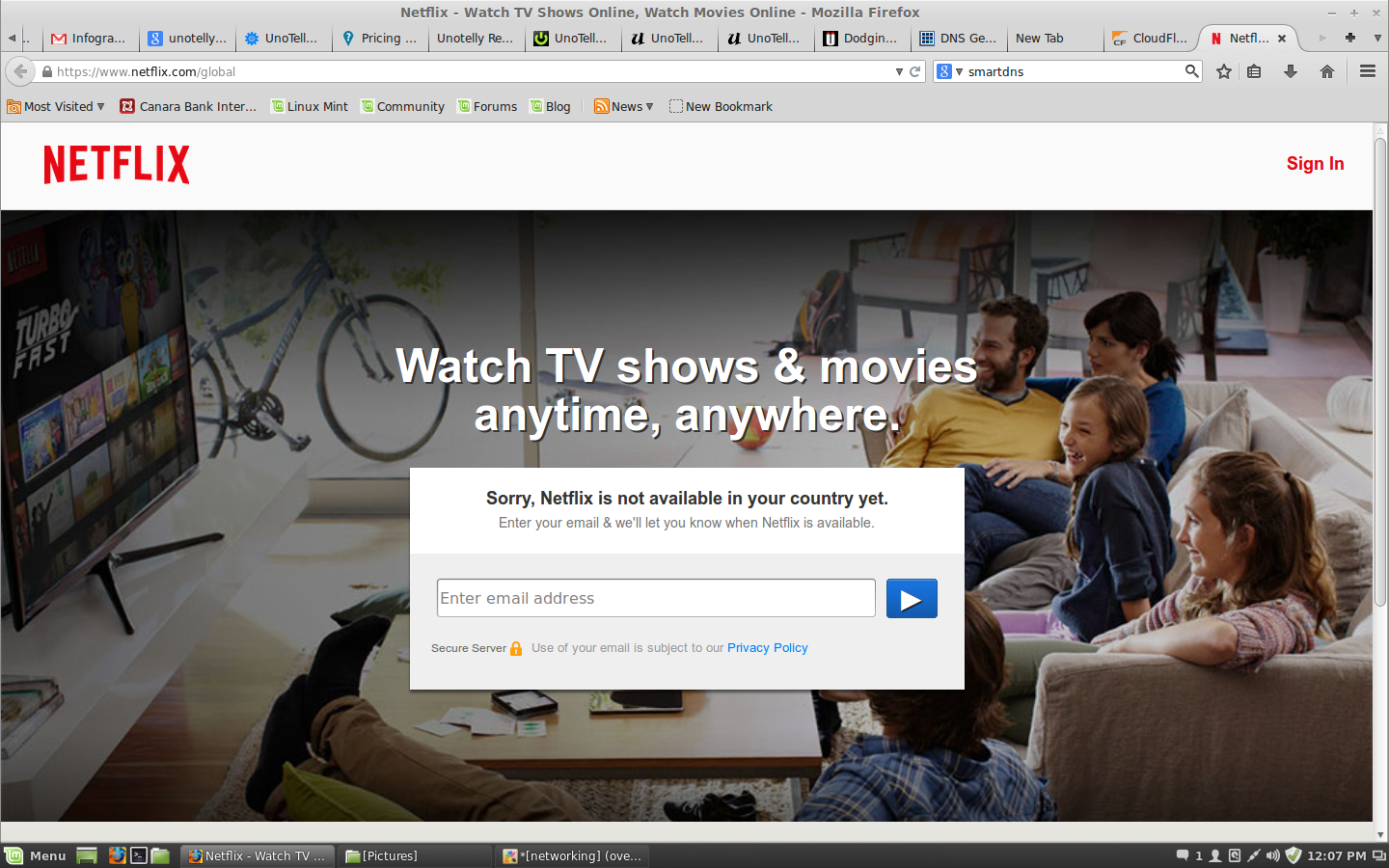
Netflix: Not Available

Geo-blocking bad for consumers, good for movie studios?

Everyone is picking on the EU this week, the MPAA has joined in the fun as well. The MPAA has warned Europe not to outlaw geo-blocking, or else they will risk fewer movie productions and higher prices for consumers. This is apparently because without geo-blocking, and regional based releasing (even within EU countries), investors will be less likely to invest in films and somehow this will lead to higher prices for all. In other words, by not being able to gouge individual markets by making consumers pay higher prices for the same thing, and then using technical measures like geo-blocking to prevent true competition, investors may be less willing to invest in productions.

Now I don’t know much about movie productions, but if their business models is reliant on a bit of geo-blocking code that’s easily bypassed, then maybe they need to rethink things a bit. Especially considering how much a boost to piracy things like geo-blocking gives.

Back in the US, where geo-blocking really isn’t an issue (not when you get everything first, and very likely at the cheapest price too – Canadian Netflix occasionally excepted), it’s pretty clear to see that improving access to legal options (ie. making it cheaper, more readily available) is having an effect on piracy. The latest Sandvine report shows that BitTorrent usage is down again during peak usage times, while Netflix, iTunes, and especially Amazon Video usage in the last year have all become more popular, at least when it comes to bandwidth usage.

Netflix’s share of peak bandwidth is actually down a bit – now whether that’s down to declining market share, or more likely, due to bandwidth saving technology that has been implemented in the last year, it’s unclear. But Amazon Video’s share is up, rising above BitTorrent for the first time. Both services will probably see a rise in bandwidth usage next year, when high bandwidth 4K and HDR streams become more popular. BitTorrent usage is down to 3% during peak hours, from the almost unbelievable 31% it used to occupy (back in 2008 though).

The report noted that Hulu and HBO usage may not be indicative of each service’s popularity because the data captured by the report, in March, may not be when the most popular programming on these services are first released (think new seasons of TV shows on Hulu, and Game of Thrones on HBO).

But its clear that people are now watching more stuff through legal outlets than via illegal ones like BitTorrent, and that’s not because of DRM or geo-blocking (quite the opposite, I think).

Gaming

Xbox One S

Xbox One S to compete with the Neo?

The PS4 Neo could be coming in 2016, a full year before Microsoft’s Xbox One ‘Scorpio’. I don’t know about this. If the Neo is so close to being released, why didn’t Sony reveal it at E3 (I don’t buy the “we tried to keep our E3 purely focused on software” line)? But it also does make sense because how else would Microsoft be sure that it’s Scorpio would be the most powerful console on the market when it is released for holidays 2017 (if it’s coming a year after the Neo, they will have plenty of time to make sure their claim is true).

If the Neo comes this year (or early next year), why is Microsoft’s updated console coming so late then? It could be because Microsoft was caught off guard in regards to the Neo and couldn’t come up with their own version quickly enough. If Microsoft’s Scorpio is just a somewhat late reaction to the Neo, then this could explain why Microsoft’s console would be coming a year later, and why the company needs to release two new consoles – the S would compete in part with the Neo, at least in terms of 4K media support. Microsoft “beating” Sony to the punch by announcing the Scorpio a full year and a half before it’s even available, may also be just a bit of strategy on Microsoft’s part, to cover up the fact that they’re actually going to be way late to the game.

Don’t mind me, I’m just guessing out loud.

——

And with that, we come to the end of another WNR. See you next week, when the WNR will most likely also have exited the EU (will last one out please turn off the lights).

Weekly News Roundup (19 June 2016)

June 19th, 2016

I’ve come down with a very annoying and distracting cough. So please bear that in mind as you read through this week’s WNR, and if things don’t seem to make much sense, you’ll know why (it’s either the fever, or the fact that I can’t see properly through my phlegm covered screen).

*cough cough cough cough cough*

On with this week’s news …

Copyright

The Walking Dead - Lucille

Who’s on the other end of this screenie from The Walking Dead is the subject of a copyright dispute

Can you file a copyright lawsuit against someone for posting spoilers? Especially if those so called spoilers are really just guesses based on deduction? Apparently you can, with The Walking Dead’s AMC suing a spoiler Facebook group for just that.

The Facebook group, The Spoiling Dead Fans (TSDF), uses aerial photography, cast sightings and other means to guess at key plot points in coming episodes of the hit zombie series. And with the latest season of The Walking Dead ending on a huge cliffhanger, in which an unrevealed key character was killed. With fans eager to find out just who got it at the end of a barb wire coated baseball bat (called Lucille), TSDF did its usual thing and promised to post information that could prove who the unfortunate victim was.

This, however, was a step too far for AMC, and they promptly issued a cease and desist letter to TSDF. TSDF backed down with hesitation (and some anger from its fans), because they simply couldn’t afford to fight a lawsuit against AMC, even if AMC doesn’t really have a case (based on common sense, and also based on expert advice). It’s legal bullying at its most obvious!

Adding to all of this is the fact that comic book readers already knows who most likely ended up having their head bashed in (and eyeball bashed out), and also the fact that most TWD TV show fans were incensed at the decision by producers not to reveal Lucille’s victim (having spent a whole season building up to the confrontation).

So are spoilers, especially ones based on nothing more than conjecture, copyright protected? So if I post here that Heath is the one most likely to get it, am I committing copyright infringement? (note, it’s most likely not Heath).

Gaming

E3 was interesting to say the least. Nintendo finally got solid information out about its long overdue Zelda game, Sony had a very exciting game line-up, but it was Microsoft that had the most up its sleeves. Microsoft unveiled not one but two new Xbox One consoles, and while one is 18 months away from seeing the light of day, the other was almost as exciting.

Xbox One S

The Xbox One S – best value Ultra HD Blu-ray player on the market?

The console 18 month away from release is the Xbox ‘Scorpio’, a souped up version of the Xbox One that Microsoft says will be the most powerful game consoles when it is released most likely in time for Christmas 2017. The rumours have mostly proven true, with the Scorpio being 4K capable for games, VR, and all sorts of other things.

But the console I most want to talk about is the other one, the one available as soon as August – the Xbox One S. The ‘S’ moniker does stand for Slim, but the S is more than just about a small factor (40% smaller to be precise). There’s no more power brick, for one, and there will be more storage (up to 2TB).

And most exciting of all, the new S will include a new Ultra HD Blu-ray drive that allows for 4K Blu-ray playback (as well as 4K Netflix and the like, but no 4K gaming until the Scorpio). There’s also HDR support, for both video and gaming. With the expected price of the Xbox One S to be $299, this would make the Xbox One S potentially $100 heaper than Samsung’s Ultra HD Blu-ray player!

But there’s even more. The new Xbox One will be more powerful than the original Xbox One, not quite Scorpio levels of upgrade, but enough to make the Gears of War 4 developers to add code to take advantage of the increase in GPU and CPU power.

Not bad for a minor upgrade!

The 2TB “special” edition of the S launches in August for a slightly inflated price of $399, but the cheapest 500GB edition won’t be here until the end of the year (a third 1TB edition, for $349, will also be available in the US at least).

——

That’s it for the week. I’m off to cough up what’s left of my lungs. See you next week.

Weekly News Roundup (12 June 2016)

June 12th, 2016

Got lots of other work lined up, despite it being a nice and sunny (but still cold) Sunday for once, so going to have to get through the news roundup stuff pretty quickly today!

Copyright

Censorship

Take down, stay down is just censorship by another name, says the Internet Archive

The Internet Archive is the latest to come out against the proposed “take down, stay down” changes to the DMCA, with the non-profit warning that such a regime could spell doom for sites like themselves. The Internet Archive, as its name suggests, archives content on the Internet for posterity, and while it endeavors to only store content with the right licensing terms (ie. public domain), the vast amount of data it archives means that some copyrighted content will get through. But under “take down, stay down”, sites like the Internet Archive will be made responsible for not only taking down such content, but also identifying it in the first place. This puts tremendous strain on the already limited resources of the Internet Archive, and also opens sites like them up to copyright lawsuits if they fail to implement a robust take down and stay down process.

It’s basically just the latest attempt by rights-holders to shift all work and responsibility to others when it comes to copyright enforcement, even though they themselves are the *only* party actually capable of identifying copyrighted content. And such as regime also mean sites must monitor and censor their own users actively, which is a serious privacy risk for users, as well as being a possible danger to freedom of speech on the Internet.

But if the copyright lobby greases the right wheels and “take down, stay down” becomes a reality, sites will have to get used to self-enforcement. But there will always be a group of sites that won’t be very much interested in self-enforcement, not even if you send them pre-piracy warnings. That’s what Sony did last week, in an attempt to preempt Euro 2016 piracy, by sending pre-piracy warnings to torrent and streaming sites before the first match has even been played. The attempt may have backfired, with many of the sites receiving the notices promising to not only ignore the warnings, but to also put extra focus on bringing pirated matches and clips to users. I guess they’re thinking if Sony are so concerned about piracy that they went to the effort to send pre-piracy notices, it must be anticipating a great demand for such content – demand that the piracy sites would love to meet.

High Definition

Metal Gear Solid V PS4

The PS4 Neo will include an Ultra HD Blu-ray drive

The worst kept secret ever is no longer a secret – Sony have confirmed that a new, upgraded PS4 is on the way. And the main reason this news story has been placed in this section instead of the gaming section is also the confirmation, for the first time, that the PS4 “Neo” will include a new Ultra HD Blu-ray drive for playing back Ultra HD Blu-ray movies.

If Sony can hurry up and get the Neo out before Christmas, this would mean the new PS4 would be Sony’s first and only Ultra HD Blu-ray player at that time (standalones are not expected to arrive until 2017). This could be an extra selling point for the new PS4, and I’m thinking a bundle offer with Sony’s own 4K TV range might be on the cards.

With E3 just around the corner, you might expect more details to emerge then about the Neo, but don’t hold your breath, Sony have confirmed there won’t be an official unveiling of the Neo there.

——

That’s it, nice and short this week. See you in seven!


About Digital Digest | Help | Privacy | Submissions | Sitemap

© Copyright 1999-2012 Digital Digest. Duplication of links or content is strictly prohibited.