PC Gaming FAIL: GTA IV Stutter, Freezing and Troubleshooting Tips

August 8th, 2009

I’m a big fan of PC gaming. It’s not that I don’t own consoles, in fact, I own all three current generation ones. But I just prefer PC gaming for a couple of reasons. One, the types of games that PC’s are good at, strategy, simulation, are the types of games that I like. Two, the keyboard+mouse combo is much better than a gamepad with first and third person games, including sandbox ones, which are my favourite. Three, I prefer to sit at a desk to play games, than sitting on the floor or on the sofa – now this is just a personal preference, and I can see many (if not most) people preferring the other way. And lastly, PCs are tweakable and you get better graphics, more user modified content and easier access to command line consoles and such to “fix” broken games – see my rant on Fallout 3. Speaking of Fallout 3, I guess this blog entry is pretty much a follow up to that, and it’s all because I was stupid enough to buy yet another copy of GTA IV, this time on the PC (hey, it was on discount, and I just couldn’t resist).

I know I ranted on about the bugs in Fallout 3, but I think I may need to retract a few of my statements there, because compared to, GTA IV, Fallout 3 seems like  military grade level software, stable, bug free and won’t accidentally launch a nuke from time to time. GTA IV, to date, is probably the worst PC game I’ve played to date yet.

Now the game itself is quite excellent, and after finishing it (or nearly) on the Xbox 360, playing through it again on the PC actually somehow made the game better the second time around. The PC controls are better (well, driving aside), with better aiming and shooting. The “Independence FM” feature is excellent, and actually makes driving around tolerable, being able to listen to your own music. Plus all the reasons I’ve mentioned up top as to why I prefer PC gaming over consoles. But it’s the actual programming that’s the problem: GTA IV on the PC simply doesn’t work most of the time.
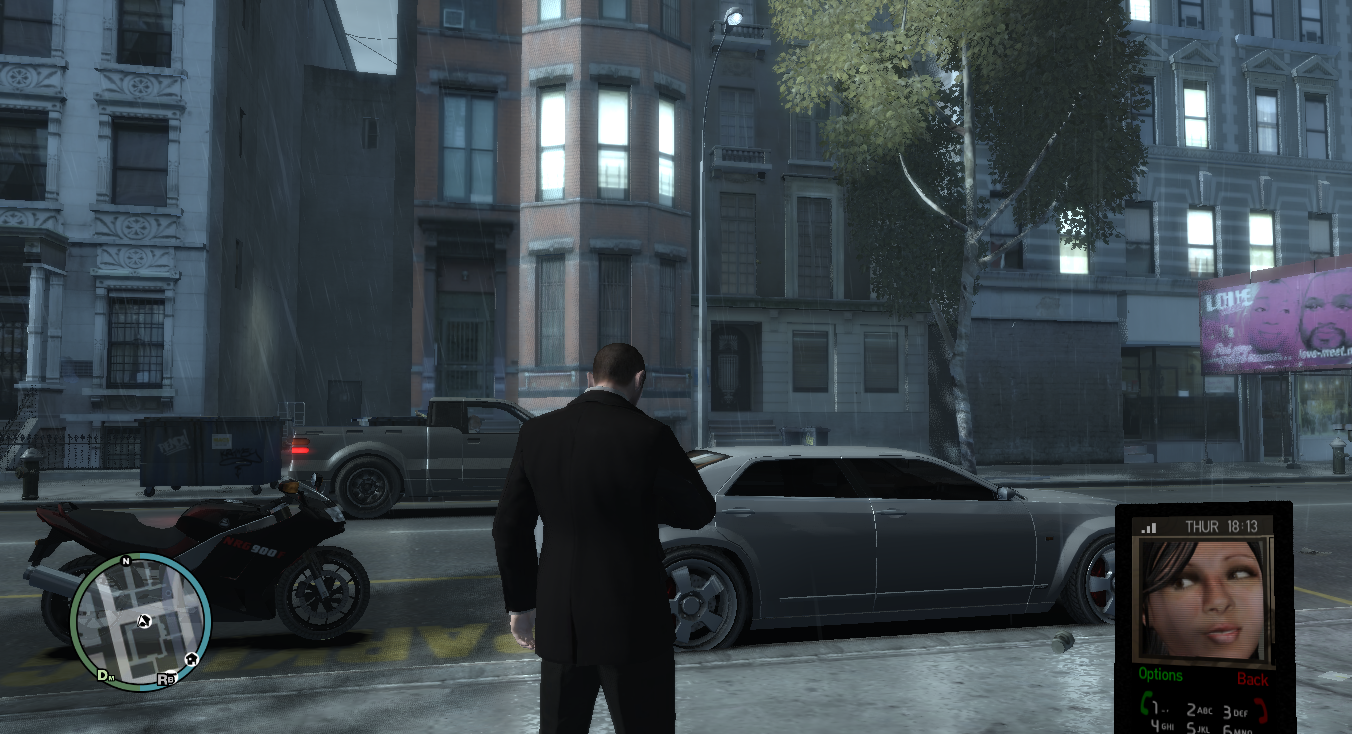
This is an actual in-game screenshot from my game, moments before a crash occured

This is an actual in-game screenshot from my game, moments before a crash occurred

Now, I’ve only recently got the game so I don’t know what it was like before the latest round of patching. I’ve read on some forums that suggest the older patches were better, and that the newer patches made things worse. Which is exactly the sort of thing that I touched upon in my Fallout 3 rant. But the problem goes further. At least with Fallout 3, there are workarounds which allowed you to at least play the game for an hour or two at a time. With GTA IV, and the latest 1.0.4.0 patch, you’re lucky to be able to get more than 20 minutes. The problem I have is that it will stutter (screen turns black, sound freezes, and then after about 10 seconds, everything is back to normal – repeat this every minute or so) and then freeze completely, requiring a shutdown through Task Manager. The problem happens randomly, and it can happen when your computer has been on for a day, or when it has just been booted into Windows. And even when the game is working, and just like on the console versions, the framerate isn’t very consistent and it’s certainly not smooth in the way Fallout 3 is smooth (unsteady framerates probably). But I can forgive Rockstar Games for this, since they’ve never been really good at this sort of thing going back to GTA III, which had ultra fast framerate on modern PCs unless you tweaked around with the settings, and GTA: SA, which still doesn’t give me smooth Fallout 3 type framerates on my C2D E8500 with ATi Radeon 4850 and 4 GBs of RAM. These things I can forgive, as long as you let me play the great game for more than 20 minutes at a time. The in-game benchmark gives me 50+ FPS, but the uneven framerate problem can’t really be shown in benchmarks like this which only shows the average framerate (so if the framerate was 1 FPS for half of the time, and 100 FPS for the rest, then the average is still 50 FPS).

And it’s not even a problem that Rockstar are unaware of – they even published the full list of error codes. I think the error I get is either the DD3D10 or the DD3D30 one, sometimes the RESC10 one as well, and the only way to run the game again is to reboot the computer. Now I’m aware that GTA IV is a complex game, more so than Fallout 3, which is kind of sparse in terms of objects (fits well into the nuclear wasteland scenario, though). But a C2D E8500, Radeon 4850 and 4 GBs of DDR3 RAM (in XP), should at least let me play for more than 20 minutes at a time. And the game definitely gets worse the more you play, and you get access to more islands. So I didn’t experience crashing until about a third way through the game, unlike others whose games crashed much earlier than that. It seems there’s a memory leak somewhere, but who knows.

But after extensive tweaking, I’ve been able to play for an hour at a time, not always, but a few times already. A lot of testing and tweaking was needed, and I’ve really just been testing things randomly really, but some of it might have worked. So I thought I would share some of the things I tried here. Now not all of them has worked, and I still get crashes often, but at least it’s a step in the right direction. So test them out yourselves, and hopefully, you’ll get to play the game for more than 20 minutes at a time. I won’t go through the more obvious things like closing down all non essential programs (I found closing down MSN Messenger made things a lot more stable), installing the latest drivers (or rolling back to drivers that allowed you to have a better GTA IV experience before), unrolling any overclocking you may be doing, and ensuring your memory isn’t broken by running memtest or your CPU is stable by running Prime95. Also, turn off the clip capture setting in the in-game menus, as that just consumes more resources and causes crashes faster. For the in-game resolution, try to use one with 75 Hz output, which seems to make the game run smoother, at least on my system.

Tip #1: Using command-line switches

GTA IV on the PC supports several command line switches that can be used to affect the game’s settings, some of them not available from the options section within the game. To use command line switches, first start the notepad program in Windows, from the File menu, select “Save As” and then navigate to the folder in which GTA IV is installed (by default, it should be “C:\Program Files\Rockstar Games\Grand Theft Auto IV”). When saving, make sure the “Save as type” setting is selected as “Text Documents (.txt)”, and then name the file “commandline”. So basically, you should now have a blank text file called “commandline” in your GTA IV folder (the same folder as the files “LaunchGTAIV”, “gta4Browser” …). Now that this file has been created, we’ll add several command line switches to it to use within GTA IV.

Tip #2: Adding the command-line switches

The switches that I have added to my commandline text file are as follows:

-fullspecaudio
-memrestrict 262144000
-windowed

The first one enables full spec audio, which unsets limits to the framerate and makes the game stutter more. This is to improve the framerate experience, but I’m not sure it has any effect on stability. Some have suggested trying -minspecaudio instead.

The second one, memrestrict, is something that the Rockstar tech support have recommend (thanks for the tip, but how about actually fixing the game, as opposed to workarounds?). The exact setting (the number following the switch) depends on your game settings, so have a look at this thread for information on which setting you need to use.

The third one enables windowed gaming mode, which gives you an ugly border around the game, but at least it makes using Task Manager to shut down the GTAIV.exe process (as opposed to a reboot) much easier when the games does indeed freeze. It also, at least on my system, seems to cause less freezing and crashes.

There are a bunch of other command line switches you can try, but some I found made things worse, rather than better.

Tip #3: Underclock your GPU

One theory is that GTA IV pushes your GPU to the limit and causes it (or the device drivers) to crash. It’s a programming error if this happens, but one that Rockstar either haven’t identified or aren’t able to fix right now. And even if it isn’t a programming thing, then people with computers that have poor ventilation or underpowered fans will also experience this as GTA IV uses 100% of your GPU for an extended period. You can underclock your GPU in many ways, but I use the software RivaTuner. Start the tool, under the “Main” tab, look for the drop down list that list your GPU/monitor combo, and just under that, to the right, there is a button you can click on next to the word “Customize …” click on that and click on the first icon in the pop-up. Check the “Enable low-level hardware overclocking” checkbox, you may need to reboot your PC if you’ve been using it for a while or have been overclocking before. Then, from the default clock position, move the slider to the left (lower clock), and lower the speed by 10 or 20 MHz. Press “Apply” to apply the changes. You can save the profile and create a shortcut so you don’t have to go through this every time, but I don’t mind doing it manually. This trick seems to work better on ATi cards, especially the newer Radeons, as they have dynamic underclocking (for example, my 4850 switches between 500 and 625 MHz, depending on usage), and this constant change might be one of the many reasons why GTA IV crashes.

Tip #4: Nvidia Maximum Pre-Rendered Frames

For Nvidia card users, there is also another thing they can try to boost framerates and/or reduce crashes. I don’t have an Nvidia card, so I can’t test it, but others have had success. This is a setting you’ll find in your Nvidia drivers, under “Managed 3D settings” I think (see screenshot) – set “Maximum pre-rendered frames” to “1” for the application “LaunchGTAIV.exe”. See this thread for more information. But other threads show that increasing this setting reduces the burden on the GPU (at the expense of the CPU), but might help with crashing. Something worth trying for Nvidia owners, I suppose.

I’m sure there are many other tips and tricks, some will work, some won’t, but with the above, I’ve at least been able to play the game for more than 20 minutes, and sometimes for up to an hour before the freezing starts again. And with the windowed mode, I can shutdown the GTAIV.exe process using Task Manager, and sometimes I won’t even need to restart Windows to play again. Suffice to say, the “auto-save” feature of GTA IV becomes increasingly useful, as trying to get back to a safehouse before the game crashes isn’t the type of suspense I was expecting from the game (though it is sometimes quite exciting).

So anyway, great game, bad implementation, worse patches. Just one of the many PC games that do this (Test Drive Unlimited is the other one that I’ve had a lot of problems with), and companies wonder why PC gaming is dying. But not all games are bad, some will work for hours on end without breaking a sweat. Call of Duty 4/World At War, World In Conflict,  Stardock’s Sins of a Solar Empire (at 1080p, full details, hundreds of ships in battle at the same time – no crashes!), Company of Heroes, Far Cry 2, Crysis – are just some of the games that don’t cause this type of headaches for their users, despite some of them being more CPU and GPU intensive. So it is possible, game developers, to make PC games that don’t crash. It’s not easy, given so many different configurations, but it is possible.

For now, it’s back to GTA IV, Task Manager, and reboots for me, all the time praying for a new patch that solves at least some of the problems. Well, at least I didn’t pay full price for the game (thanks to cdwow.com.au’s discount offer).

Update:

Having tried some more things, what I suggest is that at first, you only try the “windowed” command line and see how that works out. Also, make sure you close all other running programs, including any browser windows you may have open. Basically anything requiring a bit of memory or graphics memory should be closed, as it could lead to out of memory errors. And finally, if the game freezes on you (the sound may freeze or go on), don’t hit the reset button just yet – wait a bit and it will usually bounce back, at which point you can do a normal shutdown of the game, or in some cases, continue playing (I’ve often found that the game somehow becomes more stable after the first freeze, and after that, I can play for an hour without it crashing again).

Update #2:

ATI has released a new set of Catalyst drivers (9.8), which are official and stable, but not yet on their main websites (it’s posted on their blog). Some have experienced less crashes with this new driver, with sometimes better FPS as well. I’ve tried it, but only for a short while, and I haven’t noticed any positive differences. In fact, FPS seems to be a little lower, and I’ve already had the freezing problem. You may have better luck though, so try it out, and if it fails, then uninstall the driver using add/remove programs, then use Driver Sweeper to fully clean up the drivers, and finally re-install whatever drivers you were using before.


Weekly News Roundup (2 August 2009)

August 2nd, 2009

Another bad week health wise for me, as I think I’ve caught a cold or flu or whatever has been floating around recently. 2009 hasn’t been a good year for me so far in terms of my health, starting the year right away with shingles, possibly had the swine flu last month, and now a cold when the last time I was this sick was ages ago. I have back pain too, just to add to discomfort. But as they say, ‘the blog must go on’. Or something like that. Good thing this week’s a bit quiet in terms of news, although still a couple of big stories to go through. And oh, the winners of Digital Digest’s 10th Anniversary competition has been drawn, and if you’re a winner, you should have gotten an email already – the full list of winners will be published here.

Copyright

Let’s start with the copyright news for the week. There seems to be a lot of confusion as to the status of The Pirate Bay. They have lost a lawsuit and the site has been sold, but nothing has changed on the site, and the status of the sale itself is now unclear.

Which direction is the Pirate Bay ship sailing in, and who's at the helm, nobody knows

Which direction is the Pirate Bay ship sailing in, and who's at the helm, nobody knows

The lack of response to losing the lawsuit has the MPAA angry, and they have asked the court to address this. It was the co-founders of The Pirate Bay that was sued and prison term handed out, but the co-founders deny that have involvement with the company that actually owns The Pirate Bay, Reservella, which operates out of the Seychelles. The MPAA claims that Reservella is operated by the co-founders, and I don’t know how the sale of the site fits into all this, or even if the sale is still on. The allegation is that GGF, the company that purchased TPB, doesn’t have the money ready, but other sources suggest the sale will go through on the 27th of August (thanks to Cynthia for the news). In any case, the Italians also want a piece of The Pirate Bay lawsuit pie, and Italian anti-piracy agency FPM are planning to launch a $1.4 million dollar lawsuit against TPB. FPM were mentioned in last week’s WNR as they claim to have forced Mininova to remove 10,000 torrents.

And the story that keeps on giving. Amazon’s 1984 Kindle screw-up is now going to the courts, as a student who wrote his book reports notes lost his work too when Amazon remotely erased all traces of the unauthorised ‘1984’ Kindle e-book. See, this is what happens when you remotely delete stuff without people’s permissions – had some warning been given, I’m sure the kid could have salvaged at least part of his notes.

And it’s almost as if the RIAA and MPAA saw DRM in trouble, and wanted to step in to help defend it. In any case, a lawyer representing both the RIAA and MPAA has said that DRM’d content was never meant to be forever usable, and that consumers shouldn’t expect to be able to use what they paid for. In other words, the content owners are happy to take your money for overpriced digital downloads, infested with layers upon layers of DRM that makes compatibility a nightmare, and then they tell you that you shouldn’t have any expectations on having any access to the files in say 10 years time. See in the world that the RIAA and MPAA inhabits, this makes total sense and it’s not unfair to anyone at all. In the real world, I can still play audio and video tapes I bought back in the 80’s, people are still playing records bought in the 50’s and all your DRM-free MP3 files will still work in 20 years time, I’m willing to bet. And they wonder why people choose to pirate music.

Downloading a song costs $22,500 according to the RIAA, so no wonder Joel Tenenbaum pirated them instead

Downloading a song costs $22,500 according to the RIAA, so no wonder Joel Tenenbaum pirated them instead

Although some will end up paying a lot more than having to deal with a music library that won’t work in 10 years time. The RIAA’s second trial against a music file sharer has resulted in another win, after the Judge in the case threw out defendant Joel Tenenbaum’s only line of defence, that what he was engaged in should be considered fair use (read the link to see what the Judge thought fair use might be). That’s not a defence I would have gone with, not if the RIAA already has evidence of file sharing and that total denial has been ruled out as a defence. Instead, I would question just how much money was lost to the RIAA and ask them to prove so (x number of copies shared times the revenue lost for every Y copies as not all people who download would have otherwise purchased). This would at least avoid the totally disproportionate damages being rewarded, in this case $22,500 per song for 30 songs, or $675,000 in total. And this is actually the more reasonable judgement of the two recent cases, compared to the $1.92 million in damages rewarded against Jammie Thomas-Rasset for only 24 songs. Doing a little math in my head, $1.92 million for 24 songs work out to be $80,000 per song. Now assuming each song costs $1 to buy on iTunes or whatever, then that means the RIAA claims that 80,000 copies of each song has been shared illegally. Assuming on average each song is about 3 MB in size, that means 240 GB of uploads. Now on my upload link (30 KB/s), which is fairly standard here in Australia, this task would take 2276 hours, or 94 days of continuous uploads while not using my connection for anything else. Now times that by 24 songs, and it would take 6 years of continuous uploads for Jammie Thomas-Rasset to rack up the amount of awarded damages (assuming she has the same connection as I do, so it may be “only” 3 years, or up to 12 years for her to do the same), and that’s not even taking into account that the content owners do not make $1 per song, as that’s the retail price.

Well at least they didn’t end up at Gitmo (or wherever the suspected terrorists will be moved to when it closes). Apple says that breaking the iPhone’s Apps DRM, to jailbreak the phones, could lead to hackers attacking cellular networks. This could then lead to possible use by terrorist, and the end of civilization as we know it. Either that, or Apple could lose the monopoly it has on iPhone apps, which could be just as devastating.

PC piracy is a serious problem. So is DS piracy. Game publisher Ubisoft says both are so serious that they have hatched plans to tackle both. What’s interesting is the two different approaches they have taken to tackle what appears to be the same problem. They are trying the carrot approach on the DS, by offering figurines and exclusive content on the DS versions of games. On the PC, while they haven’t spelled out their plans exactly, but it looks like they’re going to go with some kind of DRM system. Now why can’t they do the same on the PC as they are trying to do on the DS? I’m not talking about figurines, but add in some collectibles, some exclusive online content (even if it means online authentication), and make better use of the PC’s multi-purpose nature, by offering online community involvement, multimedia content and all sorts of goodies to make the stripped down pirated version seem inadequate (or so bloated in size when all the extras are included that it’s not worth downloading). In other words, make a better product or package. Making the games better themselves might also help.

High Definition

On to HD news, Paramount is trying a new thing that many studios in the past have tried and found little success: tiered releasing.

Rental version DVDs died around 2003 here in Australia, but Paramount wants to bring it back

Rental version DVDs died around 2003 here in Australia, but Paramount wants to bring it back

What this means is that instead of releasing all home video versions of the movie at the same time, they’re going to release only the rental DVD and for sale Blu-ray version of the movies first, with the for sale DVD version coming at up to 8 weeks later. Now the theory behind this is to promote both video rental and Blu-ray, both of which are growing markets for the studios, as opposed to DVD which is quickly dropping in sales. Studios have tried this in the past, with rental versions of DVDs that contained no extra features, followed by retail versions with the lot (usually a second disc). This kind of thing died quickly here in Australia, as people wanted to rent the retail version with all the special features and were willing to wait. Having the Blu-ray version in stores will help Blu-ray certainly, but it will also task the sales people with explaining to customers why they can’t buy the DVD version until 8 weeks later, which I’m sure will please the retailers who rely on DVD for 90% of their home video revenue. And with people unable to buy the version they want, how many will seek alternative sources, such as pirated versions (of the rental only DVD), and feel justified in doing so because they have been denied the opportunity to purchase the content. Guilt is probably the most effective deterrent to piracy, and Paramount’s move might effectively destroy this last barrier. It’s good thing then that Paramount aren’t doing this with all releases, possibly just the lower profile titles that people will only ever want to rent, not buy.

LG HDTVs will now support the VUDU digital rental system. Not a very important piece of news, but one that continues the trend of integrating home electronics with digital distribution services.

Gaming

And in gaming, the smoke intensifies around the possible PS3 Slim fire. The latest news is that Sony has ordered so many PS3 parts that it seems they are anticipating a huge surge in demand for the PS3, which might mean the PS3 Slim. There was also some news about an Amazon Germany listing for the PS3 Slim.

My thoughts are that Sony might have announced this at E3 if this was real, and that the additional parts orders may be because prices have dropped recently as demand drops due to the economy. But as I said last week, there’s too much smoke without fire, although it is a well known fact that video gaming fanboys, source of many of the rumours, are quite capable of producing mass amounts of smoke out of their a..

On that refreshing note, thus ends this week’s WNR. Congrats to those who won in our 10th anniversary competition, and better luck next time to those who didn’t. Don’t worry, there’s only 9 years and 336 days to go until the next decennial. See you next week.

Weekly News Roundup (26 July 2009)

July 26th, 2009

Didn’t have anything interesting to write about, so no mid-week blog. But I did go back to an old article I wrote for DVD Flick and updated it for the latest version, which now supports menus and stuff. It’s now a great little tool for AVI to DVD (or any video format to DVD, really), as long as you’re not too fussed about making the menu look really customized. And best of all, it’s all free and really really simple to use. Maybe it’s just me, but more and more of the best software around are actually the free (or open source) ones. Anyway, lots to get through in the news roundup so let’s go.

Copyright

In Copyright news, the week’s major talking point has been about Amazon’s SNAFU and the implications it has regarding DRM. As you may have heard, some third party reseller on Amazon sold several Orwell e-books for Kindle, but it turned out they did not have permission to do so. So what did Amazon do? They used a not so well known DRM feature of Kindle to, without the permission of the user, erase all copies of the unauthorised books off people’s Kindle devices. Without permission. Without warning. This, my friend, is DRM at its worst.

Amazon's 1984-esque screw-up means Big Brother is not only watching, it's also erasing your books

Amazon's 1984-esque screw-up means Big Brother is not only watching, it's also erasing your books

Sure, in this particular situation, the erasure was probably justified, although ironic in the extreme considering the titles that were erased (‘1984’, in particular – Big Brother must be so proud). But that’s not the point. The point is that Amazon at a moment’s notice can erase all of your purchases. Now why would they do that? They wouldn’t, not unless they want to be hit with hundreds of thousands of lawsuits all at once. But the point is that they could, and they have proved that they can this time, and there will be many similar future situation which will force Amazon or publishers to do this again. They wouldn’t be able to do the same with hard copies, and so it would be the seller or Amazon that will have to pay damages, rather than the customer who bought the item in good faith. The truth is that with these kinds of DRM, you’re not buying, you’re only renting or licensing, as you are bound by the license agreement which you agreed to when purchasing the books. Anyway, the whole thing caused quite a stir, even though this isn’t the first time Amazon has done this, but the media just loved the ‘1984’ references. Amazon’s boss had to issue a public apology. DRM again shows it’s true evilness.

DRM may still be alive on e-books and other media, but it’s pretty much dead on music. There is watermarking, which is a form of DRM, but it’s something people are willing to live with (at least those that do use the content lawfully, and not hold intentions to distribute illegally). But generally speaking, the kind of DRM that is on Kindle is dead for music, so much so that the RIAA has came out and declared DRM dead. Or did they? It made good copy so all the news agencies (and websites) ran with the story, but the actual quote was not as harsh as the headlines, but the RIAA did still admit the fact that DRM was largely gone from download services. So basically it’s dead, right?

Well, as one of our forum members pointed out, it’s not entirely dead. There are still music download services that employ DRM, but nobody really uses them, not when they can get DRM-free tracks. One new service which just launched and still uses DRM is Kazaa, the notorious file sharing service now gone legit. You can all you can eat music, but the DRM restricts playback to PCs (and a limited number of them as well), so it’s virtually useless before it is even launched. All you can eat music is good, but not if it’s limited to PCs, and as this requires DRM, it also means you’re effectively subscribing or renting the music, not purchasing. An all you can eat purchase account for DRM-free music is what the industry needs to really grow the download business. Prevent illegal sharing with watermarking and other methods, sure, but don’t make people jump through hoops just to buy something that’s less entertaining and value than many other forms of entertainment (this is why video gaming is growing at the expense of music, for example).

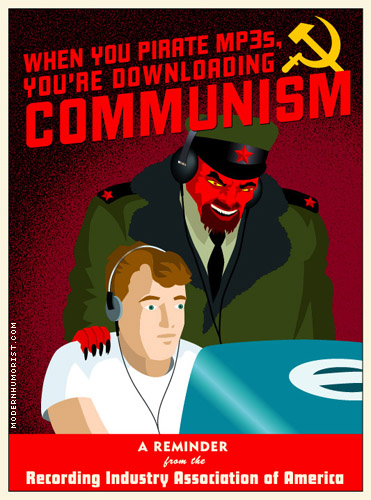
Pirating MP3s may not lead to communism, but DRM certainly takes a page out of the little red book

Pirating MP3s may not lead to communism, but DRM certainly takes a page out of the little red book

I guess you can see the theme of the week so far has been the difference between buying something and owning it, with all the rights associated with it, like the ability to actually not get it taken away from you without your permission, and the ability to re-sell it. That’s owning property. What DRM introduces is licensing, which is nothing new, but DRM allows licenses to be enforced strictly, such as remote erasure of the content. So the question is, is copyright anti-property? I think it is, and I think that’s been the core of the issues which people are against. Starting with DRM on DVDs, which prevented people from making backups of their DVDs, something they could do with CDs and all other media before that. And bit by bit, people’s rights are being taken away from them, and as Kindle-gate shows, companies now have the right to come into your home (in a way) and take away your purchases without your permission. People bleat on all the time about the evils of Communism in regards to the lack of personal ownership, but is this any better (or any different)?

Back to the lawsuits. The co-founders and the (ex) spokesman of The Pirate Bay have filed a lawsuit against Dutch anti-piracy agency BREIN, in response to a lawsuit filed by BREIN in which the only communication was through a Twitter tweet. BREIN apparently also accused the former TPB guys of launching denial of services attacks against their websites, which the TPB guys are counter-suing on the basis that this isn’t true and may constitute slander. They also claim that the original BREIN lawsuit continued numerous errors and should never have been filed in the first place. An agency having a better time is the Italian FPM group (where have all these groups come from, all of a sudden), which claims they have forced Mininova to remove 20,000 torrent links and many other sites to do the same. Mininova is fighting a legal battle themselves of course, and they have been hinting at trials of a system to allow torrent removals by content owners, I guess trying to prove that there is a system in place to handle piracy, and it should be up to content owners to police their own content (as otherwise, how would anyone know what belongs to whom)?

High Definition

Moving on to HD news, the big rumour of the week (and as of right now, still unconfirmed), is that Toshiba is joining the Blu-ray bandwagon, which in many fanboy’s eyes will signal final and irrefutable victory over HD DVD.

64GB USB drives are already here, bigger than the biggest Blu-ray disc, and is rewritable

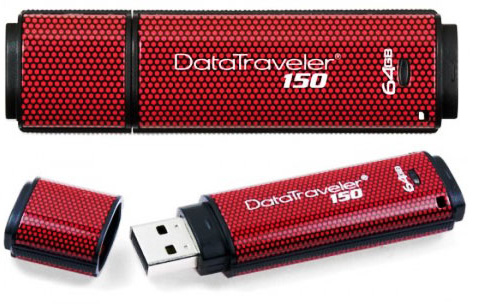
64GB USB drives are already here, bigger than the biggest Blu-ray disc, and is rewritable without special hardware - could it be used for movie distribution?

I must make clear that Toshiba have not confirmed any of this, issuing a no comment which may be suggestive of some smoke, if not the fire. The question is, does this story make sense? In my opinion, yes it does. Toshiba was always unlikely to skip Blu-ray entirely, unless Blu-ray died a quick death. They make TVs and DVD players, and so Blu-ray is the natural next step for them. However, this does not mean that their focus on the post-Blu-ray technologies, such as downloads, streaming or flash memory distribution, have been abandoned. I for one feel that Toshiba getting back into the game at this time may in fact be due to the fact that these new technologies are finally mature enough for the marketplace, as seen with LG and Samsung’s Netflix integration. USB drive capacity has already exceeded that of Blu-ray, and offer better value than Blu-ray recordables even at this nacent stage. And with more and more companies launching USB thumb drive movie distribution services, this may be the right time for Toshiba to embrace Blu-ray, but also sneakily introduce these post-Blu-ray technologies through the back door and use Blu-ray to launch their own ideas about what the future of movie distribution will look like. Is it also a coincidence that the companies mentioned so far, LG, Samsung and Toshiba, as well as Microsoft with its Netflix Xbox 360 strategy, are all HD DVD proponents? And with Netflix in 9% of US homes already, thanks largely to the expansion of their online streaming service through game consoles and Blu-ray players, it shows people may be ready to start embracing online video streaming. Sure, Blu-ray quality HD streaming and downloads will have to wait another generation, waiting for the Internet infrastructure to catch up, but Blu-ray quality (and even better than Blu-ray quality) movie distribution via flash memory is already possible now.

For the short term though, 3D TV and movies are also seen as the next big thing. James Cameron’s new movie ‘Avatar’ aims to bring new 3D filming techniques and the concept of a 3D movie to mainstream audiences, to make 3D less of an optional experience, and make it *the* experience at the cinema. ‘Avatar’ is definitely the most expensive 3D movie produced thus far, there is no doubt about that. Along with the Blu-ray group trying to establish a standard for 3D Blu-ray movies, and with Nvidia joining the “game” with its GeForce 3D Vision kit, to bring 3D to the home computer, there is certainly a movement towards making 3D mainstream. But my view is that while 3D can be popular, it cannot be mainstream until one invents a technology that doesn’t require glasses. It’s just too much trouble, regardless of  the payoff.

Gaming

And finally in gaming, Microsoft has announced the next Dashboard update will be on August 11th, bringing a bunch of new features including better movie streaming, more avatar related content (achievements which give clothing and props sounds very interesting to me), and even games on demand. It’s not just movies that are moving to a media-less distribution method, it seems.

Sony’s PS3 Slim is rumoured to be unveiled soon as well, if the rumours are true that is. Sony will be making announcements in August, which should see either the rumours confirmed or denied. Again, there is a bit too much smoke without even a small fire at this stage. The big question will be how much cheaper will this new PS3 be? Because if it’s just the same price, then I don’t see the point.

I think that’s all the news for this week. More DRM bashing, digital distribution championing and PS3 price cut pining next week. See you then.

Weekly News Roundup (19 July 2009)

July 19th, 2009

Welcome to another edition of the Weekly News Roundup. Come to think of it, I really should have numbered the WNR editions (for example, WNR #57), so I can easily refer to each. Yes, I could go and count each WNR and then start using edition numbers (there are 94 according to the WordPress category post count), but screw it.

A busy week this week, since I actually bothered to do some work. I started a new series called “The History of Digital Digest” to celebrate the 10th birthday of this website. Part 1 was posted this week, and it talks about how Digital Digest was launched, and some tidbits that have never been made public before. The June 2009 NPD figures came out and as usual, I have posted the full analysis. It marks another month in which the only happy party is Microsoft, as it was the only company yet again to have any sort of year-on-year growth. The Wii is still the best selling console (portables not included), but the PS3 is struggling, in hardware and software numbers. All could be fixed by the magical elixir known simply as “a price cut”, but it’s going to take a while for Sony to figure it out I suppose. Yes, they lose more money if they cut prices without cutting manufacturing cost, but how much money are they losing by being 3rd in the console race at the moment? And game sales, the stable of console manufacturer income, is very much dependant on hardware numbers – this is why most game console are sold at a loss. Just bite the damn bullet, Sony. Anyway, onto the WNR proper …

Copyright

Starting with Copyright news, continuing with The Pirate Bay coverage, or perhaps better expressed as “The Death of The Pirate Bay” coverage, the company that has bought TPB has hired a new man to helm the (in)famous website – step up Wayne Rosso, who is now courting the RIAA and MPAA and trying to make nice.

Wayne Rosso aims to destroy, I mean fix, The Pirate Bay by making it legal

Wayne Rosso aims to destroy, I mean fix, The Pirate Bay by making it legal

In a stomach churning interview, Rosso calls his best buddies at the RIAA and MPAA “unbelievably supportive” and vows to “turn over a legitimate new leaf” to make TPB completely legal. Rosso plans to do this by introducing some kind of fee, which will be used to pay the content owners – the fee can be reduced if users contribute P2P resources. I don’t see how this can work, because you cannot still offer pirated material even if you charge a fee and pass that on to the content owners, so the content would have to be legal and so will become limited by the content that content owners are willing to provide (so expect lots of DRM), which defeats the whole purpose of the website because there are already tons of sites offering the purchase of legal (and DRM infested) downloads. So if it wasn’t clear as to what will become of the TPB, it’s now pretty clear that TPB, as we know it, will end. At least if the intentions of the new owners are met – the only glimmer of hope is that often intentions give way to financial reality, and keeping TPB as it is might be more profitable.

The original founders of TPB have moved on it seems, and they’ve mentioned some political ambitions. The Swedish Pirate Party’s recent successes will no doubt fuel the political movement, with the Swiss Pirate Party being launched this week. There is already an Australia Pirate Party, although what Australia needs is an Internet Party. An Australian Internet Party is very much needed at the moment to help guide and oversee the government’s efforts to complete the National Broadband Network, as well as to keep them in line in terms of issues such as the Internet Filter Scheme. And such a party is needed even more so now that the government here has suggested that they might want to implement a three-strike anti-piracy system. A political voice is very much needed in Australia to fight the government on this issue, and a sizable number of votes in the next election could force the government into acting sensibly when it comes to these issues. And yes, I’m pointing my accusing fingers at you, Senator Conroy, recent winner of the Internet Villain of the Year award.

Continuing with the theme of posting people's pictures for this WNR, here's Stephen Fry

Continuing with the theme of posting people's pictures for this WNR, here's Stephen Fry

From politics to celebrities, noted Internet addict and actor Stephen Fry has launched an attack on the anti-piracy industry, specifically in relation to them going after TPB. The usual thing to do when celebrities speak is to wince, but Mr. Fry makes a lot of sense in his interview with the BBC and he’s Internet and real life celebrit-ism would be a good way to promote the injustices that are occurring all around us. One of the things that can quickly solve the piracy problem, as well as make users happy, would be an all-you-can-eat type music (and eventually, movies or games) download service. Charge $20 per month, sign up a couple of hundred million users worldwide, and let them download all the music they want. Would anybody still bother to pirate stuff? And if they can sign up hundreds of millions of users, which I think is not totally impossible, then that’s billions worth of revenue per month. With these kind of services, the users that download absolutely everything will be subsidized by the users that don’t download much, and because it’s all digital anyway, there’s no limit as to how many copies you sell, as opposed to selling CDs and physical content.

The alternative is to continue this fight against users, websites, and ISPs. While none of the actions actually solve the problem of piracy. All these legal and technological (DRM) measures have done is to force the implementation of new technologies that makes pirating easier, more private and harder to stop. With the imminent demise of TPB, public torrent trackers are the next big thing and the more public trackers there are, the harder it will be to shut down piracy. Meanwhile, the MPAA has vowed to attack and keep on attacking torrent websites, and for example, has vowed to chase isoHunt founder Gary Fung for the rest of his life, to try and claim the damages rewarded to the MPAA. So if Mr. Fung starts a new business, then the MPAA won’t be too far behind. If Mr. Fung gets a new job, then the MPAA will want a share. And so on, and so on.

High Definition

In HD news, there’s no much on Blu-ray that I found interesting, although there’s a bit about it that’s more to do with gaming and so it covered later on. All I know is that Blu-ray sales figures, as covered in this thread, shows that Blu-ray sales are fluctuating wildly between being excellent, and like last week, not being much better than the same time last year.

You will of course read more stories on how Blu-ray has grown a million percent in 2009 or something and compares that to drop in DVD sales and the come up with the conclusion that Blu-ray has won. But the fact is that Blu-ray has nowhere to go but up, and 2008 was a poor year for Blu-ray until the very end. DVD sales have nowhere to go but down, thanks largely not to Blu-ray but to increased spending on video games. And the increases in Blu-ray sales, as I’ve mentioned numerous times before, are nowhere near sufficient to make up for the loss in DVD income. Blu-ray wins when it reaches 51% market share compared to DVDs, and not a day sooner, in my books.

In slightly related news, Microsoft’s new version of the Silverlight platform now supports H.264 (and AAC), bringing it in line with the rest of the industry. There is no doubt now that H.264 is now the industry standard codec for video compression. Or is it? HTML 5 was supposed to anoint an official video codec, but due to pressure from various sides, it has backed down from naming such a format. Wikipedia wants to use Ogg Theora, Apple wants H.264, some of the browser makes prefer Ogg as well, but Google likes H.264 too and supports both in Chrome. Ogg Theora is open source and so it should be supported, but H.264 has so much industry support and it can’t be ignored. And I know what you’re going to say and “who cares” is not an acceptable solution to this puzzle.

Gaming

And finally in gaming, and yes we have some notable gaming news this week finally, of course it’s time and an appropriate place to plug my June 2009 NPD analysis again. Really, it’s good reading especially if you like graphs and stuff.

Microsoft guy Aaron Greenberg says Sony distracted by Blu-ray

Microsoft guy Aaron Greenberg says Sony distracted by Blu-ray

Responding to the positive news from the June 2009 NPD figures, Microsoft is claiming all sorts of victories, while saying that the reason the PS3 is behind at the moment is largely due to Blu-ray. Can’t really argue with that, because Sony turned one of the most successful gaming platforms (PS2), that also came with a DVD player, into one of the most successful Blu-ray players, that also came with gaming capabilities. The change in focus is what did them. Now this isn’t to say that there’s no way back for Sony, far from it. A temporary, and largely avoidable setback aside, the solution to the problem is very simple. And they could do it through the PS3 slim, if it is real. This video seem to suggest that it is. A PS3 Slim that costs less might be just what the doctor ordered for Sony.

In any case, Microsoft will try to ride on this wave of success for as long as possible, and with the much more welcomed Windows 7 coming soon, this could prove a strong period for Microsoft. And perhaps to tie together the two potential successes, Project Natal may make an appearance on the PC as well. Games for Windows Live has tried to tie together the Xbox 360 with the PC, and  something like Natal would definitely help. And not all applications for Natal will be for gaming, as even on the Xbox 360, Natal is being used for everything from video chatting to media navigation.

Okay, that’s all for this week. More “History of Digital Digest” next week, some kind of mid-week rant I suppose, and another issue of the WNR same time next week. See you then.

Game Consoles – June 2009 NPD Sales Figure Analysis

July 18th, 2009

Another month, and another edition of the NPD Video Games Sales Figure Analysis. The last few months has seen the video game industry hit hard by the current economic woes, with sales numbers retreating. Elsewhere, there’s talk of green shoots and a recovery, but has it happened in the video game industry? June’s figures should provide further evidence as to whether the slump is easing, or it just beginning. The figures are from NPD, a marketing research firm that releases games console sale data every month.

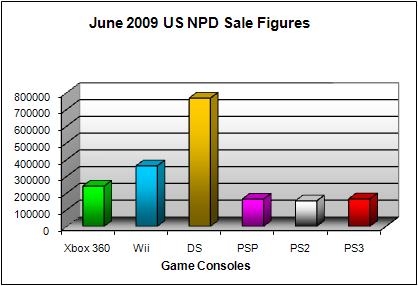
The figures for US sales in June 2009 are below, ranked in order of number of sales (June 2008 figures also shown, including percentage change):

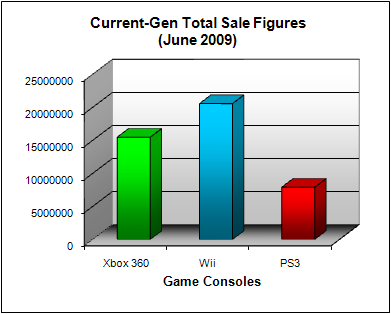
  • DS: 766,500 (Total: 32.1 million; June 2008: 783,000 –down 2%)
  • Wii: 361,700 (Total: 20.6 million; June 2008: 666,700 – down 57%)
  • Xbox 360: 240,600 (Total: 15.5 million; June 2008: 219,800 – up 9%)
  • PS3: 164,700 (Total: 7.9 million; June 2008: 405,500 – down 59%)
  • PSP: 163,500 (Total: 15.3 million; June 2008: 337,400 – down 52%)
  • PS2: 152,700 (Total: 44.2 million; June 2008: 188,800 – down 19%)
NPD June 2009 Game Console US Sales Figures

NPD June 2009 Game Console US Sales Figures

NPD Game Console Total US Sales Figures (as of June 2009)

NPD Game Console Total US Sales Figures (as of June 2009)

My prediction from last month was:

So the prediction is the same as this month, with the PS3 numbers slightly higher still but maybe not high enough to beat the Xbox 360. I can see Prototype (the Xbox 360 version) being the top seller for the month, and it will be interesting to see how it stacks up against inFAMOUS which has received better review ratings (although the “100″ ratings given out by a few places are a bit over the top).

The PS3 numbers were higher, yes, but it wasn’t nearly enough to beat the Xbox 360. Prototype (as you will see below) was this month’s top seller, and it stacked up pretty well against inFAMOUS, which slipped all the way back to tenth. Had the game’s release been bought forward a few week, or pushed back to be released in June, then inFAMOUS may have even made a couple of spots higher in May, or even 2nd spot in June. Sony made the same mistake with Killzone 2. And yes, the “10” ratings is still over the top for what is a very good game, but not “perfect”.

While we’re talking about Sony, let’s look at their figures. Again, and continuing the trend since November of last year (that’s 8 months in a row, for those that are counting), all three PlayStation platforms undersold the same month a year ago. The economy (combined with Sony’s phobia of a price drop) has a lot to do with it, but that’s mainly the PS3 – Nintendo and Microsoft have been able to get year-on-year increases from time to time. The PSP Go won’t be released until October, which may be the first chance that Sony will get to break this trend of year-on-year shrinkage. But the PS2 has definitely had its time and official retirement can’t come sooner. Maybe when it is officially gone, Sony can concentrate fully on the PS3 and we’ll finally see a price cut. The PS3 Slim? I’ll believe it when I see it for pre-order on Amazon.

Nintendo’s DS (or DSi, to be more precise), it selling well, which bodes well for Sony’s PSP Go when it finally gets released in October – and the DSi isn’t even a brand new system, just an update. The Wii, however, is struggling a bit. By struggling, it still managed to easily beat the Xbox 360 and the PS3, but next month’s Wii MotionPlus plus the MotionPlus enable games such as Wii Sports Resort and EA Tennis, should maybe give the Wii a slight bounce. But a bounce might not occur at all, as the Wii’s extraordinary sales record may be to blame – has everyone who wants a Wii got one already? The saturation point may have been reached.

So the only people happy this month are Microsoft, with the Xbox 360 recording yet another year-on-year growth, and no price cut this month either.  9% growth isn’t something to be sneezed at, not for this year, and it shows that Microsoft has been shrewd in its price cutting strategy, as well as the wooing of game developers that has been a core strategy since inception. Just count the number of PlayStation exclusives that are no longer, and then count the reverse, and you can see why the Xbox 360 is winning against the PS3 (for now, at least). To read an interview in which Microsoft’s joy is revealed, click here. And with Natal coming next year, the momentum is there for the Xbox 360. The only thing it has to fear, and no it’s not fear itself, but rather a largish PS3 price cut. But Sony are doing all they can to help Microsoft on this front, so who says that friendly competition no longer exists in today’s world. Make that really really friendly competition.

Onto software. More good news for Microsoft, relatively good news (and some bad ones) for Nintendo, and the same story for the PS3. As predicted my yours truly, Prototype for the Xbox 360 was this month’s number one title. Last month’s number one, UFC 2009: Undisputed for the Xbox 360, managed to hold on to the number two spot. And yet, there were still room for two more Xbox 360 titles, Fight Night Round 4 and Red Faction: Guerrilla. For the Wii, the EA Sports Active Bundle continues to sell well, just slightly above the Wii MotionPlus enabled Tiger Woods PGA Tour 10 (a good preview for what will happen next month, when the Wii Sports Resort gets released bundled with the MotionPlus, and this could spur on sales for Tiger Woods 10 and EA’s Grand Slam Tennis). Wii Fit and Mario Kart round out the Wii top 10’s, but what’s missing is what is interesting: no Wii Play for the first time since, forever (well February 2007 anyway). Maybe time for a new Wii Play bundle that includes the MotionPlus?

And so onto the PS3. Well, Prototype, June’s top hit, was not a hit on the PS3 and I think we all know why: inFAMOUS. Activision will not be happy, but it was just too much asking gamers to buy both the exclusive (and better rated) inFAMOUS and Prototype being so close to each other’s release dates. No wonder Activision threatened to pull support for the PS3 just last month. Prototype was 13th on the top 20 list, 3 places behind inFAMOUS. inFamous should have done much better than it did, for a critically acclaimed exclusive, but just how many PS3 owners are hard core gamers is not an easy question to answer. Certainly less so than the ratio of hardcore versus casual gamers for the PS2 (and the Xbox 360. But that’s partly because the PS3 can do so much, if you want to provide a bit of damning by faint praise. The PS3’s only other top 10 entry was Fight Night Round 4, which gave it at least some good news because it sold very close to the Xbox 360 version, despite the 360’s 2:1 hardware ratio over the PS3. So maybe that hardcore gamer ratio isn’t so bad after all. Overall, the Xbox 360 had 45.9% of the top 10, the Wii had 38.9% and the PS3 had 15.2%. Here’s the complete list of the top 10 software sales:

  1. Prototype (Xbox 360, Activision) – 419,900
  2. UFC 2009 Undisputed (Xbox 360, THQ) – 338,300
  3. EA Sports Active (Wii, EA) – 289,100
  4. Tiger Woods PGA Tour 10 (Wii, EA) – 272,400
  5. Wii Fit w/Board (Wii, Nintendo) – 271,600
  6. Fight Night Round 4 (Xbox 360, EA) – 260,800
  7. Fight Night Round 4 (PS3, EA) – 210,300
  8. Mario Kart w/ Wheel (Wii, Nintendo) – 202,100
  9. Red Faction: Guerrilla (Xbox 360, EA) – 199,400
  10. inFAMOUS (PS3, Sony) – 192,700

So what will July bring? More of the same, or will be see a Wii bounce? I’m going to bet on a slight increase in Wii sales, but not enough to bring it back to the same levels from earlier this year. The software charts should see domination from the Wii MotionPlus enabled titles, notably Wii Sports Resort. NCAA Football should do well too, so it would be between these two titles that the number one spot is jostled for. Otherwise, business as usual, with an overall uplift as we get closer to the holiday period.

See you next month.


About Digital Digest | Help | Privacy | Submissions | Sitemap

© Copyright 1999-2012 Digital Digest. Duplication of links or content is strictly prohibited.