Weekly News Roundup (23 August 2009)

August 23rd, 2009

There are so many sources of home entertainment these days, it’s hard to know what you spend your hard earned money on. I find that I’m now spending more and more on gaming, and less and less on movies (and a bit more on TV DVDs). Despite games costing a lot more than movies (for each game I buy, I can probably buy 4 to 6 cheapo DVD movies, or one and a half, two TV series on DVD), I still feel that games offer better value for money, just by the number of hours I spend on them (and to a lesser extent, TV series). So I wrote a blog that examines that various forms of home entertainment, the number of hours of entertainment each activity provides, and the cost of such – plot them in Excel and draw a graph, and you have the results.  And I was right – gaming is the best value, followed by TV DVDs, although it only applies to good games that you want to put a lot of time into. What may be surprising (or not) is that digital music downloads turn out to be the least good value, costing nearly $20 for each hour of enjoyment (compared to just $2 for a good game, or just less than $3  for a whole season worth of TV on DVD). During the week, I plan to upgrade this blog entry to include cost per MB of data – this is a silly way to look at value, but it should put Blu-ray on top, followed closely by games and with digital music still the least value. The music industry needs to take a closer look and price music accordingly.

Otherwise, it was a pretty quiet week, and not just because I proved my own point by spending large chunks of this week playing GTA IV (so yes, I finished the story missions on the PC version, and I’m only 5% away from a 100% completion score – but I did not let it affect work, honest!). Enough chit chat, let’s get started with the WNR.

Copyright

In Copyright news, Australian ISP iiNet is still frantically fighting the AFACT over allegations that it isn’t taking enough action to combat piracy. ‘Enough’ being the important term in the previous sentence, as iiNet sets out to prove that there is not much more they can do, not when faced with existing laws.

iiNet’s two new lines of defence sees them first claim that the existing Communications Act prohibits them to spy on their customers in order to monitor piracy. The second sees them arguing that since the AFACT has not demanded other ISPs to take similar action, that it is unreasonable to expect iiNet to be the only ISP that needs to take action. I’ve mentioned quite a few times what the copyright holders want ISPs to do is often in breach of privacy laws, although governments around the world are bending over backwards (and sometimes just bending over) to accommodate groups like the MPAA’s efforts to curtail piracy by removing your right to privacy. It all comes down to politicians (and some judges) not really understanding the Internet and what it all means, but the simple fact is that the Internet is now an utility like your telephone service, and is just another form of communication where privacy should be expected. I mention utility because homeowners should now be guaranteed the right to have the Internet, that there should not be any laws in which people are somehow denied essential utilities just because the utility companies don’t like what you’re doing with their services. It would be like your electricity provider shutting down your power just because you might be using electricity do to something illegal – it’s not up the provider to decide whether you should have power or not, it’s up to the judicial system to determine that and to hand out penalties. But governments and judges often see the Internet and the digital revolution as this thing that threatens the very foundations of civilization, and they overreact. In the short term future, when the current digital generation has grown up and are occupying the positions of power, I think they’ll look back at the court cases of today and see just how ridiculous and self damaging the whole thing was – just like how we view McCarthyism today (well, most of us anyway).

iTunes now account for 25% of all music sales in the US

iTunes now account for 25% of all music sales in the US

Just to prove how the digital revolution has caught the old guard, well, off guard, news broke that 25% of all music in the US are now sold through iTunes. While the majority of music are still sold in CD form through retail stores, 25% means that iTunes is the single biggest source of music sales in the US already. Now, had the music industry being brave enough to embrace digital, they would be the ones operating the big digital music stores, as opposed to making Apple rich. And had it not been the whole DRM debacle, digital music would have gained market share even faster. While it is unfortunate that I cannot say the industry in general has learned the lessons from misuse of DRM, in that most of them still believe DRM has a place, at least some are trying to address the biggest problem that DRM provides consumers – the inability to do what they want, legally, with these files. Marlin is a new DRM scheme that actually promotes sharing amongst family (and some friends), but it does so in a controlled manner where you (and the copyright holders) know exactly who is sharing your file at all times. But Marlin is still a DRM, and while you are now “allowed” within the scope of the DRM to do all the things you could have done with DRM-free files, the framework is still there to restrict your freedoms if and when the powers that be deem time to do so. To paraphrase Wendy Seltzer of the Berkman Center, DRM is like a maze, and while the old DRM was a maze with a single path that you had to follow, Marlin presents many paths, possibly all the paths you might be able to take legally: but it’s still a maze, and one that you have to hand over your rights as a consumer to enter.

Removing copyrighted videos from YouTube could be a thing of the past

Removing copyrighted videos from YouTube could be a thing of the past

Then there are those situations where nobody gets hurt, yet everyone suffers. One of which is YouTube video uploads. How many times has an enthusiastic user uploaded a video he or she has spent hours editing, finding the right background music and clips to include in the video, upload to YouTube and then had the video removed because it violated someone somewhere’s copyright. Or in the pursuit of the next meme or viral video, someone uploads a clip of something they captured from TV or a DVD – the positive effects of a video going viral are so great that companies now spend millions to professionally produce viral videos – but the home user produced video, which costs companies nothing, gets taken down and all that positive energy is lost. Some companies are only starting to get the fact that people using their material isn’t necessarily a bad thing – it used to be the case where only copyright abuse that actually hurt the copyright holders would get prosecuted, but the fear about digital now means any potential, possibly not even real, copyright abuse gets maximum attention, forcing websites like YouTube to take drastic action to filter out all sorts of content, many of which are perfectly legal (like the time when a TV network used a clip of this guy’s home video, and then when the guy uploaded the same video to YouTube, the video got removed due to a complaint from the very same TV network). But there is money to be made in online advertising, and YouTube is now starting to share revenue with content owners, if they decide to allow the “unauthorised” videos to remain online. YouTube gets a bit of the money because they’re hosting the promoting the videos, the uploader doesn’t get his or her ass sued and gets to keep the video online, and the copyright holders make the money. Doesn’t sound like a bad compromise to me, and who knows, maybe someday the copyright holders will start to appreciate all the free promotion they get from uploaders, and give them a free hat or something for their troubles.

High Definition

Onto HD news now. Nothing much happening, expect more analysis and analysis of analysis on the Toshiba move into Blu-ray. I’m going to link to one such analyst that came up with pretty much the same conclusion I did when I first heard the news, that Toshiba is doing this merely to promote their own anti-Blu-ray strategy.

64 GB SD cards already exceed Blu-ray's capacity, at a tiny fraction of the size

64 GB SD cards already exceed Blu-ray's capacity, at a tiny fraction of the size

Well, not so much anti-Blu-ray, as anything-but-Blu-ray, because you can see from the statements Toshiba has made, they still believe that Blu-ray isn’t going to be the one format the rules over all in the early part of this century, and that downloads, streaming and flash memory storage are the future. SD flash cards and USB drives are getting to a point where they equal small hard-drives from just a few years ago, and certainly will beat Blu-ray rewritables in terms of capcity, cost and simplicity. Digital video and still cameras all use SD, most do not use Blu-ray recordables. HDTV PVRs do not use Blu-ray. And even the Blu-ray people don’t want people to use Blu-ray, because it might lead to people making copies of Blu-ray movies through hacking their HDMI cable or something equally absurd. Flash storage is simply more convenient, and there needs to be someway for it to be used for movie distribution before insanely fast Internet connections become the normal to allow us to download a 50GB HD movie in a few minutes. There are many situations where you will still need optical storage, but for everyday use, it is already a bit outdated. Can you imagine using CDs and DVDs in place of your USB drive? No, neither can I.

And going back to what I mentioned above about digital music downloads taking over from CDs, the movement towards pure digital distribution is gaining momentum all the time.

Gaming

And finally in gaming, the big news of the week is of course the PS3 Slim and the PS3 price cut. It shall be known as the week when the collective gaming community yelled out all at the same time the words “finally”, as it heard about the PS3 price cut, and for once, the rumours turned out to be true about the PS3 Slim.
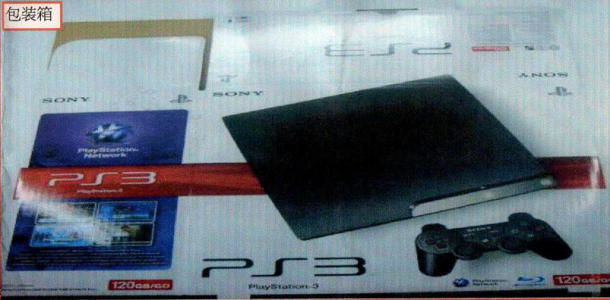
The PS3 Slim is finally here

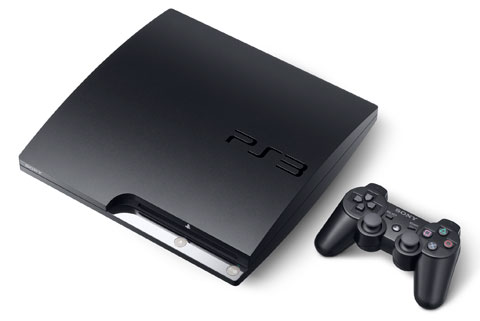
The PS3 Slim is finally here

My first impressions? That the PS3 Slim didn’t look as good as I thought it would be. I think I got ruined by those fake pics of the silver PS3 Slims that have been around forever – the actual PS3 Slim is a big flat piece of black matte plastic, that looks a bit cheap, to be honest. And while it is definitely slimmer, only about half the height of the PS3 Fat, it’s actually deeper (longer in length) than the old PS3. At the very least, they should have used a glossy finish, and perhaps offer it in some new colours, like white (Wii, Apple) or a sexy red like a sports car. Who knows, maybe they will.

As for the price cut, that’s very much welcomed relief for the ailing PS3 sales, although at this point, sales will need to increase by 100% on current numbers in order to make Microsoft of Nintendo really nervous, much more than the predicted 40 to 60% sales increase.

And what of the response from the other gaming companies? Nintendo remains silent, but Microsoft is rumoured to drop the Xbox 360 Pro package and to price the Xbox 360 Elite at the same price point of $299 ($100 off). Will that work to negate the expected surge in PS3 sales? Probably not, but as someone who is looking to upgrade his Xbox 360 to a new one, it can’t hurt. I would still love to have  an Xbox 360 Slim, or at least an Xbox 360 Cool&Quiet – technology advances should allow Microsoft to do this without increasing costs (and possibly lower them as well), and if they are to stick true to their recently proclaimed 10 year strategy for the Xbox 360, then they need to this sooner rather than later to keep the nearly 4 year old platform alive and viable.

That’s all I have for you this week. More next week!
Movies, TV, Music & Gaming: Which is the best value?

August 20th, 2009

I’m currently running a poll to see whether people spend more money on video gaming or movies. So far, the responses suggest that an equal number of people spend more on video gaming to people who spend more on movies, and the rest spend roughly the same.

This got me thinking: What is actually the best value in terms of entertainment gained from the money spent? The music industry has been crying about lost income and all that, but is music still the best value in terms of entertainment, or have people moved on to better (and cheaper) things?

A really non scientific approach to solving this problem would to be take typical prices for the following types of activities, and then estimate roughly the amount of hours each type of entertainment provides, and then work out the P/E ratio. It’s not the Price/Earnings ratio that’s way way too high on the S&P 500 at the moment, P/E in this case stands for Price/Entertainment, which is roughly how much it costs per hour of entertainment. Then to divide the activies more thoroughly, I separate movie DVDs to DVDs of TV series (which I believe should offer better bang for bucks), the same for Blu-ray, and then gaming is separated into good games (like Fallout 3, GTA IV) and the bad ones (Turning Point: Fall of Liberty). And finally, add in music for both iTunes/Amazon download and traditional CD purchases. These are the activities:

  • DVD (movies)
  • DVD (TV series)
  • Blu-ray (movies)
  • Blu-ray (TV series)
  • Gaming (bad game)
  • Gaming (good game)
  • Music (downloads)
  • Music (CDs)

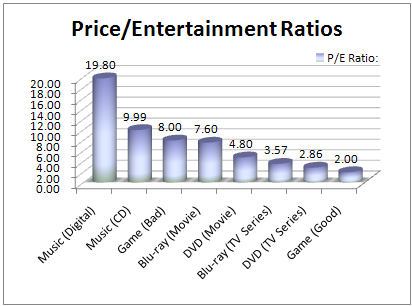
So let’s get straight to the results, and here they are in graph form (the lower the P/E, the better the value):

The Price/Entertainment Ratio Of These Popular Activities

The Price/Entertainment Ratio Of Movies, TV, Music and Gaming

I don’t think the results are all that of a surprise, with perhaps the only real surprise being how poor value music is compared to the other types of entertainment.

A good game, such as Fallout 3, World of Warcraft, GTA IV, will give you hours of enjoyment. Even if you don’t include multiplayer games, which has almost infinite re-playability, single player games and game campaigns still offer hours upon hours of enjoyment (GTA IV easily offers 30+ hours, especially if you do all the side missions – the same with Fallout 3). So a good game is the best value in terms of entertainment, even if games are quite a bit more expensive than your average DVD.

DVDs of TV series are the second best value in terms of entertainment, roughly equal to gaming. Now this figure can vary a lot, since some TV shows are in the 30 minute format, while others are in the hour format. And some shows have long series (20+ episodes), while others are short (10 episode). And the pricing varies too. But taking typical TV series of say 20+ one hour (42 minute) episodes plus extra features at a common price of say $40 on Amazon, then it will still represent very good value in terms of entertainment.

Blu-ray TV series is next, showing that Blu-ray prices have dropped recently to make it actually better value in many cases than movies on DVD, which is the 4th best value source of entertainment. It kind of make sense when you think about it because for $50, you can get maybe 15 hours of TV shows on Blu-ray, while for a fifth of that, you only get about 2 hours worth of movies on DVD. And with movies on Blu-ray a bit more expensive than the DVD version normally, it falls slightly behind movies on DVD in terms of value.

Now we get to the interesting bits. Bad games, such as  those with incredibly short single player campaigns (sometimes as short as 3 to 5 hours, for a quick play through), and no multiplayer. And then there are games that are just so bad, you don’t even want to finish them. These games are quite bad in value, and perhaps explains why gaming piracy is high as bad games outnumber good games by quite an impressive margin.

And speaking of piracy, we now move onto the last and the most expensive form of the listed types of entertainment: music. Music CDs are better value than downloads at the moment, you can usually source a CD for under $10 on Amazon, and this will give you a maximum of 72 minutes, but most are way short of this at around 40 to 50 minutes. $10 for an hour of entertainment is quite expensive in the grand scheme of things, and with almost no interactivity, it’s no wonder that piracy rates are so high. Then we have downloads, which at around $1 per song, is expensive. However, you can choose only the songs you enjoy by downloading them separately, as opposed to having to buy an CD album just because you want one song, so they may not work out to having twice the P/E ratio of CDs. However, $1 for usually just 3 minutes of entertainment doesn’t scream good value for me.

Of course, none of the above includes re-use. A piece of music you like you might listen to it hundreds of times over just a single year. And you might watch your favourite movies as a monthly event. And who hasn’t gone back to an old game just to play it through again (and the multiplayer, of course). There is also the cost to get started, because listening to music is cheap, while getting into Blu-ray or gaming may be much more expensive. And of course, music might mean more to you and may be more memorable than say a video game, and this effect cannot be tabulated and graphed. But based on a price comparison only for a single play-through, it’s clear that gaming and TV on DVDs are still the best value at the moment.

So what was the point of this blog? Not much, but I guess it just goes to show that instead of crying about piracy, the music industry needs to take a closer took and see if there’s a reason why profits are dropping. Maybe moving to a subscription model, or an unlimited downloads model, may be the only way to get those P/E ratios back down to acceptable levels.

Update:

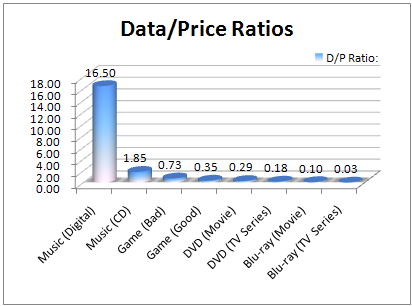
I thought it would be interesting to calculate the best value in a different way. Instead of using the price to determine value, I can use the size of the digital data versus the price per “bit” of data. This is an even sillier way to calculate value, but data size often corresponds to quality (in terms of video and audio, at least). Here’s the graph:

The Data/Price Ratio Of Movies, TV, Music and Gaming

The Data/Price Ratio Of Movies, TV, Music and Gaming

This type of calculation obviously favours Blu-ray, as HD content can be huge in size compared to their SD cousins, but the different in quality and entertainment does not share the same gulf. But DVDs still represents excellent value, as do good games. Here, bad games are also calculated to have good value, which just goes to prove that the number of DVDs that games occupy has nothing to do with how long the game actually last or how long you actually want to play the game. In the grand scheme of things, music CDs, because it uses no compression, doesn’t do too badly. But once again, digital music is way out there in terms of the relationship between pricing and data size. Which is why all-you-can-eat DRM-free music download services are a must to justify continued consumer spending on music – there are a lot of bad music out there, and the only way you can make people pay for it is if they are so cheap, that it’s worth the trouble. At the very least, making ultra high quality lossless downloads should at least increase the data size, the audio quality, if not exactly the amount of entertainment a song download provides.

Weekly News Roundup (16 August 2009)

August 16th, 2009

I was going to apologise for this incredibly late WNR, but it turned out that I managed to get it done in time. Combinations of factors led me to believe that I wouldn’t be able to get this issue out in time, mostly due to my throat infection. 2009 hasn’t been a good year for me health wise, has it? The other reason is the odd bouts of electricity blackout that’s been happening around here due to the high winds overnight. Luckily, I have an UPS, and thanks to WordPress’s auto-save feature, at least I haven’t had to re-write passages of this WNR lost during the blackouts.

Some site related bit and pieces before we get to the WNR proper. In cooperation with Womble, I’ve launched a new Womble software sub-forum, in an effort to offer more support for their software. To go along with the new forum, I’ve also written a new guide on how to use Womble MPEG Video Wizard to make basic MPEG video edits. Having using MVW for a while, it’s a very handy piece of software and unlike many other pieces of software I’ve tried, it’s actually pretty quick, no bloat, and very stable.

The July 2009 US video games sales NPD analysis has been posted as well. And in case you’re wondering why being sick allowed me to write a guide *and* a blog post all in one week (I know, this sounds like way too much work compared to what I normally produce in a week), I only became violently ill several hours after posting the analysis. And no, the poor video game sales figures wasn’t the reason why I became sick. Anyway, onto the WNR.

Copyright

Copyright news first. The New Zealand wing of the MPAA has urged the government to side step due process and hand down Internet bans as quickly as they can print out the banning order pre-made using MS Word templates or something even faster. Just another day in our bizzaro world where expediency in protecting billion dollar companies comes before justice and liberty. But then again justice and liberty don’t make monetary contributions to politicians.

The Pirate Party UK is launched, just as the UK government plans to crackdown on piracy

The Pirate Party UK is launched, just as the UK government plans to crackdown on piracy

Not too far away here in Australia, the government, possibly also acting under orders, I mean suggestions, from the music and movie lobby is trying to introduce a bill that will allow ISPs to spy on customers for copyright holders. The government says that’s not what the bill is intended for (it’s for terrorism, just like every law made since 2001), but that makes things even worse because that’s the government basically saying they’re coming up with a law in which they don’t know the full consequences of (or just don’t care). The bill, if passed in December, will make the US DMCA and the French three-strikes system seem restrained, almost anti-copyright, by comparison. The UK government is also planning on it’s own piracy crackdown, to label up to 7 million of it’s own citizens are criminals because they’ve downloaded some pirated stuff (or at least the copyright owners say so, but an IP address is hardly unique nor tamper proof). But at least the UK is getting it’s own Pirate Party, which if the government crackdown continues, could gain popularity very quickly.

Onto this week’s court actions. And there’s been lots happening, all bad news of course. Real Networks, defending it’s RealDVD software which adds more DRM to existing DVDs (but you do get to play it back on your computer without the disc), has suffered the first setback as the judge extended or continued the injuction currently placed on sale of the software. It just means that a full jury verdict will have to be handed down before the future of RealDVD is settled, and that the judge saw that the MPAA had enough evidence to proceed to trial. In the same week,  there was another victory in court again innovation to protect the hardly working DVD DRM, known as CSS. The company at the center of the trial, Kaleidescape, originally won a trial that declared it’s hard-disk based DVD playback system completely legal (the system also plays DVDs without the original disc, and also adds more DRM to prevent unauthorised copying), has now lost an appeal that the DVD CCA bought forth against the original verdict. So that’s basically two products, one software and one hardware, neither of which defeats or circumvents the DVD CSS system, and I would be willing to bet that no one in their right mind has ever used to illegally copy DVDs (because RealDVD is not what people use to rip DVDs on computers, and people who can afford the multi-thousand dollar Kaleidescape system usually buy their movies) – but both may be deemed illegal just because the copyright holders don’t like innovation (or may even be coming up with their own products like managed copy, and these competitors are standing in their way).

And of course, piracy goes on, gains more popularity, while the lawyers, like the ones suing 10,000 South Koreans for sharing pirated porn, get richer. The US DOJ has also made a statement on the obscene $1.92 million damages handed down against a single mother Jammie Thomas-Rasset, saying that in their opinion, it’s perfectly constitutional. This is the same DOJ whose associate deputy attorney general was one of the lawyers representing the RIAA in Thomas-Rasset case, and loaded with many other ex-RIAA lawyers. You would at least understand the music and movie industry’s actions if they were working, but they are not, and may in fact be encouraging more people to pirates music and movies. I’ve always said the best way to combat piracy is to provide legitimate alternatives, and a recent study of UK youngsters seem to back up this opinion. The survey found that people want to pay for music, but only if it doesn’t have DRM, and is based on a subscription based “all you can eat” model, with a monthly fee and unlimited downloads (or some reasonable limits). 85% of those surveyed were willing to pay for this service, and 40% said that they would stop pirating altogether if such a service existed. And yet all we see are more lawsuits aimed at the very same people who are willing to pay, all because copyright holders are afraid of change.

High Definition

In HD news, Toshiba has finally confirmed what has been rumoured for a while, that they will get into the Blu-ray business. It was also unlikely that Toshiba would not produce a Blu-ray player when their target is to gain a foothold in the home electronics market, as well as their active participation in the laptop arena. However, they also (perhaps bitterly) referred to Blu-ray as only a small part of their HD strategy, one that also covers SD (flash memory) distribution and downloads. Toshiba’s first Blu-ray players might be here this year (probably next year though), and I wouldn’t be surprised to see it have both SD playback and streaming capabilities (as well as outstanding DVD upscaling thanks to the Cell powered machines).

Gaming

Not much happening in gaming, except that Sony will probably officially announce a price cut and the new PS3 Slim anytime now. Or not. But if this turns out to be a hoax, then it’s one of the best staged ones I can remember, so I’m putting my money on the rumours being real.

The PS3 Slim could be confirmed by Sony by the time you read this

The PS3 Slim could be confirmed by Sony by the time you read this

If you’ve read my July 2009 NPD analysis, you’ll know how badly Sony is struggling at the moment, with the PS3 barely outselling the PS2, which itself has dropped massively in sales over the last year. While the Wii hasn’t done much better in July either, the Xbox 360 continued strong sales (or rather, not-as-weak-as-the-others sales). So a price cut, and a new SKU, may be exactly what Sony needs and while I don’t really think a new SKU is necessary considering how much more “cooler” the PS3 already is compared to the Xbox 360, the price cut if key here (and if the slim model was the only reason the price cut was possible, then you do wonder why there isn’t a Xbox 360 Slim, as Microsoft needs a cooler console, in more than one sense of the word, than Sony).

The fall in Wii sales may suggest either saturation has been reached, or that a price cut may also be needed for it to remain competitive (it is still the only console to not have had a price cut or more added features since launch).

That’s it for this week. Back to bed rest for me until I recover from this nasty infection. See you next week.

Game Consoles – July 2009 NPD Sales Figure Analysis

August 15th, 2009

The July 2009 US video games sales figures are in. The last few months has seen a major contraction of the video gaming market in the US. While the news elsewhere is of a recovery, the video gaming industry is still waiting for a sign which doesn’t seem to be forthcoming at the moment. Many in the industry will hope July will be the turning point, and with the Wii MotionPlus enabled Wii Sports Resorts being released in July, a Wii-led recovery may be just what the doctor ordered. The figures are from NPD, a marketing research firm that releases games console sale data every month.

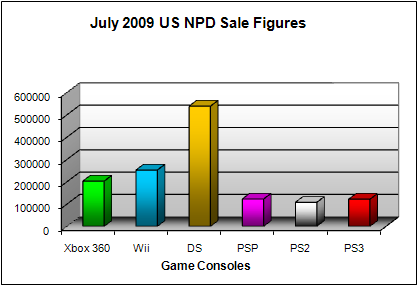
The figures for US sales in July 2009 are below, ranked in order of number of sales (July 2008 figures also shown, including percentage change):

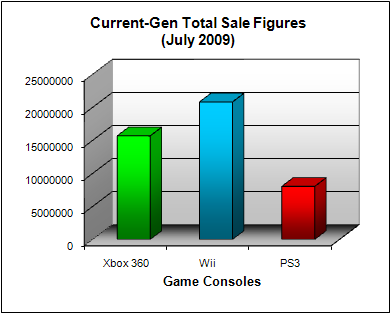
  • DS: 538,900 (Total: 32.6 million; July 2008: 608,000 –down 11%)
  • Wii: 252,500 (Total: 20.8 million; July 2008: 555,000 – down 55%)
  • Xbox 360: 202,900 (Total: 15.7 million; July 2008: 205,000 – down 1%)
  • PSP: 122,800 (Total: 15.4 million; July 2008: 222,000 – down 45%)
  • PS3: 121,800 (Total: 8 million; July 2008: 225,000 – down 46%)
  • PS2: 108,000 (Total: 44.3 million; July 2008: 155,000 – down 30%)
  • NPD July 2009 Game Console US Sales Figures

    NPD July 2009 Game Console US Sales Figures

    NPD Game Console Total US Sales Figures (as of July 2009)

    NPD Game Console Total US Sales Figures (as of July 2009)

    My prediction from last month was:

    I’m going to bet on a slight increase in Wii sales, but not enough to bring it back to the same levels from earlier this year. The software charts should see domination from the Wii MotionPlus enabled titles, notably Wii Sports Resort. NCAA Football should do well too, so it would be between these two titles that the number one spot is jostled for. Otherwise, business as usual, with an overall uplift as we get closer to the holiday period.

    The sea of red you see above should give you clue as to how wrong I was. The only thing I got right was that Wii Sports Resort and NCAA Football would dominate, but there was no uplift for the Wii, and there was no general uplift either. To be fair, I came up with the above prediction based on the misreading of some stats, because July normally is worse than June, and traditionally, August is going to be even worse. It won’t be until September that we will see positive movement, and this is in a normal year where the economy isn’t a huge issue.

    The biggest loser for July was the Wii. Recording a massive 55% drop in sales compared to the same month last year, and now only selling 50,000 more than the Xbox 360, perhaps it’s time Nintendo had a serious look at the pricing policy, because out of all the consoles, the Wii is still the one that has not had either a serious drop in price or an upgrade in terms of features of functionality.

    The second biggest loser is the PS3. Now you should have heard by now all the PS3 Slim related rumours, and not only are Sony going to bring out a sexier console, they’re also going to drop prices (possibly by $100 and 100 Euros in the US/Europe). And if this is true (and I’m not going to fall for it until I read the PR release on Sony.com), then it couldn’t have come at a better time. Or rather, at a much more needed time. The PS3 is dying right now without a price cut, and even if they don’t bring out the Slim and simply bring out a cheaper SKU, then that will do wonders for it. Otherwise, it’s barely outselling the PS2, which I assume with Sony’s price cut and Slim announcement will mean it becomes an end-of-line product. And the new PSP is also coming at the right time, because it is also dying.

    The DS and the Xbox 360 are the smallest losers, but still losers, for July. The DSi effect it wearing off and it won’t be too long before the DS is also seeing large drops in sales compared to the previous year. The only console to have held on so far this year has been the Xbox 360, and it was only a loser technically this month, a tiny 1% drop compared to July 2008. The price is right, with the Xbox 360 it seems, but with the cheaper PS3 possibly coming in September, Microsoft will have to think up something new to entice users, because there’s only so much it can do in terms of price cuts before they’ll be giving away the console for free. I believe their current plans are to phase out the Arcade model and replace it with the current Pro, making the Elite (120 GB Black version) the mainstream version, with a new Elite coming stuffed with more goodies (and eventually Natal). Will this work? Probably not as effective as Microsoft needs, because Sony has been adding features to the PS3 without much of an effect on sales. If anything, Microsoft needs a Xbox 360 Slim, because the PS3 needs a slim, quieter version much less so than the Xbox 360, notorious for it’s various hardware problems. Making a smaller, cooler (both in the temperature sense and The Fonz sense) and more reliable Xbox 360 will do wonders for the console, and it might actually be cheaper for Microsoft as they can move the CPU/GPU process to a more common one in-line with today’s technology. Then they can bring out Natal and get some of the Wii’s “wow” factor.

    On to software. As expected, Wii Sports Resort was the month’s top selling title. Having played it for the last week, I like it more and more. Not so much the improved accuracy of the Wii-mote thanks to the Wii MotionPlus, but just the new collection of games that makes things a bit fresh as the original Wii Sports is getting a bit stale to be honest. NCAA Football again dominated, just like the same time last year, although both PS3 and Xbox 360 versions sold less than the same time last year, which is a worry considering 8 million more systems were sold between the 12 months. The economy is hitting hard on software, just as hard as it has been on hardware. There are a couple of DS games, plus Wii Fit and Mario Kart still in there (although Wii Play has disappeared for now). So on software terms, it was still a good month for Nintendo as they had 46.1% of the top 10 for the Wii alone (and another 17.5% for the DS). Microsoft was second with 24.6%, and PS3 had the single lone title in the top 10 with 11.8%.

    Here’s the complete list of the top 10 software sales:

    1. Wii Sports Resort (Wii, Nintendo) – 508,200
    2. NCAA Football 10 (Xbox 360, EA) – 376,500
    3. NCAA Football 10 (PS3, EA) – 237,400
    4. Wii Fit w/Board (Wii, Nintendo) – 164,300
    5. Mario Kart w/ Wheel (Wii, Nintendo) – 156,600
    6. Mario Kart (DS, Nintendo) – 132,200
    7. Pokemon Platinum (DS, Nintendo) – 116,400
    8. Fight Night Round 4 (Xbox 360, EA) – 116,400
    9. New Super Mario Bros. (DS, Nintendo) – 101,800
    10. EA Sports Active (Wii, EA) – 96,800

    So prediction time. By this time next month, we should have a good idea whether the PS3 Slim is fact or fiction (if I had to put money on it, I would say ‘fact’), as well as what price cuts there might be. The PS3 Slim, according to rumours, won’t be here until September anyway, so it won’t be before October (when I post the September NPD analysis) before we can see what effects it may have on sales. In the short term though, this could spell a sales drought for the PS3, unless Sony does some pre-emptive price drop for the older SKUs to get rid of stock. August is traditionally also a slow month, so I expect sales to drop further, or at best, stay the same with July levels. The same ordering as this month, most likely. Madden NFL 10 should dominate, along with Wii Sports Resort, and there might be a late month surge in Batman: Arkham Asylum sales.

    See you next month.

    Weekly News Roundup (9 August 2009)

    August 9th, 2009

    Another relatively quiet week. There are actually lots of news stories, but most of them say the same things, are followups to (or just really really late versions of) previous week’s news stories, and some are nothing more than PR fluff pieces. I try to filter out these kinds stories, and only report on the important, interesting ones. When I’m not busy playing games that is. Or rather than playing, let’s say “fixing” instead, because that’s what playing GTA IV feels like. Rockstar’s PC efforts have always been poorer cousins of the console versions, but GTA IV in its current state takes the bugginess to a whole new other level. Read my blog post to find out more about how to fix or work around some of the more annoying bugs, but nothing I wrote really helps to make the problems go away, only to make them slightly more manageable.

    Copyright

    In Copyright news, the owner of Filesoup, one of the oldest torrent sites around, has been arrested. His home was raided, things left in a complete mess, he was denied a phone call or access to legal council for 7 hours, and the Filesoup website is still up and running.

    The owner's may have been arrested, his home raided, but the Filesoup.com remains online

    The owner's may have been arrested, his home raided, but the Filesoup.com remains online

    Since when did these sorts of copyright infringements, something that at worst only does monetary damage to billion dollar corporations, become such a serious offence that the police need to get involved? Are there no terrorist left to capture? No murderers to apprehend? The copyright lobby has been telling governments around the world scary bed time stories in an effort to scare them into doing things against the very principles of democracy, against the constitutions of their respective countries, and against normal legal procedure, and it’s all working. And that’s just the ones that get to court – governments at the behest of copyright agencies are still trying to bring in a 3 strike system where they can get rid of this little thing called due process entirely. But the ones that do get to court, are even more notorious, just like the recent two cases with the 6 and 7 figure damages being rewarded against defendants that probably don’t even have 6 or 7 thousand dollars in their names.

    The rewards were so outrageous, that even copyright lawyers representing the content owners are not too happy at the damages being rewarded, fearing it may backfire. Content owners want to use these damage rewards to deter future infringements, but too much money and it may force the courts and the government to step in a put a limit on things, due to the public backlash. But does anyone really thing this will stop piracy? Every copyright warning message, yes including those annoying ones you can’t skip on DVDs, point out the possible consequences of piracy – a large fine and even prison time, but why do people still pirate stuff? Is it because they have no alternative, as they can’t afford it, like the cost of filling up your average iPod with purchased music? Is it because illegal downloads are easier and more user friendly, not having to go to shops to buy DVDs, and no DRM? Or as in some cases, you aren’t being allowed to purchase something until the content owners have maximised their profits through rental agreements, TV licensing, tiered releasing, and that the only alternative becomes downloads?

    This is an example of an Xbox 360 mod kit. Some mod kits are the first step towards making Xbox 360's play backup games

    This is an example of an Xbox 360 mod kit. Some mod kits are the first step towards making Xbox 360's play backup games

    But the law is on the side of content owners, ever since they pushed the DMCA through the US congress, on the back of fears that the digital revolution was going to bring about the end of capitalism as we know it. And the politicians believed them, even easier to do so when you have large contributions to smooth your doubts. The latest case is that of an Xbox 360 modder has been arrested and could face 10 years in prison, thanks to the DMCA. See under the DMCA, you don’t have to actually do damage to anyone to break this law. All you have to do is to circumvent copyright protection, regardless of how badly implemented the copy protection may be, or what you intend to do after copy protection has been broken. I could mod my Xbox 360, and then smash it up so that it won’t work anymore, and yet, I’ve still broken the DMCA (if I was an American, of course). Or take a more common situation, where I mod my Xbox 360 so I can play backups of my legally purchased games that the Xbox 360 keeps on scratching (through the well known design fault, or just through daily abuse). Now if I do this, then who am I hurting exactly? Not Microsoft or the game publishers, because I’m still buying games from them. In fact, the only one I may have hurt is myself as I might have just voided my warranty. And I’m actually helping Microsoft by not bringing in the console to repair the disc scratching problem. But I’ve still broken the DMCA and I could face big fines and time in prison. Some countries have laws where you’re guilty until proven innocent – the DMCA simply assumes you’re guilty in all situations.

    Speaking of game consoles, Nintendo’s DS is one of the most pirate friendly consoles around, thanks to flash carts. Nintendo still makes big money from the DS though, and the DS’s popularity is probably directly linked to the ease in which you can play backup or pirated games on it. The DSi, Nintendo’s update for the DS, was supposed to address this by introducing frequently firmware updates that disables flash carts from being used. The latest version, 1.4, managed to do to almost all known flash carts, but it only took a week for the flash cart manufacturers to bring out their own firmware update that made piracy possible again. If you can play it, you can copy it (and play the copy) – that’s that conclusion I’ve come up with after many years of observing various copy protection methods. Again, it goes back to the point of how one stops piracy, and perhaps some of the things I listed above like looking at prices, release schedules, and making purchases easier, are way more effective than firmware updates. Or even putting your hands up and admitting, okay our system is pirate friendly, but that’s why it’s so popular and it’s something we have to live with.

    The Australia ISP, iiNet, is still engaged in legal battle with Australia’s own MPAA/RIAA, the AFACT. iiNet is now seeking help from industry bodies to testify on its behalf that ISP in general are helpless to stop the torrent of copyright abuses that its customers are guilty of. If one takes a view that things like human rights, privacy, are important, then ISPs shouldn’t be spying on their customers on anyone’s behalf, just like phone companies shouldn’t be recording and listening in on your phone calls just to see if you’ve been saying naughty things. Now the police, through a court order, may be able to perform eavesdropping (and I see monitoring Internet usage the same as phone tapping, actually even more effective because you get a much more complete picture of a person’s activities) – private companies cannot, and no court would grant a private company the right to spy on an individual, no matter how serious the offence is (because if it is the private company petitioning the court, then it is only a civil matter, not a criminal one). So if McDonald’s can’t tap my phone to find out why I’ve stopped eating Big Macs, why should Warner Bros. get the right to monitor my downloads to see if I’ve stopped buying their movies?

    High Definition

    Copyright rant over (is it me, or is the Copyright section getting longer and longer, and rantier and rantier?). On to HD news. Not much this week, but just some continuing trends that may concern the Blu-ray people.

    On the surface, Blu-ray has a great week thanks to Watchmen. According to the sales stats, Blu-ray has its best week since The Dark Knight, again thanks to a Warner release. Part of the reasons for the good numbers may be because the PS3 special edition of the Watchmen game, which came with the Blu-ray version of the movie – I have no idea if sales of these packs were included in the stats though (the game itself did rather average business, so it may not matter). There are a couple of even bigger releases this year, including Star Trek, Transformers 2, Terminator Salvation – movies that will definitely do well on Blu-ray, not only because they were big movies at the box office, but these are exactly the types of movies to attract early adopters, HT enthusiasts, and the PS3 demography.

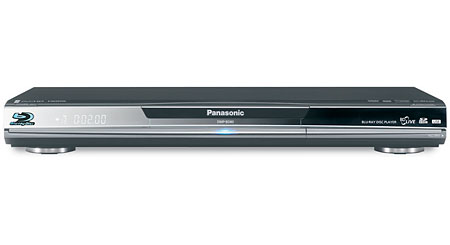
    The Panasonic DMP-BD80K is one of the Blu-ray players getting Amazon VOD streaming

    The Panasonic DMP-BD80K is one of the Blu-ray players getting Amazon VOD streaming

    So what’s the bad news? Panasonic is going to include Amazon video-on-demand in its Blu-ray players, as part of the VieraCast service which already streams YouTube videos. Why is that somehow bad news? Well, it’s not bad news. It’s news to be concerned about, because that’s the third major Blu-ray manufacturer to include video streaming, after LG and Samsung chose to support Netflix. It’s good news for Blu-ray because players are now more fully featured and attractive to buyers. It may be bad news in the future if this video streaming thing takes off and Blu-ray becomes nothing more than a sideshow in the home theater arena. I doubt this will happen because you’ll get tons of people like me who like discs. But I also like things on demand, and a subscription service for unlimited access to a huge movie library works out to be cheaper than buying each movie individually eventually. But that’s for something to worry about in the future, because Blu-ray quality HD streaming is years away from becoming available in every home. But the movement towards video streaming is gathering pace, you cannot deny this.

    While not HD specifically, Google has purchased On2, which makes several video codecs including the VP6, VP8. This is all part of the browser video wars that I brought up a few weeks ago. Nothing to concern your average net user, but developers and video enthusiasts will be interested to see if an open source video codec, like Ogg Theora, can take center stage, or will a commercially effort like H.264 win out. Google likes Ogg, and it can now use the expertise and technology purchased through the On2 deal to help out Ogg to improve quality, where H.264 is still  a better choice than Ogg. I love open source, but I also like H.264 for its quality and wide acceptance, but I don’t see how the consumer can be hurt by having a couple of alternatives, including an open source one.

    Gaming

    Not much happening in gaming. We’re still waiting for the Sony PS3 Slim announcement, and maybe something will happen next week, or the week after, in this front.

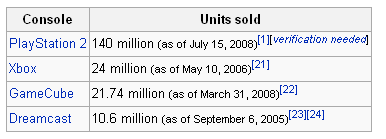
    PS2 owned the original Xbox and it was expected that the PS3 would do the same to the Xbox 360 (stats from Wikipedia)

    PS2 owned the original Xbox and it was expected that the PS3 would do the same to the Xbox 360 (stats from Wikipedia)

    Now when fanboys argue, they use stats. One of the stats is that Sony’s PS3, while only doing half the sale of the Xbox 360 in the US, is actually only slightly behind the 360 in worldwide numbers, thanks to strong sales in Japan and stronger sales in Europe (compared to the US). And this is all despite the PS3 being released a year later than the 360. Now this seems to suggest that the PS3 isn’t doing as badly as the media portrays (including this blog, if you can call it part of the “media”), and it will lead fans of the PS3 to say that there’s a media bias in play here. The figures are not wrong, and neither is the conclusion that the PS3 is on level terms when it comes to worldwide sales, but for this to be “good news” for Sony, it assumes one thing: that the Xbox 360 was supposed to sell on even terms with the PS3. The actual fact was that the PS3 was expected to outsell the Xbox 360 handsomely, even with the delayed release – if the PS2 versus Xbox is any indication, an 8 to 1 sales ratio wouldn’t have been a surprise. The Wii kind of made a mess of the scene, since nobody figured Nintendo was going to be in it, let alone win it, but ignore the Wii and the PS3 was still supposed to sell a lot better than the Xbox 360, with US and worldwide numbers more in line with what we are currently seeing in Japan, where the Xbox 360 struggles badly.

    But this hasn’t happened. And Microsoft’s gamble of launching a faulty, less sophisticated console a year earlier seems to have paid off. If at the end of this console generation, Microsoft can claim a 1 to 2 sales ratio (that’s one Xbox 360 for every PS3 sold), then they’ve done tremendously well and made huge strides into the gaming industry, of which Sony has much more  experienced with. If the Xbox 360 can sell on level terms with the PS3, then that’s something even the most optimistic Microsoft projections wouldn’t have dared to proclaim just 3 years ago. But of course, the Wii will outsell both combined.

    Okie dokie. That’s the news/rant for the week. More next week.


    About Digital Digest | Help | Privacy | Submissions | Sitemap

    © Copyright 1999-2012 Digital Digest. Duplication of links or content is strictly prohibited.